Devolution carve up: Call for West Devon to be split to get best for residents

Residents in the north look to Exeter; and to Plymouth in the south

A call has been made for West Devon to be sliced in half and aligned with separate cities in the forthcoming local government reorganisation.

Alison Stephenson, local democracy reporter www.radioexe.co.uk 

Cllr Patrick Kimber (Con, Hatherleigh) told West Devon Borough Council that Okehampton and the north of the borough looked to Exeter for health services, employment, education and shopping, while Tavistock looked to Plymouth.

The government wants to abolish county and district councils in favour of larger unitary authorities.

Plymouth wants to retain its current unitary status but needs to expand to have the number of residents the government suggests future unitaries will need.

Exeter, which is currently a district council, also wants to be a unitary body.

The government expects future unitary councils to cover around half a million residents. Both Exeter and Plymouth will need to bring in other areas to reach that size, unless the government offers them wriggle room.

It has already suggested some exceptions, such as Exeter, may be allowed.

Plymouth’s natural partners are South Hams and West Devon, with which it shares a local plan, and Tavistock is a 30-minute drive away.

District and borough councils in the county together with the unitary council of Torbay are currently in talks about how Devon could be carved up. They have to present initial plans to the government by Friday 21 March.

West Devon is the smallest of the councils with just 58,000 residents.

The government says unitary structures must prioritise high quality and sustainable public services, including health.

Cllr Kimber said it was a three-hour round trip to Plymouth from Hatherleigh in the north and residents there are referred to the Royal Devon and Exeter Hospital, and North Devon District Hospital in Barnstaple and had no connection to Plymouth.

Equally residents of West Devon’s second largest town of Okehampton look to Exeter which is just over half an hour’s drive or 40 minutes by train.

Passenger services from Okehampton to Exeter were reinstated three years ago but there is no train line to Plymouth.

Mr Kimber said if Exeter becomes a unitary council, the north of West Devon should be included or be aligned with councils in the North like Torridge to “get the best for residents.

Cllr Tony Leech (Ind, Okehampton North) said putting the Okehampton area in with Exeter did make sense, but he suspected that this would not meet the government’s criteria about taking account of existing council footprints.

He said it would also mean getting the Boundary Commission involved, which would  “complicate things”.
 

Gwynedd house prices plunge as council acts on second homes

A real effect or a statistical blip? – Owl

House prices in a county where the council has introduced measures to crack down on second homes have fallen by more than 12% year-on-year, according to new figures.

Felicity Evans www.bbc.co.uk

The local authority in Gwynedd, north-west Wales, recently introduced a requirement to obtain planning permission to turn residential properties into second homes or holiday lets.

It is also one of a number of Welsh councils which charges a 150% council tax premium on such properties, having upped this from 100% in 2023.

The council, Cyngor Gwynedd, said its aim was to “increase the availability of high-quality, affordable homes for local people”.

The fall in value represents the biggest annual drop of any region in the Principality Building Society’s Wales House Price Index, external, covering residential property sales in the final three months of 2024.

The average house price in Wales has remained broadly flat year-on-year and is now £233,194, according to the building society.

Tom Williams and his family, who live in Lancashire, are struggling to sell the second home they own in Morfa Nefyn, Gwynedd.

“I have four grandchildren who had a wonderful time there every summer and it’s been great, we’ve loved it,” said Mr Williams, who has owned the house for 20 years.

Mr Williams and his wife put the house on the market in April 2024 but said they had had little interest from potential buyers, despite dropping the price by £40,000.

“I put it down to all the other properties in the village that are up for sale at the moment,” he said.

Mr Williams believes some of the interventions by the council have prompted a lot of people to sell, while also putting off potential buyers.

Cyngor Gwynedd has been trying to address the shortage of housing for local people in tourist areas and has more than doubled the council tax charge on second and holiday homes.

The council also recently introduced Article 4, which requires property owners to obtain planning permission to turn residential homes into second or holiday homes.

“I’ve spoken to a lot of families who have had homes there for generations and they’re saying the same thing – how can we carry on with this?” said Mr Williams.

North Wales estate agent Dafydd Hardy described the housing market in Gwynedd as “mixed”, with local interventions on second homes leading to “more properties coming on to the market”.

But he said the price of a second home was often “outside the affordability of the local purchaser”.

“What we need to see is balance in the market,” he said, including “more house building as far as first-time buyers are concerned”.

What’s caused the price drop?

The new figures are based on seasonally-adjusted data from the Land Registry, but a lot of different factors can affect the picture that data ends up painting.

Factors such as interest rates, regional job opportunities, interventions in the local housing market by a council and even the number of transactions can all have an impact on house prices.

It means there is some uncertainty about what caused the drop in prices in Gwynedd in the year to December.

How have house prices changed in the rest of Wales?

Pembrokeshire saw the second biggest annual fall in prices at 8.9%.

The council there recently voted to reduce the council tax premium on second homes from 200% to 150%.

By comparison, Carmarthenshire saw the biggest year-on-year increase in house prices at 9.2%.

The council there is introducing a council tax premium of 100% on second homes from April.

Iain Mansfield of the Principality Building Society said the housing market across Wales had shown “resilience” over the past 12 months.

Sales were up by 28% year-on-year, which Mr Mansfield said demonstrated “greater consumer confidence” with lower interest rates making mortgages more affordable.

“I think we’re seeing a more positive outlook for those people who want to buy a house in 2025,” said Mr Mansfield.

Locals ‘priced out’

Mr Mansfield said the “sizeable” drop in prices in Gwynedd over the past year was reflected in “some of the other coastal areas in Wales”.

He said the drop could “potentially” be explained by “some of the interventions that have been made in the area around second home ownership”.

Cyngor Gwynedd said “over 65% of Gwynedd’s population was priced out of the housing market” and tackling the housing shortage was a “key priority”.

It said it introduced Article 4 to “gain better control over the existing housing stock” and they were “continuously monitoring its effects”.

It added some of the money raised by the council tax premium was used to enable “the development of new homes, the creation of supported accommodation for those facing homelessness and grants and loans to help local people secure housing, amongst many other projects”.

EDDC Deputy Leader Paul Hayward – national award for his contribution to local community

His dedicated contribution to the local community has been wide ranging and this award is well deserved. – Owl

Axminster councillor awarded recognition for community work

Molly Kirk www.midweekherald.co.uk 

AN Axminster Councillor has been recognised nationally for his “exceptional contributions to the local community” through the LGA Independent Group’s, “prestigious” Clarence Barrett Award.

Paul Hayward’s service to the community spans more than a decade. He was elected to the Town Council in 2011, becoming the Town Mayor between 2016 and 2017.

He also qualified as a parish clerk, previously working for the parishes of All Saints, Chardstock, and Newton Poppleford, before finally returning to Axminster Town Council, this time as the serving Town Clerk.

In 2019, he was elected to East Devon District Council (EDDC), a separate organisation, for the neighbouring Yarty Ward.

In 2023, he was re-elected to EDDC, but this time, to represent Axminster alongside Independent Councillors Sarah Jackson and Simon Smith.

At East Devon District Council, Cllr Hayward holds the position of Deputy Leader and Cabinet member responsible for the Economy and Assets Portfolio.

A spokesperson said: “His ongoing work with East Devon’s business sector has been instrumental in helping local enterprises access vital support, particularly following the COVID-19 pandemic, where he chaired the funding panel at EDDC to distribute more than £13m in government support grants to help businesses recover.”

Beyond his formal duties, Paul has been involved in and supported numerous local community-led initiatives and charities.

Most notably, Paul is a founding member of Axminster Christmas Together (ACT), an initiative that has been running since 2016. ACT seeks to combat loneliness and social isolation by offering a free Christmas meal and entertainment for those who would otherwise spend the day alone.

Previously, he was also a founding member of the Axminster Christmas Lights Association (ACLA) in 2015. ACLA later became Light Up Axminster, which has given the town centre a much-needed lift through the dark winter months ever since. He is also a member of the Axminster Chamber of Commerce.

Paul has also championed the installation of Automated Emergency Defibrillators (AEDs) across Axminster and the surrounding parishes. He regularly conducts free defibrillator awareness and training sessions across the East Devon area to give as many people as possible the confidence they need to use this lifesaving equipment.

There are now 21 publicly accessible defibrillators across Axminster — potentially the highest provision per capita in the UK.

Paul was unaware he had been nominated for the award, which came as a surprise. He said: “Since 2011, I have tried my very best to improve services and amenities in the town, and across East Devon, for the collective benefit of everyone who lives in this wonderful part of the UK. I am honoured that my small contribution has been acknowledged but I know that there are a great many other unsung community heroes in Axminster who strive daily to do their bit in making the town fabulous.”

Devolution latest: will Devon be split into just three councils under new plans?

See “Devolution for dummies & shotgun weddings” for how this proposal fits within the government guidelines – Owl

A proposal about how Devon could be reshaped in the biggest overhaul of local government in 50 years looks set to suggest the county should have just three councils.

At present, the county has 11 separate councils.

Bradley Gerrard www.midweekherald.co.uk 

A so-called ‘1-5-4’ proposal is understood to have been agreed upon by several Devon councils, with details set to be announced in the coming days.

The model suggests that the ‘1’ is Plymouth, which will remain as a unitary authority but may expand its borders slightly east into the South Hams.

The ‘5’ in the proposal would be a combination of East Devon, Mid Devon, North Devon, Exeter and Torridge into one large council, while the ‘4’ would be South Hams, Teignbridge, West Devon and Torbay merging into another.

The proposal comes as the government looks to sweep away the two-tier model of local government where two councils have responsibility for different services within the same area; for example Devon County Council being responsible for roads, but district councils collecting household waste within the same boundary.

Instead, the government wants areas to have fewer but larger unitary councils responsible for all the services in their area. It would prefer councils to cover areas of 500,000 people, but may allow so-called ‘growth areas’ to have smaller numbers.

Councils have been given until Thursday 21 March to submit initial proposals to the government about how their areas could be reorganised to create a smaller number of bigger councils.

A source with knowledge of the talks, who did not want to be named, said seven of Devon’s district councils are collaborating on the proposal, but that Exeter – the county’s eighth district council – still had ambitions of going it alone and becoming a unitary council.

However, leaders and chief executives of the seven districts in favour of it appear to agree that the 1-5-4 model could be viable.

One of the main aspects of friction, though, appears to be how Plymouth would expand its administrative boundaries, the source said.

Some believe it would make sense for Plymouth Council to assume responsibility for Saltash, but that notion is deemed controversial because it is in Cornwall.

The more likely expansion is into the South Hams, but exactly how far is likely to be a key part of any future debate.

It is also unclear whether Devon County Council would throw its weight behind the 1-5-4 proposal, or whether it will suggest an alternative.

EDDC Leader Paul Arnott tosses his hat in the ring for County elections

In this week’s article for the local press, Paul Arnott discloses that he will be standing in the County elections for Seaton & Colyton.

Worth pointing out that the Tory incumbent for Seaton & Colyton, Marcus Hartnell, was one of those who voted to postpone the May elections. The main arguments put forward were  that it would be a distraction from the County’s preparation for fast track devolution and the cost would be wasteful. Neither withstand scrutiny.

The bid to postpone May’s elections was rejected by the government. Devon County Council’s devolution bid did not meet the guidelines and we now know is not on the fast track. There are other bids in preparation including Exeter’s attempt to fly solo. So it may be some time before we know how the districts will be merged into unitary authorities.

As for the cost of maintaining the electoral role and running elections, they mostly fall on districts not county. – Owl

East Devon Council leader Paul Arnott on the Reform party

Paul Arnott 

This week’s column is a tricky one because it will inevitably be taken as baiting Reform candidates in the lead-up to the County Elections on May 1.

A cynical friend said to me, “Don’t write about Reform until after May 1, because they’re going to take votes from Conservatives and Labour, and that would be ‘good for your lot'”.

My lot being the LibDems.

Full disclosure: I am standing in the County election for Seaton & Colyton.

Maybe I’m a fool, but life seems too short for that kind of self-serving view of the world.

To me, the point of no return was the US Vice President J.D.Vance in Munich (of all places) last week, refusing to meet the German Chancellor but finding time to meet and endorse the leader of the far-right party Alice Weidel and her AfD, close pals of Nigel Farage.

With the German election looming on February 23, and AfD pressing all the usual buttons about migration, it’s as if Franklin D Roosevelt had sent one of his Vice Presidents to meet a National Socialist party functionary in the 1930s to wish them well at the ballot box.

It is that serious, especially with the historically unique phenomenon of Elon Musk getting behind the AfD too.

So what, you may ask, has this got to do with Devon?

I have written before that Oswald Mosley and his British Union of Fascists tried very hard to take off down here, holding meetings in the 1930s across the county, finally to be gloriously rebuffed by anti-BUF marches in Exeter.

But that’s not us, the Reform party members may say.

Sorry, it is, even if you don’t know it.

Nigel Farage has consistently supported the AfD and appeared to bellicose cheers at their conferences.

A few years back he was invited to speak at a Berlin event by Beatrix von Storch, the granddaughter of Hitler’s finance minister.

He has also expressed vocal support for Marine Le Pen in France and Viktor Orban in Hungary.

I can have conversations with lovely people down this way, and suddenly one of them will say “We need Nigel” and go somewhat glassy-eyed.

I’ll be honest, I find this terrifying.

Have we learned nothing?

Boris Johnson was a populist blaggard, Nigel Farage is the same, only unlike Johnson he says the unsayable.

In an interview with London’s Evening Standard last week, he let it all hang out, overtly blaming the lack of GP provision and houses for young people on immigration.

It’s not; it’s caused by the failure of Conservative policy from austerity to almost the present day.

Most thinking politicians won’t stoop to this canard.

Trump and Vance have now opened the door for the likes of Farage to dance merrily through.

Of course, migration policy is a legitimate subject for debate, but not a toxic one.

People are free to vote for Reform if they wish.

But at least I can sleep easy that I’ve warned that parties who lie down with dogs catch fleas.

First Devon County loses bid to cancel elections and join fast track to devolution, now it’s bottom of the league for funding

East Devon Watch has reported the failed bid extensively over the past few weeks.

According to accounts on Social Media Devon only received an increase of 2.1% from the government in its financial settlement, the lowest of any county council .(Plymouth and Torbay got 15%.)

We seem to be stuck with a Tory Council and Labour government both of which are “out of touch”. The first with the new political reality and the second with anything smelling of the countryside.

Roll on the May elections. – Owl

See these two reports:

Second homes cash helping plug gaps left by grant cut

Bradley Gerrard, local democracy reporter www.radioexe.co.uk 

Devon County Council’s County Hall headquarters in Exeter (Image courtesy: LDRS/Will Goddard

Millions of pounds from extra council tax levied on second homes in Devon is set to help fund services.

Councils across the county are expected to earn around £16 million when council tax doubles on second homes in some areas from April, with different amounts going to the various councils.

The county council is likely to get the lion’s share, which could be nearly £15 million if it approves a 4.99 per cent council tax increase in April.

But district councils claim it is unfair that most of the revenue will go to the county, when districts have responsibility for housing.

Councillors including Julian Brazil (Liberal Democrat, Kingsbridge) and Frank Biederman (Fremington Rural), who recently gave up his independent status to join the Lib Dems, believe because the money is levied on properties, it should be spent helping to provide affordable housing.

However Devon’s cabinet said £4 million would go to highways, £5 million to children’s services, and “more money than planned” would go to help tackle homelessness.

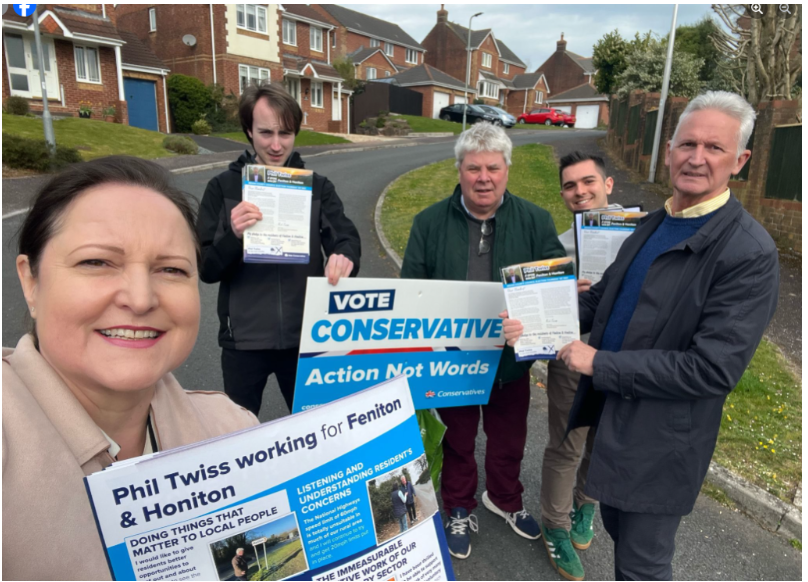
At Devon County Council’s cabinet meeting last week Cllr Phil Twiss (Conservative, Feniton and Honiton) noted that income from second homes helped replace more than £10 million previously coming from a rural services delivery grant, which the government cut in December.

Cllr Twiss added that the county had received the worst financial settlement from central government of the 21 county councils.

“It is not a nice statistic, and we are well below the national average,” he said.

“We are an overwhelmingly rural county and so there are additional costs to delivering services, so it is particularly disappointing that the government has removed the rural services grant.”

Devon County Council under ‘stress’ as reserves under fire

Bradley Gerrard www.exmouthjournal.co.uk

Devon County Council is heading for “increased financial stress” with its reserves shrinking.

A budget report for Devon County Council’s cabinet last week stressed that the local authority is “not at immediate risk of financial failure” but that this is a “growing threat for the medium term” if it keeps spending its reserves at the same rate as the past four years.

Councils are required by law to set balanced budgets, and while the Conservative-led administration has adopted a mantra of ‘living within our means’, it has had to lean on its savings in recent years.

It is now in last place out of the 21 county councils in England for the robustness of its reserves.

The report said three measures – reserves sustainability, level of reserves and change in reserves – have been reclassified from ‘increasing risk’ to ‘high risk’.

“In absolute cash terms, Devon now has the second lowest level of usable reserves [of the 21 county councils],” the report said.

The council had £222 million of reserves in March 2021 but this fell to £125 million at March last year.

By the end of the current financial year in April, a further £20 million of reserves is expected to be spent, mostly to support something called the safety valve scheme.

This initiative grants councils government money to help tackle overspends linked to special educational needs and disabilities (Send) budgets.

Devon’s Send deficit is estimated to hit a cumulative £132 million in the next few weeks, potentially rising to nearly £163 million by March next year.

That is in spite of the safety valve scheme awarding Devon £95 million over nine years, as long the council cuts its Send deficit and reducing costs.

The Send deficit is legally separated from its main finances, but the legislation allowing this runs out in March 2026.

Cllr Julian Brazil (Liberal Democrat, Kingsbridge) highlighted the issue of the Send deficit at the cabinet meeting.

He said that the children’s scrutiny committee had been told previously the Send deficit is expected to rise by £14 million, but that the budget papers now concede is likely to increase by £44 million.

“There’s no explanation or anything in the summary about why this has happened, and I appreciate the council thinks scrutiny is a waste of time, but I think it is going too far that the budget presented to children’s scrutiny has changed by tens of millions of pounds, and you haven’t had the courtesy to tell scrutiny what has gone on,” he said.

Angie Sinclair, the council’s finance director, said her department is still undertaking modelling to predict the financial outcome for the year.
 

It could cost £50 million to reorganise Devon’s councils – or up to double that

Note that Jim McMahon, Minister of State for Local Government and English Devolution, in his letter of 5 Feb to the Leaders of Devon councils wrote:

“Considering the efficiencies that are possible through reorganisation, we expect that areas will be able to meet transition costs over time from existing budgets, including from the flexible use of capital receipts that can support authorities in taking forward transformation and invest-to-save projects.” – Owl

Bradley Gerrard www.radioexe.co.uk 

A prediction from Mid Devon suggests reshaping Devon’s councils could cost between £30m-£50m, but other estimates believe the process could be twice as much.

A fresh estimate of the cost of reorganising Devon’s councils suggests the process could be £50 million, but some figures predict it could be even higher.

Mid Devon District Council believes the price tag for merging the county’s 11 councils into a smaller number of larger councils could be between £30 million and £50 million.

Other estimates suggest reorganisation could be double that figure. The Local Government Association said areas that have moved to unitary structures have “relied heavily on reserves” and some estimates for one-off costs range from £25 million to £100 million.

Councils are having to submit plans for reorganisation as the government undertakes the biggest overhaul of local authorities in decades.

Deputy prime minister Angela Rayner wants to scrap the two-tier system which exists in Devon.

This is where two separate councils perform different services within the same area. For instance, someone living in Barnstaple has roads repaired by Devon County Council but rubbish collected by North Devon Council.

Westminster wants all councils to be unitary, responsible for all the services in their area.

Devon has 11 local councils. Plymouth and Torbay are already unitary, but the rest of Devon is covered by the county council and eight districts.

Ms Rayner wants counties to have fewer, larger councils, ideally with populations of at least 500,000.

In a report, Mid Devon’s leader Luke Taylor (Liberal Democrat, Bradninch) said it is “unclear where such funding will come from”.

“Government has indicated that some limited capacity funding may be forthcoming, but there is an expectation that councils will absorb this cost from either existing budgets or from ‘exceptional’ use of capital (i.e. selling off capital assets with approval to utilise the receipts on revenue expenditure),” the report said.

Mid Devon District Council’s scrutiny committee discusses the report today. (Monday 17 February).

The LGA said the government “needs to commit to funding up front to deliver on these reforms”.

“It is imperative that any new unitary councils are financially viable, able to provide sustainable services for communities in the long term, and able to realise the benefits of the reorganisation proposals local areas themselves draw up,” it said.

“The LGA is also working with councils who want to use this opportunity to further understand the potential the [government’s] white paper offers to unpack integrated budgets and additional powers.”

Cllr Julian Brazil (Liberal Democrat, Kingsbridge) has asked Devon County Council whether it has any estimates for how much local government reorganisation would cost in Devon.

The council’s leader, Cllr James McInnes (Conservative, Hatherleigh and Chagford) said he is unable to answer Cllr Brazil’s question, given the early stage of the process.

Cllr McInnes said he is “expecting further clarification” from government soon, and would update councillors when he is able.

Jim McMahon, minister for local government and devolution, has now written to Devon’s council leaders.

He said a “record number” of councils had requested financial help from the government this year to help set their budgets, and that his plans for local government reorganisation would create “empowered, simplified, resilient and sustainable local government”.

“The public will rightly expect us to deliver on our shared responsibility to design and implement the best local government structures for efficient and high-quality public service delivery,” he said.

“We therefore expect local leaders to work collaboratively and proactively, including by sharing information, to develop robust and sustainable unitary proposals that are in the best interests of the whole area to which this invitation is issued, rather than developing competing proposals.

“This will mean making every effort to work together to develop and jointly submit one proposal for unitary local government across the whole of your area. The proposal that is developed for the whole of your area may be for one or more new unitary councils and should be complementary to devolution plans.”

Devolution is the term the government is using for its proposals to have elected mayors covering more than one of the new, larger unitary councils. These would be called mayoral strategic authorities covering around 1.5 million people.

Councils working towards devolution solution

At the EDDC cabinet meeting last week, Paul Arnott explained how all Devon’s Districts were working together to agree collectively on a solution that meets the government’s devolution demands. The press report below reveals that these discussions are making good progress.

(The video recording of the EDDC cabinet meeting of Wednesday 5 February, can be found on the EDDC Youtube channel, the relevant discussion starts 50 mins into full recording.)

As we learn more, the question that needs asking is: why did Devon County Council think that its bid was so close to implementation that it could confidently ask the government to cancel the May elections and fast track the proposals? 

On reflection, it didn’t stand a chance: it didn’t meet the guidelines and clearly didn’t have the support of the districts.

For detailed explanation of the bid and guidelines see “Local devolution for dummies – and shotgun weddings” – Owl

Councils working towards devolution solution

Guy Henderson, local democracy reporter www.radioexe.co.uk

Devon’s district councils are working together to come up with a solution to the county’s devolution riddle.

The government plans to reorganise local government, with district councils being swept aside in favour of creating larger unitary councils covering greater areas.

District councils around Devon came up with differing ideas when the plans were announced, but all were adamant that they don’t want to be swallowed up by a single Devon authority which they claim would simply be a more dominant version of the current county council.

Now Teignbridge Council leader Richard Keeling (Lib Dem, Chudleigh) has revealed that the leaders of the seven councils are making good progress with a combined response to the devolution proposals.

He told a meeting of his council’s executive committee: “We have been asked to come forward with a plan by 21 March, but we are well in advance of that.”

Cllr Keeling did not give any details of the talks that had been spread out over ‘many meetings’.

But, he said: “I can assure you that we will be using what is best for Teignbridge and best for Devon.

“The process is ongoing, and quite in depth.”

The seven district councils involved in the discussions are Teignbridge, South Hams, West Devon, Mid Devon, Torridge, North Devon and East Devon. Plymouth City Council and Torbay Council are already unitaries, while Exeter City Council says it wants to become one.

Local Devolution for Dummies – and Shotgun Weddings

Owl is struggling to understand what Labour’s devolution policy means. 

In brief, Angela Rayner wants to strip out a tier from our two tier local government system and replace it by…………a two tier system. 

Everything Owl reads seems to lack clarity in a jumble of words and confusing terminology.

This is an extract from the latest instruction to the leaders of all Devon Local Authorities of 5th February. It seems a long winded way of saying pretty much any proposal can be considered as long as it combines at least two districts:

The Secretary of State for Housing, Communities and Local Government, in exercise of his powers under Part 1 of the Local Government and Public Involvement in Health Act 2007 (‘the 2007 Act’), hereby invites any principal authority in the area of the county of Devon, to submit a proposal for a single tier of local government.

This may be one of the following types of proposal as set out in the 2007 Act:

•Type A – a single tier of local authority covering the whole of the county concerned

•Type B – a single tier of local authority covering an area that is currently a district, or two or more districts

•Type C – a single tier of local authority covering the whole of the county concerned, or one or more districts in the county; and one or more relevant adjoining areas

•Combined proposal – a proposal that consists of two or more Type B proposals, two or more Type C proposals, or one or more Type B proposals and one or more Type C proposals.

But these instructions are far from conveying the whole story.

Here is Owl’s take on the current situation. Any corrections or further observations are always welcome.

Single tier Principal Authorities

The government wants to eliminate one tier from the current two tier county and district arrangement creating single authorities covering populations of around 500K. These will become “Principal Authorities” and may or may not have mayors. 

Devon, including Plymouth and Torbay, has a population of around 1.2M and is therefore too big to meet the Government guidelines as originally set.

Plymouth, labour controlled, is already a unitary authority and is bidding to be a stand alone principal authority. Though only having a population of 265K, half the guideline, there is a feeling that the government, faced with the reality of population distributions in rural areas being different from the industrial North, might lower the guideline to encompass 300K to 500K. Plymouth can probably increase its population by expanding into its surrounding “free trade zone” territory.

Exeter, population 130K, has also signalled that it wants to follow Plymouth and bid to stand alone. This will test the elasticity of the guidelines even further.

Like Plymouth, Torbay, has been a unitary authority but has now decided to join Devon and become a Devon and Torbay combined authority. With a population of just under a million a combined Devon and Torbay is still too big to meet the guidelines. So will the guidelines be flexed further or will “combined” Devon and Torbay have to be split?

Nothing “on the table” from Devon fits within the White Paper guidelines.

Strategic Authorities (reinventing a second tier) 

To make matters even more complicated and confusing, the government wants to “fill the devolution gap” by creating Strategic Authorities on top of the new “single tier” principal authorities to deal with devolution funding. Strategic authorities should cover populations of at least 1,5M and be run by elected mayors. The significance of these is that strategic authorities will get devolution funding, principal authorities will not. 

Individual local authorities will not be eligible for mayoral devolution so the new unitary authorities will need to join with neighbouring areas to form mayoral strategic authorities across one or several historic county areas.

This needs to be set against a backdrop of insufficient funding to meet the level of local services people expect.

No new money has been announced.

How might a Strategic Mayoral Authority work

The nearest experience of a mayor that most of us have probably come across is the ceremonial Lord Mayor of Exeter sitting in the front row of an event. Elected annually by city councillors, the mayor’s role is to represent, support and promote the businesses and the people of Exeter. 

The mayors of mayoral authorities are a different kettle of fish.

 In existing mayor authorities, mayors are generally elected directly and have different levels of decision making powers. Under most deals, mayors form a cabinet from the leaders of subordinate authorities and their spending decisions can be rejected by cabinet members on a two-thirds majority.

There are indications that this may not be the case in Strategic Authorities because of the breadth of their envisaged responsibilities. The government now intends to enable mayors to appoint and remunerate ‘commissioners’ to lead on key functions. At present, members of existing combined authority boards are typically asked to lead on portfolios for the region, with no remuneration and alongside their day job as council leaders. 

You can see where all this comes from.

John Major, in 1994, set up regional government offices. These were rebranded as regional development agencies by David Cameron in 1999 tasked with leading the development of a sustainable economy in the region and investing to unlock the region’s business potential. They were abolished by the coalition in 2012 and replaced by business (often developer) led Local Enterprise Partnerships. The Strategic Mayoral Authority is an attempt to do this in a way more directly accountable to the electorate.

These previous attempts at developing the regions have not been successful. They lacked ideas, money and any real power.

The Cornish Problem

Cornwall councillors, supported by their MPs have made it clear that they will not join in any deal with Devon and want to go it alone. Devon authorities on their own cannot assemble the population to become a strategic authority. Neither can Cornwall (population 578K).  For geographical Devon or any of its constituent parts to gain access to strategic funds they must become partners in a wider community. If this is not to be the obvious choice, Cornwall, then it will have to be with neighbours Somerset and Dorset. But Somerset and Dorset have already made a formal “Heart of Wessex combined authority” proposal jointly with: Bournemouth, Christchurch and Poole (BCP); and Wiltshire.

Potentially, this leaves Cornwall with no access to strategic funds. So will they be forced into a shotgun marriage?

Demanding Timescales (Old adage – marry in haste, repent at leisure)

The English Devolution White Paper was published just before Christmas on 16 December. The decision that no proposals put forward by councils in the South West would be on the government’s priority programme for devolution was announced on 5 February. On the same day a letter was sent to all council leaders in Devon “to formally invite you to work with other council leaders in your area to develop a proposal for local government reorganisation, and to set out further detail on the criteria, guidance for the development of proposals, and the timeline for this process.”

It also contained this statement:

“Considering the efficiencies that are possible through reorganisation, we expect that areas will be able to meet transition costs over time from existing budgets, including from the flexible use of capital receipts that can support authorities in taking forward transformation and invest-to-save projects.”

[Note Somerset has yet to find these efficiency savings, no fewer bins to empty or children to educate – Owl]

Interim plan to be submitted on or before 21 March 2025.

Full proposal to be submitted by 28 November.

The aim is to move to elections to new ‘shadow’ unitary councils as soon as possible.

Good Luck with that! – Owl

PS For those wanting more, a good place to start is by listening to last week’s EDDC briefing and debate on the subject – EDDC Cabinet, also coincidentally on Wednesday 5 February, (starting 50 mins into full recording). The initial briefing from Andrew Wood, Director of Place, is particularly helpful.

Reaction to failed bid to delay local Devon elections emerge

Local councillors and MPs give their views

Local politicians have reacted to Devon’s failed bid to postpone its elections.

Bradley Gerrard, local democracy reporter www.radioexe.co.uk 

Councils with elections planned for this May were given the opportunity to apply to postpone them for a year as part of the government’s wide-ranging plans to overhaul how councils operate.

Devon County Council last month voted to seek to delay the elections until May 2026, and submitted a request to ministers.

The Conservative administration argued that delaying the poll would give the council the time and space needed to create a viable plan for reorganisation.

Opponents claimed that such a move would represent “democracy denied”, adding that a new crop of councillors could bring fresh thinking to the challenge of reorganisation.

But deputy prime minister Angela Rayner on Wednesday turned down Devon’s request to delay the elections, meaning they will go ahead on Thursday 1 May.

Cllr Jess Bailey (Independent, Otter Valley) thinks the government’s decision is right. “It’s important that democracy plays its part as normal and that people can exercise their right to vote and choose their elected member,” she said.

“I don’t think it’s nonsensical to have the elections as I think it will be crucial to have newly elected members fully engaged and who can have a say in the future of Devon and its democracy.

“The role of councillor is probably more important in the coming year or so than it has been in the past given we’re undergoing the biggest shake-up in local government and I think we need newly elected members who can shape that.”

North Devon MP Ian Roome (Liberal Democrat) said it is “only right” that voters head to the ballot box this May.

“It was very clear that Conservative councillors were trying to dodge facing the voters again after their dismal results in the last general election,” he said.

“I’m glad that the government appears to have seen through this. We Lib Dems will keep pushing forward to try to deliver the local change people need – bring on the elections.”

Diana Moore, leader of Exeter City Council’s Green Party, said greater collaboration between the county council and the districts was needed.

“Devon County Council and the districts need to work in the interests of local communities and the environment to work out how we can more effectively ensure that local government remains local and works well for our communities,” she said.

She added that one of the arguments for delaying the elections – that more experienced councillors could remain in situ for longer to help decide what shape local councils could take in Devon in the future – is “the weakest argument”.

“New people can bring fresh ideas and will have experience in other areas that they can bring to ensure effective services at Devon County Council,” she said.

“Devon can do much better in many areas, not least of all children’s services, so there needs to be cross-party discussions about the future.”

She added that Devon was one of the largest counties in the country, and so having one unitary council for the whole county was “not going to work well in terms of meeting local needs”.

Cllr Paul Arnott (Liberal Democrat) leader of East Devon District Council, said the people in Devon “should be relieved that the attempt by Devon County Council to [postpone] the election has been squashed”.

“I hope the electorate remember that the Conservatives voted, on the record with their names, to cancel the elections they will now be standing in,” he said.

Cllr Arnott added that he believed the arguments put forward in favour of delaying the elections were “completely false”.

Devon County Council had claimed that trying to run an election at the same time as creating a plan for the county’s administrative reorganisation would overstretch staff.

But Cllr Arnott said local elections – even county council ones – are predominantly run by the district councils anyway.

He also felt the argument that experienced councillors should stay in post for another year because new members could find it challenging to plan Devon’s reorganisation alongside learning about their new role was “shameful”.

Devon County Council leader James McInnes (Conservative, Hatherleigh and Chagford) said: “I am disappointed that the government has rejected our proposal to postpone May’s elections so we could concentrate fully on developing our plans for local government reorganisation in Devon.

“However, we will still continue to work on our proposals for local government reorganisation that best meet the needs and aspirations of all Devon’s communities.”

The government wants to abolish two-tier systems, such as that in Devon, where two councils perform different services in the same geographic area.

The aim is to have fewer, larger councils which are unitary in style, meaning that all services are looked after by one council.

Devon has 11 councils in all; Torbay and Plymouth are unitary, but the rest of Devon is overseen by the county council and eight district councils.

Residents outside Torbay and Plymouth have some services provided by the county council – such as those related to highways or social care – and others by their local district council, such as refuse collection and planning.

Early predictions suggest Devon could have anywhere between two and four councils under the government’s local government reorganisation proposals.
 

More on Tory’s failed bid to postpone County elections

Five years ago, having lost their majority,  the Tories in East Devon used the pretext of lockdown to cancel the annual May meeting in East Devon in order to frustrate the transfer of power. They ultimately failed. See indefensible decision made in East Devon District Council.

Looks like history is repeating itself at County. – Owl

Devon’s county council elections to go ahead in May

Bradley Gerrard, local democracy reporter www.radioexe.co.uk

DCC’s bid to have this year’s local elections postponed rejected

Devon’s county council elections will go ahead in May after the government rejected a request to postpone them.

The county council’s ruling Conservatives wanted to delay the elections for a year as plans for an overhaul of local government become clearer.

But deputy prime minister Angela Rayner has only agreed to “half the requests” by councils across England, noting that the government’s starting point is “for all elections to go ahead unless there was a strong reason for postponement”.

Ms Rayner says all areas with a two-tier structure of local government , which includes Devon, will be invited to submit proposals for new unitary councils.

Last month a majority of Devon’s county councillors voted to apply to the government to postpone local elections scheduled for Thursday 1 May.

However, Liberal Democrat councillors objected to the idea.

[You can find out how your councillor voted in this list of recorded votes. – Owl]

Martin Wrigley, Lib Dem MP for Newton Abbot, said: “It isn’t difficult to see why they were trying to avoid facing the electorate again after their disastrous general election results.

“Thankfully the government has clearly seen through this thinly veiled attempt to silence the voices of over a million voters. They have made the right decision in allowing voters to go to the ballot boxes this May.

“After years of chaotic Conservative control, it is time for change and across the county, Liberal Democrats are working hard to be that change locally, as we have been in Westminster.”

Ministers want to abolish the two-tier system of local government, whereby different services in the same area are carried out by separate councils.

The government wants to create larger councils that oversee populations of at least 500,000 people, and it wants them to be unitary in style, meaning that all services are conducted by one council.

It has indicated some exceptions to that size may be allowed. Exeter City Council could be one of those that applies to be a unitary authority.

Devon alreadcy has two unitaries, Torbay and Plymouth, but in the rest of Devon, the county council is responsible for largers services, such highways, education, and social services, while district councils are responsible for other functions, such as recycling and planning.

Elsewhere, Ms Rayner named six areas where devolution would begin to progress. Devolution in this context is the idea of an elected mayor overseeing more than one of the new larger unitary councils in something likely to be called a mayoral strategic authority.

Ms Rayner the outcome of such a process was “simple”.

“It will mean more money in people’s pockets, and quicker, better, cheaper transport designed with local people in mind, and politics back in the service of working people,” she said.

She named Devon and Torbay as having “foundational” devolution, in that Devon County Council and Torbay Council have created a combined county authority (CCA).

This CCA is designed to give the area greater control over certain aspects, such as transport, but did not involve electing a mayor.

There are some calls for Devon to combine with Cornwall to form a strategic authority, under the leadership of an elected mayor.  Cornwall Council is set against the very notice. Response across Devon has been more nuanced.

It is likely to be some time before the situation becomes clear.
 

East Devon leader Paul Arnott slams Government’s action towards councils

Paul Arnott 

Many readers may have been bemused by the disruptor antics of Donald Trump unleashing Elon Musk on the American public. Not a day passes without the two defunding international charities or implementing international trade tariffs on the world’s economy.

How is this relevant to East Devon, some irate readers may ask? Because, coming from another part of the political agenda in the United Kingdom, the current government is also wreaking havoc, not in the name of disruption, but out of inexperience, ignorance, and that age-old friend of the shiny-eyed left, arrogance.

I offer two examples. The first is in Planning. As the local authority, East Devon has been sweating blood trying to ensure that new homes built in the district meet the wishes of local people. This is a thankless task, because most people faced with the possibility of a new development in their locality simply don’t want it at all.

Nevertheless, the council has a legal duty to plan for this and make decisions in accord with planning policy while doing its best to maintain standards. But by setting a fire under the National Planning Policy Framework under the false flag of building 370,408 homes in the UK every year – that’s more than 92,000 every quarter – Labour has handed the whole scenario lock stock and barrel to the major developers.

I was genuinely shocked to hear Rachel Reeves laughing about removing protection for bats, for example, in the name of unfettered growth. The new “maths”, if it deserves that name at all, now forces councils to prove not a 4 but a 6-year housing land supply and if they can’t any developer will steam in demanding to be allowed to build just about anywhere.

With sharp-elbowed insouciance, a Labour wannabe county councillor in Broadclyst has been trying to float a motion of no confidence in East Devon around planning issues, for his own electoral advantage. That victim-blaming arrogance is running amok in some Labour quarters; it’s the poor relation of Muskism.

Elsewhere, Devon councils are being forced into a process of local government reorganisation which would lead eventually to – perhaps – a single mayor for Devon and Cornwall. Government should not be wrecking local democratic structures but properly reforming and funding adult and children social care and NHS structures in Devon, which in total need about a billion of urgent input just to stand still. Only yesterday, the government announced the amount of funding for these new mayoral authorities. £0.

Trump and Musk do what they do because they are filthy rich egomaniacs and because they can. The Labour government is doing it with a happy clappy zeal, the disruption of local government being overseen by a defunded national civil service in meltdown.

In the last few months, Labour promised councils the dates of key white papers or urgent advisory correspondence – the latest one “by the end of January” – which turns up late and then hopelessly light on detail. Many local football fans will know one of the politer chants directed at referees having an off day. “You don’t know what you’re doing”. They don’t.

Breaking: County bid to postpone May election rejected

A victory for democracy.

Devon County Council elections will go ahead this year.

Only the following councils have been granted the exceptional authority to postpone their elections this year:

  • East Sussex
  • West Sussex
  • Essex
  • Thurrock
  • Hampshire
  • Isle of Wight
  • Norfolk
  • Suffolk
  • Surrey

More on this breaking news in due course. – Owl

Police commissioner blocked from devolution discussions

Alison Hernandez thinks it’s ‘obnoxious’ that she’s not included in the conversations about devolving powers from Westminster, considering her remit covers the whole of the region in question. See report below.

Her job could be swallowed up by an elected mayor who will sit at the head of a  large strategic authority covering around 1.5 million residents – if the government approves the concept of a combined Devon and Cornwall authority, one of a number of devolution proposals.

Despite this protestation, who might be in a prime position to argue and promote her case to become that Mayor?  – Just musing, Owl.

PS the case for delaying May’s county council elections is predicated on there being an “oven ready” (to quote a favoured political phrase) devolution plan – not several plans.

Alison Stephenson, local democracy reporter www.radioexe.co.uk 

Police commissioner for Devon, Cornwall and the Isles of Scilly Alison Hernandez is miffed that she has been left out of discussions about making the south west a superpower authority.

And she fears that the Isles of Scilly will get neglected if Devon and Cornwall take the lead in a large strategic body.

She’s told the panel that scrutinises her work that she finds it “obnoxious” that she’s not included in the conversations about devolving powers from Westminster, considering her remit covers the whole of the region in question.

The police and crime commissioner’s role is to hold the chief constable to account for the performance of the force, and includes driving initiatives, pushing for funding and setting the police budget.

But the commissioner’s job in the future could be swallowed up by an elected mayor who will sit at the head of a  large strategic authority covering around 1.5 million residents – if the government approves the concept.

Cornwall, however, has made it clear it will resist merging with Devon and wants to retain its identity.

Devon’s biggest authorities, by contrast, including the county council, and Plymouth and Torbay unitary councils, are generally for it, although not all councillors are on board. The eight smaller districts don’t much like the idea of being abolished.

Ms Hernandez told the Devon and Cornwall Police and Crime Panel on Friday that her office had made representations to the government, pointing out that she might be the person who knew the most about Devon, Cornwall and the Isles of Scilly.

She said councillors on the panel might also want to take that thought back to their leaders.

“I also want to say that the Isles of Scilly is a place, and everyone who is talking about a mayor for Devon and Cornwall needs to be respecting the Isles of Scilly.

“I police it with the chief constable operationally, and I make sure we have the right resources in place – and one of the things for me is I am worried about the neglect of the Isles of Scilly in the conversations.”

She said she is “quite excited” by the government pressing ahead quickly with local government reorganisation, but the public has to be aware there would be cost implications as “governance costs money”.

“As someone who covers that whole area, having less people to have to speak to to get something done would be an efficiency and would make it more effective,” she said.

She praised Cornwall which she said is “such a joy and a pleasure to work with because it is “so proactive”.

“They are on my case every five minutes. The one next to that which is very vocal is Plymouth. Everyone else is much more silent,” she said.

Devolution transfer powers, funding and decisions normally held by central government to local authorities.

Plymouth City Council leader Cllr Tudor Evans (Lab, Ham) said it makes sense to have a south west peninsula authority, as the two counties share many of the same issues and responsibilities, and would be ” a strong voice” in Westminster.

Unitary Somerset permitted to hike council tax by 7.5%

Millions face council tax rise of more than 5%

Millions of households in England are facing council tax rises above the normal limit, after the government allowed six areas to bypass a 5% cap on increases.

Sam Francis www.bbc.co.uk

Usually local authorities with social care duties can only raise council tax every year by up to 4.99% without a referendum, while others can increase it by up to 2.99%.

But Deputy Prime Minister Angela Rayner has confirmed that Bradford Council will be allowed an increase of 10%, while Newham and Windsor and Maidenhead will all be allowed a 9% rise – Birmingham, Somerset and Trafford can increase their bills by 7.5%.

Rayner said the increases were crucial to “prevent these councils falling further into financial distress”.

She said: “We recognise the importance of limited increases in helping to prevent these councils falling further into financial distress – but we have been clear this must be balanced with the interests of taxpayers.”

The government blocked several councils from raising taxes above 4.99%, including Hampshire, which had asked to be allowed a 15% increase.

A statement on local government funding, external also confirmed that councils will have access to more than £69bn this year – a 6.8% increase in cash terms compared to 2024-25.

The agreement means no council will see a reduction in core spending power.

More than £2bn of this will come from direct grant funding above revenue received from council tax.

The announcement also confirmed councils will get extra money to manage the cost of increases to employer National Insurance contributions.

The top-up brings additional funding for next year to around £2bn, on top of £1.3bn announced at October’s Budget.

Specific allocations to mayoral combined authorities remain at zero, meaning they are expected to generate funding through other means.

Local Government Association chair Louise Gittins said council finances remain “extremely challenging” and the extra money next year “still falls short of what is desperately needed”.

She said: “This financial year therefore remains extremely challenging for councils of all types who now face having to increase council tax bills to bring in desperately needed funding next year yet could still be forced to make further cuts to services”.

She called for a “more sustainable future funding system” as well as “significant and sustained increases in overall funding” for councils in the upcoming spending review.

Police tax to rise next year

We will all need to save a few more coppers to pay for our coppers and the near doubling of  the cost of the office of the police and crime commissioner over the past eight years. Not to mention the “One for the price of Three” Chief Constables.

Despite trousering a fair bit of the second home windfall tax that Owl thinks should have been used to provide social housing.

Panel agree 4.99 per cent increase

Alison Stephenson, local democracy reporter www.radioexe.co.uk

Residents of Devon, Cornwall and the Isles of Scilly will pay an extra £13.70 on their council tax bills for policing for the next year.

The Devon and Cornwall Police and Crime Panel supported a 4.99 per cent in the police precept – the element of the council tax which part-funds the service.

It means that Band D households will pay £28.82 a month from April 2025 over 10 months instead of £27.45.

The budget for policing is being boosted by £6 million from additional council tax of second homes, some of which will be used to tackle anti-social behaviour and extend a ‘street focus’ campaign in Torquay.

Police and crime commissioner Alison Hernandez told the panel on Friday that taxpayers’ money and the council tax windfall would stop the force cutting services, with police officer numbers maintained at the highest ever level of 3,610, extra patrols under a ‘hot spot policing’ initiative continuing, and more enquiry offices opening in Ivybridge, Tavistock, Exeter and Liskeard.

Her police and crime plan has a focus on tackling burglary and shoplifting, and reducing violence and anti-social behaviour.

Ms Hernandez said the force needs to save £6.5 million in the next financial year, a third of which is expected to be made by reducing senior roles to put more bobbies on the beat.

Interim chief constable James Vaughan, who is heading the service whilst chief constable Will Kerr remains suspended announced plans to put at least 60 constables back on the frontline across the two counties as he believes the force is “top heavy.”

It is to be subject to a “rank review”.

The force could also get additional officers as the government doubles national funding for neighbourhood policing.

Mr Vaughan said visible policing is strong in Devon and Cornwall and he is determine to build on it.

He said he will drive urgent performance improvements to enable the force to come out of “enhanced monitoring” by His Majesty’s Inspectorate of Constabulary and Fire & Rescue Services

Whilst the force has improved call handling and how it manages violent and sexual offenders, it is in special measures for the way it records crime and its standards of investigations.

A salary allowance of around £55,000 has been kept in the budget for  a deputy police and crime commissioner. Ms Hernandez hasn’t decided whether to reappoint someone into the role, following the resignation of Mark Kingscote in December after just five months into the job.

She said the force is facing challenges from staff pay rises and from not having all the forthcoming employers’ national insurance increase funded by the government.

Starting salaries for police officers have risen from £19,000 to £30,000 since she was first elected in 2016.

And she told the panel that the cost of paying three chief constables is “an eyewatering” £70,000 a month.

As well the main postholder Will Kerr, who was suspended in July 2023 over allegations of sexual offences in Northern Ireland, which he strongly denies, acting chief constable Jim Colwell was suspended in November over claims that he used his work mobile phone for personal messages.

He is being investigated by the Independent Office for Police Conduct (IOPC) for alleged breaches of professional standards.

Former Dorset chief constable JamesVaughan was hired to lead the force shortly after.

Both Mr Colwell and Mr Kerr continue to receive full pay of roughly £180,000 a year each.

Ms Hernandez is looking into whether Mr Colwell can revert to his substantive post of deputy chief constable, now Mr Vaughan is in post, to save on payments.

She told the panel that policing “remained unaffected by the turbulence” but good work such as the victim support service and improvements in call handling had been overshadowed by “unprecedented times” and the absence of police leadership.

Panel members questioned whether the second homes windfall should have been used to reduce the amount people pay for policing in their council tax, and why the costs of the office of the police and crime commissioner had just about doubled from £1.6 million to £3 million annually in eight years.

Cllr Chris Penberthy (Lab, St Peter and the Waterfront, Plymouth) said the office takes taxpayers’ money that could be used on policing.

Ms Hernandez said more rules around police misconduct panels were costly and this accounted for an extra £200,000 in her office budget for next year.

Personal note from Owl

It will be obvious to readers that posts on East Devon Watch have been few and far between over the past couple of months. The reason is that Owl has been caring for a family member undergoing intensive chemotherapy with its associated and debilitating side effects. 

Despite this, Owl has maintained a watching brief, especially regarding local government reorganisation and what should be the upcoming County Council elections in May.

Owl will try to keep readers up to date on local matters of real significance.

Urgent warning after sewage discharged at Exmouth nature reserve

Just as the BBC announces that our water bills will rise by 32% this year, due to front loading of the average 23% over five years, excluding inflation, and the withdrawal of the £50 government subsidy. – Owl

Shannon Brown www.devonlive.com

Sewage has been discharged at the Maer Local Nature Reserve in Exmouth and members of the public have been urged to avoid contact with flood water in the area. East Devon District Council has advised people to take care when walking in the area after sewage was spilled in the area, which is popular with dog walkers.

It comes after severe weather in the South West, with heavy rain causing flooding and travel disruption to the region. Sewage discharges are common after periods of bad weather and Surfers Against Sewage maps shows numerous sewage spills in the South West.

East Devon District Council said: “Please be aware that following a sewerage discharge onto the Maer in #Exmouth, we strongly advise:

“Dog walkers to please keep your pets away from the floodwater and surrounding areas. Residents and visitors to avoid contact with the floodwater and exercise caution if walking nearby.

“We are actively monitoring the situation and the Environment Agency is also aware. Thank you for your understanding and cooperation.

“EDDC is in contact with South West Water and the Environment Agency who are managing the issue.”

Tourists WILL pay more to park in Devon hotspots

‘It’s only fair that visitors who use our services should pay towards them’

Holidaymakers visiting South Devon tourist hotspots like Salcombe and Dartmouth will, after all, have to pay more to park than local people.

Guy Henderson – Local Democracy Reporter www.radioexe.co.uk

After months of sometimes acrimonious debate, South Hams Council has finally decided to go ahead with a two-tier parking strategy.

Charges will go up across all the district’s car parks, but locals will be able to apply for a £5 permit which will give them a discount every time they park.

Councillors heard that putting up fees for the first time since April 2021 will generate much-needed income for the council as it tries to balance its books in the face of ever-dwindling support from central government.

But some town councils and business groups have warned that putting up fees and making holidaymakers pay more than local people will put people off coming to the South Hams and spending money.

Cllr Nicky Hopwood (Con, Woolwell) described it as a ‘tourism tax’, to which council leader Julian Brazil (Lib Dem, Stokenham) responded: “They have a tourism tax on the continent, but people still go there!”

Members voted by a majority to go ahead with the new system, saying it would be reviewed at a later date to make sure it is working properly.

Cllr John Birch (Lib Dem, Totnes) said the council had to find ways of raising money to pay for essential services in the face of an ‘all-out attack’ on its finances by the government.

“If we throw this out, we will be in a very difficult position,” he said.

Cllr Hopwood said she was worried about the potential impact on local businesses, and also thought South Hams residents should be able to register for their discounts free of charge rather than paying five pounds.

She said the proposals were ‘nonsensical’.

Summing up, Cllr Brazil said: “It’s a small increase, and we think it’s only fair that visitors who come here and use our services should pay in some way towards those services.”

Our Otter beavers, John Varley comments in the Guardian

In response to a Guardian article published on 12 Jan claiming that Downing Street has blocked plans to release wild beavers in England because officials view it as a “Tory legacy”.

John Varley, CEO of Clinton Devon Estates had this letter published yesterday. 

Your article suggests the government has decided not to authorise the release of beavers into the wild. I am afraid it is too late. Here in east Devon we’ve had families of beavers living wild on the River Otter for a number of years. Our estate was part of the first “beaver trial”, along with partners in the Devon Wildlife Trust and the University of Exeter, after a small number were sighted in the wild on our land. After the trial, the beavers were allowed to remain – there are more than 170 of them now, and they are expanding their range across and beyond the original catchment.

The beaver is a remarkable rodent, and can help water quality, biodiversity and “slowing the flow” to help prevent flooding. It can also be a bit of a nuisance. It has had a few negative impacts on local farming activity, highway and property flooding. And a few precious trees owned by local residents have been felled. If the policy is not to release them into the wild, will someone from Defra get in touch to arrange collection of ours, please, before they move to surrounding counties?
John Varley
CEO, Clinton Devon Estates

Note: A government spokesperson said: “This story is categorically untrue. The government is working with Natural England to review options on species reintroduction, including beavers.”

PS John Varley doesn’t strike Owl as a “natural” Guardian reader, so maybe he saw it on EDW.