LibDem MP highlights ‘hollowed out’ Devon communities in maiden speech

“Developers build and build to support the immigration of wealthy retired people from other areas of the country. We have more than met our housing targets, but we are still in a desperate housing crisis….”

Maiden speech puts county’s problems in the spotlight

Guy Henderson – Local Democracy Reporter www.radioexe.co.uk

A Devon MP has used her maiden speech in the House of Commons to highlight what she claims are the county’s harsh inequalities.

Caroline Voaden, the new Liberal Democrat MP for South Devon, called for change in places like Salcombe, and told fellow MPs: “I would like us to think really hard about how we can help even out our society, so that no one is raising a disabled child in a mould-filled home within sight of a millionaire’s yacht in the harbour below.”

At the general election in July, Ms Voaden overturned a 14,000 Conservative majority to oust former MP Anthony Mangnall from the seat previously known as ‘Totnes’.

In her speech, she told parliamentarians how she came to live in rural Devon, and outlined some of its attractions and successes.

But, she added: “There is so much more to South Devon that does not make it onto the postcards or the chocolate boxes.

“We have Britain’s most expensive seaside town in Salcombe, where an average house costs £970,000, but not far away we have left-behind neighbourhoods where people struggle to make ends meet on low-paid seasonal work and live in poor-quality housing.

“This disparity of wealth can be hard to get your head around.

“We have communities that have been hollowed out by second homes to the extent that schools are closing, village shops have long gone and the last pubs are closing.

“Families are being evicted so that landlords can turn their homes into short-term holiday lets, and second homes registered as businesses are causing our council to lose out on millions of pounds a year of desperately needed resources. We must close this loophole.”

She said businesses are struggling to find staff because no one can afford to live nearby and there is no social housing.

Yet, she added: “Developers build and build to support the immigration of wealthy retired people from other areas of the country. We have more than met our housing targets, but we are still in a desperate housing crisis.

“The solution is not just build, build, build. It is about land prices, what we build and where, and who buys those homes.

“What we need is social housing, more community land trust schemes, innovation and ideas for breaking out of the developer-led disaster we are in.”

Clarity sought on Tipton St John school rebuild

Richard Foord MP has put in a written question to parliament to make sure the school building program is going ahead and that Tipton St John is still part of it. He believes Rachel Reeves’ spending assessment doesn’t extend to the DfE’s capital budget.

Bradley Gerrard, local democracy reporter www.radioexe.co.uk

Certainty over a proposed scheme to relocate a Devon school is being sought amid the government’s spending review.

Tipton St John Primary School was in the previous administration’s priority schools’ rebuilding programme, but with Labour now seeking to cut plug a national funding gap, the future of the scheme is up in the air.

The Department for Education (DfE) had agreed to fund the construction of the new school, with Devon County Council providing the land and paying for work such as road access.

Former East Devon Conservative MP Simon Jupp, who lost his seat the election, had campaigned on the issue, and earlier this year welcomed the-then education secretary Gillian Keegan to the school to urge that work begin quickly.

The DfE’s preferred location for a new school is two miles away at Thorne Farm, Ottery St Mary.

But now, the county council says it is trying to find out whether the government will honour its predecessor’s commitment.

“With the new government still identifying its priorities, we are not yet clear what its intention is with the priority schools rebuilding programme,” a council spokesperson said.

“We are, however, seeking clarity.”

Following boundary changes at the last election, Tipton St John is now in the Honiton and Sidmouth constituency, represented by Liberal Democrat Richard Foord who says he would prefer to see the school stay in the village rather than moved to neighbouring Ottery.

This is despite the school being in a flood-risk area and being under water on several occasions.

Shortly after his election win, he went to visit the school and its headteacher and governors.

“It is a school that absolutely does need to be rebuilt, but there is a very big question over where,” Mr Foord said.

“Personally, I’m of the view that it should be kept in the village if at all possible.”

Mr Foord said that as it stands, chancellor Rachel Reeves’ spending assessment doesn’t extend to the DfE’s capital budget – the pot of money it would use for large schemes such as rebuilding schools.

“Again though, we want some certainty so I have put in a written question to parliament to make sure the school building program is going ahead and that Tipton St John is still part of it.”

A Department for Education spokesperson said: “We remain committed to improving the condition of the school estate, and the rebuild of Tipton St John is a part of that.

“We continue to work with the school and local partners and look forward to progressing the project when a new suitable site has been secured.

“All future decisions remain subject to the spending review.”

Susan Davey visits Maer Lane. Apologises to Exmouth. What about the rest of East Devon?

Yesterday the following beaches: Budleigh, Sidmouth and Seaton were also polluted. What about them Susan?- Owl

We have all the workarounds in place and our absolute job is to protect the environment and the watercourses and make sure we’re doing it in such a way that we minimise impacts on the community, which I know is really tricky at the moment and I fully understand and I apologise for all the disruption that we are causing here.”

Speaking in a video message from the Maer Lane site, Susan Davey, as reported by DevonLive,  said: “I’ve come down to Exmouth again just to make sure that I can see the good progress that’s being made by all the teams and this really is a joint effort. We have many teams who are working around the clock to make sure that we’re passing through all the sewage right up to the treatment works whilst we are working on the fix for the main that obviously burst previously.

“The teams are working 24/7. They’re fully supported with what they need to do. Obviously this is an enormous undertaking that we are working through but the teams are on with it and doing a very good job.

“Looking round the works that are being done today it’s incredible, the scale of the undertaking that we are on with. Obviously we are working with all our partners to make sure we get this done in short order but it will take a number of weeks before we get to a position that we have replaced the main that we need to replace

“In the meantime, we have all the workarounds in place and our absolute job is to protect the environment and the watercourses and make sure we’re doing it in such a way that we minimise impacts on the community, which I know is really tricky at the moment and I fully understand and I apologise for all the disruption that we are causing here.

“But absolutely, our focus is on protecting the environment and making sure that we get this main recharged in the way that it needs to be and that we are minimising our impacts on the community.

“One of the things that I’m really keen to do is that we have a wider plan for Exmouth that’s in train and we will see a new works being developed, which we want to make sure is in and up and running and working by 2028.

“Now what we’re going to look at is how do we bring some of that work forward, how do we make sure that we are supporting the community and all the work that we’re doing here will feed into that new infrastructure we’ll be putting in place.”

Planning applications validated by EDDC for week beginning 19 August

Economic impact of sewage spills on Exmouth becomes national news

‘I’m an Exmouth business owner – I’ve lost thousands due to sewage outpours’

Businesses say they have lost thousands of pounds because of sewage outpours at a popular coastal holiday town in east Devon.

Kyriakos Petrakos, Alexa Phillips inews.co.uk

One business owner in Exmouth, who teaches watersports, said he had to repeatedly cancel classes and issue refunds last month following a “no swim” alert triggered by a burst sewage pipe.

The alert was lifted but i found that South West Water, which is responsible for wastewater services in the area, poured sewage into the sea at Exmouth again days later following downpours. Water companies are allowed to pump untreated sewage into the UK’s rivers and surrounding seas when too much rainfall threatens the capacity of their water tanks.

i also revealed earlier this year that 240 tankers a day drove through Exmouth carrying up to 18,000 litres of sewage to the Maer Road Sewage Pumping Station, just 200 metres from the beach, following a series of major pipe bursts.

Edward John Morgan, 52, said he and other business owners in the area have lost money because of repeated sewage spills last month.

Mr Morgan, who runs watersports business Red Rock, said the impact of sewage spills this August was “the worst I’ve ever known”, saying it was “very disappointing” that people were unable to go swimming. August is usually his busiest month of the year.

“We’ve had large school groups waiting on the beach to go afloat, and then had to do something else with them because we couldn’t take them on the water,” he told i. “That’s significant, because one of our big selling points is being on the water for our camps.

“We’ve also had cancellations. People are on holiday and they can’t come back – we have to refund them if they can’t take them out that day.”

He worries others have not visited the area as a result of the spills.

Sewage was discharged into the sea at Exmouth after a burst pipe, according to Surfers Against Sewage’s Safer Seas & Rivers Service

“We want people to holiday in England,” he said. “We’ve got bad weather half the time, and now we’ve got that as well. It’s too much. It’s got to stop.”

He said the sewage spills have cost him thousands of pounds in cancellations.

It is not only watersports businesses like his that have been affected, but also local restaurants and pubs that rely on visitors to boost their income, he said.

Mr Morgan, who lives in the area, said water firms were “taking the p*** – literally”, adding that the town is “so fed up with it”.

‘This has put my wife off of going to Exmouth’

Andrew Halden, 68, has been going on holiday in Exmouth for each of the past 10 years – but their experience this year means he and his family may not be coming back.

“One of the main features of the holiday is the beach and sea swimming,” he told i.

“Last year, we lost a day or so due to storms but this year the sewer pipe break meant we couldn’t go on the beach or in the sea at all.

“Even on those days when South West Water said you could go in we were very wary of trusting this advice. The last thing we wanted on our holiday was to have a family member falling ill.

“We instead chose to play it safe and head to a beach that was consistently good.”

He said they usually do not drive outside the area, but this year they travelled 40 minutes to find a beach they “could trust” – in Dawlish Warren. He and his family, which includes his 11-year-old granddaughter, went to Topsham Lido on another day.

“We then weren’t spending money in Exmouth which must have impacted local businesses,” he said.

“As a family we felt that we hadn’t spent much leisure time at all in Exmouth and consequentially not spent our money with many of the local businesses.

“Having now had two years of uncertainty with regard to the beach we are now seriously looking at alternative locations for our family break in 2025. We will most likely be moving away from the South West altogether based on the way South West Water operate.”

He said sewage outflows have tarnished the area’s reputation as a “safe and happy holiday destination”.

“Last year we had a small issue with the sewage alerts but this year’s fiasco has definitely put my wife off going to Exmouth again,” he said.

“We as a family looked at our spending this year and we all found we had spent so much less in Exmouth this year.”

Local resident Tracey Bosworth, 58, told i she has been “so worried about the impact the sewage dumps have been having on the town, tourism and the businesses”.

“I’ve noticed a huge reduction in the amount of people visiting the beaches at Exmouth this year,” she said.

“Exmouth is my most favourite place on Earth and this is heartbreaking.

“We’ve all had enough of the contempt for our environment, the residents and businesses. Also, the lack of care by South West Water for people’s health, particularly the children who love being in the sea.

“They are our future and so this could have a detrimental effect for generations.

“Exmouth has such a bad reputation now regarding sewage and it’s completely the fault of South West Water.”

i previously revealed that another resident, Jo Bateman, is taking South West Water to court, claiming that sewage spills in Exmouth have prevented her from cold water swimming, which improves her physical and mental well-being.

A spokesperson for South West Water said: “We are doing everything possible to protect the environment while we complete a permanent fix to the burst pipe in Exmouth.

“Our teams continue to work around the clock. We fully understand the disruption this is causing and we are sorry for that.

“We are investing around £38m in the Exmouth area up to 2030. This includes upgrading our pumping stations and treatment works to significantly reduce the number of spills and further protect the environment.”

A new week, a new pollution alert

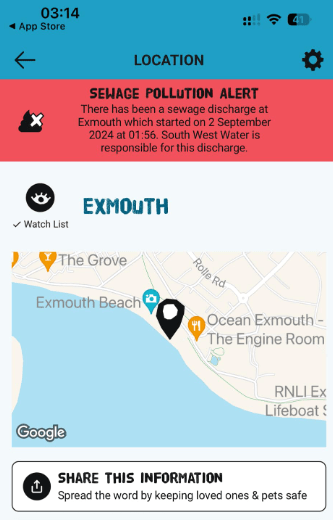
Following heavy rain last night, the Environment Agency detected a sewage discharge at Exmouth starting at 01:56 2 September.

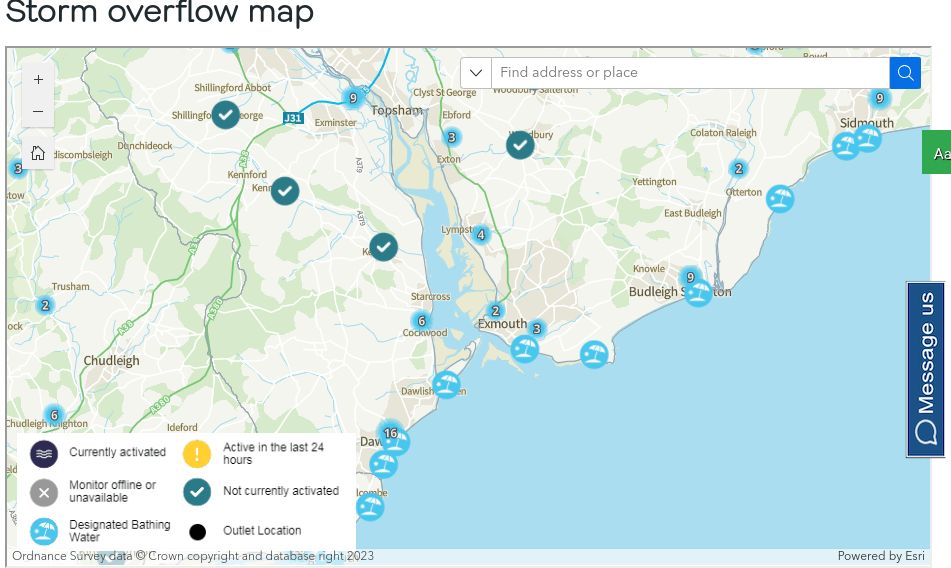
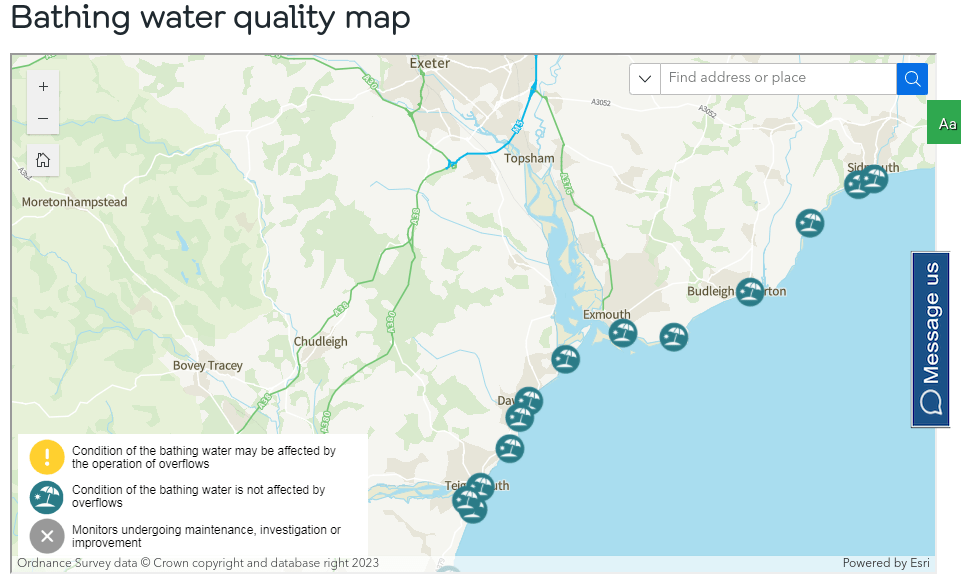
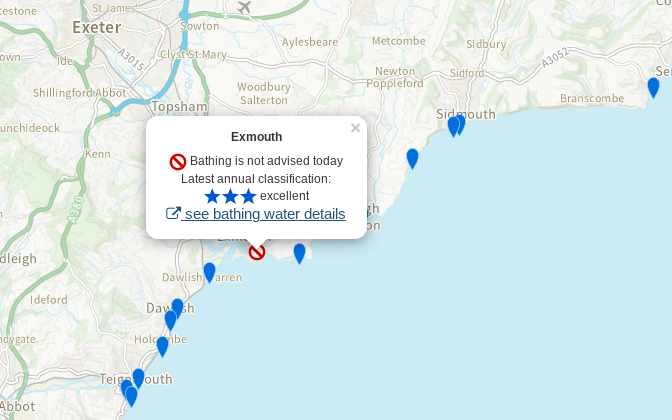
Surfers against Sewage map shows alerts at Exmouth, Budleigh, Sidmouth, Beer and Seaton

Does this really help to find a solution to the sewage crisis?

“The best way to move forward is to move as one.” – David Reed MP

Surely we look to our MP to take the lead. – Owl

David Reed MP

This weekend’s ‘Red Flag’ sewage warning on Exmouth beach has become too common of a sight. The negative effect on local wellbeing, business and tourism has been palpable, and I have deep concerns that our area is starting to gain a national reputation for all of the wrong reasons.

Since being elected last month, I have kept to my word and prioritised finding the fastest but most long-term solution to sorting out the sewage situation we find ourselves in.

Over the last month I have met with South West Water (SWW), the Environment Agency and a range of local businesses and landowners to establish consensus on how best to move in the right direction.

SWW have told me that they are willing to quickly bring structural engineering funds forward to start upgrading and enhancing their network across Exmouth and Budleigh Salterton.

Although this is the right move by SWW, there needs to be a visible plan so that all local people can hold SWW to account on delivery, as well as seeing improvement.

I have let SWW know that once their investigation across the wider local network is complete (circa 3 weeks), they need to communicate their new delivery plan.

To that end, I will be getting in touch with all local councillors from affected areas (Town, District and County) to arrange an in person briefing session with SWW. There will also be an opportunity for representatives of local business and activist groups etc. to attend a briefing session.

The best way to move forward is to move as one. By collectively working together at the local level, we can get the local results we need.

I will also be working in Parliament to ensure that national legislation is effective, and that regulators have the teeth needed to bite down on underperforming water companies.

#ExmouthandExeterEast

Sewage flowing, helmets on, at ease everyone!

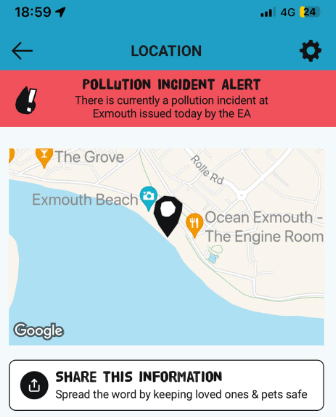
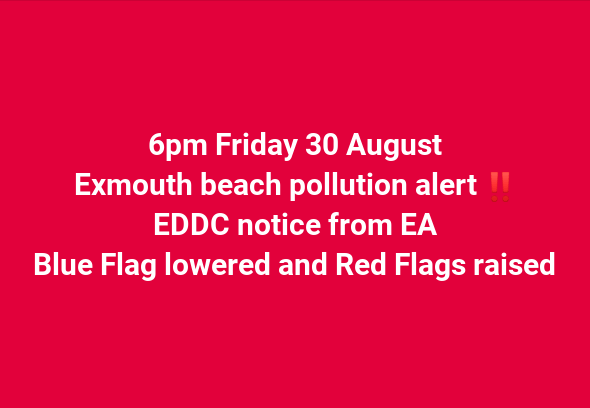
Breaking: 6pm Friday 30 August Exmouth beach pollution alert EDDC notice from EA. Blue Flag lowered and Red Flags raised

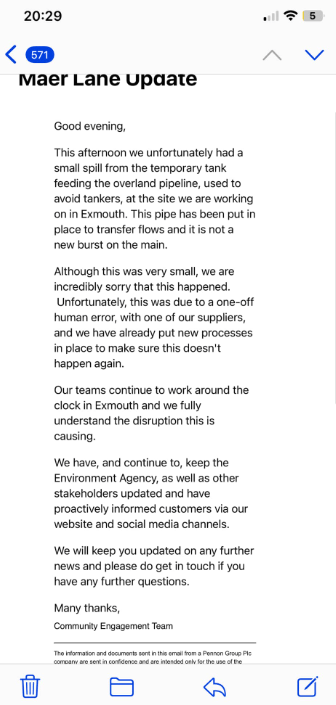
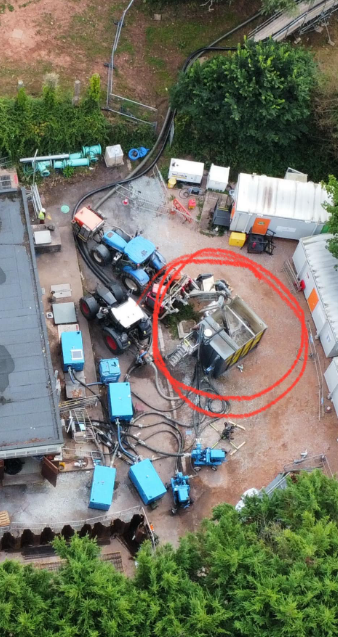
This Heath Robinson affair of six pumps pumping into a tank with two tractors pumping it out and up to Maer Lane. This is what has overflowed and closed Exmouth beach for the third time in August.

This was supposed to replace a major pumping station for four weeks. Hand me another sticking plaster please.

This is SWWs solution to what should have been a replacement rising main.

It’ll cost Exmouth £m’s but SWW don’t care about that. Geoff Crawford ESCAPE

New Homes Accelerator programme to unblock thousands of new homes

Angela Rayner, who builds the sewage treatment works we will need for more homes and when will they build them? Sometime or never?- Owl

Ministry of Housing, Communities and Local Government www.gov.uk

  • A new expert group will speed up delivery of stalled housing sites.
  • Early analysis estimates there are 200 large sites across England which could delivery up to 300,000 new homes.
  • Call for sites launched inviting developers and councils to share details of large-scale housing projects.
  • Supports plans to boost economic growth and deliver 1.5 million homes.

Hundreds of thousands of new homes stuck in the planning system or partially built will be accelerated to help end the housing crisis and drive growth, thanks to the New Homes Accelerator launched by the Deputy Prime Minister today.   

An experienced team from the Ministry of Housing and Homes England will work across government and with local councils to accelerate the buildout of housing schemes delayed by planning and red tape to drive economic growth across every part of the country.

They will hit the ground running by bringing together key players, including government agencies, local planning departments and housebuilders, who will work to resolve specific local issues and deploy planning experts on the ground to work through blockages at each site identified. This includes looking at barriers to affordable housing delivery where relevant.  

Interventions could see the New Homes Accelerator provide resources to support local planning capacity where there are barriers and work across the board to make sure planning decisions are made in a timely fashion.    

Government analysis suggests 200 large sites have outline or detailed plans ready to go but are yet to begin construction, and the team is already getting started on some of those that would benefit from early interventions. The Accelerator will focus on lending a helping hand to frustrated housebuilders and local communities who want to play their part to get Britain building again, in turn driving local and economic growth.  

Councillors call for u-turn on winter payment axe

Devon County Council is set to launch a concerted campaign to persuade the Government to reverse the axing of winter fuel payments to needy pensioners.

Radio Exe News www.radioexe.co.uk

Conservative leader James McInnes and Liberal Democrat councillor Alan Connett have signed a motion to next week’s county council meeting calling on the Government to re-think.

The Government made the announcement last month that only the most needy elderly people on  Pension Credit and other benefits would continue to receive the £300 annual payment to help with their heating bills.

Even those whose only income is a basic State pension won’t qualify.

In the Notice of Motion, Mr Connett says: “In the Devon County Council area, the number of pensioners affected by the change in eligibility criteria is 180,579.

“That means around nine in 10 pensioners currently eligible for winter fuel payments will no longer be able to claim the payment from this winter onwards.

“Council believes that the Labour Government has set the threshold at which pensioners do not qualify for winter fuel payments far too low. 

“Only those receiving a pension of less than £218.15 a week or £332.95 a week for couples are eligible for pension credits. This is significantly lower than the living wage rate.”

“Council further notes that the Energy Price Cap is due to rise by 10 per cent in October which, combined by the removal of winter fuel payments, will push thousands of local pensioners into fuel poverty.”

Mr McInnes said: “It hasn’t taken this Labour Government long to show their true colours.

“The Government claims they will save £1.4 billion by this measure but at the same time has agreed above inflation pay increases for many.

“With their new salaries, many of them will be paying more in tax than our pensioners have to live on.

“It’s estimated these pay increases will cost the country £10 billion, dwarfing the cash that will be saved from hitting some of the most vulnerable members of our community.

“It may well be that some better-off pensioners do not need this money but by making the cap so low I am concerned the Labour Government is effectively forcing some of our most vulnerable residents to choose between heating and eating this winter.

“Historically in Devon many buildings are older and hard to heat – the Government needs to realise that Devon’s residents don’t live in big cities but in rural areas.

“Older people tend to spend more time at home and so need to keep the heating on for longer.

“They’re also more likely to have medical conditions which require them to keep warm.

“Research has shown that rural areas in Devon are already in the most deprived 20 per cent nationally for housing quality and the availability of central heating.

“With the proposed Energy Price Cap, the Government is creating a perfect storm for greater cost-of-living impacts on Devon’s residents.

“As a county council we will do what we can to mitigate the effects of this heartless policy but I believe the Government should use their first Budget next month to announce they are withdrawing this and thinking again.”

Time to celebrate! A decade since the River Otter was rewilded by beavers; and Claire Wright campaigned tirelessly to keep them

In reality it is likely to be longer than this “official” estimate but they certainly would have been “culled” without Claire’s tireless campaigning and liaising with DEFRA and Devon Wildlife Trust.

Even forcing Hugo Swire MP to take up their cause. – Owl

Beavers are thriving in Devon a decade on from rogue rewilding

Tom Whipple www.thetimes.com 

The beavers keep us waiting. By the side of a Devon river, over the course of an hour the fish jump, a kingfisher dives and an egret flaps. But for the two dozen people gathered at dusk — beaver o’clock — there is nothing.

Then it appears. There is a flash of brown under the water and a clatter of cameras above. It is furry, flappy and surprisingly graceful. The beaver is back.

Four hundred years ago Britain’s last beaver was killed — probably for its pelt. Today, though, beaver hats are out of fashion and rewilding is in.

Conservationists are calling for them to return across the UK, just as they already have, partly by accident, here. “We know from a huge body of research that these animals bring some quite significant and exciting changes to our wetland river environments,” says Matt Holden, from Devon Wildlife Trust.

Yet despite promises, despite Boris Johnson’s 2021 pledge to “build back beaver”, in England and Wales plans to reintroduce beavers have stalled. “Where’s the action?” says Holden.

To see why more beavers are a good thing, he said, you only have to look at what has happened in Devon.

No one knows how, but between ten and 15 years ago, the first wild beavers arrived here. At first, all there were were rumours. Like the nearby Beast of Bodmin Moor, the beavers were spotted in Devon in fleeting glances, glimpsed in implausible sightings — and dismissed as otters.

However, you can only ignore nibbled branches, grazed river banks and unexplained dams for so long. Soon, it was clear that beavers really had returned. How did they get here? An escape from a private enclosure? An epic transoceanic beaver exploration from mainland Europe?

Or was it rogue rewilding? Many suspect that conservationists, tired of the bureaucratic impediments to returning ancient species, frustrated by seeing reintroductions in Scotland, decided to circumvent regulations by smuggling in a pair of beavers.

If so, the strategy worked. Once there were beavery signs on the ground (and, in their lodges, under the ground), official beavers followed. Amid strong local support, beavers were taken from Europe, tagged and introduced to new habitats in Devon.

Over the course of a full beaver lifespan they have now been followed, photographed and studied and — in official academic reports — declared to be on balance a good thing. “The overwhelming weight of scientific evidence on the impacts of beaver reintroduction is positive,” Professor Richard Brazier, from the University of Essex said.

Also, we like them. Once, humans were the enemy of beavers. It wasn’t just their fur that we found valuable, it was their scent glands too — which were prized for their vanilla smell. Although, at the time they were confused for another part of the body. Medieval woodcuts show beavers being chased by hunters and gnawing off their own testicles to present to their pursuers, to save their lives.

As we reach the tenth anniversary of Defra-approved Devonian beavers, there is considerably less interest in their testicles and considerably more in their cute noses. There are beaver cafes, beaver merchandise, a healthy population of baby beavers and — on once straight and boring streams — ever-shifting beaver dams. And, each evening, there are people who come to spot them.

As 8.30pm approaches on the river — confusingly, it’s the River Otter — the beavers become bolder. One puts an ear adorned with a green tag above the water line and flops onto the bank. He nibbles at reeds. He masticates noisily. He gets photographed a lot.

Conservation researchers don’t name their animals. That kind of sentimentality is discouraged, in what is a serious science. So Holden only occasionally calls him Gordon the Beaver, before hurriedly correcting himself.

However charismatic Gordon is, though, the real economic case for his fellow beavers — if something furry and wet must be reduced to a spreadsheet entry — comes in what they do to the environment.

Twenty minutes’ drive away, cutting through the maize monocultures of a commercial farm, there is a little strip of woodland, too damp and soggy to be used. Here, there are also beavers. Holden stands on a dam: messy, bulky, leaky — and just occasionally patched up with stolen and nibbled maize.

When you manage waterways for flood protection, you build dams like this. It is hard work, said Holden. First you cut access, clearing trees for the HGVs. Then you move earth, bring in materials, and scar the soil. Afterwards, you have to maintain it.

Or, he said: “You can bring in a beaver … and they’ll go for it.”

The stream weaves and flows between pools. It makes wetlands and mudlands. It deposits sediment and runs clear. Most of all it takes its time. In storms four years ago, villages on an adjoining stream experienced once-in-50-year floods. Directly downstream from the beavers East Budleigh, the village where Walter Raleigh was born long after the loss of Devon’s last beaver, survived undampened.

Back on the River Otter, the light is fading. Gordon emerged from the underwater entrance to his lodge. This time, he is not alone. There is another beaver, younger than him. This time, they leave with purpose — with an intent to beaver away somewhere. But where that will be, the beaver watchers don’t know. Paddling together, they disappear into the Devon night.

New development proposals near your town – join the debate

In preparation for East Devon District Council’s new Local Plan, proposals for residential and employment development site allocations across East Devon will be considered at a series of public meetings throughout September.

Venue: Council Chamber, Blackdown House, Honiton

eastdevon.gov.uk

East Devon District Council’s (EDDC) Strategic Planning Committee will consider every potential development site allocation with dedicated time for residents, and town and parish councils, to make their views heard. EDDC has previously consulted on all sites under consideration either at the end of 2022 into early 2023 or in spring of this year and views expressed through these consultations are being considered as part of this process.

Each meeting will focus on certain areas:

  • 3 September: Exmouth, Lympstone, Woodbury, Exton (morning); Budleigh Salterton, East Budleigh, Otterton (afternoon)
  • 11 September: Sidmouth, Newton Poppleford (morning); Seaton, Colyton, Beer, Branscombe, Uplyme (afternoon)
  • 20 September: Honiton (inc. edge-of-town sites in Gittisham), Dunkeswell, Upottery (morning); Axminster, Hawkchurch, Musbury, Kilmington (afternoon)
  • 23 September: Strategic West End Sites, Broadclyst, Clyst St Mary, West Clyst, Whimple (morning); Ottery St Mary, Tipton St John, West Hill, Payhembury, Plymtree, Broadhembury (afternoon)

Details of how to participate in these meetings will be available on EDDC’s website. Meetings will also be streamed online via EDDC’s YouTube channel.

Agenda with easy access to the individual site selection reports can be found here

Cllr Todd Olive, EDDC Portfolio Holder for Strategic Planning, said:

“After three public consultations and years of technical work, we are now approaching the stage where we must make decisions about what sites should be developed under the new Local Plan.

“Deciding where to build in our part of the world is one of the hardest decisions we have to make. In many cases, as residents ourselves, we share your concerns, and your frustrations, about the process we are going through.

“However, we have little choice but to push on. If we don’t, the government have made clear that they will not hesitate to step in and make a Local Plan for us – with 28% higher housing numbers. To avoid this, we not only need to make tough decisions – we need to make them quickly. If we don’t publish a final draft plan in the next few months then we will have to restart the Local Plan process under the new, higher housing targets.

“Going forwards, we will be making a clear case to government about the constraints of our area and our desperate need for more funding for infrastructure. We are also working with South West Water to understand the issues with existing sewage infrastructure, and to make sure  that improvements align with the increase in demand from new homes and come forwards before new development is occupied.

“The new Local Plan has a target of 946 new homes per year. Through this new Plan, we will also be striving to provide more affordable homes for our residents, protect green spaces and biodiversity, and drive decarbonisation and job creation.”

Watch Cllr Todd Olive’s video message.

Mysterious tank in Budleigh has been removed

The Budleigh correspondent who sent in the images of this mysterious tank now reports that it was removed sometime last week. Since it has gone, it seems it was not part of the proposed pump upgrade mentioned by Susan Davy in her letter to Cllr Henry Riddell. 

Owl’s correspondent is pretty sure that it is a separation tank that might be used to separate debris from cleaning water. So perhaps it was intended to be part of the Lime Kiln sewage pumping station cleaning operation. This was scheduled to require night closures of the car park, but is now reported to have been postponed because of “ongoing operations” in Exmouth.

UK at risk of missing legally binding target to protect biodiversity – report

The UK is at risk of missing its legally binding target to protect biodiversity and nature, a report has warned.

Britain pledged to protect and conserve at least 30% of the country’s land and sea by 2030 – an international target known as 30×30 that was agreed at the United Nations Biodiversity Conference (COP15) in Montreal in December 2022.

Rebecca Speare-Cole www.independent.co.uk 

However, the government risks missing the target unless it acts urgently to halt and reverse the unprecedented environmental crisis in the UK, according to a report released by the Institute for Public Policy Research (IPPR) on Tuesday.

The UK ranks among the bottom 10% of countries globally for biodiversity, with only 53% of its biodiversity remaining and 41% of UK species seeing significant population declines since 1970, it said.

Meanwhile, there is fewer than than six years left to meet the UN but less than 3% of England’s land and 8% of its seas are effectively protected, the paper adds.

The think tank said the new Labour Government has the opportunity to embed nature recovery into a bold agenda for national renewal as it outlined a blueprint for ministers to tackle the issue.

This plan involves measures like tackling sewage polluters by developing legally binding targets and strengthening powers for the Environment Agency to enforce sanctions.

Other recommendations include delivering a fair transition for farmers, through additional funding for environmentally friendly farming in England and legislating for a right to roam, expanding rights of responsible access to the English countryside.

Joseph Evans, a researcher at IPPR, said: “Britain’s natural landscapes are a source of pride for many of us, but the UK’s nature is in a dire state: biodiversity is failing, species are declining and many people simply don’t have reasonable access to green spaces.

“The new government has an opportunity to reverse nature’s decline and drive progressive change around the country. Restoring nature must be a cornerstone of the government’s national renewal strategy.”

A Defra spokesperson said: “Britain’s nature is in crisis, which is why we have wasted no time in announcing a rapid review of the Environmental Improvement Plan to make sure it is fit for purpose to deliver legally binding targets and halt the decline in species by 2030. This government will also improve access to nature for all by creating nine new National River Walks and three new National Forests.

“We have taken immediate steps to put water companies under tough special measures and turn the tide on the unacceptable pollution of our waterways, while introducing a new deal for farmers to boost food security and restore nature.”

East Devon Plans for 42 homes in Lympstone rejected by EDDC

Plans for 42 new homes in Lympstone,  including some affordable housing, has been rejected by planners.

Bradley Gerrard www.exmouthjournal.co.uk 

The scheme by 3 West, based in nearby Woodbury,  would have been split into two areas, with five larger homes accessed from one point and the other 37 from another.

Concerns about additional traffic on roads serving the new houses – Strawberry Hill and Meeting Lane – were a key concerns of East Devon District Council’s planning committee’s reluctance to approve the development.

Some councillors believed that separating the larger, more expensive homes from the others meant richer home buyers would essentially be segregated.

Some objectors stated that the scheme would only offer 14 affordable homes – 35 per cent of the total – even though planning policy dictates that half of such a site should be deemed affordable.

However, the developer had pledged to contribute nearly £300,000 to help pay for affordable housing elsewhere in the district, thus bringing its notional contribution up to half of its Lympstone scheme.

Opponents who attended the meeting raised fears about flooding, the capability of the sewage system to take on more waste, and that the site is outside the specified boundary for development in Lympstone.

“Using the sustainability argument for the site is disingenuous as most people commute by car,” resident Jane Moffat told the committee.

“We did a survey recently and it showed the train in the village didn’t go to the destinations people needed it too, and that it was too expensive, with bus travel being viewed in the same way.”

Ms Moffat added that the plan was for a coastal preservation area, and that the community did not have the infrastructure to accept 42 more new homes – “including a functioning sewerage system”.

Resident John Brewer, a civil engineer, said he was part of the Lympstone flood resilience group and that blocked gullies and drains on Meeting Lane were a constant issue.

“We categorise the road as a hotspot in terms of this issue, and this proposal will direct surface water to the drainage point on Meeting Lane,” he said.

“The pipe is already susceptible to blockages and the lane prone to flooding.”

Another resident of the nearby Gulliford Close, on the southern boundary of the proposed site, feared a loss of privacy.

“It was clear the developer was doing a survey of the land in 2022, but first approached the community in early 2023 with a development plan, and that hasn’t changed in spite of condemnation of it by residents surrounding its layout and the entrances,” the resident said.

Lympstone parish councillor Susan Francis said while the scheme “might tick a few of East Devon’s boxes, it doesn’t ours. It should be refused as it fails to respect the character of the village,” she said, adding that the proposed Strawberry Hill entranced would be “dangerous and unnecessary”.

“Two Meeting Lane entrances would be better, and designing it as two closes would be more cohesive, as this one creates clear areas of difference.”

David Matthews, 3 West’s director of operations, said his firm would look to deliver the houses “in haste” if it was approved, thanking the council’s officers for their support with the plans.

“We have agreed with officers that 35 per cent affordable housing on-site is acceptable, with a mix of rental properties and shared ownership,” he said.

“That has been endorsed by the affordable housing officer, as we will provide £292,000 for more affordable housing in the locality and district.

“Fourteen on-site units is notable and should not be overlooked as the council has been suffering from under delivery; building these would help it reduce its housing waiting list.”

He added the scheme would bring roughly £800,000 in community infrastructure levy payments, a quarter of which is paid to the parish council, while he expected it to create 120 permanent and temporary local jobs across his firm and local sub-contractors.

After a lengthy debate about the most robust policies by which they scheme should be refused, the committee settled on a range encompassing the scheme’s design, location and layout, as well as a lack of pedestrian access, concerns about the impact on mature trees on the site and the lack of social cohesion.

Nine members voted to reject the scheme, with two councillors in favour and one abstaining.

Planning applications validated by EDDC for week beginning 12 August

Planning applications validated by EDDC for week beginning 5 August

East Devon plans for 20 homes near Honiton rejected

An unusual scheme to build 20 homes alongside amenities such as a farm shop, hall and village green has been rejected by planners but a linked application for a football field is going ahead.

Midweek Herald Staff www.midweekherald.co.uk

The proposed scheme for Awliscombe, roughly two miles west of Honiton, featured one application for the houses and other community features, while a separate but linked proposal was submitted to turn some agricultural land into a recreation area.

East Devon District Council officers had recommended the scheme be refused, although some councillors tried to convince colleagues to approve the plan.

The new houses would have been built in the middle of the two existing parts in the village, almost joining them together, but officers flagged that the location would be considered as development in the countryside and therefore contrary to planning policy.

Officers said it wasn’t a “community-driven proposal”, albeit some in the village did support the idea.

They added that a five-home scheme in Awliscombe that featured three affordable dwellings had been approved in previous years and “remains extant”, suggesting that the need for affordable housing in the village was already being served.

Agent Ed Persse, from EJFP Planning, said the applicant R. Falle, had been working with the parish on this mixed scheme, which would include eight affordable homes and four aimed at the over-sixties’ downsizing market.

“It would bolster the council’s housing land supply, and also the council’s affordable housing officer supports it,” he said.

“The parish has protection over the land use and the site is outside the national landscape.”

But Wendy Ormsby, the council’s development manager, said the scheme actually proposed a location for a village hall, but not an actual building.

“Is there a willingness to actually build a second hall in the village at the cost of the community,” she asked.

“A new hall isn’t proposed as part of the development, so it is wrong to assume it will be a built structure.”

Cllr Colin Brown, (Conservative, Dunkeswell and Otterhead) said he thought the committee “should approve the scheme” based on a previous survey which showed the majority of respondents wanted affordable homes built.

Cllr Jenny Brown (Conservative, Honiton St Michael’s) agreed. “There is a need for affordable housing, and if somewhere has a school then you’ve got families, and you don’t want people moving out of thee villages,” she said.

“Villages need to grow and this is giving Awliscombe a chance for a more community feel, more social wellbeing and an age-balanced community.”

Cllr Ian Barlow (Independent, Sidmouth Town) added that even though council policy technically meant the development should be offering more social housing, he thought the scheme had merit.

“We always knock developers for being greedy, but here is one working with the community,” he said.

But Cllr Simon Smith (Independent, Axminster), who acknowledged this view, added that “it is important to differentiate between community-led and community-supported”.

“The parish council’s support focuses on the benefits of the football pitch and the other things it is looking to get rather than the extra housing,” he said.

Ms Ormsby added that there had been 25 letters of objection to the scheme and one neutral comment sent to the council about the plans with no letters of support.

While the housing application was narrowly refused, with six members opting to reject it against four in favour and three abstentions, the separate application for the playing field was approved.

Cllr Barlow added: “Hopefully this debate sends a message to the developer that this plan has merit, and so perhaps they can work with the officers so Awliscombe can have the houses and other facilities to go with it.”

Cranbrook Morrisons to open within months – supermarket giant to create around 75 jobs

The ten year wait for Cranbrook residents will soon be over

Supermarket giant Morrisons has revealed the countdown for its Cranbrook store has begun –  opening is expected within months and around 75 new jobs.

Becca Gliddon eastdevonnews.co.uk

Earlier this year East Devon News exclusively revealed Morrisons was assessing if the current store design and layout was still right for the town.

Now we can share the retail giant has confirmed it has started fitting out the supermarket with the view to opening ‘later this year or early next’, while creating around 75 jobs locally.

Morrisons said it was about to kick-start recruitment for a host of roles at the Cranbrook supermarket, and invited those interested in working at the store to apply.

The official opening date for the Cranbrook Morrisons is yet to be announced.

A Morrsions spokeswoman told East Devon News: “We know that the residents of Cranbrook are eagerly awaiting a new supermarket in the town and are pleased to confirm that we have started fitting out our new store.

“We are looking forward to welcoming customers and expect to open it later this year or early next – as soon as we have an exact date, we will be in touch to let you know.”

The spokeswoman added: “We will be creating circa 75 jobs locally and are about to kick-start our recruitment process.”

In May this year, Morrisons said it recognised Cranbrook residents were keen for the supermarket to open and had expected to be shopping in-store by now.

At that time, the retailer was unable to give an opening date, saying it was assessing the original blueprint of the store, in a bid to assess if the design still reflected the needs of community.

Construction of the supermarket site, in the Court Royal area of Cranbrook, began in October 2022, with the district council hinting the store – and much-awaited town centre – could open to the public at the end of 2023.

The retail-ready site – complete with car park – has been fenced off to the public since its completion.

Diggers moved onto the town centre site the autumn of 2020 and East Devon District Council (EDDC) held an official turf cutting ceremony to celebrate the start of the construction.

In October 2020 EDDC announced the work would take around a year to complete, saying the town centre was expected to have a Morrisons supermarket, children’s day nursery, retail shops, residential apartments, and a new market square ready by the end of 2023.

Cranbook residents have been waiting for a town centre for more than a decade, since building began in 2012.

Anyone interested in applying for a role at Cranbrook Morrsions can visit: www.morrisons.jobs.