
- Proposed single storey extension
 Oak View East Hill Ottery St Mary EX11 1QHRef. No: 24/1613/FUL | Validated: Fri 02 Aug 2024 | Status: Awaiting decision
 - Proposed outbuilding. 14A Cranford Avenue Exmouth EX8 2HTRef. No: 24/1621/FUL | Validated: Fri 02 Aug 2024 | Status: Awaiting decision
- Certificate for lawful development for proposed single storey rear and side extensionsTimbervale Sowton EX5 2AGRef. No: 24/1616/CPL | Validated: Fri 02 Aug 2024 | Status: Awaiting decision
- Discharge of conditions for 24/0778/FUL (Condition 4 : slate roofing) Morningside Vicarage Road East Budleigh Devon EX9 7EFRef. No: 24/1601/DOC | Validated: Thu 01 Aug 2024 | Status: Unknown
- Discharge of conditions for 21/1435/FUL: Condition 3 (landscaping scheme), Condition 4 (details of paint and natural stone) and Condition 5 (arboricultural impact assessment, method statement and tree protection details) Cringleford Cottage Stepps Lane Axmouth Seaton EX12 4ASRef. No: 24/1598/DOC | Validated: Thu 01 Aug 2024 | Status: Awaiting decision
- Oak: reduce lateral canopy to east and south east by up to 2 metres (via thinning); crown raise lower branches overhanging conservatory to give approx. 4m clearance from property; crown raise low tertiary branches growing into no.46 up to approx. 4m and reduce overextending branches (via thinning) by up to 2m; remove all major deadwood overhanging gardens to the east and south east. Winslade Park Main House Winslade Park Clyst St MaryRef. No: 24/1600/TRE | Validated: Thu 01 Aug 2024 | Status: Awaiting decision
- T1: Red Oak – shorten back over garden and drive by 1-2m. T2: Lime – reduce by approximately 3m and reshape to leave a natural form leaving a height of approximately 20m and a radial spread of 5m. T3: Oak – prune and re-shape by 0.5-1m to leave a more compact form. 9 Little Knowle Budleigh Salterton EX9 6QSRef. No: 24/1606/TCA | Validated: Thu 01 Aug 2024 | Status: Awaiting decision
- T1, Eucalyptus: reduce height by approximately 3m and shorten side growth by a similar amount to a suitable pruning position with cuts no larger than 75mm. T2, Eucalyptus: fell. Littlebrook Bickwell Valley Sidmouth Devon EX10 8RFRef. No: 24/1605/TCA | Validated: Thu 01 Aug 2024 | Status: Awaiting decision
- T2, Monterey Pine: thin crown by approximately 30% to include an overall crown spread and height reduction of 1-2 m, maximum diameter of cuts 125mm. Pinecrest Southway Sidmouth EX10 8JLRef. No: 24/1596/TRE | Validated: Wed 31 Jul 2024 | Status: Awaiting decision
- Discharge of conditions for 22/0437/FUL : Condition 3 (Construction Management Plan – CMP) Land Adjacent Watercombe Farm BranscombeRef. No: 24/1591/DOC | Validated: Wed 31 Jul 2024 | Status: Awaiting decision
- Eucalyptus and Italian Cypress: cut both down to ground level. 18 Little Knowle Budleigh Salterton EX9 6QSRef. No: 24/1597/TCA | Validated: Wed 31 Jul 2024 | Status: Awaiting decision
- Garage extension 31 Hulham Road Exmouth Devon EX8 3JZRef. No: 24/1587/FUL | Validated: Tue 30 Jul 2024 | Status: Awaiting decision
- Discharge of conditions for 22/2417/FUL : Condition 4 (external finishes) Metcombe Brake Higher Metcombe Ottery St Mary Devon EX11 1SRRef. No: 24/1585/DOC | Validated: Mon 29 Jul 2024 | Status: Unknown
- Erection of greenhouse Woodhill House Woodhouse Hill Uplyme DT7 3SLRef. No: 24/1568/FUL | Validated: Mon 29 Jul 2024 | Status: Awaiting decision
- Single storey side garage and front porch extension Strawberry Hill Cottage 13 Strawberry Hill Lympstone EX8 5JZRef. No: 24/1573/FUL | Validated: Mon 29 Jul 2024 | Status: Awaiting decision
- Screening opinion for a proposed solar farm with a 15MW output for a temporary period of 50 years, including associated infrastructure, permanent grid connection hub and environmental enhancements. Land At Kerswell Barton BroadclystRef. No: 24/0003/EIA | Validated: Mon 29 Jul 2024 | Status: Awaiting decision
- Prior notification for construction of new general purpose agricultural building for storageHigher Silverdale Land East Of Yawl Cross Lyme Road UplymeRef. No: 24/1569/AGR | Validated: Mon 29 Jul 2024 | Status: Awaiting decision
- T1, Oak: lateral reduction of primary limb on southern aspect where overhanging 125 & 127 Parkside Drive; reduce lower section of canopy by 2m. Maximum diameter of cut 50mm; reduce upper section of canopy by 1-1.5m. Maximum diameter of cut 30mm; remove major hazardous deadwood. 21 Valley Way Exmouth Devon EX8 4PDRef. No: 24/1580/TRE | Validated: Tue 30 Jul 2024 | Status: Awaiting decision
- Discharge of condition for 21/0255/VAR: Condition 7 (Trees)The Birches Lower Broad Oak Road West Hill Devon EX11 1XHRef. No: 24/1578/DOC | Validated: Tue 30 Jul 2024 | Status: Awaiting decision
- Discharge of condition for 23/2155/FUL: Condition 3 (window/door details) Flat 2 7 Louisa Terrace Exmouth Devon EX8 2AQRef. No: 24/1564/DOC | Validated: Mon 29 Jul 2024 | Status: Unknown
- Ash: fell. 33 Church Hill Honiton EX14 2DBRef. No: 24/1550/TRE | Validated: Thu 01 Aug 2024 | Status: Awaiting decision
- Variation of condition 2 (approved plans) of planning permission 24/0139/FUL (demolition and replacement of the existing dwelling and garage and associated minor external works within garden.) to enable increase to ground floor area and changes to fenestration and materials to elevations Kenwood Woodhouse Hill Uplyme Devon DT7 3SLRef. No: 24/1530/VAR | Validated: Wed 31 Jul 2024 | Status: Awaiting decision
- Prior Approval for the conversion of 2 no agricultural barns to create five commercial units for Class E purposes under Class R. Courtbrook Farm Clyst St George Devon EX3 0NTRef. No: 24/1516/PDR | Validated: Tue 30 Jul 2024 | Status: Awaiting decision
- Variation of condition 2 (approved plans) of permission 22/2122/FUL (Erection of two storey 4-bed detached dwelling, erection of a detached single garage and demolition of existing dwelling) to allow changes to first floor elevations, finished floor level and external ground and terrace levels Weetwood Offwell Devon EX14 9SBRef. No: 24/1505/VAR | Validated: Thu 01 Aug 2024 | Status: Awaiting decision
- Rowan – reduce to a height just above main trunk unions to incorporate tree into hedgerow. Uncle Toms Cabin (Land North Of Beer Haven) Long Hill BeerRef. No: 24/1500/TRE | Validated: Mon 29 Jul 2024 | Status: Awaiting decision
- Variation of condition 2 of planning approval 23/2087/FUL (Demolition of existing garage and construction of single storey annex on west elevation; proposed new garage with loft store; ground floor rear single storey extension, extended first floor dormer; new render on external walls) with the inclusion of a rear balcony 42 Honey Park Road Budleigh Salterton EX9 6EGRef. No: 24/1492/VAR | Validated: Tue 30 Jul 2024 | Status: Awaiting decision
- Variation of condition 5 (operating hours) of planning permission 21/2219/VAR (Erection of retail store (5,996 sq m gross) with petrol filling station, other retail units (633 sq m gross) with assorted car parking, pedestrian and vehicular and vehicular access and landscaping) to allow store servicing, deliveries and associated activities from 5am (instead of 7am) Monday to Saturday Tesco Stores Ltd Swan Road Seaton EX12 2USRef. No: 24/1469/VAR | Validated: Mon 29 Jul 2024 | Status: Awaiting decision
- Internal and external alterations including partial demolition, and extension of building for leisure (Use Class F2) and apart hotel (Use Class C1) uses. The Stables Winslade House Manor Drive Clyst St MaryRef. No: 24/1471/LBC | Validated: Thu 01 Aug 2024 | Status: Awaiting decision
- Removal of rear conservatory to be replaced with single storey rear extension and garage conversion67 Chichester Close Exmouth Devon EX8 2LRRef. No: 24/1461/CPL | Validated: Sat 03 Aug 2024 | Status: Awaiting decision
- Removal of conservatory and chimney to be replaced with single storey side extension, rear facing first floor dormer and alterations to fenestration on front elevation 38 Foxholes Hill Exmouth EX8 2DQRef. No: 24/1459/FUL | Validated: Wed 31 Jul 2024 | Status: Awaiting decision
- Demolition of outbuildings and existing extension on south elevation, and replacement with new single storey extension. The Priory Greenway Woodbury Devon EX5 1LPRef. No: 24/1464/FUL | Validated: Fri 02 Aug 2024 | Status: Awaiting decision
- Erection of a general purpose agricultural building and associated laying of hard-core track Land Adjacent Slowpool OffwellRef. No: 24/1462/FUL | Validated: Wed 31 Jul 2024 | Status: Awaiting decision
- Installation of two air source heat pumps Lower Mincombe Farm Sidbury Sidmouth EX10 0QNRef. No: 24/1457/FUL | Validated: Wed 31 Jul 2024 | Status: Awaiting decision
- Proposed Driveway for disabled access7 Summersby Close Seaton EX12 2BYRef. No: 24/1450/FUL | Validated: Mon 29 Jul 2024 | Status: Awaiting decision
- Construction of single storey side extension following demolition of existing lean-to and boiler house. Harris Farm Talaton Exeter EX5 2RQRef. No: 24/1447/LBC | Validated: Mon 29 Jul 2024 | Status: Awaiting decision
- Prior approval (Class Q) for a change of use of agricultural buildings to 3no. dwellinghouses (Use Class C3) James Barn Kerswell Cullompton EX15 2ESRef. No: 24/1448/PDQ | Validated: Tue 30 Jul 2024 | Status: Awaiting decision
- Construction of single storey side extension following demolition of existing lean-to and boiler house. Harris Farm Talaton Exeter EX5 2RQRef. No: 24/1446/FUL | Validated: Mon 29 Jul 2024 | Status: Awaiting decision
- Increase in size to existing small porch on front elevation. 66 Brixington Lane Exmouth EX8 4JGRef. No: 24/1429/FUL | Validated: Wed 31 Jul 2024 | Status: Awaiting decision
- Construction of single storey side extension on north east elevation 14 Three Acre Close Axminster EX13 5GJRef. No: 24/1428/FUL | Validated: Thu 01 Aug 2024 | Status: Awaiting decision
- Removal of existing shed structure and creation of new glazed link between chapel and side chapel, creation of opening in chapel to provide access to new glazed link between chapel and side chapel, creation of raised platform for kitchen and installation of mezzanine level at western end of chapel, enlargement and alteration of door openings in western end of chapel, demolition of wall existing wall and installation of new doorway and glazing into courtyard, blocking up of opening between side chapel and rear extension, repair of windows in principal elevation, and replacement of existing windows in main chapel and side chapel, and demolition and partial rebuilding of boundary wall to provide parking. Methodist Chapel King Street Colyton Devon EX24 6LFRef. No: 24/1413/LBC | Validated: Mon 29 Jul 2024 | Status: Awaiting decision
- Rear single storey extension, front porch and associated landscaping. 6 Hardys Court Hawkerland Road Colaton Raleigh Devon EX10 0HLRef. No: 24/1411/FUL | Validated: Tue 30 Jul 2024 | Status: Awaiting decision
- Proposed conversion of former chapel to create 1 no. dwelling, including enlargement and alteration to existing rear extension, and demolition and partial rebuilding of boundary wall to provide parking. Methodist Chapel King Street Colyton Devon EX24 6LFRef. No: 24/1412/FUL | Validated: Mon 29 Jul 2024 | Status: Awaiting decision
- Proposed first floor extension on south/west elevation with terrace, replacement roof and external cladding. Honiton Golf Club Honiton EX14 9TRRef. No: 24/1393/FUL | Validated: Wed 31 Jul 2024 | Status: Awaiting decision
- Re-development of outbuilding to 1no. two storey dwelling with amenity space 95A Exeter Road Exmouth EX8 1QDRef. No: 24/1386/FUL | Validated: Fri 02 Aug 2024 | Status: Awaiting decision
- Construction and operation of a micro energy storage facility. Land Adjacent Hampton By Hilton Exeter Airport Clyst HonitonRef. No: 24/1362/FUL | Validated: Mon 29 Jul 2024 | Status: Awaiting decision
- Signage to advertise, to road users, the business taking place on the property. This will be a combination of raised signage and signage attached to our existing fencing. Hidden Oak Equine And Country Aylesbeare Devon EX5 2JPRef. No: 24/1361/ADV | Validated: Mon 29 Jul 2024 | Status: Awaiting decision
- Demolition of existing youth club building and construction of replacement community hub building. Lympstone Preschool School Hill Lympstone Devon EX8 5JYRef. No: 24/1355/FUL | Validated: Tue 30 Jul 2024 | Status: Awaiting decision
- Retrospective planning application to create hardstanding for parking and undertake building operations to assist with surface water drainage on siteRidge Cottage Stockland EX14 9ENRef. No: 24/1293/FUL | Validated: Wed 31 Jul 2024 | Status: Withdrawn
- Extension to kitchen and re-building of failed retaining wall. 30 George Street Exmouth Devon EX8 1LLRef. No: 24/1235/FUL | Validated: Mon 29 Jul 2024 | Status: Awaiting decision
- Change of use of Cumberland Cottage and its adjoining extensions. Including 1987 front extension and guest house extension, from C1 Hotel to C3 Residential use; change of use of annexe apartments, currently classed as C1 Hotel rooms to C3 Holiday use; remove managers use restriction on residential bungalow. Permission to split and sell all the above properties, plus residential staff cottage leasehold/commonhold The Richmond Hotel Elysian Fields Sidmouth EX10 8UJRef. No: 24/1175/LBC | Validated: Tue 30 Jul 2024 | Status: Awaiting decision
- Change of use of Cumberland Cottage and its adjoining extensions. Including 1987 front extension and guest house extension, from C1 Hotel to C3 Residential use; change of use of annexe apartments, currently classed as C1 Hotel rooms to C3 Holiday use; remove managers use restriction on residential bungalow. Permission to split and sell all the above properties, plus residential staff cottage leasehold/commonhold The Richmond Hotel Elysian Fields Sidmouth EX10 8UJRef. No: 24/1174/FUL | Validated: Tue 30 Jul 2024 | Status: Awaiting decision
- Variation of condition 2 (approved plans) of planning permission 23/0749/FUL (Change of use and conversion of existing retail and storage buildings into 2 No. dwellings, including the erection of a replacement garage structure and removal of existing buildings and hardstandings) to incorporate conversion of attached lean-to storage building to create enlarged floor space for approved store building conversion J R Layzell And Son Awliscombe EX14 3PPRef. No: 24/1152/VAR | Validated: Fri 02 Aug 2024 | Status: Awaiting decision
- Removal of single storey side extension to be replaced with two-storey side extension on North West elevation, single storey rear extension, loft conversion including rear-facing dormer and replacement front porchJasmin Cottage Crogg Lane Uplyme Devon DT7 3TNRef. No: 24/1140/FUL | Validated: Mon 29 Jul 2024 | Status: Awaiting decision
- Proposed works following fire damage: re-build lean-to store with 2no. rooflights on side north west elevation; install 2no. double doors on north west elevation. Roof: Replace damaged timbers, rainwater goods, re-slate and thermal upgrade. Internally: insulate walls, replace internal finishes to partitions, ceilings and plaster; retain internal doors, replace damaged architraves and skirting; replace all floor finishes; floorboards and floor joists replaced where necessary. Externally: all external windows and doors to be replaced; downpipes, guttering and fascia boards replaced; damaged render replaced; damaged timber elements replaced; external wall to bathroom and utility rebuilt. West Clyst Farm Cottage West Clyst Devon EX1 3TRRef. No: 24/1080/LBC | Validated: Wed 31 Jul 2024 | Status: Awaiting decision
- Proposed First Floor extension and new roof. Little Foxholes 15 Foxholes Hill Exmouth EX8 2DFRef. No: 24/1062/FUL | Validated: Wed 31 Jul 2024 | Status: Awaiting decision
Category Archives: Misc
Social housing rents to rise as part of UK push to build affordable homes
Social housing rents will rise by more than inflation over the next decade as part of UK government plans to boost affordable housebuilding and shore up the finances of struggling landlords.
Jack Simpson www.theguardian.com
The chancellor, Rachel Reeves, is working on plans to introduce a 10-year formula to calculate social rent on homes that will result in rents increasing every year by the rate of the consumer prices index – which is now 2.2% – plus 1%, removing an existing cap on rises.
Reeves is expected to announce the plan at her first budget, on 30 October, alongside measures to raise taxes and cut spending.
The plan for social rent homes – those rented usually at 50% of market rate – will be welcomed by the councils and housing associations who are now facing a squeeze on their finances, which has put the brakes on housebuilding.
Bodies such as the National Housing Federation, which represents England’s housing associations, and the Local Government Association, the national membership body for local authorities in England and Wales, have lobbied for a 10-year rent settlement to give landlords more certainty over cashflows, and the confidence to invest in new stock.
The changes were designed to provide long-term certainty to landlords, a government source told the Financial Times, which first reported Reeves’s rent plan.
The deputy prime minister, Angela Rayner, has promised to achieve the biggest boost to affordable and social housing in a generation as part of a target of building 1.5m homes during this parliament.
Last month she outlined a series of housing policies to support this, including promises to soon provide “rent stability” and details of government investment.
In recent decades, councils have largely stopped large-scale housebuilding, with local authorities providing less than 2% of the new homes in the country for more than 40 years.
Housing associations, which now build the majority of social homes, have also put the brakes on development spending, instead investing in existing buildings after the Grenfell Tower fire and various scandals exposed the poor standards across their stock.
Last month, the Guardian revealed that housing associations started only 30,631 affordable homes in the 12 months to March 2014, down 22% on the year before.
The rent rise will mean consistently higher rates for some of the 3.8 million social rent households in England, who have been shielded from huge inflationary increases in recent years by government caps on rent rises.
However, this is also likely to add to the government’s housing benefit bill across the period as many social renters receive housing support.
Social landlords have seen policy repeatedly change under the previous government.
The Conservative-led coalition government initially set a 10-year rent settlement in 2012 that would lead to rents increasing by the rate of the retail prices index plus 0.5%. This was reversed in 2015 by the then chancellor, George Osborne, when he introduced an annual rent cut of 1% for four years in an attempt to reduce the housing benefit bill.
In 2020, the sector was given a five-year settlement of CPI plus 1%. However, the government later capped any increases at 7%, after the headline rate of inflation hit more than 11% in 2022.
According to the NHF, rents are now 15% lower in real terms than they were in 2015, while the cumulative rent cuts and caps have contributed to councils facing a £2.2bn black hole in housing budgets by 2028.
Andy Hulme, the chief executive of the housing association Hyde, said a long-term deal would play a critical role in attracting additional private sector investment to build more.
He added that the sector would need assurances that the government would stick to the plan, as it had been promised long-term settlements before and been let down.
A spokesperson from the Ministry of Housing, Communities and Local Government said: “Work is ongoing to fix the foundations of our housing and planning system and we will set out our plans at the next fiscal event.”
David Reed MP Meets Susan Davy. She refuses all interviews. What did he achieve?
Today [Wednesday] I met with Susan Davy, the CEO for South West Water, and the Chief Engineering Director. I called on SWW to bring forward planned infrastructure money and to get to work with upgrading our sewage network across #ExmouthandExeterEast.
I have also been clear that their communication with customers needs to improve asap. Only by getting straight to work and engaging properly with local people will trust start to rebuild in the community. I have been given assurances on both of these points, but as always, actions speak louder than words.
Susan Davy refused any interviews with ITV or BBC. Speaks volumes – Owl
To the BBC David Reed said:
“[I] Don’t have confidence [in South West Water] at the moment. But I do believe that they have the right intentions and I think that having spoken to them today they understand the issue, the anger that’s felt in the community and they’re willing to resolve that as quickly as possible.”
In an ITV interview David Reed said he had asked SWW to bring forward investment. He reported that they (SWW) were conducting “a four week analysis across the whole network. They will then be very willing to bring forward that engineering fund to get on with the job.”
But haven’t we heard all this before? In January Simon Jupp wrote:
“During my visit last week, I challenged South West Water on the timescales for a permanent solution and repeated my calls to speed up plans for £38m investment in Exmouth. They can’t take our town for granted again.”
[See: Hesitation, repetition, deviation. – Is Simon Jupp waving or drowning?]


So, how does Exmouth’s MP meeting with Susan Davy compare to Bodmin’s?
Labour has no real plan to fix UK rivers, Feargal Sharkey warns
Labour has no real plan to tackle the sewage crisis damaging Britain’s rivers, leading campaigner Feargal Sharkey has warned as he called for a “root and branch” review of water industry regulators.
Lucie Heath inews.co.uk
The punk rocker turned environmentalist told i the country needs a “clear, decisive strategy” to clean up its waterways, rather than “the confusing messaging” coming from ministers.
He announced plans to lead a mass rally in London in October – the March for Clean Water – to mark the end of Labour’s first 100 days in power and put pressure on the Chancellor in the lead-up to the Budget.
Sharkey will be joined by celebrities and environmental groups, including River Action, Surfers Against Sewage, British Rowing, the Wildlife Trusts and Chris Packham.
He campaigned for Labour in the run-up to the general election but is now calling for “leadership and urgency” from the Government to tackle sewage and other pollution – including agricultural run-off – in rivers, lakes and seas.
He called the Environment Agency “shambolic” and “hopeless” and urged Environment Secretary Steve Reed to “fire the board of both Ofwat and the Environment Agency”.
Sharkey added: “The simple fact of the matter is I see nothing so far that is actually showing anything resembling a strategy and a cohesive plan to deal with either the sewage crisis, the environmental crisis, the agricultural farmyard pollution or indeed the overabstraction of chalk streams.”
Charles Watson, chair and founder of River Action, which is co-ordinating the march, agreed that Labour’s plans “do not nearly go far enough to deal with the scale of the problem they have inherited”.
Labour has announced a number of policies to tackle the sewage crisis, including restrictions on bonuses for chief executives, and refunds for customers when water companies fail to spend their allotted infrastructure funding.
Ministers have also pledged to introduce a Water Bill within the next year, which will bring in automatic fines for water companies and criminal sanctions for bosses that oversee serious pollution.
However, the Government is yet to indicate whether it will increase spending to tackle water quality, for example through increased funding for the Environment Agency or for farmers to tackle agricultural pollution.
Sharkey said he was hearing a “confusing message” from ministers, with the Department for Environment, Food and Rural Affairs (Defra) promising to restrict water boss bonuses, while the Treasury has refused to reintroduce caps on banker bonuses.
He argued that restrictions on bonuses are unlikely to work “because when they did that in the City 10 years ago, everybody just doubled their salaries”.
Sharkey wants Steve Reed to announce a “root and branch” review of water company regulators Ofwat and the Environment Agency, which he said had “utterly failed both consumers and the environment”.
An independent commission should be appointed to carry out the review and report back to Parliament within the next six months, Sharkey said.
The water industry’s economic regulator, Ofwat, is responsible for making decisions on how much companies should invest in their infrastructure and how much customer bills can increase by to fund this work.
Water firms have been accused of not investing enough in their networks over a period of decades, resulting in a deluge of sewage being spilled into lakes, rivers and seas. Ofwat has been criticised for allowing this underinvestment to happen.
In response to growing public outrage over the sewage crisis, water companies have proposed investing £105bn in their infrastructure over the next five years, but have said they will need to increase bills by up to 73 per cent in order to do so.
Ofwat has provisionally approved smaller, but still significant, bill rises, that will see customer bills rise by an average of £94 over the next five years.
Sharkey said it was “outrageous” that water companies were being allowed to increase bills by this amount, and accused Ofwat of “dithering around, incapable of acting and protecting the public interest”.
He said the Government should step in and “freeze” bill increases until an independent review of the industry is carried out.
The Environment Agency is responsible for enforcing environmental laws, but the department’s funding has been dramatically cut in recent years.
Earlier this year, i revealed a significant reduction in the number of pollution events being attended by the EA, with the watchdog failing to visit 90 per cent of incidents in 2022.
“The Environment Agency we know has proved itself to be completely and utterly hopeless. It is just utterly shambolic and incapable of enforcing even existing environmental law,” Sharkey said.
Although Labour has announced a number of policies to tackle the sewage crisis, Sharkey said more needs to be done.
“We need to tear the whole thing down and start all over again. I don’t think there’s any point pretending that is not what’s going to have to happen,” he said.
i is also calling on the Government to go further, by signing up to a five-point manifesto to Save Britain’s Rivers. It calls on ministers to overhaul Ofwat and provide more funding for the Environment Agency to allow it to do its job properly.
Some of Labour’s pledges to date align with i‘s manifesto, including plans to introduce tougher fines and restrict bonuses. However, the Government is yet to meet all i‘s demands, including increased funding for the regulator and farmers.
Campaigners on the March for Clean Water are calling on the Government to back up its words with cash.
BBC Springwatch presenter and environmentalist, Chris Packham, will be joining the protest.
He told i: “I’m sick of being ripped off, fobbed off, lied to and poisoned by greedy rich bastards, inept regulators and lazy governments. Let’s spill out of the rivers and on to the streets and put the shits up them.”
Mr Watson said: “The initial noises coming out of our new Government regarding cleaning up our filthy waterways, whilst encouraging, do not nearly go far enough to deal with the scale of the problem they have inherited.
“Nothing short of wholescale reform of our failed regulatory system and comprehensive strategies to address all major sources of pollution, including sewage discharges and agricultural run-off, will suffice.”
A Department for Environment, Food and Rural Affairs spokesperson said: “We share the public’s anger on this issue and have taken immediate steps to reverse the tide on the unacceptable destruction of our waterways.
“Our Water Bill will include new powers to ban bonuses and bring criminal charges against law breakers. This is just the first step in our wider reform of the sector.
“This Government will never look the other way while water companies pump record levels of sewage into our rivers, lakes and seas.”
When is Feargal Sharkey’s March for Clean Water?
On 26 October, Feargal Sharkey will lead the March for Clean Water. It will bring together charities, environmentalists, and other organisations linked to the UKs waters.
They will include British Rowing, British Canoeing, Greenpeace, the RSPB, The Women’s Institute, The Wildlife Trusts, the Rivers Trust and River Action.
The rally will mark Labour’s first 100 days in power and take place days before Rachel Reeves is due to deliver her first Budget.
The campaigners are calling on the Government to announce the following:
- A root and branch review of the regulation and the water industry. Sharkey says an independent commission must immediately be appointed to overhaul Ofwat and the Environment Agency;
- A plan to address the continuous illegal dumping of raw sewage by water companies;
- A full set of solutions to end all other major sources of water pollution, including agricultural waste and chemicals.
Environment Agency considering legal action after sewage spill at Exmouth
David Reed MP is quoted in this National Press article but readers should also remember his initial words which may explain why he has been so slow to react:
“It’s easy to shout loudly about how annoyed we all are with the situation, and I completely get it- I am affected in the same way. However, to see the results we deserve will take time and perseverance.“
Environment Agency considering legal action after sewage spill at Devon beach
The Environment Agency is considering legal action against South West Water after the company spilled sewage into the sea at a Devon beach.
Helena Horton www.theguardian.com
Swimmers were told to stay out of the sea at Exmouth beach after a sewer burst on private land on Thursday next to Maer Lane wastewater treatment works.
The Environment Agency said: “As regulator, we are keeping pressure on the water company to do all it can to prevent pollution from damaging bathing water quality.
“We continue to monitor the site closely and encourage the public to check Swimfo for the latest status of bathing water quality before swimming.
“Given the seriousness of the incident, the Environment Agency is considering what legal approach to take for these pollutions on Exmouth beach.”
Clarissa Newell, regulatory manager at the Environment Agency, told BBC Radio Devon: “We are investigating and considering all enforcement options … that could be a warning, it could be the water company promises to invest in the environment they damaged or the infrastructure that caused that damage, or we go to prosecution.”
A spokesperson for South West Water said it had temporarily fixed the broken sewer pipe, adding: “We always work with all of our regulators, including the Environment Agency, and are continuing to keep them fully updated.
“We continue to work around the clock to complete this essential work. We would like to thank residents and visitors for their patience, and we are sorry for the disruption caused throughout this event.”
The company has been using tankers to transfer sewage flowing into the treatment works to reduce the spill while repairs are under way.
There have been concerns about the impact on local tourism, with reports the beach was much quieter than usual over the weekend. After the spill, yellow warning signs were erected and lifeguards used loudspeakers to warn people against going in the water.
David Reed, the Conservative MP for Exmouth and Exeter East, said: “To see Exmouth beach with so few people enjoying it on a beautiful August day is extremely depressing.
“This current event with South West Water needs to end ASAP. I’ve been clear with senior representatives from SWW that it’s their duty to provide accurate and timely updates to let locals and tourists alike know how repairs are progressing.”
Earlier this summer, businesses in the south-west reported tourism was down after the parasitic disease cryptosporidium was found in South West Water’s supply.
Dozens of people reported falling ill and people in the Brixham area had to boil their tap water for weeks until they were alerted that it was safe to drink.
Beach accessibility scheme at Budleigh, Sidmouth and Seaton
Following a successful trial in Beer and Seaton, beaches in Sidmouth and Budleigh Salterton will now benefit from accessibility matting.
Adam Manning www.exmouthjournal.co.uk
A scheme designed to improve beach access for residents and visitors with mobility issues has been extended by East Devon District Council (EDDC).
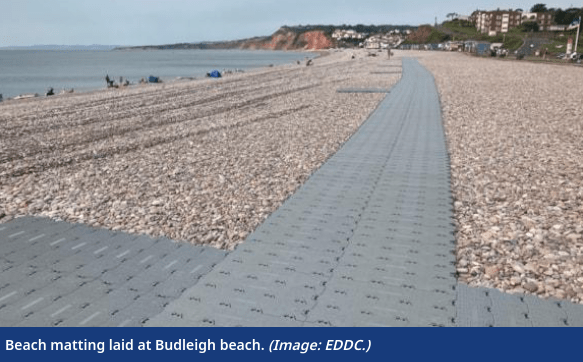
Following successful trials at Seaton and Beer beaches over the last three summers. It’s now a permanent feature all year round in Beer, and has been extended to the rest of Seaton beach.
The council’s StreetScene team has installed the new track matting at the eastern end of Seaton beach, Sidmouth Town beach and Budleigh Salterton beach.
The track matting creates a smooth path across the pebbles, making it easier for mobility scooter, wheelchair and pushchair users, and those who are unsteady on their feet, to access the beach.
Each beach has approximately 200 square metres of modular matting, which is made partly from recycled material.
The layouts vary at each location depending on user needs, the shape of the beach and the size of the flat area available.
The matting will remain in place until late September, before it is safely stored through the winter and returned next May.
The project is funded by: EDDC, Budleigh Town Council, Sidmouth Town Council, East Devon National Landscape Access for All Fund and EDDC’s sustainable tourism programme (via the UK Shared Prosperity Fund).
The project is aligned with EDDC’s Tourism Strategy which encourages growth through a commitment to quality, sustainability, accessibility and collaboration.
As a core value of the strategy, accessibility supports developments in East Devon’s tourism offer, by providing the same quality experience to visitors of all abilities and enabling everyone to enjoy the area’s outstanding natural environment.
Councillor Nick Hookway, portfolio holder for culture, leisure, sport and tourism, East Devon District Council, said: “I’m delighted to see that the beach track matting accessibility project is now being expanded. It is absolutely essential that every visitor to our seaside towns has the ability to enjoy a day on the beach”.
Exmouth sewage issue sparks concern over Lympstone homes plan
Plans to build more than 40 homes in a Devon village have been refused amid councillors’ concerns about failures in the sewage network.
EDDC takes action – Owl
Miles Davis www.bbc.co.uk
The 3West development company wanted to build 42 homes on fields at Lympstone.
East Devon District Council (EDDC) members said they were extremely worried the homes would be on the same sewage network as Exmouth where there have been repeated sewage leaks.
Councillors also raised concerns about the design and layout of the plans and the site being outside of a built-up area.
The beach was closed to swimmers in Exmouth on Saturday and Sunday after a sewage leak caused untreated sewage to be pumped out into the sea.
The developer 3West wanted to build 42 homes – including 14 classed as affordable – on fields on the edge of Lympstone, off Meeting Lane.
EDDC planning officers had recommended the scheme for approval.
Several members of the public spoke out against the scheme citing concerns about highways, flooding and pressure on local health and education services.
Councillors on the planning committee first voted not to approve the plans but there was then a period of confusion where they struggled to list reasons for refusal.
The meeting heard the plans would have been subject to a “Grampian condition” being put in place – a planning term which would prohibit development until a specified action has been taken, external, such as the provision of supporting infrastructure.
Following the meeting David Matthews from 3West said his firm would be considering their options going forward.
Bodmin’s new LibDem MP presses Susan Davy for action in Cornwall – Exmouth’s MP has only just joined the queue
Cornish born and bred Ben Maguire, newly elected MP for Bodmin, has already met Susan Davy and pressed her for rapid improvements in North Cornwall which he lists in detail, with regular update meetings.
He will be watching progress closely.
Nothing about acting as a “bridge” to improve customer relations.
Meanwhile Exmouth’s MP has only just joined the queue, though he has been incredibly busy, see below – Owl.
Ben Maguire MP (text of facebook post)
I had a constructive meeting with South West Water’s Chief Exec Susan Davy. I explained the sewage scandal in our rivers and seas is unacceptable and must now be urgently addressed with actions not words. I also raised:


I pressed Susan and her team to urgently roll out these improvement works so we do not continue to see huge amounts of sewage dumped in our rivers and seas. They have agreed to work with me to ensure rapid improvements are made across North Cornwall and meet with me regularly to update on their progress so I will be watching closely.
#Progress #EndTheSewageScandal #CleanWaterNo

[Susan Davy centre, Ben Maguire on the right]
In the meantime, Exmouth’s Action Man has had more important things to do!
Radio Exe (text of facebook post]
New Exmouth and Exeter East MP David Reed joins us in the studio for the new Devoncast, talking about how the future looks for Exmouth and the Conservatives in Devon, as well as giving us a sky-diving update!

Exmouth MP to meet SWW boss after sewage spill. Is he already too late?
David Reed wants to act as a “bridge” between disparate groups in Exmouth that are upset with the water company, and bring them together with the firm in a bid to improve relations.
But as a companion post shows, he has been pipped to the post by LibDem MP for Bodmin, Ben Maguire, who has already held substantive talks with Susan Davy, including issuing a list of demands for improvements.
David Reed has only just joined the queue to see her.
By not acting with the urgency the situation of sewage pouring down country lanes into the sea in August demanded, Has he left it too late? – Owl
Bradley Gerrard, local democracy reporter www.radioexe.co.uk
Exmouth MP David Reed is to meet South West Water’s boss after a sewage spill stopped people going in the sea for five days.
Mr Reed has requested a meeting with the firm’s chief executive, Susan Davy, in a bid to encourage it to bring forward planned infrastructure spending.
According to its business plan, the company expects to spend £2.8 billion from 2025 to 2030 on “water quality and resilience, with a pledge to fix storm overflows at beaches and eradicate pollutions”.
But Mr Reed, elected to the new Exmouth and Exeter East constituency last month, wants it to bring some of this forward.
“This is not a new issue. It’s something that has been going on for some time and it’s not good enough,” he said.
“I’ve been an MP just over a month and there has already been two sewage spills in the town, the latest of which led to the beach being closed during the vital tourist season.
“There’s infrastructure funding there and I want to see if this can be brought forward.”
Mr Reed acknowledged that there would be “no overnight fixes” but hoped he could make progress on the issue, something he campaigned on during his year-long bid to become an MP.
He added that he wanted to act as a “bridge” between disparate groups in Exmouth that are upset with the water company, and bring them together with the firm in a bid to improve relations.
Business owners have contacted Mr Reed about the impact the spills have had, with those that rely on the water and the beach particularly hard hit.
The issue near the Maer Lane treatment plant last Wednesday prompted East Devon District Council leader Paul Arnott (Liberal Democrat, Coly Valley) to label the incident a “historic new low” for the water and sewage firm.
“Despite multiple reassurances from South West Water that they have Exmouth under control, they simply do not,” Mr Arnott said. This incident not only impacted our residents but also the tens of thousands of tourists that visit Exmouth.
“Our officers and the Environment Agency attended the site as soon as the spill was reported and took direct action to advise residents and visitors not to bathe in the water.
“I thank them for their rapid response.”
He added that the beach had been ‘red flagged’ meaning it was deemed unsafe to use.
The issue was caused by problems at Maer Road pumping station.
South West Water said it had been “working around the clock in Exmouth” to repair the burst pipe from Maer Road pumping station at Maer Lane.
“We are pleased to say that we have now completed the temporary fix, and the pipe is up and running, and we can now begin planning the permanent repair,” a spokesperson said.
“However, tankers will remain on site as a precaution. We would like to thank residents and visitors for their patience, and we are sorry for the disruption caused throughout this event.”
It added that it continued to liaise with the Environment Agency so that it could “take the appropriate steps to protect the environment and public health”.
Breaking: Paul Arnott, East Devon leader, on South West Water and two burning questions for government
“The time has come for direct government intervention at Secretary of State level. There are two burning questions. First, please can you reform the whole system and change the ownership of water companies urgently? Second, how can you expect any local authority to give planning permission for the homes you want when the sewage system is broken? It’s going to be a very challenging time for this new government.”
Paul Arnott (full article from local press)
Many, many years ago – 45 to be precise – I would have just received my A Level Results in Economics, History and English. It’s often said that what you learn at school proves useless in later life, but those three subjects left me with a lifelong curiosity and an active engagement in them all.
In Economics, we were taught not to blow the massive tax take from North Sea Oil on debt and to rebuild the country instead. Hmm. That didn’t happen. But more usefully it taught lessons about how infrastructure spending, well-managed, could provide many great outcomes quite apart from new houses, railways or utility provisions. Jobs and growth, for example.
History, and in particular study of the Civil War and Oliver Cromwell’s Protectorate afterwards, taught me that without a strong democracy with maximum participation a country inevitably relapses, in our case to the Restoration of the monarchy of Charles II. Having had the opportunity to be the first great Republic in the world a hundred years before America, we blew it, and let the landowners so keen on enclosing common land to increase rather than diminish their power. The arrogance of land ownership by a few wealthy descendants of that time blights what housing we can build and where to this day.
English took me to places where a sporty seventeen-year-old might not willingly go, for example to Geoffrey Chaucer, whose Canterbury Tales peppered with glorious 14th Century characters is like a time tunnel back to medieval England, much of which is around us from the Guildhall in Exeter to dozens of our churches.
This weekend, I thought of a phrase which is credited to Chaucer a lot – when chickens come home to roost. In the Parson’s Tale, he wrote that a curse coming out of the mouth of someone would often return to haunt them as (in the Old English) “a bryd that retorneth agayn to his owene nest.” And why was I thinking of that? The answer: the antics of South West Water.
In February this year, our council at East Devon decided to pass a motion of no confidence in them, for good reason. Their infrastructure was failing across the district, and there was a lot of evidence that this was the inevitable result of paying dividends to shareholders rather than investing over many years, the results of which were sewage running down high streets, burst manhole covers, failed pumping stations, ailing treatment plants – all now coming home to roost.
At the end of last week, I took the rare action of issuing a press release. It read “Many incidents both before and after that decision have fully justified the vote, but the major sewage spill at Maer Lane last night represents an historic new low. Despite multiple reassurances from South West Water that they have Exmouth under control, they simply do not. This incident not only impacted our residents but also the tens of thousands of tourists that visit Exmouth.” I could not imagine that over last weekend it would get even worse.
The time has come for direct government intervention at Secretary of State level. There are two burning questions. First, please can you reform the whole system and change the ownership of water companies urgently? Second, how can you expect any local authority to give planning permission for the homes you want when the sewage system is broken? It’s going to be a very challenging time for this new government.
“Action Man” (former Royal Marine – now Exmouth’s MP) to meet Susan Davy
At last “Action Man” does something but does “rebuilding trust” mean solving the sewage crisis or will it be nothing more than a PR exercise?
To see Exmouth beach with so few people enjoying it on a beautiful August day is extremely depressing.
This current event with South West Water needs to end asap. I’ve been clear with senior representatives from SWW that it’s their duty to provide accurate and timely updates to let locals and tourists alike know how repairs are progressing.
I will also be meeting with the CEO of SWW this week to call on her to bring forward structural engineering funds, and to get on with the job of upgrading their sewage network.
Because patience has been lost, I will spend time over the coming weeks and months with representatives from SWW, local activist groups and businesses, along with local councillors to start rebuilding trust.
Now is the time for action, not words. I have campaigned extensively to have SWW clean up our water, and now that I am elected I will be doing all I can to make this happen.

Planning applications validated by EDDC for week beginning 29 July
- Certificate for lawful development for proposed single storey rear and side extensionsTimbervale Sowton EX5 2AGRef. No: 24/1616/CPL | Validated: Fri 02 Aug 2024 | Status: Awaiting decision
- Proposed single storey extension Oak View East Hill Ottery St Mary EX11 1QHRef. No: 24/1613/FUL | Validated: Fri 02 Aug 2024 | Status: Awaiting decision
- Discharge of conditions for 21/1435/FUL: Condition 3 (landscaping scheme), Condition 4 (details of paint and natural stone) and Condition 5 (arboricultural impact assessment, method statement and tree protection details) Cringleford Cottage Stepps Lane Axmouth Seaton EX12 4ASRef. No: 24/1598/DOC | Validated: Thu 01 Aug 2024 | Status: Awaiting decision
- Discharge of conditions for 24/0778/FUL (Condition 4 : slate roofing) Morningside Vicarage Road East Budleigh Devon EX9 7EFRef. No: 24/1601/DOC | Validated: Thu 01 Aug 2024 | Status: Unknown
- Oak: reduce lateral canopy to east and south east by up to 2 metres (via thinning); crown raise lower branches overhanging conservatory to give approx. 4m clearance from property; crown raise low tertiary branches growing into no.46 up to approx. 4m and reduce overextending branches (via thinning) by up to 2m; remove all major deadwood overhanging gardens to the east and south east. Winslade Park Main House Winslade Park Clyst St MaryRef. No: 24/1600/TRE | Validated: Thu 01 Aug 2024 | Status: Awaiting decision
- T1, Eucalyptus: reduce height by approximately 3m and shorten side growth by a similar amount to a suitable pruning position with cuts no larger than 75mm. T2, Eucalyptus: fell. Littlebrook Bickwell Valley Sidmouth Devon EX10 8RFRef. No: 24/1605/TCA | Validated: Thu 01 Aug 2024 | Status: Awaiting decision
- T1: Red Oak – shorten back over garden and drive by 1-2m. T2: Lime – reduce by approximately 3m and reshape to leave a natural form leaving a height of approximately 20m and a radial spread of 5m. T3: Oak – prune and re-shape by 0.5-1m to leave a more compact form. 9 Little Knowle Budleigh Salterton EX9 6QSRef. No: 24/1606/TCA | Validated: Thu 01 Aug 2024 | Status: Awaiting decision
- Eucalyptus and Italian Cypress: cut both down to ground level. 18 Little Knowle Budleigh Salterton EX9 6QSRef. No: 24/1597/TCA | Validated: Wed 31 Jul 2024 | Status: Awaiting decision
- Discharge of conditions for 22/0437/FUL : Condition 3 (Construction Management Plan – CMP) Land Adjacent Watercombe Farm BranscombeRef. No: 24/1591/DOC | Validated: Wed 31 Jul 2024 | Status: Awaiting decision
- T2, Monterey Pine: thin crown by approximately 30% to include an overall crown spread and height reduction of 1-2 m, maximum diameter of cuts 125mm. Pinecrest Southway Sidmouth EX10 8JLRef. No: 24/1596/TRE | Validated: Wed 31 Jul 2024 | Status: Awaiting decision
- Garage extension 31 Hulham Road Exmouth Devon EX8 3JZRef. No: 24/1587/FUL | Validated: Tue 30 Jul 2024 | Status: Awaiting decision
- Single storey side garage and front porch extension Strawberry Hill Cottage 13 Strawberry Hill Lympstone EX8 5JZRef. No: 24/1573/FUL | Validated: Mon 29 Jul 2024 | Status: Awaiting decision
- Screening opinion for a proposed solar farm with a 15MW output for a temporary period of 50 years, including associated infrastructure, permanent grid connection hub and environmental enhancements. Land At Kerswell Barton BroadclystRef. No: 24/0003/EIA | Validated: Mon 29 Jul 2024 | Status: Awaiting decision
- Discharge of conditions for 22/2417/FUL : Condition 4 (external finishes) Metcombe Brake Higher Metcombe Ottery St Mary Devon EX11 1SRRef. No: 24/1585/DOC | Validated: Mon 29 Jul 2024 | Status: Unknown
- Discharge of condition for 21/0255/VAR: Condition 7 (Trees) The Birches Lower Broad Oak Road West Hill Devon EX11 1XHRef. No: 24/1578/DOC | Validated: Tue 30 Jul 2024 | Status: Awaiting decision
- Erection of greenhouse Woodhill House Woodhouse Hill Uplyme DT7 3SLRef. No: 24/1568/FUL | Validated: Mon 29 Jul 2024 | Status: Awaiting decision
- Prior notification for construction of new general purpose agricultural building for storageHigher Silverdale Land East Of Yawl Cross Lyme Road UplymeRef. No: 24/1569/AGR | Validated: Mon 29 Jul 2024 | Status: Awaiting decision
- T1, Oak: lateral reduction of primary limb on southern aspect where overhanging 125 & 127 Parkside Drive; reduce lower section of canopy by 2m. Maximum diameter of cut 50mm; reduce upper section of canopy by 1-1.5m. Maximum diameter of cut 30mm; remove major hazardous deadwood. 21 Valley Way Exmouth Devon EX8 4PDRef. No: 24/1580/TRE | Validated: Tue 30 Jul 2024 | Status: Awaiting decision
- Discharge of condition for 23/2155/FUL: Condition 3 (window/door details) Flat 2 7 Louisa Terrace Exmouth Devon EX8 2AQRef. No: 24/1564/DOC | Validated: Mon 29 Jul 2024 | Status: Unknown
- Ash: fell. 33 Church Hill Honiton EX14 2DBRef. No: 24/1550/TRE | Validated: Thu 01 Aug 2024 | Status: Awaiting decision
- Variation of condition 2 (approved plans) of planning permission 24/0139/FUL (demolition and replacement of the existing dwelling and garage and associated minor external works within garden.) to enable increase to ground floor area and changes to fenestration and materials to elevations Kenwood Woodhouse Hill Uplyme Devon DT7 3SLRef. No: 24/1530/VAR | Validated: Wed 31 Jul 2024 | Status: Awaiting decision
- Prior Approval for the conversion of 2 no agricultural barns to create five commercial units for Class E purposes under Class R. Courtbrook Farm Clyst St George Devon EX3 0NTRef. No: 24/1516/PDR | Validated: Tue 30 Jul 2024 | Status: Awaiting decision
- Variation of condition 2 (approved plans) of permission 22/2122/FUL (Erection of two storey 4-bed detached dwelling, erection of a detached single garage and demolition of existing dwelling) to allow changes to first floor elevations, finished floor level and external ground and terrace levels Weetwood Offwell Devon EX14 9SBRef. No: 24/1505/VAR | Validated: Thu 01 Aug 2024 | Status: Awaiting decision
- Variation of condition 2 of planning approval 23/2087/FUL (Demolition of existing garage and construction of single storey annex on west elevation; proposed new garage with loft store; ground floor rear single storey extension, extended first floor dormer; new render on external walls) with the inclusion of a rear balcony 42 Honey Park Road Budleigh Salterton EX9 6EGRef. No: 24/1492/VAR | Validated: Tue 30 Jul 2024 | Status: Awaiting decision
- Rowan – reduce to a height just above main trunk unions to incorporate tree into hedgerow. Uncle Toms Cabin (Land North Of Beer Haven) Long Hill BeerRef. No: 24/1500/TRE | Validated: Mon 29 Jul 2024 | Status: Awaiting decision
- Variation of condition 5 (operating hours) of planning permission 21/2219/VAR (Erection of retail store (5,996 sq m gross) with petrol filling station, other retail units (633 sq m gross) with assorted car parking, pedestrian and vehicular and vehicular access and landscaping) to allow store servicing, deliveries and associated activities from 5am (instead of 7am) Monday to Saturday Tesco Stores Ltd Swan Road Seaton EX12 2USRef. No: 24/1469/VAR | Validated: Mon 29 Jul 2024 | Status: Awaiting decision
- Internal and external alterations including partial demolition, and extension of building for leisure (Use Class F2) and apart hotel (Use Class C1) uses. The Stables Winslade House Manor Drive Clyst St MaryRef. No: 24/1471/LBC | Validated: Thu 01 Aug 2024 | Status: Awaiting decision
- Removal of rear conservatory to be replaced with single storey rear extension and garage conversion67 Chichester Close Exmouth Devon EX8 2LRRef. No: 24/1461/CPL | Validated: Sat 03 Aug 2024 | Status: Awaiting decision
- Erection of a general purpose agricultural building and associated laying of hard-core track Land Adjacent Slowpool OffwellRef. No: 24/1462/FUL | Validated: Wed 31 Jul 2024 | Status: Awaiting decision
- Demolition of outbuildings and existing extension on south elevation, and replacement with new single storey extension. The Priory Greenway Woodbury Devon EX5 1LPRef. No: 24/1464/FUL | Validated: Fri 02 Aug 2024 | Status: Awaiting decision
- Removal of conservatory and chimney to be replaced with single storey side extension, rear facing first floor dormer and alterations to fenestration on front elevation 38 Foxholes Hill Exmouth EX8 2DQRef. No: 24/1459/FUL | Validated: Wed 31 Jul 2024 | Status: Awaiting decision
- Installation of two air source heat pumps Lower Mincombe Farm Sidbury Sidmouth EX10 0QNRef. No: 24/1457/FUL | Validated: Wed 31 Jul 2024 | Status: Awaiting decision
- Construction of single storey side extension following demolition of existing lean-to and boiler house. Harris Farm Talaton Exeter EX5 2RQRef. No: 24/1446/FUL | Validated: Mon 29 Jul 2024 | Status: Awaiting decision
- Proposed Driveway for disabled access 7 Summersby Close Seaton EX12 2BYRef. No: 24/1450/FUL | Validated: Mon 29 Jul 2024 | Status: Awaiting decision
- Prior approval (Class Q) for a change of use of agricultural buildings to 3no. dwellinghouses (Use Class C3) James Barn Kerswell Cullompton EX15 2ESRef. No: 24/1448/PDQ | Validated: Tue 30 Jul 2024 | Status: Awaiting decision
- Construction of single storey side extension following demolition of existing lean-to and boiler house. Harris Farm Talaton Exeter EX5 2RQRef. No: 24/1447/LBC | Validated: Mon 29 Jul 2024 | Status: Awaiting decision
- Increase in size to existing small porch on front elevation. 66 Brixington Lane Exmouth EX8 4JGRef. No: 24/1429/FUL | Validated: Wed 31 Jul 2024 | Status: Awaiting decision
- Construction of single storey side extension on north east elevation 14 Three Acre Close Axminster EX13 5GJRef. No: 24/1428/FUL | Validated: Thu 01 Aug 2024 | Status: Awaiting decision
- Removal of existing shed structure and creation of new glazed link between chapel and side chapel, creation of opening in chapel to provide access to new glazed link between chapel and side chapel, creation of raised platform for kitchen and installation of mezzanine level at western end of chapel, enlargement and alteration of door openings in western end of chapel, demolition of wall existing wall and installation of new doorway and glazing into courtyard, blocking up of opening between side chapel and rear extension, repair of windows in principal elevation, and replacement of existing windows in main chapel and side chapel, and demolition and partial rebuilding of boundary wall to provide parking. Methodist Chapel King Street Colyton Devon EX24 6LFRef. No: 24/1413/LBC | Validated: Mon 29 Jul 2024 | Status: Awaiting decision
- Rear single storey extension, front porch and associated landscaping. 6 Hardys Court Hawkerland Road Colaton Raleigh Devon EX10 0HLRef. No: 24/1411/FUL | Validated: Tue 30 Jul 2024 | Status: Awaiting decision
- Proposed conversion of former chapel to create 1 no. dwelling, including enlargement and alteration to existing rear extension, and demolition and partial rebuilding of boundary wall to provide parking. Methodist Chapel King Street Colyton Devon EX24 6LFRef. No: 24/1412/FUL | Validated: Mon 29 Jul 2024 | Status: Awaiting decision
- Proposed first floor extension on south/west elevation with terrace, replacement roof and external cladding. Honiton Golf Club Honiton EX14 9TRRef. No: 24/1393/FUL | Validated: Wed 31 Jul 2024 | Status: Awaiting decision
- Re-development of outbuilding to 1no. two storey dwelling with amenity space 95A Exeter Road Exmouth EX8 1QDRef. No: 24/1386/FUL | Validated: Fri 02 Aug 2024 | Status: Awaiting decision
- Construction and operation of a micro energy storage facility. Land Adjacent Hampton By Hilton Exeter Airport Clyst HonitonRef. No: 24/1362/FUL | Validated: Mon 29 Jul 2024 | Status: Awaiting decision
- Signage to advertise, to road users, the business taking place on the property. This will be a combination of raised signage and signage attached to our existing fencing. Hidden Oak Equine And Country Aylesbeare Devon EX5 2JPRef. No: 24/1361/ADV | Validated: Mon 29 Jul 2024 | Status: Awaiting decision
- Demolition of existing youth club building and construction of replacement community hub building. Lympstone Preschool School Hill Lympstone Devon EX8 5JYRef. No: 24/1355/FUL | Validated: Tue 30 Jul 2024 | Status: Awaiting decision
- Retrospective planning application to create hardstanding for parking and undertake building operations to assist with surface water drainage on site Ridge Cottage Stockland EX14 9ENRef. No: 24/1293/FUL | Validated: Wed 31 Jul 2024 | Status: Awaiting decision
- Extension to kitchen and re-building of failed retaining wall. 30 George Street Exmouth Devon EX8 1LLRef. No: 24/1235/FUL | Validated: Mon 29 Jul 2024 | Status: Awaiting decision
- Change of use of Cumberland Cottage and its adjoining extensions. Including 1987 front extension and guest house extension, from C1 Hotel to C3 Residential use; change of use of annexe apartments, currently classed as C1 Hotel rooms to C3 Holiday use; remove managers use restriction on residential bungalow. Permission to split and sell all the above properties, plus residential staff cottage leasehold/commonhold The Richmond Hotel Elysian Fields Sidmouth EX10 8UJRef. No: 24/1175/LBC | Validated: Tue 30 Jul 2024 | Status: Awaiting decision
- Change of use of Cumberland Cottage and its adjoining extensions. Including 1987 front extension and guest house extension, from C1 Hotel to C3 Residential use; change of use of annexe apartments, currently classed as C1 Hotel rooms to C3 Holiday use; remove managers use restriction on residential bungalow. Permission to split and sell all the above properties, plus residential staff cottage leasehold/commonhold The Richmond Hotel Elysian Fields Sidmouth EX10 8UJRef. No: 24/1174/FUL | Validated: Tue 30 Jul 2024 | Status: Awaiting decision
- Variation of condition 2 (approved plans) of planning permission 23/0749/FUL (Change of use and conversion of existing retail and storage buildings into 2 No. dwellings, including the erection of a replacement garage structure and removal of existing buildings and hardstandings) to incorporate conversion of attached lean-to storage building to create enlarged floor space for approved store building conversion J R Layzell And Son Awliscombe EX14 3PPRef. No: 24/1152/VAR | Validated: Fri 02 Aug 2024 | Status: Awaiting decision
- Removal of single storey side extension to be replaced with two-storey side extension on North West elevation, single storey rear extension, loft conversion including rear-facing dormer and replacement front porch Jasmin Cottage Crogg Lane Uplyme Devon DT7 3TNRef. No: 24/1140/FUL | Validated: Mon 29 Jul 2024 | Status: Awaiting decision
- Proposed works following fire damage: re-build lean-to store with 2no. rooflights on side north west elevation; install 2no. double doors on north west elevation. Roof: Replace damaged timbers, rainwater goods, re-slate and thermal upgrade. Internally: insulate walls, replace internal finishes to partitions, ceilings and plaster; retain internal doors, replace damaged architraves and skirting; replace all floor finishes; floorboards and floor joists replaced where necessary. Externally: all external windows and doors to be replaced; downpipes, guttering and fascia boards replaced; damaged render replaced; damaged timber elements replaced; external wall to bathroom and utility rebuilt. West Clyst Farm Cottage West Clyst Devon EX1 3TRRef. No: 24/1080/LBC | Validated: Wed 31 Jul 2024 | Status: Awaiting decision
- Proposed First Floor extension and new roof. Little Foxholes 15 Foxholes Hill Exmouth EX8 2DFRef. No: 24/1062/FUL | Validated: Wed 31 Jul 2024 | Status: Awaiting decision
“Two star” South West Water likely to be overrated but “stars mean prizes”
The Environment Agency judges water companies on seven metrics. Scoring highly in one or two of these can “trump” a poor score in, say, sewage spills.
“Stars mean prizes” as companies use them to burnish their corporate credentials to justify their image and higher executive pay.
What a crazy system! – Owl
Sewage-spilling English water firms could be denied ‘top marks’ in rankings
Helena Horton www.theguardian.com
Sewage-spilling water companies will no longer be able to justify high chief executive pay by getting “top marks” in the Environment Agency’s rankings, under plans to tighten rules, the Guardian understands.
Bosses presiding over companies found to “recklessly” discharge sewage have been able to justify their large pay packets because of being awarded the top rating, while companies that preside over sewage spills can call themselves “industry leaders”.
The regulator gives each company a star rating each year. One star is the lowest mark and means the company is urgently in need of improvement, while the highest mark is four stars, which comes with the accolade of being an “industry leader”.
Companies are judged on seven metrics including drought resilience and transparency over sewage spills: if they score highly on some of these, they can get top marks even if they have spilled large amounts of human waste into England’s rivers and seas.
The reforms being considered would mean that to achieve the new highest score, companies would not be able to have a low score for sewage discharges. This metric will also be tightened, the Guardian understands, so it is harder to achieve a good score.
Sources at the EA say it plans to add at least one extra star rating in an overhaul of the rules, so no company found to be spilling sewage will be able to call itself an “industry leader” at the top of the league table and therefore escape scrutiny and justify high CEO pay.
There is unhappiness within the agency, according to the sources, that those at the “top of the league table” boasted of their position and used it as an excuse for high pay. There is also frustration that it gets the companies good PR, allowing them to take attention off their spills because they are not a “basket case” with a one-star rating. According to the sources it was a “very poor league table for anyone in it” and even the best performers were behaving poorly, which was not reflected in the star ratings.
Severn Trent has used the company’s four-star rating to justify the pay packet and bonus of Liv Garfield, its chief executive. This year, Garfield was awarded a £3.2m pay deal, including a £584,000 bonus, despite the company being fined £2m for spilling 260m litres of sewage into the River Trent. Garfield’s year-on-year pay increased by 2.1%, bringing her total take-home pay during her time as Severn boss to more than £28m.
United Utilities also received a four-star rating in 2023, marking the company as an “industry leader”. This may surprise local people, who were told not to swim in the sea at eight beaches that summer due to sewage pollution. The company was also found to be leaking human waste into Windermere in the Lake District. Noxious blue-green algae was seen across its waters, which has been linked to pollution incidents.
Water industry sources said this discrepancy was because the current rules measured company performance by length of sewer networks, but that many pollution incidents were from sewage treatment works or sewage pumping stations. The rules also do not currently cover storm overflows, river and coastal quality, net zero, or nutrient neutrality.
Charles Watson, the founder of the campaign group River Action, said the system needed to change: “The current Environment Agency performance rating system is simply farcical. For water companies who are consistently causing major pollution incidents to somehow receive a top four-star environmental performance rating simply beggars belief.
“I wonder what the local community around Lake Windermere, who have witnessed their iconic lake repeatedly turn bright green due to poisonous algal blooms caused by United Utilities’ failing sewage infrastructure, has to say about UU’s top of the league rating? Also, for already ridiculously overpaid CEOs, such as at Severn Trent, to be using these flawed metrics to justify being even more overpaid is simply downright immoral.”
Giles Bristow, the chief executive of Surfers Against Sewage, said: “With prolific polluters achieving top marks for environmental performance it’s clear these ratings are as suspect as the effluent the water industry is dumping into our rivers and seas. We fully support the Environment Agency reviewing these ratings. This is yet another example of a fundamentally broken system.”
An EA spokesperson said a four-star rating did not mean a company was a “perfect performer” and confirmed it was looking at tightening standards by 2025. They added: “We frequently tighten standards to drive better performance and made very clear that we expect all companies to achieve and sustain better environmental performance.
“More broadly, we continue to strengthen our regulation of the industry, including tightening EPA [environmental performance assessment] metrics, quadrupling water company inspections by March next year and recruiting 500 additional staff to hold water companies to account.”
A United Utilities spokesperson said: “We are pleased to have again attained a top four-star rating. We are not complacent though, and we remain fully focused on delivering performance improvements to protect and enhance the environment for the benefit of all our stakeholders.”
Severn Trent has been contacted for comment.
Tory legacy of disinvestment in housing stock leaves tough choices for EDDC
After 44 years of “right to buy”, with substantially less than 100% retained for investment in new social housing, you would think maintaining the existing stock was vital.
Only now is it becoming clear how little has been invested over the years by East Devon’s successive Tory administration.
An, as yet, not fully quantified “black hole” has appeared.
Cllr Christopher Burhop (Independent, Newton Poppleford and Harpford) who sits on the housing review board, said that: in mid-March, the review board had been told the overspend in the housing department would be nearly £5 million for the year, “but it ended up, just 17 days later, being a [much larger] overspend”.
“That information should be brought to this board for us to scrutinise, as I know it is available and so it should be part and parcel of these meetings.”
The new CEO, Tracy Hendren, took up her appointment in June.
Difficult decision are going to have to be during the autumn. – Owl
Tough choices to tackle East Devon housing finances quandary
Bradley Gerrard www.sidmouthherald.co.uk
East Devon District Council is looking at how it can afford to run its housing service in the coming years.
The council requested nearly £12 million in extra borrowing last month to help fill a black hole in its housing department’s finances. Now, it faces some difficult choices.
“There will not be easy decisions for any member of cabinet,” Catrin Stark, East Devon District Council’s interim director of housing and health, told the authority’s housing review board.
“There will be difficult decisions about the viability of retaining the stock as a local authority, especially given that other local authorities are stating an average cost of £50,000 being required per property to ensure it meets current requirements and standards.”
Councillors want more timely financial information about its housing service, given that the housing review board was, at its August meeting, assessing data for the last financial year that ended in March.
There were also questions about how the service would save £250,000 a year.
Cllr Christopher Burhop (Independent, Newton Poppleford and Harpford) who sits on the housing review board, said the group “needed to see financial indicators… given where we have found ourselves”.
“We have to reassure ourselves and rebuild confidence that we, collectively, are in control of this,” he said.
“That information should be brought to this board for us to scrutinise, as I know it is available and so it should be part and parcel of these meetings.”
He said that in mid-March, the review board had been told the overspend in the housing department would be nearly £5 million for the year, “but it ended up, just 17 days later, being a [much larger] overspend”.
Cllr Colin Brown (Conservative, Dunkeswell and Otterhead) asked whether it would be more prudent for the council to sell its empty properties – known as voids – rather than invest in bringing them back into service.
Ms Stark noted that a “disposal process” would be among the options put to councillors in the autumn.
The council is expecting a report into the state of its housing stock soon, potentially by the end of the month.
Officers said roughly 87 per cent of its properties had now been surveyed, and work was ongoing to ensure the information could be easily uploaded onto the council’s system.
It is hoped this will illuminate how many properties are in disrepair, and the work needed to bring them back into use.
The council has acknowledged it has a “significant number of long-term voids”, something that represents a problem through lost rent to the council, and potentially larger repair bills than homes that have been lived in more recently.
It has budgeted £2.5 million this year on bringing void properties back into service.
Officers also noted that the council had paused any purchases of properties available on the open market, those which tend to be ‘right-to-buy’ homes.
Before the request for extra borrowing, East Devon’s housing revenue account already had nearly £85 million of debt, which costs £2.8 million in annual interest payments.
Breaking (literally) SWW “temporary” repairs to sewer have failed like they did in Phear Park
Tankers resume operations meanwhile David Reed is waiting for the right moment to act. – Owl
Planning applications validated by EDDC for week beginning 22 July
- T8: Lawson Cypress – fell. T6: Holly – fell. The Vicars House The College Ottery St Mary Devon EX11 1DQRef. No: 24/1560/TCA | Validated: Fri 26 Jul 2024 | Status: Awaiting decision
- Oak: T1 – Crown reduce by 2m in height and crown spread over driveway only. Retaining a tree approximately 8m tall and 4m wide. Oak: T2 – Fell dead stem and prune limb running parallel to house back to secondary union nearest to the trunk to achieve a clearance of 2 to 3m laterally and vertically from house. Stuckeys House West Hill Road West Hill Devon EX11 1TURef. No: 24/1562/TRE | Validated: Fri 26 Jul 2024 | Status: Awaiting decision
- Erection of roof over open yardsLower Luxton Farm Upottery Devon EX14 9PBRef. No: 24/1554/AGR | Validated: Fri 26 Jul 2024 | Status: Awaiting decision
- T1, Oak: removal of 1 lowest , previously fractured limb, at approximately 175mm diameter at trunk; removal of 1 lowest secondary branch at approximately 125mm diameter at trunk; removal of small epicormic low growth, overhanging garage roof; tip weight reduction to 2 above branches to raise crown over garage roof, reducing limbs by up to approximately 2m back to suitable growth points, with cut diameters up to 75mm. Land South Of Sidlaw House Coreway Sidford Sidmouth EX10 9SERef. No: 24/1563/TRE | Validated: Fri 26 Jul 2024 | Status: Awaiting decision
- Roofing over silage clamp phase 1 Broadley Farm Yarcombe Devon EX14 9BJRef. No: 24/1541/FUL | Validated: Thu 25 Jul 2024 | Status: Awaiting decision
- Prior approval (class Q) for a change of use of agricultural buildings to 10 no. dwellinghouses (use class C3) and for building operations reasonably necessary for conversion Courtbrook Farm Clyst St George Devon EX3 0NTRef. No: 24/1540/PDQ | Validated: Thu 25 Jul 2024 | Status: Awaiting decision
- Replacement of footbridge and reinstatement of failed retaining wall to riverbank Little Meadow High Street Newton Poppleford Devon EX10 0DWRef. No: 24/1538/FUL | Validated: Thu 25 Jul 2024 | Status: Awaiting decision
- 1no. proposed dwelling (Outline with matter of appearance only reserved) to replace existing static caravan with lawful use as a dwelling Heather Down Farm Aylesbeare Devon EX5 2DQRef. No: 24/1545/OUT | Validated: Thu 25 Jul 2024 | Status: Awaiting decision
- Roofing over silage clamp phase 2 Broadley Farm Yarcombe Devon EX14 9BJRef. No: 24/1542/FUL | Validated: Thu 25 Jul 2024 | Status: Awaiting decision
- Replacement of a glass conservatory roof with a full traditional tiled roof Orchardside Higher Way Harpford EX10 0NJRef. No: 24/1549/FUL | Validated: Thu 25 Jul 2024 | Status: Awaiting decision
- Alterations and extensions involving the removal of part of the rear flat roof and the construction of a single storey two-bedroom dwelling within the existing footprint and creation of outdoor amenity space. Sunnynook 9 Newtown Sidmouth EX10 8PZRef. No: 24/1548/LBC | Validated: Thu 25 Jul 2024 | Status: Awaiting decision
- Variation of Condition 2 (approved plans) of planning consent 23/2706/LBC (proposed replacement windows, change of render colour and new rear dormer) ; amended plans with removal of approval windows central glazing bar Musgrove Farm Dunkeswell Devon EX14 4RRRef. No: 24/1528/VAR | Validated: Wed 24 Jul 2024 | Status: Awaiting decision
- T1, Lucombe Oak: Prune to give 2m clearance to LV and 1m clearance to BT lines; remove dead branches over Exmouth Road. T2, Lucombe Oak: Remove dead branches over driveway and Exmouth Road. 33 Exmouth Road Budleigh Salterton Devon EX9 6AQRef. No: 24/1527/TRE | Validated: Wed 24 Jul 2024 | Status: Awaiting decision
- Proposed single storey rear extension 224 Withycombe Village Road Exmouth Devon EX8 3BDRef. No: 24/1522/FUL | Validated: Wed 24 Jul 2024 | Status: Awaiting decision
- T1, Oak: Reduce crown by up to 2m via thinning on north eastern, south western and south eastern aspects where extending over garden of number 9 Highbury Park. 100mm maximum diameter of cut. 9 Highbury Park Exmouth Devon EX8 3EJRef. No: 24/1532/TRE | Validated: Wed 24 Jul 2024 | Status: Awaiting decision
- Discharge of conditions for 24/0419/FUL (Condition 6 : cladding material) Stoke House Stoke Canon Exeter EX5 4ASRef. No: 24/1520/DOC | Validated: Tue 23 Jul 2024 | Status: Unknown
- Reduce crown laterally to the north by 2m, west by 3m and south by 1.5m to prevent overhang and potential damage to existing buildings. East Clyst The Drive Farringdon Devon EX5 2JDRef. No: 24/1519/TRE | Validated: Wed 24 Jul 2024 | Status: Awaiting decision
- Extension of time period for completion of 21/2899/PDQ (Class Q prior approval for proposed change of use from agricultural barn to one dwellinghouse) for a further 3 years Land South Of Rull Barton Rull Lane WhimpleRef. No: 24/1518/VAR | Validated: Tue 23 Jul 2024 | Status: Awaiting decision
- Construction of a first floor side extension over existing garage. Change of materials to facade. 15 Clinton Close Budleigh Salterton EX9 6QDRef. No: 24/1493/FUL | Validated: Mon 22 Jul 2024 | Status: Awaiting decision
- Variation of condition 1 ((approved plans) on application 24/0418/FUL (Addition of a storey to an existing bungalow by raising the roof, addition of a single storey rear extension, and provision of single storey summer house) – external materials to be used on the development are proposed to be amended. 9 Pollybrook Town Lane Woodbury Exeter EX5 1NFRef. No: 24/1499/VAR | Validated: Mon 22 Jul 2024 | Status: Awaiting decision
- Discharge of condition for 21/0296/FUL and 21/0297/LBC: Condition 5 (Archaeological Report) The Operations Block Dunkeswell Airfield Honiton EX14 4AJRef. No: 24/1508/DOC | Validated: Tue 23 Jul 2024 | Status: Awaiting decision
- Removal of 4.50m length of hedgerow to allow access for tractors to fieldLand At South Of Uplyme Public Footpath 19 Harcombe Devon DT7 3RNRef. No: 24/1511/HRN | Validated: Mon 22 Jul 2024 | Status: Withdrawn
- Proposed single storey rear extension 6 Honeysuckle Drive Honiton EX14 2YLRef. No: 24/1504/FUL | Validated: Mon 22 Jul 2024 | Status: Awaiting decision
- Discharge of conditions for 24/0293/FUL: Condition 3 (Tree Protection Details)Woodhayne Farm Combe Raleigh Honiton EX14 4TGRef. No: 24/1512/DOC | Validated: Tue 23 Jul 2024 | Status: Unknown
- T2, Beech : Remove deadwood (>200mm) and stem on north side of main over road.renew flexible bracing system with a system of a higher working load. T5, Beech : Crown reduction achieved by: i) Reducing low dominant lateral branch growing to the south, by pruning off the western side at first bifurcation at approx. 2m from main stem. ii) Reducing height by pruning back leading vertical stem by approx. 5m, back to vertically aligned side growth. Retaining a tree with a height of approx. 8m and crown spread to the south of 5m. The Beeches Shute Road Kilmington Axminster EX13 7STRef. No: 24/1498/TRE | Validated: Mon 22 Jul 2024 | Status: Awaiting decision
- T18: Goat Willow – fell. Replant with a suitable species back from wall influence. 1 Exeter Royal Academy For Deaf Education Douglas Avenue Exmouth Devon EX8 2AURef. No: 24/1509/TRE | Validated: Mon 22 Jul 2024 | Status: Awaiting decision
- Prior approval (Class Q) for a change of use of a building on an agricultural unit to 1no. dwellinghouse (Use Class C3) Land At Dunsmore Farm Sanctuary Lane WoodburyRef. No: 24/1474/PDQ | Validated: Mon 22 Jul 2024 | Status: Awaiting decision
- Agricultural storage buildingLand North Of Martin Gate Sidmouth Road AylesbeareRef. No: 24/1442/AGR | Validated: Mon 22 Jul 2024 | Status: Awaiting decision
- Prior notification (Class Q(a) and (c)) for a change of use from a building on an agricultural unit to 1no. dwellinghouse (Use Class C3) Weggis Farm Higher Metcombe Devon EX11 1SQRef. No: 24/1435/PDQ | Validated: Tue 23 Jul 2024 | Status: Awaiting decision
- Prior notification (Class Q(a) and (c)) for a change of use from buildings on an agricultural unit to 5no. dwellinghouses (Use Class C3) Weggis Farm Higher Metcombe Devon EX11 1SQRef. No: 24/1436/PDQ | Validated: Tue 23 Jul 2024 | Status: Awaiting decision
- Removal of garden wall to create proposed driveway including dropped kerb 21 Clinton Terrace Budleigh Salterton EX9 6RYRef. No: 24/1423/FUL | Validated: Fri 26 Jul 2024 | Status: Awaiting decision
- Certificate of existing lawful development to confirm that the overall development as approved under applications 22/0653/FUL and 23/0578/VAR has commenced within 3 years of the date of the permission 22/0653/FUL Willoughby House Fore Street Seaton Devon EX12 2ADRef. No: 24/1410/CPE | Validated: Fri 26 Jul 2024 | Status: Awaiting decision
- Removal of rear conservatory to be replaced with single storey rear extension, extension of rear terrace and garage conversionKingfishers Fortescue Road Sidmouth Devon EX10 9QBRef. No: 24/1398/FUL | Validated: Tue 23 Jul 2024 | Status: Awaiting decision
- Roofing over existing livestock yard Devonshire Inn Farm Upottery EX14 9NERef. No: 24/1389/FUL | Validated: Tue 23 Jul 2024 | Status: Awaiting decision
- Replacement of front ground floor window with door and replacement of first floor external double doors with dormer window. 1 Parr Cottages Feniton Honiton EX14 3BDRef. No: 24/1374/FUL | Validated: Wed 24 Jul 2024 | Status: Awaiting decision
- Erection of new garageCopper Beech Goldsmith Lane All Saints Devon EX13 7LURef. No: 24/1382/FUL | Validated: Tue 23 Jul 2024 | Status: Awaiting decision
- Installation of an Asgard bike locker in the grounds of Primley UR Church United Reformed Church Primley Road Sidmouth EX10 9LBRef. No: 24/1365/FUL | Validated: Thu 25 Jul 2024 | Status: Awaiting decision
- Installation of solar panels to the front, (West), elevation. 1 Charles Court Lympstone Exmouth EX8 5ELRef. No: 24/1359/FUL | Validated: Mon 22 Jul 2024 | Status: Awaiting decision
- Demolish existing dwelling and detached garage, construct 1no new dwelling and detached garage Dalwood Hill Farm Bungalow Burrow Knapp Way Dalwood EX13 7ESRef. No: 24/1353/FUL | Validated: Thu 25 Jul 2024 | Status: Awaiting decision
- Retrospective permission for new holiday park manager’s accommodation Camping Site At Moor View Exmouth Road Aylesbeare Devon EX5 2JSRef. No: 24/1338/FUL | Validated: Thu 25 Jul 2024 | Status: Awaiting decision
- Certificate of Proposed Lawful Development to partially demolished rear single storey extension and replace with new extension5 Castle Hill Axminster Devon EX13 5PYRef. No: 24/1339/CPL | Validated: Mon 22 Jul 2024 | Status: Awaiting decision
- Removal of 200m hedgerow to increase field sizes following construction of Dinan Way extension roadLand North Of Summer Lane Summer Lane Exmouth EX8 5BDRef. No: 24/1340/HRN | Validated: Tue 23 Jul 2024 | Status: Awaiting decision
- Change of use of building (Class E(C)(II)) to 1no dwelling with ancillary accommodation (Class D3), internal alterations on ground floor removing walls to create bathroom Grindle House Church Lane Clyst St Mary EX5 1ABRef. No: 24/1335/LBC | Validated: Fri 26 Jul 2024 | Status: Awaiting decision
- Change of use of building ( Class E(C)(II) ) to 1no dwelling with ancillary accommodation (Class D3) Grindle House Church Lane Clyst St Mary Devon EX5 1ABRef. No: 24/1332/FUL | Validated: Fri 26 Jul 2024 | Status: Awaiting decision
- Replace cedar shingle tiles and new lead flashing above D1; replace concave roof above W3; gravel French drain on side west and side south elevations, and remove fireplace in living room. Ground floor: replace 1no. door on side south elevation; replace/refurbish 6no. windows.; damp proofing. First floor: replace 5no. windows on side west and south and rear north elevations. 4 The Hills Sid Road Sidmouth Devon EX10 9AQRef. No: 24/1295/LBC | Validated: Tue 23 Jul 2024 | Status: Awaiting decision
- Construction of first floor side extension.13 Longdogs Lane Ottery St Mary EX11 1HURef. No: 24/1279/FUL | Validated: Tue 23 Jul 2024 | Status: Awaiting decision
- Single storey extension on the north west side of the existing hall Umborne Hall Shute EX13 7QLRef. No: 24/1093/FUL | Validated: Mon 22 Jul 2024 | Status: Awaiting decision
- Retention of wall removed at bottom of stairs and retention of position of vestibule door; proposed replacement of bathroom UPVC window on first floor rear elevation with timber casement 13 Bicton Street Exmouth Devon EX8 2RURef. No: 24/1008/LBC | Validated: Mon 22 Jul 2024 | Status: Awaiting decision
- Repairs work between conservatory and main wall of house due to water ingress. Work to include: removing render above flashing; code 4 apron applied; stainless steel bell cast render stop fitted; lime mortar applied Minchin House 39 Village Way Aylesbeare EX5 2FDRef. No: 24/1003/LBC | Validated: Mon 22 Jul 2024 | Status: Awaiting decision
- Installation of new surface water drain to connect an existing downpipe to the existing soakaway Salem Church Vicarage Road East Budleigh Devon EX9 7EFRef. No: 24/0922/FUL | Validated: Mon 22 Jul 2024 | Status: Awaiting decision
- Installation of lead flashing over a headstone to the front elevation of the building Salem Church Vicarage Road East Budleigh Devon EX9 7EFRef. No: 24/0915/LBC | Validated: Mon 22 Jul 2024 | Status: Awaiting decision
- Replace windows on front elevation, (like for like), replace front door and frame, (like for like) and re render front, side and rear elevations with lime render (part retrospective). 1 Orchard Terrace Church Street Sidford Devon EX10 9RWRef. No: 24/0880/FUL | Validated: Mon 22 Jul 2024 | Status: Awaiting decision
- Replace windows on front elevation, (like for like), replace front door and frame, (like for like) and re render front, side and rear elevations with lime render (part retrospective). 1 Orchard Terrace Church Street Sidford Devon EX10 9RWRef. No: 24/0881/LBC | Validated: Mon 22 Jul 2024 | Status: Awaiting decision
Sunday: South West Water completes temporary fix at Exmouth sewage leak site
Sunday: South West Water said it has completed a temporary fix for a sewage leak in Exmouth. Since Wednesday, August 14, workers have been trying to fix a burst sewer pipe at Maer Road pumping station, which has caused raw sewage to leak into the sea just off Exmouth, prompting ‘do not bathe’ warnings from the local council and the Environment Agency (EA).
Shannon Brown www.devonlive.com
Yesterday [Saturday], August 17, South West Water (SWW) said it had been unable to “keep up” with the flows from the leak and sewage ad spilled from the overflow at the Maer Road pumping station. The company has since said today workers have finished working on a temporary fix.
A temporary pipe has been put in place and work is set to begin on a permanent repair. SWW added that tankers will remain at the Maer Road site as a precaution while this work is completed.
South West Water said: “Our teams have been working around the clock in Exmouth to repair the burst pipe from Maer Road pumping station at Maer Lane. We are pleased to say that we have now completed the temporary fix, and the pipe is up and running, and we can now begin planning the permanent repair.
“However, tankers will remain on site as a precaution. We would like to thank residents and visitors for their patience, and we are sorry for the disruption caused throughout this event.”
The EA is still warning against bathing in the sea in Exmouth. In a statement given on Saturday, August 18, it said: “Swimming is not advised at Exmouth as sewage is spilling from a South West Water storm overflow. This is related to the burst rising main on Wednesday. Check Swimfo for updates.”
East Devon District Council also stated: “Due to the ongoing pollution incident declared by the Environment Agency and prolonged discharges from the Maer rocks CSO we are urging people not to swim off Exmouth while this in force. Officers from East Devon District Council continue to monitor the situation closely.”
David Reed – Wake up and smell, not the coffee, but the sewage!
Last week it was flowing down country lanes into the sea.
As Exmouth’s MP, what are you doing about it and why aren’t you acting NOW?
In your election flyer you wrote:
“Ending sewage pollution into our water will-remain a top priority until we get the results that we deserve. For too long our waters have been wilfully neglected and the scale of the abuse is now clear for all to see.”
Now you have been elected, your tone has changed and you are beginning to sound like a clone of Simon Jupp.
This is what you are now saying on facebook regarding the appalling case of yet another sewer burst in Exmouth, not during the winter or heavy rain but at the height of the tourist season, which closed the beach last week

Full text here:
“Over the past few days I’ve been out on the ground to see the effects that the most recent burst pipe is having on our town and our local economy.
It’s easy to shout loudly about how annoyed we all are with the situation, and I completely get it- I am affected in the same way. However, to see the results we deserve will take time and perseverance.
Over the coming months, I will be convening local stakeholders who want to see an end to this sewage situation to find an acceptable route forward with SWW.
This is what your constituents think!
This is the list of the comments as at 1700 last night (Sunday).
Tracie Hunter
Seriously?? Just how long is required? Your post is meant to pacify & seems you are suggesting the public just stay compliant while the poor multi billionaires decide how best spend our money
Anthony Spencer
Just tell SWW they aren’t allowed to collect any payments from customers until they fulfil their contract adequately.
Weak moaning achieves nothing. Time for drastic action, what do we want to leave to our grandchildren.
They’ve had enough time, they don’t care and they won’t until it hits their pocket. Do something meaningful for your constituents and your grandchildren should you have them.
Keith Thompson
Somehow, SWW have got to be made to realise that discharging raw sewage into the sea when there has been no rainfall is simply not good enough. Even if it is legal, they are not looking after a community that relies so heavily on tourism, both day tripping and actual holidays being taken by hard working families. I’ve yet to see anywhere an explanation for last night’s discharge. As I’ve said, simply not good enough.
Liz Lawley
On the beach with my family today. Visitors on holiday here couldn’t believe that lifeguards with megaphones were getting them out of the sea at a holiday resort because raw sewage was being discharged. They won’t be coming back
Tammy Hogan
This sewage situation is absolutely disgraceful and an embarrassment to our town!! This problem is going to kill our tourism. People will just book abroad for holidays. Would you book a holiday with your family to a seaside resort that stinks of faeces and has sea water full of it. Also on top of all of this the council are still granting planning permission for new houses/apartments to be built!!
Melanie Canton
Simon Jupp spent his entire time as an MP writing emails and having meetings with SWW to no avail. Why do you think more of the same will achieve anything?
Sarah Anderson
Your response is simply not good enough Mr Reed. If you want to represent our constituency you need to start engaging with the issues that matter to your constituents. This is a huge issue which affects everyone in the area. You may not have been in the job long, and you clearly have much to learn. We will not let this matter rest.
There are short term actions that could make a difference today. Tell me why, as residents we should have to put up with any more planned or unplanned sewage spills from SSW?
Dominic Platts
David Reed MP another day, another beach closure. It’s easy to mutter uselessly about doing nothing over the coming months. How about working with and FOR your constituents who have been fighting to stop this impacting their businesses and communities but are threatened with legal action. How about getting Susan Davy to join you in this community and answer why this is happening. Why she won’t respond to requests for comment and why she believes this is an inconvenient event as if it was the first one.
Barry Catton
David Reed MP – enough is enough!
They keep promising and promising…. but no deadlines… no formal plans… no planning applications… no investment… and today no effort to fix the multitude of failings. Get a fixed timetable to double the Mear Lane treatment works, to replace the sewage pipes and fix the discharge pipes. Get a plan and hold them to account!
SWW are destroying Exmouth and successive governments just pat them on the back and say SWW have promisedto fix it and we need to let them get on with it! “IT” is never delivered and tomorrow never comes.
On the 4th July you stated…
“IF YOU WANT A LOCAL PERSON WHO LIVES IN, UNDERSTANDS AND FIGHTS FOR OUR COMMUNITY, PLEASE VOTE DAVID REED”
….. well YOU got voted in now YOU need to deliver your promises!
I can’t believe that this is happening in 2024, yes, 2024! The UK is said to be within the top 10 richest nations on the planet, and yet it’s like we’re living in the early 19th century as far as provision of a basic human need is concerned.
Exmouth has been growing for the past 40 or more years,and yet the investment in infrastructure has not kept up. Yet SWW are taking the money from households and businesses but not investing in a sewerage system to cope.
And the icing on the cake? The new Labour government wants East Devon to build about 33% MORE houses per year than planned for by EDDC.
Paul Fox
It’s better to shout loud than be complicit in silence and inaction David Reed MP.
How much time do water companies need? They’ve had 30 years to invest yet they siphon off investment money to shareholders. That’s what we all should shout about.
Rog Lou
And another problem is that the government wants to keep building more and more houses. The infrastructure cannot cope now, it will be a greater problem with even more toilets being flushed.
Geoff Crawford
Hi David, please share who you have spoken with, what they told you about the situation and what actions they will be taking?
Of course you will continue to work on this through the months ahead but how about an update about this last week?
Bee Knightley
Where in that statement is your grasp of reality in the face of this disaster for our town Mr Reed?
We have all had it with SWW and the way they are running circles around anyone who utters the words “hold them to account“! Before you know it, you’ll be the laughing stock that Simon Jupp was … now is the time to actually show your constituents why you deserve to be our elected MP so why not just get on with it?
Helen Pearce
We now have an UNUSEABLE beach. I haven’t used the beach since my dog swam there last winter and was ill for days.
I’m pretty sure my council tax goes towards the upkeep of the beach as well as my payments to SWW to keep our water processed and clean?
So David Reed our money is paying for you to be in office, your soft, wet and ineffective statement says that you don’t intend doing anything urgently
Nick Warren
We have been waiting 30 odd years since privatisation I think we have waited long enough to get the water systems we deserve ?
Keith Thompson
“in the coming months”? No, no, no. Next week is the time frame everyone’s looking for. What you haven’t said, David Reed MP, is that you have no power whatsoever to do anything about addressing this long running problem affecting the biggest community in your constituency. Have you written to the Secretary of State? Exmouth won’t forget this, you are in danger of falling at the first hurdle of your parliamentary career.
Elaine Cline
This is urgent. As others have said, the former MP for East Devon and his staff spent a lot of time liaising with stakeholders etc since he was elected in 2019.
I am sure you can remember the situation over new year where district/town councillors spent their new year’s day up at Phear Park liaising with various people from South West Water etc about this situation.
If I recall, the former MP for East Devon visited Maer Lane/Phear Park around about this time and posted pictures of himself at the sites. He may have even posted a letter he sent to someone about this situation. He has since deleted his social media so we can’t check back to see what action he took at this time, prior to it and since.
The present MP for Honiton and Sidmouth hosted an event in March in the Houses of Parliament regarding sewage where local and national campaigners came together. The day after this event, the former MP for East Devon secured a debate about South West Water which was attended by many MPs from different political parties across the South West and the former minister, Robbie Moore, as well as the shadow minister was present.
Many of your constituents watched this debate at the time or on catch-up.
Your constituents watch PMQS, committees, debates etc on Parliament Live. They read Hansard notes. They want to see what their MP is doing to represent them.
They want an end to the sewage scandal. It is affecting their livelihoods, health etc
Your constituents are all stakeholders. South West Water are failing your constituents. South West Water are damaging our economy, health etc.
As you know, we have a local campaign group, ESCAPE who have been conscientiously liaising with South West Water, The Environment Agency as well as town and district councillors across the political spectrum for years in an effort to bring an end to this sorry situation.
Your constituents irrespective of whether they voted for you want to know what you have been doing and who you have spoken to about this?
The former MP for East Devon used to post letters on his social media from time to time of who he has written to about various issues. Other MPs have done this.
Have you contacted the Secretary of State for the Environment, Mr Steve Reed about this matter? Have you been in contact with neighbouring MPs about this? etc
Paul Rowley
Also there is a constant issue from the constant droning noise which comes from the sewage treatment works in maer lane which increases at night when it’s raining. There are alot of issues at all times its obvious that the system has been overloaded with all the recent development. We dont need hollow words now we need to see the plans extra treatment plants new upgrades etc etc.
The Beach Shop
This is effecting the sea, beach, environment, people and now business. Year after year it is getting worse and this year just seems endless problems and is really effecting trade as its constantly on news and media outlets, our best asset is our beach and its being ruined. We have to stand up and do something before its too late.
Rebecca Hollywood
Not good enough. Immediate action required- Investment. CEO fired. Fines. Dividends stopped. Profit reduced.
Amanda Sly
This simply cannot wait, your constituents (who are also stakeholders) want action NOW.
Ryan Wheeler
Don’t forget there are short term actions that can start to make a positive difference TODAY. E.g. Getting SWW to stop their subterfuge and weasel words and start being truly open and honest with your constituents to rebuild trust. Just look at their lack of info and distracting messages around this most recent spill (‘pollution incident on private land’). For another quick win – the WaterFit site still uses icons and colours that make it inaccessible to those with vision problems in an attempt to hide the problem (is that beach icon blue for OK or blue with a tint of green for currently spilling poo?). You’ve got a golden opportunity to really make a name for yourself here with an electorate that is disillusioned with politicians in general and often the Conservative Party in particular.
Sharon Ellis- Rehbock
I believe there were similar words from Simon Jupp – as you are the same party surely you can continue where he left off – rather than starting again ! Isn’t there a comprehensive record of his actions in your office? Hope that you find a way of Turing words into actions it seems a never ending list of platitudes.
Martin Freeland
I’ve emailed the responsible govt minister to complain about SWW and also the lack of representation by our elected representative .
Pippa Gibbs
Thank you for your post. We need swift action so that SWW know this risk to our health, community and tourism is untenable. This is a No1 issue for many of your constituents as you will know from the election campaign.
Steve Mackay
It’s time for South West Water to go
Andy Pegman
David Reed MP – what a ridiculously soft approach to something so serious. As our MP, how does this not even seem to anger you. This is an absolute disgrace of a company getting away with it time and time again, essentially trading illegally whilst siphoning our money into their personal accounts. You need to wake up and start acting in our interests right NOW. Not sitting back and giving them months more. Is this really the best you’ve got?! Wake up!!
Marianne Ridgewell
clean bathing & drinking water should be a priority
Claire Cook
It shouldn’t be in this state in the first place.
Why has preventative maintenance not be done, it’s obvious that if things are not maintained/replaced there will be issues.
We haven’t even had any rain so why is there overflow?
This isn’t about improving a working system to make it better. The anger is over SWW not even offering the basics.
It’s the Summer Holidays, my children should be able to play on the beach/sea. Never mind the irreversible damage to the environment.
Andy Fairbanks
Recall petition incoming, only takes 10%

Sue Millard
David I think that this goes beyond how cross anyone is. This kind of spill during tourist season will massively impact our local economy. Tourists won’t come back. Especially as EVERY other beach in the area is fine. I am sure the holidaymakers told not to swim will go elsewhere. And it’s not an isolated incident as Exmouth has been in the news over the winter. A proper remediation plan is needed. This has been going on for months.
Ernesto L’Abrador
Maybe to get stakeholders truly on board we should stop all development that add to the pressure on the system and use Grampian letters regarding future developments, this will focus those minds if you stop them making money and adding to the problem.
Exmouth in Bloom
It’s the disappointment for families on holiday and the long term effect that people won’t bother to come back in case the sewage is discharged again. It’s a disgrace and unacceptable that pipes have burst so many times this year. Surely it would be far cheaper to build a new, state of the art sewage works or an extension to the present sewage works to cope with all the new housing, plus the influx of visitors which almost doubles Exmouth’s population in the Summer months especially.
Cezza Henk
Weak answers from another weak MP.
We had the same platitudes from your predecessor. Alll he did was eat and drink his way round the constituency adding to the 
Prove why you were voted in by having some back bone and doing something to sort this situation. You wanted this job, now earn your keep.
Another career politician hoisted on our area. Prove that you are not out of your depth.
Scott Ratcliffe
Weak statement that shows how completely out of touch you are. No, we won’t stop shouting loudly, how condescending can you be?
In case you missed them here are some defining images of the week


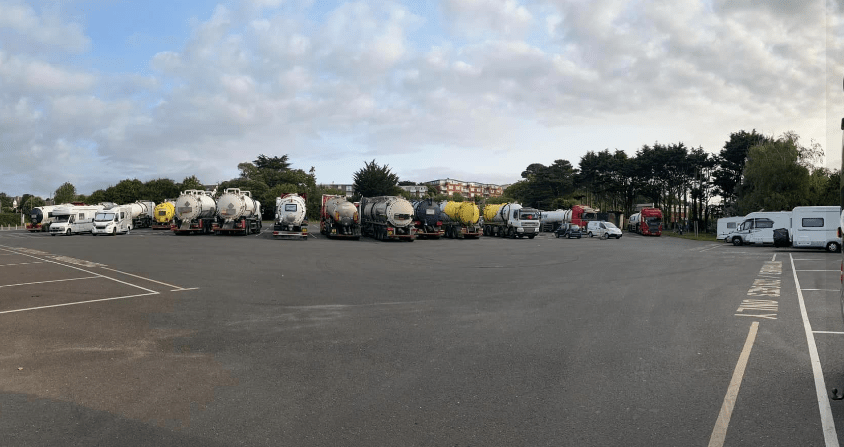
Planning applications validated by EDDC for week beginning 22 July
- T8: Lawson Cypress – fell. T6: Holly – fell. The Vicars House The College Ottery St Mary Devon EX11 1DQRef. No: 24/1560/TCA | Validated: Fri 26 Jul 2024 | Status: Awaiting decision
- Oak: T1 – Crown reduce by 2m in height and crown spread over driveway only. Retaining a tree approximately 8m tall and 4m wide. Oak: T2 – Fell dead stem and prune limb running parallel to house back to secondary union nearest to the trunk to achieve a clearance of 2 to 3m laterally and vertically from house. Stuckeys House West Hill Road West Hill Devon EX11 1TURef. No: 24/1562/TRE | Validated: Fri 26 Jul 2024 | Status: Awaiting decision
- Erection of roof over open yardsLower Luxton Farm Upottery Devon EX14 9PBRef. No: 24/1554/AGR | Validated: Fri 26 Jul 2024 | Status: Awaiting decision
- T1, Oak: removal of 1 lowest , previously fractured limb, at approximately 175mm diameter at trunk; removal of 1 lowest secondary branch at approximately 125mm diameter at trunk; removal of small epicormic low growth, overhanging garage roof; tip weight reduction to 2 above branches to raise crown over garage roof, reducing limbs by up to approximately 2m back to suitable growth points, with cut diameters up to 75mm. Land South Of Sidlaw House Coreway Sidford Sidmouth EX10 9SERef. No: 24/1563/TRE | Validated: Fri 26 Jul 2024 | Status: Awaiting decision
- Roofing over silage clamp phase 1 Broadley Farm Yarcombe Devon EX14 9BJRef. No: 24/1541/FUL | Validated: Thu 25 Jul 2024 | Status: Awaiting decision
- Prior approval (class Q) for a change of use of agricultural buildings to 10 no. dwellinghouses (use class C3) and for building operations reasonably necessary for conversion Courtbrook Farm Clyst St George Devon EX3 0NTRef. No: 24/1540/PDQ | Validated: Thu 25 Jul 2024 | Status: Awaiting decision
- Replacement of footbridge and reinstatement of failed retaining wall to riverbank Little Meadow High Street Newton Poppleford Devon EX10 0DWRef. No: 24/1538/FUL | Validated: Thu 25 Jul 2024 | Status: Awaiting decision
- 1no. proposed dwelling (Outline with matter of appearance only reserved) to replace existing static caravan with lawful use as a dwelling Heather Down Farm Aylesbeare Devon EX5 2DQRef. No: 24/1545/OUT | Validated: Thu 25 Jul 2024 | Status: Awaiting decision
- Roofing over silage clamp phase 2 Broadley Farm Yarcombe Devon EX14 9BJRef. No: 24/1542/FUL | Validated: Thu 25 Jul 2024 | Status: Awaiting decision
- Replacement of a glass conservatory roof with a full traditional tiled roof Orchardside Higher Way Harpford EX10 0NJRef. No: 24/1549/FUL | Validated: Thu 25 Jul 2024 | Status: Awaiting decision
- Alterations and extensions involving the removal of part of the rear flat roof and the construction of a single storey two-bedroom dwelling within the existing footprint and creation of outdoor amenity space. Sunnynook 9 Newtown Sidmouth EX10 8PZRef. No: 24/1548/LBC | Validated: Thu 25 Jul 2024 | Status: Awaiting decision
- Variation of Condition 2 (approved plans) of planning consent 23/2706/LBC (proposed replacement windows, change of render colour and new rear dormer) ; amended plans with removal of approval windows central glazing bar Musgrove Farm Dunkeswell Devon EX14 4RRRef. No: 24/1528/VAR | Validated: Wed 24 Jul 2024 | Status: Awaiting decision
- T1, Lucombe Oak: Prune to give 2m clearance to LV and 1m clearance to BT lines; remove dead branches over Exmouth Road. T2, Lucombe Oak: Remove dead branches over driveway and Exmouth Road. 33 Exmouth Road Budleigh Salterton Devon EX9 6AQRef. No: 24/1527/TRE | Validated: Wed 24 Jul 2024 | Status: Awaiting decision
- Proposed single storey rear extension 224 Withycombe Village Road Exmouth Devon EX8 3BDRef. No: 24/1522/FUL | Validated: Wed 24 Jul 2024 | Status: Awaiting decision
- T1, Oak: Reduce crown by up to 2m via thinning on north eastern, south western and south eastern aspects where extending over garden of number 9 Highbury Park. 100mm maximum diameter of cut. 9 Highbury Park Exmouth Devon EX8 3EJRef. No: 24/1532/TRE | Validated: Wed 24 Jul 2024 | Status: Awaiting decision
- Discharge of conditions for 24/0419/FUL (Condition 6 : cladding material) Stoke House Stoke Canon Exeter EX5 4ASRef. No: 24/1520/DOC | Validated: Tue 23 Jul 2024 | Status: Unknown
- Reduce crown laterally to the north by 2m, west by 3m and south by 1.5m to prevent overhang and potential damage to existing buildings. East Clyst The Drive Farringdon Devon EX5 2JDRef. No: 24/1519/TRE | Validated: Wed 24 Jul 2024 | Status: Awaiting decision
- Extension of time period for completion of 21/2899/PDQ (Class Q prior approval for proposed change of use from agricultural barn to one dwellinghouse) for a further 3 years Land South Of Rull Barton Rull Lane WhimpleRef. No: 24/1518/VAR | Validated: Tue 23 Jul 2024 | Status: Awaiting decision
- Construction of a first floor side extension over existing garage. Change of materials to facade. 15 Clinton Close Budleigh Salterton EX9 6QDRef. No: 24/1493/FUL | Validated: Mon 22 Jul 2024 | Status: Awaiting decision
- Variation of condition 1 ((approved plans) on application 24/0418/FUL (Addition of a storey to an existing bungalow by raising the roof, addition of a single storey rear extension, and provision of single storey summer house) – external materials to be used on the development are proposed to be amended. 9 Pollybrook Town Lane Woodbury Exeter EX5 1NFRef. No: 24/1499/VAR | Validated: Mon 22 Jul 2024 | Status: Awaiting decision
- Discharge of condition for 21/0296/FUL and 21/0297/LBC: Condition 5 (Archaeological Report)The Operations Block Dunkeswell Airfield Honiton EX14 4AJRef. No: 24/1508/DOC | Validated: Tue 23 Jul 2024 | Status: Awaiting decision
- Removal of 4.50m length of hedgerow to allow access for tractors to fieldLand At South Of Uplyme Public Footpath 19 Harcombe Devon DT7 3RNRef. No: 24/1511/HRN | Validated: Mon 22 Jul 2024 | Status: Withdrawn
- Proposed single storey rear extension 6 Honeysuckle Drive Honiton EX14 2YLRef. No: 24/1504/FUL | Validated: Mon 22 Jul 2024 | Status: Awaiting decision
- Discharge of conditions for 24/0293/FUL: Condition 3 (Tree Protection Details)Woodhayne Farm Combe Raleigh Honiton EX14 4TGRef. No: 24/1512/DOC | Validated: Tue 23 Jul 2024 | Status: Unknown
- T2, Beech : Remove deadwood (>200mm) and stem on north side of main over road.renew flexible bracing system with a system of a higher working load. T5, Beech : Crown reduction achieved by: i) Reducing low dominant lateral branch growing to the south, by pruning off the western side at first bifurcation at approx. 2m from main stem. ii) Reducing height by pruning back leading vertical stem by approx. 5m, back to vertically aligned side growth. Retaining a tree with a height of approx. 8m and crown spread to the south of 5m. The Beeches Shute Road Kilmington Axminster EX13 7STRef. No: 24/1498/TRE | Validated: Mon 22 Jul 2024 | Status: Awaiting decision
- T18: Goat Willow – fell. Replant with a suitable species back from wall influence. 1 Exeter Royal Academy For Deaf Education Douglas Avenue Exmouth Devon EX8 2AURef. No: 24/1509/TRE | Validated: Mon 22 Jul 2024 | Status: Awaiting decision
- Prior approval (Class Q) for a change of use of a building on an agricultural unit to 1no. dwellinghouse (Use Class C3) Land At Dunsmore Farm Sanctuary Lane WoodburyRef. No: 24/1474/PDQ | Validated: Mon 22 Jul 2024 | Status: Awaiting decision
- Agricultural storage buildingLand North Of Martin Gate Sidmouth Road AylesbeareRef. No: 24/1442/AGR | Validated: Mon 22 Jul 2024 | Status: Awaiting decision
- Prior notification (Class Q(a) and (c)) for a change of use from a building on an agricultural unit to 1no. dwellinghouse (Use Class C3) Weggis Farm Higher Metcombe Devon EX11 1SQRef. No: 24/1435/PDQ | Validated: Tue 23 Jul 2024 | Status: Awaiting decision
- Prior notification (Class Q(a) and (c)) for a change of use from buildings on an agricultural unit to 5no. dwellinghouses (Use Class C3) Weggis Farm Higher Metcombe Devon EX11 1SQRef. No: 24/1436/PDQ | Validated: Tue 23 Jul 2024 | Status: Awaiting decision
- Removal of garden wall to create proposed driveway including dropped kerb 21 Clinton Terrace Budleigh Salterton EX9 6RYRef. No: 24/1423/FUL | Validated: Fri 26 Jul 2024 | Status: Awaiting decision
- Certificate of existing lawful development to confirm that the overall development as approved under applications 22/0653/FUL and 23/0578/VAR has commenced within 3 years of the date of the permission 22/0653/FUL Willoughby House Fore Street Seaton Devon EX12 2ADRef. No: 24/1410/CPE | Validated: Fri 26 Jul 2024 | Status: Awaiting decision
- Removal of rear conservatory to be replaced with single storey rear extension, extension of rear terrace and garage conversionKingfishers Fortescue Road Sidmouth Devon EX10 9QBRef. No: 24/1398/FUL | Validated: Tue 23 Jul 2024 | Status: Awaiting decision
- Roofing over existing livestock yard Devonshire Inn Farm Upottery EX14 9NERef. No: 24/1389/FUL | Validated: Tue 23 Jul 2024 | Status: Awaiting decision
- Replacement of front ground floor window with door and replacement of first floor external double doors with dormer window. 1 Parr Cottages Feniton Honiton EX14 3BDRef. No: 24/1374/FUL | Validated: Wed 24 Jul 2024 | Status: Awaiting decision
- Erection of new garageCopper Beech Goldsmith Lane All Saints Devon EX13 7LURef. No: 24/1382/FUL | Validated: Tue 23 Jul 2024 | Status: Awaiting decision
- Installation of an Asgard bike locker in the grounds of Primley UR Church United Reformed Church Primley Road Sidmouth EX10 9LBRef. No: 24/1365/FUL | Validated: Thu 25 Jul 2024 | Status: Awaiting decision
- Installation of solar panels to the front, (West), elevation. 1 Charles Court Lympstone Exmouth EX8 5ELRef. No: 24/1359/FUL | Validated: Mon 22 Jul 2024 | Status: Awaiting decision
- Demolish existing dwelling and detached garage, construct 1no new dwelling and detached garage Dalwood Hill Farm Bungalow Burrow Knapp Way Dalwood EX13 7ESRef. No: 24/1353/FUL | Validated: Thu 25 Jul 2024 | Status: Awaiting decision
- Retrospective permission for new holiday park manager’s accommodation Camping Site At Moor View Exmouth Road Aylesbeare Devon EX5 2JSRef. No: 24/1338/FUL | Validated: Thu 25 Jul 2024 | Status: Awaiting decision
- Certificate of Proposed Lawful Development to partially demolished rear single storey extension and replace with new extension5 Castle Hill Axminster Devon EX13 5PYRef. No: 24/1339/CPL | Validated: Mon 22 Jul 2024 | Status: Awaiting decision
- Removal of 200m hedgerow to increase field sizes following construction of Dinan Way extension roadLand North Of Summer Lane Summer Lane Exmouth EX8 5BDRef. No: 24/1340/HRN | Validated: Tue 23 Jul 2024 | Status: Awaiting decision
- Change of use of building (Class E(C)(II)) to 1no dwelling with ancillary accommodation (Class D3), internal alterations on ground floor removing walls to create bathroom Grindle House Church Lane Clyst St Mary EX5 1ABRef. No: 24/1335/LBC | Validated: Fri 26 Jul 2024 | Status: Awaiting decision
- Change of use of building ( Class E(C)(II) ) to 1no dwelling with ancillary accommodation (Class D3) Grindle House Church Lane Clyst St Mary Devon EX5 1ABRef. No: 24/1332/FUL | Validated: Fri 26 Jul 2024 | Status: Awaiting decision
- Replace cedar shingle tiles and new lead flashing above D1; replace concave roof above W3; gravel French drain on side west and side south elevations, and remove fireplace in living room. Ground floor: replace 1no. door on side south elevation; replace/refurbish 6no. windows.; damp proofing. First floor: replace 5no. windows on side west and south and rear north elevations. 4 The Hills Sid Road Sidmouth Devon EX10 9AQRef. No: 24/1295/LBC | Validated: Tue 23 Jul 2024 | Status: Awaiting decision
- Construction of first floor side extension.13 Longdogs Lane Ottery St Mary EX11 1HURef. No: 24/1279/FUL | Validated: Tue 23 Jul 2024 | Status: Awaiting decision
- Single storey extension on the north west side of the existing hall Umborne Hall Shute EX13 7QLRef. No: 24/1093/FUL | Validated: Mon 22 Jul 2024 | Status: Awaiting decision
- Retention of wall removed at bottom of stairs and retention of position of vestibule door; proposed replacement of bathroom UPVC window on first floor rear elevation with timber casement 13 Bicton Street Exmouth Devon EX8 2RURef. No: 24/1008/LBC | Validated: Mon 22 Jul 2024 | Status: Awaiting decision
- Repairs work between conservatory and main wall of house due to water ingress. Work to include: removing render above flashing; code 4 apron applied; stainless steel bell cast render stop fitted; lime mortar applied Minchin House 39 Village Way Aylesbeare EX5 2FDRef. No: 24/1003/LBC | Validated: Mon 22 Jul 2024 | Status: Awaiting decision
- Installation of new surface water drain to connect an existing downpipe to the existing soakaway Salem Church Vicarage Road East Budleigh Devon EX9 7EFRef. No: 24/0922/FUL | Validated: Mon 22 Jul 2024 | Status: Awaiting decision
- Installation of lead flashing over a headstone to the front elevation of the building Salem Church Vicarage Road East Budleigh Devon EX9 7EFRef. No: 24/0915/LBC | Validated: Mon 22 Jul 2024 | Status: Awaiting decision
- Replace windows on front elevation, (like for like), replace front door and frame, (like for like) and re render front, side and rear elevations with lime render. 1 Orchard Terrace Church Street Sidford Devon EX10 9RWRef. No: 24/0880/FUL | Validated: Mon 22 Jul 2024 | Status: Awaiting decision
- Replace windows on front elevation, (like for like), replace front door and frame, (like for like) and re render front, side and rear elevations with lime render. 1 Orchard Terrace Church Street Sidford Devon EX10 9RWRef. No: 24/0881/LBC | Validated: Mon 22 Jul 2024 | Status: Awaiting decision
Council Leader urges South West Water to stop sewage spills

In response to a pollution incident in Exmouth, Councillor Paul Arnott, East Devon District Council’s Leader, has issued a statement.
“In February this year, East Devon District Council formally voted to express “no confidence” in South West Water. Many incidents both before and after that decision have fully justified the vote, but the major sewage spill at The Maer last night represents an historic new low. Despite multiple reassurances from South West Water that they have Exmouth under control, they simply do not. This incident not only impacted our residents but also the tens of thousands of tourists that visit Exmouth.
“Our officers and the Environment Agency attended the site as soon as the spill was reported and took direct action to advise residents and visitors not to bathe in the water. I thank them for their rapid response. Due to the severity of the spill, today we have had to ‘red flag’ bathing until we are satisfied that any sewage has dispersed. We are also closely monitoring the impact on one of our car parks.
“As a council, we are meeting South West Water following the vote of no confidence and the ongoing issues with the company. But I urge them to think about their actions and agree a way forward to ensure this does not happen again.
“We will continue to monitor the situation and will hold South West Water to account.”

