Environment Agency growls – but will it bite?

Ash www.windrushwasp.org

Prepare to be amazed.

The intro

For years the water industry has got away with murder. The victims have been those without a voice, the wildlife of the rivers, streams, lakes, and seas on the receiving end of water company pollution which should have been prevented by proper regulation and the enforcement of the law but wasn’t.

Overloaded sewers and water company indifference to pollution

People have also taken a hit but have not yet been killed, as far as we know, although many have been made very ill after contact with sewage pollution. It is, we know, only a matter of time.

Livelihoods have been affected, ranging from oyster fishermen to angling clubs and people’s lives have been made worse as the quintessential British places where children could paddle amongst a plethora of ducks, fish, and insects have been turned into grey, miserable and lifeless ditches . People even have to wonder about the safety of taking a paddle at the seaside, let alone swimming in it.

The most unlucky can’t even escape sewage at home where it is spilling from overloaded sewers into their streets and most recently I met a family who had their water company deliver a Portaloo to their garden. They could not use the toilet in their house because the passing sewer was already overflowing into the road and people driving by were splashing untreated sewage across the front of their home. The fact that it is mixed with rainwater seems to be the best water bosses can come up with to soften the blow as they keep the big bonuses and dividends flowing far more effectively than their sewerage systems.

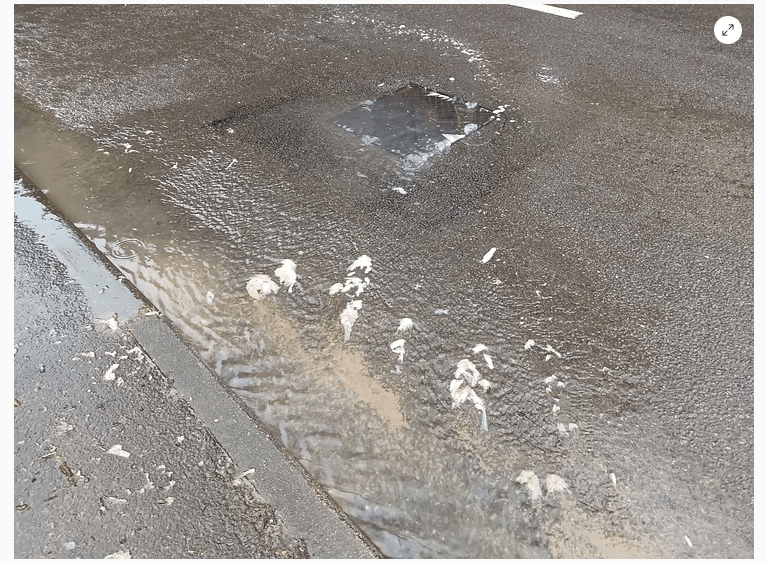
Toilet paper and the stench of sewage as people drive, cycle and walk through untreated sewage. Try not to get sprayed by a passing car!

The story

Water companies have been allowed to set bills to upgrade sewage works and systems to cope with modern-day demands and loading from new housing but they have gamed the system and skimmed off the money in dividends and taken big bonuses for serving the shareholders, not the captive billpayers. How they did that is another tale but this one is about taking the billpayers money and not upgrading, letting the customer and environment take the hit while the Environmental Regulator – the Environment Agency in England, helps to cover up failure. Even worse, the Agency turns a blind eye to add new housing to hopelessly overwhelmed sewage works, while the companies take the connection fees and annual bills to increase profits.

Planning to fail

The charade of water companies claiming that they had the capacity to take more housing to demonstrably failing sewage works and overstretched sewer systems became the norm as the Environment Agency either nodded the application through, or more commonly, did not respond at all and even showed irritation about being asked the question. The shock horror of finding that houses should not be built until water companies got their works upgraded as they had been paid to do and were required to do, was put aside by pretending it wasn’t happening and everyone making money out of the deal was happy – the victims of the outcome, less so.

It was in response to this scam that WASP with the Envenlode Catchment Partnership paid for legal advice to underpin an initiative with West Oxfordshire District Council and has been commenting on planning applications to make sure that conditions are set for Thames Water to upgrade illegal sewage systems before accepting the occupancy of new housing. The effectiveness of the conditions is being tested with the first examples underway.

Read more in the previous blogs on housing and our use of Grampian Conditions to force improvements. (Here)

And articles in the Oxford Mail 1 & Oxford Mail 2

And The Guardian.

The Bombshell.

Something major is happening and for once it is good, and it is unfolding in Oxfordshire. In response to an application for 1450 houses and associated buildings to be bolted onto a massive development north of Oxford, the Environment Agency has pointed out in the clearest possible terms that Oxford Sewage Works is operating illegally and has failed to upgrade in the way it was required to and, so the Agency is objecting to the planning on that basis which must, of course, also apply to every other development that will load Oxford’s Sewage Works as of now.

In fact, that illegality dates back to 2021 when the Agency inspected the STW in reaction to the illegal activity reported by WASP’s data analyst, the redoubtable Prof Peter Hammond whose evidence to the Environmental Audit Committee inquiry was published in March 2021. The illegality in operation may go back to 2017.

Here is the Agency response:

We have written to the Secretary of State for the Environment, Steve Barclay – who knows a lot about the water industry, being married to a senior executive of Anglian Water – and the letter [can be downloaded as a pdf from a link in the original article] so we won’t repeat the content.

And if you can’t get the download easily – here are the 4 questions we ask the Secretary of State:

Some brave and good people in the Agency had the guts to point out that the Emperor (Thames Water) is not wearing any clothes and will have to go and buy some instead of spending the money on shareholders’ dividends, ‘other payments’ and bonuses.

The question now is whether water companies will be allowed to use their precarious financial positions to hold the government to ransom and let them keep on ripping off the billpayers or whether this or a future government will finally question the entirely predictable folly of allowing vital national infrastructure to fall into the hands of private profiteers whose only real skill is ensuring the maximum flow of money from the customer to shareholders in return for little, or in Thames Water’s case, nothing.

This is not about people, campaigners and now even the Environment Agency blocking development – This is the fault of Thames Water and previously failed regulation creating a black hole in the infrastructure. Just as you cannot build a house on sand without foundations, you cannot build housing developments without the infrastructure to support them.

We don’t think this could have happened before the new CEO Philip Duffy took over from the ducking and diving Sir James Bevan who hid the truth from Efra’s Parliamentary scrutiny committee. Now that the Agency has acted with integrity and professionalism it is vitally important that we support the people who are doing what they are supposed to do – stand up for the environment and against illegal polluters.

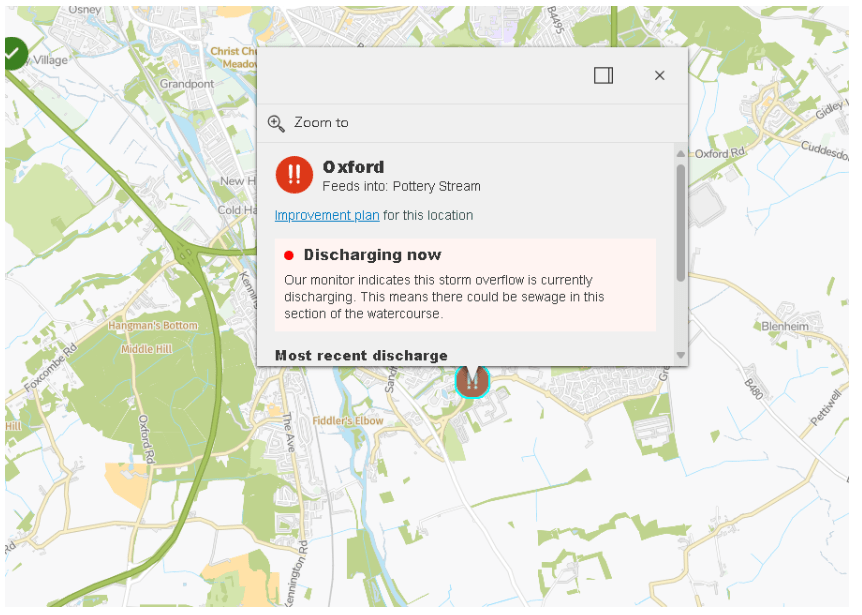
Oxford dumping 442 hours of untreated sewage continuously as of 530pm 26th February

Will the Environment Secretary and government support this seismic shift towards fixing the national scandal or will he fold up and give in to the powerful funds, largely overseas money, that owns our infrastructure?

Have we reached a turning point?

Paul Arnott: ‘EDDC have no confidence in South West Water’

Paul Arnott

On New Year’s Day 2024 when I might otherwise be starting a book I’d been given for Christmas (still unopened, of course) I received a call from Cllr Geoff Jung. Geoff is the cabinet member for coast, country and environment at East Devon, an enormous portfolio that ranges from waste & recycling to sea defences and a watching brief on the environment.

On January 1st, and not for the first time, Geoff found himself inundated with calls about the sewage crisis in Exmouth. Could I come and have a look? They don’t tell you this when you stand to be a councillor, but you soon learn that dog poo, public toilets and sewage issues will play a central role in your life.

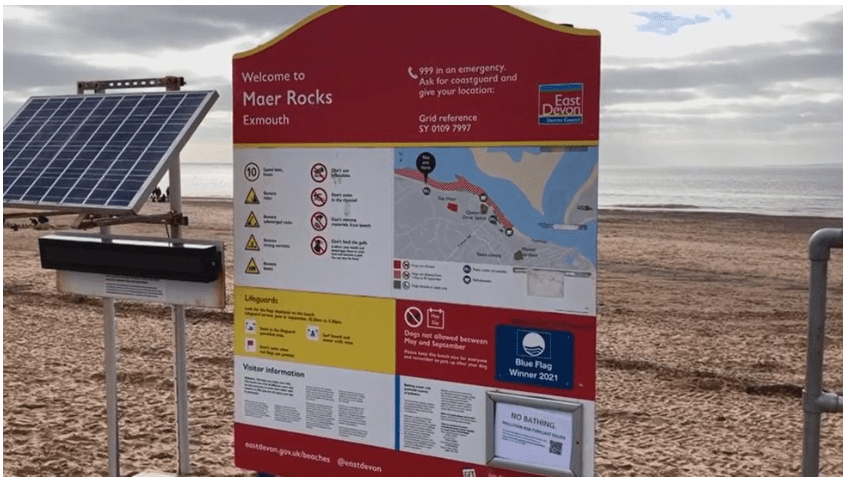
I zipped down to Exmouth, where hard-working tanker drivers had been drawing raw sewage out of the failed Phear Park pumping station and driving it across the town to its Maer Road Car Park sister station, where it was pumped under the sands of the Maer and into the sea. This noisy process kept hundreds of families awake and went on for weeks more.

While there, I was introduced for the first time to the superb leaders of ESCAPE, a proud acronym standing for “End Sewage Convoys and Poollution (sic) Exmouth”, as well as a group of local women who had reluctantly but wisely decided not to have their New Year’s Day swim after all.

A few weeks later, officials from the responsible body, South West Water, appeared by Zoom before the Scrutiny committee at East Devon. I loathe flat-track bullying and could see that, on the operational side of SWW, people are doing their level best, as are the tanker drivers. But much less persuasive is SWW’s executive narrative around how this – and many other crises from Budleigh Salterton to Seaton via Sidmouth – came to be in the first place. The executives seem reluctant to visit the recent past.

So, I’ll have a go for them. Simply, in the present day both foul water and rain water go down the same pipes. They should be separate. When there is heavy rainfall these days, the combined pipes are at risk of bursting. At which point SWW have to open the sluices and it all goes in the sea. Not before, however, it bursts up horribly through manhole covers in places like Clyst St Mary, or seeps through the ground in the Cranbrook country park, and into brooks and streams. And many other places too numerous to mention.

Just like the Post Office or Windrush compensation schemes, this is a here and now crisis seeded in past neglect which needs national government intervention. Put simply, the water regulator OFWAT is toothless, the Environment Agency has been defunded, and the private water companies pay money in dividends rather than sufficiently invest in infrastructure.

At East Devon District Council last week, we said enough is enough and passed a unique resolution of no confidence in SWW. To my mind we cannot make progress until we know how thousands of extra homes were permitted by the then Conservative East Devon District Council when as far back as 2010 it was clear that the infrastructure was already teetering on the edge.

Which raises the inevitable question as to whether more homes should be built today before that appalling lapse is corrected. I was disappointed but unsurprised that the Conservative leader and his chair of Scrutiny refused to vote for the resolution. These battles are not won in a day.

East Devon Council’s £1m coast protection for Exmouth

East Devon District Council (EDDC) will undertake £1 million worth of coast protection work along the Exmouth seafront.

Sandhya Suresh www.exmouthjournal.co.uk

The council has issued a public notice stating the significant intervention is to shield residential properties and commercial properties from the threat of coastal erosion.

The operation, focused around Exmouth coastal frontage from the Stewart Lines/Exe Fishing Building in the West to Sideshore at the East, involves an emergency replacement of a failed masonry seawall with a permanent sheet pile wall.

The council said the works will also include removing parts of the collapsed stone wall and driving sheet piles into the existing footprint of the vertical wall, all executed with a landward-side piling rig.

Although the newly installed wall will initially be left unclad, the council plans to add cladding at a later stage.

Council officials have made arrangements for the public to scrutinise details of the proposed work.

Copies of the plans will be available for inspection at East Devon District Council, Blackdown House, Honiton and at Exmouth Town Hall between 9am to 1pm, Monday to Thursday.

The council said any objections to the proposal must be submitted no later than March 20.

These objections must be served on the Secretary of State for the Environment, Food and Rural Affairs and on East Devon District Council.

Any objections should include a clear statement of reasons and be delivered either by post or by email to the Chief Executive of East Devon District Council.

Notices to be posted may be addressed to the Secretary of State at the Department for Environment, Food and Rural Affairs, Flood Management, Nobel House, 17 Smith Square, London SW1P 3JR and to the Chief Executive at East Devon District Council, Blackdown House, Border Road, Heathpark Industrial Estate, Honiton, EX14 1EJ (email: Legal@eastdevon.gov.uk).

Housebuilders accused of artificially keeping house prices high

The UK competition watchdog has opened an investigation into eight housebuilders [Barratt, Bellway, Berkeley, Bloor Homes, Persimmon, Redrow, Taylor Wimpey, and Vistry] following evidence they may be sharing commercially sensitive information which may have kept prices high.

Henry Saker-Clark www.independent.co.uk 

The Competition and Markets Authority (CMA) launched the probe amid concerns it could be affecting the development of sites and prices of new homes.

It came as the regulator warned that the housebuilding sector “needs significant intervention” amid concerns over the quality of new homes, “high and unclear” estate management charges and planning hurdles.

The CMA formally started a probe into state of the housebuilding sector and the private rental market in February last year.

On Monday, it said in its final report that the current planning system and limitations of speculative private development “have seen too few homes built”.

It highlighted “persistent shortfalls” in the number of homes built across England, Scotland, and Wales, with fewer than 250,000 built last year across Great Britain, compared with a target of 300,000.

Complex and unpredictable planning rules across the three nations are partly to blame for this, it said.

The report highlights that many planning departments are under-resourced, some do not have up-to-date local plans, and do not have clear targets or strong incentives to deliver the numbers of homes needed in their area.

It also said shortfalls were linked to requirements to speak with a wide range of stakeholders.

In addition, there were concerns over limitations to private speculative development, highlighting that developers often produce houses based on pricing rather than diversifying the types and numbers of homes they build to meet the needs of communities.

The report also found a rise in developers using estate management charges for facilities, such as roads, drainage and green spaces.

It said these charges are “often high and unclear to homeowners” and flagged that some unplanned charges can cost thousands of pounds.

Concerns were also raised that builders “don’t have strong incentives” for high quality and consumers have unclear routes of how to receive any redress when issues arise, with the CMA also highlighting an increase in snagging issues.

The watchdog said it is recommending the Government sets up a New Homes ombudsman to support homeowners over quality issues and requirements for councils to take over amenities on all new housing estates.

It came as the CMA also found signs that some housebuilders may be sharing commercially sensitive information with their competitors, which could affect property prices and weaken competition.

The investigation will look into Barratt, Bellway, Berkeley, Bloor Homes, Persimmon, Redrow, Taylor Wimpey, and Vistry. It has not reached any conclusions about whether the law has been infringed.

CMA chief executive Sarah Cardell said: “Housebuilding in Great Britain needs significant intervention so that enough good-quality homes are delivered in the places that people need them.

“Our report, which follows a year-long study, is recommending a streamlining of the planning system and increased consumer protections.

“If implemented, we would expect to see many more homes built each year, helping make homes more affordable.

“The CMA has also today opened a new investigation into the suspected sharing of commercially sensitive information by housebuilders which could be influencing the build-out of sites and the prices of new homes.

“While this issue is not one of the main drivers of the problems we’ve highlighted in our report, it is important we tackle anti-competitive behaviour if we find it.”

Housebuilders’ shares fell in early trading on Monday after the competition watchdog’s announcement.

As a result, shares in Barratt were down 1.4%, Taylor Wimpey fell 1.9%, Persimmon dropped 1.8% and Bellway was down 2%.

Budleigh’s sea-front tankers – and why it’s (hopefully) ‘Good News’

Owl admires the way local people in Exmouth and Budleigh are peeling away the secrecy surrounding South West Water’s operations.

[PS One of Owl’s “little birdies” whispered that these tankers cost around £1K a day.]

Petercrwilliams fightingpoolution.com

It’s nearly three weeks since Budleigh’s Marine Parade has become a lorry park, with up to 8 tankers parked up along the front at any one time.

There have been lots of varying reasons provided, including at least three from South West Water themselves. Most recently I’ve heard that the tankers were “dumping raw sewage into the sewage system here” (spoiler alert: they’re not!).

To understand what they are doing – and why it should be a really good thing for us – a quick recap on ‘Combined Sewage Overflows’ (or CSOs), and why they are the major cause of sewage spills in this country.

Sewer pipes have a finite capacity to transfer sewage to pumping stations or treatment plants. Because these sewer pipes carry rain-water run-off as well as raw sewage, the total volume entering the pipes when it’s raining, can be greater than the pipe’s capacity. For this reason, there are regular storm tanks incorporated into the sewer system, which act as temporary holding tanks to even out the flow. However, if these storm tanks fill up, they have an outlet that they open, called a Combined Sewage Overflow (CSO), which spills the excess water and raw sewage into a nearby stream or the sea. To avoid us seeing too much gory detail, the only treatment made is to filter this through a 6mm sieve before dumping it into our environment. These CSO’s are the #1 cause of sewage dumps in the UK.

In Budleigh, we have 2 CSO’s that dump into Kersbrook – on the edge of our Nature Reserve, another goes out to Otter Ledge (more on that next time!), and 5 CSO’s can dump sewage into the Knowle Brook which runs through Budleigh High Street. All except the Otter Ledge outfall end up on our beach.

In 2022 (the last year that SWW have released data for), Budleigh’s CSO’s dumped raw sewage 56 times, for a total duration of nearly 300 hours. Full details HERE. As that was an exceptionally dry year, it’s quite possible that 2023 was even worse (data to be released at end March).

So why are the tankers on Marine Parade ‘Good News’?

The key task they seem to be working on is to clean out the Marine Parade storm tank and associated sewer pipes. This CSO system appears to be over 100m long, running most of the way along the sea front. Over years, it’s become blocked with a mix of fat-bergs, ‘disposable’ wipes, sand and pebbles – reducing it’s holding capacity and flow. These are all now being sucked up into the tankers, and taken off for disposal. Because of the length of the tank and pipes, it’s taken 3 weeks and counting. Big thanks to the team who are doing this – it must be pretty unpleasant working conditions down there!

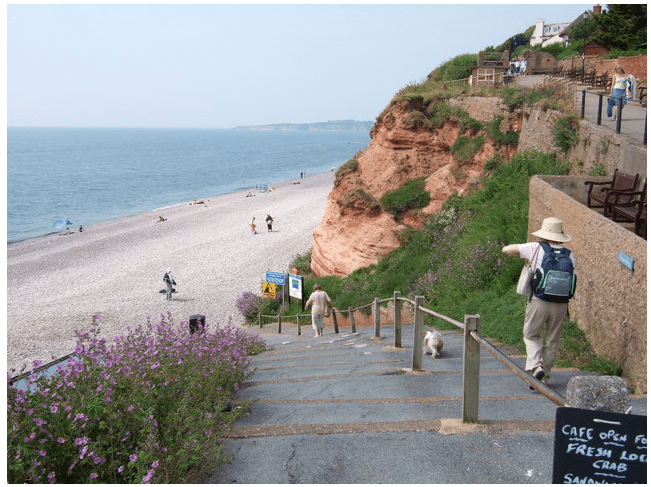
Marine Parade CSO was one of our worst offenders in 2022, with over 11 hours of sewage dumping onto the western end of Budleigh beach – so hopefully having the full capacity of the storm tank will reduce or eliminate that threat. The main beneficiaries of this work should be all those who swim around the Steamer Steps end of our beach.

We do have evidence that cleaning storm tanks can work here, as the CSO in Meadow Road was cleaned in 2021 – and zero spills were recorded there in 2022. Results are not guaranteed though, as the CSO at the bottom end of Granary Lane was cleaned out in January this year, but it is still recording sewage spills into the Kersbrook in the last month.

Let’s hope that this vital maintenance work marks a step in the right direction, and increases the number of days when we can all swim in clean, sewage-free water.

Simon Jupp get the crazy consultation rules changed for “Exmouth’s Gateway”

[Simon Jupp is Parliamentary Private Secretary to the Secretary of State for Transport, Mark Harper.]

From a correspondent: 

Devon County Council announced in January 2023 that they had secured funding through the Government Levelling up Fund for the extension to Dinan Way in Exmouth and investment in the Exmouth Gateway.  According to the Memorandum of Understanding (MOU) which accompanies the bid, Devon County Council has to complete the works for the projects by March 2025. The bidding process started in 2021 when councils were dealing with the fallout of the pandemic to local services, so the work necessary to meet the strict deadlines for the bid process has imposed heavy demands on DCC staff and elected officials

Furthermore, the MOU also sets out very precise requirements for full consultation with residents, stakeholders and the district and town councils, without which the funding will be withheld. Full and meaningful consultation has not happened to the satisfaction of these parties.   The level of consultation has been woefully inadequate.   However, it is difficult to see how DCC can fulfil all these obligations within such a short timescale.  Council staff numbers have been cut back to the bone and DCC will struggle to ensure that the consultation requirements set out in the Government MOU can be met and the bid signed off in time to complete the project.

Compare these rigid delivery timescales with national government infrastructure projects.  In 2009 the original cost of HS2 was set at £37.5 billion.  By July 2023 the total project cost was estimated to reach £106.6 bn. The deadline for completion of 2033 has now been pushed to as late 2041 with large parts of the project being abandoned altogether.  Likewise the Prince of Wales aircraft carrier finally set off a year late in August 2023 at an increased cost of £3.2 bn. from £3 bn.

Why are the project deadlines so rigid for local councils when government projects deadlines and costs are so flexible? Once the work is completed on the Exmouth Gateway, the MOU prohibits any change for at least ten years.  It is not acceptable to impose an ‘enhancement project’ which could create traffic chaos and ultimately fail to deliver real improvements to the Gateway which cannot be changed for many years on the residents, businesses and visitors to Exmouth.

If Devon County Council could be given the time to undertake meaningful public consultations and adapt their plans to ensure best value for the project spend, this would  ensure far better use of government and local taxpayers’ money.  Perhaps our local MP who has been so involved in the LUF bid can intervene on Exmouth residents’ behalf and get these unrealistic and ultimately damaging deadlines removed.

Planning applications validated by EDDC for week beginning 12 February

Devon hospital trust’s massive repair bill revealed

Ageing buildings at the Royal Devon & Exeter Foundation Trust mean its repair bill rose by one of the largest amounts last year across England.

Bradley Gerrard www.devonlive.com

New figures provided by the BBC show the RD&E’s repairs backlog more than doubled from more than £68 million in the 2021-22 financial year to £146 million in 2022-23.

This means that it experienced the sixth biggest percentage rise last year out of England’s NHS trusts. However, it still does not put the trust in the top 10 for the highest overall repairs backlog, which ranges from £193 million at tenth-placed University Hospitals Birmingham NHS Foundation Trust through to £734 million at first-placed Imperial College Healthcare NHS Trust.

In total, the estimated bill to complete so-called high-risk repairs needed at England’s NHS acute hospitals has swollen to £2 billion – up more than a third compared to the previous year.

The RD&E Hospital (Wonford) in Exeter was built between 1992 and 1996, and the trust said large parts “tipped over into ‘not good condition’ as defined by the Department of Health and Social Care because it is in the 30-35 year old age bracket”.

The trust’s current form began in April 2022, when it brought together the assets from the RD&E NHS Foundation Trust and the Northern Devon Healthcare NHS Trust.

“This increase in the total number of assets has also added to the rise,” a spokesperson for the RD&E said.

“There is a medium-term plan in place to address the repair backlog at the RD&E, whereas North Devon District Hospital is one of the 40 new hospitals, which when rebuilt will address the issue.”

The NHS describes North Devon District Hospital as “the most remote acute hospital in mainland England,” adding that many of its building are over 50 years old “which can result in challenges delivering care.”

The government had pledged to build the new hospital by 2030, but earlier this month Shona Dunn, second permanent secretary at the Department of Health & Social Care, said it is “now expected to complete after 2030”.

The RD&E spokesperson said the trust is exploring whether a phased-build programme for the North Devon District Hospital could be implemented to help it “mitigate some of our infrastructure risks sooner.”

The spokesperson added that the level of repair backlog is “measured continuously” with “higher-risk areas then addressed in the short term where capital funds are made available.”

However, its core capital funding – cash that would be used for repairs – is “currently overcommitted”, the spokesperson added, meaning that the highest priority jobs had to be dealt with first.

Fortunately, RAAC, or reinforced autoclaved aerated concrete, which is blighting a host of hospitals and schools across the country, is not an issue for the RD&E Trust.

“There is one non-clinical, non-structural area in the North Devon District Hospital which is affected by RAAC, however this area has been surveyed and confirmed as low risk and fit for purpose,” the spokesperson said.

A total of 86 trusts provided a response to the BBC Shared Data Unit, revealing at least 1,385 reports of infrastructure problems, impacting the care of at least 1,055 patients.

After another weekend of sewage discharges onto our bathing beaches – how informative is SWW Waterfit Live?

When SWW faced EDDC’s scrutiny committee recently, Waterfit Live was claimed to be the answer to most councillors’ questions.

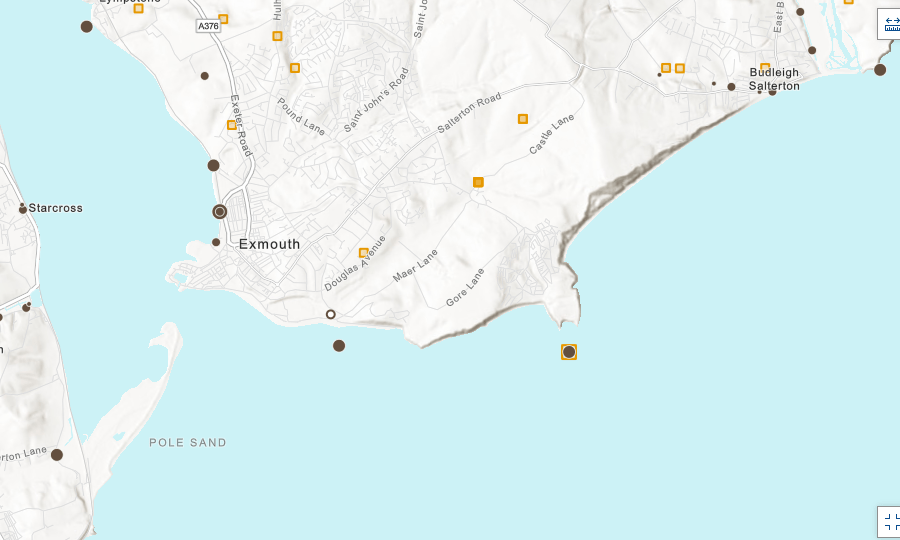
This section of this morning’s South West Water’s Waterfit Live map shows three active discharges in Exmouth, Sandy Bay and Budleigh. Locals know there are more potential sites than these.

Below, for comparison, is the Rivers Trust map showing the actual locations of combined sewage overflows (brown spots) at similar scale but in much greater detail.

Surely we need to know from SWW exactly which outfall has spilled, not a generalised “blob”?

WaterFit Live

Rivers Trust map of existing outfalls

Only faux leather sandal wearing Liberals drink skimmed milk – Jacob Rees-Mogg

Only liberals drink skimmed milk to go with their faux leather sandals. Full fat, creamy milk will nourish your inner Tory.

Listen to Sir Jacob Rees-Mogg MP for North Somerset and 19th Century here

40 projects to benefit from £25 million funding for natural flood management

The Environment Agency’s Climate Resilient Otter Catchment (CROC) scheme has been handed £1,184,800. The initiative involves eight projects around the River Otter with a focus on land and soil management, as well as local farming practices. Sidbury Manor Estate’s River Sid catchment scheme has been given £240,000.

Welcome funding in what is now regarded as a marginal constituency. – Owl

Department for Environment, Food & Rural Affairs www.gov.uk

Forty projects which will use natural processes such as planting trees and creating wetlands to reduce the risk of flooding are set to benefit from a £25 million government programme, Floods Minister Robbie Moore announced today (Friday 23 February).

Part of the government’s plan to increase the nation’s flood resilience, natural flood management processes protect, restore, and mimic the natural functions of catchments, floodplains and the coast to slow and store water.

Community, charity and council projects set to benefit from the £25 million Natural Flood Management programme include:

Severn Rivers Trust will carry out a mixture of natural flood management measures in the headwaters of Illey Brook, near Halesowen in the West Midlands. Many of these works will focus on soil and land management – slowing and storing surface water runoff, while also reducing soil erosion and supporting agriculture. New woodland areas and hedgerows will support wetland complexes and the creation of new habitats.

The Ribble Rivers Trust has proposed a number of projects focusing on slowing river flows across the Ribble catchment, in Darwen, Clitheroe and Lea Green. Swales, ponds and leaky barriers across watercourses will slow and store floodwater in the upper reaches of the River Darwen catchment, whilst vegetation management and new woodland will intercept the flow of water as it runs downhill, reducing runoff and enabling water to be stored in the soil.

The announcement comes after a wide range of applications were submitted to the Environment Agency by community groups, environmental charities and councils for grants, following the launch of the largest-ever investment in natural flood management schemes in September last year.  The Environment Agency led a review of these applications, with input from Defra and Natural England. 

Environment Agency chair Alan Lovell said:

It’s exciting to see such appetite for Natural Flood Management, recognising its value in providing not only benefits against flood risk but also wider support for nature recovery.

I’m proud of the role the Environment Agency is playing in leading this pioneering programme. We look forward to working with partners to help natural techniques become a mainstream option for flood protection and help create more climate resilient places.

Floods Minister Robbie Moore said:

It’s vital we use nature as an ally in our work to become ready for climate change, helping to restore the natural environment and protecting homes and businesses. That’s why we’re funding the biggest-ever investment in natural flood management – and it’s great to see the huge demand.

These schemes will complement traditional bricks-and-mortar defences, all funded by our £5.2 billion flood programme. This programme is one more part of our plan to bolster flood resilience and shield communities – all whilst boosting biodiversity, restoring habitats and protecting the environment for future generations.

Mark Lloyd, chief executive of The Rivers Trust, said:

We warmly welcome this significant fund which will not only protect people and businesses from flooding, but will also make more space for nature, purify pollutants, recharge groundwater aquifers, lock up organic carbon and create amenity value for communities.

The new funding builds on the £15m natural flood management pilot programme which ran until 2021, creating the equivalent of 1.6 million cubic metres of water storage and reducing flood risk to 15,000 homes.

The Environment Agency is managing the new £25 million programme with work taking place from now until March 2027.

The programme will help meet the goals of the National Flood and Coastal Erosion Risk Management Strategy for England, which provides a longer-term vision of how we will better protect and prepare homes and businesses from flooding and coastal change and create climate resilient places.

It also supports the Government Policy Statement on Flood and Coastal Erosion Management, which highlights the importance of harnessing the power of nature, and the Environmental Improvement Plan, which recognises the need to mitigate and adapt to climate change with the use of nature-based solutions. Investing in natural flood management will support the government’s plan to better protect communities while tackling climate change and benefitting nature.

To find out more about the Natural Flood Management Programme and for a full list of successful projects refer to our Gov.uk pages and below.

Successful applicants and schemes:

  • City of Doncaster Council, Bentley NFM Opportunities
  • Northumberland County Council, Alnmouth Coastal scheme
  • National Trust, Common Farm Hydrological Restoration
  • National Trust, Resilient Coledale
  • Community Forest Trust, Whitewell Brook NFM
  • Ribble Rivers Trust, Ribble Revival: Darwen Community Catchment
  • Ribble Rivers Trust, Ribble Revival: Clitheroe Community Catchment
  • Ribble Rivers Trust, Ribble Revival: Wrea Green Community Catchment
  • Wyre River Trust, Wyre Catchment Resilience Programme
  • Brampton 2 Zero CiC, Brampton Natural Flood Management Project
  • National Trust, Poynton and Micker (Norbury) Catchment Plan (Headwaters)
  • Cheshire Wildlife Trust, Meols Natural Flood Management Scheme
  • Mersey Rivers Trust, Alt Catchment NFM
  • Woodland Trust, Smithills Estate NFM 2024
  • City of Trees Trust, Cromton Moor Slow the Flow Leaky Dams
  • Severn Rivers Trust, Illey Brook NFM
  • Leicester City Council, Leicester Urban NFM – Willow Brook Catchment
  • Nottinghamshire Wildlife Trust, Saving Worksop and Shireoaks through NFM
  • Nottinghamshire County Council, Cropwell Butler Natural Flood Management
  • Lincolnshire County Council, Barrow Beck Chalk Stream Restoration
  • East Mercia Rivers Trust, Field Beck NFM – Holdingham, Sleaford
  • Lincolnshire County Council, Building Flood Resilience in the River Rase Catchment
  • National Trust, Northey Island Causeway Saltmarsh Management
  • River Waveney Trust, Diss Natural Flood Management
  • Essex County Council, Hockley Woods Leaky Dams
  • RSPB, Beneficial Use of Dredged Sediment (BUDS) in the Blackwater Estuary
  • Norfolk County Council, North Attleborough Flood Alleviation Scheme
  • London Borough of Hillingdon, Pinn Meadows Natural Flood Management
  • South Oxfordshire District Council, The Goggs, Watlington NFM Scheme
  • Surrey County Council, Ash Ranges NFM
  • High Weald AONB Partnership (East Sussex County Council), High Weald AONB NFM Project (Alder Stream)
  • RSPCA, Marsham Valley Natural Flood Management Partnership
  • The Friends of Cannizaro Park, Cannizaro Park NFM Programme
  • Royal Borough of Greenwich Council, Marsh Dykes and Thamesmead Flood Alleviation Network
  • High Weald AONB Partnership (East Sussex County Council), High Weald AONB NFM Project (Crawley – Stanford Brook)
  • National Trust, Swan Brook Wetlands
  • Dorset AONB Partnership, hosted by Dorset Council, West Dorset Rivers & Coastal Streams Natural Flood Management Programme
  • Sidbury Manor Estate, Sidbury Manor Estate & The River Sid Catchment
  • Environment Agency, Climate Resilient Otter Catchment (CROC)
  • Westcountry Rivers Trust, Climate Resilient Mevagissey

Council Tax increases 2024

Devon County up by 4.99%;  Police by 4.95%;  East Devon District by 3.19%

Who is being most careful with your money?

Though, in truth, both County and District are underfunded, suffering continuous austerity cuts. – Owl

(Council Tax is split: 73% DCC; 12% Police; 7% EDDC; 4% Fire; 4% Towns & Parishes)

East Devon District Council agrees its budget for 2023/24

Eastdevon.gov.uk 23 February 2024

Council continues to protect front line services with additional support given for leisure services to help with the inflationary pressures they are experiencing.

At its Full Council meeting on Wednesday 22, February, East Devon District Council (EDDC) Councillors agreed to a £5 a year (3.19%) increase in a Band D property council tax increase.

The council continues to take 7p in every pound of the total Council Tax bill with the rest of the money going to Devon County Council, Devon and Cornwall Police, Devon and Somerset Fire and Rescue Service and town and parish councils.

Councillor Jack Rowland, EDDC Portfolio Holder for Finance said:

“Whilst any increase in the EDDC element of the Council tax is regrettable in the current inflationary period the increase is 3.19% and £5 per annum for the average Band D rate payer.

“That is less than a 10p per week increase and despite, in real terms, losing over £50 million over the last decade in Central Government grants this EDDC budget for 2023/24 is providing the required balanced budget required by law as well as preserving services.

“For 2023/24 the average Band D ratepayer will be paying £161.78 per annum to EDDC, which is equivalent to just over £3 per week for services such as the waste and recycling collections, the Streetscene service in maintaining many parks and open spaces, the contract with LED Community Leisure to operate the swimming pools, gymnasiums and other sport and leisure activities in the district as just a few examples of the services provided by EDDC.”

‘Poisoned by chemicals’: citizen scientists prove River Avon is polluted

A citizen science programme has revealed the decline of one of the country’s most significant chalk streams after claims by Environment Agency officials that it had not deteriorated. 

Jon Ungoed-Thomas www.theguardian.com

The SmartRivers programme run by the charity WildFish, which surveys freshwater invertebrates, reported “strong declines in relation to chemical pressure” on the River Avon in Wiltshire. It said its data indicated a decline in the condition of the river over the last five years.

The charity compiled a report on its findings after the conservation groups say they were told at a meeting by the Environment Agency in August that “the Avon has not deteriorated in water quality in the last five years”. David Holroyd, head of water quality for Wiltshire Fishery Association, said the numbers of invertebrates collected in spring and autumn samples from 2019 and 2023 at 11 sites on the upper Avon had shown a decline.

He said the invertebrates were “the canary in the coalmine” and data suggested they were being “poisoned by chemicals in the river”.

WildFish says the findings highlight the crucial role played by citizen scientists in monitoring river health after a fall in the number of tests conducted by regulators in the last decade. The SmartRivers programme in England, Wales and Scotland now covers 95 rivers, according to a new report by the WildFish charity.

Freshwater invertebrates underpin the aquatic food ecosystem, ranging from riverflies and beetles to molluscs, worms and crustaceans. In the most recent results for all monitored rivers in 2022, volunteers found 268 different invertebrate species and counted 343,077 specimens. Invertebrate species have different tolerances to pollution. An analysis of the species present, along with their numbers, helps identify pressures on water quality from farming, sewage discharges and run-off from roads and residential areas.

Janina Gray, head of science and environmental policy at WildFish, said the ecological condition of a river was assessed under the water framework directive, a European Union directive transposed into legislation for England and Wales after Brexit. She said the current assessments “did not set the bar high enough”.

The Environment Agency had maintained the Avon had not deteriorated under the water framework directive classification in the meeting in August, said Gray, adding: “It is frustrating that the river is declining year on year and the legislation is not protecting it. This is one of the most protected rivers we have in this country. It is very diverse in terms of its fish population. If we can’t protect the Avon, there’s probably not much hope for many other rivers. We need a comprehensive monitoring network to be able to determine where the problems are happening which is why the SmartRivers is so important.”

Gray said WildFish was now working with the Environment Agency and other partners to identify the pressures on the river. An Environment Agency spokesman said: “On the River Avon, we are working with partners in the area to explore how we can best utilise citizen science evidence alongside our own monitoring data to further increase understanding of water quality.”

A recent analysis by WildFish reported that every river sample in the Windermere catchment for the SmartRivers programme was affected by United Utilities wastewater treatment works. It found that pollution-sensitive riverfly species showed declines of up to 76% compared with appropriate upstream habitat.

United Utilities said the plants operated in line with environmental permits.

Breaking: Richard Foord MP NHS Property Services (Seaton) adjournment debate yesterday – Is the pressure working?

Richard Foord gets Health Minister Andrew Stephenson to say “No plans for demolition” and to say:

“I fully recognise that the local community has invested in the building of the hospital in the first place, and therefore is a key stakeholder in its future. The ICB and NHS Property Services continue in ongoing dialogue with a range of community groups about potential future uses, and the community has been invited by the ICB to develop a business case for the future use of the property by the end of June 2024. Any future decisions on the future of Seaton Hospital will be taken following evaluation of that business case. I sincerely hope that a financially sustainable solution can be found locally and in the best interests of the people of Devon.” Andrew Stephenson

From Hansard transcript 

Richard Foord Liberal Democrat Spokesperson (Defence) 

My aim during this Adjournment debate is to get a plain answer to one simple question: to whom does NHS Property Services answer? That is a crucial question, because the organisation is in possession of an estate of more than 2,700 properties with a value of more than £3 billion. The company is responsible for roughly 10% of all NHS facilities, yet there is a need for clarity on how it is overseen. I aim to unpack some of the key questions that need answering and outline some ways in which we can improve the situation we find ourselves in, specifically in relation to Seaton Community Hospital in my constituency.

What exactly is NHS Property Services? I had to answer this question myself several months ago, when I learned of plans by NHS Devon to hand back part of Seaton Community Hospital to NHS Property Services, from which NHS Devon had been renting the building. I had little idea why NHS Property Services was the nominal owner of a full wing at Seaton Hospital. That is in spite of the fact that the wing was funded entirely through donations raised by the local community before the hospital was built and opened in 1988.

NHS Property Services is a Government-owned company with one single shareholder, the Secretary of State for Health and Social Care. To me, that implies that Ministers are ultimately responsible for the oversight of that company, even though I accept that the day-to-day running of the organisation is delegated. Yet ask a Minister about this, as I have, and Members might hear a rather different story. Each Minister who I have asked questions of has simply said that they cannot get involved in the decision-making processes in NHS Property Services in any meaningful way. I can understand Ministers not wanting to tinker in operational decisions, but there are some principles at stake in relation to Seaton Hospital that means it is not just an operational matter. Surely a company should be accountable to its shareholders—how otherwise can the company and its board be held accountable for their actions?

That is the paradox: we have a company worth billions that is solely owned by the Government, yet Ministers protest that they can have almost nothing to do with it. Far from being entirely detached from Government, the framework within which NHS Property Services operates is set by the Department of Health and Social Care. When I talk to regional representatives from NHS Property Services, as I have several times, they make it plain to me—in what they say and what they do not—that they are bound by policies emanating from Whitehall. That affects everything from how the organisation was established to its current operating framework, including how much NHS Property Services charges as rent for spaces that it lets to local NHS organisations such as integrated care boards.

That is a key barrier in the fight to save Seaton Hospital as one single entity. The current £140 per square metre market rent puts the embattled wing far out of the price range of any local, community-based organisation that wants to take over the space and use it for the improvement of health and wellbeing in the Axe valley. That is a crazy price: it is well over double what one would have to pay for office space here in Westminster—and, trust me, real estate prices in Seaton should not be comparable with those in Westminster.

My concern is that, on the one hand, the rent is extortionate because it is based on a clinical rate, and yet, on the other hand, the property directors—the people charged with running NHS Property Services—have a background in infrastructure and estates and want to get the maximum income they can from the estate they are running, so they pay little heed to the health context.

I will talk a little about the health context to bring this Seaton Hospital case study to life. The chief medical officer, Sir Chris Whitty, in his annual report last October called “Health in an Ageing Society”, wrote specifically about the tendency of older people to retire and move to rural areas, and specifically to coastal areas such as Seaton. He said:

“We’ve really got to get serious about the areas of the country where ageing is happening very fast, and we’ve got to do it now. It’s possible to compress the period of time that people spend in ill health…because otherwise we will end up with large numbers of people leading much more dependent lives.”

The report recommends:

“Providing services and environments suitable for older adults in these areas” as an “absolute priority”. Sir Chris Whitty says that, specifically, we need policies to reduce disease, to reduce disability and to help people to exercise, eat well and stay fit.

That was the chief medical officer, and I will also refer to a report written just a couple of weeks ago by Beccy Baird from The King’s Fund. It calls for a radical refocusing of health and care, with primary care and community services at its core. The report says that

“progress has been hampered by an incorrect belief that moving care into the community will result in short-term cash savings. Other factors include a lack of data about primary and community services leading to a ‘cycle of invisibility’”, with

“urgent challenges such as A&E waiting times and planned care backlogs becoming the priority for politicians tempted by quick fixes instead of fundamental improvement.”

Sir Chris Whitty and Beccy Baird are up against some in the public sector who are tempted to treat all estate management matters as the same. The head of the National Audit Office, Gareth Davies, talked in Parliament in January about asset management being one of the

“main areas of financial opportunity” for the Government. I would caution the National Audit Office and NHS Property Services to read the Whitty and Baird reports, rather than simply seeking to divest all property in the NHS for as much as Property Services can get.

Seaton Hospital was transferred to NHS Property Services in 2017. The purpose of Property Services at that time was to centralise the holdings of various strategic health authorities and primary care trusts under one umbrella organisation. The aim was to remove the burden from local NHS organisations, and offer greater financial security by holding all those properties centrally. It was intended to provide better management of these important spaces, so as to ensure value for money and quality facilities, using economies of scale and of scope.

Fast forward to 2024, and it is clear that the model is broken. Rather than ensuring that our local health services get the space they need, we seem to be making perverse, false economies. The Government give money to integrated care boards only to have Government-owned NHS Property Services recoup a large portion of that money in rental fees for the buildings that ICBs use, at a rent set and advised by market rent auditors. This offers very little flexibility or security for our local NHS services, which, as in the case of Seaton Community Hospital, are left in a scenario in which the ICB is forced to cut services while still being lumbered with a bill for the space those services used to occupy. We lost the clinical beds we had at Seaton Hospital in 2017, and the space has since remained vacant. The only way to remove this item from the budget line is to turn over the space to NHS Property Services, which becomes liable for the amount charged in rent.

As hon. Members can see, this system is not only complex but incredibly backwards. The Government are effectively renting these buildings from themselves, despite the fact that many were previously directly owned by local health bodies. They are not even rented out at a fair price, despite the stated commitment to achieving fair market rates. These facilities are rented out as clinical spaces, even when they are not used for clinical purposes. This is based on an evaluation that must have been completely off the scale when it was made in 2016. Seaton Hospital was evaluated by the assessor Montagu Evans, and I do not know who it could possibly have talked to if it thinks that Seaton Hospital is worth £300,000 rent a year.

Why, we might ask, is the rent not adjusted to reflect the building’s current status? So far as I can gather, it is because the Government’s rental framework does not allow it. It places a huge roadblock in the way of community groups and hospital friends organisations that seek to convert such spaces into new settings aimed at providing non-clinical services of the sort to which Sir Chris Whitty and Beccy Baird were referring. Instead, the system seems analogous to a self-licking lollipop, or a dog blindly chasing its evasive tail without ever stopping to think why it cannot catch it.

During my many conversations with NHS Property Services in recent months, individual employees have sought to be helpful. However, they find themselves handcuffed by Government policy. They are unable to deviate from the Government’s framework, which, through the consolidated charging policy, first introduced in 2016, sets the rate that ICBs and, now, community organisations need to pay. The rate was introduced when Jeremy Hunt, who is now Chancellor of the Exchequer, was Health Secretary.

In effect, the Government own all NHS facilities and have the power to direct the arrangements under which they are rented out, including the wing of Seaton Community Hospital that was funded, in whole, by local villagers, townspeople and the Seaton and District Hospital League of Friends charity. What on paper might seem like a prudent way to manage NHS facilities, and to make sure that they are properly maintained, means in reality that, in places like Seaton, the community no longer has a stake or a say in how its local hospital is used.

That begs the question: who is in charge? The answer should be the Secretary of State and Ministers reporting to her, but given her Department’s attempts to point the finger at this operational body and to divest itself of responsibility, it seems that nobody is in charge. People are pointing in several directions, and I cannot identify exactly who is setting the market rate. Simply put, the Government have let go of the wheel, and are content to let the car spin out of control so that they do not have to take responsibility. That is not good enough.

Our NHS is the envy of the world and one of our country’s greatest achievements. When the great Liberal thinker William Beveridge conceived of a service that was free at the point of use all those years ago, it was revolutionary and re-shaped the way in which modern democracies have approach public health. We cannot allow it to be eroded because of the unwillingness of the Government to face up to the challenge. The mark of leadership is honesty and accountability. I would like to see that from Ministers. Rather than the Government saying, “This is an operational matter for NHS Property Services, not me,” I would much rather someone from this Conservative Government admitted that they know what the so-called market rent is, why it is charged at that rate, and why the community must pay if it wants to use that space. Better still, that community should be given a concessionary rate, in recognition that clinical activity is not going on in that wing of the building at this stage. The community ought to be able to hire the space for a much more affordable rent.

I have three questions for the Minister. First, is the Department for Health and Social Care responsible for setting the amount that NHS Property Services charges local NHS services such as ICBs to rent the space? Secondly, could the consolidated charging policy, which I understand sets out those prices, be changed by the Secretary of State or Ministers? Thirdly, if the answer to those questions is yes, why have I been told repeatedly that Ministers cannot, so they say, get involved in operational matters relating to NHS Property Services?

Many ICBs are struggling to balance the books—NHS Devon is no different in that respect—and are seeking to downsize the space that they rent to make ends meet. This situation is not specific to Seaton, although I think it is a good case study because of the way in which local people bought a brick and built the hospital themselves with many small donations. The situation facing our local community hospital strikes me as an illustration of why change is needed. I have been campaigning with the Seaton and District Hospital League of Friends charity, which supports Seaton Hospital, to change the charging policy, so that NHS Property Services can have flexibility on rental fees. I want the company to enable underused space in NHS facilities to be rented out to local community groups that want to invest in preventive health and community wellbeing, and that want to fulfil some of the vision that Sir Chris wrote about in his annual report last October.

Ultimately, I would like an affordable concessionary rate to be offered to Seaton and District Hospital League of Friends and the working group that works with them. That would be of benefit to rural and coastal communities such as Seaton. We need to know how to ensure accountability for the current arrangements, and I hope that there can be concessions for local communities, such as the one that I represent in the Axe valley. I look forward to the Minister’s responses to my questions, and I hope that he is willing to engage with me to enact meaningful change that will benefit communities and constituents, such as those in my Tiverton and Honiton constituency.

Andrew Stephenson Assistant Whip, Minister of State (Department of Health and Social Care) 

I congratulate Richard Foord on securing the debate. I am grateful for the opportunity to set out the role of NHS Property Services. This subject is understandably of great interest to right hon. and hon. Members across the House.

The hon. Gentleman raised the issue of the future of Seaton community hospital. I will come to that in the latter part of my speech, but let me say for the record that I completely understand his desire to protect a much-loved community health facility. As the Member of Parliament for Pendle, I successfully fought to keep open Pendle Community Hospital in Nelson, and in the neighbouring constituency of Ribble Valley, the new £7.8 million Clitheroe Community Hospital opened in May 2014, so I recognise the importance of community hospitals, not just in offering in-patient care, but in acting as a hub for other healthcare services. It will be most useful for me to first set out to the House why and how NHS Property Services came into being.

Under the Health and Social Care Act 2012, the coalition Government abolished primary care trusts and transferred their commissioning responsibilities to clinical commissioning groups. Their property interests transferred to either NHS trusts or NHS Property Services, which was established in 2013 for this purpose. That decision was made because it allowed commissioners to focus on providing care for patients, rather than managing property. NHS Property Services took ownership of nearly 3,500 local facilities, such as community hospitals, health centres, GP surgeries and care homes. In the past 10 years, NHS Property Services has reduced the size of that estate by a fifth, saving over half a billion pounds of taxpayers’ money, every penny of which has been reinvested into the NHS.

Richard Foord 

I understand the Minister’s point about reinvesting the proceeds from selling what might have been regarded as excess NHS property, but my concern relates to where that money goes. My understanding is that, following a sale, half the money might go back to the integrated care board, which would be Devon in this case. The problem with that situation is that it does not take account of the fact that local communities donated the money to build the infrastructure in the first place. That is certainly the case in the Axe valley with Seaton Community Hospital.

Andrew Stephenson

I appreciate the hon. Gentleman’s concern. I hope to provide reassurance in the latter part of my speech that the sale of Seaton Community Hospital is certainly not on the cards and is exceptionally unlikely. However, I appreciate that when property is sold, there is always tension between how much of that money will be reinvested in local communities—many of which have a stake in having created the facilities in the first place—and how much goes into the general NHS pot. The important point for me to land today is that all the money remains within the health services and none returns to the Treasury, so any sales of property from this portfolio are not a way for the Government to generate income, but simply a way of ensuring that the property estate is managed in the most effective fashion.

NHS Property Services was established as a limited company and is led by a board of executive and non-executive directors who are appointed for their property and healthcare expertise, including a departmental shareholder representative. The board’s directors all have the usual responsibilities relating to the proper governance of a limited company, with certain shareholder matters reserved, such as share issue or senior appointments. The board must work within the wider frameworks across Government, such as the Treasury’s guidance on managing public money, which rightly sets out the strict rules for delivering value for taxpayers’ money. The company therefore works with the Department to agree fiscal targets to work within, and is rightly held accountable for its use of public money. However, it is important to emphasise that my Department is not responsible for operational decisions, which are taken by the board and its executive management team.

One reason for the creation of NHS Property Services was to ensure that decisions could be taken without political interference. Although I appreciate that the hon. Member and others across the House may be of the view that my noble Friend Lord Markham, who has ministerial responsibility for NHS Property Services, can intervene to reduce the rents for unoccupied space at Seaton Community Hospital or similar facilities across the country, it would simply not be appropriate for him or any other Minister to intervene in any individual case.

The coalition Government established NHS Property Services through the cost recovery principle, which is the broad framework that the organisation works under. This means that it is funded through charging its costs to the occupiers of its buildings and the recipients of its services. As such, every pound it spends and does not recover is a pound that cannot be spent on delivering frontline care.

The Devon properties were transferred to NHS Property Services on the basis that their ongoing running costs would be funded through rents at market rate and service charges. This approach was taken to give real incentives to local commissioners to take the tough decisions on which properties were most suitable for delivering their clinical strategy, looking at areas as a whole and moving away from a situation whereby subsided property costs could lead to a less effective approach. I accept that that can sometimes lead to tensions about how reasonable charges are set, but the aim is that NHS bodies, and other voluntary and charitable organisations that wish to occupy NHS premises, must factor in the full cost of occupying and maintaining specialist facilities in their decision making.

I will now turn to the future of community hospitals in Devon, including Seaton Community Hospital. As the hon. Gentleman set out in his Adjournment debate in November, Seaton Hospital was part of a group of community hospitals that transferred to NHS Property Services in 2017, when large parts of Seaton Hospital and others in Devon were already vacant. The clinical commissioning group carried out a consultation on the model of community care and a new model of care was introduced, making it more integrated and more community based, with more people receiving care at home. That resulted in a significant reduction in the number of community hospital beds required across Devon. Since then, progress has been made to identify sustainable alternative healthcare uses for vacant spaces in community hospitals in Devon, such as Ottery St Mary and Axminster. In addition, NHS Property Services and Devon ICB have worked with the voluntary sector to support local initiatives in some properties, such as, as the hon. Gentleman will know, the Waffle café at Seaton Hospital.

I understand that Seaton Hospital and some other hospitals still have significant amounts of vacant space. Despite their best efforts, NHS Property Services’ commissioners have been unable to identify relevant services that could fill this gap. NHS Property Services has continued to manage the property, with the costs of the vacant space being charged to the ICB to ensure the costs attributed to the property are fully recovered, but recently the financial challenges facing Devon ICB have called the sustainability of that position into question and it has explored options for alleviating those costs. However, as I explained, simply seeking to pass those costs back to NHS Property Services would not result in the Department having any more money to spend on local healthcare services in Devon.

As I am sure the hon. Gentleman will appreciate, the responsibility for decisions about where to locate clinical services in Devon is a matter for the ICB. It is not a matter for Ministers. However, NHS Property Services is working closely with local leaders to identify options that would help to mitigate the cost pressures arising due to Seaton Community Hospital not operating at full capacity. If, and only if, the ICB determines the property is wholly surplus to its requirements, NHS Property Services would have the responsibility for selling the asset, following Treasury guidelines, but it is important to stress that the site remains an operational site and NHS Property Services therefore has no plans to sell it.

As has been mentioned in the local media, the idea of partial demolition of the hospital has been floated. Again, there are no plans for that course of action, which would very much be a last resort in any event. I believe the site has now been listed as an asset of community value, which means that such a drastic step is exceedingly unlikely to be supported by the local planning authority or other local stakeholders.

Richard Foord 

It is true that the property has been registered as an asset of community value. To my mind that gives it a stay of execution, rather than that it is inevitable that it will be preserved intact. NHS Property Services talked through the very many options—I think 28 options—on the table for the vacant space at Seaton Hospital. One of that long list of options is indeed selling off the redundant ward, which could be demolished and used for houses. Did the Minister not know that?

Andrew Stephenson 

I know the idea of demolition has been floated in a meeting, but I have been assured that there are certainly no plans for demolition. As the hon. Gentleman will know, an asset of community value nomination was accepted by the local authority, and as an ACV nomination remains live for five years, it will expire in January 2029, although I am pretty sure that local community groups and others would campaign for that to be extended. It is certainly much more than a stay of execution. I hope that has provided suitable reassurance to the local community that the threat of demolition is exceedingly remote, because the local planning authority and other local stakeholders simply would not agree to the demolition of this much-valued community asset.

I fully recognise that the local community has invested in the building of the hospital in the first place, and therefore is a key stakeholder in its future. The ICB and NHS Property Services continue in ongoing dialogue with a range of community groups about potential future uses, and the community has been invited by the ICB to develop a business case for the future use of the property by the end of June 2024. Any future decisions on the future of Seaton Hospital will be taken following evaluation of that business case. I sincerely hope that a financially sustainable solution can be found locally and in the best interests of the people of Devon.

Question put and agreed to.

House adjourned.

UK lender trials ban on new holiday let mortgages for tourist hotspots

A leading building society is trialling a ban on new holiday-let mortgages in some popular tourist destinations.

Rupert Jones www.theguardian.com 

Campaigners say the move by Leeds building society could improve the situation for local residents currently struggling to buy or rent in parts of Norfolk and Yorkshire that have seen a surge in the number of properties turned into holiday rentals.

The announcement comes days after the government unveiled new rules for short-term holiday lets in England that aim to rein in a sector that has been described by some as “out of control”.

In recent years there has been growing concern about the number of properties being let out on a short-term basis, leading to local people being priced out of their communities. Platforms such as Airbnb have made it easy to do this as a potentially lucrative side hustle, while the tax treatment is more favourable than it is for buy to let. On top of that, the coronavirus pandemic and cost of living crisis have increased demand for domestic holidays and short breaks.

On Monday the government said it had listened to campaigners and announced two proposals applying to England. Planning permission will be required for future short-term lets (this will not apply to existing ones), while a mandatory national register will be set up to provide local authorities with information on short-term lets in their area.

Now, Leeds building society says it believes it is the first holiday let mortgage lender to restrict new lending. It has worked with North Norfolk District Council and North Yorkshire Council to set up a 12-month trial from the end of March, during which it will stop new loans for holiday homes in certain areas.

Everywhere in North Norfolk will be included, including the seaside towns of Cromer, Wells-next-the-Sea and Sheringham. The areas in North Yorkshire affected are Scarborough, Whitby, Filey, Saltburn, Leyburn and Richmond.

The relevant postcodes will be added to the building society’s systems to prevent any holiday let mortgage applications received in those areas from being approved. Existing holiday let borrowers are unaffected.

The Leeds estimates it is in the top 10 of the 40 or so lenders offering this type of mortgage. However, some lenders include them with with buy-to-let home loans. Holiday let mortgages are typically used to buy properties that will be let out for short periods (no longer than 31 days) rather than used for long-term lettings, which is where buy-to-let mortgages usually come in.

Ben Twomey, the chief executive of Generation Rent, says it is pleased that Leeds building society is “prioritising the necessity of homes over the luxury of holidays”.

Water firms allowed to dump sewage into rivers using permits from the 1950s

Hundreds of permits that allow water companies to dump sewage into Britain’s rivers have not been updated by Government officials for decades with some remaining unchanged since the 1950s, i can reveal.

Lucie Heath inews.co.uk

An i analysis of permits obtained under Environment Information Requests (EIRs) found that some are lacking basic details such as how much sewage a treatment centre can handle before spilling into England’s waterways.

Others do not include limits on pollutants, such as phosphorus, which in high quantities can have a devasting impact on rivers.

i‘s investigation has identified almost 100 permits for active sites that have not been updated since 1989, when water companies in England were first privatised. Two permits date back to the 1950s during the era of rationing and the Suez crisis, while 24 are from the 1960s. Hundreds more have not been updated in at least a decade.

Campaigners have accused the Environment Agency (EA) watchdog, which is responsible for the permits, of “being asleep at the wheel” and have called for them to be urgently updated to include tougher restrictions for water firms.

The EA issues water companies in England with these documents setting out conditions on how they must treat wastewater before it is discharged into the environment.

The permits also outline when water companies can dump untreated sewage into bodies of water, something firms are allowed to do during periods of exceptional rainfall to prevent it from backing up into people’s homes.

They apply to the management of wastewater treatment plants, pumping stations and the pipes in their network through which they are allowed to spill sewage, known as combined sewer overflows (CSOs).

The EA said it regularly reviews the documents and will add new restrictions if deemed necessary, but experts have raised concerns over whether the oldest ones have been updated to reflect factors including population growth and climate change.

The watchdog has a duty to regularly scrutinise the permits issued to companies and to update them if needed.

Dr Ben Surridge, senior lecturer in environmental science at the University of Lancaster, said the documents are an essential tool for regulating water companies and their impact on the environment.

“Firstly it means that the water company has to invest in order to meet that permit and secondly it means you can monitor the effluent for compliance and ultimately there’s a legal route that you can go down with the water company if you’re monitoring suggests they’re not meeting that permit,” he said.

Modern permits can be over 30 pages long and include detailed information on things such as the volume of wastewater an asset, such as a pumping station, should be able to deal with before spilling sewage.

Permits for treatment plants can also include limits on the level of pollutants, such as phosphorus or ammoniacal nitrogen, that can be discharged into the environment. These pollutants can prove deadly to aquatic life if found in high quantities.

i‘s analysis found that some of the oldest are only one page long, have been typed on a typewriter, and contain very little in terms of restrictions.

Some of these old permits were for sites that have been responsible for a high number of sewage spills in recent years, raising questions over why they have not been updated with tougher restrictions.

One example includes Severn Trent’s permit for a CSO located in the village of Cromford, which lies on the edge of the Peak District in Derbyshire.

Severn Trent spilled sewage from that point 70 times – more than once a week on average – during 2022, but the permit for the site has not been updated since 1963 and contains no information around how much sewage is allowed to pass through the site before a spill occurs.

Geoff Tomb, a researcher from the campaign group Windrush Against Sewage Pollution, described the permit as “no more than an acknowledgement that spilling takes place at the site but without any permit restrictions”.

The permit issued for a storm overflow pipe in the village of Cromford, which hasn’t been updated since 1963

There is also concern that restrictions on discharging treated sewage are not stringent enough in Britain’s most protected areas, such as the Lake District.

One example includes the permit for the Troutbeck Wastewater Treatment Plant, that sits within the Lake Windermere catchment area, which hasn’t been updated since 1996.

The permit contains no limits on the level of pollutants, such as ammonia and phosphates, that can be discharged into the water from the treatment plant, meaning the local water company, United Utilities, is not required to test for these nutrients.

Matt Staniek, a conservationist and founder of the Save Windermere campaign, said the permit “is yet another example of the EA being asleep behind the wheel”.

“The absence of limits on the amount of nutrients coming from wastewater treatment works is, in today’s age with readily available technology, unacceptable and outdated,” he said.

Dr Surridge said there are many examples of wastewater treatment work permits that do not include limits on these pollutants.

He said the EA is only required to include these requirements on larger treatment works that are discharging treated effluent into sensitive bodies of water. Permits should be altered if the surrounding population increases or the water quality deteriorates, he said.

Dr Surridge said it was possible that the oldest permits were “still relevant”, but also that conditions had “changed significantly” over time.

He said there were questions over whether the EA was able to “review those permits regularly and ensure that they are appropriate, given the changes in our rivers and lakes, in our catchments, and the climate”.

The EA told i it regularly reviews permits and will update them “when they need to reflect more modern standards or in response to compliance issues”.

It said 12,000 storm overflow permits had been updated with stricter conditions since 2015. That would leave almost 2,500 storm overflow permits that haven’t been updated in the last nine years or for longer.

Mr Tomb said: “There are many old ones that aren’t fit for purpose. One of the reasons is the Environment Agency is drastically under-resourced and underfunded and as a result is not really fit for purpose. One of the things that goes on the back burner is automatic upgrading of older permits.”

The EA recently admitted it has not been able to check sewage permits “as frequently as we should” due to resourcing pressures. The omission came in a consultation on changes to charges for water quality permits and was first reported by ENDS Report.

“Not only are there too many sewer overflows with out of date permits, they are weak and rarely checked for compliance,” said Theo Thomas, Chief Executive of London Waterkeeper, which has voiced concerns over the permits issued to Thames Water.

Mr Thomas would like to see permits updated to include a limit on the number of sewage spills they can be responsible for per year, above which an asset would be branded “unsatisfactory” and improvement work be required.

An Environment Agency spokesperson said: “The fact a permit has not been updated does not necessarily mean it has been left unchecked. We regularly review our permit stock, but they are updated when they need to reflect more modern standards or in response to compliance issues.

“We are strengthening the way we regulate the water industry with 100% of storm overflows in England now monitored and more than 12,000 storm overflow permits updated with stricter conditions since 2015. Our ongoing work to modernise our permit stock will also ensure that all permits are fit for purpose.”

Second District Councillor to run for parliament

Green Party selects Cllr Ollie Davey parliamentary candidate

Ollie Davey is the new parliamentary candidate for the Green Party in the Exmouth and Exeter East constituency (Image: Mike Rosser)

Adam Manning www.exmouthjournal.co.uk

The Green Party has elected Olly Davey as their prospective parliamentary candidate for the new constituency of Exmouth and Exeter East.

The new constituency includes Exmouth, Budleigh Salterton, Woodbury, Topsham and East Exeter including and stretching north of the Countess Weir estate. Mr Davey has been a member of Exmouth Town Council and East Devon Council since May 2019.

Mr Davey was elected as the first Green mayor of Exmouth in May last year.

He is currently serving as the mayor of Exmouth and chair of East Devon District Council’s Strategic planning committee. Olly is also a musician, performing locally in a number of bands.

Olly stated: “I have agreed to stand for parliament because I want to ensure that there is a Green voice in the forthcoming election.

“Too often the environment and climate crisis are left out of the debate or given a token mention.

“I intend to make sure that they are right at the forefront of our thinking and influence everything that we aim to do.”

The other confirmed candidates for the Exmouth and Exeter East seat are David Reed (Conservative) and Paul Arnott (Liberal Democrats).

How holiday homeowners are avoiding paying double council tax

There has been a tenfold increase in holiday lets registered for business rates in England in the past five years, putting them beyond the reach of government plans to double council tax on the properties, according to an analysis of government data.

Emanuele Midolo www.thetimes.co.uk

The number of holiday lets skyrocketed from about 8,800 in 2017 to more than 89,000 in 2023 and now account for about 10 per cent of all second homes in England. According to the latest housing survey, there are more than 809,000 second homes in the country. Cornwall had the largest spike, from 1,000 registered holiday lets in 2017 to 10,397 in 2023. Devon also experienced a tenfold increase, from 757 in 2017 to 7,044 last year. Other hotspots are North Yorkshire, Norfolk and Cumbria.

Owners of such properties can register them as small businesses and pay business rates rather than council tax if they let them for a minimum of 70 days a year having made them available for 140 days. Many are eligible for business rates relief, which means they will pay neither council tax nor business rates.

The revelation comes as the government announced new rules this week to curb short-term holiday lets.

Meanwhile Leeds Building Society declared today that it is to begin a 12-month trial with North Norfolk district council and North Yorkshire council, two of the top-four locations for holiday lets in the country, to ban new loans for holiday let homes in those areas (existing mortgages won’t be affected). In 2022 the building society became the first national mortgage lender to stop funding purchases of second residential homes.

Wendy Fredericks, the councillor in charge of housing for North Norfolk district council, says: “In North Norfolk we have a really severe shortage of homes that people on local wages can afford. Increasing numbers of holiday lets reduce the number of rental homes available for year-round use by local people.”

The government already has plans for councils in England to charge double council tax on holiday homes from April 2025, with many local authorities in holiday hotspots announcing their intention to hike prices. Some fear, though, that the long lead-up to implementation has given owners the chance to evade this by switching to pay business rates.

This week Michael Gove, the housing secretary, went a step further by adding that he wants homeowners planning to rent out their properties through Airbnb and other short-term rental websites to apply for planning permission and sign up to a government registration scheme.

“Short-term lets play an important role in the UK’s thriving tourism sector, but in some areas too many local families and young people feel they are being shut out of the housing market and denied the opportunity to rent or buy in their own community,” a government source said of the measures.

The new rules reportedly do not apply to existing holiday lets, which the government said “will automatically be reclassified into the new use class and will not require a planning application”.

Laws in Scotland already require short-term lets to be licensed and from April local authorities there will be able to charge double council tax for second homes, including those used as holiday lets. In Wales local authorities can charge up to 300 per cent more council tax on second homes and holiday lets.

“Many people know about the council tax benefits, but there are also reliefs for capital gains tax, mortgage interest and pension contributions that can make running a holiday let more appealing from a tax point of view,” says Sean McCann, a chartered financial planner at the insurer NFU Mutual.

Many of these tax benefits are accessible to owners who make their UK properties available to let for at least 210 days a year and actually let them out for a minimum of 105 days.

“You can’t count days where it is occupied by the owner or their friends and relatives for no or a reduced rent,” McCann explains. “Similarly, you can’t include periods where it is rented out to the same person for more than 31 days.”

Owners of holiday let properties are also eligible to offset their mortgage interest against tax in full — unlike buy-to-let landlords, who can only claim 20 per cent tax relief.

They also qualify for rollover relief on capital gains tax, meaning that if the owner sells the property and makes a gain they can roll it over into the purchase of a new holiday let property.

Furthermore, profits are treated as earned income, so can be used to make pension contributions, which also attract tax relief.

However, lenders are increasingly reluctant to grant mortgages to owners of properties used as holiday lets. Aside from Leeds Building Society, Barclays has said it will not grant mortgages on properties used as holiday lets.

While the idea of a registration scheme for holiday lets has been well received, some have criticised planning requirements that could discourage owners from letting their properties altogether, resulting in leaving them empty or selling them off.

“We understand what the government is trying to achieve, identifying what properties are available and having a better control over the quality of those properties, of course we welcome that,” says Tanya Hasking, head of lettings at the estate agency John D Wood & Co. “But some of these proposals could spook landlords out of the market, ultimately damaging the very local communities the government is trying to protect.”

Ben Edgar-Spier, head of regulation and policy at the holiday let company Sykes Holiday Cottages, adds that there are 1.5 million empty properties in England, almost twice as many as second homes and short-term let properties combined.

“A report we commissioned from Oxford Economics shows that in 2021 short-term let linked activity contributed £27.7 billion to the UK economy, supporting 496,000 jobs, many in rural communities,” Edgar-Spier says. “The report also showed short-term lets have a negligible impact on house prices. And yet the sector is continually scapegoated for housing supply shortages.”

Breaking BBC News: East Devon council files vote of no confidence in South West Water

A council has passed a vote of no confidence in South West Water (SWW) after a series of pipe failures and sewage overflows in the area.

By Alex Green www.bbc.co.uk

East Devon District Council (EDDC) voted unanimously to pass the motion at a full council meeting on Wednesday.

The council said its leader Paul Arnott would now write to SWW, and would be asking local MPs to lobby government.

SWW said it would continue to do everything it could to deliver improvements and address concerns.

A spokesperson for the water company said: “We are disappointed to hear about the motion passed by East Devon District Council.

“We will continue to do everything we can to deliver ongoing improvements and to address the concerns of our customers in light of the recent bursts in the area.”

It previously said it was investing £38m to reduce spills at Exmouth and took its responsibilities “very seriously”.

There were a number of pipe failures in Exmouth in December, including at the Phear Park Pumping Station emergency overflow outfall, where SWW said sewage had been released into the estuary because of a burst of one of its critical rising mains.

The Environment Agency has previously issued precautionary advice against bathing in Exmouth

EDDC said it was “alarmed” SWW had failed to notify the council of sewage overflows in Exmouth, leading to reports of people and pets falling ill from exposure to untreated human waste during sea swimming.

During the meeting, EDDC agreed Mr Arnott should write publicly to SWW’s chief executive to request a commitment from the water company to involve town and parish councils in discussions regarding ongoing and upcoming works.

The council also wants a joint partnership between SWW, EDDC officers, and cabinet members on ongoing developments and issues.

It also said it wanted SWW to work with EDDC planning officers to help manage pressures caused by new developments, respond to community concerns and proactively advise the public of overflows.

At the council meeting, it was also agreed the leader would write to local MPs to encourage them to support efforts to engage SWW.

The letter will also ask MPs to lobby the government to revisit “weak legislation”, and to resist a request by the water company to raise bills by more than 20% by 2030 – until demonstrable action on sewage spills had been taken.

‘Lost control’

Mr Arnott said: “We truly do not have any confidence in the operational side of South West Water, particularly to protect key communities all the way across East Devon.

“Particularly at the moment, you can see it in Exmouth, where there is sewage coming up through the streets, it’s coming up through failed pumping stations, and it’s going into the sea.”

The council leader said “despite repeated assurances”, the local authority believed SWW had “now lost control”.

“It’s evidenced in plain sight…hundreds, thousands probably of tanker journeys going around with sewage that essentially is going straight into the sea,” he added.

“The infrastructure is broken, and the reason for the no confidence is they should have known 10, 12 years ago the infrastructure would break, and they didn’t fix the roof…when the sun was shining.”