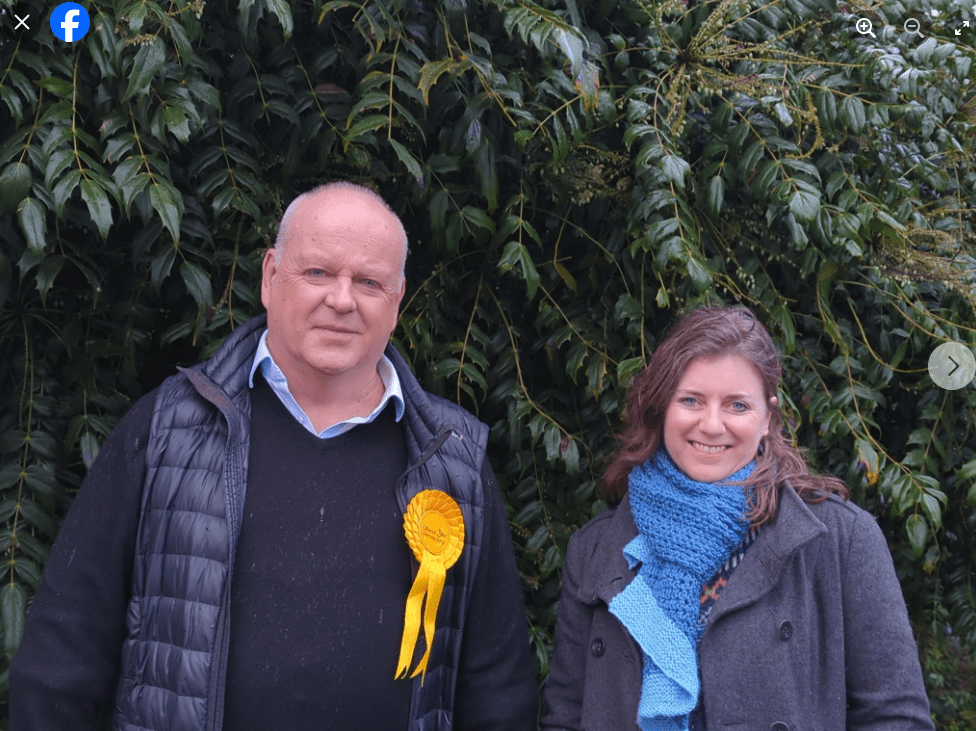
Breaking: Claire Wright’s fulsome endorsement of Paul Arnott

From Claire’s facebook post

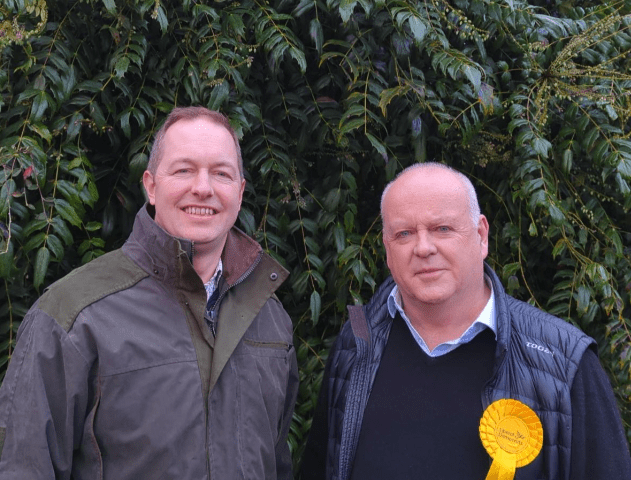
I am really happy to announce that I am backing Paul Arnott to take Exmouth and Exeter East in the general election!

For those of you not familiar with Paul, he is the Liberal Democrat leader of East Devon District Council, presiding over a rainbow coalition of LibDem, Independent and Green councillors, after taking the helm back in 2020.

I first met Paul Arnott back in 2009 in the sitting room of the dear late Broadclyst LibDem councillor, Derek Button. 

It was the first meeting of a small group of worried politically active people that included Cllr Roger Giles and Jonathan Underwood, who was a parliamentary candidate for the Liberal Democrats in 2010. 

At the time Paul was being persecuted by the then Conservative run East Devon District Council, for asking difficult questions about planning matters.

Anyone who remembers those days, will recall the absolute steamroller that it was, flattening any dissent or challenge and hauling unfortunate opponents before standards hearings for minor misdemeanours, while perpetrators of actual planning atrocities got off scot free.

They were dark days but myself, Paul and our group were absolutely determined to change things.  And so we did. 

The investigation of some murky planning matters led to the creation of Communities Before Developers on 2010, a campaign group I led that repeatedly challenged EDDC’s proposals to throw out much of the countryside protections in its new draft local plan

Having a shared cause, Paul and I remained friends. After I was elected to EDDC as an Independent in 2011, Communities Before Developers fizzled out as I had a vote and a more powerful platform. But we had sown the seeds of something much bigger…

The following few years were probably the most febrile time in EDDC’s history and the council was shaken to its core in 2013 when its conservative deputy leader, Graham Brown, was outed in a Daily Telegraph sting operation, which was splashed across its front page.  His long political tenure was finally over and the event marked the beginning of the end for the East Devon Conservatives’ lengthy and stultifying reign of power.

In 2015, with Paul firmly at its centre, the East Devon Alliance was birthed and immediately set about fielding a raft of Independent candidates from across the constituency to the EDDC elections of that year, which overthrew many Conservative councillors.

Some were so outraged at losing their seats that they wrote furious letters to the local papers about this terrible injustice!

It was an exciting ground-breaking time and I loved being a slightly detached part of the team (I had my own battles).

In 2019, the East Devon Tory steamroller squashed its last dissenter, as the East Devon Alliance with its rainbow coalition took control of the council and the Conservatives were reduced to a rump of 16.  

The old rotten regime had finally been replaced by something inspiring, decent and wholesome, run by people who wanted to do something positive.  People who I indentified with and loved spending time with. I was excited beyond words.

So … who is Paul?  The Paul that I know is decent, hard-working, tough, but also incredibly compassionate. He has a laser-like focus and will leave no stone unturned when justice is at stake.

He is a great dad to four adult children and has a lovely wife, Lydia.

And today, fifteen years after I first met Paul and instantly knew I had found one of my tribe, the hilariously witty, determined, fiercely intelligent, light-seeking missile that he is, has been selected as the Liberal Democrat candidate for the new constituency of Exmouth and Exeter East.

He would make a strong and wonderful MP but he needs your support to win!

So if you live in the soon-to-be-formed constituency of Exmouth and Exeter East (includes Exmouth, Budleigh Salterton, Cranbrook, Pinhoe and a chunk of Eastern Exeter) and would like to help with Paul’s campaign, either by leafleting, finance or in some other way, please email Todd Olive at libdemtodd@gmail.com

Thank you so much!
Local news in the UK is in deep trouble. But this band of radicals could change everything 

Imagine there’s no local news. You hardly have to try. Hundreds of local newspaper titles have disappeared over the past 10 years, BBC local radio is in freefall and local television has sunk from view. More than 4 million people in the UK live in “news deserts” without adequate local journalism, and millions more reside in “news drylands”, where local news is close to collapse.

Jonathan Heawood  www.theguardian.com

But this isn’t the whole story. While legacy publishers and broadcasters grapple with economic headwinds and blame social media platforms for their woes, a new generation of independent news providers is emerging. Unsung, unfunded and mostly underpaid, these indies are reimagining local news in communities from Shetland to the Isle of Wight and from Caerphilly to Newry.

In Manchester, the Mill has attracted thousands of paying subscribers to in-depth local journalism via its Substack newsletter. The Bristol Cable produces investigative journalism on a co-operative basis, with local people setting the agenda. In Glasgow, two nonprofit outlets – Greater Govanhill and the Ferret – have come together to open the UK’s first community newsroom, where local people are invited in to talk about their concerns and take part in editorial meetings.

Not all of these indie publishers are confined to a single location. The Bylines Network has 10 outlets, from Sussex to Scotland. Social Spider runs five papers in a number of north London boroughs. And the Mill has launched spin-offs in Birmingham, Liverpool and Sheffield, with more to follow.

In some ways, these initiatives are part of the long tradition of local journalism in the UK. In other ways, they are subtly radical. They don’t just treat the public as sources or consumers of journalism, they co-create the news with them. They don’t provide journalism in order to make money, they make money in order to provide journalism.

You might think that the government would want to support these news entrepreneurs, who are levelling up information provision in communities across the UK. But no. In fact, successive governments have channelled a range of subsidies to the corporate publishers who own the surviving legacy local papers, while the indies have received next to nothing.

Rather than benefiting from subsidies, indie publishers are instead footing the bill for the information needs of their communities, providing public interest journalism at a fraction of the cost it takes to produce, simply because they care. This is unsustainable. Already, we are seeing indie news providers burning out – full of passion for their work but frustrated that they don’t get the recognition they deserve. When we asked indie publishers about their greatest challenge, many simply said, “surviving”.

This sector isn’t perfect. There are concerns that the focus on digital news will exclude people who aren’t online, and that small independent publishers simply can’t keep up with everything that’s happening in their local communities. Indie publishers are aware of these limitations, and desperately want to do more to serve their communities with up-to-date news in multiple formats. But there’s only so much they can do on a median turnover of only £35,000.

We can turn this situation around. The government could rewrite the rules around public notices, to allow local councils to advertise with those outlets that reach the most engaged local audiences, whether they’re in print or online. Central government could also place a chunk of its multimillion-pound advertising budget with indie publications. Big tech companies could reimburse indie publishers for the traffic and engagement they generate on their platforms. Philanthropists could recognise the huge social value of independent local news, and donate money to local news funds to stimulate grassroots media around the UK.

Initiatives to revitalise local news are under way in other parts of the world. Philanthropists in the US have pledged $500m to rebuild local news, with the target of raising $1bn over the next decade. Governments in Denmark, the Netherlands and New Zealand provide subsidies for local news through arm’s-length mechanisms to protect journalistic independence. The City of New York puts more than 80% of its advertising budget in the hands of community media. In Canada, there are tax breaks for journalism.

The UK is an outlier in its lack of support for independent local news. Despite the recommendations of the Cairncross review in 2019 and at least four other inquiries since then, the government has allowed our local news industry to become ever more concentrated, and ever more fragile.

We are locked in a downward spiral when we could be in a cycle of renewal. The government keeps throwing money at the newspaper publishers who have done the least to solve the problem, rather than unlocking the potential of the indies.

This isn’t an either-or situation. We don’t have to abandon the legacy papers that have been part of the fabric of British life for hundreds of years. We could explore placing them in community ownership, as the National Trust for Local News is doing in parts of the US, or at least make their subsidies conditional on investing in journalism, as recommended by the National Union of Journalists. At the very least, we urgently need to create a level playing field, where new entrants are able to compete on equal terms.

Audiences will pay for quality local news. But it will take concerted action to build a sustainable local news economy. The indie news entrepreneurs are the key to a better future. They are giving so much to society. It’s time they got something in return.

Senior tories set to lose seats as rural Conservative vote at risk of collapses

Labour will beat the Tories in the most 100 rural constituencies in England, according to a shock new poll.

Historically the rural communities in the South West have supported the Liberals (now the Lib Dems) as an alternative to the Conservatives (and EDDC still has one). – Owl

Zoe Grunewald www.independent.co.uk

The poll found Conservative support had fallen by 25 points since the 2019 election, with just 34 per cent of voters in the 100 most rural constituencies in England saying they would vote for the party.

The Conservatives currently hold 96 of the 100 most rural seats, but now face losing more than half to Labour and the Lib Dems, including those of senior Tories Jacob Rees-Mogg, Jeremy Hunt, Thérèse Coffey, Andrea Leadsom, Mel Stride, Mark Harper and Liam Fox.

Labour support has risen over the same period, going from 20 per cent in 2019 to 37 per cent at the start of this year – giving the party a narrow lead in what has traditionally been considered Conservative territory.

But while the survey suggests Conservative support has collapsed in the party’s heartlands, many rural voters are still “politically homeless”, with almost 35 per cent of respondents still undecided about how they’ll vote.

Victoria Vyvyan, president of the Country Land and Business Association (CLA), which represents 28,000 rural businesses and landowners, said the poll makes it clear that rural voters up and down the country feel “disconnected from central government”:

“This poll makes it clear that rural voters up and down the country feel politically homeless and disconnected from central government – but their votes are still up for grabs. Whichever party produces a robust and ambitious plan for growth in the rural economy will undoubtedly secure support.

“For the good of our rural communities and the nation as a whole, now is the time for the main parties to make it clear that they will back the countryside.”

Support for the Liberal Democrats has remained largely unchanged, with 14 per cent saying they would back the party – down only two points from 2019.

But the poll, carried out by Survation on behalf of the CLA of more than 1,000 people, also shows neither of the main parties is seen as understanding or respecting rural communities.

Only 28 per cent said they thought Labour understood rural communities, while 25 per cent said the same about the Conservatives.

The CLA has put forward a series of “missions” for parties to show they understand rural voters, including investing in profitable and sustainable farming, providing affordable homes for rural communities, tackling rural crime and improving connections for rural areas.

Ms Vyvyan told the PA news agency: “Our vote is there for the taking, and they need to show us that they understand and respect our community.”

She added: “We feel invisible. I spoke to a small farming group in West Cornwall and the question that was asked was why are governments not interested in our community? Why are they interested in everyone else’s community except ours?

“We are politically homeless.”

Rural dissatisfaction has led to protests by farmers in other parts of Europe, such as France and Spain, while Welsh farmers have warned of “huge unrest” over plans by Cardiff to reform agricultural subsidies to reward “sustainable” food production.

But Ms Vyvyan played down the possibility of similar unrest in England, saying farmers were “well set” on the way to agricultural transition, adding farming minister Mark Spencer and Environment Secretary Steve Barclay had “produced very good rates” for payments.

The current government is committed to spending an average of £2.4 billion a year on the farming budget in England across this Parliament, and has spent less than that in each of the last two years. It needs to spend at least £2.7 billion this year to hit its own target.

Council to keep funding homelessness support during 2024/25

Devon County Council is planning to continue its contribution to adult homelessness prevention services for the next financial year – but says it’s still looking for a sustainable long-term funding solution.

Philippa Davies www.sidmouthherald.co.uk 

Last year the council proposed withdrawing a total of £1.5 million in funding to five hostels and a network that helps people struggling on low incomes to stay in their homes.

That proposal was scrapped after severe concerns were raised by the leader of East Devon District Council, along with local charities helping the homeless. The county council agreed to continue funding the services until the end of March 2024.

Cuts to spending on homelessness services had been on the agenda for last week’s  Cabinet meeting, but councillors then heard that the Government’s funding settlement was slightly higher than expected. They agreed to maintain the current level of spending, with a budget of £1.45 million for 2024-25.

However, the county council has no statutory responsibility for housing and the homeless, which come under the work of district councils, and has said it will continue discussions with the districts over long-term funding of the homelessness support services.

The Cabinet meeting also agreed to spend an extra £1.5 million on road maintenance work to prevent potholes. The money will be used for regular drainage works to stop potholes forming after heavy rain.

Devon’s Cabinet member for finance Phil Twiss told councillors: “The final Government settlement was announced after our draft budget was published so it is pleasing to be able to include some extra spending.

“We’ve been talking to our district council colleagues and listening to what our budget scrutiny committees at Devon County Council have told us over the past month.

“We’ve also held formal consultation meetings with representatives from business, the trade unions and the voluntary sector, taking on board their priorities.

“Councillors’ postbags regularly include complaints from motorists about potholes on our roads and it is important that – when there is some extra money available – we do our best to tackle the problem.

“We also recognise the work that district councils and organisations like the YMCA do to make life a little easier for some of the homeless and I am delighted we are able to continue to help with a full grant.”

The full council will meet on Thursday (February 15) to finalise the budget for 2024/25.

It includes above inflation increases in spending on Devon’s vulnerable children and adults with a 10.4 per cent increase in the revenue budget for children’s services, a six per cent rise in adult services and 4.7 per cent extra for climate change, environment and transport.

Reductions in other departmental spending and increased income will mean an overall rise of 6.3 per cent in the budget for next with a total spend of over £743 million.

Devon and Cornwall police allegedly protected officers accused of abusing seven women

Appalling allegations.

Devon and Cornwall Police are in special measures, they deliver poor value for money and the Chief Constable is suspended whilst under criminal investigation over serious allegations of sexual offences.

What is the Police and Crime Commissioner doing?

Indulging in photo opportunities and helping promote her Tory party’s image. What an advert! – Owl

Police officers accused of subjecting seven women to abuse including rapes, beatings, and psychological torment were allegedly protected by their force, with two appointed to roles protecting women from assault and harm.

Vikram Dodd www.theguardian.com 

The force, which stands accused of systematic failings, is Devon and Cornwall, the Guardian has learned.

One of the male officers is accused of abusing and threatening his partner, who is also a serving police officer. In this case it is alleged the male officer was promoted twice after the force received the allegations over a 14-year period, and appointed to a leadership position in the force’s effort to tackle violence against women and girls.

Nationally, police have vowed to take violence against women and girls seriously after a series of scandals, and have previously been accused of routinely protecting officers who are abusers.

One of the seven women has waived her right to anonymity. Paula Kressinger, 57, served in the Devon and Cornwall force for 30 years until 2016. She said: “It defies belief. I was completely failed by them, disrespected and insulted. I lost trust and confidence in the police as a result. It was a definite cover-up.”

It is alleged the failings in the force were so well-known that male abusers knew they would be protected from justice, with one allegedly bragging to a woman that the force had “made things go away”.

Lawyers for the seven women have written to the force saying they will sue, alleging that when abuse allegations were reported, Devon and Cornwall police failed to take potentially criminal allegations against their own officers seriously.

Among the alleged errors are failures to gather evidence; failure to take statements or sending officers to investigate; and knowing the suspect or openly showing bias.

The allegations of abuse are made against seven current and former male officers, who are understood to deny any criminal wrongdoing.

Last Monday, the Guardian and BBC News put detailed questions to Devon and Cornwall police, who declined to answer specific questions, but said it would refer the allegations to the Independent Office for Police Conduct. An IOPC spokesperson said the matters were “serious” and the police watchdog was in talks with the force about a formal referral.

In Kressinger’s case, the man she had been in a relationship with had retired as a police officer at the time of an alleged attack. He allegedly placed her in a neck hold, at the door of the home they had shared together.

A neighbour who witnessed the incident can support Kressinger’s account, she claims.

When police arrived, Kressinger claims one officer called her “pathetic” and she said police then failed to pursue her allegations properly, instead treating her as the offender.

Kressinger said: “When I was a police officer for 30 years, you go to a domestic incident, you listen to both sides and you deal with it appropriately. That is what I expected. I was completely dismissed. It was clear they knew him.”

She said she has been left with post-traumatic stress disorder as a result of her treatment by her former partner, which was “exacerbated by the lack of police action”.

After years of trying, one officer took her claims seriously, she said. “I had to fight to be heard.”

Another complainant said that one alleged attacker used his position as a firearms officer to intimidate her.

Another alleged attacker was appointed to a sexual offences and domestic violence team.

In two cases, it is alleged Devon and Cornwall police’s protection of its alleged abusive officers extended to bungling claims they had attacked children.

Emma (not her real name), still a serving officer, at first could not tell anyone what she said happened to her, and colleagues tried to help her. Allegations were first reported to Devon and Cornwall police in 2004, then again in November 2017, and no action resulted.

She said: “On one occasion, he lost his temper, when I had my baby … in my arms. My other child was screaming as he rained punches on any area of my body he could get at. He cornered me in a room and repeatedly kicked me as he stood over me. I was terrified and was begging him to stop.”

More allegations of violence Emma suffered were received by the force in December 2017, as well as the name of a potential witness.

Further allegations were made to Devon and Cornwall police in 2018 including coercive and controlling behaviour, and mistreatment of the couple’s teenage child.

No action followed for criminal matters or discipline, and the alleged attacker was promoted twice after the allegations were first received by Devon and Cornwall.

In another case, a former officer is under criminal investigation by another force, after Devon and Cornwall were accused of errors investigating allegations made against him by a woman.

Jim Pearce, an assistant chief constable with the force, said the allegations needed “careful consideration and appropriate review”.

He added: “As a result of the information received, the force has made a mandatory referral to the Independent Office for Police Conduct. The IOPC has asked for further work to be progressed by the force before they can accept and assess a referral, but we remain in consultation with them in providing the required information.

“It would be both inappropriate and premature to comment further at this stage.”

A recent report from His Majesty’s Inspectorate of Constabulary into Devon and Cornwall police said of an audit the force carried out into its culture in 2021: “Without exception, every female respondent interviewed in the cultural audit reported experiencing some form of sexual harassment or discrimination in the workplace.”

Solicitor Debaleena Dasgupta, from the Centre for Women’s Justice, which is representing the seven women, said this was the first time a force was being sued for the systematic failing of women attacked by its own officers.

She said: “These shortcomings demonstrate a failing system, and are so egregious, they breach the women’s human rights. It takes immense bravery to report a police officer to their own police force. For the victims to then be so badly failed is deplorable.

“Why do D&C [Devon and Cornwall] appear to accept what their male officers tell them, over what their female officers tell them?

Dasgupta added: “As part of their claim, the women have offered to help D&C improve its practices and procedures.”

Devon and Cornwall police have been placed in special measures by the official inspectorate.

A government-ordered report into police failings that left the former Met officer Wayne Couzens free to commit a string of sexual offences, culminating in the kidnap, rape and murder of Sarah Everard, is expected to be published within weeks.

Paul Arnott on Seaton Hospital, baseless smears in EDDC and, yes, a certain candidacy 

[He also reveals he has the support of Claire Wright. More on this in due course. – Owl]

Paul Arnott 

I had intended to write this week’s column about some really good news for Seaton Hospital.

Readers may recall that it has been under something of a cloud recently with elements of the standalone NHS Property Services wanting to consider its partial demolition.

Several huge meetings took place in Seaton and Colyford, and a campaign committee was formed, on which the local MP and I sit, alongside local medical representatives, the League of Friends and experienced serving and ex-councillors from Seaton.

It’s a long road ahead, but the one thing I knew I could help deliver was to ensure East Devon District Council gave a good hearing to a suggested application from the League of Friends to have the hospital listed as an “Asset of Community Value (AOCV)”. There was an attempt to do this when the Conservatives ran the council some years ago but it fell on stony ground.

This time, our officers did an extensive and professional analysis and made the decision that the hospital does indeed qualify to be entered into our Register of AOCV. I am really pleased to have been able to secure this for the local people, and congratulate the League of Friends for their excellent application and follow-up work.

Then I realised I also needed to write about a significant finding regarding baseless smears of “bullying” at EDDC. This was a myth created by a disgruntled former senior officer for their own ends, but of course the Conservatives have tried to keep this dishonest flame flickering for years.

Last week, the most senior entity in the land for councils, the Local Government Association, came in to East Devon for what is called a “Peer Review”. This means that a cross-party team of 5 spend three days and many more preparatory days looking under the bonnet to see what the council is doing well and what it could do better. It is a non-cynical but also highly rigorous peer challenge.

During the process, 150 officers and members of the council were fully consulted (along with many external bodies). The spokesperson for the final report, which will be published in the next month, took pains to say that because of these repeated smears in the media of bullying, they felt they had to look into that as part of their work.

They confirmed in the report that they found no evidence of bullying whatsoever, but rather clear evidence of staff and officers feeling that they were working for a progressive council, worried only that this politicised parroting of false accusations was damaging their council’s reputation unfairly.

However, having mentioned Seaton Hospital and the official refutation of false bullying allegations, I realised I should use the last 100 words today for a small announcement.

Last week I accepted the offer to be the prospective LibDem Parliamentary candidate for the new constituency of Exmouth and Exeter East. As EDDC leader I already do a vast amount of work in the constituency so know it well, and look forward to a courteous contest.

I’ve never been one to fight my way up the greasy pole of national politics, but I am very much on for this, and suspect it’s a two-way contest between the LibDems and the Conservatives. I am also thrilled to have the personal support of the renowned independent Claire Wright, who took 25,000 votes last time.

I even have an agent! If you’d like to hear more, please do contact Todd Olive at libdemtodd@gmail.com.

Paul Arnott a candidate who can rise above party politics and has delivered for East Devon – Owl

Paul Arnott is a candidate whose record over the last ten years shows he can set aside, and rise above, party politics to improve accountability and transparency in local government, and the quality of life for everyone in East devon.

He first appeared on Owl’s radar as one of the founders of the “East Devon Alliance” (EDA). A group of like-minded individuals fed up with decades of opaque and dubious decisions made by a cabal of highly influential councillors (Conservative) and officers (under the savvy leadership of one Mark Williams) in EDDC.

Owl recalls the Graham Brown scandal of 2014 when Brown was caught in a Telegraph sting offering to obtain planning permission for cash. A police inquiry folded due to “lack of evidence”. A similar lack of “inquisitiveness” was subsequently to surround the “who knew what and when” of the John Humpreys case.

Dedicated to following the Nolan principles, especially those of Integrity, transparency and accountability the EDA with Chair Paul Arnott sought to provide mutual support for like minded individuals to gain election as councillors, in particular supporting younger candidates.

In 2015 EDA won 10 seats, with Paul Arnott in the next batch in 2019.

In 2020, Paul Arnott as Leader of the East Devon Alliance, after a chat with veteran Cllr Eileen Wragg, negotiated and formed a formal coalition with the Lib Dems under the banner of the “Democratic Alliance”, and signed a “memorandum of understanding” with the “progressive alliance” group of independents. Paul Arnott was then elected Leader of EDDC.

In the 2023 elections he stood as a Lib Dem, recognising that EDA had more than fulfilled its original purpose and the Lib Dems could provide more support. In this election the Lib Dems just pipped the Conservatives to the post to become the largest party, ousting, along the way, Tory Leader, Phil Skinner.

This left the council split three ways between Independents, Lib Dems and Tory. [Independents of various hues 19, Lib Dem 18 plus 1 (old style) Liberal, Conservatives 17, Labour 3, Greens 2]

Once again Paul Arnott negotiated a wider coalition, “The Democratic Alliance Group”, made up of councillors from the Liberal Democrat Party, the Green Party and independents.

Call it serendipity if you like but East Devon now has a council that is about as representative of the electorate as would be achieved by proportional voting. Paul Arnott is the chief architect.

The election of Richard Foord, after Neil Parish was forced to resign the Tiverton and Honiton seat last year has been illuminating. Most of us have never experienced anything other than a Conservative MP and sycophantic ones at that.

Richard Foord has, in a very short time, shown how an MP dedicated to serving his constituents can raise the profile of local issues in the House of Commons. With Paul Arnott’s record we can be sure he would do the same.

Breaking: Paul Arnott to stand for election as MP for Exmouth & Exeter East

The Liberal Democrat leader of East Devon District Council, Paul Arnott, has been announced as the party’s candidate for the Exmouth & Exeter East seat in the general election.

Philippa Davies www.exmouthjournal.co.uk

The new constituency was created by last year’s boundary changes and includes Exmouth, Lympstone, Topsham, Budleigh Salterton and eastern parts of Exeter. 

The Conservative candidate for the seat is David Reed; so far no other party candidates have yet been announced.

Paul Arnott has been leader of East Devon District Council since May 2020, although he was elected as an Independent. He joined the Liberal Democrats in 2022 and played a key role in the Tiverton & Honiton by-election of that year, which was won by Richard Foord.

He currently leads the Democratic Alliance of Liberal Democrat and other councillors who control the district council. 

He said: “It’s a great privilege to be selected to stand to represent this incredible part of Devon.

“This Conservative government has shown repeatedly that it is incapable of delivering for the South West, and for the wider country. The NHS is crumbling; waiting times in A&E and for major procedures are spiralling out of control, while for many even day-to-day dental treatment is no longer available.

“Our coasts and rivers are polluted with sewage while the government lets the water companies off-the-hook and foreign shareholders pocket billpayers’ cash. The cost-of-living crisis makes even daily essentials increasingly unaffordable for many.

“I’m proud of our record at East Devon District Council, where our efforts in poverty reduction have been nationally recognised, the Enterprise Zone project continues to bring new jobs and innovation, and where we are holding South West Water to account for their failures – and all in less than four years since we took control of the administration. For my whole political career, I have worked to make sure our public services – and our public servants – deliver for local people.

“Exmouth & Exeter East needs a genuine local champion. After fifteen years in local politics standing up for residents, I’ve shown I will always put residents first. I look forward to getting out on the doorsteps once again and using my in-depth local experience to campaign for a fairer deal for our area in Parliament.”

The Liberal Democrats’ local party president Dr Stuart Mole said: “Paul is an outstanding candidate. As Leader of East Devon District Council, he has championed many important causes across our area and knows the new constituency well.

“More widely, he has a deserved reputation as a campaigner for justice and human rights. In the local elections last May, under his leadership, the Liberal Democrats outpolled the Conservatives and emerged as the clear alternative to the Tories in the parliamentary seat. Paul would make an excellent Member of Parliament and we look forward to introducing him to as many voters as possible in the coming months.”

Paul Arnott is a former correspondent for The Independent and Time Out, and has been a director and producer for the BBC and Channel 4. His published works include ‘Windrush: A Ship Through Time’, exploring the history and struggle of the Windrush migrants.

Having previously lived in Topsham and Exeter, he has been a resident of Colyton for 23 years, and represents the town as a Parish and District Councillor while continuing his production and publishing career.

Battle continues to save under-threat Devon hospital

Campaigners aiming to save a Devon community hospital have been given a boost. Seaton Community Hospital has been granted the status of an ‘Asset of Community Value’.

Devon Live www.devonlive.com

Being listed as an ‘Asset of Community Value’ means the facility provides a positive benefit for the local community and should be protected. Once listed, the local community will be informed if they are listed for sale or removal – and the community can then enact the Community Right to Bid, which gives a six month pause in the selling process.

This decision represents a big win for campaigners, who are opposed to plans to turn a whole wing of the facility – that was built using money raised by the local community – over to NHS Property Services, for onward disposal. Seaton’s MP Richard Foord and the Seaton Hospital League of Friends charity are calling on NHS Property Services not to appeal this decision.

Now, in a leader column in our sister print title the Express and Echo, the editor writes that some 9,000 people backed a campaign to save it and there were packed houses at meetings about its future, so there is certainly the will to see it survive. How that happens is the question.

Read the full leader column below:

Local residents have won an important battle in the fight to save a wing at Seaton Community Hospital.

Although the war with the NHS is far from over, having the hospital now registered as an asset of community value, (ACV) now gives campaigners more breathing space in their campaign to retain the wing – built with money raised by the local community, let’s not forget – as some sort of health hub that will benefit the local community. This could include services to support dementia patients, for example.

Leaseholder Devon Integrated Care Board (ICB) is trying to hand it back to its landlord, NHS Property Services to save money. Devon ICB is currently in special measures because of its financial deficit, but pays more than £300,000 a year in rent and other costs.

The ICB is attempting to plug a £42 million budget deficit by offloading the wing at Seaton Hospital and vacant space at Okehampton Hospital and also by shutting Teignmouth Hospital.

But by gaining ACV status here, there is now a reprieve, of sorts, for the two-storey building, for the time being.

If NHS Property Services goes ahead with its plans, either to sell the wing or demolish it, having ACV status means that something called the community right to bid clause can be enacted, which offers a six-month stay of execution on those plans.

In that time campaigners, the local council – and even the NHS – can try to agree a way forward to find a future purpose for the building.

In response to the ACV decision, Seaton’s MP Richard Foord and the Seaton Hospital League of Friends charity are calling on NHS Property Services not to appeal and instead to work constructively with the community to bring the space back into use as a new care hub.

Some 9,000 people backed a campaign to save it and there were packed houses at meetings about its future, so there is certainly the will to see it survive. How that happens is the question.

We’re more determined than ever to finish the job

Feargal Sharkey mentions Jo Batemen in his latest comment in The Times today

Feargal Sharkey 

All I wanted to do was go fishing and yet here I was standing on the steps of a courthouse in Cardiff. It had actually come to this.

Britain, I’m afraid, must face the humiliating reality that not only is every river in England polluted but also the UK’s entire population of Atlantic salmon has been placed on the endangered species list.

Our magnificent salmon has joined the black rhino, mountain gorilla and tiger — animals whose futures are threatened by the very existence of man. It’s no longer some fuzzy issue of indifference perpetrated in a distant, misty foreign land. It is happening right here, today, in our own backyard. As a nation we are committing ecocide.

Whether it be agriculture or the water industry, chicken farms or sewage, the political oversight and regulation of the environment, especially of our rivers, has failed. Those responsible must be held accountable, must be made to atone, must be made to put things right. It is all of those reasons that make the Clean It Up campaign so important.

As we celebrate the first anniversary of the campaign, we can look back with enormous pride at what has been achieved, what has been delivered. Yet there is still so much more to do. We must continue to drive forward towards success. And that is what brought me to the courthouse in Cardiff this past week.

River Action, a charity of which I am vice-chairman, has decided that enough is enough. We are not prepared to allow the mediocrity and incompetence of bureaucracy to dictate this country’s future. To create a world in which the retired NHS worker Jo Bateman feels that she personally has to take legal action against a water company to get it to stop dumping sewage on to the beach where she swims; to force the regulator to act, to do its job, to uphold the law. That is why River Action is taking the government and the Environment Agency to court.

To be clear, this is not just about trying to protect today’s environment. It’s bigger than that, more powerful than that. As a nation we should be compelled to safeguard the future of our children’s children, the world they will inherit, and I for one am utterly determined to ensure that we provide them with a legacy that is befitting of our own existence.

Planning applications validated by EDDC for week beginning 29 January

Tide turning in ‘God’s waiting room’  – are the Dinosaurs in retreat in Budleigh?

Perhaps they are following Simon Jupp to Sidmouth? – Owl

It’s certainly no secret that East Devon has got a bit of a reputation for being a magnet for retirees. But locals say things are changing in one seaside town that was once dubbed ‘God’s waiting room’.

Mary Stenson www.devonlive.com

Like many places along the Jurassic Coast, Budleigh Salterton is perhaps best loved for its beautiful long beach. Many people dream of living in such a place but many don’t live out that reality until they reach retirement and can finally afford to buy what are some of the most desirable properties on the market.

The 2021 census would back this up as it revealed that the Budleigh and Raleigh area has a higher percentage of residents over 60 than the average for all of East Devon. Meanwhile, the town’s age demographics are below the regional average for almost every age group, with the exception of those aged 15 to 19.

However, the town has also been named as the area of Devon where house prices are falling the fastest, having dropped by 4.33 per cent from the year to August 2023, according data from the Land Registry. That being said, homes in the area were still selling for over £500k on average.

While the number of older people in the area remains high, some locals say they have definitely noticed a change in recent years, with a variety of factors drawing in younger families.

“We’ve been here 20 years and in that time, we’ve seen a massive change in the town,” said Jen Mills, owner of The Treasury gift shop. “The school is bursting at the seams and I think that demonstrates that the demographic of the town is changing.

“It’s classically known as ‘God’s waiting room’ and Sidmouth is the same but there has been some new housing built so we see a lot of younger people. I think a lot of people discovered Budleigh during lockdown as well, a lot of people come here for the beach and you see a lot of paddleboarders now which you never used to see.”

She described Budleigh Salterton as a “vibrant” place as the High Street is lined with an array of independent shops and cafes. If there’s one thing she would change, Jen says she wants to see more people making use of their local businesses.

She said: “There’s a really good community here, there’s a buzzing school, we’ve got the seafront, it’s a fantastic High Street with loads of really nice independent shops and cafes. I think the High Street, like any other town, would benefit from being used more.

“We started a campaign called Shop Budleigh in September last year to try and encourage the Budleigh massive to use their High Street and to try and elevate the reputation of the town as a place to visit.

“It is seasonal and we’ve got the new estuary opening which has brought some people to the area. We tend to see a lot of visitors on the beach. Whether that translates to business on the High Street, I don’t know.”

Clelia Gwynne-Evans, who co-owns Orchard Wholefoods, shares this view and says there is real drive among traders to keep the town thriving. When she and her business partner Ian Hepburn took over the shop three years ago, she says locals breathed a sigh of relief that they wouldn’t be losing a High Street business.

She said: “I told my business partner it would mean relocating and he said ‘relocating? Where to?’ and I said Devon and he said ‘oh I love Devon. Is it by the sea?’

“It was really lovely because all the regular customers were coming by and greeting us and thanking us because a lot of people were really worried that the shop was going to close. It’s a great community. I think a lot of people on the High Street want to keep the High Street alive.”

When we visited the town this week, we couldn’t have picked a worse day for a trip to the seaside. Rain and blustery winds had left the pebble beach completely empty and the town centre did feel a little quiet too.

Amanda Bigwood, who owns Budleigh Unwrapped, painted a much brighter picture, saying that on a clearer day, local tourists fill their High Street. She said: “It’s a nice, safe place, you’ve got the nice beach. On a sunnier day you’d have lots of local tourists.

“It’s lovely, it’s got a very nice friendly, local vibe. We’re looking forward to the summer because I think a lot of the shops are struggling through January and February. There’s a year-round base layer of shoppers but when the summer comes, it’s much more exciting.”

She believes that Budleigh’s reputation for attracting over 60s is very much in its past now. Once again, she mentioned a thriving local primary school being one of the main selling points for its changing demographic.

She said: “A lot of my customers are older but equally I have loads of younger ones. I think it’s more people with money might be attracted here because homes can be expensive.

“It used to be ‘God’s waiting room’. There is an element of the older generation but I think the school is very good and a lot of young families have been attracted in.”

Water bosses in England and Wales face bonus bans for illegal sewage discharges

The government is to ban bonuses for water company bosses in England and Wales who fail to prevent illegal sewage spills that pollute rivers, lakes and seas.

When? – Owl

Donna Ferguson www.theguardian.com 

The policy, which many campaigners – including Labour and the Liberal Democrats – have been lobbying the government to implement, follows public outrage over the impact and scale of recent illegal raw sewage discharges.

The environment secretary, Steve Barclay, is proposing to block payouts to executives of firms that commit criminal acts of water pollution, starting with bonuses in the 2024-25 financial year from April.

Bosses took home more than £26m in bonuses, benefits and incentives over the last four years, despite illegally dumping vast amounts of sewage in waterways.

Senior executives from five of the 11 water companies that deal with sewage pocketed bonuses last year. Executives at the other six firms declined bonuses after public anger.

At the same time, companies have announced plans to increase consumers’ bills by about £156 a year to pay for investment that is aimed at preventing 140,000 annual sewage overflow spills.

Regulator Ofwat will consult on details of the proposed ban later this year but Barclay said the sanction should apply to any company that had committed “serious criminal breaches”.

A bonus could be banned when there has been a successful prosecution for the two most serious categories of pollution, such as causing significant pollution at a bathing site or conservation area, or where a company has been found guilty of serious management failings, according to the Department for Environment, Food and Rural Affairs.

It could apply to chief executives and all executive board members.

If taken forward, Ofwat would implement the measures by changing the conditions of water company licences.

Barclay said: “No one should profit from illegal behaviour and it’s time that water company bosses took responsibility for that.

“Tougher action is needed to address poor performance by water companies, which is why I am pleased Ofwat is going further today on bonus payments.

“In cases where companies have committed criminal breaches there is no justification whatsoever for paying out bonuses. It needs to stop now.

“I will shortly be setting out more detail on further steps to clean up our waters, including reducing the reliance on water company self-monitoring in order to hold them to account and drive the improvements we all need to see.”

The shadow environment secretary, Steve Reed, said: “Once again Labour leads, the Conservatives follow.

“Labour called for the water regulator to be given new powers to block bonuses for polluting water bosses last year. After doing nothing for 14 years, the Conservatives have now been shamed into adopting Labour’s plan.

“But they must go further and back Labour’s whole plan to clean up our rivers, and ensure that executives who are responsible for repeated illegal sewage dumping face criminal charges.”

Labour has said that under its plans Ofwat could have blocked six out of nine water bosses’ bonuses last year.

An Ofwat spokesperson said: “We introduced new measures last year to ensure that executive bonuses are linked to delivering better outcomes for customers and the environment.

“Today’s announcement builds on that approach but takes it even further. We will consult on the detail of the proposals later in the year.”

The Lib Dem environment spokesperson, Tim Farron, said: “Finally, ministers have buckled to a campaign led by the Liberal Democrats over two years ago but, even now, this attempt to ban bonuses sounds too weak and feeble.

“The public has looked on in fury as Conservative MPs defended these disgraced water firms and refused to crack down on insulting bonuses.

“Every day, these polluting and profiteering firms get away with environmental vandalism. The bonuses should be banned today, regardless of criminal conviction.”

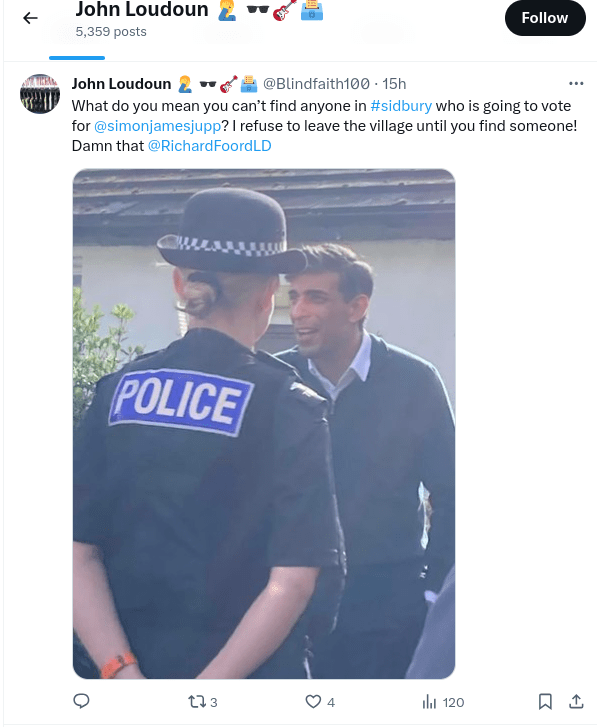
“Out in Force” adoring crowds meet Sunak, Jupp & Hernandez in Sidbury (see photo)

According to one of Jupp’s aides they had an “energetic conversation” with farmers on rural crime, livestock worrying etc. 

Did they promise to transport sheep stealers to Rwanda?

Spot the crowds in Sidbury

Last October farmers in Somerset attempted to block a Morrisons distribution centre in Bridgwater under a banner that said “Proud to Farm”. Then last week about 3,000 farmers gathered in Carmarthen, Wales, to protest, with some carrying a mock coffin with a plaque reading “In memory of Welsh farming”.

Around 40 tractors and other farm vehicles blocked roads around the Kent port for several hours on Friday evening by driving slowly and carrying signs with slogans such as “No More Cheap Imports”.

Farmers say there will be further French-style blockades following a slow tractor protest at Dover against low supermarket prices and cheap food imports from post-Brexit trade deals.

So not a happy bunch amongst what used to be core conservative supporters. – Owl

Devon SEND Parents and Carers for Change protest in Exeter

Parents have protested against the quality of services for young people with special educational needs and disabilities (SEND) in Devon’s schools.

Where’s Rishi? – Owl

By Bradley Gerrard & Will Goddard www.bbc.co.uk

Parents shared their experiences, with one calling the services “not fit for purpose”

The Devon SEND Parents and Carers for Change group gathered outside Exeter’s County Hall on Thursday.

Parents shared their experiences, with one calling the services “not fit for purpose”.

The council said it would introduce a new framework for support for those pupils in the coming months.

An inspection by education regulator Ofsted in 2022 said the county had “not made sufficient progress in addressing any of the significant weaknesses”.

It added that, despite a new strategy launched in 2020, it “fundamentally fails to address the significant weaknesses that were apparent at the previous inspection and are still evident now”.

‘Not fit for purpose’

Lee Farrell, from Upottery, has been fighting for the past two years to secure his 10-year-old daughter support from Devon’s SEND service.

“This council has been classed as inadequate for five years,” he said. “I would like to see the Department of Education remove educational services from this council and take them over themselves.

“They’re not fit for purpose.”

Another protester, Helen, has two children with special educational needs.

She said: “My oldest son is 15 now and ever since he started school I’ve spent the whole time trying to get support in place and trying to make Devon County Council fulfil their legal obligations,” she said.

“They blatantly break the law and nobody holds them to account.”

Councillor Lois Samuel, responsible for the service since last summer, said the “improvement journey that we’re on in Devon will take time”.

“We understand and recognise that many parents and carers remain frustrated at the pace of improvement, but the changes required involve whole system changes, along with the need for our responsibilities as a council to improve,” she added.

Devon County Council said it had hired a new director of SEND improvement and educational psychologists are working in 100 schools to support children with special educational needs and disabilities.

It said it was seeking more financial support from the government and was engaging with Essex County Council, its improvement partner.

A Correspondent writes on Sunak’s visit

It makes me ask the question: If Jupp is so proud to be an MP why didn’t he bring Sunak to the largest town in his present constituency? Why didn’t he take them to other towns in his present constituency? Why only Sidmouth and a town outside his constituency – Cullompton. Jupp is not a local MP at all. MP of nowhere in particular. 

Exmouth – Sewage capital – Libdems have the most town councillors on their town council – sewage tankers and one woman taking SWW to court. People claim they go past the office and never see anyone there. He couldn’t even be bothered to lay a wreath last year at the largest constituency town in his constituency with a large number of service personnel and veterans. Instead he chose to go to Sidmouth which doesn’t have a large number of military personnel or veterans.

Budleigh Salterton – school featured on Panorama. Sewage tankers on seafront.

Topsham – when was the last time Jupp went there?  Are they aware he is their MP? Maybe they think it’s Ben Bradshaw.

Cranbrook – when was the last time he went there? According to Paul Arnott at the scrutiny committee Cranbrook has sewage issues. Maybe they also think their MP is Ben Bradshaw.

“Residents” who secretly met Sunak in East Devon revealed: Tory councillors, farmers and Alison Hernandez!

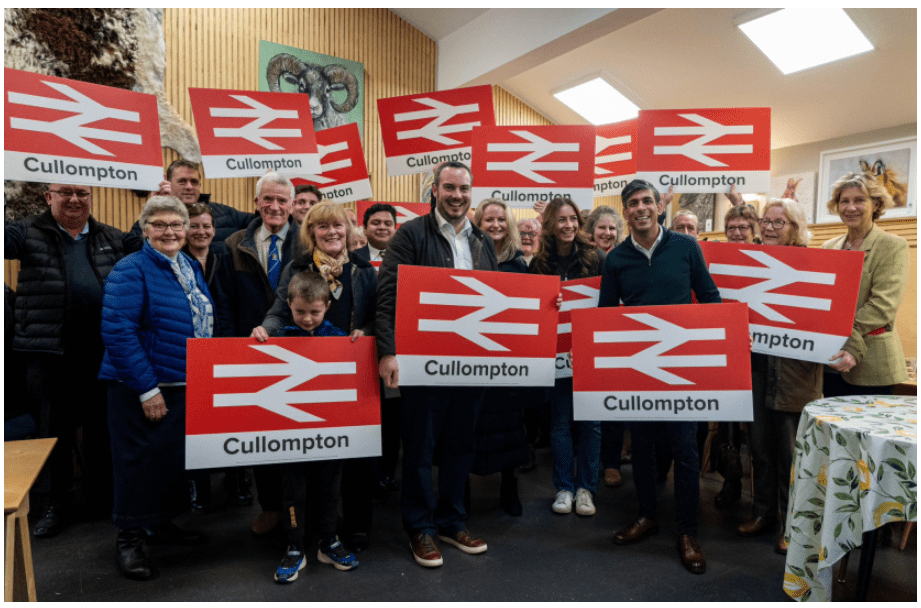
Again an eagle-eyed correspondent has noticed that amongst the rapturous crowds at Cullompton’s Fordmore Farm Shop were: Sophie Ricards, Tory Councillor for Sidmouth Town and  Jenny Brown – Tory Councillor EDDC for Honiton St Michael’s. And, of course, Simon Jupp, MP for Everywhere and Nowhere.

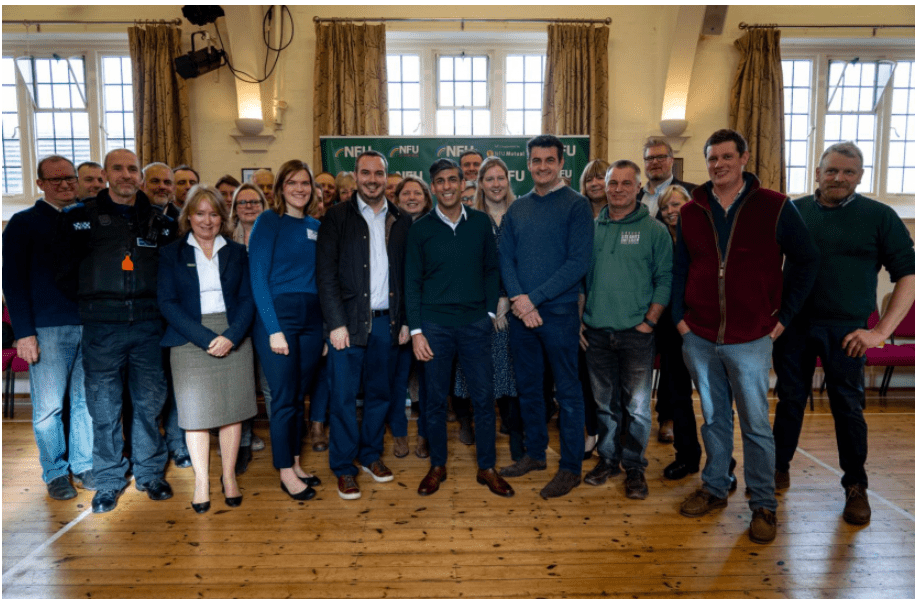
Later, at Jupp’s Sidbury “farmers roundtable” press reports say farmers from Broadclyst, Talaton, Venn Ottery, Seaton, Sidbury, Sidmouth and Cullompton raised the challenges and opportunities facing the sector with Mr Sunak.

[The farmer’s lobby didn’t stop Richard Foord winning Tiverton and Tory “cheap food” Brexit policy has done them no favours.]

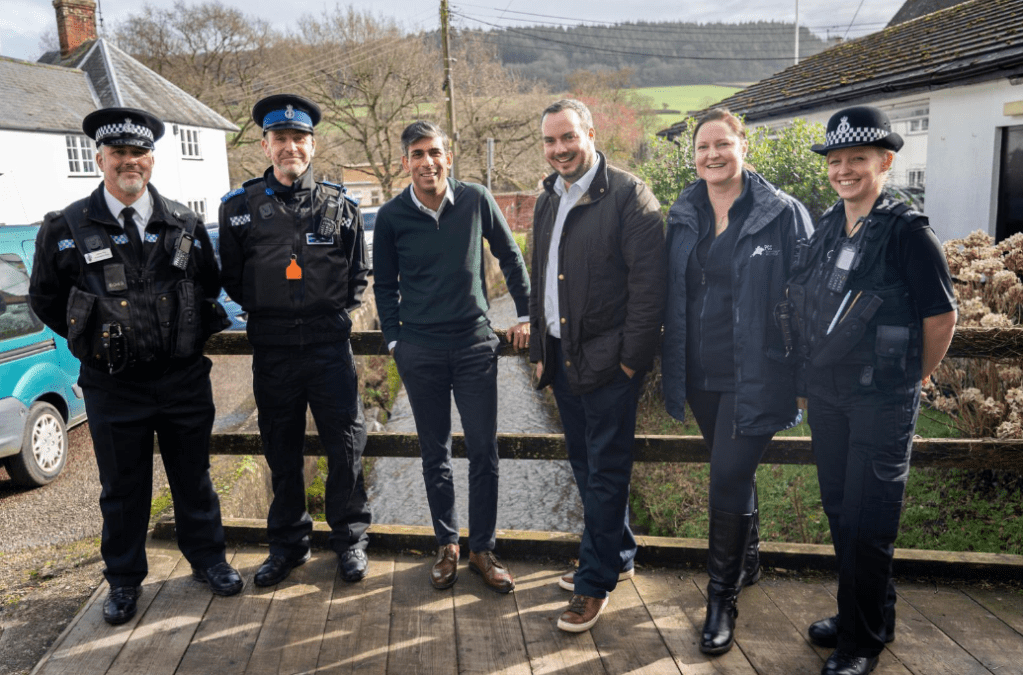
Devon and Cornwall’s Police and Crime Commissioner Alison Hernandez was also in attendance, joined by local officers including from the Devon and Cornwall Police Rural Affairs Team and NFU representatives such as the Devon NFU County Chair, Paul Glanvill.

No wonder “poor value for money” Devon and Cornwall Police are in special measures.

A couple of social media post are worth highlighting:

Sophie Richards gushing about the ££ investment to fix potholes compared to County Leader John Hart “drop in the ocean” criticism!

And from Cllr John Louden

PM defends pothole plan after Devon council leader “drop in the ocean” criticism

Too little too late from a millionaire PM who doesn’t seem to understand what Tory austerity has done to the regions over the years; and who makes “secret” visits to controlled audiences to avoid uncomfortable questioning. – Owl

Devon County Council leader John Hart said the authority had a growing pothole problem.

By Brodie Owen www.bbc.co.uk

The Prime Minister has promised more cash for potholes after the Tory leader of a Devon council criticised current funding as a “drop in the ocean”.

Speaking to BBC Radio Devon, Mr Sunak said the county would receive millions in extra funding to fix potholes in the next financial year.

But Devon County Council leader John Hart said the problem was growing.

He said: “We’ve got a backlog that’s getting bigger and bigger because we cannot cope with what we’ve got.”

On the second day of his visit to Devon and Cornwall, Mr Sunak said Devon would receive more money to fix potholes from the government’s savings on HS2.

“A chunk of that money has gone on highway maintenance, road resurfacing, pothole funds,” he said.

“Devon is actually going to get more funding starting this forthcoming financial year as a result of that HS2 decision to go into fixing potholes.”

‘We cannot cope’

Mr Hart said “the government knows they have a problem” with potholes.

“They’ve given us an extra £6.6m this year but that is a drop in the ocean,” he said.

“Last year they gave us £9.5m and, I hate to say it, but £7m of that went in inflation.

“We’ve got a backlog that’s getting bigger because we cannot cope with what we’ve got.”

Responding, Mr Sunak said: “The numbers I’ve got show that it’s growing next year – and that’s why we have to make priorities and decisions right.

“Obviously, I think everyone knows there isn’t a bottomless pit for these things.”

‘Important’ region

The PM also brushed off criticism of his dental plan from the British Dental Association, saying: “Everyone will have their views.

“I’m confident that it will make a difference.

“It’s a significant amount of money. It’s 2.5m appointments which will take us back to pre-Covid levels.”

He added that dentistry was a “big priority” for the South West and he said the region would be “important” at the next general election.

[Anyone likely to fix 8+ years of dental neglect for a mere £50? This is less than an annual MOT inspection which doesn’t fix anything. ]

Breaking: Sunak secretly visits Cullompton with “lap poodle” Jupp off the leash again

Rishi Sunak visits Cullompton to talk railway stations with Transport Secretary Harper’s PPS Simon Jupp tagging along for the ride.

Did the PM have the courtesy to follow the Speaker’s guidelines and inform Cullompton’s MP, Richard Foord of his visit? Doesn’t look like it – are the Tories running “frit”. – Owl

Rishi Sunak’s secret visit sparks railway row

Cullompton’s MP Richard Foord has challenged the Prime Minister Rishi Sunak on plans for a new railway station and a school when Mr Sunak visited the town.

Lewis Clarke www.devonlive.com

Mr Sunak was reportedly visiting Cullompton off the back of a tour of Cornwall and Plymouth on Friday, February 9. The visit to Cullompton was shrouded in secrecy as no press was invited to attend.

It is believed he met with Mr Foord’s Conservative opponent Simon Jupp, who is hoping to win Cullompton back from the Lib Dems following the by-election defeat in 2022 in which Neil Parish quit after looking pornography in the House of Commons.

Mr Jupp is currently the MP for East Devon, but will be fighting for Cullompton in the newly formed Honiton and Sidmouth seat in the 2024 General Election.

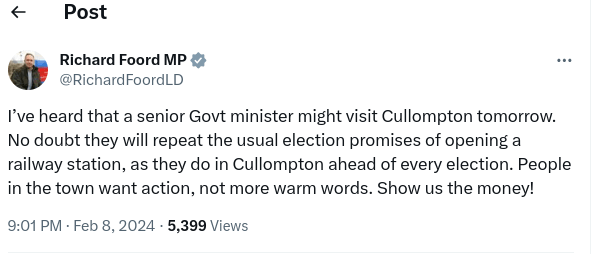
Lib Dem MP for Tiverton and Honiton Richard Foord, the day before the visit, posted on X, wrote: “I’ve heard that a senior Govt minister might visit Cullompton tomorrow. No doubt they will repeat the usual election promises of opening a railway station, as they do in Cullompton ahead of every election. People in the town want action, not more warm words. Show us the money.

Richard Foord MP for Tiverton & Honiton

“I will welcome funding to re-open the station when we see it. It will be a response to a campaign that’s been running for years, and one I’ve been proud to support through my work as Devon’s Chair of the Metro Board, whose members have put together a strong business case.

“It’s a real community effort; it is the tenacity of people in the town that has got us this far. We wouldn’t want to see a current Conservative Devon MP credited, though Neil Parish pushed this agenda as my predecessor.

“Let’s hope that the senior Cabinet member puts in a visit to Tiverton High School while they are in Devon. That’s another promise that gets wheeled out ahead of each election. Deeds, not words please.”

As no press were able to attend, Mr Foord’s questions could not be put to the Prime Minister.

Mr Sunak had visited Cornwall earlier in the week, in a visit where photographers were banned, and each outlet was only allowed to ask one question in a twelve-minute press huddle described by Cornwall Live as ‘A party political broadcast, basically, with interruptions ignored or replied to with a “I respectfully disagree with your characterisation of what we’ve been doing’.