Exmouth Council holds free cost-of-living crisis workshop

Exmouth Town Council and Devon Communities Together are holding a free cost-of-living crisis workshop at Littleham Leisure Centre.

Adam Manning www.exmouthjournal.co.uk

Taking place on Tuesday, January 30 -from 6:00pm to 7:30pm and Wednesday January 31- 12:00pm-2:00pm.

Come along for a FREE workshop for advice on how to reduce your energy use and manage your bills during the cost of living crisis.

The workshop will advise residents on accessing financial support Understanding fuel poverty, the energy market and energy costs How to use energy effectively in the home, keeping warm Supplier services for vulnerable customers and smart meters.

FREE Energy Advice Workshops from Devon Communities Together.

Book a 10-minute advice session and get a FREE bag of goodies to help keep you warm this winter call 01392 248919 or email: anderson.jones@devoncommunities.org.uk

This scheme is in partnership with Devon Communities Together and Exmouth Town Council, to find out more call 01395 276167 or email zoey.cooper@exmouth.gov.uk.

Campaign, now 3 hospitals, returns to County Hall next Wednesday

seatonmatters.org /

Seaton and Teignmouth Hospital campaigners will be joined at Devon Health Scrutiny Committee on Wednesday by supporters of Okehampton Hospital, where the ICB are also trying to hand back a ward to Property Services. Please join us if you can!

A three-community protest, Save Devon’s Community Hospitals, will meet outside County Hall at 1.30. The Committee is at 2.15 and Jack Rowland and I will again be speaking, along with Teignmouth and Okehampton colleagues. We are talking to supportive members of the Committee about what it can best do.

Richard Foord MP had intended to be present, but now needs to speak in a debate on international affairs in Parliament, and is sending a letter of support to the Scrutiny Committee. He presented the Seaton Hospital petition in Parliament two days ago.

Planned discussions with the ICB and Property Services have been postponed, but we are now hoping to meet them on 1 February at the Hospital. In the meanwhile, our Steering Committee is also meeting next week to discuss progress on our own plans for using the empty space.

Campaigners are now asking: Which community hospital, paid for by a local community, will be under threat next?

  • The ICB have revealed to Seaton campaigners that they originally looked into using the Brownfield Land Fund to obtain public funding for demolishing part of the hospital and building houses. 

The Committee will be considering reports on Teignmouth and Seaton – the report on Seaton includes NHS Devon’s proposal for Okehampton. 

  • Speakers from the 3 communities will address the Committee.
  • Richard Foord MP has written to the Committee

Fujitsu boss admits his company knew right from the start about the Post Office IT problem

Fujitsu knew of defects in the Horizon IT system for nearly two decades, while witness statements used in the prosecution of subpostmasters were edited to omit references to the problems, the software manufacturer’s European chief has admitted.

“Shameful” and “appalling”.

Zoe Grunewald www.independent.co.uk

Fujitsu Europe director Paul Patterson told the official inquiry into the Post Office scandal that bugs and errors in the faulty accounting system were known about “right from the very start” by “all parties”.

And he said he had seen evidence of the editing of witness statements – an action he described as “shameful” and “appalling”.

Hundreds of subpostmasters were prosecuted for theft and false accounting because of errors generated by the Horizon software, in what Rishi Sunak has described as “one of the greatest miscarriages of justice in our nation’s history”.

Their plight was highlighted in an ITV drama, Mr Bates vs The Post Office, which triggered a public outcry earlier this month and led the prime minister to announce plans to exonerate those who had been affected by the scandal.

Fujitsu is now facing demands to contribute a “substantial” sum towards the mammoth £1bn compensation bill, after the company admitted earlier this week that it had a “moral” duty to do so.

Giving evidence to the official inquiry into the fiasco, Mr Patterson said that the earliest report of a bug he was aware of was in November 1999, and the latest in May 2018.

When asked if Fujitsu knew about the existence of errors and defects at a “corporate level”, he said that “right from the very start of the deployment of this system, there were bugs and errors and defects which were well known to all parties”.

He told the inquiry: “I’m surprised that that detail was not included in the witness statements given by Fujitsu staff to the Post Office – and I’ve seen some evidence of editing of witness statements by others.”

Pressed by the inquiry lawyer on how he would describe the editing out of bugs or “data integrity problems” in witness statements, he said: “Shameful, appalling – my understanding of how our laws work in this country [is] that all of the evidence should have been put in front of the subpostmaster, that the Post Office was relying on to prosecute them.”

Mr Patterson also told the inquiry that data provided to subpostmasters during criminal proceedings was “not sufficient” for them to understand whether Horizon was “operating correctly at the relevant branch”.

It was “certainly not a gold standard or any standard – it’s a very simple Excel file which tells you not very much”, he added.

Appearing in front of MPs on the business and trade committee on Tuesday, Mr Patterson acknowledged that Fujitsu had a “moral obligation” to contribute to the compensation awarded to subpostmasters. But he said that the “right place to determine that” was after the official inquiry had published its findings.

His appearance came as the Post Office was ordered by the government to investigate a second IT system after the i newspaper revealed that a number of subpostmasters had claimed to have been convicted of theft on the basis of errors generated by Capture software.

The government has now been asked to look into the case of Steve Marston, a 67-year-old former subpostmaster in Heap Bridge, Greater Manchester, who claims that errors in the software – a precursor of Horizon – led to his being convicted of theft and false accounting offences in 1998.

On Thursday, the Department for Business and Trade asked the Post Office to establish “if there are issues with any other systems currently or previously used by [the] Post Office”, following reports that three former subpostmasters had said that the system was prone to errors and caused shortfalls when they went to balance their books.

A Post Office spokesperson said: “We take very seriously the concerns that are being raised about cases from before the Horizon system was first rolled out in 1999, and we will of course assist in looking into such cases brought to our attention.”

Mr Marston said he had not stolen “a penny” but had pleaded guilty in order to avoid being sent to prison.

“They said pleading guilty was the only way to avoid going to jail,” he said. “I just thought it must be something I’m doing wrong; computers were in their infancy, you didn’t think they could be wrong.”

“They said, ‘Capture doesn’t make mistakes,’” he added.

“Fetters lane is where they used to hang people out to dry”

“See you in court then”

More quotes from the Post Office Horizon inquiry

Fujitsu manager labelled subpostmaster as ‘nasty chap’ before High Court case

A Fujitsu manager labelled a subpostmaster as a “nasty chap” who will be “all out to rubbish” the company’s name ahead of legal proceedings which led to his bankruptcy, the Horizon IT inquiry heard.

Josh Payne www.independent.co.uk

Peter Sewell, who was part of the Post Office Account Security Team at Fujitsu when East Yorkshire subpostmaster Lee Castleton faced his legal battle in 2007, describe the road the court was situated on as a place “they used to hang people out to dry”.

Mr Castleton, from Bridlington, was found to have a £25,000 shortfall at his branch after losing his fight with the Post Office.

Mr Sewell admitted “we all protect our own companies” when pressed on whether he saw it as important to protect Fujitsu’s overall reputation.

In an email exchange in December 2006 with IT security analyst Andrew Dunks, Mr Sewell appeared to give words of encouragement to his colleague ahead of the court battle, which read: “See you in court then.

“Fetters lane is where they used to hang people out to dry. I don’t suppose that type of thing happens any more though.

“That Castleton is a nasty chap and will be all out to rubbish the FJ (Fujitsu) name.

“It’s up to you to maintain absolute strength and integrity no matter what the prosecution throw at you.

“We will all be behind you hoping you come through unscathed. Bless you.”

Mr Dunks replied: “Thank you for those very kind and encouraging words. I had to pause halfway through reading it to wipe away a small tear…”

Questioning Mr Sewell about the exchange, counsel to the inquiry Julian Blake said: “Is that typical of the approach to the work that you were doing?”

Mr Sewell responded: “No, no – I don’t know why that was written.”

The witness added: “I don’t know why it was written – I don’t remember writing it, but obviously I did. I certainly don’t understand it.”

The counsel to the inquiry also asked Mr Sewell: “But my question is, did you see it as important to your work to protect the name of Fujitsu?”

He said: “I guess I did, but not purposely.”

Mr Blake added: “So it would be unfair to describe you as somebody who saw protecting Fujitsu as important – an important part of their job?”

Mr Sewell said: “We all protect our own companies, yes.”

On behalf of a number of subpostmasters, Flora Page continued to probe the witness about the email to Mr Dunks, saying: “Was this your pep talk to your team member that you were managing before he had to go and give evidence?”

Mr Sewell replied: “No it wasn’t a pep talk, no.”

Ms Page continued: “What you say to reassure him is ‘don’t worry, he’s a nasty man’ – how did you form that opinion Mr Sewell?”

Mr Sewell said: “I don’t know, I don’t know why I wrote it. I apologise.”

Ms Page then asked: “What was being said within Fujitsu that allowed you to form the opinion that he was a nasty man?”

The Fujitsu witness said: “Nothing, I don’t think.”

Ms Page continued to press him, saying: “Nothing?”

Mr Sewell said: “I’m not aware of anything, no.”

Ms Page went on: “You made that up off the top of your head?”

The witness replied: “In a way, I think, yes.”

The subpostmasters’ lawyer continued: “And why would you do that Mr Sewell?”

“I don’t know,” he said.

Ms Page went on: “Is that the opinion you formed of all subpostmasters who took issue with what the Post Office said in the courts?”

Mr Sewell responded: “Absolutely not.”

Ms Page continued: “You were egging Mr Dunks on weren’t you, urging him to go into battle with Mr Castleton, weren’t you?”

Mr Sewell said: “I don’t know what it was written for now, I don’t know.”

Moving on to a different part of the email, Ms Page said: “You will know by now that Mr Castleton was indeed ‘hung out to dry’.”

Mr Sewell replied: “I know a lot more about it now than I did, yes.”

Ms Page then asked: “Knowing what you know about him being hung out to dry, and the way in which you urged Mr Dunks to go into battle with him, is that the right attitude for someone to take into court when they’re about to give evidence in a case with serious implications for someone?”

“No,” he said.

Ms Page added: “And yet that was the attitude that your management style, and your email, fostered and encouraged isn’t it?”

Mr Sewell said: “It suggests that way, yes. I don’t know why I wrote it.”

He was then questioned on whether he had written a similar email before Mr Dunks gave evidence against subpostmistress Seema Misra, to which he replied: “Absolutely not.”

“Why do you say absolutely not?” Ms Page asked.

Mr Sewell said: “I can’t even believe that that (the email about Mr Castleton) was written.”

Ms Page added: “The attitudes towards subpostmasters that you encouraged in your team must have been one they carried into court whenever they gave evidence against subpostmasters, is that right?”

The witness replied: “I don’t believe so.”

The statutory inquiry, which began in 2021 and is chaired by retired judge Sir Wyn Williams, has previously looked at the human impact of the scandal, the Horizon system rollout and the operation of the system, and is now looking into the action taken against subpostmasters.

The inquiry was established to ensure there was a “public summary of the failings which occurred with the Horizon IT system at the Post Office” and subsequently led to the wrongful convictions of subpostmasters.

Post Office inquiry told that fixing bugs was too costly and time consuming

Inquiry also hears how data was manipulated before being used in criminal trials

It just keeps getting worse – Owl

Penny Horwood www.computing.co.uk

A software developer at Fujitsu who raised the issue of bugs within the Horizon software that the Post Office rolled out from the late 1990’s has told the inquiry into the Post Office scandal that the company did not fix the bugs because it was too expensive and too time consuming. It isn’t the first time the inquiry has been made aware of damaging decisons being made due to worries about cost.

Gerald Barnes, a software developer at Fujitsu since 1998, worked on numerous technical tasks relating to the Post Office migration away from paper-based accounting methods to the automated Horizon IT system.

The inquiry heard that in 2008, a glitch in a system called CABSProcess, which was supposed to automatically summarise a post office’s transactions at close of business, resulted in users having balancing issues.

Crucially, the system did not make post office operators aware of the problem.

“The failure was silent to the postmaster,” Barnes said. “Although it was available [to Fujitsu] in the event log and to diagnosticians, the operator at the Post Office branch would not know anything had gone wrong.”

According to an internal Fujitsu email, Fujitsu did not look to fix the issue due to its “rarity”, but it eventually did when it became “a higher priority with the [Post Office],” when it appears to have emerged that the issue affected 195 branches.

Speaking yesterday at the inquiry Barnes said: 

“We were just about to replace [legacy] Horizon with HNGx [Horizon Online.] The better thing to do is to make sure the [Horizon Online] software works. It would have just been too expensive to do a thorough job at that stage. It would have been uneconomic. To comprehensively rewrite the error handling would be a massive job. It would be extremely expensive.”

In an internal message chain at the time, Barnes said: “I hope the [Horizon Online] version is much better.”

In 2009, Barnes began working with the audit team responsible for gathering the data which was subsequently used in the trials of sub-postmasters. It was around this time that Fujitsu scrapped a third-party software program that had been in place to, among other tasks, help produce audit record queries (ARQs). This was in order “to save the licence fee”, according to Barnes. 

Fujitsu rewrote the code so that Horizon would handle this function but more bugs meant the ARQs did not provide complete information. Barnes said that in 2010, he worked on one such bug that caused multiple transactions to appear in a spreadsheet without it being clear that it was the same transaction being duplicated.

Email chains between Fujitsu management and its fraud and litigation team which have been presented to the inquiry have revealed that Fujitsu knew about a string of ongoing problems with ARQs that it did not disclose. The duplication of transactions was one such problem with as many as one-third of transactions being duplicated. 

Further emails indicate that Fujitsu management knew that if this became public it would call into question the integrity of the data and therefore prosecution cases.

“If we do not fix this problem, our spreadsheets presented in court are liable to be brought into doubt if duplicate transactions are spotted,” Barnes warned in an internal exchange in 2010. “There are a number of high-profile court cases in the pipeline and it is imperative that we provide sound, accurate records.”

Filtered data

Also giving evidence to the inquiry yesterday was John Simpkins, a team leader within Fujitsu’s software support centre (SSC).

Simpkins was questioned on the now well-known and controversial area of whether Fujitsu and/or the Post Office could access branch data without the knowledge of the sub-postmasters. The forensic accountants Second Sight, and indeed the BBC were told, repeatedly, by the Post Office that remote access was not possible.

Simpkins was shown a document in which an answer was formulated for a question posed by Second Sight, which was: “Can Post Office or Fujitsu edit transaction data without the knowledge of the postmaster?”

A formulated answer was then presented: “Neither the Post Office nor Fujitsu can edit transaction data without the knowledge of the sub-postmaster.”

Simpkins failed to give a clear answer to the question posed by counsel to the inquiry, Jason Beer KC, on the accuracy of this formulated answer. Mr Beer KC persisted:

 “So just answer my questions, in summary,  ‘neither Post Office nor Fujitsu can edit transaction data without the knowledge of a sub-postmaster’, is wrong isn’t it?”

“I believe so,” Simpkins said.

Simpkins also said that the team he worked in “downed tools” after learning the Post Office was using ARQ data which had been “manipulated from its original source” and presented to the Post Office in a “filtered” format before being used in criminal proceedings against the sub-postmasters.

Clean-up plans for Britain’s rivers are ‘off-track’

“The Office for Environmental Protection (OEP) is investigating after finding that the “plan for water” was not detailed or specific enough and was neglecting pollution sources beyond sewage spills. Farming is a bigger polluter of rivers than private water companies.”

This is the same “Plan for Water” that our “libertarian inclined” Simon Jupp voted for, having voted down a Lord’s amendment for mandatory targets, and is the basis of his claim that he “would never vote to pollute our water”. – Owl

Adam Vaughan www.thetimes.co.uk

The government’s flagship plan for cleaning up Britain’s waterways is not doing enough to stop farmers polluting rivers, England’s watchdog has found.

The Office for Environmental Protection (OEP) is investigating after finding that the “plan for water” was not detailed or specific enough and was neglecting pollution sources beyond sewage spills. Farming is a bigger polluter of rivers than private water companies.

The watchdog said that policies for dealing with chicken manure and other pollutants washing off farm fields were limited, and that plans to tackle pollution from roads were “notably absent”.

Overall, the OEP said the government was “largely off-track” and faced “very substantial challenges” in hitting its environment targets, which range from halting wildlife declines to restoring waterways to their natural state.

Robbie McDonald, chief scientist at the OEP, said: “Prospects are largely off-track. Water pollution is still problematic. Pollution incidents are not reducing and the ecological status of England’s freshwaters, which is one of the most important barometers of success, has remained largely static. Not all of the major pressures are being attended to. Agricultural pollution is a big issue.”

Cathy Maguire, author of an OEP report to be published on Thursday, said the watchdog had begun a “very substantial piece of work” on the effectiveness of laws and regulators to curb farming and transport pollution in rivers.

The watchdog said that not enough was being done for the government to hit its target of increasing the number of waterways that were close to their natural state from 16 per cent now to 77 per cent by 2027. The Times’ award-winning Clean it Up campaign has been calling for greater resources for regulators and more incentives for farmers to improve the state of the country’s rivers and seas.

Overall, the OEP’s annual progress report found the government was largely off track with regard to meeting 10 out of 40 environmental targets. A lack of evidence meant 15 were impossible to assess. The rest were on track to some degree.

The report painted a mixed picture of the state of England’s natural environment. Of 51 trends, about half were improving but the rest were deteriorating, static or impossible to evaluate because of a lack of data.

Dame Glenys Stacey, OEP chairwoman, said her team’s ability to assess progress towards restoring wildlife and habitats had been hampered by a “really concerning” lack of monitoring and transparency. Thérèse Coffey, the former environment secretary, pledged last year that everyone should live within a 15-minute walk of woodland or other green space but, because of a lack of evidence, this was found impossible to measure.

The watchdog made 47 recommendations urging the government to speed up and scale up action to meet the nation’s environmental targets. Stacey said: “We do now have, to a large extent, control of our own destiny [post-EU], but we’re not moving quickly enough.”

Labour called the report a “damning indictment” of the government’s record on protecting the natural world. “They have left the UK as one of the most nature-depleted countries in the world, with record levels of toxic sewage swilling through our rivers, lakes and seas,” said Steve Reed, shadow environment secretary.

On top of pollution, figures from the Office for National Statistics showed there were more than a million fly-tipping incidents in England last year, a small decrease but largely unchanged on the previous year. Farming groups said the number underplayed the true figure because much illegal rubbish dumping was happening on private land.

The ex-special forces teams fighting fly-tipping

Advertisement

Rebecca Pow, the environment minister, said: “We were always clear that our targets are ambitious, and would require significant work to achieve, but we are fully committed to creating a greener country for future generations and going further and faster to deliver for nature.”

Lies, damned lies, statistics and what the PM says

“Spreadsheet” Sunak, who promised integrity and accountability on the steps of No 10, caught for a second time being “economical with the truth” when it comes to interpreting statistics.

‘Not surprising’ people felt ‘misled’ by government’s asylum claims – UK stats watchdog

Tim Baker news.sky.com

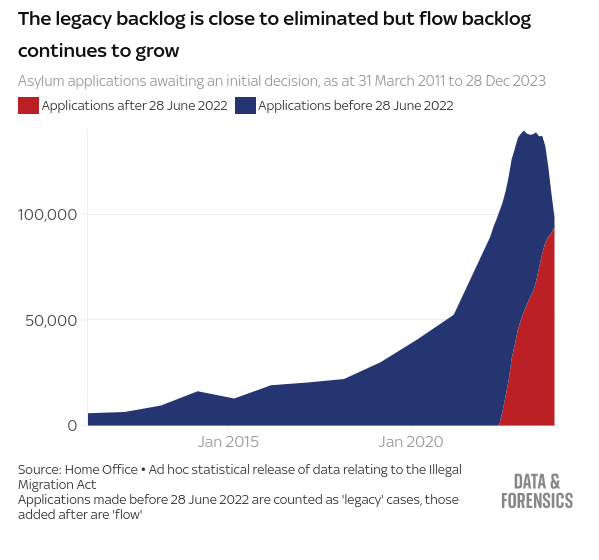
The UK’s statistics watchdog has criticised the government for claiming to have cleared the legacy asylum backlog – saying it is “not surprising” people felt “misled”.

Rishi Sunak and his administration faced criticism at the start of the year for saying they had cleared all the applications to remain in the UK by asylum seekers made before 28 June 2022.

In total, 4,537 claims from the backlog still needed a decision at the time of the announcement – but Mr Sunak’s spokesman said since these had been reviewed, the government considered them “cleared”.

Following a review, the Office for Statistics Regulation (OSR) has now written to opposition MPs that complained about the prime minister’s claims.

Sir Robert Chote, the OSR’s chair, said that “it is not surprising that the government’s claim has been greeted with scepticism and that some people may feel misled”.

Liberal Democrat MP Alistair Carmichael said: “Not only is the government celebrating something that is no achievement, they are twisting the facts, as proven by the UK stats authority just today.

“As this letter again shows, the Conservatives have not cleared the asylum backlog. The British public deserves better than this.”

Mr Carmichael was one of the MPs who complained, alongside Labour’s shadow immigration minister Stephen Kinnock.

A post on X from Rishi Sunak at the time had a community note added to it – meaning other users provided context for what was said.

— Rishi Sunak (@RishiSunak) January 2, 2024

In his letter, OSR chair Sir Robert said that the “average member of the public is likely to interpret a claim to have ‘cleared a backlog’ – especially when presented without context on social media – as meaning that it has been eliminated entirely”.

He added: “That said, there may be a perfectly good case for excluding cases of this type [the ones which remain but were counted as ‘cleared’] from any commitment to eliminate the backlog over the timeframe the government chose, but this argument was not made at the time the target was announced or when it was clarified in the letter to the home affairs committee.

“This episode may affect public trust when the government sets targets and announces whether they have been met in the other policy domains. It highlights the need for ministers and advisers to think carefully about how a reasonable person would interpret a quantitative claim of the sort and to consult the statistical professionals in their department.”

While Sir Robert thanked the government for publishing the data alongside its claim, it noted this was not provided ahead of time to journalists, “which prevented them from being able to scrutinise the data when first reporting it”.

“This does not support our expectations around intelligent transparency, and we have raised this with the Home Office,” he said.

Downing Street said it would “consider” the letter from Sir Robert.

Asked whether Downing Street had a problem with representing statistics accurately, Mr Sunak’s spokesperson said: “

“I don’t think that is right. We publish a wide range of statistical information and continue to do so.

“We also linked through to the full story on Gov.uk with the details of our update on the legacy backlog, and the PM was referring to a commitment he himself made and spoke about.

“But of course we will note the letter and consider it to ensure we can be as clear and transparent as possible.”

Mr Sunak pledged in December 2022 that he would “abolish” the legacy backlog of asylum claims made before 28 June of that year, with the Home Office being given the target of the end of 2023.

The department said the pledge had been “delivered” earlier this month, having processed more than 112,000 asylum claims overall in 2023.

Spreaker This content is provided by Spreaker, which may be using cookies and other technologies. To show you this content, we need your permission to use cookies. You can use the buttons below to amend your preferences to enable Spreaker cookies or to allow those cookies just once. You can change your settings at any time via the Privacy Options. Unfortunately we have been unable to verify if you have consented to Spreaker cookies. To view this content you can use the button below to allow Spreaker cookies for this session only.

There were more than 92,000 asylum claims made before 28 June 2022 requiring a decision, but Labour has said the government’s claim that all of those cases have been cleared is “false”.

The Home Office conceded that all cases in the legacy backlog have been reviewed, but added that “4,500 complex cases have been highlighted that require additional checks or investigation for a final decision to be made”.

NHS Devon promises hospice funding review after MPs’ concerns

The NHS body responsible for funding local hospice services has told local MPs it’s working towards ‘equitable’ funding for all four adult hospices in Devon.

[Amazing how a looming general election concentrates political minds, especially when the Tory stranglehold on Devon looks to be under serious threat. – Owl]

Philippa Davies www.midweekherald.co.uk 

Last year Hospiscare, which serves East Devon and Exeter, warned that it might have to cut services if it doesn’t receive more money from the NHS. The charity is facing a £2.5million deficit in the next financial year. Hospiscare pointed out that it receives only 18 per cent of its £10million annual running costs from the NHS, while the average NHS contribution to other UK hospices is 37 per cent.

Meanwhile, Sidmouth Hospice at Home receives no funding from NHS Devon.

The East Devon MP Simon Jupp, Tiverton & Honiton MP Richard Foord, and Exeter MP Ben Bradshaw all wrote to the NHS Devon Integrated Care Board to raise their concerns.

Simon Jupp has held meetings with the CEOs of Sidmouth Hospice at Home and Hospiscare to discuss the impact on their services from the lack of fair funding from NHS Devon, and secured and led a debate in Parliament about the issue on Wednesday (January 17).

[See Hansard transcript here with contributions from Richard Foord and Kevin Foster, Torbay, with Helen Whately, The Minister for Social Care, responding]

In a letter dated the same day, sent to all three MPs, the chair and chief executive of NHS Devon’s Integrated Care Board, said their body is also facing a huge cash deficit, but is aware of the financial challenges Hospiscare faces.

The letter said: “Our executive team recently met to discuss the funding challenges faced by our hospices and are working on plans to move towards equitable NHS funding for all four adult hospices in the county starting in 2024-25.

“These conversations are ongoing, given the financial challenges outlined above, and we have committed to undertaking a financial review that addresses several of the options that were part of the end of life commissioning review.”

The letter said the different levels of funding to hospices are the result of historic grant arrangements pre-dating the creation of the ICB – but the funding body is now working with NHS England South West ‘to support the implementation of sustainable, effective end of life support for people and families across Devon’.

Simon Jupp said: “I first raised NHS Devon’s unfair funding for hospices over two years ago. It is truly regrettable that it took the debate I secured in Parliament for NHS Devon to finally commit to reviewing hospice funding in the county just hours before it began.

“I was pleased to secure the support of the Minister for Social Care for my call for fairer funding for hospice services in Sidmouth, Exmouth, Seaton, Axminster and Exeter. I will continue to press for progress from NHS Devon to better support all of our local hospice care providers and their brilliant teams who help take the strain off the RD&E and community hospitals across East Devon.”

Environment Agency told staff to delay inspections to stay on target last year

Regulator accused of ‘massaging figures’ by telling staff to pause inspections at poorly performing waste sites until January.

www.theguardian.com 

The Environment Agency told staff in September to stop inspecting the most poorly performing waste sites until January in order to meet corporate compliance targets, it can be revealed.

The regulator has been accused of “massaging the figures”, with an insider telling the Ends Report and the Guardian that a lack of resources means the body is “failing to do its statutory duty in a timely manner”.

Under the Environment Agency’s corporate targets, the regulator aims to ensure that 97% of all regulated sites, such as landfills, are complying with their permits.

In an email sent on 20 September last year, and seen by the Ends Report and the Guardian, a senior installations manager for waste sites in Nottingham emailed staff to warn that the region was at risk of missing this corporate target.

“The KPI [key performance indicator, a way companies measure performance] says that we have to have 97% of our sites in compliance band A B C, which effectively means we are ‘allowed’ no more than 3% in D E F. 3% of our sites equals 23.2 sites. Therefore we are aiming for 23 – NO MORE,” they wrote.

The agency identifies any non-compliances in the course of a calendar year and uses this information to work out a compliance rating based on a points system. Based on the cumulative score over a calendar year, each site is placed into one of six compliance bands from A to F.

Sites in bands A and B have demonstrated an expected level of permit compliance, sites in bands C and D must improve in order to achieve compliance and sites in bands E and F must significantly improve in order to achieve compliance. The score determines the level of annual subsistence fees regulated firms must pay to the Environment Agency.

In the email, the manager asked officers to “PAUSE UNTIL JAN work which is not absolutely necessary to do now”.

Responding to the email, a technical lead officer raised concerns with this plan and warned that there are already environmental problems with waste sites in the east Midlands region that could be exacerbated if they paused inspection work.

On 28 September, the junior member of staff was told by a separate team leader: “If you still feel uncomfortable with our direction when we’ve seen the reviews and reflected on our best course of action, we’d like to offer you the opportunity to work on other projects instead that have a higher priority to us to remove any conflicts that may exist for you.”

Speaking on the condition of strict anonymity, one Environment Agency insider said that this statement “upset a lot of colleagues in that office and those who work in that part of the business because the managers were basically saying: ‘We don’t care about your professional judgment, we are just chasing this number.’”

This team leader emphasised again that it was important to “maintain our D E F KPI as far as we can as it’s an externally reported KPI that is coming under heavy scrutiny at the moment”.

The direction was given to “pause any work that may foreseeably result in a site moving into D E F”.

The team leader asked the officer to “produce a forward plan” to explain what they would do to ensure the risk with the specific waste site of concern was mitigated, but said “we’d prefer this to start from January”.

“In the meantime, we can decide the best way to service the band U without setting hares off that we can’t control or haven’t the resources to deal with,” they wrote.

Band U are sites that have not been classified because they have not been inspected.

An Environment Agency insider said the fact the instruction related to the most poorly performing sites was “evil”.

“It’s saying: stop looking at the sites that we know are the worst,” they said. “This is indicative of the fact that we are failing to do our statutory duty in a timely manner. It’s a method of massaging the figures to make it appear that the situation is better than it is.

“As soon as you know that a site is causing problems then you need to deal with it. But the easy way to make that problem go away is to not see the site as a problem. The external problem hasn’t gone away, but what they’re doing here is trying not to create an internal problem by pretending they haven’t noticed the issue,” they said.

The insider said the problem was down to resourcing, and that ultimately the Environment Agency’s budget had been cut to such an extent that it was unable to regulate properly.

“By not exceeding that traffic light target in our KPIs it’s a very simplistic indicator that we as a business are not doing all the proper stuff that underpins that,” they said. “It shouldn’t just be an absolute bloody traffic light target. But the reality is that everything is broken to the extent that we are playing silly buggers with the numbers just to reach the targets we have set ourselves.”

An Environment Agency spokesperson said: “These claims are incorrect – our work to regulate these sites did not stop. We are responsible for over 600 waste and installation sites in the east Midlands, and it is not unusual to prioritise work on those which pose the greatest risk to the environment, for example, those with hazardous waste.

“Last year, all these sites received their necessary inspections by our officers – and we already have compliance plans in place for the forthcoming year, to ensure they meet our high standards.”

However, the insider said that to claim all sites received their necessary inspections was “disingenuous” because the staff decided what “necessary” was.

“The subtext of that statement is that we define what necessary looks like, and what these individuals said [was] that for those poorly performing sites, we are not going to look. It’s like putting a telescope up to your blind eye and saying: ‘What signal, I see no signal,’” they said.

Commenting on the emails, Helen Venn, the chief regulatory officer at the Office for Environmental Protection (OEP), the government’s post-Brexit green regulator, said: “It is crucial for all government departments and public bodies to keep accurate records. Monitoring compliance with environmental law is a critical component of effective environmental regulation. We are undertaking work to consider the implementation and effectiveness of legislative frameworks and associated arrangements in relation to compliance monitoring.”

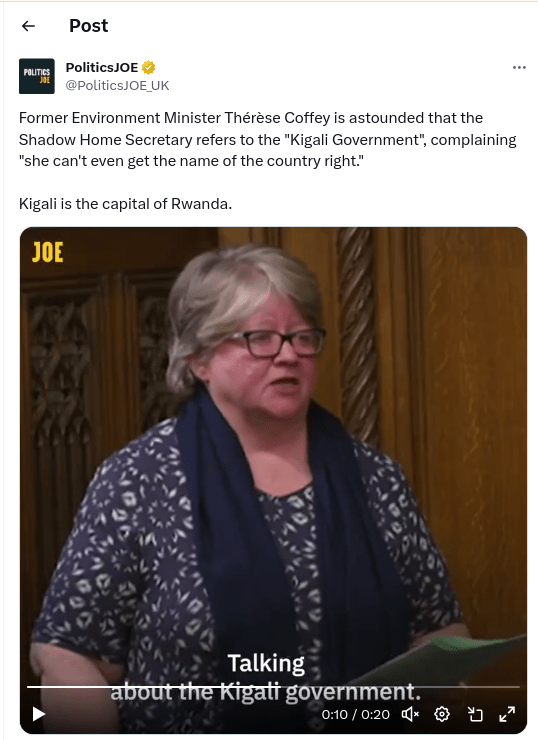
Psst don’t tell Thérèse Coffey that “R” is the capital of Rwanda

Posted on X, a clip of the former Environment Minister admonishing Yvette Cooper that “she can’t even get the name of the country right” when she referred to the “Kigali Government” in the Rwanda debate.

No wonder our environment is so full of crap. – Owl

View the clip on X here

Sidmouth Town Council acts on environmental issues

Cllr Chris Lockyear, Chairman, Sidmouth Town Council

Sidmouth Town Council held it January meeting on 8th January. We were delighted to welcome 4 visitors including PC Driver of Devon and Cornwall Police. Most meetings of Sidmouth Town Council are open to the public, unless confidential issues are being discussed, and we would be delighted to see more members of the public. And there is space on the agenda if you want to ask a question.

A lot of our work is done in Committees and Working Groups and we had reports from each at the meeting. The main groups are Tourism and Economy, Environment, Planning and Youth Provision. Each covers different aspects of the work of Sidmouth Town Council and in this week’s article I want to discuss some of the things related to the Environment.

The Town Council is active on various topics in relation to the Environment including climate change, natural environment, built environment and pollution.

On Climate Change we are seeking to both reduce the Council’s own carbon footprint as well as encourage residents and businesses to reduce theirs. One such initiative is the offer to residents and businesses of the Sid Valley of a free infrared (thermal imaging) camera survey of their houses or premises in order to identify possible areas of heat loss. Heat can be lost through walls, windows, doors or roofs as a result of poor insulation, poor design or poor maintenance. Not only does this involve wasted energy but also of course wasted money. We have a team of volunteers who will come to your property to take the photos and the images are then sent to you with some comments. They say a picture speaks a thousand words and these images can certainly help you understand where heat is being lost. See Council website for details.

One mitigation for climate change is the planting of trees that will absorb some of the carbon that has been emitted. Working with the Arboretum and others we plan to plant 14,000 trees in the Sid Valley, one for each resident, which will change the natural environment in the Sid Valley. We will also be doing a survey this year with the support of Sidmouth Arboretum to understand how many trees we have in the Sid Valley and what type. The Arboretum did a similar survey 10 years ago and so it will be interesting to see what has changed. In 2014 about 10 per cent of the trees were Ash but since then a lot have been felled as a result of Ash dieback.

With regard to the built environment, Sidmouth Town Council has been working with East Devon District Council on the Beach Management Plan to protect Sidmouth from the sea. Before Christmas we were delighted that the Environment Agency agreed to support the project with £15 million. This has allowed detailed design to start with a view to building additional breakwater(s), a groyne on East Beach, and a re-enforced splash wall along the Promenade, raised somewhat at the eastern end. Once installed, this should reduce the risk of flooding significantly for decades to come.

Along with many residents Sidmouth Town Council has been concerned about the discharge of untreated sewage to our river and into the sea via the Combined Sewage Overflows (CSOs). We have been working with South West Water and others to highlight the problems and to find solutions. South West Water has committed to spend around £10 million over the next couple of years to address the issue. We are one of only two towns in the South West to get this accelerated spend.

The key issue is that clean water is getting into the sewers which cannot cope with the extra load. The excess diluted sewage then has to be discharged untreated into the river or sea. South West Water has been undertaking CCTV surveys of the sewers to identify leaks and have identified areas that need lining. This work will start shortly. They are also seeking to reroute surface water, for example from the Ham car parks, away from the sewer. Both these interventions will reduce the load on the system and therefore the number of times the CSOs are used.

The Environment Committee has some involvement with all these activities undertaken by voluntary groups and other organisations, for the benefit of all the people and things that live in the Sid Valley.

Later this month the Council will agree its budget for 2024/25 and so I will tell you more about that next month.

Richard Foord on his feet again – Adjournment debate 16 Jan

Reminding the House that the pension triple-lock was originally a LibDem proposal, not a Tory one

Photo of Wendy ChamberlainWendy Chamberlain Liberal Democrat Chief Whip, Liberal Democrat Spokesperson (Work and Pensions)  

There are 2 million older people living in poverty—that is one in six—and another million are sitting just above the poverty line silently struggling to make ends meet. Together, a quarter of older people are in or at risk of being in poverty. In recent years, the phrase “heating or eating” has become shorthand for the cost of living crisis. It rhymes, and it is easy to say, but it is the reality facing too many of our pensioners. Age UK research found that 4.2 million people cut back on food or groceries last year, while a survey by this House’s Petitions Committee of those engaging in petitions on pension levels found that three quarters were worried about affording food.

Health statistics always worsen in the cold winter months, with mortality rising in all parts of the UK last year compared with previously. As we face an even colder winter —in my constituency we often reach minus temperatures overnight—there are real consequences when older people cannot afford to properly heat their homes. The reality is that heating or eating is not a catchphrase, but a decision about survival. It is our duty as policy makers in this place to ask why that is a reality for so many of our older people and to find solutions.

I welcomed the Government’s eventual decision to keep the triple lock this year, but the lack of clarity and uncertainty about that decision appeared to be electorally motivated, and I argue it caused a great deal of anxiety for many older constituents.

Photo of Richard FoordRichard Foord Liberal Democrat Spokesperson (Defence)

My hon. Friend is talking about the triple lock on pensions. I have heard it said in this House in recent months that the triple lock on pensions was a Conservative proposal, so I went to the Library to find out whether that was true. The 2010 Conservative manifesto talks about

“restoring the link between the basic state pension and average earnings”, while the 2010 Liberal Democrat manifesto states:

“We will uprate the state pension annually by whichever is the higher of growth in earnings, growth in prices or 2.5 per cent.”

Does she agree with me that the triple lock was a Lib Dem proposal?

Photo of Wendy ChamberlainWendy Chamberlain Liberal Democrat Chief Whip, Liberal Democrat Spokesperson (Work and Pensions)

I regularly meet Steve Webb, the former Lib Dem Pensions Minister from the coalition, and I know how hard he worked when in government on this policy, so I entirely agree with my hon. Friend and thank him for his intervention…..

More on Richard Foord’s petition to Parliament on threatened Seaton Hospital wing

“There are so many possibilities for this wing. A new care hub would offer greater levels of tailored care for elderly residents. I will continue to demand that the future of both Seaton Hospital, and all our Community Hospitals, are protected.”

Philippa Davies www.midweekherald.co.uk

Seaton’s Liberal Democrat MP Richard Foord has presented a petition in Parliament opposing plans to strip out a whole wing from Seaton community hospital.

The wing was funded by the community, and the petition forms part of a wider campaign that has received the support of more than 9,000 people from across the Axe Valley. It calls for the affected wing to be transferred from the NHS to the local community, so it can be used to benefit local people.

Since the announcement that NHS Devon was looking to turn a wing of the facility over to NHS Property Services, which could see it demolished or sold off, Mr Foord has been leading a grassroots campaign opposing the plans.

He was the first to raise the issue in Parliament, quizzing both the Health Secretary and the Prime Minister over the plans, and has convened meetings with NHS Devon, local community groups and charities, and NHS Property Services.

By presenting the petition in Parliament on Tuesday (January 16), Mr Foord has formally placed the concerns of local people on the record with MPs and called on the Government to act.

Speaking after presenting his petition, Richard Foord MP said: “Plans to allow a wrecking ball to be driven through a wing of Seaton hospital would be hugely damaging – not just for Seaton, but for everyone living in the Axe Valley who relies on this facility for treatment.

“With this petition, the local community has spoken. In just a few weeks, over 9,000 people got behind my grassroots campaign and demonstrated their support for our hospital. It’s now time for Ministers to wake up, listen, and take action.

“Seaton Hospital is owned by NHS Property Services, a government-owned company with a single shareholder – the Health Secretary. With a single stroke of his pen, he could turn this building over to the local community and ensure it is protected for local people’s health.

“The fact they have so far been unwilling to do this shows the disregard with which they hold our corner of East Devon. People here won’t stand for it. We need more than warm words; we need action.

“There are so many possibilities for this wing. A new care hub would offer greater levels of tailored care for elderly residents. I will continue to demand that the future of both Seaton Hospital, and all our Community Hospitals, are protected.”

Richard Foord’s campaign launch – media revises article after questions of “bias”

Within the last five days, local media have printed articles, by different authors, describing the campaign launch, aims and record of Richard Foord MP and Simon Jupp MP who will be going head to head in the new Honiton and Sidmouth constituency.

The article on Richard Foord’s launch contained a final paragraph quoting Simon Jupp describing his local connections and Honiton office. This appeared to give Simon Jupp “the last word” on Richard Foord’s launch.

The article on Simon Jupp, urging voters to look at his record, a couple of days earlier contained quotes from him and him alone.

Owl understands that this caused some to question the apparent bias between the two articles published within days of each other.

In any event, the article on Richard Foord’s campaign launch has since been revised since Owl reported it.

Owl understands that the journalists at the Herald have a good relationship with Richard Foord.

The original final paragraph read:

Simon Jupp, MP for East Devon, said: “I am proud to be standing where I live, something my Liberal Democrat opponent simply can’t say. My campaign was launched on May 3rd last year in Honiton and I have been knocking on doors across the new Honiton & Sidmouth constituency since March. I have opened a campaign office on Honiton’s high street, not far from the former Liberal Democrat office they closed days after winning the by-election. I’m fighting for every vote, because I care about where I live.”

This is now followed by:

Richard Foord lives in Uffculme in the centre of the Tiverton and Honiton constituency, where he has lived with his wife and three children since he left the Army in 2010.  He offered the following in response:

“My brilliant team and I hold surgeries in towns and villages across the constituency that I represent.  I am listening to and representing people in Devon – not party bosses in London. 

“I am delighted that the Conservative Government’s delegate to East Devon has opened a shopfront in Honiton.  As the MP for Exmouth, he will know that our hollowed-out high streets need all the tenants they can get. That said, I walk past the Conservative Party’s office regularly and have often wondered why there is no-one inside.

“For me, it’s not about where you can be seen, but who you can help.  When I go to Parliament, it is to represent the views of people back home.”

Anyone wishing to find out more about Richard Foord or support his campaign can do so by visiting https://www.tivandhonlibdems.org.uk/foord

Petition – Community Hospitals Richard Foord MP on behalf of Axe Valley residents

I rise to present a petition on behalf of the residents of the Axe valley, and the towns of Seaton, Beer, Colyford and the surrounding area, who are objecting in the strongest possible terms to the disposal of an entire wing of Seaton Community Hospital. The petition has been signed by over 9,000 of my constituents, because they object to the fact that the hospital, which was funded by generous local donations, is being ripped away from them, and in part potentially sold off by NHS Property Services, and disposed of for potential sale for housing.

The petition states:

The petition of residents of Axe Valley in the Tiverton and Honiton constituency,

Declares that community hospitals play a vital role supporting health and wellbeing in rural communities;
further that the hospital in Seaton was built with active support and fundraising efforts by residents across the Axe Valley;
and further that plans to turn the wing of the hospital building over to NHS Property Services puts the future viability of the hospital at risk.

The petitioners therefore request that the House of Commons urge the Government to take into account the concerns of petitioners and take action to return the facility to the local community, so it can be repurposed to provide better care for those living in the area.

And the petitioners remain, etc.

www.theyworkforyou.com /debates/

Planning applications validate by EDDC in week beginning 1 January

Full list of Tories who turned on Sunak to back Rwanda amendments

Kevin Foster (Torbay) rebelled once and  Anne Marie Morris (Newton Abbot) twice.

Katy Clifton www.independent.co.uk

Rishi Sunak’s authority has been dealt a fresh blow as two Tory deputy chairmen resigned to join a major Conservative rebellion over his Bill aimed at reviving the stalled Rwanda deportation plan.

Lee Anderson and Brendan Clarke-Smith stepped down in order to vote for two amendments that right-wing MPs claim will help to protect the government’s flagship asylum policy from legal challenge. Jane Stevenson also quit her role as a parliamentary private secretary in the Department for Business and Trade to back the amendments.

Mr Anderson and Mr Clarke-Smith backed the changes tabled by former immigration minister Robert Jenrick and veteran Tory Sir Bill Cash “not because we are against the legislation, but because like everybody else we want it to work”, they said.

Around 60 Tories voted in favour of changes to the Safety of Rwanda Bill put forward by Conservative backbencher Sir Bill, which seek to ensure UK and international law cannot be used to block a person being removed to Rwanda.

The amendment was rejected by a majority of 461, but the rebellion gives an indication of the scale of unease within the Conservative Party during an election year.

The scope of the rebellion would be more than enough to sink the Bill and overturn the government’s working majority of 54 if it were repeated at its final Commons hurdle – third reading – which is expected on Wednesday.

Former prime minister Liz Truss, former ministers Suella Braverman and Sir Simon Clarke and former leader Sir Iain Duncan Smith were also among those to back the amendments.

Mr Jenrick had aimed to change the Bill to severely limit individual asylum seekers’ ability to appeal against being put on a flight to Kigali. The Commons later rejected his amendment 525 to 58, majority 467.

Here we take a look at all the Tory MPs to back the amendments:

Sir Bill Cash’s amendment:

MPs voted 529 to 68, majority 461, to reject Conservative MP Sir Bill Cash’s amendment, which aimed to ensure UK and international law cannot be used to prevent or delay a person being removed to Rwanda.

Here is a look at the 58 Conservatives who backed the amendment:

  • Lee Anderson (Ashfield),
  • Sarah Atherton (Wrexham),
  • Jake Berry (Rossendale and Darwen),
  • Bob Blackman (Harrow East),
  • Ben Bradley (Mansfield),
  • Suella Braverman (Fareham),
  • Jack Brereton (Stoke-on-Trent South),
  • Paul Bristow (Peterborough),
  • William Cash (Stone),
  • Rehman Chishti (Gillingham and Rainham),
  • Christopher Chope (Christchurch),
  • Simon Clarke (Middlesbrough South and East Cleveland),
  • Brendan Clarke-Smith (Bassetlaw),
  • Philip Davies (Shipley),
  • Sarah Dines (Derbyshire Dales),
  • Richard Drax (South Dorset),
  • James Duddridge (Rochford and Southend East) (Proxy vote cast by Marcus Jones),
  • Iain Duncan Smith (Chingford and Woodford Green),
  • Michael Fabricant (Lichfield),
  • Nick Fletcher (Don Valley),
  • Kevin Foster (Torbay),
  • Mark Francois (Rayleigh and Wickford),
  • Chris Green (Bolton West),
  • James Grundy (Leigh),
  • Jonathan Gullis (Stoke-on-Trent North),
  • John Hayes (South Holland and The Deepings),
  • Darren Henry (Broxtowe),
  • Philip Hollobone (Kettering),
  • Adam Holloway (Gravesham),
  • Eddie Hughes (Walsall North),
  • Tom Hunt (Ipswich),
  • Robert Jenrick (Newark),
  • Caroline Johnson (Sleaford and North Hykeham),
  • David Jones (Clwyd West),
  • Danny Kruger (Devizes),
  • Andrew Lewer (Northampton South),
  • Marco Longhi (Dudley North),
  • Jonathan Lord (Woking),
  • Craig Mackinlay (South Thanet) (Proxy vote cast by John Redwood),
  • Karl McCartney (Lincoln),
  • Robin Millar (Aberconwy),
  • Anne Marie Morris (Newton Abbot),
  • Jill Mortimer (Hartlepool),
  • Wendy Morton (Aldridge-Brownhills),
  • Lia Nici (Great Grimsby),
  • Neil O’Brien (Harborough),
  • Matthew Offord (Hendon),
  • Tom Randall (Gedling),
  • John Redwood (Wokingham),
  • Laurence Robertson (Tewkesbury),
  • Gary Sambrook (Birmingham, Northfield),
  • Greg Smith (Buckingham),
  • Henry Smith (Crawley),
  • Jane Stevenson (Wolverhampton North East),
  • Desmond Swayne (New Forest West),
  • Elizabeth Truss (South West Norfolk),
  • Bill Wiggin (North Herefordshire).

Tellers for the ayes were Conservative MPs Jacob Rees-Mogg (North East Somerset) and Miriam Cates (Penistone and Stocksbridge).

Robert Jenrick’s amendment:

MPs voted 525 to 58, majority 467, to reject an amendment from Conservative former minister Robert Jenrick that aimed to severely limit individual asylum seekers’ ability to appeal against being put on a flight to Rwanda.

The division list released after the Commons vote contained 59 names for the ayes and 523 for the noes, but updates to the list can occur. Conservative Sir Geoffrey Clifton-Brown (The Cotswolds) was listed on both the ayes and noes. He voted with the Government on the earlier amendment tabled by Sir Bill Cash

Here are the 57 Tory MPs who backed Mr Jenrick’s amendment:

  • Adam Afriyie (Windsor),
  • Lee Anderson (Ashfield),
  • Sarah Atherton (Wrexham),
  • Jake Berry (Rossendale and Darwen),
  • Bob Blackman (Harrow East),
  • Ben Bradley (Mansfield),
  • Suella Braverman (Fareham),
  • Jack Brereton (Stoke-on-Trent South),
  • Paul Bristow (Peterborough),
  • William Cash (Stone),
  • Christopher Chope (Christchurch),
  • Simon Clarke (Middlesbrough South and East Cleveland),
  • Brendan Clarke-Smith (Bassetlaw),
  • Geoffrey Clifton-Brown (The Cotswolds),
  • Philip Davies (Shipley),
  • Sarah Dines (Derbyshire Dales),
  • Richard Drax (South Dorset),
  • James Duddridge (Rochford and Southend East) (Proxy vote cast by Marcus Jones),
  • Iain Duncan Smith (Chingford and Woodford Green),
  • Michael Fabricant (Lichfield),
  • Nick Fletcher (Don Valley),
  • Mark Francois (Rayleigh and Wickford),
  • Chris Green (Bolton West),
  • James Grundy (Leigh),
  • Jonathan Gullis (Stoke-on-Trent North),
  • John Hayes (South Holland and The Deepings),
  • Darren Henry (Broxtowe),
  • Philip Hollobone (Kettering),
  • Adam Holloway (Gravesham),
  • Eddie Hughes (Walsall North),
  • Tom Hunt (Ipswich),
  • Robert Jenrick (Newark),
  • Caroline Johnson (Sleaford and North Hykeham),
  • David Jones (Clwyd West),
  • Danny Kruger (Devizes),
  • Edward Leigh (Gainsborough),
  • Andrew Lewer (Northampton South),
  • Marco Longhi (Dudley North),
  • Craig Mackinlay (South Thanet) (Proxy vote cast by John Redwood),
  • Karl McCartney (Lincoln),
  • Robin Millar (Aberconwy),
  • Nigel Mills (Amber Valley),
  • Anne Marie Morris (Newton Abbot),
  • Jill Mortimer (Hartlepool),
  • Lia Nici (Great Grimsby),
  • Neil O’Brien (Harborough),
  • Matthew Offord (Hendon),
  • Tom Randall (Gedling),
  • John Redwood (Wokingham),
  • Laurence Robertson (Tewkesbury),
  • Gary Sambrook (Birmingham, Northfield),
  • Greg Smith (Buckingham),
  • Henry Smith (Crawley),
  • Jane Stevenson (Wolverhampton North East),
  • Desmond Swayne (New Forest West),
  • Elizabeth Truss (South West Norfolk),
  • Bill Wiggin (North Herefordshire).

Tellers for the ayes were Conservative MPs Sir Jacob Rees-Mogg (North East Somerset) and Miriam Cates (Penistone and Stocksbridge).

Cornwall Council finances on ‘cliff edge’ within two years

Cornwall at the end of the line and abandoned by Whitehall. – Owl

Cornwall Council will be on a financial “cliff edge” within two years if nothing changes. That was the stark message at a meeting of the authority’s economic growth and development meeting today (Tuesday, January 9).

Lee Trewhela www.falmouthpacket.co.uk

The meeting heard that while the council was not in danger of going bust – “at this stage” – like local authorities in Birmingham, Slough, Croydon, Thurrock, Woking and Nottingham, the financial forecast wasn’t good and there is a very real need for improved funding from Westminster.

As has previously been reported, by month seven of the current financial year Cornwall Council’s overspend had increased to £16m, with £20.5m of reserves needed to balance the 2024/25 budget.

The council’s net budget for the year is £763m, which is £55m greater than in 2023/24. This includes £18m increased demand in adult social care, £10m increased demand in children’s social care services, £10m relating to emergency and temporary housing, £8m for ongoing demand pressures for school transport and a £0.6m investment in Cornwall Fire and Rescue Service’s critical control centre.

There are an additional almost 300 special educational needs students year on year adding to the financial pressures on the council.

‘Imense challenges’

Phil Mason, strategic director for sustainable growth and development, said at this stage Cornwall Council is not in danger of issuing a Section 114 notice (which bans a council from all new expenditure and fundamentally demonstrates the authority has gone bankrupt).

However, he added the financial challenges facing the council in 2024/25 and beyond are “immense” based on current forecasts.

Children and family services are forecasting an overspend of £5.1m this year but that figure is increasing as is a £5m overspend in school transport services. Housing, particularly temporary and emergency provision, is expected to go over budget by up to £11m by the end of the financial year.

Mr Mason told councillors: “We’re starting to see some light in that dark tunnel in that the supply of accommodation in Cornwall and the need for that accommodation has seen some softening in terms of demand versus supply. One of the things we’re currently doing is renegotiating the price of buying nightly accommodation from those people who have contracts with us.”

However, he added: “The cost pressures despite all we are doing are not showing any signs of reducing to any significant degree. We think we are going to have to think about building those cost pressures into the base budget position, which will mean additional savings will have to be made elsewhere.”

He said the council’s ability to counter financial pressures by using reserves and “one-offs” is starting to become untenable, adding that the financial pressures on the council are now proving to be “more difficult and more stubborn to get down than we would have hoped”.

Cllr John Conway said: “We cannot afford to get ourselves in the position that Birmingham is in, that Somerset is likely to be getting in. We must make sure we balance the books. Talking about taking money from reserves – you can only do that once. We must make sure that year on year we keep ourselves more or less in the black.”

Pressure on government 

The council’s deputy leader and portfolio holder for resources Cllr David Harris stressed how much pressure had been put on central government for more financial support: “Our local government settlement was right at the bottom end of what anybody expected.

“There was nothing additional in there at all despite officers, the Local Government Association and me writing to Uncle Tom Cobley and all, and even the Chancellor of the Exchequer.”

Cllr Peter La Broy said the use of reserves made his “blood run cold because all we’re simply doing is creating a cliff edge and it makes the situation worse”. He added: “I wonder where that cliff edge is eventually going to be, because sooner or later if the funding settlement doesn’t change from government we will have to face that.”

He added that the funding Cornwall gets from the Government doesn’t recognise the areas where the council is facing financial crisis such as adult social care, school transport, children’s care, etc. “This is just not sustainable.”

Phil Mason responded that the “cliff edge” would hove into view in 2025/26.

Extra revenue on horizon

Cllr Harris attempted to inject some positivity into proceedings by saying there could be additional revenue of £20m, if and when the council tax premium of up to 100% on second homes is introduced, which was announced by the Government in May and is progressing through Parliament.

He said work was continuing to show the Government how Cornwall is different from other counties with the population spread over a huge area, which increases costs, surrounded by water and “literally the end of the line”. “All of these things count against us but we get no credit for it.”

He responded to Cllr Mike Thomas, who asked if council tax payments will have to increase for residents of Cornwall to pay for the financial burden: “Would I think that we would be in a position of having to make our council tax increases seven, eight, nine or ten per cent in two or three years time?

“I absolutely, sincerely hope not, so my answer is no, because I believe that between officers’ work on finding savings, additional income and a better way of spending our money and increased pressure on government we will come good.”

The committee approved the council’s business and financial plans for 2024-28 and the 2024/25 budget proposals, noting that final details are being presented to Cabinet in February.

UK water industry’s ‘urgent’ plan to tackle sewage pollution delayed by four months

“This Conservative government has wilfully turned a blind eye to corruption at the heart of the water industry and broken yet another promise.

“The result is stinking, toxic sewage destroying our countryside, and consumers facing higher bills while water bosses pocket millions in bonuses” Steve Reed MP,Labour’s environment secretary.

Helena Horton www.theguardian.com 

Plans from the UK water industry to “urgently” tackle the sewage pollution crisis have been delayed by four months, with no publication date in sight, the Guardian can reveal.

Government ministers last year demanded water executives send them a “plan for urgent change” to tackle outflows which spill untreated human waste into rivers and seas.

Last May the water industry representatives, Water UK, issued a mea culpa on behalf of private water companies for their industrial-scale sewage dumping through storm overflows. It then promised to swiftly release a £10bn national overflows plan.

The government and Water UK planned to publish the plans by late summer after requesting them in April.

Newly released documents, revealed after Freedom of Information Act requests submitted by the Good Law Project, show the environment minister Rebecca Pow wrote to water companies asking for action plans which “strike the right balance between speed and affordability and deliverability” and asked them to submit them by 18 August for publication. She added that some water companies had still not provided data for their plans, and had first asked for these plans in April. By August she was still requesting information from water companies.

Dr Lucinda Gilfoyle, the head of environmental strategy at Water UK, also promised last May that there would be a national overflow plan published in the late summer which focuses on how investments will be used to deal with overflows and excess rain water. The plan was projected to cut the number of spills.

It is understood the plans to deal with sewage are unlikely to be published by March, which is when the overflow statistics for the year will be published.

Labour’s environment secretary, Steve Reed MP, said: “This Conservative government has wilfully turned a blind eye to corruption at the heart of the water industry and broken yet another promise.

“The result is stinking, toxic sewage destroying our countryside, and consumers facing higher bills while water bosses pocket millions in bonuses.”

The government also refused to reveal the details of plans which have been submitted by some water companies, stating this was because “there is a stronger public interest in withholding the information because the water companies intend on publishing the information you have requested in the near future. Releasing the information at this stage on an adhoc basis would divert resources away from ongoing work. The water companies need to ensure that it is finalised, quality assured and signed off before publication takes place.”

A spokesperson for the Department for Environment, Food and Rural Affairs (Defra) said: “Last year we demanded a clear action plan on every storm overflow from water companies, prioritising those that are spilling at a high level and into bathing waters or high priority nature sites. These have now been received and are being evaluated ahead of publication.”

A Water UK spokesperson said: “Water and sewerage companies have submitted their action plans to Defra. Those plans include proposals to invest £11bn between 2025 and 2030, more than triple the current rate, to cut spills from overflows as quickly as possible.”

The Beancounter’s test for paying compensation to Post Office Horizon victims

No, nothing to do with ethics, righting wrongs or moral obligation. 

It’s all to do with “value for money”

According to Paul Skully MP (Post Office minister Feb 2020 for just over 2 years) the Treasury says it will need to pass a “Value for Money” test.

As the Mirror reports: Rishi Sunak is facing tricky questions about whether the Treasury dragged their feet when he was Chancellor over paying proper compensation to the sub-postmasters who exposed the scandal.

Sixty eight year old Alan Bates told the Business and Trade Select Committee inquiry into the Post Office Horizon scandal yesterday (16 Jan 2024):

“There is no reason at all why full financial redress shouldn’t have been delivered by now. It’s gone on for far too long. People are suffering, they’re dying … And it just seems to be tied up in bureaucracy. And that seems to be the big problem.”

[Alan Bates himself has yet to receive a compensation offer].

Not being a beancounter, can anyone explain to Owl what “Value for Money” means in this context?

Is it something like: the more spent on compensation; the less there is for tax giveaways?