Voter photo ID plan attacked as UK data shows no cases of impersonation

Ministers have faced renewed accusations that the plan to impose mandatory photo ID for voting is a waste of time and resources, after statistics showed there was not a single proven case of in-person voter impersonation last year.

Peter Walker www.theguardian.com 

Meanwhile, other official data showed minimal take-up of free official voter documents before the first mass use of ID during local elections in England on 4 May, with applications for the documents closing in three weeks.

Data from the Electoral Commission said that in elections in 2022, which covered local elections in England, Scotland and Wales, elections to the Northern Ireland assembly, a series of mayoral elections in England and six Commons byelections, there were seven allegations of “personation” at polling stations, as the offence is officially known.

There was no action by police in any of these cases because there was either insufficient evidence to proceed or no evidence of wrongdoing, the report found.

There were three allegations of personation involving postal voting, which is not affected by the new ID rules, with one still being investigated.

There were 185 electoral-related offences reported during 2022 in all, the majority of them connected to campaigning rather than voting, with no action taken in 119 instances.

The statistics highlight a point made repeatedly by opponents of voter ID, that it tackles a problem which is almost unknown in Britain, while creating a barrier to voting for the estimated 2 million adults who lack the necessary documentation.

Those without ID can apply for a free so-called voter authority certificate, issued by their council but available via a central government portal.

A running tally for central applications, which close on 25 April, show that as of Sunday exactly 37,000 people had applied, fewer than 2% of the possible number of voters lacking ID.

Older and younger voters are even less likely to have applied for the document, despite both groups being seen as vulnerable to being put off from voting by the new laws. So far, just 1,361 people aged 75 or older have applied, 3.6% of the total. Just 6% of applications, 2,247 in all, have been from under-25s.

Labour’s deputy leader, Angela Rayner, said the government was “clearly failing in their duties” to make people aware of the new rules.

She said: “Labour are clear that voter ID is an expensive, unnecessary policy and the wrong priority at the height of a cost of living crisis.

“If voters don’t have the required photo ID, the easiest way to vote is by signing up for a postal vote.”

Northern Ireland has a longstanding voter ID system, introduced owing to historical electoral abuse by sectarian groups. However, 4 May will be the first full introduction of such a system in the rest of the UK, which has otherwise just been trialled in a handful of council polls.

Asked why the system was being introduced despite minimal evidence of in-person voter impersonation, Rishi Sunak’s official spokesperson said: “This is to guard against the potential for wrongdoing in this area of voter impersonation.”

A HOLIDAY TOO FAR?

Selaine Saxby MP North Devon makes a “cris de coeur” on the subject of second homes and the lack of affordable housing in an essay published in a collection by the “liberal conservative” think tank Bright Blue. 

In North Devon the rate of second homes is one in every 21 properties, while in East Devon it’s one in every 23, in Torridge it’s one in every 24, and in West Devon it’s one in every 34. 

Is her government listening or are they all on the gravy train themselves. Has anyone seen Simon Jupp recently? – Owl

“Residents and councillors alike oppose new developments because they feel they will just be purchased and converted into yet more holiday lets, or become second homes, and that many of the properties will simply not be affordable to local residents.”

“Research by the charity CPRE shows that social housing demand is increasing at six times the rate of supply and it will take 154 years to clear the backlog of social housing waiting lists in rural areas at current build rates.”

 Improving access to housing in coastal and rural areas: Selaine Saxby

The housing situation in my beautiful North Devon constituency is not sustainable. There are virtually no houses for local residents to rent or buy. Very few of those that are available are affordable. When we do build homes, the increasing difficulty with viability means a diminishing number are available as affordable homes for local families.

The understandable surge in ‘staycations’ during the pandemic has seen huge growth in the short term holiday let market. One of the biggest increases in house prices in the country is here in North Devon, making home ownership an unattainable dream for far, far too many families. The growth in second home ownership was a problem even before the pandemic, leaving the spectacular surf village of Croyde well over 50% unoccupied through the winter. This issue has now spread along the coast and even inland.

A flurry of section 21 evictions at the end of the pandemic has enabled landlords to take advantage of the far higher revenues available from holiday rentals, which has meant private rentals are hard to find. The rents have gone up and councils are struggling to find long term accommodation for residents. Ironically, councils have been forced to use some holiday parks as temporary accommodation for families.

North Devon is a beautiful and desirable place to live. Yes, we are a tourist destination, and proud of it. We have some of the best beaches in the country and warmly welcome our visitors. Historically, we have always welcomed second homeowners as well. However, our housing market is now out of balance.

The fabulous pubs, restaurants and surf schools our visitors seek to enjoy are all struggling to recruit. As a result, many operate at significantly reduced hours or service offering, making them less viable businesses in the long term. The situation is now so severe it is impacting public services, which are finding recruitment difficult, as anyone wanting to move into the area simply cannot find anywhere affordable to either buy or rent.

In the autumn and stormy winter months, occupancy of holiday lets and second homes drops right off, leaving ghost communities along the coast. The village I live in is now estimated to be about 50% second homes and holiday lets. Through the pandemic, my street had just a handful of the 30 properties occupied for the best part of two years. The impact this is having on local developments is immense. Residents and councillors alike oppose new developments because they feel they will just be purchased and converted into yet more holiday lets, or become second homes, and that many of the properties will simply not be affordable to local residents.

‘Affordable’ in North Devon is certainly not ‘affordable’ for those on the average wage. The percentage of ‘affordable’ properties is lower right down the Devon and Cornwall peninsula because of the high price of land and low availability of sites, materials and workforce. The definition of ‘affordable’ needs revisiting to better reflect local wages.

We need to urgently find solutions to help tackle the imbalance in our housing market to enable more people to afford to live close to where they work. With the high price of fuel and lack of public transport, travel to work is also not an affordable option for many, so proximity is even more crucial.

Devon and Cornwall MPs have met repeatedly with the multiple housing ministers we have had in my short time at Westminster. We have taken our case to Number Ten on multiple occasions and are grateful for the steps that have been taken to begin to tackle what is a very complex issue. Nonetheless, we also want far more to be done.

The Council Tax surcharge on second homes will undoubtedly help by allowing councils to charge double the rate of Council Tax for second homes. The closing of the business rate tax loophole, preventing councils from collecting empty property rates of Council Tax, was also warmly welcomed. However, so much more is needed to begin to deliver real change into the beautiful rural and coastal areas that are so popular with tourists.

We need to go further. For a start, addressing the imbalances in the taxation system and environmental standards between short and long term holiday lets. The tax changes that removed being able to claim mortgage rate relief on long term rentals came into effect at the start of the 2020-21 tax year. But these amendments only affect long term rentals: short term holiday lets have a specific exemption. This playing field needs levelling.

Much needed energy efficiency improvements to properties are again only required in long term rentals. There is significantly greater return and less investment required, to rent a property out to the short term market in areas such as Devon and Cornwall.

Following the Government’s consultation on the short term holiday let sector, it announced, as part of the Levelling Up and Regeneration Bill, that it would deliver a registration scheme for short term lets. This scheme is a real opportunity for tourist destinations to bring balance back to their housing markets. The scheme will give councils more of an oversight of property use in their areas, and is the start of giving communities more control over the planning use for properties that owners are considering turning into short term lets.

Local councils will be able to compile a full register of holiday let properties in their communities and from that determine whether any more are actually needed. Once the register is established properties wishing to become a short term holiday let would have to apply for a change of use, which could be rejected if the housing market was already saturated or out of balance, as our own currently is. When we have such a shortage of affordable housing, we need to find ways to ensure that all new properties coming to the market are available to the people who work locally to live in.

Small rural communities have a host of other challenges to overcome when it comes to housing. These include: no affordable homes in tiny developments; inadequate funding available for community land trust projects; and concern that the reintroduction of right to buy will deter landowners from releasing land to community projects if there is no guarantee that it remains affordable for future generations in that village.

 We need to find ways to enable farms to redevelop outbuildings into homes for their own workers and for villages to build homes for their own families. Housing associations have a vital role to play in addressing this, but development seems to struggle to keep up with the demand. Research by the charity CPRE shows that social housing demand is increasing at six times the rate of supply and it will take 154 years to clear the backlog of social housing waiting lists in rural areas at current build rates.

Whilst the Levelling Up White Paper rightly highlights the need to ensure our communities are beautiful places to live, when you already live, work and have grown up in a beautiful place, ensuring there are enough affordable homes to rent and buy is vital. The White Paper, in truth, does not adequately address the demise of long term rentals, or how we will actually increase affordable properties in rural locations.

In addition, there are concerns about how affordable housing will be paid for in future with the demise of Section 106 agreements. Across the UK, almost 50% of new affordable housing is funded by Section 106. In rural areas that is even more: in Devon, for example, 76% of new affordable housing built in 2020-21 was via Section 106, and for social rented housing this was 86%.

The lack of affordable housing in most of rural and coastal Britain is creating a quiet housing crisis with priced out youngsters moving out. At the same time, more retirement and holiday communities are developing without any of the services or facilities with valuable staff needed by an ageing population in a remote location. The reason our visitors come – our pubs, restaurants, attractions – will be unable to be sustainable businesses with no one left to run them.

We have to find a way to redress the housing market in our most desirable rural and coastal locations to enable every generation to live and work there. After all, villages without amenities rapidly cease to be communities.

[Selaine Saxby MP is the Conservative MP for North Devon and a member of the Work and Pensions Select Committee. Please note that the essay was completed before the 2023 Spring Budget.]

Planning applications validated by EDDC for week beginning 20 March

Take out the trash day

The Cabinet Office website shows that 150 documents were released over 30-31 March, more than in the previous 44 days and beating the previous record, set exactly a year ago, when there was a data dump of 120 documents just before the recess.

What has been hidden in plain sight? – Owl

UK ministers ‘trying to avoid scrutiny’ by releasing 150 documents in 48 hours

Pippa Crerar www.theguardian.com 

Labour has accused ministers of being “desperate to avoid scrutiny” after government departments published a record number of “transparency disclosures” over a 48-hour period before parliament rose for the Easter break.

The Cabinet Office website shows that 150 documents were released over 30-31 March, more than in the previous 44 days and beating the previous record, set exactly a year ago, when there was a data dump of 120 documents just before the recess.

The information released on what is known at Westminster as “take out the trash” day included Rishi Sunak spending more than £500,000 of taxpayers’ money on flights in two weeks as he travelled to Egypt, Indonesia, Latvia and Estonia on official business.

In a letter to the Cabinet Office minister, Oliver Dowden, Labour’s deputy leader, Angela Rayner, said: “If this flood of disclosures is in fact a function of anything, it is of a government so desperate to avoid scrutiny of its record, its performance, and its spending, that it somehow believes all that can be avoided by deluging the email inboxes of Westminster with all of this data at once.”

Rayner added: “We have already seen many of the facts which the government tried to bury in the last 48 hours exposed … and there will doubtless be more to come over the days ahead.

“But one fact lies most clearly exposed of all. Rishi Sunak has proved too weak to deliver on his promise that his government would be based on the principles of integrity, professionalism and accountability.

“Otherwise, he would not be instructing his ministers to rush out the evidence of their multiple failures and colossal waste at the start of the Easter break in the hope that no one will notice.”

In the documents released, the government also revealed that 1.4bn items of personal protective equipment bought during the pandemic and disposed of by the government were burned, including 570m aprons and 450m face masks.

Another document showed that the sovereign grant for King Charles, which pays for the monarch’s official duties, had been frozen at £86m for the third year in a row.

Meanwhile, ministers and officials have been warned off using the “disappearing messages” function on WhatsApp, which many special advisers and MPs had done in the wake of the Matt Hancock messages row.

Gifts received by Sunak and Liz Truss – including food hampers and England football shirts – were revealed in the tranche of releases, as well as the fact that the present and former prime ministers had been taken out for dinner by the Sun newspaper and Rupert Murdoch.

However, they also showed that Kwasi Kwarteng received no gifts or registered hospitality during his brief stint as chancellor, and made one foreign visit to the US – the trip when he heard about his imminent sacking on the way home from the airport.

A Cabinet Office spokesperson said: “This government is absolutely committed to transparency, which is why we routinely disclose information beyond what is legally required, so that journalists and members of the public can scrutinise our work.

“The end of the financial year often means that a large number of annual publications, on top of regular monthly documents, need to be published.”

Tories are no longer trusted by the public to tackle crime, poll reveals

The overwhelming majority of voters are not confident that the government can successfully tackle and reduce crime, according to a new poll which suggests that a crippling lack of trust is damaging Rishi Sunak’s attempts to revive Tory fortunes.

Michael Savage www.theguardian.com 

Both main parties have been prioritising pledges to tackle low-level crime and antisocial behaviour ahead of local elections in May. However, the latest Opinium poll for the Observer revealed that only 20% of voters have confidence in the government to successfully tackle and reduce crime, while 71% are not confident. Only 27% have confidence in the courts and justice system to reduce crime and only 31% have confidence in the police to tackle and reduce crime.

The poll found that Labour continues to lead on crime, with 30% trusting a government led by Keir Starmer over a Tory government led by Sunak. However, the pollster found that Labour leads on most issues, so its six-point advantage on crime makes it one of the closer issues. Crime is currently the sixth most important issue, behind health, the economy, energy, immigration and housing.

It comes after the government announced plans to force offenders guilty of crimes such as vandalism to wear jumpsuits or hi-vis jackets and start repairing the damage they caused within two days of receiving their punishment. The “immediate justice” plans were part of an antisocial behaviour strategy.

However, a serious loss of trust appears to have become a significant electoral barrier to a Conservative revival. Among those who backed the Tories at the last election who no longer plan to vote Conservative, 52% say the main reason is that they have lost trust in the party – significantly larger than any other answer. Another 16% say a key reason is that they are running the country poorly.

Similarly, among the smaller group who have directly switched from the Conservatives to Labour, 48% say they have done so because they trust Labour more than the Conservatives.

The polling found that antisocial behaviour came sixth in the list of crimes the public want the UK government to prioritise. Although 55% think the possession of nitrous oxide should be illegal – a move the government has backed – 56% think that a ban will not succeed in reducing antisocial behaviour in public.

“Generally, Labour are ahead on vote share because of the cost of living situation and an absolute cratering of trust in the Conservative party,” said Adam Drummond, associate director at Opinium. “This means that, even though the public’s instincts on tackling crime line up more with what they think the Tories want than what they think Labour would do, the government is struggling to get traction because voters don’t believe they are capable of improving things.

10 years on, what did George Osborne’s Help to Buy scheme really achieve?

The real legacy has been to massively inflate the market, swell housebuilders’ profits and leave many buyers in negative equity

This funding would be better spent on increasing housing supply” directly, through local authority and housing association building projects.

Surprise, surprise! – Owl

Phillip Inman www.theguardian.com 

George Osborne’s Help to Buy scheme officially shuts this Friday [March 31], a little over a decade after the then chancellor launched it with the aim of revitalising what was a sluggish UK property market.

The scheme granted 375,654 interest-free equity loans for the purchase of new-build properties, according to the latest figures which cover until the end of last September, with 84% of applicants first-time buyers. On average they borrowed £63,000, on a typical purchase price of £273,500, with a total value of £23.6bn lent out.

But what exactly did that enormous sum achieve? Osborne tweeted on Thursday that it had “helped hundreds of thousands of families buy their own home and supported thousands of construction jobs”. But experts argue the real legacy has been to massively inflate the market, swell housebuilders’ profits and leave many buyers in negative equity.

Ministers have argued the scheme has been vital in underpinning a resurgence of property construction in the UK, a view echoed by Home Builders Federation. It told the Lords’ built environment committee last year that schemes supporting home ownership had “led to a sustained period of record investment in land and labour for future housing delivery, therefore increasing supply”.

However, Rose Grayston, an independent housing analyst, argues it was only ever going to provide a short-term boost to housebuilding. “It was an effective way to support supply of new homes when it started. There was very little housebuilding and it encouraged developers to expand supply.

“But it was only really a gimmick that worked for the first group of buyers. They needed prices to rise from that moment on, pricing out more people in the queue for new homes.”

And in the way the scheme favoured the market for new over secondhand homes, she says it created a captive demand “for what in many periods over the last 10 years has been the building of shoddy flats that have lost value”.

Run by the quango Homes England, Help to Buy has taken various forms over the years, including one underwriting mortgages for secondhand properties which closed in 2016. The second equity loan scheme closed to new applicants at the end of October last year, with the scheme closure on Friday marking the deadline for them to complete their purchase, although those who have obtained an extension have a final cutoff of the end of May.

The equity loan is interest-free for five years to potential new-build purchasers, who since 2020 must also be first-time buyers, who can muster a 5% deposit of up to 40% of the purchase price in London and 20% outside the capital.

But many homebuyers have accused private developers of using the scheme to inflate the price of new flats, effectively pocketing the state subsidy for themselves.

A report in January last year by the Lords’ built environment committee found the loans inflated prices by more than their subsidy value in areas where it was needed the most, concluding that “this funding would be better spent on increasing housing supply” directly, through local authority and housing association building projects.

Toby Lloyd, a former No 10 adviser who, like Grayston, has worked for the housing charity Shelter, says it is unsurprising the initiative was popular with developers: “Why not? The government was offering them lots of money and they were more than happy to accept it.

“But it distorted the pattern of development, diverting away from the need to revive depressed town centres in favour of out of town developments on greenfield sites, increasing car use.”

Others who relied on Help to Buy to secure a new-build quickly found themselves in negative equity, with an investigation by consumer group Which? in 2020 finding one in seven homes bought under the scheme lost value despite booming local property markets, trapping homeowners in unsellable properties.

Lloyd and Grayston believe there is another group about to get whacked by Help to Buy, those people who banked on low interest rates and are now remortgaging their loans.

In their recent report for the Joseph Rowntree Foundation, they said: “Rising costs disproportionately impact particular groups of owners, such as those on low incomes, shared owners and those who have recently bought through Help to Buy, especially those using larger equity loans in London.

“The result will be more homeowners who find themselves struggling with their mortgage costs but are unable to move easily to a more affordable home.”

Lloyd believes it could amount to a huge cost to the government if a housing downturn forces thousands of homeowners to default on the loans, despite the Treasury, which takes a cut of any gains on Help to Buy homes, registering a £1.8bn paper profit so far, according to Homes England.

Simon Rubinsohn, chief economist at the Royal Institution of Chartered Surveyors (Rics), is concerned that the government’s housing strategy relied on a single policy for a decade.

“At the margin, it did help the delivery of new homes. But was it the best policy to deliver new homes across tenures, to reflect the need for housing beyond just home ownership? You might question if it alone was the right approach, or could it have been part of something more holistic.”

He disputes that the private sector can be relied on to satisfy the demand for housing. The number of completions for new home builds increased steadily from 130,000 in the year Help to Buy started to 219,000 in the financial year 2019-20. However, over the last year the number of new home starts has dived as the cost of living crisis and high interest rates have dented the appetite for taking on large mortgage loans.

“The private sector has an important part to play. But inevitably developers are going to respond to the economic changes we see at a macro level and that is going to influence their build-out rate,” Rubinsohn says.

“It means that without a huge injection [of funds] from central government, we are not going to see the building at scale we saw in the [1950s].”

Lloyd says that despite political pressure on ministers to launch a new version of Help to Buy ahead of the general election, there is no sign of one at the moment. “With a housing market downturn under way, the government needs to step up.”

United Utilities behind a fifth of all pollution spills but South West Water comes second worst on duration

United Utilities, which covers Liverpool and Manchester, caused 69,000 spills and had the site with the longest-lasting sewage spills in the country. The Plumbland treatment works in Cumbria had 339 spills over the equivalent of 287 days into the River Ellen, home to salmon, sea trout and eels.

On this measure SWW comes fourth worst with 38,000 spills in the league table of ten. Using the measure of duration of spills, SWW is second worst.

www.thetimes.co.uk (Extract)

Official figures published on Friday show the number of spills from overflows, designed to act as relief valves during heavy rainfall, fell by 19 per cent. They show that 91 per cent of overflows are monitored at present…..

…Matt Staniek, of the Save Windermere campaign, said: “United Utilities even discharges sewage into Lake Windermere. If sewage is going into Windermere, imagine what’s happening to your local river.”

The duration of United Utilities’ spills was 47 per cent higher than the second worst offender, South West Water, which racked up 290,271 hours.

The worst location for the number of spills was South West Water’s Warfleet Creek Pumping Station in Dartmouth, Devon. It discharged sewage 364 times into the River Dart, which runs off from Dartmoor.

An official at United Utilities said: “We know there is much more to be done. With the largest combined sewer network in the country and 28 per cent more rainfall in our region than the UK average, we have ambitious plans to deliver further improvements.”

John Halsall, chief operating officer at South West Water, said: “We are reducing the use of storm overflows. Our plan is working but there is more to do.”….

East Devon council chiefs accept £600,000 of government cash to help struggling residents

Struggling East Devon residents could benefit from a pot of more than £600,000 in government cash over the next year. 

eastdevonnews.co.uk

Members of the district council’s cabinet unanimously approved the authority accepting the funding at their March meeting, writes Local Democracy Reporter Rob Kershaw. 

The Household Support Fund (HSF) money must be spread out over the next 12 months.

HSF cash is distributed by councils in England to directly help those who needed it most to meet daily needs such as food, clothing and utilities. The scheme is now in its fourth round.

East Devon District Council’s (EDDC) allocation is a slice of £10million given to Devon County Council (DCC).

The funding is split into two phases; with the first £290,000 being given out between April and September. The rest will be distributed until the end of next March.

No-one needs to apply for the first half of the funding; EDDC will target the money at those who need it, while there is an application process in place for the second half of the coming financial year.

Officers are yet to finalise how many people will benefit from the Whitehall cash, or how much people can get.

Residents will be eligible for the support if they have at least one person in their household who is aged 16 and over, and do not have the resources to meet their short-term needs.

Mortgage support and help with debt will not be supported by the scheme.

EDDC finance portfolio holder Councillor Jack Rowland welcomed the additional help and said: “I think it speaks for itself.

“Again, it’s going to demonstrate that we’re helping those most in need within this district.”

Cllr Marianne Rixson was also pleased to see that residents will be able to receive extra financial support amid ‘very distressing times’ for many.

One in ten eligible East Devon households didn’t claim cost-of-living cash help

The Knowle and asbestos

Another correspondent raises further questions:

So was the asbestos story “wrong” or did fire crews take special precautions?  What danger are locals in if it was the latter?

And points to evidence contained in this reference,  [This is a 2020 witness appeal for evidence of the use of asbestos in the Knowle, following the inquest report on the sad death of a former EDDC CEO] 

This indicates that a survey report retained by the Council does show high level of asbestos within the building. 

In the 90’s action was taken to remove it from the Council Chamber and whilst it was present in the building it was claimed that if not disturbed they would have been safe.

Reference is also made to an occasion when workmen accidentally disturbed asbestos during maintenance work. Apparently this was reported in the press as staff had potentially been put at risk.

Unfortunately many old buildings contain asbestos. UK was a major importer. By 1985 this amounted to seven million tons.

Tougher second homes regulations come into force in Wales

Radical measures giving councils in Wales a raft of extra powers designed to stop second homes hollowing out communities, especially in coastal and rural areas, have come into force.

Steven Morris www.theguardian.com 

Local authorities across Wales are using the powers to increase the amount of council tax that second home owners must pay and will also be able to bring in changes to planning rules to make it harder for houses and flats to be snapped up as holiday boltholes.

The Labour-led Welsh government said the idea was to make sure everyone had the chance to live in their local community and to improve the availability and affordability of housing to rent and buy for those on local incomes.

Introduced as part of the administration’s cooperation agreement with Plaid Cymru, the measures are also intended to help protect Welsh-language strongholds by stopping speakers being forced out because of soaring house prices.

Local authorities are now able to set and collect council tax premiums on second homes and long-term empty properties at up to 300%. This means, for example, that a £1,000 bill for a permanent resident could be as much as £4,000 for a second home owner.

Five councils – Anglesey, Gwynedd, Conwy, Flintshire and Powys – have increased the premium charged for second homes in 2023-24, and others intend to follow suit. The premium varies but in Gwynedd, which has a number of second home hotspots such as Abersoch, councillors voted to set it at 150% – the highest in the country.

Three new planning use classes have been introduced – a primary home, a second home and short-term holiday accommodation. Local planning authorities, where they have evidence, will be able to make amendments to the planning system to require planning permission for change of use from one class to another.

Rebecca Evans, the minister for finance and local government, said: “We want to ensure councils have the powers available to them to strike the right balance in local housing supply.”

Julie James, the minister for climate change, said there was no quick fix but added: “The wide range of measures we have introduced – across tax, planning, empty homes and our commitment to statutory licensing – are unequalled as a package in a UK context.”

Some tourism leaders and Conservative politicians have criticised the changes, arguing they make Wales appear unwelcoming. This week, the Welsh government said it was pressing ahead with plans to introduce a visitor levy – which the Tories in Wales have called a “toxic tourism tax”.

Siân Gwenllian, a Senedd member for Arfon in north-west Wales, said: “Ultimately this is matter of fairness for local people and those on lower incomes. I am glad that so many local authorities in every corner of our country are responding positively to the levers that have been introduced.”

Starmer accuses government of ‘turning Britain’s waterways into an open sewer’

Keir Starmer has accused the government of “turning Britain’s waterways into an open sewer”, as data showed raw discharges were sent into English rivers 825 times a day last year.

We all know Simon Jupp’s mantra:  “I would never vote to pollute our water”. 

When the truth is that he voted against the Lord’s amendment designed to stop water companies dumping raw sewage by imposing legal duties to demonstrate progressive improvements. 

What he does consistently vote for is light touch regulation. – Owl

Helena Horton www.theguardian.com 

Private water companies have been consistently accused of failing to take action, and the Environment Agency admitted there were more than 300,000 spillages into rivers and coastal areas in 2022, lasting for more than 1.75m hours.

The alarming figures led to calls for the environment secretary, Thérèse Coffey, to resign, and added to the pressure on Rishi Sunak to do more to tackle the issue.

Clean water has become a politically charged topic in the runup to May’s local elections, and Labour and the Liberal Democrats are mounting campaigns against the government’s record on raw sewage.

Conservative MPs are reporting voter anger about sewage in England’s rivers and coastline, especially in coastal areas.

Starmer said sewage dumping was “ruining so many areas of our country and the Conservatives are sitting on their hands, with no response to it”. He promised “real action on this scandal” under Labour, including automatic fines for sewage dumped by water companies, and to hold water bosses to account for negligent practices.

But a Conservative source said: “Labour failed to monitor water quality when they were in government, and they propose forcing the taxpayer and households to pick up the bill for polluting water companies.”

Ed Davey, the Lib Dem leader, said Coffey’s failure to halt discharges meant she had to go. “The environment secretary has let water companies get away with this environmental crime for far too long. It is clear she simply doesn’t care enough to get tough on these polluting firms. Thérèse Coffey must now resign or be sacked so we can have an environment secretary who actually cares about saving our rivers from destruction,” he said.

Figures from the Environment Agency showed a 19% reduction in the number of sewage spills, from 372,533 in 2021 to 301,091 in 2022. However, government sources said this was more than would have been expected as last year was so dry.

United Utilities, which covers the north-west of England, was responsible for 69,000 spills last year, including a site in Cumbria that discharged sewage more than 300 times.

The Environment Agency executive director, John Leyland, said the decrease in spills in 2022 was “largely down to dry weather, not water company action”.

Several Conservative MPs said they feared that Sunak’s government needed to get a better grip on the issue of sewage spills before the May polls or risk losing more council seats to Labour and the Lib Dems. “It’s one of the major issues in my postbag,” said one Conservative former frontbencher with a coastal seat.

A Conservative backbencher who joined a recent meeting of Tory MPs with a water company and the Environment Agency said there was a real awareness of the damage the issue could cause.

“In general, Defra seems to be on this, but it’s important we show that we understand it’s an issue,” the MP said. “It’s a very emotive subject, and our opponents are making the best of it, not always fairly. That’s politics, but it is something people raise on the doorstep, especially in rural and seaside constituencies.”

At the end of last year, the Labour party revealed that sewage discharges had more than doubled from 14.7 per overflow in 2016 to 35.4 in 2019, coinciding with Coffey’s decision to cut funding for environmental protection during her tenure as water minister.

Coffey continues to face significant pressure after a troubled start to her new role, having broken the government’s own statutory deadline for publishing water quality targets; announced a 36-year delay to cleaning up waterways; told parliament that meeting polluting water bosses wasn’t her priority; and been heavily criticised for announcing a storm overflow reduction plan containing no reduction measures.

Campaigners highlighted that despite the failure to stop sewage spills, water companies continued to pay out vast sums to shareholders.

Izzy Ross, of Surfers Against Sewage, said: “Throughout 2022, water companies continued to pour sewage into our rivers and seas with indefensible frequency. Meanwhile, over the same period, these companies doled out a combined total of £1bn to their shareholders … Their negligence is unparalleled, and the people and wildlife of the UK are suffering the consequences.”

She added: “Therésè Coffey continues to show a lack of interest in tackling this crucial issue for our waterways and water users. She is failing to keep polluters in check. The environment minister must protect the environment.”

Megan Corton Scott, a political campaigner for Greenpeace UK, said: “We need an environment secretary who can stand up to the water companies through introducing solid laws and beefing up regulation to get sewage out of our waters – not just keep lining shareholder pockets.”

A Conservative source said opposition parties had “no sensible plan to tackle this”. They said Labour’s plan would not work and the Lib Dems’ suggestions would “require replacing a combined sewer network that would stretch 2.5 times around the world, or building additional storage to fill 40,000 Olympic swimming pools – overnight”.

They said: “It was a Conservative government that introduced comprehensive monitoring of storm overflows, resulting in the largest criminal and civil investigations at over 2,200 treatment works. We’ve put in place strict new targets on water companies, introduced the largest infrastructure programme in their history – a £56bn capital investment – and will raise the cap on fines so that polluters pay.”

Rebecca Pow, an environment minister, acknowledged that the volume of sewage being discharged was unacceptable” and said the government was “taking action to make sure polluters are held to account”.

“By bringing in comprehensive monitoring – up from just 7% in 2010 to the most extensive level ever, now being at 91% – this government and its regulators have enabled the extent of sewage discharges to be revealed, so that we are better equipped to tackle this challenge,” she said.

Pow said the government had set “the strictest targets ever on water companies to reduce sewage discharges”, and was requiring them to deliver an estimated £56bn to improve their infrastructure in order to tackle the problem.

A Water UK spokesperson said: “This is an important milestone and the fourth consecutive year we have seen a fall in the number of spills from each storm overflow. This is the start of the journey and to ensure we continue to see these numbers move in a positive direction water companies are bringing forward £56bn of investment to replumb England, fix storm overflows and protect our rivers and seas.”

United Utilities said: “We set out to reduce the number of spills from storm overflows by at least one-third by 2025, compared to the 2020 baseline, and our performance in 2022 means we have met that target. We know there is much more to be done. With the largest combined sewer network in the country and 28% more rainfall in our region than the UK average, we have ambitious plans to deliver further improvements through one of the biggest environmental programmes in the country.”

Insiders say that for many years the water industry ignored warnings about the growing scale of spills from combined sewer overflows (CSOs) – storm pipes that allow rainwater, untreated sewage and runoff to discharge into waterways.

But water campaigners were increasingly raising the alarm as they monitored the situation, and when the Guardian broke the news in 2020 that water firms had discharged raw sewage into England’s rivers 200,000 times in 2019 it was no longer possible for the government and the companies concerned to ignore the situation.

At the same time, the Guardian revealed that England’s privatised water firms had paid £57bn in dividends since 1991.

Repeated revelations have highlighted the issue that despite growing public fury, the government – in particular Defra – and its regulators appear unwilling to take firm corrective action. Last summer, George Eustice, then environment secretary, finally announced that water companies would have to invest £56bn over 25 years in a long-term programme to tackle storm sewage discharges by 2050.

Under government plans, by 2035 water companies will have to improve all storm overflows discharging into or near every designated bathing water, and improve 75% of overflows discharging to high-priority nature sites. By 2050, this will apply to all waterways. Critics have called the plans inadequate.

Now the SH*T hits the fan

Imagine! – Owl

Therese Coffey Faces Calls To Resign Following 300,000 Sewage Spills In Rivers

Ned Simons www.huffingtonpost.co.uk 

Therese Coffey is facing calls to resign after figures showed water companies dumped sewage into waterways over 300,000 times last year.

Lib Dem leader Ed Davey said it was a “national scandal” and accused the environment secretary of ignoring “environmental crimes” on her watch.

“Therese Coffey must now resign or be sacked so we can have an environment secretary who actually cares about saving our rivers from destruction,” he said.

“Her plans to solve this crisis would allow sewage dumping to happen for decades to come, poisoning more animals and destroying precious chalk streams.”

Data from the Environment Agency showed sewage was spilled 301,091 times in 2022, equivalent to 824 times every day.

This is lower than the 370,000 spills in 2021, but the agency said this was due to dry weather, not the actions of water companies.

Pop star and environment campaigner Feargal Sharkey also backed the calls for Coffey to resign.

The Lib Dems have made tackling sewage a key part of their local election campaign.

Speaking at the party’s spring conference earlier this month, Davey predicted it would cost the Conservatives “dozens of seats” at the next general election.

The party also made water pollution a central part of its successful bid to overturn a huge 24,000 majority at the Tiverton and Honiton by-election last June.

Figures recently revealed that pay and bonus packages for water firm bosses soared by a fifth in 2021-22, despite significantly sewage spills in Britain’s waterways.

The average pay for executives at 10 firms across England and Wales jumped to £1.1 million in 2021-22, up by £193,000 on average.

SWW turd count just published

There were more than 37,000 monitored sewage spills in the South West Water area last year.

Note the word “monitored”. The longer period of October to mid-May, when sewage discharges and spills are also more likely in the wetter months, are “unmonitored”.

So this is a gross understatement of the real situation. – Owl

https://www.bbc.co.uk/news/uk-england-devon-65129182

The Environment Agency figures show that the number of incidents in 2022 were actually fewer than in 2021.

However, the agency said this was largely the result of dry weather and a subsequent drought.

Meanwhile, North Devon MP Selaine Saxby has called for year-round testing of bathing water quality.

The Conservative MP said a reduction in storm overflows in her constituency had led to “good” or “excellent” water quality.

But in the Commons Ms Saxby said testing only took place between 15 May and 30 September, and called for an extension.

Environment Minister Rebecca Pow said water companies would, by the end of the year, be required to provide water “year-round” water quality information in the event of a discharge.

She added: “And all water companies will also have to install new flow monitors on more than 2,000 waste water treatment works.”

John Halsall, South West Water’s chief operating officer, said they were reducing the use of storm overflows and had already installed “100% monitoring” on storm overflows, ahead of the government target.

He added: “We want everyone to feel confident about the water quality at their favourite beaches and to know that we are serious about reducing the use of storm overflows.

“We need to stop the overuse of storm overflows.”

In the Commons, Ms Saxby asked: “Will (the minister) consider extending the testing season for the increasing number of all-year-round bathers and surfers, or at least look for waters to be tested after a storm overflow has discharged?”

Ms Pow responded: “We are using powers in the Environment Act, and under those we require companies to make discharge data available in near real time to the public, if there has been a discharge which would affect water quality, and to monitor water quality upstream and downstream of their assets.”

Under the current system, each classification given to bathing waters has a symbol that councils must display. The classifications are: excellent, good, sufficient, and poor.

Figures published in November showed just over 97% of England’s designated bathing sites met minimum standards in 2022, down slightly on the previous year.

Could water company bosses’ bonuses be flushed down the pan?

Ofwat publishes new “guidance”: “Water firms will be expected to take full account of their record on customer service and waterways pollution, as well as company performance overall, when deciding whether to award bonuses to senior executives.

Another example of light touch government.

What about Susan Davey’s bonus, £1.6m last year?

Susan Davy, who is chief executive of South West Water’s parent company Pennon, is paid a base salary of £456,000, but with her bonus, incentives and benefits the company’s latest set of accounts show her total pay was bumped up to £1.6m. See: South West Water boss trebles pay with huge bonus as beaches are shut due to raw sewage in sea.

She should fogo any bonus for 2023 right now. – Owl

Water firms set for tougher rules on bonuses for top bosses

www.somersetcountygazette.co.uk 

Water companies are facing tougher rules on bonuses for top bosses under plans outlined by the industry watchdog to ensure payouts are only made when environmental and customer service targets are met.

Ofwat said its new plans “ensure customers do not fund executive bonus payments” for poor performance.

As part of new guidance published on Thursday, water firms will be expected to take full account of their record on customer service and waterways pollution, as well as company performance overall, when deciding whether to award bonuses to senior executives.

The regulator’s review of company decisions on pay awards will be based on a wide range of criteria, including environmental performance, delivery for customers, overall financial health, and compliance issues.

It comes after figures recently revealed that pay and bonus packages for water firm bosses soared by a fifth in 2021-22, despite significantly sewage spills in Britain’s waterways.

Analysis of data by the Liberal Democrats – which is calling for a ban on bonuses for water bosses – showed the average pay for executives at 10 firms across England and Wales jumped to £1.1 million in 2021-22, up by £193,000 on average.

This comes in spite of more than 370,000 sewage spills from storm overflows in England in 2021, according to Environment Agency data.

David Black, chief executive at Ofwat, said: “In too many cases, bonuses paid do not reflect the reality of company performance.

“Customer trust is damaged when executive bonuses are not aligned to water company performance for customers and the environment.

“We said that if companies did not address this we would take action, and that is exactly what we are doing.”

Ofwat is getting tough on water firms after a raft of high-profile sewage spills and environmental performance failures in recent years.

It also announced earlier this month new powers to be able to stop suppliers paying out shareholder dividends if they fail to meet performance standards.

On the new bonus plans, Ofwat said: “Water companies are monopolies established to provide an essential service.

“They have a range of obligations to customers, communities and the environment and, through their appointments, a privileged status.

“Remuneration, whether that be for investors through their returns or executives through their performance-related executive pay, should closely reflect and take account of these responsibilities, reward excellence and, importantly, should not reward poor performance or failure.

“In a context where the performance of the sector continues to be called into question, particularly with regard to environmental performance, we do not consider that all companies are applying performance-related pay in a way that lives up to the standards that we all expect.”

The new proposals are now open for consultation until May 1.

The Consumer Council for Water (CCW) said it would be “examining the detail”.

Emma Clancy, chief executive of the CCW, said: “Customers will want to see this making a clear difference.

“Our research shows that people want to see evidence bonuses have been earned by companies delivering on commitments to their customers and the environment.

“People also want far greater transparency on pay. We want chief executives to explain to their customers – who are not able to switch supplier – why their salaries are justified.”

Stagecoach announces sudden bus fares hikes in Devon

Bus passengers in Devon and across the South West will have to pay more to travel on Stagecoach buses from the end of this week. Unknown to many public transport users, the bus company has recently added to its website that there will be changes to bus fares from Sunday, April 2, for both adults and children.

Anita Merritt www.devonlive.com

It is believed many prices will rise from around eight to 15 per cent for commuters whether they purchase tickets online, on the bus or via the mobile app. Fees for single and return journeys are not affected and customers can still benefit from the £2 single tickets fare through the Bus Fare Cap scheme until June 30.

Stagecoach says the new prices are being introduced due to ‘cost increases’ to run services, and adds it has previously ‘frozen prices’ for three years for mobile tickets. As part of the new fares, Flexible Ticket Bundles across North Devon, Torbay and Plymouth zones will enable passengers to save up to 30 per cent.

The news comes the same week that Exeter Green Party announced it recently met with new Stagecoach South West managing director boss Peter Knight and says he shared a commitment with them for low-cost travel for children and young people and restructuring fares to make them fairer for Exeter passengers.

The new bus fares bring introduced in Exeter will see an adult Exeter DayRider paper ticket increase from £4.50 to £5, the equivalent of more than a 10 per increase. A child DayRider will rise from £3.40 to £3.90, a 14 per cent increase. NightRider tickets will go from £3.50 to £4, also a 14 per cent increase.

When it comes to weekly tickets, an Exeter seven-day MegaRider will change from £16.50 to £19, a hike of 15 per cent. An Exeter 28-day MegaRider will rise from £60.50 to £69.50, an increase of around 14 per cent.

An Exeter annual MegaRider, currently £737.60, will rise to £850, a 15 per cent increase. Families, or those travelling in groups, also face higher travel costs. A group day rider will change from £9.20 to £10, a hike of eight per cent. Other areas of Devon will face similar increases.

The new fares being introduced by Stagecoach as of April 2 (Image: Stagecoach)

On the Stagecoach website, it states: “We’ve worked to absorb significant cost increases to keep fares increases as low as possible for as long as possible for our passengers. Last year we froze prices, for the third year, across our popular mobile tickets, allowing customers to continue to enjoy daily and weekly unlimited travel for the same price as introduced in 2019.

“As part of the new fare structure, we’re rolling out Flexible Ticket Bundles across North Devon, Torbay and Plymouth zones, allowing passengers to save up to 30 per cent on the cost of daily unlimited travel. Just like the popular DayRider tickets, travel is unlimited across the day, and available via the Stagecoach Bus App.

“When you choose Flexi in bundles of FIVE or 10 you have 12 months to choose which day to use your bus ticket all while saving up to 30 per cent on the cost. The new bundles come in options of five or 10, the Flexi5 – Five DayRiders for the price of four offers customers 20 per cent off the RRP, while the Flexi10 – 10 DayRiders for the price of seven offers a saving of 30 per cent off.”

The news has not been welcomed by many bus users. On The Exeter Area Bus Action Group (TEABAG) Facebook page one member said: “So we are paying more for a crap service? Sounds about right.”

Another added: “A lesser service for a huge increase. How is that right?”

Worried about the impact the fare increase will have on bus drivers, Lady Sarah Ruth told DevonLive: “My husband is a bus driver and they received the new bus fares news yesterday [March 29]. Come Sunday/ Monday, no one will know and him and his colleagues will face days of abuse from the public for this.

“Life is stressful enough and people need to be aware fares are going up.”

Peter Knight, managing director for Stagecoach South West told DevonLive: “Stagecoach has consistently delivered some of the lowest ticket prices in the country and we are committed to continuing to keep fares as low as possible for our passengers. Prices for single and return journey’s are not affected by this change and customers can continue to benefit from the £2 fare through the Bus Fare Cap scheme until the end of June.

“Businesses such as Stagecoach have been facing significantly increased costs which continue to put pressure on fares. We have worked hard to absorb as many of these costs as possible to keep fares increases as low as possible.

“We have all seen prices rising across all areas of society in our everyday lives. Having held our prices since March 2022 for our tickets brought on the bus and those brought on our app for nearly four years, we now, unfortunately, need to review some of our bus fares from April 2.

“The money from fares goes towards paying for the day-to-day running of services as well as investing in our bus fleet and other customer improvements. Changes we’re needing to introduce to our fares reflect the rising costs of running bus services, which have increased by up to 30 per cent.

“With bus passenger numbers still needing to return to the pre-pandemic levels, it is vital that as a commercial bus operator, Stagecoach South West make decisions that will future-proof the viability of its network for our customers and colleagues.

“The money from fares goes towards paying for the day-to-day running of services, as well as securing the viability of our network of services in the South West. We want to make sure, that as far as possible, we keep our communities connected to the people and places they need to get to the most.”

This week Stagecoach has also been asked by DevonLive to confirm whether claims made by Exeter Green Party about fairer fares in Exeter is being looked into, what the new fares could be, when they might be introduced and if it will just be Exeter or other areas?

Stagecoach did not provide answers to the questions. Instead, a Stagecoach Spokesperson responded: “We are pleased to say that 99.5 per cent of our buses are operating as scheduled. We also continue to recruit across the region to ensure we maintain a full staffing quota.

“It is great to see people across the region taking advantage of the £2 fare cap initiative. However, with bus passenger numbers still needing to return to the pre-pandemic levels, it is vital that commercial bus operators make decisions that will future-proof the viability of networks for customers and colleagues.

‘The money from fares goes towards paying for the day-to-day running of services, as well as securing the viability of our network of services in the South West. We want to make sure, that as far as possible, we keep our communities connected to the people and places they need to get to the most. With the right public policies and investment, buses have a positive long-term future.”

Exeter Green Party councillors said earlier this week that they are hopeful ‘buses are moving in the right direction’ in the city following a meeting with Stagecoach boss Peter Knight. However, they expressed their disappointment to Stagecoach over the cuts to evening and Sunday services which has left routes in the city with only hourly frequencies.

Green councillor Amy Sparling, who is a member of the joint Councils’ Highways and Traffic Orders Committee, said: “We were pleased to hear Stagecoach report that their recruitment difficulties have been largely overcome and that they are now running the vast majority of services according to the timetable. This shows that buses are moving in the right direction in Exeter.

“What is needed now is an increase in service frequency. Stagecoach acknowledged that where frequencies increase, to every 20 minutes on the A route for example, passenger numbers also rise. It also seems clear that the £2 single fare cap has helped boost passenger numbers. Higher frequencies and lower fares are key to driving up passenger numbers.”

Fellow Exeter Green councillor Diana Moore added: “Mr Knight made clear his commitment to low fares for young people. As someone who has joined Stagecoach South West from Scotland, he pointed to the Scottish Greens policy, adopted by the Scottish government, where under 22’s travel free on buses.

“Greens successfully campaigned for a £1 add-on fare for children travelling with an adult in Exeter a number of years ago. It would be great to see this re-introduced to help families struggling with the cost of living and who do not own cars.

“There was also an acknowledgement that fairer fares in Exeter are needed as and when the £2 single fare cap introduced by the government comes to an end.”

£3.5m of Tory donations linked to pollution and climate denial, says report

The Conservative party received £3.5m from individuals and entities linked to climate denial, fossil fuels and high-pollution industries last year, according to new analysis.

Helena Horton www.theguardian.com 

The climate website DeSmog analysed Electoral Commission records, which show that the party and its MPs received funds from the aviation and construction industries, mining and oil interests, and individuals linked to the Global Warming Policy Foundation (GWPF), a thinktank which has denied the legitimacy of climate science.

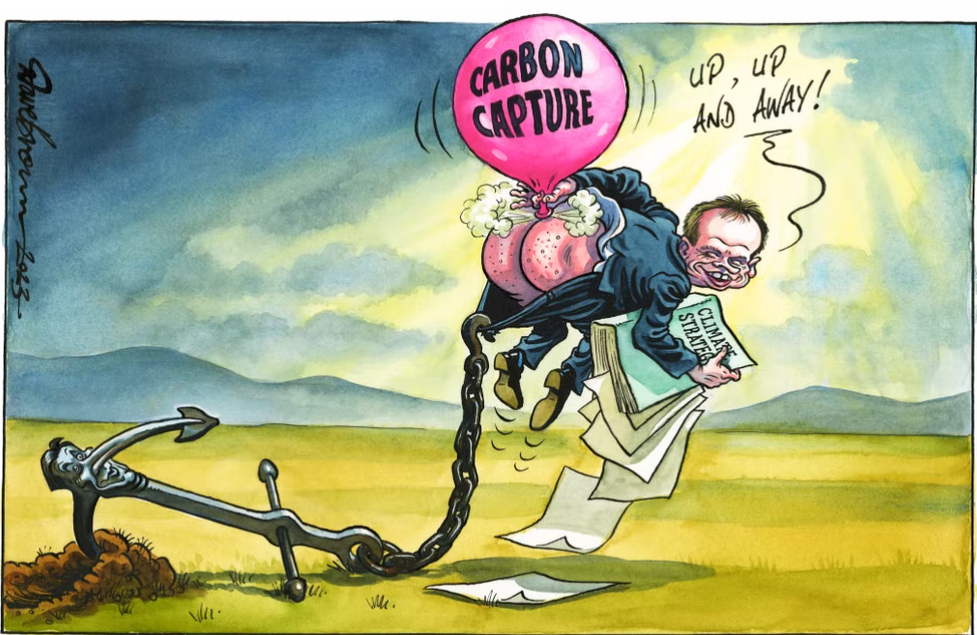
The analysis comes after the government announced an underwhelming suite of energy policies, which rely on carbon capture and storage and which campaigners have said lack the ambition to properly phase out fossil fuels.

Caroline Lucas, the Green MP for Brighton Pavilion, said the government’s so-called green day “couldn’t be any more of a misnomer, when the Conservative party is raking in millions of pounds’ worth of dirty donations from fossil fuel interests and climate deniers”.

The Tories gained large sums from those with direct ties to fossil fuels, including more than £62,000 from Nova Venture Holdings, a firm wholly owned by Jacques Tohme, who describes himself as an “energy investor” on LinkedIn and lists his current role as co-founder and director of Tailwind Energy, an oil and gas company.

The party also received £10,000 from Alan Lusty, the CEO of Adi Group, a “leading supplier of engineering services to the petrochemical industry”, while Centrax, a firm that manufactures gas turbines, gave £35,000 to the party.

The party received £23,900 from Amjad Bseisu, CEO of the oil and gas firm EnQuest, who has argued that the North Sea could still yield further discoveries to extend its lifespan.

The largest donor to the Conservative party last year was the aviation entrepreneur Christopher Harborne, who gave £1.5m. The entrepreneur is CEO of a private jet company and also runs AML Global, an aviation fuel supplier operating in 1,200 locations across the globe with a distribution network that includes “main and regional oil companies”, according to its website.

Harborne has previously provided gifts to the Conservative MP Steve Baker, who co-founded the Net Zero Scrutiny Group, and was once a GWPF trustee. Harborne has previously given £6.5m to the Brexit party – now Reform UK – whose co-founder Nigel Farage has called for a referendum on the government’s net zero targets. The entrepreneur hasn’t publicly spoken out on the climate crisis.

The largest single donation to the party – £973,000 – came from Mark Bamford, who is part of the JCB construction empire. According to the government’s environmental audit committee, the UK’s built environment is responsible for 25% of the UK’s greenhouse gas emissions, and “there has been a lack of government impetus or policy levers to assess and reduce these emissions”.

The Bamfords have also invested in hydrogen power, a form of energy which could help to decarbonise heavy industry if it is produced sustainably. The government has been trialling the use of hydrogen to heat homes, but a comprehensive review of scientific papers has concluded that it is unsuitable for use in home heating, and likely to remain so, despite the hopes of the UK government and plumbing industry.

Sir Michael Hintze, who was one of the early funders of the GWPF, donated £17,500 to the party.

The Conservative party and all companies and individuals mentioned have been contacted for comment.

Hasty changes to Sunak’s climate strategy reveal a warring Tory party

Does the UK’s new energy and climate package measure up to what other countries are planning? For most of the experts and campaigners delivering their verdict on Thursday, the answer was a clear no.

If you are concerned about reaching net zero – don’t vote Tory, their hearts aren’t in it. – Owl   

Fiona Harvey www.theguardian.com 

Rishi Sunak, the UK prime minister, headed to Oxfordshire on Thursday to visit a development facility for nuclear fusion, the early-stage concept that promises unlimited clean energy at an unspecified future point, if only some hefty physical constraints can be overcome.

He was accompanied by Grant Shapps, energy and net zero secretary, for the biggest energy and climate change announcement of his premiership, a comprehensive package of measures encompassing everything from onshore wind and solar power to carbon taxes and heat pumps.

“When global energy supplies are disrupted and weaponised by the likes of Putin, we have seen household bills soar and economic growth slow around the world,” said Sunak, of the “powering up Britain” energy package. “We have stepped in to shield people from its worst impacts by helping to pay around half the typical energy bill. But we are also stepping up to power Britain and ensure our energy security in the long term, with more affordable, clean energy from Britain, so we can drive down energy prices and grow our economy.”

Yet, only a few days before, the plan was to hold the launch in Aberdeen, the oil and gas capital of the UK. Local businesses had been primed, oil and gas specialists were ready, shoving their minor interests in green alternatives – such as hydrogen – hastily to the fore, for an event to be hailed as “energy security day”. Fossil fuels would be a necessary part of that energy security, they had been assured.

And, only a few days before that, the plan was not to foreground energy security at all – the event was to be called “green day”, and the focus would be clearly on renewable energy, reducing greenhouse gas emissions and tackling the climate crisis, as well as bringing down household bills through supporting clean power.

Tom Burke, co-founder of the thinktank E3G, and a veteran government adviser, said the whirl of changes in the run-up to the launch were both bewildering and revealing. “This is a level of chaos that reveals the extent of the internal unresolved disputes within the party on these issues,” he said. “There is an anti-green faction in the Tory party, and this chaos has been all about them.”

The energy strategy, running to well over a thousand pages across its reams of documents, covers everything from nuclear fusion – which some experts regard as an unconvincing distraction, when technology to cut emissions today should be the priority – to electric vehicle charging points.

Sunak had little choice but to publish some form of strategy this week, as last year the high court ruled that the government’s existing strategy to meet its legally binding target of net zero emissions by 2050 was inadequate. The judge in the case, brought by Friends of the Earth and other campaigners, ordered a revamp by the end of this month, also the deadline for the government to publish its response to the review of net zero by Tory MP Chris Skidmore, published in January.

To complete the package, the chancellor of the exchequer, Jeremy Hunt, decided to publish his strategy for green investment at the same time, setting out how the private sector is expected to fund the comprehensive overhaul of the UK’s economy needed to reach the net zero target.

For the government, this marks a major cross-Whitehall operation, encompassing policy that spans the Department for Transport, Department for Levelling Up, Department for Business and Trade, and Department for Environment, Food and Rural Affairs, as well as the Treasury and the Department for Energy Security and Net Zero, and Downing Street.

The government’s focus is timely, given rapidly growing concerns that the UK is falling behind internationally, which have been given new urgency by the war in Ukraine and the soaring price of energy. The US is pushing forward strongly with its $369bn Inflation Reduction Act, which aims to make America a superpower for clean energy technologies and offers tax breaks to manufacturers.

Europe, after initial outrage that it was losing its green leadership status, is now hard at work on its response. Hundreds of billions of euros of investment are at stake, and the sacred cow of state aid rules is likely to be slaughtered in pursuing them.

So the key question is: does the UK’s new energy and climate package measure up to what other countries are planning? For most of the experts and campaigners delivering their verdict on Thursday, the answer was a clear no.

Mel Evans, head of climate at Greenpeace UK, summed it up: “Ministers talk about leading the world, but the UK is not even making it to the starting blocks of the green tech race. A good government would go all in on renewable, efficient energy to give millions of people warm homes, clean air, lower bills and a safe climate – but powering Up Britain is a far cry from what this country needs.”

Despite the support for offshore wind, the talk of electric vehicles and the focus on carbon capture, there were too many misses. Plans to insulate 300,000 homes were dismissed as puny, compared with the 14m that need upgrades. Onshore wind turbines are still, in effect, banned, despite small changes to the planning rules. Hydrogen is still being touted for home heating, despite studies showing it will not work. Solar panels will not be mandated on new-build housing, and the heat pump scheme is still flawed.

Burke laid the blame at the door of a prime minister besieged by a warring party. “This feels like a party that is internally divided, that can’t come up with a coherent story, that can’t even agree what the story is,” he told the Guardian. “And this is what is spooking investors: this anti-green faction of losers who are going to turn the UK into a loser, in the global race for green prosperity.”