Richard Foord: ‘Government must take action to stop sewage discharges’

Richard Foord, MP for Tiverton & Honiton 

Everyone living near our beautiful coastline knows just how important a subject is the water quality. This is not only because many of us enjoy our local rivers and beaches recreationally, but because our blue vista is also a key driver of tourism, bringing people many miles to spend time here.

That is why the inaction of water companies like South West Water is particularly galling. Over recent years, they’ve made substantial sums of money from environmental vandalism – spilling hundreds of thousands of hours of raw sewage directly into our rivers and seas.

Thanks to the pressure of local communities and activists, a spotlight has been shone on the situation. I have affection for the creative genius that comes to the fore in a good English protest. Placards seen in Exmouth recently included: “Women Swimmin”; “No River Exe Crement”; “Species not Faeces” and my personal favourite “End Sewage Poollution”.

We see ever more reports of sewage spills at our beaches, all while Conservative ministers and MPs line up to pass the buck to water companies. We have to ask the question: where are the regulators amidst this mess? And behind them, where is the Government?

Hundreds of permits that allow water companies to dump sewage into Britain’s rivers have not been updated since the 1950s. Monitoring and reporting on sewage discharges is done ‘in-house’ by the water firms – with them holding sole responsibility to collect the data on the number and duration of spills, and for reporting too. This is a perverse situation that allows them to mark their own homework.

That’s why in January I tabled a Bill in Parliament to hand over this responsibility to the environmental regulator. I was pleased when the Environment Secretary announced he would be making this change not long afterwards, but just a few days ago it emerged that despite the announcement, there was no timeline for the change.

Next Monday I will be hosting an event in the fringes of the House of Commons on this very subject. My guests are the End Sewage Pollution Coalition, which includes the Rivers Trust, British Canoeing, the Angling Trust, River Action, Swim England, Surfers Against Sewage and the Women’s Institute.

I am also looking forward to hosting Jo Bateman, the Devon-based swimmer who is taking legal action against South West Water for dumping sewage into the sea near her home. We’ve invited the Conservative Government’s Minister for Water. Let’s hope he attends!

Tory MP fighting new seat to discuss ‘rogue councils’ in parliament: (LibDem ones grappling legacy problems)

No it’s not Simon Jupp but Ian Liddell-Grainger – Owl

Bradley Gerrard, local democracy reporter www.radioexe.co.uk 

Bridgwater and West Somerset MP Ian Liddell-Grainger has criticised Mid Devon for sending letters to three former councillors accusing them of alleged data breaches.

The Conservative politician, who is to contest the new Tiverton and Minehead seat at the next election, asked for a debate on “rogue councils” during a debate in Westminster.

He said that Mid Devon District Council had now “threatened its former leaders with legal action for disputing what has gone on with 3 Rivers.”

Mr Liddell-Grainger  continued: “There has been a lack of scrutiny and a lack of accountability,” he said. This is millions of pounds, and not thousands.”

The comments come as Barry Warren, Bob Deed and Christine Daw all received letters from Mid Devon District Council about a “serious matter concerning your handling of confidential data.”

The letters said the individuals “may have committed a data breach” and asked them to delete any confidential information and show the council proof of this.

The letters later state that failure to comply “may result in legal actions,” including fines or other penalties.

Mr Warren, formerly an independent councillor, led the authority for three months in 2023, taking over from Mr Deed who resigned in February last year after holding the position for four years.

Ms Daw quit as a Conservative party member the same month, but retained her cabinet position as an independent until the election last May when she didn’t stand for re-election.

The trio have all been critical of 3 Rivers Developments, the council-owned property company which is now in the process of being closed down, and the alleged data breaches include documents linked to the failed housebuilder.

Mr Liddell-Grainger added: “Can we please have a debate in government time about councils’ responsibility for dealing with situations that have gone wrong, and not suing their former colleagues who are trying to do their job?”

Mid Devon District Council recently conducted a ‘lessons learned’ review of 3 Rivers, highlighting 10 aspects it would do differently if it launched another wholly owned business again.

Some members of the public criticised this, claiming that the councillors undertaking the review didn’t have long enough to carry out their work and that the group’s terms of reference should have been free of constraint.

The authority has in the past also paid external consultants, including Devon Audit Partnership, to assess the operation and viability of the firm.

Two reports in 2020 outlined 33 recommendations to improve it, and these were approved by the full council.

In relation to the letter the council sent to the three former councillors, the authority said it takes its legal responsibilities as a data controller “extremely seriously”.

A spokesperson added: “It is a matter of some regret that the council has had to write to a small number of former councillors reminding them of the need to comply with data management practices.

“However, it is important that the council takes appropriate action to ensure the effective management of data in accordance with our policies.”

New £8,000 mayoral chain sparks ‘disgust’ in Seaton

Extravagant baubles and flummery or regalia signifying the dignity of an historic office?

Seaton council would have had much more power as a self governing “urban district council” prior to the incorporation of “East Devon District” in 1974, with nothing standing between it and County. It was these councils that oversaw the council house building programmes of the 50’s and 60’s.

[Owl believes that many Urban District Councils were run by elected “Chairs” rather than “Mayors” and chains of office.]

The decision to spend more than £8,000 on a mayoral chain in a Devon town has left some residents “disgusted”.

By Miles Davis www.bbc.co.uk

Seaton Town Council considered various options but voted for a new replacement chain at a cost of £8,257.

Some people living in Seaton on the south coast said it was wrong to spend the money on a mayoral chain during a cost of living crisis.

The council said the decision had been taken “very carefully” with a cost to residents of 5p per household per year.

Anthea Parkin, a Seaton resident, said: “I’m absolutely disgusted. It’s a total waste of our money and it’s wrong in this economic climate.”

The mayoral chain in Seaton is engraved with the name of the mayor and there is no room for more links on the current chain.

The town has a population of just over 7,000 and is known for its tramway and Jurassic coastline.

Seaton resident Bob Chapman said: “I think it’s disgusting when there’s lots of other things that could benefit from that sort of money being spent on it in the town.

“It’s just a little piece of chain. Why don’t they go to Pandora and buy one for about £200?”

Another resident who did not want to give their name said £8,000 would be better spent maintaining the town’s public toilets.

Two of the councillors on Seaton Town Council said they voted against spending more than £8,000 on the chain at the meeting in November.

Councillor Cheryl Wood said she had called for the existing chain to continue to be used with future mayor’s names added to a plaque in the council chamber.

Neil Dyke, also a councillor, said he had suggested keeping the chain as it is and arranging a public consultation.

The current mayor, Amrik Singh, was not available for interview and Seaton Town Council sent a statement.

It said: “The current chain of office is now full and the cost of preserving it and replacing it with a new chain of office that will last for a minimum of 48 years was considered by the nine councillors present.

“The cost worked out at 5p per household per year, which was considered reasonable in the circumstances and the longevity the replacement chain would provide.”

Ken Newland used to serve as a parish councillor in Berkshire before moving to Seaton about 20 years ago.

He sympathised with the town council and said a lot of the unpaid work they did went unrecognised.

He said: “They have to stand out in a crowd. You’re not going to want somebody turning up in a tracksuit and not looking like they have some gravitas about them

“The regalia is part of the role and the role is important to civic society.”

Nineteen English councils handed multimillion-pound bailout agreements

Kicking the can down the road – Owl

So-called capitalisation directions are risky and regarded as poor accounting practice, experts say

[Somerset Council to get access to £77 million and Plymouth City Council to £72 million.]

“It’s a huge relief to see 19 councils not going immediately bust. But it’s a very temporary solution that stands normal accountancy practice on its head to get us to the other side of a general election. But that’s all it does.”

Patrick Butler www.theguardian.com 

A record 19 councils in England have been handed multimillion-pound government bailout agreements totalling £2.5bn to prevent them collapsing into bankruptcy in the next few months, in a move likely to trigger a new round of public asset sales.

The Department for Levelling Up, Housing and Communities has agreed that the councils can take the highly unusual step of using funds raised by loans, or the sale of assets such as land and buildings, to plug holes in day-to-day revenue accounts.

The move, which follows an emergency £600m cash injection for all councils in January, is seen as a way of ministers minimising the prospect of further town hall insolvencies before the general election, rather than a solution to the wider crisis.

Rob Whiteman, chief executive of Cipfa, the public sector accountancy body, said: “It’s a huge relief to see 19 councils not going immediately bust. But it’s a very temporary solution that stands normal accountancy practice on its head to get us to the other side of a general election. But that’s all it does.”

The announcement comes after the latest dire predictions about English council finances. A survey report issued by the Local Government Information Unit on Wednesday estimated that 14 of England’s 372 councils would go bust in the next 12 months, as they collectively struggle with an estimated £4bn shortfall.

The agreements, known as capitalisation directions, are not grants or bailouts in the conventional sense of a cash injection but an arrangement that allows councils to bypass normal accounting rules to convert capital sums obtained by loans or selling assets into revenue.

Jonathan Carr-West, chief executive of the Local Government Information Unit, said the move was welcome but “we should not mistake this for generosity on the part of the government. They are simply allowing councils to borrow, and to sell their own assets.”

Birmingham council has already signalled that it intends to sell off up to £500m of as yet unidentified land, businesses and buildings from its £2.4bn asset portfolio, which includes the city’s central library, museum and art gallery, Aston Hall and the council’s stake in Birmingham airport.

Experts said capitalisation support is normally frowned upon as risky and short term, will not prevent cuts in council services, and is regarded as poor accounting practice. One told the Guardian: “It’s like you saying: ‘I’m selling my house to pay off my credit card bill.’ I’d say: ‘Are you sure you really want to do that?’”

Councils given exceptional financial support include Birmingham, Nottingham, Thurrock, Croydon, Slough, and Woking, all of which are in special measures after issuing formal section 114 declarations of bankruptcy in recent years.

Other councils in the list include Havering in east London, which had said that failure to get financial support would trigger immediate bankruptcy; and Somerset, which declared a “state of financial emergency” in autumn.

Strikingly, both North Northamptonshire and West Northamptonshire councils, created as supposedly more sustainable successors to Northamptonshire county council, which went bust in 2018, have been allowed to capitalise £10m between them to stave off effective bankruptcy.

The other councils are: Bradford, Cheshire East, Cumberland, Eastbourne, Medway, Middlesbrough, Plymouth, Southampton, and Stoke-on-Trent. It is unclear if any councils had been refused financial support by ministers.

Sir Stephen Houghton, chair of the Special Interest Group of Municipal Authorities, said: “This exceptional financial support will be welcome as a stopgap for those councils that have applied, but will not provide a long-term solution.”

Simon Jupp MP now eyeing up Exeter

(Anywhere but Exmouth – Owl)

A Devon MP is calling for the immediate halt of a controversial trial of a Low Traffic Neighbourhood (LTN) scheme in Exeter that has sparked a huge divide in the local community and is said to be impacting residents from far and wide. Simon Jupp, MP for East Devon, says that increased congestion is severely impacting those who use buses to get into the city and says it is ‘detrimental to sustainable public transport’.

Anita Merritt www.devonlive.com

The scheme – which has seen bollards and two bus gates introduced in Heavitree and Whipton – has been in place for six months. The public consultation is ongoing.

Mr Jupp has written to councillor Danny Barnes, chairman of the Exeter Highways and Traffic Orders Committee (HATOC), demanding that the trial be immediately scrapped. The scheme was originally agreed by that committee and implemented on its request by Devon County Council in August 2023. It aims to remove through-traffic from Heavitree and Whipton’s key residential areas to create a safer and more attractive environment for people walking, wheeling and cycling.

The current intention is for the consultation to run until May 8. Supporters of the scheme claim it has already achieved its aims, but opponents say it is having a huge negative impact on car journeys, traffic on already heavily congested roads, the environment, businesses and people’s lives.

Stagecoach has confirmed ‘highways capacity and congestion’ in Exeter have recently been impacting the punctuality and reliability of its services and it is ‘actively’ working to address them.

The letter, which has been shared on Mr Jupp’s Facebook page, states: “I write to you with deep concern and frustration shared by local residents over the impact the Heavitree and Whipton Low Traffic Neighbourhood (LTN) project is having on the Route 57 bus between Exmouth and Exeter.

“Many of my constituents in East Devon live and work along the Route 57 between Exmouth and Exeter. It is an incredibly popular service between two of the largest settlements in the county.

“That’s why I worked hard with Stagecoach South Wesy to get its 15-minute frequency reinstated last year. I am very worried about the detrimental impact the LTN is having on the reliability of this popular service which is harming passenger confidence and the sustainability of the frequency of the route.

“I have received numerous reports from constituents over an extended period of time that serious congestion on and around Heavitree Road caused by the LTN is leading to nearly 15-minute delays for Route 57 buses. This is totally unacceptable and must be put right.

“As chair of the Exeter Highways and Traffic Orders Committee (HATOC), the group responsible for how highway responsibilities are delivered in the city. I am urging you to take immediate action and scrap the LTN experiment in Heavitree and Whipton.

“The impact of the LTN is detrimental to sustainable public transport serving the city and surrounding areas, including my constituency. It is time to put the public first, not political ideology. I look forward to hearing from you on the steps you will take to address my concerns.”

Among those who commented on his post was a bus user who said: “All LTNs have done is cause chaos on the major roads into Exeter, especially Heavitree Road. It’s having a huge impact on all bus journeys, not just the 57.

“I’m a frequent user of the 4/44 and the service is so unreliable that often I can walk most of Heavitree faster than the traffic and without a bus even passing me but, unfortunately, I can’t walk all the way from the city centre to Cranbrook. The LTNs have done nothing but cause commuters stressful journeys and it’s time they were scrapped.”

Another added: “The boundary roads around the LTN are now regularly gridlocked with all the extra pollution and fuel costs to drivers. The other day, a bus journey through Heavitree that would normally take 10 minutes took nearly 40 minutes so you are quite right in pointing out the negative impact on public transport.”

The trial scheme has seen the installation of four physical modal filters – planters or bollards – to prevent access by all vehicles, and also four bus gates that can only be used by buses, emergency vehicles and certain other exempt classes of vehicle. Changes have been introduced in roads including Ladysmith Road, St Marks Avenue, Hamlin Lane, Whipton Lane and Vaughan Road.

A spokesperson for Stagecoach said: “We acknowledge and share the concerns around highways capacity and congestion in Exeter. Recent issues in the city particularly at peak travel times has regrettably impacted the punctuality and reliability of our services.

“We understand the frustration and inconvenience caused by these challenges and are actively working to address them. Our primary focus remains to serve the community getting residents and commuters where they need to go.”

Cllr Barnes and Devon County Council have been approached for a comment.

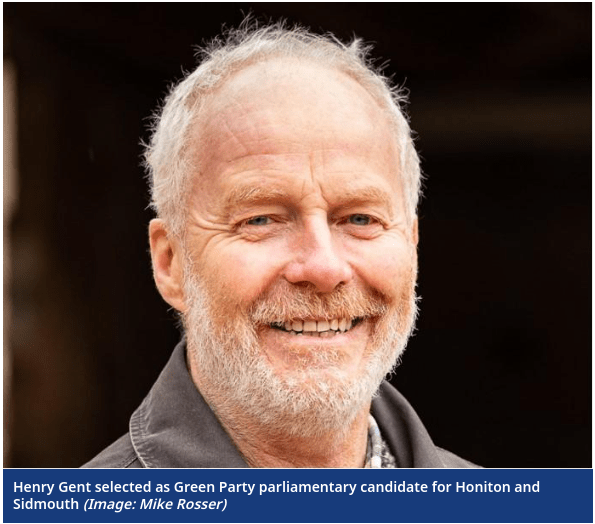
Green Party candidate Henry Gent for Honiton and Sidmouth

The Green Party has selected Henry Gent as its prospective parliamentary candidate for the new constituency of Honiton and Sidmouth.

Adam Manning www.sidmouthherald.co.uk 

The constituency also includes Ottery St Mary, Cullompton and Axminster.

Other candidates for this new constituency are sitting MPs Simon Jupp (Conservatives, East Devon) and Richard Foord (Liberal Democrats, Tiverton and Honiton).

Mr Gent has enjoyed being a member of Devon County Council since 2021, enabling him to campaign for local active travel routes and safer conditions for pedestrians across his division.

He has also been a member of Broadclyst Parish Council since 2010. Henry has run his family farm in East Devon for 40 years and is now handing on to the next generation.

Speaking on his appointment, Henry told the Herald: ”I have agreed to stand for parliament because people want the Green Party on the ballot paper, for a society fit for the transition to a low carbon sustainable future.”

Nearly one in 10 English councils expect to go bust in next year, survey finds

Welcome to the broken shires, the legacy of 14 years of Tory austerity and cheese pairing. –  Owl

Nearly one in 10 councils in England have warned they will go bust in the next 12 months as authorities plan widespread cuts, above-inflation council tax rises and across-the-board increases to resident charges, a survey has revealed.

Patrick Butler www.theguardian.com 

The Local Government Information Unit (LGIU) annual poll of local authority leaders and top managers reveals a near-total collapse in confidence in the financial viability of councils as they grapple with “desperate” pressures and shrinking budgets.

It warns that council insolvencies – once extremely rare and triggered by unusual special factors such as the failure of commercial investments – should now be regarded as “normal occurrences” likely to hit even well run authorities.

The LGIU chief executive, Jonathan Carr-West, said: “This report, for the first time, demonstrates how widespread councils’ desperate funding situation is. That there is a structural funding issue is now impossible to deny.”

Eight English councils have declared themselves in effect bankrupt since 2018, including four in the past 15 months, including Woking, Nottingham, Birmingham and Thurrock. Several others have planned major cuts in an explicit attempt to stave off insolvency.

Earlier this month, a cross-party group of MPs said an emergency £4bn cash injection was needed to address an “out of control” financial crisis. In January, the government announced £600m in one-off emergency funding – widely regarded as an inadequate “sticking plaster” response by councils.

The survey lays bare what it calls a “dysfunctional” relationship between councils and Whitehall, with the vast majority (94%) of local authority leaders believing ministers have little understanding of the scale of the financial crisis facing councils.

Only 4% of council leaders felt confident about the sustainability of local government finance – down from 14% last year and 20% in 2020. One respondent described running the council as “a permanent state of crisis management”.

Another respondent said: “It feels the worst I’ve ever known it (even than when I started in the early 90s) with no prospect of change. Chief finance officer conferences feel more like group therapy nowadays.”

Survey findings include:

  • Nine per cent of councils (14 authorities) surveyed reported they were “likely” to declare effective bankruptcy in the next 12 months, with more than half saying they would go bust in the next five years without extra funding.
  • Rising need and costs in children’s services were the biggest drivers of financial instability in top-tier councils, with soaring homelessness bills the biggest risk factor for district councils.
  • Nine out of 10 councils plan to raise council tax, with the same proportion proposing to introduce or raise charges for services like garden waste disposal and parking. Nearly two-thirds plan service reductions, “meaning that services are getting more expensive just as they are being cut”.

The survey is based on 160 responses from 128 councils in England (out of a total of 317) reflecting a broad cross-section of councils and geographical spread, and a mixture of political control.

A spokesperson for the Department for Levelling Up, Housing and Communities said: “We recognise councils are facing challenges and that is why we announced an additional £600m support package for councils across England, increasing their overall funding for the upcoming financial year to £64.7bn – a 7.5% increase in cash terms.

“This includes £500m of new funding for councils with responsibility for adult and children’s social care, distributed through the social care grant. Councils are responsible for their own finances and setting council tax levels, but we have been clear they should be mindful of cost-of living pressures while controlling any unnecessary or wasteful expenditures.”

Thames Water lobbying government to let it increase bills by 40%

To quote an impeccable/infamous Tory source from the last century: “No!….. No!……No!” – Owl

Thames Water has been lobbying the government and regulators to let it increase bills by 40%, pay lower fines for breaches and keep paying out dividends as part of efforts to avert a taxpayer bailout, according to a report.

Jack Simpson www.theguardian.com 

The UK’s largest water company was trying to strike a deal with the watchdog Ofwat that would give it permission to charge customers more to avoid having to be taken over by court-appointed special administrators, the Financial Times reported.

That plan would give Thames Water permission to increase bills by 40% by 2030, while also offering more leniency around regulator fines and rules around the dividends it can pay to shareholders.

It comes as the company, which serves more than 15m households, attempts to deal with a debt pile of £14bn and widespread criticism over sewage dumping.

If the government or Ofwat felt that Thames Water was unable to pay its debts it could apply to the high court to invoke the special administration process, in which administrators would be brought in to help manage the company.

Last week, the Department for Environment, Food and Rural Affairs (Defra) updated 30-year-old legislation on the special administration regime, which would allow existing shareholders to retain a stake in the company and make it less likely that failing water companies could be fully renationalised.

According to the FT, officials at Defra have in place contingency plans for Thames Water if it collapses, under the name Project Timber. As part of this, it hopes Ofwat would allow “regulatory easements” on the issuing of hefty fines, which would put further pressure on the company.

In December, the parent company of Thames Water, Kemble Water Holdings, was told by auditors that it could run out of cash by April if shareholders did not inject more funds into the company.

The company has raised £500m and says shareholders would inject more than £3bn more – but this would be dependent on Thames Water getting what it wants from the regulator.

A crucial part of this is getting permission to issue dividends to services its debt. However, new rules introduced by the government last year can take enforcement action against water companies issuing dividends if they are performing badly against financial and environmental targets.

Thames Water has said investors will not take any money out of the business until the turnaround is completed but the rules do not distinguish between internal and external dividends.

Thames Water revealed this month that it expected more leaks than initially thought, after its ageing pipes were overwhelmed by heavy rain this winter.

An Ofwat spokesperson said: “Ofwat does not comment on speculation. Thames Water needs to continue to deliver on its turnaround plan to improve its operational and environmental performance. It is for the company to secure shareholder backing to improve its financial resilience. We will continue to closely monitor the company’s progress as they do so to protect customers’ interests.”

A government spokesperson said: “Water companies are commercial entities and we do not comment on the financial situation of specific companies as it would not be appropriate.

“We prepare for a range of scenarios across our regulated industries – including water – as any responsible government would.”

Thames Water declined to comment.

Are you bathing in sewage without realising due to outdated warning system?

The technical article below explains why researchers from Reading believe the Environment Agency (EA) forecasting system that tells people whether it is safe to swim in bathing waters in England is not fit for purpose.

Before getting to the summary of the research, Owl, and Owl’s correspondents, have  long had additional concerns.

There is the dubious method, described below, of how the EA justifies discarding highly polluted readings when awarding coveted star ratings to beaches.

Another concern, put to Owl by correspondents in the past but  not discussed in this article, is whether the EA sampling is conducted where bathers actually swim.

Observation suggests not.

Jo Bateman, when interviewed on “This Morning” earlier this month, said that she first started swimming in the Exe estuary “Duck Pond” until she learned the significance of the “oily slick” that often appeared on the surface of the water.

Next door in Budleigh there are two brook outlets discharging onto the beach and the river Otter carrying whatever flows into it from Honiton and Ottery St Mary across the bay. How can the whole beach be given a single rating? Like Exmouth, there must be some sections more likely to suffer pollution than others. These problems are common to all our beaches.

Now to this opaque, but important “small print”, in the Environment Agency explanation of how bathing water quality is assessed:

 “At the bathing waters where PRF [Pollution Risk Forecasting] is possible, there is an agreement with local authorities for them to display warning signs at a bathing water when a pollution risk warning is issued. If one of these warnings is seen to be in place by our samplers when taking a sample and meets relevant criteria, then the sample may be disregarded from the set which is used to make the annual classification. This is done under the ‘Short Term Pollution’ provisions of the Regulations. This provision means that the classification reflects the water quality when advice against bathing wasn’t issued, and when people are likely to be using the water.

Owl thinks this means: bathing water quality may be “excellent 3-star” except when it isn’t!

And remember the PRF warnings only operate during the summer, yet people swim all year round. Perhaps beaches should have a summer and winter quality rating.

Sea swimmers bathing in sewage without realising due to outdated warning system

Lucie Heath inews.co.uk

Swimmers are bathing in sewage in locations that they have been wrongly told are safe because of the Goverment’s “outdated” pollution warning system, i has been told.

Researchers from the University of Reading found that the system that tells people whether it is safe to swim in bathing waters in England relies on old weather forecasting technology and insufficient sample data.

Local councils are therefore only able to provide daily pollution warnings for around 40 per cent of the country’s 424 official bathing sites in the sea and rivers, the researchers said.

Even at these sites, swimmers are not always being warned when the water quality in beaches or rivers is unsafe. as the Government’s “outdated” system is not always able to predict high bacteria levels in the sea, the study found.

The Environment Agency (EA) operates a forecasting system designed to predict when England’s bathing waters are too polluted to swim in. Separate forecasting systems are in place in Scotland, Wales and Northern Ireland.

The system combines weather forecast data with historical water quality sample data to predict the level of E.coli in the water on a given day.

When the level of bacteria is above a certain threshold, the EA issues an alert to local beach managers, who are employed by councils and put up signs to warn people against entering the water.

But the study found that warnings are not always being deployed when they should be, due to failures with the watchdog’s forecasting system.

Lead author of the report Karolina Krupska, an environmental scientist, told i one of the main problems with the system is that it does not make use of the best rainfall forecast technology available.

Water companies often release untreated sewage from pipes into bathing waters during periods of heavy rain as their infrastructure becomes overwhelmed, meaning rainfall is often a good predictor of bacteria levels in the water.

Ms Krupska said the EA could incorporate more modern rainfall prediction methods into its forecast system. She said the watchdog has already done this for its flood prediction system but the bathing water system is “behind”.

As a result, she said the bathing water system is not good at predicting sudden intense rainstorms and therefore warning of the likelihood of increased bacteria levels in the water. She added that this is a particularly problem as this type of weather is expected more often in the UK as a result of climate change.

In some instances, this can result in the system issuing warnings for the wrong locations or not at all. For example, the system failed to issue alerts for a number of popular beaches in Cornwall, following heavy storms in the areas in the summer of 2021, Ms Krupska said.

“There was a mismatch over the warnings given and what actually happened on the ground. So no warnings were given around really popular beaches in Newquay,” she said.

The study also found that the forecasting system relies on limited sample data for each bathing spot. The EA samples the water quality at bathing spots 20 times per year on random dates, meaning the samples are often not taken during a pollution event.

Ms Krupska said this means the watchdog is unable to provide warnings for all spots in England “because the model is not accurate enough to provide any kind of useful forecast”.

In 2023, the EA was only able to provide forecasts for 172 (41 per cent) of the 424 designated bathing sites in England. The forecasts are only provided during the official bathing season, which runs from May until September.

Some water companies operate their own warning systems, which are separate to the forecaster published by the EA and issue alerts when they are dumping sewage into the sea and rivers.

A final problem identified by the study is that the EA only provides pollution forecasts once per day, typically around 8am.

Ms Krupska said this means swimmers are often not made aware of pollution that occurs in the afternoon.

“Water quality changes rapidly and to keep people safe you really need to have an almost real time dynamic warning system … we don’t have that information so if something happens in the meantime the people just won’t know about the pollution until they see it or smell it,” she said.

She added: “With existing pollution warning systems, beach users don’t have good enough information to decide whether it is safe to go in the water. The science underpinning the next generation of bathing forecasting already exists, but a lack of action means these solutions have not been implemented.”

Campaigners have been calling on the EA to introduce a better system for monitoring the quality of water at bathing sites.

Among them is the University of Reading rowers who train on the River Thames, which has suffered from pollution due to sewage and chemical pollution from motorways an agriculture.

An Environment Agency spokesperson said: “We know how important our bathing waters are to local communities. That is why we monitor water quality at more than 400 beaches and inland waters across England – with more than 7,000 water samples taken and analysed during last year’s bathing water season alone.

“We already use a range of monitoring programmes and data and welcome additional research on forecasting pollution in waters, especially those used for bathing.”

British and Irish rivers in desperate state from pollution, report reveals

The rivers of Britain and Ireland are in a desperate state from the impact of pollution, with not a single waterway in England or Northern Ireland listed as being in good overall health, a report said on Monday.

Sandra Laville www.theguardian.com

The Rivers Trust annual State of Our Rivers report reveals that the impact of pollution from treated and untreated sewage and agricultural and industrial runoff means rivers are in a worse condition than ever.

More than half – 54% – of rivers in England failed to pass chemical and ecological tests because of pollution from water industry releases of treated and untreated sewage, based on data from the EU-derived water framework directive (WFD) in 2022.

Agricultural pollution contributes to 62% of waterways in England failing to meet good standards for chemical and biological pollution. Urban runoff from transport contributes to 26% of rivers not achieving good overall status.

The report shows none of England’s rivers are in good chemical health, which means the concentrations of toxic chemicals are higher than the safe limit in every river. Failing to pass chemical tests means no river in England is considered to be in good overall health.

Just 15% of rivers pass biological markers for good ecological health. Ecological health looks at what is living in the river, and how modified it is. The presence, absence and abundance of species is a good indication of its general health.

Similarly, no stretch of river in Northern Ireland is in good overall health.

The trust’s chief executive, Mark Lloyd, said: “The State of Our Rivers report is a huge passion project for us, as it’s so important to ensure that science and evidence are at the heart of conversations about how to improve our rivers.

“However, it’s also much more than that, as it puts the data in the hands of the public so that they can join us in calling for the change that our environment so desperately needs.”

The Rivers Trust is calling on the public to push politicians to make changes to improve the quality of rivers. Healthy waterways help to mitigate the effects of climate breakdown, support wider ecosystem biodiversity, and improve health and wellbeing for communities, the trust says.

The key pollution markers in the WFD are a globally recognised test of the quality of rivers. But the Conservative government has made it clear it is going to diverge from these EU standards of monitoring in future as a result of Brexit.

In 2019, the last time the full water assessments took place, just 14% of rivers were in good ecological health and none met standards for good chemical health. There had been little or no improvement since, according to the Rivers Trust report, with rivers in a desperate state.

“Even the clearest-looking waters can contain microplastics, industrial chemicals, hydrocarbons, fertilisers and pesticides, and even pharmaceuticals,” the new report said. “Untreated sewage spills blight most of our rivers, and even treated wastewater still contains a cocktail of chemicals like pharmaceuticals, pesticides from veterinary flea treatments, nutrients and household cleaning products when it is returned to our waterways …

“Our rivers are not healthy – far from it and things haven’t improved since our last report in 2021.”

The trust said worryingly, data was more patchy than in 2019 when it published its last report because river sampling by the Environment Agency had decreased.

“Nearly 6% fewer river stretches receiving health classifications compared to 2019,” the report said.

Chemical pollution from ubiquitous, persistent and bioaccumulative toxins was found everywhere, the report said.

“Chemicals can persist in freshwater habitats for decades, so despite the lack of testing this time around, we can reasonably expect the chemical health of our rivers to still be very poor,” it said. “Our analysis of government data showed that, despite being banned 15 years ago, levels of the toxic ‘forever’ chemical perfluorooctanesulfonic acid (PFOS) in freshwater fish in England is still found in concentrations on average over 300 times the levels deemed safe for aquatic life.”

The trust said more data was needed to truly understand the scale of the problems and deploy solutions to help rivers. But the government, since diverging from the WFD, has said it does not intend to publish results on river quality until 2025.

In England 85% of river stretches fall below good ecological standards and only 15% achieve good or above ecological health status.

Of the 3,553 river stretches the trust was able to gather data for, 151 had improved and moved up an ecological standard, but 158 had got worse.

The latest round of WFD assessments in 2021 revealed that 44% of Wales’s river stretches achieved at least good overall status. But Afonydd Cymru (Wales’s version of the Rivers Trust) has concerns about the way in which assessments for WFD are being carried out in Wales. It believes differences in waterbody status are more a reflection of differences in monitoring and reporting carried out by Natural Resources Wales, as opposed to any tangible environmental improvement.

In Scotland the proportion of river stretches assessed as being in good or better overall condition is now 57.2%, as found in Scottish Environmental Protection Agency classifications for 2022. This equates to an improvement in overall condition for 23 river stretches (to good status or better) since 2020.

In Ireland rivers are faring better with just over 50% of river water bodies achieving good or high ecological status. Ninety-four of the rivers in Ireland were not assessed for chemicals, but of the 193 that were surveyed, 60% failed and 40% passed standards.

Great British Insulation Scheme will take ’60 years to meet target’, MPs hear

A £1 billion home insulation scheme will take 60 years to meet its three-year target to help around 300,000 households, MPs have heard.

Richard Wheeler www.independent.co.uk 

The Government launched the Great British Insulation Scheme (GBIS) at the end of March 2023 to help people save money on their energy bills by making their homes more energy efficient.

But figures released this month show there have provisionally been 4,011 measures installed in 3,284 households up to the end of December last year.

For Labour, shadow climate minister Kerry McCarthy told the Commons: “The Great British Insulation Scheme is proving to be a great Tory insulation fiasco.”

Labour MP Kate Hollern (Blackburn) also said: “The Government’s latest energy efficiency policy – the Great British Insulation Scheme – was supposed to insulate 100,000 homes a year, but so far just 3,000 families have been helped in eight months; across Lancashire only 35 homes and in Blackburn only six.

“Can the minister explain why currently it will take 60 years to meet its three-year target?”

Energy minister Amanda Solloway replied: “Energy efficiency is incredibly important to this Government and in actual fact we have many schemes that are available.

“We have the Great British Insulation Scheme, which alone has committed £592 million.”

Paul Blomfield, Labour MP for Sheffield Central, added: “I hear what the minister has to say about the Great British Insulation Scheme – it comes after the Green Deal, it comes after the Green Homes grant but frankly it looks like another failure.

“There are 1.4 million people living in South Yorkshire but just 137 of their homes have been upgraded under GBIS.

“My constituents want their bills cut, they want to reduce emissions, they want homes insulated – what’s standing in the way is Government incompetence. When will the minister get a grip?”

Ms Solloway replied: “We’re spending £6 billion in this Parliament and a further £6 billion to 2028 on making buildings, including private rented properties, cleaner and warmer.

“This is in addition to the estimated £5 billion for the Eco4 and the GB Insulation Scheme up to March 2026.”

Labour MP Liz Twist (Blaydon) said just seven homes have been upgraded in Gateshead under the scheme as she questioned why there has been “such slow progress”.

Ms Solloway claimed the Government was making progress on insulating homes and pointed to schemes that are operating.

Elsewhere at energy security and net zero questions, Ms Solloway said “no decision” has been taken on the so-called “boiler tax” amid reports it is poised to be scrapped.

From April 2024, boiler manufacturers are expected to be required to match, or substitute, 4% of their boiler sales with heat pumps or face a £3,000 fine for each missed installation, rising to 6% in April 2025.

It comes as part of a Government target to help phase out gas boilers and deliver 600,000 eco-friendly heat pump installations a year by 2028.

Conservative former minister Dame Andrea Jenkyns said: “Talking of fuel poverty, the boiler tax results in consumers paying an extra £150 when they purchase a new boiler.

“Does the minister agree it’s now time to ditch these unworkable and unaffordable net-zero policies and let the British people decide how to heat their homes, what cars to drive and keep more of their own money?”

Ms Solloway replied: “No decision has been taken on this yet but we have a commitment to ensuring we do the very best deal to all of our constituents in this country.”

Oxfordshire housing development ‘should be blocked due to failing sewage system’

See companion post here

A major housing development should be blocked because underinvestment by Thames Water in the sewage system means it is unable to cope with the pressure of an increased population, the Environment Agency has warned.

Sandra Laville www.theguardian.com

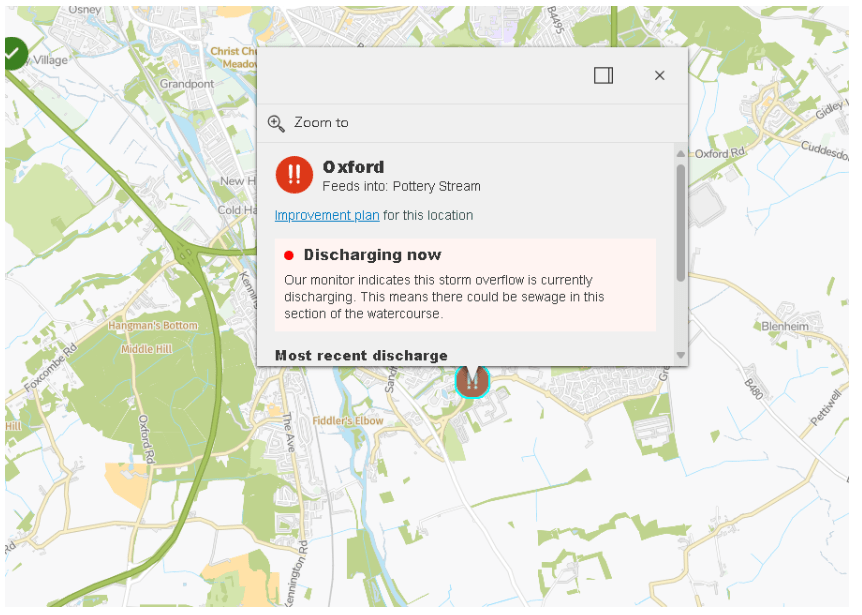
Thames Water’s treatment plant in Oxford has been illegally discharging sewage for six years, causing significant risk to the rivers and environment from pollution, the EA has said.

The increased pressure on the sewage infrastructure from 1,450 new houses planned to the north of Oxford would pose an unacceptable risk of pollution into waterways, the agency said in a letter of objection.

It warned it was “not acceptable” for a new housing development to go ahead until Thames Water had carried out the required investment to bring the works within legal limits.

The revelations raise questions about the feasibility of the government’s housebuilding targets across the country with creaking infrastructure unable to handle existing levels of sewage.

Sewage treatment works in many areas are running at over capacity, and potentially illegally dumping sewage into rivers and seas. More than 2,000 treatment works run by several water companies are at the centre of a criminal investigation by the Environment Agency into illegal sewage dumping.

In a letter to the South Oxfordshire district council this month, the agency said the Oxford sewage treatment works, which deals with the waste from more than 200,000 people, has been running illegally in breach of its permit since 2017.

It objected strongly to the new development, which includes a primary school and new road system, saying the pressure on the sewage works would “pose an unacceptable risk of pollution to surface water quality”.

“Oxford Sewage Treatment Works is a site of significant concern” the EA said.

“In November 2021, the Environment Agency inspected Oxford STW, which led to Thames Water being issued with a compliance assessment report. Within this report, some serious and significant permit breaches were identified.

“While the site is noncompliant with its permit, the risk to the environment remains high.”

It went on to say as long ago as 2017 the treatment works was in breach of permit conditions.

Investment promised by Thames Water was supposed to bring the works up to standard by 2025, but the EA said: “This has been delayed by several years. The scheme and deadline are regulatory and legislative commitments, and failure to deliver it on time will potentially lead to further noncompliance at the site.

“It also presents a significant and ongoing risk to the receiving waterbody, particularly from continued and extended periods of storm overflows. Adding additional flows to the STW before this scheme is completed is not acceptable.”

As a result, the agency said it recommended that planning permission be refused.

Ash Smith, of Windrush against Sewage Pollution, welcomed the agency’s tough stance on the housebuilding. He said: “We are shocked and impressed to see the agency’s Thames region taking a long overdue stand against Thames Water polluting illegally for profit at Oxford.

“Is this a change in policy and a step towards sanity or will this outbreak of professionalism be stamped on by government to keep the shareholders happy?”

Thames Water had told the council there were no capacity issues with the treatment works that would impede the development of the 1,450 homes.

Jo Robb, a Green councillor on South Oxfordshire district council, said 5,000 new homes were planned in the area, all of which would connect to the Oxford treatment works, and this raised serious concerns.

“Time after time when there are major planning applications coming forward, Thames Water has consistently failed to identify capacity issues at its sewage treatment works,” she said.

“Now we see, in the strongest objection from the EA, that this treatment works has been operating illegally since 2017. So Thames Water absolutely cannot be trusted to identify capacity problems at its treatment works.”

There were major national implications regarding the need for new housing, Robb said.

“We have tens, possibly hundreds, of thousands of houses planned across the country which are going to be linked to treatment works that are not fit for purpose,” she said.

A Thames Water spokesperson said:We work closely with developers and planning authorities across our region to ensure water and sewerage infrastructure can support growth, and where upgrades are needed to accommodate new developments, they will happen. We look at each development case by case and where needed will request conditions are added to planning applications, so for example, new homes are not occupied until the necessary upgrades to our infrastructure have taken place.

“We’re finalising plans for a major upgrade at Oxford sewage treatment works, costing more than £130m. This will provide a significant increase in treatment capacity, larger storm tanks and a higher quality of treated effluent going to the river.”

Environment Agency growls – but will it bite?

Ash www.windrushwasp.org

Prepare to be amazed.

The intro

For years the water industry has got away with murder. The victims have been those without a voice, the wildlife of the rivers, streams, lakes, and seas on the receiving end of water company pollution which should have been prevented by proper regulation and the enforcement of the law but wasn’t.

Overloaded sewers and water company indifference to pollution

People have also taken a hit but have not yet been killed, as far as we know, although many have been made very ill after contact with sewage pollution. It is, we know, only a matter of time.

Livelihoods have been affected, ranging from oyster fishermen to angling clubs and people’s lives have been made worse as the quintessential British places where children could paddle amongst a plethora of ducks, fish, and insects have been turned into grey, miserable and lifeless ditches . People even have to wonder about the safety of taking a paddle at the seaside, let alone swimming in it.

The most unlucky can’t even escape sewage at home where it is spilling from overloaded sewers into their streets and most recently I met a family who had their water company deliver a Portaloo to their garden. They could not use the toilet in their house because the passing sewer was already overflowing into the road and people driving by were splashing untreated sewage across the front of their home. The fact that it is mixed with rainwater seems to be the best water bosses can come up with to soften the blow as they keep the big bonuses and dividends flowing far more effectively than their sewerage systems.

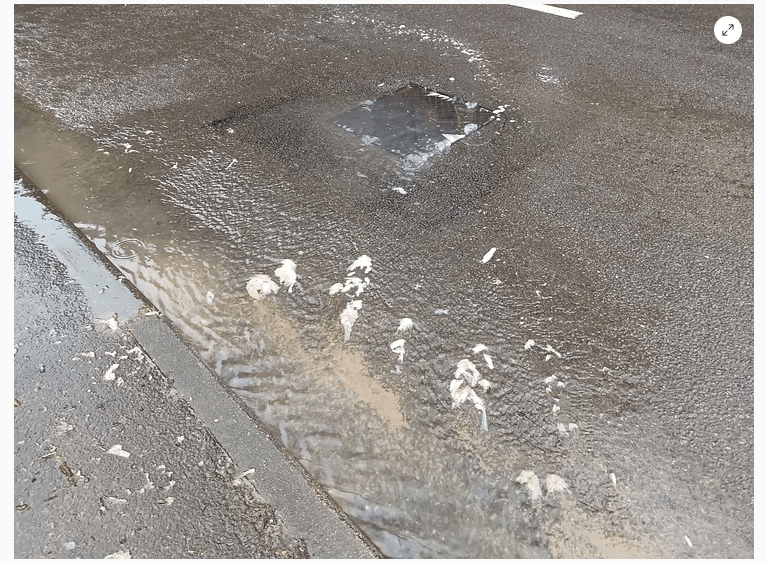
Toilet paper and the stench of sewage as people drive, cycle and walk through untreated sewage. Try not to get sprayed by a passing car!

The story

Water companies have been allowed to set bills to upgrade sewage works and systems to cope with modern-day demands and loading from new housing but they have gamed the system and skimmed off the money in dividends and taken big bonuses for serving the shareholders, not the captive billpayers. How they did that is another tale but this one is about taking the billpayers money and not upgrading, letting the customer and environment take the hit while the Environmental Regulator – the Environment Agency in England, helps to cover up failure. Even worse, the Agency turns a blind eye to add new housing to hopelessly overwhelmed sewage works, while the companies take the connection fees and annual bills to increase profits.

Planning to fail

The charade of water companies claiming that they had the capacity to take more housing to demonstrably failing sewage works and overstretched sewer systems became the norm as the Environment Agency either nodded the application through, or more commonly, did not respond at all and even showed irritation about being asked the question. The shock horror of finding that houses should not be built until water companies got their works upgraded as they had been paid to do and were required to do, was put aside by pretending it wasn’t happening and everyone making money out of the deal was happy – the victims of the outcome, less so.

It was in response to this scam that WASP with the Envenlode Catchment Partnership paid for legal advice to underpin an initiative with West Oxfordshire District Council and has been commenting on planning applications to make sure that conditions are set for Thames Water to upgrade illegal sewage systems before accepting the occupancy of new housing. The effectiveness of the conditions is being tested with the first examples underway.

Read more in the previous blogs on housing and our use of Grampian Conditions to force improvements. (Here)

And articles in the Oxford Mail 1 & Oxford Mail 2

And The Guardian.

The Bombshell.

Something major is happening and for once it is good, and it is unfolding in Oxfordshire. In response to an application for 1450 houses and associated buildings to be bolted onto a massive development north of Oxford, the Environment Agency has pointed out in the clearest possible terms that Oxford Sewage Works is operating illegally and has failed to upgrade in the way it was required to and, so the Agency is objecting to the planning on that basis which must, of course, also apply to every other development that will load Oxford’s Sewage Works as of now.

In fact, that illegality dates back to 2021 when the Agency inspected the STW in reaction to the illegal activity reported by WASP’s data analyst, the redoubtable Prof Peter Hammond whose evidence to the Environmental Audit Committee inquiry was published in March 2021. The illegality in operation may go back to 2017.

Here is the Agency response:

We have written to the Secretary of State for the Environment, Steve Barclay – who knows a lot about the water industry, being married to a senior executive of Anglian Water – and the letter [can be downloaded as a pdf from a link in the original article] so we won’t repeat the content.

And if you can’t get the download easily – here are the 4 questions we ask the Secretary of State:

Some brave and good people in the Agency had the guts to point out that the Emperor (Thames Water) is not wearing any clothes and will have to go and buy some instead of spending the money on shareholders’ dividends, ‘other payments’ and bonuses.

The question now is whether water companies will be allowed to use their precarious financial positions to hold the government to ransom and let them keep on ripping off the billpayers or whether this or a future government will finally question the entirely predictable folly of allowing vital national infrastructure to fall into the hands of private profiteers whose only real skill is ensuring the maximum flow of money from the customer to shareholders in return for little, or in Thames Water’s case, nothing.

This is not about people, campaigners and now even the Environment Agency blocking development – This is the fault of Thames Water and previously failed regulation creating a black hole in the infrastructure. Just as you cannot build a house on sand without foundations, you cannot build housing developments without the infrastructure to support them.

We don’t think this could have happened before the new CEO Philip Duffy took over from the ducking and diving Sir James Bevan who hid the truth from Efra’s Parliamentary scrutiny committee. Now that the Agency has acted with integrity and professionalism it is vitally important that we support the people who are doing what they are supposed to do – stand up for the environment and against illegal polluters.

Oxford dumping 442 hours of untreated sewage continuously as of 530pm 26th February

Will the Environment Secretary and government support this seismic shift towards fixing the national scandal or will he fold up and give in to the powerful funds, largely overseas money, that owns our infrastructure?

Have we reached a turning point?

Paul Arnott: ‘EDDC have no confidence in South West Water’

Paul Arnott

On New Year’s Day 2024 when I might otherwise be starting a book I’d been given for Christmas (still unopened, of course) I received a call from Cllr Geoff Jung. Geoff is the cabinet member for coast, country and environment at East Devon, an enormous portfolio that ranges from waste & recycling to sea defences and a watching brief on the environment.

On January 1st, and not for the first time, Geoff found himself inundated with calls about the sewage crisis in Exmouth. Could I come and have a look? They don’t tell you this when you stand to be a councillor, but you soon learn that dog poo, public toilets and sewage issues will play a central role in your life.

I zipped down to Exmouth, where hard-working tanker drivers had been drawing raw sewage out of the failed Phear Park pumping station and driving it across the town to its Maer Road Car Park sister station, where it was pumped under the sands of the Maer and into the sea. This noisy process kept hundreds of families awake and went on for weeks more.

While there, I was introduced for the first time to the superb leaders of ESCAPE, a proud acronym standing for “End Sewage Convoys and Poollution (sic) Exmouth”, as well as a group of local women who had reluctantly but wisely decided not to have their New Year’s Day swim after all.

A few weeks later, officials from the responsible body, South West Water, appeared by Zoom before the Scrutiny committee at East Devon. I loathe flat-track bullying and could see that, on the operational side of SWW, people are doing their level best, as are the tanker drivers. But much less persuasive is SWW’s executive narrative around how this – and many other crises from Budleigh Salterton to Seaton via Sidmouth – came to be in the first place. The executives seem reluctant to visit the recent past.

So, I’ll have a go for them. Simply, in the present day both foul water and rain water go down the same pipes. They should be separate. When there is heavy rainfall these days, the combined pipes are at risk of bursting. At which point SWW have to open the sluices and it all goes in the sea. Not before, however, it bursts up horribly through manhole covers in places like Clyst St Mary, or seeps through the ground in the Cranbrook country park, and into brooks and streams. And many other places too numerous to mention.

Just like the Post Office or Windrush compensation schemes, this is a here and now crisis seeded in past neglect which needs national government intervention. Put simply, the water regulator OFWAT is toothless, the Environment Agency has been defunded, and the private water companies pay money in dividends rather than sufficiently invest in infrastructure.

At East Devon District Council last week, we said enough is enough and passed a unique resolution of no confidence in SWW. To my mind we cannot make progress until we know how thousands of extra homes were permitted by the then Conservative East Devon District Council when as far back as 2010 it was clear that the infrastructure was already teetering on the edge.

Which raises the inevitable question as to whether more homes should be built today before that appalling lapse is corrected. I was disappointed but unsurprised that the Conservative leader and his chair of Scrutiny refused to vote for the resolution. These battles are not won in a day.

East Devon Council’s £1m coast protection for Exmouth

East Devon District Council (EDDC) will undertake £1 million worth of coast protection work along the Exmouth seafront.

Sandhya Suresh www.exmouthjournal.co.uk

The council has issued a public notice stating the significant intervention is to shield residential properties and commercial properties from the threat of coastal erosion.

The operation, focused around Exmouth coastal frontage from the Stewart Lines/Exe Fishing Building in the West to Sideshore at the East, involves an emergency replacement of a failed masonry seawall with a permanent sheet pile wall.

The council said the works will also include removing parts of the collapsed stone wall and driving sheet piles into the existing footprint of the vertical wall, all executed with a landward-side piling rig.

Although the newly installed wall will initially be left unclad, the council plans to add cladding at a later stage.

Council officials have made arrangements for the public to scrutinise details of the proposed work.

Copies of the plans will be available for inspection at East Devon District Council, Blackdown House, Honiton and at Exmouth Town Hall between 9am to 1pm, Monday to Thursday.

The council said any objections to the proposal must be submitted no later than March 20.

These objections must be served on the Secretary of State for the Environment, Food and Rural Affairs and on East Devon District Council.

Any objections should include a clear statement of reasons and be delivered either by post or by email to the Chief Executive of East Devon District Council.

Notices to be posted may be addressed to the Secretary of State at the Department for Environment, Food and Rural Affairs, Flood Management, Nobel House, 17 Smith Square, London SW1P 3JR and to the Chief Executive at East Devon District Council, Blackdown House, Border Road, Heathpark Industrial Estate, Honiton, EX14 1EJ (email: Legal@eastdevon.gov.uk).

Housebuilders accused of artificially keeping house prices high

The UK competition watchdog has opened an investigation into eight housebuilders [Barratt, Bellway, Berkeley, Bloor Homes, Persimmon, Redrow, Taylor Wimpey, and Vistry] following evidence they may be sharing commercially sensitive information which may have kept prices high.

Henry Saker-Clark www.independent.co.uk 

The Competition and Markets Authority (CMA) launched the probe amid concerns it could be affecting the development of sites and prices of new homes.

It came as the regulator warned that the housebuilding sector “needs significant intervention” amid concerns over the quality of new homes, “high and unclear” estate management charges and planning hurdles.

The CMA formally started a probe into state of the housebuilding sector and the private rental market in February last year.

On Monday, it said in its final report that the current planning system and limitations of speculative private development “have seen too few homes built”.

It highlighted “persistent shortfalls” in the number of homes built across England, Scotland, and Wales, with fewer than 250,000 built last year across Great Britain, compared with a target of 300,000.

Complex and unpredictable planning rules across the three nations are partly to blame for this, it said.

The report highlights that many planning departments are under-resourced, some do not have up-to-date local plans, and do not have clear targets or strong incentives to deliver the numbers of homes needed in their area.

It also said shortfalls were linked to requirements to speak with a wide range of stakeholders.

In addition, there were concerns over limitations to private speculative development, highlighting that developers often produce houses based on pricing rather than diversifying the types and numbers of homes they build to meet the needs of communities.

The report also found a rise in developers using estate management charges for facilities, such as roads, drainage and green spaces.

It said these charges are “often high and unclear to homeowners” and flagged that some unplanned charges can cost thousands of pounds.

Concerns were also raised that builders “don’t have strong incentives” for high quality and consumers have unclear routes of how to receive any redress when issues arise, with the CMA also highlighting an increase in snagging issues.

The watchdog said it is recommending the Government sets up a New Homes ombudsman to support homeowners over quality issues and requirements for councils to take over amenities on all new housing estates.

It came as the CMA also found signs that some housebuilders may be sharing commercially sensitive information with their competitors, which could affect property prices and weaken competition.

The investigation will look into Barratt, Bellway, Berkeley, Bloor Homes, Persimmon, Redrow, Taylor Wimpey, and Vistry. It has not reached any conclusions about whether the law has been infringed.

CMA chief executive Sarah Cardell said: “Housebuilding in Great Britain needs significant intervention so that enough good-quality homes are delivered in the places that people need them.

“Our report, which follows a year-long study, is recommending a streamlining of the planning system and increased consumer protections.

“If implemented, we would expect to see many more homes built each year, helping make homes more affordable.

“The CMA has also today opened a new investigation into the suspected sharing of commercially sensitive information by housebuilders which could be influencing the build-out of sites and the prices of new homes.

“While this issue is not one of the main drivers of the problems we’ve highlighted in our report, it is important we tackle anti-competitive behaviour if we find it.”

Housebuilders’ shares fell in early trading on Monday after the competition watchdog’s announcement.

As a result, shares in Barratt were down 1.4%, Taylor Wimpey fell 1.9%, Persimmon dropped 1.8% and Bellway was down 2%.

Budleigh’s sea-front tankers – and why it’s (hopefully) ‘Good News’

Owl admires the way local people in Exmouth and Budleigh are peeling away the secrecy surrounding South West Water’s operations.

[PS One of Owl’s “little birdies” whispered that these tankers cost around £1K a day.]

Petercrwilliams fightingpoolution.com

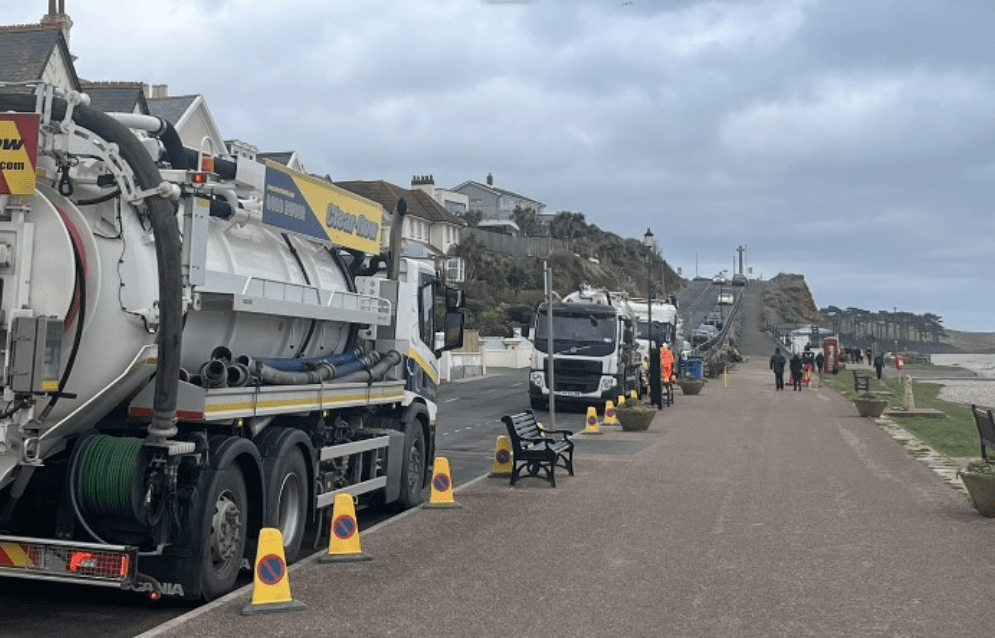
It’s nearly three weeks since Budleigh’s Marine Parade has become a lorry park, with up to 8 tankers parked up along the front at any one time.

There have been lots of varying reasons provided, including at least three from South West Water themselves. Most recently I’ve heard that the tankers were “dumping raw sewage into the sewage system here” (spoiler alert: they’re not!).

To understand what they are doing – and why it should be a really good thing for us – a quick recap on ‘Combined Sewage Overflows’ (or CSOs), and why they are the major cause of sewage spills in this country.

Sewer pipes have a finite capacity to transfer sewage to pumping stations or treatment plants. Because these sewer pipes carry rain-water run-off as well as raw sewage, the total volume entering the pipes when it’s raining, can be greater than the pipe’s capacity. For this reason, there are regular storm tanks incorporated into the sewer system, which act as temporary holding tanks to even out the flow. However, if these storm tanks fill up, they have an outlet that they open, called a Combined Sewage Overflow (CSO), which spills the excess water and raw sewage into a nearby stream or the sea. To avoid us seeing too much gory detail, the only treatment made is to filter this through a 6mm sieve before dumping it into our environment. These CSO’s are the #1 cause of sewage dumps in the UK.

In Budleigh, we have 2 CSO’s that dump into Kersbrook – on the edge of our Nature Reserve, another goes out to Otter Ledge (more on that next time!), and 5 CSO’s can dump sewage into the Knowle Brook which runs through Budleigh High Street. All except the Otter Ledge outfall end up on our beach.

In 2022 (the last year that SWW have released data for), Budleigh’s CSO’s dumped raw sewage 56 times, for a total duration of nearly 300 hours. Full details HERE. As that was an exceptionally dry year, it’s quite possible that 2023 was even worse (data to be released at end March).

So why are the tankers on Marine Parade ‘Good News’?

The key task they seem to be working on is to clean out the Marine Parade storm tank and associated sewer pipes. This CSO system appears to be over 100m long, running most of the way along the sea front. Over years, it’s become blocked with a mix of fat-bergs, ‘disposable’ wipes, sand and pebbles – reducing it’s holding capacity and flow. These are all now being sucked up into the tankers, and taken off for disposal. Because of the length of the tank and pipes, it’s taken 3 weeks and counting. Big thanks to the team who are doing this – it must be pretty unpleasant working conditions down there!

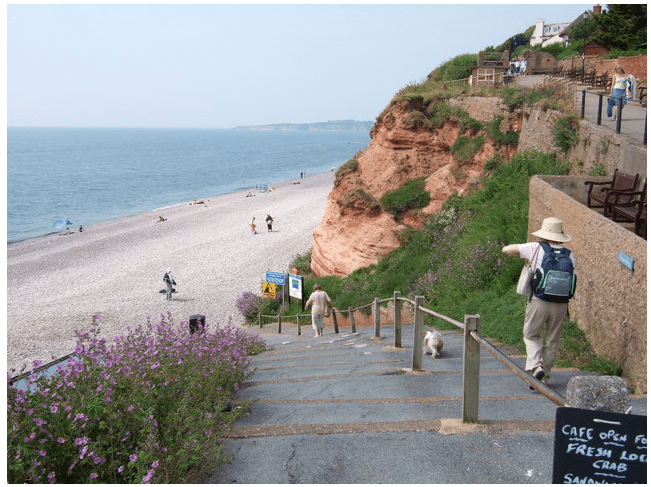
Marine Parade CSO was one of our worst offenders in 2022, with over 11 hours of sewage dumping onto the western end of Budleigh beach – so hopefully having the full capacity of the storm tank will reduce or eliminate that threat. The main beneficiaries of this work should be all those who swim around the Steamer Steps end of our beach.

We do have evidence that cleaning storm tanks can work here, as the CSO in Meadow Road was cleaned in 2021 – and zero spills were recorded there in 2022. Results are not guaranteed though, as the CSO at the bottom end of Granary Lane was cleaned out in January this year, but it is still recording sewage spills into the Kersbrook in the last month.

Let’s hope that this vital maintenance work marks a step in the right direction, and increases the number of days when we can all swim in clean, sewage-free water.

Simon Jupp get the crazy consultation rules changed for “Exmouth’s Gateway”

[Simon Jupp is Parliamentary Private Secretary to the Secretary of State for Transport, Mark Harper.]

From a correspondent: 

Devon County Council announced in January 2023 that they had secured funding through the Government Levelling up Fund for the extension to Dinan Way in Exmouth and investment in the Exmouth Gateway.  According to the Memorandum of Understanding (MOU) which accompanies the bid, Devon County Council has to complete the works for the projects by March 2025. The bidding process started in 2021 when councils were dealing with the fallout of the pandemic to local services, so the work necessary to meet the strict deadlines for the bid process has imposed heavy demands on DCC staff and elected officials

Furthermore, the MOU also sets out very precise requirements for full consultation with residents, stakeholders and the district and town councils, without which the funding will be withheld. Full and meaningful consultation has not happened to the satisfaction of these parties.   The level of consultation has been woefully inadequate.   However, it is difficult to see how DCC can fulfil all these obligations within such a short timescale.  Council staff numbers have been cut back to the bone and DCC will struggle to ensure that the consultation requirements set out in the Government MOU can be met and the bid signed off in time to complete the project.

Compare these rigid delivery timescales with national government infrastructure projects.  In 2009 the original cost of HS2 was set at £37.5 billion.  By July 2023 the total project cost was estimated to reach £106.6 bn. The deadline for completion of 2033 has now been pushed to as late 2041 with large parts of the project being abandoned altogether.  Likewise the Prince of Wales aircraft carrier finally set off a year late in August 2023 at an increased cost of £3.2 bn. from £3 bn.

Why are the project deadlines so rigid for local councils when government projects deadlines and costs are so flexible? Once the work is completed on the Exmouth Gateway, the MOU prohibits any change for at least ten years.  It is not acceptable to impose an ‘enhancement project’ which could create traffic chaos and ultimately fail to deliver real improvements to the Gateway which cannot be changed for many years on the residents, businesses and visitors to Exmouth.

If Devon County Council could be given the time to undertake meaningful public consultations and adapt their plans to ensure best value for the project spend, this would  ensure far better use of government and local taxpayers’ money.  Perhaps our local MP who has been so involved in the LUF bid can intervene on Exmouth residents’ behalf and get these unrealistic and ultimately damaging deadlines removed.

Planning applications validated by EDDC for week beginning 12 February

Devon hospital trust’s massive repair bill revealed

Ageing buildings at the Royal Devon & Exeter Foundation Trust mean its repair bill rose by one of the largest amounts last year across England.

Bradley Gerrard www.devonlive.com

New figures provided by the BBC show the RD&E’s repairs backlog more than doubled from more than £68 million in the 2021-22 financial year to £146 million in 2022-23.

This means that it experienced the sixth biggest percentage rise last year out of England’s NHS trusts. However, it still does not put the trust in the top 10 for the highest overall repairs backlog, which ranges from £193 million at tenth-placed University Hospitals Birmingham NHS Foundation Trust through to £734 million at first-placed Imperial College Healthcare NHS Trust.

In total, the estimated bill to complete so-called high-risk repairs needed at England’s NHS acute hospitals has swollen to £2 billion – up more than a third compared to the previous year.

The RD&E Hospital (Wonford) in Exeter was built between 1992 and 1996, and the trust said large parts “tipped over into ‘not good condition’ as defined by the Department of Health and Social Care because it is in the 30-35 year old age bracket”.

The trust’s current form began in April 2022, when it brought together the assets from the RD&E NHS Foundation Trust and the Northern Devon Healthcare NHS Trust.

“This increase in the total number of assets has also added to the rise,” a spokesperson for the RD&E said.

“There is a medium-term plan in place to address the repair backlog at the RD&E, whereas North Devon District Hospital is one of the 40 new hospitals, which when rebuilt will address the issue.”

The NHS describes North Devon District Hospital as “the most remote acute hospital in mainland England,” adding that many of its building are over 50 years old “which can result in challenges delivering care.”

The government had pledged to build the new hospital by 2030, but earlier this month Shona Dunn, second permanent secretary at the Department of Health & Social Care, said it is “now expected to complete after 2030”.

The RD&E spokesperson said the trust is exploring whether a phased-build programme for the North Devon District Hospital could be implemented to help it “mitigate some of our infrastructure risks sooner.”

The spokesperson added that the level of repair backlog is “measured continuously” with “higher-risk areas then addressed in the short term where capital funds are made available.”

However, its core capital funding – cash that would be used for repairs – is “currently overcommitted”, the spokesperson added, meaning that the highest priority jobs had to be dealt with first.

Fortunately, RAAC, or reinforced autoclaved aerated concrete, which is blighting a host of hospitals and schools across the country, is not an issue for the RD&E Trust.

“There is one non-clinical, non-structural area in the North Devon District Hospital which is affected by RAAC, however this area has been surveyed and confirmed as low risk and fit for purpose,” the spokesperson said.

A total of 86 trusts provided a response to the BBC Shared Data Unit, revealing at least 1,385 reports of infrastructure problems, impacting the care of at least 1,055 patients.