Midas collapse set to leave colossal debts unpaid

Debts of nearly £14m will go unpaid after the collapse of South West construction company Midas – but the eventual sum could be more than £60m. Administrators for the fallen Devon giant have notified the High Court that they are moving to dissolve the companies Midas Group Ltd (MGL) and one of its subsidaries; Mi-Space (UK) Ltd (MSL).

William Telford www.devonlive.com 

Between them, the two Exeter-based companies will have no cash to pay claimants, apart from £1.35m owed to a bank. Administrators from global business advisors Teneo Financial Advisory Ltd were able to claw back some cash from debtors and by selling property in order to pay the secured creditor.

But the vast majority of creditor claims will remain unpaid, documents filed by Teneo at Companies House reveal. They show HM Revenue and Customs will end up short of more than £3.5m in unpaid taxes and 150 unsecured creditors will be left owed £10.2m. A Teneo report said: “Insufficient funds were realised to enable a dividend to be paid to unsecured creditors.”

However, these debts pale in comparison to those run up by another Midas business – Midas Construction Ltd (MCL). That company is estimated to owe nearly £47m, including £45m to unsecured creditors, with it being unlikely there will be any cash to pay them. MCL is still in administration and Teneo has had it extended until February 2025 by court order.

Exeter-headquartered parent firm MGL and its subsidiaries: building arm MCL, housing division MSL, Midas Retail Ltd, Mi-Space Property Services Ltd, Midas Commercial Developments Ltd and Falmouth Developments Ltd, all fell into administration in February 2022. They blamed a toxic cocktail of Covid, inflation, money owed to them but not paid, and cash-flow problems for causing a financial doomsday.

The collapse left construction projects unfinished and creditors in Plymouth, Devon and Cornwall owed money. The fall of Midas was blamed for contributing to the liquidation of Plymouth- and Cornwall-based construction firm DNS (South West) Ltd, which is expected to leave creditors short of more than £1m.

Just before its collapse, Midas had been ranked as the ninth largest private sector firm in the South West, by the Western Morning News Annual Business Guide 2022, with a reported turnover of £291,267,008 and 498 employees. But it had announced a £2m loss in 2021 – its first deficit in 40 years of trading.

The company had offices at Indian Queens in Cornwall, Exeter, Newton Abbot, Bristol, Newport in South Wales, and Southampton. Administrators were able to raise more than £800,000 by selling the offices in Newton Abbot and Newport for £992,000 and £984,000, respectively, and some development land for £150,000 so Lloyds Bank could be paid as a secured creditor.

Immediate take on Newton Poppleford Foord/Jupp “Question Time”

A comment from Nicholas Pegg

As this event unfolds, we’re seeing a clear choice. The choice is between a candidate who has facts and figures at his fingertips, has valid points to raise and coherent plans to propose, but who perhaps isn’t the greatest public speaker… and on the other hand, a candidate who has a glib tongue, a gift of the gab which is perhaps best described as Boris Banter Bollocks, and who will say absolutely anything if he thinks it will play well in the room.

And thanks to Newton Poppleford & Harpford parish council for hosting the event.

Update on link to Foord/Jupp “question time” tonight

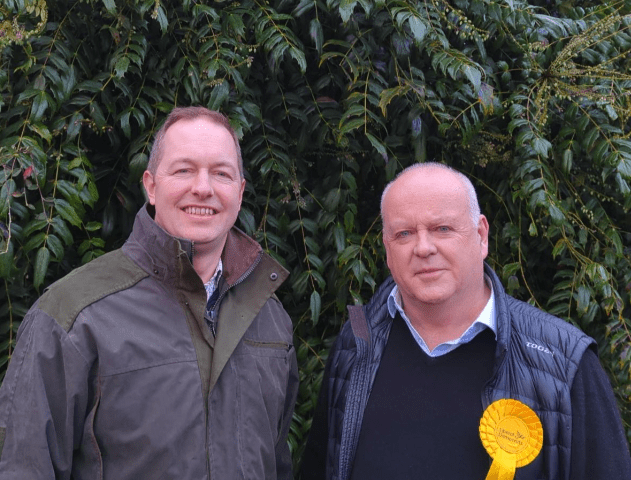
‘Question Time’: Richard Foord MP & Simon Jupp MP

Stream will begin at 6:45 for 7:00 start

No Facebook account needed, and a recording will be available afterwards for those not able to watch live.

https://www.facebook.com/events/359258383600776

Richard Foord and Simon Jupp face to face tonight in Newton Poppleford “Question time”

Run by the Parish Council, this event is a sell out to local residents.

However, Owl has been told that the council intends to stream it on their facebook page.

So far this is unconfirmed.

Water firms told to stop withholding secret data on spills

A senior lawyer at South West Water justified withholding the data by saying “it is the regulators and not the press or the public” who should be able to view information regarding “complex technical and regulatory matters”.

Talk down to your consumers at your peril! 

Examples of “the little people” running rings around you are growing. 

By the way, the procedure derided by “my learned friend” is called transparency. – Owl

Adam Vaughan www.thetimes.co.uk

The chief water industry regulator has warned companies they are endangering public trust by withholding secret data that could reveal illegal sewage spills.

David Black, chief executive of Ofwat, said that six water companies should “not wait to be pushed” into releasing details of when they start and stop discharging raw sewage into rivers. He told the water companies they also needed to stop hiding behind an investigation he is running.

Cross-referenced with weather data, the water companies’ timings can show whether spills are happening when it is not raining — an illegal practice known as “dry spilling”. Experts believe widespread evidence of dry spilling is a looming scandal for the water sector.

Most of the six argue that making the information public risks prejudicing an investigation by two regulators, the Environment Agency and Ofwat.

However, Black unambiguously punctured that defence, saying that the investigation was no excuse for water companies to keep people in the dark about spill times. “They should not wait to be pushed. Customers have paid companies to install monitors and collect their data. They have a right to see what it says,” Black told The Times.

Much of the UK’s sewage system works by combining sewage and rainwater running off streets and fields, with companies legally permitted to dump sewage into waterways during heavy rainfall. Those permits do not allow for discharges on dry days.

When three other companies did release data on spill timings, the BBC, using weather data, alleged that the trio had dry spilled for more than 3,500 hours in 2022.

Polling for the Consumer Council for Water has shown that 43 per cent of people do not trust water firms to protect the environment, and last year Water UK, the trade group, apologised over sewage spills. Black said that to restore trust it was key that the six companies should be more transparent with their data.

“One of the prerequisites for building public trust is a culture of openness. As trust in the water sector is falling, that tells us companies have more to do,” he said. The head of the economic regulator said companies should “be more open in sharing their plans and progress”.

Dry spills are particularly egregious because raw sewage is likely to be less diluted and more harmful to wildlife and people. The charity Surfers Against Sewage noted that many swimmers will avoid entering water after days of heavy rain but not when it is dry.

A senior lawyer at South West Water justified withholding the data by saying “it is the regulators and not the press or the public” who should be able to view information regarding “complex technical and regulatory matters”.

The Information Commissioner’s Office, the data watchdog, is investigating six complaints brought by The Times over the refusal to release stop and start times. Greater transparency is one of the key demands of The Times’s Clean it Up campaign.

James Wallace, chief executive of the campaign group River Action, said the secrecy by the six companies was an act of self-sabotage. “At a time when they desperately need to build trust with customers and communities, they must demonstrate transparency,” he said.

He accused the six of hiding behind “a smokescreen of missing information and, perhaps, illegal behaviour” while water companies propose raising bills by about a third between 2025 and 2030, partly to pay for curbs on sewage spills.

“The government must make all water companies declare when they release untreated sewage, regardless of whether they are being investigated or any other excuse they may have,” said Wallace.

There is no public timetable yet for when the Ofwat and EA investigation will be published.

A Water UK spokesman said: “The UK water industry is one of the most transparent in the world. In rare circumstances when a formal investigation is under way data may be excluded from immediate release to allow the process to complete.”

South West Water said: “We absolutely agree that water companies have a responsibility to embrace open data.”

The Times is demanding faster action to improve the country’s waterways. Find out more about the Clean It Up campaign.

“Quite frankly outrageous” – Simon Jupp

Geoff Crawford of ESCAPE Exmouth posted this hilarious video mash of Jupp quotes interspersed with statements of the facts on Simon Jupp’s twitter page

In case it gets “flushed down the pan” Owl will use a link to Claire Wright’s repost, see llnk below.

Watch video on this link

Anger in Exmouth after another burst sewage pipe

Are they pumping too hard?

A yellow rain warning is in place today which won’t help. – Owl

Tankerloads of sewage are again being transported through Exmouth to the Maer Lane treatment works after another burst pipe.

Philippa Davies  www.exmouthjournal.co.uk

South West Water are currently in the process of replacing a long stretch of pipework in Phear Park.

On Tuesday, February 13, a pipe burst in a field near Maer Lane, and tankers were brought in to take the waste water to the sewage treatment plant while the pipe is repaired. There were reports of sewage overflowing into Littleham Stream and being carried into the sea and on to the beach at low tide.

The Environment Agency issued a sewage pollution notice for the beach and bathing waters.

South West Water said: “We know there have been a number of bursts in this area in recent weeks and we want local residents to know that we are sorry. We will repair the burst as soon as possible and are also working on a long-term solution for the area.”

That’s not good enough for local campaigners ‘End Sewage Convoys And Poollution Exmouth’ (ESCAPE), who say it’s clear that South West Water’s existing sewage pipe network simply cannot cope.

Geoff Crawford from ESCAPE said: “We consider that these bursts are a direct result of them increasing pump pressure and sewage volume throughout without first replacing the old pipe, which SWW state has been determined to be compromised by age and decay.”

Jo Bateman, who is taking South West Water to court over sewage pollution in the sea at Exmouth, said: “It’s frustrating – this just goes on and on, without any acknowledgement from them that they’ve failed to add to the infrastructure as required and to maintain what’s there.

“They tell us the sewage system in Exmouth is not at capacity – but if it’s spilling over as often as it does, then it is over capacity.”

The MP for East Devon, Simon Jupp, said: “The ongoing situation is completely unacceptable and has once again demonstrated the dire need for fast-tracked investment into Exmouth’s water infrastructure, which I have demanded to be fully funded by South West Water.

“I have asked to be kept updated by South West Water on the situation ahead of my meeting with their senior leadership this week. We pay the highest sewage bills in the country. We demand better from South West Water”

Mr Jupp said he has also asked the water regulator Ofwat to include this latest incident in its ongoing investigation of South West Water’s performance.

However, Exmouth’s campaigners don’t think an Ofwat investigation will achieve much.

Jo Bateman said: “They get fined, but that’s not enough. For example last year they were fined £2.15 million pounds for illegal discharges but they gave their shareholders £112million. Those fines sound like a lot of money but it’s not for them, it’s a fraction of what they’re giving to their shareholders.”

In South West Water’s latest update on the Exmouth burst pipe, issued at 7pm on Tuesday, February 13, the company apologised for the traffic disruption caused by the tanker movements, and said: “We’re repairing the burst as quickly as we can and will be fitting an overland pipe in the next few days that will transfer wastewater around the burst section. As you are aware, this depends on weather conditions, supply of materials and any potential flooding, which has cost us delays previously.

 “Once the overland pipe is in place, tankering will stop. We’ll then refocus our teams on replacing the rising main on a permanent basis.”

SWW discharges unmonitored raw sewage next to Budleigh Lime Kiln car park

A recent comment on Information requests:

Dear Owl,

As a Budleigh resident I was shocked at the FOI describing the unmonitored discharge coming out of the SWW Lime Kiln sewage pumping station into the Kersbrook.  INTO A SITE INHABITED BY THE MOST BEAUTIFUL KINGFISHER which has brought such joy to many.

I cannot understand how the Environment Agency, which has spent so much money on the Lower Otter Restoration Project (LORP), could possibly allow this illegal, disgusting practice to continue.

I also cannot understand how the LORP project included the replacement of the old sewage outfall pipe which will allow raw sewage to continue to discharge on the eastern side of the Otter Head. ( 269.69 hours in 2022) The money should have been spent upgrading the sewage system so no untreated sewage needed to be discharged into the sea.

The Otter estuary is now a nature reserve and attracting so many new species but has raw sewage from places such as Honiton, Newton Poppleford etc.etc. passing through it.

Was permission given for extensive use of Glyphosate on the Otter Restoration Project?

From Louise who has launched an as yet unanswered Freedom of Information request to Natural England concerning permission to use glyphosate extensively during the Lower Otter Restoration Project:

Owl, the LORP is to become a formal nature reserve… however the spraying of glyphosate all over the site seems to contradict this…I included my EA FOI  Response within my application to Natural England and  as you will see the spraying was widespread🙄..  I will be Interested to see the response from Natural England which is subject to a delay… surely they cannot carry on using toxic chemicals when it has nature reserve status!

Dear Natural England, 11 December 2023

I have received the below information in response to a FOI made to the Environment Agency regarding the use of Glyphosate on land being treated as a Nature Reserve which is also adjacent to a SSSi.

Please confirm the following:
1. Was any contact received by Natural England, from any person involved in the Lower Otter Restoration Project (LORP)regarding the use of Glyphosate on any part of the LORP site.
2. If so what are the details of that communication.
3. If permission was required for the use of Glyphosate within the LORP site, was permission applied for.
4. If contact was received by Natural England was it made clear that the spraying was taking place within approximately 12-20 inches of waterways
5. Was permission granted by Natural England for the use of Glyphosate on the LORP site which is adjacent to a SSSi and is being treated as a Nature Reserve with a view to full nature reserve status.
6. . Was a copy of the contractors NPTC certificate seen by Natural England.
7. If permission was not required please give an explanation of why
8. If permission was required but not applied and granted, for what are the consequences for the companies/landowners/ persons involved who have not complied with the relevant legislation.

The below is FOI information received from the Environment Agency regarding the use of Glyphosate within the LORP site.

Herbicide has been used to suppress weed growth and ensure successful establishment of planting. Glyphosates are the only non-selective herbicide licenced to be used adjacent to watercourses in the UK. There is no further spraying planned this year and we are seeking to avoid its use next year.

Locations and dates used are as follows:

21/7/23 – South of South Farm Road around tree planting
28/7/23 – North side of South Farm Road, large area prior to cultivating & grass seeding
25/8/23 – North East path around tree planting
31/8/23 – Car Park edges
4/9/23 – Around plants to both North & South side of South Farm Road
13/9/23 – Triangular section of additional planting at end of North West path / start of Big Bank
25/9/23 – Spot spraying of growth coming through North West path (car park to farm)

The control of weeds using a herbicide is needed to prevent the weed growth overtaking and potentially smothering the grass and tree planting. Please note that the spot spraying was targeted and the actual chemical dose was very low.

Whilst strimming can sometimes be used for weed control, it is less effective and where we have invasive species such as Himalayan balsam (endemic in the lower otter), we would risk spreading the seeds.

The reason for spot spraying on the footpath which runs north of South Farm Road path was to stop the growth of weeds and grass which were actually growing through the path surfacing. We did not want these to establish and break up the surface. Without this action it is possible that the Council would not adopt the surfacing.

On a final point, whenever we have sprayed around trees near pathways we have always had a banksman in operation to control the movement of pedestrians. An alternative to this would be to close footpaths. However, we wanted to avoid this, as maintaining access has always been a priority for the project team. We have asked our contractors to put up signage when they have applied herbicide in the future where this is adjacent to public areas.

We respond to requests for information that we hold under the Freedom of Information Act 2000 and Environmental Information Regulations 2004. Please refer to the Open Government Licence: http://www.nationalarchives.gov.uk/doc/o… which explains the permitted use of this information.

Please get in touch if you have any further queries or contact us within two months if you would like us to review the information we have sent.

Devon, Cornwall and Isles of Scilly enquiries team:

Good afternoon

The Environment Agency is named as a major partner in the Lower Otter Restoration Project, (LORP) and applied for the planning permission for this project.

I have been advised by the Kier project team that a herbicide containing Glyphosate is currently being used on the land which forms part of LORP, they have also confirmed that spraying is taking place, has been taking place, and may take place in the future.

At approximately 07:45 on Monday 25 September, I witnessed the herbicide being spayed on either side of the western path north of South Farm Road. There was no signage in place, no verbal warnings were were given, and the path was fairly busy with walkers and dogs. After inhaling an extremely toxic lungful of the herbicide, it was apparent that a hazardous chemical was being sprayed, hence I approached the “sprayers” to find out what it was. (This is not their fault, they are only acting on instructions)

In relation to the geographical area of the Lower Otter Restoration Project site which runs from Lime Kiln Carpark to the 200 metre section of Little Bank, East Budleigh, I am requesting the following information:

1. On how many occasions, within the LORP site/ Lower Otter has the spraying of herbicides taken place during the project.
2. What herbicide/s have been used. If they are not branded please provide the mix of chemicals contained within them, and levels of glyphosate.
3. On what dates has the herbicide spraying taken place.
4. In which locations within the area has the herbicide spraying taken place
5. What risk assessments for both wildlife and humans were in place prior to, during, and post the spraying.
6. What non toxic options were considered, and if any, why were they not used.
7. What is the rationale for using a herbicide containing the extremely hazardous chemical Glyphosate which is lethal to wildlife, within an area which has high levels of wildlife, is adjacent to a SSSi, and is being promoted a bio diverse.
8. Who/which department or unit authorised the use of herbicide for use within the project area.

Please acknowledge receipt of this email and in line with current legislation I look forward to receiving a response within 20 working days.

Yours faithfully
Mrs L Arnesen

More quotes on what makes Paul Arnott tick

“The instant focus for me will be around environment. We know there’s the crisis with South West Water, but that’s not just about beaches, that’s about rivers as well.  

“We’ve got an absolute crisis around insufficient homes, particularly for younger people, but it does present as an issue for older people as well

Paul Arnott (courtesy: Todd Olive/Exmouth and Exeter East Liberal Democrats)

Will Goddard, local democracy reporter www.radioexe.co.uk

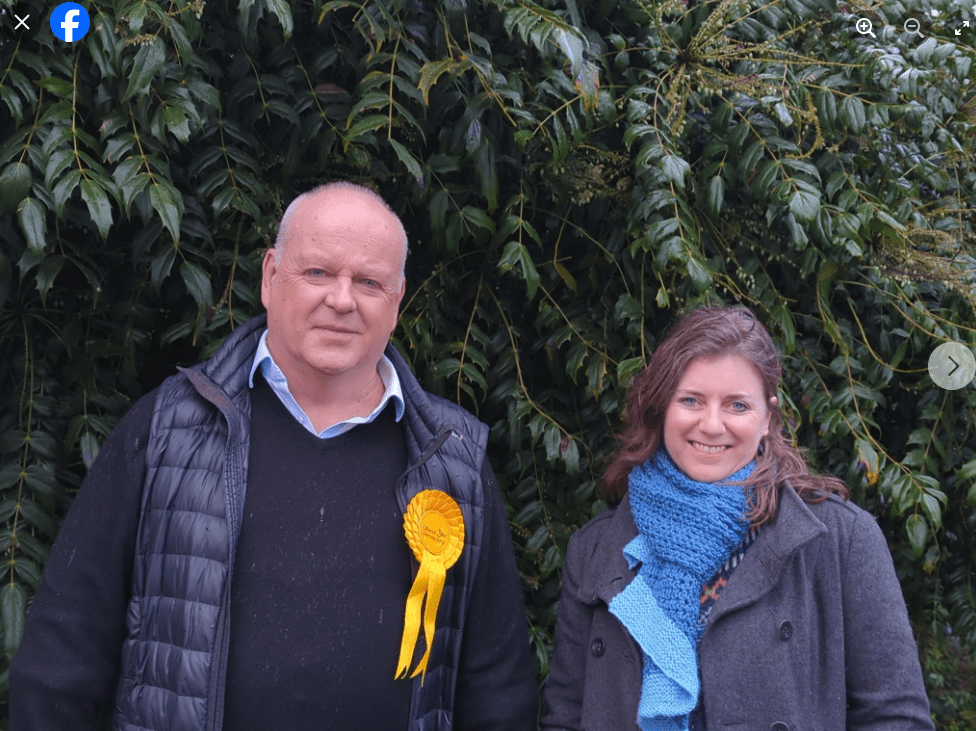
The Liberal Democrats have chosen East Devon District Council leader Paul Arnott to stand as their candidate for the newly formed Exmouth and Exeter East constituency at the next general election. 

The new seat will be formed from much of the old East Devon seat, including Exmouth, Topsham, Budleigh Salterton and Cranbrook, but also eastern parts of Exeter like Pinhoe.  

East Devon and its former incarnations has been Conservative since before Queen Victoria came to the throne, whilst Exeter has been held by Labour since 1997.  

Despite this, Cllr Arnott believes he has a realistic chance of winning and has received the backing of Claire Wright, who gathered more than 40 per cent of the vote in East Devon in the 2019 general election as an independent, leaving the Conservatives with a majority of 6,708. 

He also highlighted the success of the Lib Dems in the area in the 2023 local elections. 

Cllr Arnott said: “I think it will become apparent that it’s a two-horse race.  

“Claire’s 25,000 votes have to go somewhere, and I would be hoping to get a healthy chunk of those.  

“In the East Devon part of the constituency, at the district council, there are 12 Lib Dems, there are two Greens and one Labour [councillor]. 

“I think that shows that the Lib Dems are the people, by the most recent electoral evidence, who are there to beat.”

However, not all of Claire Wright’s votes in 2019 would have come from the new constituency. The politically independent Boundary Commisison has also created a new area called Honiton and Sidmouth. It reviews constituency boundaries periodically to try to roughly balance them in terms of population numbers.

Clrr Arnott continued: “When you come to St Loyes and Pinhoe, clearly they sit within a Labour city council. The Lib Dems are definitely getting stronger within that and campaigning, and that is somewhere where I will obviously pay a lot of early attention and get out there and meet people.” 

Mr Arnott was born in London and was adopted at birth. Educated at Exeter University, he later worked as a journalist and in television and has published four books. He became the leader of East Devon District Council in 2020 and has lived in Colyton since 2001. He is married with four children and one grandchild. 

Asked why he thinks he would make a good MP for the area, he said: “My entire work as a district councillor has been across the whole district and I would say disproportionately around what would be my constituency.  

“As district leader, I can say truly that I work in the constituency. And I think that’s pretty fine bona fides to want to become a member of parliament.  

“I know its major settlements really well, and I lived in Exeter for years, and I lived in Topsham. 

“I live nine miles outside the constituency, which I think in Devon terms is more or less next-door neighbour. It takes me about 15 minutes to drive into the constituency. 

“What I would hope to bring is the knowledge – the deep knowledge and understanding that I’ve managed to gather as district leader at East Devon, which covers absolutely everything from homes to economy and environment. 

“I’ve dealt with those in the constituency, and I’ve dealt with them nationally as well. As a candidate, I come ready with that knowledge. I understand it. I know a lot of people in the constituency.  

“I’m not the youngest candidate, but sometimes that’s not such a bad thing. I’m not a career politician knifing his way up. I’m just there to try and do stuff for the benefit of the people of Exmouth and Exeter East.” 

Cllr Arnott describes himself as “absolutely centrist” and was an independent councillor before the 2023 local elections, in which he retained his seat in Coly Valley after joining the Lib Dems. 

He said: “In order to become selected as a Liberal Democrat candidate, you have to make a study of the Liberal Democrat manifesto.  

“I think it’s really strong, and it’s what we’ve been doing at the district, in effect.

“The instant focus for me will be around environment. We know there’s the crisis with South West Water, but that’s not just about beaches, that’s about rivers as well.  

“We’ve got an absolute crisis around insufficient homes, particularly for younger people, but it does present as an issue for older people as well.  

“That’s about getting stuck into the planning system and about trying to get new social housing going. And I know at East Devon, that is a priority for us already. 

“It’s about continuing the good work on the economy, because actually it’s thriving, I think largely due to the work of the district council. We have the [Exeter and East Devon] Enterprise Zone and that’s working very well.  

“For me, working with my continuing district contacts on homes and homelessness will be really important. 

“And then finally, it’s about working to protect the NHS, which does seem to be coming under consistent attack from the government, tragically.” 

A general election must be held by the end of January 2025.  One other candidate, Conservative David Reed, has been announced for Exmouth and Exeter East so far.
 

“Top of the Poops”. South West Water pollution onto beaches, rivers and the shellfish food chain revealed

According to the “Top of the Poops” web site South West Water pollutes rivers for longer than any other water company and is the top polluter of shellfish. River pollution is not recorded on SWW’s WaterFit Live but all discharges into rivers end in the sea.

In Owl’s view this makes SWW Waterfit Live “unfit for purpose”.

Swimming in sewage

Most, if not actually all, of the beaches and designated coastal bathing locations around England and Wales are regular recipients of a good layer of sewage.

Accuracy Warning We use data from the water companies, but we are seeing many anomalies, that make us believe that bathing location information is quite poor. The situation is likely far worse than reported here.

Water companies have a duty to report on the summer bathing season separately, and this made grim reading in 2022. For more details check out Surfers Against Sewage Water Quality Report 2022

Top of The Poops – Beaches

1.United Utilities – New Brighton 7,056 hours

2.United Utilities – Allonby 6,754 hours

3.United Utilities – Morecambe North 5,348 hours

4.South West Water – PLYMOUTH HOE (EAST) 5,158 hours

5.United Utilities – St Annes 4,700 hours

6.United Utilities – Morecambe South 4,614 hours

7.United Utilities – Seascale 4,545 hours

8.United Utilities – Southport, St Annes Pier, St. Annes North and Blackpool South 3,671 hours

9.Southern Water – COWES, GURNARD 3,161 hours

10.South West Water – MOTHECOMBE BEACH 2,884 hours

[See all beach rankings]

Rivers & Streams

Of the 4700 rivers in England, few escape from sewage dumping

Top of The Poops – Rivers

1.South West Water – Unknown 19,395 hours

2.Yorkshire Water – River Calder 18,079 hours

3.Severn Trent Water – River Severn 17,495 hours

4.Dwr Cymru Welsh Water – River Garw 16,134 hours

5.South West Water – River Tamar 15,546 hours

6.Dwr Cymru Welsh Water – River Teifi 14,079 hours

7.Dwr Cymru Welsh Water – River Tawe 13,981 hours

8.Yorkshire Water – River Aire 13,810 hours

9.United Utilities – River Irwell 12,939 hours

10.United Utilities – River Eden 11,780 hours

Sewage in the food chain?

Shellfish are sensitive to the quality of water that surrounds them, and as they filter the water, they can become contaminated with bacteria from the water around them.

Top of The Poops – Shellfish

1.South West Water – Teign 10,838 hours

2.South West Water – Fal Estuary 9,245 hours

3.United Utilities – NORTH WIRRAL (EAST) 8,665 hours

4.United Utilities – MORECAMBE BAY EAST 8,528 hours

5.South West Water – Exe 6,411 hours

6.South West Water – Dart 6,123 hours

7.United Utilities – MORECAMBE BAY (LEVEN) 5,529 hours

8.United Utilities – RIBBLE 5,155 hours

9.United Utilities – Morecambe Bay East and Lune (Broadfleet and Plover Scar) 5,104 hours

10.United Utilities – Solway 4,604 hours

[See all shellfish rankings]

A dozen freedom of information requests to SWW on sewage spills and monitoring failures in Exmouth and Budleigh

Although South West Water is a private company it must comply with Freedom of Information (FOI) requests on environmental issues.

A correspondent has just pointed out to Owl that SWW has been deluged with FOIs from Exmouth and Budleigh residents in the past few days. Below are the details of one that caught the correspondent’s eye regarding unmonitored raw sewage discharge into the Kersbrook at the Lime Kiln car park Budleigh Salterton. This discharge is only metres away from the popular bathing spot in front of the car park.

This is followed by a short list of a dozen recent requests with links to the details.

[The reason these are in the public domain, visible for us to see, is that the requests were made through the “What do they know?” website. An essential tip for anyone launching a FOI]

Request for discharge information, Emergency Overflow from Lime Kiln SPS, Budleigh Salterton

10 February 2024

Dear South West Water Limited,
We have recently become aware that there is an Emergency Overflow (EO) which comes out of the Lime Kiln SPS
 [sewer pumping station] at Budleigh Salterton. This EO is not monitored through EDM [event duration monitors] sensors.
I have video and photo evidence that this EO has discharged sewage and related items, including sanitary pads, into the Kersbrook channel and from their to the beach through a culvert. This site is due to become a National Nature Reserve this week.
Information I would like please:
1) How many times, and which specific dates, has this EO discharged since 1st January 2022 (ie: 2 years)?
2) How long have these discharges lasted, and what volume has been discharged?
3) What reporting has been made on these discharges, both to EA and to the public?
4) In view of this site being newly categorised as a National Nature reserve, when will this be monitored through EDM, and data published in near real time?Yours faithfully,
Peter Williams

The list

Exmouth SPS Pump Failure information

Response by South West Water Limited to Geoff Crawford on 13 February 2024.

 Awaiting classification.

Exmouth, Phear Park SPS maintenance records 2019 – 2024

Response by South West Water Limited to Geoff Crawford on 13 February 2024.

 Awaiting classification.

Maer Road pumping station Exmouth overflows

Response by South West Water Limited to Karen Powers on 12 February 2024.

 Awaiting classification.

Exmouth SPS pump capacity and volume

Response by South West Water Limited to Charlie Edwards on 12 February 2024.

 Awaiting classification.

Hartopp SPS storm tank, Maer Road and Phear Park Emergency Overflows

Request sent to South West Water Limited by Geoff Crawford on 11 February 2024.

 Awaiting response.

Sewage Sludge and Fertiliser Cake HGV transportation and Environmental Impact

Response by South West Water Limited to Geoff Crawford on 30 January 2024.

 Successful.

Exmouth – Request for Clear and Accurate Schedule of Inspections, Asset Lifespan, and Replacement/Upgrade Plan

Response by South West Water Limited to Geoff Crawford on 6 February 2024.

 Delayed.

Faulty EDMs at Budleigh

Request sent to South West Water Limited by Karen Powers on 11 February 2024.

 Awaiting response.

Exmouth discharges between 30 Dec & 2 Jan 2024

Response by South West Water Limited to Karen Powers on 5 February 2024.

 Awaiting response.

2023 bathing water discharges

Response by South West Water Limited to Karen Powers on 5 February 2024.

 Awaiting response.

Request for discharge information, Emergency Overflow from Lime Kiln SPS, Budleigh Salterton

Request sent to South West Water Limited by Peter Williams on 10 February 2024. – See below

 Awaiting response..

Tankers at Budleigh Lime Kiln January 2024

Response by South West Water Limited to Karen Powers on 5 February 2024.

 Awaiting classification.

Breaking: Claire Wright’s fulsome endorsement of Paul Arnott

From Claire’s facebook post

I am really happy to announce that I am backing Paul Arnott to take Exmouth and Exeter East in the general election!

For those of you not familiar with Paul, he is the Liberal Democrat leader of East Devon District Council, presiding over a rainbow coalition of LibDem, Independent and Green councillors, after taking the helm back in 2020.

I first met Paul Arnott back in 2009 in the sitting room of the dear late Broadclyst LibDem councillor, Derek Button. 

It was the first meeting of a small group of worried politically active people that included Cllr Roger Giles and Jonathan Underwood, who was a parliamentary candidate for the Liberal Democrats in 2010. 

At the time Paul was being persecuted by the then Conservative run East Devon District Council, for asking difficult questions about planning matters.

Anyone who remembers those days, will recall the absolute steamroller that it was, flattening any dissent or challenge and hauling unfortunate opponents before standards hearings for minor misdemeanours, while perpetrators of actual planning atrocities got off scot free.

They were dark days but myself, Paul and our group were absolutely determined to change things.  And so we did. 

The investigation of some murky planning matters led to the creation of Communities Before Developers on 2010, a campaign group I led that repeatedly challenged EDDC’s proposals to throw out much of the countryside protections in its new draft local plan

Having a shared cause, Paul and I remained friends. After I was elected to EDDC as an Independent in 2011, Communities Before Developers fizzled out as I had a vote and a more powerful platform. But we had sown the seeds of something much bigger…

The following few years were probably the most febrile time in EDDC’s history and the council was shaken to its core in 2013 when its conservative deputy leader, Graham Brown, was outed in a Daily Telegraph sting operation, which was splashed across its front page.  His long political tenure was finally over and the event marked the beginning of the end for the East Devon Conservatives’ lengthy and stultifying reign of power.

In 2015, with Paul firmly at its centre, the East Devon Alliance was birthed and immediately set about fielding a raft of Independent candidates from across the constituency to the EDDC elections of that year, which overthrew many Conservative councillors.

Some were so outraged at losing their seats that they wrote furious letters to the local papers about this terrible injustice!

It was an exciting ground-breaking time and I loved being a slightly detached part of the team (I had my own battles).

In 2019, the East Devon Tory steamroller squashed its last dissenter, as the East Devon Alliance with its rainbow coalition took control of the council and the Conservatives were reduced to a rump of 16.  

The old rotten regime had finally been replaced by something inspiring, decent and wholesome, run by people who wanted to do something positive.  People who I indentified with and loved spending time with. I was excited beyond words.

So … who is Paul?  The Paul that I know is decent, hard-working, tough, but also incredibly compassionate. He has a laser-like focus and will leave no stone unturned when justice is at stake.

He is a great dad to four adult children and has a lovely wife, Lydia.

And today, fifteen years after I first met Paul and instantly knew I had found one of my tribe, the hilariously witty, determined, fiercely intelligent, light-seeking missile that he is, has been selected as the Liberal Democrat candidate for the new constituency of Exmouth and Exeter East.

He would make a strong and wonderful MP but he needs your support to win!

So if you live in the soon-to-be-formed constituency of Exmouth and Exeter East (includes Exmouth, Budleigh Salterton, Cranbrook, Pinhoe and a chunk of Eastern Exeter) and would like to help with Paul’s campaign, either by leafleting, finance or in some other way, please email Todd Olive at libdemtodd@gmail.com

Thank you so much!

Local news in the UK is in deep trouble. But this band of radicals could change everything 

Imagine there’s no local news. You hardly have to try. Hundreds of local newspaper titles have disappeared over the past 10 years, BBC local radio is in freefall and local television has sunk from view. More than 4 million people in the UK live in “news deserts” without adequate local journalism, and millions more reside in “news drylands”, where local news is close to collapse.

Jonathan Heawood  www.theguardian.com

But this isn’t the whole story. While legacy publishers and broadcasters grapple with economic headwinds and blame social media platforms for their woes, a new generation of independent news providers is emerging. Unsung, unfunded and mostly underpaid, these indies are reimagining local news in communities from Shetland to the Isle of Wight and from Caerphilly to Newry.

In Manchester, the Mill has attracted thousands of paying subscribers to in-depth local journalism via its Substack newsletter. The Bristol Cable produces investigative journalism on a co-operative basis, with local people setting the agenda. In Glasgow, two nonprofit outlets – Greater Govanhill and the Ferret – have come together to open the UK’s first community newsroom, where local people are invited in to talk about their concerns and take part in editorial meetings.

Not all of these indie publishers are confined to a single location. The Bylines Network has 10 outlets, from Sussex to Scotland. Social Spider runs five papers in a number of north London boroughs. And the Mill has launched spin-offs in Birmingham, Liverpool and Sheffield, with more to follow.

In some ways, these initiatives are part of the long tradition of local journalism in the UK. In other ways, they are subtly radical. They don’t just treat the public as sources or consumers of journalism, they co-create the news with them. They don’t provide journalism in order to make money, they make money in order to provide journalism.

You might think that the government would want to support these news entrepreneurs, who are levelling up information provision in communities across the UK. But no. In fact, successive governments have channelled a range of subsidies to the corporate publishers who own the surviving legacy local papers, while the indies have received next to nothing.

Rather than benefiting from subsidies, indie publishers are instead footing the bill for the information needs of their communities, providing public interest journalism at a fraction of the cost it takes to produce, simply because they care. This is unsustainable. Already, we are seeing indie news providers burning out – full of passion for their work but frustrated that they don’t get the recognition they deserve. When we asked indie publishers about their greatest challenge, many simply said, “surviving”.

This sector isn’t perfect. There are concerns that the focus on digital news will exclude people who aren’t online, and that small independent publishers simply can’t keep up with everything that’s happening in their local communities. Indie publishers are aware of these limitations, and desperately want to do more to serve their communities with up-to-date news in multiple formats. But there’s only so much they can do on a median turnover of only £35,000.

We can turn this situation around. The government could rewrite the rules around public notices, to allow local councils to advertise with those outlets that reach the most engaged local audiences, whether they’re in print or online. Central government could also place a chunk of its multimillion-pound advertising budget with indie publications. Big tech companies could reimburse indie publishers for the traffic and engagement they generate on their platforms. Philanthropists could recognise the huge social value of independent local news, and donate money to local news funds to stimulate grassroots media around the UK.

Initiatives to revitalise local news are under way in other parts of the world. Philanthropists in the US have pledged $500m to rebuild local news, with the target of raising $1bn over the next decade. Governments in Denmark, the Netherlands and New Zealand provide subsidies for local news through arm’s-length mechanisms to protect journalistic independence. The City of New York puts more than 80% of its advertising budget in the hands of community media. In Canada, there are tax breaks for journalism.

The UK is an outlier in its lack of support for independent local news. Despite the recommendations of the Cairncross review in 2019 and at least four other inquiries since then, the government has allowed our local news industry to become ever more concentrated, and ever more fragile.

We are locked in a downward spiral when we could be in a cycle of renewal. The government keeps throwing money at the newspaper publishers who have done the least to solve the problem, rather than unlocking the potential of the indies.

This isn’t an either-or situation. We don’t have to abandon the legacy papers that have been part of the fabric of British life for hundreds of years. We could explore placing them in community ownership, as the National Trust for Local News is doing in parts of the US, or at least make their subsidies conditional on investing in journalism, as recommended by the National Union of Journalists. At the very least, we urgently need to create a level playing field, where new entrants are able to compete on equal terms.

Audiences will pay for quality local news. But it will take concerted action to build a sustainable local news economy. The indie news entrepreneurs are the key to a better future. They are giving so much to society. It’s time they got something in return.

Senior tories set to lose seats as rural Conservative vote at risk of collapses

Labour will beat the Tories in the most 100 rural constituencies in England, according to a shock new poll.

Historically the rural communities in the South West have supported the Liberals (now the Lib Dems) as an alternative to the Conservatives (and EDDC still has one). – Owl

Zoe Grunewald www.independent.co.uk

The poll found Conservative support had fallen by 25 points since the 2019 election, with just 34 per cent of voters in the 100 most rural constituencies in England saying they would vote for the party.

The Conservatives currently hold 96 of the 100 most rural seats, but now face losing more than half to Labour and the Lib Dems, including those of senior Tories Jacob Rees-Mogg, Jeremy Hunt, Thérèse Coffey, Andrea Leadsom, Mel Stride, Mark Harper and Liam Fox.

Labour support has risen over the same period, going from 20 per cent in 2019 to 37 per cent at the start of this year – giving the party a narrow lead in what has traditionally been considered Conservative territory.

But while the survey suggests Conservative support has collapsed in the party’s heartlands, many rural voters are still “politically homeless”, with almost 35 per cent of respondents still undecided about how they’ll vote.

Victoria Vyvyan, president of the Country Land and Business Association (CLA), which represents 28,000 rural businesses and landowners, said the poll makes it clear that rural voters up and down the country feel “disconnected from central government”:

“This poll makes it clear that rural voters up and down the country feel politically homeless and disconnected from central government – but their votes are still up for grabs. Whichever party produces a robust and ambitious plan for growth in the rural economy will undoubtedly secure support.

“For the good of our rural communities and the nation as a whole, now is the time for the main parties to make it clear that they will back the countryside.”

Support for the Liberal Democrats has remained largely unchanged, with 14 per cent saying they would back the party – down only two points from 2019.

But the poll, carried out by Survation on behalf of the CLA of more than 1,000 people, also shows neither of the main parties is seen as understanding or respecting rural communities.

Only 28 per cent said they thought Labour understood rural communities, while 25 per cent said the same about the Conservatives.

The CLA has put forward a series of “missions” for parties to show they understand rural voters, including investing in profitable and sustainable farming, providing affordable homes for rural communities, tackling rural crime and improving connections for rural areas.

Ms Vyvyan told the PA news agency: “Our vote is there for the taking, and they need to show us that they understand and respect our community.”

She added: “We feel invisible. I spoke to a small farming group in West Cornwall and the question that was asked was why are governments not interested in our community? Why are they interested in everyone else’s community except ours?

“We are politically homeless.”

Rural dissatisfaction has led to protests by farmers in other parts of Europe, such as France and Spain, while Welsh farmers have warned of “huge unrest” over plans by Cardiff to reform agricultural subsidies to reward “sustainable” food production.

But Ms Vyvyan played down the possibility of similar unrest in England, saying farmers were “well set” on the way to agricultural transition, adding farming minister Mark Spencer and Environment Secretary Steve Barclay had “produced very good rates” for payments.

The current government is committed to spending an average of £2.4 billion a year on the farming budget in England across this Parliament, and has spent less than that in each of the last two years. It needs to spend at least £2.7 billion this year to hit its own target.

Council to keep funding homelessness support during 2024/25

Devon County Council is planning to continue its contribution to adult homelessness prevention services for the next financial year – but says it’s still looking for a sustainable long-term funding solution.

Philippa Davies www.sidmouthherald.co.uk 

Last year the council proposed withdrawing a total of £1.5 million in funding to five hostels and a network that helps people struggling on low incomes to stay in their homes.

That proposal was scrapped after severe concerns were raised by the leader of East Devon District Council, along with local charities helping the homeless. The county council agreed to continue funding the services until the end of March 2024.

Cuts to spending on homelessness services had been on the agenda for last week’s  Cabinet meeting, but councillors then heard that the Government’s funding settlement was slightly higher than expected. They agreed to maintain the current level of spending, with a budget of £1.45 million for 2024-25.

However, the county council has no statutory responsibility for housing and the homeless, which come under the work of district councils, and has said it will continue discussions with the districts over long-term funding of the homelessness support services.

The Cabinet meeting also agreed to spend an extra £1.5 million on road maintenance work to prevent potholes. The money will be used for regular drainage works to stop potholes forming after heavy rain.

Devon’s Cabinet member for finance Phil Twiss told councillors: “The final Government settlement was announced after our draft budget was published so it is pleasing to be able to include some extra spending.

“We’ve been talking to our district council colleagues and listening to what our budget scrutiny committees at Devon County Council have told us over the past month.

“We’ve also held formal consultation meetings with representatives from business, the trade unions and the voluntary sector, taking on board their priorities.

“Councillors’ postbags regularly include complaints from motorists about potholes on our roads and it is important that – when there is some extra money available – we do our best to tackle the problem.

“We also recognise the work that district councils and organisations like the YMCA do to make life a little easier for some of the homeless and I am delighted we are able to continue to help with a full grant.”

The full council will meet on Thursday (February 15) to finalise the budget for 2024/25.

It includes above inflation increases in spending on Devon’s vulnerable children and adults with a 10.4 per cent increase in the revenue budget for children’s services, a six per cent rise in adult services and 4.7 per cent extra for climate change, environment and transport.

Reductions in other departmental spending and increased income will mean an overall rise of 6.3 per cent in the budget for next with a total spend of over £743 million.

Devon and Cornwall police allegedly protected officers accused of abusing seven women

Appalling allegations.

Devon and Cornwall Police are in special measures, they deliver poor value for money and the Chief Constable is suspended whilst under criminal investigation over serious allegations of sexual offences.

What is the Police and Crime Commissioner doing?

Indulging in photo opportunities and helping promote her Tory party’s image. What an advert! – Owl

Police officers accused of subjecting seven women to abuse including rapes, beatings, and psychological torment were allegedly protected by their force, with two appointed to roles protecting women from assault and harm.

Vikram Dodd www.theguardian.com 

The force, which stands accused of systematic failings, is Devon and Cornwall, the Guardian has learned.

One of the male officers is accused of abusing and threatening his partner, who is also a serving police officer. In this case it is alleged the male officer was promoted twice after the force received the allegations over a 14-year period, and appointed to a leadership position in the force’s effort to tackle violence against women and girls.

Nationally, police have vowed to take violence against women and girls seriously after a series of scandals, and have previously been accused of routinely protecting officers who are abusers.

One of the seven women has waived her right to anonymity. Paula Kressinger, 57, served in the Devon and Cornwall force for 30 years until 2016. She said: “It defies belief. I was completely failed by them, disrespected and insulted. I lost trust and confidence in the police as a result. It was a definite cover-up.”

It is alleged the failings in the force were so well-known that male abusers knew they would be protected from justice, with one allegedly bragging to a woman that the force had “made things go away”.

Lawyers for the seven women have written to the force saying they will sue, alleging that when abuse allegations were reported, Devon and Cornwall police failed to take potentially criminal allegations against their own officers seriously.

Among the alleged errors are failures to gather evidence; failure to take statements or sending officers to investigate; and knowing the suspect or openly showing bias.

The allegations of abuse are made against seven current and former male officers, who are understood to deny any criminal wrongdoing.

Last Monday, the Guardian and BBC News put detailed questions to Devon and Cornwall police, who declined to answer specific questions, but said it would refer the allegations to the Independent Office for Police Conduct. An IOPC spokesperson said the matters were “serious” and the police watchdog was in talks with the force about a formal referral.

In Kressinger’s case, the man she had been in a relationship with had retired as a police officer at the time of an alleged attack. He allegedly placed her in a neck hold, at the door of the home they had shared together.

A neighbour who witnessed the incident can support Kressinger’s account, she claims.

When police arrived, Kressinger claims one officer called her “pathetic” and she said police then failed to pursue her allegations properly, instead treating her as the offender.

Kressinger said: “When I was a police officer for 30 years, you go to a domestic incident, you listen to both sides and you deal with it appropriately. That is what I expected. I was completely dismissed. It was clear they knew him.”

She said she has been left with post-traumatic stress disorder as a result of her treatment by her former partner, which was “exacerbated by the lack of police action”.

After years of trying, one officer took her claims seriously, she said. “I had to fight to be heard.”

Another complainant said that one alleged attacker used his position as a firearms officer to intimidate her.

Another alleged attacker was appointed to a sexual offences and domestic violence team.

In two cases, it is alleged Devon and Cornwall police’s protection of its alleged abusive officers extended to bungling claims they had attacked children.

Emma (not her real name), still a serving officer, at first could not tell anyone what she said happened to her, and colleagues tried to help her. Allegations were first reported to Devon and Cornwall police in 2004, then again in November 2017, and no action resulted.

She said: “On one occasion, he lost his temper, when I had my baby … in my arms. My other child was screaming as he rained punches on any area of my body he could get at. He cornered me in a room and repeatedly kicked me as he stood over me. I was terrified and was begging him to stop.”

More allegations of violence Emma suffered were received by the force in December 2017, as well as the name of a potential witness.

Further allegations were made to Devon and Cornwall police in 2018 including coercive and controlling behaviour, and mistreatment of the couple’s teenage child.

No action followed for criminal matters or discipline, and the alleged attacker was promoted twice after the allegations were first received by Devon and Cornwall.

In another case, a former officer is under criminal investigation by another force, after Devon and Cornwall were accused of errors investigating allegations made against him by a woman.

Jim Pearce, an assistant chief constable with the force, said the allegations needed “careful consideration and appropriate review”.

He added: “As a result of the information received, the force has made a mandatory referral to the Independent Office for Police Conduct. The IOPC has asked for further work to be progressed by the force before they can accept and assess a referral, but we remain in consultation with them in providing the required information.

“It would be both inappropriate and premature to comment further at this stage.”

A recent report from His Majesty’s Inspectorate of Constabulary into Devon and Cornwall police said of an audit the force carried out into its culture in 2021: “Without exception, every female respondent interviewed in the cultural audit reported experiencing some form of sexual harassment or discrimination in the workplace.”

Solicitor Debaleena Dasgupta, from the Centre for Women’s Justice, which is representing the seven women, said this was the first time a force was being sued for the systematic failing of women attacked by its own officers.

She said: “These shortcomings demonstrate a failing system, and are so egregious, they breach the women’s human rights. It takes immense bravery to report a police officer to their own police force. For the victims to then be so badly failed is deplorable.

“Why do D&C [Devon and Cornwall] appear to accept what their male officers tell them, over what their female officers tell them?

Dasgupta added: “As part of their claim, the women have offered to help D&C improve its practices and procedures.”

Devon and Cornwall police have been placed in special measures by the official inspectorate.

A government-ordered report into police failings that left the former Met officer Wayne Couzens free to commit a string of sexual offences, culminating in the kidnap, rape and murder of Sarah Everard, is expected to be published within weeks.

Paul Arnott on Seaton Hospital, baseless smears in EDDC and, yes, a certain candidacy 

[He also reveals he has the support of Claire Wright. More on this in due course. – Owl]

Paul Arnott 

I had intended to write this week’s column about some really good news for Seaton Hospital.

Readers may recall that it has been under something of a cloud recently with elements of the standalone NHS Property Services wanting to consider its partial demolition.

Several huge meetings took place in Seaton and Colyford, and a campaign committee was formed, on which the local MP and I sit, alongside local medical representatives, the League of Friends and experienced serving and ex-councillors from Seaton.

It’s a long road ahead, but the one thing I knew I could help deliver was to ensure East Devon District Council gave a good hearing to a suggested application from the League of Friends to have the hospital listed as an “Asset of Community Value (AOCV)”. There was an attempt to do this when the Conservatives ran the council some years ago but it fell on stony ground.

This time, our officers did an extensive and professional analysis and made the decision that the hospital does indeed qualify to be entered into our Register of AOCV. I am really pleased to have been able to secure this for the local people, and congratulate the League of Friends for their excellent application and follow-up work.

Then I realised I also needed to write about a significant finding regarding baseless smears of “bullying” at EDDC. This was a myth created by a disgruntled former senior officer for their own ends, but of course the Conservatives have tried to keep this dishonest flame flickering for years.

Last week, the most senior entity in the land for councils, the Local Government Association, came in to East Devon for what is called a “Peer Review”. This means that a cross-party team of 5 spend three days and many more preparatory days looking under the bonnet to see what the council is doing well and what it could do better. It is a non-cynical but also highly rigorous peer challenge.

During the process, 150 officers and members of the council were fully consulted (along with many external bodies). The spokesperson for the final report, which will be published in the next month, took pains to say that because of these repeated smears in the media of bullying, they felt they had to look into that as part of their work.

They confirmed in the report that they found no evidence of bullying whatsoever, but rather clear evidence of staff and officers feeling that they were working for a progressive council, worried only that this politicised parroting of false accusations was damaging their council’s reputation unfairly.

However, having mentioned Seaton Hospital and the official refutation of false bullying allegations, I realised I should use the last 100 words today for a small announcement.

Last week I accepted the offer to be the prospective LibDem Parliamentary candidate for the new constituency of Exmouth and Exeter East. As EDDC leader I already do a vast amount of work in the constituency so know it well, and look forward to a courteous contest.

I’ve never been one to fight my way up the greasy pole of national politics, but I am very much on for this, and suspect it’s a two-way contest between the LibDems and the Conservatives. I am also thrilled to have the personal support of the renowned independent Claire Wright, who took 25,000 votes last time.

I even have an agent! If you’d like to hear more, please do contact Todd Olive at libdemtodd@gmail.com.

Paul Arnott a candidate who can rise above party politics and has delivered for East Devon – Owl

Paul Arnott is a candidate whose record over the last ten years shows he can set aside, and rise above, party politics to improve accountability and transparency in local government, and the quality of life for everyone in East devon.

He first appeared on Owl’s radar as one of the founders of the “East Devon Alliance” (EDA). A group of like-minded individuals fed up with decades of opaque and dubious decisions made by a cabal of highly influential councillors (Conservative) and officers (under the savvy leadership of one Mark Williams) in EDDC.

Owl recalls the Graham Brown scandal of 2014 when Brown was caught in a Telegraph sting offering to obtain planning permission for cash. A police inquiry folded due to “lack of evidence”. A similar lack of “inquisitiveness” was subsequently to surround the “who knew what and when” of the John Humpreys case.

Dedicated to following the Nolan principles, especially those of Integrity, transparency and accountability the EDA with Chair Paul Arnott sought to provide mutual support for like minded individuals to gain election as councillors, in particular supporting younger candidates.

In 2015 EDA won 10 seats, with Paul Arnott in the next batch in 2019.

In 2020, Paul Arnott as Leader of the East Devon Alliance, after a chat with veteran Cllr Eileen Wragg, negotiated and formed a formal coalition with the Lib Dems under the banner of the “Democratic Alliance”, and signed a “memorandum of understanding” with the “progressive alliance” group of independents. Paul Arnott was then elected Leader of EDDC.

In the 2023 elections he stood as a Lib Dem, recognising that EDA had more than fulfilled its original purpose and the Lib Dems could provide more support. In this election the Lib Dems just pipped the Conservatives to the post to become the largest party, ousting, along the way, Tory Leader, Phil Skinner.

This left the council split three ways between Independents, Lib Dems and Tory. [Independents of various hues 19, Lib Dem 18 plus 1 (old style) Liberal, Conservatives 17, Labour 3, Greens 2]

Once again Paul Arnott negotiated a wider coalition, “The Democratic Alliance Group”, made up of councillors from the Liberal Democrat Party, the Green Party and independents.

Call it serendipity if you like but East Devon now has a council that is about as representative of the electorate as would be achieved by proportional voting. Paul Arnott is the chief architect.

The election of Richard Foord, after Neil Parish was forced to resign the Tiverton and Honiton seat last year has been illuminating. Most of us have never experienced anything other than a Conservative MP and sycophantic ones at that.

Richard Foord has, in a very short time, shown how an MP dedicated to serving his constituents can raise the profile of local issues in the House of Commons. With Paul Arnott’s record we can be sure he would do the same.

Breaking: Paul Arnott to stand for election as MP for Exmouth & Exeter East

The Liberal Democrat leader of East Devon District Council, Paul Arnott, has been announced as the party’s candidate for the Exmouth & Exeter East seat in the general election.

Philippa Davies www.exmouthjournal.co.uk

The new constituency was created by last year’s boundary changes and includes Exmouth, Lympstone, Topsham, Budleigh Salterton and eastern parts of Exeter. 

The Conservative candidate for the seat is David Reed; so far no other party candidates have yet been announced.

Paul Arnott has been leader of East Devon District Council since May 2020, although he was elected as an Independent. He joined the Liberal Democrats in 2022 and played a key role in the Tiverton & Honiton by-election of that year, which was won by Richard Foord.

He currently leads the Democratic Alliance of Liberal Democrat and other councillors who control the district council. 

He said: “It’s a great privilege to be selected to stand to represent this incredible part of Devon.

“This Conservative government has shown repeatedly that it is incapable of delivering for the South West, and for the wider country. The NHS is crumbling; waiting times in A&E and for major procedures are spiralling out of control, while for many even day-to-day dental treatment is no longer available.

“Our coasts and rivers are polluted with sewage while the government lets the water companies off-the-hook and foreign shareholders pocket billpayers’ cash. The cost-of-living crisis makes even daily essentials increasingly unaffordable for many.

“I’m proud of our record at East Devon District Council, where our efforts in poverty reduction have been nationally recognised, the Enterprise Zone project continues to bring new jobs and innovation, and where we are holding South West Water to account for their failures – and all in less than four years since we took control of the administration. For my whole political career, I have worked to make sure our public services – and our public servants – deliver for local people.

“Exmouth & Exeter East needs a genuine local champion. After fifteen years in local politics standing up for residents, I’ve shown I will always put residents first. I look forward to getting out on the doorsteps once again and using my in-depth local experience to campaign for a fairer deal for our area in Parliament.”

The Liberal Democrats’ local party president Dr Stuart Mole said: “Paul is an outstanding candidate. As Leader of East Devon District Council, he has championed many important causes across our area and knows the new constituency well.

“More widely, he has a deserved reputation as a campaigner for justice and human rights. In the local elections last May, under his leadership, the Liberal Democrats outpolled the Conservatives and emerged as the clear alternative to the Tories in the parliamentary seat. Paul would make an excellent Member of Parliament and we look forward to introducing him to as many voters as possible in the coming months.”

Paul Arnott is a former correspondent for The Independent and Time Out, and has been a director and producer for the BBC and Channel 4. His published works include ‘Windrush: A Ship Through Time’, exploring the history and struggle of the Windrush migrants.

Having previously lived in Topsham and Exeter, he has been a resident of Colyton for 23 years, and represents the town as a Parish and District Councillor while continuing his production and publishing career.