Conservative ‘failures’ have led to more sewage pollution, say water experts

Increased sewage pollution, urban flooding and water supply interruptions are the result of a decade of failures by the Conservative ministers, according to water experts who are demanding an independent inquiry into water be set up by the next government.

Sandra Laville www.theguardian.com 

The repeated failure of the Tories to implement rules to create “sponge cities” has led to much more visible sewage pollution, more flooding and increasing instances of water being cut off for householders and businesses, they say.

Alastair Chisholm, the director of the Chartered Institution of Water and Environmental Management, said: “These rules should have come in in 2011. They were canned by Eric Pickles in 2015 and we have had 13 years of delays. This has been kicked down the road and what is going on now is the result of that.”

He spoke as the institute published a comprehensive report at Westminster, which calls for the next government to order an independent investigation into water companies, who stand accused of widespread pollution and profiteering, and the regulators, who have failed to robustly control the privatised industry.

“Over 30 years on from water privatisation, with widespread urbanisation and agricultural intensification, a fresh approach – including potential reform of water regulators – is needed,” the report says.

“With levels of trust in water companies impacted by repeated reports of pollution and profiteering, both public and water practitioners want more transparency and assurance that companies are acting in the interest of society and the environment.”

The authors of the report interviewed professionals working in the water and environmental industries. Overwhelmingly, they expressed widespread dissatisfaction over water company ownership and operations. Just 6% of the experts questioned were supportive of a continuation of the current approach to ownership, corporate governance and regulation.

The report calls for the Conservative government to finally implement rules to create sponge cities after a decade in which ministers have delayed and attempted to scrap the plans. Sponge cities are urban zones with multiple areas of greenery, trees, ponds, soakaways, pocket parks and permeable paving to allow water to drain away. They also include measures to store rainwater and runoff, such as widespread use of water butts.

Increased runoff from rainfall overwhelms water company sewage systems, which have not been maintained and improved by water companies as a result of under-investment. The extra water increases the likelihood of raw sewage being discharged, while hard surfaces in towns and cities increase the risk of flooding.

In its latest business plan, Thames Water says by 2015 London had seen the biggest decrease in plant cover in front gardens of anywhere in the UK, with five times as many front gardens with no plants compared with the preceding 10 years.

This increased the burden on sewers and the risk of pollution, the company said.

But the Conservative government has repeatedly failed to implement rules under schedule 3 of the Flood and Water Management Act 2010, which mandated developers to install sustainable drainage systems in new developments. Conservative ministers have argued the requirements will be too costly for developers.

The Guardian revealed last year that at least 10% of donations received by the Conservative party since 2010 came from property developers, real estate tycoons and others connected with the construction industry.

Public outcry over sewage pollution, and revelations about water companies’ abuse of storm overflows to dump raw sewage into rivers, which should only take place in exceptional circumstances, have forced the government to look again at schedule 3. But as yet it has not been made mandatory for developers.

“Sponge cities are not a new concept and are being delivered internationally to manage demands for growth amidst water – typically flood and drought – crises,” the report said.

“In the UK we have our own water crises spanning these same challenges of either too much or too little water, as well as pollution.

“Greening our urban spaces is a win-win approach on all these fronts. We must flip the mindset that treats rainwater as a waste product to be got rid of in the urban environment, into one where it is a treasured resource.”

The report, which polled 4,000 members of the public, found 71% of people in England believed water company profits should be restricted because of performance concerns. Two-thirds said companies made too much profit.

Should Tipton’s new primary school be built in Ottery St Mary?

Simon Jupp supports the latest proposals.

Local campaigners are back at square one. – Owl

Philippa Davies www.sidmouthherald.co.uk 

A fresh debate has opened over the location of Tipton St John’s new primary school, after a site in Ottery St Mary was put forward as the preferred option.

The Department for Education (DfE) has assessed sites in Tipton and outside it, and recommended the Thorne Farm site off Exeter Road, near The King’s School. This site was rejected by East Devon District Council in 2021 because that plan also included a large housing development to help finance the school rebuild. Now that Tipton Primary is on the priority list for the Government’s School Rebuilding Programme, with a promise of funding, the housing is no longer needed.

The proposal to rebuild Tipton Primary in Ottery St Mary is being supported by the school governors, the Executive Headteacher of the Otter Valley Federation and the local MP Simon Jupp. They all agree that if the DfE didn’t think any sites in Tipton were suitable, it’s vital to go ahead with the Ottery recommendation so that the safe new school can be built as soon as possible.

But local councillors, who have also campaigned for the rebuild for many years, argue that Tipton Primary School should remain in Tipton as it is part of the community, and they’re asking for the DfE report to be made available to the public.

The recommendation for the Ottery site was announced by Simon Jupp MP on social media at the end of last week. He published a letter to Devon County Council’s Cabinet member for Schools, Cllr Andrew Leadbetter, urging the council to ‘progress decision making without delay’. The county council is responsible for providing a suitable site for the school.

His letter said: “As MP I must support the option that will achieve the earliest possible of a new safe school. While it is regrettable that the DfE did not recommend sites in Tipton St John to be suitable, the priority must be the safety and security of the school and its children and hard-working staff.”

The school’s Chair of Governors Sarah Walls and Executive Headteacher Amanda Fulford have also published a letter in support of the Ottery site. They point out that the DfE report is not a decision-making document, and ‘aims to focus on issues of project deliverability rather than to consider any local policy or strategy priorities of each site’. With the funding in place and a ‘slot’ in the School Rebuilding Programme, they are keen to move forward with the plans for a ‘deliverable’ site.

The county councillor for the Otter Valley, Cllr Jess Bailey, doesn’t agree. In a social media post she said: “This change in position by our MP came as a huge shock to me, and I would imagine to many residents of Tipton and the surrounding area.

“Of course the primary function of the school is education, but the school also lies at the heart of the Tipton community and has done for generations.

“As the Devon County Councillor for Tipton St John I have always believed that all avenues must be explored to try to retain the school in the village. I have arranged to meet with DCC senior officials and Cllr Andrew Leadbetter to discuss the contents of the DfE report later this week.

“As far as I am concerned it is essential that the DfE report is put in the public domain as a matter of urgency. I feel this is vital so that residents, parents and town councillors can consider its contents.”

Burst sewage pipe in Exmouth – Progress report

South West Water says they have finished installing a temporary pipe that will divert flows around a damaged section of sewage pipe in Maer Lane.

Adam Manning www.exmouthjournal.co.uk 

They say they will now focus on making a full repair at the sewage treatment plant on Maer Lane. Tankers which was transporting sewage from the site over the weekend have now been stood down. 

Exmouth beach is now also back open to swimmers, after being closed for four days following an Environment Agency ‘bathing not advised’ notice as tankers transported sewage from the Maer Lane site to the storm overflows on Exmouth seafront. The re-opening is partly down to tankers have now stopped transporting.

A full statement from South West Water said: “We have successfully finished installing the temporary pipe which will divert flows around the damaged section, so we can turn our attention to making a full repair.

“This progress means we no longer need to use tankers to transport flows from the pipe and these have been stood down. As a precaution, we will have some tankers remain on standby in case we experience further issues. As a small amount of tanker transport is part of the day-to-day running of the site, this will continue as normal but that is always the case.

“We would like to again thank residents for their continued patience whilst the works are taking place and we are sorry for any inconvenience this has caused.

A burst pipe on December 30 caused South West Water to transport sewage in tankers so the burst area is clear for its teams to focus on repairing. 

South West Water says it initially had to tanker to Maer Road Pumping Station because of flooding on the route to Maer Lane Sewage Treatment Works but since this route has become clear they have been transporting the waste to Maer Lane.

A power outage at Maer Lane Sewage Treatment Works earlier in December resulted in what the Environment Agency called “non-compliant spills,” and another burst pipe in Exmouth on December 12 which also required tankers to transport sewage.

The Environment Agency also confirmed their investigation has started with a full team planning to visit the site of the damaged pipe as a matter of urgency.

It said: “We are aware of the issue at Exmouth pumping station. We are investigating what has happened. Officers have attended site and are closely monitoring activity, as well as working with South West Water to ensure the pumping station is back in operation as quickly as possible.”

Hesitation, repetition, deviation – is Simon Jupp waving or drowning?

‘2024 has been particularly poor for South West Water’ Simon Jupp writes in this week’s press.

[He has been “monitoring their progress closely” since last June, obviously not closely enough as he now tries to “cover his back”]

Owl deconstructs his article which rehashes arguments he has published before.

He continues:

We all want healthy seas and rivers. Across our part of Devon, people I talk to are rightly angry at South West Water’s lack of investment. It’s an anger that I share.

The start of the year has been particularly poor for South West Water.

Exmouth has faced three major incidents in a month resulting from failures in South West Water’s infrastructure and lack of investment in the town. They’ve been using tankers to take sewage from damaged pipes to a recently overflowing pumping station. The situation has been completely unacceptable.

Following South West Water’s continued failures in Exmouth, I met with South West Water’s Chief Operating Officer, John Halsall, and the Environment Agency’s Area Director for Devon, Mark Rice, in Exmouth to challenge the water company on their handling of the ongoing incident in the town. I visited Maer Lane Sewage Treatment Works and the site of a damaged pipe in a nearby field. I also met with residents. Despite South West Water’s failures, I want to thank their ground teams and contractors who’ve faced unacceptable abuse.

[Last May Simon chaired a meeting of the region’s MPs with South West Water’s Chief Executive. They were updated on what the company is doing to get a grip on sewage spills. Simon reported: “things are moving in the right direction, and not before time.” Source here.]

[Rearrange these words to form a phrase: “Pulled, your, eyes, wool, over” ]

South West Water previously indicated to customers that the use of tankers would stop on 3rd January as they planned to complete the installation of a replacement temporary sewer pipe. At the time of writing on Monday 8th January, the temporary pipe is finally in action and tankering has stopped. This has undoubtedly taken too long and local residents are fed up, angry and disappointed in South West Water.

During my visit last week, I challenged South West Water on the timescales for a permanent solution and repeated my calls to speed up plans for £38m investment in Exmouth. They can’t take our town for granted again.

As investigations continue into this sorry state of affairs, I am continuing to work with the Environment Agency, Ofwat, and the Water Minister. Every option must be on the table in response, including hefty fines.

This is the first government in history to crack down on sewage spills. As your MP, I have never voted to legalise or allow more sewage to go into our waters. Why would I? I live by the sea in Sidmouth. My constituency office is by the sea in Exmouth. I love where we live.

[Fact check alert Well Simon it is true that you didn’t actually vote to pollute our water, but you did vote against imposing a legal duty to stop it, instead voting for something very much more “light touch”. Described as “Too little, too late” from the Rivers Trust below.]

In a perfect world, we would stop all sewage spills immediately. Sadly, stopping storm overflows – relief valves which are meant to only be used when the sewerage system is at risk of being overwhelmed – tomorrow would lead to sewage backing up into people’s homes and streets. People who tell you otherwise and claim your bills wouldn’t rise astronomically to fix it, are not being straight with you.

 [Note this is pretty much what he said in March.]

I voted for a proper plan – paid for by the water companies. I voted for legally binding duties on water companies through the Conservative government’s Environment Act 2021 to reduce discharges from every single storm overflow and eliminate all ecological harm.

[Note this is the scheme the rivers trust describe as Too little, too late : “ Far from revolutionising the sewer system, as the plan claims, this plan aims to claw its way back to what should have already been ‘business as usual’ by 2050 – with sewer overflows operating only during exceptional rainfall events by that time. This should be the current situation, and yet we are living with 2.6 million hours of overspills in England.”]

We also now have the data to hold water companies to account. In 2016, the proportion of storm overflows monitored across the network was 5%. This government required all water companies to fit monitors to storm overflows by the end of 2023, which was achieved. Now, Ministers are forcing water companies to make data about spills from storm overflows available to the public as they happen. I voted for that, too.

[But see: Water Companies Break Promise on Sewage Spill Maps]

Following a debate I secured in Parliament last year, South West Water announced a new multi-million-pound package to upgrade Sidmouth and Tipton St John’s sewer system, and reduce phosphorus pollution at Axminster Kilmington waste water treatment works. I’m trying to secure another debate in Parliament to continue my calls for investment across East Devon, and push for Sidmouth and Tipton’s investment to be sped up.

[Note: These are the local “oven ready” schemes cobbled together in the Ofwat/Defra “accelerated infrastructure delivery project for English Water companies”. Owl has already discussed the lack of clarity of who foots the bills under the heading: This raises the $64,000 question, who is paying for this: SWW; the consumer or the Tax Payer? ]

East Devon residents in our beautiful coastal communities including Exmouth, Sidmouth, Seaton, Budleigh Salterton and Beer pay the highest sewerage bills in the country. We deserve better from South West Water.

Remember Margaret Thatcher privatised water companies in 1989 and the government wrote off all debts amounting to £5bn and granted the water companies a further £1.5bn of public money, known as a “green dowry”. – Owl

Somerset executive considers 10% council tax hike and ‘heartbreaking’ cuts

Somerset Council must hike council tax by 10% and be granted special financial flexibilities by the Government to avoid effective bankruptcy, according to a proposal set to be considered by the authority’s leadership.

How near the edge is Devon? – Owl

Jonathan Bunn www.standard.co.uk 

A report published on Monday gives the council’s executive options for plugging a huge funding gap or face joining a growing number of authorities that have issued a section 114 notice declaring their inability to balance the books.

Details set to be considered on January 15 show Somerset Council, which declared a “financial emergency” last year, is facing cost pressures of £108.5 million in 2024-25, an annual increase of 20%.

Among saving measures which the council’s Liberal Democrat leader Bill Revans described as “heartbreaking”, the council could end funding for discretionary services such as theatres, leisure facilities and five recycling sites.

In addition, Somerset plans to use £36.8 million of reserves and surpluses from local taxes to reduce the funding gap to £37.9 million.

The report gives the council’s leadership three options for covering the remaining shortfall.

These are increasing council tax by 10%, which is double the percentage currently permitted annually without a local referendum and requires dispensation from the Department for Levelling Up, Housing and Communities.

This council tax hike would generate £17.1 million and must be combined with securing a “capitalisation direction” for £20.8 million from the department, which allows receipts from the sale of assets to be used for everyday spending on services.

If the council tax rise is rejected by the Government, Somerset Council must request a capitalisation direction to cover the full £37.9 million.

If either request is rejected, the report says “this will force the section 151 officer to use his statutory powers and issue a section 114 notice”.

Somerset would then become the eighth council since 2020 to declare effective bankruptcy, and the sixth since the beginning of 2022.

Somerset Council was established as a unitary authority in April 2023 after the district councils in the southern part of the ceremonial county were abolished, largely in a bid to cut costs.

Councillor Revans echoed warnings from other local government leaders in insisting the model of local government finance is “broken” and said Somerset had also been hampered by a “historically low” council tax rate.

He added: “This is what a financial emergency looks like. No decision has been made, but all of these savings and the 10% council tax increase are unprecedented actions that have to be considered if we are to steer this authority through a period of extreme pressure.

“Officers have done as we have asked and left no stone unturned. The result is a set of options, many of which are unpalatable – some heartbreaking – that no-one would want to take forward.”

The Government has come under pressure over the state of local government finances after a prolonged funding squeeze and has been criticised by Tory council leaders.

The local government finance settlement made £565.3 million available to Somerset Council in 2024/25, a 6% increase on £533 million in 2023/24.

A spokesperson for the Department of Levelling Up, Housing and Communities said: “Councils are ultimately responsible for their own finances and for setting their own council tax, but we remain ready to talk to any concerned about its financial position.

“We recognise they are facing challenges and that is why we have announced a £64 billion funding package to ensure they can continue making a difference, alongside our combined efforts to level up.”

Maxing out N Sea Oil and Gas vote to be rescheduled

Because the commons at last got around to debating the Post Office scandal, there was insufficient time left for the second reading of the “Offshore Petroleum Licensing Bill” last night.

It will now be “rescheduled”.

Awkward moment for the government (and Simon Jupp) kicked down the road. – Owl

Post Office Scandal: Strip Paula Vennells of her CBE

Petition reaches 1.2 million.

you.38degrees.org.uk

Remove the CBE granted to Paula Vennells due to her role in the wrongful prosecution of 550 Post Office staff as part of the Horizon computer scandal.

Evidence has been produced that the Post Office engaged in a mass cover up which led to the wrongful prosecution of 550 Post Office Staff many of whom were subsequently jailed, bankrupted and in some cases, sadly took their own lives.

The initial Post Office investigation in 2012 failed to find any issues and as a result in 2012, Second Sight, an independent investigative firm were brought in to investigate complaints that the Horizon system used in post offices was inaccurate, buggy and could ‘lose money’. Despite pledging full co-operation initially, Post Office subsequently withheld documents from the investigation and Paula Vennells later failed to answer a select committee when challenged on why this documents had not been produced as requested. The damning report, marked as ‘confidential’ stated that the Horizon system was ‘not fit for purpose’ and among their discoveries were 12,000 communication failures every year, software defects at 76 branches and that the system was failing to track money from lottery terminal, tax disc sales and cash machines properly. It concluded that rather than investigate the cause of such errors, Post Office instead accused sub-postmasters of theft. The Post Office dismissed the report which was subsequently leaked to the BBC in 2014.

Despite Paula Vennells assertion that Post Office “have been working with Second Sight over the last few weeks on what we agreed at the outset. We have been provided the information” to Parliament at her select committee appearance in 2015, the lead investigator for Second Sight, Adrian Bailey, when asked if this was the case said categorically, “No, it is not” which meant that he could not access files to back up his suspicions that Post Office Ltd had brought cases against sub-postmasters with ‘inadequate investigation and inadequate evidence’. The requested files had still not been handed over to Second Sight 18 months later.

In March 2015, on the eve of the Second Sight report publication, Private Eye reported that the Post Office had instructed Second Sight to end their investigation, destroy all paperwork and scrapped the independent committee that had been convened.

In 2019, a class action case, Bates & Ors v Post Office Ltd, was settled by the Post Office in favour of the 550 sub-postmasters for over £58 million.

Mr Justice Fraser, the judge in the case concluded that the approach of the Post Office: “amounted, in reality, to bare assertions and denials that ignore what has actually occurred, at least so far as the witnesses called before me in the Horizon Issues trial are concerned. It amounts to the 21st century equivalent of maintaining that the earth is flat.”

Mr Justice Fraser, so concerned by what he had seen in the case, has passed a file to the Director of Public Prosecutions. In the Lords, Baron Arbuthnot of Edrom said in November 2019: “My own suggestion is that the government should clear out the entirety of the board and senior management of the Post Office and start again, perhaps with the assistance of consultancy services from Second Sight, who know where the bodies are buried.”.

Having been handed a CBE for services to the Post Office, and moved out into other senior positions in government and healthcare, it is only right that this award is now withdrawn through the process of forfeiture.

Paula Vennells has subsequently refused to answer questions from these staff as well as the media and has refused to apologise for the cover-up, misery and trauma caused which has brought not only herself but the Post Office, the honours system and government into disrepute.

Link to sign here

Call for downsizers to be spared stamp duty to ease housing crisis

Older homeowners who downsize should be exempt from paying stamp duty while those who own a second home should be financially penalised in an overhaul to tackle Britain’s housing crisis, a study has concluded.

Oliver Wright www.thetimes.co.uk

The report, backed by Lord Heseltine and Lord Mandelson, also urged the government to review greenbelt boun­daries to free up land for development and force local authorities to plan for their future housing needs.

Academics at the London School of Economics and University of Sheffield also recommended a revaluation of council tax bands so that the bene­ficiaries of higher-priced properties would pay more to support social house­building.

Their conclusions are likely to be examined closely by senior figures in the Labour and the Conservative parties as housing moves up the political agenda before this year’s election.

The report, commissioned by the Family Building Society, said that tackling the housing shortage could not be dealt with by building more homes alone, pointing out that even a pro-development government would find it hard to add more than 1 per cent a year to the existing stock.

It said the UK had a vacancy rate of only 3 per cent — one of the lowest levels in the developed world — which was “inadequate” to allow normal turnover and mobility. This situation is likely to get worse with latest household projections for England suggesting that the number of households is set to increase by about 1.6 million over the next ten years.

That would mean even if the national target of 300,000 new homes being built each year was achieved, more than half of these additions would go to meet this increase, leaving relatively few to help reduce the backlog of the present unmet need.

In 2000 more than 70 per cent of households in England owned their home. In 2022, the figure was just over 64 per cent. That year fewer than 25 per cent of households aged under 35 were owner-occupiers compared with more than 50 per cent in 2001.

The report’s ­authors argued that much more needed to be done to use the UK’s existing housing stock more efficiently. They pointed out the discrepancy between older homeowners — sometimes living alone — in houses that are both too large and unsuitable to their needs.

But they said that at present there was too little to incentivise these people to downsize as they would incur both the cost of moving and paying stamp duty on their new home.

To remedy this, the report recommended that stamp duty should be waived for downsizing older homeowners, combining it with an emphasis on creating “retirement communities”, which could ease the moving process and help keep people healthier and connected.

It recommended a crackdown on second homeowners and the short-term Airbnb rental market, which it said distorted housing mar­kets, making it harder for local people to get on the ladder. It pointed to Wales where second homeowners faced paying up to three times the normal rate of council tax for a second property.

Mandelson said that facilitating downsizing would be a “far swifter way of easing some of the existing housing problems” than “headline-grabbing newbuild targets”.

He continued: “It can be done quite readily. Stamp duty land tax can be changed easily and its impact, as seen during the pandemic holiday, can be enormously beneficial in overall economic terms. It just requires a little ­creative thinking from the Treasury.”

Heseltine said the report should be “required reading” not only “for those with their hands on the levers of political power but also anyone interested in building a civilised society”.

Christine Whitehead, emeritus ­professor of housing economics at the London School of Economics, said the UK’s housing policy had suffered from a “mishmash” of initiatives. She said that successive governments’ focus on newbuilds would not on its own be enough to tackle the problem, which could be solved only through a range of ideas such as stamp duty reform and a crackdown on second homes.

Law of unintended consequences bites in Exmouth

Two different parking schemes from two different councils are clashing in Exmouth and “were brought in without full consideration of the effects on each other,” according to an East Devon councillor.

Parking in Exmouth just became a problem

Guy Henderson www.devonlive.com 

Cllr Ben Ingham (Conservative, Woodbury and Lympstone) told East Devon District Council’s cabinet this week that EDDC’s all-day £2 winter car park deal and a new Devon County Council resident permit holders’ scheme “are laudable but together are causing a problem.”

The county council’s new permit parking zones in parts of Exmouth came into effect in August. The district council’s all-day £2 winter car park offer, which has also been available in previous years, began in November and will run until the end of March.

Cllr Ingham said: “Whilst the Exmouth residential parking scheme is working for residents within the town, the introduction of the £2 per day parking charge in EDDC car parks has raised an unexpected issue for shoppers and those wishing to use the sports facility at the Exmouth LED.

“As soon as residents’ parking came in, commuters filled the long-stay car park behind the station and therefore residents wanting to go to Exeter for leisure could not park.

“The £2 fee has now meant the short-term car park by the leisure centre is now jammed for all day but not by shoppers.

“The repercussions of this are shoppers cannot park so go elsewhere, gym users cannot park, and annual permit holders cannot park which negates the purpose of having a permit, meanwhile the coach and lorry park remains a largely empty space.”

In response, leader of EDDC Cllr Paul Arnott (Lib Dem, Coly Valley) said the matter will be raised at the next cabinet meeting.

He replied: “I think a difficulty has been created with Devon County Council pushing ahead with their own changes and that was done with very little consultation with us as a council.

“However, we’ve been very aware throughout December, I’ve been personally aware of this as well, that we need to look at what the law of unintended consequences is around the £2 offer.

“Now obviously it’s been welcomed hugely by businesses across the district, but we don’t want it to have any negative effects.

“So therefore, I’m able to advise that our parking officer will be bringing a report to the next cabinet [meeting] in February.”

EDDC also apologised for the situation last month.

A spokesperson for Devon County Council said: “Residents’ parking in the Colonies area and parts of St Andrews Road was introduced following a consultation and concerns raised by local residents who were experiencing difficulties with the current on-street parking arrangements.

“The scheme aims to remove all-day commuter parking in residential areas and ensures that residents have priority to park within their own area.”

Exmouth residents and visiting tourists are at risk of penalty notices if they buy parking tickets on the wrong side of the road along the seafront on Queen’s Drive. The road closest to the beach is operated by Devon County Council; the opposite side is run by East Devon. Charges are different on each side of the road, and anyone crossing over to pay their fee on the other side is at risk of a traffic warden’s wrath.

Some years ago, a whole line of vehicles was ticketed when some parking meters on one side of the road were out of order.

Planning applications validated by EDDC for week beginning 11 December

Owl always posts planning applications with at  least a two week lag. Experience has shown that these lists can, occasionally, be amended within such a time.

Over Christmas and New Year Owl has a bit of catching up to do but will keep each week separate.

Planning applications validated by EDDC for week beginning 18 December

National Press updated on Exmouth “catastrophic” sewage pipe failure, Jupp calls for action.

“I have written to Ofwat’s chief executive to call on the regulator to open enforcement action and consider criminal actions and fines against South West Water for this failure.” Simon Jupp.

Pollution alert after ‘catastrophic’ sewage pipe failure as MP calls for probe

A Devon MP has called on the water regulator to open a criminal investigation into South West Water after i revealed the water company had discharged millions of litres of untreated sewage into the sea.

David Parsley inews.co.uk

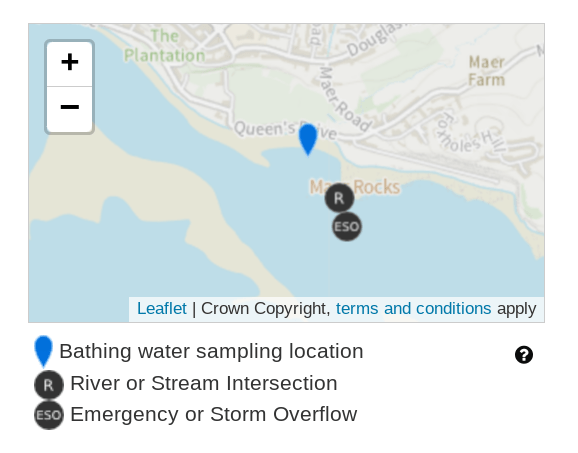
The demand from Simon Jupp, the Conservative MP for East Devon, came as the Environment Agency (EA) urged bathers not to enter the sea in Exmouth after it was alerted to a failed pumping station just 200 metres from the two-mile stretch of sandy beach.

Since 11 December, the water firm has been dealing with two major pipe bursts in the town, which has led to untreated sewage being taken by a convoy of trucks to the Maer Road Sewage Pumping Station, just 200 metres from Exmouth’s two miles of sandy beach.

Despite initially denying its Maer Road Pumping Station had failed, a spokesman for South West Water subsequently confirmed one pump at the site had failed only after being presented with photo evidence by i. However, it denied untreated sewage was being discharged into the sea.

On Friday i revealed that South West Water had been accused of dumping millions of litres of raw sewage into the popular Devon beach resort.

A spokesman for the water firm said: “At Maer Road, we have a duty pump with sufficient capacity to pump storm flows. We also have a permanently installed second standby pump should the duty pump fail.

“Because this is a critical site, we have a third pump (a standby for the standby) which we keep on site for emergencies.

“The operational pump was running normally but there was an issue with the standby and it was this standby that was being replaced. At no time was the pumping station unable to pump to full capacity.”

Despite South West Water’s insistence that the pumping station was working at “full capacity” the Environment Agency later confirmed that the site had failed.

A spokeswoman for the EA told i: “We are aware of this issue and currently investigating what has happened.

“Officers have attended the site in question and are closely monitoring activity, as well as working with South West Water to ensure their failed pumping station is back in operation as quickly as possible.”

As late as Friday evening South West Water continued to insist its emergency works were not causing a pollution incident.

In video posted on social media, John Halsall, South West Water’s chief operating officer, told residents that the firm was not pumping raw sewage into the sea.

He said: “So there’s been a lot of suggestion in social media that we are polluting, you’re on a sort of an ongoing basis. The tanking operation is making the situation worse. That is incorrect.

“On no occasion have we have we created additional environmental impact as a result of the tankering.”

However, on Saturday morning the EA urged people not to enter the waters in Exmouth due to sewage pollution the following morning.

Mr Jupp said: “South West Water have failed the people of Exmouth with more potentially illegal sewage discharges into our beautiful East Devon coastline.

“South West Water’s infrastructure suffered a catastrophic failure this week due to their lack of proper investment into the town.

“I have written to Ofwat’s chief executive to call on the regulator to open enforcement action and consider criminal actions and fines against South West Water for this failure.”

Geoff Crawford, the founder of Escape – End Sewage Convoys And Pollution Exmouth – claims that South West Water should have taken the sewage to a treatment works less than a mile away and its decision not to “indicates that they knew the sewage would go almost straight into the sea and didn’t care”.

Mr Crawford said: “They appear to have willfully polluted the sea with millions of litres of untreated sewage.”

Also on Saturday, South West Water delivered more bad news to local residents as it posted a letter through their doors.

The letter said that that while repairs to the pipes in a local park had been successfully completed there had been another failure around 600 metres away from the original burst. Local campaigners attributed this failure to South West Water’s decision to increase the pressure in the pipe that the old network could not withstand.

The letter, which apologised for the inconvenience to locals, added: “Yesterday, we successfully fitted the overland pipe which would take flows around the bursts, and allow the removal of tankers and clearing of the site ready for repair.

“Unfortunately, after setting it up, when we put flows back into the sewer, the build-up of pressure caused another burst further up the sewer.

“Our teams worked through the night yesterday and repaired this related burst. We have laid concrete around it today which will help further secure it.

“This concrete needs 2-3 days to dry fully. Once the concrete is dry, we will be able to introduce flows back into the sewer. Unfortunately, we will have to continue tankering until this is complete.”

A spokesman for South West Water said: “If an investigation is opened, we will work collaboratively with Ofwat and provide necessary information as requested by the regulator.”

Regarding the pollution highlighted by the EA the water company claimed this was due to “permitted storm overflow activation because of extensive rainfall”.

New sewer burst delays repairs at Exmouth

Work to fix a burst sewer in a Devon town has been delayed again, South West Water (SWW) has said.

Jonathan Morris BBC News South West

The utility company had been expected to fix the problem in Exmouth by Saturday, but said work was continuing after another burst.

The sewer burst on 30 December and sewage tankers have been passing through the town to a pumping station while repairs continue.

The Environment Agency has advised swimmers against going in the sea at Exmouth due to sewage pollution since the incident started.

A SWW spokesperson thanked local people for their patience.

“We successfully fitted the overland pipe which would take flows around the bursts, and allow the removal of tankers and clearing of the site ready for repair,” they said.

“Unfortunately, after setting it up, when we put flows back into the sewer, the build-up of pressure caused another burst further up the sewer.”

The repair had been fixed but would take two to three days for the concrete to dry.

“Once the concrete is dry, we will be able to introduce flows back into the sewer,” they said.

“Unfortunately, we will have to continue tankering until this is complete.”

Grant Thornton axed from top flight of audit supervision after removing high-profile clients

Accountancy firm Grant Thornton has been cut from the industry watchdog’s top tier of audit supervision after removing a number of high-profile clients.

Lars Mucklejohn www.cityam.com 

The Financial Reporting Council demoted the firm from “tier one” to “tier two” status last year, according to regulatory filings from July, which were first reported by the Financial Times today.

Firms in the lower tier are subject to inspections of their “public interest entity” (PIE) audits every three years, rather than annually.

Grant Thornton, the UK’s sixth-largest accountancy firm, removed more than 70 per cent of “public interest” clients between 2016 and 2022, including listed companies and insurers.

It audited 20 PIEs in 2022, while rival BDO had 217 PIE clients in the same period.

Grant Thornton has received several regulatory fines for audit failings in recent years, including £2.34m over collapsed café chain Patisserie Valerie.

Sarah Rapson, the FRC’s executive director for supervision, told the Financial Times that the firm’s demotion did not reflect audit quality but rather a “smaller share of the PIE market”. The regulator’s most recent audit quality report for Grant Thornton noted improvements.

Grant Thornton told the paper: “We are extremely proud of our quality results over the last three years and respect the regulator’s decision to include our firm in its ‘Tier 2’ category of supervision.

“The decision by the FRC has no impact on our audit strategy and our continual investment in audit quality.”

Big Four firms Deloitte, EY, KPMG and PwC, as well as plus BDO and Mazars remain the only “tier one” firms after Grant Thornton’s demotion.

Raising challenger firms’ share of PIEs is a major part of the government’s long-delayed promises to boost competition in the industry.

City A.M. contacted Grant Thornton for comment.

Comment on “the Only One”

From an East Devon Correspondent:-

The Only One’!

This is a recommendation for East Devon Watch readers who have not yet viewed the ITV drama, ‘Mr. Bates –vs- The Post Office’, to add this 4-part series and the accompanying 1-hour factual documentary (…The Real Story) to their ‘must watch’ list for 2024.

This series aims to, again, draw public attention to one of the greatest miscarriages of justice in British history, by focusing on the lives of a handful of sub-postmasters who were key players in bringing the ongoing Post Office Horizon IT scandal to light.

Alan Bates, a north Wales sub-postmaster, established the Justice for Sub-postmasters Alliance after being repeatedly told by Post Office officials/regulators that he was ‘The Only One’ having problems with a newly installed Post Office Fujitsu IT system. Despite this, a handful of sub-postmasters throughout the country contacted each other and quickly found that they were NOT ‘the only ones’! Witness statements presented to the public enquiry (not due to be the finalised until 2025!) repeat the same phrases over and over again – i.e. ‘I was told that I was the only one that had this problem with the Post Office IT system!’

This persisted for almost two decades, from 1999 to 2015, engulfing the lives of over 700 sub-postmasters, who were prosecuted for theft, false accounting and fraud, resulting in unjust losses of their livelihoods, termination of their contracts and businesses, bankruptcy, wrongful imprisonment, suicide and serious mental health issues at the hands of an organisation who, seemingly, paid no attention to their voices, professional opinions or pleas for assistance, preferring to continuously endorse and favour a faulty Fujitsu IT system.

Many sub-postmasters were so traumatised that they remained anonymous and some, (around 50) having now seen this week’s mass media reaction, are coming forward to add to the numbers whose lives were ruined by this shocking injustice. Such miscarriages of justice seem to take a lifetime to be fully rectified and many sub-postmasters have died never having ‘cleared their names’ or been proved not guilty.

By insisting that these Post Office employees were ‘the only ones’ to have IT problems created feelings of isolation, shame, loneliness and hopelessness for these victims, making them reluctant to publicly speak out, which contributed to the prolonged torment of this scandal for so many years. Some were stigmatised within their local communities, labelled as criminals being afraid to venture out and be confronted by finger-pointing and abuse. Those who attempted to defend themselves and fight the false accusations found it impossible to access information and evidence that could prove their innocence, leaving them with no choice but to plead guilty to ‘soften the blow’!

The public believed that The Post Office was a national trusted brand, being a prestigious company with a high reputation – but within its senior management teams there was a flawed culture that the Post Office systems were infallible, making any criticism unwelcome. In 2021 when the Court of Appeal cleared some former sub-postmasters, the Lord Justice stated that the Post Office “effectively steamrolled over any sub-postmaster who sought to challenge its accuracy”.

It seems disrespectful (even offensive) to liken or compare such a massive miscarriage of justice to any other failures experienced by the general public – but sadly too many ordinary people regularly encounter similar arrogance and lack of empathy when communicating with management teams within large powerful corporations or national and local government regulatory authorities, who, like the Post Office, are organisations that are (rightly or wrongly) nationally trusted and revered by the public.

The lessons that must be learned from this dreadful Post Office scandal are that those who hold the power to make decisions do not always get everything correct and professionals and politicians alike would do well to listen to the people in their communities who can offer sound judgments. There are volumes of community associations throughout our country who have formed to offer well-founded counsel and advice for the benefit of local communities – but too often they are rebuffed by those purporting to represent their views.

Many hundreds of local residents have lost count of the times that they have heard the phrase “You are the only one objecting to this matter”, when they have contacted organisations like their local authority environmental and planning professionals, local politicians of varying colours, the Environment Agency and South West Water regarding serious planning and environmental issues that if not addressed could have serious detrimental effects on their communities.

However, despite warnings from local communities of the consequences of building on permeable green fields in the light of future climate change, local businesses and homes are suffering devastating flooding, wading through raw sewage in their streets and homes. The privatised water authorities have failed to invest adequately in vital infrastructure to protect our homes, our communities, our beaches and our waterways, preferring to pay excessive salaries to senior managements and shareholders! Electricity power outages halt the effectiveness of the critical pumps that can barely control the flooding from excessive over-development that was granted planning permission for economic benefits, whilst disregarding the voices of the people who pointed out the fallacy of ignoring the environmental warnings.

Over a 10 year period many local environmentalists have been repeatedly ignored by regulatory authorities looking to flatter their own green credentials. When locals have recommended caution in controlling the excessive development of massive, industrial bio-digester facilities near to residential homes, they are met with the phrase ‘You are the only one who has complained’ whilst the stinking odours and intolerable noises that have blighted hundreds of residents’ lives continue unabated – but apparently decision-makers concur that the economic gains and benefits for a few local landed- gentry outweigh the detrimental social and environmental effects on the communities.

This ITV drama has certainly created a vehicle to channel public outrage, which might, hopefully, bring this dreadful sub-postmaster scandal to a hasty resolution for so many victims.

The final words are dedicated to Alan Bates and the hundreds of sub-postmasters affected by this despicable scandal and there is no doubt that local communities up and down this entire country will want to send their support, in the hope that all the victims will find comfort in knowing that they are NOT ‘The Only One’!

Charity criticises ‘crazy’ rules for flood defence funding in England and Wales

“The planning system encourages and incentivises folly,” 

“We must not incentivise any more building of houses in high-risk flood plain areas.” Local authorities responsible for those areas “must be given a pass”, rather than house-building targets which encouraged them to do “very foolish things”.

James Tapper www.theguardian.com 

People affected by this month’s floods will face the same problems in future because their communities cannot access government support, campaigners have warned.

Small towns and villages affected by floods in England and Wales can ask for flood defences and mitigation through their council or the Environment Agency (EA), but are being turned down because they cannot make a business case, according to the National Flood Forum.

Heather Shepherd, director of operations at the NFF, a charity which supports flood victims, said: “There’s a lady who’s been flooded three times in the past year in Shrewsbury. The EA and the council can’t access help for her because they have to apply for funding – and they don’t qualify.

“I just spoke to Worcestershire council and Shropshire council yesterday. They have people that flood over and over and over again, but they have no hope, because they don’t add up to make a good business case to be able to mitigate the flooding. So it goes on and on. It’s utterly crazy.”

The woman in Shrewsbury already has extensive flood mitigation measures in her home but these were not enough to cope with last week’s downpours, Shepherd said. Storm Henk soaked countryside that had already absorbed heavy rainfall from storms Babet and Ciarán in the past three months. More than 200 flood warnings across the country remained active on Saturday afternoon.

Nottinghamshire county council urged people in 10 towns and villages in the northern part of the county to consider evacuating as the River Trent was at risk of flooding.

“The River Trent has now reached a record peak at the Torksey Lock gauge in Nottinghamshire, with rising waters surpassing the historic levels set in 2000,” it warned. “This means that your communities are at an increased risk of flooding.”

David Walters, who has run Cresslands Touring Park in south Lincolnshire for the past 11 years, said it would cost £20,000 to repair flood damage caused last week. “Debris off the fields that the water has washed through is completely strewn all over everything and everything stinks to high heaven. Because there’s no running water, I can’t clean or mop anything.”

The EA warned there is also a risk of significant river flooding from the Severn around Gloucester and the Thames in Oxfordshire because of the prolonged wet weather and intense rainfall. About 1,800 properties have been flooded so far during Storm Henk.

Jeremy Hunt, the chancellor, defended government action on flooding after a National Audit Office reported that 500 of 2,000 new flood defence projects had been dropped, and the number of properties that will receive better protection from flooding by 2027 had been cut by 40%.

He said that flood protection was “a priority” and that since 2015 the government had protected nearly 400,000 homes.

“The reason the National Audit Office say that is because of the impact of inflation, and that is why our number one priority is to bring down inflation,” he said, since inflation had made projects more expensive.

Katharine Smith, flood duty manager at the EA, said that teams had been out operating flood defences and clearing watercourses. “So far, more than 45,000 properties have been protected in the last few days,” she said. “We also urge people not to drive through flood water and follow advice of local emergency services on the roads – flood water is often deeper than it looks and just 30cm of flowing water is enough to float your car.”

The government’s policy for people affected by floods focuses on resilience, which means transforming homes so that they can recover from flooding more quickly. That means installing flood-resistant doors, replacing plasterwork, having solid floors without carpets, and raising boilers and electrical devices above the high water line.

People wanting to build resilience measures can apply for a one-off grant of £5,000, or for up to £10,000 through the Flood Re government-backed insurance scheme. Shepherd said that homeowners often needed to spend as much as £70,000.

“We’re going to see this more and more, bigger and harsher floods,” said Shepherd. “Climate change is throwing up ever increasing challenges. The government is eager to tell us that investment is larger than in the past, but flooding is clearly underfunded.”

Shepherd said the NFF helpline was getting increasing numbers of calls from people who had been flooded for the first time and blamed the disaster on new housing estates built nearby.

In 2020, the thinktank Bright Blue estimated that 70,000 homes had been built in high-risk areas since 2008 and others have estimated that 5,000 to 9,000 homes a year are approved on flood zone three areas at the highest risk.

Jonathan Werran, the chief executive of Localis, a thinktank focused on local affairs, said that no single agency was responsible for addressing flooding.

“The planning system encourages and incentivises folly,” he said. “We must not incentivise any more building of houses in high-risk flood plain areas.” Local authorities responsible for those areas “must be given a pass”, he said, rather than house-building targets which encouraged them to do “very foolish things”.

Warmer winters and more flooding will be the norm in the UK, scientists warn

On Monday all “good and faithful” Conservative MPs will troop into the lobby to vote for “Maxing Out”  N Sea Oil & Gas.

Just what do they think they will be conserving? – Owl

Hydrologist Hannah Cloke has a straightforward description of the inundation that has just struck Britain. “Our decorations may have come down but the flood warning map is currently lit up like a Christmas tree.”

Robin McKie www.theguardian.com 

And the immediate cause of this mayhem is clear. A sequence of storms this autumn and winter – Babet, Ciarán, Debi, Elin, Fergus and Gerrit – have turned Britain into “a sopping wet sponge”, as the Reading University researcher put it.

Then came Storm Henk last week. Its intense rainfall had nowhere to go except to pour into our rivers, which burst their banks spectacularly across the country. More than 1,000 homes in England were flooded and some villages totally cut off, with Nottinghamshire, Shropshire, Gloucestershire and Wiltshire worst affected.

This interpretation is supported by figures from the UK Centre for Ecology and Hydrology, which last week revealed that the period between July and December in 2023 was the wettest on record for the UK. As to the reason, there is a simple explanation.

“Climate change is warming the atmosphere,” said Linda Speight of Oxford University. “A warmer atmosphere can hold more moisture so that when it rains, the rainfall is heavier and more likely to lead to flooding. In particular, we know that climate change is leading to warmer and wetter winters in the UK. We will unfortunately experience more winters like this one in the future.”

Apart from triggering increases in our atmosphere’s moisture content, other human-induced effects are contributing to increases in flooding, said Christian Dunn of Bangor University. “Nature provided us with an answer to flooding – wetlands. Marshes, bogs and fens act like giant sponges, soaking up vast amounts of rainwater during wetter months and releasing it during drier periods.”

However, Britain has dug up its peatland, drained its marshes and built on its flood plains. As a result, the nation has lost much of its natural protection from the effects of flooding. “We need to manage and conserve our country’s existing wetlands and we need to create more of them,” added Dunn.

As to the future, meteorologists say there is more – much more – to come. “Continued human-induced climate warming in future is likely to result in further increases in peak river flows, which will cause more severe flooding and impacts on people, property and public services,” said Steve Turner of the UK Centre for Ecology and Hydrology.

This point was backed by Kevin Collins of the Open University. “When it comes to planning our infrastructure, we need to do less of what we’ve always done,” he said. “We now need to be thinking about the systemic risks to our communities and economy and act to build resilience to these kinds of floods by accepting and adapting with the new normal of climate change.”

Trevor Hoey, professor of river science at Brunel University London, added: “There are parallels here with the national response to Covid-19. It is to be hoped the government is listening carefully to what the inquiry is revealing about risk preparedness.”

Feargal Sharkey briefed on Exmouth sewage pumped into sea…

…who then posted on “X”:

“Water firm drives 240 truckloads of sewage a day through town ‘to pump into sea’.”

Yep, you read that correctly.

Geoff Crawford  of End Sewage Convoys And Poollution Exmouth (ESCAPE) added a little bit more background for Feargal on the “cause and effect” of the burst sewer and the need for trucks dumping sewage into the nearest storm overflow at Maer 24/7 in case SWW might be a little “economical with the facts”:

“He’s not admitting to the fact that adding a new higher volume pump at Phear Park increased the pressure and burst the sewer. He’s also not saying that the reason they do that was to increase the sewage flow to Sandy Bay treatment works and to allow more overflows to sea. Hence the new £14m pipe line they are installing between Maer Lane and Sandy Bay. There’s a lot he’s not telling you.”

The Environment Agency shows where it’s all being dumped [In case readers really can’t believe that sewage is dumped so close to the beach – and not just at ebbing tides either!]

South West Water – it’s time for “Full Disclosure” !

Swimmers and surfers report illness after sewage spill

Swimmers and surfers have reported falling ill after going into the sea on the Sussex coast, where there has been an ongoing sewage spill for eight days.

“Naturally the intense rainfall of recent storms hitting the south coast has led to the storm overflow system operating — it’s designed to protect homes, schools and businesses from flooding.” Southern Water’s bathing water “lead”.

How well is that working? – Owl

Adam Vaughan www.thetimes.co.uk

The spill at Shoreham harbour from a storm overflow run by Southern Water began on December 28 and is still ongoing, as days of heavy rainfall overwhelm sewer capacity.

However, the water company blamed local houseboat toilets for any pollution in the harbour. It said that the firms’ modelling suggested that the overflow was not affecting water quality.

Rob Woodward, a member of a local kitesurfing club, said he had surfed at Shoreham on New Year’s Eve and suffered diarrhoea and vomiting for three days. Emma Kate, a local swimmer, said she swam in the water on the same day and experienced the same symptoms.

“I’m a school teacher which forced me to struggle through my first days back, and my wife and I had a baby due on January 4, so the sickness added to the worry of the C-section,” said Woodward, who lives in Lancing.

He added: “Our south coast could be an absolute hub for water sports, and it’s hindered by poor water quality.”

Campaigners rejected the company’s explanation. Ed Acteson, a campaigner at SOS Whitstable, which has highlighted spills around the Southern Water region in recent years, said he “simply did not believe” that a week of consecutive sewage wouldn’t have any impact. “It’s tantamount to gaslighting for them to claim that,” he said.

He added: “The idea that a few people on houseboats flushing their toilets would have a fraction of the impact of 180-plus hours of sewage from the same location is ridiculous.”

There are many sewage spills around the country due to widespread heavy rainfall from Storm Henk. Run-off into sewers has been exacerbated and the Environment Agency reported the ground across much of England as “completely saturated”.

There are reports of dozens of sewage spills in Kent, Sussex and Hampshire, plus similar numbers in Devon and Cornwall, which is served by South West Water. In Oxfordshire and around London, Thames Water is reporting scores of discharges in its region.

One town’s fight against sewage pollution

Since December 28, the charity Surfers Against Sewage said it had received 38 reports nationally of people getting sick after entering seas and waterways. Most were for gastroenteritis, which causes diarrhoea and vomiting.

At Shoreham beach, one of the two nearest official bathing waters from the Southern Water storm overflow, the charity said it had 40 sickness reports since May 2020. The figures are likely to be a considerable underestimate, as most incidents are not reported.

Alex Lipp, who maintains the website sewagemap.co.uk, said that Thames Water had almost 300 locations spilling sewage on Friday, the most since the company launched its real-time discharges map a year ago.

The Brighton branch of Surfers Against Sewage said it would be holding a protest on a beach in the harbour on Saturday to end sewage dumping there. The group noted that the storm overflow was only 100m from where people swam all year round because it was sheltered from winter waves.

Southern Water is one of only three water firms to offer a real-time sewage spills map; the other six broke a promise made to The Times’s Clean it Up campaign last year to release maps by the end of 2023.

The company, which announced last year it was spending £1.5 billion to tackle sewage spills, said it provided transparent information about transparent discharges but not health advice.

Tom Gallagher, bathing water lead at Southern Water, said: “We provide transparent data on storm overflows for users of designated bathing waters. Naturally the intense rainfall of recent storms hitting the south coast has led to the storm overflow system operating — it’s designed to protect homes, schools and businesses from flooding.

“There are many sources of pollution in coastal areas including road and agricultural run-off, animal waste, discharges from boats and other sources.”