Tories shelve pledge for everyone in UK to live 15 minutes from a green space

The broken pledge: “I am particularly pleased by our pledge in this plan to bring access to a green or blue space within 15 minutes’ walk of everyone’s homes – whether that be through parks, canals, rivers, countryside or coast,” Thérèse Coffey.

Helena Horton www.theguardian.com 

The UK government has no plans to meet its target for everyone to live within a 15-minute walk of a green space, the Guardian can reveal.

Ministers have also scrapped an idea to make the target for access to nature legally binding, a freedom of information request submitted by the Right to Roam campaign shows.

Launching the plans earlier this year, the then-environment secretary, Thérèse Coffey, congratulated herself for the idea: “I am particularly pleased by our pledge in this plan to bring access to a green or blue space within 15 minutes’ walk of everyone’s homes – whether that be through parks, canals, rivers, countryside or coast,” she said.

But in response to a freedom of information request, the Department for Environment, Food and Rural Affairs said: “No assessment has yet gone to ministers on options for how to progress towards the commitment.”

At the moment, according to government data, 38% of the country live more than a 15-minute walk from a green or blue space. The data provided to ministers also states that “in the 200 most disadvantaged lower super output areas in urban settings with the lowest levels of green space, 97% have no access to green space within 15 minutes’ walk from home”.

The documents reveal that the government rejected the idea of making the target legally binding, meaning it does not have to fulfil its promise.

Notes show that the former environment secretary George Eustice “queried the idea of a top-down target”, while Defra officials noted there were “challenges associated with setting a legally binding target”.

Guy Shrubsole, from the Right to Roam campaign, said: “A year after making their access commitment, ministers still have no idea how on earth to meet it. And having rejected setting a legal target for increasing access, the government is clearly only interested in spinning good headlines rather than improving the nation’s health and wellbeing.

“The next government needs to be bold and give the public a default right of responsible access with sensible exceptions. Without this, meeting the 15 minutes goal will prove impossible.”

A Defra spokesperson said: “We are increasing access to nature and just last week we announced an ambitious package of measures, including a search for a new national park and funding to help more children get outdoors and into the countryside, making our green spaces accessible for all communities.

“Work is ongoing to develop an approach to monitoring and evaluating our vital commitment that every household should be within a 15-minute walk of a green space or water.”

£5m toilet upgrades in East Devon

And it will cost you 40p a pee

Questions have been raised at East Devon District Council over why it is spending £5 million upgrading 15 of its public toilets.

[Because the Tories didn’t invest in maintenance/upgrades – Owl]

Will Goddard, local democracy reporter www.radioexe.co.uk

That’s an average of £333,333 per loo; about the same as an average semi-detached house in the area

Councillors have voted to start a new group to look at the plans and estimated costs of the improvements. 

In 2021, the council divided its WCs into three categories: A, B and C.   

Category A conveniences, of which there are 15, will be refurbished or rebuilt at an estimated cost of £5 million. Previously this amount was £3.4 million, but building inflation has added an extra £1.6 million to the bill. It will cost users 40p each time, which has to be met with a contactless payment card or phone.

Category B and C toilets, of which there are 12, have been offered for commercial operators to repurpose them into cafes, takeaways or community hubs – although the public must still be able to go to the loo there – and also to town and parish councils to run in place of East Devon District Council, which can no longer afford them. 

Cllr Ian Barlow (Independent, Sidmouth Town) pointed out that more money was being spent on upgrading the council’s category A loos than planned maintenance for its more than 4,000 social homes, although he did realise the funds came from different places.  

Cllr Paul Hayward (Independent, Axminster) said in response: “This council recognises that spending on the maintenance of our housing stock can only come forward via the ring-fenced housing revenue account, whereas targeted spending on… the modernisation of our no-longer-fit-for-purpose WC assets is proposed to come from our revenue budgets and capital expenditure allocations, a wholly different and legally distinct pot of money.” 

Cllr Barlow also questioned whether the council was getting good prices for the loo upgrades.  “Refurbishment of Seaton toilets is going to cost £30,000. To put up new toilets in Exmouth is going to cost £408,000,” he said.

“I’m not into cutting toilets. I really am not. I want more toilets. 

“But at the end of the day, the amount we’re spending is not value for money.” 

Cllr Eleanor Rylance (Lib Dem, Broadclyst) responded: “I really very much trust our officers to do due diligence on any contracts that they commission.  

“I don’t think we can judge in this chamber whether or not something is value for money in that respect. We’ve had several examples though of how procurement at the lowest possible price can go very badly wrong.”  

East Devon’s public toilets are ranked as follows:  

Category A  

West Street Car Park, Axminster 
Cliff Path (West End/Steamer), Budleigh Salterton 
East End (Lime Kiln), Budleigh Salterton 
Jubilee Gardens, Beer 
Foxholes Car Park, Exmouth 
Magnolia Centre (London Inn), Exmouth  
Manor Gardens, Exmouth 
Phear Park, Exmouth 
Queens Drive, Exmouth 
Lace Walk, Honiton 
West Walk, Seaton 
Connaught Gardens, Sidmouth 
Triangle, Sidmouth 
Market Place, Sidmouth 
Ham car park (new site), Sidmouth 
Categories B and C  

Orcombe Point, Exmouth 
The Maer, Exmouth 
Imperial Road, Exmouth 
Jarvis Close, Exmouth 
Seaton Hole, Seaton 
Harbour Road, Seaton 
Marsh Road, Seaton 
Brook Road, Budleigh Salterton 
Station Road, Budleigh Salterton 
Dolphin Street, Colyton 
King Street, Honiton 
Port Royal, Sidmouth
 

Johnny Mercer Gets Burned Twice In A Row By George Monbiot On BBC Question Time

Tory minister Johnny Mercer faced a withering response – twice – after clashing with writer and activist George Monbiot on BBC Question Time over the government’s record on climate change.

Graeme Demianyk www.huffingtonpost.co.uk 

Appearing on the broadcaster’s flagship politics show, which this week came from Petersfield, the pair clashed amid recent questions over Rishi Sunak’s commitment to the environment.

The prime minister was criticised for spending just 11 hours at the COP28 climate conference, though he argued the UK has a better track record than any other major economy in decarbonising.

Yet he has faced a backlash for scaling back a host of pledges designed to help the UK reach net zero by 2050 and vowed to “max out” the UK’s oil and gas reserves by granting new North Sea drilling licences.

After facing criticism on the BBC show, Conservative MP Mercer claimed that the government had made “extraordinary progress” on climate change.

But Monbiot responded: “No, extraordinary progress has not been made under this government. It has deliberately trashed some of the progress even that was made under Boris Johnson’s government.

“There are such simple things we could do. For example, the government is currently spending £78 billion across two years in subsidising people’s energy bills. But for £8 billion it could insulate the three million homes most in need. Greatly cutting people’s bills and greatly cutting our emissions.

“We now have a situation where renewables are much cheaper than fossil fuels but the government is deliberately trying to lock us into fossil fuels, not for the sake of the people of this country, not to cut our bills, it does exactly the opposite, for the sake of the oil and gas industry. The Tory party has taken £3.5 million in donations from polluting industries. This is the quid pro quo.”

Mercer then asked: “Do you honestly sit there and think that in Number 10 every day, the prime minister and the government wake up and think, we are just going to torch the world?”

Monbiot replied: “Yes, roughly.”

He added: “They just don’t care. The fact is they don’t care. Sunak flew to COP28 in a 200-seater jet, but he was the only minister who flew in that jet. Other ministers flew in a separate private jets.

“He doesn’t care. He treats this whole country like a flyover state, going backwards and forwards in his helicopters and private jets.”

Monbiot also picked apart the “sadistic” government’s Rwanda deportation policy, arguing the driving force was to “performatively beat up some of the most vulnerable and traumatised people on earth”.

East Devon councillors get 20 per cent pay rise

But it’s the first in 15 years.

“We really need to encourage younger people to come forward to stand for election regardless of their political affiliations. This is a move I believe in the right democratic direction.” Eileen Wragg

Another legacy problem tackled. – Owl

East Devon councillors have given themselves a 20 per cent pay rise. 

Will Goddard, local democracy reporter www.radioexe.co.uk

They are called ‘allowances’, not salaries, and the basic annual rate has gone up for the first time since 2008 from £4,360 to £5,260. 

Additional payments for special responsibilities have also risen, such as the council leader’s allowance on top of the basic rate, which is up £56 to £14,477, and the leader of the opposition’s, which has risen by £907 to £4,928.  

Cabinet portfolio holders will also see a rise of £726 to £6,910 to their special responsibility allowance and the chair of the overview committee a rise of £1,787 to £3,797, amongst others. 

Councillors voted to accept the figures suggested by an independent panel this week. 

Every council relies on a remuneration panel, completely independent of the council, to work out how much members get. 

Cllr Alasdair Bruce (Independent, Feniton) was worried about how the public would see the rises.  He said: “I think we all know realistically this is going to be a hard sell and it’s partly our own fault because we’ve let this slide for so long.” 

Cllr Eileen Wragg (Lib Dem, Exmouth Town) was pleased with the increases. 

She said these changes are long overdue. “I think what a lot of members of the public don’t realise [is] that we are actually taxed on these allowances and they are allowances. They’re not salaries, they’re not wages.  

“We really need to encourage younger people to come forward to stand for election regardless of their political affiliations. This is a move I believe in the right democratic direction.” 

But Cllr Roy Collins (Liberal Party, Honiton St Michael’s) was concerned younger people would not be able to afford to serve as a councillor.  

He said: “I’m the Liberal Party nomination officer for the south west. I wouldn’t dream about trying to get working people to stand for this council for such a low amount of money. 

“My son, if you wanted him to stand for the council, he couldn’t survive on that little pittance. He’d want at least minimum wage. 

“I’ve studied this council since it was formed. And in the early days we had… lots of business people, factory owners, several hoteliers were on this council. I don’t believe there’s any now. 

“Half the council was made of farmers. I’m the only farmer left. Farmers can’t afford it. I’m struggling to come here. I was paying a man £60 to milk the cows so I could come here.” 

The basic allowance rise will be backdated to last May’s election, and the special responsibilities allowances to 1 June 2023.  

From next year, the allowances will go up annually and will be reviewed every four years. 

A correspondent remembers Zephaniah

A Correspondent remembers Benjamin Zephaniah:

The British


Take some Picts, Celts and Silures
And let them settle,
Then overrun them with Roman conquerors.

Remove the Romans after approximately 400 years
Add lots of Norman French to some
Angles, Saxons, Jutes and Vikings, then stir vigorously.

Mix some hot Chileans, cool Jamaicans, Dominicans,
Trinidadians and Bajans with some Ethiopians, Chinese,
Vietnamese and Sudanese.

Then take a blend of Somalians, Sri Lankans, Nigerians
And Pakistanis,
Combine with some Guyanese
And turn up the heat.

Sprinkle some fresh Indians, Malaysians, Bosnians,
Iraqis and Bangladeshis together with some
Afghans, Spanish, Turkish, Kurdish, Japanese
And Palestinians
Then add to the melting pot.

Leave the ingredients to simmer.

As they mix and blend allow their languages to flourish
Binding them together with English.

Allow time to be cool.

Add some unity, understanding, and respect for the future,
Serve with justice
And enjoy.

Note: All the ingredients are equally important. Treating one ingredient better than another will leave a bitter unpleasant taste.

Warning: An unequal spread of justice will damage the people and cause pain. Give justice and equality to all.


Does this “internal NHS market” produce sensible decisions? 

On March 9, 2020, days after Prof Chris Witty told MPs that we can no longer contain Covid-19 and must move into the delay phase, Owl reported Claire Wright’s concerns over:  “More deep cuts loom as Devon’s NHS must save over £400m by 2024”.

Now we have:

Health bosses to offload Okehampton’s empty hospital ward (as well as Seaton)

It could save £215,000 a year.

[Owl questions the use of the word “Save” in this context – this is an internal transfer between two parts of the NHS in budget deficit.]

Devon’s health bosses want to hand back an empty ward at Okehampton hospital to its landlords after claiming it has cost the local NHS more than £1 million over six years.

Bradley Gerrard, local democracy reporter www.radioexe.co.uk 

A report by the Devon Integrated Care Board suggests the county’s NHS could save around £215,000 per year by returning the ward to NHS Property Services, which owns the health service’s properties and rents them back to local trusts.

With Devon’s NHS ending the most recent financial year with a £46 million deficit, the trust’s bosses are desperately searching for ways to save money.

The county’s health board is in special measures, meaning Devon gets intensive support from NHS England.

The NHS in Devon has a £212 million savings plan, but its December board papers show it is £32.5 million adrift from where it expected to be.

The plan to jettison the Okehampton ward comes shortly after it emerged that the NHS in Devon is also seeking to hand back a ward at Seaton Community Hospital.

However, local opposition there has been vocal, with Richard Foord MP (Lib Dem, Tiverton and Honiton) raising the issue at Prime Minister’s Questions in parliament.

Beds at the ward in Okehampton were removed in 2017 when the clinical commissioning group agreed to retain inpatient beds at Sidmouth, Exmouth and Tiverton community hospitals, but to close them in the West Devon town, as well as at Seaton, Whipton and Honiton.

Around the same time, ownership of the hospitals moved to NHS Property Services, which charges a market rent even on empty space.

Devon’s NHS said a consultation at the time about the changes to these hospitals, entitled Your Future Care, involved 70 events and public meetings attended by more than 2,000 people. It received more than 1,500 responses  to it survey, along with 650 letters, but didn’t indicate the balance of views expressed, meaning it is unclear whether people supported or opposed the plans.

The report said the NHS in Devon hadn’t received a viable scheme so beds could return to the Okehampton ward, and the cost of bringing it back into a usable condition would be significant.

“Faced with ongoing stark financial challenges, we have started the process of surrendering this space so we can save the money being wasted,” the report said.

“On 28 November, we took a decision which effectively means we are in the process of handing the former ward area – made up of the empty ward, associated link corridors and ancillary space – back to the owner of the building, NHS Property Services.

“Based on local discussions and our experience, we do not anticipate that local voluntary, community and social enterprise organisations would be able to take on the ward space.”

It added that it would still be talking to local organisations to confirm they were not able to take on the space, and would also be consulting them on how best to use the rest of the hospital that remains in use now.
 

‘Significant work’ for Devon’s health service to exit special measures

Devon’s health leaders aren’t confident they can get out of special measures by the target date they have been set.

Bradley Gerrard www.midweekherald.co.uk

The county’s leading health professionals told the Devon Integrated Care Board (ICB) that it could “not provide assurance of meeting the target exit date by Q1 2024/25”.

At its December meeting, the ICB, chaired by doctor and former Totnes MP Sarah Wollaston, heard that Devon’s health and care sector is on target to meet just two of nine criteria it has to hit to exit the NHS Oversight Framework, or NOF.

Devon is under NOF4, the most serious level, also referred to as being in special measures.

Bill Shields, interim chief executive and chief financial officer of NHS Devon, told the meeting at County Hall in Exeter that the health system had a “significant amount of work that needs to be done”.

“If you look at the current financial performance, we are not where we need to be,” he said.

He noted that this year had been challenging for a variety of reasons, including industrial action by junior doctors, and that next year will be similarly challenging for the whole NHS.

A report by Mr Shields showed Devon’s health service reporting a year-to-date deficit of £75 million against a planned deficit of £39 million, up nearly three-quarters compared to the previous month.

Stubborn costs, industrial action, a shortfall in pay award funding, and a year-to-date overspend on drugs at some hospitals were listed as some of the reasons.

Devon NHS has made nearly £90 million in efficiency savings in the current financial year, but it is targeting a total of £212 million.

Mr Shields said NHS Devon is moving to a single central office at Exeter’s Pynes Hill this month, which will help reduce annual running costs by approximately £500,000.

He added that all non-clinical posts would “not be filled by default”, but that a detailed process could be conducted if a case is made for a post to be filled.

Allison Williams, system improvement director for NHS Devon, welcomed the ICB’s commitment to helping improve the situation.

“The seriousness with which the board needs to take this is well understood,” she said.

“As part of the reset, it is timely to remind ourselves of the reason why I’m here as part of mandated support.”

The ICB is made up of members from the NHS Devon executive as well as non-executive members, and members from other organisations, such as Devon County Council’s leader Donna Manson.

Its purpose is to ensure high quality heath services and robust financial management.

Devon hit with dozens of pollution alerts

Devon has been hit with dozens of sewage pollution warnings today (Thursday, December 7). An interactive map published by environmental action group Surfers Against Sewage (SAS) claims 26 of Devon’s beaches could be contaminated with sewage.

What about the rivers?  – Owl

Molly Seaman www.devonlive.com

South West based SAS monitors the water quality across 47 beaches in Devon, meaning roughly 55 per cent could be polluted. According to SAS, a pollution alert means “storm sewage has been discharged from a sewer overflow in this location within the past 48 hours”.

The current warnings in place affect the south and east coast of Devon, with Torbay, Exmouth and Plymouth the worst affected. Around Woolacombe there is some pollution too, but the north coast seems to be faring better than the south.

The main contributing factor to polluted beaches is urban runoff, which sees fertilisers, pesticides, oil, and untreated human and animal waste all entering waterways, such as rivers. These harmful contaminants then eventually end up at our beaches. South West Water and other water companies are allowed to let their combined storm overflows (CSO), which combine household sewage with surface run-off, open into the sea when overwhelmed by heavy rain.

Swallowing water that could be contaminated with poo could lead to gastroenteritis, hepatitis, giardiasis, skin rashes, amoebic dysentery, nose, ear, and throat problems, pink eye, and other respiratory illnesses. Symptoms to look out for include nausea, vomiting, diarrhoea, cramps, inflamed stomach and intestines.

Devon beaches hit with sewage alerts:

  • Seaton
  • Beer
  • Sidmouth Town
  • Budleigh Salterton
  • Sandy Bay
  • Exmouth
  • Dawlish Town
  • Dawlish Coryton Cove
  • Teignmouth Holcombe
  • Shaldon
  • Meadfoot
  • Beacon Cove
  • Torre Abbey
  • Paignton Preston Sands
  • Goodrington
  • St Marys Bay
  • Dartmouth Castle and Sugary Cove
  • Mill Bay
  • Salcombe South Sands
  • Thurlestone South
  • Mothercombe
  • Wembury
  • Firestone Bay
  • Plymouth Hoe East
  • Plymouth Hoe West
  • Woolacombe Village

‘Bring it on’: Labour vows to fight Tories’ ‘degradation’ of nature in race for No 10

Labour will take on vested interests from water companies to housebuilders and farmers in an effort to restore the UK’s degraded natural environment, the party’s environment chief has said.

Fiona Harvey www.theguardian.com 

Steve Reed, the shadow environment secretary, said: “If the Tories want to have an election fight over that, bring it on, because the British people care about the countryside, they care about nature. They care about living in a beautiful country. They value their access to the countryside. The Conservatives are on the wrong side of all that, and to many, many voters that will tip their votes.”

Vested interests had provoked a sewage crisis in the UK’s waterways, he said. “The government has formed a coalition between the Conservative party and rogue water bosses.

“They are allowing these companies to illegally exploit our waterways by filling them up with record levels of sewage, illegal discharges of sewage, in order to boost their profits. Then the water bosses take huge levels of bonuses as a result of these boosted profits.”

The Tory approach to housebuilders also verged on corruption, he added. Labour exposed this when the government tried to weaken nutrient neutrality rules in August, in plans that would have given housebuilders carte blanche to build without considering the impact of sewage from new houses.

“[They have] a cosy relationship with developers, who became the biggest source of donations to the Conservative party. And then, frankly some decisions … where planning permission was granted for inappropriate developments when the developer was donating to the Conservative party.”

Labour would take a firm line with all vested interests, he said. “We’re not only going to stop that from happening in future but we will go back and get some of that money [for instance from Covid contracts], as much of that money back as we can so that we can invest it. Public money should be spent for the public good, not private gain.”

Protecting nature is not just essential, it is a vote winner, Reed believes.

“The Conservatives have increasingly been positioning themselves against nature. They have not just tolerated but encouraged the degradation of nature,” he told the Guardian in his first high-profile interview since his appointment by Keir Starmer in September.

“They are on the wrong side of the public, as well as the wrong side of history. When it comes to nature, we are the conservers, not the Conservatives.”

Reed is acutely aware that Labour must make huge gains in rural and semi-rural constituencies if it is to win a majority at the general election, expected next year.

Tony Blair won a landslide in 1997 by taking a majority for the first time for Labour in rural, semi-rural and coastal seats, and again in 2001, but since then the party’s support in such areas has waned.

The Liberal Democrats have made big byelection gains, overturning huge Tory majorities largely through a strong focus on green issues such as the pollution of waterways.

Labour has been viewed by many political observers as quieter on nature issues, and conservation groups have been pushing the party for more action.

Reed said nature protection was the “opposite side of the same coin” as the climate crisis and net zero. Viewed in parliament as an attacking politician, his instincts are to bring the fight to the Tories. He was said to be instrumental in controversial ads attacking Rishi Sunak this year, and his appointment was widely seen as a sign that Starmer was attempting not to cede the initiative to the Lib Dems on green issues such as sewage, nature and housebuilding.

“Keir wants us to make a bigger offer on nature and coastal issues,” he said. “Labour’s path to victory runs through rural communities. We need them to win, then govern effectively. But this is not just a political case, it’s a moral one.”

He takes it personally, he makes clear. “We shouldn’t be totally dispassionate in politics, I think you’ve got a right to be angry,” he said. “You’ve got to channel it into making a better offer for how our country can meet the aspirations that the British people have for it, that these Conservatives have totally abandoned.”

Rural people face some of the worst poverty and deprivation in the country, he noted, but it is rarely considered. Rural areas frequently lack transport, broadband, access to healthcare and other basic amenities that cities take for granted, and a lack of jobs, investment and affordable housing has held people back, Reed argues.

“We must expose the horror that the Conservatives have inflicted on our rural communities. They have left working families who live in the countryside facing low pay and rising poverty, inadequate public transport and the destruction of good local jobs,” he said.

Some of Reed’s positions are likely to bring him into conflict with farmers. British rivers are dying not just because water companies fill them with sewage, but also because of pollution by farmers, who the Guardian has revealed are barely inspected owing to savage budget cuts at the Environment Agency.

Conservationists are also likely to object to Labour plans to build on the green belt, though Natural England chief Tony Juniper told the Guardian last month that it was possible to build on green belt land and improve conditions for wildlife and nature.

While Labour has announced plans to deny bonuses to water bosses over sewage, promised support for farmers and set out plans for a new Clean Air Act, important policy areas are still blank or lacking in detail. Pledges such as improving the UK’s flood defences and planting trees will need to be backed up with new cash.

Reed has also little to say yet on rewilding and species reintroduction, and has not yet taken a view on whether to restrict or ban wood-burning stoves, which are now responsible for about a third of the UK’s air pollution despite being owned by only 8% of households.

Cornwall faces crisis as Brexit replacement cash runs out

The Conservative’s promise to match EU funding post-Brexit has been exposed as a ruse after Cornwall Council said it has been left with a “devastating” shortfall that will communities reeling.

Jack Peat www.thelondoneconomic.com 

The money the council receives from the government to replace EU grants lost following the split with Europe is set to run out in under a month’s time, it has been reported, leaving more than millions of pounds worth of fund applications by communities and businesses unmet.

In 2021, the government confirmed that “total funding through the UK Shared Prosperity Fund (SPF) will at a minimum match the size of EU funds in each nation and in Cornwall each year” and it was estimated that “no worse off” equated to an average of £100 million a year for the Duchy until 2025, with an additional three years to complete the spend of the investment.

In reality, Cornwall has received around £43 million a year.

“Devastating”

Speaking to the BBC, Tim Dwelly, Cornwall Council’s shadow cabinet member for economy, described the expected shortfall as “devastating”.

“The applications from Cornish community groups and businesses were for almost three times the amount Cornwall got”, he added.

Independent councillor and former leader of Cornwall Council Julian German said: “It’s very sad that this isn’t happening as it will harm people’s prospects and the vitality of our communities.”

Conservative councillor Linda Taylor, leader of Cornwall Council, said she had written to the government to highlight the importance of an extension to the SPF programme beyond 2025.

A Cornwall Council spokesperson said: “We await confirmation from the government of how and when the next tranche of funding after 2025 will be delivered, and we will continue to push for a fair deal for Cornwall and the Isles of Scilly.”

Council finances

Councils at large have warned that the risk of financial failure has increased due to the Government’s lack of support in the autumn statement, while others said they may not be able to fulfil their legal duties.

With Levelling Up Secretary Michael Gove due to give evidence to MPs on council finances on Wednesday, two surveys of senior local government figures suggest the sector is on the brink of escalating operational distress.

A survey by the Labour-led Local Government Association (LGA) found one in five council leaders and chief executives believe it is very or fairly likely that their chief finance officer will need to issue a section 114 notice this year or next, in an admission that the annual budget cannot be balanced as required by law.

Half of respondents said they are not confident they will have enough funding to meet their legal duties after no further money was provided by the Chancellor.

This includes statutory services such as social care and support for the homeless.

Mixed progress on Hospital in meetings with Sarah Wollaston and NHS Devon

The Seaton Hospital Steering Committee had a private meeting with NHS Devon yesterday

Martin Shaw seatonmatters.org /

Kirstine House, the CEO of the League of Friends, Cllr Paul Arnott, Leader of EDDC, Jack Rowland and I met with Dr Sarah Wollaston and her colleagues from the NHS Devon’s Integrated Care Board yesterday. 

  • They are proceeding with the transfer of the wing to NHS Property Services on 31 December, but it may take up to 2 years for Property Services to come to a final decision, giving us time to work up our plans.
  • Dr Wollaston accepted that they still have a “moral responsibility” for the future of the hospital and the threatened wing – I think all those letters you wrote had an effect.
  • NHS Devon agreed an action plan with us in which, in addition to giving us the practical and financial information that we have asked for, they will work with us to facilitate our negotiations with Property Services. 

We presented our petitions to NHS Devon at their public Board meeting this morning:

We gathered an incredible 9,150 signatures in barely 3 weeks from a local population of under 15,000. I presented them to Dr Wollaston at County Hall today – Spotlight and ITV West Country News were there, so watch tonight! Thanks to all who signed and, especially, those who leafleted, collected signatures and gave their time to come to Exeter. Dr Wollaston acknowledged the huge community feeling which we have shown in recent weeks.

  • I also asked questions and commented at their Board meeting: watch at https://www.youtube.com/watch?v=_-NRi1_6f0M (first 4 minutes).
  • Dr W publicly stated: “we will definitely be working with you as we work with NHS Property Services”.

Next steps: (1) Our Steering Committee will be meeting on Thursday 14th December to discuss how to develop our plan for the space in question. (2) Supporters are invited to a Christmas social evening at the Old Picture House, Harbour Road, at 6.30 on Wednesday 13th December – please email me if you are thinking of coming, so that we have an idea of the numbers. (3) The issue comes back to the Devon Health and Adult Care Scrutiny Committee on 24th January, which should receive reports from NHS Devon and Property Services.

Simon Jupp on “the wrong side of history”

On Monday Rishi Sunak suffered his first defeat in the commons with his attempts to delay compensation payments to victims of the haemophilia scandal who were given blood donated – or sold – by people infected with HIV and hepatitis C.

The Chair of the Haemophilia Society said the  government stance was “on the wrong side of history”; a ‘huge error’ and hailed the Commons defeat as ‘victory for democracy’.

Simon Jupp dutifully voted with the defeated government

After 4 years Simon Jupp wakes up, but not to the smell of coffee!

(The Home Secretary has a succinct way of describing what he smelt)

A Conservative MP [Simon Jupp] from Devon has accused South West Water (SWW) of carrying out “potentially illegal sewage spills”.

Despite making this accusation, our brave MP failed to follow through. He did not support a LibDem amendment to the compensation bill for victims bill on Monday which would have allowed people who fall sick due to illegal sewage dumping to claim compensation.

It was blocked by 250 Conservative MPs, letting water companies off the hook once again. – Owl

Brodie Owen BBC News, South West

East Devon’s Simon Jupp said the firm released sewage into bathing waters at Sandy Bay in Exmouth and the River Sid in Sidmouth on Monday.

The Environment Agency (EA) confirmed there was a “non-compliant” sewage spill for 90 minutes following a power cut at a sewage plant near Exmouth, while an open inspection cover led to sewage being discharged into the River Sid.

SWW chief executive Susan Davy apologised for the impact on bathing waters.

Mr Jupp said the EA had informed him about “potentially illegal sewage spills in my constituency”.

“SWW have questions they need to answer urgently about these spills,” he said.

“The particular one of concern is into Sandy Bay … this is not good enough.

“We need to look into that and there needs to be a full investigation.”

‘Exceptionally wet’

In a letter to Mr Jupp seen by the BBC, Ms Davy said she was “deeply sorry” for the impact on bathing waters.

She said the incidents occurred during an “exceptionally wet few days” and they would be “thoroughly investigated”.

“The recent wet weather has put pressure on all infrastructure, including the electricity supply we receive,” she said.

“Whilst we have electricity generator back up, a power blip impacted the operational control system.

“The team immediately mobilised, and it took 90 minutes before we could rectify the system issue.”

The EA said a power cut at the Maer Lane Treatment Works, near Exmouth, prevented the normal operation of the plant and led to sewage discharge that “did not meet permitted conditions”.

It said a separate spill in the River Sid was caused by an inspection cover at Eastern Town being lifted in heavy rainfall.

The authority had warned swimmers against swimming in the two areas after the “non-compliant spills”.

“This advice has now been removed as two high-tide cycles have passed since SWW confirmed the sewage discharge has stopped,” it added.

“This is expected to provide sufficient dilution to reduce the potential increased risk.”

‘Difficult to comprehend’

Geoff Crawford, from End Sewage Convoys and Pollution Exmouth, highlighted that there had already been permitted discharges in the area outside of the two incidents.

Sewage companies are allowed to use overflow valves when systems become overwhelmed.

Mr Crawford said: “It means there was additional untreated sewage in the sea, but there is a much larger overflow taking place.

“To be permitted to [discharge] for well over 48 hours … is difficult to comprehend.”

Other comments on Simon’s twitter post include:

Latest on SEATON HOSPITAL protest at County Hall

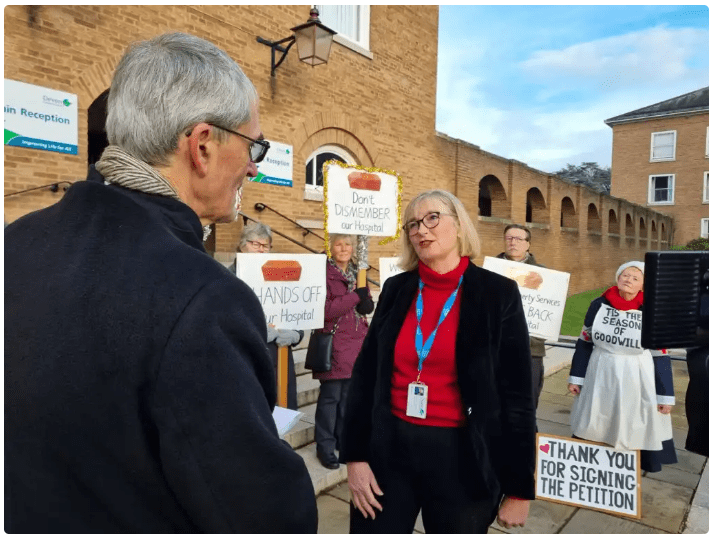
Latest on SEATON HOSPITAL protest at County Hall … campaigners dressed as nurses will join me when I present our 9,151-signature petition to Dr Sarah Wollaston, Chair of Devon NHS, on the steps of County Hall, Exeter at 9.30 THIS MORNING.

BELOW is the letter I shall give to her with the petitions

Martin Shaw

Secretary, Seaton Hospital Steering Committee

UK has lacked coherent economic strategy for years, thinktank finds

For years the British government from the prime minister down has lacked a coherent economic strategy, according to a thinktank’s health check of UK prospects.

Phillip Inman www.theguardian.com 

“We are not on course towards setting any such strategy – indeed, we are not serious about the task,” says the report, titled “Ending Stagnation – a new economic strategy for Britain”.

Funded by the independent Nuffield Foundation and pieced together from original research by the Resolution Foundation thinktank and the Centre for Economic Performance at the London School of Economics, the report is forgiving of politicians who have faced a succession of global shocks, from Covid to the Russian invasion of Ukraine.

However, the authors document a series of failures that have left the UK as a laggard among G7 economies and ill-prepared for the task of providing a decent standard of living for most people in the years ahead.

The economy

Rather than creating an economy where the number of high-skilled jobs is on the rise, the report says workers will be £470 worse off by the end of the decade. This loss comes after 15 years of flatlined wages, costing the average worker £10,700 a year in lost pay growth compared with the pre-financial crash trend.

A loss of international trade is one reason cited for the lack of growth, which the report partly blames on Brexit.

By 2023, UK trade as a share of annual national income was down 2.2 percentage points on pre-pandemic levels. This compares with a rise of 0.5 points across the rest of the G7.

A loss of market share across EU and non-EU markets, including the US, Canada and Japan, is to blame, said the report. With a loss of trade comes a decline in high-skilled jobs, it adds.

“UK manufacturing will change rather than grow, as high-productivity sectors like chemicals and electronics shrink even as lower-productivity food manufacturing expands,” says the report.

“Wages in London, Wales and the north-east will be hardest hit by the resulting decline in productivity, which, across the country as a whole, means workers will be £470 worse off by the end of the decade.”

Cities

Only a handful of cities have successfully made the transition to a services economy. All England’s biggest cities bar London have productivity levels below the national average.

“A strategy to turn this around is what an industrial strategy in a service-dominated economy looks like,” says the report. “This is not a strategy for the few; the UK may be a ‘green and pleasant land’, but 69% of the UK population live in cities or their hinterlands, compared with 56% in France and just 40% in Italy.”

Easing the pressure from sky-high interest rates could come from raising the Bank of England’s inflation target to 3%. This would mean interest rates could begin to fall next year, easing pressure on mortgage holders and the Treasury, which has about a third of its loans with the central bank.

A wealth tax would also ease the pressure on the government’s finances and allow ministers to reward work rather than the hoarding of assets.

Council tax should be reformed and the burden increased on higher-value homes, allowing stamp duty on property sales to be permanently cut on low- to mid-priced homes.

Poverty

The share of the public citing poverty and inequality as one of the most important issues facing the country has risen sharply, from 7% in 2010 to 19% immediately before the Covid pandemic.

The report says a toxic combination of low growth and failure to shift the highest levels of inequality among any large European country has contributed to the lack of progress on living standards for lower-income households.

Cuts to benefits under the post-2010 austerity drive of Conservative-led governments have also fuelled poverty. The report says benefit levels have failed to keep pace with prices in 10 of the past 15 years. Along with wider cuts since 2010, this has reduced the incomes of poorest fifth by just under £3,000 a year.

If the policy measures recommended by the report were adopted, relative poverty would be cut by 1.3 million people rather than increase by 1.1 million, as currently projected.

Intergenerational

Young adults have seen generational pay progress grind to a halt, according to the report, highlighting how those born in the early 1980s were almost half as likely as their parents’ generation to own their own home by the age of 30.

After 15 years of average wages after inflation remaining almost stagnant, it says almost 9 million younger Britons have never worked in an economy that has sustained rising average wages.

Meanwhile, almost a third of young people in the UK are not receiving any education by the age of 18, compared with just one in five in France and Germany.

As a result, the report says, improvements in household disposable income from generation to generation – something that was taken for granted throughout the second half of the 20th century – have slowed or ground to a halt. The average income for those born in the early 1980s is almost £1,400 lower at 30 than those born 10 years earlier.

Don’t Panic: Deputy PM says stock up on torches, candles and first aid kits

They’re “analogue capabilities that it makes sense to retain”.

On the essential commodity of food we have already had Thérèse Coffey’s emergency advice: “let them eat turnips”.

“People should stock up on battery-powered radios and torches, as well as candles and first aid kits in order to prepare for power cuts or digital communications going down, the deputy prime minister reportedly said.”

Don’t forget the turnips! – Owl

Jamie Grierson www.theguardian.com 

According to the Times, Oliver Dowden described the supplies as “analogue capabilities that it makes sense to retain” in a digital age during a visit to Porton Down, the UK’s military laboratory.

Dowden made the visit to coincide with his first annual risk and resilience statement, which he had promised to give last year when launching the government’s UK resilience framework.

As part of the statement, he announced the launch of a national “resilience academy” to help people and businesses prepare for future pandemics, natural disasters and cyber-attacks.

The deputy prime minister announced the plans in the House of Commons, claiming the academy would help the “whole of society” prepare for the risks.

Dowden listed Russia’s invasion of Ukraine, cyber-attacks, pandemics, the misuse of artificial intelligence and extreme weather among some of the risks the UK faces.

He said businesses would be offered training to deal with the impact of such threats, while a new website will provide the public with “practical advice” on how to be better prepared for future risks.

He told the Commons: “The government has a role in bringing all actors together and to give them the skills they need. Today, I can announce we are developing a new UK resilience academy that will improve the skills of those groups.

“It will provide a range of learning and training opportunities for the whole of society. For professionals, there will be a curriculum to build skills, knowledge and networks, and a centre for excellence for exercising. For businesses, there will be greater guidance and particularly assistance on threats to critical national infrastructure and cyber.

“And for citizens, there will be a unified government resilience website, which will provide practical advice on how households can prepare as part of a campaign to raise awareness of the simple steps individuals can take to raise their resilience.”

Dowden also said the government would develop a volunteer hub aimed at helping authorities draw on a single pool of volunteers who want to help in future events similar to the Covid pandemic, which he said “demonstrated the overwhelming community spirit” of the UK.

The Labour frontbencher Pat McFadden welcomed the measures but asked what the government was doing to bolster resilience in energy supplies and the “public estate”, as well as in elections.

He said: “Why is it that the government’s new policy is to roll back on the transition mandated by its own legislation for net zero, and prolong a reliance on international fossil fuel markets? For these failures, the British public has paid a heavy price.

“And how will the government increase resilience in the public estate? Schools’ capital budgets cut back under this prime minister’s watch while he was chancellor. School roofs falling in, disrupting children’s education.”

He also pressed ministers to implement recommendations of parliament’s intelligence and security committee, aimed at preventing Russia and other states from interfering with upcoming elections.

McFadden said: “With an election coming some time in the next year, I am sure the secretary of state would agree that we need to do all we can to ensure it is conducted in a free and fair manner.”

The deputy prime minister reminded the Commons that an election could be held in January 2025 at the latest.

Dowden said: “Indeed it is not just in this nation, in many nations around the world next year – or indeed in this nation it could be the year after – elections will happen.

“That is why we have instructed the democracy taskforce to make sure we are fully resilient.”

New town with 8,000 homes set to be built in East Devon

Background. The 2013 Tory administration set East Devon an eighteen year target to build a minimum of 950 houses/year (17,100 in total by 2031). This forms the basis of the latest government imposed targets. 

Under government rules, EDDC also has to ensure a five year rolling plan to supply these houses. In 2020 Covid, unsurprisingly, resulted in a fall in housing completions and EDDC now has to play catch-up. _ Owl

Will Goddard www.sidmouthherald.co.uk 

A new town in East Devon with 8,000 homes is to be built near the Devon County Showground at Westpoint.

East Devon district councillors have decided it is the best place for the settlement, which comes around 12 years after spades went in the ground at Cranbrook, around six miles away.

The new development will be on land between Exeter Airport and Crealy Theme Park, and 2,500 homes are expected to be constructed by 2040. 

It is south of the A30 and north of the A3052, roughly west of Farringdon and east of Westpoint. 

Councillors had three options, all within a small area at the western part of East Devon, but this location is seen as the most viable.

The chosen option on land to the north of A3052. (Image: East Devon District Council) 

Cllr Geoff Jung (Lib Dem, Woodbury and Lympstone) thinks a new town is better than more development in existing communities. He said: “We are required by government to build 910 dwellings a year.  

“A self-contained new community would be able to provide all the required facilities and connecting infrastructure in one location at a more acceptable cost, without the need to upgrade our district infrastructure throughout. 

“Our already-failing infrastructure could not support our existing communities to grow substantially without the required increased education, health, utilities, sewage infrastructure, plus transport links that would be required spread throughout rural East Devon. 

“Two thirds of our district is in protected landscapes. Plus, we have a heavily protected world heritage coastline, numerous floodplains and estuaries, so we have little choice. 

“The only way to go is to complete Cranbrook new town and to build another community as well.” 

The new town of Cranbrook is located six miles away. (Image: Chris Mills/Still Imaging) (Image: Archant)

But Cllr Jess Bailey (Independent, West Hill and Aylesbeare) said: “This is our open countryside, and our villages, which has evolved over hundreds and thousands of years. And we’re about to radically change it.”

She continued: “We’re being presented with it as being a really positive option because we won’t have to have estates on the outside of our towns, but we’re already getting estates on the outside of our towns.” 

Councillors also had concerns about a potential impact on traffic in the Exeter area. 

Cllr Kevin Blakey (Independent, Cranbrook) said: “It is going to be a dormitory for the city of Exeter, so transport is going to be a big issue there.  

“One of the worries for me is that the only option for transport is the road. There are no railway lines that are near it or can get near it, ever will get near it, unlike Cranbrook.” 

Cllr Olly Davey (Green, Exmouth Town) spoke about how although many do not want more houses, some do.  

He said: “If you ask people in East Devon if they want to see further development, they’ll say no. Why would they? They’ve got a home. It’s only the people that are desperately still trying to find a home in East Devon who want to see further development.”  

Plans for the new town will now be developed further, and another public consultation is planned towards the end of next year. 

Breaking: Seaton Hospital Campaign presents 7,000 petition to Sarah Wollaston Tomorrow 9:30 am, County Hall 

From: Professor Martin Shaw (secretary, Seaton Hospital Steering Committee)

The campaign to save Seaton Hospital’s threatened wing comes to the Devon NHS’s Integrated Care Board meeting in Exeter tomorrow morning.

  • I will PRESENT PETITIONS, signed by over 75% of the adult population in the Seaton area, to Dr Sarah Wollaston, Chair of Devon NHS, on the steps of County Hall at 9.30.
  • Other campaigners will be supporting me with placards.

We will then go into the ICB meeting at 10.30, where THE BOARD WILL ANSWER QUESTIONS which we have submitted, given below. Our questions will be answered early in the meeting, after which we will leave. 

Questions:

1. Were Finance Committee and Board members informed, before their meetings in September and October respectively, that Seaton Hospital was established on the initiative of and part-funded by the League of Friends, on the understanding that the building would be run as an NHS hospital, and that the building of the wing in question was paid for 100 per cent by public donations? Does the Board now accept that, in the light of these considerations, it should have consulted with Seaton stakeholders before making this decision? 

2. Does the Board now accept that it was mistaken to quote the 2016-17 consultation on the withdrawal of the beds in justification of its recent decision? First, the consultation did not concern the future use of ward space. Second, its results showed that Seaton residents were overwhelmingly opposed to the withdrawal, and the last-minute switch of Seaton’s beds to Sidmouth, without proper justification, discredited the outcome in the eyes of the local community?

3. Will the Board agree to the request of the Devon Health and Adult Care Scrutiny Committee that the proposed disposal is not implemented until they have explored and discussed the long-term future provision of NHS/health and wellbeing services for Seaton and Colyton residents, and reported on this to the Scrutiny Committee, as it has requested, in January 2024?

Rishi Sunak suffers first parliamentary defeat in infected blood vote

Rishi Sunak has suffered a parliamentary defeat as MPs voted to establish a compensatory body for victims of the infected blood scandal.

Christy Cooney www.theguardian.com

MPs voted 246 to 242 in favour of an amendment to the victims and prisoners bill that will require the government to set up a body to administer compensation within three months of the bill becoming law.

The amendment, which passed with the support of around 30 Tory MPs, marks the first parliamentary defeat of Sunak’s premiership.

The scandal, now the subject of an inquiry, unfolded in the late 1970s and early 1980s, after about 4,800 people with the blood-clotting disorder haemophilia given blood donated – or sold – by people infected with HIV and hepatitis C.

The government previously said there was a “moral case for the payment of compensation”, and that preparations for the payment of compensation were being made, but that it wanted to wait for the outcome of the inquiry.

The inquiry, chaired by Sir Brian Langstaff, was originally due to publish its final report last month, but is now expected to deliver its findings in March.

Of those affected by the scandal, around half have already died, and campaigners say time is of the essence.

Sir Robert Buckland, the former justice secretary, and Caroline Nokes, chair of the women and equalities select committee, were among the senior Conservatives to give the amendment their backing.

There was a cheer in the House of Commons as the result of the vote was announced.

Labour MP Dame Diana Johnson, who tabled the amendment, said it marked an “important step forward in what has been an extraordinarily long fight for justice”, though added that it was “not the end”.

“There is still much work to be done to … bring justice to those who do not have the luxury of waiting,” she said.

Speaking ahead of the vote, Edward Argar, the justice minister, said the scandal “should never have happened” and that the government had “great sympathy” with the intention of the amendment.

“My thoughts, and I believe all those in this House, remain with those impacted by this appalling tragedy,” he said.