Devolution confusion

Unfortunately, the Committee did not tackle the situation where a Local Enterprise Partnership has greater powers than the Mayor. Though, of course, it is likely that one of the politicians currently on the LEP will become the devolved Mayor and will serve himself or herself AND the LEP as well as their own councils and us the common people!

But what a spanner could be thrown in the works if an Independent stood and won!

“Potential for confusion

78. From what we have seen and heard, we are very concerned that the public will not understand who will be responsible for what in their local area.

The Devolution Bill makes a distinction between the powers of the mayor and those of the combined authority which translates into the mayor and the combined authority being responsible for different services.

For example, in Greater Manchester, the interim mayor is responsible for transport, but not health, which is within Greater Manchester Combined Authority’s remit.

Some witnesses argued that this is not a problem in London where the Mayor of London’s responsibilities differ from those of the London Boroughs. But Alexandra Jones, the Chief Executive of the Centre for Cities, said this will need to be tackled as part of the “public education programme” around devolution and Professor Copus said that “the mayor, counties and the districts have to be prepared to point people in the right direction”.

When we put our concerns to the Secretary of State for Communities and Local Government, he said that it would be “for that mayor to make very clear the platform on which they stand and the things they are doing in office”.

Click to access 369.pdf

More alarm bells on devolution – from Parliament

The Government has announced a ‘devolution revolution’, transferring powers and opportunities to local government through a series of ‘devolution deals’.

Cities and Local Government Devolution Bill gives statutory authority to deals and enables some of the specific reforms the Government wishes to make, such as introducing directly-elected mayors for combined authorities. This inquiry set out to examine the contents of the Bill and, in particular, whether Greater Manchester’s deal is a model for other areas, but its scope quickly widened to a review of the way in which devolution in England is proceeding.

We strongly support the principle of devolution. We welcome the fact that, at the start of this new Parliament, it occupies such a prominent position on the Government’s agenda. We acknowledge the personal contribution of Greg Clark, whose support and involvement since 2010 has been key in driving devolution. We expect to see this commitment continue, and for it to be shared by an increasing number of Departments, over the next four and a half years.

We are acutely aware that all deals are at an early stage and need time to bed in, and that many devolution bids are still to be negotiated. We therefore expect to review progress by the end of this Parliament and at regular intervals thereafter. Although it was not the focus of this inquiry, in line with our predecessors, we will continue to press for fiscal devolution: our next inquiry will look at the plans to allow local authorities to retain 100 per cent of business rates, and we will review the progress made on fiscal devolution.

We have identified various aspects of the current approach that we recommend are refined and improved now. Otherwise, the policy risks being rushed and appearing driven by a purely political timetable. We see a role for scrutiny by select committees of the secondary legislation enacting deals and the Government’s annual report on devolution, required by the Bill.

We have found a significant lack of public consultation and engagement at all stages in the devolution process. People are keen to be involved; our public session in Greater Manchester highlighted residents’ strong appetite to be included and consulted. The public should be engaged in the preparation of devolution proposals, insofar as possible during the negotiations and once the results of a deal have begun to make an impact, and communicated to throughout the process. This is particularly the case for health devolution where the systems in place are complex, changes are consequently more difficult to understand and the public’s response is likely to be more emotional.

We also believe that the Government’s approach to devolution in practice has lacked rigour as to process: there are no clear, measurable objectives for devolution, the timetable is rushed and efforts are not being made to inject openness or transparency into the deal negotiations. We suggest various ways in which proper process can be ensured; for example, with an agreed timetable for the negotiation and agreement of a deal.

Once deals are up and running, there will be a complex division of responsibility – between local authorities, the combined authority and, in some places, the directly-elected mayor— which will not necessarily be apparent to the public. Responsibility needs to be determined in a way that makes sense to the public, and consideration of these issues should be a significant part of the deal-making process with the division of responsibilities clearly spelled out. We received no clear explanation as to how accountability under health devolution will work and have recommended that the Government revisits this issue. There is a need for a clear articulation of how health devolution will work.

We strongly believe that areas should be able to acquire further devolved powers over time. Where an area has asked for particular devolved powers but was refused, those powers should be available to it if they are given to other similar areas at a later date.

Our ambition is that, by the end of this Parliament, the Government and local authorities will reach the position of ‘devoylution by right’, with the Government having announced a package of powers that will be on o er to local government. is would be a starting point for even more ambitious and wide-ranging future deals and possibly a more comprehensive package of devolved measures agreed between Government and local government as a whole.”

Summary taken from:
Devolution: the next five years and beyond
First Report of Session 2015–16
Report, together with formal minutes relating to the report
Ordered by the House of Commons to be printed 25 January 2016

http://www.publications.parliament.uk/pa/cm201516/cmselect/cmcomloc/369/369.pdf

The power of social media

“When George Osborne delivered his Budget on 16 March, he announced that
he would cut £4.4 billion from Personal Independence Payments (PIP).
However, within less than 48 hours (and before the resignation of Iain
Duncan Smith) he withdrew the proposal, which he has since described as
a “mistake”.

Such a swift u-turn on such a major Budget measure is without precedent
in living memory. This humiliation for Osborne follows last years slow
motion retreat on tax credits. It happened because enough Tory MPs let
Osborne know that they would vote against the PIP cuts to make him
realise that if he pressed on, he would lose the parliamentary vote and
face an even greater humiliation. And in significant part, the actions
of those Tory MPs were due to Twitter.

PIP is a benefit that helps people with some of the extra costs caused
by long-term ill-health or a physical or mental disability. It is
designed to help with such things as preparing food, washing, getting
dressed, communicating with other people and with mobility. If the
proposal had become law more than half a million people would have faced
cuts of up to £150 per week.

Osborne had reasons to feel confident that the cuts to PIP would be
voted through without much fuss, except among those who “do not vote
Tory anyway” – to borrow a phrase used by IDS.

The PIP cuts, explicitly said to be in order to fund tax-cuts, had been
trailed in the press at the weekend before the Budget, without much
reaction to concern Osborne.

Above all, only a couple of weeks previously, Tory MPs had loyally
supported the government to override defeats in the Lords to force
through a reduction of £30 per week for sick and disabled people
receiving Employment and Support Allowance (ESA).

The ESA cuts apply to sick and disabled people who are not considered
fit for work but are considered fit for activities such as training to
prepare them for work. The reason why they had been receiving £30 more
per week than other claimants was that, due to their illness or
disability, it was recognised they would incur additional costs to help
them in their task of preparing for work.

The ESA cut had gone through in the teeth of powerfully expressed
outrage by sick and disabled people, disability charities, members of
the Lords, Jeremy Corbyn, Owen Smith (Labour’s shadow DWP) and others.
It barely registered, however, in the billionaire-owned press or the
flagship BBC news programmes, Today and the news bulletins.

Only three Tory MPs defied the party whip and voted against the cut to
ESA.

So, Osborne would have felt confident about passing the cuts to PIP.

The evening after the Budget and the next day, the press and the BBC
showed as little interest in PIP as they had to ESA. Given the number of
people affected and the sums involved, the Today programme might have
given airtime to a disabled person who would be personally affected by
the PIP cuts. There was nothing like that. For the mainstream media, the
Budget story was the Sugar Tax.

But the agenda was different – and far more democratic – on Twitter
(and other social media).

For those who do not know, on Twitter, anybody can set up a Twitter
account and then they can send out their own messages (called tweets)
and they can receive the tweets of anyone else they decide to follow.

Almost all MPs have a Twitter account.

On the evening after the Budget, a succession of well-designed tweets
started to appear on Twitter. Each one featured a picture of one of the
Tory MPs who had forced through the £30 cut to ESA , together with their
constituency and any other relevant information, such as their expenses
claims and whether they were associated with disability charities. In
some of the pictures the MP was seen posing with disabled constituents.
The text varied but typically it said “XX MP claims to care about the
sick and disabled but not enough to stop them voting to force through a
£30 per week cut for sick and disabled people on ESA”.

Most of these Tweets were retweeted hundreds if not thousands of times.
Each time that happened the MP named would receive a copy. The tweets
would soon be picked up by people in their constituency.

There were complaints. One Tory MP allegedly threatened legal action.
Some people objected to the “trolling” of MPs. The tweets, of course,
were simply repeating facts already in the public domain. All these
nonsense objections were retweeted in their turn.

Osborne had first described the tax-credit and the PIP cuts as
“necessary”, but he later conceded, when forced to drop them, that they
were not necessary at all but political choices.

Twitter highlighted how MPs had passed one shameful, unnecessary
measure, attacking the sick and disabled, and were on the brink of
passing another.

Twitter did what the press and the BBC had conspicuously failed to do.
It performed a democratic service.

Tory MPs felt the democratic heat. Osborne did the counting of votes and
withdrew the PIP cut.

The Twitter campaign will continue to try and have the ESA cut withdrawn
too.”

http://tomdlondon.blogspot.com/2016/03/how-twitter-helped-force-osborne

And what do you know – EDF shoulders part of Chinese investment risk

“French utility EDF (EDF.PA) has agreed to shoulder part of Chinese partner CGN’s financial risks should there be delays or cost overruns in the Hinkley Point nuclear project in Britain, weekly Le Journal du Dimanche reported.

The newspaper cites a note by former chief financial officer Thomas Piquemal to the EDF board’s audit committee regarding the 18 billion pound project.

The notes says in the case of five-billion-euro cost overrun, EDF would have to finance 80 percent of it, despite having a 66.5 percent stake in the project.

In case of a six-month delay, state-controlled EDF would have to refund several hundred million euros of CGN’s initial investment.

If the Austrian government is successful in its complaint to the European Commission over what it regards as illegal state aid for the project, EDF would have to pay CGN 1.6 billion euros.

The newspaper also reported that CGN has a bigger say in the governance of the Hinkley Point project, including veto rights on any dividend payments, accounting, budget and board member pay. EDF was not available for immediate comment.”

http://uk.reuters.com/article/uk-edf-britain-nuclear-idUKKCN0WT09V

All roads lead to Hinkley C?

One of the great mysteries of the HotSW LEP’s devolution plans is the fact that massive development is planned for Exeter/East Devon, but they don’t want to see the A303 dualled between Honiton and Broadway/Ilminster.

We are proposing a huge increase in employment and population, but the LEP is campaigning to keep the road single carriageway. It really is most odd that Devon County Council and the LEP don’t want to see the road dualled, despite ambitions for enormous growth.

Buy-to-let landlords find loophole to avoid tax changes

Another story in the Sunday Telegraph Business section is that buy-to-let landlords (who control properties all over East Devon, particularly Cranbrook) have realised that to avoid extra taxes announced last year all they have to do is incorporate companies and take advantage of the reduced corporation tax and other opportunities.

Although there are costs to this route, and they mostly benefit higher tax band ps, there are worthwhile tax advantages for anyone who owns 10 or more properties.

In any case, with all such landlords, any increased costs will be passed on to increased rents.

City regulators jittery about Chinese investors – watch out LEP!

L and H

The Sunday Telegraph Business has a front page story thaT deals with Chinese investors have been blocked by regulators world-wide “amid growing doubts over their ability to see through a deal”.  Deals for Chinese investors to buy merchant bank Kleinwort Benson and London City Airport have been abandoned recently.

Although most newspaper articles talk about the French (EDF) investment in the Hinkley C nuclear power station, 25% of the investment is to come from the Chinese. No deal has yet been signed, as it is contingent on the EDF deal being underwritten by the French government.

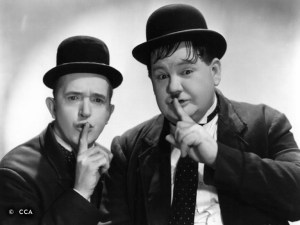
Add to that the fears that Brexit might cause knock-on problems for Hinkley C and, in the words of Laurel and Hardy:

“That’s another fine mess you’ve got me into, Stanley”!