Stock of gowns for healthcare staff improving says Devon NHS

Stocks of protective gowns for frontline NHS workers in Devon have improved since an appeal went out for urgent supplies.

Edward Oldfield www.devonlive.com 

An advertisement on behalf of the Devon NHS posted on Monday last week called for boiler suits, lab coats, painting coats, chemical suits or any type of disposable or washable overall with full-length sleeves.

But it is understood the appeal was a precautionary step at a time when there was heightened concern over a potential shortage of gowns in the middle of April, which has now eased.

None of the items listed in the advertisement have been issued to NHS staff.

Deputy chief nurse Vanessa Crossey QN, on behalf of the NHS in Devon, said: “Stocks of gowns have now significantly improved and some precautionary measures, designed to complement the national supply chain, were not needed.

“Devon’s position is no different to other areas, and health and care partners have put in place effective stock monitoring procedures and mutual aid systems to increase our resilience.”

The advertisement appeared on a procurement website on Monday, April 20, posted by Torbay Council on behalf of Devon NHS.

Torbay MP Kevin Foster said he has had regular briefings from local council and NHS leaders and was unaware of any urgent shortage of PPE supplies.

The MP said if there was an immediate problem he had offered to escalate the issue with the Department for Health to ensure enough supplies were available.

Any additional personal protective equipment sourced locally by the NHS is risk-assessed by experts.

Supplies of items of PPE equipment for the NHS and social care have been fluctuating due to increased demand.

More than 100 businesses and organisations in Devon have shared their own PPE kit with the NHS in recent weeks.

Volunteers are also working with the NHS in Devon to make extra items including scrubs, laundry bags, head bands and protective visors.

A Department of Health and Social Care spokesperson said: “We are working around the clock to ensure PPE is delivered as quickly as possible to those on the frontline during this global pandemic for as long as it is required.

“We have delivered over 1 billion items since the outbreak began, including to care homes, and there is a 24 hour NHS-run helpline where NHS and social care workers can call to report shortages in supply.”

A BBC investigation found the Government failed to buy some protective equipment to prepare for a pandemic. It reported there were no gowns, visors, swabs or body bags in the Government’s pandemic stockpile when Covid-19 reached the UK.

Some NHS staff told the Panorama programme broadcast on Monday night they were being put at risk because of the shortage of personal protective equipment.

The Government told the BBC it had taken the right steps and was doing everything it could to increase stocks.


The epidemic and care homes in East Devon

The epidemic hit some local care homes badly after developing in East Devon in March – but the lockdown stopped a wider spread.

seatonmatters.org 

The epidemic hit some local care homes badly after developing in East Devon in March – but the lockdown stopped a wider spread.

 From Seaton Matters Posted on April 29, 2020

I am now in a position to report further on the Covid situation in care homes and the local community.

Outbreaks occurred in several care homes in Seaton and surrounding towns at the end of March/beginning of April, reflecting people having become infected earlier in March before the lockdown was imposed. From one home, 8 residents have died and a care worker is in hospital, after a majority of residents and many staff become infected, despite measures being taken to try to protect people and support from the Devon care system.

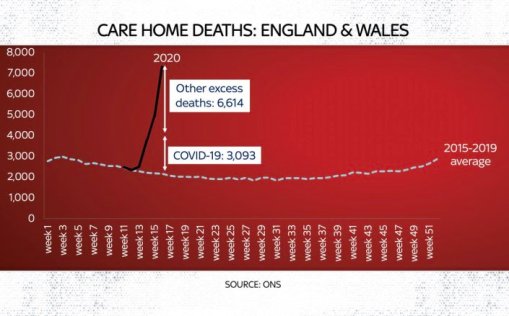
(The national graph above shows the drastic acceleration of deaths in care homes in the first two weeks of April; most ‘other excess deaths’ are probably Covid-related but not recorded as Covid.)

A conversation with a major local employer about the fluctuating level of absenteeism due to Covid-19 suggests that the epidemic was getting quite significant in the Axe Valley by the beginning of April, reflecting the same timescale. Today, illness-based absenteeism of those still in work is much lower, suggesting that social distancing has blocked off the spread of the virus. The care home outbreaks are more under control, and many other local homes appear to have escaped infection.

Imported from Italy in late February?

The spread of the disease in East Devon seems therefore to have come just a couple of weeks after the rapid growth of the epidemic in London. Anecdotal evidence suggests that the school half-term break in February could have been significant in starting community transmission, especially as some families and school groups returned from trips to Italy. At the time, no one was tested or asked to self-quarantine, although returnees from Wuhan had earlier been forced to undergo quarantine for 14 days.

So – the lockdown has worked, is working – but it came too late for some people in our community.


Example of ideology causing serious concerns – NHS staff shun testing centres

NHS staff shun testing centres amid concerns about safety and lost results

Contracts to operate testing facilities have been awarded under special pandemic rules, through a fast-track process without open competition. These include the accountants Deloitte, the public services specialists Serco and Sodexo, and the pharmacy chain Boots, which has also trained and provided more than 300 staff to administer swabs.

Owl wants to point out that if you decide, for expediency or ideology, to go down the contracting route for a complex sequence of operations then best practice would be to appoint an experienced prime contractor, with overall responsibility. Doesn’t seem to happened in this case.

“At Wembley tests have been lost, with no contact number provided to chase missing results. The site is operated by Sodexo, but the responsibility for ensuring staff get the results lies with Deloitte. The accounting firm is managing logistics and data across most of the test centres, including booking tests, getting samples to the labs and communicating the results.”

As a Royal Free source says: “…The chain of command is very opaque and it is very difficult to know how you get your results back. It should be run by people with operational experience of clinical tasks, not by an accountancy firm.”

The other ideology that concerns Owl is the element of competition that has been allowed to creep into the allocation of the scarce resource of testing. Everyday the Government announces yet another group eligible for testing (possibly driven by the need to be seen to be ramping up testing). The result is that we are witnessing an unseemly scramble for who can get to the telephone, or on-line, first. Owl believes that whilst testing is still limited there has to a prioritised system of rationing, for example, currently to care homes and their staffs. No doubt this is anathema to those adhering to the right wing “the devil take the hindmost” principle.

For the article read on:

Juliette Garside, Lisa O’Carroll the Guardian 29 April 2020

Key workers and NHS staff have raised concerns about the management of a national network of drive-in corona-virus testing centres, with doctors at one London hospital trust “actively discouraging” staff from using them.

Thousands of people have turned up at more than 30 locations around the UK to be swabbed for traces of the virus after the government opened up facilities previously reserved for NHS workers to all employees in essential services, including care homes and utilities companies.

The expansion in testing at the weekend has led to long queues at some facilities, with motorists – many of them already feeling unwell with symptoms of Covid-19 – stuck in their cars in hot weather for hours, forbidden from opening windows and unable to use toilets or find water.

The Guardian was contacted about multiple concerns, including queues of up to five hours, workers with appointments turned away because of delays, leaking test vials, wrongly labelled samples, and lost test results at Nottingham and Wembley.

A doctor at the Royal Free NHS trust, which operates three hospitals in north London, said they were so concerned about the drive-in facility located in the Ikea car park in Wembley that staff had been told not to use it.

The regional network, which will be extended to 50 locations, is a cornerstone of the government’s target of reaching 100,000 coronavirus tests a day by the end of April.

Contracts to operate the facilities have been awarded under special pandemic rules, through a fast-track process without open competition.

The contracts were handed to private companies including the accountants Deloitte, the public services specialists Serco and Sodexo, and the pharmacy chain Boots, which has also trained and provided more than 300 staff to administer swabs.

At Wembley tests have been lost, with no contact number provided to chase missing results. The site is operated by Sodexo, but the responsibility for ensuring staff get the results lies with Deloitte. The accounting firm is managing logistics and data across most of the test centres, including booking tests, getting samples to the labs and communicating the results.

The Royal Free source said: “All three [of the trust’s] hospitals are actively discouraging people from going there. We have no faith that they would get the result. The chain of command is very opaque and it is very difficult to know how you get your results back. It should be run by people with operational experience of clinical tasks, not by an accountancy firm.”

Instead of using Wembley the trust is swabbing staff at work and sending samples to Francis Crick Institute laboratories for analysis.

People attending a number of drive-in facilities reported being left with no choice but to take their own swabs, having expected the procedure to be carried out by a trained professional.

James Collins, a carer at a home for vulnerable adults in Lincoln, who has been self-isolating with a cough, said he waited five hours fora test at Robin Hood airport, Doncaster, on Saturday; it had involved a two-hour round trip.

He was surprised to have to swab himself. “I’m scared I haven’t done the test right,” he said after testing negative. “If I wanted to do it myself I would have gone for a home test.”

At Doncaster and elsewhere security guards patrolled the lanes warning motorists not to take photos or videos and not to open their windows. Drivers could communicate with marshals only by phone. There were some portable toilets, but after a single use they were sealed, awaiting cleaning.

Serco, which runs nine centres including Doncaster, said the longestrecorded wait was two hours, adding: “Serco is managing the site facilities at some of the Covid-19 test facilities. The sites are becoming increasingly busy and we are working hard to get people through the centres as quickly as possible?’

Anna Wittekind, a nutritionist who said she had been off work with chest and stomach pains for 12 days, said she and her husband, who worked for the NHS, had waited three hours at a drive-in facility. Her result arrived quickly and was negative.

“I have no idea whether I managed to take a good enough swab, so it may have all been a waste of time,” she said. “I felt for the poor souls working there, but the organisation was abysmal.”

A worker at the Lighthouse laboratory in Milton Keynes said she was concerned about safety and lost results. The lab was opened by the health secretary, Matt Hancock, this month as one of three “megalabs” created to support the testing initiative.

She claimed the lab, which is capable of processing up to 10,000 tests in 24 hours, had received hundreds of swabs in vials that either were leaking or were not sealed in two bags, meaning those handling them risked contamination. Other swabs had labelling errors, so the results were unlikely to reach the person tested.

“We do feed these problems back to the test sites and some improve,” she said, “but some are consistently poor and in some cases this goes beyond just making our lives difficult to actively endangering us or the reliability of results?’

Steve Fay, a physiotherapist in respiratory care in Leicester, said he was seen at a centre in Nottingham operated by Boots on 1 April. He was left waiting for more than a week for the results. His wife, who works as an NHS nurse and had her test at the same time, had to wait even longer.

After chasing, via 14 emails, Fay was eventually referred to Deloitte.

Fay said: “I threatened to make this public when suddenly [there was] a reply in one hour and a result an hour later. The tests both came back negative. Personally I’m very doubtful of this test because we both had the symptoms?’

A spokesman for Deloitte said: “Deloitte has a specialist health sector practice, which includes a large number of staff with operational healthcare experience. This is the group who is at the core of our work, supplemented where appropriate with individuals with technical skills relevant to the work we are doing?’

Boots said it managed the Nottingham site but had “no role in processing the results”. Sodexo also said it was not responsible for delivering test results.

The Department of Health and Social Care said the latest records showed that more than 90% of people tested up to 21 April had received their results within two days.

Protecting care homes must now become the Government’s top priority

Promises are not enough

“This week, we learned that ministers were warned by scientific advisers in January that care homes would be especially vulnerable to a pandemic. ….

The proper provision of PPE for care workers must be made an absolute priority for the government. Access to increased testing capacity, which remains haphazard and sketchy, must be vastly improved…….”

Editorial www.theguardian.com 

Boris Johnson has a talent for arresting phrase-making, and it was duly deployed outside Downing Street as he returned to active duty. Comparing Covid-19 to a street mugger, the prime minister said that as a result of ongoing lockdown measures, the country has begun to “wrestle it to the floor”, as recorded infection rates and NHS hospital deaths from the disease fall from their early April peaks.

Not for the first time in his career, Mr Johnson’s rhetoric was vivid, but it expressed at best a partial truth. Barely 24 hours later, the Office for National Statistics published an estimate by the Care Quality Commission that 4,334 people died from coronavirus in care homes in the fortnight leading up to 24 April.

Half of those CQC-reported deaths occurred within the final five days. As the curve of hospital deaths flattens and begins to descend, Westminster’s political energies have moved restlessly on to the question of how lockdown restrictions might be eased. But care workers are bracing for a deadly peak that has yet to come.

The struggle to protect the nation’s vulnerable and elderly must not be fought in lonely isolation, out of sync with the national mood. At the Downing Street press briefing on Tuesday, the health secretary, Matt Hancock, claimed that the potential crisis in care homes “was something we focused on right from the start”. But that social care became the forgotten frontline of the coronavirus crisis is generally accepted.

This week, we learned that ministers were warned by scientific advisers in January that care homes would be especially vulnerable to a pandemic. From personal protective equipment to testing, the response from the government to that advice was belated and inadequate. What is urgently needed now is the application of genuine political imagination to mitigate a tragic situation which is moving towards a deadly climax. Care homes need immediate help in three specific areas – medical equipment, human resources and financial capability.

The proper provision of PPE for care workers must be made an absolute priority for the government. Access to increased testing capacity, which remains haphazard and sketchy, must be vastly improved. Mr Hancock has announced that care homes will now be able to test asymptomatic as well as symptomatic carers and residents. This is welcome, as is the commitment to publish daily figures on care home deaths. But when some care homes are still struggling to perform any tests at all, the promise doesn’t count for much.

The National Care Forum, which represents 120 not-for-profit providers, has called for acute care specialists and geriatricians normally based in the NHS to lend their expertise in managing outbreaks. Their knowledge, and the experience they acquired during the early April hospital peak, could be an invaluable resource.

About 25,000 retired doctors and nurses responded to government calls to return to the NHS; their skills would be a vital boost in residential homes. Members of the 750,000-strong NHS “volunteer army”, most of whom have not been called on, could be diverted to perform specific tasks. Meanwhile, a financial lifeline from central government is also desperately needed: myriad extra costs have left large numbers of providers close to the edge.

The NHS has not been overwhelmed by the pandemic. Mr Johnson was right to celebrate that fact as he returned to Downing Street. The belated lockdown gave hospitals the headroom they needed. The same sense of urgency must finally inform the government’s response to the crisis in our care homes.


Contact tracing can’t be run by Westminster, experts warn

Successful implementation of contact tracing is an essential prerequisite to lifting lock down. It is an enormous task. What worries Owl is that the Government still seems to be trying to micromanage this from Whitehall. 

So far the Government’s track record of centralised management of the response to the pandemic is unimpressive. Owl is also worried that too much faith is being placed on the untried and untested use of smartphone apps. It is yet another example of UK exceptionalism. 

Sarah Boseley www.theguardian.com

Ministers must relinquish their top-down control of the coronavirus epidemic after the lockdown to allow millions of people potentially infected with Covid-19 to be traced and supported by local teams in their own communities, say experts.

Urgent discussions have begun between central government, local authorities and public health officials about the 18,000-strong army promised on Friday by the health secretary, Matt Hancock, to help trace the contacts of people who test positive or have symptoms of the coronavirus.

Hancock said they would be in place within three weeks but the Guardian understands that nobody has yet been recruited.

A letter to local authorities and other agencies on Friday, seen by the Guardian, said just 3,000 of these people would have public health expertise, while the other 15,000 would be call handlers.

It is understood that ministers such as Hancock, who is enthusiastic about digital technology, hoped the NHS app would take much of the strain. The app is designed to warn people who have come into close contact with anyone who has Covid-19 to go into self-isolation.

The government hoped that a high proportion of the population – up to 80% – would download the app on a smartphone. But in meetings, they have been advised that is unrealistic. In Singapore, with high smartphone use, the take-up was only 20%.

Public health experts say that apps are no substitute for a sympathetic and supportive conversation, even for those who are familiar and comfortable with using smartphones, which many older and more vulnerable people are not.

“It is absolutely ridiculous. You need the shoe-leather epidemiology, you need people on phones. Apps are simply supports for contact tracing,” said Allyson Pollock, a professor of public health at Newcastle University. “You need people on old-fashioned things like telephones or going door to door and they need to be local teams because they need to understand the local communities.”

The whole system should be run by directors of public health and environmental health officers based in local authorities, with the resources they need, because they understand their community, she said. That was how it used to be, before the multiple restructuring culminating in the Health and Social Care Act 2012, which led to the decimation of public health disease control and its centralisation and fragmentation, she added.

“We don’t know where the block is, but there is a huge block and huge resistance to doing this locally. This is partly because they’ve ripped out so much capacity and they’ve also ripped out the real-time data locally.

“We are never going to get on top of this if we don’t put back the local capacity in order to lift local restrictions.”

Contact tracing began immediately after the first case was confirmed in England at the end of January but stopped abruptly across the whole of UK – even in regions with barely any cases – on 12 March, along with community testing.

The government said it was moving from the “contain” to the “delay” phase because it was no longer possible to track down and isolate everyone infected. Countries that continued to follow that plan, as urged by the World Health Organization (WHO), have had fewer deaths. They include Germany, Singapore and South Korea.

The UK “gave up very early”, said Anthony Costello, a professor of global health and sustainable development at University College London and a former WHO director. By 12 March, there had been 10 deaths and 590 confirmed cases, and about 3,500 contacts had been traced. But most of the cases were in London and the West Midlands. Continued testing, tracking and tracing could have kept the virus out of other regions and reduced deaths, he said.

“If we hadn’t stopped it on 12 March, our epidemic would have been much less. They effectively allowed it to spread,” he said.

Public health, local government and environmental health officers all say they are capable of running the sort of extensive contact tracing network that will be needed in all areas of the country.

“Directors of public health – and their teams – have extensive experience and knowledge of contact tracing, their local communities and the wider health and social care system,” said Dr Jeanelle de Gruchy, the president of the Association of Directors of Public Health.

“Engaging directors of public health in the design and implementation of any new plan will help ensure whatever is developed will work on the ground and be integrated with other aspects of the response to Covid-19, including testing and protecting vulnerable people across the UK.

“The reality is that no single organisation or agency, whether national or local, can deliver and oversee this operation alone. A collaborative approach is fundamental. The government needs to fully involve us in this.”

The Chartered Institute of Environmental Health said its members and also many other people with expertise, such as retired doctors, had been in touch wanting to help. “We have quite early on opened up a national voluntary register,” said Gary McFarlane, its Northern Ireland director.

“My own view is that we need a national media call for those who have the skills – all those retired doctors and sexual health workers and environmental health officers who can hit the ground running.”

As businesses start to open, whether garden centres or offices or factories, local authorities would be busy engaging with them to ensure they did it safely – so the retired volunteers could help reduce their workload by taking on the contact tracing effort.

A government spokesperson said: “Tracing and testing those with symptoms of Covid-19 is essential if we are to limit the spread of this virus and save lives.

“The NHS is developing a contact tracing app, which alongside effective tracing and testing, is designed to give our country the confidence it needs to return to normality.

“We are working with clinicians, scientists and other specialists to plan a safe, staged path to national rollout.”


Questionnaire: How are things in Lock Down in Sidmouth?

Something to do in Sidmouth during lock down.

Q.1 Are you appreciating there being less traffic or can’t you wait to get back into your car? Owl wonders how many might be tempted to tick the box – “I like less traffic”. This is Regency Sidmouth after all.

Joseph Bulmer sidmouth.nub.news 

A Sidmouth community group is asking residents to fill out a questionnaire on ‘How are things in Lock Down’ in Sidmouth?

The Vision Group Sidmouth (VGS) has created a questionnaire to put to Sidmouth residents on the realities of life in lock down.

The questionnaire includes questions on: Traffic, cycling, money, home working, deliveries of essential goods, supermarkets, shopping habits, business and virtual communication.

VGS is particularly interested in whether you would continue to use the delivery services set up by local businesses once the lock down is over.

A spokesperson for VGS said: “We need your input now, as we look at how we are managing in such a different world – and also how we might manage in the future.

“We would be very grateful if you would ‘interact’ with this questionnaire; it looks a bit daunting but you can take as long or as short a time as you wish

“As you will see we are not asking for names, the data will be completely anonymous but of course you can always email us at vgs@visionforsidmouth.org if you want to give ‘on the record’ comments.

“All the questions are voluntary so you can just answer some of them if you want, although we hope it is easy enough for you to answer all those with tick boxes.”

If you are planning to fill out the questionnaire please tick ALL those which apply. You do have the chance to say more as well if you would like to.

The survey will close on Monday, May 4, and VGS hopes to have the results collated very soon.

The findings will then be put into a single document and circulated to the press and local councils.

The VGS spokesperson added: “Who knows what further ideas and actions might come out of your responses?”

Councils are using this emergency to shut out democracy

“Unfortunately, there appears to be an alarming number of cases where democratic scrutiny and accountability in councils is being shut down, with several using this crisis as an excuse for handing over sweeping powers to unelected chief executives and leaders.”

At  EDDC all meetings have been cancelled, including this month’s scrutiny meeting, but not yet the Annual Council – Wednesday, 13th May. So who is making the day to day operational decisions, how and under what authority? Previous announcements indicated extensive use of Skype. 

Remember that Ben Ingham has lost his majority and is Leader in name only (LINO). Shutting down democracy would be very convenient wouldn’t it?

Jonathan Bartley www.thetimes.co.uk 

The return of Parliament is undoubtedly a welcome development. At a time of national crisis, we know just how vital proper democratic scrutiny and debate is.

The decisions being made right now will affect every single one of us and so it is essential that a forum such as Parliament is able to use its experience and knowledge not only to scrutinise the decisions made, but also to offer help, guidance and support to the government so it can make the best decisions for us all.

The same could be said for local authorities up and down the country who are on the front line of this crisis and are responsible for delivering many of our essential services.

Unfortunately, there appears to be an alarming number of cases where democratic scrutiny and accountability in councils is being shut down, with several using this crisis as an excuse for handing over sweeping powers to unelected chief executives and leaders.

In Lambeth, where I am the official leader of the opposition, I had to watch on Wednesday night as Labour councillors pushed through changes to the constitution that allow the chief executive to make decisions that would otherwise be made by a democratically elected leader, cabinet, or any council officer, simply if he considers it is “expedient” and “necessary” to do so. There were no reasons given. And it already had an urgency procedure for emergency decision-making.

Putting to one side the suggestion that the way it made the decision may actually be in breach of the council’s own constitution, such a move is bad for democracy. It is also downright dangerous at a time when the local authority is already making bad decisions such as beginning the unnecessary demolition of large council buildings in densely populated areas and park closures, bringing national outcry. More than ever it needs scrutiny and to be harnessing as much expertise as it can.

Regrettably, Lambeth is not the only place where this is happening. Green Party colleagues in councils across the country are reporting similar power grabs in both Conservative and Labour-held authorities.

From South Hams, where it has been proposed the Head of Paid Services and the council leader are given the power to decide if meetings should take place, to Norwich where the council met online to decide not to hold any online council meetings, we are seeing an erosion of democracy at the most fundamental level. Decisions which have real impact on people are being made without the scrutiny they require.

Of course, many authorities are already hiding behind the logistical problems lockdown brings for taking decisions behind closed doors. But it’s not just Parliament that is able to sit and discuss issues virtually.

If a parish council’s grants committee in West Yorkshire is able to meet virtually, as my Green Party colleague Andrew Cooper highlighted last week, then I see no reason for any other council to hide behind this emergency as an excuse for closing down democracy.

At a national level we have seen just how vital proper scrutiny is in helping to shape government policy for the better, whether that is by the media or by opposition politicians. Whether it’s on the numbers of testing or access to personal protective equipment for health workers, we have seen throughout this crisis how proper questioning of ministers has led to changes in government policy.

At the local level too, we have seen how often it has been individual councillors and local communities who have led the response to the crisis through mutual aid, foodbanks and delivery services, being best able to identify where the needs are from the bottom up. It is this kind of expertise and knowledge that councils should be looking to harness and be led by.

We need more democracy, not less in this crisis. Before the coronavirus epidemic hit many local authorities were just beginning to embrace the idea of citizen assemblies as a response to the climate crisis, recognising that we make better decisions when we work together. Now they appear to be going in the opposite direction by excluding residents, councillors and the experts from decision-making right at the time that they need them most.

Those in positions of power are faced with an unprecedented and extremely challenging situation and nobody would blame them for finding it difficult. But this is why we have such a strong democratic system in the first place. Now is not the time to be letting that slip away.

Jonathan Bartley is co-leader of the Green Party and Leader of the Opposition on Lambeth council