Government brings in new laws that allows councils to meet ‘virtually’

Owl posts two articles under this heading. The first is a general one on how the democratic process can continue safely, the second is the advice from Civic Voice to amenity societies on how this might affect planning. 

Daniel Clark  www.devonlive.com

New laws that enable local authorities in England to hold public meetings virtually by using video or telephone conferencing technology come into effect from Saturday.

The government has temporarily removed the legal requirement for local authorities to hold public meetings in person during the coronavirus pandemic.

This will enable councils to make effective and transparent decisions on the delivery of services for residents and ensure that local democracy continues to thrive.

The change applies to all local authorities in England and covers all categories of public meetings including annual meetings, cabinet and committee meetings.

It means all councils – from Devon County down to the parish councils – can continue to meet, and also applies to the Dartmoor and Exmoor National Park Authorities, the Devon and Somerset Fire Authority, as well as the Police and Crime Panel,

All meetings must still be made accessible for the public and the press to ‘attend’, but it will be up to each local authority to decide how they conduct meetings, how voting procedures work and how to ensure that the public has access.

Existing rules about the number of councillors or members of a group required to attend to make a meeting valid will remain, but virtual attendance will count.

The Regulations apply to meetings taking place before May 7, 2021, but this date could be moved forward if medical and scientific advice leads to the relaxation of social distancing rules.

Devon County Council’s cabinet are set to meet on Wednesday, April 8, via videolink. The Exeter City Council executive meeting the night beforehand is currently still listed as taking place in the Civic Centre as usual.

Local Government Secretary Rt Hon Robert Jenrick MP said: “Local authorities are the backbone of our democracy and they are playing a vital role in the national effort to keep people safe. This change will support them to do that while maintaining the transparency we expect in local decision making.

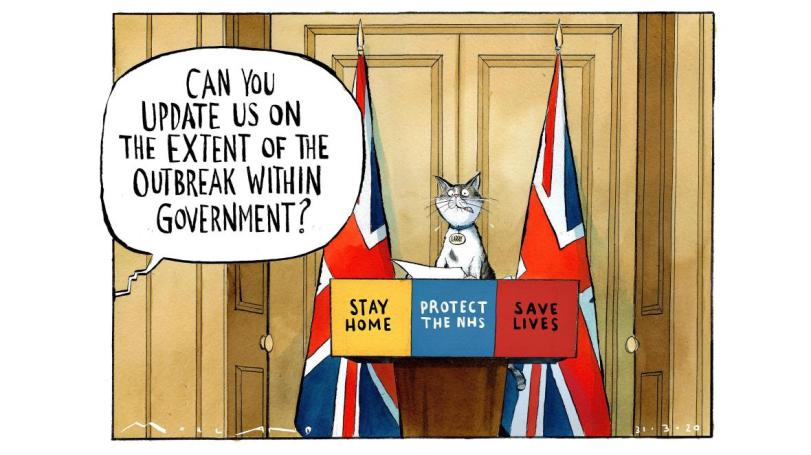
“Councillors and staff are already doing the right thing by following our advice to stay home, protect the NHS and save lives. This includes working from home wherever possible, and the new powers to hold meetings virtually will make that easier.

“It’s critical that they continue to provide essential services and find innovative ways to maintain important economic functions they perform like the planning system and they will now be able to do so.

“We’ve given local authorities across England an additional £1.6 billion to help their crucial work in the national effort against coronavirus, and we are continuing to ensure they get all of the support that they need at this time.”

Local Government Association Chairman, Cllr James Jamieson added: “Councils are working tirelessly to support their communities as they rise to the unprecedented challenge of the coronavirus crisis.

“Giving councils powers to hold meetings remotely is important to maintaining local democracy and allowing critical decisions to be made during this public health crisis. Councils need to respond quickly and make very many key decisions. They can now do so while remaining open, transparent and accessible to the public.

“Remote council meetings will crucially help ensure all those taking part stay at home, helping to prevent the coronavirus from spreading and save lives.”

The government is also working to bring in new law so that by-elections, local polls and referendums cannot be held before 6 May 2021.

The Coronavirus Act 2020 has already postponed local and Police and Crime Commissioner elections scheduled in the UK for Thursday 7 May 2020 until 6 May 2021.

Here is what Civic Voice have to say on how this might affect planning and advice to amenity societies

civicvoiceblog.wordpress.com 

Local authorities in England handed new powers to hold planning meetings virtually by using video or telephone conferencing technology from April 4th

We understand that some civic societies and community groups are concerned about the implications of COVID19 and how this will impact the planning system in regard to Local Authorities processing planning applications.

In the same way that civic societies are saying that they are experiencing challenges in meeting face-to-face, we should not be surprised that this is also the case for councils.

So what is being done about this?

The government has temporarily removed the legal requirement for local authorities to hold public meetings in person during the coronavirus pandemic. This will enable councils to continue to make decisions during the current crisis.

Section 78 of the Coronavirus Act 2020 allows the relevant national authority to make regulations providing for virtual meetings in local authorities, including the Greater London Authority, district, county and unitary councils, parish councils and national park authorities.

The Regulations apply to meetings held, or required to be held, before 7th May 2021.

Does this affect Planning Committee Meetings?

The change applies to all local authorities in England and covers all categories of public meetings including annual meetings, cabinet and committee meetings.

Anticipating the impact of the current emergency on the planning system, the Chief Planner’s recent ‘Planning Update‘ advised on how councils could respond to ensure that the planning system could operate.

 ” The Government has confirmed that it will introduce legislation to allow council committee meetings to be held virtually for a temporary period, which we expect will allow planning committees to continue.”

Chief Planner, Steve Quartermain

The Government has indeed introduced this legislation and local Councils can now legally hold online only council meetings.  It comes into force on April 4th http://www.legislation.gov.uk/uksi/2020/392/contents/made.

What do civic societies need to know?

The change applies to all local authorities in England and covers all categories of public meetings including planning meetings.

Existing rules about the number of councillors or members of a group required to attend to make a meeting valid will remain, but virtual attendance will count.

Government will be working with others to developing guidance for local authorities about holding remote meetings.

Will the public will still have access to public meetings through remote means?

There are still some practical concerns about how these meetings will be hosted, and in particular the manner in which members of the public will be able to participate, but meetings must remain accessible whilst ensuring that councillors, staff and the wider public are able to follow government advice. We will see how this works through in practice.

The requirement for public meetings to be made accessible to the public remains, but it will be up to each local authority to decide how they conduct meetings, how voting procedures work and how to ensure that the public has access.

An authority would have to make its own decision if it was going to cut back on public attendance and we would ask civic societies to inform us where this happens.

The regulations say:

  • Live webcast of meeting is enough to comply with new rules re press and public: “(9A) In this Act, references to—
    • (a)a meeting being “open to the public” includes access to the meeting through remote means including video conferencing, live webcast, and live interactive streaming
  • Where a meeting is accessible to the public through such remote means the meeting is open to the public whether or not members of the public are able to attend the meeting in person;
    • (a)any reference to being “present” at a meeting includes being present through remote attendance;
    • (b)any reference to a “place” where a meeting is held, or to be held, includes reference to more than one place including electronic, digital or virtual locations such as internet locations, web addresses or conference call telephone numbers;

http://www.legislation.gov.uk/uksi/2020/392/regulation/13/made

Impact for civic societies and community groups?

We don’t know how this situation is going to work out.  It could be that more applications are delegated to officers or it could be that planning committees are unable to meet due to lack of IT skills for some councillors, or that meetings could be held virtually without public participation. What about controversial applications? How will they be dealt?

It is important that you get in touch with your local planning authority to let them know that you want to participate. Being a formal constituted group may well make it easier for the council to engage with you.
 

Shandford, Budleigh Care Home closure – Owl has followed this story and finds it unutterably unbearable

Today “PH” posted this comment on this 28 March East Devon Watch post (the latest post on the story of Abbeyfield’s closure of the Shandford Care Home in Budleigh):

“Abbeyfield has not mentioned that they were introduced to Amica Care by MP Simon Jupp in February of this year. From my understanding, Abbeyfield would not engage with Amica at that point, which would have given more time to consult.

The question should be asked, how a huge charity supposedly committed to its residents, can be allowed to strip the life out of residential home in their care. If it’s not to make money, then why?

Not viable? I don’t think so!”

This act of care home closure would be a heart wrenching story at the best of times. Now, as we approach the height of the worst epidemic since 1918, it is unbearable. During lockdown, residents have no physical contact with their loved ones at their time of crisis.

The residents are being taken from their homes at a time when the Government has decreed that the vulnerable should not leave their homes. As part of overall epidemic decisions escalation, it is already planned that transfer to hospital from Care Homes may not be offered if it is not likely to benefit the resident and if palliative or conservative care within the home is deemed more appropriate. Moving residents inevitably increases their risk and the risk to others. Peter Kyle MP for Brighton (Hove) has just spoken about this in an interview on today’s BBC “World at One”. The context included some relatives in his constituency being pressured into to signing “do not resuscitate” notices.

The closure is based on Abbeyfield’s declared aim of “freeing up assets” as it changes its business model to concentrate on larger homes; and County Councillor Christine Channon’s handpicked adviser Chris Davis who claims that Shandford is no longer viable. Owl has received plausible arguments that shows that there are grounds to challenge the case for non-viability.

Location.

Shandford’s public room and gardens are particularly special (there is a chicken pen in the garden clearly visible to residents). It is accessible and has a bus-stop outside encouraging visiting. The town-centre location means that even wheelchair bound residents can easily get to town with their loved ones and enjoy a more fulfilling existence.

Balance Sheet.

Knowing the numbers of residents at the time “Save our Shandford” was started in February and the fees charged it can be easily calculated that the home could expect an income of over £1M. Shandford is known to charge approximately 75% of some homes in Exmouth so there would be scope for modest fee increases if necessary. The property was bought by local subscription and there is no cost of equity, no cost of debt. Shandford is also named as a potential beneficiary in a recent legacy. It is clear from the support that “Save our Shandford” received that the local community would undertake fundraising as it has done in the past.

Property condition.

The house was built in the Edwardian period and has been extended and modernised as part of a continuous investment programme since its acquisition in 1958. From the outside it can be seen that the roof and main structure look to have been well maintained (Abbeyfield claim to have invested substantial sums since control was ceded to them in 2012). However, both Abbeyfield and  Cllr Cannon’s advisers claim that the rooms are too small (it currently has a good CQC rating) and that major works are needed to the plumbing. Owl was interested to hear that at the public meeting called by Simon Jupp MP one resident’s relative, a builder, laughed at the three figure sums being quoted. In any event, given the CQC assessment, no major works are needed in the short term, allowing opportunities for fund raising. Those trying to save Shandford have been denied access to the viability report presented to Cllr Channon (confidential apparently).

Assets

Subsequent to Abbeyfield announcing closure last autumn and actions taken by Cllr Channon, it is clear that Abbeyfield has an obligation to return monies realised by any sale to the Town. This must relate to clauses in the Transfer Deed drawn up by the original local Trustees of the Shandford Community Interest Company and Abbeyfield. Those trying to save Shandford have been denied access to the transfer deed, even though a copy is believed to be held by Devon County Council. Once the site is sold there is no way the any assets released could possibly recreate Shandford and its setting within the Town

Alternative provider.

The local community, given time, has expressed the will and energy to re-create a local Community Interest Company to take over and run Shandford but has been denied access to essential information. A more feasible and quicker option is mentioned by “PH”. Amica Care expressed an interest and Simon Jupp MP has tried to broker negotiations. Regrettably it seems minds have been made up and Abbeyfield won’t negotiate.

We are living through times when decisions made by “the authorities” are being shown, by fast moving events, to be all too often threadbare. Seldom do management decisions come to haunt the decision maker quite so soon. You are supposed to be able to “make your mark”, move on and not be called to account.

Newton’s law of crisis management

Nicola Woolcock, education correspondent, The Times 3 April

In an article he wrote for The Lancet last year the language of Public Health England’s director of health improvement seems oddly prescient.

“At a time of crisis”, John Newton wrote, “there is pressure to act, but at such a time, it is especially important that any action is informed by rational assessment of the relevant scientific evidence.”

The paper was on vaping-associated respiratory illnesses in the US but it seems likely Whitehall will be hoping he applies the logic to the present crisis after he was put in charge of testing.

Professor Newton was appointed director of health improvement in 2012. He is honorary professor of public health and epidemiology at Manchester and Exeter universities. As well as being an academic epidemiologist in the University of Oxford, he has been director of research and development in two large teaching hospitals.

He was also the first director and chief executive of UK Biobank, which holds biological samples for use in research, and the regional director of public health for NHS South Central.

Professor Newton has led England’s contribution to the Global Burden of Disease project and been chairman of the WHO European Burden of Disease Network.

In a recent blog he set out priorities that he wanted to tackle. These include the reduction in variation in smoking prevalence between rich and poor, anti-obesity initiatives, improving air quality and ensuring mental health has parity with physical health.

He said: “Tackling regional inequality is a vitally important task but we also see differences in health linked to disability, gender, race, age, sexuality or religion or amongst members of the most vulnerable or marginalised groups in society from homeless people and sex workers to people in prison.”

Cheltenham Festival ‘spread coronavirus across country’

Nero was supposed to have fiddled while Rome burned. In our case it looks like the “Great and the Good” went to the races instead. The Cheltenham Festival took place when Italy was already in lockdown,

Will Humphries, Southwest Correspondent  www.thetimes.co.uk

There are fears the mass gathering of more than 250,000 people during the Cheltenham Festival last month helped spread the disease widely across the country as famous faces and members of the public who attended have tested positive.

The comedian Lee Mack spent two days at the pinnacle of the jump racing season before testing positive for Covid-19, with a friend saying he believed he caught it off his driver when travelling to the event.

Andrew Parker Bowles, the former husband of the Duchess of Cornwall, has also caught the coronavirus and said he thinks he “probably got it on the Wednesday or Friday I attended Cheltenham”.

During those two days he was photographed in close contact with Camilla, as well as Princess Anne, her daughter Zara Tindall and son-in-law Mike Tindall.

Mr Mack and Brigadier Parker Bowles join a growing list of famous names and members of the public who are thought to have caught the virus at the event held from March 10-13.

More than 60,000 fans a day were packed into the stands, bars, toilets and queues for the food vans at the world-famous festival with little protection apart from some hand sanitiser stations dotted around the racetrack.

The roar of the crowd at Cheltenham can send a tingle up the spine but the shouting, cheering and drunken singing by tens of thousands of punters packed cheek by jowl in the terraces and bars is a perfect environment for transmission of infection by airborne droplets from the mouth and nose.

More than 250,000 people walked in through the gates across the four days – and hundreds of them have claimed online that they have since developed symptoms.

The festival took place when Italy was already in lockdown, as of March 9, and drew criticism for still going ahead.

Anyone who caught the virus would have had it by now, given that the event finished on Mach 13 and the incubation period is 14 days, but there are fears they could have gone on and infected more people, with patients spreading the virus to two others on average.

At the time there was huge debate over whether it should have been cancelled, with Jeremy Hunt, chairman of the health and social care select committee, telling the BBC’s Newsnight: “I think it is surprising and concerning that we’re not doing any of it at all when we have just four weeks before we get to the stage that Italy is at.

“The issue is not whether you or I might get infected at a football match, it’s who we go on to meet.”

Following the festival a number of people took to social media to say they had attended and were getting symptoms the following week.

One person wrote on Twitter: “I was at Cheltenham for three days last week and I am now showing all the symptoms of coronavirus, please be careful everyone.”

Someone else replied: “Was there as well and showing signs.”

The Jockey Club, organisers of the event, said the festival “went ahead under Government guidance”. It finished three days before mass gatherings were banned.

While most of other events had been called off by individual sporting bodies before waiting for official government guidance, the festival still took place, prompting suggestions that Ministers should have done more to ensure all events were called off when the outbreak was in its infancy.


Latest Government U-turn for small businesses – but still caught in Catch-22 – first find a Bank

Would-be borrowers say phone calls go answered; banks say that they are working flat-out with workforces that are also affected by Covid-19 and self-isolation. But speed of execution is now vital. A flood of lending was promised to avert company collapses, but it hasn’t happened yet.

Chancellor’s hybrid will do nothing to hasten banks

Analysis  Nils Pratley Guardian 3 April

What was wrong with the government’s first version of its emergency loan package for small businesses? The problem is vividly illustrated by this statistic: only 983 companies have had loans approved out of130,000 inquiries made.

The running totals – released by the Treasury for the first time since the Coronavirus Business Interruption Loan Scheme, or CBILS, was launched – support loud complaints from small businesses in search of cash. The scheme was fiddly, slow and rested too heavily on banks’ judgments on eligibility.

The most important rejig by the chancellor, Rishi Sunak, is really a U-turn. In version A, banks were told that CBILS loans could be offered only to viable businesses that could not access finance on normal commercial terms. Now “all viable business affected by Covid-19” will be eligible.

The distinction is critical. Small business owners complained that banks were trying to steer them into standard interest-bearing loans, rather than the juicy government-backed CBILS product that is free of interest for 12 months and free of set-up fees. For their part, the banks argued they were merely implementing government rules.

The switch in approach will, almost inevitably, come at a cost to the public purse. But it should speed up processing and get more cash into the accounts of small businesses that need to pay wages and suppliers. Those 983 CBILS loans represent only £90m of lending – a trickle.

Sunak has also banned personal guarantees on loans under £250,000, another source of bitterness. But his other major reform is to fill a hole that became apparent almost immediately: the definition of a small business was set too tightly.

CBILS loans, worth up to £5m, are aimed at companies with an annual turnover of less than £45m. That threshold was too low for many midsized and family-owned firms who felt the parallel Covid Corporate Finance Facility was intended for much larger companies with formal credit ratings.

Thus Sunak has created a hybrid – a CBILS-based package for companies with annual turnover between £45m and £500m. The chief difference is that these loans won’t be interest-free, but their availability may solve the so-called “squeezed middle” problem. Up to £25m can be advanced to a borrower.

The chancellor will find it harder, however, to make the banks work faster. Would-be borrowers say phone calls go answered; banks say that they are working flat-out with workforces that are also affected by Covid-19 and self-isolation. But speed of execution is now vital. A flood of lending was promised to avert company collapses, but it hasn’t happened yet.

Blaming Labour won’t work this time – the Tories will have to own this crisis

Headline says it all – Owl

Larry Elliott, economics editor The Guardian www.theguardian.com

Throughout history, pandemics have often had profound economic effects. The most famous of all, the Black Death of the mid-14th century, wiped out between a third and two-fifths of the population of western Europe. The labour shortages that followed are credited with hastening the end of the feudal system.

Covid-19 is nowhere near as deadly as the Black Death, but the shock it has dealt to an already vulnerable global economy has been immense. Perhaps inevitably, there is talk of life never being the same again.

But this is what was said last time. Many on the left thought that when the banks nearly went bust in 2008, the dominant free-market model would be replaced by a more progressive alternative.

It didn’t happen. The scale of the crisis wasn’t enough to bring about fundamental change; those who were the largest beneficiaries of free movement of capital were rich, powerful and well dug in; and the narrative that emerged about the 2008 crash was at odds with what really happened.

Narratives matter a lot. Franklin Delano Roosevelt’s message to the American people in the 1930s was that their lives had been wrecked by Wall Street’s greed. FDR positioned his government as the friend of the unemployed and the enemy of reckless speculation. The story told by the Thatcherites and the Reaganites in the late 1970s was that organised labour had become too powerful, and the big states that emerged from the New Deal era were strangling enterprise.

The best example of how narratives shape political outcomes happened in Britain after the last crisis. The truth about the 2008-09 recession was that it was a global phenomenon facilitated by the deregulation of finance and inadequate supervision of banks. This allowed a debt bubble to inflate over many years. When it popped, the banks found themselves unable to meet the losses on their wild speculation. London’s role as a global financial centre meant Britain suffered more than most.

But the narrative that emerged was different. The story told by the Conservative-Liberal Democrat coalition government of 2010 was that Britain’s problems were the result of the previous Labour government’s profligacy. Budget deficits had been run in good times and had exploded when the economy started to contract. The Conservatives offered any number of soundbites: Labour had crashed the car, it had maxed out the nation’s credit card, it had failed to mend the roof while the sun was shining. Britain would have to endure a painful period of austerity to mend the hole in the public finances, but Gordon Brown was to blame.

It all looks a bit different this time. Although his approval ratings have picked up, Boris Johnson’s task of weaving a compelling narrative out of twin economic and public health crises is much more difficult than the challenge that faced David Cameron in 2010.

Johnson has been forced to go further and faster in his response to Covid-19 than Brown did back in 2008. The cost of lost output is unknowable because it is unclear how long the economy will be locked down, but it will be enormous – and inevitable. The government has decided to keep all but essential workers at home. It therefore has no choice but to protect jobs and incomes, whatever it takes. The budget deficit is going to balloon, just as it did at the end of the noughties, and for the same reason: recession means the government spends more and takes in less in tax.

Nor will it be realistic for Johnson to say that he has no alternative but to impose another period of belt-tightening when the economy eventually comes out of hibernation. Austerity was an economic failure, resulting in a lost decade for wages, sluggish growth and public finances in a worse state than they were before the last crisis.

But austerity has also proved a political liability for the Conservatives. The public is in no mood to stomach NHS cuts. Nurses and care workers are a lot more popular than bond dealers and bankers. To scrap infrastructure projects – the customary, if short-sighted, response of hard-up governments down the ages – would be a repudiation of the manifesto that won the prime minister his election victory less than four months ago.

One of the problems a party faces when it is in power for a long time is that blaming the opposition for the mess it allegedly left behind no longer cuts it. The Conservatives have been in power for a decade. They will eventually be held to account over how prepared the UK was for this crisis.

Questions will arise: was the NHS was equipped to cope with a pandemic? The years ahead of the financial crisis saw the biggest sustained increase in health spending since the creation of the NHS in 1948; the years since 2010 have seen the smallest increases. Was the welfare system in a better shape to cope with the sharp contraction of the economy in 2008, or in 2020? Benefits were far more generous a decade ago than is the case today. Labour actually made a much better job of mending the roof.

For the right, this is the second major economic crisis in little more than a decade. It’s the second time the state has needed to come to the rescue of an economic system where the gap between rich and poor has widened, corporations pay as little tax as they can get way with, too little attention is paid to the climate emergency, and a large proportion of the workforce is one paycheck from penury. For the left, it should be an open goal.


Health Secretary Writes Off £13.4bn Of NHS Debt To Help Coronavirus Response

Another Conservative policy goes up in flames on the Coronavirus bonfire – Owl

Health secretary Matt Hancock has written off £13.4bn of historic NHS debt to help the health service fight coronavirus. www.huffingtonpost.co.uk 

The money is intended to help NHS trusts focus on tackling coronavirus rather than servicing loans from the Department of Health and Social Care (DHSC). 

The figure owed ballooned as NHS trusts became reliant on interest-bearing loans to cover deficits in day-to-day budgets, with interest payments alone skyrocketing to £292m last year, Health Service Journal has reported

Some 107 trusts have an average of £100m revenue debt each. The two trusts with the highest figures reach a combined total of over £1bn.

At the daily Downing Street briefing, Hancock said: “This landmark step will not only put the NHS in a stronger position to be able to respond to this global coronavirus pandemic but it will ensure our NHS has stronger foundations for the future too.” 

HuffPost UK understands the sum written off is both capital debt – from building and infrastructure – and revenue debt, from running services and paying staff and suppliers. Both loans and outstanding interest payments have been cancelled.

The debt will be effectively written off by converting the loans to equity. Adjustments will be made to ensure NHS providers’ day-to-day budgets are not negatively affected by debt write-off.

Other loans entered into as “normal course of business” will not be written off as NHS trusts took them by choice and the government considers them to be affordable.

The write-off will not create any additional borrowing or fiscal cost to the Treasury as it is being written off as a transaction within DHSC.


Working group aims to shake up Mid Devon’s governance

At last year’s elections the Conservatives lost 11 seats and overall control of Mid Devon. This left them with just 18 seats and short of a majority, although they remain the largest party. The LibDems now have 12, Independents 10 and Greens 2.

Mid Devon is obviously finding governance a problem. Owl’s solution is for the opposition parties to come together and agree on a shared vision and ambition for the future, as has recently happened in East Devon. 

The newly formed Democratic Alliance in EDDC is now the largest party. The tragedy in East Devon is that Ben Ingham persuaded a number of Independents to follow him as leader of the “Independent Group”, then jumped into bed with the Conservatives. Business as usual.

Ben Ingham is now LINO (Leader in name only), having lost his majority as one by one he is deserted by his followers.

Lewis Clarke  www.devonlive.com

Following a council resolution to review the current governance arrangements in place at Mid Devon District Council, a working group of members has been created to undertake this work and recommend any changes or improvements that could be made back to council in due course.

A workshop was held on Friday, March 13, which was facilitated by the Local Government Association (LGA). This session agreed the terms of reference for the work, making it clear that this was about identifying ways in which debate and discussion could achieve balanced and effective decision making, not about whether any form of governance was inherently ‘better’ than another.

Acting chair of the working group, Cllr Andrew Moore, said: “Today’s discussion was very encouraging. I got the sense that there was a genuine willingness from all members attending to work collaboratively as we go through this process over the coming months. I know that many of us are looking forward to understanding what other options are available and visiting other councils to see how these work in practice, in order to learn how our own governance might be improved for the benefit of our residents.”

The working group is aiming to use a future meeting to explore how external partners and stakeholders can be given an opportunity to contribute to this review, with a view to concluding this work before Christmas.


Face masks: have we been asking the wrong question all along?

Owl thinks this will become an active debate within the next few days. Maybe academic because we don’t have a stockpile. 

“It is a matter of orthodoxy at the UK Department of Health and Social Care (DHSC) that surgical facemasks are a no-no as far as the public are concerned. Officials have long taken the view that paper masks do not protect against viruses and do not hold emergency stocks of them.”

By Paul Nuki, Global Health Security Editor, London 2 April 2020 www.telegraph.co.uk 

It is a matter of orthodoxy at the UK Department of Health and Social Care (DHSC) that surgical facemasks are a no-no as far as the public are concerned. Officials have long taken the view that paper masks do not protect against viruses and do not hold emergency stocks of them.

That thinking, like so much else, is now being tested. On Tuesday, the US Centers for Disease Control (CDC) – a long standing ally of Whitehall in the no-mask camp – was reported to be about to change its advice. Surgical masks should be used, not for personal protection, but to protect others from Covid-19, it was expected to announce.

It’s another virus-fighting lesson that has been borrowed from the east and raises important questions. Might population-wide use of face masks have slowed the spread of the pandemic in the west? And were our public health officials asking the wrong question all along? 

I first thought about face masks at around 4pm on Wednesday, November 28, 2007, when a small but agitated civil servant flung open the door of my office shouting, “Take it down! Take it down!”. I was editing the NHS website and we had just published a story which suggested that face masks had helped bring the 2003/4 Sars epidemic under control in south east Asia.

The official was part of the DHSC’s pandemic planning team. She was very angry and wanted the story taken down immediately. She had just been to see the then Prime Minister, Gordon Brown, and had explained to him, “in terms he could understand”, that there was really no need for the UK to hold a stockpile of masks, she said. The story we had just published threatened to undo all of that by giving credence to an “minor academic paper” which said the opposite. I told her to hop-off.

The issue came up again two years later at a meeting of officials in the early stages of the 2009 H1N1 swine flu pandemic. The virus was breaking out of Mexico and heading our way fast and no one was sure how lethal it was. There were officials from across the UK dialled into the meeting and someone from Scotland noted there was no stockpile of surgical masks south of the border and wondered if “colleagues in London” might like to borrow some of theirs. “That won’t be necessary,” they were told.

The DHSC, like most western health authorities, have always approached the question of surgical masks from the perspective of the individual. The question has always been, do they protect us individual citizens from infectious droplet borne diseases? 

Approached from this angle, the evidence is clear – they provide little protection from viruses and may create a false sense of security as well as wider public anxiety. They are ill-fitting and need regular adjustment, causing wearers to touch their hands to their faces. Worse, they quickly become moist, creating a potential magnet for germs. It’s for these and other reasons UK doctors and nurses are so angry about not being provided with enough proper FFP3 respirators.

But what if you turn the question around, focusing not on the individual but on society; do surgical masks slow the progression of droplet spread viruses if issued to people in their millions, as we are seeing in China, South Korea and Taiwan?

A couple of days ago Science magazine ran an rare interview with George Gao, director-general of the Chinese Center for Disease Control and Prevention. 

“The big mistake in the US and Europe, in my opinion, is that people aren’t wearing masks,” he said. “This virus is transmitted by droplets and close contact. Droplets play a very important role – you’ve got to wear a mask, because when you speak, there are always droplets coming out of your mouth. Many people have asymptomatic or pre-symptomatic infections. If they are wearing face masks, it can prevent droplets that carry the virus from escaping and infecting others.”

There are few western experts who would disagree when put this way round. This is exactly what surgical masks are designed for – to keep droplets in rather than out, to stop them from spreading to others. It is just that in the west, with our focus on the individual, officials may not have given their society-wide use enough attention. 

There is also an element of paternalism. “Masks are not only an instrument of protection but also a symbol of fear,” notes Yanzhong Huang, a senior fellow for global health at the US Council on Foreign Relations.

No doubt the DHSC will take some time to come round to this view, even if their colleagues at the US CDC pivot. 

British officials will demand hard evidence that the mass-issuing of face masks can slow the spread of a virus before acting. They would add that the systematic review they didn’t want Gordon Brown to see doesn’t amount to that. And they would point out that China sits outside the cluster of mask-wearing Asian countries in the chart above which is doing the rounds on the internet.

All of this is no doubt correct but it is also academic. We don’t have a stockpile of surgical masks in Britain even if we wanted one.

Georgia’s (USA) rural hospitals were already strained. Then coronavirus came

What it’s like on the rural front line in the world’s richest country. 

“We have a perfectly coordinated and fine tuned plan at the White House for our attack on CoronaVirus. We moved VERY early to close borders to certain areas, which was a Godsend. V.P. is doing a great job. The Fake News Media is doing everything possible to make us look bad. Sad!” [Tweet from Donald Trump, 8 March 2020]

Khushbu Shah  www.theguardian.com

A row of pillows sat below a makeshift wooden slab standing in as a desk for Dr Enrique Lopez in his utility room. His blue plaid pajamas were flanked by masks and a thin pallet where he sleeps, separate from his family so as to avoid spreading the coronavirus.

He hasn’t hugged his four-year-old daughter in two weeks, afraid for her wellbeing after he began his 14-hour days treating the dozens of patients who have tested positive for coronavirus in Dougherty county in south-west Georgia.

“We are trying to figure how to not bring the enemy home [and] how to live our lives,” he said.

Phoebe Putney Memorial hospital in Albany, Georgia, where Lopez works in one of the three ICU-turned-Covid units, has more than 1,000 people awaiting test results for the coronavirus. More than 600 people have tested positive for the virus at the hospital – and so have a number of the staff. More than a quarter of the state’s deaths are in this rural county of 80,000.

“This is unprecedented. I mean, we have been humbled in a way that we could have never imagined,” said Lopez, who is one of the doctors operating the Covid-19 unit. “The fact is that we serve such an enormous population.”

The coronavirus pandemic spreading exponentially across the world is pushing hospitals in rural Georgia, already limited in resources and staff, to the brink. In the past decade, seven hospitals in rural communities have closed across the state, with 2019 being the worst year in seeing closures nationwide, according to a report from Chartis Center for Rural Health. It has left tens of thousands of Georgians without access to medical care in their communities.

Dougherty is already strained, with only 50 ICU beds in the entire county, according to data compiled by Kaiser Health News. Of the 38 beds at Phoebe Putney Memorial, 35 were filled with Covid-19 patients one Monday evening in March, a spokesperson for the hospital told the Guardian.

The hospital has two drive-thrus to test those potentially infected. Phoebe Putney Memorial is also surrounded by four counties with no hospital. Even before potential cases of coronavirus appeared in the community three weeks ago, healthcare struggles were commonplace in the majority African American county, like they are in much of rural America.

The county commissioner in Dougherty has asked residents to shelter-in-place, similar to mandates issued in California and New York, as medical staff at the hospital work long hours with shortages of N95 masks, ventilators, dialysis machines, medication and even nursing staff.

As the tally of cases spike each day, rural counties like this one in Georgia struggle to take care of the hundreds of people who worry they may have the coronavirus. Many of them are already dealing with serious health issues. A third of the population lives in poverty and the median income is just over $37,000.

“The patients have multiple comorbidities [and] they don’t have enough money for their heart failure medications, they’re on dialysis [and] with their strong religious beliefs they want everything to be done. And it is, it’s an enormous amount of work, even before this,” said Lopez.

The third ICU at Phoebe Putney, the surgical care unit, has now become the third Covid unit, said Dr Steven Kitchen, chief medical officer at Phoebe Putney.

“A matter of great concern is Phoebe Putney is approaching its capacity,” said Bo Dorough, the Albany mayor, in a recent live-streamed press conference as the county commissioner, Christopher Cohilas, pleaded with people to stop holding large cookouts during the shelter-in-place. The Centers for Disease Control and Prevention (CDC) sent a medical officer to the hospital to investigate the explosion of cases in the county.

As his colleagues who test positive are quarantined, Lopez and others continue on for the community.

“It’s a very dark time in our history, and it’s going to go down in the history books but, you know, it’s bringing out the best in all of us. The fact that we stand together. And we’re fighting for our own patients [and] we’re fighting for our lives.”

Dr James Black, the medical director for emergency medicine, who is operating the Covid-19 command center, said volunteers have mobilized to sew hundreds of mask covers due to the N95 mask shortage because there is no way to restock supplies for the dozens of staff working around the clock.

On the hospital’s Facebook page, someone from the official account posted instructions to sew together makeshift mask covers from linens.

Even the chief medical officer pushes around a cart full of treats and food and goes to every unit, whether a coronavirus unit or not, to raise spirits, Lopez said. “It’s amazing,” he added.

Lopez continues to report to work, sleeping in a cramped section of his home, living in isolation as he continues to treat patients, speaking to his family through the door, he says, replaying those hours of work at night. “I can’t sleep. I lie there thinking to myself, others have died fighting this thing. Am I next?” he asks.


‘Thank you Greta’: natural solutions to UK flooding climb the agenda

Phoebe Weston  www.theguardian.com 

There is ponding on nearly every field in the valley where the rivers Severn and Vyrnwy meet on the English-Welsh border. Swollen rivers have been sluggishly sitting in the valley for months. Inhabitants’ attempts to protect their homes from flooding are part of a losing battle played out across the country.

The UK’s flooding this year is a story of desperation – but also hope, says John Hughes, development manager at Shropshire Wildlife Trust, who works in the valley. Following widespread acceptance of the climate and ecological emergency, Hughes believes people are increasingly looking to nature for solutions.

George Eustice, the environment secretary, has announced that £4bn will be spent on flood defences in the next five years and said a “big part of our focus is going to be nature-based solutions upstream”.

Hughes says: “The media normally have a distinct agenda when it comes to floods which is: ‘how miserable have you been?’ This time around the interviews I heard were talking about natural solutions and I’d never heard that before.

“I say thanks very much Extinction Rebellion and Greta [Thunberg] – you’ve done a great job. It’s the job we’ve been trying to do for 50 years. We need to take a holistic view – land can do many, many things.”

Soils

In the past, flood plains acted like sponges that soaked up water and stopped it flowing headlong into settlements downstream. Wetter habitats provided useful materials such as willow and reeds for baskets and thatched roofs. However, natural wet woodland, neutral grassland, fens and marshes were ironed out of the postwar landscape and now cover just 11% of English and Welsh flood plains. Intensive agriculture covers 70%.

 Crops such as maize, potatoes, asparagus and onions are harvested as late as October because of the milder UK climate. This means fields are often left bare over winter months after heavy machinery has compacted the soil. This leaves the land unable to soak up so much water.

“When you drive heavy vehicles on soggy soil you make a mess,” says John Quinton, professor of soil science at Lancaster University. “You’ve then destroyed the soil structure, and because of that water can’t get into the soil very quickly. The water runs over the surface of the soil and picks up the soil and deposits it in rivers or elsewhere. If soils are in good condition, the water will go into the soil and you will have a lot of storage.”

Scientists say creating grassland, giving land rest periods and avoiding the use of heavy machinery in flood-prone areas will reduce nutrient and sediment loss from fields. “Some groups of farmers are definitely moving in the right direction. When I started my career in the late 80s we weren’t talking about soil erosion or nutrient losses. Things are changing,” says Quinton.

Experts are only beginning to understand the complexity of soil ecosystems. In the flood-hit village of Eaton Bishop in Herefordshire, farm conservation adviser Caroline Hanks compares two spadefuls of soil from the same field near her house – one from the middle of the field where intensively farmed maize was harvested in October, and the other from under tussocky grass by the hedge. The first sample is root-free and heavily compacted, meaning water cannot percolate more than eight inches below the surface. The second spadeful is crumbly, full of roots and moist throughout. The two samples look – and smell – different.

“We’re trying to give people a visual way to assess their soil. It’s such a simple technique – you can tell so much from a spadeful of soil,” says Hanks, who specialises in advising farmers on creating flower-rich grassland. “Twenty years ago people expected us to focus on birds and hedgerows and field edges but these days getting a spade out and looking at soil is a core part of the visit.”

 According to Quinton’s Defra-funded research there is between three and 10 times more water run-off from compacted soils than healthy soils. “That rotten egg smell you get from compacted soils is certainly something that says to me that’s an unhealthy soil,” he says. “It shows that it’s compacted and its normal biology isn’t functioning very well. In the soil that’s aerated you’ve got fungi and bacteria which are active and sometimes after rain, you get that sweet smell of damp soil, and it’s actually a compound called geosmin.”

Creating rough landscapes

Many natural flood-management techniques involve reinstating features that were once common to fields such as ponds, hedges and leaky dams (either created by fallen trees or beavers). Creating buffer strips, wooded areas, drainage ditches and re-meandering rivers are all part of the toolkit. The overall effect is to give the landscape more structure and roughness to counterbalance the way industrialised farming has smoothed it out.

The problem is that reducing food production is currently counterintuitive to most farmers’ business plan, says Dr Marc Stutter, a soil and water scientist at the James Hutton Institute. “The biggest thing we’re fighting against is that the farmers and their fathers and grandfathers have been very proud of the way they’ve brought the land into condition for crops and quite rightfully so. Their parents have spent a lot of effort draining the land and now there’s someone telling them they want pockets of it to be wet up again.

“If we could reverse it and say they’re not just farmers of a crop but stewards of the land then we might be able to think of water quality and flood resistance as part of their overall job.”

Natural flood management has other benefits – planting trees and hedges helps to create vital habitats for nature and locks away carbon. Creating buffer strips along streams and rivers helps filter out pollutants and improves water quality.

However, nature-based solutions are no silver bullet, according to analysis by the University of Oxford which found they would be overwhelmed by the sort of floods seen in the UK this winter.

Making the land more absorbent should be used alongside traditional “hard engineering” techniques such as flood walls, says Hannah Cloke, professor of hydrology at the University of Reading.

“Putting beavers in the River Thames is not going to keep people dry and a different solution is required. However, for some of the smaller communities you could implement woody debris dams and make sure the soil upstream is able to absorb the water. Not one size fits all. It must be an open discussion between farmers and Defra and the Environment Agency and scientists. It’s not an easy problem but I think we should be confident that we can solve it,” she says.

Case studies

In 2015 Glenridding, a village at the bottom of Helvellyn in the Lake District, was one of many communities trashed by Storm Desmond.

Danny Teasdale, a mechanic from the village, decided to do something. “Flooding isn’t going to go away, we’ve got to start looking at things. There are extreme conservationists on one side and extreme farmers on the other and they keep clashing heads and nothing happens. I sit in the middle … I know the local farmers and they trust me,” he says.

In the valley above the village, Teasdale created a wiggly upstream release channel that runs parallel to the river and fills up only when the river is full. He worked with the local farmer and the Environment Agency. The £6,000 project was funded by a local flood action group.

Teasdale says: “We’ve just had really, really heavy rain with Storm Ciara and Storm Dennis – I think some of the heaviest since Storm Desmond – and it didn’t flood this time. So it’s looking like it’s been helping. It goes hand in hand with hard engineering in the village but if you can slow things down upstream you don’t need to build your walls so high.”

Teasdale’s work was so successful he created a community interest group called Ullswater Catchment Management CIC in November 2018. He has since worked in a number of different catchments around Ullswater with the Woodland Trust, Natural England and the Environment Agency, including planting 2,000 trees in Grisedale valley at a cost of £8,000 and a project to re-wiggle the river in Matterdale that cost £14,000.

“It’s peanuts compared to the money that goes into hard engineering,” explains Teasdale, who says £2m has already been spent on hard flood defences in Glenridding.

Elsewhere in the Lake District, the RSPB led a similar river re-wiggling scheme in Swindale valley. The work cost £200,000 and involved letting the river meander back into its old course after being straightened by hill farmers looking to dry out land hundreds of years ago. The valley is a kilometre long and the river is now 180 metres longer.

“It’s all about holding that water in the higher catchments for longer,” says Lee Schofield, a site manager at RSPB Haweswater. “Having a wiggly river means they move more slowly. We’re delaying flood peak – it’s a low-tech solution that delivers many other benefits and makes the landscape much more resilient.”

Paul Quinn, a senior lecturer in catchment hydrology at Newcastle University, believes more drastic landscape measures, called catchment systems engineering (CSE), are needed to compensate for the fact that flood plains are already full of houses and roads. More than 40% of rivers have been deepened or modified so that they are no longer connected to their flood plains.

“In a beautiful world that doesn’t exist, we could get our soil back into good condition and that would actually stop a lot of floods. But when the big floods come along – the kind that climate change is going to produce – soil management is not going to do it,” he says.


 “CSE is halfway between nature-based solutions and something that’s a bit like traditional flood management which is usually big dams, big ponds and big walls. We need to start spreading them out over the whole catchment system. It seems to me such a simple idea. It’s not rocket science, it’s about storing water – and large amounts of it – at every opportunity you can.”

Quinn’s approach includes natural solutions as well as features such as the creation of large retention ponds and cascading channels. His team built 35 ponds and dams, and created 10 zones of oak, beech and willow plantations in the catchment attached to the village of Belford in Northumberland which has been badly affected by flooding. The scheme cost £200,000 and in the seven years since the work was completed the village has not flooded. “Every single catchment in the country will have to be done,” he says.

What next?

In terms of soils, Quinton believes people’s attitudes are already changing: “I sense a shift in the farming community with a much greater emphasis on soils and how to sustain them. I have no evidence for this, except talking to farmers and watching Twitter. I get the feeling that there is increasing recognition that protecting soils is vital for the sustainability of the farm business.”

Farmers think of food production as their primary motivation because that is what they have been subsidised to do. Rather than trying to farm flood-prone areas of land that don’t yield much, farmers may be subsidised to manage them for nature. Many feel the government is making the right noises with policies laid out in the new Environmental Land Management Scheme (ELMS) – which will be fully implemented by 2028.

 A Defra spokesperson told the Guardian that natural flood management would be an important part of protecting the nation from flooding. “ELMS will reward farmers for the public goods that they provide, including protecting communities from environmental hazards such as flooding. Natural England and the Environment Agency do vital work and we continue to work closely with both agencies to ensure they have the right resources to continue to do so.”

Soil management has featured prominently in ELMS – with funding set to be available for measures such as no-till agriculture and maintaining water in peat soils – but conservationists are worried that the devil is in the detail.

Teasdale says: “I’ve seen what the government has done to Environment Agency and Natural England and what they’ve done to their budget, and it’s criminal. They’ve slashed it. ELMS could potentially be good but it needs to be funded properly and that’s what I’m not sure about. I’d love to be wrong.”

Find more age of extinction coverage here, and follow biodiversity reporters Phoebe Weston and Patrick Greenfield on Twitter for all the latest news and features


Hugo’s honey pot seems to be buzzing

And now for something completely different – news of an old “friend”  – although he may have got the timing wrong this time.

THE BRITISH HONEY COMPANY CONFIRMS INTENTION TO FLOAT

Swire gets richer – along with one of his former backers:

https://www.insidermedia.com/news/central-and-east/the-british-honey-company-confirms-intention-to-float

And  the old boy network in action:

CEO Q&A with Michael Williams at The British Honey Company (NEX:BHC)

Q3: The company has an extremely strong Board, can you talk us through who is on the Board and how they became involved?

A3: I was looking for a Chairman to join us and a friend of mine put me in touch with Sir Hugo Swire, he was a Member of Parliament for East Devon and he joined me and we started to develop what I would call a substantial Board. Why would we do that? Our policy was going to be to grow this company quickly and the first thing is to have is a good Board of directors.

And now the April fool himself

“Alok Sharma draws the short straw and makes an April fool of himself” – John Crace the Guardian political sketch writer (the man who coined the phrase the Maybot to describe the last Prime Minister)

John Crace  www.theguardian.com 

Well, it could have gone worse. Just.

In a parallel universe Chris Grayling could have spent his birthday – yup, Failing Grayling’s birthday really is April Fools’ Day – to be the government’s frontman at the Downing Street daily coronavirus briefing. Just imagine Grayling’s excitement at awarding a ventilator contract to a company that has no prospect of ever making a ventilator.

Still, that’s not much worse than the reality of the government having done sod all during January and February when it could have awarded contracts to companies that actually do make ventilators.

Back in No 10, there must be an inquest going on into whose bright idea it was to have a daily coronavirus press conference. What must have seemed like a show of strength and leadership when Boris Johnson and Classic Dom came up with the plan a week or so ago, now merely exposes the government’s lack of preparations and complete cluelessness every 24 hours.

What’s more, almost everyone in government knows it’s a disaster. Which is why most cabinet ministers switch their phones off for several hours every morning: because they don’t want to be the mug who winds up having to front the 45-minute embarrassment live on TV at 5pm.

So today’s press conference was fronted by Alok Sharma, who not even everyone in the cabinet knows is the current business secretary. Though he is a huge improvement on both Dominic “Psycho” Raab and Michael Gove, simply because he doesn’t have any of their associated instability and lack of trust issues. Put simply, Sharma is a man in whom the public can have complete confidence. The downside is that the confidence they have is that he can be guaranteed to know next to nothing about anything.

After stating the latest alarming death figures, Sharma lapsed into a whole range of generalities and platitudes. It’s come to something when even Donald Trump can see that the original “herd immunity” plan had been a disaster waiting to happen. Imagine being out-thought by the US Sun Bed God.

Sharma then handed over to Yvonne Doyle, the director of Public Health England, who raced through her four slides at breakneck speed. Largely because they were all so thoroughly depressing.

Believe it or not, that was actually the high point. The summit of gravitas and disinformation. Because from there on it was downhill all the way. Often these video press conferences can become atavistic with journalists asking a range of different questions that can easily be ignored. Either by merely answering the easiest question or one they wish had been asked. But now the lobby hunted as a pack, repeatedly pressing both Sharma and Doyle on the question of medical provision and testing.

And Sharma and Doyle had nothing. Not even blanks to fire. Sharma kept trying to palm off the difficult questions on to Doyle, who then did her best to refer them back to the business secretary. The medical is now political and the political is medical and neither side wants to take the blame.

To really regain the public’s trust, someone in government has to admit it basically did nothing for several months as it totally underestimated the crisis and was more interested in Boris’s sixth or seventh baby. But no one is prepared to do that so we beat on, boats against the current, borne back ceaselessly into the past.

Why had Michael Gove insisted that thousands of ventilators were on their way next week when the actual figure is 30? Both Sharma and Doyle shrugged. Why were the Germans so far ahead of us on testing? Were we really so Little England that we thought we could learn nothing from Jerry? How come we only had tested 2,000 NHS staff out of about 1 million frontline workers? Again Sharma and Doyle just looked a little sheepish. Above their pay grades.

“Have you got anything more than warm words and good intentions?” one reporter asked. Sharma nodded earnestly. His words were going to get a lot, lot warmer – red-hot, even – and his intentions were going to be the best ever. You ain’t seen nothing yet. B-b-baby. You ain’t seen nothing yet.


After April Fool’s day comes the day of Judgement

Owl thinks it appropriate to draw attention to two heavy weight editorials today – from both the Guardian and the Times, reproduced below. Grim reading for the Government. 

The Guardian view on governing in a crisis: level with the public www.theguardian.com 

Politicians deserve some benefit of the doubt in extreme times, but to retain respect they need to be more candid about the challenges.

The creation of NHS Nightingale, assembling a 4,000-bed emergency hospital in just two weeks, is an important milestone. It is not fashionable to give ministers the benefit of the doubt, but the circumstances should allow the presumption of decent motive. They are trying to protect people. That does not make them immune from error, nor should it insulate them from criticism. It is possible to applaud government efforts without ignoring poor judgment.

It appears clear that the Covid-19 virus spread faster and wider than might have been the case, because Downing Street underestimated the risks and moved too slowly to a regime of mass testing, by which point materials were harder to procure. Shortages of personal protective equipment, for which health and social care workers are now desperate, arose from a failure to anticipate demand weeks ago, or even years. A pandemic was listed among disaster scenarios for Whitehall contingency planning long before the current outbreak. Yet testing, isolation and quarantine – basic public health interventions – were barely on the ministerial agenda.

The facts are that progress on testing is slower than people have been led to expect, and frontline workers feel unprotected, despite promises of prompt action. There is no need to wait before holding the government to account for mismanagement of expectations. Promises have been broken and clarity about the reasons for delay have not been forthcoming. On insufficient testing, an internal government briefing note contains the mystifying defence that the World Health Organization’s instruction to “test, test, test” was aimed at another audience. “Not all countries have the same infrastructure as the UK,” the note says, “and there are countries that the WHO needs to press on testing.” The implication is that the advice was for less developed nations, which is neither true nor relevant to the question of why Britain is not moving faster. Germany has been testing on a scale that far outstrips the rest of Europe.

What the government needs is consistency about its story and to admit mistakes in real time. There are questions for ministers to answer over the provision of protective equipment. We are nowhere near the 250,000 daily tests for coronavirus infections the prime minister promised. This figure looked like the worst kind of spin when Downing Street admitted on Wednesday that only 2,000 people out of 500,000 frontline NHS workers had been tested for coronavirus. Similarly, spraying around claims of 3.5m serological tests – to gauge background rates of exposure and immunity – further eroded trust, given there is little evidence of them. Ministers are making promises they cannot keep.

Politicians might inspire more confidence by admitting the scale of the challenge instead of pretending that more is being done than can realistically be achieved. Jeremy Hunt has been the government’s most effective critic, perhaps because he was health secretary when the last national pandemic flu exercise was run – and the NHS was found wanting. Yet Mr Hunt did not upgrade the health service’s capacity to cope effectively.

Downing Street’s communications strategy through the crisis has been a mix of candour and opacity. There have been moments of refreshing honesty – about the likely severity of what is to come – and a laudable public deference to science. But, under pressure, there has also been a notable default back to bad habits of waffle and misdirection.

Politicians instinctively avoid admitting when they have no answers to a question, for fear it shows weakness, but the greater danger right now is corroding public confidence with spun lines that cannot hold. This unusual situation requires a level of respect for government efforts that is unfamiliar in peacetime. But the quid pro quo is that government also respects the people with clear, honest accounts of the challenges and its decisions. So far it has largely not. There is an understandable pressure to feed a public appetite for information. Unduly optimistic claims about PPE and testing appear to be driven by the view that audiences need good news. They do, but not if it later turns out to have been fake news.


The Times view on Britain’s response to coronavirus: Testing Negative www.thetimes.co.uk 

Each death from Covid-19 is a tragedy, and the daily numbers in Britain are accelerating. Recorded fatalities increased yesterday by 563 to a total of 2,352. To stem the spread of contagion requires a huge expansion in testing, yet the government was plainly caught unawares by the disease.

This country is lagging other western democracies. Boris Johnson has said that he hopes to reach a target of 250,000 tests daily for coronavirus infections. At present the number is less than 10,000. It urgently needs ramping up. With the prime minister and the health secretary in self-isolation, Robert Jenrick, the communities secretary, indicated a target of 25,000 tests a day by the middle of this month. Meanwhile Germany is already testing 70,000 a day. Assessing where the government is failing is vital to protecting lives.

The World Health Organisation (WHO) has called on governments to implement mass testing. Yet Covid-19 was deemed only a “moderate risk” to Britain by the government’s scientific advisers as recently as five weeks ago, just as cases in Italy began to spike upwards. It was a profound misjudgment of the risk; Britain is now in lockdown.

Politicians need to heed expert advice but it is also their role to think ahead about possible risks and use their judgment. Scientists will rightly change their advice if the data changes. The danger for politicians is that they are made to look indecisive and prone to U-turns. If the scientists early on were telling the government there was only a moderate risk, it would have been shrewd to anticipate the worst, just in case, and take appropriate measures. Instead they opted to try to slow the spread of the coronavirus rather than suppress it. The strategy had to be abandoned when it was clear that the virus could no longer be contained. Testing swiftly became crucial to government strategy. Yet the new approach has been beset with confusion and muddle.

It makes sense that NHS staff should be the first to be tested so that they can get on with caring for patients. Yet by yesterday only 2,000 frontline NHS staff out of about half a million had been tested. And even the currently inadequate capacity is not being fully used. According to the government, testing capacity stands at 12,750 a day, yet the total is not even close to meeting that. Moreover, photographs of one drive-in site at Chessington, Surrey, showed it standing almost empty.

Chris Witty, the chief medical officer for England, has said that “the one thing that is worse than no test is a bad test”, one that may give a false reading. The population would readily understand this caution if it were combined with a drive to acquire the equipment and build the infrastructure for good tests. Yet the government has been on the defensive. One official pleaded that Britain cannot emulate Germany because it lacks a similar 70-year history of industrial policy.

No countries foresaw the coronavirus crisis but some were better prepared than others. Having experienced the Sars epidemic in 2003, South Korea had substantial testing equipment to hand. Britain and others failed to learn that lesson and siren voices have been consistently ignored over the years. For Britain, the initial failure to gauge the nature of the crisis has left the country scrambling to catch up. The prime minister needs to show decisive and even ruthless leadership to lift the nation out of its bureaucratic muddle and morass. When Britain faced wartime peril in 1940, Winston Churchill looked outside the ranks of politicians to appoint Lord Beaverbrook, the newspaper magnate, to take charge of aircraft production. It proved a tonic for public confidence and a spur to government action. Having misjudged the greatest peacetime crisis in a century, the government will need to demonstrate a coherent strategy and show that it understands the scale of the task.


Government unable to explain its coronavirus testing failures and lockdown strategy

Ministers were on Wednesday night unable to answer basic questions about when Britain’s testing regime for coronavirus is to be increased dramatically in scale to allow the country to plan its exit from lockdown.

After days of mounting concerns over the growing testing crisis, it is still unclear when NHS workers are to be tested, when mass testing for the population is to be rolled out or even whether the Government has a plan to end the nation’s quarantine.

By Laura Donnelly, Health Editor  www.telegraph.co.uk

Wednesday’s death toll from the virus was 563, overtaking France’s highest daily figures and bringing the total number of deaths in the UK to 2,352.

Asked repeatedly at the Downing Street press conference about why Britain lags behind other nations in testing, Alok Sharma, the Business Secretary, said “increasing testing capacity is absolutely the Government’s top priority”, but failed to explain when the numbers would increase.

There is understood to be frustration within government over Public Health England, which is responsible for testing and is not thought to be rising to the challenge. Ministers are expected to bring in the private sector and universities in the coming days.

On Wednesday night Boris Johnson released a video online in which he promised to “ramp up tests”.

He said: “This is the way through. This is how we will unlock the coronavirus puzzle”.

Health bosses on Wednesday night claimed that the country has the necessary laboratories to carry out 100,000 tests a day – eight times the current stated capacity – but does not have the swabs and reagents needed to detect the virus. Other countries are understood to have ordered the raw materials before the UK.

On Wednesday, just 10,000 tests were conducted, with NHS workers turned away from new testing sites in car parks. Mr Sharma was unable to say when the country would hit a target set by the Prime Minister last month for tests to be increased to 25,000 a day.

Germany, which is considered to be one of the best-prepared countries in tackling the crisis, is carrying out an estimated 500,000 tests per week and has a death toll of 793.

On Wednesday, the Army was deployed to help the NHS implement the rollout of tests to doctors and nurses, with hospital chief executives told they would be held “personally responsible” if any tests went unused. It followed warnings that some NHS trusts were only testing three workers a day.

In the wake of the press conference, Downing Street said on Wednesday night that Matt Hancock, the Health Secretary, would on Thursday return to work from self-isolation with a five-point plan to tackle the testing issue to include increasing the number of labs able to check for the virus. However, details released on Wednesday night were still scant.

Former health secretaries and medical experts said the Government’s handling of the issue was “ridiculous”.

Jeremy Hunt said: “It is clear that the only way to avoid an Italian-style meltdown is to follow what has happened in Korea and Germany and that means mass testing in the community.”

Stephen Dorrell, the health secretary from 1995 to 1997, said: “It is ridiculous that there are NHS staff sitting at home feeling perfectly healthy and we can’t allow them to get back to work.”

Dr Chaand Nagpaul, the BMA council chairman, said: “It’s been well over two weeks since the Government said it was going to roll out priority testing for healthcare staff. Many doctors have still no idea about where or how they can get tested.”

Dr Bharat Pankhania, senior consultant in communicable disease control at the University of Exeter, said: “There is no good reason why we have fallen so far behind other countries. We should have kept the lid on this disease by bringing in mass testing. My concern is that it may now be too late.”

One scientist said the country could produce 10 million tests a day, if it ramped up resources in private laboratories and universities.

There were also fears on Wednesday night that the coronavirus lockdown was beginning to fray as Department for Transport figures showed that people were beginning to ignore advice and travel again. New benefit claims since the lockdown began have reached almost one million and there are growing warnings that people cannot afford to stay at home as the Government’s financial package is not sufficient.

The warning was sounded as the number of new positive cases on Wednesday passed 4,000 for the first time, with close to 30,000 cases in total. On Wednesday NHS Digital also said more than 1.7 million NHS assessments in just 15 days have concluded that people may have had Covid-19 or are currently suffering, based on their symptoms.

On Wednesday, just 10,412 tests were carried out in England, on 9,793 people.

Jonathan Ashworth, the shadow health secretary, said: “We still don’t have the clarity we need from ministers on how they plan to rapidly scale up testing to the levels needed.”

Mr Hancock is due to front the press conference on Thursday, where he will be under pressure to show the Government has got a grip on the fiasco.

His five-point plan proposes boosting testing capacity, paying private firms to conduct swab testing, rolling out antibody tests, conducting randomised sampling of the population and building up Britain’s long-term diagnostic capacity by working with pharmaceutical firms. However, he will be powerless to bring forward the stated ambition of testing 25,000 people per day, which may not be achieved until the end of this month, and antibody testing – described as a “game changer” by Mr Johnson – has still not begun because none of the nine different testing kits ordered by ministers has yet been approved for use.

NHS workers are supposedly being put at the front of the queue for tests but there is little evidence this is happening with even prisoners apparently having preferential access.

On Wednesday, Chris Hopson, chief executive of NHS Providers, which represents hospital trusts, said latest figures suggest that as many 180,000 NHS staff were “self-isolating” but that around 85 per cent of these – 150,000 workers – could be cleared to return to work. He said: “Hospitals are desperate to get staff back to work as soon as possible.”

The Prime Minister’s spokesman defended Britain’s slow testing rate by pointing to a global shortage of reagents needed to process tests.  


Ordering site closures could bring roof down on construction companies, warn officials

As the foundations of the economy begin to crumble under the onslaught of the coronavirus crisis, it is the construction industry that is posing one of the biggest challenges for the government.

[Owl noticed that David Ralph, Chief Executive, Heart of the South West (HotSW), appeared on BBC Spotlight to say that he had done some modelling on the impact the lockdown might have on our local economy – given the past performance of HotSW, Owl did not find this reassuring. Past strategies have featured build, build, build.]

Louisa Clarence-Smith  www.thetimes.co.uk 

Closing big construction sites nationwide “would have a significant impact on the entire supply chain and would result in many firms facing financial difficulties within days or weeks”, the government has been warned in an official briefing seen by The Times.

The document, prepared by officials at the Department for Business, Energy and Industrial Strategy, highlights the dilemma facing the government. It is trying to balance efforts to protect the economy with growing disquiet about exceptions to rules that everyone should work from home.

Photos of construction workers packed on to public transport or failing to follow social distancing guidelines on sites have led to calls from the public and politicians for the industry to be shut. However, Downing Street has so far refused to lockdown a sector that accounts for about 7.4 per cent of the national workforce and 8.6 per cent of GDP.

Construction activity is closely correlated with overall economic activity but is three times more volatile, according to the government’s briefing. Therefore, a fall in UK GDP of 0.6 to 2.5 per cent would imply a 1.8 per cent to 7.5 per cent impact on construction.

The industry has been under pressure since the collapse of Carillion, the public sector contractor, in 2018. In contrast with housebuilders, which have been enjoying fat profits in recent years, contractors have low profit margins and are particularly exposed to a slowdown in activity.

Despite the official guidance that construction work can continue, building activity is already slowing down. Work has been suspended on 1,945 sites, which represent a quarter of the UK’s total and have a a combined value of £104 billion, according to Glenigan, a data provider. Huge infrastructure projects, including HS2 and Crossrail, are largely silent. Taylor Wimpey, Persimmon and Barratt Developments, Britain’s three biggest housebuilders, have said that they are closing sites.

Tom Hall, chief economist at Barbour ABI, an industry information provider, said: “Construction firms, expecting a windfall of public investment after March’s budget a few weeks ago, are now plunged into a period of slowdown and uncertainty.

“While the Treasury’s support package for firms, employees and the self-employed is welcome, it remains to be seen how effective it will be in stopping many firms across the construction industry from going to the wall if the crash in construction activity continues for a protracted period.”

The contagion has spread to the supply chain. Brick and paint production in Britain “has now been halted entirely for the duration of the current restrictions”, according to the government briefing.

Costain, Laing O’Rourke, Galliford Try and Kier, among the most prominent of Britain’s commercial construction groups, have all announced cost-cutting measures this week as they scramble to preserve cash. The Federation of Master Builders has warned that “hundreds of small builders face lost earnings, having to make their staff redundant and seeing their companies go to the wall”.

The business department is planning to boost the industry through measures such identifying critical projects that must proceed and issuing guidance to local authorities to bring forward local infrastructure works.

However, Jonathan Hutt, construction disputes partner at Taylor Wessing, the law firm, said that it would be a “major challenge” to keep a targeted sector working while the rest of the economy was in deep freeze.

“Labourers need assurances that they can travel and work safely and that it is right for them to do so,” he said. “Contractors need to know they will have support to access vital equipment and materials, particularly where the project has been run on a just-in-time model or relied on international deliveries. The government will also need to support the industry by encouraging liquidity and access to the legal system throughout this difficult time.”

Mid-sized construction companies fear that they will be abandoned by their banks and unable to access emergency loan schemes as their cash runs out, leaving them facing disaster.

Behind the story: Builders fear cash crunch

Corporate treasurers in the “stranded middle” — builders with annual sales of £2 billion to £3 billion — fear that a cash crunch is looming because the sector is considered high-risk.

Many do not meet the criteria for emergency schemes. The Treasury’s business interruption loan scheme is for companies with sales of up to £45 million and the Bank of England’s Covid-19 corporate financing facility requires an official investment grade credit rating.

Caroline Stockmann, chief executive of the Association of Corporate Treasurers, said: “The construction sector is feeling very vulnerable because of their history, [the collapse of] Carillion and so on.”

Banks are offering business interruption loans, which are 80 per cent guaranteed by the state and interest-free in the first year, that can revert to interest rates of up to 20 per cent after 12 months. Separately, the Bank is reviewing whether to loosen its investment grade requirement to include banks’ own internal ratings.

Construction companies want a separate loan scheme or a broader “bank agnostic” scheme that could be run by the British Business Bank to avoid the punitive interest rates that they fear they will be charged.


UK to set up virtual parliament during coronavirus shutdown

The government is to set up a virtual parliament to allow MPs to scrutinise its response to the coronavirus crisis following demands from the Commons Speaker, Lindsay Hoyle, and opposition parties.

The move was announced on Wednesday night amid mounting concerns that the government has failed to get a grip on the crisis, with claims that health workers’ lives are at risk because of a lack of protective equipment and a shortage of tests for the virus.

Rajeev Syal  www.theguardian.com

Jacob Rees-Mogg, the leader of the House of Commons, announced the move in a statement that said the government and parliament hoped appropriate technology would be in place by 21 April, when MPs are due to return to Westminster.

He said: “Parliament’s role of scrutinising government, authorising spending and making laws must be fulfilled and in these unprecedented times that means considering every technological solution available. We are exploring options with the parliamentary authorities in readiness for parliament’s return.”

A source said the plan would be in place by the end of the month. There have been calls from across the political spectrum for MPs to be allowed to scrutinise the government remotely at a time of enormous social upheaval and as freedom of movement is being curtailed by new laws to encourage physical distancing and self-isolation.

The government came under pressure to set up a virtual parliament after an unusual intervention by Hoyle on Wednesday. In a letter to Rees-Mogg, the Speaker said MPs should still be able to take part in prime minister’s questions, and put questions to government departments and ministers even if they could not return to Westminster as scheduled on 21 April.

Hoyle argued that a trial of virtual select committee hearings had already been successful and he had asked officials to investigate how they would apply similar technology for use in the Commons chamber.

Hoyle wrote: “Once the house returns, if we are still in the grip of the crisis where the physical presence of members, or too many members, in the palace is not appropriate, I am keen that they should be able to participate in key parliamentary proceedings virtually, for example oral questions, urgent questions, statements.

“The House Service has already trialled some virtual select committee evidence sessions with witnesses, and I have asked officials to investigate how they would apply similar technology to the types of business listed above.”

The Speaker also asked if it would be possible for the government to set up a forum of MPs during the recess, possibly via select committee chairs, who could quiz senior government representatives at set times on different days.

“MPs are being swamped right now with questions and casework from distressed constituents who need answers,” he said. “Responses cannot wait for the house to sit again.”

A hundred MPs from Labour, the Scottish National party and the Green party wrote a letter last week to the Commons clerk, John Benger, asking for his support in setting up a form of digital parliament.

Parliament broke for recess a week early as the number of cases of Covid-19 around Westminster increased. MPs are due back on 21 April.


Police investigating fraudulent building work in Exeter seek to identify man with links to East Devon

For some unaccountable reason Owl found this headline irresistible (and not just because it’s April 1). Before you all rush off to send your nominations to the police you must check the E-fit image in the article linked below, because you may be wrong.

Becca Gliddon  eastdevonnews.co.uk 

Police investigating building work fraud in Exeter seek to identify this man


Sidmouth’s Alma Bridge sealed off for public safety

A bridge that allows access to Sidmouth’s East Beach which has been hit with unprecedented amounts of cliff falls this year has been sealed off.

Daniel Clark – Local Democracy Reporter sidmouth.nub.news

The original Alma Bridge in Sidmouth was still open to the public to use as an emergency exit on and off the beach around Pennington Point.

A new bridge is currently under construction 40m upstream and was due to be finished by the end of Spring 2020, although work since the coronavirus outbreak has seen work paused.

Once finished, it will replace the Alma Bridge, which was designed by architect RW Sampson in the early 1900s. The new bridge will also include relatively short sections of ramp, matching the gradients of the existing but shut Hanger Path, to allow access to the seafront for residents east of the town.

Councillor Stuart Hughes, Devon County Council’s cabinet member for highways, and who also represents the Sidmouth ward, said that the old bridge has now been sealed off.

He added: “The Alma Bridge is now completely secured and closed off and preventing any access to East Beach which is seeing unprecedented amount of cliff falls this year.”

Signs have been placed in front of the old bridge and fencing erected to block any access to the steps leading to the beach, and a sign saying: “Danger. Unstable Cliffs Rock Falls” was already displayed by the cliffs in an attempt to stop people from walking on the beach.

Large chunks of the cliff at Pennington Point on the town’s East Beach have given way this month in a series of separate collapses.

Plans are being developed to try and protect the cliffs and the town, with the preferred beach management scheme consisting of adding a new rock groyne on East Beach and importing new shingle onto Sidmouth Beach, as well as increasing the height of the splash wall on the seafront.

The preferred Beach Management Scheme aims to maintain the 1990’s Sidmouth Coastal Defence Scheme Standard of Service and reduce the rate of beach and cliff erosion to the east of the River Sid. The plans would not stop cliff falls but would reduce the erosion from the toe of the cliffs, which would reduce the erosion rates.

Costs for construction of the scheme are estimated at £8.9million, with around £1 million still needed to be found.

A glass seawall has also been trialled on the seafront, but deliberate criminal damage was earlier this month inflicted on the glass’s landward facing surface – possibly with a hammer or similar heavy instrument.

Anyone with any information regarding the vandalism to the glass splash panel in Sidmouth is asked to contact the police quoting crime reference CR/021595/20.