Slow, inconsistent, sometimes reckless and even negligent.
That’s the damning assessment of the government’s approach to social care during the COVID-19 crisis, published today by the House of Commons’ own spending watchdog, the Public Accounts Committee (PAC).
Their report says the pandemic has exposed the tragic impact of years of inattention, funding cuts and delayed reforms.
All of which, it says, have left the social care sector as a poor relation to the NHS.
Meg Hillier MP, chair of the committee, said: “The deaths of people in care homes devastated many, many families.
“They and we don’t have time for promises and slogans, or exercises in blame. We weren’t prepared for the first wave.
“Putting all else aside, government must use the narrow window we have now to plan for a second coronavirus wave. Lives depend upon getting our response right.”
The report says the Department of Health and Social Care (DHSC) decision to discharge 25,000 hospital patients into care homes without ensuring they’d been tested for the virus was an example of the government’s “slow, inconsistent and at times negligent” approach to social care.
The committee also described the move as being an “appalling error”.
Culture Secretary Oliver Dowden told Sky News: “I don’t accept that characterisation. First of all, this idea that we were mass discharging people from hospitals into care homes is not the case – actually there were fewer people discharged from hospitals into care homes between February and April.”
He added: “I accept that we need to look back and we need to learn lessons, of course with hindsight there are things we could have done differently.
“What I don’t accept is the kind of characterisation that is made in that report – because for example, we discharged fewer people than the year before, because we put the testing in place subsequently, because the NHS providers have made clear that they would not have discharged people systematically on that basis.
“I think a more nuanced judgement is required.”
The committee has made a number of recommendations which it wants the DHSC, NHS England and NHS Improvements to respond to, including:
A review into which care homes received discharged patients and how many subsequently had outbreaks
The identification of national leads for all critical elements of the pandemic response
Details of what will be done to ensure the needs of social care are given as much weight as those of the NHS
It is also asking for more information about the cost and function of private hospital contracts and the Nightingale hospitals. There are concerns, it says, that there has been “a lack of transparency about costs and value for money”.
The report also identifies a further lack of transparency around the availability of personal protective equipment (PPE), citing a tendency for the government to “over promise and under deliver”.
Meg Hillier said: “The failure to provide adequate PPE or testing to the millions of staff and volunteers who risked their lives to help us through the first peak of the crisis is a sad, low moment in our national response.
“Our care homes were effectively thrown to the wolves, and the virus has ravaged some of them.”
The Local Government Association represents over 300 councils across England.
Councillor Paulette Hamilton, vice chair of its community wellbeing board, said: “Social care has been on the frontline throughout this crisis but this report’s conclusions show that those who use, work and volunteer in these vital services were not given as much priority as the NHS from the outset.
“We cannot and must not allow any of these mistakes to be repeated again, if the country is to experience a second wave of coronavirus. Social care deserves parity of esteem with the NHS.”
A DHSC spokesperson said: “Throughout this unprecedented global pandemic we have been working closely with the sector and public health experts to put in place guidance and support for adult social care.
“Alongside an extra £1.3 billion to support the hospital discharge process, we have provided 172 million items of PPE to the social care sector since the start of the pandemic and are testing all residents and staff, including repeat testing for staff and residents in care homes for over-65 or those with dementia.
“We know there is a need for a long-term solution for social care and we will bring forward a plan that puts social care on a sustainable footing to ensure the reforms will last long into the future.”
The PAC said nobody would expect the government to get everything right in its initial response, but that it “urgently needs to reflect, acknowledge its mistakes and learn from them”.
Delays in UK house building caused by the pandemic have forced the government to consider drafting plans to extend its help-to-buy scheme for new home purchases beyond the end-of-year deadline.
Rishi Sunak, the chancellor, is considering whether to back a proposal supported by the housing minister, Robert Jenrick, and housebuilders, that would keep the scheme in place for an extra three months to clear the backlog caused by the lockdown of construction sites in the spring.
While the Treasury says no final decision has yet been taken, the chancellor is under pressure from large construction companies to help the sector emerge from recession and ensure that 18,000 buyers do not lose their chance to buy subsidised homes due to the delays linked to Covid-19.
Help to buy, a scheme that began in 2013, allows people to buy a home with a deposit of as little as 5% of the purchase price, with the government providing an equity loan of up to 40% in London and 20% in the rest of the country.
The housing ministry said that in the seven years between the launch of the scheme in the spring of 2013 and March 2020 the initiative had enabled 272,000 households to buy a new-build home.
“The government continues to work closely with all parts of the housing industry to understand the challenges and opportunities they face,” a housing ministry spokesman said.
The help-to-buy scheme aimed to help people to buy homes at a time when mortgage lenders were reluctant to offer loans without hefty deposits.
From the outset, however, it has been criticised for driving up house prices, subsidising people who would have bought a home anyway, and boosting the profits of the major housebuilders.
A National Audit Office report in 2019 said 63% of people buying a home under the scheme could have done so without help from the state, and official figures showed households with incomes of more than £80,000 a year were more likely to take advantage of the initiative than those with incomes below £30,000.
Help-to-buy transactions underpinnned about half of Persimmon’s sales in 2018 when the housebuilder racked up profits of more than £1bn. Vince Cable, then leader of the Liberal Democrats, accused the company of “pinching their profits from the public purse”.
The government responded to the criticism by announcing plans for a less generous replacement scheme that would be available only to first-time buyers.
The House Builders Federation said that of the 18,000 people likely to be affected by the December deadline about 40% would be ineligible for the new scheme.
David O’Leary, policy director at HBF, said: “Coronavirus forced the home-building industry to shut down, and while builders are now back on site, working within strict safe operating guidelines, completions have inevitably been delayed.
“It is an obvious response to extend the deadline to allow for these delays, but as a result of inflexibility of the rules thousands of home buyers look likely to miss out on the opportunity to use help to buy and so be able to purchase a new home.
“With mortgages for first-time buyers now few and far between, help to buy is more important than ever. Reducing the availability of help to buy will have a knock-on effect, undermining attempts to increase the delivery of new homes at a time when the economic benefits that the industry brings are desperately needed.”
Sir Keir Starmer has called for more help for Britain’s tourist towns to recover from coronavirus after new analysis showed sharp rises in unemployment in areas dependent on the sector for jobs.
Labour’s analysis of official statistics showed that areas with a fifth or more workers in tourism-related jobs saw unemployment soar by 174 per cent since February, compared with just under 110 per cent for the UK as a whole.
Ahead of a visit to Falmouth in Cornwall to meet local businesses, Starmer warned that tourist towns risk “falling through the cracks” as chancellor Rishi Sunak begins to wind down his furlough scheme from Saturday.
The Labour leader called for an extension of the job retention scheme — which provides up to £2,500 a month in furlough pay for staff who would otherwise be laid off — for the sectors worst hit by Covid-19, including tourism and hospitality.
And he urged ministers to ensure that support measures such as work coaches are made available to help people back into work in badly affected areas.
With tourism directly supporting 1.6 million jobs and contributing almost £60bn to the economy in 2017, according to official figures, Sir Keir said the UK must respond to a “growing unemployment crisis” in areas like Falmouth, where 24 per cent of workers are in tourism related jobs and the claimant count has risen by 140 per cent.
“We are lucky to have many world-class tourist destinations across the UK,” said Sir Keir. “But the jobs crisis facing tourist towns is stark.
“There are fantastic domestic options for British holidaymakers, but the crucial summer season has been cut short. With many businesses still unable to reopen fully, the government’s one-size-fits-all approach to jobs risks these towns falling through the cracks.
“We need a targeted extension of the furlough scheme for the hardest-hit sectors and proper support in place to help those who are unemployed back into work.
“People are worried about their job prospects. The Labour Party is focused on fighting for every job and every part of the country.”
The latest news on Brexit, politics and beyond direct to your inbox
Labour has been critical of Mr Sunak’s decision, announced in June, that the job retention scheme will be withdrawn at the same rate from all sectors of the economy, with employees required to pay national insurance and pension contributions for furloughed staff from 1 August and the 80 per cent state support for wages reduced to 70 per cent in September and 60 per cent in October before the scheme ends on 1 November.
There have been warnings that the “one-size-fits-all” scale-back could trigger a wave of redundancies over the summer and autumn, as businesses are required to pay an increasing proportion of staff wages while unable to fully reopen.
Labour is calling for a more flexible rollback, with furlough support maintained longer in sectors which need it most.
And Starmer also called for a £1.7bn hospitality and high streets fightback fund to help pubs, bars, hotels and other businesses unable to return to full trade because of social distancing guidelines.
East Devon District Council (EDDC) has confirmed that it will ‘re-engage with a new consensus’ for how best to proceed with the Queen’s Drive site.
It follows the formation of a new administration and the coronavirus pandemic having occurred – with the impact of the latter unknown – since the original decision over the seafront was taken back in February.
The current plans to redevelop Exmouth seafront include a waterfront restaurant, an 80-bedroom hotel, as well as an area for play and leisure uses, and back in February, the cabinet agreed to launch a marketing exercise.
But the decision was called in and the council’s scrutiny committee in March agreed that a panel agreeing the selection criteria for marketing it to developers was not properly balanced.
Scrutiny sent its recommendation over the membership of the panel to full council to debate, before sending their recommendation back to the cabinet for a final decision.
But with the Democratic Alliance having taken control it has been confirmed that time will be taken to reflect on and review the proposals and ambitions for the Queen’s Drive site.
At EDDC’s cabinet meeting Cllr Andrew Moulding, leader of the Conservative group, questioned what the status of the Queen’s Drive proposals were.
He asked: “I am anxious that progress is made, so how can we bring things forward so the panel can start their work?”
Cllr Paul Arnott, leader of the council, said things have changed since March.
Mark Williams, the council’s chief executive, said that events had subsequently overtaken the scenario that the council was in back in March.
An East Devon District Council spokesman, when asked to clarify the latest on the proposals, said: “Combined with the economic impact of Covid-19 and our departure from the EU the opportunity will be taken this autumn to reflect upon the proposals and ambitions for the Queen’s Drive area and re-engage with a new consensus for how might be the best way of progressing matters.”
Owl has received this review of planning “Pre-Application Advice” from a Correspondent experienced in reviewing planning applications.
Owl thinks it presents a compelling case for the new EDDC regime to look at the lack of transparency and community involvement in the current practices it inherited. The new regime might also care to review its scale of charges compared to those of other authorities such as Cornwall Council.
Correspondent:
I recently watched a Civic Voice* webinar given by Gavin Parker and associates of Reading University, on Pre-application Advice. You may never have heard of pre-application advice and if you have it may still be a mystery to you, as it is to me, and I am sure, to many people.
So what is “pre-app” advice?
Developers can pay for Planning Officers advice on potential developments before submitting their planning application. Logically, it does seem a good idea that developers have planning guidance before they embark on expensive planning applications. Government encourages it and it is now mainstream practice in most Local Planning Authorities (LPAs). It is seen as a way to speed up the planning process.
A developer approaches a LPA’s planning department with a view to develop a site. Planning officers can advise if this is likely to be a feasible option or not. If it is feasible they can advise on the relevant policies which will have to be followed to gain approval. The advice is given on an “informal” basis that will not prejudice the determination of any future planning application. The majority of LPAs and developers do not involve the community at this early stage.
Any submitted planning application should then cover all the necessary policies, paving the way for the application to be approved. If the application should be refused by a planning committee, or under delegated authority, then there is a strong possibility that this would be overturned on Appeal. So, when the application emerges it appears a “done deal”,because of course, there are likely to be no material planning objections that the community can use at this late stage. This leaves much discontent and frustration.
There is no oversight to this practice. There are diverse approaches within LPAs and many imbalances. LPAs can charge what they wish. Across the country pre-app fees now make up 10-15% of planning department income (£47m in total in the country last year). Some LPAs make a profit and some just recover the cost of the service.
Where is the money used? Again there are many answers. It may go back into the planning budget or may be transferred to other services e.g. social care.
Is this work being carried out at the expense of other planning matters? No-one knows but we see in East Devon that “enforcement” appears to be very low down planning priorities.
Should there be community engagement?
There are many aspects of this process that have always worried me, but, given we have a Localism Act, where is the community input?
Do you remember in 2010 the Prime Minister and the Deputy Prime Minister in the Coalition declaring:
“There are, however, some significant flaws in the planning system that this Government inherited. Planning did not give members of the public enough influence over decisions that make a big difference to their lives. Too often, power was exercised by people who were not directly affected by the decisions they were taking. This meant, understandably, that people often resented what they saw as decisions and plans being foisted on them
To further strengthen the role of local communities in planning, the Act [Localism] introduces a new requirement for developers to consult local communities before submitting planning applications for certain developments. This gives local people a chance to comment when there is still genuine scope to make changes to proposals”.
It is a legal requirement under the Localism Act for the local community to be consulted at the pre-app. stage for the siting of wind turbines and shale gas drilling but not at this stage for the siting of 500 plus homes (as in GESP)!
Some councils in urban areas do involve neighbourhood planning groups and neighbourhood forums at the pre-app. stage but this is not a universal practice.
It is understandable that developers need a safe place initially to approach LPAs and they can argue “commercial confidentiality” at almost any stage. But communities need transparency and, if you believe in localism, a voice. Some LPAs and developers are trying to solve this problem.
However, if this does not happen it just looks like a “stitch-up”.
There are very few submitted planning applications on the EDDC web-site which include any pre-application advice.
Publication of pre-app correspondence, redacted if necessary, should be a legal requirement as it would increase transparency and hopefully, trust.
For a start EDDC has no community involvement at the pre-app. stage. Would it not be a good idea to follow Cornwall’s example? After all there are 17 “made” neighbourhood plans in the district with many more to follow. These communities have adopted local planning policies and need a voice.
EDDC charges to developers appear cheap compared to other authorities. Costs for a meeting/request for large scale major schemes including residential development of more than 200 houses- £900: for medium major developments £750.
Cornwall charges for large major schemes – £4980 or Desktop only £2500; for less than 300 but more than 10 homes- £3270 or Desktop only £1700.
Another LPA charges £3,000 per hour for very large, £2,000 for major developments which makes EDDC’s charges seem very reasonable. One wonders if this covers the cost and if not, why not? Surely developers are not being subsidised by the council?
In addition EDDC also offers a Members Advisory Panel, a group of senior officers and Councillors and other interested parties for major applications where developers or their agents can give a presentation.
EDDC Case Study – The Blackhill Quarry application – 17/3022 MOUT
This is one of few applications to have the pre-app advice recorded. It gives an interesting view of how the system works.
The 2017 application to construct additional buildings to Blackhill Quarry within the Pebblebed Heaths European designated site includes pre-app. advice on the web-site.
The landowners Clinton Devon Estates asked for pre-planning advice in Oct 2017 to build one unit for Blackhill Engineering and five additional buildings for “other businesses” in the decommissioned quarry.
They were advised:
“it is considered that an application for the proposal to which the pre-application enquiry relates would not comply with the provisions Strategy 7 and Policy E5 of the EDLP. However, should appropriate justification be submitted to support expansion of the existing business and additional building for their use may be able to be supported as a departure from policy given the economic benefits of retaining an existing employer. The five speculative industrial buildings would not receive officer support.”
In Dec 2017, just 2 months later, a justification was submitted with the outline planning application that all the buildings were required for Blackhill Engineering. Full details on East Devon Watch
Conclusion
To conclude, public trust must be at the forefront of Planning.
The country needs more housing of the right sort in the right place and we must all work together to deliver this. Community involvement in the early stages of the planning process increases public trust, obstacles are removed and the process is accelerated.
* Civic Voice is the national charity for the civic movement in England. We make places more attractive, enjoyable and distinctive. We promote civic pride.
Farmers have been told they no longer need to comply with “greening” rules for EU subsidies from next year, allowing them to focus on the transition to Britain’s post-Brexit environmental payment scheme.
Defra has announced the move to “reduce administrative burdens for farmers” as they begin the move towards the new Environmental Land Management Scheme (ELMS) which is due to replace the EU’s system of land-based “direct payment” subsidies.
The EU scheme required farmers to carry out green practices such as leaving land fallow, creating field margins, or planting nitrogen-fixing crops such as peas and beans – or risk losing a percentage of their payments.
But Defra says these requirements have “historically delivered little for the environment”, so they are being removed from 2021 under plans to cut red tape and simplify the current Basic Payment Scheme (BPS) during its seven-year phase-out.
It says the replacement ELMS scheme, expected to be rolled out in late 2024, will deliver better environmental outcomes by rewarding farmers for delivering “public goods”, such as tree or hedge planting, river management to mitigate flooding, and creating or restoring habitats for wildlife.
Environment secretary George Eustice said: “The so-called greening requirements have added little to our environmental efforts. We believe that farmers will benefit from this reduced bureaucratic burden next year as we begin the move towards our new Environmental Land Management Scheme which will deliver greater benefits for the environment.
“We will be setting out more detail in the autumn on how we will ensure a smooth transition for our farmers, as they move towards our new, fairer agricultural system, which will reward them for the hard work that they do to protect our environment.”
The move was welcomed by farming leaders in East Anglia. Gary Ford, regional director for the National Farmers’ Union (NFU), said: “This is welcome news for farmers in East Anglia. We’ve been seeking clarification on this for many months, as arable farmers need to know what rules apply before finalising their harvest 2021 cropping plans.
“The removal of greening will significantly reduce the red-tape burden facing farmers claiming BPS but it’s important to stress that farmers will continue to care for the environment. Many of the elements under greening are protected by other legislation anyway.
“Our focus now will be on helping to develop the new Environmental Land Management Scheme, including through pilot initiatives in the Brecks and the Broads, to ensure it delivers for farmers, the public and the environment.”
Defra said the changes will not affect the overall payment received by each farmer as the “greening” money will instead be added to farmers’ BPS entitlements during the transition. Farmers will also continue to be able to apply to Countryside Stewardship schemes until the future scheme is rolled out.
“The persistence of the coronavirus can take advantage of human instinct. It lingers such that the public believes that things are getting better, long after they are going wrong.”
Another day, another sadly predictable U-turn from the government of Boris Johnson. A few weeks ago ministers were encouraging the public to go abroad for their holidays. They did so without a comprehensive airport testing regime for passengers, unlike in many parts of the world. As restrictions have been lifted across Europe, countries have reported rises in Covid-19 cases. People returning from Spain, which has seen a spike in infections, now face mandatory quarantine. The farce means that the transport secretary will be one of those self-isolating.
Britain continues to record a higher number of coronavirus cases and deaths than Spain, which had one of the most stringent lockdowns in Europe. Madrid has every right to be frustrated. It is unclear why passengers from the relatively unaffected Canaries and Balearics are treated the same as those returning from Covid-19 hotspots in Catalonia.
This raises serious questions about what advice – and information – people ought to be given so that they can make informed judgments about travelling abroad. Spain was on the safe list last Friday, only to be taken off it on Saturday. Changes to quarantine rules need clear messaging, with as much notice as possible. Passengers returning from holiday who find themselves put into quarantine have every right to be angry, because they had little warning.
Individuals will find it hard to insure themselves in such circumstances. There is a compelling case for help from the state to cover for loss of work, as well as increased employment protections. Statutory sick pay is set at too low a level. There must be a better response than telling people to go on to universal credit if their employer refuses to pay them while they self-isolate.
The new normal needs a new politics. Mr Johnson ought to be lowering the level of uncertainty for the public, not raising it. Rather than governing by U-turn, ministers must prepare better for possible developments. The persistence of the coronavirus can take advantage of human instinct. It lingers such that the public believes that things are getting better, long after they are going wrong.
Mr Johnson’s error has been to follow public opinion in a pandemic rather than lead it. He had to be dragged to make face masks mandatory, and to implement passenger quarantine. Ministers shut down the community test-and-trace system at the start of the crisis and have created a new privatised one that is less effective than the NHS operation it replaced. Countries such as Israel and Japan, which had successfully controlled the spread of the virus, are now struggling to contain new outbreaks. These have been traced to super-spreader settings such as nightclubs as well as a lack of mask use and social distancing. England and Wales should look at the Independent Sage group’s “Zero Covid” approach [also reported by Owl] that Scotland and Northern Ireland have committed to. Otherwise the odds are increasing that renewed lockdowns, damaging to society and the economy, will be imposed.
The government’s stamp duty cut to reboot Britain’s virus-stricken property market has benefited London most and had little impact elsewhere so far, according to Zoopla.
In a reflection of the disproportionate benefit for wealthier buyers, the property website said that agreed house sales in the capital jumped by 27% in the first two weeks of the stamp duty holiday.
The tax, which is paid by homebuyers, was temporarily removed on properties up to £500,000 in England and Northern Ireland by Rishi Sunak as the centrepiece of his summer financial statement this month.
Designed to boost housing transactions and demand for goods and services related to moving home – such as estate agents, solicitors, removals and the building trade – the tax holiday is set to last until 31 March 2021, at a cost to the exchequer of £3.8bn.
In its monthly assessment of house prices and property sales, Zoopla said the change had less of an impact on regional housing markets than in London. “This boost to transaction volumes has not been replicated in other regions, where average property prices are lower and less responsive to stamp duty amends,” the property website said.
“While stamp duty relief will support demand in higher value markets [on property priced up to £500,00] across southern England, it is unlikely to sustain demand indefinitely into 2021,” it added.
Economists said at the time of the summer statement that cutting stamp duty could push up house prices, eroding the gains from the cut for buyers. According to the Resolution Foundation, an average homebuyer in the north-east of England will see no benefit from the change, while a typical London buyer will save more than £14,000.
The thinktank said the average first-time buyer already paid no stamp duty – because of an existing stamp duty relief for first-time buyers – except in London, and so those new to the property ladder would not benefit either.
The chancellor has said he used the cut to revitalise the housing market at a time when property prices are falling for the first time in eight years owing to the pandemic.
Answering questions this month from MPs on the Commons Treasury committee, he said: “We thought that people buying, moving, selling and then renovating would be good for jobs and economic activity. That is why we acted in the way that we did.”
Zoopla said that since the start of 2020, sales agreed were still 20% below the same period in 2019 – the equivalent of 124,000 lost sales worth £27bn in total since March.
By the end of the year, Zoopla said the lag was expected to have made a marginal recovery, with total transaction volumes for the year as a whole likely to come in about 15% below 2019.
Are the Government and its Covid advisers learning from experience at last? – Owl
“It has emerged that the Cabinet’s coronavirus committee decided to reimpose quarantine on all arrivals from Spain after being told 10 Britons had this month tested positive for coronavirus after returning from the country….
Prof Chris Whitty, the Chief Medical Officer, warned the six ministers on the committee that unless quarantine was reimposed the numbers could rise significantly and “made it clear that doing nothing was not an option”, according to one Whitehall source….”
Quarantine to be cut to 10 days for people arriving from Spain
By Charles Hymas, Home Affairs Editor and Gordon Rayner, Political Editor www.telegraph.co.uk
Quarantine for people arriving from Spain and other countries with high levels of Covid-19 will be cut to 10 days under plans being finalised by ministers, The Telegraphhas learnt.
The Government hopes to announce this week a new policy of testing arrivals from high-risk countries eight days after they land. If they test negative they will be allowed to come out of self-isolation two days later, reducing the mandatory quarantine period by four days.
The move will cut almost an entire working week off the self-isolation requirement, and ministers hope it will help salvage the summer holiday season for some of those already booked on flights abroad.
It has emerged that the Cabinet’s coronavirus committee decided to reimpose quarantine on all arrivals from Spain after being told 10 Britons had this month tested positive for coronavirus after returning from the country.
Although positive tests are still running at more than 700 per day in the UK, the ministers were told that the imported cases were “statistically significant” and decided they could not risk millions of people going to Spain over the coming weeks.
The Government is now considering telling everyone who has come into the UK from Spain since July 23, including returning holidaymakers, to take a coronavirus test.
It came as ministers ignored pleas from Spain and the travel industry to exempt Spain’s islands, including the Canaries and the Balearics, from the quarantine measures because of their lower rates of infection. Instead the Foreign Office changed its travel advice on Monday night to say that “all but essential” travel to the islands should be avoided.
Previously they had been treated differently from mainland Spain.
The move was expected to lead to the cancellation of flights and force large numbers of people to postpone or cancel their holidays.
Following the announcement, Jet2 suspended Spanish flights and told customers not to go to the airport on Tuesday.
Michael Gove, the Chancellor of the Duchy of Lancaster, has told colleagues he had booked a holiday to Ibiza at the end of this week but will now have to cancel.
Meanwhile Grant Shapps, the Transport Secretary, who arrived in Spain on holiday hours before he helped take the decision to reimpose quarantine, will cut short his family break and return to the UK on Tuesday. Matt Hancock, the Health Secretary, believes quarantine can be shortened using mass testing because of growing confidence in the tests used in the UK.
Coronavirus takes five to seven days to incubate, meaning those who have the disease can be asymptomatic during that period. If people test negative eight days after they have landed, the chances of them having the virus are tiny, ministers now believe.
Under Mr Hancock’s plan, they will be told to remain in isolation for another two days as a fail-safe, as well as allowing time for their test results to come back, and if no symptoms arise they will be able to end quarantine. It means that someone returning from holiday on a Saturday would be able to return to work on Wednesday week, rather than having to lose a full two working weeks.
The move is likely to be seen as an attempt to defuse the controversy over the Government’s decision to reimpose the Spanish quarantine, throwing into chaos the holidays of up to 1.8 million either in the country or about to go.
Employment lawyers have warned that tourists returning from Spain might be forced to take unpaid leave as a result of having to quarantine. They are not eligible for sick pay.
Danielle Parsons, of the law firm Slater and Gordon, said: “Those returning from Spain who have suddenly discovered they have to quarantine are in a very weak legal position as their bosses don’t have to give them time off if they are unable to work from home.”
An estimated 600,000 British holidaymakers are already in Spain and face quarantine on their return. It is unclear how quickly the new quarantine regime could be introduced or whether any of them will benefit.
Baroness Harding, the chairman of the UK’s test and trace programme, said that “over time … I would like to believe that we’ll be able to shorten” the quarantine period.
A government spokesman said the 10-day quarantine period was under discussion but that no final decision had yet been made. The decision to reimpose quarantine on all UK arrivals from Spain, effective from 11pm last Saturday, was taken after the Cabinet’s coronavirus operations committee, chaired by Michael Gove, was told about Britons importing the virus from Spain.
Prof Chris Whitty, the Chief Medical Officer, warned the six ministers on the committee that unless quarantine was reimposed the numbers could rise significantly and “made it clear that doing nothing was not an option”, according to one Whitehall source.
It is believed to be the first time that tourists returning from a country deemed “safe” by the Government have brought the virus back into the country. Despite pleas from the Spanish authorities and the travel industry to keep open “air bridges” with Spanish islands, the Foreign Office changed its travel advice late on Monday to add the islands to the list of countries to which Britons are advised not to fly.
A Foreign Office spokesman said: “We have considered the overall situation … including the impact of the requirement to self-isolate on return to the UK, and concluded that we should advise British nationals against all non-essential travel to the whole of Spain.”
Pedro Sanchez, Spain’s prime minister, said the British Government got it wrong with its quarantine order and advice against travelling to any part of Spain. He said the two nations were “friends” and talks would continue between them as part of efforts to persuade the UK to change its mind.
The reference to eagle-eyed birds is continued by another correspondent, Michael Temple, who introduces us to a new online publication West Country Bylines:
West Country Bylines (WCB hereafter) is, like Owl, an eagle-eyed bird ever on the watch for lies and skullduggery both across the region and nationally. Like Owl, too, it is its own bird, free of political influence from the Big Birds of Prey. It has a particular predilection for factual truth and loves to get its claws into all forms of crookedness, humbug and mismanagement. Fed by flocks of small local birds from all over the West Country, it is a natural companion for Owl and like-minded birds elsewhere in the country.
“….Neil Parish of Tiverton and Honiton continues to make his heaviest contributions in the areas of agriculture and food, and took up the role of chair of the environment, food and rural affairs committee. He spoke in both the trade and agriculture bill debates against a US trade deal threatening our food and welfare standards, citing the importance of a level playing field for our farmers and food producers, and has called for constituents’ voices to be heard in trade debates.
As a farmer, he knows this subject well and understands the threat that his party’s brave new world brings to his industry. All credit to Parish for using his expertise to push back on elements in this bill and show willingness to work cross-party to ensure better legislation. But are his personal interests or those of his constituents the major lever behind these small acts of rebellion? He sadly wasn’t concerned about protecting the interests of the NHS in the 20 July vote. Parish, along with Simon Jupp (East Devon), seemed more exercised by the need to retain BBC regional politics’ coverage. That said, Parish is one to watch next term!
…East Devon’s Simon Jupp has shown his party loyalty by speaking in favour of Robert Jenrick’s intervention in the Westferry planning decision and roundly supporting the decision to fold the department for International Trade and Development into the Foreign and Commonwealth Office. He has advocated strongly for the tourism industry in his constituency and, as a former journalist, has campaigned against cuts to BBC local politics’ coverage. Despite this flicker of resistance, he doesn’t seem ripe turf for rebellion.”
Will we soon have our own West Country “Parliament “? [of Owls]
Thousands of tourists visit St Ives every year – and it seems they are forking out a pretty penny to do so.
The coastal town, known for its surf and art scene, has been found to be the most most expensive seaside resort in the UK after coming in second on the same survey last year – losing out to Sidmouth in Devon.
The survey by Cheaprooms.co.uk compared prices across 30 popular coastal destinations and also saw another three Cornwall towns make the top ten.
With an average rate of £124 per night, St Ives leads the rankings, with Sidmouth in Devon and Falmouth in Cornwall coming in at second and third, with average rates of £84 and £78, respectively.
At the cheaper end of the scale, with an average rate of only £35 per night, the famous resort of Blackpool in the English county of Lancashire ranks as the most affordable UK destination.
Other inexpensive places to stay include the Welsh resort city of Swansea (£46) and Eastbourne (£47) on England’s southeast coast.
As for how Covid-19 has impacted hotel prices, across the board rates have dropped by about 10% on average compared to last year.
A handful of destinations have seen rates plummet significantly lower, such as in Brighton (-25%), Sidmouth (-36%) and Oban (-43%). However, prices in a number of destinations have remained fairly stable, and have even increased in some, such as in Shanklin (+9%) and Lytham St Annes (+22%).
The following table compares 30 seaside resorts in the UK. The prices shown reflect the average daily rate for each destination’s cheapest available double room in a hotel or guest house rated at least 3 stars, for the period spanning 1-31 August 2020.
…there is only the one person you might meet, who has to do their job, who would prefer you to wear a mask. It doesn’t matter if they aren’t wearing one. It doesn’t matter if there’s only one of him or her in your entire day, or what the science says, or whether you have read the metastudies. If one person on a till, who has to serve 150 people a day, would prefer you to be masked, that satisfies the basic demands of courtesy, and everything else is noise….
Masks became mandatory in a range of public places in England on Friday, after a long hiatus during which government ministers couldn’t agree on what to do about them. The list of places is explicable but not intuitive: you should wear a mask in shops and supermarkets, and also in takeaways and coffee shops, but not if you are sitting at a table to eat or drink.
A friend runs a bar that also sells records, and explains patiently when people go in that if they’re having a beer, they don’t have to mask up; if they’re buying a record, they do. If they’re drinking a beer while browsing for records, they can remain face-naked until they buy a record, then they have to put a mask on, unless they want another beer. I can easily imagine people going there deliberately to make some kind of mask statement, but then my friend will sell more beer, so what’s the harm?
The sanction is a £100 fine, and nobody wants to police it: not the police, not supermarkets – Sainsbury’s and Asda have already refused. Certainly, without an enforcement army, it’s hard to see how many £100 fines the government will collect, but beyond that, worriers are underestimating the force of a dirty look.
The bigger threat to the success of Project Mask are the inevitable bids to turn it into a badge of political identity, whether by the libertarian right (“masks destroy the economy!”) or the statist left (“wear a mask to signify your belief that the government is failing”). There is no politics here; there is only the one person you might meet, who has to do their job, who would prefer you to wear a mask. It doesn’t matter if they aren’t wearing one. It doesn’t matter if there’s only one of him or her in your entire day, or what the science says, or whether you have read the metastudies. If one person on a till, who has to serve 150 people a day, would prefer you to be masked, that satisfies the basic demands of courtesy, and everything else is noise.
“Small house builders account for around just 10% of the total of new house builds, which displays how the market is completely dominated by the big boys. These large firms have done so well to reduce the supply of new homes and build slowly, which means fewer houses are built comparatively in the UK and prices keep rising.”
[Seeking Alpha is a crowd-sourced content service for financial markets based in US]
Boris Johnson and the UK government have just set out a new plan to make house building easier than ever before. This should help to tackle the issues faced by the younger generation in England for some time, where sky high house prices have barred people from becoming homeowners. This plan will also benefit the big UK house builders themselves with the likes of Taylor Wimpey (OTCPK:TWODF), Persimmon (OTCPK:PSMMF) and Barratt Developments (OTCPK:BTDPF) benefiting the most as they have done from previous government plans.
Source: FT.com
UK government’s ‘Build, Build, Build’ plan
Boris Johnson and the UK government have just set out a new plan to support UK house building which covers three main initiatives. The first is a relaxation of planning restrictions which will make it easier to build homes. One aspect of this is the ability to convert buildings and land on Brownfield sites into new housing. Brownfield sites are those that were previously developed but are no longer in use, these could be former factories, retail or office sites.
The second part of the government plan includes an investment of £12 billion in order to build 180,000 new affordable homes. The final government initiative is the reduction of stamp duty (the tax on house sales) which means that stamp duty falls from 3% to 0% on sales below £500k which will save buyers £15k on a house sale.
This plan is a direct government response to try and help Britain out of the steep recession it is facing in relation to the crisis, through providing a greater amount of jobs in construction. And it makes sense for the government to back house building as nearly all of the inputs are domestically produced. Bricks, cement, labor can all be sourced in the UK generating a multiplier effect in the UK economy more widely for every pound spent on a new house.
I don’t expect this government support to stop anytime soon and I see the government’s new ‘Build Build Build’ plan injecting a new acceleration into UK house builders’ growth over the coming years.
The new government initiatives are the latest in a long list of government support for the house building industry. And over a substantial period the UK government’s schemes have helped to fill the pockets of the major house builders and delivered for their shareholders. All it takes is a look at UK house builder Berkeley Group’s (OTCPK:BKGFY) long term chart to see how successful they have been:
Source: Hargreaves Lansdown
What this means for housebuilders
The real question is, how will this impact housebuilders? I believe there are two main reasons why the UK’s housebuilders have done so well and why they will continue to do so. Firstly, they have managed the supply of building land and the demand for houses to maintain house prices and profits. Secondly the UK housebuilders have lobbied the government well and positioned their industry as a vital part of the UK economy and a key to growth. This has led to the series of government support initiatives which have favored the new build properties of the giant housebuilders.
The act of balancing the supply of available building land with planning permission obtained with the building of new houses has become an art form for the industry. As of 2018 The Big Issue reported that the government wanted to build a million new homes and would have to sacrifice green belt land in order to achieve this:
“A little digging into the latest financial reports of the top 10 housebuilders reveals a very different story. Between them, they have a staggering 632,785 building plots on their books, of which more than half have planning permission. At the same time, these 10 companies reported building a total of just 79,704 homes – which means they have, on average, eight-years’ worth of plots in their land banks at the current rate of construction.”
Small house builders account for around just 10% of the total of new house builds, which displays how the market is completely dominated by the big boys. These large firms have done so well to reduce the supply of new homes and build slowly, which means fewer houses are built comparatively in the UK and prices keep rising. All it takes is a quick look at the FTSE 100 constituents to find a mass of large housebuilders. This has happened since 1961 when the Land Compensation Act gave all uplift on development land to the existing landowners making land development and house building even more expensive and less accessible to small builders.
Source: thisismoney.co.uk
As house prices have boomed in recent years, driven by low interest rates and readily available mortgages you would expect the UK housebuilders to build more houses but the growth in new build volumes is very slow. In 2019 the three biggest UK housebuilders sold less than three per cent more houses than in 2018.
The companies that I believe are set to benefit most
I believe that the UK’s three biggest housebuilders – Barratt Developments, Persimmon and Taylor Wimpey are set to benefit from this new government support.
Barratt Developments was the UK’s biggest housebuilder by units completed in 2019. It recently announced a raft of positive news in a trading update for the year ended 30 June 2020. Although completed homes in the year were down to 12,604 units versus 17,856 homes in 2019 (-29%), the company’s forward order book is strong with total forward sales of 14,326 homes compared to 11,419 homes at the same point in 2019 (+25%). Barratt has year-end net cash of around £305m.
Persimmon trades on a P/E of 10x, and has traditionally yielded 9% dividend. The H1 dividend has been suspended but work has restarted on their sites and I expect a strong pick up in H2 2020 and into 2021. The company announced that it would not take any government support during the crisis which looks like a very positive sign for the future. Persimmon has a higher gross margin than its competitors and this contributes both to its strong dividend history and to its higher P/E ratio.
Taylor Wimpey has used the crisis as an opportunity to raise £500m in new equity investment and it is actively targeting new development opportunities. The company trades at a P/E of 7x, has historically made 20p earnings a share and paid dividends of 12p to 15p (6% to 8% yield) over the past three years with comfortable dividend cover. The recent cash raise gives them over £1bn in cash and current assets of over £3bn.
I would expect dividends to remain suspended or reduced in 2020 but look for a strong return in 2021. A housebuilder that is able to pay a dividend in H2 should see a strong positive market response in their share price and I believe the three companies mentioned above are best placed to achieve this.
Looking ahead and considering the risks
While house builders’ dividends are suspended and their shares have fallen through the crisis, I am bullish about the new government plan and I expect the larger housebuilder dominance to remain unchanged. The relaxation of planning restrictions plus diminished demand from a post-COVID, post-Brexit Britain may finally cause house prices to plateau or subside, however I do not believe this fall will be large. Crest Nicholson recently reduced the value of its land banks and work in progress to allow for a 7.5% fall in house prices. But if the major builders continue as they have in managing their land banks then the future will resemble the past; the supply of houses will remain constrained and house prices will most likely remain relatively steady. And the UK new build market will remain largely in the hands of the larger UK house builders.
As well as the effective cartel at the top of the industry, the other key factor for their long term success is the relationship of house builders with the government. The biggest factor of their success in recent years was the government’s ‘Help to Buy’ scheme which offered a 25% government backed low interest loan to first time buyers but only if they purchased a newly built house. This led to new build homes commanding a premium price further aiding the UK housebuilders.
The industry is expert at lobbying for further assistance. The CEO of Berkley had already asked for help back in June in the company’s Final Results:
House Building and construction can play a vital role in the broader economic recovery following COVID-19. This will require government support, similar to that seen following the 2008-09 financial crisis, including: the reversal of the property tax increases seen since 2014, a reduction in the bureaucracy and cost of planning, and direct investment into affordable housing.
With this new announcement his prayers have largely now been answered. The government will aid in removing barriers to building houses in order to provide more accessible housing for many demographics but most prominently young people. The house builders will be kept busy but will retain control of their developments and the speed at which they build them out. Finally the government has not taken the step of permitting local councils to build public housing stock, which once made up 40% of all UK housing. This is because the Conservative government is fundamentally opposed to public housing and is fundamentally in favor of encouraging private house ownership.
Instead the government’s turnaround plan is heavily focused towards the house building sector and the private house builders are being asked to lead Britain to an economic recovery.
Disclosure: I/we have no positions in any stocks mentioned, and no plans to initiate any positions within the next 72 hours. I wrote this article myself, and it expresses my own opinions. I am not receiving compensation for it (other than from Seeking Alpha). I have no business relationship with any company whose stock is mentioned in this article.
Editor’s Note: This article discusses one or more securities that do not trade on a major U.S. exchange. Please be aware of the risks associated with these stocks.
“In June 2020, Sidmouth residents launched a £2million rescue campaign to buy the ‘hidden gem’.
A fundraising campaign to raise £2million to buy the hotel with its ‘spectacular’ Victorian music room, with fully-working organ, and ‘amazing’ grounds, stands at £4,985.
A six-strong team of townsfolk formed the Save Sidmouth’s Hidden Gem working group in the hope of coming up with a ‘rescue package’.”
The Grade II listed 46-bedroom ‘hidden gem’ Sidholme Hotel in Sidmouth has gone on the market for £1.9million.
The hotel, in the Elysian Fields area of Sidmouth, is in a secluded position within 5.2 acres of private gardens and grounds.
Estate agent Savills said the hotel, which dates back to 1826, is on the market for offers in excess of £1.9million.
It has 46 en suite rooms, a separate block of 25 bedrooms and nine bathrooms, a detached building with an indoor swimming pool and a three-bedroom bungalow for a manager or owner.
There are also additional games facilities including snooker, table tennis and darts.
James Greenslade, who works on the Savills hotels team, said: “This is an impressive building that is full of history and uniquely positioned near to the town and seafront, surrounded in an idyllic setting.
“The popular seaside town of Sidmouth regularly attracts tourists looking for easy access to the coastline and picturesque villages in East Devon.”
In June 2020, Sidmouth residents launched a £2million rescue campaign to buy the ‘hidden gem’.
A fundraising campaign to raise £2million to buy the hotel with its ‘spectacular’ Victorian music room, with fully-working organ, and ‘amazing’ grounds, stands at £4,985.
A six-strong team of townsfolk formed the Save Sidmouth’s Hidden Gem working group in the hope of coming up with a ‘rescue package’.
The group hoped to turn the hotel, built 194 years ago, into a centre of excellence for art, music and culture in the South West, as well as conferences, weddings, other events and charitable initiatives.
The Sidholme Hotel, in Elysian Fields, Sidmouth. Pictures: Save Sidmouth’s Hidden Gem
The Sidholme Hotel, in Elysian Fields, Sidmouth. Pictures: Save Sidmouth’s Hidden Gem
The Music Room’s chandeliers date back to the 1800s. The Sidholme Hotel, in Elysian Fields, Sidmouth. Pictures: Save Sidmouth’s Hidden Gem
See the campaign to Save Sidmouth’s Hidden Gem here. The group also has a Facebook page.
The Otterton Neighbourhood Plan has been declared sound by a planning inspector. The next stage of the process before it comes into legal force is to go before the public in a referendum.
But under the Coronavirus Act 2020, no referendums are currently allowed to be held before May 5, 2021, meaning that the plan remains in abeyance until a referendum can be held.
The cabinet unanimously agreed to endorse the Examiner’s recommendations on the Otterton Neighbourhood Plan and agreed that the plan should proceed to a referendum, when the legislation allows for it to be held.
The plan outlines that reducing the volume and speed of traffic through the village and reducing heavy goods vehicles is a priority, as is resisting any future expansion of the Ladram Bay Holiday Park.
“Exclusive: Matt Hancock is advocate of plan to raise tax to cover cost of care in later life”
Everyone over 40 would start contributing towards the cost of care in later life under radical plans being studied by ministers to finally end the crisis in social care, the Guardian can reveal.
Under the plan over-40s would have to pay more in tax or national insurance, or be compelled to insure themselves against hefty bills for care when they are older. The money raised would then be used to pay for the help that frail elderly people need with washing, dressing and other activities if still at home, or to cover their stay in a care home.
The plans are being examined by Boris Johnson’s new health and social care taskforce and the Department of Health and Social Care (DHSC). They are gaining support as the government’s answer to the politically perilous question of who should pay for social care.
Sources say the principle of over-40s meeting the cost of a reformed system of care for the ageing population is emerging as the government’s preferred option for fulfilling the prime minister’s pledge just over a year ago to “fix the crisis in social care once and for all”. Social care is a devolved matter but the plans could apply to the whole of the UK as they may involve the tax system.
Matt Hancock, the health and social care secretary, is a keen advocate of the plan. He has been championing it in discussions that have resumed recently about the government’s proposals to overhaul social care. Officials say there is a “renewed urgency” in Downing Street and the DHSC to come up with a solution.
The system that officials are considering is a modified version of how Japan and Germany fund social care. Both are widely admired for having created a sustainable way of financing social care to deal with the rising needs an ageing population brings.
In Japan everyone starts contributing once they reach 40. In Germany everyone pays something towards that cost from the time they start working, and pensioners contribute too. Currently 1.5% of every person’s salary, and a further 1.5% from employers or pension funds, are ringfenced to pay for care in later life.
Older people in Germany who have had their needs assessed can use the money to pay carers to help them with personal tasks at home, or for care home fees or even to give to relatives and friends for helping to look after them.
Adopting a similar approach would let Johnson say he has ended the situation whereby some pensioners deemed too wealthy to qualify for local council-funded care have to sell their homes to pay care home costs, which can exceed £1,400 a week.
One source with knowledge of the government’s deliberations said: “The latest thinking is that there’s a preference for some sort of Japanese-style model where once you are over 40 you start paying into a central risk pool. They are deadly serious about that.”
Officials are looking into the exact mechanism by which over-40s would pay – whether through a payroll tax or insurance. But social care experts cautioned that any insurance model would have to be compulsory to ensure people paid.
The Conservative MP Damian Green also sees payments by over-40s as the way to resolve the funding question.
However, the Treasury is understood to harbour doubts about moving in that direction. “There are vast differences of opinion within government about this,” the same source said. And it risks angering a generation who will have paid, or still be paying, off their student loans and may have a mortgage and the costs of rearing children to meet.
But a shift to over-40s paying more looks likely to find favour with campaigners. Caroline Abrahams, the charity director at Age UK, said: “Some older people may look askance at the idea of only the over-40s paying to fund a new national care system. However, if that’s what our government is considering embracing here than it may be rather a good deal, since that system offers a level of provision and reassurance that we can only dream of here at the moment.
Introducing a comprehensive and reliable system like that in Germany and Japan would “arguably [be] an appropriate act of national atonement after the catastrophic loss of life we’ve seen in care homes during the pandemic”.
The ex-Liberal Democrat MP Paul Burstow, who was social care minister in the coalition government from 2010-12 and is now chair of the Social Care Institute for Excellence, said: “Introducing an insurance contribution from the over-40s would help put social care on a firm footing for the future. This approach has already been adopted in other countries on a mandatory basis to ensure risk is fairly spread and sufficient funds are raised.” Whatever social care reform is decided upon needs to “avoid the lottery of huge lifetime care bills”, he added.
This month Sir Simon Stevens, the chief executive of NHS England, increased the pressure on ministers to solve the social care crisis. In an interview on BBC One’s The Andrew Marr Show on 5 July to mark the 72nd anniversary of the service’s creation, he said: “I would hope that by the time we are sitting down this time next year, on the 73rd birthday of the NHS, we have actually, as a country, been able to decisively answer the question [of] how we are going to fund and provide high-quality social care for my parents’ generation.”
His intervention is thought to have irritated ministers.
A Whitehall source said: “As we come out of the Covid-19 pandemic some of the issues that were put on pause during it – like obesity and social care – have come back on stream. The social care problem has been around for ages and there is a renewed focus now on getting it fixed.”
At least 540 health and social care workers have died in England and Wales during the crisis but, as of 8 July, just 51 claim forms for the taxpayer-funded bereavement scheme had been received. None have been rejected, with 32 still under consideration, according to the figures, provided by the Department of Health and Social Care (DHSC).
Only 19 families of NHS and social care workers who died after contracting coronavirus have so far been approved for the £60,000 compensation payment from the government.
At least 540 health and social care workers have died in England and Wales during the crisis but, as of 8 July, just 51 claim forms for the taxpayer-funded bereavement scheme had been received. None have been rejected, with 32 still under consideration, according to the figures, provided by the Department of Health and Social Care (DHSC).
Layla Moran, the Liberal Democrat MP who obtained the numbers in response to a written parliamentary question, said they showed more needed to be done to increase awareness among bereaved families and ensure all those entitled to claim did so.
“It is concerning that so few families of NHS and care workers who tragically died on the frontline against coronavirus have so far benefitted from this scheme.” she said.
“The government must ensure more is done to promote awareness of this scheme to eligible families.
“No amount of money could ever compensate for any loss of life. But we must honour those who have made the ultimate sacrifice and provide security and comfort for their families.”
The NHS and Social Care Coronavirus Life Assurance (England) Scheme 2020 opened on 20 May. Announcing the scheme on 27 April, the health secretary, Matt Hancock said that 82 NHS workers and 16 social care staff had died during the crisis and he felt “a deep personal sense of duty” to look after their loved ones.
Those figures have risen to 272 and 268 respectively, according to Office for National Statistics data for deaths registered in England and Wales between 9 March and 25 May. A report by Amnesty International earlier this month suggested the total was second only to Russia, where 545 health workers have died.
To be eligible for the English scheme (there is a separate one for Wales):
Covid-19 must have been a cause of death.
The individual must have contracted coronavirus in the course of their work.
They must have been exposed to a “high risk” of contracting the virus during their work, which could not reasonably be avoided.
“I would also like to see this scheme extended to all key workers who have been on the frontline against this pandemic, including those working in transport,” she said. “All of these essential workers have put their lives at risk to protect others, and they should be reassured that if the worst happens the state will step in to help their loved ones.”
In April, Hancock said the government was looking at other groups of key workers who do not have a life assurance scheme in place.
A DHSC spokesperson said: “Information on the scheme has been shared with NHS and social care employers who are responsible for informing their employees. If employers become aware of a death where there may be eligibility for a claim, they are asked to contact the next of kin.”
Standing at the same Downing Street podium where he had promised the government’s contact-tracing app would “save lives”, Mr Hancock now admitted it would not be ready for the lifting of lockdown.
For months, the health secretary had insisted a homemade app was better than one based on the technology developed by Google and Apple.
Yet even as he announced that the government would now use the American firms’ system, Mr Hancock rounded on Apple.
“As it stands, our app won’t work because Apple won’t change their system,” he said, citing a statistic some believe was inaccurate: that the app’s Bluetooth system, which was supposed to detect nearby phones as a way of tracking potentially risky contacts, only detected 4% of iPhones, rendering it effectively useless.
According to several sources familiar with the research, that number only applied to iPhones left until they fall asleep, a subset of a larger figure.
To some onlookers, it was an exercise in deflection. “Like when you’re playing paintball and you throw up a smoke grenade,” as one tech industry source put it.
To others, it was a rare occasion when a senior politician had told the truth about one of the world’s most powerful companies.
Either way, the statement was quickly retracted. According to two sources with knowledge of the matter, a Downing Street official called Apple after the briefing to apologise for the health secretary’s comments.
“Like when you’re playing paintball and you throw up a smoke grenade.” – Tech industry source to Rowland Manthorpe
Apple says it has worked extensively with all branches of the UK government, and in recent weeks, according to a Whitehall insider, Mr Hancock has told officials the firm is “wounded” and is “making nice”.
Such is the turnaround that a source close to the health secretary sung the company’s praises, saying: “We’ve been working incredibly well with Apple.”
Any talk of disagreement was “surface noise”, the source said, adding: “We’ve got a really good collaborative process going on.”
Yet whether the mood is warm or cold, the importance placed on the relationship reaffirms the lesson of England’s attempt to build a contact-tracing app.
Even in the midst of a crisis, the world of technology belongs to Apple and Google. The rest of us – from prime ministers and health secretaries down – are merely living in it.
More than a dozen people who witnessed the development of the contact-tracing app, from inside Downing Street, Whitehall, the NHS and the tech world, agreed that the project had two fundamental flaws. The first was the expectations placed upon it.
Even as the project struggled to take shape, the stakes were repeatedly raised, with Mr Hancock making commitments it was not clear he was able to meet.
When the health secretary claimed in mid-May that the app would be “rolled out nationwide by end of next week”, one industry source says, the news of the deadline came as a surprise to the engineers building it.
There is no evidence to suggest this undermined the English response to coronavirus. It did not, for instance, lead to the cessation of manual contact tracing, a move planned from the start of the pandemic.
But people involved with the project, speaking mostly on condition of anonymity, feel as if they were set up for highly public failure, and regret the loss of time and public trust.
To explain why a highly experimental project was given this prominence, Whitehall sources talk about Mr Hancock’s “fanboy” attitude towards technology and what one insider called his “tendency to overpromise and only sometimes deliver”.
They also point back to a time before anyone had ever heard of COVID-19, when Mr Hancock launched a new innovation unit for the NHS, NHSX, and appointed former diplomat Matthew Gould as its CEO.
The pair planned to bring a “tech revolution” to the rickety health service. When coronavirus hit, they felt they needed to hasten this transformation.
“A tendency to overpromise and only sometimes deliver.” – Whitehall source to Rowland Manthorpe
“The product idea was that this app would be the beginning of something very significant in how the NHS uses data,” recalls one Whitehall source.
“That’s one of the reasons, I believe, why the decision went towards centralised data. The NHS would have the data and would be able to use it.”
The ambition may have led to the second fundamental flaw identified by numerous people involved with the project. Despite all the energy invested in it, there was never complete clarity about exactly what the app was for.
This dynamic was evident from the outset. At a decisive Department of Health meeting on Friday 6 March, sceptics such as Downing Street adviser Ben Warner argued that the app would not bring enough clear benefits.
A source who attended the meeting said that no single person or piece of evidence undermined this view – including Mr Hancock, who, the source argued, did not drive the creation of the project. The most persuasive argument in the “genuinely scary” situation was simply: “Something is better than nothing.”
From this point the project rapidly picked up pace. The next day, scientists from the University of Oxford’s Big Data Institute presented a paper showing the epidemiological advantages of “digital contact tracing”.
By Monday, an internal team had been assembled. After Sarah Wilkinson, CEO of NHS Digital, refused to let her organisation take part – “she’s smart,” an NHSX source noted ruefully – outside companies were brought on board.
Two people who worked on the app during this period recall a febrile atmosphere, as a “hodge-podge of suppliers and contractors” tried to move at rapid pace without being entirely sure where they were going.
“There was no one person who was responsible for delivery,” says one source. “There was a big move to put together an app without any clear idea of what this app was trying to do.”
“There was a big move to put together an app without any clear idea of what this app was trying to do.” App developer source to Rowland Manthorpe
In this environment, privacy was not the first consideration. According to two independent sources, plans were developed to use mobile phone location data for tracking – although the government denies this, and the final version of the app did not track users’ locations.
Defenders of NHSX argue that any confusion was an inevitable consequence of working at breakneck speed during a period when the strategy in Downing Street was changing rapidly, and that it settled down after it was taken over by Pivotal, a subsidiary of US tech conglomerate VMWare.
To imagine how it might have turned out if it had come together, it is only necessary to look at the other initiative launched by NHSX at that moment: a vast data store designed to pull in data from across health and social care.
Run by secretive Silicon Valley firm Palantir, the project has been controversial, but officials praise its ability to bring information to the right place at the right time – exactly the kind of result NHSX was designed to deliver.
Mr Hancock and Mr Gould hoped the app would have an even bigger impact.
Instead, they ran into Apple.
When Apple and Google announced a joint contact-tracing project on 10 April, they presented the UK government with a dilemma.
NHSX was firmly committed to an app which used low energy Bluetooth to create a record of nearby phones. Such was its centrality that when Public Health England drew up a draft operating model for contact tracing on 23 April, it listed the app alongside swab testing as one of six “pillars”.
Yet already problems were emerging with the strict rules Apple placed on how apps could use Bluetooth.
Restrictions intended to prevent apps from tracking users without consent meant that if the app was taken off the screen or the iPhone fell asleep, then the connection to Bluetooth was cut off, making contact tracing impossible.
Apple was so adamant it barred at least one country’s contact-tracing app from the App Store. A senior foreign government official involved in appeals to the firm said it could be flexible – but only to itself.
The official recalled: “They said, ‘I’m sorry we aren’t able to do anything. In order for us to unlock some of these constraints, we would need to release a major OS update. This is the kind of thing that we only do once a year’.
“And then a couple of weeks later they say, ‘Oh we are going to release a major OS change,’ and the rest is history.”
Working with Google, Apple agreed to loosen its controls to allow public health authorities to do contact tracing (something it says needed to be done universally, rather than piecemeal, to reflect the nature of its global system, and to reduce the risk of the system being used maliciously).
But to get this access, apps had to play by the tech companies’ rules on how the data should be stored.
No central records were allowed, even though they would have made it easier to gather data on the spread of the virus. Instead, apps had to store data in a decentralised way, on individual phones.
National governments raged at this restriction. (“We will remember this when the time comes,” the French digital minister threatened.) But for technical teams, the choice was simple.
“It was obvious immediately,” says Luca Ferrari, founder of Bending Spoons, the company which built the Italian contact-tracing app. “An absolute no-brainer. You should switch.”
Faced with the possibility of an app that Mr Ferrari believed would be “plagued by a number of technical limitations”, the Italian government quickly approved a move to Apple and Google’s framework.
Other countries, including Germany, Japan, Denmark and the Republic of Ireland did the same – partly out of pragmatism, but also because the system was undoubtedly more private.
Yet although NHSX was warned internally and externally about the difficulty – Mr Ferrari says: “We compared notes. We had the same issues” – the UK was committed to a different path, following one fateful decision.
Unlike almost any country in the world, the NHSX app wouldn’t send out alerts based on a positive test, but on reports of symptoms made by users.
Part of the reason was a desire for epidemiological data. But just as important, according to three NHSX advisers, was the fact that the English testing system couldn’t deliver results or data fast enough to make the app work effectively.
This constraint shaped the entire project, because it was impossible to keep an app based on self-reporting secure without collecting data on how it was used.
Simply put, people might not tell the truth – and to protect against this possibility, a centralised app was needed.
To make the app work, the developers would have to achieve the extraordinarily difficult task of circumventing Apple’s restrictions. And the politicians would have to decide how far they were willing to go to challenge the tech companies’ control of the platforms they owned and operated.
For many people involved with the app, the mystery is not why the UK developed a centralised option, but why it took so long to switch away from it.
“That’s the key question,” says Professor Lillian Edwards, a member of the app’s Ethics Advisory Board, who watched with bemusement as the project lost momentum.
As soon as Google and Apple released their technology in mid-May, NHSX awarded a £4m contract to Swiss company Zulke to look into it. But for more than a month, there was no change.
The delay continued even after NHSX had decided to stop relying on self-reporting to trigger the app’s alerts.
On Thursday 4 June, the Ethics Advisory Board was told that “alerts will be based on contacts with cases confirmed by testing, rather than based on self-reported symptoms”. (A government spokesperson said the change was to align the app with the manual tracing programme.)
The chief rationale for a centralised system had been removed – and still no switch was forthcoming.
While the project drifted, other governments were moving forward. Northern Ireland’s health minister rejected the English app, citing “difficulties” and “uncertainties” in its development, and opted instead for Google and Apple’s system.
Currently being developed by local firm NearForm, the region’s app is expected to be released by the end of July.
To Professor Edwards, one of the problems was the information coming back from the pilot on the Isle of Wight.
Launched with some ceremony on 5 May – Mr Hancock declared: “Where the Isle of Wight leads, Britain follows” – it did not seem designed to answer specific questions about its functionality.
“My impression was that it was primarily intended to be able to say what percent of the population there had downloaded the app,” says Professor Edwards. “That was the number one PR policy goal.”
Even the number of downloads was hard to fix. On 14 May, Transport Secretary Grant Shapps declared that 72,300 people, “over half the residents of the Isle of Wight”, had installed the app. A few days later, Downing Street put the total at “roughly 60,000”.
The difficulty, according to a Whitehall source, was that there was no way to verify whether people using Isle of Wight postcodes to get access to the app were actually there in person, so anyone downloading it for research was accidentally added to the total. (The final number was recently confirmed as 56,000, a figure the government says it tracked accurately.)
Other kinds of information also proved hard to acquire. According to an adviser to the project, an attempt to assess the impact of the app on different ethnic groups was delayed after a survey showed the island wasn’t diverse enough to provide useful responses.
A Department of Health spokesperson said: “The NHS COVID-19 app has undergone some of the most rigorous testing in the world”.
But the final test which showed that the app was only detecting 4% of iPhones had to be conducted away from the island, an NHSX source said, because it wasn’t set up to answer the most basic question of all: whether it actually worked.
“How would you know if two phones were meant to ping [on the Isle of Wight]?” the source said. “How would you know they had been close? Or not?”
It was the results of this test which killed the project, once they reached the new head of NHS Test and Trace, former TalkTalk CEO Baroness Dido Harding.
Since arriving in May, she had downgraded the app to the status of “cherry on the cake” and brought in a former Apple executive to run it, establishing a reputation as “someone everyone is scared of”, as one NHSX source put it.
Now, on 18 July, she made a decisive intervention, seizing on the information as evidence that the app wasn’t working. Mr Hancock made the announcement at the daily press briefing, but NHSX sources say the key move came from Baroness Harding.
The attempt to build a homegrown app was over. From now on, the NHS was committed to Google and Apple.
Such was the speed of the intervention that staff at NHSX were only told on the morning of the announcement. A senior official in a foreign government said they had been assured “not 24 hours” earlier that the existing app would continue to be used.
Yet while the decision brought expectations down to a more manageable level, more than one senior adviser to the project questioned whether it had corrected the app’s other fundamental flaw. To them, it still didn’t seem clear what it was for.
The issue was the temperamental technology at the heart of the app, Bluetooth.
Experiments on the Isle of Wight and in the anechoic chamber inside the National Cyber Security Centre produced eyebrow-raising results.
Some Android phones reported a constant signal strength or spat out numbers at random. Signals changed because of how a phone sat in the hand.
The problem was how to use this chronically unreliable data to decide whether a contact was risky. Inside NHSX, a team led by Mark Briers, Programme Director at The Alan Turing Institute, investigated the issue. A senior official described the work as “spectacular”, saying it went some way to allowing NHSX to tell who should be warned when a case was identified.
But there was a catch. NHSX was only able to do this work because it wasn’t using Apple and Google’s system.
Their technology gave public health authorities the ability to use smartphones’ systems, but it did not provide access to raw Bluetooth data. Rather, information was presented as crude estimates, which could not be interrogated or fine-tuned.
“Google and Apple have given governments an abacus in an era of machine learning,” wrote Tom Loosemore, one of the founders of the Government Digital Service, in an article shared within Downing Street and the Department of Health.
Not only was Google and Apple’s system frustratingly opaque, it didn’t take in data at regular intervals to compensate for Bluetooth’s quirks. Senior advisers to NHSX weren’t convinced it worked.
Two pointed to research by Trinity College Dublin, which concluded that the reflection of radio waves from metal made getting reliable information on a bus “hard or perhaps even impossible”.
Similar tests in supermarkets showed that two people walking at the opposite ends of aisles would appear to be almost next to each other. (Google and Apple did not respond to a request for comment on this specific problem, but engineers at both companies stressed that while Bluetooth was not ideal for measuring distance, it could be a useful tool, and was improving rapidly.)
The choice came down to priorities. As one adviser put it, Apple and Google’s app would detect everyone, but it wouldn’t detect the most risky people very well. With the NHSX app, the reverse was true.
The question for the government was who they wanted to identify. With its answer, it seemed determined to have its cake and eat it.
In response to the claims in this article, a Department of Health spokesperson told Sky News that “our response to this virus has always been that we are willing to back innovation, to be ambitious and to make the most of new and emerging technology”.
The spokesperson added: “Our aim is that it will help users engage with every aspect of the existing NHS Test and Trace service, which is successfully up and running and has already helped stop more than 100,000 people from unknowingly spreading the virus.”
Yet, with no timeline set for its arrival, it is still unclear whether England will ever have a contact-tracing app.
The government’s hope, according to a senior official, is that Google and Apple will integrate NHSX’s work on Bluetooth into their framework. But the official had to admit they didn’t know if this would happen, or even the timeline for a decision.
On this, and many other questions, control now rests with Google and Apple.
The two firms maintain that they are only working to stop the spread of COVID-19 and protect privacy, but they have shown where power truly lies in the world of technology. Did they outmanoeuvre governments around the world?
“I wouldn’t say they outmanoeuvred them during this crisis,” says Michael Veale, a lecturer in digital rights and regulation at University College London. “In practice the outmanoeuvring happened years ago, when the platforms created and consolidated their walled gardens without effective regulation or oversight.”
“There has been so little long-term thinking on platform power that any engagement with the firms is on their terms, short-term and ad hoc.”
To see that dynamic in action, it is worth thinking back to early April, when Google and Apple announced that they were getting into contact tracing, beginning a long-term rollout of the technology. The UK government had already started its work. This could have been a moment for it to take the lead.
But in Westminster, other considerations came to the fore. On 10 April, Boris Johnson had just been moved from intensive care, after a case of coronavirus had brought him close to death. The health secretary and the cabinet secretary had also been ill. The government was, one Whitehall source recalls, “desperate” for good news – and the app seemed to be just that.
“These were very dark moments,” the source recalled. “The prime minister was ill. Matt Hancock had been ill himself. Thousands of people were dying every day. You had a government, a machine, that was terribly eager for good news.”
“It was a lot like 1940, the first few months,” the source reflected. “It was a bit like the Norway campaign. Go off and do something that’ll be a big success – and it turns out to be a debacle.”
Revised plans to demolish the ‘eyesore’ old Axminster Police Station and build eight homes have been given the go-ahead – despite opposition from town representatives.
Proposals for the site in Lyme Close had been tweaked to raise the roofs of a trio of properties by half a metre to fit in an extra bedroom.
East Devon District Council’s (EDDC) Planning Committee unanimously approved the blueprints after being told the changes would allow the dwellings to become family homes.
Town councillors and Axminster ward members had objected to the bid.
The full scheme bagged planning permission in 2019.
Applicant G J Wellman asked to amend the approved proposals and change a trio of the properties from two-bedroom, two-storey dwellings to three-bedroom, three-storey homes.
This will involve altering the height and pitch of roofs and the insertion of dormer windows and rooflights.
The old Axminster Police Station in Lyme Close. Image shown to EDDC’s Planning Committee.
Image shown to EDDC’s Planning Committee – the amended plans for homes in Lyme Close, Axminster. The orange dotted line indicates the original height of the mooted dwellings. Image: ARC Architecture
Ward member Councillor Andrew Moulding told the meeting on Tuesday (July 22): “I’m not in favour of Velux windows in a town scene overlooking the much smaller listed buildings opposite.”
Fellow Axminster representative Cllr Ian Hall, who had previously recommended refusal, said he had spoken to nearby residents and there were no objections.
He added that neighbours were ‘keen for work to start’ as the plot is ‘becoming more of an eyesore day by day’.
Planning Committee member Cllr Geoff Pook said: “The perceived harm from raising it half a metre is so far outweighed by the benefit of getting that extra room I can see no reason to object. It turns a starter home into a family home.”
Cllr Olly Davey added: “This is a modest increase in height to around half a metre to a scheme that’s already been approved.
“They are basically two-storey houses with an attic conversion and there are plenty of those around”
Cllr David Key said: “I really think this is going to be an excellent development with plenty of green space as well to make use of this site which has been obsolete for some time.”
Cllr Kathy McLaughlan added: “The police station, I know it’s of its time, but it’s not pretty, it doesn’t do anything for the street scene, truly, and I think these homes will actually enhance the streetscene rather than detract from it.”
Councillors voted unanimously in favour of the amended application.
A controversial virtual meeting held by Honiton Town Council on Monday 13 July has been deemed ‘inquorate’ – meaning not enough members present to make up a quorum.
All decisions made at the meeting are notwithstanding and will be moved on to the agenda for August.
Deputy Town Clerk, Heloise Marlow issued the following statement: “Unfortunately, the Full Council meeting which took place on Monday 13 July 2020 has been deemed inquorate and as such all resolutions taken at that meeting are not valid.
“The Local Authorities and Police and Crime Panels (Coronavirus) (Flexibility of Local Authority and Police and Crime Panel Meetings) (England and Wales) Regulations 2020 sets out in Regulation Five the conditions to be met for a councillor to be in ‘remote attendance’.
“One of those conditions is that each councillor must be able to hear, and be heard by, the other members in attendance. If the councillors cannot hear and be heard they are not in remote attendance at the meeting under the 2020 Regulations.
“At the meeting on Monday 13 July, five Councillors attended the meeting via one device. Each Councillor took their turn to speak via said device whilst the others remained in the garden at the property in question.
“However, the Councillors in the garden could not be heard by the councillors not in the garden and therefore they did not meet the condition.
“That the councillors in the garden may not have said anything relevant while they were there or subsequently repeated anything relevant when they accessed the screen does not matter as the conditions for attendance are clear and were not met by the councillors in the garden.
“As each councillor accessed the screen they would have become in ‘remote attendance”’ but as soon as they moved from the screen they ceased to be attending.
“Therefore, the councillors while sitting in the garden were not in remote attendance at the meeting, including the voting, and did not count towards the quorum.
“In addition, one other Councillor could not be heard as she had omitted to plug in her microphone. As such, that Councillor also did not meet the relevant condition.
“Honiton Town Council apologises for the above.
“The meeting on the 13 July was Honiton Town Council’s first meeting via Zoom and all Members are now aware of the conditions relating to their attendance at meetings.
“Honiton Town Council is holding an extra-ordinary meeting on the 27, July 2020 to discuss those items which were held over from the meeting on the 13 July.
“Those items which formed the remainder of the Agenda from the meeting on the 13 July will form part of the Agenda for the Full Council meeting on the 10 August 2020.”


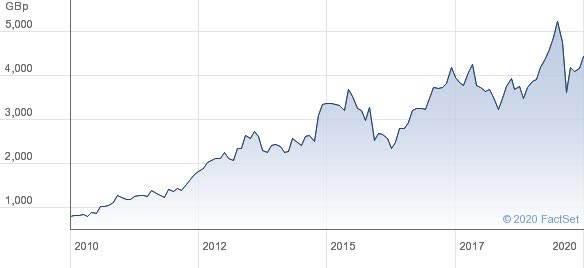
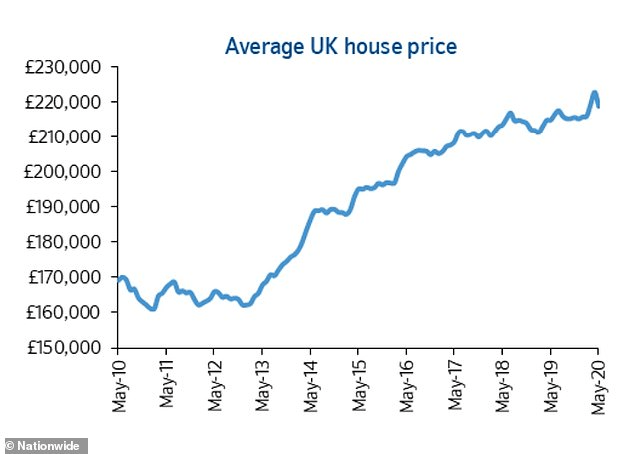 Source: thisismoney.co.uk


 East Devon Watch