‘Here’s what happened when parish council legend Jackie Weaver took on No10’

An extract from another satire on the Council Meeting of the moment.

Fleet Street Fox www.mirror.co.uk 

*logs on*

The extraordinary meeting of the Not Taking The Blame For Any Of This Committee of Her Majesty’s Government of Handforth Parish Council, Friday February 5, 2021.

Cast: Prime Minister Boris Johnson, Cabinet Minister Michael Gove, Chancellor Rishi Sunak, Head Girl Priti Patel, and assorted ne’er do wells.

In charge of proceedings: Head of the Be Civil Service and parish clerk with 25 years’ experience, Mrs Jackie Weaver.

Boris Johnson, HERO OF THIS PARISH: Can we start this illegal meeting now?

Offstage, sotto voce : F*** off.

Jackie Weaver: We can start the meeting, Prime Minister, and can I just suggest everyone turn their microphones off.

[Nobody turns their microphones off, someone hits record]…………

Now use this link to read on and see the accompanying images

Let’s All Rejoice in the Chaos of the Handforth Parish Council Video

I once worked with a Freemason.  ……………..

Seth Ferranti www.vice.com

I always assumed he was quite a bad Freemason, because, despite having a yearning ambition to be a higher-ranking member of his Lodge – Grand Wizard, or whatever they are called; “Baron Nonce” – he was still, after 20 years, a low-level humble mason grunt, like that strange large kid at your school who was still a white belt in judo all the way into Year 8.

I also assume this was due to the fact that, every time he got drunk after work (despite being in his fifties, he was doing the same temporary admin job as me, which I figure added to his “not being taken seriously by the mason” thing, because all masons are comfortably mid-ranking senior police officers or suspiciously wealthy residential GPs), he would get bleary on three pints of warm real ale and tell me all about his secret society. 

“No it’s good, like,” he’d say, weaving backwards and forwards, glasses askew, growing ever more puce, breath coming heavy through his nostrils like a horse. “It’s… we do these little plays.”

I’d ask him to elaborate. Plays? “Little moral plays, and that. You have to learn your lines – perfectly – or you can’t go up the hierarchy.” I assumed, watching him pore over his lines as he ate sandwiches out of tinfoil every lunchtime, that he was spectacularly bad at remembering, but still he soldiered on. 

“So you don’t, like, wear gowns and cut up alive women as a human sacrifice?”, I’d ask, and he’d hic at me and lean in and say: “We don’t wear gowns, idiot. We wear sashes.” I imagine he’s still out there, at his little masonry lodge, ambiently smelling of metal the way people with high blood pressure do, fluffing his lines, rolling the legs of his trousers up and letting all the other masons smack him on the arse with a cricket bat. In a way, I hope he’s happy. In… in a way. 

I was thinking of The Freemason I Used To Work With in light of the Handforth Parish Council video, which struck deep-down nostalgic chords within me: I remember how baffled I was, how taken aback, by the sheer small-timery of this massive hushed cloak-and-dagger secret society; the sudden reveal that a powerful understructure that uses shadowy hands to manipulate the upper echelons of public office is actually just a load of men in a block-booked church hall playing dress up every Wednesday. 

I thought parish council meetings were just six people who loved the church too much and loved “leaving their village” too little, sharing homemade lavender cake, bitching about the local headmaster (“loves himself, doesn’t he. That new tie”) then spending a year-and-a-half slowly deciding how to spend £600 of public money. Instead it – well, no, it is all that, obviously. But it’s also a chance for people to project their most nightmarish and base and feral emotions onto the blank placid canvas of “Jackie Weaver”:

I have some questions, and yes I do have the authority to ask them:

A NOTE BEFORE WE START:

I think it’s important we set-up a rough “key” with which to refer to the major players in this coup, because it’s all obviously blurred by the psychotic chaos of a dozen 50+ year olds all trying to be on Zoom, from various different devices, at various different angles beneath the chin, under various different names – I feel there is an ancient, stirring anti-energy deep in the heart of the galaxy, something primal and unknowable, that stops people born in the year 1970 or earlier from really knowing how to use an iPad; the Greeks would have recognised this energy as a god, and given a name to it – which makes it hard to keep exactly up. And so:

JACKIE WEAVER is how we are going to refer to “Jackie Weaver” – 

BRIAN is how we are referring to the self-appointed “clerk”, i.e. that bloke with the airy and terrifying voice of a scarecrow cursed to live a human life while his feet are still strapped deep into the dirt, telling children stories of old in a barren field, come closer boys, come closer and take this dirty old rag off my face – 

ALED, owner of Aled’s iPad, is how we are referring to the vice-chair who goes absolutely tonto near the end – 

ALED’S DAD is how we are referring to the man in the maroon v-neck who tries to stop his son from having a rage heart attack because the exact letter of the parish law was not quite kept to – 

A SECONDARY NOTE

I will be primarily focussing on the 30-second viral “read them and undeRSTAND THEM!” clip from the Handforth Parish Council meeting, and not the extended nine-player 18-minute version, because i. the 30-second clip sums up the state of our society and our completely insane fragile mental state right now better than anything else going, and ii. there is no art I can possibly create about the 18-minute version that will be even one fraction as beautiful as the phrase “Julie’s I Pad” – 

And so:

WERE POMERANIANS BRED NOT DOWN FROM WOLVES?, OR: THE IMPOTENT RAGE OF THE MODERN MAN

I’ve moved to a new place in east London that has a lot of tiny dogs in the locale, and every time I go outside and see one I think, simply, “Dogs used to be hard”. 

 This is just a fact. Dogs used to be hard. They always used to be on pub roofs, being hard, or running double-speed round a park chasing after a kid on a dirt bike, or terrorising chicken coops down at the allotment, hardly. As a child I was scared of dogs, because dogs used to be hard. But then I see, for example, two pugs jostling at each other in an attempt to breathe, and think: this dog isn’t hard. I see a shiba inu elegantly shuddering while it defecates, and think: you’re struggling with the physical exertion of shitting. You are not hard

This is possibly my most Brexit-y, boomer opinion going: just like everyone in their sixties who has never lived through conflict or served in the army thinks millennials need a war to toughen them up (“that’ll knock ‘trans rights’ out of you, won’t it? Artillery fire!”), so I believe dogs these days need to be a bit harder. Toughen up, dogs! Just work harder and stop moaning!

Anyway: just as pomeranians used to be wolves, so Aled’s ancestors used to be conquerors. 

It’s weird, isn’t it. Every one of us has a murderer back in our family history. Someone who has set fire to a whattled cottage, or something. Someone who crossed a sea just to pull a piece of land up for themselves. There, back in the hazy story of our blood, there’s someone who broke moral boundaries before moral boundaries were invented: bashed in the skull of a rival primate with a rock, ran through a nearby village screaming “fire”, slit the throat of one man and took the wife of another.

We evolved up from that, and now we don’t know what to do with the primal, lizard-brain emotions that comes with it – anger, despair, red hot rage – because we’re too busy wearing cardigans and writing letters to the BBC for putting same-sex couples on Strictly. We are just as neutered as the tiny dogs that shit outside my building. We just don’t see it yet.

I think Aled’s quite iconic meltdown is a testament to that: Aled is a man of soft furnishings and petty griefs, but deep inside him lives the hard-edged emotions of ancestral England, and he doesn’t know what to do with them. He doesn’t know how to be angry in a cool way because he’s never had to use anger as a weapon before. (You know this because he is on the parish council – nobody on a parish council is doing it because they have lived a fulfilled life – and, not only that, he has kissed the requisite parish council arseholes to scramble up the ladder to become vice-chair at what is – relatively, in parish council terms – a young age). 

 So when something primordial rises up within him – for example, when Jackie Weaver kicks out the parish council chair for obfuscating about the legality of the parish council meeting that he is literally chairing and currently in, right now – it comes out like this: first, the almost-cool smartarse interjection of “illegally!” when Jackie Weaver attempts to explain the reason for the meeting, and then the instant-onset calmed-down-by-your-own-dad anger of “read the standing orders”, rising quickly to “read thEM AND UNDERSTAND THEM”. 

His heart is pulsing blood through his body. Adrenalin spikes in him so high he doesn’t sleep for days. A week later, his throat still feels rough from shouting at Jackie Weaver. He is not made for this. His body does not know how to deal with the anger his heart feels. Anger he feels because someone did a parish council meeting slightly wrong.  

LOCAL POLITICS: AS EMBARRASSING AS NATIONAL POLITICS, BUT ONLY JUST

I think what’s striking about the petty bureaucracy of the Handforth Parish Council video is the fact that, within it, is a microcosmic portrait of our own national politics, and it doesn’t exactly fill me with confidence re: getting out of the pandemic alive, for example. The sheer fact of politics is: anyone who wants to participate in it should be banned from doing so as a fundamental prerequisite. And yet we keep letting people who want to be in charge, be in charge. That is a broken system. 

I looked up what parish councils actually do, and it’s nothing – odd leftover jobs that no other level of non-voluntary politicians want to cover. It’s all about announcing whether a footpath is an actual footpath, or what water belongs to which stream, or whether the town centre should have an unglamorous Christian festival of some sort that year. The fact is, up and down the country, hundreds of these meetings are being held every single year, achieving nothing more than the wasting of time and the soft illusion of power. 

None of the people on the Handforth Parish Council are doing anything, or have ever done anything. But what they do is meet every month, pore over an ancient list of rules and sub-clauses to try and win arguments against each other about, like, playgrounds, and talk to each other in the ye olde manner of which they have become accustomed, getting angrier than I’ve ever been in my life about whether someone who calls themselves the “clerk” is actually the “clerk” or not, because we didn’t vote for a “clerk” and, as vice-clerk, I need to sign off on a clerk, so actually, you’re all going in the book! You’re all going in the book!*

Does this soup-like level of non-entity local politics not fill you with a deep and unshakeable dread? Work your way up the greasy ladder and this is all politics is, higher and higher, it’s just that more scoffing journalists write about it. This is all politics is: people who think “voting Lib Dem” is a viable ideology, playing at being grown-up, calling people “the right honorable member”, adjusting their glasses, fuming about nothing.

These people aren’t in charge, but their analogues are in charge, and that terrifies me. There are Aleds stalking the halls of Westminster. People have voted for a number of Brians, all who serve uselessly as a Conservative MP for 40 years then retire to the House of Lords. This isn’t politics, but it is politics. Do you not see? These are the people who are in charge! We’re fucked!

JACKIE WEAVER IS RIGHT

The name “Jackie Weaver” started trending on Twitter last night, and I do see why her powerful demeanour chimed with people: in the face of two or three streams of impotent male rage, she remained calm and placid while dispatching each errant council member to the Zoom naughty step, never allowing emotion to inflect a petty dispute (unlike Aled, whom I reckon got so angry he cried off-camera), sticking to her guns, not allowing mealy-mouthed apologies from either the chair or vice-chair to allow them to wiggle back into the room. 

All of this I respect. She was, simply, trying to get through an agenda of boring pointless stuff about bike shelters or whatever, and having someone who can’t even frame his own face in a webcam chuntering about whether the meeting itself was legal or not for five minutes before the meeting even started was stopping everyone from doing that. Jackie Weaver is a woman of action. If the meeting can’t go ahead with the current chair, kick out the chair and vote in a new chair. She knows the standing orders. She has read them and undeRSTOOD THEM – 

JACKIE WEAVER IS WRONG

That said – and do bear with me – I cannot help but feel that Jackie Weaver might have been acting a little above her allotted station. 

The thing is, from the rage of Aled and Brian, you have to assume that a number of Handforth Parish Council meetings have gone extremely off-piste when two blokes who shag rule pamphlets start talking about esoteric rules they’ve learned this month. And from the exhausted eye-rolling demeanour of Jackie Weaver, you do feel like her patience has been tested over these Zoom calls (and in-person meetings) over a number of months. She is herding cats, and each of those cats has their iPad at a psychotic angle in accordance with their face, and only six of those cats know how to turn their microphone on, and two of those cats are really angry about something no one can tell the actual reason for and another of those cats is posing mutely in front of a wall full of guitars. I can see how her patience has been exasperated.

But in ejecting the chair for petty rule-breaking, you are instantly making the rest of the meeting about petty rule-breaking, which derails the meeting just as much as the petty rule-breaking. I am not about to go through a parish council rule handbook to check the exact accuracy of Jackie Weaver’s behaviour, but in enacting it she knew there would be pushback. Part of me sees her actions as heroic – a woman pushed to her limits, hitting the “Kick Member?” button at the end of her wits and starting life anew, unencumbered by “Brian” talking about “legality”.

Another part of me sees the streak of jobsworthiness that runs through this petty country like a stick of rock: I feel like I have met a number of Jackie Weavers in my lifetime, been gently chided at them for non-existent and unenforced rules (Jackie Weaver has followed me back to my car and told me I didn’t put the trolley back in the right place at the supermarket; Jackie Weaver has gone to the bar at 7.01PM and told the landlord that the children in the garden should be ejected from the play area in accordance with the law; Jackie Weaver has left a two-page handwritten note, signed anonymously but you know it’s her, because you put the black bin out during a green bin week). 

Jackie Weaver was in the right, here, based on 30 seconds of context. And she is right according to the letter of the law. But I wouldn’t want to ever get on the wrong side of her, because she will grind down my life until I have to move to another village entirely just to get away from her. 

LOCKDOWN AS AN INFLUENCING FACTOR 

Would this insanity have happened without lockdown? On one hand, yes: this is England, and these are English people, and this is the most English thing I’ve seen since we all kicked ambulance roofs in during the World Cup.

That said, no: it is impossible to separate the artist (an unprecedented second lockdown) from the art (this video). This would not have happened to the same degree if we weren’t all locked in our houses, forbidden from taking more than one walk a day**. That it did is an uncomfortable foreshadowing of what is to come.

When is lockdown over? It’s impossible to see the end of it, and I can’t help but feel that this video – these actions – are a natural endpoint awaiting us all. After middle age, and after a comfortable life spent in small-town domesticity, 60 percent of us end up as either a Brian, an Aled, or a Jackie Weaver: we take our meek powers and form them to a sharp point and spike them into the petty disputes over the placement of a temporary fence between two allotments.

This is the reality awaiting so many of us: older than we ever thought we’d be, peering through our bifocals, long since overtaken by the rapid rise of technology, arguing with someone 16 houses over about whether or not a body of water is a “pond” or a “small lake”, and whether we need to write an extremely long letter to Ordnance Survey correcting them on that. 

I think lockdown has accelerated our descent into this kind of small-worlded madness. With the doors shut off to us and the walls ever closer, the reality of the world is pressing up hard against all our psyches. You are finding yourself doing this too, right: having insane high-spike emotions about things that do not matter? The other day I went raging because a recycling box was in the wrong place on the floor. I walked in the kitchen barefoot and a packing peanut stuck to my sole and ruined the next four hours of my day. 

There is nothing left to do in this world, and so we are contained in our own boxes of emotion, and all the simple primal urges come out: rage we don’t know what to do with, giddy happiness at absurdities, laughing at fools. The Handforth Parish Council video wouldn’t have happened without the government spending the last 11 months on a special social experiment designed to send us all insane – yes. But the video itself wouldn’t have gone viral without us, the insane people, going insane at it. Don’t you see? You are not the Jackie Weaver in this scenario. You are Brian, or you are Aled, shouting out of your window, your sanity dwindling with every circle of the sun. You fools. You fools

@joelgolby 

* It’s worth noting that none of the parish council players will ever, even in their deepest rage, resort to swearing: you’ll get embarrassingly angry about someone being ejected from a Zoom call, but you’ll still never utter a word of sin in front of God, no matter how low Jackie Weaver sends you. I think that’s really funny. Just say “fuck” now and then, man. It might help you get something out of your system. Instead you’re going maroon in a cardigan and calling everyone who’s muted on Zoom a “fool”, like you’re Gandalf warding off a troll.

 ** Everyone in this video – everyone in this video – would call the police on you if they were your neighbour and you left the house two times in one day. Every single one of them. Just be aware of that. Every single one of them would put you in jail if you forgot to get milk and popped out for milk.


BT warns rural areas will suffer broadband delays unless government steps up

People living in rural areas could face a further delay in getting next-generation full-fibre broadband unless the government stops dragging its feet and removes financial barriers, the chief executive of BT has warned.

Mark Sweney www.theguardian.com 

Millions of homes face being last on the list to receive rural broadband because they are commercially unattractive for operators to reach with full-fibre broadband, which could put rural residents at risk of becoming “second-class” citizens in the digital revolution.

Philip Jansen said that exemption on a form of business rates, charged on the new networks once they are built, would be worth £1bn to BT, money that could be spent on connecting about 3m homes.

The BT boss has said that the government and telecoms regulator Ofcom need to remove financial and regulatory barriers to help firms building full-fibre and gigabit networks or rollout targets would be missed.

He said that while the government has “said a lot”, there is now an “urgency” to act if it is to have a hope of meeting its goal of 85% coverage of all homes in the UK with gigabit speed broadband by 2025.

“The biggest contribution the government can make are on cumulo rates, essentially business rates charged on the new networks once they are built; it risks significantly slowing our progress,” he said.

“Exemption on these rates would be worth about £1bn to BT alone, equivalent to [getting full-fibre broadband to] about 3m premises. Without it we may need to rethink the pace and shape of our fibre build and those living in rural areas may need to wait longer.”

BT is investing £12bn to roll-out full-fibre broadband to 20m premises by the mid- to late 2020s. In November, the government diluted its target from Boris Johnson’s election pledge of a full-fibre connection for every home by 2025, to 85% coverage with gigabit speed coverage, and said it would look to spend £1.2bn of a £5bn commitment to subsidise expansion in to commercially unattractive rural areas. 

Earlier this month, the Public Accounts Committee (PAC), parliament’s spending watchdog, criticised the government for a catalogue of failures relating to the rollout saying it would miss its 2025 target.

“Look at the PAC report, the government has said a lot but we would like to see extra money to build in really rural areas quickly,” said Jansen. “We want to go as fast as we possibly can and build as much [in] rural [areas] as we possibly can, the government can help us on cumulo and not tax us on the build.”

But he also implored Ofcom to introduce what it believes are fair regulatory relief measures to encourage investment in the rollout in its Wholesale Fixed Telecoms Market Review which will be published next month.

These include price controls for 10 to 15 years, to protect the return on BT’s £12bn investment that it said would take 20 years to pay off, and not to be too quick to step in to regulate.

“We are not looking for some super-normal return, just a fair return,” said Jansen. “BT is ready, willing and able to build like fury and fibre up the UK but we need Ofcom to come good on creating a climate that encourages investment and the government to show some urgency in removing barriers. There has been plenty of time for talking now we need to turbo charge the move to the next generation of connectivity.”

Hilarious moment Parish Council Zoom meeting descends into chaos after clerk kicks out chairman

After the attempts to block the change in regime last year in EDDC nothing surprises Owl. 

Follow the link below to watch the video clips.

[The Clerk explains: update on BBC https://www.bbc.co.uk/news/uk-england-manchester-55946252 ]

Sarah Grealish www.thesun.co.uk 

Pandemonium broke out at a meeting of the Handforth Parish Council after the Chairman told the Clerk that she “has no authority.”

Footage of the meeting has gone viral on social media with people comparing the clips to an episode of ‘The Thick of It.’

Chairman Brian Tolver lashed out at the clerk saying “you have no authority here Jackie Weaver, no authority at all” before she chucked him out of the meeting.

Vice-chairman Aled Brewerton then branded the meeting “illegal” before Clerk Jackie asked the group to elect a new chairman.

Enraged Aled then bellowed: “No they can’t because the vice-chairman is here, I take charge.

“Read the standing orders. Read and understand them.”

In a second bizarre clip the vice-chairman goes on an indecipherable rant while in a third the Clerk asks to be referred to as Britney Spears……….

The meeting took place in December but the footage only picked up pace online last night.

Exmouth campervan charges could rise

Calls have been made to review the “absolute bargain” charging regime for motorhomes and camper vans staying overnight in Exmouth.

Daniel Clark, local democracy reporter www.radioexe.co.uk 

Camper vans and motorhomes are able to stay in the town for up to three consecutive nights for just £11 for 24 hours, in three long stay car parks.

The scheme introduced in 2018 also saw the vehicles banned between 8 p.m. and 8 a.m. along sections of Imperial Road and Queens Drive, as well as a 24-hour restriction on motor caravans along sections of Queen’s Drive.

An East Devon District council car parking committee has agreed to ask officers to review camper van and motorhome policy, and called for tariffs to rise, potentially to £30 a night.

Andrew Ennis, East Devon’s service lead for car parks, told the meeting that East Devon is seeing more and more camper vans and motorhomes on the highway and they are appearing in their car parks and the Exmouth pilot – which allowed overnight parking in Imperial Road Recreation Ground, Queens Drive Echelon, and also Maer Road has been broadly successful and there is a significant and growing demand from our visitors for short duration “aire” style facilities throughout East Devon.

His report proposed that the council should begin a consultation with Ward Members seek to introduce a revised policy that welcomes over-night stays in specified car parks across East Devon unless there are local circumstances that would mean that there would be an unacceptable negative impact in the vicinity.

The tariff will allow an overnight stay in approved car parks (where no other facilities are provided) of one, two or three consecutive nights only (with no return permitted within 24 hours), but motorhome and campervan customers will not be eligible for purchasing our standard car park permits and will only be permitted to use our pay and display car parks on a “pay as you use” basis.

And officers would also like to explore the possibility of creating dedicated motorhome / campervan pitches within a site with appropriate facilities to allow longer stays, and for which a premium overnight rate of say £30 per night could be expected.

Cllr Jack Rowland said that it was a difficult subject to get the right balance on. He said: “We want to attract tourists into the area, but on the other hand, I wouldn’t like to think we are providing the facilities and charging that may undercut the businesses that provide the full facilities in the area. I wish I could come up with an easy solution to this but I don’t think there is one.”

Cllr Maddy Chapman said that the summer before last, she counted 38 camper vans on the seafront parked less than one metre apart, and that there should be certain car parks designed for certain jobs as ‘if they can park willy-nilly, it will cause massive problems’.

Cllr Andrew Coleman said that the £11 a night to park on the seafront was “too good of a deal”. He added: “£11 for 24 hours is very cheap for the seafront and it should double, and would see some of the problem going away.”

And Cllr Olly Davey said that as local campsite charge around £14-18, the £11 on the seafront is an absolute bargain, adding that most places he goes to are around £20 a night.

With the coronavirus pandemic potentially leading to restrictions on foreign travel, Cllr Ben Ingham added that East Devon was likely this holiday to see people visiting in motorhomes ‘on a scale that we hadn’t envisaged before the pandemic’.

He added: “I am convinced we will see more this year as people wary about travelling abroad. £11 is not high enough, as we have to tie in with the private sector and make sure that people don’t just park in the car parks to get the cheapest deal and undermining local business. We should be raking in the money rather than giving it away.”

Cllr Mike Howe said that everyone agreed that the charges should be increased, but that he was wary of then charging too much. He added: “We don’t want them to be ripped off and that they do want to come back year after year. They are way too cheap at the moment but they need to be value for money and attractive so they come.”

The committee unanimously agreed to ask officers to investigate further and draw up a report on the issues around camper van and motorhome parking in East Devon, which would look at the success of the pilot sites in Exmouth, whether it should be rolled out to the rest of the district, how to manage ‘daytime’ parking in the car parks, and how pricing levels the tariffs should be set at.

Mr Ennis added: “There is a debate to be had there about whether spaces are worth £20 or £30 a night, but we will need to do further work on what is an appropriate pricing structure.”

The committee asked for the report to come back ‘as soon as possible’ so everyone can benefit from its recommendations.

One in five people in Devon have now had a Covid-19 vaccine

More than 200,000 people in Devon have had their first Covid-19 vaccine, the highest in the South West, latest NHS England figures show.

Daniel Clark www.devonlive.com

The statistics, which provide the position as of January 31, show that there have been 217,344 vaccinations in the county, with 204,815 of them being the first dose.

The figures for Devon, which will have risen in the most recent days, are the highest number of vaccinations for any of the regions within the South West, and they show that 20.5 per cent of the population had received their first jab. This is up on the 14.5% as of January 24.

With the adult population of the Devon STP area being 999,049, the 204,815 who had received their first dose, means that as of Sunday, 20.5 per cent of Devon’s residents had received at least one dose of the vaccine. Those numbers will have risen since, and are up on the 145,148 as of the position on January 24.

The statistics show that as of Sunday, of the 79,525 over 80s within Devon, 72,831 had received their first vaccine – a total of 91.6 per cent, with 10,838 – 13.6 per cent – having also had the second dose.

While the 91.6 per cent figure is lower as a percentage of the total cohort than anywhere else in the South West, Devon’s population of over 80s is significantly higher than every other region – more than double in some instances

Of those aged 75-79, 39,993 people have received the first dose of the vaccine – 72.7 per cent of the cohort – while 12,708 of those aged 70-74, 16 per cent of the cohort – had as of Sunday had at least one dose.

And 79,283 under 70s, primarily those employed in health and social care settings, had received the first dose of the vaccination as of Sunday – 10 per cent of the total under 70s.

There are now five methods by which the vaccine is being rolled out across Devon.

All four of the county’s main hospitals – in Plymouth, Exeter, Torquay and Barnstaple – are giving the vaccination to priority groups in line with national guidance, while GP practices are working together in groups to set up local vaccination centres, and across the county, 20 centres are now in operation, serving all of Devon practices.

GP-led facilities are delivering the vaccine to residents and staff in care homes, while pharmacies have started to deliver the vaccine, and last Tuesday, the mass vaccination sites at Home Park in Plymouth, and Westpoint Arena just outside Exeter became operational with thousands of vaccines a day to be delivered.

Every Devon care home has been vaccinated as well, except for those where there were active outbreaks.

Pinnochio alert – Local elections 2021

A correspondent writes …

It seems that local elections might take place in May 2021.  Is it a coincidence that many DCC councillors rarely heard from are suddenly popping up with columns in newspapers all over Devon?  And is it coincidence that our (unimpressive, overpaid) Police and Crime Commissioner now promising more police?

Should councillors up for re-election (and the Police and Crime Commissioner) have their newspaper columns marked “This Councillor/PCC is up for re-election in May 2021 and any claims made in this column should be fact-checked/researched by readers/voters”?

Or, as with some US newspapers, given a “Pinnochio alert” of 1, 2 or 3 Pinnochios, depending on the “creativity” in the columns?

Owl reported yesterday Alison Hernandez “on manoeuvres”

Community testing to identify asymptomatic workers and carers is launched in Exeter

Devon County Council is launching a community testing programme to identify asymptomatic carriers of the coronavirus, people who show no symptoms, and is encouraging critical workers and others who are not already receiving regular testing, to start booking their appointments.

Health and Wellbeing Posted on: 3 February 2021 www.devonnewscentre.info 

The rapid lateral flow tests give results in around 30 minutes.

Around one in three people who have coronavirus do not show symptoms, so these tests are to identify those non-symptomatic carriers of the virus, to require them to self-isolate immediately to prevent them from transmitting it to others.

The first site has opened at County Hall, Exeter, with at least a further 13 community testing sites planned to open across Devon over coming weeks. Plymouth and Torbay authorities are organising their own rapid community testing in parallel.

The tests are specifically for critical workers and those in high-risk occupations who still have to attend work, such as taxi and bus drivers or retail workers.

They are also for people who are in contact with others who are vulnerable, such as carers, who do not currently display symptoms.

People with symptoms – high temperature; new and continuous cough; change in their usual sense of taste or smell – should self-isolate and arrange a test via the national NHS testing programme, using the GOV.UK website or by calling 119.

The County Hall community testing centre has capacity to process up to 300 tests per day, but potential to scale up to twice that number of tests each day if required.

Steve Brown, Director of Public Health Devon, said:

“Community testing is a quick way of identifying people who are likely to have the virus in order to prevent them from transmitting it to others.

“We’ve initially piloted the County Hall site in order to make sure staff are fully trained and that the testing process itself works smoothly.

“Individuals can choose to walk-through, or drive-through, two testing areas.

“Tests are being turned around quickly, with results back to the individual within the hour, via text and email.

“We’re now calling on people to take the test to help protect others and to stop the spread of coronavirus.

“We have opened up our booking system to larger numbers and are inviting critical workers whose jobs require them to work face to face with others, and people who care for others who are vulnerable.

“A negative test result will mean they’re able to carry on their essential business or caring role, however a positive test result in around half an hour will require them to self-isolate at home.

“It important to stress that taking the test, even if the result is negative, does not discount the need to continue following national guidance around social distancing, wearing a face covering, and washing your hands properly and regularly. These simple steps are still vital in preventing the transmission of the virus.

“The national advice is front line workers and people who have regular contact with the public during their working week, to be tested twice weekly. If you visit see the public less frequently, you may wish to test on the day of the visit or the day before.”

To book a test, visit Devon County Council’s website, http://devon.cc/testing

“We intend to roll community testing to at least 13 locations in Devon this month and next. Most of those will be fixed facilities, while some will be mobile units in order that we can reach rural communities and businesses. Some will be by appointment only, and we will be inviting people to book appointments at their closest venue.”

The exact locations for the sites are yet to be announced, however they will be in the following areas.

Barnstaple

Honiton

Newton Abbot

Tiverton

Exmouth

Tavistock

Sidmouth

Seaton

Axminster

Ottery St Mary

Okehampton

Ivybridge

Bideford

Cullompton

Kingsbridge

Exeter (x2)

Woolacombe

Ilfracombe

Lynmouth

Posted in: Community | DCC Homepage

Devon CCG still closing community hospitals in a pandemic

Closing community hospitals in a pandemic – the CCG hasn’t learnt, and Health Scrutiny lets down another local community

Cllr Marin Shaw  seatonmatters.org Posted on January 27, 2021

Yesterday’s Devon Health Scrutiny Committee faced a decision on the Devon Clinical Commissioning Group’s proposals for Teignmouth and Dawlish. These involved 3 key proposals to move services from Teignmouth Community Hospital (TCH) to either Dawlish Community Hospital or a new health hub in Teignmouth which will include one of the GP practices. A 12-bed rehabilitation ward which the CCG previously promised for TCH would be scrapped. The plan would leave TCH empty and ripe for its owners, an NHS Trust, to re-develop the site.

Health Scrutiny received strong representations against the plan from the local community in November, and in December held a Spotlight Review at which it was agreed that the CCG’s consultation – held during the pandemic – had been flawed. Even despite a skewed questionnaire, none of the 3 proposals to move services had majority support among respondents – most were opposed or unsure. Even on its own terms, the CCG had failed to convince the local community.

What is more, it had failed to produce evidence that community care was an adequate replacement for, rather than complement to, bedded intermediate care in community hospitals, evidence for whose benefits had been provided by Dr Helen Tucker, chair of the Community Hospitals Association, and others. The Committee’s Labour Vice-Chair, Cllr Hilary Ackland, strongly emphasised this point, and was the main author of a paper Health Scrutiny sent to the CCG explaining its reservations.

The CCG then met, but ignored the Committee’s views – the only point in its recommendations which addressed them was a plea for the district council to look into parking for the new hub, a serious issue (as anyone who’s driven around Teignmouth town centre will know), but a secondary one.

Health Scrutiny therefore had to decide whether to follow through and use its key statutory power to refer the proposals to the Independent Reconfiguration Panel (IRP) which reports to the Secretary of State for Health, Matt Hancock – who incidentally has said that he’s a fan of community hospitals. However 7 Tories including East Devon councillors Sara Randall-Johnson (Chair), Phil Twiss, Richard Scott and Jeff Trail, plus (disappointingly) Hilary Ackland, voted against my proposal to do this. I got the support of Independent Claire Wright (of course), Lib Dem Nick Way, and Tories Sylvia Russell (Teignmouth) and Andrew Saywell, so this was lost 8-5. (For Claire and me, this was all very deja vu.)

Instead the Committee voted to try to monitor the development and have informal discussions with the IRP. Given the advanced stage of these proposals and the CCG’s dismissal of the Committee’s views, I’m afraid this will be taken as a green light. I find it astounding that in the midst of a pandemic which has exposed the beds crisis in the NHS, in Devon as across the country, the CCG should continue mechanically with this pre-pandemic scheme and Health Scrutiny should fail to stand up for the need to keep our community hospitals – or at least insist on postponing a decision until we can look properly at what the needs will be – in the post-pandemic world.

CCG Chair Dr Paul Johnson even referred to Long Covid, believed to affect up many Covid sufferers, the full scale of which is very much unknown. Yet at a time when the NHS in Devon and elsewhere is turning patients out of hospitals and in many cases into care homes (which continue to suffer more outbreaks), a possible role for the rehabilitation ward in Teignmouth was dismissed out of hand.

Perhaps the most depressing thing about this meeting, indeed, was that Dr Johnson suggested that as soon as the pandemic declines, the extra money for the NHS will be turned off, and Devon NHS will be back in the world of endless cost-cutting in which it was a year ago, when the pandemic hit. Either he has learned nothing, or he’s expecting the Government to have learnt nothing, or both.

Huge cliff collapse at Exmouth beach

Enormous rocks have collapsed from a cliff face in Exmouth and have crashed onto a popular beach.

Chloe Parkman www.devonlive.com

The arches on a cliff at Orcombe Point – below the Eastern Steps – have tumbled onto the sand.

In a statement on Facebook, Exmouth NCI said: ”Huge new rockfall at Orcombe Point, Exmouth.

”Please stay away from the bases of the cliffs.

”Prolonged rain, big surf and spring tides continue to undermine the cliffs.”

Huge cliff fall in Exmouth (Image: Exmouth Coastguard and Rescue Team/Richard Bramwell)

In an additional warning to the public, Exmouth Coastguard Rescue Team said: ”Please keep well away from the area as the cliff is still very unstable and further collapses could still happen.”

The cliff collapse at Orcombe Point comes after research by Plymouth University on coastal change has predicted we will see more erosion than first thought

The study suggests parts of the coastline at Seaton, areas either side of Branscombe and East of the River Sid at Sidmouth may see more erosion than previously predicted.

Last year, Sidmouth saw a number of cliff falls – with three occurring in just 24-hours.

Photograph shows the cliff arches before the collapse (Image: Ben Griggs)

Following the research by Plymouth University, East Devon District Council’s strategic planning committee recommended that Cabinet consider the wider implications of this study beyond the setting of planning policy at their earliest opportunity, but with a note of caution that further work may need to be carried out to provide a fully informed paper.

Cllr Geoff Jung, portfolio holder for Coast, Country and Environment, said: “This is clearly an important piece of work to inform future planning policy and it is very much distinct from work that we are doing on coastal protection measures.

“We’re making great progress in developing beach management plans and coastal protection works. These will be designed to slow the rate of erosion in Seaton and Sidmouth and hopefully prevent the worst case scenarios identified in this study from occurring.”

The beach management scheme for the town, consists of adding a new rock groyne on East Beach, importing new shingle onto Sidmouth Beach, and East Beach, and raising the existing splash wall along the rear of the promenade.

It aims to maintain the 1990’s Sidmouth Coastal Defence Scheme Standard of Service and reduce the rate of beach and cliff erosion to the east of the River Sid, the scheme is now fully funded and is estimated to cost £8.7m – subject to the Environment Agency approving the submission of the council’s Outline Business Case.

Paul Arnott: what we’ve done since taking over

Quite a list of achievements for barely eight months in power.

             State of the district council address – what we’ve done since taking over

A view from East Devon Council leader Paul Amott, as published in the Exmouth Journal this week.

I am indebted to former Conservative District Councillor Ann Liverton of Sidmouth for the structure of this week’s column.

Last week in the Sidmouth Herald she stated that all she wished to hear from me was matters of interest to the people of East Devon.

Perhaps mistakenly, I felt I had been doing that. My understanding of an ‘outstanding columnist’ was of someone who tried to write as best they could of relevant matters without merely rehashing press releases.

That would be an “outstanding propagandist”.

However, mindful of one’s duty to all readers, I will depart from my normal style for a week and provide Mrs Liverton with some ongoing highlights of the work of the administration I have been leading since June.

1) We have begun the Local Plan review, the consultation for which went live this week.

2) We have left the democratically-deficient GESP and as promised are engaging with the other districts under our duty to co-operate, no longer risking losing control of major developments to an upper-tier.

3) We have established a portfolio to ensure that Climate and Environmental issues will be of central concern and are funding a new officer to co-ordinate this.

4) We have entirely reconfigured the committee managing Exmouth seafront, with new officer roles to support this. We have deleted the “temporary car park” from the seafront and are making sure attractions are there for the summer.

5) With good anticipation of the financial problems which are now with us, we set up the new LED Monitoring Panel to cover its current financial crisis and the future relationship when the contract is due for renewal in the next year.

6) We commissioned external auditors to write a report regarding S106 and CIL, where members with direct experience briefed the auditor, as well as officers. This was a critical cultural change.

7) We have been unprecedentedly active in seeking to understand the Council’s Assets – previously opaque – some of which historically have passed to others well below their actual value. With courtesy and diligence, we are seeking information from officers and a more transparent approach is now emerging.

8) We resisted the “line of least resistance” urged by some to the issue of Cranbrook Town Centre and – over the course of three meetings and complex negotiations – a much better deal has been secured.

9) We have overseen and fully participated in the management, analysis and distribution of Covid funds from the government – a complex, evolving and time-consuming matter for officers and members alike.

10) We have overseen and managed the massive Covid challenges surrounding loos, play areas, licensing, public spaces, waste and recycling, seafront safety, and how to conduct public events safely, including decisions to allow or cancel them. All of this has been very time and decision intensive and our working relationship with officers has been exemplary; they deserve praise for coping so well in the crisis.

11) We have exercised hands-on management of the deficit created by Covid to ensure a secure financial base for the council itself.

12) We have ensured a major communications exercise about Covid-19 to keep East Devon informed and have engaged with food banks and local support groups across the district. We have also supported the Poverty Working Panel’s emerging work in line with our agenda to tackle poverty across the district.

13) In a process from September to January, we considered the mental health of both members and officers recognising the stresses to both – and will now appoint an officer to take initiatives on this

14) To recognise the importance of all these elements to our economy and well-being, last week we appointed a new Cabinet member for Leisure, Sport & Tourism.

15) Regionally, we have mounted a vigorous defence of the District Council against the threat of abolition, including from the two MPs, and for the time being, have prevailed.

[Owl recalls that Sasha Swire gave the Livertons a rather unfortunate sobriquet to describe how they were always popping up and down at meetings]

UK Can’t Close Its Border Because It’s An Island ‘Unlike Australia’, Says Grant Shapps

“Knowledge is when you learn something new every day”. How silly of Owl not to realise such an obvious explanation.

Owl is much wiser now. Hopefully Grant Shapps will come up with more pearls very soon.

Ned Simons www.huffingtonpost.co.uk

The UK cannot “close” its border like Australia has because the UK is an island and Australia is a continent, Grant Shapps has said.

Boris Johnson has been under pressure to explain why the government has not introduced stricter measures at the border to prevent new variants of coronavirus being imported from abroad.

The government has announced arrivals from a “red list” of 30 covid hotspots will have to quarantine in government-run hotels.

But the policy is not yet in force and no date has been given for when it will be enacted.

Labour has attacked the decision to only target a limited number of countries as “half-baked” as it leaves “gaping holes” at the border.

And according to The Times, the Scientific Advisory Group for Emergencies (Sage) warned the prime minister that “geographically targeted” travel bans “cannot be relied upon to stop importation of new variants”.

Quizzed on Wednesday over why the government was not introducing tougher border controls, Shapps told the Commons transport committee: “The idea that the UK could completely button down its hatches and remain buttoned down for a year is mistaken.

“But also the evidence that that is the only thing that you need to do, or even the primary thing you need to do, is also pretty shaky.”

He said: “People say: ‘Why don’t we just close down and then we’ll be safe?’.

“But, of course, we wouldn’t be safe, because we are an island nation, unlike Australia or something which is an entire continent.

“That means that we need to get medicines in, we need to get food in, we need to get our raw materials in, sometimes we have to move people around, scientists and others.

“If we weren’t doing these things then we simply wouldn’t be combating this crisis.

“In fact, specifically we wouldn’t have had things like the medicines that we’ve needed or indeed the vaccinations, some of which are manufactured in Europe, only 20 miles away at its closest point.”

Although Australia is sometimes called an “island continent,” most geographers consider islands and continents to be separate things and therefore Australia is widely referred to as a continent.

Whatever it is, it confirmed its first case on January 25 and its borders were closed to non-residents on March 20.

From March 27 people returning home to Australia had to quarantine for two weeks in government run hotels.

New Zealand, also an island nation, confirmed its first case of Covid on February 28 and closed its borders to all non-residents on March 19.

Residents returning home were required to self-isolate. On April 10 the rules were tightened with the isolation having to take place in government run hotels.

Ministers running out of excuses on environment, MPs warn

Time is running out for the government to turn its “aspirational words” on repairing Britain’s natural environment into action, MPs have warned.

www.independent.co.uk 

In a scathing report released on Wednesday the influential public accounts committee said ministers were running out of excuses for delays on issues like air quality, water, and wildlife loss.

The MPs noted that the government had first promised to improve the natural environment “within a generation” in 2011 and that progress had been “painfully slow” in the ensuing decade.

They warned that a 25-year plan set out by ministers in 2018 did not contain a coherent set of long-term objectives and that the environment department Defra was simply being shrugged off by the rest of the government.

“Improving the natural environment is a huge task and there are structural issues within government that still need to be resolved to improve the chances of success,” the MPs say.

“The Department for Environment, Food and Rural Affairs has policy responsibility for most of the plan and relies on other departments to play their part; yet the Department has not shown that it has the clout to lead the rest of government.”

MPs also criticised the Treasury for its “piecemeal approach to funding measures to improve the natural environment” and said Rishi Sunak’s department simply did “not yet understand the total costs required”.

And they sounded the alarm on the government’s new post-Brexit watchdog, the Office for Environmental Protection, which they warned might not be “sufficiently independent from government”.

Meg Hillier, chair of the cross party committee, said: “These ‘generations’ will soon be coming of age with no sign of the critical improvements to air and water quality Government has promised them, much less a serious plan to halt environmental destruction.

“Our national environmental response is left to one Department, and months from hosting an international conference on climate change, the government struggles to determine the environmental impact of its own latest spending round. Government must move on from aspirational words and start taking the hard decisions across a wide range of policy areas required to deliver real results – time is running out.”

Prospect, the civil service trade union, said the report showed there had been a “worrying gap between the government’s rhetoric on environmental protection and the reality”.

Its general secretary Garry Graham said the union had been warning that the government’s environmental agencies “lack sufficient funding to do their jobs”.

“The recent announcement that public sector pay will once again be frozen, having never recovered from ten years of pay restraint, could be the final straw for many skilled workers. Decades of institutional knowledge and skills are being lost across the country,” he added.

“With COP26 on the horizon the government must set an example to the world by demonstrating that investing in nature means investing in the people who protect it.”

More cops planned for Devon & Cornwall

Commissioner ups spending on people by £3 million

You can always tell when an election looms –  expect the “filling of potholes” and “papering over the cracks” generally accompanied by fanfares. Owl

Radio Exe News www.radioexe.co.uk 

Devon and Cornwall’s police and crime commissioner has set out her plans for the next financial year beginning in April, a month before elections which will decide whether she stays in the job.

Alison Hernandez says her proposals will marry a traditional neighbourhood policing approach with significant investment in modern technology.

The draft budget contains funding for 40 additional neighbourhood officers, building on a programme of recruitment that has already seen 317 officers added to force strength since the Commissioner’s term began in 2014 and bringing officer numbers to a 10-year high.

In addition 22 staff would be added to force contact centres to improve 101 response times, 29 investigators would be recruited to bring more criminals to justice and eight staff would be hired to speed up professional standards investigations.

The commissioner also wants to boost efforts to collaborate with other emergency services to provide more uniformed presence in towns and villages and expand the role of volunteer special constables, who received payments for the first time as part of the force’s response to the Covid-19 pandemic.

The investment in people would represent an additional £3 million on the annual budget of policing Devon and Cornwall. It would be supported by an investment of £1.1 million to bring police technology up to date, ensuring that officers and staff had speedy access to high-quality secure data and enabling the creation of a new drone team to help search for vulnerable missing people and gather intelligence.

The proposed investment comes after consecutive annual surveys by the commissioner’s office showed significant support for additional investment in prevention, neighbourhood policing and police technology. The investment in more people for the non-emergency 101 contact centre comes after scrutiny work by the commissioner’s office found that average call handling times into 101 had increased because of growing call complexity and volume.

The Commissioner said recruiting more officers had been a priority for her since she came to office, but there was an opportunity in the next financial year to also invest in technology to ensure they were supported by high quality data.

“The national uplift in officer numbers, in addition to the proposed increases for next year, will bring budgeted police officer numbers to 3,422, their highest level for a decade,” she said.

“The cost of funding the 40 additional officers will be met later in the financial year, as they are recruited, giving the force an opportunity to invest in a new suite of technology to bring extra efficiency to its activities.

“One of the most fundamental purposes of policing is the prevention of crime, and of the 4,130 people to take part in my recent surveys 94% wanted investment in crime prevention, 88% in visible policing and 86% in community-based crime prevention.

“I believe this investment in people, both to be present in our streets and to be on the end of a phone or email when there is a call for help, will stop more crime before it happens and make our communities even safer than they are at present.”

The proposed additional expenditure would mean an increase to the police precept – the element of the council tax bill that helps fund policing – equating to £14.92 extra for a Band D household.

“Good quality policing that is fit for the future requires real investment,” Commissioner Hernandez said. “I do not propose these increases lightly but in the knowledge that they will result in a real policing presence that I know our communities remain supportive of.”

The scrutiny of the 101 non-emergency contact service recommends a series of steps to be taken by the Chief Constable to reduce waiting times. This includes considering the potential reintroduction of a triage service at periods of long waiting times, a return to a 10-minute waiting time service standard, the speeding up of technology investments which will most help callers and an increase in staffing to help improve waiting times.  

The Commissioner said: “The work carried out by our scrutiny panel, which included members of the public, elected members and Victim Support, has looked in particular at how the new 101 system introduced in the second half of 2019 was working for the public. There are a number of key challenges affecting the service, including the continued growth in volume of contacts and the complexity of those contacts, but improvements need to be made.”

The Commissioner’s proposals will be presented to the next meeting of the Devon and Cornwall Police and Crime Panel at 10.30am on Friday, February 5.

The meeting is hosted by Plymouth City Council. Full budget proposals and the commissioner’s 101 scrutiny report can be found online on the council’s website http://www.plymouth.gov.uk.

Covid cases across region hits lowest total for nearly two months

Devon and Cornwall has seen the lowest number of positive Covid-19 cases confirmed in one 24-hour reporting period for seven weeks.

Katie Timms www.devonlive.com

Across the region, a further 116 new Covid-19 cases were confirmed, down 218 from last Tuesday’s figure of 334 cases.

Cornwall and the Isles of Scilly saw 36 new cases in the figures released by the Government as of Tuesday, February 2. It has now seen a total of 12,564 cases since the beginning of the pandemic.

Devon saw 80 new cases across the county, keeping its spot as the area with the lowest infection rate across England.

In the Devon County Council local authority area, there were eight cases in East Devon, seven in Exeter, eight in Mid Devon, three in North Devon, three in South Hams, and 11 in Teignbridge.

Torridge and West Devon both saw no new cases recorded.

Plymouth saw a further 25 new cases and now there has been 8,248 positive Covid-19 cases since the pandemic began.

Torbay had a further 15 new cases reported, bringing the area’s total Covid-19 cases to 3,574 since the beginning of the pandemic.

The seven-day rolling average for coronavirus infection rates shows that areas in the Devon County Council area (excluding Torbay and Plymouth) is currently the lowest in England.

The figures, which are based on specimens taken between January 22 and 87, shows that Devon’s figures currently stand at 86 cases per 100,000 people.

Devon also has some of the lowest case rates across the country at a lower tier authority level, with Torridge, North Devon and Exeter placed second, third and fourth respectively.

While there has been a significant drop in cases, the latest Office of National Statistics (ONS) statistics, released every Tuesday, showed there had been a rise in weekly deaths registered across both counties.

Deaths where Covid-19 was mentioned on the death certificate were at the highest they have been since the beginning of the pandemic.

The figures from the ONS which relate to the week of January 16 to January 22, but registered up to January 30, show that 128 of the 366 deaths registered in the two counties had Covid-19 mentioned on the death certificate.

The figure of 128 deaths is the highest weekly total in Devon and Cornwall since the beginning of the coronavirus pandemic, and the 65 deaths in care homes is the highest weekly total.

A further 10 deaths from week 2 (Jan 9-15) and one from week 1 (Jan 2-Jan 8) have also been added into the data.

Of the 128 deaths registered in week 3 (Jan 16-Jan 22), there were 46 deaths of people from Cornwall, 17 from Teignbridge, 15 in Plymouth, 14 in East Devon, 13 in Exeter, 9 in Torbay, 7 in South Hams, 3 in Mid Devon, and 2 in Torridge and West Devon. No deaths in North Devon.

In total, 65 of the deaths occurred in care homes, 57 in hospitals, with five at home, and one in a hospice.

In Plymouth, there were nine deaths in hospital, five in care homes, and one at home and in Torbay, there were two hospital deaths, seven care home deaths and one at home.

In Cornwall, there were 24 hospital deaths, 21 care home deaths and one in a hospice.

Meanwhile, in East Devon, there were seven deaths in hospital, six deaths care home deaths, and one at home.

In Exeter, there were six deaths in hospital, five deaths in care homes and two at home.

In Mid Devon, there were two deaths in hospital and one in a care home.

In the South Hams, there were seven deaths in care homes.

In Teignbridge, there were four deaths in hospital and 13 in care homes.

In Torridge there was one hospital death and one at home.

In West Devon, there were two hospital deaths.

A further 10 deaths from week 2(Jan 9-15) have been backdated into the figures this week, with four deaths in Cornwall, three in Exeter and one in East Devon, South Hams and West Devon, and one death from week 1 (Jan 2-8) in Torbay.

Previous weeks have seen 76, 54, 32, 46, 48, 52, 43, 43, 37, 24, 11, 13, 15, 6, 5, 2, 0, 3, 1, 2, 0, 1, 2, 1, 0, 1, 1, 2, 2, 5, 1, 7, 10, 11, 15, 38, 44, 70, 85, 107, 90, 60, 16 and nine deaths registered.

In total, 1,222 deaths from coronavirus have been registered across Devon and Cornwall, with 703 in hospitals, 430 in care homes, 81 at home, two in a hospice, three in a communal establishment and three ‘elsewhere’.

Nine new hospital deaths across Devon and Cornwall in the latest figures.

The latest figures, released by NHS England today (February 2), show that four of the deaths occurred at the Cornwall Partnership NHS Foundation Trust, which runs the county’s community hospitals.

Two deaths were reported on January 31, one on January 30 and one on January 29.

Three deaths were also recorded at Royal Cornwall Hospitals NHS Trust, which runs Royal Cornwall Hospital at Treliske, West Cornwall Hospital in Penzance and St Michael’s Hospital at Hayle. Of those deaths, one occurred on February 1 and two on January 30.

There were also two deaths in Devon hospitals – one at Torbay and South Devon NHS Foundation Trust and one at University Hospitals Plymouth NHS Trust.

There have now been a total of 782 Covid-19 related deaths in hospitals across Devon and Cornwall since the pandemic began.

NHS England confirmed in a statement that a further 767 people across the country had died in hospital after testing positive for the virus.

Patients were aged between 23 and 102 years old. All except 31 (aged 23 to 102 years old) had known underlying health conditions.

Date of death ranges from 29 December 2020 to 1 February 2021 with the majority being on or after 27 January.

Their families have been informed.

Reflections from a former Northam Town Councillor: When A + B no longer = C

A former member of Northam Town Council, Daniel Bell, has questioned the bureaucratic inertia he experienced while serving the local community.

Raymond Goldsmith www.devonlive.com

Mr Bell, who was elected councillor from 2019 before quitting the post in 2020 said: “There is often a tension between trusting the sanity of your own experience and the work environment that you are operating in.

“The system of business as usual, and the pre-determined assumptions about how the thing is supposed to work.”

In 2020, he felt that a series of events had taken place when the World Health Organisation announced a global pandemic.

“They seemed to insist they were related to one another and deep down I could not pretend that I was with the programme I was operating in anymore,” he said. “There was something else going on that could not be ignored not least normalising lockdowns.

“The environment I was in was not conducive for asking questions or engaging at any deeper level of inquiry. It was time to move on.”

Mr Bell said he had previously found inspiration for local government’s potential from a group, Independents for Frome, and Peter MacFadyen’s book Flatpack Democracy.

“What I found refreshing about Independents for Frome was that they were non-party-political, had established shared ways of working together, were brave, took risks and were able to turn the role of their council from being a service provider to an enabler of the community,” Mr Bell explained.

“This engendered a shift from its traditional centralised power relationship with the people to one which made engagement with local government more accessible to everyone.

“People now began to have a significant say in what happened around them, resulting in new energy and sense of possibility.

“Along with this I felt drawn into this arena by a concern at the ongoing damage and destruction on our local environment courtesy of national planning policy ever since the Cameron administration altered legislation to put the presumption in favour of the developer.

“What would it look like if our local council’s truly reflected, represented the genuine hopes and values of the people instead of paying lip service to the colonising programmes and policies of the Westminster bubble directed and controlled as it is by the one per cent money machine?”

Mr Bell recalls a Northam Town Council planning committee disagreement he had.

“I was trying to point out the fact of the frequent disparity between Northam Town Council decisions to refuse planning applications and those of Torridge District Council which were often passed through.

“Surely both councils should be attempting to sing from the same hymn sheet.

He explained another situation in which members of the community were co-opted.

“I remember how all members sat around the table, and the single person from the community was assigned an outside seat.

“When I raised this most simple point asking why the co-opted member could not join the table, I was informed by the town clerk that it was how it was always done.

“Was this an intelligent working basis, simply because that is how it has always been done?

“The biologist Edward. O. Wilson, who once said ‘we are drowning in information while starving for wisdom’.

“So much of the obsolete inertia and dumbing down that happens in local government and our communities today seem to be rooted in the value judgements that they originate from.

“Is it about building bridges or putting up barriers? Relationships or arbitrary rule-following? The spirit of the law or the letter of the law? Collaboration or separation? People or profit?

“It can be a lonely and painful place when something within can no longer pretend or support the system of business as usual and the pre-determined assumptions about how the thing is supposed to work.

“When you can no longer pretend that you believe the official narrative anymore, something else is going on.

“Difficult roads can lead to beautiful destinations. It’s time to move on”

What is the link between Hugo Swire and Knotty Ash?

New Swire company partnering with a holding company with 988 subsidiaries! (Including Knotty Ash Woodworking Limited). 

Trencrom Holdings Ltd appears to be an accountancy company with Hugo as Director and sole shareholder.

https://find-and-update.company-information.service.gov.uk/company/12417234/officers

Owl thinks there may be more than a tickling stick involved.

EDDC guidance on wearing masks – is it a load of pants?

No, but perhaps it should be.

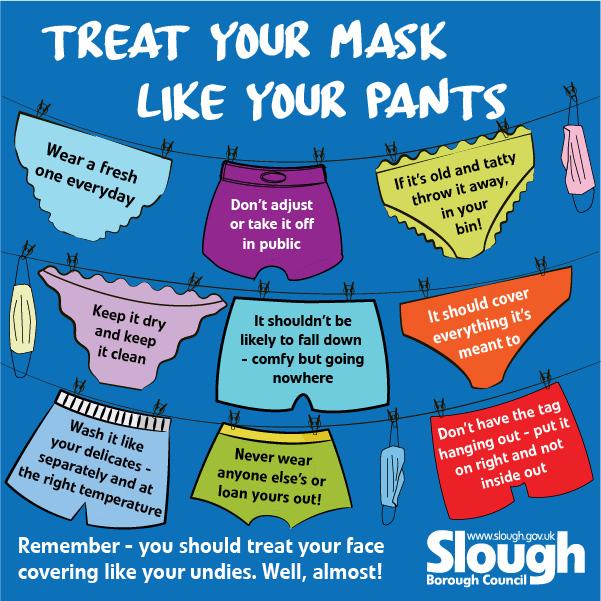
Are you wearing your mask properly? Treat your mask like your pants! Just like undies, if you don’t wear them right, they don’t do their job properly. So unless you are medically exempt from wearing them – treat them with the respect you show your pants!

Tory MPs accuse ministers of incompetence over cladding crisis

Owl’s understanding of the debate yesterday is that no Tory MPs backed the Labour motion but 35 did back a critical amendment. Who were they?

George Grylls www.thetimes.co.uk 

Conservative MPs have accused the government of incompetence in its handling of the cladding crisis that has left millions of leaseholders trapped in unsafe homes.

Ministers promised yesterday to bring forward a solution “very shortly” but warned that there would be “no quick fix” after Labour forced a debate on the issue.

In total 35 Conservative backbenchers have backed an amendment tabled by Royston Smith, the Tory MP for Southampton Itchen, and Stephen McPartland, the Tory MP for Stevenage, that would exempt leaseholders from the costs of removing unsafe cladding from blocks of flats. They need 44 signatures to overturn the government’s working majority.

Christopher Pincher, a housing minister, represented the government in yesterday’s debate after Robert Jenrick, the housing secretary, was criticised for refusing to appear in the Commons. Pincher said it was “wrong and unjust” for leaseholders to bear the costs of fixing historic safety defects and he denounced building owners who had passed on remediation costs to leaseholders.

“There is no quick fix,” he said. “If there was, we would have done it long ago. It is complex. It involves many parties: leaseholders with different leases, developers, warranty holders, the insurance industry, mortgage lenders. We will be making a further announcement on this important work very shortly.”

The government has so far committed £1.6 billion to remove dangerous cladding from tower blocks more than 18m tall. MPs say that total costs could rise to £15 billion when all high-rise buildings are taken into account.

McPartland said he would not accept any solution that involved leaseholders taking on loans and he criticised ministers for their handling of the issue. “The government has been incompetent throughout this saga,” he said. “They’ve created a whole host of these problems.”

Smith said that ministers were not to blame but urged them to accept his amendment. “This government can give leaseholders the certainty and security which they deserve and let the unwitting victims of this crisis once again sleep soundly in their beds at night,” he said.

In the aftermath of the Grenfell tragedy banks refused to issue mortgages on blocks of flats that were covered in cladding unless residents could obtain forms declaring the properties safe. Unable to sell their homes, leaseholders have been forced to pay for nightly patrols by fire wardens as well as sharply rising insurance costs.

Sir Keir Starmer, the Labour leader, visited residents of an affected tower block in Woolwich, southeast London, before the debate, in which his party called on the government to establish a national cladding taskforce.

One in six properties, housing up to 11 million people, could be affected by the scandal, according to analysis released by the New Build Database.

Thangam Debbonaire, the shadow housing secretary, said: “Buying your first home is a life-defining moment but for so many what was a dream come true has become a nightmare. We need a solution to this crisis that fixes buildings and ensures that those responsible pay.”

Boris Johnson – “massive investment” on its way.

How often have we heard this refrain? Owl will wait to “see the colour of the money” and how much of it is “re-announcement”, but it looks to be directed to infrastructure to support the green industrial revolution in the “South West”, which of course includes Swindon and Bristol and….. 

From yesterday’s Wester Morning News:

Boris Johnson’s commitment to bring “massive investment” to the South West has been seized upon by campaigners who have pledged to hold the Prime Minister to his word.

Mr Johnson made the promise, last week, confirming earlier commitments to the region, in an answer to a question from South West Devon Conservative MP Sir Gary Streeter.

The PM told the region’s most senior Tory he “can be assured that we will be giving mass­ive investment in infrastructure to support the green industrial revolution in the South West…”

The decision to stage the G7 Summit of world leaders in Cornwall in June is seen as a reflection of the Westcountry’s leading role in green energy and environmentally-friendly technology.

Now business leaders behind the Back the Great South West campaign, championed by the Western Morning News, are looking ahead to the March Budget and calling for the tourism industry – hard-hit by coronavirus and lockdown – to get more support.

David Ralph, Chief Executive of the Heart of the South West Local Enterprise Partnership, said: “Our big ask from March’s budget is specific support for the tourism sector.”

Susan Davy, boss of South West Water owners Pennon Group, said it was vital the region spoke “with one voice” to win the backing it needs.