Continuing planning controversy in Clyst St. Mary

Owl has received the following updates from a correspondent:

Enfield Farm

We have become aware of a new planning application regarding Enfield Farm and the Biodigester plant. The applicants intend increasing the annual input of crops into the Biodigester these proposals increases in annual input tonnages to the site from 26,537 to around 66,000 tonnes together with the annual output tonnages leaving the site from 21,354 to around 56,000 tonnes this will create significant detrimental effects which will impact on Clyst St Mary.

These tonnage increases are virtually identical to those previously applied for in 2018. Planners found inappropriate and excessive and consequently REFUSED the application but the Applicants challenged EDDC’s Refusal decision with a subsequent Appeal to HM Planning Inspector, the Inspector agreed with EDDC’s Refusal Decision and DISMISSED their Appeal in November 2020 – but now the Applicants are again challenging both previous refusal and dismissal decisions by re-applying for these increases in 2021 under new variation applications to EDDC. 

Links to the planning application

The Parish Council will discuss this at Clyst St Mary Village Hall EX5 1AA at 3pm on Monday 20th September. 

Winslade Park Zone’s A and D

We have received notification from East Devon District Council that the developer Burrington Homes have now submitted full planning applications for a new development on the green field (previously known as the Brethren field)(zone A) and 3 blocks of apartments on the car park, opposite Winslade Manor (zone D). This will effect a number of residents that have houses that back onto the proposed site. The EDDC Councillors previously overruled their own plans and policies on economic grounds in order to grant outline planning permission for this development. This planning application provide the in depth detail.

Links to the planning application

The Parish Council will discuss this at Sowton Village Hall EX5 2AF at 19.30pm on Monday 4th October.

Afghan refugees to be housed in an Exmouth hotel

A number of Afghan families are to be placed in temporary accommodation in an Exmouth hotel.

Daniel Clark www.devonlive.com 

The bridging accommodation is a temporary measure until individuals and families are found permanent, long term accommodation in locations across the country.

Up to 15 families are expected to move into the temporary accommodation over the coming week, consisting of individual adults and families with young children.

They will be placed there as part of the government’s refugee resettlement programme.

Cllr Roger Croad, Devon County Council’s cabinet member with responsibility for communities, said: “All local authorities have been asked to help support with Afghan refugees who worked with and for our UK forces in Afghanistan and who were forced to leave their country as a result of the collapse of the country following withdrawal of US and UK forces.

“We have received notification from the Home Office that a group of these refugees will be placed temporarily in Exmouth as part of the Government’s national Afghan resettlement programme, pending their onward journey to long term accommodation, which could be anywhere in the country.

“We are working closely with our District and Town Council partners, NHS Devon, and local community and voluntary groups to make sure we are ready to welcome them.”

Cllr Steve Gazzard, chairman of Exmouth Town Council, added: “Local authorities across the country are being asked to step up and support this national effort to provide temporary accommodation as part of the re-settlement programme for Afghan families.

“Exmouth is a town with strong military connections and many of the refugees will have been working for our military services.

“Exmouth Town Council will do all it can to provide a safe environment for them to start the process of coming to terms with what has happened to them.”

Cllr Paul Arnott, Leader of East Devon District Council, said: “East Devon District Council, along with other authorities in the area, will be working closely with the Home Office, which has helped a number of Afghan evacuees find emergency accommodation at an Exmouth hotel while further, more long-term, measures can be found.

“We will be offering as much support as we can to help the families who have lost their homes in such tragic circumstances. We would like to thank the Exmouth and wider East Devon communities, in advance, for their understanding, support and compassion for the men, women and children who have been offered sanctuary after living through some truly harrowing experiences.”

Councils across the UK have also been asked to help identify suitable long term accommodation for the resettlement scheme, and in Devon local appeals to private sector landlords have resulted in some potential homes being found.

The Afghan refugees, who worked with and for the UK forces in Afghanistan, are understood to have been flown into the country from the capital, Kabul, in the final days before flights out of the country were stopped by the new Taliban regime. Since then they have been living in quarantine hotels in London.

In Devon, district councils, which have responsibility for housing, are attempting to identify more long term accommodation specifically from private sector landlords, so that there is no impact on their local housing waiting lists.

Devon County Council is now working with local community groups and volunteers to ensure that, once refugees are found suitable accommodation in the county, support around them is available quickly to help them settle in, access local health services and education, and find employment if possible.

For the record, Simon Jupp’s views on vaccine passports: “unethical”

There is comment in the media that Boris Johnson’s “freedom day” Covid plan is becoming another example in his pandemic response of doing too much too soon; and that the contingency Plan B is another example of doing too little too late.

So for the record here is Simon Jupp’s view on vaccine passports – “unethical”.

Does this put him on the “libertarian” wing of the party? – Owl

Link here

Photo of Simon JuppSimon Jupp Conservative, East Devon

Make no mistake: vaccine passports will create a two-tier society with the hospitality industry having to police an unethical policy that will hammer its recovery. Given the Government’s own words that we need to live with this virus, will my hon. Friend confirm how long vaccine passports will be in place—if passed by this House?

Photo of Nadhim ZahawiNadhim Zahawi Parliamentary Under-Secretary (Department for Business, Energy and Industrial Strategy), The Parliamentary Under-Secretary for Health and Social Care

We will set out in detail in due course exactly how the vaccine pass will work for domestic use: for example, in nightclubs.

Boris’ relaxed attitude to National Security comes in for criticism

Is he becoming more like Trump?

“……It is the Prime Minister’s personal investment of time and authority that lends credibility to the NSC and its cross-government structures. Yet under the new system, the Prime Minister will spend roughly 65% less time in NSC meetings than under the previous practice of weekly meetings when Parliament is in session.

 In our initial assessment, therefore, this is a retrograde step that suggests a more casual approach to national security. However, we encourage the Government to return to a more open dialogue with us, sharing—in confidence as necessary—the information we need (and have previously received) if we are to make a constructive contribution to the reform of the UK’s national security machinery in this Parliament.”

These are the last few sentences from the summary of the House of Lords and Commons “Joint Committee on the national security strategy” published last week.

Don’t let Government muzzle charities – Good Law Project

goodlawproject.org

Last weekend, the then Secretary of State, Oliver Dowden, announced his intention to muzzle the third sector. In his blog about the process for appointing a new Chair of the Charity Commission – the Government’s regulator of charities – he complained about “a worrying trend in some charities that appear to have been hijacked by a vocal minority seeking to burnish their woke credentials”. He said the Chair will be selected based on how they “rebalance” charities away from that agenda. And that Ministers will only appoint someone who does this.

One might assume from this that the previous Chair was a radical, activist earth-mother? Well… not exactly. The previous Chair was the former Tory Leader in the House of Lords. She was appointed contrary to the unanimous wishes of the Culture, Media and Sport Select Committee, which raised understandable concerns about her lack of independence.

But apparently Government wants even more political influence. 

It’s a chilling thought. What would a politically motivated regulator mean for food banks who push back against policies that mean people don’t have enough to eat? What would it mean for a housing charity which challenges legislation that leaves people without a roof over their head?

What about charities that campaign against Government policies that could do untold damage by baking in racial injustice or poverty? Will these fit with the Government’s views? 

Good Law Project is well aware from actual cases that these are not idle speculations. 

Together, through our taxes, we subsidise the activities of charities to the tune of £2bn a year. We give them this relief because they exist for “public benefit”– various types of do-gooding which Parliament wants to encourage in the Charities Act.

These things are not the same as pushing the political agenda of the Government of the day. You don’t get charitable tax relief if your activities are “political” – a term which the Charity Commission defines as including “furthering the interests of a particular political party.” This need for charities to stand outside party politics is also embedded in legislation made by Parliament: for example, the Charity Commission should not be subject to direction by the Secretary of State. 

We don’t think it’s the Charity Commission’s job to muzzle or ‘cancel’ charities that want to tell the truth about Britain’s past. But Ministers want to turn Charity law on its head. Charities that help their political agenda will be left alone and charities that resist it will be punished. 

Our public institutions exist to serve the public good – not the political whims of passing Governments. Anyone accepting an appointment following this flawed process should be very clear – we believe it is unlawful and will ask for it to be quashed.

You can read our letter to Oliver Dowden’s successor, Nadine Dorries, that formally starts the judicial review process here

If you are in a position to do so, you can support the legal challenge here.

Calls for Labour to back reform grow as members back PR in record numbers

With Labour’s conference set to begin next week the debate on electoral reform looks set to be one of the big issues on conference floor this year.

Author: Jon Narcross, www.electoral-reform.org.uk 

At least 144 constituency parties have called on Keir Starmer’s Labour to back a switch to proportional representation this year – more than have made a single demand on any other issue in recent conference history.

Nearly half of all constituency Labour Parties – 314 out of 648 have backed motions in support of the change in recent years with at last 144 making the issue their key policy priority for this year’s conference.

At Labour conference 2019, 135 motions were submitted on the Green New Deal policy and 91 were sent on Brexit. In 2018 the Brexit debate attracted 151 motions calling the party to take different positions on the issue.

Campaigners from the ERS backed Labour for a New Democracy coalition welcomed the “unprecedented demand” for electoral reform and urged the party to back members calls for a fairer voting system.

We’ve long known that support across the Labour membership was growing. Recent polling from YouGov found that 83% of members believe the party should support the introduction of a proportional voting system – with just 10% opposed.

Keir Starmer pledged to address the failings of Westminster’s warped voting system during the leadership contest arguing: “We’ve got to address the fact that millions of people vote in safe seats and they feel their voice doesn’t count. That’s got to be addressed by electoral reform. We will never get full participation in our electoral system until we do that at every level.”

The PR debate at this year’s conference is just the chance to do that, backing the overwhelming calls for political reform.

Until we see the end of Westminster’s broken voting system millions of voters will continue to go ignored each election – a far cry from the far fairer results in Scotland, Wales, the London Assembly and modern democracies across the world.

We don’t have to look far to see how FPTP is failing voters. The current government is able to push through dangerous legislation like voter ID and the policing bill on a minority of the public vote, all because of a broken one-party-takes-all voting system.

Labour could learn a lot from New Zealand, Germany, and Norway, where its sister party looks set to lead a progressive coalition into government, where proportional results are the norm and cooperation is valued.

Voters want political equality, and Labour should seize the chance to build a much better democracy. In the face of attacks on democracy and free elections worldwide, this would send a powerful message of hope.

An introduction to brownfield: the land that’s ripe for recycling – CPRE

All you need to know about brownfield sites – Owl

By Patrick Ford www.cpre.org.uk

At CPRE you’ll hear us talk about brownfield a lot; but what do we mean when we talk about this – and why do we think this often-neglected land matters so much?

Heard the term brownfield and wondered what it means, and what all the fuss is about? Here’s our potted guide to everything you need to know about brownfield land, and why it can form an essential part of future developments across the country.

What is this brownfield stuff, and why should I care?

Brownfield land is defined, in England at least, as ‘previously developed land that’s no longer being used’. Picture a disused industrial estate or an abandoned excavation site – it’s land that has previously had stuff built on it or that has been altered by human activity (but not including farmland). The term is used slightly differently around the world but has broadly the same meaning wherever you go.

‘It’s land that has previously had stuff built on it or that has been altered by human activity.’

Brownfield matters because it holds potential space for a huge amount of housing. Building on brownfield land directly reduces the amount of countryside that’s lost to development, meaning more green spaces and more space for nature to thrive.

Regenerating and renovating brownfield land can breathe new life into areas most in need. It’s the building equivalent of recycling – it’s better to use land that’s lying idle than to unnecessarily concrete over pristine countryside. Naturally, it’s not quite as cut and dried as this – more on that later – but at CPRE, we’re big fans of the principle of using recycled land, as you can imagine.

‘At CPRE, we’re big fans of the principle of using recycled land.’

Globally speaking, England is a relatively small country and land can be at a premium. We’re also becoming ever-increasingly aware of the indisputable importance of the countryside, not only for our physical and mental wellbeing but for nature, biodiversity and the climate. So, logically, it’s more vital than ever that we use land wisely, prioritising brownfield and protecting greenfield.

Is brownfield actually brown? And what’s greenfield, you ask?

Okay, maybe you didn’t ask. In contrast to brownfield land being essentially defined as ‘previously developed land’, it follows that greenfield land is defined as ‘land that’s not yet been built on’ – the idea being that a pristine, untouched field will be a vibrant green whilst land that’s been developed on may look a bit brown.

Of course, designating land into one of two categories – greenfield or brownfield – is arguably a touch simplistic, and, naturally, not all brownfield sites are suitable for being built on.

‘Despite not always being the most visually appealing, lots of brownfield sites harbour ecologically important habitats.’

This nomenclature also arguably does a bit of a disservice to brownfield, as by no means is all of it brown and run-down. Despite not always being the most visually appealing, lots of brownfield sites harbour ecologically important habitats, such as scrubby grassland, patchy pockets of water, and thistly weeds.

In fact, some sites are massively high in biodiversity, providing different ecological niches in which species, particularly invertebrates like bees, can thrive.

A slow worm, a legless lizard which looks like a brown snake, slithering out from brickwork

A slow worm, a legless lizard, emerging from a brick on a brownfield site | Tim Hunt / Alamy

For instance, Tata Steel in Scunthorpe provides habitats for species such as the hill cuckoo bee and snowberry. Sites like this must be protected for biodiversity to flourish.

‘Sites like this must be protected for biodiversity to flourish.’

Setting aside the areas with special ecological conditions, it’s generally better to build on brownfield land ahead of greenfield land (‘brownfield-first’). There can be big benefits to developing on brownfield land, such as the fact they’re often close to where people already live and work, as well as the additional benefits that we see from leaving greenfield sites alone to do what they do best.

As with everything, balance is key, and decisions need to be made on a case-by-case basis.

Brownfield’s potential: land waiting to be unlocked

Brownfield land could provide an enormous number of homes – including the truly affordable homes that are so desperately needed – whilst allowing the countryside and nature to thrive. In fact, CPRE’s research shows that there’s capacity for well over a million homes on brownfield land – and that’s a conservative estimate.

‘CPRE’s research shows that there’s capacity for well over a million homes on brownfield land.’

It’s important not to conflate the argument of needing more housing with the argument for brownfield versus greenfield. At CPRE, we’re leading the call for an increase in affordable housing to allow for thriving rural communities.

Homes that people can actually afford and that work for people, nature, and the planet, are vital. So, whilst we have swathes of brownfield land available, why not use it?

Brownfield registers: on the hunt for hidden land

Brownfield registers were first introduced in 2017, following the findings of CPRE’s successful ‘Waste of Space’ campaign.

These registers require local planning authorities to provide a consistent, updated list of sites that they think are appropriate for development. The registers act as a ledger of land identified as being suitable for new housing once their environmental, amenity and heritage value have been factored in.

The introduction of these registers has given much more clarity and insight into the current state of the brownfield land that’s out there. Now we know the (huge) amount of land already available for building homes, a strong brownfield-first approach becomes even more sensible.

Why isn’t brownfield being used for new homes?

So… if brownfield land can provide space for over a million homes, why isn’t it being used? Well, this is where things get a bit more complicated.

Firstly, the identification and subsequent analysis of brownfield sites can be costly and complicated – although the registers help with this.

‘There really needs to be better funding from the government to make building on brownfield sites viable for developers.’

Secondly, there really needs to be better funding from the government to make building on brownfield sites viable for developers. There can be some extra costs attached to building on brownfield – such as cleaning the site, if it used to be a factory, for example – and at the moment it’s too tempting for housebuilders to avoid these sites and go for ‘easier’ greenfield options – or to try and pull back costs by only building more expensive houses on brownfield.

And we need to see more homes that are truly affordable. We mustn’t confuse regeneration with gentrification. Instead, we’ve seen cases of these high-priced, grander homes being built which, whilst some have their place, don’t do much to tackle the pressing shortage of affordable housing for people on low and medium incomes (that is, most people!).

A bright sunny courtyard with benches and grass with pale stone houses around

A view of the green courtyard of Goldsmith Street, Norwich, an environmentally-sensitive housing development built on a brownfield site | Jim Stephenson_VIEW / Alamy

At CPRE we strongly believe in the brownfield-first approach. For instance, Goldsmith Street in Norwich is a perfect example of how once-dormant brownfield land can be repurposed into providing high-quality housing, whilst still being respectful to nature and climate.

So what’s CPRE doing to promote the use of brownfield?

We’ve got a long history of campaigning on brownfield, and that’s not changing any time soon. We’re keeping our eagle eyes out to monitor the amount of brownfield land available in England – no mean feat. We’ll run a citizen science project with communities to identify brownfield land, too, which will help to increase the capacity in England. And we’ll keep pushing for a brownfield-first policy to be widely adopted.

‘Once home to much of the beating heart of the industrial revolution, the Midlands and the north have large amounts of industrial brownfield land.’

There are some areas where this makes extra sense. Once home to much of the beating heart of the industrial revolution, the Midlands and the north have large amounts of industrial brownfield land. We’re calling for changes to the funding for investment in housing to help regenerate these areas. Harnessing the brownfield here would be a huge bonus for areas of particular need of an extra boost.

Want to be a part of our work promoting recycling land? You can support us with a donation to keep us calling on the government to make brownfield-first the default, or become a member and connect with your local CPRE group to hear more about brownfield sites in your area.

From another correspondent “I’m sure Burrington Estates are doing this (lol) …”

… but each block should have a lift.  It’s very expensive to put them in and raises service charges a lot with maintenance, etc.

Service charges raise an interesting issue – who will manage the blocks and grounds?  Is there ground rent?  How will refuse be dealt with?  Will DCC adopt roads?  What about estate management (grass cutting, etc)?  Remember Cranbrook had to buy up developers’ estate management charges and absorb them into council levy … raising total council tax for everyone.

I am sure planners are on top of it …..!

With the highest cases in Europe, UK should trigger Plan B now

According to ZOE COVID Study incidence figures, in total there are currently 47,276 new daily symptomatic cases of COVID in the UK on average, based on PCR and LFT test data from up to five days ago [*]. This is down 9% from 51,876 new daily cases last week. 

covid.joinzoe.com

In the fully vaccinated population, it’s estimated there are currently 15,493 new daily symptomatic cases in the UK. Cases in this group have now started falling with last week’s figure being 17,674 (Graph 1). 

Across the different age groups, daily new cases in the 18-35 age group have fallen sharply over the past few weeks, but unsurprisingly, given the return of schools, the cases in 0-18 year olds are back on the rise (Graph 2) and rates in the over 50s are still steady or rising. 

Across the regions, many of the English regions are either falling or stable and in Scotland cases have stopped rising (Graph 3), although hospitalisations are still increasing. In terms of prevalence, on average 1 in 95 people in the UK currently have symptomatic COVID (Table 1). 

The UK R value is estimated to be around 0.9 and regional R values are; England, 0.9, Wales, 1.0, Scotland, 1.0 (Table 1) as cases continue to slowly decline. Prevalence in the regions shows that all regions are either falling or stable, apart from Wales, where prevalence is rising. 

According to the latest analysis from ZOE, it’s estimated that, at current rates, 781 people a day will go on to experience symptoms for longer than 12 weeks. This is the predicted Long COVID incidence rate (Graph 4). As the number of cases decline, so do the expected number of new Long COVID cases each day.

Graph 5 plots the ZOE prevalence figures alongside confirmed cases, which shows that the confirmed cases data is also showing the number of cases starting to fall. 

The ZOE COVID Study incidence figures (new symptomatic cases) are based on reports from around one million weekly contributors and the proportion of newly symptomatic users who have received positive swab tests. The latest survey figures were based on data from 32,409 recent swab tests done between 28th August and 11th September 2021. 

Professor Tim Spector, lead scientist on the ZOE COVID Study app, comments on the latest data:

“After calling for a plan for several weeks I’m pleased to see the government has launched a booster vaccine programme. However, the blanket approach to give boosters to everyone over 50 ignores data from the ZOE COVID Study and analysis by King’s College London outlining the groups most at risk like frail adults, and those with complex health conditions or living in deprived areas. Even more importantly, the winter plan fails to introduce the current symptoms to the list. Sticking to the classic three ignores the fact that now most people experience symptoms like sore throat, headache and sneezing rather than fever or cough. I also don’t understand why we are waiting for the situation to get worse and the NHS is pressured further before implementing simple measures that would help to bring down the number of new cases and save lives. With such high levels of virus in the population we should also still be wearing masks and keeping our distance in crowded public places, as in major European cities where cases are much lower than ours.” 

Graph 1. The ZOE COVID Study UK incidence figures results over time; total number of new cases and new cases in fully vaccinated

Graph 2. Incidence by age group 

Graph 3. Prevalence by region

Graph 4. Predicted Long COVID incidence over time

Please refer to the publication by Thompson at al. (2021) for details on how long covid rates in the population are modelled

Graph 5. A comparison of prevalence figures; ZOE COVID Study, and confirmed cases

Table 1. Incidence (daily new symptomatic cases)[*], R values and prevalence regional breakdown table 

Map of UK prevalence figures

England’s right-to-build laws are tokenistic and feeble – just ask the people of Totnes


Among the most important democratic questions is how the land surrounding us is used. Is it providing homes we can afford, public services and green spaces, or is it being used by a few to impose damaging schemes on the rest of us and extract profits at our expense?

George Monbiot www.theguardian.com

In a lively democracy, we would be allowed to design our own communities to meet our own needs. But while we are invited to participate in the planning system, this often means little more than approving or objecting to plans put forward by property developers, whose interests seldom align with ours. Instead of democracy, there’s a veneer of public consent.

David Cameron’s government promised to put this right. The 2011 Localism Act would allow communities to take back control. It included a Community Right to Build Order, through which local people would automatically obtain planning permission for a project if they won a referendum.

People in the town of Totnes in Devon took him at his word. Since 2007, they had been working to transform a big derelict site, previously a milk-processing factory run by Dairy Crest, into a community project called Atmos. They turned their plans into England’s most advanced and ambitious use of a right to build order. They sought to build 62 genuinely affordable homes, 37 retirement homes, workspaces providing employment for at least 160 people, a hotel, community and youth facilities, and an arts centre.

It was a massive undertaking. Derelict factory sites are notoriously hard to develop. But while Totnes has a reputation for harbouring woolly hippies, it’s also home to some determined and very well-organised people. They put in thousands of unpaid hours, canvassing opinion, developing their plans with the community, architects and other professionals, and raising money.

In 2014 they formed the Totnes Community Development Society (TCDS). It secured an agreement with Dairy Crest for the sale of the site. This gave it the same protection that any developer would enjoy. In 2016, TCDS held a local referendum on the Atmos plans, in which 86% of voters supported the scheme, giving it planning permission. Given the difficulties of working with such a site, pulling this off in just two years was a remarkable achievement.

In 2019, Dairy Crest was bought by the Canadian company Saputo Inc. This didn’t seem to affect the sale. TCDS and Saputo had the site independently valued. After negotiations between their lawyers, Saputo UK confirmed that it would accept £460,000 for the site, and “overage” agreements for the developments TCDS would build, taking the total to almost £5m. This enabled TCDS to secure £2.5m from the National Heritage Lottery Fund.

In late 2019, Saputo’s lawyers told TCDS that the firm was considering another offer for part of the site. Then Saputo UK terminated two of its agreements with TCDS, citing technicalities. However, the negotiations continued. Then, in January last year, just as TCDS expected to exchange contracts with Saputo, the president of Saputo UK, Tom Atherton, phoned to say that the company had decided to sell the site to someone else. On the same day, Saputo’s lawyers confirmed that it had exchanged contracts with what appeared to be a mastics firm based in Essex, called FastGlobe Ltd.

The community members, who had worked so hard for 13 years, were dumbfounded. They were even more surprised when they later discovered the site had been sold for a total of £1.35m, considerably less than the £5m that they would have paid.

The sale had been brokered by a land agent called Patrick Gillies. In March this year, local people had a meeting with him, which they recorded with his permission. He told them something extraordinary. FastGlobe Ltd was, for the purposes of the deal, “a purchase vehicle. That’s all. It’s like a bank.” Gillies explained that he was the coordinator, project manager and partner of the site. Now the community has discovered something else. Patrick Gillies was, until Atherton got divorced, Tom Atherton’s brother-in-law.

There is nothing illegal in this arrangement, though Saputo, which prides itself on its ethical standards and publishes a code of conduct covering such matters, might ask itself whether in this case those standards have been met. None of my questions – directly to Gillies and, through Saputo UK to Atherton – have yet been answered, but Saputo Inc, the parent company, told me: “TCDS has made us aware of these allegations. We are taking the matter very seriously and are looking into them.”

TCDS is appealing to Saputo Inc to buy back the land and honour the original agreement. Because Saputo is a reputable company, and the founding family’s charitable foundations support community groups, it has hopes of being heard.

What this story shows is that the famous Community Right to Build is feeble and tokenistic. It gives communities no protection against having the ground sold from under them, and therefore gives them no real rights. The thousands of hours and £800,000 that the community has spent developing its bid might have been entirely wasted. The rest of the UK needs the kind of right-to-buy legislation that Scotland has: strong legal rights that cannot be suddenly rescinded by landowners and developers.

They said we could take back control. It’s time to honour the promise.

  • This piece was updated on 15 September 2021 to clarify that it was Atherton, rather than Gillies, who later divorced.

PPE worth £2.8bn is not fit for purpose, health minister admits

Personal protective equipment (PPE) worth £2.8 billion is not fit for purpose and cannot be used by the NHS a health minister has revealed.

Jane Kirby www.standard.co.uk 

Lord Bethell said 1.9 billion items of stock are currently in the “do not supply” to the NHS category.

He was answering a Parliamentary question from crossbencher Lord Alton of Liverpool around “faulty PPE” that has not met the required level of protection.

“As of June 10, 1.9 billion items of stock were in the ‘do not supply’ category,” Lord Bethell said.

“This is equivalent to 6.2% of purchased volume with an estimated value of £2.8 billion.

“We are considering options to repurpose and recycle items in this category which ensures safety and value for money.

“Discussions with suppliers are ongoing.”

Earlier this month, it emerged the Government is in dispute with several companies over £1.2 billion of PPE that has been deemed “sub-standard” or was undelivered.

At that time, Lord Bethell provided a written response to Liberal Democrat peer Lord Lee who had asked how much had been reclaimed from firms providing equipment found to be “not fit for purpose”.

The health minister replied: “The department is working through all its personal protective equipment (PPE) contracts to identify instances where products have not been delivered or failed quality tests and will seek to recover the costs for undelivered or sub-standard PPE.

“As of July 27 2021, the department was engaged in commercial discussions – potentially leading to litigation – in respect to 40 PPE contracts with a combined value of £1.2 billion covering 1.7 billion items of PPE.”

In July, it was reported that a million masks supplied to the NHS as high grade did not meet the correct level of protection.

The masks were assumed to be FFP3 type, which can be worn by staff in intensive care or when certain procedures are carried out that can generate aerosols, thereby risking the spread of Covid.

Tests carried out in February found that the masks failed FFP3 requirements.

Regarding these masks, Lord Bethell said in his latest written answer: “For all personal protective equipment (PPE), certification is checked through a technical assurance process before the products are released for distribution.

“Following information received from the National Health Service in February, we quarantined and recalled the affected products and reviewed the technical certification.

“As part of our investigation, we commissioned the British Standards Institution to test the masks.

“While the findings stated the affected masks failed to meet to FFP3 requirements, they passed all the testing requirements for an FFP2 respirator.

“The World Health Organisation recommends the use of N95 or FFP2 respirators for health workers performing aerosol-generating procedures – wearers should have been afforded protection.

“These masks are not recommended to be worn by patients. We have commissioned an independent root cause analysis investigation and we await the outcome.”

Helen Donovan, professional lead for public health at the Royal College of Nursing, said of the £2.8 billion worth of PPE: “Nursing staff who were put in harm’s way early in the pandemic because they could not access proper protective equipment will find this admission deeply insulting.

“Ministers have had repeated warnings about the quality of the equipment nurses are provided with and we have had repeated assurances that staff will be protected.

“With tens of thousands of nursing vacancies in England alone and staff already off sick because they have not been protected, this must be fixed as a priority.”

Unite national officer for health Colenzo Jarrett-Thorpe said: “This glaring admission by health minister Lord Bethell is a searing indictment of the secretive fast-track fashion that many of the PPE contracts were awarded to ‘friends’ of the Tory establishment, something we have suspected for a long time.

“The Government should now use every tool as its disposal to ensure that the money is reclaimed for the hard-pressed taxpayer from the suppliers of this shoddy equipment.

“It is a national disgrace that NHS workers trying to care for us should be given equipment that has not protected them.

“This should not have been allowed to happen during a global pandemic and reinforces the need for the greatest transparency in the Government’s public procurement policy.”

Building Back Better in Clyst St Mary!

From a correspondent:

The Building Better, Building Beautiful Commission advised the Government to promote and increase the use of high-quality styles and designs for new build homes and neighbourhoods to reflect what communities want by building on the knowledge and tradition of what works for their area.

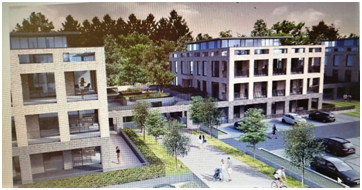
However, the newly submitted Reserved Matters Application ((Ref: 21/2217/MRES) by Burrington Estates to East Devon District Council Planners to build 40 four-storey blocks of flats on an existing car park at Winslade Park, doesn’t appear to adhere to that vision!

This is, surely, an opportunity for Burringtons to create a truly outstanding build back better brownfield design standard that could be revered as an esteemed design guide for future admiration that will stand the test of time – but Burrington Estates’ current proposals for 40 four-storey blocks of flats fail to follow such aspirations.

Winslade Manor (image below) has recently been very sensitively re-developed by Burringtons to now include Winslade Manor Restaurant and Bar, Number 6 personal training and wellness studio and office accommodation.

The architecture of the Manor continues to evoke an admiration and appreciation today, around 220 years after it was built (in 1800) by Edward Cotsford, the High Sheriff of Devon and, it is fair to say, that Burringtons have successfully returned this Grade II* Listed Georgian Manor to its former glory and consequently this renovation deserves accolades and commendation.

So, it is surprising, having gone to such great lengths to safeguard and preserve the Grade II* Listed Manor House, that Burringtons are now submitting three, inappropriately towering, blocks of 40 four-storey flats directly opposite the Georgian Manor and historic St Mary’s Church and the design of these new apartments has been likened to an urban car park!

Although architectural designs are creative and vulnerable to personal, differing opinions – surely this historic site requires a conscientious discernment and a more imaginative, high-quality style of design to compliment the valued Georgian Manor? Developers and decision-makers have an ethical responsibility to improve areas. Many people believe that these proposed designs appear far too utilitarian and fail to achieve aesthetic, quality, harmonious standards because these proposals overpower, clash and are incompatible with the historic Manor and its surroundings.

Such tall, design structures are considered to be an overdevelopment and incongruous in this rural, village setting because they fail to reflect distinguished, prestigious standards in architecture in the immediate setting of a valued, historic asset by conflicting with Government recommendations to enhance our communities.

Burringtons’ original proposals for this brownfield area included only 14 traditional houses, which were displayed for viewing to the entire community at Burrington’s first Public Consultation in February 2020. These 14 homes were supported by the majority of the community – but when the outline hybrid Planning Application was submitted to East Devon Planners, 14 houses on this brownfield car park had morphed into almost 60 flats (which after objections) have now been reduced to 40 – but 40 flats are still considered outrageously excessive, especially as 39 more homes have also received outline approval on a green field site nearby at the entrance to Winslade Park.

This amounts to a housing overkill in this village and Clyst St Mary residents’ views cannot be described as myopic, provincial NIMBYism because what this community was originally shown and found acceptable at a Public Consultation bears no resemblance to what is now being proposed!

In 2021, shouldn’t we be designing new homes in this small community that reflect the existing low-density, rural village environment and do not degrade the significance of a valued, elegant Georgian Manor House?

The proposed designs for these 40 four-storey high flats and a service road are directly adjacent to existing homes in Clyst Valley Road and will create an extreme intensity of development, which will cause ramifications resulting in detrimental visual issues and noise problems for existing residents by the sheer magnitude of such development in this confined location.

Although in the 1960s/1970s, deciduous woodland screening was planted between the Manor House and the now established Clyst Valley Road homes to protect The Manor’s visual amenities, surprisingly, these towering 40 four-storey flats are planned on the same side of the woodland as the Manor, in the direct sight-line of the northern façade of the historic building! Furthermore this woodland will provide little or no screening in the winter for existing residents to three multi-storey blocks containing 40 flats.

So, not only will these towering blocks obtrude on the distinguished Manor – but also on the established homes in Clyst Valley Road, who will be overlooked by such high structures and susceptible to all noise and light pollution from the flats and the service road running directly alongside their boundaries.

Although the principle of outline development was approved by EDDC Planners in December 2020, surely in 2021 we can expect a build back better from homebuilders and planners to achieve a quality development that this historic, rural village deserves and one that can be acknowledged with pride.

We must surely not create ‘eyesores’ that will scar a small, rural village by building multi-storey structures which are more appropriate in an urban environment similar to Exeter City – but are so inappropriate in a rural East Devon village setting.

Whatever East Devon Planners approve, opposite a 200 year old, stylish, Manor House, adjoining and overlooking existing homes in Clyst Valley Road, the Planners’ combined decision must surely be one that evokes pride and results in building back better with the correct quantity, density and design choices.

East Devon District Council Planners must ensure that whatever they choose to approve will be what each and every one of them, as individuals, would wish to see in their own communities and back gardens and that their combined planning judgment will result in a development that will stand the test of time for another 200 years!

Brexit row over huge revamp of fish quay

Plans for a new £15million extension to the Fish Quay at Brixham have come under fire amid claims the new quay will damage the town’s tourist industry.

Guy Henderson www.devonlive.com

Yet Torbay Council says the new quay extension is vital for the future of the fishing industry and will create 150 new jobs.

But critics say the benefits will be outweighed by the loss of busy boat moorings and parking spaces for tourists.

Brixham Yacht Club commodore Richard Spreckley said: “This is supposed to be about improving the local economy, but I believe it will have the reverse effect.

“It will decimate parking, which is crucial to tourism. All this is doing is pouring in money to apologise for Brexit, which the fishermen didn’t realise was going to cut them off from their own market.”

The council and the bay’s development agency TDA are bidding for money for the new quay project from the Government’s ‘Levelling Up’ fund aimed at areas in need of investment. They expect to hear in the next few weeks if they have been successful.

The application also includes funding for a new high-tech business park at Paignton.

In Brixham, land would be reclaimed to extend the harbour and fish market, with an extra 7,000 square metres of quayside.

This would create more landing space to allow an extra five fishing vessels to off-load at a time. There would be two new auction halls, doubling the current capacity.

The TDA says the investment could lead to an increase in landed fish value of up to £20m per year within five years, generating more than £11m a year for the local economy.

Torbay Council Cabinet member Mike Morey said: “Investment in Brixham’s harbour and fish market would help secure the future of Brixham’s fishing sector which has been badly affected by Brexit and Covid-19.

“These challenges and the lack of capacity for boats and landings is preventing the sector from significant growth.”

Mr Spreckley said the yacht club was one of many objectors.

The priority for spending, he said, should be the long-awaited Northern Arm breakwater to protect boats in the harbour from damage in ‘perilous’ weather.

He said: “This proposal will turn the Oxen Cove car park into a mini industrial estate. There will be no pedestrian access, and it will be harder for people to get to the shops.”

Brixham’s fish market is currently enjoying a boom in business, with fish landed in ports hundreds of miles away being brought by road to be sold at the online auctions on the quayside.

But, said Mr Spreckley: “Environmentally the fish quay proposal is ridiculous. This will just lead to more fish being trucked in from all over the country to be sold on the market at Brixham, because Brixham fish has a premium value.

“It will mean more lorries driving through the tourists on the harbourside.”

Mr Spreckley said he also feared the effect of the new plan on the harbour’s sailors.

He said: “The Brixham Junior Sailing Club, which has taught hundreds of people to sail, will lose out. We need access to the water and boat storage, but more importantly we have hosted national championship, with 60 boats and families who come from all over Britain.

“That’s an awful lot of income to the local economy, and that would be massively threatened.

“Putting the existing new pier in the harbour at oxen Cove lost 50 small craft moorings, and this proposal will remove another 45 to 50.

“Rather than sailing being a very popular and affordable sport, that is going to force everyone into marinas instead, and that costs vastly more than a small mooring.

“The TDA is putting all Brixham’s money into fishing at a time when there are fewer fish in the sea.

“The day boats will scarcely get any benefit from this extension.

“The basis of the bid is creating 150 jobs, but the reality is that very few of those jobs will go to local people. In return, we will lose our ability to service the tourist industry.

“We have one of the three best bits of water for dinghy sailing along the south coast, but this will mean that our club will become vastly less attractive.

“People get the impression that we’re all filthy rich, but the reality is that we’re not. It’s a ludicrous idea.

“This club spends much more time organising dinghy championships.

“The thing that concerns me most is the damage it is doing to the harbour. It’s a beautiful safe haven that would be even safer with a Northern Arm.

“This money would have been a good start towards creating a Northern Arm.”

Michael Gove faces calls to return £100k in donations from property developer

New housing secretary Michael Gove is facing calls to return £100,000 in donations he received last month from a property developer, with political opponents warning of a potential conflict of interest.

Robert Booth www.theguardian.com 

Parliamentary records show that Gove registered two donations of £50,000 from a German property developer, Zak Gertler,three weeks ago. The Gertler family developed offices in Germany and has been linked to property deals in London and Birmingham after moving into the UK in the 1990s. The new housing, communities and local government secretary previously accepted £10,000 from the same donor in July 2016 to help his abortive party leadership bid after the Brexit referendum, and the same amount again in June 2019.

Gove is now in charge of planning in England and faces a decision on whether to scrap reforms championed by his predecessor Robert Jenrick, which were set to give developers a freer hand over where and what to build – particularly housing, to meet the government’s target of 300,000 a year.

Gertler is not understood to be involved in housing in the UK, but Ed Davey, leader of the Liberal Democrats, said: “Conservative planning reforms are already handing more powers to developers, and now it seems the new housing secretary is accepting donations from them too. To avoid any conflict of interest, Michael Gove must return this money.”

Jenrick became embroiled in a conflict of interest row when it emerged that the Conservative party accepted a donation from Richard Desmond shortly after Jenrick approved plans for a £1bn housing development by the property developer.

Steve Reed MP, Labour’s shadow communities secretary, said: “Michael Gove’s predecessor was sacked because Conservative MPs knew his disastrous planning reforms showed their party was in the pockets of wealthy developer donors, so there are serious questions to answer about whether this just means more of the same.”

Gertler has previously invested in commercial property in the UK, according to reports, and owns a UK-registered property services company, Gertler Properties Services, which says in its filing at Companies House that its business includes “development of building projects”.

Gertler, who is German but lives in Israel, according to Companies House records, has been contacted for comment through his family’s company in Frankfurt. There is no suggestion he has requested anything in return for the donation. He is described by the Jerusalem Post as a close friend of Israel’s former prime minister, Benjamin Netanyahu. He reportedly hosted a 70th birthday party for the politician at his apartment in Tel Aviv.

He is among several repeat donors to the new housing secretary who include Lord Harris of Peckham, Charles Wigoder, a telecoms entrepreneur, Alan Massie, also a property developer, and Lord Wolfson, the chief executive of clothes retailer Next.

Meanwhile, the property industry, environmental groups and councils are waiting for Gove to decide how to reform the planning system. Gove was previously the Conservative housing spokesperson, in opposition to Tony Blair’s Labour party in 2006 and 2007, and during that time he suggested that better design of new homes could help reduce antipathy, telling parliament that he agreed with Prince Charles on that.

In one parliamentary contribution, he said: “Many of us believe that housing development should be organic – in sympathy and in tune with the local neighbourhood – so local materials should be used.”

In an interview with Building magazine in 2006, he said: “I don’t like centrally set housing targets. I’d like to see the back of regional government and regional plans and I don’t think having housing targets is helpful.”

Steve Reed said: “If the secretary of state wants to prove that his party is not in the pockets of the development industry, he should confirm that the government’s planning reforms are dead and buried.”

A spokesperson for MHCLG said: “All donations made to the secretary of state have been declared publicly and the proper process followed.

“The department has robust processes in place to ensure any potential conflicts of interest are managed appropriately. Ministers continue to be bound at all times by their obligations under the ministerial code.”

Councils fear social care reforms will fall apart

Boris Johnson’s promise to cut middle class social care fees will cost £1.5 billion a year, threatening to wreck his reforms, councils have warned.

Chris Smyth www.thetimes.co.uk

Local officials say that ensuring people who pay for their own care do not face higher fees to subsidise council-funded residents will cost more than the extra cash promised last week.

Unless Johnson finds more money at the spending review next month, his plan to cap costs could collapse as it did when David Cameron first proposed it, the County Councils Network said.

People who pay for themselves face care home fees 40 per cent higher than those paid by councils for means-tested places, in a system criticised as a “stealth tax” on the middle classes.

In its blueprint for social care, the government promised to end this “persistent unfairness” by ensuring that people who pay their own fees can get the same rates as councils pay “so that they can find better value care”.

The network, which represents rural bodies, said in a report that either care homes would be forced into bankruptcy or councils would face higher fees they could not afford.

Martin Tett, the network’s spokesman for adult social care, writes in The Times Red Box: “Unless the government fully funds this commitment, either providers will have to accept lower rates for care, affecting their profitability, or councils will have to pay more, which will impact on their ability to balance budgets.”

Tett says that not finding extra money “could . . . result in large-scale care home closures, with 272 care homes already closing their doors in counties over the past three years”.

He points out that when Cameron backed away from capping care costs it was partly because he struggled to find an affordable way to end the fees cross-subsidy. “We are concerned the government has underestimated the consequences of its well-intentioned aims.”

Local bodies estimate that raising council fees to sustainable rates would cost £761 million in rural communities and £1.5 billion across the country.

Last week’s review allocated councils only £2.9 billion over three years for the existing social care system, less than this annual cost and leaving no money over for improving the quality of care or offering it to more people.

The network also estimates that most requests for care were turned down last year as councils tightened eligibility while budgets were squeezed.

Of the 545,000 people in rural areas who asked for help last year, 58,000 were rejected because their needs were deemed not severe enough.

Jacob Rees-Mogg takes £200,000 hit to his Somerset Capital dividend

Are times getting tougher for those living in the eighteenth century? Doubt it – Owl

Patrick Hosking www.thetimes.co.uk

Jacob Rees-Mogg is thought to have taken a dividend cut of about £200,000 this year after the City investment firm he co-founded suffered a one-third slide in profits.

Rees-Mogg, who is leader of the Commons, is thought to have received dividends this year of about £600,000 from Somerset Capital Management, down from £800,000 in 2020.

Somerset, which manages investments in emerging markets on behalf of retail and institutional investors, reported profits for the year to March 2021 of £9.7 million, down 35 per cent year-on-year.

The firm warned that it expected profits to fall again in the current year, suggesting that Rees-Mogg is set to take another cut in income next year.

Rees-Mogg, 52, who attends cabinet, is thought to be one of the highest paid MPs thanks to Somerset, which he set up in 2007 and continued to run until 2019 when he severed all direct links with the firm to join the government. He remains a sleeping shareholder.

A year ago he owned about 14 per cent of the London-based firm, but he has pledged to reduce his stake as he sells shares to new partners in the hope of maintaining Somerset as a perpetual partnership.

The profit fall at Somerset came despite the firm lifting its total assets under management from $5.6 billion to $7.3 billion.

The company said that it had been hit by lower management and performance fees, as well as a small rise in costs because of new hires.

Dominic Johnson, chief executive and co-founder, said: “Emerging markets and Asia always have challenges and risks — but that is what makes them such an exciting asset class for active managers.

“We are particularly optimistic about our Asia Income Strategy, which has continued to perform strongly since Mark Williams and the team joined in October last year.”

Somerset has been pushing much deeper into investing in China, a market Rees-Mogg regarded with caution when he was in charge.

Who is worrying more about his KFC than the NHS?

Following on from pubs and hospitality, our MP, Simon Jupp seems to have discovered a new cause to promote. 

Four days ago he asked a written question about labour shortages in the poultry sector. There are only a few poultry farmers in East Devon. So Owl wonders whether Simon is more worried about his local KFC running out or even whether he will get his turkey at Christmas. Why is this an East Devon priority?

Owl, and the correspondent who alerted Owl to this, would rather he had asked what the government was doing to recruit enough doctors and nurses for the NHS.

From the answer, we will all be pleased to know that prisoners can be released early on licence to gain “useful skills and work experience” – an option hopefully not available to help with the NHS, police and other like staff shortages – yet! 

But who knows? 

PS Ever thought of going veggie Simon?

Photo of Simon JuppSimon Jupp Conservative, East Devon

To ask the Secretary of State for Environment, Food and Rural Affairs, what steps he is taking to tackle labour shortages in the poultry sector.

Photo of Victoria PrentisVictoria Prentis The Parliamentary Under-Secretary of State for Environment, Food and Rural Affairs

We are aware of the challenges that the poultry industry has encountered in recent months. Defra continues to monitor the market, and we will continue to work closely with the sector.

Defra is working with the Department for Work and Pensions (DWP) to raise awareness of career opportunities within the food and farming sectors among UK workers.

DWP is supporting Defra to develop and deliver a long-term recruitment strategy that supports the domestic workforce into both seasonal and long-term roles in the agriculture sector, including the poultry sector.

DWP has worked with Defra and key Trade Associations to develop a regional recruitment strategy that utilises DWP’s Jobcentre Plus network, fosters strong local links between employers and work coaches, and gives jobseekers the skills and knowledge they need to enter the sector.

All poultry businesses are encouraged to advertise roles through DWP’s Find A Job website, where they can upload and manage their vacancies. DWP does not charge for this service and it is available nationally, including Scotland and Wales.

Defra welcomes the Ministry of Justice‘s work on the Release On Temporary Licence (ROTL) scheme for work across a number of sectors, including the agri-food sector. The scheme aims to help prisoners gain useful skills and work experience as they approach their release.

In 2021 and beyond, food and farming businesses continue to be able to rely on EU nationals living in the UK with settled or pre-settled status. Over 5.1 million EU citizens and their families have been granted status under the EU Settlement Scheme and EU nationals who have settled status can continue to travel to the UK to do work in the poultry sector in 2021.

Defra is also working closely with the Home Office to ensure there is a long-term strategy for the food and farming workforce beyond 2021.

Life expectancy in England falls to lowest level since 2011

Excess deaths due to the coronavirus pandemic contributed to life expectancy in England falling last year to its lowest level in almost a decade, according to Public Health England (PHE).

www.theguardian.com

PHE said the “very high level” of excess deaths caused life expectancy to fall by 1.3 years for men, to 78.7, and 0.9 years for women to 82.7.

The organisation said this was the lowest life expectancy since 2011 for both sexes.

PHE published its Health Profile for England 2021 report on Wednesday, which it said gave the most comprehensive look at the state of the nation’s health.

It said the level of inequality in life expectancy between the most and least deprived areas for both men and women was higher than all previous years for which PHE has data, therefore covering the past two decades.

Its report stated: “This demonstrates that the pandemic has exacerbated existing inequalities in life expectancy by deprivation.

“Covid-19 was the cause of death that contributed most to the gap in 2020, however, higher mortality from heart disease, lung cancer, and chronic lower respiratory diseases in deprived areas remained important contributors.”

Elsewhere in its report, PHE said dementia and Alzheimer’s disease remained the leading cause of death in England in women and the third largest in men.

Dementia was reported as the main pre-existing health condition in about a quarter of all deaths involving Covid-19 between March and June 2020 last year, the report said.

By June this year there were about 35,000 fewer people aged 65 and over with a diagnosis of dementia, PHE said, potentially attributing this drop to higher deaths among people with dementia during the pandemic as well as reduced access to diagnostic services.

The report said half of people with a worsening health condition between May 2020 and January 2021 did not seek treatment, mostly due to not wanting to add to pressure on the NHS or for fear of catching the virus.

PHE said there had been an “unprecedented” rise in deaths caused by alcohol use, up 20% last year compared to 2019.

The report also noted the “profound effect” of the pandemic on the life of young people “through isolation and interruptions to education”.

It said: “Some of these effects will be longer-term and data are not available to measure them yet.”

In conclusion, PHE said: “The report has highlighted how the direct impact of Covid-19 pandemic has disproportionally affected people from ethnic minority groups, people living in deprived areas, older people and those with pre-existing health conditions.

“There have been substantial indirect effects on children’s education and mental health, and on employment opportunities across the life course, but particularly for younger people working in sectors such as hospitality and entertainment.

“In addition, it is clear that access and use of a range of health services has been disrupted during the pandemic and the long-term effects of this is not yet realised.”

Back British Farming Day – Wednesday 15 September 2021 – Hansard – UK Parliament

Neil Parish MP

“I thank my hon. Friend very much for securing the debate. She talks about the Agriculture Bill. It is really important that, as we move to make sure that we sustainably produce food in an environmentally friendly way, we also produce enough food, really good-quality food, more vegetables, more meat and more milk. As we experience climate change—we are a country that has a climate that can produce food—we must make sure that we can produce enough food in future.”

So why do we build on good quality agricultural land? – Owl

Hansard.parliament.uk