He said “being an MP isn’t a job and leaves plenty of time for other things”.
Well he should know.
What did he ever do for us?

He said “being an MP isn’t a job and leaves plenty of time for other things”.
Well he should know.
What did he ever do for us?
As the “Storm in a Sleazecup” sweeps into a second week.
All those Tories who went along with the attempt to subvert the standards regime have been left looking stupid for making themselves complicit with the squalid scheme, only to see the government retreat less than 24 hours later.
Andrew Rawnsley www.theguardian.com
“For months, they lobbied anyone they could find. They spread noxious rumours about members of the committee. They tried to get the speaker to block the publication of our report. They endlessly misrepresented the process, claiming that witnesses statements were ignored (they weren’t), that Paterson was denied a fair hearing (he wasn’t), that the commissioner decides the sanction (she doesn’t), and that there was no appeal (there was). They lobbied individual members of the committee – which is itself a breach of the rules of the House, which can lead to a suspension.”
Chris Bryant (chair of the standards committee and MP for Rhondda) www.theguardian.com
This week’s appalling parliamentary shenanigans prove the saying about bad apples. As Benjamin Franklin put it, “the rotten apple spoils his companions”. That’s exactly what happened with Owen Paterson.
Nobody doubts that what he did was wrong. He took more than £9,000 a month – more in a year than the average cost of a house in the Rhondda – to lobby on behalf of Randox and Lynn’s Foods. Dozens of Tory MPs – including some of his closest friends – told me that my committee’s report was crystal clear and he was caught “bang to rights”.
Yet 250 MPs voted for a motion that would suspend judgment on the matter. Let’s leave aside for a moment the fact that the motion changed the rules in the middle of a disciplinary process, which is surely the polar opposite of due process and natural justice – and that it did so for a named individual (ditto).
Let’s focus on the bullying and determination with which the government machine set about trying to give Paterson a “get out of jail free” card. For months, they lobbied anyone they could find. They spread noxious rumours about members of the committee. They tried to get the speaker to block the publication of our report. They endlessly misrepresented the process, claiming that witnesses statements were ignored (they weren’t), that Paterson was denied a fair hearing (he wasn’t), that the commissioner decides the sanction (she doesn’t), and that there was no appeal (there was). They lobbied individual members of the committee – which is itself a breach of the rules of the House, which can lead to a suspension.
Apparently some Conservative WhatsApp groups are full of libellous comments about the commissioner, who has been repeatedly and viciously calumniated in the press. I have worked closely with some of these MPs. A tiny part of me even admires their loyalty to their friend and political ally. But I say this to them: your friendship has blinded you to the truth.
In the eyes of the public, this may have damaged the whole of parliament and not just the Tories who voted for the nonsensical. I tried to warn the house that the government was leading us into a quagmire. Some brave Conservative souls warned the prime minister. But he doubled down and dragooned his MPs through the lobbies, spoiling 250 MPs with the Paterson rottenness and tarnishing parliament.
Even after Paterson resigned, again preposterously claiming his innocence, Downing Street refuses to rule out the idea that he has been or may be offered a peerage. Clearly that would be appalling.
What needs to happen next? The bare minimum is that the Commons rescinds Wednesday’s motion and approve the standards committee’s report on Paterson. That may seem unnecessary. Paterson is no longer an MP, so the House can’t sanction him any longer. When Denis McShane resigned after an adverse committee finding in 2012, that report was never put to the house. But in this case the house has considered the report – and parked it in an ambiguous layby.
The Commons must now declare beyond doubt that Paterson’s conduct was corrupt and unacceptable and abandon the ad hoc committee the government wanted to set up under John Whittingdale. I hope that can happen on Tuesday. The prime minister has to admit that he got it badly wrong and call off the troops, who still seem intent on attacking the commissioner. Jacob “grand old duke of York” Rees-Mogg needs to apologise for the damage he has done to parliament’s reputation. Otherwise what remains of his reputation will never recover.
As for the standards system, my guess is that voters want more independence, not less. We have few enough checks and balances in the British political system as it is. The standards committee has been looking at proposals and will produce a report on possible changes before Christmas. The house can consider them in the new year. But above all everyone needs to respect the rule of law and the independent process.
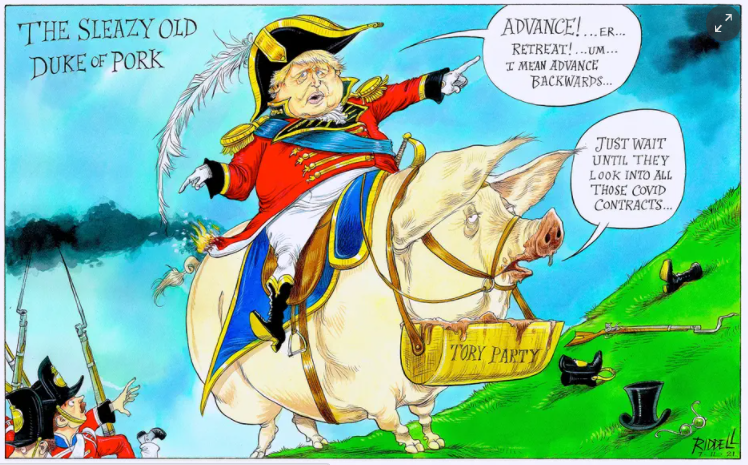
The row over Tory sleaze reached new heights on Saturday night as MPs demanded details of any lobbying by Owen Paterson of government ministers on behalf of a company that won almost £500m of Covid-19 related contracts last year.
Toby Helm www.theguardian.com
The crisis facing Boris Johnson also worsened after the former Tory prime minister, Sir John Major, described his successor’s attempts to block Paterson’s suspension from parliament last week for breaching paid advocacy rules as “shameful”.
A new Opinium poll for the Observer shows ratings for Johnson and his party have slumped dramatically since last weekend, with the prime minister’s personal approval figures hitting their lowest ever level.
With Tory MPs already fearing their party is regaining its reputation for financial impropriety after last week’s chaotic events involving Paterson, all the main opposition parties turned up the pressure.
Labour, the SNP, the Liberal Democrats and the Green party all switched their focus to the award of pandemic contracts, demanding investigations by the cabinet secretary, Simon Case, or the parliamentary commissioner for standards, Kathryn Stone, into Paterson’s contacts with ministers during the pandemic.
Paterson, who announced his resignation as an MP last week, was paid more than £8,000 a month for 16 hours’ consultancy work by Randox Laboratories, until he resigned from the role on Friday. Randox was awarded two Covid testing contracts last year worth nearly £480m without the normal competition. Government officials cited the urgency of the pandemic as grounds for not advertising the contracts.
The company insists Paterson “played no role in securing any Randox contract”, but on 9 April last year the MP had a telephone meeting with the firm and Lord Bethell, then a health minister, about Covid testing.
On Saturday, Labour’s deputy leader, Angela Rayner, said she had written to Case demanding “the publication of all correspondence and details of all meetings between ministers and the businesses that were paying Mr Paterson to lobby on their behalf”.
The Observer has been told that before Paterson resigned as an MP on Thursday, Conservative whips understood that Stone was seriously considering launching an investigation into the former Northern Ireland secretary’s lobbying of ministers since the pandemic began. She is also believed to be considering an inquiry into the controversy over the prime minister’s refurbishment of his Downing Street flat.
Over the coming days, the opposition parties are determined to raise the pressure. Rayner said: “It is particularly brazen that Randox were awarded £347m of taxpayers’ money after already failing to deliver on a previous contract that resulted in the recall of 750,000 unsafe testing kits and care homes being left without regular testing. Ministers need to set out how they will claw back taxpayers’ money that was wasted on duff PPE and failed testing contracts.”
The SNP leader, Ian Blackford, said he had also written to the cabinet secretary demanding “full transparency about Paterson’s lobbying, particularly relating to Covid-19 contracts involving huge sums of money”, while the Lib Dem chief whip, Wendy Chamberlain, called for “a full and thorough investigation by the standards commissioner” into the links between Paterson, Randox and the former health secretary, Matt Hancock.
The Lib Dems have secured a three-hour debate on the issue on Monday in which the way Covid contracts were awarded will be central.
The latest Opinium poll suggests the sleaze rows are hitting the Conservatives. The Tory lead has fallen to just one point, from five points a week ago, while Johnson’s personal rating has dropped to -20 from -16 last week, passing a previous low of -18 recorded a month ago.
There has also been a significant shift in views of who would make the best prime minister. An 11-point lead for Johnson last week has shrunk to just two points. Johnson is regarded as the best candidate by 28% of voters, down five, with the Labour leader, Keir Starmer, on 26%, up four.
Speaking on BBC Radio 4’s Today programme, Major was scathing about Johnson’s government, the damage it was doing to the UK’s reputation, and the way it treated parliament. Referring to efforts to block Paterson’s suspension, Major said: “I think the way the government handled that was shameful, wrong and unworthy of this or indeed any government. It also had the effect of trashing the reputation of parliament.”
He added: “There is a general whiff of ‘we are the masters now’ about their behaviour. I’m afraid that the government, with their over-large majority, do tend to treat parliament with contempt. And if that continues, it will end badly.”
Writing in the Observer, the shadow justice secretary, David Lammy, also takes aim at the business secretary over his suggestions last week that Stone should consider her position because of the way she conducted her inquiry into Paterson’s lobbying activities prior to February last year.
“Kwasi Kwarteng’s attempt to bully Kathryn Stone out of her job was yet another breach of the ministerial code, and the latest example of the Tories’ slide into corruption and moral bankruptcy. Boris Johnson has already had multiple run-ins with the standards commissioner. It is clear he simply wants revenge and impunity from the rule of law,” he wrote.
“This level of flagrant norm-shattering and proud lawbreaking demands more than tut-tutting. That’s why we need the adviser on ministerial interests to launch an inquiry into Mr Kwarteng’s threats. And it is why Labour has urged the standards commissioner to open an investigation into the prime minister over the financing of the refurbishment of his Downing Street flat.”
The climate emergency is the most pressing challenge of our times. With the UK keen to trumpet its climate action credentials, our planning system is sending out very mixed messages.
By Andrew Wood www.cpre.org.uk
With the COP26 global climate conference hosted in Glasgow in 2021, you’d expect the host country to be leading on climate crisis-busting plans with flying colours – including by adapting the rules that govern new building here.
But put simply, it’s just not doing enough to drive progress.
Let’s start with the good news. The government has led the world by setting a legally binding target to achieve net-zero carbon by 2050, meaning that our carbon levels work out as zero thanks to cutting emissions and carbon-capture methods.
And the government’s also ramped this up further by committing to get 78% of the way there by 2035, and announced that the UK is on track to achieve this 2035 target.
‘Local authorities want to get to net-zero even faster.’
For the first time, international aviation and shipping emissions will be counted into this budget – something CPRE has been demanding for years, and a really important step forward.
Local authorities want to get to net-zero even faster, which shows great ambition. We love to see it! Over 80% of councils have now officially declared a climate emergency and set local targets for carbon reduction. In most cases, they’re aiming for net-zero by 2030, twenty years ahead of the UK government’s legally binding date.
So far, so good. So how does planning fit in?
The planning system, the name we give to the toolkit of rules that govern what gets built and where, should naturally fit into this progress, right? Erm… Right?
And in theory, that’s the case: the planning system should support the quest for net-zero. The sectors that emit the most carbon are housing, industry and transport – which happen to also be the main forms of development that planning helps to regulate.
And the rules governing planning, the National Planning Policy Framework (NPPF), require planning to ‘shape places in ways that contribute to radical reductions in greenhouse gas emissions’. Local authorities’ development plans are also bound by a legal duty, under the Climate Change Act, to contribute to achieving net-zero.
And there’s more.
The NPPF also contains useful hooks to hang climate-friendly policies onto: for example, poor design should be refused planning permission, and development should be focused where it’s accessible by public transport and offers scope to reduce private car travel.
So surely local authorities are only allowing new building that’s doing lots to tackle the climate emergency… aren’t they?
Local heroes… and the rest
Some local plans (the document created by local authorities and, ideally, residents which lays out the principles for new development in the area) are rising to the climate crisis challenge.
Plymouth & South Devon Councils have already adopted a joint plan which commits to implementing their carbon reduction target. Hurray! And we know that at least Lancaster, Leeds and Bradford are aiming to follow suit – double hurray!
But… that’s where the good news ends. There are plenty of signs that, in practice, the planning system is well behind the curve on climate action.
What’s not working
Here are four things that we know are going wrong:
Despite powerful evidence that car use needs to be reduced by between 10% and 60% to achieve net-zero, all across the country, councils are still earmarking land for new housing and commercial development in car-dependent locations, planning for new roads, and pinning their economic ambitions on the continued growth of airports.
A landmark 2020 report by Transport for New Homes found that new ‘garden communities’ were being built that were overwhelmingly car-dependent and the government’s Housing Infrastructure Fund is regularly used to fund roadbuilding projects. This is not a recipe for reducing car use.
‘This is not a recipe for reducing car use.’
When local plans are examined by government-appointed inspectors, the remit is considered on very narrow criteria – and is purely about housing numbers.
The inspector asks, ‘Will this local plan provide enough development land to meet the council’s housing target?’ If not, the council must go away and find more land.
But there are no such penalties for not having a convincing strategy to reduce carbon emissions. Providing the homes people need and tackling the climate emergency are both important objectives, yet it seems that plans are judged against one and not the other.
The much-vaunted planning reform programme, which began in summer 2020, made bold claims about speeding up and simplifying the planning system, but soon became bogged down in controversy about top-down housing numbers (the ‘mutant algorithm’) and the risks to local democracy.
But, as CPRE and many other groups pointed out, there was little mention of climate action in the new proposals – in fact, they didn’t even commit to setting a firm date for new development to be zero-carbon.
Considering that the government had previously cancelled a 2016 zero-carbon date for new housing, this was incredibly disappointing.
The government is also currently reviewing its Nationally Significant Infrastructure Projects (NSIP) regime, which delivers big projects mainly for energy and transport. The review says it wants to halve the time it takes to make decisions on proposals, and cites the need to move towards net-zero carbon super-speedily as a key objective.
But nearly a third of these large projects already approved or awaiting decisions are for major road schemes – such as the Lower Thames Crossing – or for airport expansions, all of which will inevitably cause increases in carbon emissions and work directly against meeting the government’s net-zero target.
There are solutions. Now we need action
Each of these problems has an obvious solution – if the government has the will to act. Local plans should place extra focus on urban brownfield locations for new development (read what brownfield is, and why we care about it so much, here) and stop enabling homes and commercial premises to be built in car-dependent locations.
Plans should be judged on their emissions-reducing credentials as much as on housing supply. Cutting carbon should be a basic criterion for major new projects to be considered, negating new roads or airport expansion and following the moves to this effect already made in Wales. Business as usual is not an option.
And, as Mr Gove looks to make his mark on his role as Minister for Housing, he could explicitly make moving to net-zero carbon one of the key purposes of planning reforms.
Will the government give the planning system a real role and purpose in tackling the climate emergency? It’s high time.
How many more times does it need to happen? How much more proof do we need that the country is run by a man with contempt for the rule of law, who believes that he and his friends are beyond its reach?
Jonathan Freedland www.theguardian.com
Boris Johnson demonstrated that again to the nation this week, as vividly as he could. Faced with the prospect that Owen Paterson, a comrade from the Brexit trenches of 2016, would be punished for what parliament’s standards committee called “an egregious case of paid advocacy”, Johnson instructed MPs to let his chum off the hook. The prime minister’s orders, dutifully followed by 250 of his troops, were to halt Paterson’s 30-day suspension from the House of Commons and to scrap the system that had found him guilty, replacing it with one that would be gentler in its treatment of Conservatives – because Conservatives would design it and dominate it.
The move was shocking because it was so brazen, not because it was novel. For this was merely the latest instance of Johnson deciding that an ally clearly in breach of the rules should escape all consequence. The roll call should be familiar by now. When Dominic Cummings decided the national lockdown did not really apply to him, Johnson stood by him. When Robert Jenrick fast-tracked an “unlawful” planning decision that would save Richard Desmond, a Tory donor, £45m in local taxes, Jenrick stayed in his post. When Priti Patel’s bullying behaviour was found to be a violation of the ministerial code, she too kept her job. If you’re on Team Johnson, the normal rules don’t apply.
Sometimes it’s about rewarding loyalty or a valuable favour. So when the Lords Appointments Commission decided that another Tory donor, Peter Cruddas, was not fit to receive a peerage, Johnson gave him one anyway. But just as often, the prime minister’s disregard for the rules extends to the gravest matters of state.
One of his first acts in office was to suspend parliament altogether, a move struck down by a unanimous supreme court. Later he proposed post-Brexit legislation that a cabinet minister cheerfully admitted on the floor of the Commons would break international law.
Johnson does not regard even those laws he himself put on the statute book as binding. An impeccable source reports that, at the G7 meeting in Cornwall, the prime minister told French president Emmanuel Macron that he had only “sort of” signed the Northern Ireland protocol, currently the cause of so much tension between the two countries.
And sometimes these two elements – favours for pals and rule-breaking in matters of state – come together. The most obvious example is in the bonanza of Covid-related contracts handed out to chums at the start of the pandemic, with a “high priority” VIP lane created for those lucky enough to be in a minister’s contacts book. That created a stampede of ministerial mates, often hawking goods or services that didn’t work, which both cost taxpayers’ £2.8bn and wasted precious civil service time. As the Good Law Project’s Jolyon Maugham puts it: “So keen were they to get their mates to the trough they interfered with getting the right stuff.”
Even the Paterson case’s ugliest aspect – retrospectively changing the rules to produce a desired outcome – is becoming all too familiar. This week the government rewrote the job spec for the new chair of Ofcom after its favoured candidate, the former Daily Mail editor and ardent Brexiteer Paul Dacre, failed to meet the initial standard. Handily, the new job description is receptive to a more, ahem, confrontational candidate.
The pattern is now clear. Rules that might hold the government to account, that might act as a check on its power, are either to be ignored or rewritten. The bodies that enforce those rules are similarly to be hobbled or neutered in the name of “reform”. Johnson wanted to do that this week to the parliamentary standards system, adding it to a target list that already includes the courts and the electoral commission. Meanwhile, his culture secretary threatens the BBC, announcing that fearless questioning of the prime minister by one of its interviewers has cost the organisation “a lot of money”.
We hesitate to use the word because it sounds so hyperbolic, but this is how the slide to authoritarianism begins. Not as it was in the old newsreels, with strutting dictators and balcony speeches, but with cronyism and special treatment; with enforcement of the law for “them” and exemptions for “us”; with the steady weakening and eventual removal of the constraints on government power. It is the dismantling, bit by bit, block by block, of the apparatus that holds up a liberal democracy.
I spoke with a minister late on Thursday who, though furious over the Paterson debacle – “It’s a total car crash” – rejected the notion that Johnson is like Hungary’s Viktor Orbán in Eton tails. “This was the Brexit gang looking after one of its own,” he said. Johnson keeps making special dispensations for his friends not out of a power-crazed desire to demolish the democratic architecture, but because “he wants to be liked … It’s a damaged neediness.” Add to that, he says, a Vote Leave self-righteousness that tells itself: “Elites have let the country down; we don’t have to follow their norms.”
Even if you buy all that, it doesn’t matter. It’s not the motive for Johnson’s actions that counts but their impact. He didn’t get his way this time: fury from usually supportive newspapers and on the Tory benches forced a rapid climbdown. But this was what he wanted, and what most of his MPs were ready to give him – a shredding of the rules to ensure those in power are unbound, and ever harder to remove.
Downing Street has declined to rule out the possibility Owen Paterson could receive a peerage after his decision to step down as a Conservative MP amid a lobbying scandal.
Peter Walker www.theguardian.com
Boris Johnson’s spokesperson also did not deny reports that some Tory MPs had been warned they could lose future funding for their constituencies if they did not support a Commons vote to halt punishment for Paterson and rip up the anti-sleaze rules he broke……….
A new Exmouth beach management plan (BMP) steering group, made up of local beach users, organisations and district and county councillors, has met for the first time.
Radio Exe News www.radioexe.co.uk
They say that although sand volumes on Exmouth Beach remain constant, there have been dramatic changes with some areas losing considerable amounts while other areas are gaining sand.
Some years ago, there was a spat between Exmouth and Dawlish, with the former accusing the Teignbridge town of stealing its sand. The culprit turned out to be erosion, with sand being transported west.
Now movement of sand around Exmouth beach has led to old structures – such as beach hut timber foundations, old jetties, former groynes, and metal pipes – being exposed.
The BMP is a document to outline what actions can be taken to manage the beach. It may go on to suggest physical measures such as additional groynes, for which further funding would be required. The BMP will look at the cost of any proposed measures and the feasibility of East Devon District Council being able to secure outside funding.
Government funding for flood and coastal protection schemes are only available to protect homes and properties at risk. Areas around Exmouth’s seafront and estuary have recently undergone substantial multi-million pound flood protection measures, organised by the Environment Agency.
East Devon councillor Paul Millar (Labour, Exmouth Halsdon) is to be the BMP’s chairperson. The group has agreed its ‘terms of reference.’ The next step is to agree on how far reaching the study should be, and what outcomes are required. They will appoint consultants to investigate the causes and any potential remedies to return the appropriate beach levels to protect the shoreside properties, the sea wall, car parks, and the road.
Cllr Millar said: “I am delighted to be chairing the work of this vital steering group which unites the expertise of our council’s engineers, the Environment Agency and relevant local stakeholders such as the RNLI, to urgently address issues caused by storms, floods and cliff erosion.
“This is major and urgent project in which the end goal is to better protect and enhance the jewel in Exmouth’s crown. Around the lifeboat station, we have pipes sticking out the ground and putting the safety of our residents and visitors at risk.
“Our work starts immediately with our priority to work with the RNLI to repair the sea walls and extend the ramp, so it reaches the sea. Our biggest challenge will be securing external funding for managing the physical nature of the beach.”
EDDC Portfolio holder for coast country and environment, Cllr Geoff Jung added: “Everyone who knows Exmouth beach is concerned at the recent changes to both the Estuary and the beach, and we need to first understand why these changes are happening and then to formulate a plan to return the beach levels for the benefit of holiday makers and local people as best we can, but aware of the impact of climate change and sea level rise as well as the limited funding available, this is going to be a challenging project.”
Police officers were called to a local council meeting after a member, who brought a megaphone with him, repeatedly interjected the proceedings.
Sophie Morris news.sky.com
The meeting of Maldon District Council, which took place on Thursday evening, was abandoned after several frustrated members walked out.
After arriving at the scene, police deemed independent councillor Chrisy Morris to be “breaching the peace” – but no arrests were made.
Councillor Morris repeatedly interrupted shouting “point of order” during the meeting as the chairman tried to move on.
Those at the meeting of the Essex local authority were, amongst other things, discussing sanctions against Mr Morris after the council’s joint standards committee deemed that he had brought the authority into disrepute following two independent investigations.
Minutes of the meeting state that Mr Morris was found to have previously disclosed confidential information.
While livestreaming the event on social media, the independent councillor repeatedly disputed the findings, ensuring his point was heard loudly and clearly.
After continuously interjecting over council chairman Mark Heard, Mr Morris was asked to leave the meeting just ten minutes into the session.
Mr Morris, sat with his megaphone, then shouted: “You can’t make me, you idiots. You can’t make me leave the meeting. I am democratically elected!”
Asked to be quiet by Mr Heard and told that he had “no right to speak here”, Mr Morris said that he “will be heard” and has “every right” to make his point.
“This is democracy. You might not like me, but you have got to listen to me,” the independent councillor said.
Police officers then arrived at the scene and tried to persuade Mr Morris to leave.
“I’m not interested in what you’ve got to say, I’m trying to conduct a meeting here so I’m very pleased to see these officers,” Mr Heard said.
Then an officer states to Mr Morris: “At this time you’re essentially breaching the peace.”
Visibly unhappy at the request to depart the premises, Mr Morris then tells the officers: “You guys shouldn’t be getting involved in politics.”
He adds that he is “legally entitled to be here”.
After a pause, the meeting then reconvened – but Mr Morris continued to interject, requesting a point of order.
Chairman Mr Heard then asked the members to leave in protest and the meeting ended prematurely with several pieces of business unfinished.
In a statement regarding the incident, Wendy Stamp, leader of Maldon District Council, said: “Enough is enough. The public may be seeing councillor Morris’s disruptive behaviour for the first time at last night’s council meeting.
“However, this has been a regular occurrence and we cannot tolerate this type of behaviour any longer and put members and staff through any further distress. Our focus as a council is to provide services to residents and to act as the democratic voice.”
The statement went on to say Mr Heard “was concerned for the duty of care of staff present who have continued to be the target of aggressive, intimidating behaviour from councillor Morris”.
Speaking after the meeting, Mr Morris told the BBC he had no regrets.
“What I said I needed to say; it was very simple, I had a point of order which the chairman should deal with as soon as it’s brought to his attention,” he said.
“They wouldn’t allow [my point of order], which was undemocratic in itself.
“I’m a democratically elected representative. I’ve got the right to speak. I’m there to speak and I simply have not been allowed to speak.”
Sky News has attempted to contact independent councillor Mr Morris for comment.
The heated scenes may remind many of the meeting of Handforth Parish Council meeting where clerk Jackie Weaver became an overnight internet sensation after attempting to calm down the fiery zoom session.
During the tense meeting of Handforth Parish Council, then-chairman Brian Tolver told stand-in clerk Ms Weaver that she had “no authority”.
Ms Weaver then proceeded to kick Mr Tolver, and two other members from the meeting, out of the call – placing them in a virtual waiting room.
Colyford could break away from Colyton and have its own parish council.
A welcome reinvigoration of local politics, when many parishes are struggling to find councillors – Owl
Joe Ives, local democracy reporter www.radioexe.co.uk
East Devon District Council (EDDC) has agreed to review the way local decisions are made in the East Devon village following a request by Colyford Village Residents Association.
Speaking ahead of a vote by the district council’s cabinet, Ian Priestly, chairman of the association, said: “Colyford is now one of the largest settlements in East Devon without its own parish council. We have our own sense of identity, a deep sense of pride and a history dating back over 800 years.
“We have different issues, different aims and a different demographic make-up to that of Colyton. Colyton is expanding fast and we believe that by creating our own parish council it would be advantageous to the current council by reducing their workloads so they can focus on their own unique needs.
“Times have moved on and Colyford would like to transition from its historic 100-year-old arrangement with Colyton and grasp its own initiatives to make a positive difference.”
It’s thought around one-third of Colyford residents signed a petition in favour of a review into creating the new breakaway council. Mr Priestly said Colyford was well-prepared to handle the next stages of the process, with a steering group of residents from all walks of life ready to help EDDC with its community governance review.
Councillor Paul Hayward (Democratic Alliance Group, Yarty) said: “The fact that Colyton and Colyford could be ripped asunder actually doesn’t mean they’ll be at each other’s throats, it actually means it gives an opportunity for two separate communities to coexist very happily and work together for the mutual benefit of all their residents.”
Councillor Jack Rowland (Democratic Alliance Group, Seaton) added: “I fully understand the reasons for this request and I totally support it.”
EDDC’s cabinet voted unanimously in favour of carrying out the review, which is needed before plans for a new parish council at Colyford can be created.
The review, which is set to cost around £5,000, will be concluded within 12 months of its terms of reference being published – one of the first stages of a community governance review.
Today’s Politico newsletter:
The FT’s George Parker, Laura Hughes and Seb Payne reveal possible Tory rebels were told “they would lose funding for their constituency” if they voted against the amendment. A Tory veteran tells Jim Pickard: “Any MP who believed this deserves to have funding removed for being a thick gullible tw*t.” Labour’s Anneliese Dodds blasts: “Threatening to hold money back from voters and their communities, all to protect a Tory MP who broke the rules. If true this marks a new low for Johnson’s scandal-ridden Conservatives.”
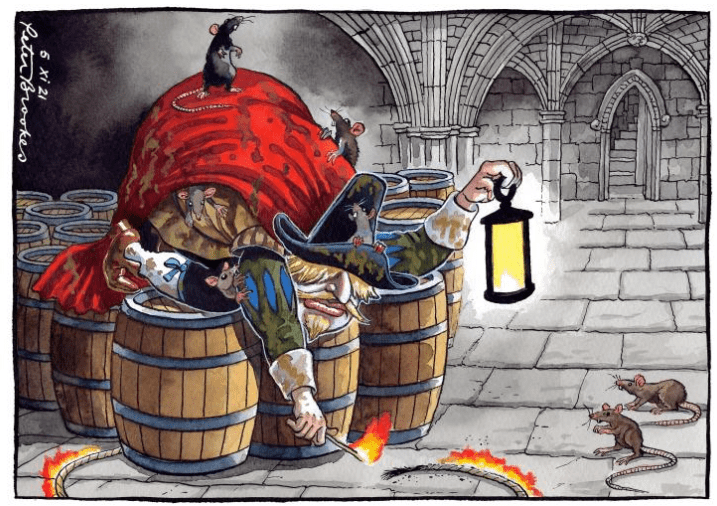
gunpowder, treason and plot
“A worrying trend was the rise in cases in older and much more vulnerable people”
Ian Sample www.theguardian.com
Scientists on the Zoe Covid study believe UK cases of coronavirus may have peaked for the year, a suggestion that prompted some experts to warn that it was too soon to know how the epidemic would play out in the weeks ahead.
The study, which estimates the number of Covid cases in the community from the information that users log on an app, found a clear decline in cases in under-18s since mid-October, with infection rates levelling off in most other age groups though still climbing in 55- to 75-year-olds.
The trends are based on 42,359 swab tests taken between 16 and 30 October and point to 88,592 daily symptomatic cases, a decrease of 4.7% on the previous week’s Zoe data. The numbers equate to one in 53 people in the UK currently with symptomatic Covid infections.
“Young people have been driving the big numbers of cases, and the big numbers look from our data to have finished,” said Prof Tim Spector, the lead scientist on the Zoe study, at King’s College London. “There are multiple reasons behind it, but a lot is driven by the pattern we are seeing with kids, plus the history of the past waves.”
It comes as figures on Thursday showed that 37,269 people across the UK tested positive for Covid in the previous 24 hours, a small drop on the 41,299 seen the day before. However, the number of deaths within 28 days of a positive Covid test recorded over the same period – 214 – was almost the same as the 217 reported the previous day.
In the autumn term Covid infections have soared in secondary school children, a cohort largely unprotected because of the slow rollout of vaccines to the age group. The Office for National Statistics estimates that more than 9% of children in years seven to 11 were infected in the week ending 22 October.
But the sustained high rates of infection in schools have driven up levels of immunity to the virus and at some point, with help from vaccinations, cases are expected to fall back down. Outbreak modellers expect this to happen unevenly across the country, with hard-hit areas such as London among the first to see cases drop in the age group.
What is unclear is when infection rates at schools will peak. Scientists on the React study, at Imperial College, have reported similar evidence for a downturn in cases at the end of October, but warned that the decline could be temporary and driven by children being out of school for half-term.
Kevin McConway, an emeritus professor of applied statistics at the Open University, said cases had fallen for only a short time and what would happen next was highly uncertain. “While I very much hope personally that the decline continues, I really don’t think we can be anywhere near certain that it will,” he said.
He added that while the Zoe study provided some plausible reasons for cases to keep falling, a lot seemed to be “expressions of hope more than definite predictions”. McConway said: “We can hope that the peak for 2021 has been reached, but we still need to plan accordingly for what should be done if it hasn’t been reached.”
Mark Woolhouse, a professor of infectious disease epidemiology at Edinburgh University, said a worrying trend was the rise in cases in older and much more vulnerable people. “Even though the vaccines give very good protection against severe disease they do not give complete protection, and these age groups continue to dominate hospital cases. I would not want to conclude that the UK Covid-19 pandemic is in decline until it declines in older and more vulnerable age groups. That has not happened yet.”
But does does Boris care? – Owl
House prices are rising in East Devon, with the dream of home ownership becoming out of reach for too many local people. New-build developments must be affordable, with protections in place to restrict the number of properties becoming second homes. The loophole that allows second-home owners to avoid paying council tax should be closed quickly to help local authorities. Will the Prime Minister meet me and colleagues from across the south-west to discuss this growing crisis across our region?
I know how strongly my hon. Friend and other colleagues across the south-west feel about this issue. That is why we have legislated to introduce higher rates of stamp duty on second homes. We will ensure that only genuine holiday businesses can access small business rates relief, but I am certainly happy to meet colleagues to discuss what further we may do to ensure that local people get the homes that they need.
MPs are being paid tens of thousands of pounds a year to act as consultants and advisers for a range of companies, with some receiving many times their parliamentary salary.
Christopher McKeon www.standard.co.uk
Analysis of the Register of Members’ Financial Interests shows 34 MPs listing payments for consultancy or advisory work.
They include Owen Paterson who was found by the Standards Committee to have engaged in “egregious” lobbying on behalf of two companies that paid him a combined total of more than £100,000 per year.
There are no rules against MPs being paid for advising external businesses, provided they record it in their register of interests, but they must not lobby the Government on behalf of those businesses.
Mr Paterson, who is employed by diagnostics company Randox and sausage-maker Lynn’s Country Foods, is one of two MPs to be paid more than £100,000 for consultancy or advisory work.
The highest paid is former international development secretary Andrew Mitchell, who receives £182,600 per year for 32.5 days working for firms including investment companies Investec, SouthBridge and Kingsley Capital Partners, along with accountants Ernst & Young and consultants Montrose Associates.
Other MPs paid more than £100,000 per year for consulting work include former cabinet minister Chris Grayling who is paid £100,000 annually by Hutchison Ports Europe, and Chief Whip Julian Smith who receives a total of £144,000 per year from three companies.
Mark Garnier, a former international trade minister, earned more than his £81,932 annual parliamentary salary for consultancy work. He is paid £90,000 by two companies in the space sector – Laser Light Communications and Shetland Space Centre.
Some MPs also operate their own consultancy firms. Sir Bob Neill is the sole director of RJMN Ltd, which advanced him an interest-free loan of £68,000 in the 2019/20 financial year, according to its most recent accounts.
Mark Pritchard also owns a consultancy firm, Mark Pritchard Advisory Ltd, which made profits of £27,299 in the 2020/21 financial year and paid dividends of £13,000.
Here is a list of MPs receiving payments for consultancy or advisory work. It does not include all second jobs listed by MPs, with some continuing to work as lawyers, doctors and nurses, while others are listed as directors of companies. The list is predominantly Tory MPs, apart from Lib Dem leader Sir Ed Davey.
Conor Burns
– Trant Engineering, £40,000pa for 120 hours
Sir Graham Brady
– Snowshill Allied Holdings Ltd, £10,000pa for 12 hours
Andrew Bridgen
– Mere Plantations Ltd, £12,000pa for 96 hours
Steve Brine
– Remedium Partners, £19,200pa for 96 hours
– Microlink PC (UK) Ltd, £19,200pa for 96 hours
– Sigma, £19,992pa for 96 hours
– Total £58,392pa for 288 hours
Alun Cairns
– BBI Group (life sciences), £15,000pa for 70 hours
– Veezu Holdings (private hire transport), £15,000pa for 70 hours
– Elite Partners Capital Pte Ltd (property investment), £30,000pa for 84 hours
– Total £60,000pa for 70 hours
Sir Ed Davey
– Herbert Smith Freehills, political issues and policy analysis, £60,000pa for 72 hours
– Next Energy Capital, member of advisory board, £18,000pa for 48 hours
– Total £78,000 for 120 hours – money used to benefit Sir Ed’s disabled son
Philip Davies
– National Pawnbroking Association, £12,000pa for 60-120 hours
David Davis
– THI Holdings GmbH (German investment company), £33,900pa for 16 hours
– Chairs supervisory board of Kohlgartenstrasse 15 Verwaltungs AG (German property company), £16,948pa for 168 hours
– Total £50,848 for 184 hours
Sir Iain Duncan Smith
– International advisory board of Tunstall Health Group, £20,000pa for 30 hours
– Byotrol Technology Ltd, £25,000pa for 144 hours
– Total £45,000pa for 174 hours
Ruth Edwards
– MHR International ltd (HR software), £60,000pa for 192 hours
Ben Everitt
– Institute of Chartered Accountants in England and Wales, £15,000pa for 60-80 hours
Richard Fuller
– Investcorp Securities director, £20,000pa for 48 hours (plus additional £29,900 for 19 hours in 2021 so far)
Mark Garnier
– Laser Light Communications (satellites), £60,000pa for 120 hours
– Shetland Space Centre, £30,000pa for 120 hours
– Total £90,000 for 240 hours
Chris Grayling
– Hutchison Ports Europe, £100,000pa for 84 hours
Damian Green
– Abellio Transport Holdings, on rail policy, £40,000 pa for 288 hours
Stephen Hammond
– Darwin Alternative Investments, £60,000pa for 50-100 hours
Sir John Hayes
– BB Energy Trading Ltd, £50,000pa for 80-90 hours
Daniel Kawczynski
– The Electrum Group, £36,000pa for 360 hours
Sir Greg Knight
– Cambridge and Counties Bank Ltd, £16,000pa for 108 hours
Andrew Lewer
– Penelope Thornton Hotels, £4,800pa for 48 hours
Tim Loughton
– Outcomes First Group, £37,000pa for 144 hours
Paul Maynard
– Link Scheme Ltd (cash machines), £6,250pa for 32 hours – money paid direct to charity
Andrew Mitchell
– Investec, £12,000pa for two days
– Montrose Associates, £36,000pa for 8 days
– Ernst & Young, £30,000pa for five days
– Arch Emerging Partners, £15,000pa for 2.5 days
– SouthBridge, adviser on African matters to Rwanda-based company, £39,600pa for 9 days
– Kingsley Capital Partners, £50,000pa for 8 days plus share options
– Total £182,600 for 34.5 days
Sir Robert Neill
– Weightmans LLP, £15,000pa for 72 hours
– Substantia Group, £12,000pa for 72 hours
– Masonic Charitable Foundation, £7,500 for 10 hours (one-off payment)
– Total £34,500 for 154 hours
Owen Paterson
– Randox Laboratories, £99,996pa for 192 hours
– Lynn’s Country Foods, £12,000pa for 24 hours
– Total £111,996 for 216 hours
Andrew Percy
– Iogen Corporation (Canada), a clean energy company, £36,000pa for 36 hours
Mark Pritchard
– Consumer Credit Association, £18,000pa for 96 hours (a client of Mark Pritchard Advisory)
John Redwood
– Epic Private Equity, £5,000pa for 12 hours
Laurence Robertson
– Betting and Gaming Council, £24,000pa for 120 hours
Dean Russell
– EPIFNY Consulting, £2,000 for 28 hours in 2021
Chris Skidmore
– Oxford International Education Group, £10,000pa for 48-96 hours
Julian Smith
– Ryse Hydrogen Ltd, £60,000pa for 20 hours
– Simply Blue Management (UK) Ltd, £24,000pa for 12-24 hours
– MJM Marine Ltd, £60,000pa for 30-40 hours
– Total £144,000pa for 62-84 hours
Royston Smith
– Barker Mill Estates, £18,000 for 90 hours since May 2020
You couldn’t make this up:
The committee was to be chaired by the former culture secretary John Whittingdale. He was investigated by a previous parliamentary commissioner for standards over an undeclared trip to the MTV Europe awards in Amsterdam in 2013 with his then girlfriend, a dominatrix sex worker. The cost of the flights, hotel bill and entertainment, were covered by MTV.
Of course, they’re self interested Tories – Owl
Politico newsletter yesterday:
Insider’s Henry Dyer has done some excellent analysis and found 22 of the Tory MPs who voted for the Leadsom amendment are either under current investigation by the Parliamentary Commissioner for Standards or have had allegations upheld against them since the 2019 general election. Funnily enough there were not many declarations of interest on that front. The vote also saw the frankly ridiculous situation where Paterson was allowed to vote on his own case rather than recuse himself, which pretty much says it all.
The 19 Leadsom backers who have had complaints upheld against them:Adam Afriyie … Scott Benton … Crispin Blunt … Peter Bone … Maria Caulfield … Robert Courts … Richard Drax … David Duguid … Iain Duncan Smith … Mark Francois … George Freeman … Adam Holloway … Karl McCartney … Natalie Elphicke …Roger Gale … Theresa Villiers … Bob Stewart … Chloe Smith … and Craig Tracey.
The 3 Leadsom backers currently under investigation: James Cleverly… Daniel Kawczynski … David Warburton. If these 22 MPs can’t see why it’s inappropriate for them to be voting to effectively get rid of the current standards process then Playbook can’t help them.
Andrew Rawnsley looking into his crystal ball in April.
Tories are wrong to think that they will never face a day of reckoning for sleaze.
www.theguardian.com (last two paragraphs)
What won’t fundamentally alter is the character of Mr Johnson’s government. If you’ve missed the latest sleaze story, don’t worry, another one will be along in a minute. As I like to remark from time to time, the personality of institutions is hugely influenced by the example set by the person at the top. When the prime minister is a man with a lifelong contempt for the norms of decent behaviour and a career history of behaving as if he can get away with anything, the government is going to reflect his amoral character. Never forget that Mr Cummings was not sacked when he went for his lockdown-busting excursions around Durham, an example of “one rule for them” that mightily cut through to the public. They only parted company months later when the svengali fell out with the prime minister’s fiancee.
A culture of impunity in which unethical behaviour, however outrageous, never goes punished, is pretty much a guarantee of even worse to come in the future. I cannot tell you how the Johnson government will end or when, but it will surely not be a happily ever after. Sleaze may not catch up with the Tories tomorrow or next week or next month or even next year, but there will be a day of reckoning. To paraphrase Ernest Hemingway, governments become bankrupt in the eyes of the voters gradually, then suddenly.
 East Devon Watch