Nobody should be left behind during switch over to internet-based phones

Comment from a correspondent: “Fiddling while Rome burns.  I’ve been changed to an internet phone (Virgin) and offered an alternative phone if I am vulnerable.”

Simon Jupp www.exmouthjournal.co.uk

In our modern age, some increasingly old-fashioned things are still sticking around.

Cash and coins are thankfully still widely used despite never-ending efforts to make everyone go contactless.

Not everyone likes tapping a card and cash helps businesses manage small and informal payments like tips.

It seems traditional landline telephones will stick around a bit longer, too.

Regular readers may remember that I previously wrote about plans by telephone bosses to switch off the copper-wire technology which make calls on landlines by 2025. Everyone would have been moved to an internet-based connection. 

The good news is that BT Openreach – who manage the UK’s phone network – have now paused plans to disconnect traditional phone lines.

I raised my concerns with the Secretary of State a few months ago that half of older people over 75 are not online, areas with no mobile signal and without internet risk being cut off from essential services, and internet can go off in power cuts leaving no alternative to make emergency calls if you don’t have a mobile.

Storms Arwen and Eunice brought the last key concern into sharp focus and drove BT to announce that they’re pausing the programme for now. They will only transfer people who request it.

To give a quite tragic example reported in the news of where the digital switch-over could potentially go wrong, during Storm Arwen a man’s home burned down in a remote part of Scotland because he had no mobile signal and could not call 999 on his internet-based landline phone during the power cut.

BT admitted they need to sort out how to raise more awareness of the digital change, how to provide emergency solutions like battery-back up units or hybrid phones that can switch between the internet and mobile networks, and how to address so-called mobile ‘not-spots’. Regulator Ofcom has also warned that some devices such as panic alarms which use analogue phone lines would cease to function, potentially affecting 500,000 vulnerable people.

As your MP, I will continue to pressure BT, Ofcom, and the government to make sure nobody is left behind.

UK gave sanctioned Russians ‘golden visas’ after first Ukraine invasion

Seven Russians now under sanctions were awarded controversial “golden visas” by the UK after Vladimir Putin’s regime first invaded Ukraine in 2014, the government has admitted.

Jasper Jolly www.theguardian.com

The government closed the “tier 1 investor visa” scheme in February amid the build-up of Russian forces on Ukraine’s border as it prepared to broaden its occupation beyond Crimea, which it annexed in 2014.

Since the invasion, sanctions targeted at many of Russia’s richest businessmen have become a key part of the response by the UK and its allies.

The measures have also prompted awkward questions for the government, with critics accusing it of offering an open door to kleptocrats and oligarchs, who in some cases are thought to have expropriated wealth from the Russian state on a massive scale. Much of that wealth has been used to buy luxury property in London.

The golden visa scheme allowed people with at least £2m in investment funds and a UK bank account to apply for residency rights, along with their family. Before 2018 it is thought that minimal checks were carried out on investors or the source of their wealth.

The government revealed that 10 Russians who received golden visas are now subject to sanctions, an increase from the eight previously admitted, in a written answer to a question from Stephen Kinnock, Labour’s shadow immigration minister.

Kevin Foster, a junior Home Office minister said seven of those 10 Russian nationals “either obtained an initial grant of leave or obtained further leave via the route after 2014”.

The government declined to name the people who received the visas, despite demands from Labour and Spotlight on Corruption, a campaign group.

In 2014 David Cameron, then prime minister, said Russia must “choose the path of diplomacy and de-escalation, or face increasing isolation and tighter and tighter sanctions”. However, the latest data suggested that the government continued to wave through visas for Russian nationals now considered by officials to play key roles in supporting Putin’s regime.

“Putin’s invasion of Crimea should clearly have been a fork in the road for how the British government viewed Russian oligarch investors,” said Kinnock. “It therefore beggars belief that – even after the threat posed by Putin to western security and British interests had been exposed – the Conservative government continued to award grants of tier 1 (investor) leave to seven of Putin’s cronies who would later be sanctioned.”

Spotlight on Corruption said the latest revelation made it even more urgent that the government release a 2018 report on the golden visa scheme. A minister last month committed to publish it, but the government has not yet done so.

Susan Hawley, the group’s executive director, said: “This is compelling evidence of the frankly shocking complacency in the UK government about Russian money coming to the UK even after Russia started its aggression against Ukraine in 2014.

“The golden visa regime looks increasingly like a state-sponsored scheme to enable kleptocracy. The lessons must be learned for the UK visa regime across the board.”

A Home Office spokesperson said: “We have made it clear we will not tolerate abuse of our immigration system and we have closed the tier 1 (investor) route with immediate effect to ensure that those who have profited from dirty money cannot gain access to the UK.

“We want to make it clear that the UK is no safe haven for those who enable the Putin regime. By implementing the largest and strongest sanctions package in the UK’s history, we are continuing to crack down on these individuals and making sure they pay the price.”

Exmouth councillor claims someone knew John Humphreys was under investigation

Someone at East Devon District Council (EDDC) knew that former Conservative councillor John Humphreys was under investigation for sex crimes against children while still serving as a councillor, it has been alleged.

Joe Ives, Local Democracy Reporting Service www.exmouthjournal.co.uk

Labour councillor Paul Millar (Exmouth Halsdon) made the claim at a full council meeting this week.

Humphreys, 60, who also previously served as mayor of Exmouth, is now serving a 21-year prison sentence for sexually assaulting two teenage boys 10 years apart.

He was arrested in 2016 before being released on bail on suspicion of the crimes he would eventually be convicted of in August last year.

Cllr Millar’s claim could have serious implications for the council. The investigation into Mr Humphreys was not made public at the time and he continued to be a councillor until May 2019, eventually being awarded the honorary title of alderman by EDDC in December that year.

Despite being under investigation since 2016, no officers or councillors at EDDC have said that they had any knowledge of the allegations against Mr Humphreys during his time in office or when he was named as an alderman. Following his conviction in August last year, the council retracted the honour.

Addressing the council, Cllr Millar said: “I, unfortunately, have to share that I have been made aware by somebody I consider to be a very reliable source that a senior individual in East Devon District Council was officially made aware whilst Mr Humphreys was a councillor that Mr Humphreys was being formally investigated by police for sexual allegations.” 

In response to the claim, a spokesperson from EDDC said the questions raised by Cllr Millar would be something for the council’s cabinet ‘to consider in due course’.

At the meeting, councillors agreed to commission an external investigation looking into the circumstances around Mr Humphreys from 2016, when he was first arrested, until he received his alderman award in 2019.

Speaking ahead of the vote, Cllr Millar said: “There has to be a way that individuals in any way involved in the [alderman] nomination process are able to intervene to prevent nominating a potentially inappropriate individual. 

“The principle of innocent until proven guilty does not extend to individuals facing serious charges and receiving civic honours at the same time.

“No institution in its right mind should ever risk offering a civic honour if they had any knowledge within that institution of a serious criminal investigation that could be taking place.”

Cllr Jess Bailey (Independent, West Hill and Aylesbeare), who proposed the idea of an external report, said it should have one key thing in mind: ‘child protection and safeguarding of children’.

Protected areas, such as AONBs, can be the beating heart of nature recovery in the UK, but they must be more than lines on a map

“National Parks, Areas of Outstanding Natural Beauty and other protected areas currently make up 27% of UK land. However, the report finds that the proportion of land that is effectively protected for nature could be as low as 5%.”

British Ecological Society www.britishecologicalsociety.org 

A report by the British Ecological Society says that the UK government’s commitment to protect 30% of land and sea by 2030 offers the opportunity to revitalise the contribution of protected areas to nature recovery. But it also warns that this ambitious pledge will fail if we don’t make radical, transformative changes.

The UK government has committed to protecting 30% of the UK’s land and sea to support nature recovery by 2030. The report welcomes this target, as failure to achieve it could result in continued and irrecoverable declines in biodiversity.

The BES’s Protected Areas and Nature Recovery report looks at the role protected areas play in supporting nature and determines what is needed to meet the ‘30×30’ target.

Although the ‘30×30’ target seems close to being achieved, with 27% of UK land and 38% of UK seas under some level of protection, the report finds that many protected areas are not delivering for nature and are in poor ecological condition.

The report therefore urges caution over what should count towards the ‘30×30’ target and provides recommendations for what protected areas, and the surrounding environment, need in order to be effective in restoring nature.

Dr Joseph Bailey at York St John University and lead author of the report said: “Designating an area of land or sea does not automatically make it an effective protected area. Designation is simply the first step in a long process towards ensuring that long-term ecological benefits are delivered for nature and people. To be effective, a protected area needs adequate implementation, enforcement, monitoring, and long-term protection.”

Dr Bailey added: “The 30×30 target presents such a good opportunity that we can’t let it pass us by, especially in the face of a changing environment and a future in which we will need resilient ecosystems.”

Protecting the land

National Parks, Areas of Outstanding Natural Beauty and other protected areas currently make up 27% of UK land. However, the report finds that the proportion of land that is effectively protected for nature could be as low as 5%.

Many protected landscapes, such as National Parks, do not specifically prioritise biodiversity and were not established or funded to do so. The report recommends that these areas should not be included in the ‘30×30’ target in their current state.

Professor Jane Hill at the University of York and author of the report said: “The evidence is that most protected landscapes are not delivering for nature and only a low percentage are in good ecological condition. However, because there is existing governance in place managing these landscapes, they have great potential to be adapted to improve how they deliver for nature.

“With the right support and willingness, nature can recover and thrive in almost any landscape. If the objectives of protected landscapes like National Parks and Areas of Outstanding Natural Beauty can be reformed to ensure that they deliver for nature in the long-term, they could then count towards the ‘30×30’ target.”

Protecting the seas

On paper, marine environments seem better protected than UK landscapes with Marine Protected Areas (MPAs) already exceeding the government’s target and covering 38% of UK seas. However, many of these areas have no current management measures in place and most areas closed to fishing are in UK overseas territories.

While regulations to control fishing are in place in some MPAs, across the entire UK only three small MPAs ban all fishing activity. Damaging fishing activity from large bottom trawlers is still unregulated in many MPAs across the UK.

Rick Stafford of Bournemouth University and author of the report said: “The proposal to protect 30% of UK seas is very welcome, but we need effective management measure in place in Marine Protected Areas which will protect wildlife and benefit local coastal communities.

“The lack of comprehensive management or enforcement means that the majority are failing to deliver for nature and bring the full range of biodiversity benefits they otherwise could.”

What should count towards the ‘30×30’ target?

For protected areas to deliver for nature and be included in the ‘30×30’ target, the report recommends the following criteria:

  • Protected areas must be managed to deliver for nature in the long term, using evidence-based approaches.
  • Protected areas should have effective governance to address pressures such as climate change, pollution, and damaging fishing activities.
  • Have monitoring in place that informs the long-term management of protected areas so that they meet conservation goals. This will require substantial and sustained funding and resourcing.
  • Protected areas should be inclusive to benefit local people and ensure buy-in. The governance of protected areas should involve local communities in partnership with landowners, NGOs, researchers, government agencies, and other stakeholders.

Nobody should lose out to something benefiting nature

Dr Paul Sinnadurai of the Brecon Beacons National Park Authority and Cardiff University, and author of the report said: “Protected areas have suffered from not having enough resources and having to make too many compromises. This has left them in a position where they are not doing enough to support nature.

“To turn this around, money and resources need be made available for consistent monitoring. During the late 1990s and early noughties, there was a good advance in the use of the Common Standards for Monitoring in protected areas, but momentum wasn’t maintained in this essential practice because it is resource intensive.

“For effectively protected areas to be successful, they must also be inclusive. To do this we need to have conversations with landowners and local people and ensure nature recovery works for everyone. Nobody should lose out to something benefiting nature.”

Protected areas are not enough on their own

Despite the enormous potential of protected areas, they cannot protect nature on their own. Landscapes surrounding protected areas are also vitally important, particularly with species ranges shifting in response to climate change.

The report details how other effective area-based conservation measures (OECMs) – areas outside of designated protected areas that are managed in a way to support nature – can complement protected areas and provide an essential contribution to nature protection and recovery.

Dr Bailey said: “We need to make sure landscapes are suitable for species to move between highly protected areas. This could be done with wildlife corridors such as hedgerows. Protected areas simply won’t work if the spaces in between them are not working towards the same goals.”

Read the report

Share your experiences for a Parliamentary debate on the availability of affordable housing in Devon and Cornwall

A correspondent has drawn Owl’s attention to this Westminster Hall debate next week, to make an input you need to act quickly:

Share your experiences for a Westminster Hall debate ukparliament.shorthandstories.com

Wednesday 27 April, 2:30 pm – 4:00 pm

On Wednesday 27 April, Selaine Saxby MP is leading a Westminster Hall debate on the availability of affordable housing in Devon and Cornwall.

To inform her debate, she wants to hear from those living in, or near the region about their experiences:

Link to online survey here

Apart from giving your name, email and postcode, there are only three questions:

  1.   How have you, or those you know been affected by the availability of affordable housing in Devon and Cornwall?
  1.   What consequences do you think a lack of availability of affordable housing will have in the future if left unresolved?
  1.   Do you have any additional comments or suggestions on this topic?

The deadline for submissions is midday, Tuesday 26 April.

Introducing the debate, she gave the following statement:

“With summer fast approaching, the lack of affordable housing and the effect of short term holiday lets and second homes in tourist hotspots such as Devon and Cornwall is only likely to get worse.

“While tourism is essential to our economy, a balance is needed, and many people are cautious about the consequences of excessive holiday lets and second homes in our communities.

“Local people are the biggest victims when it comes to availability of affordable housing and private rentals, and action needs to be taken.

“I hope this debate can explore the impact the lack of affordable housing has on locals, and the potential solutions to this problem.

“Your experience of housing in Devon and Cornwall would provide an invaluable insight to the debate.”

The deadline for submissions is midday, Tuesday 26 April.

How it works

How to watch the debate:

Links to watch the debate and read the transcript will be added to this page (see link above) as soon as they are available from Wednesday 27 April.

What is a Westminster Hall Debate?

Westminster Hall debates take place in the Grand Committee Room in the House of Commons.

They give MPs an opportunity to raise local or national issues and receive a response from a government minister. 

Debates in Westminster Hall take place on ‘general debate’ motions expressed in neutral terms. These motions are worded ‘That this House has considered [a specific matter]’.  

How Parliament works: Westminster Hall debates.

How your contributions are shared

In these exercises, members of the public who may have experience or understanding of the debate topic are invited to contribute.

Their responses are passed on to the MP leading the debate, who may refer to them directly in their speeches.

You can see previous examples further down the page.

What happens next?

If you shared your email in the survey, we’ll send you an update after the debate with links to watch it, read the transcript, and information about the Government’s response.

Lower Otter road embankment and bridge building

New road embankment and bridge building for Lower Otter Restoration Project enters new phase

Dan Wilkins www.exmouthjournal.co.uk 

Building of a new road embankment and a 30m-span bridge in Budleigh Salterton as part of the Lower Otter Restoration Project (LORP) enters a new phase next week. 

The concrete foundation piles for the new bridge, which will carry vehicles over the new creek network on the west of the Lower Otter Valley, are now complete and building upwards will begin. 

This includes the construction of the piers and supports of the bridge and the earth embankment for the road itself which will go across the valley parallel to the existing road.  

The embankment will eventually be 2.5 metres higher than the current South Farm Road – the same level as the nearby White Bridge – lifting it above the level of the floodplain and making it more resilient to flooding.  

Dan Boswell, LORP project manager for the Environment Agency, said: “This is a fascinating opportunity to see civil engineering in action.  

“Although it will look very big initially, after about four months the surcharged embankment will be re-shaped and reduced in height before the final road surfacing is constructed.” 

 Towards the end of the year, the new embankment will be connected to White Bridge before it crosses the River Otter – White Bridge will remain unchanged.  

To minimise disruption while the new road is being built and connected, later this year a short section of temporary private road providing access to the east of the river will be built.  The new bridge is expected to be completed during the autumn. 

The project is part of the €26 million Promoting Adaptation to Changing Coasts project, which also has a similar scheme underway in the Saâne Valley in Normandy, France.  

A map showing how the Lower Otter will change – Credit: Lower Otter Restoration Project

In Budleigh, it will see current grassland, created during historic reclamation work, replaced with 55 hectares of intertidal mudflat and saltmarsh, plus a net gain of more than two hectares of broadleaved woodland and 1.5 kilometres of hedgerow.  

Watch the full council debate toughen Scrutiny Committee’s report calling for investigation into how John Humphreys became Alderman

An amendment to the Scrutiny Committee minutes, chaired by Cllr Tom Wright, called for an inquiry or investigation into how John Humphreys was appointed an Alderman whilst under police investigation following his arrest in 2016. Much debate on this and whether or not to pause the process of reviewing the appointment system pending the results of such an inquiry/investigation.

Starts at 41 minutes into the recording of the full council meeting of 20 April. Lasts just over an hour with a bit of a cliff hanger at the end – Owl.

Where do Neil Parish and Simon Jupp now stand on Partygate Inquiry?

(Most likely finding reasons to be busy in their constituencies on constituency matters. – Owl)

Revolt of the middle ranks’: Playbook heard last night that there were threats of several ministerial resignations over the vote. Estimates vary — in his Times column James Forsyth says two members of the government were on the verge of quitting. The paper’s splash, anchored by Henry Zeffman, reports that six frontbenchers told Tory whips they could not support the plan, in what one minister they spoke to termed a “revolt of the middle ranks.” Similarly in their Mail splash Jason Groves and Harriet Line say that half a dozen ministerial aides threatened to quit over the amendment, and that dozens of MPs wouldn’t support it.

Cllr Tom Wright apologises for ‘kneecapping’ comment

Not the first occasion that Cllr Tom Wright’s “excitement” has got out of hand in virtual meetings. Last time he crashed the meeting. – Owl

Joe Ives, local democracy reporter www.radioexe.co.uk

Cllr Tom Wright (courtesy: EDDC/YouTube)

A councillor has apologised after saying he would “personally go out and kneecap” anyone he thought was guilty of the crimes of convicted sex offender and former councillor John Humphreys.

Councillor Tom Wright (Conservatives, Budleigh and Raleigh) was speaking during a debate at East Devon District Council (EDDC) about what actions the council need to take following Mr Humphreys’ conviction.

Former Exmouth mayor and Conservative councillor John Humphreys is serving a 21-year prison sentence for 10 sex offences against two boys in the early 1990s and early 2000s.

He was arrested on suspicion of the offences in 2016, but continued to serve as a councillor until May 2019 and in December that year, EDDC awarded him  the honorary title of alderman.

Cllr Wright, a former policeman, made his threat while discussing a suggestion that someone at the council might have known that Mr Humphrys had been under investigation during this time.

He said he had no awareness of Mr Humphreys’ arrest: “and as far as I’m aware no other councillor did.” 

He continued: “You know my background, chair. I would personally go out and kneecap anyone I thought was committing the crimes that Councillor Humphreys has quite properly been convicted of. They were atrocious crimes.”

Cllr Wright expressed his admiration for the victim who came forward to make a statement in December.

Cllr Wright later apologised for the “kneecap” comment, saying: “What I was trying to convey is that had I been in charge of investigating things such as this – as I have been in the past – I would conduct the investigation not with great passion but with great thoroughness and determination.”

He said that kneecapping was “jargon” used “to make someone very clearly aware that you’re not pleased with them.

It’s not the first time that the member for Budleigh and Raleigh has had to eat his words. In May 2020 he was unwittingly caught swearing during a virtual meeting.

Cllr Wright “unreservedly” apologised for the incident. 

In this week’s meeting discussing John Humphreys, councillors agreed to commission an in-depth report into the circumstances surrounding the former councillor from 2016, including his honorary award of alderman in December 2019.

Following his conviction in August last year, the council retracted the honour. 

Breaches of English farm pollution laws rise as rules remain largely unenforced

“It makes a mockery of our democracy and the rule of law if polluters are not prosecuted for blatant offences which cause misery and huge costs for many other people and businesses,” said Mark Lloyd, the chief executive of the Rivers Trust.

Wil Crisp www.theguardian.com 

The number of documented violations of legislation designed to reduce water pollution caused by agriculture in England has hit record levels as the rules remain largely unenforced.

Last year had the highest number of recorded violations of the farming rules for water since the legislation was introduced in April 2018, and environmental groups estimate tens of thousands of English farms continue to commit undocumented violations.

A total of 391 breaches were identified during the 2021-2022 financial year, which ended on 31 March, up from 106 breaches officially recorded in the previous year, according to data obtained by the Guardian and the investigative journalism organisation Point Source.

Despite the farming rules for water having been implemented more than four years ago, and the rising number of breaches being documented, the Environment Agency has yet to issue any fines or prosecute anyone under the legislation.

The increasing number of documented offences and the absence of a credible threat of enforcement of the law demonstrates a clear failure by the government to protect the country’s most fragile ecosystems, according to conservation organisations.

“It makes a mockery of our democracy and the rule of law if polluters are not prosecuted for blatant offences which cause misery and huge costs for many other people and businesses,” said Mark Lloyd, the chief executive of the Rivers Trust, a charity that works to protect Britain’s lakes and waterways.

“Agricultural pollution is the principal reason why our rivers are in such poor shape and ministers need to give regulators the resources and the mandate to take action against persistent offenders.”

The farming rules for water legislation gives the Environment Agency the power to prosecute or fine individuals and companies found to be polluting waterways with contaminated runoff water or acting in a way that creates a high risk of pollution.

Under the legislation, fixed penalties of £100 or £300 can be issued as well as “variable money penalties”, which can be as much as £250,000.

The rules were designed to combat agricultural pollution that is causing widespread environmental problems in rivers.

They focus mainly on the storage and distribution of animal waste and fertiliser in order to prevent damaging pollutants from farms running into rivers where excessive quantities of nitrogen can cause algae blooms that lead to oxygen depletion.

Runoff from agriculture is the biggest single polluter of rivers, responsible for 40% of damage to waterways, according to a report published by the Environment Agency in September 2020.

The report revealed that no river in the country had achieved good chemical status and only 14% were found to be of a good ecological standard.

Fertiliser runoff from farmland can kill fish and plants and have a knock-on impact for other wildlife that are part of the ecosystem, such as birds.

Over the past two financial years a total of 2,053 Environment Agency inspections have taken place identifying a total of 497 violations of the farming rules for water, according to data obtained by the Guardian.

The high number of violations discovered has led environmental organisations to estimate that around a fifth of the 106,000 farm businesses regulated by the Environment Agency are likely to be breaching the rules.

Nick Measham, the chief executive of the environmental group Salmon and Trout Conservation, said: “The new figures regarding the increasing number of officially documented violations and the failure to enforce sanctions are extremely concerning.

“Given our experience gained through our monitoring and the extremely low level of site visits carried out by the Environment Agency, it is conservative to estimate that as many as 20,000 of England’s farms would be likely to fail an inspection – if they were actually inspected.”

An Environment Agency spokesperson said: “We seek to use advice and guidance to bring farms into compliance, and impose sanctions only where farmers repeatedly fail to take necessary action.

“The secretary of state has issued new guidance on the interpretation of the rules and has said that if the Environment Agency determines that land managers have followed this guidance he does not normally expect them to take enforcement action.”

The Environment Agency’s decision not to use the sanctions at its disposal has been heavily criticised by conservation groups, who say that not punishing farming companies for breaking the law is having severe ecological consequences.

Alec Taylor, head of production policy at WWF, said: “The persistent failure to enforce these regulations, not least due to the systematic underfunding of the relevant regulatory bodies, reflects the UK government’s lacklustre approach to cleaning up England’s precious freshwater habitats.”

“UK nature is in freefall and … ministers simply cannot afford to keep shirking their responsibility to protect and restore these habitats, which are home to rare and vulnerable species like allis shad, otters and freshwater pearl mussels.”

Alice Groom, the RSPB’s senior policy officer, said: “Clearly the current system is not working if farmers and landowners feel the risk of punishment is near non-existent or the rewards for being responsible are not there.

“Failure to improve regulation will not only threaten the health of our natural environments and biodiversity, but also prevent the government from delivering against any of its new legally binding targets under the Environment Act.”

The Environment Act was passed last year and, in March, the Department for Environment, Food and Rural Affairs set out targets under the act to reduce nutrient pollution in water in England.

It said it would cut phosphorus in treated sewage by 80% by 2037, and reduce nitrogen, phosphorus and sediment from agriculture by 40% by 2037.

Thames Water dumped raw sewage into rivers around Oxford 5,028 times in 2021

Thames Water dumped sewage for more than 68,000 hours into the river systems around Oxford last year, campaigners have revealed.

Miranda Norris www.oxfordmail.co.uk 

Oxford Rivers Improvement Campaign (ORIC) analysed the Environment Agency’s data on sewage discharges for 2021 and its database of investments by water companies.

Across the upper Thames, 102 sewage treatment works discharged into the rivers in 2021. Forty-nine discharged for more than 10 hours a week and almost quarter of the works discharged for more than 1,000 hours in the year.

The water company discharged raw sewage into the Thames and its tributaries including the River Windrush, Thame, Evenlode and Ock 5,028 times that year, according to the data.

And the latest report from ORIC reveals that, according to the EA investment database, only a third of the Upper Thames works which need investment will be upgraded by 2025.

That figure falls to a quarter when the region’s rising populations are taken into account.

Using data from Thames Water and applying the Environment Agency formula for capacity required at any treatment works, the campaigners assessed that the 10 large sewage treatment works in the upper Thames area – from Didcot in the south to Moreton-in-Marsh and Bourton-on-the-Water in the Cotswolds – were unable to treat the full capacity of sewage for the population of 1.1 million.

Their calculations indicate Oxford and Witney treatment works can cope with only 62 per cent of the capacity needed for the population, and the treatment works in Banbury for 49 per cent of the required capacity.

All 10 works discharged sewage into the rivers in 2021 for an average of 11 hours a week.

Oxford sewage treatment works released raw sewage into the waters for 892 hours in 2021, Swindon for 501 hours and Witney for 935 hours.

The report, published on Wednesday by ORIC, found that even where Thames Water had planned investment, the expansion of capacity would not be sufficient to meet the growing number of homes.

At Witney treatment works the investment will increase capacity by 50 per cent but that would improve the works to only 93 per cent of the required capacity based on the 2020 population, the report says.

“The simple truth is that Thames Water’s plans are completely inadequate,” said ORIC’s Mark Hull, a former water industry consultant.

“Given the well-established and long-standing problems faced across the Upper Thames region, it is scandalous that appropriate and coordinated investment plans for the whole region are not in place.

“Thames Water and the Government’s Environment Agency have both failed to deal with this problem over many years. Their ongoing under-performance beggars belief – especially as the industry’s financial regulator OFWAT have made it clear that they would not oppose the necessary investment.

“Two urgent questions need to be answered. How has this been allowed to happen? And what do we do about it?

“Government, the Environment Agency and Thames Water keep telling us that they are dealing with the problems. The truth is simple. They are not.”

A spokesperson for Thames Water said it was examining the ORIC report.

“Our aim will always be to try and do the right thing for our rivers and for the communities who love and value them. We regard all discharges of untreated sewage as unacceptable and will work with the government, Ofwat and the Environment Agency to accelerate work to stop them being necessary and are determined to be transparent.

“We recently launched our river health commitments, which include a 50 per cent reduction in the total annual duration of spills across London and the Thames Valley by 2030, and within that an 80 per cent reduction in sensitive catchments.

“We have a long way to go – and we certainly can’t do it on our own – but the ambition is clear.”

Ban bonuses for water firm bosses until sewage spills stopped, urge Lib Dems

Bonuses should be banned for water company bosses until sewage spills into rivers stop, the Liberal Democrats are to demand.

Helena Horton www.theguardian.com 

Executives were awarded £27m in bonuses over the past two years despite pumping out raw sewage into waterways 1,000 times a day, analysis by the party has found.

The former Lib Dem leader Tim Farron is tabling a 10-minute rule bill that will also ask for mandatory targets and timescales for the end of sewage discharges into waterways and coastal areas. It would require quarterly reports on the impact of sewage discharges on the environment, and place a representative of environmental groups on water company boards.

Companies House records show that executives at England’s water and sewage companies were paid £48m in 2020 and 2021, including £27.6m in bonuses, benefits and incentives.

This is despite recent reports from the Environment Agency showing 772,000 sewage dumping events took place in 2020 and 2021 – more than 1,000 a day.

Campaigners have suggested that the money spent on bonuses would be better spent on infrastructure to prevent sewage spills, which can harm wildlife as well as human health.

The party has called for the executives to hand back last year’s bonuses and for funds to be used to clean up sewage spills.

The Lib Dem leader, Ed Davey, said: “The Conservatives are allowing water companies to pump raw sewage into our precious rivers and lakes while awarding themselves obscene bonuses. Just like the millions paid out to bankers during the financial crisis, the public will find this hard to stomach.

“Liberal Democrat plans for a sewage bonus ban would stop water company execs being paid a penny in bonuses more until our waterways are protected from sewage dumps. These bosses should be made to hand back the millions of pounds already received in bonuses to help clean up their mess.

“It’s time to send a message to the Conservatives that they cannot let water company bosses get away with pumping raw sewage into our rivers and beaches any longer.”

The companies with the biggest executive payouts include United Utilities, which was responsible for the most spills over 2020 and 2021, which paid bonuses of nearly £6m. Severn Trent awarded executives £5.5m in bonuses while dumping sewage 120,000 times. Meanwhile, Yorkshire Water, which dumped sewage 135,000 times, handed out bonuses of £3.3m.

This bill is likely to stir up tension among Conservatives. The government was last year forced into a U-turn after Tory MPs voted not to ban sewage spills into rivers. The government later wrote its own legislation putting a legal duty on water companies to prevent sewage spills.

The environment minister Rebecca Pow said: “A holistic approach to cleaning up our rivers is a top priority for Conservatives and we have introduced the strongest measures ever to tackle this and sewage discharges through the Environment Act and the government direction to Ofwat.”

]Tim Farron’s private members Bill introduced under the ten minute rule passed its first reading on Tuesday 19 April: 

“A Bill to provide for mandatory targets and timescales for the ending of sewage discharges into waterways and coastal areas; to make provision about the powers of Ofwat to monitor and enforce compliance with those targets and timescales; to require water companies to publish quarterly reports on the impact of sewage discharges on the natural environment, animal welfare and human health; to require the membership of water company boards to include at least one representative of an environmental group; and for connected purposes.”]

Investigation launched into appointment of sex abuser as alderman

East Devon District Councillors have voted to commission an independent report to investigate the circumstances of how former Councillor John Humphreys was given the honour of being an alderman despite his arrest for sexually abusing two boys.

Colleen Smith www.devonlive.com 

The former Mayor was arrested in May 2016 and finally jailed for 21 years after a long police investigation in 2021. Yet, during the time between arrest and imprisonment, he was still the ‘lead member for Exmouth‘ and bestowed the honour of an alderman in December 2019.

Today (Wednesday 20 April), a motion was approved by councillors at the East Devon District Council (EDDC) Full Council meeting. It said: “That the Council commissions an independent report by the Local Government Association or the Centre for Public Scrutiny or another appropriate independent body to be expeditiously brought to Cabinet to provide a clear understanding how John Humphreys, despite his arrest in May 2016 continued to serve as a Councillor until May 2019, retained his position as ‘Lead Member for Exmouth’ and went on to be bestowed the honour of an alderman by this Council in December 2019.

“In particular the report will focus on the circumstances of how John Humphreys came to be nominated and bestowed the award of an aldermanship despite being under criminal investigation at the time. The Council will put on hold the remainder of the scrutiny recommendations (on the future of appointing alderman and alderwomen) pending the receipt and consideration of the independent report by the Cabinet. EDDC’s Chief Executive will prepare a report for consideration at a future meeting of the council’s Cabinet.”

A powerful letter was read out during a recent East Devon Council meeting from one of John Humphreys’ victims. He said “there are still so many questions to be answered” after addressing the last full council meeting about “decades of pain and trauma” which he claimed was made worse by police inaction.

The victim questioned why Mr Humphreys was allowed to carry on as councillor whilst he was being investigated, a process which began in May 2016.

In his letter read to councillors, the man wrote: “I am one of many victims of John Humphreys crimes and I want members and officers of this council and the public to hear of what I have had to endure for the last 22 years.”

He explained that he was sent from school as a 14-year-old for work experience at Humphreys’ gardening business where he endured multiple sexual assaults between 1999 and 2001.

He told the council that he had first made a statement to police in 2004 but that the case was dropped the following year. He alleges that besides making no progress on the case, the police harassed him.

When the revelations about Jimmy Savile came out after his death in 2011, the victim decided to try again.

He told the council: “I rang up to get the case reopened again in 2012. All I got was a threatening phone call from a Tiverton officer. His near exact words were ‘Humphreys is now mayor. He’s getting on with his life. If you do anything or proceed with this in court, we will come for your friends and family’.

“I made an official complaint about the threats and was asked into Sidmouth police station. They said an apology will be read out. It was handwritten and wasn’t even an apology. I wasn’t given anything in writing that I could take away. When Humphreys’ case came to court this year, not being able to talk about how the police had treated me was my biggest concern. ‘Don’t open this can of worms right now,’ was all that was said to me.

“I just felt like blurting it out, stood in the box, once all the lies were being thrown at me. In 2015, after many more years of mental stress, a knock came on the door of my mum’s house. It was a female police officer. Someone else had come forward. I couldn’t believe it.

“I’d not been believed twice – but the other victim was a lot older than me and maybe more credible, and there was a third and fourth victim, too. But it still took another six years for justice to be done.”

Anyone who may have been affected by anything raised in this article can contact police in their local area by emailing 101@dc.police.uk or calling 101.

The freephone NSPCC helpline 0808 800 5000 is available for anyone to report or seek advice about non-recent abuse. Calls can be made anonymously.

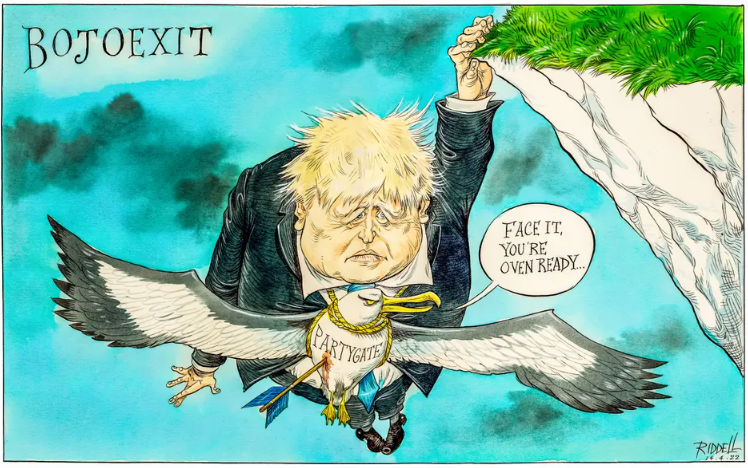
Breaking: Government amendment on PM probe dropped


The government has dropped its amendment to the vote this afternoon and is offering Conservative MPs a free vote on the Labour motion to refer Boris Johnson to the Committee on Privileges.
The government last night proposed an amendment which would have delayed the decision to refer the prime minister to the committee after the Metropolitan Police had finished its investigation and a report by senior civil servant Sue Gray had been published.
But, this morning, they have indicated they have abandoned that amendment.
MPs will now vote on the Labour motion and, if passed, the Committee will definitely be able to investigate the PM as soon as the Met concludes its investigation

Why pictures of Downing Street parties could be smoking gun

Even before the final Sue Gray inquiry is published, the public may feel it already knows the inside story of the Downing Street parties in granular details – from suitcases of wine, to broken swings and DJ sets in the basement.

Jessica Elgot www.theguardian.com 

But given the sheer number of photographs that the Met police have been handed to examine – more than 300 – it is perhaps surprising that more have not found their way into the media.

The Guardian published a photograph taken of the Downing Street garden in May 2020, with Boris and Carrie Johnson sitting in the sunshine with glasses of wine along with aides including Dominic Cummings and Martin Reynolds. Other screengrabs of the No 10 Christmas quiz have been published.

But none has emerged from the most egregious breaches that have been reported, including the summer party where staffers were asked to “bring your own booze” or the leaving parties for staff, including one on the eve of Prince Philip’s funeral.

Some ex-officials who have attended the parties are convinced that the lack of pictures is the key reason why Johnson has been able to successfully spin a version that allows him to convince MPs that he believed that those he attended were work events.

Many of the pictures are understood to have been snapped by Andrew Parsons, Johnson’s official photographer on the No 10 payroll. Some allies of Johnson have used this as a way to explain why the PM remained so convinced he was doing nothing wrong – he was content to allow himself to be photographed.

Those pictures have never been published but are believed to form part of Gray’s inquiry and the evidence she handed to the Met police.

One Tory source said the photographs of Johnson’s birthday gathering in the cabinet room – the only event for which he has been fined – would raise serious doubts about Johnson’s version of events there and would demonstrate it had been a significant celebratory gathering in breach of the rules.

But there are also believed to be a significant number of other photographs taken by aides on their mobile phones at more than a dozen gatherings. The Met police have said they will not release the photographs and it is doubtful whether the final report from Gray’s inquiry will include them.

The existence of the images is one of the key reasons why Johnson will be so keen to block a parliamentary inquiry into his conduct. Separate from the Whitehall and police inquiries, this would look specifically at whether the prime minister purposely misled parliament.

Such an inquiry is highly unlikely because Tory MPs will block it. But in theory the committee could call for papers – including the photographs – and summon witnesses.

It is only the images that could ultimately prove whether Johnson has misled the House of Commons with his version of the events he attended – and his assertions that the guidance was followed at all times.

Post-Brexit funds for West “Derisory”

Today’s Western Morning News:

The amount of ‘levelling up’ money the South West is being given to make up for the loss of European Union funding has been described as “derisory” by a business leader.

Tim Jones, chairman of the South West Business Council, said the sums do not match the amount councils could have expected had Brexit not happened. But he added that it also means the region now has to look to a future where it won’t be able to rely on Government handouts to prop up the economy.

The Shared Prosperity Fund is an allocation for the years 2022/23 to 2024/25 and comes with cash for adult numeracy programme Multiply. Cornwall and the Isles of Scilly will get £129,549,117 from the SPF and £2,452,414 from Multiply, while Mr Jones said Devon’s total is about £15m – far less than the old EU funding the counties could have expected.

Mr Jones said: “It’s disappointing. The amount of money is derisory in terms of what we can do with it.”

However, he added: “But it’s long overdue that we got to this stage, where we are no longer looking to Whitehall to bail us out. We have said on numerous occasions that we need to be weaned off European money.

“The Shared Prosperity Fund has come around the corner and there’s nothing there, so we will have to do things ourselves, we will have to stand on our own feet. It’s a real wake-up call.”

In total, areas across England will receive £1.5bn from the fund.

The Department for Levelling Up, Housing and Communities said: “Bureaucracy will be slashed, and there will be far more discretion over what money is spent on.”

“Operation Red Meat”: who is “In bed with the reds”?

Is it the Archbishop of Canterbury?

Or the BBC?

Or could it be the Conservative Party?

[“Reds under the Bed” was the phrase commonly used by the right wing to question, during the cold war, the allegiance of those on the left or even the centre. It became a knee jerk reaction to alternative views which Boris would have learned to deploy at Oxford].

As Boris Johnson launches one of his classic “special diversionary operations” attacking the Archbishop’s and the BBC’s allegiance, Owl lists some of the articles published on East Devon Watch questioning the wisdom of the relationship the Tories have enjoyed with wealthy Russians.

Boris Johnson ignores Labour call to apologise to Archbishop

BBC News www.bbc.co.uk

Boris Johnson has ignored a Labour call to apologise to the Archbishop of Canterbury over comments the PM made to a private meeting of Tory MPs.

Mr Johnson reportedly told his MPs that senior clergy had been “less vociferous” in their condemnation of Vladimir Putin than of plans to send asylum seekers to Rwanda.

Sir Keir Starmer demanded an apology at Prime Minister’s Questions.

The PM said the Rwanda policy was an attempt to save lives in the Channel.

In his Easter Sunday sermon, Archbishop of Canterbury Justin Welby said the policy of sending some asylum seekers who arrive in the UK illegally to Rwanda cannot “stand the judgment of God”.

Mr Johnson accused “senior members of the clergy” and the BBC of misconstruing the policy in a speech to Tory MPs on Tuesday evening.

The PM was attempting to rally support from his MPs after his Commons apology over being fined by the police for breaking Covid laws.

He suggested, in an aside, that the clergy had been less vociferous in condemning Vladimir Putin, according to No 10 sources.

Mr Welby and the Archbishop of York Stephen Cottrell said in a statement issued by Lambeth Palace that they would continue to to oppose the policy on “moral and ethical grounds”.

The two senior clergymen had denounced the invasion of Ukraine as “an act of great evil” and had called for Russian troops to withdraw, the statement added.

At Prime Minister’s Questions, Sir Keir Starmer accused Mr Johnson of not being sincere in his apology for breaking Covid rules.

As soon as he was off camera, the PM had gone back to “blaming everyone else” he said, adding: “Would the prime minister like to take this opportunity to apologise for slandering the Archbishop and the Church of England?”

Mr Johnson said he was surprised to be attacked over a policy that had been devised to “end the deaths at sea in the Channel as a result of cruel criminal gangs” and had, he claimed, been first devised in 2004 by [then Labour home secretary] David Blunkett.

The pair then clashed over reports that Mr Johnson had criticised the BBC’s coverage of the war in Ukraine in his speech to MPs.

Sir Keir accused the PM of opting to “slander decent people” in private but lacking the “backbone to repeat it in public”.

“Would the prime minister have the guts to say that to the face of (BBC reporters) Clive Myrie, Lyse Doucet and Steve Rosenberg, who have all risked their lives day in, day out on the frontline in Russia and Ukraine uncovering Putin’s barbarism?”

Mr Johnson replied: “I said nothing of the kind and I have the highest admiration as a former journalist for what journalists do. I think they do an outstanding job. I think he should withdraw what he just said – it has absolutely no basis or foundation in truth.”

It must be confusing being a Conservative MP at times

From Guardian PMQs Live: It must be confusing being a Conservative MP at times. Are you supposed to hate the BBC or not? Earlier this year, on day one of what was dubbed “Operation Red Meat”, the No 10 operation to shore up Boris Johnson’s position with a rightwing policy offer for Tory MPs, Nadine Dorries, the culture secretary, said the BBC licence fee was definitely going. A day later she had to soften her position somewhat, after the Treasury insisted the future of the licence fee was just being reviewed. This morning Tory MPs will have read in the Daily Telegraph that Johnson believes the BBC has been soft on Vladimir Putin. At PMQs Johnson insisted that was wrong, and at the end of the session a loyalist backbencher used a point of order to insist that Conservative MPs are in fact great fans of the corporation. 

Here are just a selection of interesting EDW posts on Tories and their Russian connections

“Who now is in bed with the Reds?”

“Swelling the Tory coffers, Russian connections and cosy dinner access”

“ 200 Russian millionaires bought way into UK in seven years since clampdown”

“Boris Johnson’s Conservative Party has received cash from 9 Russian donors named in a suppressed intelligence report”

“Swire his other jobs the controversial Lord and the Russian Oligarch”