Stagecoach axes Exeter’s new night bus service

After being declared ‘not fit for purpose’, Exeter’s failing bus service has announced major timetable changes which include a reduction in some services, new routes and the loss of a newly the city’s recently launched night bus. Stagecoach says its new bus work is being implemented at the end of the month due to changes in peoples’ travel patterns following the Covid-19 pandemic.

Anita Merritt www.devonlive.com 

The bus service fire has come under vast criticism from dissatisfied passengers since the pandemic. Cancellations and reduced timetables have been blamed on a lack of drivers and a drop in passengers compared to pre-pandemic levels.

Exeter’s highways committee recently describing the city’s bus service as ‘not fit for purpose’. Devon County Council heard in April that it would only receive £14 million towards bus improvements as part of the government’s ‘bus back better’ programme – less than half the amount it originally bid for.

Today, July 4, Stagecoach has unveiled plans for what it calls a ‘more sustainable bus network’ to attract greater passenger numbers over the long term. The changes in Exeter, developed in consultation with Devon County Council, will be effective from July 31 and include the following:

  • Exeter Park & Ride services timing changes
  • Redesigned connections from the city centre to Exminster and Pinhoe / Science Park, affecting routes B/2B, L and K
  • Enhancement to services between Exeter and Cranbrook, with a redesigned service for journeys onto Honiton and Axminster, affecting routes 4/4A/4B. Changes will also take place beyond Seaton on and route 9A
  • Simplified services between Tiverton / Cullompton and Exeter, affecting routes 1/1A/1C
  • Exeter Night Buses will be withdrawn until the autumn with Devon County Council looking at the feasibility of an alternative solution
  • Some minor changes to the location of stand departures at Exeter Bus Station
  • A frequency change to Route 56 connecting the city centre to Exeter Airport

Stagecoach South West managing director Mike Watson said: “We have designed a new core package of services to provide a sustainable bus network now, so that we can grow services over the long term. In addition to this, with the current nationwide shortage of bus drivers, we need to concentrate our resource on the services where demand is greatest to ensure that vital journeys and connections are maintained and to provide a network that best meets the changing needs of the communities we serve.

“Buses remain fundamental to daily life in Britain. Looking ahead, they are also critical to helping achieve a green economic recovery, tackling climate change, ensuring cleaner air, and supporting connected communities.

“We will be working together with national and local government to attract more people out of their cars and onto more sustainable public transport. The more people who switch to bus, the stronger our networks will be. It can generate vital investment for more electric vehicles, helps keep fares low and ultimately will help us to expand the bus network to meet new demand.”

The changes in full can be found here

Boris Johnson was made aware of formal Chris Pincher complaint

Surprise, surprise, the story changes – Owl

Boris Johnson was made aware of a formal complaint about Chris Pincher’s “inappropriate behaviour” while Mr Pincher was a Foreign Office minister from 2019-20.

By Ione Wells www.bbc.co.uk

The complaint led to a disciplinary process which confirmed his misconduct.

BBC News understands the PM and the foreign secretary at the time – Dominic Raab – were told about the complaint.

The claim raises fresh questions about what the PM knew before making Mr Pincher deputy chief whip in February.

For days ministers have insisted Mr Johnson was not aware of specific allegations against Mr Pincher when he was appointed deputy chief whip – whose job it is to uphold discipline among fellow Tory MPs.

Mr Pincher, the MP for Tamworth, was suspended as a Conservative Party MP last week over allegations he groped two men at a private members’ club in London. He says he is seeking professional medical support and has no intention of resigning as an MP.

In the latest statement addressing what Mr Johnson knew, Downing Street said the prime minister was aware of media reports and some allegations about Mr Pincher’s misconduct that were “either resolved or did not progress to a formal complaint”.

He added: “It was in one way concluded in some form. These issues tend to be anonymous.”

Mr Pincher apologised after the disciplinary process concluded, BBC News has been told, but the MP has not responded to our request for comment.

The message from No 10 has developed since last Thursday when Mr Pincher first resigned. Since then, Mr Pincher has faced a number of historical claims, which he denies.

On Sunday and Monday morning, ministers continued to stress that Boris Johnson was not aware of specific allegations when he gave Mr Pincher his most recent government job.

But later on Monday, Downing Street conceded the prime minister was previously aware of “reports and speculation”, but nothing firmer than that.

The BBC has been told a formal complaint was made against Mr Pincher while he was serving as a Foreign Office minister from July 2019 to February 2020.

An official complaint was raised about Mr Pincher for “inappropriate behaviour” and it triggered a process, overseen by the Cabinet Office, which resulted in a report that confirmed misconduct.

Both the prime minister and Deputy Prime Minister Dominic Raab, the foreign secretary at the time, were made aware of the disciplinary process, the BBC has been told.

Mr Raab’s team have been approached for comment, and the Foreign Office said: “We have robust measures in place to respond to any allegations of inappropriate behaviour. It’s our long-standing policy not to comment on individual cases.”

On Monday evening, No 10 reiterated that the prime minister was not aware of any “specific allegations” being looked at, and that in the “absence of a formal complaint it would not be appropriate to stop the appointment”.

Mr Johnson’s allies have defended his handling of the situation, with Cabinet minister Jacob Rees-Mogg telling BBC Newsnight: “There’s always a lot of gossip going on in politics, there’s gossip about all sorts of politicians, an awful lot of which is untrue.

“You can’t hire and fire on the basis of rumour… There are rumours about so many people in politics in all parties.”

But opposition MPs have been critical, with Labour’s Daisy Cooper saying: “I think what we’ve seen time and time again with Boris Johnson is that he’s just prepared to carpet over things and try and hope they go away until they become a real problem.”

The prime minister’s official spokesman has previously said that before Mr Pincher was appointed a deputy chief whip, advice was sought from the government’s propriety and ethics team, part of the Cabinet Office, who did not advise against the move.

The spokesman declined to comment on a claim by the PM’s former chief aide Dominic Cummings that Mr Johnson had referred to the MP as “Pincher by name, pincher by nature”.

“I’m simply not going to comment on content of what was or wasn’t said in private conversations,” the spokesman said.

Pornography Watching MP Neil Parish on Why He Did it…..

Ten minutes of excruciating interviews reveal more than we really need to know.

‘She knows I’m no angel, she chases me around the kitchen with scissors saying ‘snipper snap’ knowing full well what part of my anatomy she is after. She knows what I’m like’.

As a local wag whispered into Owl’s ear “Tiz a gurt shame er didden ketch un”.

Neil also clearly harbours ambition to return to public life.

Only two Devon beaches feature in “Times Top 50”

Bigbury and Beer, rated seventh in the South West.

It seems the judges were very taken by the carpets and deckchairs with fold-up canopies. 

Budleigh, Exmouth and Sidmouth are going to have to work harder on their “retro” images (and water quality)! – Owl 

Beer, Devon

7. Beer, Devon

The pebbles run for 40 miles from Portland Bill in Dorset to Sidmouth in Devon: a rattling strand of rounded flint and chert. But while other resorts are resigned to living with the aggregate, the fishing village of Beer has tamed it by laying down carpets so visitors can comfortably reach the deckchairs on what might be England’s most organised beach. It’s a popular spot with swimmers of both the wild and less showy varieties, and with fishermen who rent boats or cast from the shore. The chalk cliffs behind the beach — garlanded Babylon-like with hanging vegetation — reflect the sunlight, so the deckchairs have fold-up canopies to protect the back of your head. Catering is similarly well conceived: breakfast and afternoon tea can be had at the lovely Chapples Tea Hut on the beach, where you can rent a beach hut and two deckchairs for £15 a day. For a posh lunch, pre-order a platter from Beer Fisheries at the back of the beach (£55; beerfisheries.co.uk). Dogs are welcome at the East Ebb end.

Toilets; café; accessible; dog-friendly; water quality: excellent

Why our politicians are so rotten – worth a long read, Owl

“Whereas American parties choose their candidates under the intense public scrutiny of primary elections, Britain’s parliamentary selections are conducted with great secrecy. They are rarely reported on these days; many places don’t have a local paper anymore, while those that do survive don’t regard candidate selections as particularly newsworthy.

Yet they are a vital part of British politics.”

Michael Crick unherd.com 

The Subscription Rooms in the centre of Stroud have long played host to small historic moments. In March 1962, the Georgian building hosted one of the first Beatles concerts. The band were paid £32 between them. It was one of their “worst ever” performances, Paul McCartney later said. “Stroud was pretty bad. I think about three people showed up.”

Last Thursday, by contrast, around 300 people turned up to the rebranded “Sub Rooms”, when local Labour activists met to choose the candidate they hope will wrest back the surrounding Gloucestershire constituency from the Tories at the next election. After spending three hours considering just two names, they picked Simon Opher, a 55-year-old local GP and the more local applicant. The announcement, as often in these processes, followed weeks of wrangling between the Stroud party and national Labour officials.

Three more Labour selections took place over the weekend, and between now and the next election, hundreds of such meetings will take place in assembly rooms, church halls, schools and pubs all over the country. It’s a process I call “Britain’s Hidden Elections”.

Whereas American parties choose their candidates under the intense public scrutiny of primary elections, Britain’s parliamentary selections are conducted with great secrecy. They are rarely reported on these days; many places don’t have a local paper anymore, while those that do survive don’t regard candidate selections as particularly newsworthy.

Yet they are a vital part of British politics. Local parties aren’t just picking the MPs of tomorrow, but the ministers, Cabinet ministers and whips of future decades — the pool of people from which governments are formed. If parties regularly choose incompetent, lazy and stupid MPs, then weak and inept governments will follow: the sort of governments populated by the likes of Chris Pincher; the sort of governments that make a man accused of sexual misconduct a deputy chief whip. That, ultimately, is why I’ve started a new project to report on the selection process for every candidate who might have a chance of becoming an MP.

Selection for a winnable seat is perhaps the big turning-point in most political careers — the moment when a politician’s ambitions finally take off, often after years of toil: Michael Howard tried more than 30 times to get a seat, over almost 20 years.

These candidate selections are politics in the raw, muscle against muscle — rough, unjust, and undemocratic, with fixes and deals, and interference from the regional or national HQs or the leader’s office. But the beauty is that the interference sometimes backfires. And often these selections see the birth of new stars, young men and women who wow the activists with inspiration and hope: as the 32-year-old Margaret Thatcher did in Finchley in 1958 and the 30-year old Tony Blair in Sedgefield in 1983.

Yet fiddles and chicanery are common. Indeed, at the end of Thatcher’s selection meeting in Finchley, everyone was told she’d won by 46 votes to 43. But she was the unknowing beneficiary of fraud. The local chairman was so impressed by Thatcher that he switched two votes to her, taken from her male opponent, Thomas Langton. Those votes made the difference, and made history. The chairman had justified it to himself on the grounds that, before long, Langton was bound to be chosen elsewhere. He never was.

Luck and accident play their part too. After fighting the Labour stronghold of St Pancras North in both 1974 elections, John Major was determined to stand in a safe Tory seat next time. He made numerous applications only to hear nothing back, apart from unsolicited invitations from Tories in Labour seats he didn’t want. After 18 months of frustration, he discovered Conservative HQ had mixed up his file with another John Major, a GLC councillor from north London. The error was rectified, and the real Major was picked for super-safe Huntingdon. As for the “other” John Major, I tracked him down to a guest house he later ran in Bournemouth, where I filmed him for Newsnight cooking bacon and eggs. “At least someone called John Major became prime minister,” he said cheerfully. “It could have been me.”

Of course, it’s not just the Tories who have cultivated the dark art of murky selections. Dozens of Labour MPs elected in the Blair-Brown era owe their careers to party fixers Tom Watson and Keith Vaz. The pair of them — Watson for the Gordon Brown camp and Vaz for the Blairites — would share out seats between them, in cahoots with the trade unions.

Often they would wait for an election to be imminent, when the party leadership and national HQs can further reduce members’ role in the process — there’s no time to consult about shortlists, they claim. This provides a chance to “parachute” in advisers and favoured sons from outside, often by providing a shortlist with only one realistic capable contender. That’s how the Blairite TV historian Tristram Hunt got Stoke-on-Trent Central in 2010, while Harriet Harman’s late husband Jack Dromey was handed Birmingham Erdington. In 1997, the Labour Party in Dudley had already printed posters for the sitting MP John Gilbert — I spotted them in his agent’s car. But then Blair’s office got Gilbert to step down with the promise not just of a peerage but a ministerial job too.

For party activists, the power to pick the parliamentary candidate every now and then is one of the few perks. Why do all the slogging on the streets if you’re going to have a candidate foisted upon you by some national deal or fix? Leaving the choice entirely to local members is surely the democratic ideal. Yet the trouble is that increasingly local members insist on local candidates — people brought up in the area, and familiar with its problems. Often this takes the form of choosing members of the local council, especially Labour and the Liberal Democrats.

But the truth is that former councillors, especially council leaders, rarely flourish in Westminster and Whitehall. Herbert Morrison and David Blunkett are the major exceptions of the last 100 years. Graham Stringer and Jon Trickett, for example, ran big city councils in Manchester and Leeds for a decade each, yet have hardly enjoyed dazzling Commons careers. On the whole, councillors don’t make great statesmen — people who are interested in the big issues of national importance: foreign policy, defence and the economy.

And if voters and activists had insisted on every candidate in the past being “local” then Margaret Thatcher would never have got Finchley, and Tony Blair would never have stood for Sedgefield in County Durham. Today, Keir Starmer might be confined to fighting his home patch in Tory East Surrey.

As pitiless as it sounds, party leaders and their officials sometimes need the power to slot the best and the brightest into safe seats. And Starmer himself seems already to be doing that. On the morning of Labour’s selection in Stroud last week, the popular Labour leader of the local district council, Doina Cornell, dramatically resigned from the party over the way she’d been excluded by national officials from the selection shortlist over various alleged transgressions on social media. The offences seem pretty minor, and one suspects the motive of party bigwigs was to limit the Stroud shortlist to two names who looked like potential future ministers. Certainly, the GP who won the Stroud nomination looks a possible health minister in a Starmer administration.

Meanwhile, the case of the government deputy chief whip Chris Pincher, who resigned over his excessive drunkenness in the Carlton Club on Wednesday night, and amid allegations that he groped two male members of the staff in the club, shows the urgent need for wider public and media scrutiny of candidate selections. More MPs have gone to jail in the last two decades — for dishonesty over their expenses, for perjury, and for sexual offences — than at any time in the last 200 years.

In May the former Conservative MP for Wakefield Imran Ahmad Khan was jailed for groping a 15-year-old. Former MP Charlie Elphicke was imprisoned for two years for three sexual assaults, while his former colleague Andrew Griffiths was found by a court to have repeatedly raped his wife. The Somerset MP David Warburton faces allegations of harassment and drug abuse.

On the Labour side, Fiona Onasanya was jailed for perverting the course of justice, and Claudia Webbe convicted of harassment, while former MP Jared O’Mara still faces several fraud charges. And last Thursday, the former SNP MP Natalie McGarry was jailed for two years for embezzling nearly £25,000 from two campaign groups.

Perhaps if our political parties, activists, journalists and the public had paid more attention to who was being picked to represent us, we might have been spared some of these scandals. Voters deserve better than the likes of Pincher, Elphicke and the rest of their disgraced colleagues. Of course, we have the right to be angry when they’re caught out. But the truth is they should never have been picked in the first place.

Boris Johnson sent for ministerial jet to bring family home from Cornwall jaunt

Boris Johnson has been accused of using government aircraft as his “personal taxi service” after he called for the jet to fly him home after being spotted on the beach at St Ives with wife Carrie and kids

Read full article here: www.mirror.co.uk

Are you keeping up with the groping?

Emerging over the weekend: 

Playbook counts 13 new claims spanning a decade — one from around 2012 and one from 2013 in this story by the Mail on Sunday’s Georgia Edkins … one from 2013 in Saturday’s Sun reported by Noa Hoffman … three allegations from 2017, 2018 and 2019 by the Sunday Times’ political team … one from 2018 from charity fundraiser Mark Dabbs, who has spoken on the record to the Sun … one from 2019 in today’s Times story by Henry Zeffman … one from 2021 in Saturday’s Times also by Henry Zeffman … another from 2021 reported by Claire Ellicott in the Mail, who says the alleged victim is planning to make a statement to the police, plus another that is undated … and a pair of claims by one MP from 2021 and 2022 reported by the Independent’s Anna Isaac. Pincher has denied all such allegations and in a statement over the weekend, he said he would “cooperate fully” with the parliamentary inquiry into his behavior and seek professional medical help.

From Politico London Playbook

(Chris Pincher MP is hoping to return to his constituency duties “as soon as possible”)

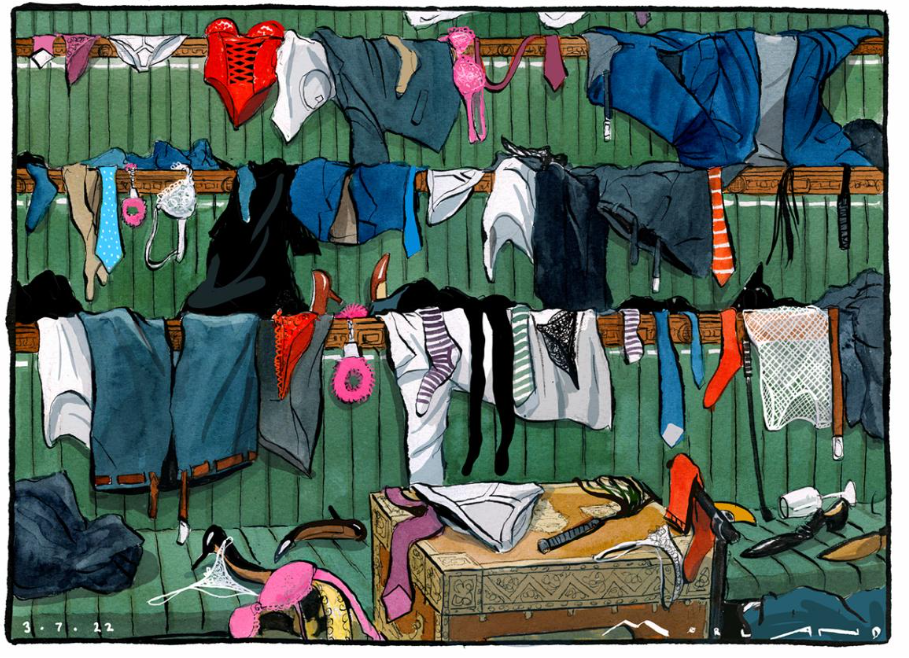
Hanging out the dirty washing on the green benches

As Marina Hyde pointed out a couple of days ago:

From big dog Johnson to ‘big grope’ Chris Pincher: another day in Westminster’s ‘normal’ workplace 

“Sorry to wheel out this mindboggling statistic yet again, but 56 current MPs are reportedly facing allegations of sexual misconduct. Assuming the vast majority of those will be men, that’s about one in eight male MPs. Labour MPs and others will be among those, of that you can be sure – though for a sheer run of repulsive form, no one can currently touch the Conservatives. Yet on it all goes. Westminster is a rotten and backward workplace, and nothing seriously meaningful gets done about it because the people with power actively do not want to do anything about it, and in several cases are involved in abuses themselves. What is it they’re so fond of saying? Ah, yes: “We work for you.” In which case, do please consider stopping before more people get hurt.”

Marina Hyde www.theguardian.com 

Who is there “man” enough to clean up this disgusting stable? – Owl

Boris Johnson under growing pressure over claims he turned blind eye to Chris Pincher allegations

Business as usual – Owl

Sam Blewett www.independent.co.uk 

Boris Johnson is under growing pressure over his decision to give Chris Pincher a ministerial role amid claims he knew about allegations against the Conservative MP years before appointing to a government job.

The prime minister is said to have referred to the MP as “handsy” and joked about him being “Pincher by name, pincher by nature” as early as 2020.

Mr Pincher quit as Conservative deputy chief whip after he was accused of drunkenly groping two men at a private members’ club in London this week.

One of the MP for Tamworth’s latest accusers has said he was “shell-shocked” by prime minister delaying kicking him out of the parliamentary party.

Mr Johnson only bowed to pressure to remove the whip from his ally, meaning he is now sitting in the Commons as an independent, after an official investigation was launched.

Mr Johnson was also facing questions over how much he knew about Mr Pincher’s behaviour when he made him deputy chief whip in February.

Former adviser Dominic Cummings said the prime minister had referred to the MP “laughingly in No 10 as ‘Pincher by name, pincher by nature’ long before appointing him”.

A string of fresh allegations emerged as Mr Pincher said he is seeking “professional medical support” and hopes to return to represent his constituents in Staffordshire “as soon as possible”.

A Conservative MP told The Independent he had been groped on two occasions by Mr Pincher, first in December 2021 and again last month.

The Mail on Sunday reported that the former deputy chief aide he threatened to report a parliamentary researcher to her boss after she tried to stop his “lecherous” advances to a young man at a Tory party conference.

And The Sunday Times alleged he made unwanted passes at two Conservative MPs in 2017 and 2018, after his first resignation as a whip over claims he made unwanted advances to Olympic rower and Conservative candidate Alex Story.

According to the Sunday Telegraph, the PM’s decision in February to appoint Mr Pincher to help oversee party discipline led to protestations in the whips’ office and prompted resignation of another senior whip, Craig Whittaker.

One of the latest alleged victims shared his anger at Mr Johnson over his handling of the incident at the exclusive Carlton Club on Wednesday.

The man told The Sunday Times that he initially did not want to report the incident, thinking “this is something that happens in Westminster”.

“But I am angered by the fact that I should feel like that, and even more angry by the way No 10 have dealt with it . . . I am furious. I know it sounds really silly but I felt shell-shocked when I found out they were initially going to let him keep the whip,” he added.

Mr Pincher did not respond to requests for comment on the latest allegations, but the newspapers behind them said he denied the claims.

Downing Street did not deny that there had been concerns about Mr Pincher before his appointment, but insisted Mr Johnson “was not aware of any specific allegations”.

Mr Johnson initially resisted calls to remove the whip until Parliament’s Independent Complaints and Grievance Scheme launched an investigation on Friday.

The latest allegations came after the Conservative Party was hit by a series of scandals relating to sexual misconduct.

In May, Neil Parish quit as MP for Tiverton and Honiton after admitting viewing pornography in the Commons chamber.

A month earlier then-Wakefield MP Imran Ahmad Khan was jailed for 18 months for sexually assaulting a 15-year-old boy.

In both cases, the Conservatives lost the ensuing by-elections.

A third unnamed Tory MP has been told by whips to stay away from Parliament after being arrested on suspicion of rape and other offences.

In a statement, Mr Pincher said he would “co-operate fully” with the investigation.

“As I told the prime minister, I drank far too much on Wednesday night, embarrassing myself and others, and I am truly sorry for the upset I caused,” he continued.

“The stresses of the last few days, coming on top of those over the last several months, have made me accept that I will benefit from professional medical support.

“I am in the process of seeking that now, and I hope to be able to return to my constituency duties as soon as possible.”

Tory donors behind Betfred pay themselves and family £50m dividend

The billionaire Conservative party donors behind the gambling firm Betfred paid themselves and their family a £50m dividend, as an increase in online gambling in the coronavirus pandemic offset the temporary closure of its 1,470 high street bookmakers.

Rob Davies www.theguardian.com 

Betfred’s customers wagered £6.9bn in the year to the end of September 2021, up from £6.4bn, providing winnings of £526m for the Manchester-based company, a marginal increase on the previous year.

The company paid a dividend of £50.7m in November 2021 to its shareholders, the Done family headed by the brothers Fred and Peter, who worked in their father’s bookmaking business before opening their first shop in 1967.

The payout came on the back of a resilient pandemic performance, as the company shrugged off the impact of Covid-19, which forced the closure of its network of high street bookmakers for long periods.

While the parent company did not provide a breakdown of its income from online versus high street sources, it said an increase in stakes, revenues and profits from its internet business had made up for the impact of shop closures.

Its online operation is based in Gibraltar but Companies House filings for the subsidiary that houses its online operations indicate the extent of the slack that its internet business picked up.

Revenues in the high street business slumped from £301m to £244m, yet group turnover was flat on the year before because of the increase in online play.

Overall profit at group level was distorted by one-off factors. Pre-tax profit was £6m for the year to the end of September 2021, down from £205m the year before.

However, the 2020 result was boosted by a £98m rebate from HM Revenue and Customs – after a court found that the tax authority had overcharged the company VAT between 2005 and 2013 on its fixed-odds betting terminals, the controversial digital roulette machines.

It also benefited from a £94m increase in the value of investments that it held that year, compared with a near £22m loss this year.

The 2021 figures were published with the government on the verge of publishing a white paper proposing a reform of gambling laws that could crimp online gaming companies with measures such as stake limits of between £2 and £5 on slot machine games.

Sign up to the daily Business Today email or follow Guardian Business on Twitter at @BusinessDesk

Betfred did not directly refer to the white paper but warned that it could be adversely affected by legislation.

Companies House filings show that the company made no political donations this year.

However, the Done brothers have donated £375,000 to the Tory party since 2017, via their Rainy City Investments vehicle.

The group made charitable donations of £157,000 during the year, down from £289,000 in 2020, and its highest-paid director earned £456,000.

Boris Johnson faces investigation into claims over 40 ‘new’ hospitals

The government’s official spending watchdog is to launch an inquiry into Boris Johnson’s claim that 40 new hospitals will be built by 2030, as concerns grow in Whitehall that the pledge is unaffordable and has been greatly oversold to the public.

Toby Helm www.theguardian.com 

In a move that could prove hugely embarrassing for the prime minister, the independent National Audit Office (NAO) has decided to conduct a “value for money review” into the entire scheme, which was a cornerstone of the Conservative party’s 2019 general election manifesto.

The NAO has also made clear that it is concerned at how the government still maintains that it will build 40 entirely new hospitals, when in reality many will merely be extensions or refurbishments of existing ones.

In a letter to the shadow health secretary, Wes Streeting, who had raised questions about delays and the resulting rising costs of the scheme with the NAO, its top official – Gareth Davies, the comptroller and auditor general – said he was already preparing a full value for money review.

Davies also said that he had taken “particular” note of the “implications of delay for increasing costs at this time of high inflation and the matter of whether all projects truly meet the classification of ‘new hospitals’”. Davies said he would be reporting back in 2023.

The NAO’s intervention will raise further questions about honesty and standards inside the Johnson government following the long-drawn-out Partygate controversy and a series of recent sex scandals involving male Conservative MPs.

On Friday, Johnson’s former deputy chief whip Chris Pincher was suspended from the party after he was accused of sexually assaulting two men at the Carlton Club in London. This was a week after their party had lost two byelections, both triggered by sex scandals involving Conservative MPs who had to step down.

Many Tories fear their party is now becoming more widely distrusted on policy, having broken pledges not to raise national insurance, abandoned the “triple lock” on pension increases last year, and scaled back high-speed rail projects in the north of England.

The Conservatives promised to deliver “40 new hospitals” in their 2019 manifesto, but it has since been revealed that many of these projects are just improvement to existing sites.

Last year, it emerged that ministers had been instructing trusts to give an exaggerated impression to the public of the scale of the projects by referring to refurbishments as “new hospitals”.

A guidance document, distributed to trusts and entitled New Hospital Programme Communications Playbook, said a “new hospital” could be “a major new clinical building on an existing site or a new wing of an existing hospital, provided it contains a whole clinical service, such as maternity or children’s services; or a major refurbishment and alteration of all but building frame or main structure, delivering a significant extension to useful life which includes major or visible changes to the external structure”. Staff were told that all the schemes “must always be referred to as a new hospital”.

Last month, the BBC’s Reality Check programme emailed every NHS trust involved in the scheme, asking which of three categories their project fitted into. Of the 34 trusts which replied, only five said they were building a whole new hospital, 12 said they were building new wings and nine said they were rebuilding existing hospital buildings.

With inflation now running at over 9%, there are also growing fears within government that even some of these extensions could prove to be unaffordable. Several hospitals earmarked for building work, including centres in Leeds, Leicester and Manchester, are among those still waiting to hear what scale of work can go ahead and when.

Already, delays to building projects have resulted in additional costs to the taxpayer. Leeds General Infirmary estimates the cost of development for two new buildings will be £75m more than first planned due to delays to starting construction and the rising costs of building works.

Reacting to the NAO’s decision to launch a review and report back in 2023 – in the runup to the next general election – Streeting said: “The only place these 40 new hospitals’ currently exist is in Boris Johnson’s imagination. The election manifesto promise now looks to be another example of the Conservatives overpromising and underdelivering.

“Labour will get value for taxpayers’ money and ensure that every penny going to the NHS is spent wisely, providing better care for patients.”

The Liberal Democrats’ deputy leader and spokesperson on health, Daisy Cooper, said: “Before MPs break up for summer, the government must publish a clear timetable for its new hospitals programme and explain why they are failing to deliver their number one health pledge.

“If they don’t deliver on their number one health promise, it will be an ultimate betrayal.”

On its own website the government says: “Hospitals come in different shapes and sizes and each new hospital will be designed to meet the needs of the local area, staff and patients, now and in the future.”

Matthew Taylor, the chief executive of the NHS Confederation, recently cast doubt on whether many schemes would get off the ground. “The government launched these flagship new-builds with much fanfare, but NHS leaders are becoming increasingly frustrated that the money isn’t following through,” he said. “The fear now is that some of these schemes may never see the light of day.”

Councillors formally support bid for levelling up fund

Plans for a long-awaited extension to a road on the outskirts of Exmouth and changes to an area the railway station have been given a boost after councillors formally supported a bid for government ‘Levelling Up’ cash. 

Phillip Churn, LDRS and Adam Manning. www.exmouthjournal.co.uk

Dinan Way currently forms a partial ring road around Exmouth  but it lacks a final connection to the A376. 

As a result, drivers from Dinan Way often use residential roads to access the A376 main road to Exeter and the M5. 

Completing Dinan Way has been talked about for more than 40 years.

In an extraordinary consultative meeting of East Devon District Council’s cabinet on Wednesday (29 June), members agreed that the council should write a formal letter of support for the Round 2 Levelling Up bid.

The letter is needed as part of the application process, which is also backed by East Devon MP Simon Jupp. 

Councillors also debated ‘Exmouth Gateway’ – an area most people in the town will never have heard of, but most will have used.  The district council says it is a key transport hub, comprising Exmouth’s railway station, the Exe Estuary Multi-Use Trail and the end of the main road, the A376. It also provides access to the town centre, estuary and seafront. 

The project focuses on the area around the existing Marks and Spencer food hall and would involve filling in the subway – which used to be the key way to access the railway station from the town but has been superceded by a zebra crossing – and separating the cycle path from pedestrians. 

Improvements would be made to crossing points and better signage to both the town and the seafront. 

A raised crossing would be installed to improve pedestrian access and slow traffic. Pavements would be widened and bus stops improved.  An electric bike dock would be fitted and cycle parking improved.

Project manager for place and prosperity (Exmouth) Gerry Mills told councillors a key component of the bid for funds is a supporting letter from the East Devon Council to Devon County Council, which is putting £1 million towards match funding. 

“Exmouth Town Council have confirmed their £400,000 of match funds and our planning committee have approved the £400k of match fund,” said Mr Mills. 

The total combination of funds would be £1.8 million.

Councillors were in favour of the development, with Councillor Joe Whibley (Independent, Exmouth Town) saying it is overdue. 

“I just hope the cabinet see their way to moving forward with this, especially in the summer months,” said Cllr Whibley.

“The town is a mess in terms of conflicts of people around the railway station not knowing where to go. 

“As part of the other work with the former Queen’s Drive delivery group, it’s a vital part of that.”

The extension has had planning permission since 2017 and some critics have suggested it is wrong to build new roads at this time.

However EDDC’s cabinet agreed to formally support the project.  

Taking a look at the implications of the census data

From a correspondent:

Thank you, Owl, for highlighting this census material.

 It is as many of us have suspected in East Devon. 

We have had this enormous increase in population of 18,343 in the period 2012-2021, our  population now 150,800 in 2021. 

To accommodate this increase we have also had 7342 dwelling completions in 8 years. It is an amazing accomplishment as we live in an area with 2/3rds designated as Areas of Outstanding Natural Beauty meaning only 1/3rd is available for large scale development, a large area of which is/was high-grade agricultural land. 

England has seen a 6.6% population growth from 2011- 2021 yet East Devon has seen growth of more than double – 13.8%.  

We are 13th in the national growth table.  

East Devon had population numbers of 132.457 in 2011. The highest of any of the Devon districts. West Devon in comparison had 53,553 and South Hams 83,140. Arguably East Devon did not need the highest population increase in the County. 

How come Exeter has had population growth of 11.1% and nearby Dorset with just AONB coverage of 40% has only 4%? Is it because Dorset County values its people and landscape? 

The Local Authority Health Profile predicted a 14% growth profile between 2011 and 2026 for East Devon. At this rate we will supersede this. I hope that Devon NHS are aware of these figures and cater accordingly. 

Tourism plays an important part in our economy, and we are rapidly losing our landscape drawing power with more and more large developments. 

We are rapidly losing Grade 1 agricultural land. 

As Owl asks- what are the benefits of all these new inhabitants and the dwellings to house them? 

The reason sold to us was that the country needed “social housing” and housing developments would provide them. In March 2021, 2618, households registered as being in need of social housing in East Devon. 

I looked at Exmouth. Estate after large estate has been / or is being built/ or will be built.  Goodmores Farm being the latest. It lies in a green wedge where Local Plan policies  require new developments to provide 49% or 88 affordable dwellings.

 What is being built? Just 5 % or 16 houses now agreed, due to the developer pleading non-viability. How many of Exmouth’s outstanding needs of 607 affordable homes have been provided? Will the 5 remaining sites provide these? 

(Non-viability is a worrying “increase developers’ profit” concept. If a developer has a plan accepted surely this has been costed and should be carried out. Perhaps the directors have excessive salaries?) 

We also were told that this increased population would produce economic growth in our area. We have not seen this but perhaps Exeter has been the recipient? 

Other benefits? Only to landowning farmers and developers. Why has the population not seen them?   

Disadvantages? I am sure I don’t need to list them. 

What has gone wrong with our housing in the district? Why can’t local people buy or rent houses? Does the number of second homes/holiday- lets play a part in this? The government admits it only has a limited picture of how many properties across England are second homes and holiday-lets, particularly given the growth of online marketplaces such as Airbnb and Vrbo.  

Are second homes the reason John Hart, the Leader of Devon County Council, said after all this increase in Devon population growth and dwellings 

“Hospitality businesses in coastal areas can’t get staff because they can’t find anywhere to live and that is stifling our strong economic recovery, 

But we’ve also heard from one Devon business which employs around 300 people which is considering re-locating some of its operations to Bristol because of the housing situation here.” 

Finally, does the Tory Party think we are an easy option? After all, East Devon has always had a Tory MP. Perhaps these figures and the gradual erosion of our way of life will drive the electorate to make a different choice. 

I hope Simon Jupp takes note of these figures and draws Michael Gove’s attention to them. Or better still I hope Michael reads East Devon Watch regularly and will release us from this growth tyranny. 

Boris Johnson says there will not be a snap election before 2024

According to iNews “MPs have been pencilling 27 October in their diaries amid chatter that a fast-tracked election would pre-empt both an expected winter recession and the Commons Privileges Committee investigation into Partygate. The Tories may be behind Labour in the polls, but some Johnson allies think Keir Starmer’s lead is soft and could be exposed in a tough campaign.

Staff have also “wargamed” an even quicker snap poll as part of preparations for how to react if Starmer is served with a fixed penalty notice for breaching Covid regulations in Durham, given that the Labour leader has promised to resign should he be fined. Senior aide David Canzini is said to have warned that “the clock is ticking” to the next election.”

However:

Boris Johnson has played down claims of a snap general election, branding the idea ‘totally’ ridiculous.

Make of this what you will – Owl

Jasper King metro.co.uk

The prime minister previously refused to rule out an general election before 2024 at a Nato summit in Madrid.

Speaking on Nick Ferrari’s LBC show today, Mr Johnson was asked whether having a snap election is ‘ridiculous’.

He replied: ‘Totally, totally’.

But when pushed further on the issue, Mr Johnson refused to comment, saying: ‘What my job is, is to talk about the government’s agenda, to talk about policy, to talk about the UK, to talk about how we’re fixing the cost-of-living problems, the cost-of-living crisis, talk about everything we’re doing to strengthen the UK economy, our plan for a stronger economy, which is what I believe in.

‘Talk about levelling up, the agenda for taking this country forward. That’s what I want. That’s what I’m actually meant to talk about.’

When quizzed on how much longer he will last as prime minister, he refused to directly address the issue.

He said: ‘I’m going to deliver on our programme.’

Instead, Mr Johnson believes he has a fresh mandate at Westminster, despite 41% of his MPs not having confidence in his leadership.

Earlier this week it emerged Tories had been told to ‘prepare’ for a snap election if Sir Keir Starmer stepped down as Labour leader over ‘Beergate’.

But the party was hit with another blow after Tory whip Chris Pincher quit after it was reported he ‘admitted to drunkenly assaulting two men’, according to The Sun.

Mr Johnson is facing pressure to remove Mr Pincher from the party, which would trigger a by-election in his seat of Tamworth.

This could spell political disaster for the PM if he was suffer another defeat after the devastating results in both Wakefield and Honiton & Tiverton.

Chris Pincher raises chilling questions about Tories’ ability to tackle sexual harassment

Today, I spent a lot of time thinking about a man named Alex Story. A former Olympic rower, he once looked like a rising star in the Tory Party. Then in November 2017, Story gave an account of an encounter he’d had with Tory MP Chris Pincher when he was 26 years old.

Any echos come to mind? – Owl

Kuba.Shand-Baptiste inews.co.uk (Extract)

Story alleged that after an afternoon of political canvassing – a common way MPs spend time with young activists – Pincher had suggested the two grab dinner. Pincher then directed a taxi to take them both to his home, instead of – as Story had expected – a restaurant. “The deceit employed to get me to his flat went beyond misreading the signs”, Story later claimed.

Pincher allegedly poured him a whisky, upon which Story “suddenly felt a bit woozy”, only to find Pincher untucking the back of his shirt, massaging his neck, and whispering: “You’ll go far in the Conservative Party.” Despite Story’s refusals, Pincher then changed into a bathrobe “like a poundshop Harvey Weinstein”, before Story escaped.

When he went public with this claim in 2017, Pincher insisted that “I do not recognise either the events or the interpretation placed on them.” He continues to deny them. He resigned as Assistant Whip and later referred himself to the Conservative Party’s own complaints procedure and to the police, neither of which found enough evidence to pursue the case. The Conservative Party later found that he had not broken their Code of Conduct.

Pincher rose back up the party, later becoming Deputy Chief Whip as a reward for loyalty to Boris Johnson. Alex Story left politics. His career had already been damaged when he was mysteriously blocked from an expected nomination for a European Parliament seat in 2016; friends allege this was because he’d already complained about Pincher.

Naturally, Pincher continues to deny this old story. But in the 24 hours since he was witnessed drunkenly groping two different men in the Conservative-affiliated Carlton Club, numerous MPs and Tory staffers have spoken to journalists (including me) about rumours that have circulated about Pincher’s pattern of behaviour. When asked directly, the Prime Minister’s spokesman could not deny that the PM was aware of “unsubstantiated” allegations about this behaviour before appointing him Deputy Chief Whip – he simply denied knowing of specific allegations. Against that background, the rest of us can make up our own minds about whether Story was telling the truth.

What breaks my own heart is that he went public on 4 November 2017, just as the #MeToo movement was spreading across the world. Inspired by the women who spoke out against Harvey Weinstein, a number of young women and men working in politics came forward to tell our own stories about sexual harassment in Westminster – myself included.

In that giddy week, with the sheer number of us speaking out, it seemed Westminster might finally face up to the endemic problem of sexual predation amongst its power brokers. The problem was widespread across all parties, but the Tories had a particular problem because they had been in power for a long time, where executive power breeds entitlement and enables cover-ups. That was nearly five years ago…..

‘Who will respect him after this anyway?’: Voters in Tamworth call on MP Chris Pincher to resign amid scandal

Residents in the Staffordshire town of Tamworth say MP Chris Pincher should quit his seat after being accused of groping two men on a night out.

Colin Drury www.independent.co.uk

Overnight, Mr Pincher – a Conservative first elected here in 2010 – had quit as the government’s deputy chief whip after admitting he got drunk on a night out in London. Further allegations suggest he also groped two male members of parliamentary staff. “I drank far too much,” he wrote in his resignation letter. “I’ve embarrassed myself.”

In the smoking area of the Phoenix pub on Tamworth high street, Dave Markole was happy to admit that he too, like the local MP, had occasionally drunk too much and embarrassed himself. “We’ve all done that, mate,” he said between drags. “Me as much as anyone.

“Have a skinful by all means, but behave,” the 52-year-old truck driver declared.

Such opinions were not uncommon in this Staffordshire market town yesterday morning.

The fact that the incident took place in Piccadilly’s £1,700-a-year Carlton Club added an extra frisson to the whole episode for voters – and drinkers – in Tamworth, a town currently being savaged by the cost of living crisis. Nevertheless, noted Mr Markole philosophically, it was perhaps “a good job it was there [and not in the Phoenix]”.

Politics hadn’t been talked about so much in the place, one bar member said, since… well, since partygate.

What were people saying? “Well, I don’t think he’s won himself any new voters,” she replied.

Touché.

Outside on the high street itself, retired lecturer Ray Williams was adamant that Mr Pincher – who has also had the party whip removed – should now stand down as the town’s MP.

“He should resign immediately, simple as that,” the 71-year-old said. “The groping might just be an allegation at this point, but someone in his position of seniority should not be putting himself in a position – on a night out – where these kind of things can happen.”

Sleaze, he feared, was becoming “normalised” by a serious of Conservative scandals.

“We have a right to expect better from our politicians and certainly from the party of government,” said Mr Williams, who voted Tory in 2019. “He should resign. Who will respect him after this anyway?”

By Friday afternoon, there was no suggestion Mr Pincher would be handing in his parliamentary notice, with Boris Johnson saying he now considered the matter closed. Which – in purely political terms – might not be altogether unsurprising.

Why? Because, if Mr Pincher did quit as an MP, the resulting by-election could well sound the death knell for the prime minister.

Strictly speaking, Tamworth is something of a bellwether constituency: since its creation in 1997 it has voted for the winning party at every general election. Yet since 2010 the Tories have built up a 19,000 majority here, and the party also holds 25 of the 30 borough council seats.

Were this constituency to become the latest blue patch lost mid-term, Mr Johnson – still scarred by only just scraping through a confidence vote earlier this month – would find himself with even fewer friends. One suspects a trip to Kyiv would be planned for results day.

How, though, did the local Conservatives feel about the thought of such a contest? They were not for talking, it seemed. A message had apparently gone out to senior councillors to keep it buttoned.

Did silence not effectively condone the local MP going out and getting plastered? “No comment,” said Alex Farrell, a cabinet member here.

Would he personally be comfortable voting for a man accused of groping? “That’s a good question,” came the reply. “But I’m afraid I’m about to go on holiday.”

If the local blues wouldn’t answer, Margaret and Stacy Anderson – a mother and daughter sat outside the landmark St Editha’s parish church – certainly would.

“I wouldn’t have voted [for the Conservatives] again anyway because of how they’re dealing with the cost of living,” said Stacy, who did go blue in 2019. “But now this too. They’re playing us for fools – out drinking and getting up to no good while the rest of us scrape by.”

The 43-year-old mother of three had just been to Farmfoods to help her mum Margaret pay for her weekly shop because prices had gone up so much in recent weeks. “Fair enough, they’re giving out a payment later this year,” she said. “But just dishing out money isn’t a proper fix. What happens when that runs out? Where are the ideas to solve this in the long term?”

The trainee ecologist thought about it and answered her own question: “They’re not coming up with them,” she said, “because they’re too busy misbehaving.”

No, this isn’t just Tory sleaze. This looks like a crime wave

Letting an alleged sex pest resign from one of his two overpaid jobs isn’t punishment enough, says Fleet Street Fox

Fleet Street Fox www.mirror.co.uk (extract – click on link for full article)

You have to wonder what, exactly, the Tories expected to happen when they gave the job of ‘whip’ to a man called ‘Pincher’.

But considering Boris Johnson’s propensity for doubling, ahem, down, we can presumably expect that a Mr Groper will be named as next incumbent of the Woolsack, and auditions for the role of ‘Black Rod’ will be held in the 1922 Committee’s Red Room of Pain.

The sound of knicker elastic being twanged by Tories has caused many – mostly those who remember the 1990s fondly – to talk about sleaze and the final days of John Major. Which is to say, it’s caused many people to talk more b*llocks than an MP being teabagged….

…….What the Tories have on their hands at the moment, however, is allegations of sexual assault, investigations of suspected rape, multiple accusations of sexual harassment, and drunken indecent assaults. That’s not ‘sleaze’ – that’s a crime wave.

If a similar tsunami of criminality were to be alleged in any other organisation – a school, for instance, a hospital, or a charity – it wouldn’t be dismissed as simple pervery. The heads of those organisations wouldn’t shrug it off as an embarrassing incident, and if they did, the head would be squeezed out by lunchtime…….

Breaking News: Chris Pincher MP suspended

Tory MP Chris Pincher suspended by party over ‘drunken groping’ claims

Sky news.sky.com

A Tory MP accused of drunkenly groping two men has been suspended by the party.

Chris Pincher has had the Conservative whip withdrawn at Westminster over the claims, forcing him to sit as an independent without the support of the parliamentary group.

The 52-year-old resigned from his role as deputy chief whip and apologised after admitting he had drunk “far too much” and “embarrassed myself and other people” on a night out.

Mr Pincher “groped two men in front of others” at the Carlton Club in the St James’s area of central London, a government source told Sky News.

One of those groped is an MP, and the second one may also be a member of parliament, the source added.

Cabinet minister Simon Hart said any victims should raise complaints, telling Sky News that something had gone “terribly wrong” and that the allegations made him “very sad”.

In his government role, Mr Pincher had been responsible for party discipline and the smooth running of government business at Westminster.

At the last election, Mr Pincher was returned to his Tamworth seat with a majority of more than 19,000 and this could be vulnerable if he were to step down, coming after two recent bruising by-election defeats for the Tories.

One of those saw the Tories have a 24,000 majority wiped out by the Liberal Democrats in Honiton and Tiverton – a record reversal for the party.

Boris Johnson and Chris Pincher

PESTMINSTER RETURNS — AGAIN

“Surely sexual harassment is worse than Googling tractors?”

Politico London Newsletter

 Boris Johnson wakes up in London today probably wishing he could jump back on a plane as he grapples with the fallout from the resignation of his deputy chief whip in the Conservative Party’s fifth major sex pest scandal in three months.

SCOOP — PM under pressure: Playbook can reveal this morning that Johnson was made aware of allegations of inappropriate behavior by Chris Pincher before the last reshuffle, at the time when Pincher was in the frame as a potential chief whip.

More detail: Three sources, including one Tory MP who personally raised the issue, told Playbook that the PM was made aware of complaints about Pincher’s conduct but appointed him deputy chief whip in February anyway. No. 10 did not deny the story last night.

Hang on, what’s happened? Pincher quit as the government’s deputy chief whip just before 8 p.m. — in a cracking scoop by the Sun’s Noa Hoffman (less than a week into her new job with the paper) and Kate Ferguson — with a terse letter which began: “Dear prime minister, last night I drank far too much. I’ve embarrassed myself and other people which is the last thing I want to do and I apologize to those concerned.”

**A message from Blackstone: Rapid investment is needed in new housing across the UK. We’re investing in the housing needs of the future by backing companies like St. Modwen, one of the UK’s leading developers of homes, that put quality, sustainable housing at the heart of their business. Find out how.**

The allegation: Pincher allegedly groped two men on Wednesday night while drunk at the Carlton Club in St James’s, triggering several complaints by MPs to the whips’ office about his behavior — read the Sun story in full here. A witness who was present told Playbook that Pincher was “clearly trying to seduce several young men.” The Guardian reports — and Playbook has heard too — that Tory Whip Sarah Dines is one of the people who reported Pincher.

The question now: Why did the PM decided to appoint Pincher back in February as the No. 2 in command in the whips’ office — which is responsible for overseeing and disciplining MPs’ behavior — when Johnson had been made aware of concerns about Pincher’s own conduct?

No. 10 view: A No. 10 source said that allegations about Pincher had been conveyed to the PM’s chief of staff Steve Barclay, who flagged them to the Cabinet Office propriety and ethics team during the February reshuffle and refused to sign off the appointment until they were looked at. Pincher’s appointment was signed off only after PET gave it the green light, the No. 10 source claimed, something which delayed the reshuffle by hours (though it was reported at the time that the delay was partly down to Pincher resisting the deputy title when he had been expecting to get the top job).

Open secret: In this essential piece in May, POLITICO’s Esther Webber reported claims that a member of the government had a “minder” to ensure he left events without drinking too much and getting into trouble — and we can now reveal the MP concerned was Pincher. That obviously went well. He did not respond to a request for comment last night, and a senior party official said they were not aware of the claim.

What the Tories are saying: A Tory Party source told the Mail’s Jason Groves, among others: “The PM thinks he’s done the decent thing by resigning. There is no need for an investigation and no need to suspend the whip.” Playbook is told that the PM texted Pincher last night to accept his resignation and thank him for taking responsibility for his wrongdoing.

However: It doesn’t feel like that line will hold for long — Twitter is already flooded with incensed quotes from Tory MPs who think the position is untenable. A Tory source pointed out to Playbook: “If anyone makes a complaint against him, CCHQ would have to investigate (and given he’s admitted he did it) they’d have to suspend party membership. You can’t keep the whip if you’re not a member without it looking ridiculous.” And an influential female Tory MP said: “If it’s a sexual assault and he’s admitted it, he needs to lose the whip.”

Knives out: Another well-connected Tory MP said: “No. 10’s initial response — suggesting he’s done ‘the decent thing’ and allowing him to retain the whip — tells us that Boris Johnson doesn’t take allegations of sexual assault as seriously as the leader of a government should and is the latest demonstration of why he is unfit to be prime minister. The standards of behavior expected in an organization are set by the person who leads it.”

Needless to say: The two people allegedly groped by Pincher on Wednesday may well not be satisfied with the No. 10 response. Their identity was unclear amid conflicting reports last night — Sky’s Beth Rigby and the Mail’s Jason Groves hear that at least one is an MP, Insider’s Cat Neilan hears that at least one is not; according to the Guardian both are said to be staffers.  

Activist distress: It’s difficult to overstate the dismay among loyal Conservative Party activists and strategists — including some in government — about this state of affairs. A Tory source told Playbook: “Pincher had earned the nickname ‘arse pincher’ and his impropriety was known about. He was empowered nonetheless.” And a party member affected by the Imran Ahmad Khan case summed up the sentiment among younger Conservatives to Esther: “Feels a bit like Groundhog Day in the party right now.”

Incredibly: Pincher writes a monthly column “on drink” for the Critic.

What’s more: Pincher had to resign as a whip back in 2017, after being accused of drunkenly making a pass at former Olympic rower Alex Story. Story alleged at the time that Pincher attempted to untuck his shirt, massaged his neck and whispered: “You’ll go far in the Conservative Party.” Pincher referred himself to the police after the incident and was cleared of wrongdoing by a Conservative Party investigation. But the decision to reappoint him to a more senior role in the whips office after that whole scandal — let alone after having been warned about fresh concerns from MPs — is a questionable judgement call to say the least.

Of course there’s this: Pincher was instrumental in shoring up support for the PM last winter when the Partygate scandal was at its peak and was effectively rewarded with the deputy chief whip’s job, as the Telegraph’s Ben Riley-Smith points out.

Reminder: Neil Parish was suspended from the Tory whip after he referred himself to the standards commissioner over complaints he had been looking at porn on his phone in the Commons. He claimed he had chanced upon the offending page accidentally while looking up farming tools. As one Tory staffer quipped last night: “Surely sexual harassment is worse than Googling tractors?”

What does population growth mean in terms of growth in households and houses?

Household sizes have been gradually reducing over the years as the population ages and as families have fewer children.

From the 2011 census  figures for the South West  it is possible to estimate that about 33% (one third) of households comprise a single person, about 20% (a fifth) comprise families of just two and the remaining 47% comprise families of three or more

Currently it is  estimated that  across the UK there are 2.4 individuals per household.

For local planning purposes EDDC uses a lower average of 2.2 individuals per household.

Over the past eight years the average number of dwellings completed in East Devon is 918 per year. For the purposes of housing monitoring, generally, a dwelling is defined as being a separately Council Tax banded property. 

In East Devon, the ONS estimates that population size has increased by 13.8%, from around 132,500 in 2011 to 150,800 in 2021, an increase of 18,300. 

Assuming 2.2 individuals/household means that around 8,318 households must have been created in the ten year period, implying house building averaging around 830/year. This is close to the recorded dwelling completion rate and indicates that local household occupancy rate is below the national average, as you might expect for a retirement area.

During the development of the 2015 Local Plan it was estimated that only around 580 houses/year would be required to satisfy purely demographic growth trends. 

The Old Guard’s “build, build, build” policy was based on a high economic “jobs-led” growth scenario of around 3% that simply hasn’t materialised. It required a build rate of 900 houses/year minimum.

If this economic growth hasn’t materialised then it begs the question of who is occupying these properties? We know that, locally, housing demand is running ahead of need.

Has the excess development over demographic needs estimated by the ONS been taken up by homes for retirement, for second homes (estimated at 4% in 2018 and rising) or for housing to satisfy Exeter’s needs? 

Are there any clues in the changes in age profiles in East Devon?