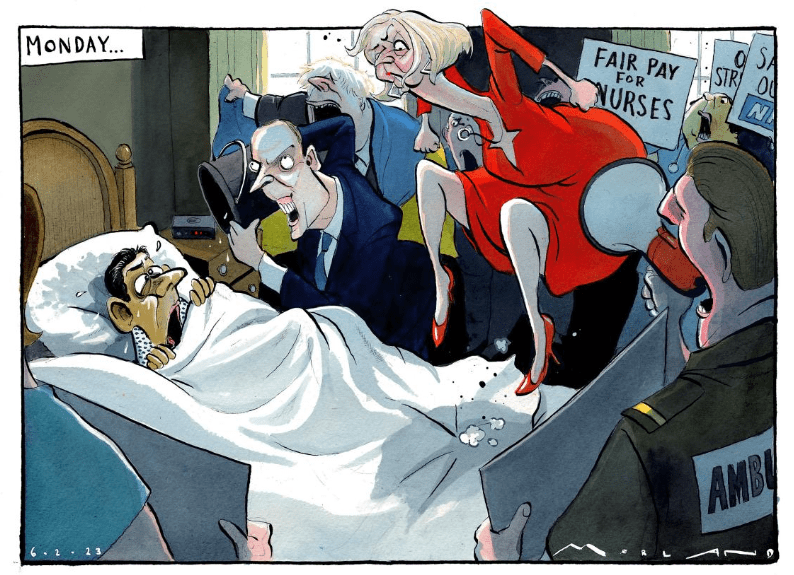
Census reveals consequences  of Tory “Build, build, build” for East Devon 

Between 2011 and 2021 East Devon grew at twice the national rate: 13.8 percent compared to 6.6 percent. Much faster than the rest of Devon.

John Hart writes about providing funding and support for the growing proportion of “Oldies” in the county and appeals to the county’s army of (ageing) volunteers. 

Echos his response to flooding, remember John Hart in February 2020? – Owl

“Council Leader, John Hart’s solution, however, is to encourage a modern day dad’s army of individuals, villages and Parish Councils, where they care, to do more for themselves. Self-help, he said, is going to be the order of the day.” 

Providing funding and support for Devon’s older residents

John Hart, leader of Devon County Council www.sidmouthherald.co.uk

Our population in Devon is growing at a faster rate than nationally, according to the latest figures from the 2021 census. In the 10 years from the last census in 2011, the population of England grew by 6.6 per cent while in the South West the increase was 7.8 per cent.

Locally, East Devon had the second largest growth in population in the South West after Tewkesbury at 13.8 per cent. Torridge was 6.7 per cent while North Devon was 5.3 per cent.

The latest figures show there are nearly 815,000 people living in Devon of whom nearly 268,000 – almost a third – are over 60. And that includes me.

Now the great majority of us pensioners are hopefully living healthy and happy lives and still making a real contribution to our communities. But there’s no doubt that as we get older we need more support from our health and care services.

That’s why in this year’s Devon County Council budget we are proposing an 8.8 per cent increase in our spending on adult social care. We are obviously well aware that at a time of double-digit inflation that may not cover all the extra demands that are made on us. People are living longer and are coming to us with more complex disabilities and needing more care for longer.

But clearly there is a limit to how much extra we can ask council taxpayers to stump up. So it’s vital that we get the very best value for every pound we spend and that we also make savings in our budget where that is achievable. I assure you it will be our intention to target the funding we do have to the most vulnerable people to ensure that they are living well and ageing well. We want to embrace new technological advances so people have the equipment they need to continue living in their own homes. We want more extra care housing where people have the support they need to remain in their own communities instead of having to go into care.

One of the real challenges we face is recruiting enough staff to look after the people who come to us for help. Unfortunately people can earn more money in a supermarket in a job which is perhaps less demanding than caring for a frail older person with dementia. So it’s important that they are properly rewarded. However, the latest increase in the national living wage will cost the council about £9 million this year – roughly the equivalent of a two per cent increase in council tax.

That’s where this county’s army of volunteers can help. Devon has a thriving voluntary and community sector and, as a county council, we are keen to support individual groups where we can as well as making use of their services for our clients.

We try to provide seed funding and support so, as well as our paid carers, there is a sound infrastructure of voluntary and community support available. For example we’ve helped people set up dementia cafes in their local communities and supported them with training and in applying for grants from a range of funders so they can be self-sustaining. But it is important that we make the best possible use of the voluntary and community sector and only refer people to them who are suitable for the help they provide. That needs better communication and for us to ensure they feel part of the team that is doing its very best for our residents.

Planning applications validated by EDDC for week beginning 23 January

Watch this entertaining simplified economics lecture end-to-end

Watch “The Plan Is To Make You Permanently Poorer | Aaron Meets Gary Stevenson” on YouTube

(Brought to Owl’s attention by two correspondents, one who referenced it in a recent comment.)

Liz Truss “didn’t listen”. Economists say the risks were clear

One of her former cabinet colleagues, Simon Clarke is reported to be still close to her and Boris Johnson. What mark did Simon Clarke leave on his ambitious PPS, our very own Simon Jupp, whilst both were dutifully, even enthusiastically, serving Liz on levelling up (for all of six weeks)? – Owl

Jessica Elgot www.theguardian.com 

Senior economists and the former chancellor George Osborne have cast doubt over Liz Truss’s account that she was not warned about the risks to the UK economy as she prepared her mini-budget.

Truss, in her first major intervention since leaving office, wrote that she had “not [been] given a realistic chance to enact my policies by a very powerful economic establishment, coupled with a lack of political support”.

She said she had expected her mandate as prime minister to be respected but admitted mistakes had been made, including that the fallout from her mini-budget had left the UK close to not being able to fund its own debt.

The former prime minister said specifically that no officials in the Treasury had raised concerns about liability-driven investments, which pension funds use to cover their obligations. The Bank of England said pension funds with more than £1tn invested in them came under severe strain with a large number in danger of going bust.

But Dr Charles Read, an economist and proproctor at the University of Cambridge, said he had spoken to civil servants about the risk of a fast rise in interest rates and enclosed a paper sent to the then chancellor, Kwasi Kwarteng, on 8 September, a fortnight before the mini-budget. The Treasury acknowledged receipt of the letter.

“The argument of the paper was that if interest rates rise any faster than they were, Britain’s financial stability will be imperilled and there is likely to be another financial crisis stemming from systemic risks in the non-banking sector,” Read told the Guardian.

“Needless to say, it later emerged that the budget was explicitly designed to force the Bank of England to raise interest rates faster than it was by pushing up market interest rates further; to claim that they were not sent warnings that such a course of action would imperil financial stability is highly misleading and should be called out.”

Writing in the Sunday Telegraph, in the first of a series of interventions before the spring budget, Truss said scepticism about the growth potential of the British economy was “sadly endemic at the Treasury”, blaming pessimism as a barrier to changes.

However, one Whitehall source said there was a “difficult climate” to give advice during the preparations for the mini-budget, after Kwarteng had sacked the permanent secretary, Sir Tom Scholar.

Roger Bootle, the former chief economist for HSBC, said he had been broadly supportive of Truss’s agenda but said she should have realised how the markets would react.

“One of the things I think undid her plan, was that she hadn’t realised just how febrile the markets were … I don’t think she and the chancellor quite realised how different the market circumstances were,” he told GB News.

The former chancellor George Osborne said he agreed that the regulators should have anticipated some of the pension problems. But he said that was not the primary cause of Truss’s downfall. “She was brought down by the free market, the free market in government bonds,” he said. “And that bond market destroyed her government before, actually, the problems then emerged a few days later in those pension funds.

“She dismissed the economic establishment. She fired the permanent secretary at the Treasury. She went around telling everyone, as did her chancellor, that the Bank of England governor was useless. She didn’t consult the office … To then turn around and say ‘no one told me’, well I mean, she went out of her way not to listen.”

Asked about the essay on Sunday, the business secretary, Grant Shapps, said Truss’s mini-budget “clearly wasn’t the right approach” before the government had tackled inflation.

Shapps told Sky’s Sophy Ridge on Sunday programme: “You have got to deal with the fundamentals first. You have got to reduce inflation, which is the biggest tax cut anybody can have.

“I notice she said they hadn’t prepared the ground for these big tax changes. What you have got to do is deal with the big structural issues first, deal with inflation first, deal with debt, and then you look towards tax cuts.”

In the essay, which will be followed by an interview with the Spectator on Monday, Truss said she knew after sacking Kwarteng and reversing most of her positions that she would be unlikely to be able to stay as prime minister.

“Fundamentally, I was not given a realistic chance to enact my policies by a very powerful economic establishment, coupled with a lack of political support,” she said.

“I assumed upon entering Downing Street that my mandate would be respected and accepted. How wrong I was. While I anticipated resistance to my programme from the system, I underestimated the extent of it.”

The former Conservative party chair Sir Jake Berry told BBC One’s Sunday with Laura Kuenssberg that he did still agree with “Liz’s diagnosis of the disease that is facing the country and I think she accepts in this story that the prescription that we wrote – [for] which I have to take part of the blame – wasn’t delivered in the correct way.

“But I think her point of, we need to lower taxes, we need to create a growing economy, that’s what people want.”

Biden has revived democratic capitalism – and changed the economic paradigm

Required reading for Government and Whitehall – Owl

How can inflation be dropping at the same time job creation is soaring?

Robert Reich, www.theguardian.com 

It has taken one of the oldest presidents in American history, who has been in politics for over half a century, to return the nation to an economic paradigm that dominated public life between 1933 and 1980, and is far superior to the one that has dominated it since.

Call it democratic capitalism.

The Great Crash of 1929 followed by the Great Depression taught the nation a crucial lesson that we forgot after Ronald Reagan’s presidency: the so-called “free market” does not exist. Markets are always and inevitably human creations. They reflect decisions by judges, legislators and government agencies as to how the market should be organized and enforced – and for whom.

The economy that collapsed in 1929 was the consequence of decisions that organized the market for a monied elite, allowing nearly unlimited borrowing, encouraging people to gamble on Wall Street, suppressing labor unions, holding down wages, and permitting the Street to take huge risks with other people’s money.

Franklin D Roosevelt and his administration reversed this. They reorganized the market to serve public purposes – stopping excessive borrowing and Wall Street gambling, encouraging labor unions, establishing social security and creating unemployment insurance, disability insurance and a 40-hour workweek. They used government spending to create more jobs. During the second world war, they controlled prices and put almost every American to work.

Democratic and Republican administrations enlarged and extended democratic capitalism. Wall Street was regulated, as were television networks, airlines, railroads, and other common carriers. CEO pay was modest. Taxes on the highest earners financed public investments in infrastructure (such as the national highway system) and higher education.

America’s postwar industrial policy spurred innovation. The Department of Defense developed satellite communications, container ships and the Internet. The National Institutes of Health did trailblazing basic research in biochemistry, DNA and infectious diseases.

Public spending rose during economic downturns to encourage hiring. Even Richard Nixon admitted “we’re all Keynesians”. Antitrust enforcers broke up AT&T and other monopolies. Small businesses were protected from giant chain stores. By the 1960s, a third of all private-sector workers were unionized.

Large corporations sought to be responsive to all their stakeholders – not just shareholders but employees, consumers, the communities where they produced goods and services, and the nation as a whole.

Then came a giant U-turn. The Opec oil embargo of the 1970s brought double-digit inflation followed by the Fed chair Paul Volcker’s effort to “break the back” of inflation by raising interest rates so high the economy fell into deep recession.

All of which prepared the ground for Reagan’s war on democratic capitalism.

From 1981, a new bipartisan orthodoxy emerged that the so-called “free market” functioned well only if the government got out of the way (conveniently forgetting that the market required government). The goal of economic policy thereby shifted from public welfare to economic growth. And the means shifted from public oversight of the market to deregulation, free trade, privatization, “trickle-down” tax cuts, and deficit-reduction – all of which helped the monied interests make more money.

What happened next? For 40 years, the economy grew but median wages stagnated. Inequalities of income and wealth ballooned. Wall Street reverted to the betting parlor it had been in the 1920s. Finance once again ruled the economy. Spurred by hostile takeovers, corporations began focusing solely on maximizing shareholder returns – which led them to fight unions, suppress wages, abandon their communities and outsource abroad.

Corporations and the super-rich used their increasing wealth to corrupt politics with campaign donations – buying tax cuts, tax loopholes, government subsidies, bailouts, loan guarantees, non-bid government contracts and government forbearance from antitrust enforcement, allowing them to monopolize markets.

Democratic capitalism, organized to serve public purposes, all but disappeared. It was replaced by corporate capitalism, organized to serve the monied interests.

Joe Biden is reviving democratic capitalism.

From the Obama administration’s mistake of spending too little to pull the economy out of the Great Recession, he learned that the pandemic required substantially greater spending, which would also give working families a cushion against adversity. So he pushed for the giant $1.9tn American Rescue Plan.

This was followed by a $550bn initiative to rebuild bridges, roads, public transit, broadband, water and energy systems. And in 2022, the biggest investment in clean energy in American history – expanding wind and solar power, electric vehicles, carbon capture and sequestration, and hydrogen and small nuclear reactors. This was followed by the largest public investment ever in semiconductors, the building blocks of the next economy.

Notably, these initiatives are targeted to companies that employ American workers.

Biden has also embarked on altering the balance of power between capital and labor, as did FDR. Biden has put trustbusters at the head of the Federal Trade Commission and the Antitrust Division of the justice department. And he has remade the National Labor Relations Board into a strong advocate of labor unions.

Unlike his Democratic predecessors, Biden has not sought to reduce trade barriers. In fact, he has retained several from the Trump administration. But unlike Trump, he has not given a huge tax cut to corporations and the wealthy. It’s also worth noting that in contrast with every president since Reagan, Biden has not filled his White House with former Wall Street executives. Not one of his economic advisers – not even his treasury secretary – is from the Street.

I don’t want to overstate Biden’s accomplishments. His ambitions for childcare, eldercare, paid family and medical leave were thwarted by senators Joe Manchin and Kyrsten Sinema. And now he has to contend with a Republican House.

Biden’s larger achievement has been to change the economic paradigm that has reigned since Reagan. He is teaching America a lesson we once knew but have forgotten: that the “free market” does not exist. It is designed. It either advances public purposes or it serves the monied interests.

Biden’s democratic capitalism is neither socialism nor “big government”. It is, rather, a return to an era when government organized the market for the greater good.

The only reason my economic plan failed is because the financial markets are full of communists, by Liz Truss

My economic plan for this country was a work of genius, and the only reason we are not reaping the rewards today is because the financial markets are run by communists and leftist ideologues.

newsthump.com 

My 2012 opus ‘Britannia Unchained’ laid the foundations for the mini-budget delivered by my new regime, so I fail to see how anyone could have been surprised by the contents. It was all there if any of you had been bothered to look.

I felt that an unprecedented cost of living crisis was the perfect time to introduce a budget that gave a totally unfunded tax cut to higher rate income tax payers, forced 120,000 people on benefits to try harder to get work or face sanctions, and scrapped a number of measures designed to bring in a little bit more tax from people who could afford it.

The only explanation for the catastrophe that followed is that city workers who trade in bonds and currencies are communists and left-wing ideologues who would rather see this country collapse in on itself rather than have give some real freedom to its people.

Scaredy cat risk-averse traders ruined everything, and they did it because of their politics. Not because they saw a disaster unfolding before them in that UK government bonds were no longer worth the paper they were written on and the pound was suddenly a very risky investment indeed, but because they knew their liberal ideals would be made to look like the nonsense they so clearly are if a genuine right-wing government was a success.

They had to ruin my plan, and so ruin it they did.

In years to come my plan to cut the taxes of the rich and make things harder for the poor during an unprecedented cost of living crisis will be seen as the nation’s biggest missed opportunity.

It is an economic philosophy from which I will never waver. I don’t care how many times we try it or how many times it goes disastrously, I will always believe that the next time we try the same thing it will work perfectly.

It’s the very definition of positive thinking.

Liz Truss: I was never given ‘realistic chance’ to enact tax-cuts

Liz Truss has said she was never given a “realistic chance” to implement her radical tax-cutting agenda by her party, in a 4,000-word essay in the Sunday Telegraph.

No apology for crashing the economy. – Owl

Analysis by Jonathan Blake contained in wider report:  www.bbc.co.uk

After 100 days of “soul searching” we have a version of events from the shortest serving UK Prime Minister in history.

This is Liz Truss’s catastrophic time in office, described and defended in her own words.

At some length, she attempts to argue her case and answer for her actions. There is reflection and regret but not the apology which many might expect.

What burns through this 4000 word essay is a sense from Liz Truss that almost everything was against her as she makes a case for what might have been.

The system, officials, Conservative MPs all played a part, she argues, in stopping her from achieving her aim of economic growth through tax cuts and de-regulation.

There are breath taking reminders of how high the stakes were as her policies sent shockwaves through the economy – Kwasi Kwarteng had to go to avoid “a serious meltdown for the UK” and “the starkest of warnings” came from officials that the country may have to default on its debt.

Despite her downfall, Liz Truss argues many still share her enthusiasm for what she was trying to achieve.

Teignbridge to cancel council tax increase

Teignbridge is cancelling a planned council tax rise next year, although one councillor feels that it should invest more money in creating jobs instead.

Rob Kershaw, local democracy reporterwww.radioexe.co.uk 

The district council is set to propose a budget of £59 million for the next financial year, with a third of a million pounds left over from the council’s income this year.

Teignbridge wants to continue to waive council tax for those on the lowest income and while there is a council tax increase, it will not come into effect until 2024-25.

The £5.54 reduction in council tax for all households in 2023-24 will cost £330,000, but Conservative leader Cllr Phil Bullivant (Bradley) feels that the money might be put to better use elsewhere.

“I’m trying to think of how best to spend that £330,000 given our £4.3 million black hole,” he said at an overview and scrutiny committee meeting on Thursday [2 February]. “I feel it would be better spent on creating jobs than giving out £5.54 as council tax support.”

Cllr Richard Keeling (Liberal Democrat, Chudleigh) explained that Teignbridge only gets 10 pence on the pound of council tax, so it wants to use that to support its residents.

“We have spent a lot of time on how can Teignbridge help our residents with the cost of living crisis with those who are struggling the most so we are planning to give back to householders the Teignbridge share of the council tax increase,” he said.

Revealed: only 10 of Boris Johnson’s promised 40 new hospital projects have planning permission

Only a quarter of the 40 hospital construction projects that were at the heart of Boris Johnson’s 2019 general election manifesto have secured full planning permission, the Observer can reveal, amid angry claims from NHS figures that there is no chance the schemes will be delivered on time.

“There’s a 0% chance there’s going to be 40 new hospitals by 2030,”

Promises, promises – Owl

Michael Savage www.theguardian.com 

Ministers have repeatedly claimed that the hospitals will be delivered by 2030, despite concerns from health chiefs and economists that “woefully insufficient” funding and rising costs will scupper the plan and put NHS capacity at risk.

However, an investigation by the Observer has revealed that only 10 of the 40 projects have the full planning permissions they need to go ahead. Those involved in some of the projects said they had already faced lengthy delays, leaving them with decrepit and often unusable buildings.

“There’s a 0% chance there’s going to be 40 new hospitals by 2030,” said the boss of one of the NHS trusts awaiting a new hospital. “We’ll be moderately lucky to have eight. At the moment we’re doing loads of maintenance work on an ongoing basis, trying to sort out roofs and theatres and all those things. Some hospitals are literally falling down.”

Analysis by the Observer, combined with official data obtained by the Lib Dem deputy leader, Daisy Cooper, reveals that some projects only have outline planning permission, which is insufficient to allow building work to commence. Many of the projects have no planning permission at all.

“This is truly scandalous,” said Cooper. “The Conservative government is on course to break their flagship NHS promise and refuse to admit it. Communities already suffering from dangerously long ambulance waiting times are also left with crumbling hospitals which are falling apart at the seams. The government needs to stump up the cash to keep ageing hospitals running and ensure patients are treated in safe environments.”

The programme has been beset with controversy ever since Johnson pledged to build “40 new hospitals” in the 2019 Conservative manifesto. Since then, it has emerged that many of the proposed projects are not new hospitals, but extensions or refurbishments. The independent National Audit Office is also investigating the programme.

According to the latest filings, 13 of the projects have no planning permission. Another 17 have only secured some kind of preliminary agreement, or have no confirmed permission. Several of the NHS trusts involved said they were awaiting a funding settlement from the government to progress the planning and design stages of their proposed projects.

One of the projects causing most concern is the redevelopment of Epsom and St Helier hospital, south London, which has already been hit with delays. “The development is needed now more than ever before,” said an official. “We have crumbling, cramped buildings, many of which pre-date the NHS. Our patients deserve a better environment to receive treatment. Our staff deserve a better environment to deliver care.”

Any delays pose a significant political problem for the prime minister, Rishi Sunak. One trust chief executive with a scheme in the programme, speaking anonymously, said: “Let’s say there’s an election in 2024, 2025, if they had eight or a dozen or 20 hospitals that were well on the way to construction and you had cranes outside, you’d get loads of good photos out of that. But with the best will in the world, you’re just going to have a few hospitals with a hole in the ground. I think they’ve lost their opportunity to maximise political benefit around this.”

Another said: “Our own hospital is crumbling before our eyes – so much so, that parts are completely unusable. Delays are hugely inefficient and are costing millions which is bad for the economy, taxpayers and the health of our patients.”

In England, there are still 284 hospital buildings pre-dating 1948, when the NHS was created. Most of the hospitals due to be replaced in the new hospital programme have buildings constructed before the service’s inauguration. Latest estimates suggest the maintenance backlog for the NHS estate reached £10.2bn in 2021-22, more than twice as high as it was a decade ago. With inflation in the construction sector reaching 10% in September 2022, the cost of clearing the maintenance backlog might yet increase further.

Laurie Rachet-Jacquet, an economist at the Health Foundation, said: “Last year we estimated that, depending on NHS productivity, we would need 23,000-39,000 new beds in England by 2030: this is equivalent to around 38–64 average sized hospitals. Hospital costs vary greatly but based on an estimated cost of around £450m, then this is approximately £17bn–£29bn in the next seven years.

“The promised new hospitals for the government’s programme fall within the bottom of this range. But the delays and uncertainty about funding are worrying. The money allocated thus far is woefully insufficient and given rising inflation will deliver still less than anticipated and it is not clear that the government’s proposals go far enough to meet future hospital care needs.”

Saffron Cordery, the deputy chief executive of NHS Providers, said: “Trusts need clarity and commitment from the government about the much-delayed New Hospitals Programme (NHP). Shovels and picks at the ready, trusts in the NHP are poised to get to work but are still waiting for confirmation of funding. Those forced to delay for many months now face spiralling, inflation-driven cost increases far above initial forecasts. The NHP can transform healthcare by providing badly needed renewal for acute, mental health, community and ambulance services. But we need to get a move on.”

A Department of Health and Social Care spokesperson said: “We are investing £3.7bn for the first four years of the New Hospital Programme and remain committed to all schemes that have been announced as part of it. Requirements for planning permission are dependent on construction timelines over the decade and we continue to work closely with trusts on their plans. We are developing a national approach to constructing new hospitals so schemes can be built more rapidly and ensure value for money.”

Environment plan for England asks farmers to restore nature – but changes are likely to be superficial

“Ambitious road map” leading nowhere – Owl

Elise Wach theconversation.com 

The UK government’s environment improvement plan pledges to restore 500,000 hectares (1.2 million acres) of wildlife-rich habitat, create or expand 25 national parks, invest in the recovery of hedgehogs and red squirrels, tackle rising sewage pollution and improve access to green spaces in England over the next five years.

Since 69% of land in England is farmed, much of the plan’s success in improving nature will hinge on its reform of the country’s agricultural sector. Farming is implicated in the extinction risk of 86% of threatened species globally, and accounts for roughly one-third of all greenhouse gas emissions driving climate change, not to mention soil erosion and river pollution.

The government has described the plan as an “ambitious road map” to a cleaner, greener country. Some of the targets certainly are ambitious. For example, the plan aims to bring 40% of farmland soils into sustainable management by 2028.

This would be a monumental shift in how soil is cared for in England. Intensive agriculture has slashed the amount of carbon soils store by 60% and put 6 million hectares across England and Wales at risk of erosion or compaction, costing an estimated £1.2 billion a year.

But the plan doesn’t actually explain how sustainable management will be expanded. The only action proposed is to create a “baseline map” of soil health in England by 2028.

The plan also aims for 65%-80% of landowners and farmers to adopt nature-friendly farming by 2030. “Nature-friendly farming” is not defined, nor is it based on any internationally recognised principles, making it impossible to assess the government’s progress.

The plan only aims for this to be adopted on 10%-15% of farmers’ land too, which would amount to a mere 6%–12% of England’s farmland overall. Research shows that protecting small pockets of land won’t benefit biodiversity if the majority of farming in the surrounding landscape is ecologically destructive.

All carrots, no sticks

The main instrument the government has chosen to shake up agriculture is the Sustainable Farming Incentive (SFI) scheme. SFIs are payments to farmers based on actions which benefit the environment. For example, a farmer could receive up to £40 a hectare for their efforts to improve soils on arable fields.

An integrated strategy for converting farmland to more sustainable management would mean increasing the diversity of crops grown, helping healthy soils regenerate and eliminating pesticides, all at the same time. Instead, SFI payments reward farmers for making standalone changes.

This might mean putting out seeds for birds in winter or leaving a grassy strip on an unused section of land to provide habitat for insects, though it could also mean significantly cutting down on pesticides. This system offers flexibility for landowners, but research shows that farmers are more likely to choose environmental improvements which don’t require significant changes to how they farm.

This is the fatal flaw in the government’s flagship farming reform. Farmers can continue doing things which harm soils and wildlife on the (majority) productive parts of their land while receiving benefits for sprinkling pro-environment measures around the edges.

Wildflower margins which are planted around pesticide-soaked crops under the pretence of supporting pollinators offer a common example. Not only is the continued use of pesticide on the crop harmful in itself, the wildflowers actually accumulate the chemical residue, sometimes in higher concentrations than in the crops themselves. This renders the wildflower pollen harmful, rather than beneficial, to bees, butterflies and other bugs.

An arable field with a margin full of wildflowers to the right.

Adding wildflower strips to field margins won’t undo the damage of intensive farming. Paul Maguire/Shutterstock

The environment improvement plan heavily relies on voluntary participation in lieu of regulation, not only through SFIs but quality assurance schemes such as Red Tractor. For example, fertilisers and slurries (semi-liquid manures) emit ammonia, a greenhouse gas which is bad for human health. Rather than regulate this, the plan favours an “industry led” approach with Red Tractor certifications.

Red Tractor is yet another voluntary scheme, and has been criticised as ineffectual for encouraging improvements to the environment and animal welfare on farms. The plan has only suggested that it will consider regulating dairy and intensive beef farms in the same way that it regulates intensive poultry and pig farms.

Even if regulations were to be expanded, environmental regulators visit farms so rarely and superficially that it might not make a difference. On average, it is estimated that English farms can expect an environmental inspection once every 263 years. Despite being regulated, intensive poultry and pig operations are a major cause of river pollution.

Beyond England’s borders

In post-Brexit policy discussions, some landowners and consumers worried that payments for environmental improvements would outweigh income from food production, meaning less homegrown fare. Government discourse has since emphasised that farmers will receive support to deliver on environmental outcomes “alongside” food production. Nothing in the plan ensures this.

Other countries have a food strategy which guides farmers to grow produce necessary for healthy diets and determines how much should be imported or exported. Responsibility for food in England is divided between 16 different departments, with no overarching framework or body.

SFIs and the new plan do very little to stem the environmental consequences of food produced beyond England’s borders. The aggregate ammonia emissions from crops and livestock imported into England are significantly higher than those stemming from domestic production.

And despite its favourable growing conditions, the majority of fruit and vegetables eaten in England are imported, contributing to water scarcity and pollution in other countries. Preserving the environment at home while polluting and degrading environments abroad is nonsensical, as all ecosystems are interconnected. But it is also shameful to shift the environmental burden of English diets onto other people.

If the government and citizens are serious about improving the environment, then policies must require that ecological principles are integrated into food production. At present, voluntary measures and weak regulation are all that is offered.

Nadhim Zahawi: it was the paltry size of his tax bill that should shock us 

“The only tax he was required to pay on £27m was £3.7m. That implies an average tax rate of less than 14%, lower than the rate for someone working full-time on the minimum wage.”

Arun Advani (an associate professor of economics at the University of Warwick and a research fellow at the Institute for Fiscal Studies) www.theguardian.com 

Nadhim Zahawi’s tax row reveals an even bigger scandal: the rich are getting a tax break that those on low incomes can only dream of.

While the revelation that the former Conservative chair had to pay a tax penalty was shocking, the bigger concern is that the only tax he was required to pay on £27m was £3.7m. That implies an average tax rate of less than 14%, lower than the rate for someone working full-time on the minimum wage.

Two weeks ago, the Guardian broke the story that Zahawi had been fined by HMRC for not taking reasonable care in his tax affairs. This “carelessness” meant he had not paid £3.7m in tax that he owed from the sale of £27m worth of shares in YouGov, the company he co-founded in 2000.

His belated payment of the tax bill, plus interest and a fine, while he was chancellor, led to a total payment of about £5m. The revelation ultimately led to the ethics investigation that was his downfall.

Assuming Zahawi’s bill was related to unpaid capital gains tax, his startlingly low rate was possible because capital gains are taxed at much lower rates than other income.

While the tax rate for someone earning a salary of £270,000 is 47%, made up of 45% income tax above £150,000 and 2% national insurance contributions above £50,000, someone taking home 100 times as much can pay the much lower 20% capital gains tax rate.

And some gains can qualify for either business asset disposal relief or investors’ relief, bringing the rate on those gains down to 10%, and further reducing the average rate.

These low tax rates tend to benefit the wealthiest in society, the asset-rich. Capital gains are the returns that someone makes on selling an asset that has grown in value – be it a property, shares or antique vase.

But most capital gains come not from the sale of second homes by the upper middle classes but from the sale or dissolution of businesses by individuals who both own and manage those businesses. And those gains are incredibly concentrated: half of all taxable gains in the entire country go to about 5,000 people, who each receive more than £1.5m in gains.

Perhaps this would be worth it if there was compelling evidence that these low rates had beneficial side-effects for growth and employment. But the current structure of capital gains tax is neither good for growth nor good for all of those who receive money in the form of gains.

It is bad for growth because the gap between capital gains tax and income tax rates encourages people who could be brilliant employees to instead be mediocre self-employed managers, contributing to the long “tail” of unproductive firms in the UK. Someone taking home £1m in gains would pay up to £370,000 less tax than if they were earning the same as a salaried employee.

It is also bad for those actually investing serious cash in companies, because in times of high inflation they can pay large amounts of tax on increases in the value of those investments, even if this increase doesn’t keep up with the price of ordinary goods and services.

So what is the answer? One not particularly radical solution would be to largely go back to the capital gains tax structure imposed by the Conservative chancellor Nigel Lawson in 1988. Lawson taxed capital gains at the same rate as income, and provided an allowance for inflation. A move back in this direction, with also some “smoothing” to account for gains being received less frequently than income, would be eminently sensible.

As a bonus it would raise about £16bn. This could pay for quite a lot of wage increases for teachers, nurses and firefighters who are striking because their incomes are falling relative to the cost of living. Or for green investment. Or for the tax cuts the chancellor so desperately craves.

East Devon council property rent to rise

Example of a cash starved local council grappling with a balancing act – Owl

Rob Kershaw, local democracy reporter www.radioexe.co.uk

Rent on council properties in East Devon will rise seven per cent in the next financial year, while its share of the council tax is increasing by £5 a year.

However, anyone in arrears can now receive up to £25 from East Devon District Council after it received a share of a £100 million government grant.

Just over £216,000 was given to the district, which decided last month that working age tax claimants in the lowest band of income will no longer need to pay council tax from 1 April this year.

East Devon is set to use £90,000 of that fund, with the rest aimed at providing further support for those in arrears, and helping those who hit financial trouble and need help paying their bills.

At a cabinet meeting on Wednesday [1 February], Cllr Paul Hayward (Independent East Devon Alliance, Yarty) said he is grateful for the support people in the district are receiving, but he criticised central government for continually putting pressure on local authorities.

“There are huge financial pressures on residents, and this is a welcome help,” he said. “It will enable us to help those in dire financial need.

“We, as an authority, are expected to do more with less,” he said. “And we manage admirably. We manage far better than other local authorities. But the pressure is always building, government keeps taking away, keeps giving more things for us to do, abrogating their responsibilities down through the tiers of local government.

“And we perform admirably. This is welcome, it would be lovely if the government stuck a nought on the end of that, because then we could do even more and help those people who need our help.”

Cllr Jack Rowland (Independent East Devon Alliance, Seaton) joined Cllr Hayward in thanking the council’s officers for “producing rabbits out of hats” in delivering the grant to East Devon at short notice.

“The government notified this council on 23 December and expected this to be in place to be able to issue with the annual bills issued next month,” he said. “So the time scales for getting this in place once again are a real challenge.”

Cllr Geoff Jung (Independent East Devon Alliance, Woodbury and Lympstone) is glad that those living in council-owned properties on increased rent can at least receive council tax support.

“I was reluctant to vote for an increase in rent and rates, it feels uneasy at this time,” he added. “But this goes someway to resolving the issue that was raised earlier about people who are less well-off and who sadly are finding it difficult, and this proposal seems to help my conscience on this that it will help people in this society.”

James O’Brien’s truth or lie about Mogg, Johnson & Truss

James O’Brein told LBC listeners “which of these three stories are true and which are false.”

Joe Connor www.spottednews.uk

It comes as Rishi Sunak insisted he can get the economy growing again “this year” as he urged people to “have hope” despite the bleak assessments of the UK’s finances.

However, the IMF predicted a day earlier the UK economy will be the only major economy – including sanction-hit Russia – to plunge into recession this year.

True or false?

Back to LBC and they shared the video and wrote: “James O’Brien tells stories about Liz Truss, Boris Johnson and Jacob Rees-Mogg, he asks listeners which one they think is true.”

Watch on twitter here.

Bristol: Greens win Hotwells by-election race and become largest party on city council

The Green Party has won a tight by-election race in Bristol becoming the largest party on the city council with 25 councillors. Patrick McAllister was elected the new councillor for Hotwells and Harbourside in the by-election held on Thursday, February 2.

Conservatives get only 34 votes! – Owl

Alex Seabrook www.bristolpost.co.uk 

Greens took the seat from the Liberal Democrats in a fiercely fought battle, which could prove a good indicator of how national and local elections in Bristol might turn out next year. The next local elections will be held in May 2024, which could see the Greens take control of Bristol City Council.

The result was very close, with the Greens beating the Liberal Democrats by only 26 votes. Coincidentally, at the last council elections in 2021, the Liberal Democrats beat the Greens also by 26 votes. 24-year-old Cllr McAllister, who works in legal services, said his party was now preparing to take power in Bristol.

He said: “Successive Conservative-led governments and our Labour-run council have left our residents feeling frustrated — whether it’s through botched consultations on new developments, repair works to public throughways going on for years, the cladding crisis, or even threatening to take away our library.

“There’s never been a more vital time to speak up for our communities, and that is exactly what I’m going to do from now on. The Green Party is now the biggest group in the council, with 25 councillors, and I recognise the weight of that responsibility. As a team we are putting together our programme so we are ready to run this city from next year.

“In the meantime, I think that the city council’s current leadership has a responsibility as well — they have to now recognise the mandate that the Green Party has. I’m really looking forward to getting on with the job and representing this amazing community with the commitment and enthusiasm that it deserves.”

The vote was sparked in December after the previous councillor, Liberal Democrat Alex Hartley, resigned for mental health reasons. The results will most likely not change the balance of power in the council, with Labour Mayor Marvin Rees still in charge until May 2024.

The by-election result also boosts the Greens’ morale ahead of the next general election, expected either in spring or autumn next year. Councillor Carla Denyer, co-leader of the Green Party in England and Wales, is the parliamentary candidate for Bristol West.

Cllr Denyer said: “I’m really delighted to have Patrick joining our group of experienced and dedicated Green councillors on Bristol City Council. It means that in the parliamentary constituency of Bristol West, where I’m standing to be MP in the next general election, we now have at least one Green councillor in every single ward in the constituency.

“It’s fantastic to see that the people of Hotwells and Harbourside, and more broadly the people of Bristol, want to see more Green politics in the city and are ready to trust us with power.”

The result is an embarrassing loss for the Liberal Democrats, who have held the seat since its creation. They have now gone from having six councillors in the city council to just five. Their candidate, Stephen Williams, was a former councillor for the area, MP and government minister.

In third place was Labour candidate Eileen Means, a former councillor for Brislington, social worker, and campaigner on housing safety having been personally affected by the flammable cladding scandal. Conservative candidate Eliana Barbosa was a “paper candidate” and did not attend the hustings or election count.

Local journalist Martin Booth, editor of Bristol 24/7, initially ran as an independent candidate, before deciding halfway through the race to withdraw due to the potential of a perceived conflict of interest if he won.

Greens now have 25 councillors, while Labour has 24, Conservatives have 14, Liberal Democrats have five, and the Knowle Community Party has two. Labour will still hold political power however, with the mayor unlikely to give any Greens new cabinet positions.

The turnout was higher than expected, with 32.4% of the electorate in the ward voting. Of 3,860 eligible voters, 1,251 cast a ballot. The ward is only represented by one councillor.

The full results are:

  • Patrick McAllister, Green, 537 votes
  • Stephen Williams, Liberal Democrat, 511 votes
  • Eileen Means, Labour, 153 votes
  • Eliana Barbosa, Conservative, 34 votes
  • Martin Booth, independent, 14 votes

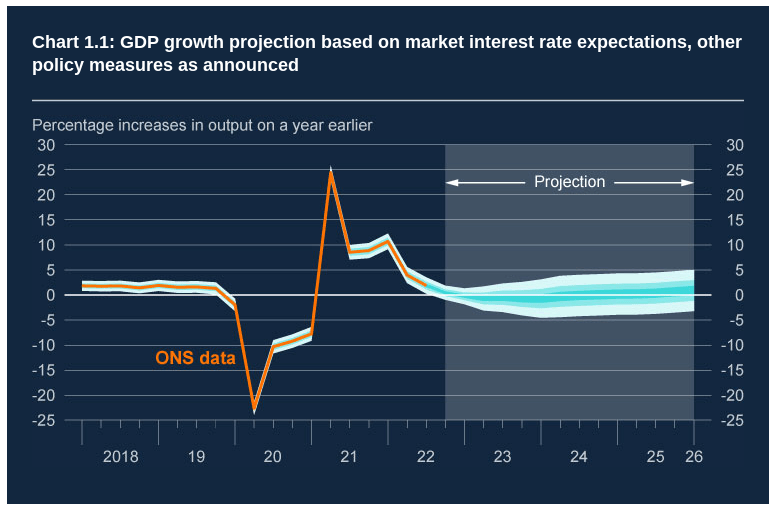
Bank rate at 4% and economy flatlining 

A startling graphic from the Bank of England’s monetary policy report.

Not quite what we were promised by our Local Enterprise Partnership whose pitch in 2018 was to double our local economy in 20 years. Nor what Liz Truss’ and Kwarsi Kwarteng’s “Growth, growth, growth” agenda was promising last October.

https://www.bankofengland.co.uk/monetary-policy-report/2023/february-2023

Chernobyl-on-Sea building site is still derelict

Ugly hoardings surrounding a derelict building site just a stone’s throw from some of Torbay’s best beaches must go, says the leader of Torbay Council.

Guy Henderson www.devonlive.com

The site of the old gasworks at Hollicombe – once dubbed “Chernobyl-on-Sea” – has been derelict for decades, and despite planning permission being granted for nearly 200 homes on the site as long ago as 2012, it has not been touched. It is one of the key “brownfield” sites for development in Torbay, where the need for land for housing has reached critical levels.

The large area, three acres in the valley between Tarraway Road and Mead Road, is now overgrown and strewn with battered fence panels and other debris. The wooden hoardings along the main Paignton to Torquay road, opposite the entrance to Hollicombe Park and the path to the beach, are cracked and peeling, with graffiti daubed across them. The graffiti includes an obscene message in spray paint – aimed at former Prime Minister Boris Johnson.

Cllr Steve Darling, leader of Torbay Council, said the state of the hoardings was “terrible”, and he has written to the owners of the site to urge them to act. He also wants them to move forward with development of the site, which was cleared and cleaned of toxic chemicals including arsenic and cyanide in 2015. The build – when it begins – is likely to take three years.

In a letter to site owners Vistry Partnerships, parent company of developers Linden Homes, Cllr Darling said: “This is a significant arterial route between Torquay and Paignton and residents and visitors alike can only be horrified at the poor state of this boarding. I would reiterate our desire to get them re-painted and smartened up as soon as possible.

“We remain very keen to see the approved development for this site commenced, or if revised, then an acceptable scheme brought forward as soon as possible.”

Hollicombe gasworks building site (Image: Guy Henderson)

The first plans for the site were shown to the public in June 2007, at which point the gasworks itself had been dormant for almost 40 years. Local residents fought an unsuccessful campaign for the area to be turned into a park.

Now-defunct Midas Homes submitted plans for 185 new homes, including a mix of one, two and three-bedroom apartments, 44 of which would be affordable. There were more than 500 objections, mainly on the grounds of increased traffic. A Hollicombe Action Group was set up to fight the plans.

Councillors heard that a “full decontamination” would be needed, and one member of the planning committee branded it Chernobyl-on-Sea. By December 2010 council officers were recommending the go-ahead for 185 homes and a public park, and in February 2011 it was given the green light, as long as a giant “tent” was put over the site during digging to prevent toxic dust going into the air. But the whole project was “called in” by the Government in April 2011 so an environmental impact assessment could be completed.

Hollicombe gasworks building site (Image: Guy Henderson)

A year later it was said to be “back on track” and residents were told they had nothing to fear from the toxic chemicals left behind from the gasworks, which were successfully removed under the giant marquee in 2015.

Since then, however, the site has remained empty and no homes have been built. Maps show a road called Cudd Hill Road running through the site, but the road has never been built. Vistry Partnerships has been approached for a comment but had not responded at the time of publication.

Sidmouth is awarded almost £2 million council cash to shore up its coastal defences

Further coast defence work has been agreed for Sidmouth after securing council cash, it was announced this week.

Local Democracy Reporter eastdevonnews.co.uk

Sidmouth’s coastal defences have been given a boost after almost £2 million was made available to protect the town from eroding cliffs and high tides, writes local democracy reporter Rob Kershaw.

In 2020, glass ‘splash walls’ were installed on the seafront to see how they would fare against the waves, however they were soon vandalised.

Now East Devon District Council (EDDC) has chosen a new scheme that involves installing a 120-metre rock groyne on the beach.

The cost of improving Sidmouth’s resilience against the elements has increased since plans were first brought forward – due to staff shortages and higher staff wages. And inflation has driven up prices for materials.

Work on sea defences is set to start in just over two years.

The council needs to spend £1.7 million to continue maintenance work on sea defences, but it is trying to find ways, in collaboration with the Environment Agency, to bring that figure down further with funds from central government.

At a cabinet meeting on Wednesday [1 February], Councillors agreed to its part of the cost.

Cllr Geoff Jung (Independent East Devon Alliance, Woodbury and Lympstone) said: “Thank goodness everyone in Sidmouth at the moment seems to be supporting this scheme.

“And I hope that, in the next four years, we’ll be able to see the design come through, we’ll be having large consultations on it, and then we’ll see the building of it.

“And then we’ll be protecting Sidmouth for many years to come.”

Cllr John Loudoun (Independent East Devon Alliance, Sidmouth Rural) believes that the cash injection will show residents that the council is committed to protecting the town.

“We have been through a large number of ups and downs,” he said. “I hope the fact that we are committing to putting just under £2 million into this will give reassurance to residents that we are serious about supporting this, taking this forward and making sure that it comes to fruition.”

Cllr Paul Hayward (Independent East Devon Alliance, Yarty) reasoned that spending money on sea defences now is better than paying a much larger price further down the line.

“You’ve only got to look at the picture that’s currently being provided here to see the erosion over a period of time,” explained Cllr Haward. “So that’s nigh-on 70 years. That’s an astonishing amount of erosion.

“In real terms, we owe as much to the residents of Sidmouth as we do to Axminster and Honiton and elsewhere to protect them from the elements. And this ultimately seems a pragmatic, appropriate spend to safeguard this issue. Because it’s not just residents who live near the cliff, it’s the fact that a flood event in Sidmouth would decimate business, as it would decimate any seaside town.

“And that could be billions. It could be hundreds of millions in lost businesses, lost revenue, lost jobs. So actually, to deal with it now, and to progress is very sensible.”

February community dates announced for ‘epic task’ to tree plant a new wood for wildlife in East Devon

Community planting of thousands of trees begins this weekend at a new wood for East Devon in a bid to create a haven for wildlife.

Becca Gliddon eastdevonnews.co.uk

The Woodland Trust is inviting all along to its new Yonder Oak Wood near the Exe Estuary, at Lymsptone, with the ‘epic task’ of planting 13,000 trees.

Public planting days are being held from 10am until 3.30pm on Saturday February 4, and Sunday, February 5, and again on Saturday, February 18 and Sunday, February 19. Those planning to attend must book.

The Woodland Trust hopes volunteers will donate a few hours of their time – or a whole day.

There is no parking on site, but the charity has arranged free minibuses from Exmouth.

East Devon

The site of the new wood. Photo: The Woodland Trust.

Paul Allen, Woodland Trust site manager, said: “Creating a new wooded landscape that will host wildlife way beyond our lifetimes and be resilient to the changing climate is no mean feat.

“The mass tree planting is the first step in what will be a decades-long journey to bring wildlife back to this site.

“Trees are a great natural solution to the climate crisis, soaking up CO2 and delivering oxygen, and it’s great to see so many people wanting to step up and join this effort.”

Joining in the community tree-planting will be 400 youngsters from primary schools in Exmouth, Lympstone, Woodbury and Exeter.

The SongFishers, a group of musicians who live nearby, will serenade tree planters with adapted traditional folk songs to include the new wood, performing on Sunday 5 and Sunday 19 February, at 10.30am.

Rachel Harries, Woodland Trust engagement and communications officer, has been cleaning her stock of spades ready for the community days.

She said: “Planting 13,000 trees is an epic task but we’re finding that so many people are wanting to get involved in this project right from the very beginning – there’s a real sense of community coming together about it.

“With nature in crisis and climate change affecting both people and wildlife, planting trees is a way we can make a difference right on our doorstep.”

She added: “In a very short time, we expect to see more birds and butterflies, like willow warblers and spotted flycatchers – as well as butterflies such as the dingy skipper and ringlets.

“Imagine how exciting it will be – in five, or ten years’ time – to come back and say, ‘I planted this wood’.”

The new wood, which was named last year in a public vote, sits in a hidden valley two miles north of Exmouth.

Work has begun clearing the site of invasive laurel, and the hope is to create ‘open glades and wood pasture’ to attract wildlife.

The Woodland Trust bought the 54 hectares of land in East Devon in March 2022, thanks to a public appeal which raised £650,000.

Further funding was made available from Lloyds Bank, through the Government’s Landfill Communities Fund, and a Biffa Award of £750,000.

Inadequate in several areas, some close to home

Devon and Cornwall Police have just received a scathing report:


Devon and Cornwall Police found to be ‘inadequate in several areas’ | ITV Newsitv.com

Including this:

His Majesty’s Inspector of Constabulary, Wendy Williams, said: “I have concerns about Devon and Cornwall Police’s performance in keeping people safe and reducing crime.

“Particularly about the accuracy of its crime recording, its response to the public, and its management of sexual and violent offenders.

“The force doesn’t always record crimes against vulnerable victims, particularly violent or behavioural crimes, and anti-social behaviour.

“Failure to record a crime often results in victims not being properly safeguarded and no investigation taking place.

“Our inspection also found that the force is not adequately assessing or managing the risks posed by registered sexual and violent offenders.”

Little wonder Humphreys got away with it for so long.

All credit, in the circumstances, to police Sergeant Angela Galasso and her colleagues in the police and the cps who did eventually pick up and successfully bring this case to court.

So, where was our so-called Police and Crime Commissioner Alison Hernandez while all this was going on?.  You know – the person supposed to  hold our local police to account on our behalf. 

It is hard to know her exact salary but it seems it was around £88,600 plus expenses in 2016 and employs a large office staff including a Chief Executive who earns at least £113,000 and a Treasurer who earns at least £101,000 (2022 figures where her salary was specifically excluded from accounts).  Her office had at least 16.2 full-time-equivalent staff again some years ago. These historic figures are because her office’s website is very difficult to penetrate for more up-to-date figures. 


Police and Crime Commissioner Draft 2021-22 Statement of Accounts 2PDF Document · 2 MB

What was she doing while the Devon and Cornwall Police got such a poor report?  Well, we know she loves her photo opportunities and “meeting the public” especially when the public includes local or national Tory luminaries, though, of course, she has pledged to be neutral in her office.

Questions, questions – no clear answers …