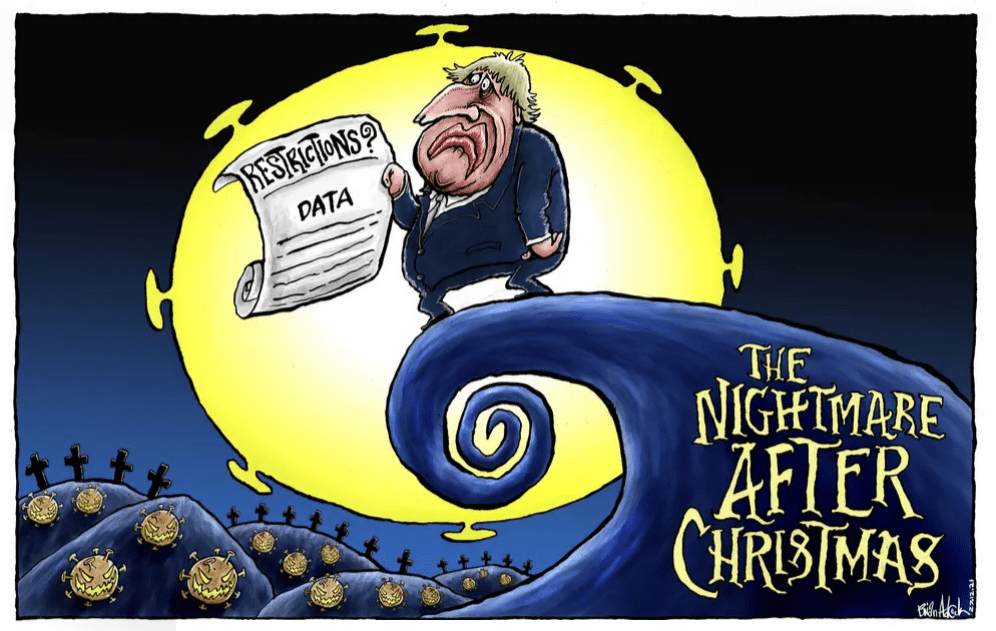
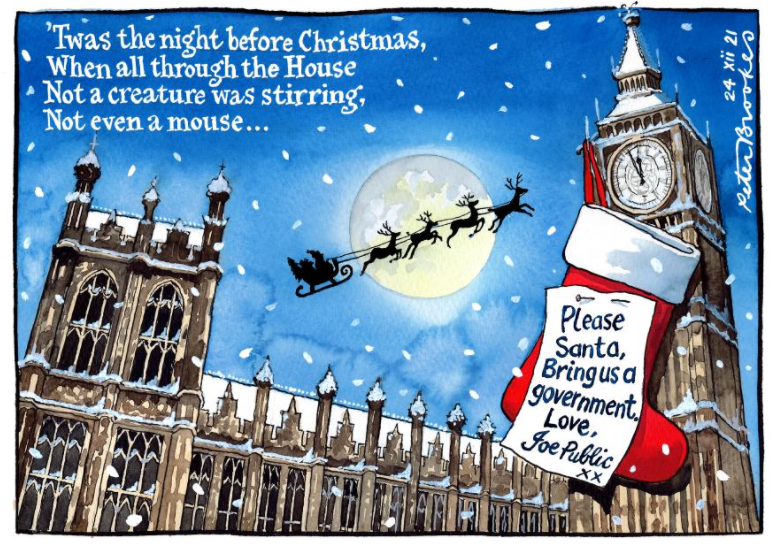
Liz Truss ‘insisted’ on £1,400 taxpayer-funded lunch at Tory donor’s private club

Ms Truss is reported to have previously used the same venue to host “fizz with Liz” dinners with MPs and “biz for Liz” receptions with potential donors, in preparation for a likely leadership bid.

[Has Simon Jupp had his “fizz with Liz” invite yet or does he only merit “tea with Truss” in the Commons tea-room? – Owl]

www.independent.co.uk

Liz Truss insisted on hosting a lunch at an “incredibly expensive” private club owned by a Tory donor, overruling her officials’ advice to go somewhere more suitable.

Leaked correspondence has revealed the foreign secretary “refused to consider anywhere else” and requested taxpayers’ cash for a £3,000 event with Joe Biden’s trade representative.

Her civil servants were so alarmed at the cost – and the venue owners’ close links to the Tories – that the proposal was referred to the top official at the Department for International Trade (DIT).

But Ms Truss, then the trade secretary, “explicitly asked that we book 5 Hertford Street”, which is owned by the millionaire aristocrat Robin Birley, a donor to Boris Johnson’s leadership campaign and the half-brother of Zac Goldsmith, the environment minister.

The venue agreed to reduce the bill to £1,400, but on condition of immediate payment – which meant civil servants had to use an emergency process to pay up straight away.

A receipt showed Ms Truss and her companions enjoyed two bottles of dry gin, three £153 bottles of Pazo Barrantes Albarino, a Spanish white wine, and two bottles of the French red Coudoulet de Beaucastel, at £130 a bottle.

The correspondence, revealed by The Sunday Times, comes as Ms Truss launches a little-disguised campaign to succeed the prime minister, should he be toppled by disillusioned Tory MPs.

The lunch, last June, was condemned by Labour MPs. One, Nia Griffith, tweeted: “Yet again Tory Minister seems to have had scant regard for concerns raised by professional civil servants.”

And Luke Pollard alleged: “One rule for the current PM and those wanting to be the next Tory PM and another for the rest of us.”

Ms Truss was accompanied by nine other people, including the trade representative Katherine Tai, as the UK sought to speed up talks for a post-Brexit trade deal with Washington.

However, President Biden has slammed the brakes on negotiations – and has also refused to lift tariffs on UK steel, even as an agreement was reached with the EU.

Often considered to be London’s most exclusive club, 5 Hertford Street hosted Prince Harry’s first date with Meghan Markle, but posted six-figure losses last year.

Ms Truss is reported to have previously used it to host “fizz with Liz” dinners with MPs and “biz for Liz” receptions with potential donors, in preparation for a likely leadership bid.

An email shows an official described the club as “obviously incredibly expensive and more than I understand we’d usually expect to pay for such a venue”.

Colleagues proposed “another option – a Soho restaurant called Quo Vadis – which costs only £1,000”, it stated.

The email continued: “However, [the special adviser] refused on behalf of SoS [secretary of state] to consider anywhere else and is insisting that we book 5 Hertford Street and claims SoS would find Quo Vadis inappropriate.”

One official explained the cost would have to be released eventually, but added: “Should this raise any enquiries upon publication I am confident that we can justify the spend as we have to pay immediately to guarantee the discount which represents real VFM [value for money].”

A DIT spokesperson said: “This was a diplomatic working dinner attended by the previous international trade secretary, senior UK officials, and US counterparts from our largest single trading partner.”

Sands of time are slipping away for England’s crumbling coasts amid climate crisis

A 2020 report by the Committee on Climate Change, on which Hall sits as an expert on coastal erosion and flooding, found 1.2m homes at significant risk of flooding and a further 100,000 subject to coastal erosion by 2080 – which, although it sounds safely distant, will be within the lifetime of most of those born so far this century.

Look carefully at the graphic to see the little pink spots along the Devon and Cornwall coast and read on – Owl

Andrew Anthony www.theguardian.com 

From a distance, the beach at Winterton-on-sea in Norfolk looks like the opening scene of Saving Private Ryan, with hundreds of grey bodies lying motionless across the sand. On closer inspection, it becomes clear they are not fallen soldiers but a huge colony of seals taken to the land for pupping season.

It’s an amazing annual sight that draws tourists and nature-lovers from across the country, but another process is taking place that is pushing people back – the growing threat of coastal erosion. Just along from where the armies of grey seals lay with their white pups, there used to stand the Dunes Cafe, a much-loved beach facility with a large and loyal clientele.

A year ago it was demolished to prevent its imminent collapse as a result of land lost to sea and storms. The ground where it stood is, like the cafe itself, no longer there. It’s a story of disappearance taking place all along the eastern coast of England, but particularly in East Anglia, that bulbous protrusion jutting into the North Sea.

That climate change and rising sea levels take their toll on the landscape is an old story, but one with an urgent new twist. “The sea level’s been rising since the last ice age, 20,000 years ago or so,” says Jim Hall, professor of climate and environmental risk at Oxford University’s Environmental Change Institute. “And it’s going faster. We’re probably not seeing its effect very much yet on the coast, though we will in the future.”

A 2020 report by the Committee on Climate Change, on which Hall sits as an expert on coastal erosion and flooding, found 1.2m homes at significant risk of flooding and a further 100,000 subject to coastal erosion by 2080 – which, although it sounds safely distant, will be within the lifetime of most of those born so far this century.

Two years ago, the US-based climate change research group Climate Central went further. It produced a map showing areas of the UK at risk of being underwater by 2050. They included sections of north Norfolk, all of the Lincolnshire coast and much of Cambridgeshire, along with parts of East Yorkshire, Merseyside and the Bristol area. According to the group, this would happen even if “moderate” attempts were made to combat climate change.

Such predictions are based on highly complex, and disputed, modelling, yet there are significant warning signs that such an outcome is growing rapidly more plausible. Last month, scientists monitoring the Thwaites Glacier in Antarctica, an ice shelf the size of Great Britain, warned it is in danger of collapse.

“It’s being melted from below by warm ocean waters, causing it to lose its grip on the underwater mountain,” said Peter Davis from British Antarctic Survey and the International Thwaites Glacier Collaboration.

He said research suggested that the ice shelf will begin to break apart within two decades. Should there be a complete collapse, it would lead to a highly consequential rise in sea levels of 60cm. That may be a worst-case scenario, but it will almost certainly have a notable impact on the British coastline.

In a sense Norfolk is a real-time lesson in how weather and sea can drastically alter a landscape. After the Dunes Cafe was dismantled, a chef called Alex Clare set up a mobile silver Airstream cafe to cater to locals and visitors at the car park next to where the cafe once stood. He’s had to move the Airstream four times in eight months, as sections of the dunes on which the car park sits have collapsed into the sea under pressure from storms and high tides.

“In the last two weeks,” Clare told me, “a strip about as long as this caravan has disappeared. You hear about erosion, but you don’t know what it means, what it involves, until you witness it. And it’s a shock to see the physical transformation.”

The car park owner has tried to slow the erosion by laying down large concrete blocks on the beach, but it’s the definition of a losing battle.

Winterton’s coast possesses a bleak beauty, enhanced by the fact that the village sits back from the sea, behind a broad wall of dunes. By contrast, at Hemsby, a mile or so south, the town, with its amusement arcades and fairgrounds, stretches all the way to the shoreline. Four years ago, there was a line of seven chalets close to the edge of the sandy cliffs that drop down to the beach.

They all had to be knocked down as the land beneath them began to fall into the sea. The local council is looking at sea defences, but the only workable answer involves large-scale investment and a major process of sandscaping. That is what took place at Bacton, 15 miles north along the coast from Winterton.

A four-mile-long dune was built to protect Bacton Terminal, which supplies around a third of the UK’s gas and had been moving steadily closer to the cliff edge, literally and metaphorically. Designed by the Dutch engineering company Royal HaskoningDHV, it involved the placement of 1.8 million cubic metres of sand along the beaches near the terminal.

The design relies on the sand being shifted into place by wind, waves and tides. The Dutch are world leaders in land reclamation and protection, having over the years reclaimed more than a sixth of Holland’s landmass from the sea.

“In the long run,” says Professor Hall, “any coast protection is temporary. We’ve been doing engineering to protect the coast for a very long time. Almost half of the UK coast has some kind of protection – sea walls, revetments, promenades, that kind of thing. The Victorians were inveterate promenade builders.”

Such protections don’t stop the sea rising. They merely fix, for a while, the point of the shore profile. At Happisburgh, near Bacton, wooden revetments did that job, until they collapsed 20 years ago, leading to a sudden and damaging exposure to the sea.

“Once you lose [the protection], there’s a lot of pent-up erosion capacity,” says Hall.

Although there is growing media coverage of coastal erosion, it’s as Alex Clare said: knowledge of the thing isn’t the same as experiencing it. “There’s a bit more recognition that the sea level is rising fast,” says Hall. “But I don’t think coastal communities have really understood what the future holds.” He believes there should be an “honest conversation” between government, local government and the affected communities.

While the money required to protect cities like London and Hull will have to be found, that’s not likely with isolated villages. When I visited Norfolk last month, the locals seemed fatalistic or in denial, pointing out that the situation was worse somewhere else, either up or down the coast. As I drove back, it began to rain, and that night the weather deteriorated. The next day there was a large landslide at Mundesley, near Bacton, with a huge chunk of the cliff face collapsing on to the beach. Above it, houses stood on the precipice, their future looking about as secure as Norwich’s position in the Premier League.

As Pete Revell, station manager at Bacton HM Coastguard, said, Mundesley was viewed as stable by comparison with nearby Happisburgh, and the landslide came as “a bit of a surprise”. It certainly shocked local resident Antony Lloyd, who said he was “very nervous and agitated about any further incidents.” He was finding it hard to sleep and thought he would have to move.

Of course, the occasional landfall or loss of beachside chalets is hardly cause for national panic. But like canaries in a coal mine, the inhabitants of the villages strung along Norfolk’s shifting coastline are a warning of a worrying future. There are processes under way whose outcomes are unavoidable, and those that can potentially be arrested. But it will require unblinking foresight and long-term action, neither of which are our national strong suits.

If you take the path north from Winterton’s beach car park you come to the roped-off seal sanctuary. Beyond, seals and their pups lie still and vulnerable in the dunes, hundreds of yards from the shore, as if waiting for the sea to rescue them. And come it will, not now or next year, but much sooner than we care to think.

Boris Johnson’s Tories blow £14.7 BILLION on ‘wasteful’ projects and ‘duff’ deals

The Government has blown £14.7billion of public money on “wasteful” projects, crony contracts and duff deals, research based on official figures claims. See www.mirror.co.uk for details

Tories ‘rewarding chums’ with peerages after donor handed knighthood

The Tories have been accused of “rewarding their chums” after a hedge fund manager who has donated almost £1.5 million to the party was handed a knighthood. 

By Redrow www.thelondoneconomic.com  (extract)

David Harding, the founder of Winton Capital hedge fund, has given £475,000 to Boris Johnson since he became prime minister in mid-2019. 

He was knighted in the new year honours list for services to philanthropy, after giving large sums of cash to the Science Museum and the University of Cambridge. 

Anneliese Dodds, Labour Party chair, said: “It seems the Conservatives are ringing in the new year in exactly the same way they’ve seen out the old: by rewarding their chums with gongs instead of our key worker heroes.

“If you want Boris Johnson to recommend you for a knighthood, don’t bother working long hours on low wages to help others – just become a hedge fund manager and donate half a million pounds to the Tories.”

Four Conservative MPs received awards, including a knighthood for backbencher Bill Wiggin, whose work for offshore investment firms netted him £73,000 on top of his MPs’ salary. 

Robert Buckland, the former justice minister, was also knighted – as was Robert Goodwill, a former minister.

Harding was one of the biggest contributors to the Remain campaign during the Brexit referendum, to which he gave £3.5 million. ….

….The Cabinet Office said nearly one in five (19%) of the honours are for Covid-related service.

Don’t sell Dorset power to London, say campaigners

Countryside campaigners have condemned the building of a solar farm in Dorset to provide electricity that will be bought by the City of London.

Ben Webster www.thetimes.co.uk

Almost 100,000 solar panels are being installed on 131 acres of farmland near the village of Spetisbury.

The City of London Corporation agreed last year to fund the construction by signing what it described as a “pioneering £40 million green energy deal” to buy all the electricity produced by the farm for 15 years.It said the 50-megawatt farm would provide more than half its electricity, powering its Guildhall headquarters, three wholesale markets and the Barbican arts centre.

The North Dorset branch of the Campaign to Protect Rural England (CPRE) objected in 2019 to the application for South Farm and has criticised the deal with the City.

Rupert Hardy, North Dorset CPRE’s chairman, who lives a mile and a half from the farm, said: “That land should be used to provide food for Dorset, not electricity for London. We would far prefer energy produced in our county to be used here — especially when it is desecrating our beautiful landscape.

“The solar farm is within sight of the Cranborne Chase Area of Outstanding Natural Beauty. What we would like to see is more solar panels on roofs.”

Hardy said he could not see the farm from his home but “it will impact on our amenity because we do walk as far as there”.

Voltalia, the company building the solar farm, said it would not require a subsidy and was being built mainly on lower grade farmland.

Simon Holt, Voltalia’s UK manager, said the solar panels would allow the farmer, who was in his sixties, to pass South Farm on to his daughter because it would provide an income allowing her to employ a farm manager.

“That will keep the farm in the family which might not have happened as she’s a theatrical cosmetic artist,” he said.

It was “unavoidable” that renewable energy facilities would be built in the countryside, he added. “It is important they are sensitively sited outside of Areas of Outstanding Natural Beauty and national parks.

“We carefully consider the potential impact of a project and we certainly believe in this case the benefits vastly outweigh the negatives. The South Farm solar plant will be built in a dip in the landscape which is difficult to see from the surrounding area. It has grid availability which is hard to come by, so we had to utilise that.

Cop26 has made it absolutely clear that we must act on climate change. Unless we take action things are going to get really bad. This is part of that action — we are trying to lower the country’s reliance on fossil fuels to produce the energy needed. This will have a big impact on the future.”

Andrew Kerby, a local Conservative councillor, said the project was a “win-win”. He said: “The countryside and landscape are far from natural and static, no matter what the city folk think.

“The reality is that farming and the way we farm has changed. Farmers once harvested light to grow grain, now they harvest light to make electricity. For me, it’s a win-win. Solar provides an opportunity to provide a carbon free, renewable energy source that will go some way to ensuring that global warming is reduced and give our environment a chance to survive.”

Frightening new Covid data shows Boris Johnson’s omicron gamble may be about to implode

A roulette table does not offer bets on NHS blue but if it did, that’s the colour on which Boris Johnson has placed our chips.

By Paul Nuki, Global Health Security Editor, www.telegraph.co.uk 

It’s an outside bet and, if it comes good, will provide a reasonable indication that we are over the worst of Sars-Cov-2 and the need for lockdowns, in this pandemic at least.

But the wheel is still spinning. Indeed, the ball was only really put into play eight days ago when we all got together for Christmas.

As Prof Chris Whitty, the Chief Medical Officer (and croupier) for England, put it on Saturday: “Data show one in 25 people in England had Covid last week, with even higher rates in some areas.

“The wave is rising and hospital admissions are going up. Please protect yourself and those around you.”

Whether the gamble will pay off is still unknown, but the odds have lengthened in the past few days, which is why tents are being thrown up in hospital car parks across the country.

The larger ones, known as Little Nightingales or “Boris wards”, are where improving but not fully recovered patients will be kept should hospitals start to overflow. The smaller ones are made by Nutwell Logistics and other purveyors of “soft-shell body storage solutions”.

Ahead of Christmas, there were reasons to be cheerful. South Africa’s hospitals had not been overwhelmed, case growth was slowing and doctors were reporting a milder illness.

Government scientists cautioned that Africa was not England, and that festive mixing could not be later undone, but the odds seemed pretty even when the Cabinet met on the afternoon of Dec 20 to spin the wheel.

Today, alas, things are not looking as good. The logarithmic charts of Prof Oliver Johnson, the Cambridge mathematician, show that hospital admissions are rising exponentially.

There were 2,370 admissions in England on Friday – up 69 per cent on the week – and the surge is now impacting not just London and the young but all areas of the country and all age groups. In the North East and Yorkshire NHS region, admissions have more than doubled in a week, up 117 per cent.

There is also nothing yet in the UK data yet to suggest that hospital stays are any shorter, and Covid occupancy of ICU beds has once again started to creep up. It climbed seven per cent in England on the week, with growth focused on London and the East.

But if there is a storm to come, it has yet to make itself felt. Front-line doctors to whom The Telegraph talked last week said they were seeing a “milder illness” and that, while things were busy, there was no crisis yet.

Dr Andrew Goddard, the president of the Royal College of Physicians, said staff absence was his biggest concern.

“It’s workforce, workforce, workforce,” he said. “I think omicron is hopefully going to be a relatively short sharp shock… Provided the number of hospital admissions as omicron hits the over-65s isn’t too bad, I don’t think there’s going to be as much of an impact on the services as a year ago.”

He added, however, that if the tents were needed it would signal an “emergency in extremis”.

Other doctors said bed capacity was the main problem because discharging frail patients into the community was proving difficult.

“The difference now compared to the first wave is that we haven’t emptied out the hospital in the way we did then,” said an intensive care consultant in the North. “We’re going into this potentially massive wave with 95 to 98 per cent bed occupancy, whereas the first time we only had 50 per cent of our beds occupied.”

About a third of Covid patients are in hospital “with” the virus rather than because of it, seen as a sign of hope by many. But doctors who talked to The Telegraph said “incidental infections” were making hospital capacity problems considerably worse.

“Once you have a ward that is infected with Covid you have to separate it both physically and in staffing terms from the wards that don’t have Covid,” said an intensive care consultant in the South West. “It makes it much harder to run the hospital – you’re effectively running two hospitals within one.”

Two other new findings will be worrying ministers as the roulette ball completes its final few loops of the wheel. Late on New Year’s Eve, the UK Health Security Agency (UKHSA) released a report which showed that vaccine efficacy against hospitalisation was not as good as initially hoped.

Booster jabs work well for 10 weeks before starting to wane, but two doses of vaccine were estimated to have an efficacy of just 52 per cent after six months.

“These estimates suggest that vaccine effectiveness against symptomatic disease with the omicron variant is significantly lower than compared to the delta variant and wanes rapidly,” said the report.

The UKHSA also found the virus itself may not be as mild as it was in South Africa, where night curfews and other restrictions to contain infections have now been lifted.

An updated analysis of over a million cases by the Biostatistics Unit of the University of Cambridge suggested the risk of hospital admission with omicron was approximately a third of that for delta in the UK.

All of which may explain why hospitalisations are outpacing three of the four projections produced by the London School of Hygiene and Tropical Medicine (LSHTM) in the run-up to Christmas.

Currently, the real-world hospital data fits only into the lower range of the modeller’s most “pessimistic” scenario – a scenario that could see hospitalisations spike in the next few weeks at more than double last January’s peak (see charts above).

It was this model that was so widely criticised by Conservative backbenchers in the run-up to the pivotal cabinet meeting on Dec 20, with Sir Iain Duncan Smith, the former Tory leader, suggesting the assumptions behind it were unscientific and wrong.

As a nation, we must now hope that the non-interventionist instincts of Sir Iain and his colleagues were right. We really need that roulette ball to land on NHS blue this time rather than black.

Omicron surge NHS plans in place for Devon, and why we need them.

Boris Johnson “will wait until later next week to decide whether further Covid restrictions are needed despite one in 25 people in England being infected in the run-up to Christmas.

The prime minister wants more time as the festive break means recent data is not considered reliable enough to draw firm conclusions about the spread of the Omicron variant.” www.thetimes.co.uk

Consider the chilling context:

Experts at University of Warwick estimate that even if Omicron’s severity is just 20% of Delta’s, the current plan B restrictions are likely to lead to a peak in daily hospital admissions of just under 5,000 a day in England in early January.

They found that a return to step 2 restrictions from the spring – with a ban on indoor mixing and the rule of six outdoors – could reduce the peak, but only if they started almost immediately.

If they kicked in on Boxing Day the restrictions would reduce the central estimate on peak admissions to around 3,000 a day.

[January peak in 2021 was 4,134]

But if the restrictions didn’t start until January they would come too late and there would be no impact on hospital admissions, the models show.

Similar conclusions were reached by a separate team at the London School of Hygiene and Tropical Medicine. news.sky.com 

The scale of the January peak looks now to be “baked in” whatever Boris decides. – Owl

Omicron surge NHS plans in place for Devon

Let’s hope they really are “robust” – Owl

Anita Merritt www.devonlive.com

Omicron surge NHS plans are in place in Devon to cope with a predicted peak of cases in mid-January, but Exeter’s Nightingale Hospital won’t form part of them.

Earlier this year, the Nightingale Hospital in Sowton was decommissioned and is currently being used to provide diagnostic scans to local people and train overseas nurses.

‘Robust’ plans are said to be in place for hospital and community services, if required.

A spokesperson for the Integrated Care System for Devon said: “The NHS in Devon is expecting to be very busy in January due to a predicted surge in Omicron cases, peaking in mid-January.

“NHS organisations and local authorities are working in partnership to prepare for the surge and have robust plans in place for hospital and community services, should we need them.

“This includes working closely with local care homes to maximise the temporary use of any vacant beds for people who need some additional support once they are ready to be discharged from hospitals when home-based care may not be available.

“We are also working with local hospices to make more capacity and support available.”

From the New Year, the Nightingale will host:

  • Two operating theatres for day case / short stay elective (planned) orthopaedic procedures.
  • High volume cataract and diagnostic hub for glaucoma and medical retina.
  • A community diagnostic hub to include CT and MRI.
  • An outpatient rheumatology and infusions centre.

A spokesperson for the Integrated Care System for Devon said: “Exeter’s Nightingale was decommissioned as a Covid-19 hospital earlier this year and was purchased by local NHS organisations to help tackle waiting lists across Devon and the wider South West region.

“The Nightingale Hospital Exeter is due to provide a range of orthopaedic, ophthalmology and rheumatology services, alongside additional diagnostic services, to local people in the New Year. The aim is to better protect these planned care services by separating them from our main hospital sites.”

In the meantime, Devon residents are being advised to get fully vaccinated by taking up the offer of a booster.

Extra capacity for vaccinations – including first, second or booster doses – has been made available across Devon, and people can book (online or by calling 119) or walk in to get their jab.

Pop-up sessions are also promoted on Devon CCG’s Twitter feed.

A couple of New Year’s Honors to catch Owl’s eye

Karime Hassan, Exeter City Council’s Chief Executive and Growth Director, has been awarded an MBE. Mr Hassan has been made a Member of the Order of the British Empire for services to government in the Queen’s New Year Honours.

Jan Webber, Director of Development at the Mission for Seafarers, of Sidmouth has been awarded the British Empire Medal (BEM) for services to women in the maritime sector.

Twitter Reacts As Welsh Government Loans England Four Million Covid Tests

“Always nice to be able to help one of those failed states you hear about on the news.” The Welsh government has come to the aid of Westminster by loaning England four million lateral flow Covid tests …

Graeme Demianyk www.huffingtonpost.co.uk 

The Welsh government has come to the aid of Westminster by loaning England four million lateral flow Covid tests – a move that has delighted many on social media after recent attacks on the devolved administration from London-based politicians and media.

A surge in demand for Covid-19 tests has led to Boris Johnson’s administration scrambling to secure supplies from around the world, with home testing key to England avoiding a full-blown lockdown.

Home delivery slots for lateral flow tests are periodically unavailable on the Gov.uk website and pharmacies have also complained about patchy supplies of lateral flow kits.

Johnson previously urged people in England heading out for New Year’s Eve festivities on Friday to get tested. In England – unlike other parts of the UK – nightclubs remain open and there are no limits on social mixing.

On Thursday, the Welsh government agreed to loan four million more tests to the NHS in England – bringing the total the country has given England to 10 million.

First minister Mark Drakeford said: “Wales has a significant stock of lateral flow tests, sufficient to meet our needs over the weeks ahead.”

The move was seized on by many on social media – particularly in light of recent attacks on the Welsh government in recent days.

The Telegraph’s Madeline Grant labelled Welsh devolution “inherently biased towards failure and authoritarian politics”, and the Welsh government was criticised for forcing civil servants to sign up to “woke” values – though critics point out that the UK government gives the same advice.

And Tory MP Michael Fabricant said that he was justified in criticising devolution because “I subsidise Wales and all this nonsense as all English people do”.

Meanwhile, in a letter to MPs, health secretary Sajid Javid said the supply of lateral flow devices was being tripled in January and February from a pre-Omicron plan of 100 million to 300 million per month.

“To respond to anticipated demand over the coming few weeks we are buying hundreds of millions more LFD tests, bringing new products on board and accelerating their deployment to the public,” he said.

But “in light of the huge demand for LFDs seen over the last three weeks, we expect to need to constrain the system at certain points over the next two weeks to manage supply over the course of each day, with new tranches of supply released regularly throughout each day”.

Sewage scuppers New Year swim plans in Devon

New Year dawns with an immediate recurrence of one of last year’s scandals.

Simple message, nowhere can be guaranteed to be storm sewage free after heavy rain. – Owl

Ami Wyllie www.devonlive.com 

Thousands of people are preparing to take part in official and unofficial New Year’s Eve and New Year’s Day swims, a coastal tradition spanning years.

Keen swimmers are dusting off their swim wear or preparing their fancy dress costumes, but their plans could be scuppered yet.

However, sewage has been discharged into the water on three Devon beaches, affecting popular swimming spots on both the North and East Devon coast.

Environmental charity, Surfers Against Sewage (SAS), have issued ‘do not swim’ warnings at these beaches due to the pollution risk that could cause illness or accidental swallowing of sewage water.

Owing to the off season, several beaches don’t have data available so while they carry no explicit warning, water safety cannot be guaranteed.

Here are the three beaches you should avoid swimming at, according to data from Surfers Against Sewage:

Westward Ho!

Storm sewage has been discharged from a sewer overflow in this location within the past 48 hours.

A New Year’s Day ‘dip’ is planned for 12pm on Westward Ho! beach.

SAS have pinpointed the location of the sewage discharge, saying: “A sewer overflow discharges to the sea at Nose Rock at the southern end of the beach while the Tawe/Torridge estuary also receives overflows from the surrounding urban area which may affect water quality especially after heavy rainfall.”

Anyone still wanting to join the the dip should keep clear of the discharge location.

Combe Martin

Storm sewage has been discharged from a sewer overflow in this location within the past 48 hours.

No official swim has been planned for Combe Martin on New Years Eve or New Years Day, but those who still want to go down for a dip should be aware of the pollution risk.

According to SAS, the sewage has been released upstream.

SAS says: “A sewer overflow discharges into the Umber River some 30m upstream of the beach with two more discharging further upstream.

“Other discharges from the surrounding urban area may also affect water quality particularly after heavy rainfall.”

Exmouth

Storm sewage has been discharged from a sewer overflow in this location within the past 48 hours.

While most famous for its Christmas Day swim, some people may still be planning to head to the waterfront on New Years Eve and New Years Day.

If you are planning to go down, SAS advise you avoid the Orcombe Point end of the beach as this is where sewage is released.

SAS advise: “There is a sewer overflow discharging through an outfall to the south east which may affect bathing water quality especially after heavy rainfall.”

Here are the beaches with no water quality data available meaning sewage contamination cannot be ruled out:

  • Lynmouth
  • Ilfracombe (Hele and Wildersmouth)
  • Saunton Sands
  • Seaton
  • Beer
  • Sidmouth
  • Ladram Bay
  • Watcombe
  • Hollicombe
  • Hope Cove
  • Thurlestone
  • Bantham
  • Bigbury – on – Sea
  • Challaborough
  • Wembury
  • Bovisand

Britain is broken from a decade of Tory government

There is a very clear reason for the mess the country is in right now. It is called the Conservative Party. It has been in power for over a decade. A lost decade. A wasted decade, in which the big choices and challenges faced have been decided, not with the national interest in mind, but on the basis of the internal divisions and difficulties of the wretched Tory party.

Welcome to a new year of more of the same! – Owl

Alastair Campbell www.independent.co.uk

ABC. A for Austerity. B for Brexit. C for Covid. Draw a Venn diagram of the MPs who argued hardest for austerity, fought relentlessly for a hard Brexit, and are now demanding Covid policy is founded on the politics of Steve Baker and Esther McVey rather than the expertise of Chris Whitty and Patrick Vallance, and you see at its centre the same Tory MPs who were once marginal but now call the shots in the party of government.

McVey may have been ill-advised to say it out loud, but she was right when she said the Tory rebellion over plan B Covid restrictions had had an effect on the cabinet decision to avoid plan C. Yet again, policy on key national issues is being decided not on the merits of fact and argument, but on internal Tory politics.

Of course Boris Johnson has to go. He is both venal and incompetent, and his moral vacuity has been exposed. But he is a symptom of his party and its politics, a ghastly symbol of that wasted decade, and the Tories cannot be allowed to play their favourite con game, of pretending that a change of leader is somehow a change of government. Labour needs to be wise to this, because it is almost certainly the trick they will now try to pull off.

Let’s just remind ourselves of the Tory decade. First we had David Cameron and George Osborne, whose austerity was a series of brutal political choices dressed up as economic necessity, the consequences of which are playing out now in the shrunken state’s difficulty managing a pandemic.

Then Cameron’s referendum pledge, made not because the country needed or wanted it, but to shut up the anti-Europeans and shore up the right of his party. It worked, short-term, in that it helped him get Europe off the agenda, win an election, get rid of the Liberal Democrats as coalition partners, and govern on his own.

The trouble was, having won, he had to hold the referendum, and suddenly the party divisions exploded once more. Johnson decided his own interest clashed with the national interest, and opted inevitably for the former. His gamble paid off. He won, while Cameron lost and tootled off into a lucrative lobbying sunset, leaving Theresa May to try to make sense of what he had left behind.

This ushered in the “Brexit means Brexit”, “will of the people” chapter of this story of national decline. May appointed David Davis as Brexit secretary, where he failed to see that the complexities of getting a deal required more than the ability to busk your way cheerfully through a Today programme interview.

Having assured the world that it would be straightforward to reach the sunlit uplands, he quickly discovered that, though the promises were easy, the details were not. Unable to find a way of marrying the huge claims made for Brexit with the reality of what Brexit meaning Brexit actually meant, he took the easy way out, and walked, leaving unicorns behind him.

Next to the crease was Dominic Raab. The same unicorns were sought. The same finale. He walked, replaced by Stephen Barclay, who was so lost in the contradictions of Brexit that he ended up voting against a motion he had just argued for in the Commons.

Once May was ousted, with Johnson replacing her and then winning his own mandate on the promise to “get Brexit done” with an “oven-ready deal”, we had the unelected bureaucrat David Frost in charge. Only it turned out that the deal required a lot more cooking, and when it was done, though celebrated by Johnson, Frost and Co as “great”, it transpired that they had broken a whole new set of promises to get it, with potentially catastrophic consequences for the peace process in Northern Ireland – the Brexit circle that John Major and Tony Blair had warned from the off could not be squared. A year on from the celebrations, Frost walked too.

However, now elevated to the Lords, and feted by the libertarian right who had pushed for a hard Brexit when Johnson was still singing the praises of the single market, Frost saw himself as much more than a mere Brexit functionary. Not for him the shameful route of simple failure taken by his three predecessors. He had to have a bigger reason – step forward Covid restrictions, high taxes, the role of the state: the arguments on which those now jockeying to replace Johnson – notably Rishi Sunak and Liz Truss – are focused. All cover for his actually having discovered that unicorn-chasing is fruitless.

So Johnson replaces one former Remainer opportunist, Frost, with another, Truss. Not because she is the most able person, but because she is popular in the party – so if she can do the job well, it helps the government, and if she does it badly, it sees her off as a leadership contender. And her first utterances have been an almost exact echo of the unicorn stance of her quartet of failed predecessors – because that is “what the party wants to hear”, and that is all they care about.

Meanwhile, Brexit is delivering a 4 per cent hit on the economy, double the impact of Covid; and as Frost bleats his opposition to recent tax rises, he appears to lack either the knowledge or the humility to be able to see that Brexit has made such rises inevitable. High inflation, rising taxes, low growth and productivity, real living standards stagnant, chaos for many businesses large and small, and in some cases entire sectors: these cannot be put down to Brexit alone. But it is the single biggest factor, and “nothing to do with Brexit” is just the latest in the long litany of lies told by the Brexit cabal.

Johnson is in a mess politically because of lies told about wallpaper and Christmas parties. But the effects of the far bigger lies told about Brexit – before, during and since the referendum – will sadly be with us long after he is gone, when the Christmas parties are forgotten. Cameron came to power in part by pushing the myth of “broken Britain”. Brexit is in danger of making that myth a reality, and those who brought it about have to pay a far bigger price than merely seeing Johnson forced out of No 10, with another opportunist Tory installed in his place. If Britain is breaking, it is because the Tory Party, and Brexit, have broken it.

Hospital Covid admissions from omicron could exceed second wave, study suggests

Even if omicron turns out to be just half as severe as delta, UK hospitalisations could exceed those seen at the peak of the second wave, according to new modelling.

By Paul Nuki, Global Health Security Editor www.telegraph.co.uk 

The study, which has been presented to Sage and produced by the University of Warwick, has suggested that the NHS will only escape a re-run of last year if omicron turns out to be five to 10 times milder than other variants.

“Under these assumptions of no additional control [beyond Plan B], and even assuming omicron is just 10 per cent the severity of delta it is still highly likely that hospital admissions will peak above 1,500 per day,” said the authors.

“If we assume that omicron is as severe as delta [black line] then admissions will be an order of magnitude larger, peaking at around 27,000 admissions.”

There is strong evidence to suggest omicron is less severe than delta, but estimates as to how much less severe vary greatly.

Data from Scotland released last week suggested omicron is associated with a two thirds reduction in risk of hospitalisation when compared with delta.

‘Strong controls enacted early bring the greatest reduction in infections, hospital admissions and deaths’

A separate study by Imperial College London looking at early English data suggested people with PCR-confirmed omicron infection were 15 to 20 per cent less likely to require hospitalisation.

The Warwick modelling is not intended to predict what will happen over the next few months. Instead it is designed to inform ministers about the range of possibilities that may unfold.

The authors say that assuming the omicron is 100 per cent as severe as delta (black line on chart) represents a “reasonable worst case”.

They also caution that if the time it takes omicron to become symptomatic is shorter than with delta – as it is now strongly suspected – it would radically alter their results for the better.

“If the generation time of omicron was half that of delta, once the model is recalibrated… this would approximately halve the predicted peak outbreak sizes”, they said.

The modelling also looks at the impact of reimposing restrictions beyond Plan B and finds – unsurprisingly perhaps – that it brings the projections for cases, hospitalisations and deaths down significantly, albeit at a cost to the economy and peoples freedoms.

“Strong controls enacted early bring the greatest reduction in infections, hospital admissions and deaths during the first wave of omicron”, it says.

Ministers will have seen or had the message from the Warwick modelling conveyed to them before Christmas when it was decided to stick to the plan B measures only.

And most experts now agreed that implementing measures now would have a much diminished impact, given the intergenerational mixing that happened over Christmas.

Yet ministers will be watching the live data carefully.

There were a total of 11,452 people in hospital in England with Covid-19 as of 8am on Thursday, according to figures from NHS England.

This is up 61 per cent from a week earlier and is the highest number since February 26.

During the second wave of coronavirus, the number peaked at 34,336 on January 18.

Tory underfunding has put the NHS on death row 

Letters www.theguardian.com 

Your report on the state of the NHS (One in four Britons ‘not confident NHS can care for them’, survey reveals, 26 December) was summed up by the quote from Wes Streeting, the shadow health secretary: “With record waiting lists, 100,000 NHS staff shortages and 112,000 vacancies in social care in 2019, the Tories left our health service criminally ill-equipped for Covid.”

My husband, in the final stages of dementia and awaiting a place in care, is in a holding ward. Insufficient nurses try to cope, but mouth hygiene is neglected. And no shower or hair wash for more than a month. He deserves better. Hardly God’s waiting room, more like death row. Aneurin Bevan will be turning in his grave.

Hilda Reynolds

Bristol

You report that one in four of us is not sure that the NHS can care for them. I wonder if this stage in public sentiment was envisaged or even engineered as part of a transition to a system of private healthcare. For almost two years we have been bludgeoned with the command to protect the NHS. But protecting the NHS is not primarily our responsibility – it’s the government’s. There’s nothing inevitable about the NHS having to struggle along on inadequate resources while its staff compensate for the deficit with heroic amounts of goodwill.

Susan Tomes

Edinburgh

In the past four months, three friends of mine, all ardent believers in the NHS, have swallowed their principles and paid for private operations to avoid a wait of up to two years for surgery that would restore their quality of life. They have no doubts about the quality of care provided by the NHS, but its underresourcing means that long waits for non-urgent interventions have become painfully inevitable.

With a heavy heart, I fear that I would do the same in their position. This is what 11 years of underfunding has come to. And yes, I do believe that this is a Conservative strategy towards private healthcare, in which, because we can afford to do so, we find ourselves colluding.

Ruth Pickles

Congleton, Cheshire

Covid Cases set to break 200,000

At a critical point in the evolution of the current wave of Covid infection in England (following the data hour by hour), we have the disruption to consistent reporting caused by the holidays coupled with constraints on testing, including PCR.

Owl picks out two observations about trends from the Zoe Covid study:

“The number of daily new symptomatic COVID cases are more than double what they were this time last year and we are just a day or two away from hitting over 200,000.  However, the exponential growth in cases appears to have stopped, and the rise is more steady. Hospitalisation rates are thankfully much lower than this time last year, but they are still high, especially in London.”

“The rise in cases appears to be slowing in the 0-55 age groups. Cases are rising sharply in the 55-75 age groups, which is worrying given this group is more at risk of hospitalisation.” 

covid.joinzoe.com 

According to ZOE COVID Study incidence figures, in total there are currently 192,290 new daily symptomatic cases of COVID in the UK on average, based on PCR and LFT test data from up to three days ago [*]. An increase of 33% from 144,284 reported last week (Graph 1). 

In the vaccinated population (at least two doses) there are currently 78,748 new daily symptomatic cases in the UK. An increase of 40% from 56,346 new daily cases reported last week (Graph 2).

The UK R value is estimated to be around 1.2 and regional R values are; England, 1.2, Wales, 1.1, Scotland, 1.1 (Table 1). 

In terms of prevalence, on average 1 in 32 people in the UK currently have symptomatic COVID. In the regions, England, 1 in 30. Wales, 1 in 41. Scotland, 1 in 51. In London, 1 in 16 have symptomatic COVID (Table 1).

Cases are rising in all regions, particularly in the North West, which has a R value of 1.3. However, cases continue to be higher in London than any other region (Graph 4).

The rise in cases appears to be slowing in the 0-55 age groups. Cases are rising sharply in the 55-75 age groups, which is worrying given this group is more at risk of hospitalisation  (Graph 3).

According to the data, ZOE estimates that 75% of people experiencing new cold-like symptoms are likely to have symptomatic COVID-19. This number has increased since last week, as the data is now showing a fall in the number of non-COVID ‘colds’ and a continued rise in symptomatic COVID infections (Graph 5).

The ZOE COVID Study incidence figures (new symptomatic cases) are based on reports from around 840,000 weekly contributors and the proportion of newly symptomatic users who have received positive swab tests. The latest survey figures were based on data from 67,687 recent swab tests done in the two weeks up to 27th December 2021. 

Dr Claire Steves, scientist on the ZOE COVID Study app and Reader at King’s College London comments on the latest data:

“The number of daily new symptomatic COVID cases are more than double what they were this time last year and we are just a day or two away from hitting over 200,000.  However, the exponential growth in cases appears to have stopped, and the rise is more steady. Hospitalisation rates are thankfully much lower than this time last year, but they are still high, especially in London. The ZOE data is showing that cases are still on the rise in 55-75 year olds so unfortunately it’s likely that this will translate into more hospital admissions in the New Year. 

It’s good news to see that fewer people are newly sick than a few weeks ago. However, the fact that 75% of new cold-like symptoms are COVID, and the classic symptoms are much less common, means the Government advice needs to be urgently updated. We want to see symptoms like sore throat, headache, and runny nose added to the list as soon as possible. 

Looking ahead to 2022, the strategy should be about focusing on maximising our immunity, across the generations, across all sections of society and across the world. Let’s be clear, this is a global pandemic so we need to be looking at other countries and helping vaccination programs everywhere to increase global immunity levels and help reduce the risk of future variants.” 

Graph 1. The ZOE COVID Study UK incidence figures total number of daily new cases over time.

Graph 2. The ZOE COVID Study UK incidence figures results over time; total number of new cases and new cases in fully vaccinated

Graph 3. Incidence by age group 

Graph 4. Prevalence rate by region

Graph 5. Comparison of new onset of cold-like illness and new onset of COVID with respiratory symptoms

Table 1. Incidence (daily new symptomatic cases)[*], R values and prevalence regional breakdown table 

Map of UK prevalence figures

Of course England is running out of Covid tests – the strategy is a flawed one

It has become very clear that there are nowhere near enough lateral flow tests for Covid-19 in England to allow the government’s policy of their indiscriminate use.

Azeem Majeed, a professor of primary care and public health at Imperial College London www.theguardian.com

Even if funding could be found to buy more tests, it is unlikely that the government could source enough tests to meet current and future demand because of the many other countries that are also trying to obtain the tests as they struggle to control the wave of infections from the Omicron variant.

The government is in part to blame for the current problems with the increased demand for tests. It has encouraged members of the public to test regularly. For example, before social events such as parties and also before meeting friends and family from outside their immediate household.

The very high level of Covid-19 cases in the UK (with around 183,00 cases reported on 29 December) also means that many more people will have been advised to test regularly in line with guidance from Test and Trace. This will include guidance for close contacts of cases who are asked to carry out daily tests for 10 days if they are fully vaccinated and want to avoid isolating. People with a Covid-19 infection can also test themselves on day six and day seven of their illness, and end their period of isolation if they are asymptomatic and the two tests are both negative.

What can we do to improve how well lateral flow tests are used?

The first step is for the government to publish data on the daily supply of tests. We then need clear guidance from the government on what groups should be prioritised for testing and how frequently they should test.

Carrying out several tests in one day is not a good use of these tests. Nor is carrying out daily lateral flow tests after a positive PCR test (other than on day six and seven, as discussed above). Even daily tests are inappropriate in asymptomatic people when there is now such a large gap between the supply and demand for tests.

NHS guidance is for staff to test twice a week with a lateral flow test, but many asymptomatic people are testing more frequently than this. NHS trusts and general practices need to review their testing polices and give clear guidance to staff to protect the supply of tests.

Once we have information on the daily supply of tests, we can then prioritise who will have access to these tests. This kind of prioritisation is quite normal in healthcare and was done, for example, with Covid-19 vaccination to ensure access was given based on clinical and occupational priority.

Groups for priority access to tests should include: NHS staff in patient-facing roles; teachers and other people working in schools; workers in essential parts of the economy such as public transport; and groups such as HGV drivers to ensure that deliveries of essential items continues. It should also include patients who are clinically vulnerable and those following guidance from Test and Trace.

We are also facing a shortage of PCR tests and an important question arises for the government: should we use lateral flow tests to give better access to testing for people with symptoms and reduce testing for people who are asymptomatic?

If this does happen, we will still need to decide which groups have access to lateral flow tests in place of PCR tests. But successful implementation of this policy could allow many more people to receive a test. Although lateral flow tests are not as sensitive as PCR tests, they will still identify many people with Covid-19.

We need to look again at the costs of supplying these tests and to determine what we can afford to spend. Although the tests are supplied at no cost to the public, they are not free and will come at a considerable cost to the taxpayer. Access to diagnostic services and other health services always has to be limited; and based on factors such as clinical need, health outcomes, and cost-effectiveness.

With the country facing record numbers of people with Covid-19, it is important to maximise the benefits of England’s testing capacity. We need the government to act quickly, decisively – and rationally.

Downing Street Christmas party inquiry hauls in aides

One government source said those asked for interview were “pissing themselves”.

Maybe they fear being thrown under one of Boris’ buses, while he walks free? – Owl

Steven Swinford www.thetimes.co.uk

Downing Street officials and special advisers have been asked to attend formal interviews as part of an inquiry into allegations that parties were held in No 10 during lockdown last year.

Sue Gray, the civil servant leading the inquiry, has emailed more than a dozen people about the events. One government source said those asked for interview were “pissing themselves”.

Gray was drafted in to take over from Simon Case, the cabinet secretary, after The Times revealed that a Christmas party was held in his office during lockdown. Case said he was aware of the gathering but had not participated.

The inquiry is likely to focus on a gathering in Downing Street on December 18 last year. Several of those present told The Times that there was cheese and wine, music and that the event went on until 2am. No 10 has denied that the event was a Christmas party.

However, the gathering was planned for three weeks, with invitations sent to officials and advisers on WhatsApp while the UK was in full lockdown.

The event was attended by Jack Doyle, the prime minister’s director of communications, who handed out awards, something insiders said he did every week.

He is said to have left the party for meetings with Boris Johnson, including urgent discussions on whether to effectively cancel Christmas for millions of people by banning households from mixing. Johnson made the announcement the following day.

Johnson has repeatedly said he has been “assured” by senior advisers that the event was not a party. However, he was forced to order an investigation amid public outrage over the event.

There are suggestions that up to seven lockdown-breaking gatherings took place in November and December last year. Gray’s investigation will examine the event on December 18, a reported leaving event for a No 10 aide on November 27 which was said to have been attended by Johnson, as well as a party at the Department for Education. Sajid Javid, the health secretary, has said that Gray will be free to investigate other events.

Downing Street staff were also pictured drinking in the No 10 garden during the first lockdown in May 2020. The government has insisted that it was a work meeting.

PCR tests in Devon unavailable for second day

How to keep Omicron at bay – stop testing! – Owl

“The Prime Minister has now found himself caught between the Covid Recovery Group and supporters and the scientists.”

Does this rate as another Omnishambles?

James Johnson www.devonlive.com

No PCR test centres Devon have booking slots available for the second morning running as the Government comes under pressure to up the capacity of its testing.

A new record was set for the daily number of coronavirus cases on Wednesday, as all four UK nations reported their figures for the first time since Christmas Eve.

At times yesterday, there were no PCR tests or lateral flow tests available to order online, and in the morning there were no drive-in test centres available.

This morning in Devon, there are no test centres showing as having bookings available. For a short time there was availability but by 9.20am this had switched to none available.

The Government’s website showed availability for home-delivered tests but again by 9.20am this had reverted to none available.

Officials acknowledged that during periods of exceptional demand there could be “temporary pauses” in ordering or receiving tests, in an attempt to manage distribution across the system.

The reduced postal system over Christmas has also added to the issues.

No test centres available in Devon for the second day running.

No test centres available in Devon for the second day running.

But Health Secretary Sajid Javid admitted there were global supply issues to a senior Tory MP.

Sir Roger Gale said that Mr Javid had confessed there was a problem with supplies – previously ministers and officials had insisted they had sufficient stocks but the problems were in delivering them to people’s homes or pharmacies.

The North Thanet MP said: “Saj was very honest with me, he said, ‘look, there isn’t a quick fix’.”

Sir Roger said “we have created the demand in England which we now can’t satisfy” as a result.

He added: “The Prime Minister has now found himself caught between the Covid Recovery Group and supporters and the scientists.

“We are now facing the situation where No 10 is saying go and get tested and the Department of Health is saying we haven’t got the tests, we can’t do it.”

He said Mr Javid is “busting a gut” to get supplies, “but we’re competing with a global market”.

Without lateral flow tests government policy is in jeopardy

It is almost a cruel hoax that is being perpetrated on the people of England.

Editorial www.independent.co.uk 

Whereas in Northern Ireland, Wales and Scotland there are restrictions on new year and Hogmanay festivities, and they have already had their disappointments, in England the apparently magnanimous UK government has said the parties can go ahead, virtually unhindered. Boris Johnson may even have saved his premiership by following the instincts of his rebellious backbenchers in sweeping away the puritan doubts of his advisers, and restoring Merrie England in the face of a pandemic: trebles all round. 

“Enjoy yourselves … but be cautious” is the message from his health minister, Gillian Keegan, doing the broadcast rounds. The key to that, though, is to take a lateral flow test (LFT) before venturing out or greeting guests for a home celebration. All very practical and sensible – except of course that there is a shortage of lateral flow tests, and has been for a while. The independent pharmacists describe the situation as “patchy”.

Visits to the NHS website are met with a message that postal deliveries are not possible. Parallel problems have arisen with the more accurate and involved PCR tests. Given the timings, it will now be impossible for many would-be revellers to swab themselves before they try to remember the words to “Auld Lang Syne” and they say hello to 2022. The temptation to skip the test is obvious; but so are the grim consequences.

The dire situation with the tests also threatens the ability of people to return to work after an infection. The condition for coming out of self-isolation is for two negative LFT tests taken 24 hours apart. Without these, it is impossible for anyone to tell if they are still infectious, even if they feel well. A further reduction in quarantine times to five days – which would help more people return to work and normal family life – while there is such a shortage of tests looks impossible. In England, despite the formal stance of lightened restrictions, the shortage of LFTs means that self-imposed lockdowns for many will feel as complete as at any other time during the past 21 months of crisis. The test shortages also distort the Covid statistical system and detecting the rise of Omicron in relation to the Delta coronavirus variant.

Therefore, much of the basis of the government’s policy towards Omicron is in jeopardy, because the tests people need aren’t there, and, in fact, because the effective rate of booster vaccinations remains too low overall to gain full herd immunity (given the lag of at least seven days for the booster jab to be properly effective), the successful booster campaign needs more time to rebuild the wall of coronavirus protection. It seems quite certain that the spread of the virus will be greater than if the tests were available freely. Even if Omicron doesn’t overwhelm the NHS, the inevitable spikes in hospitalisations will add to the challenges facing the health service, and make treating non-Covid cases harder.

While parliament is in recess, the prime minister invisible until now, and with the seasonal distractions, it’s worth noting that there has been little attempt by the authorities to explain exactly why the LFT shortage has arisen. The UK Health Security Agency blames “supply-side difficulties”, which is merely a restatement of the problem. It is said that there is no shortage of stock, but just of logistical capability, which, again, is no use to anyone (and sounds like a disturbing echo of the excuses offered last year for the severe shortages of personal protective equipment).

The Royal Mail, other delivery services and the pharmacies have done an admirable job in supplying these invaluable kits over many months. Why are they now being blamed by some for the problem? Why does there seem to have been little attempt to boost their supply? Is it poor planning by the UKHSA over many weeks as the limited plan B restrictions (which implied more lateral flow testing) were being contemplated? Perhaps the contracts with suppliers based in China were faulty. Some Tory MPs are claiming there is a global shortage of LFTs.

There may be many factors at work, but the public has a right to know what has gone wrong and why. With a relatively long shelf life, it should have been possible to stockpile many more lateral flow tests, and indeed PCR tests as the Omicron variant emerged a month ago, and case numbers were forecast to ramp up. It wasn’t done. Why?