Act now against Omicron to stop new Covid wave, UK ministers warned

UK ministers have been warned they cannot wait for new research on the Omicron variant and must act now to prevent a potentially “very significant wave of infections” that risks overwhelming the NHS.

Ian Sample www.theguardian.com 

A 75 further cases of the variant have been identified in England, the UK Health Security Agency (UKHSA) said on Friday night, bringing the total number of UK confirmed cases to 134. The head of the agency, Dr Jenny Harries, said: “We have started to see cases where there are no links to travel, suggesting that we have a small amount of community transmission.”

The Guardian understands the government has been privately urged by some of its own scientific advisers to tell people to work from home until Christmas if they can, when more will be known about the dangers posed by the new variant.

Growing concern about the spread of the variant was reflected at the latest meeting of the Sage committee, details of which were released on Friday. The minutes show experts saying there is no time to wait for more data on the Omicron variant. “Even if measures are introduced immediately, there may not be time to fully ascertain whether they are sufficient before decisions are needed on further action,” the documents say.

“The situation could develop quickly over the coming weeks and decision-makers may need to act while there is still a high level of uncertainty including considering the potential need for stringent response measures.”

However, on Friday, during a visit to Oswestry in Shropshire before an upcoming byelection, Boris Johnson said that Christmas this year should go ahead as “normally as possible” and reiterated that people did not need to cancel plans for parties and nativity plays.

Sage’s warning came as ministers gave GPs in England the green light to provide less care to millions of patients for the next four months so they can join the “national mission” to urgently deliver Covid booster jabs.

Family doctors will spend less time monitoring people with conditions such as diabetes and heart problems, do fewer health checks on the over-75s and stop performing minor surgery until April.

A Department of Health and Social Care (DHSC) source made clear the government sees the accelerated vaccination campaign, combined with border measures, as its main weapons against Omicron. “Stepping up the boosters is the key thing: buy as much time as we can with the measures at the border to slow the incursion, and then make good use of that time to understand the variant.”

Ministers are keeping Covid measures under constant review, but it is understood fresh restrictions at the border – such as adding more countries to the red list – are considered more likely than domestic changes such as the reimposition of working from home guidance.

The Sage experts praised scientists in South Africa for swiftly identifying and sharing details of the highly mutated Omicron variant in November, a move that prompted a string of travel bans and a global research effort to understand how dangerous the variant may be.

According to the minutes, it is “highly likely” Omicron will escape immunity to some extent, given the large number of reinfections already seen in South Africa, and a raft of mutations that affect every known site that neutralising antibodies bind to.

The scientists expect protection against infection to be hit harder than protection against severe disease. But even if vaccines hold up well against severe illness, any significant drop in the prevention of infection could drive a “very large wave” of disease that requires “very stringent response measures to avoid unsustainable pressure on the NHS”, the experts say.

“It is important to be prepared for a potentially very significant wave of infections with associated hospitalisations now, ahead of data being available,” the minutes add.

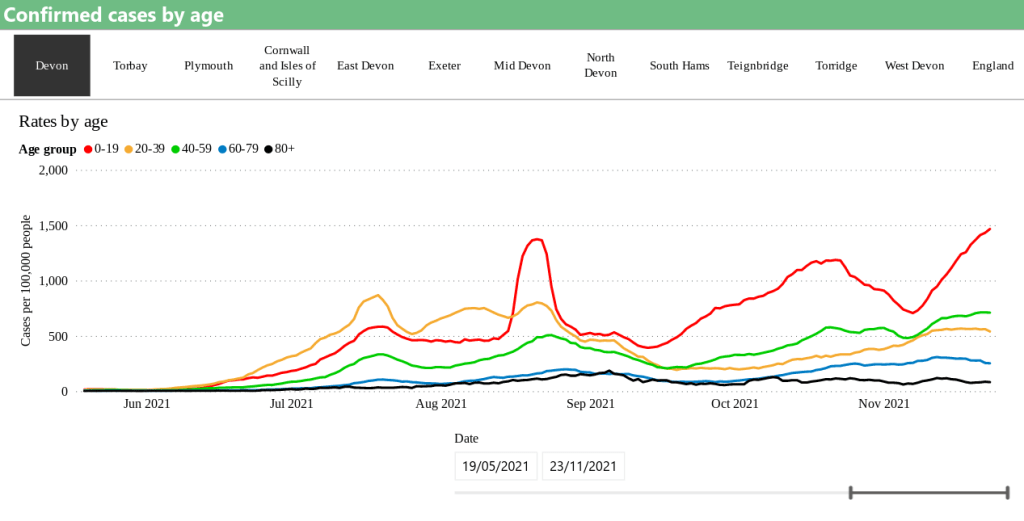
The warning comes as the latest figures from the Office for National Statistics (ONS) reveal that infection levels have risen in the UK, echoing trends seen in recent daily case numbers. The ONS survey, which is based on swabs collected from randomly selected households, found in the week ending 27 November an estimated 1.65% of the population in England had a Covid infection, equating to about one in 60 people. In Northern Ireland and Wales, the rate stands at one in 45, and at one in 65 in Scotland. The figures represent a rise in all nations except Wales, where the trend was uncertain. None of the cases were confirmed as Omicron, which was first reported to the World Health Organization (WHO) on 24 November.

On Friday, the UK reported a further 50,584 cases, up 1% on the week, with 787 hospitalisations and 143 deaths, down 3.8% and 5.2% on the week respectively.

Adam Finn, a professor of paediatrics at the University of Bristol and a member of the Joint Committee on Vaccination and Immunisation (JCVI), urged people to work from home where possible until more was known about the risk Omicron posed. The European Centre for Disease Prevention and Control believes the variant could become dominant on the continent within months.

“The honest truth is that the booster programme, which I think will work, is not going to work soon enough if there is a big wave here soon,” said Finn. “It takes time to get them into people and it takes time for them to make an immune response.”

“We need to buy time. If in three weeks it’s died out, then fine, we can all relax, but right now is the time when you could prevent there being a big wave,” he added. “The more people can work from home now the better, until we are more definite about what’s going to happen.” Sage scientists estimate that more than a third of people’s contacts occur in the workplace and that home working can have a significant impact on transmission.

Prof Anthony Harnden, the deputy chair of the JCVI, said while boosters would give the majority of people their best chance of fighting Omicron, there remained a small proportion, but large numbers, of unvaccinated adults who would be “at very high risk” if Omicron proved to be highly transmissible. “We should explore every measure to reach out to these unvaccinated adults,” he said.

No 10 on Friday ruled out making vaccines compulsory, as has happened in Austria and is being considered in Germany. A spokesperson for the prime minister told reporters: “We’ve set out our policy on this and we’ve said it’s not something that we would look to introduce. You’re aware of the changes we made in terms of social care settings and for NHS workers, given the importance of protecting the most vulnerable in our society. But there’s no plans above and beyond that in that regard.”

Finn believes mandatory vaccination of the general public could cause more harm than good in the UK, but favours an approach used in South Africa, where trusted individuals go door-to-door to talk through people’s concerns about having a Covid jab. “They are literally going to people’s houses and talking to them, one by one, and I think that’s what you’ve got to do, and it has to be the right person doing it,” he said. “We know who’s not had the shots and you can have a real impact if you get the communication right.”

Labour and Lib Dems’ new strategic relationship will strike fear in Tory hearts

On the face of it, nothing much happened in Old Bexley and Sidcup yesterday. The by-election produced a pretty bog standard midterm shift from the governing party to the opposition. The Conservatives fell 13 points to 51.5 per cent. Labour rose seven points to 30.9 per cent. The constituency stayed in Tory hands.

Ian-dunt inews.co.uk 

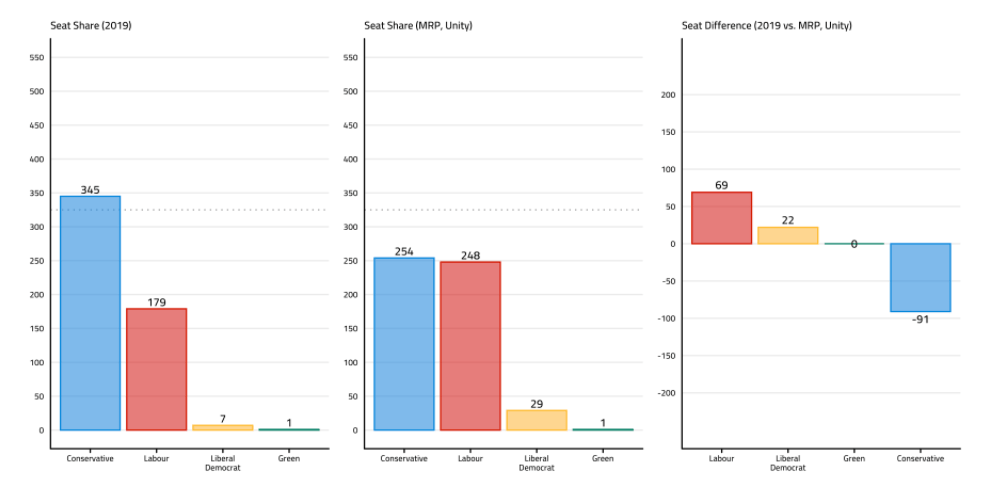
But underneath that result, something rather striking happened. The Liberal Democrat vote plummeted five points to just three per cent. And that was not because of a poor showing by Ed Davey’s party. It was because they effectively stood aside to give Labour a clear run. We seem to be witnessing the start of an informal, organic anti-Tory strategic arrangement.

No-one expected this seat to be an upset. Old Bexley and Sidcup has been Conservative since it was created in 1983. Even in 1997, the party secured a seven per cent majority. Barring an asteroid hitting the earth, it’ll still be Conservative at the next general election, no matter who ends up in Downing Street.

It’s not part of the Blue Wall – that smattering of Remain-voting Conservative seats in the South with high numbers of graduates and professionals feeling alienated from the government. Just 22.6 per cent of its electorate are graduates. It voted 62 per cent Leave in the referendum. It has an 89 per cent white population. It has a higher-than-average number of people aged over-65. Basically, this is a classic constituency for the modern Conservative party. Johnson is having a rough time of it at the moment, but it would have to be many degrees worse for places like this to be in the running.

All of which makes it seem like yesterday’s vote was pretty boring. Labour were doing well enough to stay in the game, the Tories well enough to dispel talk of disaster. Nothing of any interest.

Except for the Lib Dem vote. That was the real eye-opener.

For years now, and particularly since the 2019 election, progressive voters have been calling for a formal alliance between the non-Tory parties. And you can see why. Look at a seat like the Cities of London and Westminster. In the last general election, the Lib Dems secured 13,096 votes, Labour 11,624 and the Tory candidates sailed through the middle with 17,049. It’s a classic case of how badly the first-past-the-post system punishes a split vote on the left.

But the Lib Dems and Labour have been knocking the suggestion back. Voters don’t like the smell of a top-level stitch up, they say, and anyway local parties wouldn’t countenance it. Even in 1997, when Tony Blair and Paddy Ashdown were working closely together, there was no formal pact. They just generally tried to stay out of each other’s way so that each could inflict maximum damage on the government.

And that, on the face of it, seems to be what is happening now. “What I see is a party led by Keir Starmer, who shares our view – that we’ve got to remove Boris Johnson from 10 Downing Street,” Lib Dem leader Ed Davey said last month. “They will campaign in areas where they think they can win and we’ll campaign in areas that we think we can win. We have to manage our resources carefully. It’s no secret that we haven’t put all our effort into some by-elections.”

The Lib Dems therefore didn’t really get involved in this by-election. They consequently fell five points and lost their deposit. But they are focusing on a by-election in the seat vacated by sleaze-ridden MP Owen Paterson on 16 December. “We certainly want to make our case in North Shropshire,” Davey said.

What’s interesting is that Labour seems to be playing ball. The party finished second in Paterson’s seat in 2019, but it seems to be standing aside for Davey so the Lib Dems can monopolise the anti-government vote.

This isn’t the first time this has happened. Labour effectively stood to one side during the Chesham and Amersham by-election in June, scoring just 622 votes and allowing Lib Dem Sarah Green to secure a shocking 25 point swing. Weeks later, the Lib Dems were pretty much invisible in the bitterly fought Batley and Spen by-election, which arguably allowed Labour to retain the seat.

That puts all eyes firmly on North Shropshire in two weeks’ time. The seat shouldn’t be in play. It has a massive 40 per cent Tory majority. But it is ground zero of the Tory sleaze scandal. Conservative figures are getting jittery. The Lib Dems seem increasingly bullish about it. And Labour looks set to allow them a clear run.

There isn’t going to be a formal progressive alliance. But it’s becoming increasingly clear that Labour and the Liberal Democrats are pursuing an organic strategic relationship, in which they prioritise their resources in those seats where they think they have the greatest chance of winning. In short, it looks like they’re getting their act together. And that, more than a 13 point fall in their vote share, will put fear in Tory hearts.

Ambulance queue chaos at Devon A&E

The state of the NHS in Devon was highlighted today by a student paramedic who took a video as he waited at the back of a queue this afternoon when up to 26 ambulances did not move in six hours.

Colleen Smith www.devonlive.com

The shocked medic wrote: “Currently at the back of a 22 ambulance queue. No movement in 6 hours. Staff are broken, the hospital is full. This is not sustainable. Patients are being affected and so are staff. The NHS in south Devon just broke. There was time to fix this, I don’t think so anymore.”

A member of the public earlier told DevonLive that he had counted 26 ambulances in the queue.

Currently at the back of a 22 ambulance queue. No movement in 6 hours. Staff are broken, the hospital is full. This is not sustainable. Patients are being affected and so are staff. The NHS in south Devon just broke. There was time to fix this, I don’t think so anymore. pic.twitter.com/C4LVPc9fTE

— will P (@willprice999) December 3, 2021

It comes as hospital staff face huge pressures with reports of people waiting for up to 13 hours in A&E at Torbay Hospital. Staff are also reeling today after being told their annual Christmas parties have been cancelled by bosses worried about the new Omicron variant of Covid.

In a statement to DevonLive today, Torbay Hospital said their emergency department has been under “sustained pressure” for several months now and they apologised to anyone waiting for treatment.

The hospital statement in full from Ian Currie, Medical Director at Torbay and South Devon NHS Foundation Trust, said: “Like many hospitals across the country, we have been under sustained pressure in our emergency department for several months now.

“Currently extreme pressure is impacting on our ability to admit patients in a timely way which means that ambulances are currently waiting to discharge patients and we are not able to see people as quickly as we would like. We would like to offer our sincere apologies to everyone who is waiting for treatment.

“We always aim to see and treat patients as quickly as possible. All patients arriving at our emergency departments are triaged and assessed with the most clinically urgent being prioritised. This does mean that anyone presenting with less urgent needs is likely to face a very long wait for treatment.

“We are asking everyone to think carefully about which service is right for their needs. Our Urgent Treatment Centre at Newton Abbot is open 8am to 8pm every day and can provide treatment and care for a range of urgent care needs.

“We are working together with local health and care partners to ensure that people who need hospital care can be admitted and then supported to return home safely as soon as they are medically well enough to leave hospital.

“Family and friends of patients can also help by being ready to collect their loved one from hospital when we call, and supporting them when they get home.”

Owl need to make a correction to earlier post

Javid says snog who you like under mistletoe

contradicting Coffey

Jessica Elgot www.theguardian.com 

Ministers have clashed repeatedly over advice on festivities and mistletoe, with Home Office staff being urged to limit numbers attending Christmas parties in the office and the health secretary contradicting a cabinet colleague to insist “people can snog who they wish”.

Amid concerns over the new Covid variant, Omicron, the government was accused of sending mixed messages about whether people should change their behaviour in the festive period despite no laws prohibiting social contact between healthy people.

Sajid Javid became the latest to weigh in, contradicting the work and pensions secretary Thérèse Coffey’s warning against kissing strangers under mistletoe.

“People can snog who they wish,” Javid told ITV News. “I’ll certainly be kissing my wife under the mistletoe – it’s a Javid family tradition. It’s got nothing to do with the government who you kiss or anything like that. But the only thing is just – there’s guidance already out there – just be cautious and enjoy yourselves.”

Coffey had said on Wednesday night that “we should all be trying to enjoy the Christmas ahead of us”, but “for what it’s worth, I don’t think there should be much snogging under the mistletoe”.

Meanwhile, guidance issued to civil servants in the Home Office on Wednesday, seen by the Guardian, said they could celebrate with colleagues, but urged people to “take sensible precautions”.

The advice said that for festive gatherings in the workplace, “numbers should be kept to a minimum”. It also stated: “Colleagues should refrain from undertaking irregular travel solely to attend a Christmas gathering.” It advised staff to “take steps to minimise contact, including the avoidance of sharing food and drink”.

An influential scientist also warned that he would not feel safe going to a Christmas party this year. Prof Peter Openshaw, a member of the Government’s New and Emerging Respiratory Virus Threats Advisory Group (Nervtag), said the “chances of getting infected were too high” to have a party.

Earlier, George Freeman, the science minister, admitted that “given the new variant” his team had decided to “get together on Zoom and toast each other” virtually.

Freeman had told the BBC: “Individual businesses, in the end, have to make judgments on what is appropriate internally … For many small businesses, four or five staff, who are working together every day anyway, gathering to have a drink isn’t a big step up in risk.

“But some companies might normally bring hundreds of people in from around the world to a big party, and they may decide, this year, is that sensible, given the pandemic and given where we are?” Freeman was reprimanded by Boris Johnson, who insisted that “people shouldn’t be cancelling things; there’s no need for that”.

Pressed on whether Christmas parties and children’s nativity plays should be scrapped given Omicron’s spread in the UK, Johnson said: “That’s not what we’re saying.”

He stressed that the government was trying to respond in a “balanced and proportionate way” to the variant, and said Downing Street was holding events “the whole time”, citing the recent turning-on of the Christmas lights outside No 10. His spokesperson confirmed that several more gatherings would go ahead in Downing Street this Christmas.

It comes after Jenny Harries, who heads the UK Health Security Agency, suggested people should avoid unnecessary socialising in the run-up to Christmas. but was contradicted by No 10.

The issue of such advice for people to alter their behaviour running contrary to official guidance and new Covid rules has infuriated some, who believe it will hit businesses hoping for high levels of trade as Christmas approaches.

Johnson is also on tricky ground, after it emerged that he attended a leaving party in Downing Street last November, during the second lockdown. Angela Rayner, Labour’s deputy leader, wrote to the cabinet secretary, Simon Case, asking him to investigate that and another alleged gathering in No 10 last winter.

She said in her letter: “This government is undermining public health messaging with their actions and we cannot let this go on unchecked. It cannot be that the prime minister believes there to be a set of rules for the public and a totally different set of rules for himself.”

Layla Moran, a Liberal Democrat MP and chair of the parliamentary group on Covid, said: “Mixed messages and obfuscation is this government’s bread and butter when faced with hard decisions, and we can see this again in their completely confused statements on Christmas parties.

“The evidence is unequivocal: clear government messaging is extremely important in preventing infections and so the prime minister must overcome his aversion to delivering bad news, as his abdication of responsibility has cost us dearly throughout this pandemic.”

Johnson’s spokesperson on Thursday insisted all rules were followed at gatherings in Downing Street throughout the pandemic. Asked if Freeman was wrong to imply that firms should consider not having a Christmas party or replace it with a smaller gathering, he replied: “That is not in the guidance, it is not in the regulations.”

Planning tensions in Teignbridge 

Teignbridge Council spat leads to apology

Ollie Heptinstall, local democracy reporter www.radioexe.co.uk

A spat at a Teignbridge council meeting which involved one member trying to drag another away has led to an apology two months after the event.

In September, a full meeting of Teignbridge District Council descended into chaos in an incident involving Councillors Gary Taylor (Lib Dem, Dawlish South West) and Liam Mullone (Newton Says No, College) during a question on planning procedures.

During an impassioned speech, Cllr Mullone claimed false “ghost objectors” to a planning application last year had been deliberately chosen by the council to fill the two permitted speaking spots which otherwise would have been taken by “concerned locals or their advocates”.

The councillor then left his seat and began shouting – which he later said was due to his microphone being switched off – and made his way towards the front of the room, before standing with arms folded.

Executive member for planning Cllr Taylor then got out of his seat and approached Mr Mullone, appearing to try and drag him away before the council live-stream stopped showing the incident.

A recording later showed Councillor Sarah Parker-Khan breaking the pair up.

Chairman Colin Parker hurriedly adjourned the meeting and when the live stream recommenced he pleaded for “a sense of decorum” while the authority’s solicitor invited Cllr Mullone to meet with him to discuss his allegations.

Speaking to BBC Radio Devon, Cllr Mullone said Cllr Taylor “grabbed me by the lapels and I heard my jacket tear. He was trying to pull me out of the room”.

“I kept saying, ‘Gary, this is assault’. Eventually I broke away from him and I continued until I got to the end of my bit of paper.”

He added that councillors should be setting a good example: “These people are making multi-million-pound decisions about things that effect thousands of people. These arguments are real and they’re important,” he said.

At a full council meeting on Tuesday [30 November], the first since the incident, Cllr Taylor apologised, but not directly to Cllr Mullone.

Addressing the meeting, he said: “You have my word that I will not act in this manner again in the future.”

“Whilst my actions were intended to prevent an escalation of an ongoing situation, I recognise that in the field of politics, there is no place for physical confrontation; however well-intentioned or otherwise.”

In a statement, a council spokesperson said: “As a local authority we expect all councillors and officers to demonstrate the highest standards of behaviour.

“Councillor Taylor apologised at yesterday’s full council for his actions at the previous meeting. Therefore, no further action is considered appropriate or necessary.”

Mid Devon bid for first round of “levelling-up” found founders

Cullompton relief road funding fails. Bid for £13.5 million rejected.

Neil Parish has agreed to “try and see how far he can get at the Westminster end with conversations.”

Cullompton looks to be in the same boat as Exmouth – Owl

Ollie Heptinstall, local democracy reporter www.radioexe.co.uk

The future of a relief road for Cullompton remains uncertain after it failed to secure millions of pounds of government funding.

Mid Devon District Council’s £13.5 million bid from the first round of Westminster’s ‘levelling-up’ fund – more than half of the road’s projected cost of nearly £25 million – has been turned down.

The planned road to the east of Cullompton will improve capacity at junction 28 of the M5 – though upgrades will need in future. It will also help reduce traffic through the town centre.

The scheme will unlock the development of 2,000 homes as part of the council’s local plan, including an initial 500 properties east of Cullompton which will form part of the Culm Garden village, one of 14 such areas announced by the government in 2017.

Planning permission was granted in January for both the road and a new home for Cullompton Cricket Club, which will need to relocate if the road is built.

Originally set to cost £15 million, councillors were told in August that the projected cost had risen to an estimated £24.8 million – blamed on increased costs from construction, replacing sporting facilities and the potential amount needed for land acquisition.

At a meeting of the council’s ruling cabinet this week, members agreed to work on identifying alternative funding sources to make up a shortfall of just over half of the total.  It can reapply to further funding rounds of the levelling-up programme – the next of which is in the spring.

Cabinet member Councillor Richard Chesterton (Conservative, Lower Culm) said the road was “absolutely crucial,” citing it as a solution to congestion and air quality problems.

“This is, after many years of looking at it, the best way that both Mid Devon and Devon County could come up with delivering something that would take Cullompton forward – particularly with the levels of growth that are likely in a town like Cullompton and with the garden village in mind,” he said.

Deputy chief executive Andrew Jarrett said the council is meeting with the government later this month to discuss why the bid has not succeeded, and stressed: “We will be doing everything we can.”

“This is a key strategic piece of infrastructure that is very, very important to this council’s delivery aspirations.”

Cllr Chesterton added that he had held “exploratory conversations” with the area’s MP Neil Parish (Conservative, Tiverton & Honiton) about what other options might be to get the road built.

“He has certainly agreed to go and take it on board and try and see how far he can get at the Westminster end with conversations.”

Have A Party, Don’t Have A Party: Ministers Aren’t Sure What To Say On Christmas Festivities

And if, like last year at No 10, you have a party and anyone questions it, just keep saying  “all guidance was followed” (even if it wasn’t, because it was). – Owl

PS One piece of ministerial advice to follow: whatever you do “Don’t kiss with people you don’t know

Kate Nicholson  www.huffingtonpost.co.uk

Government ministers have been sending out a rather inconsistent message about how the public should behave during the festive season in the last week.

The discovery of the Omicron variant has seen Downing Street bring mandatory mask-wearing back.

But should we limit our social interactions too? That remains far from clear.

Here are all the recommendations put forward by ministers about Christmas this week.

Cancel your Christmas party

Science minister George Freeman revealed that he had cancelled his work Christmas party and decided to hold it virtually instead when speaking to LBC on Thursday.

Blaming the discovery of the Omicron variant for the change, he said: “We’ve decided this year that it is probably sensible to do it by Zoom and wait for the spring.”

Don’t cancel your Christmas party

Prime minister Boris Johnson explicitly said the opposite of Freeman on Tuesday.

When asked by reporters if Christmas celebrations should be called off, he said: “The answer is no. The guidance remains the same, and we’re trying to take a balanced and proportionate approach.”

He even maintained that nativity plays should not be cancelled, adding: “We think that, overwhelmingly, the best thing for kids is to be at school.”

No snogging allowed

“I don’t think there should be much snogging under the mistletoe” at any Christmas parties according to work and pensions secretary Therese Coffey.

However, she added that the government was working hard so that everyone could enjoy a “knees-up”.

Speaking to ITV’s Robert Peston on Wednesday, she said: “I think we should all be trying to enjoy the Christmas ahead of us and that’s why we’re working so hard to get the deployment of as many vaccines as possible.”

She later clarified on Twitter: “Don’t kiss with people you don’t know…”

Watch the full interview folks … Don’t kiss with people you don’t know..Government working exceptionally hard with NHS and the Jabs Army to get boosters in arms so we can all enjoy a proper Christmas knees up https://t.co/3jgYFNM070

— Thérèse Coffey #PlanforJobs (@theresecoffey) December 1, 2021

Get your lateral flow test before

People should test themselves for Covid by taking a lateral flow test before social interactions this Christmas, according to health secretary Sajid Javid.

He said: “It’s not a formal recommendation, the guidance, but if I was going to a party with lots of people [I would get tested].

“But I would have done that by the way even before we knew about this variant.”

He later told BBC Radio 4′s Today programme: “Go to the party but just be cautious.”

Don’t socialise

Head of the UK Health Security Agency Dr Jenny Harries urged people not to socialise “when we don’t particularly need to” on Tuesday.

She also said working from home would be “a good thing to do” if case numbers continue to rise.

Do socialise

No.10 slapped down Dr Harries’ advice not to socialise where possible by claiming that was not the government’s official advice at the moment.

Asked about her recommendation, the prime minister’s spokesman said: “No. Our advice to the public is as set out at the weekend.”

They pointed out that beyond the mandatory face coverings in some settings, contacts of those who tested positive for Covid and new travel rules, the government has released no “further guidance to the public”.

Wear a mask – but not all the time

People are now legally obliged to cover their faces in shops and on public transport, but not in other areas such as theatres, pubs and bars.

Asked if this means you should wear a mask during a Christmas party, Javid told BBC Radio 4: “It depends if I am walking around or sitting down. It depends if I’m eating.

“People just need to make a decision based on the guidance.”

Self-isolate – but not for long

The government announced that double-vaccinated people arriving into the UK will now have to take a PCR test and their second day in the country. They will have to self-isolate until they receive a negative test result.

Leaked documents from Sage scientists revealed that the government had been advised to ask travellers to take PCR tests on day five and eight after their arrival in the UK – meaning they would have to self-isolate for much longer.

But Johnson has maintained that two-day isolations were “balanced and proportionate measures designed to protect the British people from the Omicron variant”.

Jeremy Hunt and Labour attack ministers’ social care plan

The former Tory health secretary Jeremy Hunt and Labour launched stinging attacks on the government on Wednesday as it unveiled long-awaited social care reform plans lacking significant new funding to resolve the current crisis.

Another example of delivery falling a long way short of promise and expectation – Owl

Robert Booth www.theguardian.com

The white paper confirmed new spending including £300m over three years to help councils increase the range of supported housing options which allow people to live more independently, £150m to drive the greater adoption of technology, as well as details of £500m for workforce development, primarily through training and qualifications. There were also plans for a new national social care website and money for modifications to people’s homes to help them stay in them longer.

But amid a staffing crisis in which about 60,000 workers quit between April and October and 1.5m hours of commissioned care have not been delivered in England in recent months, the plans were widely criticised.

Hunt, who chairs the Commons health and social care select committee, told the care minister Gillian Keegan the plans would do nothing to stop “hospital wards continuing to be full of people who should be discharged and older people not getting the care they need because the carers don’t exist”.

He described it as “three steps forward and two steps back” and said the spending plans of around £1bn it outlined were “a long way off” the £7bn a year extra the health and social care select committee called for by the end of the parliament.

Labour’s Liz Kendall, the shadow care minister, said: “Ministers have utterly failed to deal with the immediate pressures facing social care as we head into one of the most difficult winters on record.”

She said: “Hundreds of thousands of older or disabled people [are] being left without vital support, piling even more pressure on their families at the worst possible time, yet the minister has announced absolutely nothing to deal with any of this.”

“Where was the long-term strategy to transform the pay, terms and conditions of care workers?” she said. “Can she tell me how some kind of website is going to pay a care worker’s bills or put food on the table? No wonder staff are leaving the sector in droves.”

On Wednesday, the Nuffield Trust estimated that in the six months to October the number of social care staff in England fell by between 50,000 and 70,000. Low pay, exhaustion after 18 months tackling Covid and the “no jab, no job” policy are key reasons.

Keegan stressed that the 103-page plan – called People at the Heart of Care – was a 10-year vision and “an important step on our journey to giving more people the dignified care that we want for our loved ones, setting out important changes that will last for generations and will stand the test of time”.

She also defended the design of controversial plans to cap care costs at £86,000, which would allow wealthy people to keep a greater proportion of their assets than poorer people who still stand to lose their homes to pay long-term care bills.

“No one will be worse off compared to the current system and many people will be better off,” she said.

But the King’s Fund said the measures failed to “fix social care” as Boris Johnson promised he would do “once and for all” in July 2019.

Sally Warren, the thinktank’s director of policy, said: “The government’s commitments do not match the ambition set out by the prime minister and urgency of change which the people who draw on care and support rightly expect to see.

“There is little to tackle poor workforce pay and conditions and high vacancy levels in the sector.”

The council social services group Adass welcomed it as “a foundation stone” which “paints a promising picture of a more professionalised care workforce in the future”.

But Stephen Chandler, its president, said: “What we urgently need now is a bridge to that brighter future, to address the immediate crisis and ensure that everyone gets the care and support they need this winter.”

The focus on the quality of care, housing and innovation using technology was welcomed by the National Care Forum, which represents providers. Its director, Vic Rayner, said it offered a “different vision for care that starts from the perspective of people who receive care”. But she said urgent action over the next four months was needed to tackle the crisis now.

Caroline Abrahams, a director of the charity Age UK, said: “Millions of older and disabled people putting up with inadequate services … needed the [white] paper to turbo-charge a process of transformation, but that was never going to be possible with the meagre funding allocated by the Treasury … Rather than the Formula One vehicle that was required, the paper is an underpowered saloon car at best.”

Jacob Rees-Mogg faces Commons inquiry over undeclared £6m loans

Do any rules apply to him? – Owl

Peter Walker www.theguardian.com 

The parliamentary commissioner for standards has begun a formal investigation into Jacob Rees-Mogg after a complaint from Labour that he failed to declare that he received £6m in cheap loans from one of his companies.

The website for the commissioner, Kathryn Stone, has been updated to show that Rees-Mogg, the leader of the Commons, is among MPs being investigated. It says the inquiry concerns the section on rules for MPs connected to the declaration of employment and earnings.

The website also shows Douglas Ross, the Moray MP and leader of the Scottish Tories, is being investigated. Ross apologised earlier this month and referred himself to the watchdog for failing to declare his pay as an MSP and as a part-time football referee.

Rees-Mogg did not report to the official register that he received director’s loans from Saliston between 2018 and 2020.

The North East Somerset MP owns Saliston, even though he gave up his directorship in 2019. It has a stake in Somerset Capital Management investment company.

Rees-Mogg says the loans were mainly used as “temporary cashflow measures” to pay for a property purchase and refurbishment, and did not need to be declared.

But Thangam Debbonaire, the shadow leader of the Commons, said it was right that the commissioner was investigating “what appears to be yet another egregious breach of the rules”.

She called for a parallel inquiry into whether Rees-Mogg had breached the ministerial code, which governs conduct for ministers.

“Over the last few weeks, we have seen that Conservative MPs repeatedly act as if they can put their own private business interests ahead of their constituents and the prime minister must put a stop to this,” Debbonaire said.

Accounts for Saliston show the £6m in loans – £2.94m in 2018, £2.3m the following year and £701,513 in 2019-2020 – attracted interest paid at the equivalent of about 0.8%, which is below market rates.

The accounts list the loans as attracting interest rates of 2.5% and 3.5% in individual years, raising the prospect that he could have borrowed the money and repaid it over short periods of time.

The MPs’ code of conduct does not specifically cover director’s loans but it states: “Members shall fulfil conscientiously the requirements of the house in respect of the registration of interests in the register of members’ financial interests. They shall always be open and frank in drawing attention to any relevant interest in any proceeding of the house or its committees, and in any communications with ministers, members, public officials or public office holders.”

The wider issue of MPs’ conduct and outside interests, and the way these are publicly declared, has been in the news since the furore over Owen Paterson’s punishment for breaching lobbying rules, which Downing Street initially sought to overturn.

Labour has proposed a new system that would ban almost all second jobs for MPs, while the Commons standards committee, which is separate to Stone’s role, has recommended changes, including greater clarity on MPs’ and ministers’ interests.

In a statement released when the Labour complaint was made, Rees-Mogg said: “Saliston is 100% owned by me and this is declared clearly in the Commons register and to the Cabinet Office. It has no activities that interact with government policy.

“The loans from 2018 were primarily taken out for the purchase and refurbishment of 7 Cowley Street as temporary cashflow measures. All loans have either been repaid with interest in accordance with HMRC rules or paid as dividends and taxed accordingly.

“The register asks for earnings, not loans, which is why I was declared an as a non-remunerated director until I resigned on entering government. Loans are not earnings and are not declarable in the register of interests.”

Go private for the treatment you need, NHS tells patients

Patients are being refused treatment, discharged too early and pushed towards private referrals, openDemocracy’s largest-ever reader survey has found

Caroline Molloy www.opendemocracy.net

One in five patients has been told by a doctor or another NHS professional that they would have to go private to get the treatment or test they need. That’s just one of the shocking results from a survey of nearly 7,000 openDemocracy readers – backed up by separate polling commissioned by openDemocracy.

NHS staff echoed the patients’ claims. Nine out of ten (87%) members of patient-facing staff said they had been simply unable to give a patient treatment or a procedure they would benefit from.

The survey, one of the largest of its kind of NHS patients and staff, provides a detailed – and worrying – breakdown of what happens to these patients.

The government has repeatedly reassured the public that the NHS will remain “free at the point of use”. But such language will bring little comfort to the many who told openDemocracy that the NHS had been scaling back what it offers even before the pandemic.

Both patients and NHS staff also reported an increasing reliance on the private sector to fill in the gaps – whether funded by the taxpayer or the patient themselves – despite successive prime ministerial promises that the NHS is “not for sale”.

Paying privately

Forty per cent of patients who replied to our survey were told that the NHS simply can’t offer them the treatment they need. Half of these patients – one in five of all patients – said an NHS worker then told them they would instead have to pay privately for the treatment they needed:

‘There’s an increasing sense that if you can’t pay for private healthcare you are treated worse than before.’

‘My GP was always pushing me for private care and never took steps to refer me to the specialist.’

NHS staff themselves told us a similar story.

One GP said: “I now routinely ask people if they have private insurance before referring them as I know the system is so overwhelmed.”

Suggesting patients pay “alleviates patient and carer/family anxiety regarding delays for diagnostic tests,” added a nurse.

Many respondents noticed NHS staff were “apologetic” and “saddened” when they had to suggest people went private. NHS staff “were always honest and showed they didn’t like the situation any more than I did”, said one patient. Their doctor’s “hands were tied and they would have helped if they could”, added another. Their GP told them it was “due to funding issues”, said yet another.

Another told us: “The doctor apologised for not being able to offer me the operation. My condition is not considered bad enough. I am prescribed Tramadol for pain. I have a poor quality of life, so am not sure how bad I would have to be before an operation was offered. I am a widow, which means my quality of life is even poorer, as I can go days without a visitor, and rely on the internet for shopping and have to pay a gardener and cleaner. My savings are rapidly disappearing.”

NHS guidelines have become increasingly restrictive in recent years, with a large range of procedures, from ear syringing to hip operations, either no longer paid for in some areas, or funded only in exceptional circumstances or conditions of extreme pain.

What else are patients told to do?

Other advice given to those who had been refused NHS treatment included recommendations of ‘self-care’ (one in five was given this advice), being directed to a cheaper option such as a voluntary service (one in ten), and being directed to an online service (one in 20). Some 84-90% of patients reported being dissatisfied with these options, with the highest dissatisfaction (90%) among those who were directed to an online service.

“I had to attend a pointless group education session on women’s urinary issues. I live in a small town, and it’s an embarrassing topic – I wondered if they did it to lower referrals due to embarrassment,” said one patient. “There was nothing in the education session that couldn’t have been provided in a leaflet.”

And there were real-world consequences, for many – 38% of those who’d been refused the ideal treatment or a test and been given this range of other options – said their health had worsened as a result, a similar number (38%) had suffered anxiety. Twelve per cent said a diagnosis had been missed.

Staff worries

Of the 500-odd NHS staff who responded to our survey, most (68%) said the problem had got worse in the past decade. Only 12% blamed the pandemic.

Nearly all frontline NHS staff – 98% – said they had felt worried that a patient’s health was going to deteriorate due to the length of time they would have to wait for an NHS treatment, with around three-quarters saying the wait times had got worse over the past ten years, and around a sixth (14%) saying it had got worse mostly since the pandemic.

Around 48% of current NHS staff were thinking about leaving the service, with only 37% saying they weren’t.

Public money, private sector

Nearly two in five patients (38%) said that an NHS worker had told them they’d get seen more quickly if they accepted an NHS referral to a private hospital or clinic. Staff confirmed this – nearly three in five frontline NHS workers told us they’d had to refer patients to an NHS-funded private provider. Of those who did so, the majority (70%) had misgivings about this approach, but many said they felt they had little choice.

‘Patient [was] seen faster. NHS clinic [had] very long wait so we were told to refer.’

‘In my field of ophthalmology (eye care) the only way to get the elderly population the treatment they need is to resort to NHS-funded private care. It’s still the thin end of the wedge!’

‘I felt torn as every use of private provider means decline of the NHS funds.’

‘Made me feel complicit in privatisation by stealth. By sending them patients I was driving their profit, eroding the platform I stand on.’

Around half of patients and nearly three-quarters (73%) of staff who’d experienced this issue said it had got worse over the past decade, with far smaller proportions saying it was mainly a COVID issue or had always been an issue. Not a single member of staff said it had got better over the past decade. Four in five (82%) of NHS staff said they’d seen evidence of privatisation.

And both patients and staff explained how the private firms doing NHS work wanted only the easy cases they could “cherry-pick” NHS cash for, and make a profit from – with one patient commenting their private referral was “usually a waste of time as I end up being referred back to the NHS”.

The government has recently set aside another £10bn for the private sector to deal with the backlog of cases that built up during COVID.

Getting in – and being pushed out

While most people were positive about the physical healthcare, if and when they actually received it, difficulties in even getting through the door were highlighted as a concern for many.

One patient told us that getting an appointment at his local GP was “harder than joining the Masons”.

Mental health services were highlighted as a particular concern, with another patient saying: “Local primary mental health triage sends you away with a list of phone numbers for other services. Took eight months, two attempts and six assessments just to see the doctor.”

Once through the door of NHS services, there’s also the problem of being allowed to stay there long enough. Two out of five (41%) patients said that they or someone they cared for had been discharged from hospital or another NHS service too early, though some were better able to navigate the system than others.

One told us: “Mother yo-yo’d in and out of hospital with broken leg and infections. Repeatedly released while still ill.”

Another said, “I was going to be discharged from hospital far too early. but my wife who was a senior social worker intervened, and I was kept for another seven days until care provision at home was organised.”

Again, NHS workers agreed. Fifty-six per cent of patient-facing staff told openDemocracy they’d had to discharge a patient too early.

Currently, hospitals and local authorities are required to assess a patient’s care needs before they are discharged from hospital – a requirement many cash-strapped organisations have struggled to do promptly. This requirement was suspended during COVID and the Health and Care Bill currently before Parliament scraps it altogether.

Not a pandemic problem

Most concerns were identified as long predating the pandemic. Over half (56%) of patients who were refused treatment on the NHS, and a similar proportion of those who’d been discharged to early (55%) said the problem had got worse over the past decade, compared with around a quarter who felt these issues had been caused mostly by COVID. Only 1% said things had got better over the past decade.

Perhaps unsurprisingly, the single most common problem reported was having to use a telephone or online service to access the NHS, which most patients affected identified as something that had happened primarily since the pandemic (86%). But of more concern is that 64% of all respondents said they’d had to use remote access to use the NHS when they didn’t feel it was suitable for their needs.

The government has recently responded to a backlash against online and telephone GP appointments by pledging support for more face-to-face appointments. But the move has left many doctors infuriated, coming as it does after years of the government heavily promoting online and remotely delivered health services in both primary and hospital care.

“My wife and I are over 80 and not comfortable with triage by unknown person over [the] phone, etc,” said one patient. “We’d like to see our GP to assess our health issues which, though minor, may worsen over time if not treated. Too often we rely on brief and inconclusive chats with pharmacist.”

Patient anger

However, respondents to the openDemocracy survey were deeply unhappy about the prospect of more private involvement in healthcare, with the most common responses being “angry”, “disgusted”, “worried”, horrified”, “appalled”, or “concerned”.

NHS word cloud reader survey

The 40 most common words used by openDemocracy readers to describe what is happening to the NHS. The more frequent a word’s use, the larger it appears | openDemocracy. All rights reserved

Many highlighted that they felt the attacks on the NHS were deliberate and political, and some pointed to funding issues:

“There is no discussion anymore. Was told [the NHS] won’t pay for lots of things any more. Because I can largely self-manage and have been successful, I am on the virtual ‘to be ignored list’, it seems.”

The NHS was hugely important to our readers – 95% gave the NHS five out of five for importance – the average score being 4.92 out of five.

But some expressed despair, saying they had “lost trust in the NHS” and felt “abandoned”.

“Since COVID, it no longer feels there is a health service for all,” said one.

“I feel there is no longer any adequate health care in this country. I must take care of myself,” added another.


Note: The figures in our survey refer primarily to the English NHS, but early indications suggest a significant difference in the experience of users in Scotland, Wales and Northern Ireland, which we will report on further.

Vulnerable people are still falling through the cracks in our society

Councillor Eileen Wragg in Exmouth Journal

Shocking details were given in a recent court case by the parents of a man who has been locked away for 21 years. Yet he has committed no crime. The reason? He is autistic, and his name, Tony Hickmott, was allowed to be known following an appeal by his parents.

His distressed, elderly mother 78, and father, 81, brought the case before a judge, in despair at having to continue to drive 100 miles each week to visit him in a secure hospital, despite a ruling in 2013 which said that he was fit to be discharged. His parents say that the situation has ruined their lives, and they don’t smile any more. Ironically, he has been incarcerated for as long as a paedophile was sentenced to for heinous offences, following his conviction In a recent jury trial. Yet Tony is entirely innocent. He has done nothing wrong.

I recently attended a service of celebration for the life of Geoffrey Folland, who had spent his working life helping people with learning disabilities and complex needs. After retirement, Geoff was elected to Devon County Council (DCC) where he continued his work, becoming Vice Chair of Social Services. I recall that when I became a County Councillor, Geoff told me how disappointed and troubled he was that the Doyle Centre in Exmouth had closed, along with other daycare centres in Devon, where many of the people he had helped care for were able to work and socialise with each other. It provided respite for the carers and enabled their charges to enjoy friendships with others, giving them a semblance of normal life.

That was denied them when the centres closed, and Geoff and his wife, Maureen, also a retired care worker, were clearly distressed to witness their former clients wandering around the town feeling quite bereft at losing their work and more importantly, their friends.

In 2009, a Task Group to investigate Services to People with Learning Disabilities was set up at DCC consisting of three Labour, three Conservative Councillors, and myself as the only Liberal Democrat. I was nominated by those colleagues to be Chair of the Task Group. The work was extensive and thorough, lasting seven months, during which we visited residential and shared homes, and called in over 50 witnesses, including GPs, Consultants, Social Workers and Carers, and we eventually produced a report making 37 recommendations for improvements. We called back senior officers to agree with our findings, which they did. However, days before the report was due to be published, attempts were made to prevent publication. As chair, I went through each recommendation with the very professional Scrutiny Officer, and apart from one minor amendment, my colleagues in the Task Group unanimously approved that the recommendations should be released into the public domain, which then went ahead. Clearly, this had been opposed for some unexplained reason. [Report can be found here – Owl]

It is shameful that vulnerable people with learning and other disabilities, as well as mental health issues are still at the bottom of the pile when they need to be addressed and help and funding provided.

When I was made Honorary Alderman of the County of Devon in 2017, I gave a speech, asking for the Task Group’s report to be followed up. I have heard nothing since then. If there were more Maureen and Geoff Follands in the system, I believe that actions would have been taken. Sadly, until there are more caring people, there will always be the Tony Hickmotts in the world, being denied the rights to which they should be entitled under the European Human Rights Act, which has been recently disgracefully denounced by Justice Minister Dominic Raab.

England green homes scheme was ‘slam dunk fail’, says public accounts committee

More waste of taxpayer money – Owl

Sandra Laville www.theguardian.com

The government’s green homes grant scheme underperformed badly and risks damaging future efforts to deliver net zero, the public accounts committee (PAC) said.

Hailed by the prime minister, Boris Johnson, as a key plank in his green industrial revolution, the grants only upgraded about 47,500 homes out of the 600,000 originally planned. They also delivered a small fraction of the expected jobs.

The grants were intended to support the public in England to make their homes more energy efficient and move away from fossil fuel heating by installing heat pumps and solar energy.

But the PAC said the scheme unveiled in 2020 by the Department for Business, Energy and Industrial Strategy (BEIS), was poorly designed and had a troubled implementation. The Guardian previously revealed the grants were administered by ICF, an American corporation based in Fairfax, Virginia. Renewable energy businesses said the administration of the grants was chaotic, inefficient, confused and created long delays for the public and those installing the systems.

MPs on the public accounts committee said more than £1,000 per home upgraded was spent on administration; a total of £50m or 16% of the total spend of £314m. This was a fraction of the £1.5bn budget promised to upgrade 600,000 homes. The scheme began operation in September 2020 and was scrapped abruptly in March this year after just six months operating.

Cutting carbon emissions from homes – which emit 20% of the UK’s CO2 – is seen as crucial if the country is to reach net zero by 2050.

Dame Meg Hillier, chair of the public accounts committee, said: “It cost the taxpayer £50m just to administer the pointlessly rushed through Green Homes Grant scheme, which delivered a small fraction of its objectives, either in environmental benefits or the promised new jobs.

“We heard it can take 48 months – four years – to train the specialists required to implement key parts of a scheme that was dreamed up to be rolled out in 12 weeks. It was never going to work at this time, in this way, and that should have been blindingly obvious to the department. That it was not is a serious worry, I am afraid there is no escaping the conclusion that this scheme was a slam dunk fail.”

The MPs said they were not convinced that BEIS had fully acknowledged the scale of its failures with this scheme. Hillier said it was vital to have a massive step-change in the way homes and public buildings are heated. “But the way this was devised and run was just a terrible waste of money and opportunity at a time when we can least afford it.”

The report said the failure of the scheme had damaged confidence in government efforts to improve energy efficiency in private domestic homes. The way government was tackling the issue of domestic heating was “fragmented, stop-go activity” which had hindered stable long-term progress towards its energy efficiency ambitions.

The government awarded the administration of the grants to ICF, who had promised to deliver it in six weeks – other companies said fully implementing such a system would take at least 15 weeks – but ICF was not challenged by the department to explain how it could deliver, the report found.

In the end, the department launched the complex scheme without an IT platform that had been fully developed and tested to run it. ICF struggled to implement the digital voucher application system, leading to greater amounts of manual processing being needed for applications, contributing to the delays in processing vouchers.

The report found the scheme promised to create jobs but its design and duration limited its impact on employment and its abrupt closure may have led to redundancies.

More on: Plans for quarry at Ottery St Mary REFUSED 

This article lists the reasons for refusal. – Owl

Paul Jones www.sidmouthherald.co.uk

Plans for a 100-acre quarry in Ottery St Mary have been REFUSED.

A meeting of Devon County Council’s (DCC) development management committee this afternoon voted to reject the plan, for Straitgate Farm, on Exeter Road, submitted by Aggregate Industries UK Ltd.

DCC planning officers had recommended the scheme for approval, but after more than two hours of debate, the councillors rejected the plan, with five votes for rejection and three abstentions.

The scheme would have seen up to 1.5 million tonnes of sand and gravel dug up on the site over the next 10 to 12 years, before being transported 23 miles by road to Hillhead Quarry in Mid Devon for processing.

Reasons given for the refusal by the committee included the protection of heritage assets, unacceptable impact on water supplies, unresolved road safety issues, lack of evidence of protected species, lack of surface water management plan, loss of mature trees and the impact on climate change.

Owl has also found that Simon Jupp, to his credit, weighed in on this one:

Breaking: Straitgate quarry rejected!

Owl has been sent a copy of this e-mail:

Dear Neighbours and Friends,
We won!!!
The Straitgate planning application was REJECTED!
An enormous thank you to everyone involved, including Jess and Roger, and to all those who have done so much behind the scenes.
Thank you so much all of you for your fantastic support over the many years.
Now to get our heads around it all!
Today was a good day.
Thanks and very best wishes to you all,
Monica and Mark

Omicron – Conservatives, led by Johnson, incapable of giving clear message

Entirely predictable – Owl

Boris Johnson contradicts expert advice to curb Christmas socialising

Rowena Mason www.theguardian.com 

Boris Johnson has contradicted leading scientists and one of his most senior health officials who advised people to cut back on unnecessary socialising in response to Omicron, as he urged people not to cancel their Christmas parties or nativity plays.

The prime minister said the best thing to do to counter the threat of the Covid variant was to get booster jabs, with a massive NHS effort backed by the army to offer all adults one by the end of January.

Asked what he would say to schools scaling back nativity plays and people dropping out of Christmas social events, Johnson said: “We don’t want people to cancel such events. We think that overwhelmingly the best thing for kids is to be in school, as I’ve said many times throughout this pandemic.”

He also stressed that current guidance to wear masks on public transport and in shops was enough at this stage, despite Jenny Harries, the chief executive of the UK Health Security Agency, suggesting people should reduce their social contact as fears grow that existing vaccines will prove less effective against the Omicron variant.

“Of course our behaviours in winter – and particularly around Christmas – we tend to socialise more, so I think all of those will need to be taken into account,” the former deputy chief medical officer for England told BBC Radio 4’s Today programme.

“So I think [the solution is] being careful, not socialising when we don’t particularly need to, and particularly going and getting those booster jabs.”

With 22 cases of Omicron now confirmed, including one Nottingham University student and nine linked to a social event in Scotland, senior scientists suggested it would be wise for people to cut back their social activities.

Some scientists and Labour raised concerns that the government was not going far enough. Prof John Edmunds of the London School of Hygiene & Tropical Medicine and a member of the Scientific Advisory Group for Emergencies (Sage) said: “Jenny Harries is, of course, correct. Reducing our social contacts now will slow the establishment of this new virus in our country. It will also help reduce the spread of the Delta virus which we are still struggling with. If you are intending to socialise or go to the office then the risk can be significantly reduced by taking a lateral flow test beforehand.”

Prof Andrew Hayward, co-director of the UCL Institute of Epidemiology and Health Care, said: “I am concerned that the intensification of mixing at Christmas social events will provide a boost to transmission at just the time when the Omicron variant will probably be picking up speed, potentially leading to an earlier peak in the new year before we have an opportunity to counteract this through boosters. Such a peak could seriously affect the ability of an already struggling NHS to provide adequate care.

“In this context my personal view is that it is reasonable for people to reduce indoor mixing but on current evidence I would not want this to be enforced.”

Others called for more clarity around advice. Michael Kill, chief executive of Night Time Industries Association, said venues were faced with “another poorly conceived communications strategy from government which has and will severely impact businesses”, with Christmas bookings and advance ticket sales already hit.

Ruth Rankine, director of primary care at the NHS Confederation, added: “Health leaders need clear and consistent messages to be given out by the government and its national bodies to the public on exactly what they are expected to do and when, both around vaccinations as well as on how they can keep themselves and those around them safe.”

Wes Streeting, the new shadow health secretary, said he was concerned about Harries’ comments because “she is clearly worried that the government isn’t on track, isn’t doing everything it needs to do”. He called for measures such as requiring pre-departure Covid tests from all travellers arriving in the UK to help “ensure Christmas can carry on as we hope it will”.

Johnson said he was not ruling out a move to “plan B” – an order to work from home and the introduction of vaccine passports – but he said it was not necessary at this point, with data on the effects of Omicron not expected for another two weeks.

The threat of further restrictions and Harries’ comments sparked a backlash among some Conservative MPs, who warned of “mission creep”. Steve Baker, a Tory MP on the Covid Recovery Group of lockdown sceptics, challenged it in the House of Commons, saying it “appears now that employed civil servants are no longer bound to policy” and that it was a “recipe for chaos”.

There was also concern among some Conservatives about the new isolation requirements for suspected contacts of Omicron cases, with 34 voting against the regulations in a vote and 24 against mandatory masks. Steve Brine, a former health minister, said the isolation rule change “bothers me a great deal more” than extending the use of masks, especially because of its impact on schools.

He said: “We’re not just looking at a pingdemic in our economy and in our businesses, we’re looking at a pingdemic that’s going to devastate education again.”

At his press conference in Downing Street, Johnson insisted there would be no return to the “pingdemic” of the summer, when many healthy contacts of those with Covid were required to stay at home. He also insisted that the booster programme and urging the unvaccinated to come forward were the best way of defeating Omicron, with the NHS announcing it would need an army of 10,000 volunteers and 1,500 new sites to help offer 25m vaccines over the next two months.

But despite the prime minister’s encouragement to headteachers not to cancel their nativity plans, some schools are switching to virtual performances because of concerns about infection risks and the challenges presented by the new variant.

Jamie Barry, headteacher of Yew Tree primary school in Walsall in the West Midlands, had hoped to put on a live nativity play this year with an audience, but it will now be a virtual performance amid concerns about the risk of staff and pupils having to isolate because of the new variant.

“Until the new variant there was no risk of isolation for close contact,” said Barry. “Now if someone tests positive with the new variant, individuals have to isolate regardless of age or vaccination status. I can’t risk losing half my staff or children missing the final week of term. Boris wants schools kept open but if staff have to isolate, and there’s a national shortage of supply [teachers] we don’t have much choice.”

He said the 12 schools in his cluster have changed their plans.

Hinkley Point C: Chinese nuclear plant fault may delay UK power plan

Key safety components in the UK’s first new nuclear power station for 30 years may need to be redesigned and the project could be delayed after defects were detected at a similar reactor in China.

Ben Webster www.thetimes.co.uk

The £22 billion Hinkley Point C plant in Somerset is already well over budget and a decade late but the defects mean that the scheduled date for starting electricity generation, of June 2026, may have to be revised.

The same power plant design is due to be used for another nuclear power station, Sizewell C in Suffolk, which is planned but has not yet been approved.

An investigation is still under way into the cause of the problems with the plant in Taishan, in the southern Chinese province of Guangdong. It was shut down in August after reports of damage to fuel rods, which hold nuclear materials used to fuel the reactor.

The plant is operated by China General Nuclear Power Group and owned in partnership with the French state-controlled EDF, the two companies involved in building Hinkley Point C.

The Commission for Independent Research and Information on Radioactivity, a French association created in the aftermath of the Chernobyl disaster, said that a whistleblower had reported that a design flaw in the reactor pressure vessel could be the cause of the problem at Taishan.

An industry source told The Times that the investigation was likely to show that the pressure vessel was “demonstrably safe” but it might also show that design changes were needed.

Paul Dorfman, a nuclear expert at the University of Sussex, said: “If the news we are hearing from the Taishan EPR [European pressurised reactor] is right, then it’s beginning to look like there’s a potential generic fault with the key safety mechanism of the EPR reactor design itself.

“If so, this is serious news for ongoing construction at Hinkley Point C and plans for Sizewell C.

“There’s a couple of ‘ifs’ there, but the thing with nuclear is the very limited scope for safety error. We’ve learnt, to our cost, if something goes wrong, picking up the pieces is costly in economic, environmental and human terms.”

A spokesman for EDF’s UK division said: “Inspection work on reactor one at Taishan is still under way. The cause of the issue with a number of fuel rods will not be known until the end of these studies and the findings will benefit future reactor operations, including those in Britain.

“Fuel performance issues are not unusual in nuclear operation and this issue does not pose a risk to people or the environment.”

The spokesman declined to comment when asked if the issues at Taishan might delay the start-up of Hinkley Point C.

If it is built by 2026, Hinkley Point C would be completed 31 years after Sizewell B became operational.

Remember, remember, this sleazy November

Peppa Pig, PPE and care cuts – Owl

www.thelondoneconomic.com

November has been a month to forget for the Conservatives, who have seen their polling numbers plummet on the back of successive scandals.

By the middle of the month, Savanta ComRes had Labour six points ahead in a sign that the recent revelations have hurt Boris Johnson’s party at the ballot box.

YouGov polling published subsequently suggested the Tories had lost their lead, while a separate survey by Redfield & Wilton Strategies put the nail in the coffin.

And that was before the north was nuked not once, but twice by a party that won a landslide election victory in 2019 on the back of support from those very communities.

It is a month that most people are unlikely to forget in a hurry.

Here is just a flavour of what went down.

Sleaze

Boris Johnson and the leader of the house, Jacob Rees-Mogg ripped up the Commons rule book to save one of their colleagues, Owen Paterson at the start of the month.

Two former prime ministers hit out at him in the aftermath, with Sir John Major launching an extraordinary broadside at Johnson, describing his conduct as “shameful”.

Theresa May also slammed the government for its “misplaced, ill-judged and just plain wrong” attempt to protect former Tory MP Owen Paterson from being suspended for corruption.

She said that despite the government’s embarrassing U-turn, Parliament’s reputation has been harmed by “effectively letting off” an MP who was judged to have done wrong by regulations that have kept British democracy in check for centuries.

More sleaze

Johnson’s botched handling of the Owen Paterson affair thrust how much time and money MPs raise from second jobs back into the spotlight, along with scrutiny of second home arrangements.

The Times reported 14 MPs were taking advantage of a loophole in the Parliamentary expenses scheme which means they can let their homes to tenants, and then claim for rent paid on a London rental property to live in.

Defending the revelations, Tory MP Andrew Rosindell said: “We have to be careful about this, we have to realise we are dealing with human beings who have families and responsibilities.”

The same MP said back in July,when the government announced it was to cut the £20 a week uplift to Universal Credit, that “there are people that quite like getting the extra £20 but maybe they don’t need it.”

And even more sleaze

The PPE scandal showed no sign of abating in November, with a Tory party donor who supported Michael Gove’s leadership bid revealed to have won £164 million in Covid contracts.

The minister referred his firm to a “VIP lane” that handed £5 billion to companies with political connections.

The revelation drew yet more accusations of a “chumocracy” at the heart of government, with new analysis revealing that MPs’ friends and contacts have won huge contracts without proper process of transparency.

Social care cuts

Boris Johnson narrowly succeeded in getting the Commons to back a change to social care reforms that are likely to disproportionately hit those in the north harder than those in the south.

Senior Conservative MPs warned they would not back the new policy to cap care costs in England, which critics argued had been watered down to be less generous.

Ministers were unable to say whether the change to the £86,000 cap on care costs would fulfil an election pledge to guarantee no-one would have to sell their home to pay for care.

The Resolution Foundation think tank warned that people in the North and in Yorkshire are most at risk from having their “wealth wiped out by care costs”.

Former justice secretary Robert Buckland urged ministers to “look again” at the issue, and Bury South MP Christian Wakeford said he was uncomfortable with the change “to move the goalposts”.

HS2

 “Why are you betraying the north?”, Victoria Derbyshire asked Tory MP Miriam Cates after the government scaled back its plans for rail investment in the north.

There was anger in the Commons as transport secretary Grant Shapps confirmed that the eastern leg of HS2 was being scrapped while the planned Northern Powerhouse Rail (NPR) was being curtailed.

Labour leader Sir Keir Starmer said Mr Johnson had “ripped up” promises he made that HS2 would go all the way to Leeds and that there would be a new NPR line from Manchester to Leeds.

“This was the first test of ‘levelling up’ and the Government has completely failed and let down everybody in the North. You can’t believe a word the Prime Minister says,” he said.

CBI speech

Concerned journalists started to check in on the prime minister’s wellbeing after his bizarre speech to the CBI.

The prime minister enthused about a visit to Peppa Pig World and pretended to be a speeding car during an occasionally baffling speech to business chiefs.

He also made a passing comparison between himself and Moses and quoted Lenin in a speech that quickly went viral.

29 November 2021 – Nearly 1,300 people have say on future of East Devon public toilets – East Devon

Nearly 1,300 people have shared their views on the future of East Devon’s public toilets and how £3million should be spent, to help lower running costs in years to come for tax payers.

This report contains the recommendations going to Cabinet from a 2 hrs 35 mins Overview Committee meeting and link to the consultation report.

eastdevon.gov.uk

The authority is not able to afford to continue to run the 27 public toilets it owns as it has done in the past – in 2019 East Devon District Council (EDDC) paid more than £15,000 on average to run each toilet block.

Investments in the toilet buildings is more vitally important now than it has ever been before, to reduce costs. EDDC needs to make hundreds of thousand of pounds in savings in order to balance next year’s budget, because of rising costs and reductions in funding from Government. 

A consultation was run for two months through August and September 2021, and asked residents to look at proposals that categorised toilets (a, b or c) depending on the location and the walking distance to key areas such as a town centre, beach or large park and how well-used they are.

‘Category A’ toilets are sites that will be refurbished, and brought up to expected standards if they don’t already meet them, 80 per cent of residents agreed EDDC’s toilets needed this.

‘Category B’ toilets are sites that are less well used or where there are multiple toilets in a 4 to 8 minute walk from one another. EDDC will be looking at other uses for these sites – like a café with a public toilet or by inviting town or parish councils and community groups to run them.

‘Category C’ toilets are sites EDDC can no longer afford to run and are less used or are in locations served by other facilities. Town councils and community groups will be invited to operate these if they wish.

A total of 18 expressions of interest were made to run or use a public toilet space differently, including cafés, a cycling hub, a bike café, business funding of sites proposed for alternative uses, a community/eco hub, a tourist information point, a takeaway and a tea room.

The idea for ‘pay-to-use’ toilets was support by 56 per cent of respondents – this would help pay for the running costs of the toilets and could help generate £200k a year. Based on the opinions of residents in the consultation this will probably be by contactless card, at possibly 30p – it has been noted that cash is costly to collect and invites vandalism.  More than 40 per cent said a discount card should be available to people who can’t afford to pay or those with medical needs.

Here are some the toilets specifically mentioned by residents in the consultation:

Sidmouth Market Place/Port Royal (Cat B) – 58 per cent of respondents from Sidmouth didn’t agree with this categorisation/alternative use. Specific feedback was that both toilets should stay as they are needed and well used. Outside of the view that it should all be kept, some suggested the Triangle should be closed and Market/Port Royal kept open instead.

EDDC plans to talk to town and parish councils, including Sidmouth Town Council, before categories are finalised – like where there has been an interest in taking on or funding the facilities. 

Budleigh Salterton – Station Rd (Cat B) – 79 per cent of respondents from Budleigh didn’t agree with this being a Cat B, saying these are the most central toilets and are used by shoppers, arriving bus and coach passengers and people using the car parks.

Exmouth – Orcombe Point (Cat B) – 55 per cent of respondents from Exmouth disagree with categorising saying they are not close enough to other public toilets and that these toilets are in constant use during the summer, so would be needed at least seasonally.

Exmouth Bus / Train Station (Cat C) – 52 per cent of respondents from Exmouth disagreed with this categorisation/offer to others to operate. They said it was a major arrival point with no other public toilets nearby, or on the Exmouth to Exeter trains.

Seaton – Harbour Rd (Cat B) – 65 per cent of respondents from Seaton disagreed with this categorisation. They said they were the main public toilets for people arriving at Seaton, as the toilets at the Tramway and Tesco was not well known or sign posted.  

Seaton Hole (Cat B) – 62 per cent of respondents from Seaton disagreed with this categorisation. People said they were needed by coastal path visitors, as the next nearest toilets was a 25-minute walk unless you go along the beach which is not an easy route for some.

Colyton Dolphin St (Cat C) – 100 per cent of respondents from Colyton disagreed with this categorisation, saying it was the only toilet in the town which has 90,000 tourists a year.

Honiton King St (Cat C) – 88 per cent of respondents from Honiton disagreed with this categorisation at it would only leave one public toilet in Honiton if it closed.

EDDC’s Overview Committee made a number of recommendations which will go before EDDC’s Cabinet next week (Youtube recording of extraordinary meeting of the Overview Committee  25 November which lasted 2hrs 35 mins can be found here):

  • Requested that more detailed water usage data for toilets EDDC own and that toilets are more regularly assessed so they can be broken down to show how popular toilets are at certain points of the day/year.
  • Requested that town/parish councils are offered one final opportunity to retain Category B and C toilets if leases with community partner organisations cannot be struck within 12 months.
  • Requested that the council write to all local businesses and make a powerful case for them to offer the use of their toilets to non-paying customers who may have disabilities and illnesses that aren’t always visible, given the findings of the local consultation which shows the high extent of local need.
  • Establishes the principle of charging for Category A toilets such charges to be made and calculated so as to cover the costs of their refurbishment and retention together with careful consideration of the choice of private partners and the option of using cash.
  • Acknowledge the historic, well-publicised and in parts still live, legal and governance issues within Honiton Town Council, and the fact that they require extra time to make finances and resourcing available for taking over King Street public toilets despite their early inclined desire, and to agree to make a special case to keep these toilets open for a further two years rather than one to allow time for them to make the necessary arrangements to inherit and manage the asset.
  • For the council to write to the Secretary of State for Housing, Communities and Local Government to request that he lobbies the treasury for a fund to be created to help councils further invest in public toilet provision and to make toilets a mandatory rather than discretionary service given their positive role in ensuring people with health issues can live their lives to their full potential.

Read the full report on the public toilets consultation here.

Category A Toilets

  • Axminster – West Street Car Park Public Toilets – Running costs – £16,258.12 a year.
  • Budleigh Salterton – Cliff Path (West End / Steamer) Public Toilets. Running costs – £15,271.54 a year.
  • Budleigh Salterton – East End (Lime Kiln) Public Toilets. Running costs – £18,279.88 a year.
  • Beer – Jubilee Gardens Public Toilets. Running costs – £39,692.09 a year.
  • Exmouth – Foxholes Car Park Public Toilets. Running costs – £22,543.95 a year.
  • Exmouth – Magnolia Centre (London Inn) Public Toilets. Running costs – £28,881.03 a year.
  • Exmouth – Manor Gardens Public Toilets. Running costs – £24,599.32 a year.
  • Exmouth – Queens Drive Public Toilets. Running costs – £20,495.53 a year.
  • Exmouth – Phear Park Public Toilets. Running costs – £12,893.16 a year.
  • Honiton – Lace Walk Public Toilets. Running costs – £27,365.82 a year.
  • Seaton – West Walk Public Toilets. Running costs – £33,670.32 a year.
  • Sidmouth – Connaught Gardens Public Toilets. Running costs – £28,251.07 a year.
  • Sidmouth – Triangle Public Toilets. Running costs – £22,100.20 a year.
  • Sidmouth – Market Place Toilets would be retained depending on any redevelopment of these sites, or there would be new alternative provision. This would be a prime tourist / town centre location. Running costs – £40,588.09 a year for the Market Place and £7,407 for Port Royal.

Category B Toilets

  • Budleigh Salterton – Station Road Car Park Public Toilets. The site has potential for redevelopment together with the Lower Station Road Car Park. Running costs – £15,021.62 a year.
  • Exmouth – Imperial Recreation Ground Public Toilets. This site is about a four minute walk from the toilets in Manor Gardens. However, it could offer a very good café / bar. Running costs – £24,058.37 a year.
  • Exmouth – Orcombe Point Public Toilets. Around a four minute walk to the larger Foxholes toilet block. Running costs – £6,371.78 a year.
  • Exmouth – The Maer Public Toilets. Could be better used as a cafe/bar with community toilets, potential link with BBQ area. Running costs – £8,951.94 a year.
  • Seaton – Harbour Road Car Park Public Toilets. Proximity map shows the town is served by West Walk public toilets. Running costs – £26,972.73 a year.
  • Seaton – Hole Public Toilets. Proximity map shows the town is best served by West Walk public toilets, with additional ones available at Tesco and the Chine Hideaway cafe. Running costs – £25,142.83 a year.
  • Sidmouth – Market Place Public Toilets. Significant redevelopment opportunity as town centre site. Running costs – £40,588.09 a year.
  • Sidmouth – Port Royal (Alma Bridge) Public Toilets. Potential for commercial use tied to Port Royal. Running costs – £7,407 a year.

Category C Toilets

  • Budleigh Salterton – Brook Road Car Park Public Toilets. Running costs – £1,761.94 a year.
  • Colyton – Dolphin Street Car Park Public Toilets. Running costs – £7,105.87 a year.
  • Exmouth – Bus / Train Station Public Toilets. Very low usage. This site is at a gateway to the town, but directly benefits the station and could be operated by others. The building can’t be used as anything other than a public toilet. Could be re-modelled as part of the Motorhome parking project pending councillor approval. Running costs – £24,541.37 a year.
  • Exmouth – Jarvis Close Public Toilets. Running costs – £10,000.23 a year.
  • Honiton – King Street Car Park Public Toilets. Proximity maps show the town is well served by Lace Walk Public Toilets. Running costs – £11,534.96 a year.
  • Seaton – Marsh Road Public Toilets. Proximity maps show that the town is well served by West Walk public toilets. Tesco in Seaton have publically accessible toilets, as do the Chine Hideaway cafe and other attractions. Running costs – £20,910.43 a year.

Bobbi-Anne McLeod: Council leader suspended from Conservative party over ‘responsibility’ comments

‘This tragedy is in no way her fault’ he said in an apology issued today

www.independent.co.uk

A Plymouth City Council leader has been temporarily suspended from the Conservative Party after comments he made about Bobbi-Anne McLoed who was found dead earlier this month.

The 18-year-old girl went missing on 20 November after waiting to catch a bus into town to meet her boyfriend nearby.

During an interview with ITV Westcountry, Cllr Nick Kelly responded to a question regarding the case on Friday, saying: “Everybody has a responsibility not to try to put themselves in a compromising position.”

On Tuesday the Plymouth Sutton and Devonport Conservative Association said Mr Kelly had been temporarily suspended from the party.

A statement read: “Cllr Nick Kelly’s membership of the Conservative Party has been temporarily suspended pending an investigation following comments he was reported to have made in an ITV interview on the 25th November 20212.”

The council leader, now suspended, has since apologised for his comments, adding: “This tragedy is in no way her fault.”

Cllr Kelly’s statement reads: “Over the past 24 hours I have been reflecting on the media reaction that has been developing regarding some of the comments I made in recent interviews.

“I want to start by wholeheartedly apologising, particularly to the family and friends of Bobbi-Anne McLeod, if reported statements made by me earlier this week have caused distress and upset. I want to emphasise that in no way shape or form was I ever suggesting that Bobbi-Anne McLeod did anything wrong. She didn’t.

“This tragedy is in no way her fault. What has happened to her is solely at the hands of the person who took her life.”

He continued:”The fact is the streets of Plymouth must be made safer. It is crucially important that no one feels unsafe whilst out and about in the city, but sadly for many women and girls, this is an all too common feeling.

“I stand together with women to say that violence against women and girls is unacceptable.”

Cody Ackland, 24, has been charged with murder and is currently remanded in custody. He is due to appear in court next on Monday 24 January.