Selective amnesia

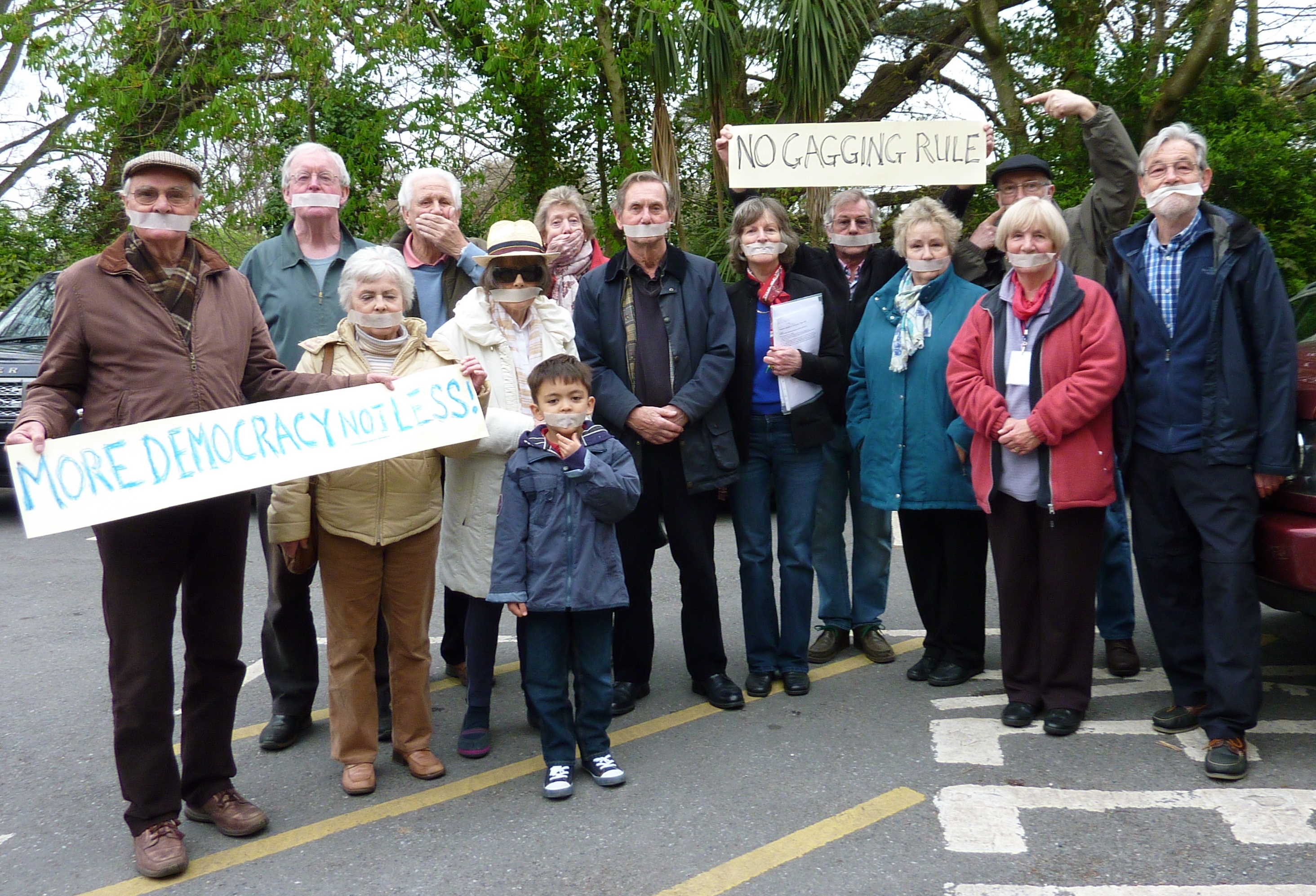
DMC chair Helen predictably supported the motion to restrict public speaking at planning meetings, at last night’s council meeting.
The public don’t need to say a lot because their interests are stoutly defended by councillors and officers, she argued.
Has she forgotten that the destruction of the Seaton/ Colyford green wedge was supported by officers, and was only prevented by a massive turn-out of residents who argued persuasively – and at length- against concreting it over?
She failed to mention, too, that she herself had not voted against the green wedge proposal, on the grounds that her husband had already objected. See https://eastdevonwatch.org/2014/02/04/green-wedge-success-was-not-down-to-district-council/


Disaster for East Devon and for neighbouring districts.

More reactions to the rejection of EDDC’s Local Plan , are flooding in to EDA. This one, sent in from Sidmouth,  is typical.  It has a powerful postscript:

The Inspector’s conclusions:
• The proposals are unsound in every respect. EDDC has ignored all advice and evidence.
• East Devon has no Plan.
• The whole process has been flawed. The proposals were not evidence-based.
• No adjustments can be made. The Council must start again.
April 2014

The National Planning Policy Framework (NPPF) means:
There is now nothing to stop developers doing whatever they want in the Sid Valley and AONB.
Paragraph 14 insists development proposals must be granted permission “where the plan is absent or silent or relevant policies are out-of-date.”
The people of East Devon will now have to prove that “any adverse impacts would significantly and demonstrably outweigh the benefits”
Paragraph 32 states that a refusal on highways grounds can only be sustained if the impact is “severe.”

The only people that can fix the NPPF are in Parliament.
Write to Hugo Swire at swireh@parliament.uk

East Devon Local Plan takes a step forward (April 2012 EDDC press release)
EDDC is moving on to the next stage in its Local Plan process – creating the planning blueprint for the district up to 2026.
The Local Plan Panel is handing over responsibility for taking the policy document forward to EDDC’s Development Management Committee – its parent body.
The disbanding of East Devon’s Local Plan Panel comes as the Government publishes its National Planning Policy Framework (NPPF), which came into force on 27 March.
East Devon’s proposals are now coming together after years of preparation, but there’s still time for a degree of public consultation in the coming months before the policy document is finalised by EDDC and passed to the Government for ratification.

Councillor Paul Diviani, Leader of EDDC, takes up the story: “I have just returned from a meeting of the Local Government Association’s Rural Commission in London. Change for Local Government continues apace”.
“Having now been published, the National Planning Policy Framework (NPPF) puts decision- making firmly in the hands of elected local politicians. If the NPPF is silent, local Members of the Local Planning Authority will decide”.
Local Planning Authorities have until March 2013 to put their Local Plans in place and EDDC is on course to achieve that target. From that moment on, the Local Plan will become the major planning guidance document for East Devon.
For the next year, existing policies still carry the most weight, even if there is limited conflict with the NPPF. From March next year onwards, these local policies will be judged against how they match up to the NPPF guidelines.
Paul Diviani again: “At East Devon, the Development Management Committee (DMC) will now drive the Local Plan agenda and will report to Full Council. A schedule that came to the Cabinet on 4 April detailed all relevant further consultation with the people of East Devon and we have to adhere to that schedule to meet the Government’s deadlines. Everyone is encouraged to examine that schedule to see where representation can be made.
“In the meantime, I would like to thank everyone who has taken part in this protracted process, but especially the Local Plan Panel, in its various guises. Over time, there have been four Chairmen – Alderman Ray Franklin and Councillors Graham Brown, David Key and Mike Allen.
“Whilst the Panel was not empowered to make decisions, it performed a valuable function of consultation and evidence review, which will enable DMC and the Council to move on to the next stage. I am indebted to the Chairmen for the arduous task they have completed under considerable pressure. They and their Panels deserve their well-earned rest!
“Kate Little, Matt Dickins and the other Officers are to be congratulated on the speed and diligence of the evidence collation and I am confident after the final tweaks, that we have a document worthy of inspection and subsequent adoption”. April 2012

“LOOK ON MY WORKS YE MIGHTY AND DESPAIR!” ‘


All council meetings that make any decisions affecting budgets MUST have a recorded vote – by law

This is how Trafford Council explains it – and, more importantly, how it was able to incorporate this law into its Standing Orders IMMEDIATELY.

The Regulations

2.1 The Local Authorities (Standing Orders) (England) (Amendment) Regulations 2014 were passed last week. The Regulations make it mandatory for councils as soon as is practicable after the Regulations are in force, to amend their Standing Orders so as to include provisions requiring recorded votes at budget meetings.

2.2 This will require a recorded vote on any decision relating to the budget or council tax. The purpose of the Regulations is to allow people to see how members voted on the substantive budget motions agreeing the budget, setting council taxes or issuing precepts and also on any amendments proposed at the meeting.

2.3 The regulations will come in to force on 25 February 2014, which is after the proposed date of Trafford’s Budget Council meeting. However, it is the Minister’s expectation that councils will take a recorded vote

on these matters in any event and therefore it is recommended that we amend our Standing Orders to reflect the changes required by the Regulations from the 25 February 2014 and adopt the practice for this meeting.

Has EDDC done this?  If so, ALL decisions about the Skypark move MUST be by recorded vote.

Click to access Council%20190214%20Recorded%20Vote.pdf

“You are going to get a backlash”, Full Council is warned

Due to technical problems with the sound system , last night’s Full Council meeting may not have been recorded. So several short reports on this EDA website are intended to give an idea of the meeting, focusing on its most crucial  discussion points.

Firstly, proposed changes to rules on public speaking.

Opinions were strongly divided:

Cllr Button (Lib Dem) said that ” the Council should not even suggest that public speaking is being restricted”,   at a time when public confidence in the Council has been seriously eroded, with East Devon now left with the consequences of having no Local Plan  in place. “You are going to get a backlash,” he warned.

But Cllr Howe (Cons) disagreed. “I think we must restrict public speaking,” he told the Chair

An EDA observer sums up as follows:

‘The aim of the recommendations seemed sensible – reduce the risk of poor planning decisions by preventing overly-long meetings . But the proposed solution was bureaucratic, involving pre-registration, last minute shuffling of the order on agendas, overhead slides projecting planning law guidelines, disclosure of private contact details of speakers (Data Protection issues?), limitation of numbers of speakers supporting or objecting, extra opportunity for applicants or their agent to speak, a new timing clock and lots more.

What emerged eventually was recognition that all that was needed was stronger Chairmanship – reduce duplication, proper reading by members of Officers’ reports instead of word-by-word reading out by Officers, and smarter time management, particularly at Development Management Committee meetings.

The referral back to the Overview and Scrutiny Committee (OSC ), made at last night’s Full Council meeting,  could lead in that direction.’

It was noted that Cllr Bloxham  spoke for 27 minutes last night in his first explanation of the new rules. The four questions from the public took less than 10 minutes in total.

The Overview and Scrutiny could bear this in mind when they look at how to overcome the present problem of unduly lengthy meetings.

Local Plan: Motoring on – in a relaxed way

Comment from Councillor Diviani “Roger [Giles, Independent], you have a big hangup about the Local Plan. It’s motoring along”

Yes, you can say that again.

car crash


A question for the Overview and Scrutiny Committee: How will the “Lucky 5” be chosen and by whom?

It was agreed at last night’s council meeting that the issue of public speaking should be referred back to the Overview and Scrutiny Committee.

A couple of questions for them – irrespective of the morality and ethics of eroding democracy.

1.  Fifty letters of objection arrive on the same day in the same post.  Who decides which ones are opened first?

2.  Who will decide whether the first 5 objectors chosen in this “first come, first served” recommendation are representative of the whole?  What if they are not?   Say the first 5 objectors all make the same point – for example, that they don’t like the colours being chosen – but Objector 6 makes a killer point that would undoubtedly affect the outcome – for example that what is being contemplated is demonstably against the law – what happens then?


Full Council refers debate on public speaking to Overview and Scrutiny Committee

2014-04-09 17.16.48-1

The concerns of demonstrators outside Knowle Council Chamber tonight were also voiced by some Councillors at this evening’s meeting. In a recorded vote (details to follow), the Full Council voted by 26 votes to 22, with one curious abstention, in favour of postponing a decision on a proposed 12-month trial period of what some regard as “restrictive and prescriptive” new rules for public speaking. A proposal by Councillor Claire Wright set in motion a lengthy debate, which led to a majority vote for the matter to be referred for examination to the Overview and Scrutiny Committee for the first time. (It had so far only been before the Standards Committee).

Some of the issues, which apply to the whole of East Devon, are described in this letter from a Colyford correspondent :right to speak april 14 .

Power and how you use it

“David Camerson said that he and not the press should decide who is in his Cabinet. In doing so, he seems to forget that it is the people and not he who decide whether he should even have the right to form a Cabinet. …He failed to realise that it was the public – in opinion polls. letters to newspapers and online comments – who did not back his decision to retain Miller. This was not a press witch-hunt ; it was the people who brought Miller down”

Roy Greenslade, Evening Standard, page 36, 9 April 2104

Of democratic dialogue, and a fatally flawed Local Plan

Here’s a copy of an EDA  press release sent out today:
East Devon Alliance (EDA), active supporters of the successful Fight for Feniton’s Future, are delighted by the sound of champagne corks popping, as the village celebrates its reprieve from mass development, after a full scale public inquiry held at the beginning of the year, and masses of hard work. Inspector Jessica Graham has ruled that Feniton needs only one development, of 32 new homes, and not the more than 200 houses proposed. So campaigners for only appropriate development, CAN successfully engage in democratic dialogue, which is what the non-party-political network, East Devon Alliance, is all about.
But EDA warns that Super Inquiries like that held at Feniton, are not the norm. It predicts that glasses will be chinking more ominously elsewhere in East Devon, as developers celebrate their biggest boost in years, thanks to East Devon District Council’s incompetence. As Planning Inspector Anthony Thickett has found the East Devon District Council’s Local Plan is fatally flawed (even at the second attempt). And without a Local Plan in place, according to National Planning guidelines, there must be a presumption in favour of development.
Consequently, as EDA Vice Chair, Dr John Withrington says, “We should not be surprised if the Local Plan has to recommend many more houses than it does at present, to recommend substantially more growth in villages in East Devon, and for developers to be even more aggressive in their proposals as a result. And all this could have been avoided had EDDC got its act together.”
Given the seriousness of the situation, the starkly complacent comment by Council Leader Paul Diviani that he is “very relaxed” about starting work again on the Local Plan, is incomprehensible. The question is, on its past record, can EDDC be trusted to produce a Local Plan that meets the Inspector’s required standard? The signs are unlikely, unless the proposal to make restrictions on public speaking is rejected by this week’s Full Council (Weds 9th April, 6.30pm, Knowle) . As the events at Feniton have shown, sound plans come from more democratic dialogue, not less.


Informal tendering for “exciting” Exmouth seafront starts

It will all hinge on what people think is “exciting” and if that is what they want from their seafront.  “Exciting” can mean many things to many people!

http://www.exeterexpressandecho.co.uk/Developers-invited-submit-proposals-8220-quality/story-20928143-detail/story.html

Two out of three Feniton appeals dismissed! Only the smaller appeal for 32 homes allowed, 200 extra dismissed!

Well done everyone who put up such a strong case to the Planning Inspector at Feniton – you all deserve pats on the back – and more.  A victory for common sense!

http://www.claire-wright.org/index.php/post/fantastic_news_for_feniton_as_all_appeals_dismissed_except_32_at_acland_par

Particular thanks should go to the two councillors for the wards affected:  Councillor Claire Wright and Councillor Susie Bond who kept everyone informed of what was going on and rallied support time and time again.  Special thanks to Susie who, with no previous council experience, took on the mantle of councillor for Feniton late in the day with such verve and vigour!

As Martin Luther King said: The arc of the moral universe is long, but it bends towards justice!

The blame game – time to stop looking for scapegoats and start work

goat

Much time and effort has recently been put in to trying to work out who is to blame for the current problems we have with our Draft Local Plan.  Various groups (including EDA) have been suggested as being responsible for the current situation, even though EDA was not in existence when the figures for the Draft Plan were submitted to EDDC by its Planning Policy officers and gave no evidence either to the Local Development Framework Panel nor to the Inspector.

It is far too late for blame.  Responsibility now lies with councillors and officers to give the Inspector what he wants as quickly as possible.  Only they can do this.

Can they do it?  We have to hope so and we must all give officers and councillors all the support they need to get their facts right and get their evidence in as soon as practicable so that developers will have no opportunity or excuse for building on land that is not meant to be available to them.

The effort to find scapegoats to blame needs to stop and the action needs to start.  Looking for scapegoats is wasting valuable time.


Should one be “relaxed” about a crisis?

beach1

The Leader of East Devon District Council says he is “relaxed” about the failure of the draft Local Plan at its first hurdle.  He said:

“In the circumstances I am relaxed about the extra work we have to do. We will now put together an action plan showing what we will be doing and when. We hope to go back to the inspector in the autumn with the extra information he needs”.

Can we trust someone who is so relaxed to motivate others (the same people who gave the Inspector the first draft plan which took 5 years and one false start to produce) to give the Inspector what he needs and to give it to him quickly enough to put a stop to the development frenzy that shows no sign of abating and every sign of increasing during this policy vacuum?

Is an “action plan” enough?  Is” hope” enough?  Is being relaxed the appropriate way to deal with this crisis?


Local Plan disaster: a view from “the other side”

http://c2cplanning.wordpress.com/2014/04/05/oops-developers-get-a-hammering-from-eddc-cllrs-for-making-hay-while-the-council-get-slapped-on-the-wrist-for-advancing-a-flawed-local-plan/

... If Council resources cannot be made available and directed towards plugging any perceived “policy vacuum” quickly and accurately, why is the development industry the bad guys? If there was a competition for heads in sand…..

When it comes to Standards EDDC CAN mark its own homework but doesn’t keep notes!

David Cameron has claimed here:

http://www.telegraph.co.uk/news/newstopics/mps-expenses/conservative-mps-expenses/10744347/David-Cameron-claims-MPs-did-not-have-casting-vote-over-Maria-Miller-expenses.html

that independent members of the Commons standards committee rather than MPs had the “casting vote” on whether to censure Maria Miller over her expenses. Commons rules state that only MPs on the committee have the right to vote on its findings, while “lay members” can only take part in debates and evidence sessions. However, Mr Cameron, who has given Mrs Miller his “warm support”, claimed that MPs are not being allowed to “police themselves”.


He told Sky News: “We have now got a committee that has independent members on and effectively they had the casting vote, and what this committee decided, it is not my decision, it’s the committees decision.”


….. A spokesman for Mr Cameron later said his comments were a “slip of the tongue” and that “lay members do not have a vote”.

However, let no-one be mistaken: in East Devon the “Independent Person” on the Standards Committee does NOT have a vote and, as can be seen in this excerpt from a Standards Committee meeting minute from 29 January 2013, the Monitoring Officer does not even ask for the Independennt Person’s views or comments in writing, preferring to “make notes” about what she says as that is “less bureaucratic”.  It is also, of coursr, much less traceable if something goes wrong  or there is a difference of opinion about what was said later on ….
See
http://www.eastdevon.gov.uk/standards_mins_290113.pdf
Rest assured, – in East Devon, it is possible to mark your own homework!

An Interesting view on the failure of the Local Plan submission

http://sidmouthindependentnews.wordpress.com/2014/04/06/the-east-devon-district-council-press-release-on-the-failure-of-the-local-plan-dissected/

Proposed new restrictions on public speaking: act quickly to have your say.

If you are concerned by EDDC’s proposed changes to rules for public speaking, NOW is the time to let your representatives know, in writing.
A decision will be made next Wednesday evening, 9th April, when the Full Council meets (6.30pm at Knowle).
The letter copied below, which has been sent to the three Sidmouth town ward members, may be helpful as an example. EDA also understands that the author has also asked a councillor who did not agree with the new speaking rules plan outlined by Cllr Bloxham at a previous Development Management Committee meeting, to request a recorded vote.

‘Councillors,

Next Wednesday’s EDDC Council meeting is to have put before it a proposal to impose severe limits on the rights of the residents of the district to express their views about crucial planning applications which affect them personally or the community in which they live. These are the residents who elected you to represent them and as ward members you will retain the right to speak on their behalf. But only they can speak with the detailed knowledge and passion about the potential effects of particular planning applications on them as individuals and on their neighbours.

East Devon is experiencing a torrid time at the moment because of the lack of an approved Local Plan – a situation that will only be made worse by the LP Inspector’s rejection of the plan as presented – and this is not the time to be limiting, or making more difficult, public involvement in the planning process. The reason for the proposal is given as “to increase efficiency” at DMC meetings. What the process should be about is “increasing effectiveness” and that will not be achieved by limiting the rights of individuals to this extreme extent.

In the interests of democracy can I ask you to request a recorded vote on this matter of great public concern?

I look forward to seeing you represent this view on Wednesday evening on behalf of all Sidmouth Town ward residents and the town’s many visitors who would want us to defend it from inappropriate development.

Peter Whitfield’

For more information, go to http://www.claire-wright.org/index.php/post/public_speaking_restriction_decision_to_be_made_next_wednesday_evening

In the Thickett of it

If you can hear popping sounds, it’s the sound of champagne corks flying across East Devon as developers celebrate their biggest boost in years. Planning Inspector Anthony Thickett has pronounced on the EDDC draft Local Plan, and if you’re anything other than a developer or someone happy to sell off green fields to cover with concrete, it’s very bad news indeed.

It’s impossible to read Mr Thickett’s letter with anything other than a sense of dismay (was there nothing EDDC got right?) or wonder (how come Mr Diviani and EDDC planning officers are still in a job?). From the outset Mr Thickett is (diplomatically) clear that the draft Local Plan is not just ‘unsound’: it’s appallingly deficient to the extent that substantial work is needed. Mr Thickett’s conclusion recognises that it’s going to be a long haul to get it right. More time for developers to propose hundreds more houses across the East Devon countryside, then.

Mr Thickett’s letter delivers some crushing blows. The opening sentence bluntly rejects EDDC’s argument that (just) 15,000 more houses are needed in East Devon. Critically, Mr Thickett finds that the Council’s Strategic Housing Market Assessment (SHMA) is fatally flawed in that it relies upon questionable data. He finds also that the target of 15,000 includes a need – Mr Thickett is too kind to describe it as guesswork – of 4,000 as overspill, an argument “which has no empirical evidential basis” (i.e. he hasn’t a clue how EDDC came up with this number). He could question the validity of some of the migration data used to inform the Council’s target, “but there seems little point given the shortcomings in the evidence base overall”. Ouch.

The vivisection continues. The 15,000 figure is not justified, the absence of an up to date SHMA is “a serious failing”, and the message is clear: EDDC should make allowances for more housing needed across the District. As developers argued at the Feniton Super Inquiry, EDDC should make up housing shortfalls in the shortest possible time and prove a five-year supply (“I look forward to hearing how you intend to ensure that this will be the case”). As for EDDC’s argument that a blanket 5% increase in housing for East Devon’s villages was appropriate … Mr Thickett states firmly that this is “too crude a tool”. (Feniton and other communities in East Devon should now be seriously worried.) Mr Thickett’s closing remark, that he will do all he can to help the Council go forward, is a generous and tactful way of saying that EDDC will have to start again, get its sums right this time, and get a move on. Or to put it another way, pull its finger out.

How did EDDC react? From a Council that wasted three years allowing Graham Brown to chair the East Devon Business Forum, to seeing an earlier version of the Local Plan thrown back last year with 53 flaws in it, it came as no surprise to see EDDC spinning furiously. Unsurprisingly the Council hailed the Thickett letter as a positive development, allowing it “more time to confirm housing volume” (http://www.eastdevon.gov.uk/communications_and_consultation.htm?newsid=1064. Presumably EDDC’s earlier statement that Mr Thickett’s letter had been embargoed at his own request, a request not present in his letter, was to allow time for the spin doctors to get to work.)

EDDC Leader Paul Diviani, with presumably a straight face, pronounced Mr Thickett’s letter as “pretty much what we expected”. Sadly for Mr Diviani, this is pretty well what a lot of us expected. Mr Thickett’s damning criticism of EDDC’s failure has condemned East Devon to a period of uncertainty, during which developers will seize upon the Planning Inspectorate’s savaging of the draft Local Plan as justification enough to build where they want: make no mistake, this is a black day for East Devon. Mr Diviani may be “relaxed about the extra work we have to do”, but the inevitable conclusion of those who have read Mr Thickett’s letter is that the only relaxing Mr Diviani should do henceforth is in a deckchair in retirement on a beach. Preferably one outside the District he has failed so miserably.

The case of the Planning Inspector and the Invisible Ink

Anyone see the sentence in the Inspector’s letter that said: “Oh, and don’t publish this letter for three days after you receive it”?  No, us neither.

Perhaps it was in invisible ink … or perhaps it needed 3 days work to spin the “How we got it all wrong” into “East Devon is not an island”.