
Average bill for 2024/5 is £497 and will rise to £610 in 2029/30 (22.7%) to which inflation will have to be added. (Source BBC)
Category Archives: Misc
Watchdog warns Defra and Ofwat they could face court over sewage dumping
So could the water companies – but who will have to foot the bill for clearing up the mess from this scandalous failure? – Owl
The government, its water regulator and the Environment Agency could all be taken to court over their failure to tackle sewage dumping in England after a watchdog found failures to comply with the law.
Helena Horton www.theguardian.com
An investigation by the Office for Environmental Protection (OEP) found Ofwat, the Department for Environment, Food and Rural Affairs (Defra) and the Environment Agency (EA) all failed to stop water companies from discharging sewage into rivers and seas in England when it was not raining heavily. The OEP was set up in 2020 to replace the role the European Union had played in regulating and enforcing environmental law in the UK.
The law permits water companies to spill sewage only during exceptional circumstances such as extreme weather, but in reality human waste is routinely dumped in waterways even when it is not raining. Sewage is spilled into rivers and seas because in the UK there are combined sewage overflows (CSOs) into which water runoff from roads, sewage from homes and businesses, and “grey water” such as that from baths and washing machines all combine.
When this volume becomes too much and risks backing up into people’s homes, it is instead spilled into rivers and the sea. Water companies have failed over the years to update their sewage systems to stop this from happening, and the regulator and government both have legal duties to ensure the companies spill sewage only under extreme circumstances.
Helen Venn, the chief regulatory officer at the OEP, said: “The core issue identified in our investigation is the circumstances in which the regulatory system allows untreated sewage discharges to take place. We interpret the law to mean that they should generally be permitted only in exceptional circumstances, such as during unusually heavy rainfall. This is unless an assessment of the CSO concludes that the costs to address the issue would be disproportionate to the benefits gained.
“We will decide next steps when we have considered the responses to these decision notices. That could include court action.”
The OEP investigation followed the submission of a formal complaint two years ago by the campaign group WildFish.
Guy Linley-Adams, the in-house solicitor for WildFish, said: “What the OEP’s announcement has clarified is that much of the storm sewage pollution that is plaguing English rivers would not be occurring had government and regulators done their jobs properly. The Environment Agency must secure compliance with the 1994 regulations, which means it needs urgently to review the unlawful permits it has given to water companies to bring them into line with the law.”
Defra, Ofwat and the EA have each been sent a notice by the OEP outlining the findings and saying what steps each needs to take to put matters right. They have two months to respond and confirm whether they will take the steps required; if they do not do so, the watchdog could take them to court.
The investigation found Defra failed to comply with the law by drafting guidance for water companies and regulators that did not reflect the true legal extent of their duties not to stop sewage being spilled, and failing to make enforcement orders when waste was being dumped.
It also found Ofwat was failing to comply with the law as the regulator was not cracking down hard enough on water companies. The notice served said Ofwat was “failing to take proper account of environmental law with regards to duties on sewerage companies and its duty to make enforcement orders” and “failing to exercise its duty under environmental law to make enforcement orders”.
Ofwat is due to announce on Thursday how much water bills can rise by over the five years from next April.
The EA failed to comply with environmental law in three different ways, according to the OEP investigation. These include failing to take proper account of environmental law in devising guidance relating to permit conditions, setting permit conditions that were insufficient to comply with environmental laws and failing to exercise permit review functions in relation to discharges from CSOs. This meant the agency was found to be too lax in allowing water companies to spill sewage; they could not do so without a permit issued by the agency and the EA was allowed to review or revoke these if they were being inappropriately used.
An EA spokesperson said:“We recognise regulation of the water industry needs to improve, which is why we are transforming our approach with more people, powers and data alongside better training for our staff. This is ensuring we have a water system fit for people and the environment. We’ve also made significant progress in addressing the issues identified by the OEP and are consulting on updates to our permitting approach and regulatory framework for storm overflows.”
A spokesperson for Ofwat said: “We are actively taking steps to remedy the issues the OEP has identified. We will continue to prioritise our enforcement investigation into all wastewater companies which started in 2021 to ensure that companies are meeting their environmental obligations.”
A Defra spokesperson said: “For too long, water companies have pumped record levels of sewage into our rivers, lakes and seas. In just 5 months, this Government has acted decisively to refresh outdated guidance to make extremely clear our expectations around storm overflows. We welcome the OEP’s acknowledgement that this government is rectifying the issues identified. We will carefully consider the OEP’s allegations of breaches before formally responding in due course.
“Furthermore, we’re placing water companies under special measures through the Water Bill, which includes new powers to ban the payment of bonusses for polluting water bosses and bring criminal charges against lawbreakers. We’re also carrying out a full review of the water sector to shape further legislation that will transform how our water system works.”
The government has also announced that water companies will be forced to double compensation for customers who experience tap water outages, sewage floods, boil water notices or low water pressure. Consumers will be automatically paid up to £2,000 under the new scheme.
This year, tens of thousands of homes in Brixham were left without clean drinking water after the parasite cryptosporidium was found in the supply. Many were told to boil water before using it for a month. Water companies have been accused of failing to properly compensate those who face these disruptions to their supply and damage from sewage flooding their homes.
Labour and Whitehall’s Metropolitan ideas on devolution show little understanding of rural communities
The Devolution White Paper claims, without evidence, that there is an appetite for reorganisation. “Fewer politicians, with the right powers, will streamline local government to focus on delivering for residents. We will deliver this process as quickly as possible, including through legislation where it becomes necessary to ensure progress.” …..”New unitary councils must be the right size to achieve efficiencies, improve capacity and withstand financial shocks. For most areas this will mean creating councils with a population of 500,000 or more” [i.e. something bigger than half of Devon]
Not obvious to Owl that increasing the separation between the local electorate and politicians making local choices achieves devolution.
As today’s Guardian editorial puts it:
“Such streamlining could bring some benefits. Most people don’t grasp the different duties of the various government tiers (in rural areas this usually includes parish as well as district and county councils). But disrupting local democracy is not a thing to be done lightly, especially when public trust in politics is widely understood to be fragile. Organisational change directs huge amounts of energy inwards and there is no good evidence that larger councils are more effective. Ministers should be mindful of the towns and villages where a district council is the most visible elected body – and may also be different, politically, from the surrounding county. When larger councils are under colossal strain due to long-term underfunding of their social care obligations, there are benefits to keeping some services separate.”
Owl will have more to say on this in due course
Devon’s district councils and county council could merge
Miles Davis www.bbc.co.uk
Devon County Council is expected to be merged with the eight district councils in the county
Devon County Council and the county’s eight district councils are expected to be merged into some form of a new unitary authority in the biggest shake-up of local government for decades.
It is not yet clear what will happen to Plymouth City Council and Torbay Council, which already stand apart with unitary status.
Elected mayors will be introduced in areas covering multiple authorities with the possibility of Devon and Cornwall being combined, following the announcement by Angela Rayner, Secretary of State for Housing, Communities and Local Government.
The government said it wanted to “streamline” local councils while critics have said the change could undermine local decision-making.
The local government picture is complicated in Devon with district councils and Exeter City Council responsible for areas like housing, local planning and waste collection and the county council responsible for highways, adult social care, children’s services and public health.
In Plymouth and Torbay the unitary authorities are responsible for all aspects of local government.
Devon County Council and Torbay Council, but not Plymouth City council, are already working together on a Combined County Authority (CCA) set up earlier in the year to have more control over areas such as skills training and public transport.
The measures in the English Devolution White Paper include proposals to create “strategic authorities” in the hope of “bringing together councils over areas that people live and work in”.
Councillors in Cornwall have said they do not want to share powers with Devon or any other larger south west region.
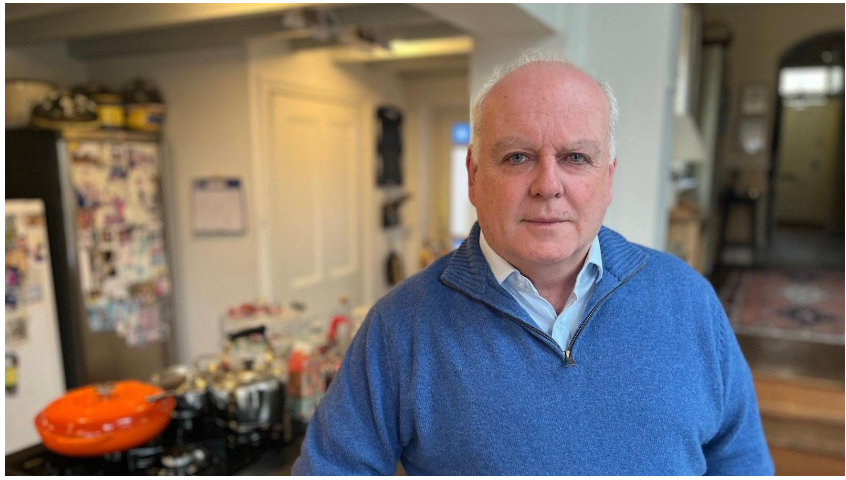
Paul Arnott, leader of East Devon District Council, said devolution would not cut costs
Paul Arnott, the Liberal Democrat leader of East Devon District Council, the largest district council in Devon, said he and other leaders were in favour of devolution but this had been badly managed.
He said: “This is being rushed, it hasn’t been consulted on and it risks throwing the baby out with the bathwater.
“District councils do a lot of good stuff already whether it’s protecting communities from the sea, emptying your bins, it’s your planning authority.
“They do a lot and I’m not convinced at the moment that the government really understand that in the ambition to push devolution down through the country they may actually be losing really well organised district councils.”
James McInnes, Conservative leader of Devon County Council, said it was “a big thing” for the district and county councils to think they might be “swept away”.
He said: “I’d prefer for us to find a way forward than have it be done to us by government.”
McInnes said all council finances were under “extreme pressure” and any move to unitary status would be “a distraction”.
He said: “I hope we can continue talking to each other and agree a way forward that will be right for the residents of Devon.”
McInnes said he was in regular talks with leaders in Cornwall, Torbay and Plymouth and that a strategic authority for Cornwall and Devon was a possibility – although he would prefer that to be led by a strategic board, rather than an elected mayor.

A map shows the district councils and the unitary authorities in Devon
Devon County Council, run by the Conservatives, is the largest authority with a population of more than 800,000, external, according to the 2021 census, and employs about 5,000 people, external.
Populations of district council areas, external range from the smallest of about 57,000 in West Devon to the largest of just over 150,000 in East Devon with about 130,000 people living in the Exeter City Council area.
Labour-run Plymouth City Council has a population of about 265,000, external and about 2,500 employees, external while Conservative-led Torbay Council has a population of about 136,000, external and employs about 1,000 people, external.
Angela Rayner, Secretary of State for Housing, Communities and Local Government, said the policy would “see communities, people and places across England begin to take back control over the things that matter to them”.
She said every region of England would be covered by new “strategic authorities”, similar to the regions that currently have elected regional mayors.
Rayner said having directly-elected mayors would avoid duplication and give cities and regions a bigger voice.
East Devon council gets funding to sort River Axe pollution
East Devon District Council said the £4m would help improve the water quality in the River Axe.
It said the fund would also help with plans for 1,000 homes due to be built nearby in the next 15 years.
Archie Farmer www.bbc.co.uk
The authority said a range of factors, which included agriculture run-off and new homes built in the area, contributed to the pollution in the river.
It said the funding would be used to “upgrade sewage treatment plants and septic tanks, as well as measures to prevent flooding” and “wetlands will also be constructed and water saving measures on council homes will be introduced”.
Councillor Paul Arnott, council leader, said “it will help us to unlock much needed new homes in Axminster” and “it will help us to act on our recent Declaration of a Nature Emergency, external“.
“The River Axe is of national importance for its biodiversity but has been in a very poor condition due to the phosphates that have been pouring into its waterway and harming the wildlife it supports.
“This funding will help us to address this urgent situation, enable delivery of the local plan and start to clean up one of East Devon’s most important rivers for wildlife.”
Councillor Todd Olive, portfolio holder for Strategic Planning at the council, said: “Nutrient pollution is an urgent and complex problem across England, where increased levels of nitrogen and phosphorous from a variety of sources – including both homes and agriculture – can have serious consequences for natural habitats and wildlife.
“While helpful in unlocking housebuilding projects currently blocked due to this pollution, first and foremost this funding will help protect our natural world, which is so crucial to East Devon in so many ways.”
East Devon collects drinks cans weighing roughly ‘62 elephants’ each
Did you know that East Devon collects an impressive 250 tonnes of drinks cans each year? This weight is roughly equivalent to that of about 62 elephants!
Authored by News Desk www.thedevondaily.co.uk
In honour of Recycling Week (14th–20th October), East Devon District Council (EDDC) is excited to share the journey of your drinks can—from your home to the shop shelves.
Every recycled aluminium can, can be back on the shelves in a shop in just 60 days! Plus, drink cans can be recycled infinitely!
East Devon is currently ranked 6th in the country for recycling, with an impressive 60.5 per cent of household waste recycled. But we need your help to reach the top spot! By participating in Recycling Week 2024, you can make a big difference.
Here’s how: Just recycle 5 extra items each week. It could be Dee Dee the deodorant can, Rey the plastic spray bottle, Yogi the yogurt pot, Fitz the perfume bottle, or Hube, the humble toilet roll tube. Every small action counts and can help East Devon surpass the magic 65 per cent recycling mark!
Here’s what each item can be turned into and its impact:
- Dee Dee the Deodorant Can: Recycle 12 extra deodorant cans a year (1 a month), and you’ll help create enough material to make a children’s bike frame!
- Rey the Plastic Spray Bottle: By recycling 26 extra spray bottles a year (2 a month), you can contribute enough recycled material to produce a new plastic recycling bin for your community.
- Yogi the Yogurt Pot: If you recycle 1 extra yogurt pot a week, that totals 52 pots a year, which can be transformed into enough material for up to 10 new plant pots or drainage pipes.
- Fitz the Perfume Bottle: By recycling 24 extra perfume bottles a year (just 2 a month), you’ll contribute enough material to produce over 5,000 new glass containers! That’s enough to package a whole range of products, from cosmetics to food items—helping reduce waste and support the circular economy!
- Hube, the Humble Toilet Roll Tube: By recycling four extra toilet roll tubes each week, you’ll contribute 208 tubes over the year—enough to produce 8 rolls of paper towels or create over 1,000 greeting cards for local schools!
To make recycling even easier, remember to:
- Download the East Devon app for collection reminders and recycling tips
- Use the Alexa recycling skill for instant advice
- Sign up for green waste collection for just £52 a year
Beyond recycling, EDDC is encouraging residents to reduce the waste that they produce through more sustainable lifestyles. There are lots of ways to make more environmentally friendly choices, such as buying products which are reusable or have less packaging. Visit EDDC’s managing waste at home webpage for more advice.
Cllr Geoff Jung, EDDC’s portfolio holder for coast, country, and environment, said: “I am thrilled to see East Devon’s residents actively participating in recycling efforts. Collecting 250 tonnes of drinks cans annually is no small feat, and it highlights our community’s commitment to sustainability. This is just the tip of the iceberg. We recycle so much more than this.
“Our recycling and waste team go above and beyond every week to collect the huge volumes of recycling that wouldn’t be possible with the residents.
“As one of the highest achieving teams at EDDC, we would like to thank them for their efforts in keeping the authority as one of the best recyclers (currently 6th) in the country. As we mark Recycling Week, let’s all push a little bit more to support our recycling heroes and improve our efforts. Every can recycled contributes to a greener future for East Devon. Together, we can achieve great things!”
Devon crime commissioner under pressure as chief constable goes
Bradley Gerrard www.midweekherald.co.uk
Reporting currently being revised – 10 December
Susan Davy: “Please do the decent thing and go now.”
Susan Davy named and shamed this week in parliament
So said Ben Maguire Liberal Democrat Shadow Attorney General MP for North Cornwall during Wednesday’s parliamentary adjournment debate on Sewage discharges in the South West, which he introduced.
Here is the full quote:
Ben Maguire:
When I took my seat in this place, I promised my constituents that I would always speak truth to power. In a previous career, I advised businesses and their leaders. If I could offer some advice here and now to the chief executive of South West Water, I would say, “Please do the decent thing and go now.” In what other universe could a chief executive preside over such a record of abject failure? With Ms Davy having been the chief finance officer since 2015 and then the chief executive since 2020, almost 10 years of failed leadership have brought us to this diabolical situation. How on earth can anyone now have confidence that South West Water will miraculously turn things around in the next five years?
Ms Davy declined to take a bonus last year, instead adding that bonus amount to her base salary, which at last count was a whopping £860,000. Before Members start worrying about South West Water’s shareholders, they too were awarded a generous dividend of 44p per share. This is all while water bills are rocketing, children are getting severely sick as a result of that greed, and people everywhere are too afraid to enjoy the beaches and rivers that make Cornwall and the wider south-west so uniquely special. As a society, at what point do we come together and say that this has to stop, for the sake of our children and the sake of us all? Well, I humbly suggest that that point has now long passed.”
Emma Hardy – The Parliamentary Under-Secretary of State for Environment, Food and Rural Affairs replied:
South West Water’s environmental performance is clearly not good enough. It continues to be rated as requiring improvement in the Environment Agency’s environmental performance assessment, and it has the highest rate of incidents on its network in the sector. So far, as the hon. Gentleman said, there have been 20 pollution incidents in his constituency, and they are clearly unacceptable.
Where companies have failed in their statutory duties to maintain their assets properly and protect the local environment, regulators will take appropriate enforcement action. The Environment Agency has informed me that 24 charges against South West Water currently await a court hearing, and many of them relate to discharges in North Cornwall. Of course, it is inappropriate for me to comment further on these while those proceedings are ongoing.
However, I am reassured that the new powers in the Water (Special Measures) Bill, including those relating to the monitoring of emergency overflows—I quite enjoyed the idea that we could call EDMs electronic dance music instead, and maybe that is what I will be thinking of in the future—will assist the Environment Agency with workload and efficiency relating to these types of offences. Two new dedicated inspection teams have been in place since October this year. Once officers are trained, the annual number of inspections in the region will double from the 335 they will carry out this year. I think that is positive action that has been taken by the Environment Agency.
Both local MPs Richard Foord and David Reed spoke (Richard Foord a couple of times):
Richard Foord:
I am aware of the new storm overflow hub that the Minister talks about. My point is that sometimes the data that the new hub reveals is different to the data that the water companies are revealing on their apps, such as the South West Water WaterFit app. That was discovered by a constituent of mine in relation to Sidmouth last weekend.
To which the Minister replied:
I am more than happy to look into any anomalies, so if Members want to send through details of where there seems to be a discrepancy in the data, I can pick that up.
David Reed:
I thank Ben Maguire for securing this important debate. Many of the points that have been raised this evening are issues we have all experienced, but I have found that South West Water’s communication and engagement with its customers has been atrocious over recent months. What more can the Government do to ensure that South West Water properly engages with its customers?
To which the Minister replied:
I apologise to the hon. Gentleman for having to rearrange our meeting yesterday as I was visiting a flooded area. We will get that meeting back in the diary quickly. He is right to raise that issue as it is one of the reasons why we want to put customer representation on the water boards, and give customers that stronger voice. I am more than happy to follow that issue up with the hon. Gentleman and see what more I can do to support him. It is incredibly important that customers are treated with the respect they deserve, and if water companies are not doing that, I am more than happy to follow it up.
Owl recommends reading the whole transcript – doesn’t really solve anything but shows that our MPs are keeping up the scrutiny pressure on both South West Water and the Government
If previous years ‘rules’ had been followed, Budleigh beach would have just lost its ‘excellent’ water quality status
The Environment Agency (EA) has found ways of discarding “inconvenient” sampling data while South West Water (SWW) pumped untreated sewage water at Otter Heads over 3,000 times during May through September. The excuse is that a plan to resolve the issue by early autumn was agreed between EA and SWW. This work has yet to start.
Owl has no confidence in either the Environment Agency or South West Water.
Petercrwilliams fightingpoolution.com
The water quality at every bathing beach in the UK is sampled 20 times each Summer by the Environment Agency for E.Coli and other bacteria. The results of those samples define what water quality classification is awarded to that beach. Budleigh is rightfully proud of having been awarded ‘Excellent’ water quality status for the last 10 years.
Over that period, a number of samples were taken on a day when the Environment Agency had just published a ‘Pollution Risk Alert’, which is a warning that the water quality may be unsuitable for swimming. In all those cases, the sample taken on that day was included in the year-end water quality calculation.
If that ‘rule’ had been followed in 2024, Budleigh beach would definitely have lost our ‘Excellent’ status. In fact, with 40% of the most polluted samples from the last 4 years occurring in 2024, Budleigh’s water quality would now be 1/2 way between the ‘Good’ and ‘Sufficient’ categories.
To avoid that, the Environment Agency adopted a legal mechanism which allowed them to EXCLUDE two of the worst samples from their calculation. This was because those samples had been taken on a day when a ‘Pollution Risk Alert’ had been issued. In fact, there were 20 days between May and September when the EA issued one of these Pollution Warnings, it just so happened that the EA didn’t take a sample on most of those days.
As a result of excluding these two samples, the result was that Budleigh retained our ‘Excellent’ rating, but by the skinniest margin of just 2.5% away from dropping down a level.
One key factor in this is that throughout the May-September period, South West Water have been pumping a mix of untreated sewage and brook water from Lime Kiln pumping station out to Otter Head. In fact, SWW did this over 3,000 times in that period, with almost 20,000 litres being discharged every time. That’s equivalent to a 25m swimming pool full of untreated sewage mixed with stream water EVERY SINGLE DAY.
The worst part of this near-continuous discharge of untreated sewage is that a solution to the Lime Kiln issue was agreed with South West Water in July, and a plan published by them to resolve the problem. See the full details here.
The original proposal was for SWW to start the work on quieter streets in July, and complete the task by early Autumn. For some reason, these dates seem to have moved back and back – and there is now no clear, published plan when this work will be completed. Clearly there are considerations over timing of disruption to some roads in the town, but it’s very difficult to understand why this work could not have been phased over the last 5 months.
It’s not just an issue for South West Water, though they do carry the shame of having let the situation get this bad. It’s also a matter for our elected politicians to prioritise clearance for this work, and get the issue fully resolved.
It’s bad enough for Budleigh residents and visitors to have to play sewage-roulette each time they want to swim, but when there is a clear and defined solution to this issue, it’s unforgivable that this has not been resolved.
Breaking News: Devon and Cornwall police chief suspended pending investigation
We now have both the Chief Constable and the acting Chief Constable on suspension.
Whatever next? – Owl
The acting chief constable of Devon and Cornwall police, Jim Colwell, has been suspended pending an investigation into allegations of breaching professional standards.
The region’s police and crime commissioner, Alison Hernandez, has made a mandatory referral to the Independent Office for Police Conduct (IOPC), which has confirmed it will investigate the allegations.
Hernandez said she would announce interim leadership arrangements in due course.
She said: “Sadly it has been my duty to suspend A/CC Jim Colwell and refer this matter to the IOPC. Suspension is a neutral act to enable an independent and thorough investigation to take place. It has no bearing on any indication that the allegations will be upheld and should not be seen as such. A/CC Colwell has seven days to make representations to me relating to his suspension.
“As required for any suspension of a senior officer, I have this morning informed the Devon and Cornwall police and crime panel of my decision and fully understand that there may be concerns within the force, in our communities and with our partners in relation to this suspension. I share those concerns and resolving leadership issues in the force remains my most pressing priority.”
Colwell was leading the force in place of the chief constable, Will Kerr, who was suspended in July last year.
Cryptosporidium: £1m boost for Devon water parasite outbreak area
In September Devonlive reported that South West Water owner Pennon had announced rising cases of sewage spills and a hit of about £16 million from the parasite contamination crisis in Devon earlier this year.
The group said it racked up the costs from the contamination incident in Brixham, after paying compensation to affected households, providing bottled water for two months, and after “extensive” action to clean the network.
Now South West Water has pledged £1.2m to help tourism:
Kirk England www.bbc.co.uk
A £1.2m fund to help boost tourism and repair “reputational damage” after a cryptosporidium outbreak in south Devon has been described as “desperately important”.
South West Water (SWW) has pledged the money as part of a Destination Marketing Recovery Fund following the water parasite outbreak in May that saw about 100 confirmed cases of the diarrhoea-type illness in and around Brixham.
Business leaders said the incident caused 3,500 pieces of negative coverage across the world, as well as tens of millions of pounds worth of lost bookings.
Much of the money was due to be spent on television advertising, they added.
“The headlines were appalling,” said Chris Hart, chairman of the English Riviera BID Company.
He said: “We were able to demonstrate to SWW that there were around 3,500 pieces of negative coverage about Brixham and the wider Devon area, not just here but across the world.
“Our research showed that around £34m of bookings were lost at the time of the outbreak, with an estimate £6m in future bookings also lost.”
Much of the money would be spent on a national TV advertising campaign, with one advert already in production, he said.
He added: “The aim now is to use the funding to repair the reputational damage that has been caused, and to present Brixham and the English Riviera in a really positive light, showing off the great area this is.”
Business in the area said they were confident the latest funding would help address the situation.
“It’s going to open up channels of marketing we currently can’t afford, such as television advertising,” said Alex Foley, who runs the Guardhouse Café at Berry Head.
“It will allow us to reach many more potential customers and show how great the area is.”
“This is desperately important,” said Linda Lowe, who owns Brookside Guesthouse in Brixham.
She said: “The only way we can get our reputation back in the public eye is to get the marketing out quickly… a massive advertising campaign showing just how beautiful it is here.”
Of the £1.2m pledged by SWW, about £250,000 is also due to be spent on a legacy project in Brixham, which is being delivered by the local Chamber of Commerce.
South West Water said: “It’s important to us that we do what we can to support local businesses and the community in Brixham.”
It added: “The fund will help promote tourism in Brixham and the surrounding area in partnership with the English Riviera BID.”
NHS Dentistry In England Explained | The King’s Fund
[This is one of three posts concerning NHS dentistry]
Authors Beccy Baird Loreen Chikwira www.kingsfund.org.uk
This explainer was commissioned by NHS England. It was independently developed, researched and written by the authors and all views are the authors’.
What is NHS dentistry?
NHS dentistry provides treatment that is clinically necessary to keep mouths, teeth and gums healthy and free of pain and includes primary, community, secondary and tertiary dental services. In 2021/2022 the NHS contribution to dentistry was about £2.3 billion.
How is NHS primary care dentistry organised?
Primary dental services are one of the four pillars of the primary care system in England, along with general practice, primary ophthalmic services (eye health) and community pharmacy. These services use a ‘contractor’ model of care, which means that almost all NHS primary care services are delivered by independent providers contracted to the NHS.
There are around 11,000 independent dental provider practices in England, private businesses that provide a mix of both NHS and private dental care. About three-quarters of these hold contracts to provide NHS services. These practices might be dentists working as individuals or in partnerships or small businesses, although there are also a small number of large corporate dental providers. Dental providers who have a contract to provide NHS funded dental services can also offer private treatment to their patients. All dental practices must be registered with the Care Quality Commission.
There is no national registration system in dentistry like there is in general practice. People do not need to be registered with a dentist to receive NHS care and should be able to go to any dental practice that holds an NHS contract for treatment, without any geographical or boundary restrictions. Dental practices can choose whether they provide NHS treatment to new patients depending on whether they have capacity under the terms of their contract (see below).
Once a patient is accepted for an assessment of their treatment needs the practice cannot refuse to complete the course of treatment. Once the treatment is completed, the dental practice does not have ongoing responsibility for their dental care, though some NHS treatments, such as fillings, crowns and inlays, are covered by a 12-month guarantee. Dental practices have patients they regard as ‘regular attenders’ for the purposes of planning recall appointments. Dental practitioners can prescribe any items listed in the dental practitioners’ formulary, and can issue both NHS and private prescriptions.
Community dental services provide dental care for patients (adults and children) with more specialist needs. This might include people who need services such as general anaesthetics or sedation, orthodontics, or adults and children with particular needs such as physical or learning disabilities, medical conditions, people who are housebound and people experiencing homelessness. Community dental services are provided in a range of settings including mobile clinics, people’s own homes or care homes, hospitals and specialist health centres.
Most secondary care dentistry is provided by NHS hospitals, including the 10 NHS specialist dental hospitals in England. It includes services such as complex oral surgery, oral and maxillofacial pathology, dental and maxillofacial radiology. Secondary and tertiary care dental providers have an important role in providing dentistry training and may also provide emergency primary care dentistry.
How is NHS dentistry commissioned and contracted?
From 2013 to March 2023 NHS England was responsible for commissioning primary and secondary dental care in England, a process led by the primary care commissioning team. From April 2023 integrated care boards (ICBs) took over responsibility for commissioning primary, secondary and community dental services. The change from NHS England to ICBs is intended to enable commissioning and provision of dental care that meets the particular needs of local populations and addresses inequalities oral health and in access to care. Local commissioners use national commissioning standards and guidance to assess local needs, set a minimum standard for services and ensure outcomes and quality measures are included in service specifications and contracts. In order to provide NHS dental services, providers need to hold one of the following NHS contracts.
General dental services (GDS) contracts
These contracts are the most commonly used for NHS primary care dental services and do not usually have an end date. The GDS contract covers ‘mandatory dental services’, which are routine and clinically necessary urgent treatments needed to keep the mouth, teeth and gums healthy and free of pain. GDS contracts can also cover more specialist services, known as ‘advanced mandatory services’ and ‘additional services’, which include more complex extractions, home visits or sedation.
Personal dental services (PDS) contracts
PDS contracts cover specialist primary services such as sedation, orthodontics or home visits but can also include mandatory dental services and are usually time limited for a period of about five years. They make up about 15% of NHS dentistry contracts. A PDS Plus contract was introduced in 2008 and has a different payment mechanism including payments for meeting certain performance indicators such as re-attendance rates. The National Audit Office reported that in March 2020 there were only 36 PDS Plus contracts in place in England.
Other dental care services are commissioned in the following ways
Urgent dental care services
While urgent dental care to patients who are undergoing a course of treatment at the practice within a practice’s normal working hours is provided as part of the GDS contract, other urgent dental care, including out-of-hours care, may be commissioned separately from a range of providers. Patients usually access this type of care by contacting NHS 111 for triage and are then referred to a local provider.
Community dental services (CDS)
Community dental services provide dental care for patients (adults and children) with more specialist needs. This might include people who need services such as general anaesthetics or sedation, orthodontics, or adults and children with particular needs such as physical or learning disabilities, medical conditions, people who are housebound and people experiencing homelessness. Community dental services are provided in a range of settings including mobile clinics, individual homes or residential homes, hospitals, and specialist health centres. Community dental services are usually commissioned from NHS trusts but may also be commissioned from other suitably qualified providers under PDS or GDS contracts.
Secondary care dentistry provided in NHS hospitals
Secondary care dentistry is commissioned from NHS hospitals under the standard NHS contract.
How is payment calculated?
Units of dental activity (UDAs)
Under the GDS contract, payments for primary care dentistry are made for units of dental activity (UDAs), up to a maximum negotiated annual contract value agreed in each dental provider’s contract. There are six bands of treatment, which attract different numbers of UDAs.
Under the GDS contract each provider agrees to provide a set number of units of dental activity (UDAs), for an agreed price from 1 April until 31 March the following year, with the total value of the contract paid in monthly instalments. If the provider does not achieve 96% delivery of their contract activity at year end, following an annual reconciliation process, money for the care that has not been delivered may be recovered by the commissioner.
| Band | Number of UDAs | Includes |
| Band 1 | 1 | Examination, diagnosis and advice |
| Band 2a | 3 | Everything in band 1, plus additional treatment such as fillings, root canals and extractions |
| *Band 2b | 5 | Everything in bands 2 where there are three or more fillings/extractions in one course of treatment and/or non-molar root canal treatment to permanent teeth |
| *Band 2c | 7 | Everything in band 2 plus molar endodontic care to permanent teeth. |
| Band 3 | 12 | Everything in band 2 plus more complex treatment such as crowns, dentures and bridges |
| Urgent | 1.2 | Examination, assessment, advice and urgent treatment |
*Introduced in October 2022.
The first phase of dental contract reform was completed in July 2022. Changes included the introduction of enhanced UDAs to better reflect the cost of providing more complex treatments currently remunerated under Band 2 and introducing a new national minimum value for each UDA across England. Providers will now be able to be reimbursed for up to 110% of their contract value on a non-recurrent basis, subject to agreement with the commissioner. The reforms also promote longer gaps between checkups for those with good oral health, and have made it easier to use the full range of dental health professionals more effectively to deliver services.
Patient charges
Patient charges for NHS dentistry were introduced in 1951. The money from patient charges is collected by dental practices but is passed to the NHS and in 2021/2022 amounted to £633 million. Some patients are exempt from dental charges including children, pregnant women and new mothers, and those receiving certain low-income benefits. There are no patient charges for secondary and tertiary care dentistry.
| Band | Patient charges at April 2023 | Includes |
| Band 1 | £25.80 | Examination, diagnosis and advice |
| Band 2 | £70.70 | Everything in band 1, plus additional treatment such as fillings, simple root canals and extractions and simple changes to dentures |
| Band 3 | £306.80 | Everything in band 2 plus more complex treatment such as crowns, mouthguards, dentures and bridges |
| Urgent | £25.80 | Emergency appointments or urgent treatment that cannot be postponed |
Who works in dentistry?
Dental services are provided by a multi-disciplinary team. All dentists and dental care professionals (which include dental hygienists, dental nurses, dental technicians, clinical dental technicians and orthodontic therapists) must be registered with the General Dental Council. In February 2023 there were 34,415 registered dentists in England and around 60,000 registered dental care professionals (some of whom hold more than one registered title).
About 85% of the dental workforce work in independent general dental practices. Others work in NHS community services or hospitals.
The normal route to become a qualified dentist is to complete a degree (either BDS or BChD), which is usually a five-year course. Dentists must then register with the General Dental Council before they can practise. Dental graduates trained in the UK then usually undertake dental foundation training for a year, working under supervision in a practice approved by NHS England. Once this is completed they can apply to join the NHS performers list for England if they wish to provide NHS primary care dental services. They may also choose to do further training, known as dental core training, for between one and three years, mostly in dental teaching hospitals, special care and community dental clinics and acute hospitals. This may be followed by a further three to five years of dental specialty training.
Dentists who have qualified overseas need to pass the overseas registration exam to register with the General Dental Council, and if they wish to provide NHS primary care dentistry they must also apply to join the NHS performers list.
Other registered dental care professionals working for a dental provider may also provide NHS services once they have completed the appropriate training set out by the General Dental Council. Recent reforms allow dental therapists and other dental care professionals in a dental practice to assess patients, diagnose common conditions and provide treatment or refer on to a dentist when more complex treatment might be required, rather than patients needing to see a dentist first.
Challenges
Access to NHS dentistry is a significant challenge. In the British Social Attitudes Survey in 2022, satisfaction with NHS dentistry fell to a low of 27% and dissatisfaction increased to a high of 42%. 24% of respondents said they were ‘very dissatisfied’ with NHS dentistry – a higher proportion than for other health and care services asked about in the survey. Healthwatch England reports that patients frequently raise issues around access to dentistry, and that 7 of 42 integrated care boards reported that they had no dental practices taking new adult NHS patients that they had not previously treated. While people can theoretically be treated by any dentist with an NHS contract, data from 2022 found that people who had been to a particular practice before were much more successful in getting an NHS dental appointment than those who were not previously known to the practice (82% compared with 32%). Younger adults and people from minority ethnic groups were had the lowest levels of success in accessing appointments. A report by BBC News and the British Dental Association in August 2022 found 9 in 10 NHS dental practices across the UK were not accepting new adult patients for NHS treatment.
As well as difficulties in securing an appointment, there are wide disparities in the availability of dental practices providing NHS services. There is also a significant geographical variation in the supply of dentists, with dentists concentrated in cities and around dental hospitals and schools. In addition, the number of dentists willing to provide NHS services is falling.
Particular groups of the population are at risk of poorer dental health and worsening health inequalities. Research has shown that people in more deprived areas and those in vulnerable groups such as, homeless people, looked after children and people from Gypsy, Roma and Traveller communities, face particular difficulties accessing dental care. In addition, over the past 10 years the number of children with dental decay has risen significantly, particularly for those in the highest areas of deprivation.
The Covid-19 pandemic has had a significant impact on primary care dentistry. Routine dentistry was completely suspended for several months in 2020. In January 2022 the government announced the investment of £50 million to provide an additional 35,000 urgent dental care appointments to help to drive services back to pre-pandemic levels.
Investigation into the NHS dental recovery plan – NAO report
[This is one of three posts concerning NHS dentistry]
Background to the report
The dental recovery plan was published in February 2024 under the previous government and aims to increase access to NHS dentistry services. The £200 million plan was intended to deliver more than 1.5 million additional NHS dentistry treatments (or 2.5 million appointments) in 2024-25 and has three components.
The additional courses of treatment in 2024-25 were intended to come from the first of these components, through four headline initiatives:
- mobile dental vans to deliver some dental services to targeted communities
- a new patient premium, in which participating dental practices receive a credit of units of dental activity (UDAs) equivalent to £15 or £50 (depending on the course of treatment) for eligible new patients
- ‘golden hello’ recruitment incentives of £20,000 (phased over three years) for 240 dentists to work in areas with recruitment and retention challenges in NHS dentistry
- an uplift to the minimum value of a UDA to £28. [The amount that the UDA is worth is not fixed across the country or even local areas so NHS dentists get paid different amounts from place to place but is typically around £28. – Owl]
Scope of the report
This report sets out information on the current delivery of NHS dentistry services and the development and progress of the plan for 2024-25. It does not seek to examine and report on the overall value for money of the programme, but we offer some reflections on what the government might want to consider as it develops its future plans for NHS dentistry. It looks at:
- access to NHS dentistry before the plan
- development of the 2024 dental recovery plan
- the government’s progress against the dental recovery plan’s objectives and plans for evaluation
Conclusions
The dental recovery plan aspires to deliver more than an additional 1.5 million courses of treatment in 2024-25 but is not currently on course to do so. Even if these additional courses of treatment are delivered by the end of 2024-25, the plan would still mean that 2.6 million fewer courses of treatment would have been delivered than in 2018-19.
DHSC and NHSE should look to reflect on what has worked in this plan and build upon that as they look to deliver the meaningful reform of the dental contract that they have alluded to.
A proper evaluation of this plan will be needed, as well as a review of whether they have sufficient reporting processes in place to make sure that they are getting back from ICBs the data they need to monitor progress with any future plan. They will need to assess how they engage with ICBs and dental practices who are responsible for delivering NHS dentistry in local areas.
From the detail
There are several issues, beyond just the impact of the pandemic, that are contributing to a lack of access to NHS dentistry:
• The dental contract is in need of reform
• Insufficient provision of NHS dentistry.
• Overall spending on primary care NHS dentistry has fallen in real terms,
Just one dentist takes up £20k ‘golden hello’ in Devon
[This is one of three posts concerning NHS dentistry]
Just one dentist has taken a £20,000 cash windfall as part of efforts to secure more dentists in underserved areas of Devon.
Bradley Gerrard www.midweekherald.co.uk
The national NHS Dental Recovery Plan, which launched in February, created a £20,000 ‘golden hello’ incentive to recruit NHS dentists to areas that have historically struggle to recruit them or to retain them in the face of competition from private practice.
Funding for a total of up to 240 dentists across England was made available by the government.
Devon secured 17 of those, an allocation it was awarded in October.
But in nearly two months of the scheme running, just one dentist has taken the incentive in Devon.
The scheme does have certain stipulations, namely that dentists need to remain in post for three years to receive the full £20,000.
The state of dentistry in Devon was the subject of a debate in Westminster Hall this month, with Richard Foord MP (Liberal Democrat, Honiton and Sidmouth), stating the South West was a “special case” and that some of his constituents who needed treatment were only able to find available appointments 80 miles from their homes.
Mr Foord said 51 per cent of adults in the South West had access to a dentist in 2015, the same as the national average, but that these figures had now fallen to 40 per cent for England and 34 per cent for Devon.
The pressure on the sector has been exacerbated by the fact Devon now only has 497 dentists compared to 549 in 2020.
A spokesperson for NHS Devon said it was too early to know how the level of take-up of the ‘golden hello’ scheme compared with other counties.
Asked if the scheme would help it secure the number of dentists it wanted, the spokesperson said the organisation did not usually set specific targets for recruiting NHS dentists.
“We are focused on working with our providers to improve access to dental care and meet local oral health needs,” the spokesperson said.
“Recruitment efforts are shaped by challenges such as national dentist shortages and the difficulty of retaining NHS dentists due to workload and contract issues.
“Instead of fixed recruitment goals, we aim to achieve reduced unmet dental needs by using strategies like contract flexibility or incentives, such as the golden hello, to attract dentists, particularly in underserved areas.”
Owl publishes three posts on NHS dentistry
Today, Owl publishes three articles on NHS dentistry and the “Recovery Plan” launched in February 2024 under the previous government.
Just one dentist takes up £20k ‘golden hello’ in Devon
Sums the plan’s impact up pretty well – Owl
Investigation into the NHS dental recovery plan – NAO report
Explains what the recovery plan seeks to do and what isn’t working – such as the basic contract needs fundamental reform and expenditure on dentistry has fallen in real terms.
NAO concludes the plan is unlikely to deliver an additional 1.5 million treatments by March 2025. Even if this target was achieved, it would still mean 2.6 million fewer treatments compared to before the pandemic.
Damning – Owl
NHS Dentistry In England Explained | The King’s Fund
An explanation of the Byzantine complexity of the the current NHS dentistry system in England, commissioned by the NHS and published by The Kings Fund in October 2023.
In Owl’s opinion, only a hard core bureaucrat could dream up something like this, so we shouldn’t be surprised that it doesn’t work!
Allison Hernandez apologies over “hasty promotion” of deputy appointment
Devon and Cornwall police and crime commissioner (PCC) Alison Hernandez has apologised to the panel that scrutinises her work for talking to the media before formally notifying them of her decision to appoint a deputy.
Alison Stephenson, local democracy reporter www.radioexe.co.uk
The Devon and Cornwall Police and Crime Panel voted to recommend the PCC did not appoint her chosen candidate Mark Kingscote at a meeting on July 19 as he “did not meet the minimum requirements for the role”.
But Ms Hernandez, who has the power to recruit a deputy without the panel’s support, said she did not accept the recommendation and spoke to journalists after the meeting saying she would be appointing Mr Kingscote with immediate effect.
Five councillors on the panel said a press release from the commissioner’s office was also issued within hours of the meeting before she had received official confirmation of the panel’s recommendation.
They said it was “discourteous” that more than two weeks passed before Ms Hernandez advised the panel of her intention to appoint Mr Kingscote and that her actions had brought the Office of the Police and Crime Commissioner (OPCC) “into disrepute by showing total disrespect for the panel and the decision it made”.
At an extraordinary meeting of the panel last Friday called to discuss the issue, members voted to accept the commissioner’s apology over what she said appeared to be “a misunderstanding”.
Ms Hernandez said she recognised that by speaking to the media, her decision was communicated to the public before her office had formally recorded the decision and before she had notified the panel but as she was in the council chamber to hear the debate she did not feel the need to wait for the panel’s written confirmation.
She said there had been an administrative delay with the publication of her own decision notice which was “regrettable”.
She did not accept that her actions had brought the office into disrepute as it had all been done “legally and with best intention”.
After the meeting she said: “The one thing I do not want to do is insult the police and crime panel. They are there to support me in carrying out my role as a commissioner and also to scrutinise my actions and decisions to make sure I am doing things in the right way.
“I was probably a bit too hasty in my promotion of my deputy so I am happy to apologise for any misunderstanding about what process should have been followed. It was never written down, neither side was clear, so next time we will make sure we are.”
Ms Hernandez worked with Mark Kingscote for 15 years when they were both Conservative councillors in Torbay.
She said he had a “unique set of skills”, including working with people with complex mental health needs over a 30-year career in the NHS, to focus on the problems on the ground while she helped the leadership of the organisation, which had been without a chief constable since July 2023.
Chief constable Will Kerr is under investigation for sexual assault allegations by the Public Prosecution Service of Northern Ireland (PONI), which he strenuously denies.
The Devon and Cornwall Police and Crime Panel said they did not believe Mr Kingscote, who Ms Hernandez had previously tried to recruit in 2017, had the right experience for the £59,000 a year job.
The role is expected to run for 12 months, with the option to extend to the end of the current electoral term in 2028.
Wales may introduce visitor levy for people staying overnight
People who stay in Wales overnight, including children, are set to be charged a visitor levy under a scheme that could raise up to £33m a year to be ploughed back into tourism and culture.
Steven Morris www.theguardian.com
All visitors would be charged 75p a night to stay in campsites and hostels and £1.25 for all other accommodation including hotels, B&Bs and holiday lets.
A bill giving local authorities the option to introduce the levy is being introduced on Monday by the Welsh government’s finance secretary, Mark Drakeford, though it would not come into force until 2027 at the earliest.
If all Welsh local authorities choose to introduce a levy, it is estimated it could generate up to £33m a year. It is expected that areas popular with visitors such as Gwynedd in the north, Pembrokeshire in the south-west and Cardiff may be keen to bring in the levy.
A statutory registration scheme for all accommodation providers is expected to start operating in 2026 to support the collection and administration. Local authorities who take part will have to produce an annual report setting out how much money is raised and how it is used.
Many tourist businesses in Wales have criticised the idea, arguing it will be an added burden to them and could put visitors off. The Tories in Wales have said it will create more red tape and cost jobs.
Rowland Rees-Evans, chair of the Wales Tourism Alliance, said: “What has been proposed will increase the costs for tourism and hospitality businesses, which will be passed on to our visitors, without any perceived added value.
[This was the Welsh government’s opportunity to deliver a gold standard in tourism and accommodation – setting Wales apart from the rest of the UK. Instead it has merely made Wales more expensive without any perceived added-value for our visitors.”
Describing the plans as “punitive”, the leader of the Welsh Tories, Andrew RT Davies, said: “During a cost-of-living crisis, only Labour could have come up with this grasping, penny-pinching policy.”
But the Labour-run Welsh government argues it has kept the scheme simple and businesses have plenty of time to prepare.
Drakeford said he expected the money raised to be used for initiatives such as keeping beaches clean, maintaining visitor centres, toilets and paths.
He told the Guardian: “We have small towns in Wales where a population of a few thousand in the winter becomes tens of thousands in the summer. And that inevitably does put pressure on local facilities, which at the moment have to be paid for entirely by that much smaller number of people who live permanently in that locality.”
The idea is for businesses to pass on costs to visitors but they could choose to absorb it. Drakeford said: “I think people will think of it as a simple act of fairness, that you make a very small contribution to the costs that would have been incurred as a result of you visiting that area.”
Local authorities will be able to use the money to boost Cymraeg, the Welsh language. Drakeford said: “In some parts of Wales, the language is the reason that people visit. People visit not just for the physical fabric of the place, but for the cultural component as well. You come to Wales, you are coming to a different place. And the language and the culture is part of what makes it attractive. Keeping the character of the area as well as the physical fabric is part of what local authorities would be able to use the money they would have collected to do.”
Drakeford said he did not believe the levy would make Wales seem unwelcoming. “This is something that is happening around the world. So I think we’re just at a slightly leading edge of a policy that will become very common indeed in future. We’ve not rushed at it. We’re doing it carefully. We’re trying to take the industry with us, give people plenty of time to prepare for it, because that way we can make it a success.”
There will be exceptions. Homeless people staying in holiday accommodation that has been arranged for them by local authorities will be exempt and people with disabilities travelling with a carer will be eligible for refunds.
People staying in holiday accommodation after an emergency, for example a flood, will not have to pay, not will anyone staying more than 31 nights. The bill is called the visitor accommodation (register and levy) etc. (Wales) bill.
In other Welsh political developments, the government has updated plans for its sustainable farming scheme – its post-Brexit plan for funding the industry – after its earlier version triggered protest from farmers.
One of the changes is that farmers will no longer be asked to have a minimum of 10% tree cover on their land. Instead, there will be a scheme-wide target for a tree-planting and hedgerow-creation opportunity plan. The details are still to be worked out.
The deputy first minister, Huw Irranca-Davies, said: “It was clear changes were needed – we said we would listen – and we’ve done just that.” The final decision on the scheme will be made next summer.
Devolution – cash vs communities
EDDC Leader Paul Arnott comments: “the new government does not appear to know what it is doing and risks doing actual harm – in planning, water & sewage and devolution.”
Owl recalls this Guardian editorial from 2016 – plus ça change!
Communities…. are reduced to scrabbling for a share of the Treasury’s parachute drop of cash to the city regions. Ministers may talk of a new era of municipal greatness, but it is a hollow sham as long as local authorities lack effective income-raising powers. Unless and until English devolution is reconceived as regions made up from existing counties, cities and boroughs, these arguments will continue, pitting community identity and democracy against economic inequalities and distortions enforced from Whitehall.
How many more decades do we have to wait?
The Guardian view on English local identities: a clash of cash against community
A court case about whether Chesterfield can leave Derbyshire to become part of Sheffield illuminates the inexorable wasting of English local government and identity
Is Derbyshire in the north of England or the Midlands? The question is as old as the redrawing of the map of England following the Norman conquest. But it is no longer such a parochial or academic question as it may seem. Derbyshire’s dilemmas now illuminate what we mean by local democracy and local government in England more generally. That’s because the promotion of English city regions and the money being directed towards the northern powerhouse by the Treasury in London are making a nonsense of historic local identities as well as of England’s long but increasingly derelict traditions of locally rooted democratic municipalism.
Just before Christmas, the high court backed an objection by Derbyshire county council against efforts by Chesterfield, which is in the north of the county, to attach itself to the emerging city region of Sheffield, which comprises Sheffield, Barnsley, Rotherham and Doncaster, which are all historically part of the various iterations of Yorkshire, its ridings and its more modern subdivisions.
The court did this after Derbyshire complained that if Chesterfield were permitted to redefine itself as part of Sheffield, it would raise the question of whether the county of Derbyshire could be said to exist at all without its second largest town. The county’s case was reinforced by the fact that Chesterfield district has no actual border with Sheffield, from which it is separated by part of the North East Derbyshire district. If Chesterfield were to join Sheffield, it would become an enclave (or, from Sheffield’s viewpoint, an exclave) within its former county. It would be the Nagorno-Karabakh of the east Midlands, leaving the map of Derbyshire resembling nothing so much as a Barbara Hepworth sculpture.
From a financial rather than an identity perspective, Chesterfield’s move makes a certain sort of sense. Faced with continuing financial pressures to cut, sell off or simply abandon swaths of local government services that have existed for generations, English local authorities inevitably clutch at any cash straws they can. The city regions are one of the few straws on offer. They are due to receive £30m in new funding a year and to acquire new freedoms to shape local transport, planning and economic policy.
It is hardly surprising that Chesterfield’s defection was hatched and promoted at the council level, since councillors and council officers are in the frontline of struggling with these austerity-driven realities every day. While the councils did their deal, Chesterfield and Derbyshire opinion was barely considered, the high court ruled, so it must now be properly consulted and taken into account before any decision is taken. An online poll organised by the county council in August, five months after Chesterfield decided to join Sheffield, found 92% of respondents opposed to the move.
That is almost certainly because, for all its proximity to Sheffield, there has never been any serious tradition of Chesterfield regarding itself as part of Greater Sheffield, or of Sheffield seeing Chesterfield as part of South Yorkshire. Chesterfield is today what it has always been, an important town in north-east Derbyshire, famous for the twisted spire of its St Mary’s church, and for having had Tony Benn as its MP in the later period of his parliamentary career. Its possible marriage to the Sheffield city region is overwhelmingly rooted in perceived economic advantage rather than in history or public sentiment. The high court has therefore pitted economic survival against identity and democracy.
The Chesterfield-Sheffield question is of far more than local interest. Local identity matters everywhere. It is tenacious. It runs deeper than the economic or administrative convenience of a bureaucrat’s pen. County identities are medieval in origin but they lurk on in many modern consciousnesses. Ministers mess with them at their peril.
The argument about Derbyshire has only arisen because English local government is in such a desperate state. Austerity in the 2010s is completing the centralisation of local powers begun in the 1980s. Communities like Chesterfield are reduced to scrabbling for a share of the Treasury’s parachute drop of cash to the city regions. Ministers may talk of a new era of municipal greatness, but it is a hollow sham as long as local authorities lack effective income-raising powers. Unless and until English devolution is reconceived as regions made up from existing counties, cities and boroughs, these arguments will continue, pitting community identity and democracy against economic inequalities and distortions enforced from Whitehall.
Guardian Editorial 28 December 2016
£750K windfall for East Devon residents
East Devon’s most vulnerable residents secured nearly £750,000 in benefits they weren’t claiming and reduced debt levels in just over four months.
Bradley Gerrard, local democracy reporter www.radioexe.co.uk
Changes to the winter fuel allowance by the government have led to an increased workload for the organisation, with Citizens Advice East Devon boss Dean Stewart stating the first three months of the Labour administration being in power in Westminster had been “fairly busy”.
Mr Stewart told East Devon District Council’s poverty working panel that since July, his organisation had secured nearly three-quarters-of-a-million pounds for residents, either by identifying benefits they were eligible to receive but hadn’t applied for, or through reduced debt burdens.
The winter fuel allowance changes mean that these payments are no longer universal, and are only made to those on pension credit, or other means-tested benefits, such as working tax credit or universal credit.
Mr Stewart said that with just 17 people successfully securing pension credit, those individuals were now receiving a combined £45,000 extra income for the next year.
He added that the charity’s workload had increased as it sought to identify people who qualified for pension credit but were not receiving it, stating that of the 798 clients it saw between July and September, 49 were pension credit-related, with another 38 such cases since then.
The update came as East Devon’s own benefits team said it had phoned 221 households that it thought could be eligible for further benefits than they were claiming.
Sharon Church, a benefits manager at East Devon, said the authority had been making sure that anyone eligible for pension credit, housing benefit, or a council tax reduction, was applying for the benefits relevant to them.
“With rising energy prices, we know a number of pension-age residents will be worrying about heating this winter,” she said.
“If pension credit is awarded to them, then they will get the winter fuel allowance.”
Ms Church added the council had been working with the likes of town and district councils, as well as community groups, to help ensure the take-up of eligible benefits was as high as possible.
She noted that many residents had found the online form to apply for pension credit confusing, given it asks for weekly income rather than monthly.
And she highlighted many were giving up on the calls to the Department for Work and Pensions given waiting times were as long as 45 minutes, adding that some were also being given conflicting information, such as being told they are eligible for pension credit via the online calculator, but then told by phone they were ineligible.
Mr Stewart said that Citizens Advice could help people fill forms in if required.
Richard Foord MP: Public or private, trains must run on time
Our railways here in Devon need investment.
On Tuesday of this week, MPs debated bringing passenger railway services into public ownership.
I think I may share with many people who have written to me about this the following view: I don’t particularly care whether trains are run by the Government or by train operating companies; the main thing is that they run on time!
Late trains are great for business at some of the brilliant cafes, pubs and kitchens on our railway platforms (Axminster comes to mind).
Yet what travellers want above all is to get to their destination.
We have been seeing track upgrades near Honiton lately.
Network Rail has been replacing trains with buses between Axminster and Exeter St Davids for a couple of weeks now.
The trains will finally be running again this Saturday, 23rd November, which is a great relief to all of us for whom the phrase “rail replacement bus service” sends a shudder down the spine.
Of course, track maintenance has to take place.
Yet for those of us who rely on the train service to get to work, college, or a medical appointment, it’s inconvenient when we have to get on a coach, significantly increasing travel time during dark, wet mornings and evenings.
Some rail users in East Devon tell me that they are never quite sure if a train will turn up on time.
Often, the number of carriages is reduced, which means you can end up standing closer to your neighbour than you are comfortable with.
Good luck if you need the toilet on these journeys because it may be blocked by bodies wedged tightly together!
The railways here in the South West have been neglected for years.
The last Conservative government claimed in its dog days that it was cancelling HS2 in order that it might spend the money on other rail projects instead.
If that had been true, it would have been great.
Yet ministers had ploughed billions into HS2, which they later sensationally scrapped, wasting colossal sums of taxpayers’ money.
We could do with some of that money to create an additional loop in the Feniton area, which could improve punctuality on what is otherwise a single-track line.
I raised this with the Rail Minister last December.
I read of trains on the continent, which are clean, run on time, and on which you can be certain of getting a seat.
That description is a long way from the railway we have here.
I am monitoring Government actions following their pledge to improve the reliability of our railways—and I intend to hold them to it.
Does the government really know what it is doing on three topics critical to local government? – Paul Arnott
“My sincere worry…. [is] that on three things which really matter to a district leader the new government does not appear to know what it is doing and risks doing actual harm – in planning, water & sewage and devolution.”
“My old friends want the Labour Party to have more ambition”
I took the train up to London last week to celebrate forty years since my casual football team first played a game.
We used to play in something we co-founded called the Phene League, named after the pub in south-west London where we first met with ten other teams to organise fixtures.
Sitting in the Phene Arms bar that night was the late George Best, who was, as was his habit, genially drunk, an addiction which tragically cost him an early death.
Despite this maudlin backdrop, we hired the upper room of the pub.
Our skipper, my best friend, had found a few old photos in his attic, in which I, a free-scoring, slim, dark-haired striker appeared.
I am no longer any of those things, but it was that kind of evening, full of laughter but of course reflection.
When you enter your seventh decade, it turns out that friends who did not seem to have much promise in their early twenties are beginning to retire, some from pretty interesting careers.
Forty years ago, the last thing anyone would have wanted to discuss was government.
I’m not sure we would even have known what it was.
But a couple of them, to my astonishment, were more than happy to buttonhole me on the subject of devolution.
In short, the new government has signalled its resolute will to create huge mayoral authorities to follow the example of Manchester and the West Midlands.
And that the bigger the population, the better, and easier it will be to negotiate directly with the central government to fund the major infrastructure work we all know is needed nationwide.
Our left back had worked at the heart of New Labour all the way through to Gordon Brown’s downfall and is a successful businessman in his own right.
Labour is in his blood.
Our strolling central midfielder is now senior advisor to a proposed devolution deal in the Midlands, also Labour to the tips of his toes.
Huddled at the end of the table, the three of us chatted, and I offered my sincere worry that on three things which really matter to a district leader the new government does not appear to know what it is doing and risks doing actual harm – in planning, water & sewage and devolution.
The latter is because nobody seems to have a clue if Devon will end up in a mayoral unit with Cornwall when Cornwall is saying no thank you – loudly.
Or do we join with Somerset and Dorset instead, leaving the door open for Cornwall one day?
My Labour friends astonished me.
They openly said that the problem was that Keir Starmer was so focused on winning the election that he was not interested in policy.
Tony Blair Gordon Brown and the other big beasts had spent five years before winning in 1997 and came in with over 250 policies, only three of which they did not implement.
In these early months of Downing Street in 2024, they are having to conjure policy from thin air.
It shows.
By the end of this month, the devolution white paper is due.
I wish it well.
This will be a major moment for the new government, and from Devon’s perspective, I will be working with other leaders in districts and at the county to make sure we negotiate the best outcome for local people.
Let’s see.
 East Devon Watch