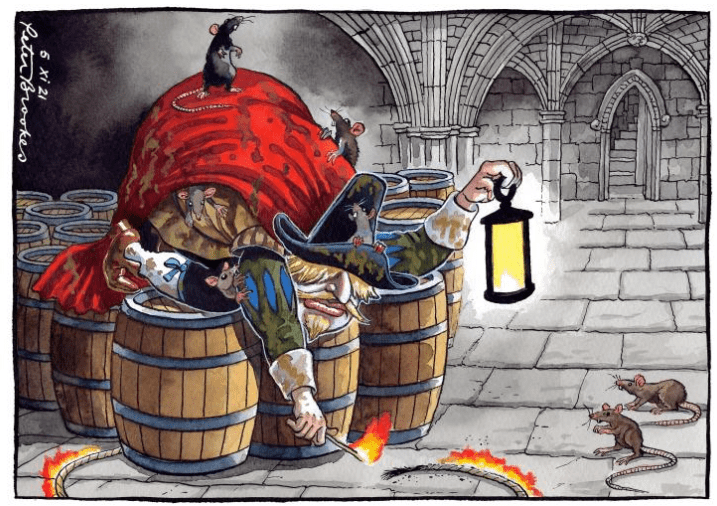
Tory MPs defend votes after uproar over sewage proposals

Tory MPs have been defending themselves from accusations they have given the go-ahead to water companies to dump raw sewage in rivers.

Our own Simon Jupp and Neil Parish voted to reject the Lords amendment that would have placed legal duties on the companies to reduce discharges. Have they got any regrets? – Owl

www.bbc.co.uk 

Pic showing discharge into river

Campaigners are concerned about the impact of sewage discharges on many rivers

A proposal from the Lords to the Environment Bill that would have placed legal duties on the companies to reduce discharges was defeated by 265 MPs’ votes to 202 last week.

The MPs say safeguards already exist and new measures would cost billions.

Critics say the UK is “lecturing” the world while its rivers are polluted.

With just over a week to go until the UK hosts the COP26 climate summit, there is intense focus on ministers’ green credentials.

Last Wednesday, 265 MPs voted with the government to reject an attempt by the House of Lords to toughen up the approach to the discharge of sewage, while 22 Conservative MPs rebelled and voted against the government.

The move has sparked an uproar on social media.

Peers had tabled an amendment to the Environment Bill that would have forced water companies and the government to demonstrate progressive reductions in discharges of untreated sewage and required them to “take all reasonable steps” to avoid using combined sewer overflows.

But ministers said the changes were unnecessary because safeguards are already contained in the bill.

‘Every river polluted’

Speaking on Radio 4’s Today programme, former singer Fergal Sharkey, who now campaigns to clean up the nation’s waterways, said it was a “disgrace”.

“We’re lecturing the rest of the planet on climate change yet the reality is there is not a single river in England that makes good overall environmental health,” he said.

He said “every single river” in England is polluted and “a major cause is the water industry dumping sewage”.

He added: “The truth is what we are looking at is the result of a massive under-investment in infrastructure for the last 30 years and a complete failure of oversight and regulation of the industry by Ofwat, the environment agency and the government itself.”

He said ministers were “unwilling and incapable” of dealing with the situation.

Conservative Huw Merriman, who voted against the government and for the amendment, said “what was being proposed by the government wasn’t enough” and he hoped ministers would “be persuaded” it was the right way to go.

He said: “To have sewage being discharged down streets, when there is too much rain, into the sea” is “just absolutely shocking”.

“It does mean more investment. That may ultimately mean more expensive bills, but we’re talking about decades of investment and it’s got to happen,” he said.

Unfair to taxpayers

But fellow Conservative, Julie Marson, who voted against the amendment, said “there is a lot of misinformation floating about” on the issue and while the proposal itself was “sound”, its “fundamental flaw” was that it “had no plan as to how this can be delivered and no impact assessment whatsoever”.

She wrote: “The preliminary cost of the required infrastructure change was estimated to be between £150bn and £650bn.

“Unless we asked taxpayers to contribute, most of the water companies who would be carrying out this work would go bankrupt, meaning the work could not be completed anyway.

“The cost works out at between about £5,000 and £20,000 per household.

“I felt it would be unfair to sting local people with a bill of this size.”

She said the existing legislation already placed a new duty on water companies to continuously monitor the water quality upstream and downstream of a storm overflow and of sewage disposal works.

Another Conservative, Fay Jones, tweeted that the criticisms of MPs were “deeply misleading”.

She wrote: “It ignores the massive flaw in the amendment (i.e forcing taxpayers to pay up to £600bn to dig up Victorian sewerage system) and the work the government is already doing to reduce discharge from storm overflows.”

And Conservative, John Howell, said in a statement he voted against the amendment because “it is necessary to be realistic” given the age of the sewerage systems and the potential disruption to homes and businesses.

The accusation that he voted to allow water companies to pump raw sewage into rivers “is far from the truth”, he said.

“It would be just as fair to say that Liberal Democrat and Labour MPs voted to pump raw sewage into your home given that resolving the problem by their half-baked proposal of sewage discharges would require rebuilding the sewage system and could cost up to £600bn and take many years,” he added.

Scale of problem

Water companies discharged raw sewage into rivers in England more than 400,000 times last year, according to figures published by the Environment Agency.

Untreated effluent, including human waste, wet wipes and condoms, was released into waterways for more than three million hours in 2020.

Chart showing number of hours water companies discharged sewage into rivers.. 31 MAR

The Environment Agency allows water utilities to release sewage into rivers and streams after extreme weather events such as prolonged heavy rain.

This protects properties from flooding and prevents sewage from backing up into streets and homes.

The agency says that overflows are “not a sign that the system is faulty”, and that they are “a necessary part of the existing sewerage system”.

The Environment Bill will return to the Lords on Tuesday, where peers are expected to re-insert the measures before it goes back to the House of Commons later this week.

EDDC Council Plan 3: A resilient economy

Council priority three A resilient economy

Covid‑19 has had a significant and detrimental impact on the economy of East Devon. Before the pandemic, the district was in almost full employment. Through the pandemic one third of employees across the district were furloughed and longer term the unemployment rate has been forecast to increase.

During the first half of 2020, over 1,000 jobs were lost due to companies going into administration or relocating, including the collapse of Flybe. Many jobs that have been lost have been high value and skilled engineering roles but just as many are in the lower paid sectors of our local economy.

We understand the shift in patterns of behaviour, including more working from home, and the importance of improving access to and the speed of broadband, especially in rural areas.

We have witnessed an increase in occupation of second homes through the move of people out of cities in response to the pandemic and the impact on our local economy and infrastructure.

We also recognise the impact on our town centres of the loss of footfall, through people working from home and the increase in the use of home delivery, rather than local shopping. This might require us to review our planning policies in relation to the conversion of retail and secondary shopping areas to residential or live-work use.

Shop staff with a face covering standing outside a gift shop

Covid-19 precautions in Budleigh Salterton

It is our overriding priority to strive for a resilient economy in order to promote prosperity and reduce hardship within the district. Not only will we seek to increase the levels of employment, but we will also seek to improve the quality of employment to raise wages levels across East Devon.

We will consider the use of our assets as a council and our planning policies to support regeneration and create employment opportunities.

We recognise the economic as well as the social value of tourism, art and culture to the local economy and the wealth that is generated in those sectors.

A building in Exeter Science Park

Exeter Science Park

We also recognise the importance of working as a part of Team Devon in order to drive recovery for the East Devon economy. We will continue to promote the development of the Exeter and East Devon Enterprise Zone as key to the prosperity of our district.

Our priority actions for a resilient economy

Promoting the green economy

  • Support working from home to reduce carbon emissions through unnecessary travel and facilitate the economic sustainability of our local towns and communities.
  • Deliver a tourist strategy with emphasis on the on the green economy.

Our financial stability

  • Maintain an active approach sourcing and securing available funds to help with asset management and the promotion of the district’s economy.
  • Provide in-house commercial services such as pest control and food safety training that provide value for money to residents and local businesses, whilst creating new and valuable revenue streams for the council.

Supporting employment

  • Work with the Department of Work and Pensions, regional and local partners to develop and co-ordinate an effective redundancy response network to respond to the serious economic challenges that the pandemic has brought to our district and our residents.
  • Work with our Growth Hub to support local small and start-up businesses through free access to tailored advice and guidance, stepping up that support as businesses grow and develop and addressing barriers to business growth and innovation.
  • Ensure that all our assets (including car parks) are used in the most effective way and that their development potential is evaluated to support employment and create economic growth and prosperity for all.

Supporting our local economy

  • Develop the infrastructure needed to support our local economy, including transport and housing.
  • Use the procurement power as a council to support local businesses.
  • Provide support and advice to businesses through investment in our Environmental Health department.
  • Explore the use of the doughnut economic model to guide policy and decision-making and ensure that ethical, socially responsible, and financially-sound decisions are made in an open, transparent and democratic manner.

Financial stability for a better future

We recognise that the Council Plan needs to be affordable. However, councils in England face acute financial challenges, especially as central government financial support for councils has been reducing over the past decade and demand for some services has been increasing.

The council’s Medium Term Financial Plan shows that existing service costs and expected income leaves a budget gap of £3 million in 2022/23 and a further gap of £1.2 million in 2023/24. This is against a net budget of £15.8 million. Difficult decisions will need to be made in respect of prioritising and delivering services and operating as an organisation.

In response to declining government grant, some authorities invested heavily in commercial property by borrowing via Public Works Loan Board loans in the hope that the rental yield would cover the loan costs and realise a profit to pay for services. However, over the last nine months, rental yields have plummeted. In some cases, this has resulted in the local authority being banned from any new expenditure except for statutory services. Fortunately, East Devon District Council has not had a commercial exposure to this extent, but despite government assistance regarding the impact of Covid‑19, we are still faced with challenges to balance the books for the foreseeable future.

Planning to address the identified funding gap has started, but we still need to look at ways of increasing our income and reducing costs to be able to sustain our current services, meet new requirements and needs and benefit from new opportunities.

Several our services are statutory like our recycling and waste collection. Other services are discretionary, but no less valued by residents such as public toilets and parks. Looking ahead the challenge is to get the balance right between the cost to residents and businesses and the benefits provided in terms of the quality of our environment, the health and wellbeing of residents and the strength and resilience of our local economy.

We also realise there will be a long-term impact of the pandemic on the local economy, both on businesses and on individuals, that will influence the council’s priorities, resources and services.

There are a number forthcoming decisions that impact on our budget. There is a refuse and recycling contractual tipping point that will be triggered by further property growth that will lead to higher costs plus the government changes to the national recycling requirements that may affect our collection policy and costs. We also need to implement the review of car parking charges plus and to install electric vehicles chargers to prepare for more green travel. Through 2021/22 we are undertaking a review into the provision of public toilets.

In the light of these pressures, we will need to focus on statutory services that we must deliver and discretionary services that the public value to help us to prioritise services through the Council Plan.

To deliver the vision through our Council Plan, we will refocus our resources and efficiently utilise our assets, invest to save and innovate, ensure a sound return on investment (both financial and social), keep our Council Tax within government guidelines and agree legally required balanced budgets.

We will identify new funding streams as they become available and ensure we bid for additional income where possible to secure the income needed to implement the Council Plan.

Where necessary we will lobby the government for changes in policy and funding so that we can implement our priorities, securing the resources required for delivery.

EDDC Council Plan 2: A greener East Devon

Council priority two A greener East Devon

Our commitment to addressing the climate change and ecological emergency is a key priority for the council. Our focus will be on achieving carbon neutrality by 2040 and taking care of and enhancing our built and natural environment in our towns and villages, countryside and coastline now and for future generations. The details of this work is included in our Climate Change Strategy and Action Plan.

The council will change all its current working practices to reduce its carbon emissions to the minimum.

The objective for the whole district will be to work with all residents, businesses, and partners to:

  • reduce greenhouse gas emissions from buildings through low carbon development and retrofitting
  • apply for funding to encourage energy reduction and promote green energy
  • implement carbon offsetting schemes within the district
  • reduce further the waste generated and increase the percentage of recycling
  • prepare the community for climate change so we can all become more resilient

In recent times, we have seen the value of green and open space for recreation and health and wellbeing. We shall be implementing re-wilding, nature recovery and conservancy schemes to enhance our precious environment.

Trees in the Clyst Valley

Green space in the Clyst Valley

Covid‑19 has resulted in changes to work and lifestyle patterns in the district. We need to explore and understand the impact of new ways of doing things, such as working from home and the impact of online meetings on carbon emissions.

We recognise the importance of working with others on this journey; we will work with partners and contractors, town and parish councils, businesses, visitors and community groups to support them in reducing their carbon footprint.

Greener East Devon for us also means placing the highest emphasis on the natural capital of our stunning environment – coast and countryside – and the value and importance of biodiversity within it. As custodians for future generations, preserving and enhancing our natural environment is key.

Flowers on a roadside verge

Rewilding project in the Broadclyst area

We want to provide a healthier, more beautiful natural environment that inspires, educates and involves residents and visitors to East Devon.

This commitment to greener East Devon comes at a price. It needs to be appropriately funded and resourced. However, we believe it to be essential for the future of our district.

Recently there has been a staffing shortage affecting our recycling teams, we have begun to address this and will keep it under review. We will also need to respond to any future contractual tipping point that could be triggered by further local property growth as this would lead to higher contract costs. We will also need to respond to anticipated government changes to the national recycling requirements that may affect our collection policy and costs.

Our priority actions for a greener East Devon

Carbon reduction

  • Fulfil the actions and commitments in our Climate Change Strategy (aimed at reducing the council’s carbon footprint and that of our partners, contractors, businesses, communities, residents and visitors through green procurement, reducing carbon use in our supply chain and seeking to influence the businesses from whom we purchase) and update our Carbon Plan which will be the primary vehicle for delivering our intentions.
  • Develop a Local Plan policy that protects the existing biodiversity and to improve and add to it significantly, to provide for communities to be more sustainable and provide improved interconnecting greener routes with cycle and foot ways.

Meeting high environmental standards

  • Using the council’s investments and bank accounts to support the green economy.

Planning in our environment

  • Work with landowners and developers to deliver habitat mitigation on-site with new developments or to provide mitigation close to the development site.
  • Ensure that we are giving appropriate protection to our built heritage, including developing policies for the new Local Plan to continue to conserve and protect our listed buildings and conservation areas.
  • Work with our communities to review our conservation area boundaries and their management plans, to develop a list of locally important heritage assets and progress the other actions in our Heritage Strategy.
  • Develop planning policy to protect the nature corridors with new developments; protect and enhance our natural habitats, green spaces and the existing treescape across the district; increase tree planting and replacement schemes; review our tree management policies and promote best practice.
  • Complete the review of the Playing Pitch Strategy and develop policies in the new Local Plan to protect existing playing pitches and support our sports clubs and communities to deliver new and enhanced facilities.

Promoting recycling and reducing waste

  • Continuously strive to increase recycling rates and reduction of residual waste tonnages so we are amongst the highest recyclers nationally and the lowest council in England for residual waste disposal per household and continuing the promotion of the green waste collection service and home composting.
  • Improve on street recycling including starting a programme of replacing older dog waste bins with dual mixed waste/recycling bins.
  • Continue working with all district and unitary councils in Devon with a Keep Devon Litter Free campaign and other countywide recycling projects and explore ways to further reduce on street littering.

Protecting and enhancing our natural environment in coast and country

  • Continue to develop our nature reserves including the award-winning Seaton Wetlands, and to work with landowners and groups on projects that will benefit to climate change and biodiversity net gain.
  • Continue to work with partners to deliver the important Clyst Valley Regional Park.
  • Address the risk of flooding and erosion by strengthening community resilience and extending flood prevention measures.
  • Monitor carefully the progress of the Environment Bill 2020 and prepare appropriate plans to address the implications for East Devon District Council.

EDDC Council Plan 1: Better homes and communities for all

Council priority one Better homes and communities for all

We want to increase access to social and affordable homes as one of the council’s highest priorities.

We want to ensure better build quality of new homes, more social and affordable housing and a good standard of maintenance, to ensure homes are fit for purpose across all sectors. To us, delivering better homes is about far more than bricks and mortar; it is about using our resources and influence to keep people healthy and safe. It is about the quality of the setting of the homes, whether that is town, village or countryside and about the amenities, the open space and infrastructure that serve the houses and contribute to the wellbeing of residents.

Two staff members standing next to a repairs van

Ian Williams, our home repairs contractors

We believe that as the planning authority we have a crucial role to play in delivering better quality homes, ensuring the right homes in the right places and enforcing high build standards. Through our enabling activities, we intend to drive the delivery of much needed social and affordable housing. We will be pressing harder than ever for the ending of the Right to Buy which deprives the council of crucial housing stock.

As a council we also wish to reduce poverty and deprivation and intend to use our resources to achieve this.

Recognising the significant contribution of the voluntary sector to building community, we will seek to strengthen the sector and to support volunteering and the third sector.

A portfolio has been introduced to cover leisure and culture, recognising the importance of these sectors for our local economy, our communities, tourism and health and wellbeing.

Children with art activities next to the Creative Cabin vehicle

The Creative Cabin at Queen’s Drive Space, Exmouth

Our priority actions for better homes and communities for all

Promoting better homes and stronger communities

  • Prepare and promote robust policies in our local plan to address the need for more and better quality homes and communities for all.
  • Deliver more social housing and explore new ways to build more affordable homes.
  • Deliver on the commitments in our Housing Strategy and Housing Service Plan.
  • Implement our Homelessness and Rough Sleeping Strategy to assist those in greatest housing need, providing options through our own housing revenue account, by working with our partner housing associations (registered providers) and by responding to the consultation of Devon Homes relating to their banding of property and their assessment of those in need of housing.
  • Promote Home Safeguard services and develop our supported housing offer.
  • Ensure that council homes are well-managed, in good repair, fit for purpose and safe for our tenants and that we obtain high performance and value for money from our integrated asset management contract for repairs and maintenance and continue to invest in tenants’ homes, guided by stock condition data.
  • Engage with and involve tenants in decisions affecting their homes and to improve communications between tenants, the council and its contractors.
  • Apply for grants to promote energy efficiency and promote access to grants through greater publicity to residents of available options.
  • Advise on and enforce standards in the private sector to attain suitable management and safety standards, including affordable warmth, houses in multiple occupation, mobile homes and private water supplies.
  • Through our planning policies and the spending of Community Infrastructure Levy monies seek to secure the timely delivery of new infrastructure to support new development.
  • Continue to work with our communities to support them in developing Neighbourhood Plans that reflect the community’s future aspirations and where those include community-led housing schemes work with them to progress their proposals through the planning process and towards delivery.
  • Acquire a site to facilitate self-build plots and support their delivery.
  • Research the ability for local communities to control the number of second homes in their communities.

Promoting health and wellbeing across the community

  • Implement our Anti-Poverty Strategy, designed to reduce hardship and inequality in the district.
  • Implement the actions contained in the Public Health Strategic Plan designed to improve public health, wellbeing and the quality of life of our residents.
  • Ensure that our services and facilities are Covid‑19 secure and that the community support hub continues to be supported.
  • Promote our natural environment, culture and leisure opportunities as part of our plans to deliver public health (including mental health) projects.
  • Take forward the agreed recommendations of the strategic leisure review in a timely manner.
  • Work with Devon County Council and the Devon Clinical Commissioning Group to ensure that a model of place-based care is in place to make the best use of the existing space in community hospital sites, the better to serve the communities of East Devon; this will reduce travel requirements to Exeter and assist in meeting the targets on carbon reduction as a by-product.
  • Review our public toilet requirements, including their location, to ensure they are fit for purpose, working with town and parish councils.
  • Ensure that developers pay the required contributions towards infrastructure through Community Infrastructure Levy and Section 106 agreements, and that where monies are available to be spent by the community, that they are supported by public engagement on spend and given easy access to funds.
A group of people in Honiton High Street during the Gate to Plate food festival

The Gate to Plate food festival in Honiton

Promoting culture and community

  • Develop a stronger commitment to and offers in arts and leisure through the development of a Culture Strategy and an Events Strategy for our own land.
  • Encourage town and parish councils (and the third sector where appropriate) to protect and support their community spaces.
  • Promote community wellbeing programmes through a culture and activities offer, led by the Thelma Hulbert Gallery, Seaton Wetlands, Wild East Devon, and expand our community development activities.
  • Promote the links between arts and culture and climate change through the Creative Cabin and other initiatives, raising awareness of the public and seeking to change behaviours.
  • Support communities through the transfer of appropriate community assets to towns and villages, enabling local communities to own, manage and develop assets in support of community aspirations and benefits.

Plans to boost East Devon after the pandemic: Introduction

EDDC has just published its own version of “build back better” with a council plan for the immediate post Covid recovery period 2021-2023.

Owl is publishing this in full in four posts:

Introduction (this post) which sets out the vision, plans and priorities. Followed by three more giving the details of each priority. 

Council priority one Better homes and communities for all

Council priority two A greener East Devon

Council priority three A resilient economy

Council Plan 2021-23 | East Devon District Council – Introduction

Councillor Paul Arnott Leader of the Council eastdevon.gov.uk


Message from the Leader

It is an honour to hold the position of Leader of East Devon District Council and therefore to have been asked to provide an introduction to this new Council Plan. It is the fruit of many hours of thoughtful work between the council’s members and officers, and enables both the democratic part of the council’s function and the administrative part to share an understanding and a practical vision.

I was aware when becoming Leader in May 2020 that there would be many legacy issues and I am pleased that members and officers have worked together to address a number of concerns. I am pleased that most of these matters have come to the fore because a new generation of councillors has engaged with the council to address them.

However, while legacy issues have to be dealt with, this council has also had to cope with the extraordinary work pressures caused by the need to respond to the pandemic, and all officers and members should feel highly satisfied that East Devon District Council has grafted above and beyond to sustain its services. There have been perfect storms, especially around waste and recycling, but the efforts to weather these have been magnificent, and our frontline workers in particular must also be warmly thanked.

Now we must look to the future, and the plan below sets out a practical roadmap to address the key priorities for the district which are, in essence, how can we make sure people have places they can afford to live, how can we conserve our magnificent environment, and how can we ensure there is the support and initiative in place to generate the employment opportunities to enable prosperity and economic security.

This Council Plan sets a course for the council to follow for the immediate future. It is imaginative but realistic as our finances, like so many other councils across the country are limited and this places limitations on how many of our aspirations we can deliver. We have quite rightly prioritised delivering on our promise to get more social and affordable homes built, as we face a housing crisis across the country. We have also prioritised our actions to tackle climate change, because if we don’t, as climate change champions say, there is no Planet B. And our third priority is to manage our finances and to budget in a responsible manner and to work to create a resilient local economy across the district.

I am in no doubt that a strong East Devon District Council working in close collaboration with county and other districts has the best chance of delivering on these priorities, and to take the opportunities which are perhaps going to arise from new regional investment from central government. Whatever the next few years may bring, close, respectful and collegiate cross-political-group work will be essential.

Our vision and values

Our vision is to make a positive difference to residents’ lives and our environment in East Devon.

The way we will make a positive difference to residents’ lives and our environment will be influenced by our values. These include:

  • seeking continuous improvement of our high performing council
  • listening to and learning from our residents and caring for them
  • adapting as a council to new ways of working and refreshed priorities whilst recognising the pressure on resources

Our Vision and Values Commitment sets out more detail about our core vision and values and how they underpin everything we do.

Our plans

Our plans and strategies fit together so that everyone understands how their contribution fits in with the Local Plan and the Council Plan – we call this the ‘golden thread’. Our suite of plans and strategies includes service plans as well as a Homelessness and Rough Sleeper Strategy, Housing Strategy and a Climate Change Strategy.

How our Council Plan gives direction for the council’s work

Our Council Plan with its three priorities feeds into a category of delivery. This then feeds into a category of monitoring.

The category of delivery includes the Financial Plan, the Local Plan, council strategies and Annual service plans.

The category of monitoring includes budgets and the Financial Plan. It includes Council committees like cabinet, Overview Committee and Scrutiny Committee. It includes Performance Excellence Reviews and individual performance objectives for council staff.

Our priorities

Our vision is integral to our Council Plan and the delivery of it and we believe that East Devon District Council can achieve it through our three priorities:

  • Council priority one
    Better homes and communities for all with a priority on the importance of good quality, affordable housing suitable in size and location. Poverty caused by the loss of employment, illness or disability is an increasing issue and will also be a high priority for East Devon District Council to tackle through all means available to us.
  • Council priority two
    A greener East Devon, which prioritises issues arising from climate change and supports our natural environment. This issue affects and informs all of our objectives and services.
  • Council priority three
    A resilient economy bringing prosperity to the district, notwithstanding the current challenging circumstances.

Conclusion of our Council Plan

This Council Plan sets out the district council’s strategic direction until the next elections in May 2023. It will guide officers and staff about council priorities and objectives, creating a framework to help plan and efficiently deliver great value and quality services to all residents, businesses and visitors.

This plan should also inform our residents, business, and partners about the council’s ambitions to evolve and improve. To do this, we have set out our three key priorities alongside our broader aspirations.

The council can, and will, deliver this Council Plan with the support and commitment of our dedicated staff and partners. This is only possible because each councillor, regardless of their political pedigree, has a single united desire to ensure that this council succeeds in all that it does to make East Devon a great place to live, work and play.

This council cannot deliver on its Council Plan unless it has the necessary resources. We remain at the whim of central government funding and direction, which presents a problematic and constantly evolving situation. Therefore, the council must continually find new and more imaginative ways of raising additional funds and review how it can more efficiently manage all of its assets and resources. The following two years and beyond will subsequently remain financially challenging for this council.

Despite these challenges, we conclude this Council Plan with the firm commitment to strive, more than ever before, to turn our ambitions and goals into quality services and support for all East Devon residents and businesses.

East Devon District Council is a local authority providing great value services to our local residents.

We are a council with no overall political control but a strong and productive coalition between the Democratic Alliance Group and Independent Progressive Group has formed an administration. The Leader, Councillor Paul Arnott, was elected as a member of the East Devon Alliance which is part of the Democratic Alliance Group within the council.

Find out more information about the political makeup of the council and to access minutes from our committee meetings

Our council comprises of:

Our councillors

Each councillor represents the residents living within a ward in our district.

Our councillors are committed to making East Devon one of the best places to live and work in the district delivering the services that our residents value the most.

Find out more about East Devon’s councillors

Find out more about the great place we service in our Knowing East Devon profile

Our services

We are proud of the wide range of services that our council delivers whether by itself or in partnership with others. We are especially proud of our staff’s continuing and additional delivery of services over recent challenging months during the global pandemic.

We have good news to share about how well we do as a council in recycling waste and delivering other services. We are the custodians of ten nature reserves and responsible for the South West Coast Path in our district and the East Devon Way.

Staff emptying recycling into a recycling vehicle on the roadside

SUEZ, our recycling and waste contractor

We are also proud of our external accreditation – our Green and Blue Flags, our platinum award from Investors in People – and we strive for continual improvement beyond what has already been achieved. This means operating at the highest level as an organisation – to deliver excellent services first time and every time.

East Devon District Council will improve communications to highlight the services we provide and what we do as a council, including the day-to-day work of our staff for our residents.

Our services range from the delivery of grants and benefits on behalf of the government through to environmental health, street cleansing, toilet provision, Award-winning parks, beaches and open spaces, recycling and waste collection. They are visible and make a big difference to the quality of life and the attractiveness of our local environment.

LED Community Leisure providing community activities in the district

Behind the scenes we also deliver so much more; complex and bespoke engineering projects typically linked with climate change and based around flood protection; a planning department that determines applications large and small and oversees building control; leisure services to meet the needs of East Devon residents through our partners in LED Community Leisure; cultural services both independent of and in conjunction with LED and a finance department that efficiently supports our customers, some of whom may be struggling financially.

We strive to evolve continually for the benefit of all our residents now and in the future

We strive to evolve continually for the benefit of all our residents now and in the future. This will require us to consider how we maintain and fund our assets such as toilets and car parks, which matter to the public. It also will require us to consider how we fund and deliver services in future, especially in the light of the recovery from the pandemic, the climate emergency and changing demographics, patterns of work and emerging technologies. We also will need to be clear about the capacity we have and the financial pressures facing local government, and be alert to securing new sources of funding and exploring new opportunities to secure resources for our activity.

The main entrance of Blackdown House

Blackdown House, Honiton

External evaluation matters to us and we will continue to value that especially where it, as often is the case, provides positive endorsement of our services, processes and staff.

In support of our three corporate priorities and behind the scenes we will:

  • improve our communications with residents so that they are better able to contact elected members and officers, find out information about the council and access the services we provide
  • look after our exist assets, expanding access to them and improving the return on the council’s investment in them, giving both value for money and providing social value to our communities
  • review the services we provide, the performance and funding of those services and the partnerships we require to expand the services and deliver them and effectively as we can
  • expand the resources available to support regulation and enforcement activity to ensure a good quality of life and a safe and attractive environment for our residents
  • develop a new and enhanced performance management system to monitor the efficiency of our services
  • explore innovative digital ways of consulting our residents to establish snapshot views in order to improve our services
  • improve the customer experience of our telephone system based on customer and stakeholder feedback
  • identify and implement improvements and upgrades to our website to enhance our digital offer and delivering more digital services so that customers can easily access reliable information and resolution of service requests
  • provide responsive, effective and consistent communications through traditional media and social media
  • listen to feedback via our residents’ vewpoint surveys and developing an action plan to improve our services

Planning applications validated by EDDC for week beginning 11 October

Budget 2021: £2bn for new homes on derelict or unused land

Almost £2bn will be invested by the government into building new homes on derelict or unused land in England, the chancellor is expected to announce in Wednesday’s Budget.

BBC News www.bbc.co.uk

The government said 160,000 greener homes could be built on brownfield land the size of 2,000 football pitches.

It also pledged to invest £9m towards 100 urban “pocket parks” across the UK.

However, concerns have been raised that not enough affordable homes are being built.

Nigel Wilson, chief executive of Legal and General, told the BBC’s Today programme the £1.8bn investment was the “right direction of travel”, but was “not enough scale right now”.

He warned people living in smaller cities and towns were being “left behind” due to not enough homes being constructed.

“You shouldn’t have to be rich to be green,” he said. “It’s very difficult for poorer people to get on the green (housing) ladder.

“There’s a lot of active listening going on (by the government), but we don’t just want CGI housing – we want real housing built across the UK.”

The government said the funding was part of its efforts to meet the UK’s net zero target by 2050.

It hopes the plans will help regenerate parts of England and support 50,000 new jobs.

The proposals also include creating so-called “pocket parks” – measuring the size of a tennis court – to create more green spaces.

More than 2.5 million people across the UK currently live further than a 10 minute walk from their closest green space.

Tim Farron, Liberal Democrat spokesperson for housing, said people buying new homes would be “forced to fork out thousands to upgrade their homes in the future to cut their bills and reduce emissions”.

“In his Budget, the chancellor should bring forward new standards for greener homes to ensure all new homes are cheap to heat and produce minimal emissions,” he said.

The Labour Party and Green Party have not responded to requests for comment.

As well as funding for new housing developments, the chancellor is expected to confirm £65m to develop new software to help with the digitisation of the town planning system.

The first phase will see the system rolled out to up to 175 local authorities in England.

Revealed: Boris Johnson’s Rambling Speech At Women’s Event – ‘I Love The Police’

Does he have the “will or inclination” to stand up for women or does he just want to keep in with ‘the boys’?

The prime minister waffled about women lorry drivers having to urinate in bushes and female representation.

Sophia Sleigh www.huffingtonpost.co.uk 

Boris Johnson has been criticised over a speech in which he heaped praise on police and talked about female lorry drivers urinating in bushes. 

The prime minister described how much he “loved” the police while speaking to women at the Conservative Party conference in Manchester earlier this month.

The comments were made two days after Johnson had been on TV urging the public to trust the police in the wake of Sarah Everard’s murder by serving officer Wayne Couzens.

However, some female Tories were less than impressed, with one telling HuffPost UK: “It was tone deaf really. Instead of lavishing praise on the police, perhaps he should have been talking about what they can do to rebuild trust with women.” 

The speech – made just a few days after Couzens’ sentencing – was described as “terrible” and “out of touch” by one Tory woman.

Johnson made the comments at a fringe event by Women2Win – a campaign to get more Conservative women elected.

He said: “Look at our policing I think the men and women in our police force are fantastic. I love them. I love the police and there’s several of them here protecting me, so I better be careful what I say. They are wonderful guys.”

In an apparent reference to Everard’s killing, he went on to say we all wanted to have a world in which women “can walk the streets safely” and their complaints are taken seriously.

Also in the speech, the PM pushed for more female representation in every profession, adding: “Look at the issue that’s obsessing the media at the moment – slightly too much obsessing the media.

“Why is it do you think my friends, it’s so difficult to persuade people to become lorry drivers and join the road haulage industry well why should they join when you when you’re told you have to urinate in the bushes?

“I’m speaking frankly about this, why should you when you have to sleep in your cabin, that’s not frankly what women want. It’s ridiculous.”

Labour MP Janet Daby has been calling for misogyny in police forces to be addressed and raising examples in the commons. 

She told HuffPost UK: “He is not helping the police by brushing off the issue and by keeping in with ‘the boys’.

“Critiquing the police is not about making them ineffectual or reducing their authority in society. It is about improving their standards and challenging them to be better and to provide a dignified and well-respected national service.”

She said sexism was “deep-rooted” in the police force and no different to the challenges other male dominated organisations have faced.

Daby said she was not convinced Johnson has the “will or inclination” to stand up for women.

A No10 spokesperson said: “This was a truly sickening crime – and as the PM said at the time, we know that officers will have shared in the shock and devastation felt by the whole country.

“We’ve been clear that the police must raise the bar and investigate crimes against women and girls thoroughly so that victims feel more confident coming forward to report them and more perpetrators are brought to justice.

“Our Violence Against Women and Girls Strategy – launched this summer – will also help drive long-term change to prevent more of these crimes from happening in the first place and ensure victims get the support they need.”

Tory MPs back plan to give people a vote on new housing in their areas

Conservative MPs are calling on the housing secretary, Michael Gove, to hand greater decision-making powers over new housing to local people in an attempt to boost acceptance of new developments.

Robert Booth www.theguardian.com 

Steve Baker and Greg Smith, Tory MPs in house-price hotspots in Buckinghamshire, are backing a plan to strip councils of decision-making powers over some new developments and incentivise residents instead to approve new schemes.

The proposal to extend localism comes as Gove and his advisers rethink government planning reforms, which ran into angry opposition in the Tory shires because they reduced local participation in planning and gave developers a freer hand.

Baker and Smith are backing an idea floated by the Social Market Foundation thinktank to allow residents of streets or villages to vote on whether to accept additional development in their close vicinity. The theory is that they are more likely to support allowing more extensions or new homes on underused sites if they stand to benefit themselves from the planning consents.

“It is clear that we cannot continue with our current planning system,” said Baker. “Costs and disbenefits are imposed on individuals without adequate inclusion in the process or adequate compensation being provided. We need to give the public the opportunity to say ‘no’ to planning proposals, but the incentives to say ‘yes’ because they see the gains for their community.”

The government has said 300,000 new homes need to be built each year to meet demand. In the last 12 months for which data is available – up to the end of June 2021 – 183,450 were built in England.

The report, written by John Myers, who runs the YIMBY Alliance (yes in my back yard) campaign, suggests villagers “should have more power to allow high-quality, attractive development next to the village when they see benefits for the community”.

“In towns or cities, residents of a stretch of street should have the right to conduct a street vote to set out the rules for new extensions or more ambitious development,” Myers writes. “A mews vote could similarly allow residents of houses surrounding a stretch of waste ground to give permissions to add new mews cottages.”

Greg Smith, the MP for Buckingham, said: “Planning in the UK is broken. Driving through our villages, signs proclaiming ‘no to xxx houses’ or ‘no new development here’ are commonplace – and politicians ignore that at our peril. This new paper proposes a fundamentally good principle of genuine localism and people power.”

Find the money! Now you see it, now you don’t

Rishi Sunak admits £7bn transport pledge has only £1.5bn of new money

www.independent.co.uk 

Chancellor Rishi Sunak has admitted that his £7bn pre-Budget pledge for new transport projects contains only £1.5bn of new money.

Extra spending will go on train and tram upgrades in England’s cities, Mr Sunak said as he seeks to fend off protests that pledges to the north and Midlands are being broken.

Pressed on how much of the money was new, the chancellor conceded £4.2bn had previously been announced. “What we’ve done is top that up by £1.5bn,” he told Sky’s Trevor Phillips on Sunday.

He added: “It’s a great example of levelling up in practice, and it’s ultimately just going to create growth in all of those places.”

Mr Sunak would not be drawn on whether metro mayors would also be told that HS2 will be built in full to Leeds, and whether a stop for Northern Powerhouse Rail would be confirmed for Bradford. “It wouldn’t be right for me to speculate,” he said.

Fears have been growing that the HS2 scheme’s eastern leg is to be significantly trimmed or even scrapped as part of the upcoming integrated rail plan.

The Independent has learned that a new station in Leeds and a new line connecting the city are likely to be given the go-ahead – but trains will be forced to slow down and run on existing tracks between Yorkshire and the Midlands in a scaling-back of the HS2 leg.

Labour’s West Yorkshire mayor Tracy Brabin expressed her dismay at the lack of commitments over HS2 and Northern Powerhouse Rail from the chancellor – warning him not to “water down” pledges.

“What is important for us is that stop in Bradford. We can’t have a watered-down version of our transport network,” she told Sky News. “We have been underfunded for decades.”

She added: “Now is the opportunity for government to be bold, to be ambitious and to come with us with our vision for West Yorkshire to have that London-style transport system that will really make us that powerhouse we can be.”

Mr Sunak pointed out that Conservative mayor of the West Midlands Andy Street and Labour’s Greater Manchester mayor Andy Burnham had welcomed the announcements he had made.

“What the money announced yesterday was about is about what we call intracity transportation, and that’s about how do we get people who live in and around a city to be able to get into the middle of it and out again easily,” the chancellor said on Sunday.

Mr Burnham praised the government and said there was now more “alignment” between regional leaders and Whitehall, as his city region appeared to be the big winner from Treasury announcements.

It was confirmed Greater Manchester would be handed £1bn in capital funding for the infrastructure elements of the transport plan at the budget on Wednesday.

“Levelling up” the Tory way

‘Prosperous’ cabinet ministers’ seats in line for millions of development cash.

www.independent.co.uk 

Seats held by seven cabinet ministers are in line to receive tens of millions of pounds of development cash despite previously being judged as not needing the funds, triggering fresh accusations of bias in “levelling up”.

The constituencies of Rishi Sunak, the chancellor, Liz Truss, the foreign secretary, and Stephen Barclay, the chancellor of the Duchy of Lancaster, are on a list of “priority places” ahead of a new £1.5bn annual fund.

Yet all three – plus those of Northern Ireland secretary Brandon Lewis, trade secretary Anne-Marie Trevelyan, chief whip Mark Spencer and Robert Jenrick, the former communities minister – had been classed as “most developed” and unlikely to receive grants.

The revelation, from research for The Independent, has provoked a fresh outcry over a post-Brexit shake-up of development spending, after delays that have already swiped around £1.5bn from needy areas this year.

Independent experts warned ministers are ignoring where “need is greatest” and making a mockery of Boris Johnson’s celebrated pledge to level up the country.

Labour accused the government of “funnelling money to richer cabinet ministers’ constituencies”, after similar controversies over different funding pots.

The long-promised UK Shared Prosperity Fund – to replace the loss of the £1.8bn-a-year EU structural funds – is already mired in controversy, after being delayed until next year.

The government promised to match the pre-Brexit grants – to build local economies by attracting businesses and jobs – but even a stopgap £220m fund, for 2021-22, has yet to hand out any money.

A total of 100 “priority places” were announced, across England, Scotland and Wales, for that stopgap UK Community Renewal Fund to help them “prepare” for grants from the £1.5bn Shared Prosperity Fund to follow next year, although other areas will also be eligible.

That list sparked anger by excluding some poorer areas – Liverpool, Sheffield, Knowsley, Carlisle, Plymouth and Preston – that received the EU funds.

Now research by the House of Commons library has revealed that seven cabinet ministers’ seats were in low-priority “most developed” areas under the old scheme – but are now first in line for many millions of pounds each.

They are in the local authorities of Richmondshire, in North Yorkshire (Mr Sunak’s constituency), King’s Lynn & West Norfolk (Ms Truss’s), Fenland, in northeast Cambridgeshire (Mr Barclay’s), Newark and Sherwood, in Nottinghamshire (Mr Spencer’s and Mr Jenrick’s), Northumberland (Ms Trevelyan’s) and Great Yarmouth (Mr Lewis’s).

Of the 49 council areas in England that were considered “most developed” but are now “priority places”, no fewer than 35 have Conservative MPs, or a majority of Conservative MPs.

The New Economics Foundation think tank hit out at the way the fund has been set up, accusing ministers of wasting “a golden opportunity” to target areas still suffering from the loss of old industries.

“These delays and its allocation process – which seems to pay little heed to where the need is greatest – are a missed opportunity to give people greater control over their local economies,” said Frances Northrop, NEF associate fellow.

Professor Steve Fothergill, of the Centre for Regional Economic and Social Research at Sheffield Hallam University, also condemned a “badly flawed” process that would aid “distinctly prosperous areas” at the expense of poorer ones.

He criticised the use of local authority district data – when local economies stretched much wider – and population density as a criteria, “a discriminator in favour of rural areas” which tend to be Tory.

“The civil servants have screwed this up with a formula that’s generated some bizarre and silly results,” Prof Fothergill said, while rejecting the idea of a “political fix”.

He added: “EU structural funds have been the largest source of funding for economic development for 30 years. The government can’t be serious about its levelling up agenda if this list is used for allocation of the Shared Prosperity Fund.”

And Steve Reed, the shadow communities secretary, said: “Funnelling money to richer cabinet ministers’ constituencies, at the expense of poorer ones, will do nothing to fix the regional inequalities the Conservatives have created and worsened over the last decade.”

The Shared Prosperity Fund is due to start next April, but bids have not yet been sought – and there are doubts over whether all funding will be replaced, with only an annual “average” of £1.5bn to be spent.

With ministers and officials in Whitehall making the decisions on allocations, there are also fears of a power-grab that will undermine the union.

The Department for Levelling Up, Housing and Communities defended the way areas were chosen and confirmed it would enable them “to take full advantage of the UK Shared Prosperity Fund when it launches next year”.

“The selection process for the UK Community Renewal Fund is transparent, robust and fair to help identify areas most in need of funding,” a spokesperson said.

“official – sensitive”

New evidence has emerged that the government is paving the way to implement “plan B” measures in England to combat the spread of Covid-19, amid warnings from health chiefs that a “vortex of pressures” is encircling the NHS.

Michael Savage www.theguardian.com 

In the clearest sign to date that Whitehall is actively considering additional measures, the Observer has learnt that the UK Health Security Agency (UKHSA) contacted local authorities on Friday to canvass their level of support for the “immediate rollout of the winter plan – plan B”.

The disclosure comes as senior doctors warn that operations are already being cancelled due to NHS staffing shortages and scientists warn of “a triple whammy” of respiratory illnesses this winter, with Covid, flu and respiratory syncytial virus (RSV), which causes cold-like symptoms but can be serious for children and older adults.

Boris Johnson has so far publicly resisted suggestions that he should order the implementation of plan B, a menu of measures which includes the use of vaccine passports at higher-risk venues and mass gatherings, as well as legally mandating the use of face masks in some settings.

However, in a memo marked “official – sensitive”, the agency states that it was urgently seeking the views of council chief executives and leaders to be fed directly into the Cabinet Office. “This is a tight turnaround as you might appreciate and so a response by close of play would be really helpful,” it states.

A UKHSA spokesperson said they would not comment on leaks, adding: “It is part of UKHSA’s role to provide advice to the government on the ongoing response to the pandemic.” A government spokesperson said: “We are monitoring all the data closely, and the prime minister has been clear that it does not yet show that plan B is necessary. But it is ready should we need to act to avoid a rise in hospitalisations which would put unsustainable pressure on the NHS.”

Downing Street is still hoping that an accelerated booster jab programme can fend off the need for additional measures.

The prime minister on Saturday issued a desperate call to arms for everyone over 50 to have a booster jab when offered one. “Vaccines are our way through this winter,” Johnson said. “We’ve made phenomenal progress but our job isn’t finished yet, and we know that vaccine protection can drop after six months. To keep yourself, your loved ones, and everyone around you safe, please get your booster when you get the call.

“This is a call to everyone, whether you’re eligible for a booster, haven’t got round to your second dose yet, or your child is eligible for a dose – vaccines are safe, they save lives, and they are our way out of this pandemic.”

A further 44,985 Covid cases were reported on Saturday, more than 4,000 fewer than the previous day. Another 135 deaths were reported in England. It came as one of the government’s scientific advisers said he feared another “lockdown Christmas”. Prof Peter Openshaw, a member of the New and Emerging Respiratory Virus Threats Advisory Group (Nervtag), said putting measures in place now in order to “get transmission rates right down” was key to having “a wonderful family Christmas where we can all get back together”.

Despite ministerial claims that thousands of beds remain available in the NHS, senior doctors said that operations were already being cancelled. Dr Stephen Webb, president of the Intensive Care Society, said: “In many places, the planned urgent surgery that needs to be done is being cancelled. This is not because of a lack of physical beds, it’s because of a lack of staffing to be able to open those beds. We’ve heard about urgent cardiac surgery being cancelled, major bowel surgery being cancelled, because these patients needs post-operative intensive care beds. That’s not just in one or two areas – that’s across the country.”

NHS officials warned that Covid pressures were adding to staffing issues, efforts to deal with surgery backlogs, long waits in emergency departments and difficulties caused by other infections. “It’s a whole bundle of issues coming together, which form a vortex of pressure,” said Saffron Cordery, the deputy chief executive of NHS Providers. “What Covid has done is exacerbated these challenges and thrown some extra things in.”

Matthew Taylor, the chief executive of the NHS Confederation, who has already called for plan B measures, said: “You [the government] have got to recognise that we need a national mobilisation. You’ve got to recognise there is a health and care crisis coming over the next three or four months and accept it, acknowledge it and encourage the public to do everything they can to help. We may need to just get used to the fact that the booster campaign needs to happen every six months and prepare for that, so I welcome the fact that government has stepped up the message there.”

A senior scientist also warned that the nation faces “a triple whammy” of respiratory illnesses this winter. On top of Covid and flu, comes the threat from disease triggered by RSV, one of the most common causes of coughs and colds in winter. For most people, infection causes mild respiratory illness but in the very young and the elderly, RSV infections can trigger severe illnesses such as bronchiolitis and pneumonia and can lead to hospitalisation and even death.

“We had very few – almost no cases – of RSV last year and that is a worry,” said virologist Prof David Matthews of Bristol University. “Immunity to RSV only lasts a couple of years after previous infections. Because of lockdown RSV rates were very low in the UK last winter. That means there is very little RSV immunity left in the population. For good measure there is no RSV vaccine to protect against the disease.”

The country is now highly vulnerable to RSV infections, Matthews said. “That is a real worry because infections are very capable of putting both the elderly and the very young in hospital and at present we probably have very little immunity to the disease.

“Together with influenza and Covid-19 we are facing a triple whammy this winter, one that could have a grim impact on the NHS. It is extremely worrying. It is another reason we need to keep Covid cases to a minimum and get vaccines – boosters and for children – into as many people as possible.”

Tories don’t need masks – here’s why

“….Unfortunately, the government’s refusal to take COVID seriously since ‘Freedom Day’ has only encouraged the idea that COVID isn’t worth worrying about. Doing nothing now will just make it worse. This pandemic is far from over, and whilst it seems some would rather bury their heads in the sand, COVID-19 and its new variants have other plans.”  Professor Tim Spector

Areas of Devon in the ‘purple zone’ for highest Covid rates

There are 11 areas of Devon within the ‘purple zone’ for high Covid infections.

[The Devon County Dashboard is beginning to show increases in infections amongst all groups except the 80+. Time for a policy change? – Owl]

Daniel Clark www.devonlive.com 

The latest Government figures, which cover the seven day period between October 11-17, show that the 11 areas have rates of more than 800/100,000, with three areas over the 1000/100,000 mark, indicating more than one per cent of the population tested positive in seven days.

Tiverton East is the Covid capital of the Devon, with rates of 1212/100,000, closely followed by Kilmington, Colyton & Uplyme on 1130/100,000 and Winkleigh & High Bickington on 1086/100,000.

Woolwell & Lee Mill, Tiverton North & Outer, Ottery St Mary & West Hill, Hatherleigh, Exbourne & North Tawton, Tedburn, Shillingford & Higher Ashton, Willand, Sampford Peverell & Halberton, Okehampton and Honiton South & West are also all above the 800/100,000 mark and thus are shown in purple on the Government map.

At the other end of the scale, Central Exeter is the only area of Devon with a rate below 100/100,000, with St Thomas East, Pennsylvania & University, and St James’s Park & Hoopern also among the five lowest areas in Devon.

Infection rates in Devon are currently at 482/100,000, and have risen 25 per cent in the past week, although the rate of growth has been slowing down.

Mid Devon is 66th, West Devon is 76th, East Devon 93rd, Torridge 125th, North Devon 153rd, Plymouth 164th, South Hams 190th, Teignbridge 196th, Torbay 218th, and Exeter 261st out of 315 regions for infection rates

Devon Covid infection rates

Devon Covid infection rates

The rates though are as high as they have been in the county since August 24.

Rates in 0-19s are the highest of any age group, but only in Torridge are they currently falling.

Official Government figures showed that numbers of patients at Torbay Hospital have gone from 18 to 24, North Devon District Hospital had risen from 15 to 17, while Derriford Hospital rose from 40 to 49, but in Exeter, numbers are down from 34 to 28.

In the last week, there has been seven deaths in Devon, none in Plymouth, and one in Torbay.

Online article contains a full listing of area infection rates. 

From the Devon Covid Dashboard for East Devon

A few weeks ago the rise in Covid case rates was concentrated in the 0-19 and 10-19 year old age groups, most likely attributable to school children and their families. Now all age groups except the 80+ are showing increases as the infection spreads more widely in the community. So far the government is holding Plan B on ice. A prudent government would also be preparing a Plan C. – Owl

Quote from Professor Tim Spector – (Owl’s emphasis):

“….As feared, cases have spilled over into the older age group which will certainly lead to more hospitalisations and deaths. The UK needs to act now to prevent the situation from escalating out of control ahead of winter. 

The two main reasons we’re seeing cases back at January peaks are the UK’s flagging vaccine programme, which has failed to get more than 67 percent of the population double vaccinated, and lifting most restrictions too early. As the ZOE COVID Study shows, the majority of new cases in the UK are in the unvaccinated. More needs to be done to encourage, cajole and educate people into getting their jabs, and support those who need them to get their booster shots. I’d also welcome the return of simple measures, such as wearing masks on public transport and in crowded, poorly-ventilated places, avoiding large indoor gatherings and working from home where possible. Unfortunately, the government’s refusal to take COVID seriously since ‘Freedom Day’ has only encouraged the idea that COVID isn’t worth worrying about. Doing nothing now will just make it worse. This pandemic is far from over, and whilst it seems some would rather bury their heads in the sand, COVID-19 and its new variants have other plans.”

Cathy Gardner legal challenge: False start!

Because of its importance, and the volume of material to consider, the case is being rescheduled to give it more time in court. 

This must be immensely frustrating to both Cathy Gardner and Fay Harris, and potentially more costly. – Owl

From the case page of crowd justice

Having launched my case against the Government and the NHS  on 12 June 2020 for the many failures to protect care home residents (including my father), the case eventually came before the Court for trial on Tuesday this week (19/10). It has been a long and hard road to get to this point. The Government have resisted us at every turn and sought to conceal key documents that explained what advice they had been given and why they decided what they did.

On Tuesday the Court told us that they considered there was much more information that they had to consider than time allowed. Although the previous judge ruled that the case could be heard in 4 days, the judges hearing the case this week decided that, because of the importance of the case and the volume of material, a longer hearing would be needed. This is likely to be early next year. Whilst the delay is frustrating, a longer trial will give us more opportunity to expose the detail of the Government’s failings to the Court. A longer hearing will ultimately help justice to be done.

I am so grateful to everyone who has given to the case. Without you I would have had to have given up long ago. The decision of the Court to adjourn the Trial means your help is needed again and more than ever. If you are able to give again please do so, and please also share this page with friends and colleagues. Thankyou for your support and generosity. 

Motion opposing end of Universal Credit £20 uplift passes in district council

Coalition politics in action, what a welcome change from the “Old Guard” – Owl

Joe Ives, Local Democracy Reporter honiton.nub.news

The government needs to reverse its decision to end the £20-a-week Universal Credit uplift according to a cross-party motion passed by East Devon District Council (EDDC) this week.

The boost to payments, which began in March last year to help with the financial pressures of the pandemic, ended on October 6. The government’s decision has proved divisive and has come under criticism from across the political spectrum, including from many Conservative MPs. Tory councillors on Exeter City Council voted with other parties this week in support of a motion to ask the government to review the decision.

However, some people have defended the switch to pre-pandemic rates, saying the country can’t afford to continue with the uplift. According to the Institute for Fiscal Studies, a think tank, making the uplift permanent would cost taxpayers around £6 billion a year.

Latest figures show more than 2,300 households are on Universal Credit across East Devon. Earlier this year an analysis by the Trade Union Congress, a federation of trade unions, predicted the south west would have the highest proportion of low-income workers affected by a £20-a-week cut.

Following a vote at a full council meeting this week, East Devon councillors agreed to write to the prime minister and the chancellor asking them to re-introduce the £20 payment “as a matter of urgency to the thousands of individuals, families and their children in East Devon that will be adversely affected by this cut in financial support to the most vulnerable.”

Councillor Paul Millar (Labour, Exmouth Halsdon), who introduced the motion, told the council: “With rising energy prices somewhat out of the government’s control, this is the one lever government can pull to help the situation.

“This particularly affects residents in our area due to the gulf between wages and rents and house prices in our district.

“Some cynics may argue this letter will achieve absolutely nothing and that may well be the case but I think we have a duty to our residents to say we are doing all we can to try to help this situation and let them know that we are against this ill-timed cut.”

Councillor Megan Armstrong (Independent, Exmouth Halsdon), who chairs the the council’s poverty working panel, said: “If every council in the country writes to the chancellor and prime minister in the same vein we might actually achieve something.”

Councillor Jack Rowland (Independent East Devon Alliance, Seaton), portfolio holder for finance, also supported the motion and called the decrease in Universal Credit “pernicious.” He said the impacts of the cut will be worsened by escalating energy costs, the recent end of the furlough scheme, rising inflation and the increase in national insurance from April next year.

Council Steve Gazzard (Liberal Democrats, Exmouth Withycombe Raleigh) said: “I’m really pleased to be able to give my support to this motion. There is no doubt in my mind whatsoever that there is a crisis looming at this present time.”

He said more and more people have come to him seeking the help of food banks since the end of the uplift and added: “We all know people in our own villages and towns that are absolutely struggling.” Cllr Gazzard said he worried struggling families will “be put through hell” trying to balance bills over the Christmas period.

In passing the motion, the council also agreed to promote employment programmes and to request its cabinet to look at ways of putting additional resources into the council’s anti-poverty strategy.

However, Councillor Colin Brown (Conservative, Dunkeswell and Otterhead), leader of the Conservative group at EDDC, criticised the move and pointed to the government’s recent launch of the Household Support Fund, a £500 million kitty for councils in England to help people meet daily needs such as food, clothing, and utilities. Devon County Council, of which EDDC is a district, received £5 million pounds from the fund at the start of October.

Cllr Brown said: “In view of the fact that this household support fund has now been made available, I cannot agree to writing to the government asking for temporary measures to be extended as this new support fund will be available on a basis of those who are actually in need.”

The motion passed despite most of the council’s Conservative Group abstaining from the vote.

In a statement, the Labour group at EDDC, consisting of councillor Jake Bonetta (Honiton St Michael’s) and Cllr Paul Millar, said the Conservative Group’s failure to support the motion was “cowardly” and “heartless”, adding: “People living in East Devon, so many of whom work already, are facing an unimaginable winter ahead – facing a stark choice between heating, electricity, and food.”

In a separate statement, Cllr Bonetta praised Conservative councillor Mike Allen (Honiton St Michael’s) for defying his party to vote in support of the motion.

Critics around the country argue the £20 reduction Universal Credit has increased pressure on the 5.8 million people on the benefit in the UK. Last month, homelessness charity Crisis warned the move could put 100,000 private renters at risk of homelessness.

Speaking in September, transport secretary Grant Schapps defended the cut to Universal Credit, saying: “I think most people recognise that if it’s brought in for the pandemic, it’s going to end as we move back to people going back to work and more normal times.”

In a supporting document for the motion passed by EDDC, Cllr Millar argued that savings from the end of the uplift will be lost by councils spending more to provide emergency temporary accommodation and that it would put further strain on the NHS as it deals with the physical and mental impacts of homelessness.

It has been revealed recently that EDDC spent just over £400,000 on temporary accommodation for people in the 2020-21 financial year. The rise, attributed in large part to the impact of the pandemic, is a 140 per cent increase on the 2018-19 financial year when £286,000 was spent.

PM used £2.6m Downing Street briefing room ‘to watch new James Bond film’

Boris Johnson used the £2.6m Downing Street briefing room for a private screening of the new James Bond film, No 10 has admitted.

www.independent.co.uk 

The government has been under fire for spending millions on fitting out the room only to scrap plans for the White House-style press conferences that were to be held in it.

Instead, the room is used for twice-daily briefings with political journalists, but has been unavailable for the last two days for unspecified “events”.

At first Mr Johnson’s spokesperson would not confirm that No Time to Die was screened there last night for the prime minister and his staff, as The Times reported, saying he did not know the nature of the event that took place.

Later, a No 10 spokesperson said: “Yesterday, the prime minister met with Pinewood Studios, Universal Pictures, Eon Productions and the BFI to congratulate them on the success of the latest James Bond instalment – a testament to the talent of British creative industry.

“An evening film screening took place for staff, who made voluntary donations, with all proceeds going to Sarcoma UK [a cancer charity].” Installation costs were said to have been paid by the companies involved.

The plan for televised press conferences was scrapped six months ago, after No 10 got cold feet over the prospect of the prime minister’s spokesperson facing an intensive grilling from reporters.

Labour accused Mr Johnson of a “vanity project” in creating the room, but the government argued it needed a “modern press facility”, and it did stage a media briefing by health secretary Sajid Javid this week.

The cost of the refit of No 9 Downing Street was revealed to be £2,607,767.67, largely excluding VAT, after a Freedom of Information request.

The bill included £1,848,695 for the “main works”, £198,024 on “long lead items”, and £33,395 on broadband equipment.

Allegra Stratton was due to front the televised briefings, but was instead handed the job of government spokesperson for the Cop26 climate summit.

While the briefing room was being used for “events”, the prime minister’s spokesperson has held briefings, without cameras, in No 10 instead.

The culture secretary during the fitting out of the new facility, Oliver Dowden, insisted that the venue was “not a waste of money” because the room previously used for press conferences was too small and “not fit for purpose”.

The “modern press facility” was similar to those used by other leaders around the world and would be available for future governments, not just the current one, he said.

Devon pupils losing out on £223

“Levelling up”. This is another example of all talk and no action. The reward for voting Tory! – Owl 

Anita Merritt www.devonlive.com 

Every pupil in Devon school is now getting £223 less in government funding than the national average, prompting a direct plea to the prime minister for help.

For many years, Devon councils and teachers have been lobbying the government for more cash under its fairer funding campaign.

In October 2019, it was announced the South West would receive a five per cent increase in per pupil funding in the next financial year.

However, new figures show every pupil in a Devon school currently receives £5,145 per pupil, compared to the England average of £5,368.

F40, the campaign group for the 40 worst-funded education authorities in the country, is calling for major new investment in schools and young people as the government prepares to unveil its spending plans for the future.

James McInnes, who chairs f40 and is the deputy leader of Devon County Council, has written to the new education secretary Nadhim Sahawi urging him to fight for greater investment in schools in the Comprehensive Spending Review.

He has also written to the Prime Minister calling on him and Mr Sahawi to resolve long-standing issues over funding for the nation’s most vulnerable children with special educational needs.

Mr McInnes said: “We welcome the additional funding already provided. However, more needs to be done to enable schools to provide extra support and learning to help pupils recover academically and emotionally from the pandemic which has placed greater stress on already tight budgets.

“For a number of years, education funding has not kept pace with inflation, while the demands on schools and teachers have grown rapidly. In real terms, school funding is at 2010 levels. Education requires a substantial uplift to ensure schools are able to provide quality teaching for all.

“While the government is attempting to level up funding, the process is very slow and schools in some areas continue to receive far less funding than schools in other areas as many of the historic inequalities continue to be locked in.

“Many large rural communities and ‘shire’ local authorities still receive inequitably less funding, despite having sizeable pockets of deprivation. The basic entitlement should be enough to run a school, before extra money is added on for deprivation and higher area living costs.

“Early Years has become a major concern throughout the pandemic, with the future of many providers hanging in the balance. Funding for free entitlement has received some support but many providers have lost private parental income. The pandemic has also impacted on the readiness of young children to learn. Without additional funding, the effects will be felt for many years to come.”

Mr McInnes also highlights the severe pressure which many councils are under in spending on children with special educational needs.

He said: “This continues to be a major concern. The number of children with special educational needs, and their complexity of need, continues to grow, with demand far outstripping budgets.

“While we appreciate the increase in SEND funding during the last two or three years, significant additional funding is required for both mainstream and special schools. We urge the government to publish the long-overdue SEND review and to overhaul the SEND system to ensure it is fit for purpose.”

Andrew Leadbetter, who took over as Devon County Council’s Cabinet member for children’s services and schools earlier this year, is also a member of f40.

He said: “Over the coming days, leading up to the Budget and the Comprehensive Spending Review, we will hear from all the spending departments about how they need more money.

“The chancellor will, of course, be seeking to recoup some of the billions of pounds he has spent on the pandemic but it is vital that we invest in our children and their education because the future of our country depends on them achieving their potential.

”I am completely behind this appeal to the prime minister and the education secretary to make spending on our children and their education a top priority.”

The climate crisis is global, but councils can offer local solutions 

“With the right national government support and planning, councils can use their economic power as major employers as well as owners of infrastructure, property and land, and procurers of goods and services, to be the agents of genuinely just transitions.”

But will they get that funding? – Owl

Stephen Smellie www.theguardian.com 

At Cop26 this year, we’ll hear about diplomats and heads of state negotiating over targets, but when a river bank bursts or a storm hits, it’s our local councils that are left to clear up the mess. When Storm Frank lashed the north-east of Scotland over the new year of 2016, it was council binmen, engineers, housing officers, social workers and home carers who worked day and night mobilising volunteers to evacuate homes and find temporary accommodation for some 300 households.

In the weeks and months afterwards, Aberdeenshire council had to deal with a mile stretch of destroyed road, three washed-away footbridges, and damage to several bridges. This is on top of the clean-up operation and returning families to their homes. Despite financial assistance from the Scottish government, the council was left with a bill of around £15m. This is the less glamorous, but very real work, that goes into responding to climate change.

As we look to the future, the task facing council workers like me is to think how we make our homes and neighbourhoods more sustainable and more resilient, and maybe even fairer along the way.

Starting with our homes, badly insulated housing is responsible for 14% of the UK’s total emissions. It’s a real challenge to retrofit houses and other buildings so that energy is not leaking through roofs and walls. Leaving this to individual homeowners and landlords will result in a disparity between rich people, who can afford cavity wall and roof insulation, and poor people, who will freeze in poorly insulated homes when left unable to meet rising heating bills.

Councils are ideally placed to coordinate social housing resources, while in turn benefiting other households. Local authorities who have retained in-house maintenance teams could retrofit their own buildings – but also, through the enormous efficiencies of scale that a cross-sector project would bring, reduce the cost of making homes fuel-efficient and warm for all other property owners. If you’re going to put scaffolding up to retrofit one house, it’s cheaper to do the house next door at the same time. At the same time, councils would be reskilling their own workforce, while creating industry-standard apprenticeship schemes. These would train young people in the skills needed to succeed in the green economy.

At the community level, councils themselves are enormous users of energy, from lighting the streets to heating buildings and running fleets of vehicles, so they face a challenge in reducing their own reliance on fossil fuels. However, councils can be a key agent in addressing this.

Local councils could become generators of renewable energy, using council land and buildings to generate wind and solar power for their own and the wider community’s use. This could address issues of fuel poverty within their areas, at a time when the share of household budgets being spent on heating is on the rise. There are costs involved in setting up such schemes, but the benefits would be produced quickly.

Such municipal energy projects could act as a spur to public sector partners, linking community and commercial energy projects into councils’ schemes through local renewable energy grids, avoiding the high cost of relaying energy long distance through the National Grid. With every roof fitted with solar panels, and wind turbines installed on appropriate council land, communities come closer to achieving energy self-sufficiency – an aim attainable within a couple of decades.

The benefit could be amplified if these schemes are connected to procurement policies that support nearby businesses. For example, the Community Wealth Building strategy, launched last year by North Ayrshire council, ensures that much more council spending is retained in the local area.

Of course, to initiate these schemes, councils require government investment. But many of these schemes will repay that investment over a period of 10 to 15 years, through savings on energy bills, the benefits of reducing fuel poverty and an improved local economy. Councils will need to identify the skills required to make this transition, while also recognising that some workers need to be retrained. There will be few jobs for diesel truck mechanics when council fleets switch to electrical or green hydrogen vehicles. As future social housing is built with electrical or pump storage heating, the gas fitters and maintenance teams will need to learn new skills. By working with their employees and trade unions, councils can ensure that these transitions are fair to the current workforce, tenants, service users and council taxpayers.

With the right national government support and planning, councils can use their economic power as major employers as well as owners of infrastructure, property and land, and procurers of goods and services, to be the agents of genuinely just transitions.

Government must get ready for plan B now, Sage advisers warn

Too little, too late. Anyone get that déjà vu feeling? – Owl

www.independent.co.uk

Senior scientific advisers to the government have told ministers to start preparing for the “rapid deployment” of basic Covid measures amid rising infections and hospitalisation rates, as local councils and authorities urged Downing Street to “act now, rather than later”.

The Scientific Advisory Group for Emergencies (Sage) said in a meeting last week that the reintroduction of mask-wearing, working from home guidance and vaccine certification – key components of the government’s ‘plan B’ – would “reduce the need for more stringent, disruptive, and longer-lasting measures” further down the road.

In minutes published on Friday, Sage said that advice to work from home was “likely to have the greatest individual impact” in cutting infections, which are now increasing in the majority of age groups and regions across the UK, according to official data.

More than a million people were infected with Covid-19 last week, the Office for National Statistics said, with hospitalisations also on the rise in the elderly, as fears grow that vaccine immunity levels are starting to wane among the most vulnerable.

Local directors of public health alongside politicians across England have told The Independent that the government should act immediately in introducing its plan B in order to prevent the NHS from being further overwhelmed.

“I definitely think we should act now, rather than later,” said Alice Wiseman, the director of public health for Gateshead Council. “We need to take action now as the NHS is on its knees.

“The measures are mild and not disruptive. They may not fully solve the issue, but will help to take the heat out of the fire. We could be forced to introduce stricter measures if we leave it too late.”

The intervention from Sage and local leaders adds to the pressure on the government to impose what have been described as “light-touch” measures – a move that ministers are continuing to resist.

“We are sticking with our plan,” prime minister Boris Johnson said earlier this week, while health secretary Sajid Javid insisted that the NHS was currently operating at a “sustainable” level, sparking dismay among health chiefs.

Modelling from Sage found that a “rapid increase in hospital admissions” could happen if the behaviour of the public swiftly returned to normal and the waning of the vaccines’ effectiveness was proved to be significant.

Contact patterns between children have largely returned to pre-Covid levels, though adults are still meeting and interacting less frequently with one another.

However, members of the group predicted that it was looking “increasingly unlikely” that Covid admissions for this winter would rise above the peak seen last January.

One senior member of Sage told The Independent that the recent lab testing fiasco, which saw 43,000 people wrongly told their tests were negative, had disrupted elements of the group’s modelling, meaning that it was “more unsure about the direction of the epidemic”.

In a meeting held on 14 October, Sage concluded that “reducing prevalence from a high level requires greater intervention than reducing from a lower level”. Scientists from the group have communicated to ministers that a relatively light approach, implemented early, will help to make a difference.

Assessing the impact of the plan B mitigations, members said there was “some evidence” that vaccine certification may have a positive impact on vaccine uptake, particularly in younger age groups. The reintroduction of face masks in public spaces is also expected to reduce transmission.

However, a return to working from home is likely to play the biggest role in limiting the current surge in cases, Sage said.

These measures should be reintroduced “in combination”, the group concluded, and advised ministers that “policy work on the potential reintroduction of measures should be undertaken now so that it can be ready for rapid deployment”.

It continued: “Modelling suggests that the stringency of measures required to control transmission of a growing epidemic is increased by a faster doubling time. In the event of increasing case rates, earlier intervention would reduce the need for more stringent, disruptive, and longer-lasting measures.”

The sharp increase in cases that has recently been recorded among school children is now beginning to drift into parental age groups and the elderly, data suggests.

This has coincided with a drop in immunity levels among those individuals who were vaccinated at the beginning of the year, typically the elderly and clinically vulnerable, putting them at greater risk of serious illness.

Research from Public Health England shows that protection against infection following a second AstraZeneca dose falls from 67 per cent to 47 per cent after 20 weeks. Protection against severe disease and hospitalisation falls from 95 per cent to 77 per cent over the same period.

Dominic Harrison, the director of public health for Blackburn with Darwen Council, said the “indicators that are coming out at a national level tell us that we should be acting now”.

“If we leave it too late, we’ll have such high case rates and admission that we might need to take more drastic action,” he told The Independent. “Bring in light-touch measures that still maintain the freedoms we currently have, so mask-wearing, Covid passes and renewed guidance to work from home.”

Backing calls to implement plan B, Evelyn Akoto, Covid-19 lead for Southwark Council, told The Independent: “Once again the government is failing to listen to the doctors and scientists and making the same old mistakes of inaction and complacency.”

On Wednesday, the British Medical Association accused the government of being “wilfully negligent” for not reintroducing rules including mandatory face masks. The NHS Confederation also warned that the failure to implement the plan B measures would hinder efforts to tackle the backlog of 5 million patients waiting for treatment.

Separately, it was reported that the former head of the UK’s Covid vaccine programme, Emily Lawson, had returned to the position, with the government facing calls to accelerate the administration of booster jabs. At the current rollout rate, the top nine priority groups, equating to some 30 million people, won’t have received a third dose until late January.