Seaton Hospital latest

NHS Devon rectifies procedural error, confirms intention to hand back whole wing of Hospital

Martin Shaw 7 February

When NHS Devon’s Integrated Care Board (ICB) decided last autumn to hand back part of Seaton Hospital to NHS Property Services for disposal, the report it approved referred only to the former ward accommodation on the ground floor of the 1991 wing, although verbally they claimed to be handing back the wing as a whole, i.e. also including first floor offices being used by the Community Team (who visit patients in their homes) and the League of Friends Hospice at Home team. Thus although they claimed to only handing back unused space, they were in fact disposing of space that is still in use.

When we finally saw the report in late December, I wrote to the ICB pointing out that they did not have the authority to hand back the whole wing. This week, they put forward a new paper rectifying their error, and indicating that the Community Team offices would be moved to other rooms on the ground floor, including the area recently used as a vaccination suite.

The Seaton Hospital Steering Committee objected to this on the grounds that the suite in the Hospital had been very successful and it is important for vaccinations to be available locally. My question about this was read out by the chair, Dr Sarah Wollaston, at their Board meeting today, but they rejected our request to restrict the handback to the former ward area. She said that emptying the wing ‘facilitates the handback’, and that while they understand the concerns about the vaccination suite, they have an excellent track record of using all relevant spaces for vaccinations (thus she ignored our point that we need this facility locally). You can watch at NHS Devon board meetings – YouTube – it’s right at the end of today’s meeting.

The Steering Committee continues its discussions about uses of spaces in the Hospital and will meet representatives of the ICB and Property Services in the Hospital a week today.

“I won’t settle’’: Ms Bateman vs SWW (She is also prepared to go to prison over withholding sewage charge)

A sea swimmer is set for a showdown with South West Water (SWW) bosses after taking the company to court over sewage spills on the Devon coast.

David Parsley inews.co.uk

Jo Bateman, who is claiming compensation for sewage spills that prevented her taking her daily sea swims, has been invited by an SWW director to meet with her and an “operational colleague” ahead of the court case.

In her invitation to meet with Ms Bateman, an executive from the water company, Laura Flowerdew wrote: “I wanted to reach out to you to see if you would be willing to meet with myself and possibly one of my operational colleagues, to discuss the issues you were highlighting and for us to share more information about the water quality at Exmouth in particular, as well as share the work we’re doing to reduce the need for storm overflows to operate.”

While Ms Flowerdew, who is chief customer and digital officer at the water firm’s parent company Pennon Group, added that the Small Claims Court action was being “dealt with separately by our legal team”, Ms Bateman is concerned that the company may be preparing to make her an offer to settle her case in return for withdrawing her legal action.

“Even if she does make me an offer to settle, I’m not accepting it,” Ms Bateman told i.

“It’s really not about the money. It’s about the principal of South West Water illegally dumping sewage into the sea in Exmouth and all around the cost of Devon and Cornwall.

“I’m only seeking compensation of £379.50, so it’s not about the money either. It’s about holding the company to account.”

Ms Bateman, 62, is also refusing to pay the sewage element of her South West Water and is prepared to go to prison if the company takes enforcement action (Photo: Abbie Trayler-Smith)

Ms Bateman, who tries to swim at Exmouth beach every day throughout the year, is also withholding payment of the sewage part of her water bill in protest at SWW’s ongoing spills.

On Thursday morning, SWW issued alerts for sewage spills in Exmouth and more than 30 other beaches in Devon and Cornwall, despite only a small amount of rainfall on Wednesday evening following a prolonged period of dry weather.

Water companies are permitted to pump sewage into seas and rivers during periods of heavy rainfall to avoid inland flooding and sewage backing up into people’s homes.

However, Ms Bateman added: “It’s been dry here in Exmouth and around the south west for a couple of weeks. Why has a little bit of rain cause yet more sewage being pumped into the sea today. It should not be happening and SWW has failed to invest in preventing it from happening for years. In the meantime, it has paid its shareholders dividends worth hundreds of millions of pounds.”

SWW’s Ms Flowerdew told i her invitation to Ms Bateman was “the right thing to do” and that she hoped she could “help Ms Bateman understand more about the work we have done and are continuing to do in Exmouth”.

Ms Flowerdew added: “We genuinely take these claims seriously and we want to show Ms Bateman and all our customers that we are a team made up of local residents who also care deeply about the beautiful region we live in and bathing waters that surround us.”

SWW is investing £38m into Exmouth’s sewage network by 2030.

The water company is about to launch a roadshow in Exmouth over the coming weeks to let local residents know its investment plans to improve the sewage infrastructure in.

The company is pledging to invest £38m in its pipe and pumping station network in the popular tourist town by 2030.

“That’s still six years away,” said Ms Bateman. “Why have they not invested this money in the network before instead of paying out all those millions to investors. Last year alone they paid out £122m to shareholders while continuing to dump sewage into the sea.”

Last year, the water company was fined £2.15m for illegally dumping sewage into rivers and the sea in Devon and Cornwall.

“That’s peanuts to them,” added Ms Bateman. “Sometimes you have to wonder if South West Water just doesn’t mind paying the fines as they’re a lot less that the money they need to spend fixing the problems.”

In her claim, Ms Bateman details 54 instances when she believes the company illegally dumped sewage into the sea during 2023.

The retired NHS physiotherapist is claiming SWW’s pollution of the Exmouth sea has led to what is legally known as a loss of amenity, which mean she must prove she has been injured.

She previously told i: “I make no secret of the fact that I am on anti-depressants. But since I have been swimming in the sea every day, my doctor has reduced my dose by half.

“The swimming helps me in all sorts of ways, and I believe the sea is an amenity to anyone that wants to enjoy it.”

Earlier this month, i revealed that millions of litres of sewage had been transported to what the Environment Agency called a “failed pumping station” just 200m from Exmouth’s sandy beach.

One campaigner described it as “willful pollution” by SWW. The company confirmed one pump at the site had failed but denied untreated sewage was being discharged into the sea.

Commenting  on the Thursday morning’s sewage spill in Exmouth, a spokeswoman for SWW said: “Rainfall over the past 48 hours has caused our storm overflow at Maer Road to activate in line with its permit.

“Our storm overflows in Exmouth and across the region are operating as intended, to protect homes and businesses from flooding.

“We are continuing to deliver improvements in Exmouth by September 2024, to help reduce spills to an average of 10 per year in 2025.”

See also Owl’s post on EDDC councillors’ frustration at SWW stonewalling at last week’s scrutiny meeting.

The battle for our sea starts here. Jo Bateman interviewed on “This Morning”

This 13 min interview reveals how well briefed and determined Jo Bateman is.

Formidable! – Owl

See also Owl’s post on EDDC councillors’ frustration at SWW stonewalling at last week’s scrutiny meeting.

Will £50 solve the dental crisis?

Devon and Cornwall are NHS dental deserts – Owl

Dentists are to get cash for new patients under plans to boost dentistry across England.

Around a million people who have not seen a dentist for two or more years are expected to benefit as officials offer a “new patient payment” of £15 to £50.

Ella Pickover www.independent.co.uk 

The plans, which are expected to boost dental appointments across the country by 2.5 million next year, will also see patients able to view which local dentists are accepting new NHS patients at the touch of a button.

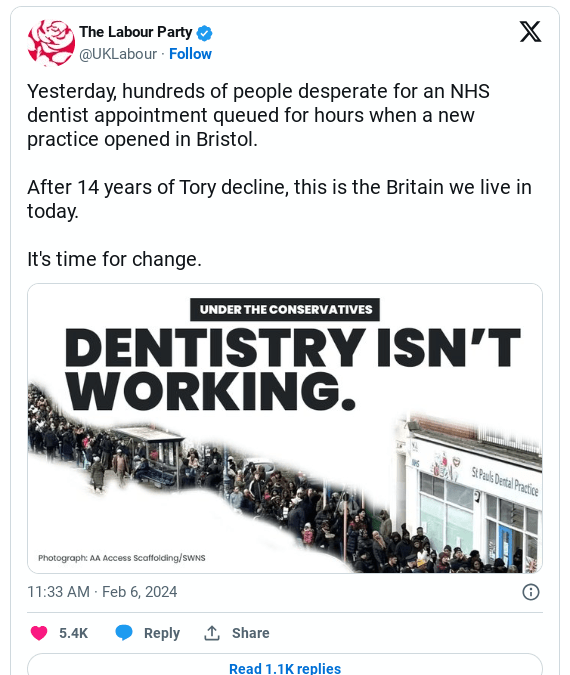
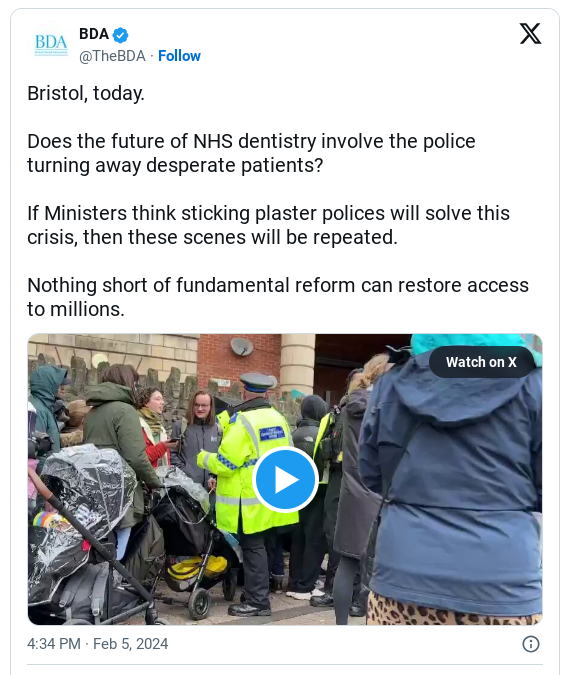
On Monday and Tuesday, hundreds of people were seen queuing in Bristol after an dentist opened up its books for NHS patients.

A video posted on social media on Monday appears to show police community support officers telling patients the queue had “finished” as they urged prospective patients try their luck another day.

Dentists will be paid more for their NHS work under the NHS Dental Recovery Plan.

Officials also hope to incentivise 240 dentists to work in communities where there is less access with one-off so-called “golden hello” payments of £20,000 for working in “under-served” areas for up to three years.

And NHS England said that “dental vans” would be rolled out in rural and coastal areas so people in the most isolated communities will still be able to access help.

Link to video here.

Under the plans, set out by NHS England and the Department for Health and Social Care, people will be able to use the NHS app to see which practices in their local area are accepting new patients.

Access to NHS dentistry has been one of the main concerns highlighted to Healthwatch England.

People have told the patient champion organisation that they have struggled to find up-to-date information about practices taking on new NHS patients.

Healthwatch said that as a result patients have lived with ongoing pain and in extreme cases, patients have resorted to “DIY dentistry” such as pulling out their own teeth.

The government also announced plans to roll out a “Smile for Life” programme to give advice to new and prospective parents.

Ministers will also launch a consultation on a potential water fluoridation programme to help prevent tooth decay.

The dental recovery plan was to be launched on Wednesday but many of the details were accidentally leaked after health officials sent an early version of the dental recovery plan to MPs of all parties on Tuesday afternoon.

But leading dentists said the plan will not be enough to help people struggling to access dental care.

Shawn Charlwood, chairman of the British Dental Association’s General Dental Practice Committee, said: “This recovery plan is not worthy of the title. It won’t halt the exodus from the workforce or offer hope to millions struggling to access care.

“Nothing here meets Government’s stated ambitions, or makes this service fit for the future.

“Ministers wanted to stop dentistry becoming an election issue. By rearranging the deckchairs they’ve achieved the exact opposite.

“The crisis will remain a burning issue in communities across this country until we get real change.”

Amanda Pritchard, NHS chief executive, said: “The health service will now introduce a wide range of practical measures to help make it easier for people to see a dentist, from incentivising dentists to take on new patients to supporting dentists to be part of the NHS in areas where access is challenging.

“Recovering dentistry is a priority for the NHS and this plan is a significant step towards transforming NHS dental services for the better.”

Prime minister Rishi Sunak said: “NHS dentistry was hit hard by the pandemic and while services are improving – with 23% more treatments delivered last year compared to the previous year – we know that for too many people, accessing a dentist isn’t as easy as it should be.

“That’s why we’re taking action today to boost the number of NHS dentists, help cut waiting lists and put NHS dentistry on a sustainable footing for the long-term.

“Backed by £200m, this new recovery plan will deliver millions more NHS dental appointments and provide easier and faster access to care for people right across the country.”

Wes Streeting, Labour’s shadow health secretary, said: “After 14 years of Conservative neglect, patients are desperately queuing around the block to see a dentist, literally pulling their own teeth out, and tooth decay is the number one reason for six to 10-year-olds being admitted to hospital.

“The Conservatives are only promising to do something about it now there’s an election coming. It will be left to the next Labour government to rescue NHS dentistry and get patients seen on time once again.”

Louise Ansari, chief executive at Healthwatch England, added: “Across England, we have seen major access issues in NHS dentistry. The dentistry recovery plan is a good start in addressing these serious problems.

“However, in the long run more radical solutions are needed to get NHS dentistry back on track.”

Kwarsi Kwarteng to step down as MP – who “warmly welcomed” his mini-budget that broke the country?

Why, none other than Simon Jupp, a couple of weeks before he joined “Team Truss” as PPS to to the Department for Levelling Up, Housing and Communities under right wing Secretary of State, Simon Clarke, who lasted 49 days in office.

[Clarke was excluded from the Liz Truss’ “Pop Con” (or should that be “Pop Corn”) launch because he recently called for Sunak to be ousted – see “Clarke told to lie down in a dark room”]

As a greenhorn SpAd, Simon’s first political mentor, Dominic Raab, is also stepping down after resigning over bullying scandal.

Makes you wonder how sound our Simon’s judgement is, on politics and the economy.

More deliberately misleading advertising from Jupp

More desperation from our MP for “everywhere and nowhere”. – Owl

Martin Shaw

Simon Jupp, the MP for the constituency centred on Exmouth, but who is standing as a candidate for our area in the election, is putting out this brochure in Colyton (sent to me by a resident) claiming to be the ‘local MP’, although in fact that is Richard Foord.

Inside, he also claims to be ‘working with health bosses’ to save Seaton Hospital, although of course it is Richard Foord who is doing that, it is Richard who is on our hospital steering committee, and it is Richard who is repeatedly raising it in Parliament.

This is deliberately misleading material, although not a surprise from Jupp, who likes to claim he lives locally but only moved into the area to stand as MP.

What is a surprise is that the Gateway in Seaton has allowed Jupp a second slot presenting a quiz night. You’d have really thought that any local community enterprise would think twice before hitching itself so clearly to one side in the election, and especially to the party that caused the dismembering of Seaton Hospital in the first place.

‘Shock’ at plans to redevelop West Hill village shop site

A public meeting convened by West Hill Parish Council will take place in the village hall at 7.30pm on Tuesday, February 20.

Philippa Davies www.sidmouthherald.co.uk

Residents of West Hill are up in arms at proposals to demolish their village supermarket/Post Office, replacing it with homes and a smaller retail space.

Plans have been submitted to East Devon District Council for the building known as Potters Country Market, currently occupied by Morrisons with an in-store Post Office counter.

The applicant proposes to build six houses and three flats on the site, and states that ‘the proposal includes the provision of a retail unit that can be subdivided if required for flexibility and is a more suitable size to suit the requirements of the site’. The planning statement says the proposals ‘also provide some new public realm around the new retail provision to try to create a sense of place in the heart of the settlement’.

Residents of West Hill are worried about the future viability of the shop when it has to operate from a much smaller space, and are also concerned about the reduction in parking at the site. There is currently a large parking area; the plans indicate 14 parking spaces for the residential properties and nine for staff/customers of the retail units.

The district councillor for West Hill, Jess Bailey, is urging people to make their views known by submitting comments on their application to East Devon District Council’s website.

West Hill Parish Council is also holding a special meeting on February 20 where residents can share their opinions on the proposal with councillors.

Cllr Bailey said: “This awful application has sent shock waves through the community. It threatens the future of our shop and Post Office, slashing retail space by more than two thirds just so that the developer can attempt to squeeze in six houses and three flats onto the site. This is a key site at the heart of West Hill and that factor has been completely ignored by the developer.

“As far as I can see this application is all about maximising developer profit with absolutely no consideration for the community. I am a formal consultee on the application and I certainly will be objecting in the strongest terms. It is important that as many residents as possible submit comments to EDDC on the application too.”

The existing Potters Country Market building is listed as an Asset of Community Value. Objectors to the proposals say this ‘value’ will be diminished if the retail floor space is reduced.

The public meeting convened by West Hill Parish Council will take place in the village hall at 7.30pm on Tuesday, February 20.

Jo Bateman v SWW reported Nationally again – now in The Times

Jo Bateman’s case was reported gain yesterday, this time in The Times as part of their “Clean it up” campaign.

Jo Bateman is suing SWW for “loss of amenity” due to sewage spills preventing her daily swim, totalling £379.50.

She reckons this sum represents the cost of swimming at her local pool for 54 days plus £50 costs. 

SWW has until Monday to file its defence.

See original post on this story here.

More on South West Water faced EDDC Scrutiny Committee – Councillor frustration

Preface: Scrutiny committees at district and county perform the same function at local level that parliamentary select committees perform at national level. They should be regarded in the same way. Those with experience of watching parliamentary committees will know that were SWW to face scrutiny at a parliamentary committee with so little preparation, they would be toast.

Recommendations

The final section of the scrutiny meeting with South West Water (SWW) involved committee members agreeing to a set of recommendations for further action.

Final wording will be agreed out of committee but here is the gist:

There should be more frequent communications and liaison between EDDC and SWW. In particular there needs to be a meeting between SWW and EDDC environmental health, and between SWW and representatives of both EDDC planning and strategic planning committees. (The mechanics of how to do this accountability, without involving an impracticable number of people, have yet to be agreed). As SWW is an outside body a Task and Finish Forum (TAFF) was thought to be inappropriate.

What was emphasised by councillors, was that SWW should be asked to bring to meetings technical staff who can answer questions. Councillors were clearly frustrated by frequent answers along the lines “We’ll get back to you on that”.

[For example Cllr. Kevin Blakey (at 20:21 on the second session), asked, given that the originally planned sewage treatment for Cranbrook had not been built and that SWW was claiming that the sewage system was not over capacity, how near was it to capacity, what were the figures? He got no answer to what seems a fundamental fact underpinning SWW’s claims.] 

Lastly, the Leader should be asked to write to central government on sewage issues affecting East Devon. 

Outspoken comments from councillors

During this session there were a number of outspoken comments made by councillors. Owl has chosen three to represent the flavour of the meeting, recorded over three You Tube videos.

From Cllr Maddy Chapman who said that she had never known Exmouth residents so angry.

From Cllr Todd Olive (assistant to Cllr Jung, Portfolio Holder Coast, Country and Environment} who summarised the detailed “no confidence” comments he made in session two.

(These are paraphrased by Owl, from 25:41 of session two recording)

Cllr Olive started by saying trust is earned not given .

At the SWW Beachwise forum meeting in November 2023. A number of actions were agreed including: to hold meetings with EDDC environmental health, with planning.

Once again the same issues are being talked about tonight. This November meeting was followed up by EDDC on a number of occasions including by email no confirmation of these follow ups was ever received. 

Cllr Olive has spoken to members of the public, officers and councillors who all report the same experience with SWW over and over and over again. This evening, he said,  we have heard once again of these actions being pushed into the future with no assurance that these future meetings will ever happen. 

Cllr Olive therefore expressed  that he had no confidence in any promises being kept. Through the chair he asked why anyone should trust anything SWW say. 

In reply, SWW just seem to reiterate their line that these topics should be taken outside the meeting in a “wider context”.

Finally, Cllr Paul Arnott, in answer to a suggestion from Cllr Ian Barlow that a line be drawn under the past and a new start made with SWW, said (paraphrased by Owl from  27:23 of session three recording) that the council has been aware and fighting this problem for a decade.

We have effluent streaming down our roads and coming up through manhole covers, we have lories barrowing raw sewage around the biggest town in East Devon. 

As Cranbrook’ struggles to become a new town its “Jewel in the Crown” country park now has sewage bubbling up through it. 

We have had no answers tonight so we cannot take a pollyanna technocratic approach alone. We have to express what we are hearing as a body politic, representing the people. We cannot just draw a line over what has happened in the past.

Conclusion

Owl’s conclusion is that SWW give the distinct impression they don’t feel they have to answer to elected councillors.

So who do they answer to?

They are clearly in denial that there is a problem, and that this problem is growing.

Owl’s opinion is that as currently constituted, SWW can never make the strategic decisions an ever growing community needs. For example, they decided it was not cost effective to build a new sewage treatment plant for Cranbrook, when we all know that it was set to expand, ultimately to 20,00. In other words they chose a “cheap”, temporising fix.

Not only that, but Topsham controlled by Exeter City is also expanding massively and this sits between Cranbrook and the nearest obvious discharge point, the Exe.

Looks as if they have been well and truly “snookered” by this short-termism!

[To be read in conjunction with Owl’s previous post here.]

POPCORN FOR THE POP CONS

Extract from London Playbook, Politico

POP CON AT THE READY: The new right-wing Popular Conservatism movement is launched this morning — hoorah! Known as the “Pop Cons,” the group is inspired by lettuce racer Liz Truss and features such glittering adornments as Jacob Rees-Mogg and Lee Anderson. Plus Nigel Farage is planning to rock up — in his capacity as a GB News “journalist,” of course, of course. The jamboree kicks off at 11 a.m. in a Westminster venue.

What it’s all about: A vehicle for the Trussite wing of the party, the Pops’ Twitter bio describes itself as a “new movement aiming to restore democratic accountability to Britain and deliver popular conservative policies.” It will lobby for more hardline measures including tough immigration rules, woke war stuff and delivering tax cuts to drive growth, with an eye on both the next manifesto and what happens to the Tory party after election day. 

What she’ll say: Who knows? Not even Liz Truss, it turns out. The former PM will be speaking “from the heart,” and has not prepared a speech in advance, one insider told Playbook. She’s mulling “a big riff on how unelected officials are increasingly preventing elected ministers from delivering what the public have voted for.” So you’ve been forewarned.

And from the times:

Planning applications validated by EDDC for week beginning 22 January

Let’s cut the green crap – “Drill Baby, Drill”

Minister consulted BP over incentives to maximise oil production, FoI reveals

Thereby proving the Tories don’t give a fig for the environment or reducing poverty – Owl

The energy and climate minister Graham Stuart asked BP about the incentives required to “maximise” extraction of oil and gas from the North Sea, documents released under freedom of information rules have revealed.

Damian Carrington www.theguardian.com 

Stuart’s meeting with the corporation’s UK boss, Louise Kingham, last year came days after BP had announced a record profit of $28bn (£23bn) for 2022, raised its dividend to shareholders, and rowed back on its aim to cut its carbon emissions by 2030. Households were also enduring very high energy bills. BP will report its profits for 2023 on Tuesday.

Stuart also asked for advice from Kingham about winning the argument that UK oil production was “good” and part of the net zero transition. Experts have repeatedly refuted arguments that new oil and gas production can increase UK energy security or lower prices.

The UK’s oil and gas body granted 24 new drilling licences to BP and other companies last Wednesday, following 27 licences in October and with more to follow in the coming months. The chair of the UK’s official climate advisers said in January that “further licensing [is] inconsistent with climate goals”. The International Energy Agency said in 2021 that any new fossil fuel developments were incompatible with reaching net zero emissions by 2050.

“Drilling for new North Sea oil will undermine the UK’s climate commitments and won’t ensure energy security, yet the minister cynically sought BP’s help to try and ‘win’ the opposite argument,” said Chris Garrard, of the campaigns and research organisation Culture Unstained, which made the FoI request.

“What’s more disturbing though, is that days after BP had announced record profits, he seems to assure BP that there are incentives and money to keep its polluting fossil fuels flowing, all while the public struggled to pay their energy bills,” he said.

The documents released include a heavily redacted readout of a meeting between Stuart and Kingham on 17 February 2023. Stuart asked: “Where do you think we are in terms of having the right incentives in place to maximise recovery from [the] North Sea and keep making the case to win the argument why producing it in the UK is good, and is part of the net zero transition, to make sure we minimise our imports?”

He said: “The money is there, making incentives and structures to allow it to flow.”

Stuart also asked Kingham for information to use in making the argument for new North Sea production: “We will be using oil and gas and, if we don’t do it ourselves, we will be spending that money elsewhere. Adding that up I would like a number saying do we really want to spend x billions relying on foreign imports.”

Large sections of Kingham’s responses are redacted, with government officials citing “commercially confidential information”. But she said: “Ideologically, you need to think where to do tax or incentives, because you won’t get the investment.” She also said BP was “proud of [its] work and the jobs it creates and ever cleaner barrels”, adding that the argument would be “amplified by some social media and ads”.

Tessa Khan, at the campaign group Uplift, said: “BP’s got a nerve telling our government that the industry needs more tax breaks and subsidies or they won’t invest, in the middle of a cost of living crisis driven by energy bills and when it’s just announced $28bn in profit.”

“What’s really egregious, though, is the minister responding that ‘the money is there’ for profiteering oil giants at the same time as it’s just cut off vital support to millions of households who literally can’t afford to heat their homes,” she said. “There’s no question at all about whose side this government is on.”

A government spokesperson said: “Minister Stuart is absolutely right to be backing domestic oil and gas, as the UK will still be using oil and gas even when we reach net zero in 2050. It is good for our energy security, supports up to 200,000 jobs and has brought in £400bn in tax revenue to date [over the past 50 years] which has been used to help families with the cost of living and fund public services. The £6bn raised by our energy profits levy on oil and gas producers alone helped us pay around half a typical household’s energy bill last winter.”

“Ministers will continue to meet with energy companies to encourage investment into the UK and end reliance on costly foreign imports of liquefied natural gas with higher emissions,” she said.

A spokesperson for BP said: “BP is a major UK-headquartered company with plans to invest significantly in the UK’s energy systems and transition. As such, we have regular meetings with government departments. This discussion focused on how the UK could continue to attract investment and maintain pace after the US Inflation Reduction Act in both today’s oil and gas system and in renewable and low carbon projects.” The act supports renewable energy.

Fossil fuel companies have received £80bn in UK government support since 2015. Most of the 24 new drilling licences were granted to foreign companies. On Friday it was revealed that an oil and gas company owned by a major Tory donor, which had previously been fined for illegal flaring, was awarded one of the drilling licences.

In January, the former Conservative energy minister Chris Skidmore resigned as an MP in protest at the party’s dash for oil and gas, calling the policy a “tragedy” that is “wrong and will cause future harm”.

Rishi Sunak Admits He Has ‘Failed’ To Meet His NHS Waiting List Pledge

Rishi Sunak has admitted he has “failed” to meet his key pledge to cut NHS waiting lists.

Kevin Schofield www.huffingtonpost.co.uk 

The prime minister made bringing them down one of his five promises to voters at the start of 2023.

Instead, waiting lists have gone up by around half a million since then.

In an interview with Piers Morgan on TalkTV, Sunak admitted “we have not made enough progress”.

Morgan then asked him: “You failed on that pledge?”

The PM replied: “Yes, we have.”

Morgan said: “You said, NHS waiting lists will fall. In fact, they are slightly coming down now. But the waiting list is still nearly half a million more than it was at the start of last year. Do you accept that?”

The PM said: “Yes. And we all know the reasons for that and what I would say to people is look we’ve invested record amounts in the NHS, more doctors, more nurses, more scanners.

“All these things mean that the NHS is doing more today than it ever has been. But industrial action has had an impact.”

Junior doctors and consultants have been taking strike action for well over a year, although NHS nurses did agree a settlement with the government.

Sunak also promised to halve inflation, cut debt, grow the economy and stop the small boats carrying asylum seekers across the Channel.

Of the five pledges, only one – halving inflation – has definitely been achieved.

Shadow health secretary Wes Streeting said: “Rishi Sunak has finally admitted what has been blatantly obvious to everyone else for years – the Conservatives have failed on the NHS.

“Where Sunak has failed, Labour will succeed in getting the NHS back on its feet. We did it before and we will do it again.”

Lib Dem health spokeswoman Daisy Cooper said:Finally Rishi Sunak has admitted he has failed to cut NHS waiting lists, leaving millions of people waiting for appointments they desperately need.

“For years this Conservative government has driven our NHS services into the ground, leaving local health services struggling to cope. Enough is enough, Sunak needs to reverse his planned real-terms cuts to NHS spending.”

Sunak’s £1,000 Rwanda bet ‘totally out of touch with working people,’ says shadow minister

Rishi Sunak has been accused of taking a “depraved bet” with broadcaster Piers Morgan over whether deportation flights to Rwanda will take off.

Faye Brown news.sky.com 

The prime minister is facing a backlash after appearing to accept the £1,000 wager about the stalled asylum policy.

Talk TV presenter Mr Morgan said: “I’ll bet you £1,000 to a refugee charity you don’t get anybody on those planes before the election. Will you take that bet?”

Mr Sunak then shook hands with Mr Morgan and said “of course I want to get people on the planes”.

The prime minister was immediately criticised by opposition MPs, who accused him of “gambling with people’s lives” and reducing vulnerable people “to a crude bet”.

The SNP have even reported Mr Sunak to his own independent adviser on ministers’ interests over what the party said was a potential breach of the ministerial code.

In a letter to Sir Laurie Magnus, SNP Cabinet Office spokesperson Kirsty Blackman said Mr Sunak’s actions fall “below the high standards people should expect of those in public life” and may breach ministerial code rules on avoiding conflicts with private interests.

The SNP’s Westminster leader Stephen Flynn, in a post on X, said: “The lives of some of the most vulnerable people on the planet reduced to a crude bet. It’s just a game to these people. Depraved.”

Labour’s Jonathan Ashworth said: “Not a lot of people facing rising mortgages, bills and food prices are casually dropping £1,000 bets.

“It just shows that Rishi Sunak is totally out of touch with working people.”

Green MP Caroline Lucas said: “Words fail me that PM & Piers Morgan can be so callous about awful Rwanda policy that they place a bet on it.

“These are people’s lives they’re gambling over. Yet Sunak thinks nothing of agreeing a £1k bet. He’s supposed to be the head of government, not a punter in a casino.”

The prime minister’s official spokesman said the exchange with Mr Morgan showed he is “confident that those flights are getting off the ground”.

Asked if Mr Sunak believes he has taken the bet, the spokesman added: “I think what the clip presents is his absolute conviction in this legislation.”

Mr Sunak has made the Rwanda plan central to his promise to “stop the boats” and curb migrant crossings in the Channel. The government has spent at least £290m on the policy but no flights have taken off yet.

Time is running out to get flights in the air ahead of the next election, expected in the second half of this year.

Mr Sunak was dealt a huge blow last year when the Supreme Court ruled that the policy was unlawful.

He has put forward legislation aimed at avoiding future legal challenges, but this is facing heavy opposition in the House of Lords, which could significantly stall the bill’s passage through parliament.

East Devon second home owners face a council tax bill hike amid new ‘double charge’ powers

Thousands of second homeowners in East Devon face a hike in their council tax bills from 2025 after the district council backed charging double.

Almost 3,000 second home owners in East Devon could see their council tax double from next year, writes local democracy reporter Will Goddard.

Local Democracy Reporter eastdevonnews.co.uk

The Levelling Up and Regeneration Act 2023 means that councils can now charge double council tax on properties that are “substantially furnished” but no-one’s sole or main residence.

They can also now define a property as empty after just one year of it being unoccupied and unfurnished, rather than two years previously, and can charge 100 per cent or more on top of the normal council tax bill based on how long it has been vacant.

It is hoped the changes will allow more properties to be brought back into use for the local community.

East Devon District Council (EDDC)’s cabinet backed the new powers this week. They will be put to the full council soon to be ratified.

Currently 2,760 properties In East Devon are second homes. Owners will have to start paying double council tax from April 2025 if the proposals are approved.

There are also 221 properties in the district have been empty for more than one year (but less than two). These owners will have to pay double council tax from April this year.

Funds raised would be set aside to tackle housing challenges only.

Cllr Paul Hayward (Independent, Axminster) warned of a potential loophole in the law.   He said: “There is a risk that some owners of a second property, I might say perhaps unscrupulous owners, may try to avoid their responsibilities for the additional premium by registering a person living in the property even though the residence remains elsewhere.

“That is unavoidable. If people wish to do that, and I suppose some people’s inclination will be to do so, then Libby and her team [of council officers] will be watching for it, and they do have a great many tools to deal with this sort of, essentially, fraud and abuse.”

‘One of my political career highlights is Devon’s new devolution deal’ – John Hart

John Hart 

I’ve been extremely lucky to have had a long and satisfying career in local government. Some of my political opponents might say too long.

But one of the most satisfying moments is set to be the completion of our devolution deal with the Government to transfer powers and funding from Westminster and Whitehall to Devon.

We’ve worked closely with our colleagues in Devon’s eight district councils, our towns and parishes, the National Parks and Torbay on our proposals over a number of years.

And you may have seen that the Levelling Up Minister, Jacob Young, was here last month to sign the ground-breaking deal.

Last week both my Cabinet and Torbay’s Cabinet backed the proposals and we are now embarking on a public consultation to ask you what you think. We’ll also be consulting business leaders, local government colleagues and our universities and colleges and, all being well, we will be able to conclude the deal later this year.

I firmly believe this will be one of the most ground-breaking developments in decades for the one million people we represent in Devon and Torbay.

Under our proposals we will have stronger links with Homes England to develop more affordable housing – a vital necessity for thousands of local people who currently don’t have anywhere safe and warm to call home.

That will also feed in to an improving economy because many businesses are currently hamstrung by the lack of homes. Even if they can recruit a suitably qualified person, they often can’t find anywhere to live.

We will also work more closely with employers and our schools, colleges and universities to ensure we have the skilled workforce our economy needs and we will take direct control of adult education to enable us to create thousands of new training opportunities.

The initial agreement with the Government will also see us receiving £16 million to invest in new green jobs, homes, skills and business growth and accelerate our transition to a net-zero economy.

Devon and Torbay would work in a more integrated way to improve public transport and introduce a single ticketing system for travellers.

And there would be a significant boost to high-growth business sectors such as advanced marine engineering, defence and digital

None of this will require new layers of bureaucracy. We have resisted a directly elected Mayor. That can work well in urban areas but not somewhere like Devon with its spread out population and scores of communities with their own individual identities.

Instead councillors who you have already elected to represent you on our county, district and unitary councils would come together with leading figures from business and education to make decisions.

I have always said I believe we can do things more efficiently and more effectively here in Devon for the communities we know rather than decisions being made in London.  I believe this is a real opportunity for us to take the initiative and make a real difference to people’s lives in ways that matter to them the most, tackling the shortage of affordable housing and the need for more investment to support local businesses. It will bring new training and re-training opportunities and enable us to increase productivity and help people working here to boost their pay and have a better standard of living.

In means Devon and Torbay will have a new and very different relationship with the Government – one where we will have a stronger voice in Whitehall and an ability to influence policy for the benefit of our residents, communities and businesses.

It’s just the beginning of the new opportunities on which we can build.

Lower Otter Valley to be declared a National Nature Reserve

The official declaration ceremony will take place on Friday, February 16, when a plaque will be unveiled at Lime Kiln car park at 11am.

[Owl hopes the unveiling and ensuing day-long celebratory event won’t be marred by the appearance of SWW contractor’s “Clear Flow” tankers. These were reported to have been there recently and have been spotted now working on the storm surge tank situated under the Marine Parade. See they’re pumping out the bilges in Budleigh]

Philippa Davies www.exmouthjournal.co.uk

The site of the completed Lower Otter Restoration Project is to be declared a National Nature Reserve.

The Otter Estuary Nature Reserve covers an area of almost 90 hectares (more than 222 acres) in the lower Otter Valley at Budleigh Salterton, including the iconic Otter Head at the mouth of the River Otter.

It will be an extension of the existing Pebblebed Heaths Nature Reserve and will give the area the highest level of conservation possible under UK legislation.

The official declaration ceremony will take place on Friday, February 16, when a plaque will be unveiled at Lime Kiln car park at 11am.

During the rest of the day there will be an event for the local community to celebrate the recognition of the area as a nature reserve.

The land is owned by Clinton Devon Estates and managed by the Pebblebed Heaths Conservation Trust. 

The Lower Otter Restoration Project, which was completed last year, was carried out by the Environment Agency in partnership with Clinton Devon Estates, who own the land. The project saw the River Otter reconnected with its historic floodplain, creating around 55 hectares (nearly 136 acres) of carbon capturing wetland, which is set to become internationally important as it attracts an increasing variety of wading birds. 

The Tories starved councils, thinking no one cared. Now they’re bust – and we care very much 

Britain is discovering that the local is political, that civilisation begins with good access to social care and regular bin collections. Slash funding to local authorities over 14 years by at least 30% in real terms because Conservatives believe they are unloved, do nothing useful and, in any case, local politicians can be blamed for local cuts, and inevitably baleful consequences begin to emerge.

Will Hutton www.theguardian.com 

The first round of cuts in everything from youth services to the provision of public lavatories could go by largely unnoticed, but now we are at a tipping point. Thus, cumulatively, local authorities have closed 60% of public toilets since 2010: three in four people report shortages in their area. Core provision of support for helpless elderly people and disadvantaged young people is increasingly stretched, and on occasion almost abandoned. Local authorities as builders of social housing on any scale are a distant memory. Neglect and civic shabbiness have settled over every community in the country, with a refurbished library or civic centre a rarity. It turns out that a vibrant local public realm is as important to our wellbeing as the private.

The financial crisis in local government, as a cross-party committee of MPs reported last week, is now out of control. Denied the financial wherewithal to fulfil their basic statutory duties, nine councils have effectively gone bust since 2018 – five, the latest Nottingham, in the last 12 months – with the Local Government Association predicting that one in five risk that fate over the next two years. The financial vice in which councils are locked – eviscerated resources alongside ever-rising demand – is airily dismissed by ministers as the consequence of mismanagement, profligacy and the pursuit of absurdly grandiose schemes, confident that councils are not a popular cause. Local government can be hung out to dry.

Yet just as the condition of our prisons is a yardstick of our civilisation, so is the vigour of local government and the esteem in which it is held. As privation piles on privation – the closure of a much-loved library or gallery, roads whose resurfacing is long overdue, care homes that are disgracefully overcrowded and understaffed, even the inability to contain growing populations of vermin – the cumulative impact is forcing recognition that there must be change. We are all being diminished.

It was Margaret Thatcher who began this assault. If local democracy threw up local politicians with different political agendas to hers she would rein them in under the guise that there should be no challenge to a sovereign parliament. Thus the 1986 Local Government Act, which simply abolished the metropolitan councils governing most of Britain’s urban population – notably Ken Livingstone’s Greater London Council – and the outlawing of “propaganda on the rates”. Her next step was to try to eliminate those hated rates and substitute them with a flat rate poll tax: councils should live on short rations and only get central funding if they toed the government line. The ensuing revolt helped trigger the end of her prime ministership.

Britain’s politicians of all parties read the runes. She had succeeded in degrading local government, but in the process made constructive reform toxic. For over 30 years, nobody has dared revalue the residential property values on which the revised council tax was based in 1991, creating a revenue shortfall of up to £20bn a year, as Paul Johnson of the Institute for Fiscal Studies roughly estimates. So regressive is this tax that the Economist reported last week that Buckingham Palace is charged less than a three-bedroom semi in Blackpool. Local government’s role in our national life has decayed and shrivelled.

Councils try everything to escape the vice. One London council, Barnet, took the Thatcherite mantra to heart, and contracted out virtually all its local services in 2012. It has been an expensive fiasco – and a newly elected Labour authority is bringing services back in house to stop budget overruns and regain lost efficiencies. The more general trend, as Professor Andy Pike writes in Financialization and Local Statecraft, has been to try to turn easy credit and rising property values to civic rather than private advantage – a strategy adopted by local politicians of every political hue as central government starves them of resources. But lockdown, rising interest rates and a property market recession has turned that into no less of a fiasco.The system is bust. The secretary of state for local government, Michael Gove, has offered a £600m sticking plaster to stave off a debacle during an election year, but the quid pro quo is capped council tax increases and unspecified productivity improvements. In fact, as the MPs’ committee recommends, local government needs an immediate unconditional £4bn. Fat chance. “Localism” – declaring that control must be given back to localities – may be the new rage, but there is no parallel desire to give local government the financial capacity to be a creative local actor, let alone fulfil its statutory duties. What is required is a commitment to the value of local community, and reforms to support it.

A minimal starting point, as academics Kevin Muldoon-Smith and Mark Sandford argue, is the re-establishment of an annual needs assessment local area by local area – just as other G7 countries such as Italy, Germany and Japan do – suspended in the cause of austerity in 2013. Then, like nearly every other advanced economy, there must be a system of equalising every local authority’s financial capacity to meet those identified needs, and the creation of a statutory body independently to negotiate the rolling financial settlements that result. Beyond that, it is obvious that the system of property taxation needs an overhaul: it can’t be right that the rich property owners pay proportionately vastly less than their poorer peers. On top, enlarge what local government can do – it can help in everything from decarbonising the economy, building social housing and addressing knife crime.

Labour electoral “ strategists” will cavil at such commitments for fear they will be attacked by the Tory party. But even pensioners, the bedrock of the Tory vote, can be persuaded that civic pride and public amenity, whether a public library or a public toilet, are invaluable. Labour should have more confidence. We can’t go on like this.

New borrowing could push Devon’s debt beyond £500m

Extra borrowing that Devon could need if it fails to secure emergency funding for education would push its debt beyond half-a-billion pounds.

Bradley Gerrard, local democracy reporter www.radioexe.co.uk

The county council may need to secure an extra £50 million in loans for its spending plans in 2024/25 if it doesn’t receive cash from a scheme called the Safety Valve, which provides grants for local authorities with large education funding blackholes.

Devon’s special education needs and disabilities (SEND) cumulative deficit is expected to hit around £165 million by the end of March.

Although the council has submitted its application to Safety Valve, it hasn’t had confirmation about the funding it might receive.

Recently council officials have expressed hope it could be in the region of £70 million to £100 million.

Members of the council’s corporate infrastructure and regulatory services scrutiny committee heard that financial forecasts suggested £50 million in borrowing would be needed for the financial year starting in April if the council was unsuccessful in its Safety Valve bid.

“While we are hopeful of an agreement with the Department for Education to help resolve the SEND deficit, it would be presumptuous to take the funding into account before a decision has been made,” Mark Gayler, from Devon’s finance team, told the committee.

“So we think we will need £50 million of new external debt.”

He added that due to the recent repayment of £47 million of external debt and the SEND deficit, that the council’s cash balances could drop to around £60 million by the end of March.

That would make it inadvisable to fund new borrowing from reserves, Mr Gayler added, although any it could get is likely to be at a lower interest rate than loans it had just repaid.

If the council did borrow the extra £50 million, it would push its external debt levels to £511 million.