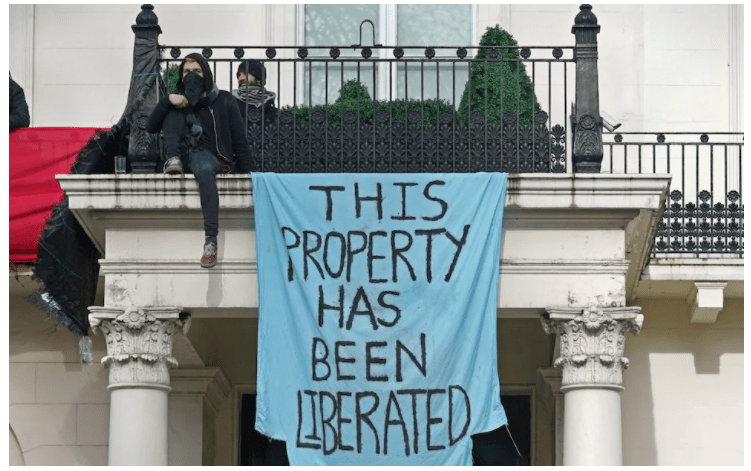
Johnson speeds up sanctions: “grace period” to be “slashed” to just six months!

Commentators and the Opposition parties continue to press the government to speed up sanctions.

Tom Peck, again, in yesterday’s Indy:

” … If you’re wondering why it is that France can just seize a superyacht that belongs to Vladimir Putin’s de facto deputy, Igor Sechin, while the UK makes vague commitments to maybe do this kind of thing in 18 months or so, you might find the answer just by staring out the window.

By staring, that is, at the grey spring sky and the driving rain and wondering just what it is that makes this dreary windswept island the go-to destination for the world’s super-rich. They’re here because we want them to be here. We have welcomed them, and their money, in ways that France, Germany, the US, and everywhere else in between would simply never do, by offering them tax arrangements that are an affront to the basic dignity of every British mug that actually works for a living. …”

Meanwhile:

Boris Johnson has backed down on plans to allow Russian oligarchs 18 months to register ownership of luxury properties in the UK, slashing the proposed “grace period” to six months.

And he announced plans to streamline the process of sanctioning individuals with links to Vladimir Putin, by removing the legal requirement for government lawyers to show that measures are “appropriate” before implementing them.

Is this the best that our “world leading” government can do? How long does it take to “register legitimate ownership”- Owl

Cullompton homes rejected to preserve countryside character

Plans for 21 homes near Cullompton have been refused because of their impact on the countryside.

Ollie Heptinstall, local democracy reporter www.radioexe.co.uk 

The application would have led to the properties being built at Westcott, a small community by the main road to Exeter which is home to The Merry Harriers Inn.

A report to the Mid Devon planning committee on Wednesday said the mix of single and two-storey homes, nine of which are classed as ‘affordable’, had been designed “to a high environmental standard” and included solar panels.

But it concluded the scheme was “located in the countryside and outside of a defined settlement within the local plan.”

It added: “The development will result in a market led housing scheme in an unsustainable location that fails to preserve the character and appearance of the countryside.”

Officers therefore recommended refusal, a sentiment shared by members of the committee.

Speaking at the meeting, applicant Mr Rowe claimed the council’s planning team had previously supported his application for Westcott, only to change their stance in January.

He said “like stupid sheep” he and his team had agreed to alter a previous application to the updated low-energy one, on the basis of having officers’ support.

Mr Rowe then warned that his appeal statement: “has been prepared and written” should his proposal be rejected, “and this time we will have no hesitation in claiming full costs. This is over a six-figure sum.”

However, members of the council were told the application was located outside a settlement boundary not included in the local plan, a decision unaltered by the location of a bus stop nearby.

A planning officer added that it was not considered to be an “exception site” to this rule, due to the majority of the homes being planned for sale on the open market.

Members refused the scheme by a margin of eight to none, with three abstentions.

Holiday homes have ‘sapped the soul’ from beautiful seaside village

“Now we’ve got remote owners who have no connections who just see it as a business opportunity. It makes a difference when you have got a transient people coming through. Obviously people enjoy it but it’s sapped the soul out of the village.”

Charles Gray www.dailypost.co.uk

The hot topic of second home ownership and holiday properties have long been a talking point in parts of North Wales.

In recent years, frustrations over the issue have been most keenly felt in north west Wales – a problem which many have argued has been exacerbated by the pandemic.

Over the past couple of years, many prospective home buyers saw properties ripped from their grasp as house hunters from outside these areas – aided in large by a new found flexibility of working from home – started looking for properties in these picturesque and largely rural heartlands.

Last year, members of campaign group Hawl i Fyw Adra (Right to Live Locally) marched 17 miles from Nefyn to Caernarfon (Gwynedd’s administrative centre) to protest the lack of action over the issue, a visible display of the strength and depth of feeling about the problem in these communities.

But the issue surrounding second homes and holiday lets – and more importantly, the effect they have on communities – are not unique to North Wales.

Say hello to Staithes – a village in North Yorkshire that has long been a popular tourist spot.

It is renowned for its picturesque beauty and is a source of great pride to its residents.

But that beauty has not gone unnoticed by people looking for a slower pace of life – or even an investment opportunity – and recent years have seen frustrations grow.

The coastal village near the famous town of Whitby has seen a wave of shrewd-minded outsiders buying up seafront cottages seemingly to capitalise on increasing visitor numbers.

Only 20 per cent of homes are now understood to be owned by locals and the sparsity of familiar faces has made it feel as though it has lost something integral for those who call it home.

Staithes was once one of the region’s largest fishing ports and is perhaps best known for the 19th century Staithes Group of painters.

On a visit to the village, YorkshireLive found residents bemoaning the “faceless” nature of those who purchase properties to let as holiday homes, claiming it is taking places away from young people who want to make a home there.

The growing number of visitors to the village’s historic streets – particularly during the last two years – has felt “overwhelming” for many and, while it has its benefits, has brought various parking problems.

One long-term resident of Staithes living on the north side of the village said that there were now an “awful lot of holiday cottages” and that a count of the number of people who actually lived in the bottom end of the village totalled just 50.

The woman, who did not want to be named, said: “There’s always been a holiday industry and it’s kept people going but it tended to be people with cottages who would regularly come and stay so they would be part of the village.

“Now we’ve got remote owners who have no connections who just see it as a business opportunity. It makes a difference when you have got a transient people coming through. Obviously people enjoy it but it’s sapped the soul out of the village.”

She added: “I think it’s the same in most villages. Particularly after Covid when people have made their escape from the cities and seen the benefit of being in places like this.

“There’s no way I could complain about living here because it’s so beautiful and people are more than welcome to come but it does have an impact on how you live. The atmosphere has changed.”

Further up the steep road live the Harrisons, made up of husband and wife Colin and Marina, their son Alex and dog Rory. The family owns a further two holiday cottages in the village that they rent out but are keenly aware of the problems the lack of residential housing brings.

Mr Harrison, who grew up in Staithes, said: “I’ve seen it go in phases over the years when it’s been very popular and then you can’t fill a house for love nor money. At the moment it’s in high demand.

“I think people have realised how important quality of life is to factor in when deciding where to live. Here I can work from home and take the dog out along the coast on my break.”

But, he continued: “To me there’s not a community like there used to be. Growing up as a child everyone was related in some way and all the old ladies wore the Staithes bonnets and fishing was still a business.

“There was a steelworks as well so you had workers from there. That’s certainly changed.” He added he felt a bit of a “hypocrite” for complaining while owning two holiday cottages, which he said he was making a good amount of money from.

Another issue around the village’s narrow roads is parking, with visitors often pulling up in front of homes despite warning signs. Mrs Harrison said: “You get some people being cheeky and saying that they were told to come this way when there’s about five signs on the way down saying you can’t.

“The last couple of years so many people have been coming to stay that there aren’t enough spaces. These issues aren’t specific to Staithes or the Yorkshire Coast, though. We watch programmes about Cornwall and Scotland and Norfolk and it’s the same there too.”

The enthusiasm for living in Staithes is not necessarily shared by the younger generation, though, according to 17-year-old Alex, who said life can get pretty boring due to the lack of activities. But he and his dad are both members of the local lifeboat organisation and he admitted that, in time, he may be drawn back to the village.

The sense of a lack of community was not a universal opinion. Across the bridge and in the centre of Staithes is Dotty’s Cafe, which features regular performances and community events organised by owner Trudy Ward.

Trudy Ward outside Dotty's Tearoom in Staithes, North Yorkshire

Trudy Ward outside Dotty’s Tearoom in Staithes, North Yorkshire (Image: Dotty’s tea room)

In between serving people in the packed out venue, Ms Ward said that the events had been “fantastic” for business. She also raised the issue that some of the houses were coming up for sale as people get older and find it harder to walk up and down the steep bank into the village.

It is at the top end of the village – away from the throng of tourists – that many permanent residents live. Shop owners near the public car park also flagged the housing and parking issues.

Louise Cole, who used to work in the information centre but now runs a gift shop, said: “After the lockdown it just went ballistic and parking was a massive issue. Some of them got quite abusive and were effing and blinding.

“I had tickets thrown at me. When people realise it’s nothing to do with us they tend to calm down and apologise.”

On the housing issue, Ms Cole said: “It’s a shame really. We have got two kids but prices are going up and houses get sold straight away. The next generation can’t move in to their own village.”

Parking is monitored by the local council and people can either pay by cash or using contactless. However, the difficulty in getting an internet signal can often cause problems.

Shop owner Dawn Coultas said: “You get about 20 people coming in to ask about parking every day. There’s a private parking area that only allows people to stay for 10 minutes and that often gets people.”

Retiree David Linley owns a cottage near the seafront, which he bought during lockdown to spend half his time. He said he was aware of the housing issues but summed up why the place was so magical to him and countless others: “I love it here. I like the people and I find it quiet. It’s a very happy place.”

River Otter pollution tests begin as ‘citizen science’ project gets under way

A ‘citizen science’ project to assess the level of pollution in the River Otter is about to get under way. 

person Philippa Davieswww.sidmouthherald.co.uk

Armed with water quality testing kits, the Tipton St John environmental group Eager Beavers will start regularly monitoring different sections of the river, using transparent turbity tubes that show the level of sediment present in the water.  

The county councillor for the Otter Valley, Jess Bailey, contributed from her Locality Budget to pay for the testing kits, which arrived this week. 

The group’s co-founder Lisette Johnston said: “I am going to be testing the Metcombe brook outside of my house, so this is one of the tests we perform.  

“We also look at the temperature, total dissolved solids and phosphate levels.  

“The important thing is to test in the same places on a regular basis and monitor levels of pollution, signs of wildlife and invasive species.” 

River pollution can come from fertiliser and pesticides in agriculture and run-off from roads, as well as sewage discharges. The tests will enable the group to establish what kind of pollution is present, and its likely source. 

If the tests reveal serious contamination, the group will take their findings to South West Water and possibly the Environment Agency. 

Meanwhile, the Eager Beavers have been accepted as ambassadors for the East Devon Area of Natural Beauty, and are likely to become involved with a Parish Nature Recovery Project being trialled in Harpford and Newton Poppleford. The project will mainly focus on river corridor and hedgerow management. 

They have just finished a Recycle and Raise initiative, in which plastic waste is collected and sent to a reprocessing centre in Exeter to be made into items such as garden furniture and fence posts. The money raised is donated to MIND and Dartmoor Zoo. 

Lisette added: “We have received a landmark tree from the Devon Wildlife Trust to celebrate the Queen’s Platinum Jubilee, which will be planted in June. In the meantime, we have been clearing verges in Tipton in readiness for planting wildflowers and seeds for the bees and pollinators.” 

The Eager Beavers are also continuing their regular litter picks in Tipton St John, with the next taking place this Sunday, March 6. Lisette will be offering free seeds to people who come along and help. Litter picks and rubbish clearing have been carried out lately in the area; a few weeks ago they removed a tarpaulin from the river Otter at Salston. 


Controversy over parking fees

Parking fees to double to £2 per hour at 21 East Devon car parks

Philippa Davies & Joe Ives, Exmouth Journal

Fees at 21 of East Devon’s car parks are to double to £2 per hour, despite strong opposition from businesses, Conservative councillors and MP, Simon Jupp.

East Devon District Council has approved a budget that included the price increase in 21 seaside town car parks and a rise to £1.50 per hour in six others.

From April the £2 fee will be introduced in a number of car parks, including Exmouth’s Imperial Road short stay, Imperial Road Recreation Ground long stay, Queen’s Drive, Foxholes, Queen’s Drive Echelon, Camperdown Terrace and Beach Gardens, as well as Budleigh’s Lime Kiln, Rolle Mews.

A rise from £1 to £1.50 will be introduced at six other EDDC car parks: Exmouth’s London Hotel,

Honiton’s Lace Walk, King Street and New Street North and South, and Seaton’s Orchard Road. The budget was agreed at the full council meeting on Wednesday, February 23, with 29 votes in favour, 12 against.

In a column in this newspaper earlier this month, East Devon MP Simon Jupp said: “I have heard from businesses who fear shoppers will drive to out-of-town supermarkets or shop online even more, with visitors choosing to go elsewhere.”

At the end of last week, two petitions against the parking fee increases across East Devon gathered around 1,800 signatures; one organised by the Sidmouth Chamber of Commerce, the other by Sidmouth resident Mike Goodman.

The chamber’s vice-chair, Sally Mynard, addressed a virtual meeting of the council on Monday, February 21.

She said: “It is obvious this will significantly impact trade in our towns which are struggling to recover from Covid, and which are under long-term pressures from the internet and out of town competition. We feel the proposal has not been thought through and has not allowed consultation. “There has been no impact assessment, and little concern for the economic health of our communities and the businesses they support. It looks like a panic measure: lack of evidence, lack of consultation, lack of proper debate and discussion.”

The chair of Sidmouth Town Council, Ian Barlow, also spoke at that meeting, describing the increase as ‘ridiculous’ and ‘a gamble’.

He said: “I think you are risking an awful lot for possibly a gain, but you do not know that, and certainly from previous experience you will not gain from it.”

Speaking after the meeting on Wednesday where the budget was voted through, the leader of East Devon District council Paul Arnott said: “I think that the majority of councillors are very disappointed that the Conservatives sought to weaken the budget by opposing it. Fortunately, they lost very clearly.”

Concerns new floodplain will be ‘magnet’ for paddleboarders

Concerns have been raised that the floodplain created by the Lower Otter Restoration Project will become a ‘magnet’ for paddleboards and canoes, and that these will disturb wildlife.

Philippa Davies, Exmouth Journal:

The Otter Valley Association supports the project but thinks more should be done to make sure birds and other wildlife are protected when the scheme is finished next year.

The project will allow the lower valley to become tidal twice a day, recreating an estuary like the one that existed there 200 years ago. It will comprise approximately 55 hectares of mudflat and saltmarsh, providing a new wildlife reserve of international conservation value.

The Otter Valley Association thinks, in view of this, byelaws should be drawn up to prevent boat users accessing the estuary from the sea, which they currently have a right to do.

Chair, Bob Wiltshire, said: “During the summer months it is possible to hire paddle boards and kayaks at the end of the beach. “Although the people hiring these craft are advised not to launch into the river from the back of the beach, some do so. “We are particularly concerned that when this project is completed, it will act as a magnet. “I have written to EDDC (East Devon District Council) to ask if byelaws can be written to prohibit this taking place.

“Everybody I have spoken to has expressed their concern and wants it to be well known in the public domain.”

However, Clinton Devon Estates, which is managing the project, is hoping byelaws will not be necessary.

Head of wildlife and conservation, Dr Sam Bridgewater, said there had been discussions with EDDC on the issue, and byelaws are not being ruled out.

But he would prefer to take a less authoritarian approach, allowing people to enjoy the estuary while steering them away from sensitive wildlife habitats. He said visitor access could be managed through the design of pathways, the use of natural barriers such as hedgerows, and through signage.

There are also plans to have a ranger on site to keep an eye on visitors and wildlife.

The Otter Valley Restoration Project is due for completion in the spring of 2023.

Clap or do something meaningful? An easy choice for Boris ‘hope it all goes away’ Johnson

Where the UK could act, and could make a difference, would be to impose meaningful sanctions on Putin’s favourite oligarchs. It has failed to do so. When Keir Starmer asked Johnson “why on earth” Roman Abramovich has not faced sanctions (as Johnson claimed last week he had done, and subsequently had to correct the record), he could only reply that he “could not comment on individual cases”.

Tom Peck www.independent.co.uk

The whole of the Commons were up on their feet for more than a minute, applauding in a moving show of solidarity with their guest in the public gallery, Vadym Prystaiko.

Boris Johnson, being Boris Johnson, was unable to suppress his trademark smirk as he did so. It will not be lost on him that almost a fortnight has now passed since he became the first prime minister ever to be interviewed under police caution, and as yet nobody has asked him a thing about it.

The ambassador seemed genuinely humbled by the gesture, though the speed at which the house shot to its feet would be outdone seconds later, by the speed at which His Excellency’s eyes rolled to the back of his head.

Ukraine has not found gestures of solidarity hard to come by in the last horrific week. They are grateful for them. Why wouldn’t they be? But they also know that gestures of solidarity are easy. It’s harder to take action, and there has been plenty of action. But what’s really hard is to take action that you don’t want to take. UK government ministers have taken to saying, whenever asked, that they are “leading the world” in action against Putin, a claim that lacks any demonstrable evidence whatsoever.

Germany cancelled Nord Stream 2, despite being heavily dependent on Russian oil and gas. The UK was keener than others to kick Russia out of the Swift payment system, precisely because it doesn’t rely to the same extent on Russia being in it, in order to pay them for the energy it needs. Germany has committed to spending a very long overdue extra £84bn on defence.

Where the UK could act, and could make a difference, would be to impose meaningful sanctions on Putin’s favourite oligarchs. It has failed to do so. When Keir Starmer asked Johnson “why on earth” Roman Abramovich has not faced sanctions (as Johnson claimed last week he had done, and subsequently had to correct the record), he could only reply that he “could not comment on individual cases”.

There are two flats near Westminster, worth £11m, owned by Putin’s former deputy prime minister Igor Shuvalov. Shuvalov was one of the oligarchs gathered for last week’s preposterous meeting with Putin in the Hall of the Order of St Catherine. He is on the EU’s sanctions list but not on ours.

What did Johnson think of that? “We are doing everything we can to expose ill-gotten Russian loot blah blah blah yadah yadah yadah murble burble make it go away.”

He’s not doing everything he can. He knows as well as the next person that the UK’s entire economic model is based on incentivising dubious foreign wealth to park itself here and the small matter of a terrifying land war in Europe is not going to be enough to make them do anything about it now.

Speak to any of London’s obscenely wealthy immigrants, and I’ve spoken to a few, and they all tell you variations of the same thing. They’re not here for the staggering beauty of London’s grey skies and general low quality of life. They’re here because comparable countries, like France or Italy or Germany, simply don’t let them do the kind of outrageous nonsense they get up to here.

There are no shortage of bankers in the City, working for the usual handful of major investment banks, whose salaries get paid directly offshore, and if they want to use that money to buy a property abroad, quite possibly in the country of their actual birth, they’ll never have to pay a penny of tax on it.

The UK’s “world beating financial sector” is world beating precisely because nobody else lets them get away with it. Which is precisely why, even at this unimaginably rarefied hour, all Johnson can do is swat away the questions about the things he hasn’t done and hope they’ll go away.

They won’t go away. And nor, in all likelihood, will the oligarchs. We don’t even want them to. We’re all much happier clapping in solidarity and hoping for the best.

Ukraine crisis; Russian Tory donor previously married to Putin minister recently gave Conservatives £80,000

“All donations to the Conservative Party are from people on the electoral register in Britain, those donations are properly declared.” So that’s OK then? – Owl

A Russian Conservative donor previously married to one of Vladimir Putin’s ministers gave the party another £80,000 in the last quarter, the latest figures have revealed.

news.sky.com

The party accepted £80,250 from ex-Russian banker Lubov Chernukhin in the last three months of 2021, according to figures released by the Electoral Commission today.

A British and Russian citizen, she was married to Vladimir Chernukhin, who was a deputy finance minister under Mr Putin and was chairman of Russian state development corporation VEB.RF, which has been placed under sanctions by the UK this week.

Mrs Chernukhin has donated around £2m to the Conservatives since 2012.

Tory Party criticised for Russian donations

The Conservative Party has been criticised for accepting donations from people with links to Russia as further sanctions have been placed on individuals and companies directly involved with Mr Putin after he invaded Ukraine last Thursday.

Asked last week if any Russia-linked money should be handed back by the Tories, Foreign Secretary Liz Truss told Sky News: “All donations to the Conservative Party are from people on the electoral register in Britain, those donations are properly declared.”

Lubov Chernukhin’s meetings with prime ministers

In 2018, the Conservative Party was criticised for accepting £50,000 from Mrs Chernukhin on the same day then-PM Theresa May said it was “highly likely” Russia was behind the Salisbury spy poisonings.

And in 2014, Mrs Chernukhin paid £160,000 at an auction for the chance to play tennis with then-PM David Cameron and Boris Johnson, who was London mayor at the time.

In 2019, she had dinner with Mrs May and six of her Cabinet ministers after donating £135,000 at a Conservative fundraiser.

Vladimir Chernukhin and Vladimir Putin

Image: Vladimir Chernukhin was Vladimir Putin’s deputy finance minister from 2000 to 2002

Mrs Chernukhin named in Pandora Papers

The Pandora Papers, documents leaked last year revealing owners of offshore companies and secret bank accounts, revealed Mrs Chernukhin’s wealth comes from her ex-husband.

They own a house overlooking London’s Regents Park worth £38m and a mansion in Oxfordshire bought for £10m, the papers found.

Evidence found by the investigation suggested Mr Chernukhin abused his position as the government-appointed head of a state bank to advance his private business interests.

Mrs Chernukhin’s lawyers in 2021 said it was not accepted any of her political donations had been funded by improper means or affected by the influence of anyone else.

In 2018, when Mr Johnson was foreign secretary, he said “all possible checks have been made” on Mrs Chernukhin’s donations “and will continue to be made”.

Labour criticises Chernukhin donations

Labour’s deputy leader Angela Rayner hit out at the Conservatives for accepting donations from Mrs Chernukhin.

“This government’s dangerous links to Putin’s cronies must be rooted out,” she said.

“If this government is serious about taking the toughest measures to eradicate Putin’s influence in Britain, they must first get their own house in order.”

During Wednesday’s Prime Minister’s Questions, ahead of the new donation figures being released, Labour MP Bill Esterson asked Mr Johnson if he would instruct the Conservative Party to hand Mrs Chernukhin’s donations to Ukrainian humanitarian causes.

Mr Esterson said: “I know he doesn’t want to tar everyone with Russian links with the same brush and neither do I, but leaked documents… show that Vladimir Chernukhin received eight million US dollars from a Russian member of parliament, an ally of Putin who was later sanctioned by the United States.

“This is an opportunity for the Conservative Party and for the prime minister to end the suspicion of conflict of interests with Putin whilst showing solidarity with the Ukrainian people.”

Mr Johnson replied it was “absolutely vital” to demonstrate “this is not about the Russian people, it is about the Putin regime”.

Simon Jupp on Ukraine

This column was first published in the Exmouth Journal on Wednesday 2nd March 2022 and in the Sidmouth Herald and Midweek Herald later in the week. 

www.simonjupp.org.uk

This is undoubtedly one of the darkest periods in modern times.

Russian tyrant Vladimir Putin tore up a peace deal. He sent his forces across the borders of Russia and Belarus into Ukraine. He now stands accused of shattering peace in Europe.

Putin vastly underestimated the steadfast response from the Ukrainian government and people. His military intelligence is as lacking as his own humanity.

The harrowing daily footage we are seeing is a haunting reminder of the fragility of freedom and democracy. The international community must consider the urgent next steps we can take together as the number of casualties rises by the day.

The UK government has introduced tough sanctions designed to hit Russia’s economy where it hurts. We’ve led the calls to remove Russia from the global Swift payment system, and we’ve provided military support including shoulder-launched anti-tank missiles which the Ukrainian forces have already put to good use.

At the time of writing, the PM has announced £40 million of further humanitarian aid to Ukraine to provide vital medical supplies. We are a generous nation.

We’re taking in Ukrainian refugees with family in Britain. But we can do more. We should offer sanctuary and support to the people of Ukraine during their time of crisis, providing a route for Ukrainians fleeing disaster, war, and persecution.

That is why I’ve signed a public letter to the Prime Minister calling on the government to offer a simple and speedy way for Ukrainians to apply for temporary refuge in the UK. Neighbouring countries including Poland and Romania are offering refuge for over 500,000 Ukrainians who have already fled from their homes.

Some are saying we should immediately offer permanent housing, too. However, I believe that we must only offer the hope of a new life if we can deliver it. We face our own housing crisis. NHS resources are stretched, and we don’t have unlimited school places.

Nonetheless, we must do what we can to help the people of Ukraine as they face war on the streets of their country. We share that responsibility with our friends across Europe.

UK house price boom brings Persimmon windfall of nearly £1bn

Britain’s biggest housebuilder, Persimmon, has announced profits of nearly £1bn in 2021, but cautioned that the Ukraine invasion could disrupt the the UK economy in the year ahead.

So does it build its full quota of “affordable” homes? – Owl

Jasper Jolly www.theguardian.com 

Persimmon’s profits jumped by nearly a quarter to £970m thanks to “positive pricing conditions” in every British region in which it operated, as the house price boom defied the coronavirus pandemic, it said on Wednesday.

Dean Finch, Persimmon’s chief executive, said he was “mindful of the growing risk of an economic impact as a result of the tragic conflict in Ukraine”, but that he expected continued house price rises to “mitigate build cost inflation”, suggesting higher costs for materials and labour would be passed on to buyers.

“The UK housing market remains supportive with demand continuing to exceed supply, favourable interest rates and good levels of mortgage availability,” he said.

Persimmon said it had some built-in protection from increased materials costs, which could be further escalated by the Russian invasion, because it had increased capacity at factories producing timber frames, bricks and tiles.

Vistry, the sixth biggest London-listed housebuilder, also announced bumper results on Wednesday, saying it had more than tripled its annual profits to £320m.

Housebuilders in the UK have benefited from years of strong demand, thanks to a dearth of new homes. Nationwide, the UK’s largest building society, reported on Wednesday that prices of homes on which it offered mortgages increased by 12.6% in the year to February, with the average price crossing the £260,000 mark for the first time.

Many analysts had expected the pandemic to end the extraordinary price increases, but a combination of unprecedented low interest rates and employment support schemes caused prices to defy lockdowns. The UK government indirectly fuelled house price growth by temporarily cutting stamp duty, a subsidy that has now been removed.

Housebuilders have already set aside the costs of removing flammable cladding, found to be a key cause of the Grenfell Tower fire that killed 72 people.

Persimmon built 14,550 new homes in 2021, 1,000 more than 2020 when housebuilding was temporarily disrupted by the first pandemic lockdowns. Its rate of private sales was 22% ahead of 2019, before the pandemic struck. Vistry built 8,600, more than in 2019.

Both companies expected to improve on 2022. Vistry said it predicted a “significant step up in profits and returns in 2022”. Persimmon said it would increase sales volumes by 4-7% in 2022, while keeping similar profit margins. That would suggest a return to above-£1bn profits, a level previously seen only in 2018 and 2019.

Persimmon shares gained 6.4% on Wednesday morning. Shares in Vistry, which was formed in 2020 from the merger of Bovis and Galliford Try, gained 6.6%.

Yet some analysts question whether the housebuilders’ strong run can continue over the next year. Consumer price index inflation has risen to its highest level in 30 years, squeezing household incomes, with more increases to come next month. Economists expect the Bank of England to increase interest rates further this year, which could also dampen demand.

“The backdrop is changing,” said Julie Palmer, a partner at Begbies Traynor, a restructuring consultancy. “House price growth this year is expected to be more muted and we have to question whether Persimmon will be able to absorb ever-increasing costs through higher selling prices.”

Vistry’s chief executive, Greg Fitzgerald, said there had been “strong demand across all areas of the business”. He added that the company had experienced “extended lead times and inflationary pressures on certain products”.

Environment Agency downgrading 93% of prosecutions for serious pollution

And what have we got in our rivers: serious pollution!

Owl doesn’t have to work too hard to see a connection. Yet more evidence of the effectiveness of “light touch” regulation.

Sandra Laville www.theguardian.com 

England’s Environment Agency has downgraded 93% of prosecutions for serious pollution over four years, despite recommendations from frontline staff for the perpetrators to face the highest sanction, a leaked report seen by the Guardian reveals.

Between April 2016 and December 2020, investigators within the agency gathered evidence and prepared case files on 495 serious incidents, involving the worst type of pollution of rivers and coastal waters as well as serious waste crimes, according to the internal document.

They recommended that the agency prosecute in all the cases. But the document shows that after intervention by managers just 35 cases were taken forward to prosecution, the rest being dealt with via a lower sanction such as a warning letter, or dropped all together and marked for no further action.

Officers investigating the highest categories of waste pollution, including those perpetrated by individuals involved in serious organised crime, recommended prosecution in 386 cases. But only 4% of cases were pursued, while the rest were downgraded to a caution, enforcement notice or warning letter, or marked for no further action. The scale of dropped prosecutions was revealed as the government claimed it was engaged in a crackdown on waste criminals.

When it came to investigation of serious pollution incidents in rivers and coastal waters, investigating officers said 109 cases should be prosecuted. These are likely to have involved breaches of permits by water companies leading to illegal discharges of raw sewage, as well as other serious water pollution. Only 21 cases, however, were pursued to a prosecution; just 19%.

The information supports claims from within the EA that it has been cut back to such an extent investigating pollution incidents has been deprioritised and the regulator was no longer a deterrent to polluters.

The report suggests that EA officials will be ignoring serious waste crime involving organised crime group.

Recent instructions to staff, according to a previous Guardian report, are to ignore pollution incidents that are considered lower level; so-called category 3 and 4 incidents.

But the internal report reveals that most waste offences are listed under current guidance category 3 and 4, and therefore, under the new guidance would no longer investigated, “even those that are part of major or serious operations dealing with organised crime”.

The leaked document says the agency “cannot underestimate the significance of large proportions of cat 3” for waste and water quality pollution incidents.

“These include chronic cat 3 impacts associated with priority offenders and long running high risk waste sites that can be deliberate and committed by offenders with enforcement history,” states the document.

“In many instances these are more appropriate for an upper tier [stronger enforcement] response than some cat 1 or 3, depending on circumstance,” it said.

The report suggests that one reason for the wholesale downgrading could be that the agency’s “resources and our ability to evidence offences and pursue cases to prosecution has reduced over recent years”.

Miscategorisation of pollution incidents or permit breaches as low impact when their consequences were actually high impact, is something that concerns the angling community.

Campaign group Fish Legal has details of a pollution incident in which building rubble was dumped into a tributary of the River Tamar. It was initially deemed to be category 2 and was later downgraded to category 3 without any inspection or sampling. The perpetrator was sent a warning letter.

A spokesperson for the Environment Agency said the regulator does not comment on leaked documents. However, they said it does “consider, record and prioritise all incidents – with all breaches and offences reported to us undergoing a robust initial assessment”.

They added: “We have a wide range of enforcement options, including civil sanctions, enforcement undertakings, and in some circumstances, advice and guidance. Where prosecution is appropriate, we pursue robustly and in accordance with the Code for Crown Prosecutors, which sets out that the evidence must provide a realistic prospect of securing a conviction and that a prosecution is in the public interest.”

The spokesperson added: “Over 90% of our prosecutions are successful, and recent outcomes such as the £90m fine of Southern Water Services show a clear and welcome trend towards much bigger fines against offenders in appropriate cases.”

The truth, they say, is the first casualty of war, more so at a time when misinformation spreads so rapidly. But with correspondents on the ground on both sides of the Ukraine-Russia border, in Kyiv, Moscow, Brussels and other European capitals, the Guardian is well placed to provide the honest, factual reporting that readers will need to understand this perilous moment for Europe and the former Soviet Union.

The Guardian has an illustrious history of persistent, independent reporting in the region. We know there is no substitute for being there, and were on the ground at all the critical moments – from the 1917 revolution and the Ukrainian famine of the 1930s, to the collapse of 1991 and the first Russo-Ukrainian conflict in 2014. And we will stay on the ground through this frightening period as well.

As a Guardian supporter, you will know that since we started publishing 200 years ago, tens of millions have placed their trust in the Guardian’s fearless journalism, turning to us in moments of crisis, uncertainty, solidarity and hope. More than 1.5 million supporters, including you, from 180 countries, now power us financially – keeping us open to all, and fiercely independent.

And thanks to your support, we are able to provide all of this for free, for everyone. We do this because we believe in information equality. Greater numbers of people can keep track of the global events shaping our world, understand their impact on people and communities, and become inspired to take meaningful action. Millions can benefit from open access to quality, truthful news, regardless of their ability to pay for it.

If you can, we hope you’ll consider making an extra contribution to the Guardian today – you can do so from just £1. Every contribution, however big or small, sustains our future. You’re helping to power independent Guardian journalism that everyone can rely on.Thank you.

Council tax premiums on second homes to increase by up to 300% in Wales

“Second homes are a symptom of a wider problem – a market that treats property, not as a home, but as a way of making a profit.”

www.itv.com

The Welsh Government has announced an increase to the limit on council tax premiums for second homes across Wales.

The maximum level at which councils can set council tax premiums on second homes and long-term empty properties will be increased to 300% from April 2023.

The changes are part of a wider package of measures intended to ensure people can find an affordable home in the place they have grown up, as set out in the Co-operation Agreement between the Welsh Government and Plaid Cymru.

The commitment is to take immediate and radical action using the planning, property and taxation systems, and also includes, new local tax rules for holiday lets.

Rebecca Evans, minister for finance and local government, said: “These changes will give more flexibility to local authorities and provide more support to local communities in addressing the negative impacts that second homes and long-term empty properties can have. 

“They are some of the levers we have available to us as we seek to create a fairer system.

“We will continue to make every effort to increase the supply and availability of houses, as shown by the £1 billion of funding to build 20,000 low carbon social homes, contained in the budget I published at the end of last year.”

Plaid Cymru’s Sian Gwenllian said: “It is clear that we as a country are facing a housing crisis. So many people cannot afford to live in their local areas, and the situation has worsened during the pandemic. 

“These changes will make a difference, enabling councils to respond to their local circumstances, and start to close the loophole in the current law. It’s a first, but important, step on a journey towards a new housing system that ensures that people have the right to live in their community.

“Through the Co-operation Agreement, we are committed to introducing a package of measures to tackle the injustices in the housing market. Today’s announcement is just one part of that wider package. 

“Second homes are a symptom of a wider problem – a market that treats property, not as a home, but as a way of making a profit. By working across the parties in the Senedd, we will introduce more measures, as soon as we can, to make house prices and rents genuinely affordable for people.”

The changes will enable councils to decide the level that is appropriate for their individual local circumstances. Councils will be able to set the premium at any level up to the maximum, and they will be able to apply different premiums to second homes and long-term empty dwellings.

Premiums are currently set at a maximum level of 100% and were paid on more than 23,000 properties in Wales this year. 

Local authorities opting to apply premiums have access to additional funding, and the Welsh Government has encouraged councils to use these resources to improve the supply of affordable housing.

Julie James, the Welsh Government’s minister for climate change which includes the housing brief, added: “We want people to be able to live and work in their local communities. But we know rising house prices are putting them out of reach of many people, exacerbated by the cost-of-living crisis we are facing.

“There is no easy answer or quick-fix solution. This is a complex problem that requires a wide range of actions. 

“We continue to carefully consider further measures that could be introduced, and these changes are the latest steps we are taking to increase the availability of homes and ensure a fair contribution is made.”

Last summer the Welsh Government outlined a three-pronged approach to address the impact of second home ownership faced by Welsh communities. 

This seeks to address the affordability and availability of housing, amend the regulatory framework and system, and ensure second homeowners make a fair and effective contribution to the communities in which they buy.

The criteria for self-catering accommodation being liable for business rates instead of council tax will also change from next April.

Currently, properties that are available to let for at least 140 days, and that are actually let for at least 70 days, will pay rates rather than council tax. The change will increase these thresholds to being available to let for at least 252 days and actually let for at least 182 days in any 12-month period.

The change is intended to provide a clearer demonstration that the properties concerned are being let regularly as part of genuine holiday accommodation businesses making a substantial contribution to the local economy.

Both changes follow a consultation process that has included businesses, the tourism industry and local communities.

However, there is not universal support for the proposals within the Senedd, with the Welsh Conservatives in long-standing opposition to a hike on second homes.

Commenting on the news of the council tax rises, the party’s shadow minister for housing, Janet Finch-Saunders, said: “It is deeply concerning that Labour ministers are pandering to their nationalist coalition partners and punishing aspiration and investment in Wales.

 “The housing crisis is a direct result of years successive Labour-led governments failing to provide opportunities and build enough houses with housebuilding falling below levels before devolution. What we see is a Labour Government desperately trying to act long after the horse has bolted.

 “This Labour Government is failing to tackle the root issues of the housing crisis failing to address the fact that, until recently there have been more empty homes in Wales than there are second homes.

“Labour ministers in Cardiff Bay need to get a grip, address the housing shortage in Wales and provide an environment where hard work can be rewarded.”

Candidates for Honiton’s vacant seats on town council

Owl hopes that the Honiton town council can now get off to a new start.

Philippa Davies www.midweekherald.co.uk 

A by-election for four Honiton Town Council seats, representing the St Paul’s ward, will no longer be held. 

 Only three candidates have put themselves forward for the seats – Joseph Furneaux-Gotch, Debra Hulin and Caroline Kolek – and they have been elected unopposed. 

There will still be an election on March 10 for four vacancies on St Michael’s ward. Six candidates are standing: Lisa Beigan, Jenny Brown, Robert Fowles, Cathy Maunder, Andrew Pearsall and John Taylor. 

A spokesperson for Honiton Town Council said: “The role of Town Councillor is as important as ever. The Town Council makes decisions that affect everyone in Honiton and the town’s economy, environment and community.  

“Voters have the opportunity to be represented on the Town Council by councillors for whom you have voted. By voting you are expressing your hard-won democratic right to Vote. Democracy is best served by a good turnout of people voting. Councillors are an essential link to and work closely with the community, representing people at the Council.” 

For more information visit the Elections page of East Devon District Council’s website.


Questions raised over time-lag on UK moves to sanction oligarchs

Liz Truss is facing mounting questions over why the Foreign Office will take “weeks and months” to sanction Russian oligarchs, with the UK lagging behind the US and EU after targeting just eight individuals with links to Vladmir Putin.

Rowena Mason www.theguardian.com 

The Foreign, Commonwealth & Development Office (FCDO) has for days been promising to target a “hit list” of oligarchs but refuses to say when the names will be ready, despite warnings from MPs that billionaires will already be taking their assets out of the country.

Senior Tory MPs have been growing increasingly frustrated by what they see as a lack of preparation on the part of the Foreign Office, with some having warned Truss months ago that the UK should be ready with a response against London-based oligarchs with links to Putin if Russia were to invade.

Labour also raised concern about “asset flight” by oligarchs who fear they may be hit by sanctions soon and worries that the UK is “off the pace” compared with the US and EU.

Priti Patel, the home secretary, claimed on Tuesday there were “legal reasons” for the time being taken, with officials trying to make sure sanctions are watertight against legal challenge.

Cabinet sources insisted the UK had been going further on hitting banks and financial operations with sanctions than other countries, with more than 120 entities targeted to date.

Asked whether more oligarchs would be blacklisted this week, a Foreign Office source said on Tuesday: “We will be sanctioning more oligarchs over the coming weeks and months.”

But David Davis, the Tory former Brexit secretary, said the financial industry sanctions “were not going to hit Putin where it hurts most”.

“We need to target many more of his allies and facilitators that have frankly bought their way into British society and that’s what’s really missing,” Davis said.

“We need to target those owning businesses on our stock exchange. We need to target those owning London homes that we can no longer afford because of Russian operations in London. We need to target oligarchs who own football clubs that many of our citizens can no longer afford to attend.”

He added: “I do worry about the government moving so slowly that its prey escapes it.”

In the House of Commons, Davis named Roman Abramovich, the Russian billionaire with property in London, saying “according to the Spanish national intelligence committee, he is one of the men who manages Putin’s business affairs. That is a really important issue about whether he should be on our target list.”

Abramovich, the Russian billionaire who recently passed stewardship of Chelsea FC to a charitable foundation, has vehemently disputed reportsalleging he is close to Putin or that he has done anything to merit sanctions.

Bob Seely, a Tory MP and member of the foreign affairs committee, said oligarchs needed to be under the spotlight as they were “not just obscenely rich people who are mates with someone” but part of the Kremlin’s “structure of control and power whether it is in east Ukraine or in the UK”.

The EU announced a list of sanctions against Russian businessmen on Monday night, including billionaires Mikhail Fridman and Petr Aven. They have vowed to contest the restrictions.

Fridman is a Ukrainian-born energy tycoon who owns AlfaBank with his partners, including Aven. He bought and still owns Athlone House in Highgate, north London, for £65m in cash in 2016, according to the Land Registry.

The billionaire, who is one of Russia’s richest men, controls private equity firm LetterOne, which owns Holland & Barrett. In a letter to his employees this week, he called for an end to the “bloodshed” in Ukraine and stated that “war can never be the answer”, without directly criticising Putin.

Others to be sanctioned by the EU, but not the UK, include Alexei Mordashov, a major shareholder in TUI, the London-listed travel company. Alisher Usmanov, who has sponsorship links to Everton, also had his assets frozen as part of sanctions imposed by the European Union in response to Russia’s invasion of Ukraine. The Uzbekistan-born billionaire’s USM Holdings sponsors Everton’s training ground, with an initial five-year deal announced in 2017.

Another Russian oligarch not sanctioned by the UK is Oleg Deripaska, who has been on the US sanctions list since 2018 over his alleged links to the Russian government, which he has taken legal action to challenge.

This week, Deripaska called for peace talks to begin “as fast as possible” in a post on the messaging app Telegram. “Peace is very important,” wrote Deripaska, who founded the Russian aluminium giant Rusal, in which he still owns a stake through shares in its London-listed parent company EN+ Group.

The British government strongly defended the sanctions it has already put in place. The Foreign Office source added: “Liz has been clear we have a hit list and we’ll be working our way through that as part of a rolling package. Nothing – and no one – is off the table.”

Robert Jenrick, another former Tory cabinet minister, also argued that the most important sanctions were those that have a “systemic impact on the Russian economy”.

He said parliament “should not be going down the rabbit hole of interest in individuals and oligarchs – important though that is – as that is not going to make a material difference in the short term”.

He added that many of those business people left Russia many years ago and are not currently close to Putin.

‘It’s about bloody time’: UK finally moves to block Russia’s ‘dirty money’ 

Britain has long been a haven for people of negotiable integrity to stash their cash, often via property deals made with the help of an army of lawyers, PR advisers and bankers.

By Lawrence Booth vervetimes.com 

Not only are super-mansions in London and the home counties a safe bet from an investment point of view, but the ability to disguise ownership via a labyrinthine network of shell companies offers a degree of anonymity to those who prefer their financial dealings to remain secret.

On top of that, the Companies House database – the repository for details of UK-registered businesses – has become almost a punchline to a pretty bad joke.

Information is often missing, incomplete or obviously fake. Directors have been registered in the name of Adolf Tooth Fairy Hitler and Judas Superadio Iskariot, without anyone batting an eyelid. Information can be hard to search for and the website crashes or times out on a regular basis.

On Monday, amid pressure to crack down on the billions of pounds in Russian “dirty money” flowing through London, the business secretary, Kwasi Kwarteng, brought forward measures designed to clean up the mess. They include a register of properties owned by overseas investors, in theory preventing them from disguising their identities.

“By legislating now, we’ll send a clear warning to those who have or are thinking about using the UK property market to launder ill-gotten gains,” Kwarteng said.

Companies House will also be “upgraded” to improve the quality of information available from its database and there will be measures to strengthen “unexplained wealth orders”, which give law enforcement bodies the power to seize assets where they suspect criminality may have occurred.

Long-time anti-corruption campaigners are relieved, if frustrated at how long it has taken Britain to relinquish its role as obsequious financial butler to what the business department now calls “corrupt elites”.

“It’s about bloody time,” said Susan Hawley, executive director of Spotlight on Corruption.

She said campaigners had “been waiting six years” for measures like these, ever since an anti-corruption summit in 2016, adding: “These measures are a good start but on their own will not be enough to plug the loopholes in our defences against dirty money.

“We need a massive investment in law enforcement capability so they can get on with investigating unexplained wealth, and with investigating and prosecuting money laundering breaches and sanctions evasion.”

Already, there is scepticism about whether the super-rich and super-nefarious will be able to flout the rules. For instance, while the “ultimate beneficial owner” of a property will have to be disclosed, that could still be a legal entity or a company. If that entity is itself in a jurisdiction that permits corporate secrecy, there will be no way to unravel the final links in the chain to the person at the very top.

Graham Barrow, of the Dark Money Files podcast, has consistently exposed some of the more ludicrous failings of Companies House to provide legitimate data. He pointed out that these rules are similar to those for “persons of significant control” disclosures that, in theory, tell you who owns a company.

“We know from experience that they can be circumvented by declaring that there is no one who meets the definition of a ‘beneficial owner’,” he said. “Whilst there are penalties for making a false declaration, knowing who is behind an entity in a location like the Marshall Islands, the Seychelles or BVI is not a straightforward task.

“Without adequate human and financial resources, along with cooperation from overseas territories, the requirements look difficult to enforce effectively”.

Hawley raised misgivings about measures to target those trying to evade sanctions, a hot-button topic as ministers target Russian oligarchs and Kremlin officials. “It isn’t clear that this bill goes far enough in giving law enforcement the real tools to bring criminal cases for sanction evasion,” she said. “There hasn’t been a criminal sanctions evasion case for over 12 years.”

Barrow also declared it “deeply disappointing” that the government was not acting faster. “Companies House continues to be abused on a daily basis and further delay simply opens the door to more and more criminals.”

One campaigner, who asked not to be named until he had spent more time analysing the detail, was more sanguine about the prospect of the financial chicanery that may go on as the corrupt and secretive hide their assets elsewhere in the period between the proposals being announced and implemented.

“The gate will be open for a while,” he said. “But I’d rather get a decent piece of legislation than try to pass it in three hours. We can’t turn back the clock. We are where we are.”

Tory peer Lord Moylan demands police ‘butt out’ of ‘farcical’ Partygate investigation

Tory peer Lord Moylan demands police ‘butt out’ of ‘farcical’ Partygate investigation saying Boris Johnson is being unfairly targeted for Covid rules ‘punishment’ usually reserved for ‘egregious acid house parties’ – as PM awaits his fate

  • Lord accused cops of treating the PM like the hosts of ‘acid house parties’
  • Peer was an adviser on transport to Mr Johnson when he was mayor of London
  • Senior politicians are awaiting the results of the Metropolitan Police probe 
  • Mr Johnson could be fined for breaking laws preventing social gatherings  

Details from the Daily Mail here

These remarks follow his derogatory comments about Yorkshire made in a recent tweet:

New councillor for West Devon

Split opposition leads to Conservative gain from Independent – Owl

Philip Churm, Local Democracy Reporter www.radioexe.co.uk 

By-election was tense, but efforts paid off  

West Devon’s newest councillor says he is passionate about the local area and is determined to help tackle the housing crisis.  

Cllr David Turnbull (Conservative, Tavistock North) was elected in a by-election on 17 February with a majority of 42 in a win that bolsters the Tory group on the borough council which now has 17 councillors. 

The election was called after the resignation of independent councillor Steve Hipsey earlier this year. 

Cllr Turnbull, who has been elected for a 15-month term ahead of full council elections in May 2023, says the by-election was tense at times but that his efforts paid off.   

“I didn’t really know which way it was going to go,” he says.

“I know we’d worked really hard. I got out to meet and speak to as many people as I could but up to the day, it was quite close.” 

Cllr Turnbull describes how his decision to stand for election was made after speaking to other councillors and locals. 

“I’ve always been interested in local politics. I’ve had a few conversations with [Cllr] Debo Sellis (Conservative, Tavistock South East) when she’s been canvassing me at my home address in Tavistock and had some really good conversations. 

“I’ve told her my interests and she followed through with that. 

“So when Steve Hipsey stepped down, she approached me. 

“I went out for coffee had a conversation with a couple of guys. Everything led from there, really.” 

But Cllr Turnbull says his greatest strength on the council will come from living and working locally for many years. 

“I’m born and bred in Tavistock, albeit I moved to Tavistock, I think, when I was about 18 months old,” he explains. “I’ve spent the vast majority of my life in Tavistock. 

“I’m very passionate about the area and do whatever I can to help to deal with anyone’s area of concerns locally. 

“I live within the ward that I represent, so I’m on the doorstep if anyone needs me.  Ultimately I adore Tavistock and it’s very close to my heart.

“I’m beginning to take note of things that might need to be improved and I’m looking forward to finding out what I can do to deal with those issues.  

In mid-February West Devon Borough Council agreed a motion to declare a housing crisis.  

It follows concerns that house prices in the borough are the least affordable in Devon with average housing costs standing at over 12 times the average salary. 

There is also a severe lack of long-term rented accommodation.

Cllr Turnbull is an estate agent with a business based in the borough.  He says his knowledge of the housing market may help the council tackle the housing crisis but acknowledges there are several challenges. 

He says it is “very difficult for first time buyers to get on the ladder. 

“They’ve obviously got to save up large deposits which is very difficult for a lot of them to do.”

But Cllr Turnbull says many existing schemes should help ease the problem. 

“Help-to-Buy and shared-ownership affordable housing is another important part that needs to be more available, I think, so that people who have got smaller deposits, that’s their leg up to get onto the housing ladder, albeit they’ll be buying up a share of the property rather than 100 per cent of it.”

The result in the by-election were:

Susan Bamford (Green Party) – 163 votes

Doug Smith (Labour) – 85 votes

Peter Squire (Liberal Democrats) – 337 votes

David Turnbull (Conservative) – 379 votes

The Conservatives now hold 17 of the borough’s 31 seats, giving them a majority on the council.

The remaining seats are held by the West Devon Alliance group, which has 12 representatives.

West Devon Alliance is made up of one Liberal Democrat, two Green Party councillors and nine independents. 

A further two councillors sit as non-aligned independents.

Matt Hancock says he ‘broke the rules because he fell in love’ in tell-all podcast

He said he broke the social distancing guidelines but “by then, they weren’t actually rules, they weren’t the law.” – So that’s quite clear isn’t it? – Owl

It came after host Steven Bartlett, the entrepreneur and Dragon’s Den investor, asked the former minister about Covid rules during the height of the pandemic which prevented couples in different households from kissing, holding hands or any other type of touching.

www.independent.co.uk

Matt Hancock has said he broke social distancing guidelines at the height of the Covid pandemic because he “fell in love” with his married aide.

The former health secretary resigned from his ministerial role in disgrace and left his wife of 15 years after CCTV images emerged of him kissing close friend Gina Coladangelo inside the Department of Health last summer.

In a tell-all interview with The Diary of a CEO podcast, Mr Hancock has now revealed he “fell in love with somebody” and it “all happened very quickly” – but insisted he did not break the law.

He said: “I resigned because I broke the social distancing guidelines.

“By then, they weren’t actually rules, they weren’t the law. But that’s not the point.

“The point is they were the guidelines that I’d been proposing. That happened because I fell in love with somebody.”

Mr Hancock quit in June last year after The Sun published images taken on 6 May 2021 showing him in an embrace with Ms Coladangelo.

Two-metre social distancing guidance was in place at the time, while a ban on hugging between people in different households wasn’t lifted until two weeks later.

Ms Coladangelo, whom Mr Hancock met when they both worked in student radio at Oxford University, was a non-executive director at the Department of Health at the time, earning at least £15,000 a year.

Mr Hancock told the podcast Ms Coladangelo, whom he has known “for more than half [his] life”, was brought in to help with public communications.

Former health secretary Matt Hancock has said he broke social distancing guidelines at the height of the Covid pandemic because he ‘fell in love’ with his married aide

“We spent a lot of time together – ironically trying to get me to be able to communicate in a more emotionally intelligent way – and we fell in love,” he said.

“That’s something that was completely outside of my control and I of course regret the pain that that’s caused and the very, very, very public nature … but I fell in love with someone.

“It actually happened after the rules were lifted, but the guidance was still in place.

“I hold no bitterness about this because I broke the rules, I ’fess up. I broke the guidance.”

Mr Hancock was also keen to stress that his and Ms Coladangelo’s relationship was not “casual sex”.

It came after host Steven Bartlett, the entrepreneur and Dragon’s Den investor, asked the former minister about Covid rules during the height of the pandemic which prevented couples in different households from kissing, holding hands or any other type of touching.

The then-health secretary had warned people to “be careful” about the risk of coronavirus when those rules were relaxed in September 2020 for couples in “established relationships”.

A visibly uncomfortable Mr Hancock asked Mr Bartlett to start the section of questioning again without the reference to casual sex.

“I haven’t had casual sex with anybody,” he said. “I fell in love with somebody.”

The podcast comes after the High Court ruled Mr Hancock broke equality law when appointing Conservative peer Dido Harding to an emergency health job during the Covid crisis.

Judges ruled the then-health secretary failed to comply with public sector equality duty in the process of appointing Baroness Harding and her ex-Sainsbury colleague Mike Coupe to senior posts in 2020.