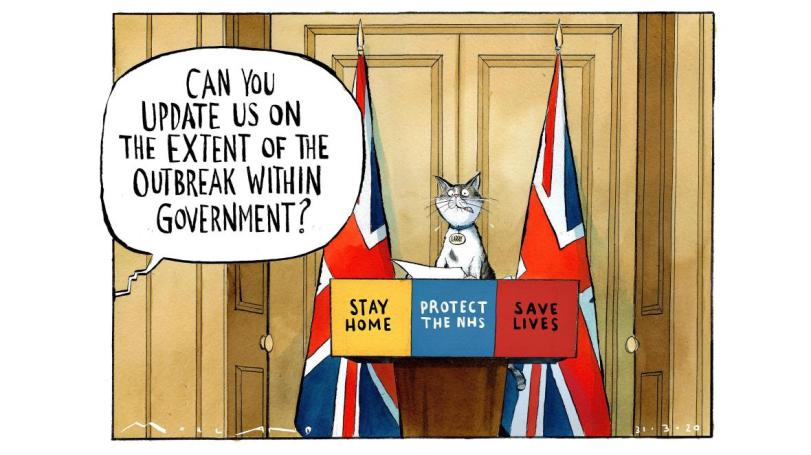
Pandemic psychologist explains lavatory roll panic

A heightened sense of disgust to dirt and germs during outbreaks of disease could have set off the panic-buying of lavatory paper, according to the author of a book on how pandemics affect the mind.

[Owl advises to shop locally for a variety of good reasons – you may also find your loo rolls as well, but please only buy what you need]

Andrew Ellson  www.thetimes.co.uk

Professor Steven Taylor, of the University of British Columbia, says that when people are threatened with infection, their sensitivity to disgust increases and are more motivated to avoid it. He concedes that the problem can also snowball due to a more prosaic reason — the simple desire not to run out when others are buying so much.

The professor, who published Psychology of Pandemics only a month before the pandemic struck, said: “People have a built-in alarm system that keeps us away from danger. So when people become frightened their sensitivity to disgust increases. In a pandemic, people are more likely to experience the emotion of disgust and are more motivated to avoid it.

“In that sense, the purchase of toilet paper makes sense because it is linked to our ability to avoid disgusting things. It’s not that surprising. It has also become a symbol.

“In psychology research, it is called a conditioned safety signal. It’s almost like a good luck charm or a way of keeping safe. This type of behaviour is very instinctive and prominent in pandemics.”

He added that panic-buying can also amplify itself, especially in the internet age. “Graphic images of people buying and fighting over toilet paper have gone viral. This creates a sense of urgency and the fear of scarcity snowballs and creates real scarcity. This is the first pandemic in the era of social media and it is having an effect.”

Professor Taylor said governments needed to be thoughtful and positive in their communications and instructions if they want people to stop panic-buying.

“Just telling people to stop is not going to stop them. People are panic buying because of the need to feel they are in control. They need to be told or given something positive to do, such as helping out their elderly neighbours in isolation or donating to food banks, so they feel they are doing something to help their communities. Then people stop thinking so much about themselves.”

Can German medicine cure our economy?

Strictly speaking, the recession we are entering is a choice, taken on the advice of public health experts. To limit the contagion, we must pause normal life as we know it, which means pausing the economy. When we know more about the disease we will be able to judge whether this was the right call or a miscalculation that inflicted needless economic pain. For the time being, the more pressing question is how to do it without causing an economic meltdown.

Ed Conway, economics editor of Sky News  www.thetimes.co.uk

Some machines you can turn off with the flick of a switch. Others are nearly impossible to shut off. Nuclear reactors fall into the latter category. Decommissioning them takes years. Turning them off temporarily is a risky exercise; indeed, the most famous nuclear accidents — Chernobyl, Fukushima, Three Mile Island — all involved attempts to pause their reactors.

A sophisticated economy is not designed to be shut down either. While we know what should happen when you switch off a nuclear reactor, we have no idea what happens when you do the same to an economy, because until now no one has tried. But one consequence of Covid-19 is that across the world we are about to find out.

Strictly speaking, the recession we are entering is a choice, taken on the advice of public health experts. To limit the contagion, we must pause normal life as we know it, which means pausing the economy. When we know more about the disease we will be able to judge whether this was the right call or a miscalculation that inflicted needless economic pain. For the time being, the more pressing question is how to do it without causing an economic meltdown.

The good news is that since this is no normal recession — a deliberate one rather than one caused by economic malfunction — life should get back to normal once the machine is up and running again. The bad news is that we are flying blind.

There are a few important principles. We know that when people lose their jobs in recessions they often never work again. We know that when the financial system clogs up and businesses can’t borrow, some promising productive companies go belly up. If you want to put your economy into hibernation you need to avoid both of these “scarring” effects.

These principles are what lie behind the extraordinary measures introduced by the chancellor over the past fortnight. Businesses are to get cheap loans while employees and, as of yesterday, many self-employed workers, will be paid by the state to be “furloughed”: stay at home on a slightly reduced salary. While that unfamiliar word comes from America, in reality the job retention scheme has a decidedly continental flavour. Indeed, it is based on a German system called kurzarbeit.

Kurzarbeit, where the Federal Labour Office pays temporarily laid-off workers a chunk of their salaries, has been around for decades but came to prominence during the 2008 financial crisis when it helped to cut German unemployment rates, even as they were soaring elsewhere. The Treasury was considering imposing kurzarbeit as an emergency measure here in the event of a no-deal Brexit last year. In the end, they adapted those Brexit blueprints to create the Covid-19 job retention scheme over a few all-nighters last week.

The challenge is that nothing like this has ever been imposed in Britain — and for good reason. Labour markets in many continental economies, including France, Germany and much of Scandinavia, are comparatively static. Workers are more likely to be employed and to stay in their jobs longer, so there is logic to a scheme like kurzarbeit, since you can generally assume that if someone does a given job one year they are likely to be doing it the next.

But Britain’s labour market is much more fluid. People move between jobs more frequently, and there is more hiring and firing. This fluidity and churn is, economists believe, one of the UK’s strong suits. Yet it has also tended to mean that our unemployment level is higher than that of comparable EU nations during a recession. To see what would happen here without a kurzarbeit, you need only look at the vertiginous increase in universal credit applications before the job retention scheme was unveiled. Or indeed the terrifying jump in US jobless claims yesterday: not just the worst in history, the worst in history by a factor of five.

Statistics like that explain why the Treasury is ploughing on with such a radical programme. But how effective will Britain’s version of kurzarbeit be? Can a continental model, in which millions of workers are effectively paid by the state to stay at home, succeed in our country? Nobody, including the Treasury, knows.

Britain’s financial system is also being asked to stifle its normal behaviour thanks to the other leg of Rishi Sunak’s rescue package. For better or worse, Britain’s banks are less inclined to lend to small and medium sized businessses than, for instance, in Germany, where local savings banks, Sparkassen, offer generous loans to such firms. But the Treasury is now encouraging banks to lend to businesses despite the economic uncertainty. Can banks kick the habit of a lifetime and suspend the stringent checks they normally carry out before lending? The early signs are not encouraging.

Britain’s open, dynamic economy serves the country well in normal times. But these are not normal times. And putting this economy into hibernation will mean confronting all sorts of habits and attitudes many of our companies and businesses took for granted. Not firing staff to protect the balance sheet. Not withholding credit from struggling companies.

If these unfamiliar, continental measures do not succeed, Britain faces a deeper recession than many other nations. If they do, we may spend the following decades working out whether we can ever uproot them.


MPs no longer to get automatic vote on constituency boundary plans

There has been criticism in the past that MPs have vested interests in the boundaries of their constituency, as any redrawing of the map can place into their patch new council wards that might typically vote for other parties, making the constituency more or less safe for their own party.  

Kate Proctor  www.theguardian.com 

The government had planned to reduce the number of MPs from 650 to 600 but announced a U-turn on Wednesday, the last day before parliamentary recess, citing the increased workload expected because of Brexit.

However, it has also emerged that among the many changes planned by the government is that any future decisions from the Boundary Commission would be implemented automatically.

The Cabinet Office minister Chloe Smith said this would stop any “interference” in the process. A set of boundary plans were voted down by opposition MPs in 2013.

There has been criticism in the past that MPs have vested interests in the boundaries of their constituency, as any redrawing of the map can place into their patch new council wards that might typically vote for other parties, making the constituency more or less safe for their own party.

In her written statement to the Commons, Smith said: “This change would provide certainty that the recommendations of the independent boundary commissions – developed through a robust and impartial process that is open to extensive consultation – would then be implemented without interference.”

The government has now changed the rules so that the new map would be implemented automatically by bringing it to parliament through a mechanism called an order in council.

The latest boundary review process, the sixth one to take place since the 1940s, recommended in 2011 that the number of MPs should be reduced from 650 to 600, but the process has been beset with delays. Proposals laid out in 2013 that were backed by the Tories were defeated in parliament.

The Boundary Commission released new proposals in 2018 recommending scrapping 32 seats in England, six in Scotland, 11 in Wales and one in Northern Ireland.

The boundaries would have scrapped Jeremy Corbyn’s Islington North seat and made Boris Johnson’s Uxbridge less safe by bringing in typically Labour-voting wards in Ealing.

A controversial “Devonwall” seat that crossed the counties of Devon and Cornwall was another unpopular proposal in the now-axed 2018 plan.

Smith said the decision to abandon plans to reduce the number of MPs from 650 to 600 was sensible in light of changed circumstances.

“Since that policy was established in the coalition agreement, the United Kingdom has now left the European Union,” she said. “The UK parliament will have a greater workload now we are taking back control and regaining our political and economic independence. It is therefore sensible for the number of parliamentary constituencies to remain at 650.”


A free weekly treat for theatre lovers

A selection of much-loved National Theatre live productions is to be made available to watch on YouTube for free over the next two months.

Chris Carson  www.midweekherald.co.uk 

The National Theatre Collection – an online resource for schools, universities, libraries and the wider education sector – is now available to access at home during school closure period

A spokesman said: “During this unprecedented time which has seen the closure of theatres, cinemas and schools, the National Theatre is providing access to content online to serve audiences in their homes.

“Audiences around the world can stream NT Live productions for free via YouTube, and students and teachers have access to the National Theatre Collection at home, delivered in partnership with Bloomsbury Publishing.

From Thursday, April 2, a number of productions previously screened in cinemas globally as a part of National Theatre Live will be made available to watch via the YouTube channel.

The first production to be broadcast will be Richard Bean’s One Man Two Guvnors featuring a Tony Award-winning performance from James Corden.

Each production will be free and screened live every Thursday at 7pm. It will then be available on demand for seven days.

Alongside the streamed productions, there will also be accompanying interactive content such as Q&As with cast and creative teams and post-stream talks.

Lisa Burger, NT executive director and joint chief executive said: “Our ambition is to create work which is challenging, entertaining and inspiring and we’re committed to continuing that through these difficult times.

“Following the UK schools’ closures, pupils now studying at home will be able to access the National Theatre collection remotely.

“It includes high-quality recordings of 24 world-class productions, drawing from 10 years of NT Live broadcasts and never-before-released productions from the NT archive.

“It’s available now for free to pupils and teachers at state schools and state-funded further education colleges, through remote access provided in partnership with Bloomsbury Publishing.

“Schools will be able to share log-in details with pupils to access the National Theatre Collection at home during this period.”

For more on National Theatre at Home go to https://www.nationaltheatre.org.uk/at-home

Persimmon and Bellway down tools and halt dividend

Uncertainty over what should happen on construction sites is another example of the lack of clarity coming from Boris Johnson every time he blusters. Although Persimmon undoubtedly will have an eye on a collapse in demand.

When housing development eventually gets going again, Owl confidently predicts that developers will claim that EDDC has fallen behind its planned build out rate and demand more planning permissions to compensate.

Owl wonders what is happening at Hinkley – the construction that is so vital to Heart of the South West strategic plans? Have they downed tools?

Matt Oliver  www.thisismoney.co.uk 

Persimmon and Bellway down tools and halt dividend as row rages about whether construction should continue during lockdown

Persimmon and Bellway have told workers to down tools as a row rages about whether construction should continue during the coronavirus lockdown. 

The housebuilders also suspended their dividends to help conserve cash, following in the footsteps of other businesses. 

Shares in Persimmon rose 15.3 per cent, or 258.5p, to 1950p after the announcement, while Bellway’s shares fell 1.6 per cent, or 32p, to 2039p. 

Housebuilders Persimmon and Bellway have told workers to down tools as a row rages about whether construction should continue during the coronavirus lockdown

Rivals Barratt, Taylor Wimpey and Galliard Homes also announced site closures. Vistry Group, the owner of Bovis Homes and Galliford, also said it was cancelling a dividend due in May worth £60million. 

It had already halted work at its sites. However, others such as Redrow and Berkeley Homes have defied pressure to take similar steps, sparking a row about whether the Government should explicitly ban construction site work. 

Cabinet ministers including Health Secretary Matt Hancock and Housing Secretary Robert Jenrick have resisted an all-out ban, saying that work on infrastructure is important to the economy and should continue – so long as workers stay far enough apart under social-distancing rules. 

Despite this, major sites in London have been shut down after an outcry over the number of construction workers still using the London Underground. 

Mace, the main contractor in charge of redeveloping Battersea Power Station – one of the capital’s biggest building projects – announced a two-day shutdown on Tuesday to review whether it can continue safely. 

Work on major High Speed 2 (HS2) rail sites, including Euston Station and Old Oak Common, has also been suspended, as well as construction of Google’s new headquarters in King’s Cross. 

Persimmon said it had taken the decision to close building sites and sales offices because of the ‘exceptional’ challenges posed by the coronavirus outbreak. 

It said work would only continue at some to make them safe, but admitted the temporary shutdown would cause ‘significant delays’ in handing over homes to customers. 

In a move to free up cash and fortify its balance sheet, the company also postponed two dividend payments – worth 235p per share overall or £749.5million – that were due in April and July. 

Bellway also said it would also shut down its sites and cancelling its interim dividend. Smaller builders such as McCarthy & Stone said they were pausing work. However, Cairn Construction joined Redrow and Berkeley in continuing work on its sites.


Coronavirus: Tracking app aims for one million downloads

Owl has been sent this link by a trusted source, but Owl has not tried this personally. Readers need to be aware of the cautions expressed in the BBC article.

https://www.bbc.co.uk/news/technology-52033210

An app that tracks the symptoms of Covid-19 in the UK has become one of the most popular downloads.

Its creators aim to deliver insights into why some people get the disease more severely than others.

They also hope to create a map showing where outbreaks are happening and help distinguish cases from those of the common cold.

It is one of many such new apps. Experts have warned people to be cautious about which they download.

At present, Covid Symptom Tracker is the third most popular app in Apple’s UK store and second in Google Play’s new releases chart for the country.

Its developers are targeting one million downloads in 24 hours.

The program has been shared thousands of times via WhatsApp and other social-media platforms.

Created in just three days by researchers at Guy’s and St Thomas’ hospitals and King’s College London university, in conjunction with the nutrition advice start-up Zoe, it has already reached 750,000 downloads and, according to its developers, is being installed at a rate of 50,000 times an hour.

Home-testing kit

The app was the brainchild of Prof Tim Spector, a genetic epidemiologist at King’s College, who has specialised in the genetics and medical histories of twins for the past 25 years.

“I was rather depressed as they were shutting down everything in the university and I thought that twins are the best studied people in the country, so how can we use that information in this crisis?” he told BBC News.

Initially, the app was made available only to the twins taking part in his studies, who were sent a home-testing kit to better understand which symptoms corresponded to the coronavirus.
But the professor realised it could be scaled up to the general public, without the testing element.

Temperature reading

“The NHS hasn’t come up with a better alternative and this app seems to be working,” he said.

“We are hoping to get to one million downloads by the end of the day and we will also be ready to release data by then for the NHS, data modellers and researchers to play with.”

The software requires users to share personal details, including their age, height and medical history.

It then asks them to describe symptoms, if they have any, on a daily basis, as well as to give a temperature reading.

Critically unwell

Prof Spector said it could potentially help the NHS:

  • learn how fast the virus is spreading in a particular area, as well as highlighting high-risk parts of the country
  • better understand the symptoms, including the differences between those of the virus and the common cold
  • explain why some people develop a mild illness while others become critically unwell

A spokeswoman for Zoe told BBC News all shared data would be anonymised and not used for any commercial purpose. And users could delete all their records when the crisis was over.

But as spam and malware skyrocket on the back of the pandemic, one expert said people would be wise to be cautious about downloading other apps purporting to help tackle coronavirus.

“I am concerned by the rash of websites and apps intended to allow people to report of their Covid-19 symptoms,” said privacy expert Pat Walshe.

‘Dubious ethics’

“I’ve found it difficult or impossible to determine who is behind a number of them.

“They do not adopt appropriate standards of compliance with data protection law and I see dubious ethics.

“Could an app help? Yes, possibly. But I think we need the NHS to coordinate it in order to provide confidence, trust and protection.”

Prof Spector agrees people need to be careful.

“There are lots of scams out there and bogus things trying to get your details,” he said.

People wishing to download the Covid-19 tracker can do so from Apple and Google’s app stores.

https://covid.joinzoe.com/

UK patient zero? East Sussex family may have been infected with coronavirus as early as mid-January

Owl understands that, in any epidemic,  it’s important to try to find “patient zero”, the first person to become infected. This is because it helps epidemiologists determine how and when the outbreak started and to gain insight into how it spreads.

Evidence seems to point to a much earlier start in the UK, possibly a month earlier than currently assumed, with the patient infected in Austria, the source of most or all European cases.

[Warning – this article describes certain practices involving ping-pong balls – please do not try this for yourselves anywhere, anytime – Owl.] 

By Paul Nuki, Global Health Security Editor, London and Sarah Newey www.telegraph.co.uk 

A family from East Sussex may have been Britain’s first coronavirus victims, catching the virus in mid-January after visiting an Austrian ski resort which is now under investigation for allegedly covering up the early outbreak.

If confirmed with official tests, it would mean the outbreak in Britain started more than a month earlier than currently thought.

As things stand, the first recorded UK case was January 31 and the earliest documented incidence of transmission within the UK occurred on February 28.

IT consultant Daren Bland, 50, was skiing in Ischgl, Austria from January 15 to 19 with three friends, two from Denmark and one from Minnesota in America. 

All three men fell ill on their return with classic coronavirus symptoms and Mr Bland passed on the infection to his wife and children in Maresfield, east Sussex.

A virus which caused a dry cough then spread rapidly through the locality in the weeks running up to the February half term, with many local children taking time off school with illness.

Austrian prosecutors on Tuesday opened an criminal investigation into allegations a suspected infection in the resort of Ischgl was covered up allowing Covid-19 to spread across Europe undetected.

Hundreds of infections in Germany, Iceland, Norway and Denmark have been traced back to the resort in the Tyrolean Alps by European investigators but Mr Bland and his family are the first in the UK known to be associated with the resort.

Like many of the European victims, Mr Bland visited the Kitzloch bar, which is famed for its apres ski parties. The bar is tightly packed and known for “beer pong” – a drinking game in which revellers take turns to spit the same ping-pong ball into a beer glass. 

“We visited the Kitzloch and it was rammed, with people singing and dancing on the tables”, recalled Mr Bland on Wednesday. “People were hot and sweaty from skiing and waiters were delivering shots to tables in their hundreds. You couldn’t have a better home for a virus”.

The Telegraph has obtained an exclusive video shot inside Ischgl’s Kitzloch apres ski bar, below, which clearly shows conditions inside the venue.

Mr Bland returned home to Maresfield on Sunday, January 19 and fell ill the following morning. “I was ill for 10 days, it was like wading through treacle. I couldn’t get up, I couldn’t work, it knocked me for six. I was breathless.”

Sarah Bland, 49, told the Telegraph: “I was then ill and so was my youngest daughter. My symptoms were a temperature and strange flushes, exhaustion which lasted for nearly three weeks intermittently and total brain fog.

“My daughter had a temperature and persistent cough and was off school for two weeks. My eldest daughter felt wiped out for a day but it passed quickly.”

The family have not been officially confirmed to have had the coronavirus but have been in contact with the Telegraph seeking help for several weeks.

Their suspicions were raised after confirmed coronavirus cases across Europe were traced back to the Austrian resort. Although their illness was relatively mild, one of Mr Bland’s two Danish friends, a man in his 50s, was more seriously ill. 

“I think it’s important we are tested to see if we have had the virus”, said Mrs Bland on Wednesday. “It is partly out of curiosity but also because it may help the authorities better understand the spread in the UK. They are meticulous in their testing in Europe”.

Mr Bland added: “A test for people like us would enable us to get out and help make deliveries and run errands for others”.

Mark Woolhouse, professor of infectious disease epidemiology at the University of Edinburgh, said cases  like this demonstrates the need for widespread antibody and viral genome sequencing testing.

These tests can show who has and who has not been exposed to the virus and therefore help epidemiologists trace the history and spread of the disease.

“A really significant unknown in this epidemic is whether or not the cases that are symptomatic are simply the tip of the iceberg,” he said. “If there are hidden cases in large numbers then it tells us that the infection is more difficult to control than we thought… but also suggests that there is a possibility herd immunity may have built up.”

Epidemiologists are still unclear about when the virus arrived in the UK, although modelling from Oxford University has suggested it could have arrived in mid January and have been spreading undetected since then.

Skiers from Iceland, Denmark, Norway, Germany and Austria all began testing positive for coronavirus after returning home from Ischgl in March. The Austrian authorities are now probing earlier cases amid allegations that the resort tried to cover them up.

European governments started listing the town as an at-risk area in February, although local authorities played down the concerns initially.

The Kitzloch bar was eventually closed on March 10, and the resort closed on March 13.

Werner Kurz, the mayor of Ischgl, told German newspaper Der Spiegel the shut down was “a catastrophe” for the town, saying: “We implemented all regulations in a timely manner”.

Scientific modelling is valuable – but remember the limitations – only we didn’t.

Owl, on the basis of discussions with trusted and knowledgeable friends, has consistently questioned whether Boris Johnson and his advisers have really been “guided by the science” in a way that could be described as “scientific”. This short article describes the glaring limitations of their approach in a more eloquent way.

The troubling assumptions and use of the modelling from Im­pe­rial Col­lege that un­der­pinned the govern­ment’s be­lief that the na­tion could ride out the epi­demic by let­ting the in­fec­tion sweep through, cre­at­ing “herd im­mu­nity” on the way, is discussed in particular.

Scientific modelling is valuable – but remember the limitations

Ian Sample, Analysis, Guardian 26 March www.pressreader.com 

The lessons to be learned from the coro­n­avirus pan­demic are so nu­mer­ous they will keep schol­ars busy for decades to come. Chief among them is the value of modelling and the fact that an un­crit­i­cal re­liance on their find­ings can lead you badly astray.

A re­cent model from Ox­ford Univer­sity assessed how well dif­fer­ent out­break sce­nar­ios fit­ted the rise in Covid-19 deaths in the UK and Italy. The most ex­treme UK sce­nario as­sumed only a frac­tion of peo­ple were at risk of se­ri­ous ill­ness and es­ti­mated that, as of last week, 68% of the pop­u­la­tion had been ex­posed to the virus. The study, which has not been pub­lished or peer re­viewed, un­leashed a flurry of head­lines declar­ing that coro­n­avirus may have in­fected half the peo­ple in Bri­tain. That’s 34 mil­lion peo­ple.

A re­cent model from Ox­ford Univer­sity assessed how well dif­fer­ent out­break sce­nar­ios fit­ted the rise in Covid-19 deaths in the UK and Italy. The most ex­treme UK sce­nario as­sumed only a frac­tion of peo­ple were at risk of se­ri­ous ill­ness and es­ti­mated that, as of last week, 68% of the pop­u­la­tion had been ex­posed to the virus. The study, which has not been pub­lished or peer re­viewed, un­leashed a flurry of head­lines declar­ing that coro­n­avirus may have in­fected half the peo­ple in Bri­tain. That’s 34 mil­lion peo­ple.

But as infectious dis­ease mod­ellers and pub­lic health ex­perts, in­clud­ing the Ox­ford team them­selves, have pointed out, the model used as­sump­tions be­cause there is no hard data. No one knows what frac­tion of the pub­lic is at risk of se­ri­ous ill­ness. The study merely demon­strates how wildly dif­fer­ent sce­nar­ios can pro­duce the same tragic pat­tern of deaths – and em­pha­sises that we ur­gently need sero­log­i­cal test­ing for an­ti­bod­ies against the virus, to dis­cover which world we are in.

But as infectious dis­ease mod­ellers and pub­lic health ex­perts, in­clud­ing the Ox­ford team them­selves, have pointed out, the model used as­sump­tions be­cause there is no hard data. No one knows what frac­tion of the pub­lic is at risk of se­ri­ous ill­ness. The study merely demon­strates how wildly dif­fer­ent sce­nar­ios can pro­duce the same tragic pat­tern of deaths – and em­pha­sises that we ur­gently need sero­log­i­cal test­ing for an­ti­bod­ies against the virus, to dis­cover which world we are in.

Paul Klen­er­man, one of the Ox­ford re­searchers, called the 68% fig­ure “the most ex­treme” re­sult and ex­plained that “there is an­other ex­treme which is that only a tiny pro­por­tion have been ex­posed”. He added that the true fig­ure – which is un­known – was “likely some­where in be­tween”. In other words, the num­ber of peo­ple in­fected in Bri­tain is ei­ther very large, very small, or mid­dling. This may sound un­help­ful, but it is pre­cisely the point. “We need much more data about who has been ex­posed to in­form pol­icy,” Klen­er­man said.

Paul Klen­er­man, one of the Ox­ford re­searchers, called the 68% fig­ure “the most ex­treme” re­sult and ex­plained that “there is an­other ex­treme which is that only a tiny pro­por­tion have been ex­posed”. He added that the true fig­ure – which is un­known – was “likely some­where in be­tween”. In other words, the num­ber of peo­ple in­fected in Bri­tain is ei­ther very large, very small, or mid­dling. This may sound un­help­ful, but it is pre­cisely the point. “We need much more data about who has been ex­posed to in­form pol­icy,” Klen­er­man said.

The modelling from Im­pe­rial Col­lege that un­der­pinned the govern­ment’s be­lief that the na­tion could ride out the epi­demic by let­ting the in­fec­tion sweep through, cre­at­ing “herd im­mu­nity” on the way, was more trou­bling. The model, based on 13-year-old code for a long-feared in­fluenza pan­demic, as­sumed the demand for in­ten­sive care units would be the same for both in­fec­tions. Data from China soon showed this was dan­ger­ously wrong, but the model was only up­dated when more data poured out of Italy, where ICUs were swiftly over­whelmed and deaths shot up.

The modelling from Im­pe­rial Col­lege that un­der­pinned the govern­ment’s be­lief that the na­tion could ride out the epi­demic by let­ting the in­fec­tion sweep through, cre­at­ing “herd im­mu­nity” on the way, was more trou­bling. The model, based on 13-year-old code for a long-feared in­fluenza pan­demic, as­sumed the demand for in­ten­sive care units would be the same for both in­fec­tions. Data from China soon showed this was dan­ger­ously wrong, but the model was only up­dated when more data poured out of Italy, where ICUs were swiftly over­whelmed and deaths shot up.

It wasn’t the only short­com­ing of the Im­pe­rial model. It did not con­sider the im­pact of wide­spread, rapid test­ing; or contact trac­ing and iso­la­tion, which can be used in the early stages of an epi­demic, or in lock­down con­di­tions, to keep in­fec­tions down to such an ex­tent that when re­stric­tions are lifted the virus should not re­bound.

It wasn’t the only short­com­ing of the Im­pe­rial model. It did not con­sider the im­pact of wide­spread, rapid test­ing; or contact trac­ing and iso­la­tion, which can be used in the early stages of an epi­demic, or in lock­down con­di­tions, to keep in­fec­tions down to such an ex­tent that when re­stric­tions are lifted the virus should not re­bound.

It is not a ques­tion of whether mod­els are flawed, but in what ways are they flawed. That does not make them use­less: mod­els can be enor­mously valu­able if their short­com­ings are ap­pre­ci­ated. But, as with other sources of in­for­ma­tion, they should never be used alone.


Mixed messages from EDDC – shopping encouraged but parks, toilets and play areas shut! 

Mixed messages – has LINO finally lost control?

East Devon parks, toilets and play areas shut to stop coronavirus spread. 

East Devon Reporter eastdevonnews.co.uk

Parks and gardens, public toilets, play areas and beach huts in East Devon have been shut in a bid to stop the spread of coronavirus. [But previous post shows LINO and Pook want to encourage parking in Towns to help business]

District council bosses have made the move to follow government guidance on social distancing.

They say the closure will also help to ‘key frontline services’ – such as rubbish collections – running in the face of staff shortages.

With restrictions on our own staffing, this will also mean we can continue to provide other key frontline services for the time being, such as litter collection and kerbside recycling and waste collections…

Green and bulky waste services have been temporarily suspended, but planning and building control remains open for business as construction continues.

An EDDC spokesperson said: “Following government guidance on social distancing, we have closed our parks and gardens, play areas, public toilets and provision of beach huts and sites to help restrict the spread of coronavirus.

“We’ve been closely following government advice and this is the responsible thing to do to help with our country’s response to coronavirus.

“With restrictions on our own staffing, this will also mean we can continue to provide other key frontline services for the time being, such as litter collection and kerbside recycling and waste collections.

“We urge people to stay local, avoid non-essential travel and observe social distancing.”

The council says that, where sites cannot be closed – such as beaches and nature reserves – it is reminding people to respect the Government’s social distancing and hygiene guidance.


Is EDDC the most irresponsible council in the country?

Winter car parking rates extended until May across East Devon “in order to better support town centre businesses”

Owl wonders whether LINO (Leader in name only) Ben Ingham and his “Independent” sidekick Geoff Pook have completely lost their marbles.

 Is the Government message too difficult for them to understand?

 We are facing a global pandemic, the infection in the UK has yet to be brought under any semblance of control. It is touch and go as to whether our chronically underfunded NHS will be able to cope when the peak infection rate is reached. 

The government instruction right now is that people should stay at home and only leave for very restricted reasons, and then for as short a time as possible. It is not yet clear whether this instruction will be heeded. East Devon has one of the most vulnerable populations in the country. 

Spending all day wandering around Exmouth, Sidmouth, Honiton, Seaton, Axminster, Ottery and Budleigh in normal times is to be encouraged, but these are not normal times. There may be a very good case, when recovery starts, to cut car parking charges to encourage this. Doing it now sends all the wrong signals. It is totally irresponsible.

The sooner the LINO regime is replaced, the better.

Beth Sharp www.sidmouthherald.co.uk 

The all-day £2 winter car parking tariff has been extended until May.

East Devon District Council (EDDC) has decided to not bring its usual car park charging tariff back on April 1 this year, in order to better support town centre businesses.

The authority revealed its all day parking for £2 will continue, following an agreement by council leader Councillor Ben Ingham and assets portfolio holder Cllr Geoff Pook.

An EDDC spokesman said: “This decision will be kept under review and when demand begins to return to normal then we anticipate returning to our usual charging tariff.”

EDDC owns car parks in all the major East Devon towns, including Exmouth, Sidmouth, Honiton, Seaton, Axminster, Ottery and Budleigh.

Visit eastdevon.gov.uk/parking/parking-information/car-park-locations-and-information to find all the EDDC car parks affected.

Government abandons boundary shakeup to cut number of MPs to 600

The boundary review is no more. After a decade of to-ing and fro-ing, the government has now formally abandoned David Cameron’s plans to cut the number of MPs to 600 from 650. It looks like a boost for Labour — which would have been hit proportionally hardest — but also means the government now doesn’t have to have all those tricky conversations with Tory MPs who were poised to see their seats disappear-Owl.

Lizzy Buchan Political Correspondent @LizzyBuchan  www.independent.co.uk 

The government will abandon coalition-era plans to radically redraw parliamentary boundaries to cut the number of MPs in the House of Commons from 650 to 600.

Cabinet office minister Chloe Smith revealed that minister were planning to ditch the shake-up of UK constituencies as the UK parliament faces a “greater workload” after Brexit.

Parliament approved plans to slash the number of constituencies to 600 in 2011 but moves to implement the changes has been repeatedly delayed.

Proposals published in 2018 by the independent Boundary Commission recommended scrapping 32 seats in England, six in Scotland, 11 in Wales and one in Northern Ireland.

Jeremy Corbyn’s constituency could have been axed and Boris Johnson would have faced challenge to hold onto his seat under the changes.

Setting out the plans in a written statement, Ms Smith said: “Legislation currently provides that, on implementation of the 2018 Boundary Review recommendations, the number of constituencies in the UK shall be 600.

“The government is minded to instead make provision for the number of parliamentary constituencies to remain at 650.

“In doing so, we would also remove the statutory obligation to implement the 2018 Boundary Review recommendations and the statutory obligation on the government to make arrangements to review the reduction in constituencies to 600 by 30 November 2020.”

She added: “The UK parliament will have a greater workload now we are taking back control and regaining our political and economic independence.

“It is therefore sensible for the number of parliamentary constituencies to remain at 650.”

The latest news on Brexit, politics and beyond direct to your inbox

The move was welcomed by electoral reform campaigners, who described the original plans as an “executive power grab” rather than a bid to improve the function of the Commons.

Darren Hughes, chief executive of the Electoral Reform Society said: “Without shrinking the size of the government, cutting MPs would have done little more than enhance the already disproportionate power of ministers.

“Now that the government have accepted the need for proper representation in the Commons, they must focus on reducing the number of unelected peers in the bloated House of Lords.

“At 800 members, it’s the biggest second chamber in the world and needs a genuine overhaul.”

Joe Sousek, co-chief executive of Make Votes Matter, said overhauling the UK’s first past the post voting system was a more important issue than constituency boundaries.

He said: “It doesn’t matter how many MPs there are in the House of Commons, they simply cannot reflect the British voters while we use FPTP to elect our representatives.

“Regardless of which party you might support, a voting system which delivered a government with a huge majority on less than 44 per cent of the vote share at the last general election is just wrong.

“Until we join the vast majority of developed democracies using some form of proportional representation, parliament will remain unrepresentative of how people voted.”

A Tory MP Makes £100,000 A Year From A Company That Is Selling Private Coronavirus Tests For £120 Each

Emergencies bring out the best in people and organisations and, unfortunately, the worst – Owl. 

Owen Paterson, the Conservative MP and former Cabinet minister, is a paid adviser to a company that is selling coronavirus tests online to British consumers and private clinics.

by Alberto NardelliBuzzFeed News Europe Editor,  www.buzzfeed.com

According to the register of MPs’ financial interests, Paterson has been a consultant to Randox Laboratories since August 2015. The MP for North Shropshire has regularly declared that he expects to receive £8,333 a month from the company, from April 2017 until further notice. The register was last updated on March 16 this year.

Randox has been selling a rapid “COVID-19 home testing kit” for £120. The company, which is registered in Crumlin, Northern Ireland, said on its website that it “has developed a revolutionary test for Coronavirus (COVID-19), the new strain of coronavirus. The only test in the world that can identify the lethal strain and differentiate between other non-lethal variants with the same symptoms.”

Consumers order and register the kit online and then take the test at home, following instructions provided, before mailing it back to the lab, which processes and provides results within days.

The kit is temporarily out of stock and the company will not be taking new orders until the end of the month “due to unprecedented pressure on healthcare supply chains”, its website said.

It comes as the British government is scrambling to ramp up the number of coronavirus tests it carries out. The UK is currently mostly testing people in hospitals and has faced criticism for not routinely testing NHS staff despite data from other countries showing that health workers are among those most at risk from the virus.

Although Britain has tested more than many countries around the world, it still lags way behind countries such as Germany, South Korea, and Italy, which are conducting more than 20,000 tests a day. Britain currently runs between 5,000 and 6,000 tests a day but plans to increase this figure to 25,000 within four weeks.

Other companies have been buying Randox’s kits and using its analysis service — and these companies have been selling the same test at a substantially marked-up price.

Summerfield Healthcare — which runs private clinics in the West Midlands — is selling the mail-order test for £249. Another company, Qured, a service that usually allows people to book face-to-face GP appointments, provides the kit for £295. Both companies told the Guardian last week that they use Randox for their testing.

The Sunday Times published a story at the weekend about another company, Private Harley Street Clinic, that has been using Randox.

The clinic has sold over 6,600 coronavirus test kits for £375 each to people who fear they have the illness, raking in millions, the newspaper claimed. The clinic is based at the north London flat of its owner, Dr Mark Ali.

The company uses kits sold by Randox, and analysis work on the results is also done by Randox, the Sunday Times said. The clinic denied that it was profiteering and defended its decision to charge £375.

According to a statement published on its website, Private Harley Street Clinic is no longer offering the test as it works to fulfil a backlog of orders, and it is also donating free testing to NHS staff, a statement said.

Randox told BuzzFeed News it didn’t have a direct customer relationship with Private Harley Street Clinic so had no control over the amount it charged. Amy Millar, its spokesperson, said: “As a private company with over 40 years investment in and commitment to the diagnostics industry, Randox quickly developed a COVID-19 test and were able to provide that test, with a home sample collection capability, at a very competitive price. That price is a matter of public record.”

Millar added: “Randox do not have a direct customer relationship with this clinic, we have not supplied them and have no control over what they charge if they have accessed our kits. Likewise, we also have no control over what their customers are prepared to pay.”

According to the Irish Times, Randox is in talks with the NHS about using its COVID-19 test.

Private clinics are not banned from selling coronavirus tests, but the government advises people against testing at home. A Department of Health and Social Care spokesperson told BuzzFeed News: “Public Health England does not advise rapid tests for use in the community nor self-testing but we keep all advice under constant review.”

Paterson, who is reportedly self-isolating with COVID-19 symptoms, declined to comment.


The middle class are about to discover the cruelty of Britain’s benefits system 

But you have to contact them first – about as easy as fixing a delivery from Waitrose – Owl

Millions of people are about to discover something they didn’t know about British life. There is no longer a safety net. People who have paid tax and national insurance for years and never been near the social security system will be turning to it in their hour of need; yet far too late, like trapeze artists falling through the air, they will find that the net beneath them has been lowered dangerously close to the ground and is badly torn.

Polly Toynbee www.theguardian.com

If these people once believed relentlessly misleading tabloid tales of benefit scroungers, they will have a rude awakening. They will find that when Iain Duncan Smith turned the screw on social security in 2012, he was right to warn claimants: “This is not an easy life any more, chum.” As if it ever was.

The chancellor, Rishi Sunak, has done well to honour 80% of wages for those “furloughed” from shut-down businesses – up to £2,500 a month. No one knows how many that covers and at what cost, but it was a macroeconomic necessity. One worry is the incapacity of the HMRC workforce, with 15,600 staff cut and 157 local offices with local knowledge closed: can they pay the wage subsidy to companies in time to save them? Many firms could still close, sending millions into unemployment.

The 15% self-employed are urgently seeking a matching plan, with the Treasury under intense pressure for a rapid response. Most of the self-employed are low-paid: their median income is just £10,000, according to Paul Johnson of the Institute for Fiscal Studies. Some won’t qualify, if they have earning partners. But many will have been forced into sham “self-employment” by tax-cheating companies. They will be desperate – and angry. The Resolution Foundation wants them paid 80% of average earnings over the past three years – or they will work through illness, rather than starve on £94 a week sickness benefit, says the RSA Populus poll.

Let’s hope that injustice is fixed. But even then, watch the shock as millions fall on the untender mercies of the Department for Work and Pensions, to discover what happened to benefits in the past decade. While never over-generous, by 2010 Labour had greatly lifted living standards for low earners, especially for children: Gordon Brown’s tax credits raised a million children and a million pensioners out of poverty. Since 2010, according to new research by Kerris Cooper and John Hills, a professor at the London School of Economics, children have lost a quarter of the support they had; chancellor George Osborne and his successors took out a staggering nearly £40bn from benefits. Never “all in this together”, Osborne justified it by raining down abuse on low-paid families. The hypocrisy: as the current editor of the London Evening Standard, he ran Christmas collections for poor families! The Resolution Foundation predicts a third of children falling into poverty by 2023.

Some cuts were secretive, uprating benefits by a meaner CPI not RPI inflation rate, a four-year freeze, and axing council tax support. Some made a noise – such as the bedroom tax, costing some families £14 week for a spare room. An early case was a Hartlepool family whose empty room belonged to their recently deceased 10-year-old. Housing benefit for renters was cut brutally. Introducing the two-child limit was exceptionally unjust.

New claimants confronting universal credit’s obstacles may join the half who find themselves propelled to food banks. Many new arrivals will join the 60% of claimants falling into debt and rent arrears while waiting at least five weeks for first payments. As with HMRC, a stripped-down DWP workforce is at risk of being overwhelmed. Some talking to the Treasury are shocked to find its staff clueless about the meanness of a benefits system they have cut and cut again. That explains Sunak’s sudden extra £20 a week and slight easing of housing benefit: they had no idea.

Torsten Bell, head of the Resolution Foundation, says people on £50,000 salaries have been anxiously asking him about benefits rates. They’re in for a shock, he says. Unlike the previous tax credit system, universal credit only allows savings of £6,000 (it takes steep deductions from savings up to £16,000). People hoping this is only temporary will be distraught at having to use up their rainy-day funds, often saved for years for a deposit on a home. The foundation is lobbying urgently to have this savings means-test dropped.

Hills says a couple with two children will get £266 a week. And take from that £115 – the average amount that housing benefit falls short of rental payments. Many new claimants will run up rent arrears. Expect them to plunge immediately into poverty, miles below the £384 minimum income standard for a family of four, says Hills.

Some singles will get a shock too. Under-35s will be living on £73, and only funded for a room in a shared flat, in the cheapest third of rentals in the area.

Many who see themselves as middle class will confront the reality of Britain’s nonexistent safety net. It is, says the IFS’s Paul Johnson, “extraordinarily low”. One piece of advice from all these experts I’ve talked to: apply immediately, to limit these delays and debts. “Too many will wait, borrow from family, deny it’s happening to them, feeling the stigma. Apply at once,” says Torsten Bell.

These millions discovering DWP brutality at first hand will no longer be deceived by the old poison shaming those on benefits as loafers, frauds and “not people like us”. Benefits offer penury, not a life of Riley. Rishi Sunak has been lavishly praised, not least for his empathic language: “We will be judged by our capacity for compassion”. But his compassion will be judged by how far he keeps benefit rates below the most basic poverty line.


NHS now likely to cope with coronavirus, says key scientist – Neil Ferguson

The NHS is likely to cope with coronavirus now that Britain has gone into lockdown, according to the scientist behind tougher government measures.

Owl would dearly love to believe this – except Britain is not in “lockdown”. We are under a much softer  form of restriction because of Boris Johnson’s libertarian beliefs. There are still horrific pictures in the press of overcrowding on the London tubes, uncertainty over who should be working and who shouldn’t etc.

Yesterday, Owl reported on Jeremy Hunt’s demand that the government ramp up the rate of testing that remains at 5,000 day. Yesterday the new daily count of positive cases was 1,500 odd. In other words we are only really testing the seriously sick. As the author says only “large-scale testing and contact tracing” will allow normal life to start to resume…….”

Chris Smyth, Whitehall Editor  www.thetimes.co.uk 

The NHS is likely to cope with coronavirus now that Britain has gone into lockdown, according to the scientist behind tougher government measures.

Neil Ferguson of Imperial College London said that after a scramble to set up thousands more intensive care beds and enforcement of social distancing he was confident that the health service would remain “within capacity”.

The worst of the first wave is likely to pass within three weeks and deaths could be “substantially lower” than 20,000, Professor Ferguson told MPs on the science and technology select committee.

However, only “large-scale testing and contact tracing” will allow normal life to start to resume without a resurgence of the virus, he said.

Professor Ferguson’s modelling prompted Boris Johnson to make an abrupt change of tack ten days ago after it concluded that a policy based on hand-washing and self-isolation of those with symptoms was likely to result in 250,000 deaths.

He is a key member of the Scientific Advisory Group for Emergencies (Sage), which is providing the evidence guiding Mr Johnson’s response to coronavirus.

Initially, the judgment was that there were “clear advantages economically to having it over by the summer” if NHS intensive care beds could cope, Professor Ferguson said.

However, the strategy was “slightly reluctantly” changed after updated information on NHS intensive care capacity and illness in China and Italy suggested that hospitals would be overwhelmed. It also became clearer that each unchecked infectious person passed the disease to three people on average, higher than the 2.5 previously estimated.

After adjusting models to take account of new rules requiring people to stay at home unless absolutely necessary, Professor Ferguson told MPs: “There will be some areas that are extremely stressed but we are reasonably confident — which is all we can be at the current time — that at the national level we will be within capacity.”

He added: “If the current measures work as we would expect them then we will see intensive care demand peak in approximately two to three weeks and then decline.”

Deaths are “unlikely to exceed 20,000” and “could be substantially lower than that”, he projected. However, he said some hospitals were already overwhelmed and that parts of the country would be very badly hit, with the outbreak much more advanced in London.

There is widespread concern about whether the virus will rebound once restrictions on daily life are restricted and Professor Ferguson acknowledged: “We clearly cannot lock down the country for a year. The challenge that many countries in the world are dealing with is how we move from an initial intensive lockdown . . . to something that will have societal effects but will allow the economy to re-start.


Yet more unintended consequences….

Caravans ‘clog up’ Cornwall’s streets after holiday park closures

CARAVANS and motor homes which have been turfed out of holiday parks are now clogging up residential streets – and there’s little Cornwall Council can do about it, writes Richard Whitehouse, local democracy reporter.

[Owl doesn’t think they would like this in Sidmouth or Otterton or Littleham or …….]

www.bude-today.co.uk

After holiday parks shut their gates over the weekend – following a backlash against people who had decided to come to Cornwall during the coronavirus crisis – there have been reports of people setting up camp in residential streets.

Cllr Geoff Brown, Cornwall Council Cabinet member for transport, said the council’s powers were limited in what it could do to tackle the problem.

He said: “This was mentioned briefly in a meeting that we had with officers this morning and we are looking at what we can do.

“However we don’t have any powers to move people on unless they are parked illegally and there are yellow lines.

“If the Government were to change the legislation then we might be able to do more.

“But, at the moment, there is very little that we can do if a vehicle is legal, unless they are dropping waste on the highway, but most of these motorhomes are self-contained and there is no need for that.”

Cllr Brown said there had been incidents reported to the council and that officers would continue working to see if there was anything that could be done to help.

He added: “It is something we are definitely looking at.

“The ideal thing would be for the government to say ‘if you are on holiday, go home’ – that is the message that we need to get out there right now.”

At the weekend a new campaign was launched with MPs, tourism leaders and emergency services urging people not to visit Cornwall [and Devon] during the coronavirus pandemic and instead #comebacklater…………


U.S. Officials Say Anyone Leaving New York Area Should Self-Isolate for 14 Days – so should Londoners.

New York is the epicenter of infection in the USA, London is the epicenter in the UK. London, as the rest of the country, is not in lock-down but the more relaxed “stay at home” order. Owl believes that this is interpreted by many in London as meaning they can travel across the country to second homes. Easter is coming up, infection rates have yet to slow, moving out of London may seen as an attractive option.  

Owl believes that in the absence of an enforced travel ban, Londoners, as New Yorkers, should self isolate for 14 days if they insist on moving out of the capital.  

Jennifer Calfas, Wenxin Fan and Rebecca Ballhaus www.wsj.com

Trump administration officials on Tuesday urged anyone leaving the New York metro area to self-isolate for 14 days to avoid spreading the virus to other parts of the country, as novel coronavirus cases in the region continued to sharply rise.

“We have to deal with the New York City metropolitan area as a high-risk area, and for that reason we’re taking these steps and asking for the cooperation of the American people,” Vice President Mike Pence said during an afternoon briefing.


Closure of East Devon’s offices and amenities

East Devon District Council (EDDC) has closed its offices to the public at Exmouth and Honiton and reassured residents of key services.

Beth Sharp  www.exmouthjournal.co.uk

An EDDC spokesman said while its offices are closed to the public to help prevent the spread of COVID-19, they are still open and residents can call 01404 515616 to talk to officers as well as arrange face-to-face appointments.

Anyone who is homeless or threatened with homelessness and require advice or assistance can call 01395 571660.

EDDC’s StreetScene depots at Manstone and Camperdown remain operational although closed to the public.

And, StreetScene teams are continuing with core operational services, although over the coming days it may be necessary to cease some service provision.

The authority’s five Housing Area Offices are open for mobile support staff, many of whom are maintaining contact with older council tenants by telephone, particularly those tenants who should be social-distancing because of their age or medical conditions.

Access has been limited at EDDC’s Home Safeguard Call Centre, in an attempt to limit the potential for infection spread.

Only the relevant manager and the operators are allowed access to provide a vital lifeline to older and vulnerable customers needing the comfort of knowing there is someone there if needed.

EDDC has not closed its nature reserves and open spaces, as these provide much needed and relatively safe outdoor spaces that contribute towards our health and wellbeing.

Its ten nature reserves will remain open 24/7, free of charge, to encourage everyone to enjoy green, open spaces while observing recommended social distancing measures.

All visitors have been asked to take extra care when making contact with surfaces, such as gates, leaflet racks and bird hides.

As a result of this week’s government advice EDDC will not be running any volunteering sessions, schools’ visits or public events. This decision will be in place until Friday, May 1 and will be kept under regular review.

It is expected the vast majority of council meetings will not need to go ahead because they are not dealing with essential matters during this time of crisis.

EDDC are looking at ways of conducting urgent and important meetings remotely using Skype and/or conference calling.


Call for army of volunteers in fight against coronavirus

A quarter of a million people are being recruited for an NHS volunteer army as retired doctors and medical students are called up to help to run a 4,000-bed hospital in a London conference centre.

Chris Smyth, Whitehall Editor | Rhys Blakely, Science Correspondent www.thetimes.co.uk

Matt Hancock, the health secretary, has issued a “your NHS needs you” appeal to those willing to look after 1.5 million vulnerable people being “shielded” from coronavirus.

He is under pressure, however, to spell out when tests for the virus will be available for NHS staff, despite promising to “ramp up” existing labs and order 3.5 million commercial kits.

Oxford University researchers said yesterday that half of Britain might have already contracted coronavirus since January and that testing was urgently needed to discover how many people had acquired immunity to it.

Professor Sunetra Gupta, whose conclusions have not yet been peer- reviewed, said: “It is possible that this ends with a whimper not a bang — we need to know.”


Mixed messages again

Jack Blanchard- Politico Newsletter

… So just why are construction workers not told to down tools by the UK government, as Sturgeon has demanded (a point Wales’ Mark Drakeford today echoed)? As I put it to Hancock today, some will cynically suspect the reason is not unconnected with the Tories pulling in £1m in pre-election donations from housing developers. Even Conservatives in rural areas have long muttered that the party’s cosy relations with the housebuilding industry threatens to tear up their green and pleasant land.

Yet the failure to ban construction work in this lockdown may be simpler. First, the complex nature of the chancellor’s self-employed wage support plan means it could be days if not weeks away. Second, many builders (like White Van Man and Woman) voted Tory in last year’s election. Third, there’s a wider worry that cancelling such a big part of economic activity would plunge the nation into an even deeper crisis. Only today, the latest Markit data pointed to a collapse that would spark a serious recession.

There’s also no small irony in the fact that only two weeks ago – yes just two weeks ago – Rishi Sunak was unveiling a Budget which trumpeted massive infrastructure spending and lots and lots more construction work. They were Rishi Rich and Bozza the Builder remember? In theory, the promise of billions of pounds of future work ought to keep the industry afloat despite a temporary lockdown.

But reality may be much more grim for job losses. And perhaps the real issue with construction is how coronavirus is laying bare an industry which is usually ignored because it rolls on regardless. One building firm boss emailed me today to say the industry had appalling payment processes, that big contractors bully smaller ones, that many firms go bust then resurface “ready to dupe the next subcontractor in the queue”. Add in zero-hours for some, health and safety fears for others and it’s no wonder the PM wants to steer clear of this mess of problems unless he absolutely has to.

But if this virus death toll gets much worse, Johnson may have to shut down most building sites (many of their suppliers are shutting anyway) and put the nation’s physical health before its economic health. A wider shutdown would also fit with the pattern of his handling of the crisis so far: hold off, hold off, then finally submit to the inevitable. Can he fix it? Yes he Khan. …”