Rishi Sunak Criticised Over Private Jet Picture After Axing HS2 Line

As Margaret Thatcher would often ask: “Is he one of us?”

Rishi Sunak has been accused of a “breathtaking lack of self-awareness” after posting a picture of himself on board his private jet days after axing the HS2 line to Manchester.

Kevin Schofield www.huffingtonpost.co.uk 

The prime minister is shown working on board his plane in a post on X (formerly Twitter).

He said he had taken “long-term decisions” to, among other things, “boost our transport”.

In his speech to last week’s Tory conference, Sunak announced that he was scrapping the HS2 line between Birmingham and Manchester and using the £36 billion saved to boost transport links around the country.

The decision has been widely criticised, including by former Tory prime ministers David Cameron and Boris Johnson.

Reacting to his private plane post, shadow transport secretary Louise Haigh said: “A perfect image to accompany the announcement you’re scrapping High Speed rail, flying home on your private jet.

“A breathtaking lack of self-awareness. And utter contempt for the millions who never voted for you or this.”

Other users of the social media platform also criticised the PM’s choice of picture.

HuffPost UK revealed last month that Sunak was switching to the same private plane used by Manchester City.

The PM swapped his Airbus 321 for a slightly older model operated by private jet specialists Titan Airways.

The new plane, flying under the call sign G-POWT, will also be used by members of the Royal Family.

It was most recently used last month to fly Man City’s stars to Greece to play in the Uefa Super Cup Final, where they beat Sevilla on penalties.

HS2 evictees to be told they can buy back their old homes, but at a higher price

Will the Tories now be able to fund a bigger pre-election tax give away? – Owl

Families who sold their homes along the cancelled HS2 northern leg could have to pay hundreds of thousands more if they want their properties back, i can reveal.

David Parsley inews.co.uk 

The Government is working on plans to sell-off almost £600m of properties that were bought along the now axed northern section of the line and, under law, must offer the original owners the right to buy their homes back before putting them on the open market.

However, the former owners will be charged at today’s market value meaning they could now be unaffordable to many “desperate” to return to the homes.

Tim Broomhead, a partner at agents Knight Frank, “Many HS2 sellers were desperate not to leave, and many who want to return may well find they can no longer afford to buy back their cherished homes.”

While property prices have fallen over the past year, the vast majority of homes that were acquired by the government have risen significantly in value.

Homes were sold to the Department for Transport along the HS2 route since 2015, either via Compulsory Purchase Orders (CPOs) or Statutory Blight process, which means property owners along could sell their homes to the government if they were on land impacted by the railway.

If a family sold their home to HS2 when Statutory Blight sales began in 2015 at the then average price in England of around £203,000 they would have to pay £306,000 to buy it back today.

Many more valuable homes along the line were sold significantly above the average price in England, meaning a household that sold their home for £500,000 in 2015 would have to pay £750,000 to buy it back now.

Even an owner that sold up in 2021, when the average house price in England was around £250,000, would have to pay 22 per cent more to buy back at today’s market value.

The policy to force households to pay the current market value to buy their homes back is set out in a government document referring to the sale of unwanted properties along the HS2 (a) line between Birmingham and Crewe.

The High Speed Two Phase 2a Information Paper sets out the Disposal of Surplus Land policy from the Department for Transport (DfT) and refers to the Crichel Down Rules.

The rules, which came about following a property dispute between a landowner and the government following the Second World War, state: “In accordance with the Crichel Down Rules, and subject to key guiding principles set out in this paper, landowners may be offered the opportunity to buy back land, at market value.”

The right to buy back homes also applies to those who sold through the Statutory Blight process.

Mr Broomhead said the process had taken a mental health toll on many of his clients. “For years many families I have represented have suffered constant stress due to the threat that HS2 has posed over their lives,” he said.

“It’s the stress and the effects on their mental health that has been quite hard to witness actually. And it doesn’t matter whether that’s somebody in the smallest cottage or the largest farm. It’s their home and it is going to be taken from them.

“It has been unbelievably stressful for every single one of them.”

On Friday i revealed that the Government is still buying homes via CPOs even though the northern leg of HS2 was cancelled by Rishi Sunak on Wednesday.

In one example taxpayers’ money was used to pay more than £1.5m for a country estate in Staffordshire.

The DfT will also still have to pay tens of millions of pounds in CPOs that were already in negotiation before Mr Sunak axed HS2’s northern leg.

The latest figures from HS2 show the government has spent a total of £3.3bn on acquiring 1,422 properties along both the southern and northern legs of HS2.

Of this amount, £562m was spent on 824 homes along the axed line between Birmingham and Manchester, although agents representing sellers along the route believe this figure could rise to as much as £700m due to sales already at an advanced stage of negotiation.

A spokeswoman for HS2 said on Friday that the Government has still not ordered managers of the property purchase to cease CPOs.

A spokeswoman for DfT said: “Any property that is no longer required for HS2 will be sold and a programme is being developed to do this.”

What are Crichel Down Rules?

The Crichel Down Rules originated from a 1954 political scandal, after which the laws around Compulsory Purchase Orders were drawn up.

The case centred on 725 acres of agricultural land at Crichel Down, near Long Crichel in Dorset, which was owned by Captain Napier George Henry Sturt, the 3rd Baron Alington.

The land was requisitioned by the air ministry for £12,006 in 1938 to be used for bombing practice by the Royal Air Force. 

In 1940, the owner died on active service in the RAF, and the Crichel Estate passed in trust to his only child, Mary Anna Sturt.

In 1941, war time prime minister Winston Churchill pledged in parliament that land would be returned to its owners after the Second World War, when it was no longer required by the RAF, but this promise was not kept.

Instead the land, which was then valued at £21,000, was handed over to the Ministry of Agriculture which then offered it back to the family for £32,000. The family could not afford it and the land was then leased.

In 1949, Toby and Mary Marten – the daughter of the third Lord Alington – began a campaign to get their family estate back. 

They gained a public inquiry, which in 1954 was damning about actions of the government and led to the resignation of the agriculture minister Sir Thomas Dugdale. Following the inquiry, the government established the Crichel Down Rules, which still apply to CPOs today.

England’s schools to be given less money after DfE admits bungling figures

Amount schools receive for each pupil will be lower, forcing headteachers to redraw their budgets for 2024-25

Richard Adams Education editor Guardian

The Department for Education has admitted to bungling its funding figures for state schools in England next year, after revealing a £370m error in previous announcements by ministers.

The DfE’s mistake means that mainstream primary and secondary schools will be given at least £50 less a pupil than originally forecast, forcing school leaders to redraw their budgets for 2024-25. For a typical secondary school the loss equates to a teacher’s salary.

Paul Whiteman, the general secretary of the National Association of Head Teachers, said the miscalculation “speaks volumes about the chaos at the heart of government”.

“School leaders will be rightly angry that basic accounting errors may force them to rethink already tight budgets as a result of the erroneous figures they were provided. Many may now have to revisit crucial decisions around staffing or support for pupils as budgets are reduced,” Whiteman said.

The mistake appears due to an underestimate of pupil numbers by DfE officials, meaning that while the £59.6bn core allocation will be unchanged, the amount schools receive for each pupil will be lower than previously announced.

In a letter issued on Friday evening, Susan Acland-Hood, the DfE’s permanent secretary, said her department had issued revised figures under the national funding formula (NFF) for schools.

“I apologise for this error. The secretary of state [Gillian Keegan] has asked me to conduct a formal review of the quality assurance process surrounding the calculation of the NFF, with independent scrutiny,” Acland-Hood told Robin Walker, the chair of the Commons’ education select committee.

Acland-Hood added: “I would want to express my sincere apologies that this error has occurred, and reassure you that rigorous measures are being put in place to ensure that it will not be repeated.”

When the funding figures were announced in July, ministers told parliament that mainstream funding would rise by 2.7% a pupil between 2023-24 and 2024-25. But the revised DfE document issued at 5pm on Friday says the rise will now be just 1.9%.

Minimum funding levels under the NFF will also be lower on average, with primary schools seeing at least £45 a pupil less, and secondary schools £55 less.

Bridget Phillipson, the shadow education secretary, said: “Children’s education has already been crushed under the weight of a failed pandemic recovery programme, crumbling buildings and the cumulative effects of 13 years of Conservative government, and now leaders are faced with yet more uncertainty for schools and families.”

The revision will increase pressures on school budgets. This week the Institute for Fiscal Studies had warned that the purchasing power of school spending a pupil in 2024-25 would be about 3% lower than in 2009-10 because of rising costs.

Geoff Barton, the general secretary of the Association of School and College Leaders, said: “It is important that there are no similar mistakes in the future. It is also important that ministers urgently review the education budget to make sure all schools receive enough funding to meet all cost pressures.”

The Tories are set to break their manifesto pledge for new national parks

Plans to introduce new national parks in the Chilterns, Cotswolds and Dorset & East Devvon have faltered, as existing national parks face a funding crisis.

Lucie Heath inews.co.uk

They are the UK’s great outdoor playgrounds. Huge, beautiful, tracts of wild land that for more than 70 years have been made more accessible, and more protected from the ravages of overdevelopment, thanks to their designation as national parks.

Their special status has been one of Britain’s great post war success stories – a fact that all political parties have recognised with both Labour and the Conservatives vowing to create new national parks during the last 2019 general election campaign.

Labour committed to creating 10 new parks, with candidates including the Malvern Hills, Chiltern Hills, Lincolnshire Wolds and North Pennines.

The Tory manifesto didn’t put a number on it. But the party did pledge to “create new National Parks”. And it said, in the same sentence, that it welcomed the 2019 Glover Review – a Government-commissioned report that suggested the creation of three new national parks in the Chilterns, the Cotswolds, and Dorset and East Devon.

But with the next general election looming that promise now seems certain to be broken. If anything work to create new national parks in England has gone “backwards” in recent years, according to campaigners, with “no action” this parliamentary term,

In some areas this seeming ambivalence from Government has even led to campaigners giving up on the idea. Meanwhile funding cuts mean existing national parks are struggling and having to sell off land and buildings to make ends meet.

There are currently 14 national parks in the UK, including nine in England, three in Wales and two in Scotland.

The majority were created in the 50s, however four new parks have been created within this century. These include Loch Lomond and The Trossachs and the Cairngorms, which were created by the Scottish Government in 2002 and 2003 respectively, and the New Forest and South Downs, which were created in 2005 and 2009 under Labour Governments.

The UK’s national parks

Peak District,1951

Lake District, 1951

Snowdonia, 1951

Dartmoor, 1951

Pembrokeshire Coast, 1952

North York Moors, 1952

Yorkshire Dales, 1954

Exmoor, 1954

Northumberland, 1956

Brecon Beacons, 1957

The Broads, 1989

Loch Lomond and The Trossachs, 2002

Cairngorms, 2003

New Forest, 2005

South Downs, 2009

Long-running campaigns have existed in other areas keen to achieve national park status. Local environmentalists want to take advantage of the additional funding and power that comes with being a National Park as opposed to the Area of Outstanding Natural Beauty (AONB) status that areas like the Cotswolds, and Dorset and East Devon, already possess.

“Despite covering a 50 per cent greater area than England’s 10 National Parks, and welcoming more visitors, the 34 AONBs in England receive far less resources from the Government,” says Dr Elaine King, chief executive of Chilterns Conservation Board, the other AONB recommended for national park status by the Glover review.

Similarly Richard Brown, part of the campaign for the creation of a new National Park in Dorset, said Dartmoor National Park receives 16 times the level of funding as Dorset AONB, despite covering an area that is 20 per cent smaller.

Another key difference between AONBs and National Parks is that the latter is run by a single authority that oversees planning for the area.

Mr Brown has seen no progress on creating new national parks since the latest Conservative government came into power.

“We’ve been treading water for some time on this and to some extent we slightly went backwards,” he says.

He believes his group has proved that Dorset meets the criteria for National Park status which would bring many environmental and economic benefits to the area. But it needs “political will” to happen.

“If any government after the next election is serious about protecting the environment then national parks have a role to play in that,” he said. “Areas such as Dorset desperately deserve it, but also desperately need it. They need that political backing.”

While Mr Brown insists “the flame is very much alive” when it comes to the Dorset National Park campaign, those in other areas feel they have had no choice but to give up.

Last month the Cotswolds National Landscape Board dropped its proposal to make the Cotswolds a National Park from its management plan for the area, telling local press the “Government does not view new designations as a priority issue”.

Meanwhile, the Chilterns Conservative Board has shifted its focus to campaigning for enhanced powers for AONBs after it said the Government made clear the creation of new National Parks “is off the table for the foreseeable future”.

It is one of two AONBs that Natural England is currently considering extending, while two new AONBs have also been proposed covering the Yorkshire Wolds and Cheshire Sandstone Ridge.

All this comes at a time of crisis for the UK’s existing national parks, which have seen their Government funding fall by 40 per cent in real terms over the past decade, according to the Campaign for National Parks (CNP).

“It’s not just that there’s no action on new national parks. There’s also a backwards step where they’re not protecting the ones that we do have and they’re not making sure that they’re delivering what we need from society,” says CNP chief executive Rose O’Neill.

In recent years national parks such as Dartmoor and Exmoor have been forced to sell off land and close visitor centres to balance the books.

Meanwhile, the landmark State of Nature report, which is compiled by more than 60 environmental NGOs and charities and published every four years, found last week that Britain’s national parks are not “up to scratch” when it comes to conservation of species.

“We’re seeing nature in natural parks no better than outside,” Ms O’Neill says.

“Next year is the 75th anniversary of the founding legislation for national parks. In the long term sense it’s been a very successful policy…but right now we’re seeing an undoing of that and unravelling of that.”

A Defra spokesperson said: “Protected landscapes contribute a great deal to the nation – supporting rural economies by attracting visitors, building partnerships with farmers and creating green jobs.

“That is why we announced additional funding to support National Parks earlier this year and, in line with the manifesto commitment, are in the process of considering two new Areas of Outstanding Natural Beauty for designation and two existing ones for extension.”

The Conservatives and Labour were approached for comment.

Martin Shaw’s view on “Tory candidate boasts of stopping 20 mph zones”

Tory candidate boasts of stopping 20 mph zones

When I was county councillor, one of the biggest complaints I got was about speeding through residential areas. Virtually all the parishes I represented put in for 20 mph zones through their villages and towns – not that it did them much good with the Tory-controlled county council, which even before its financial crisis did everything it could to avoid meeting these requests.

But now Simon Jupp – the current Exmouth MP who is abandoning his constituents to try his luck in our area next time – has used his column to boast of stopping the “blanket imposition of 20 mph zones”. If only, Simon! Talk to the people who want to represent before trotting out Sunak’s latest pro-boy racer talking point.

HS2 contracts worth £300m were signed off seven days before Manchester leg was scrapped

A £300m contract for work on the HS2 line between Birmingham and Manchester was agreed just days before Rishi Sunak scrapped the project.

Ben Gartside inews.co.uk

The contract was handed to several infrastructure firms for work on ground investigations on the northern leg of HS2 in September following a two-year appointments process.

According to details published on the Government’s website last Thursday, HS2 Limited, which is funded and sponsored by the Department for Transport, awarded the contract to nine suppliers.

All the suppliers were handed eight-year deals, lasting until 2031. i understands that the full £300m will not have to be paid out and that ground work on the project had not begun.

However, some firms which have already carried out work on the northern leg of HS2 are considering whether to try to claim compensation, i understands.

One industry insider labelled the process of handing out contracts for HS2 a “farce” and claimed some firms had waited years to hear about developments on various parts of the project. Some companies involved are making redundancies and have warned they may be forced to make further job cuts because of the scrapping of the northern leg.

Another source told i the halting of existing work and issues over contracts would become a palaver for the Government in the coming months.

And in an interview with i, the Civil Engineering Contractors Association chief executive Alasdair Reisner said that compensation would need to be considered for firms now out of work.

Mr Reisner said: “[The fallout] will be interesting, you can’t march people to the top of the hill and do nothing. There will need to be some form of recompense.”

Mr Reisner also warned that redundancies would be likely following the announcement.

“It’s inevitable jobs cuts will come, it’s difficult to see there’s anything you could readily transfer people across to.”

Mr Reisner’s comments come after HS2 contractor Skanska fired the starting gun on job cuts last week.

It announced redundancies across eight different divisions. The company had already moved staff from HS2 to other jobs in July, following the suspension of work at Euston station.

The Prime Minister confirmed in his speech that the HS2 line between Birmingham and London would run to Euston rather than Old Oak Common in the capital’s western surburbs, which could see work resume.

One executive at a HS2 contractor told i that numerous firms had faced difficulties already due to delays and backtracking, and that it would only get worse following Mr Sunak’s announcement.

They said: “One contractor we know had spent lots of time planning and preparing for Euston work, only for it to be cancelled days before they had formally begun the contract, and that is the most dramatic impact you can imagine.

“We weren’t in contract [for some work now suspended], after we had proceeded in good faith that work was going to happen. Many others are in a similar boat.

“A lot of tier-two and tier-three contractors [firms one and two steps removed from the main project] are incredibly fragile, and they’ve been hit again and again.

“You only need one project to fail. There will be more companies failing because of this decision.”

Mr Sunak said he was cancelling the Birmingham to Manchester leg of the high-speed rail project and will “re-invest every single penny” equating to £36bn in local transport projects across the North.

He said the plans will include a new Network North that will improve rail links between towns and cities across the Pennines as well as improving roads.

The Department for Transport and HS2 Limited were approached for comment.

Sunak’s ‘spiteful’ sale of land intended for HS2 dashes hopes of revival

A future Labour government would not be able to easily reverse Rishi Sunak’s decision to scrap the northern leg of HS2 as he has “spitefully” authorised the sale of properties that were subject to compulsory purchase orders on part of the route.

Helen Pidd www.theguardian.com 

Steve Rotheram, the mayor of the Liverpool city region, said the move killed HS2 “stone dead” and would “tie any future government’s hands and make the delivery of HS2 for the north all but impossible”.

Keir Starmer, the Labour leader, on Thursday refused to commit to building HS2, telling ITV News Meridian: “What I can’t do is stand here now they have taken a wrecking ball to this project, and say that we will simply reverse it.

“What I will say is we will work with leaders across the country to make sure that we have the transport we need between our cities and within our cities and projects that can actually be delivered.”

The government failed to deny that HS2 would not be extended to Euston unless enough private investment was secured to pay for the new station.

“There is already support and interest from the private sector. Ministers have had discussions with key partners since the announcement,” a government spokesperson said.

Mark Harper, the transport secretary, also conceded on Thursday that paying off contracts previously awarded for the cancelled HS2 sections would cost hundreds of millions of pounds.

He told BBC Breakfast that the cost of pulling out of the agreements would “broadly balance out” with money recovered from selling land and property acquired for the high-speed railway.

‘It’s laughable’: mayors across the north react to Sunak scrapping HS2 leg – video

National Labour proponents of HS2 were blindsided on Wednesday when the prime minister not only cancelled the Manchester leg but made it extremely difficult for the project to be restarted. “We expected him to kick it into the long grass,” said one party source. “We are now trying to understand where this leaves us. Selling off the land was unexpected.”

Gareth Dennis, a railway engineer and writer, said the decision to sell off the land was motivated by “spite” and was, in effect, “salting the earth” to make it extremely difficult for Labour to restart the project.

The Department for Transport (DfT) said that within “weeks” it would lift the so-called “safeguarding” order on phase 2a of the route, which would have run from Birmingham to Crewe in Cheshire. Safeguarding is the process HS2 Ltd and the government use to buy up land needed for the railway.

As of last week, HS2 Ltd had bought up 239 properties on phase 2a at a cost of £219.3m. “Any property that is no longer required for HS2 will be sold and a programme is being developed to do this,” said the DfT in its Network North prospectus, released on Wednesday.

“Phase 2a safeguarding will be formally lifted in weeks,” said the document.

However, the DfT confirmed on Thursday that safeguarding would remain for now on the Crewe to Manchester leg (phase 2b west) as well as the Birmingham to Leeds spur (phase 2b east), which was paused by the government in November 2021. “Phase 2b safeguarding will be amended by summer next year”, said the government, to retain any land needed for Northern Powerhouse Rail, a new east-west line across the Pennines.

Dennis said: “I knew Sunak would cancel HS2 to Manchester but I didn’t expect him to be so spiteful that he would authorise the sell-off of land on the route. There are barely any votes in lifting the safeguarding. It’s pure salting the earth to make it extremely hard for Labour to build it.

“What will happen now is essentially a fire sale. The land is not going to be returned to nature. It’s going to be developed on. That will make it much more expensive and much more complex should any future government want to build it.”

Rotheram said: “After weeks of uncertainty and confusion, Rishi Sunak’s lifting of the HS2 safeguarding order means that he has not only cancelled HS2 but he’s killed it stone dead. The consequences of this decision will tie any future government’s hands and make the delivery of HS2 for the north all but impossible.

“The Liverpool city region was set to benefit from a £15bn economic boost from the delivery of HS2 and Northern Powerhouse Rail in full. Almost overnight, the prime minister has robbed us of that chance to grow and develop our economy. He has turned the northern powerhouse into the northern powerless with this latest act of a long line of pronouncements that are holding the north down, not levelling us up.”

In his first interview since his speech to the Conservative party conference, Sunak declined to apologise for the decision to scrap the rail line, saying that he sometimes needed to take “decisions that aren’t always easy”.

Sunak said “the facts have changed” on HS2, pointing to costs doubling since the project was approved more than a decade ago and changes in passenger behaviour since Covid as evidence that the economic case for it had been “severely eroded”.

He denied that the line would be reduced to a mere “shuttle service” between London and Birmingham, insisting that many more people would be helped by paring back plans for the project and boosting other transport schemes instead.

Simon Jupp lauds pro-driver policies. Make way for the motorist! Poop Poop!

Simon Jupp finds a cause: not health, not cost of living, not levelling up, not saving the planet but the motorist! – Owl

Majority who rely on cars shouldn’t have to face anti-driver policies

Simon Jupp www.devonlive.com

As we all know, the way people travel in rural East Devon is not the same as urban London. In East Devon, over half of people in employment travel to work by driving a car or van.

This Conservative government is continuing to back motorists across the UK. Most people across the UK still rely on cars to get from A to B, and 50 million people in Great Britain hold a driving licence. It’s why successive Conservative Chancellors – dating back to 2011 – have frozen fuel duty to soften prices at the pumps. As Chancellor, Rishi Sunak went even further and cut fuel duty by 5p to protect the pounds in drivers’ pockets early last year.

And, this week, a new long-term plan to back drivers and put the brakes on anti-car measures was announced by Transport Secretary Mark Harper. The measures include reviewing guidance on 20mph speed limits in England to prevent their blanket use in areas where it’s not appropriate, and amending guidance on low traffic neighbourhoods (LTNs) to ensure local support. I firmly believe that local traffic measures need to work for residents, businesses, and emergency services – rather than council planners.

Drivers across the country will also soon be able to benefit from new technology to simplify parking payments. I know it’s incredibly annoying to park using one app in East Devon but another in Lyme Regis over the border in Dorset. The national parking platform pilot will be rolled out nationwide so that drivers can use an app of their choice to pay instead of downloading multiple apps.

And, in the continued drive to tackle potholes, the government will support councils to introduce more lane rental schemes, where utility companies are required to pay to dig up the busiest roads at peak times. Under the proposals, at least half of the extra money raised from these fees will go directly towards repairing road surfaces. Backing drivers sits alongside the continued investment in public transport and active travel.

As popular as the car is in East Devon, catching the bus is certainly an affordable alternative as the government’s £2 fare cap continues to keep costs down. After many previous meetings with Stagecoach bosses, I was really pleased when evening bus services serving Sidbury and Ottery St Mary were reinstated and a 15 minute frequency brought in for the 57 between Exeter and Exmouth – a route that has seen 30% passenger growth.

As a Devon MP and Chair of the All-Party Parliamentary Group for the Great South West, I have also been campaigning for government funding for a new railway station for Cullompton. Following my meetings with the Chancellor, Transport Secretary and Rail Minister, I am hoping for progress soon.

Fancy buying a shopping centre?

Shopping centre in Newport sells for less than the price of a London flat

The troubled Kingsway Shopping Centre in Newport, Gwent, went for £615,000, almost £400,000 below its guide price weeks after going into receivership.

Emily Braeger www.express.co.uk

The sale of the city centre site, which is home to Starbucks and Sainsbury’s, is another major blow to the struggling high streets of Britain which have been “slowly depleting for years”.

Dave Sayce, owner of Compare My Move, told the Express: “Sadly, the sale of the Kingsway is a sign of the times.

Amanda Abbington shuts down feud rumours with Gio and says they ‘laugh a lot’

“The high street has been slowly depleting for years now and has really struggled to compete with the ease and variety of online shopping.”

Kingsway – which currently provides space for 36 retail units, an office space, a gym, and a car park – was put on the market after its previous leasehold owners were placed into liquidation due to financial difficulties.

An unknown buyer has snapped up the leasehold on the centre for £85,000 less than a cramped 492 square foot one bed flat in Kensington, London, which is going for £700,000 on Rightmove.co.uk.

Traditional retailers in recent years have been battling the growth of online shopping, fragile consumer confidence and rising costs.

While businesses and shoppers in Kingsway welcomed the new owner, some said they were anxious to hear of plans to increase footfall in the struggling centre, where many units are currently vacant.

Jason Young, 52, runs the Eazability store selling mobility scooters and a range of sofas for people with difficulties but says he is considering the future of the store at the centre as his lease is due for renewal.

He said: “We have been in the town centre for 20 years and I’d like to stay but we haven’t heard what the new owners’ plans are yet.

“They need to fill the empty shops but the best way of doing that is to drop the rents. They need to get people who want to stay.

“I’d like to move into a bigger unit, and I am considering what was Shoezone, but I’m also thinking of going to Cwmbran. For now, I’ll be here until at least Christmas.”

Shopper Brenda Powell, 76, a retired Sainsbury’s worker, said the centre used to be “bustling” with life and shops.

She said: “Going back 20-25 years you had loads of shops in there and people would shop there all the time. It was absolutely bustling in there.

“But I think the council has driven people out of the town centre. You have retail parks popping up out of town and people go elsewhere.

“There are other problems too. The rents are obviously too high because none of the businesses stay. They seem to move all the time. One week they’re here and then they’re in another part of town.

“Also, people shop online and the economy at the moment I suppose people just don’t have the money.”

Sisters Cerys and Chantelle Vaughan, 47, and 44, respectively, were visiting the centre from their home up the valley in Ebbw Vale after a medical appointment in Newport but left empty-handed.

Cerys said: “We just had a look around as we don’t come into Newport very often, but we didn’t see anything we wanted.”

Chantelle added: “It needs to have more shops in there. It could do with some cheap shops selling kids clothing.”

Nowadays, big purchases involve clicks, not shopping trips, as Britons are still struggling with cost pressures.

According to a recent study by Virgin Red, 65 per cent of UK adults have stopped shopping for non-essential items, while 15 per cent admitted they have been forced to cut out shopping sprees completely.

More than half (55 per cent) are holding back because of the guilt of splashing out while others are struggling.

And 60 per cent reckon this change in approach isn’t fleeting, as the current economic crisis will have a long-term impact on their shopping habits.

That is why the Daily Express is campaigning to save our high streets – not only shops but cafes, restaurants, and entertainment.

There is hope for struggling shopping centres like Kingsway. According to Newport-based commercial property expert Dan Smith, of M4 Property Consultants, the secret to the centre’s future success could be to fill the units with more varied tenants.

He cited nearby Newport Arcade as an example of a shopping area now thriving with a mix of tenants. Newport Arcade includes a florist, a coffee shop, an art gallery, and a skate store.

Niamh Eadie, who repurposes disused buildings, agreed, saying: “It is imperative that local councils and central government unite in their efforts to revitalise our high streets by encouraging people back to live within our city centres.

“The transformation of disused buildings is essential to achieve this. for this. This will encourage a diverse range of retailers to occupy empty units, catering to the needs and enhancing the lives of the residents.”

Alex Schlagman of the Save the High Street campaign said: “These shopping centres can now turn this challenge into an opportunity for positive change, using vacant space to incubate high street start-ups and independent traders on more flexible contracts and with the support they need to succeed locally.”

A spokesperson for Newport City Council said: “As the freeholder for the Kingsway Centre, Newport City Council has a role in considering potential leaseholders.

“Our priority is to ensure there is confidence in any new investor and that they share our aspirations for the city centre. We now look forward to detailed discussions following the auction.

“The retail market generally is in an incredibly difficult position. We currently provide a range of business rate relief to retailers in the city centre and will work with any new developer to ensure ongoing viability.”

Tory-run Hampshire council says it faces ‘financial meltdown’

One of the UK’s largest Conservative-run councils has warned it faces “financial meltdown” and has called on ministers to fix the “broken” local government funding system to avoid it and many other authorities plunging into effective bankruptcy.

What was it Simon Jupp said: “If you can’t run a council……..”?

Patrick Butler Social policy editor

Hampshire county council said without a major overhaul of council finances in England – which it admitted was unlikely to come in time to prevent cuts – it would be forced to push ahead with drastic reductions to local services over the next 18 months, and could face insolvency by 2026.

The council has to find £132m by April 2025 to help fill a widening budget gap but has said it cannot rely on operational cuts and council tax rises alone to balance the books without ditching “safe” levels of core service.

A paper to a meeting of the council’s cabinet next week states that “these are not problems we can fix on our own and that the government must intervene if we and the whole of the local government sector are to avoid financial meltdown”.

Hampshire hit the headlines last year after publishing a joint letter with Kent county council to Rishi Sunak warning that failure to properly fund local government in England would see the two councils “sleepwalk into financial disaster”.

The situation has not improved since for either council. Kent’s auditors said last month it may have to issue a section 114 statement of effective bankruptcy, a prospect the council says it is confident it can avoid. The wider picture for local authorities is bleak: Birmingham city council declared itself effectively bankrupt last month and several others have said that is a realistic prospect for them, too.

Havering council in east London, which is run by a coalition of residents’ association independents and Labour, has warned that even pushing through “unpalatable” levels of cuts to services may not be enough to balance its budget, which faces a £23m gap this year, rising to £31m in 2024.

The Havering council leader, Ray Morgon, said in a recent blogpost: “I’m afraid I can’t shy away from the fact that the situation is desperate. We are now at the point where bankruptcy (by the issuing of what is known as a section 114 notice) could happen in the next six to 12 months.”

Hampshire says it will have to drain reserves to meet budget gaps as well as introduce “bare minimum” levels of service to avoid bankruptcy. This would mean focusing solely on services it is legally obliged to provide, such as social care.

At the same time, it would cut or end funding for “discretionary” services, including community transport and museums. Other areas earmarked for cuts include libraries, household waste recycling centres, school crossing patrols and grants to local charities.

The paper to be considered by the council’s cabinet next week says 2025-26 “represents the crunch point for the county council’s budget; either the government steps in with additional funding or legislates to reduce the range of statutory responsibilities that we are required to undertake”.

It says the local government finance system is broken, adding: “Since 2018 the county council has (publicly and consistently) said that without fundamental changes to the way in which local government is funded, it will not be financially sustainable. This position is becoming a reality as we head towards 2025/26.”

The leader of Hampshire county council, Rob Humby, said: “For a long time now, we’ve been very clear about the huge budget pressures facing the county council by April 2025, and, like many local authorities nationally, our budgets are stretched to breaking point.”

He added: “We know that council tax increases alone are not enough to plug the gap, and with no sign of government stepping in to provide a short-term budget lifeline or long-term sustainable funding solution to councils like Hampshire, we must take action now and plan to meet the budget shortfall ourselves.”

The Local Government Association (LGA) estimates councils in England face a deficit of at least £3bn over the next two years, as they juggle rising costs and demand, especially in adult and children’s social care. The LGA chair, Shaun Davies, urged the government to “come up with a long-term plan to manage this crisis”.

A Department for Levelling Up, Housing and Communities spokesperson said: “The Local Government Finance Settlement for 2023/24 makes available up to £59.7bn for local government in England, an increase in Core Spending Power of up to £5.1 billion or 9.4% in cash terms on 2022/23. For Hampshire County Council, this represents an increase in Core Spending Power of up to £90.2m or 9.4% – making available a total of up to £148.4 million in 2023/24.”

UK housebuilders save billions as government delays low-carbon rules

Long term decisions for a brighter (and hotter) future – Owl

– 

That day, Persimmon, Taylor Wimpey and Barratt Developments were among the top 10 risers in the FTSE share index. Persimmon shares rose by 5.3%, Barratt Developments 3.8%, Taylor Wimpey 3.3%, Crest Nicholson 7.4% and Vistry 4.1%. None of these five companies have donated to the Conservatives, but they illustrate the effect on the industry at large.

The rule changes have been postponed, as the House of Lords thwarted ministers’ original plans. The government is still determined to scrap them, despite concerns this would add to the burden of pollution in UK rivers.

These impacts clearly illustrate how closely the fate of housebuilders and the construction sector is tied to government actions. Little wonder that the builders are so keen to wade into the political arena as major donors.

Nutrient neutrality is just one part of a much bigger picture, as the Guardian’s investigation into political donations from the housing industry shows. Housebuilders have benefited to the tune of billions from delays over the past eight years to rules that would have required them to build new homes to a low-carbon standard.

About a fifth of the UK’s greenhouse gas emissions come from housing. The vast majority of the UK’s housing stock is old and will require retrofitting to plug leaks and install heat pumps and solar panels. This is a mammoth task that will take at least a decade.

Building new homes to be low-carbon from the outset costs much less, and is a no-brainer in climate terms. It also brings down bills – a report in 2021 found the average household would save at least £200 a year in a new-build that was properly insulated and used low-carbon energy, a sum likely to be much greater today.

Housebuilders have little incentive to take these steps by themselves, because it costs money. But those costs are tiny compared with the cost of retrofitting houses later. Compelling construction companies to equip newbuild houses to be low-carbon would not be difficult, and under proposals by the last Labour government for a zero-carbon standard, maintained under the Conservative-Liberal Democrat coalition from 2010 to 2015, all housebuilders would have had to meet such requirements from 2016.

Those requirements were scrapped in 2015, not long after the general election won by David Cameron that brought a strong Tory majority. (Since then, Cameron has made the case for “muscular intervention” by Conservative governments to shift to a low-carbon economy.) Cameron did not respond to a request for comment.

Yet the technology needed to make homes low-carbon is not new. Heat pumps have been available for years, and their rapid take-up in other countries in recent years has spurred a wave of innovation and manufacturing that has made them cheaper. Solar panels started falling rapidly in price more than a decade ago, though they have now increased again slightly owing to component shortages and recent inflation. Building houses with effective insulation requires higher grade materials and better design, but both are available.

The UK needs more houses, and building rates in recent years have fallen woefully short. Housebuilders complain that the government does not help, through its restrictive planning laws – though what the industry tends to gloss over is that many major builders hold large “land banks” with space for scores of thousands of unbuilt homes, already with planning permission. They can often make a notional financial return simply from owning this land, as land values increase.

According to figures compiled for the Guardian from the E3G thinktank and the MCS Charitable Foundation, which certifies elements of green building, the costs of kitting out homes are about £8,530, of which a 4kWhp solar PV system cost £1,100 and £,1680 for a battery, plus £5,750 for an air-source heat pump.

These costs have risen in the last two years, owing to inflation and supply chain problems. Before the cost of living crisis, the Climate Change Committee estimated that the cost of meeting the scrapped zero-carbon homes standard would have been about £5,200 per house.

The average cost for a retrofit, according to MCS data in 2023, is almost £33,000 for an air-source heat pump and solar PV system, of which £13,000 is for the heat pump, £9,377 for solar panels, and £9,800 for an average-sized battery.

It makes little sense for homeowners, taxpayers or the climate when developers are allowed to shrug off these costs in the interests of saving money for themselves. Lord Deben, until recently chair of the climate change committee, has warned repeatedly of the impact. He takes a scathing view of the sector: in the nutrient neutrality debate, he accused the government of “subsidising the housebuilders”.

He told the Lords: “The number of houses built has nothing to do with this at all – it is about whether the housebuilders think that that number will keep the price up at the level at which they have it. The housebuilders are not building the houses they have already got planning permission for in areas which are not in any way affected by this. The number of houses in this country is not reaching 300,000 because the housebuilders have bought the land at a price which means that they can sell only at a level which is too elevated for the present time, with mortgages as they are. Let us not kid ourselves that, by voting against this, we will in some way reduce the number of houses, because we will not.”

He added that the amendments from the government were there to “subsidise the housebuilders” as they would have meant that the taxpayer would pick up the bill for nutrient mitigation schemes, rather than the polluters.

Grant Shapps, when energy secretary, was asked why the government refused to require developers to kit out newbuilds with solar panels. His response was that the government wanted to be “technology neutral”, meaning that people might prefer to make their homes low-carbon in another way. Yet it is difficult to see what alternative would improve on solar panels, a widely available clean technology that can be fitted more easily when a house is being built and planned than added afterwards, not least as houses can then be built to face the right direction for the panels to catch most sunshine.

In making his U-turns on net zero last month, Rishi Sunak vowed to “make big decisions in the long-term interests of our country”, and ensure that the costs of net zero did not fall on consumers. But as the Guardian’s research shows, the government has been prepared to let tens of billions of pounds of cost fall on newbuild homeowners, when the alternative would mean inconveniencing Tory donors.

At least one-tenth of Tory donations since 2010 are from property industry

At least one-tenth of the money donated to the Conservative party and its MPs since 2010 has come from property developers, real estate tycoons and others connected to the construction industry, an exclusive Guardian analysis reveals.

Fiona Harvey www.theguardian.com 

Meanwhile, housebuilders and property developers have benefited by billions of pounds from delays to low-carbon building regulations in the past eight years. The delays mean homeowners and taxpayers will have to pay tens of billions of pounds to bring newly built homes up to low-carbon standards, and have resulted in years of unnecessarily high greenhouse gas emissions, and higher energy bills for residents.

The government is to implement fresh delays to green regulations, after the prime minister, Rishi Sunak, announced a rollback of net zero policies last month that will benefit housebuilders still further.

The Guardian analysis found housebuilders, developers, and real estate tycoons have donated almost £40m to the Tories since 2010, when the Conservative and Liberal Democrat coalition took office.

The construction sector – including some companies that are not Tory party donors – has saved at least £15bn since 2015 by building homes to old, high-carbon standards, without solar panels and batteries, heat pumps and effective insulation.

The cost of remedying these omissions in order to reach the UK’s target of net zero greenhouse gas emissions by 2050, if left to individual homeowners or taxpayers, would reach £45bn, according to the analysis.

Since 2015, the Conservative government has made several decisions that have saved money for housebuilders while running counter to the UK’s green targets. These decisions include:

Juliet Phillips, a senior policy adviser at the E3G climate thinktank, said: “Several key environmental regulations have been thrown into the regulatory bonfire. This includes delays to new laws that would have required housing developers to boost biodiversity and improve local wildlife habitats. There are concerns that even more regulations could get caught in the crossfire of the highly politicised net zero culture war. Among these is the requirement for new homes to be highly efficient and installed with a heat pump from 2025.”

She said delays had already added to costs for householders and taxpayers. “Delays to the future homes standard hit homeowners twice: first, through higher energy bills associated with inefficient buildings; and second, through costly retrofits needed to make homes net zero ready. Industry, investors and consumers urgently require reassurance that the standard will be implemented as planned from 2025,” she said.

“It’s a false economy to think that delaying the introduction of the standard will benefit the UK. Instead, long-term policy certainty will spur investment in green skills and supply chains. We urge the government to move ahead with the planned consultation without further delay.”

Building a new home to low-carbon standards is cheaper than retrofitting it. Green experts approached by the Guardian estimated the building cost for installing items such as air source heat pumps, solar panels and batteries, and insulation, would be about £8,500. However, for a householder to retrofit a dwelling to the same standards would cost about £33,000.

The cost difference is because developers can integrate the technologies into the building design and fabric during its construction, while also benefiting from large economies of scale. It is also easier to install some equipment, such as ground source heat pumps which require extensive trenches, or insulation that is fitted into walls, from the outset than to do so later.

David Cowdrey, the director of external affairs at the MCS Charitable Foundation, which works to promote renewable energy, said: “Contrary to some MPs’ claims, research shows that people overwhelmingly want renewables like solar panels, heat pumps and battery storage to make sure their homes are affordable to keep warm and comfortable. It should be a no-brainer to put renewable energy in all homes, when doing so is cheap and efficient, and does not rely on expensive gas for heating.”

In 2015, soon after the Conservatives won the general election, the government scrapped regulations that would have forced the construction sector to ensure all new homes were low carbon. Since then, about 1.5m new homes have been built, the vast majority of which would not meet such standards.

A Guardian analysis of Electoral Commission data found the Conservative party had received £27.1m in donations from real estate, construction and development companies since 2010.

The party received a further £11.2m from individuals who sit on the boards of property companies or have large real estate interests. Separately, Tory MPs received more than £850,000 in gifts and donations from companies and individuals connected to the construction industry in the same period.

The £39m in combined party and MP donations to the Conservatives from property interests is 13 times the £2.7m donated to the Labour party or its MPs in the same period: £2.3m from property companies, £401,000 from individuals and £271,000 to its MPs.

This £39m includes more than £2m in the past 18 months: the party received £1.9m in donations from property companies and £567,000 from individuals with links to them.

Countywide Developments – of which the property developer Tony Gallagher is director – has given £4.3m to the Conservative party since 2010, including £385,000 since January 2022.

John Bloor has donated £3.1m to the party since 2010 through his various companies.

Other companies that have donated large amounts include Bridgemere UK, which provides development finance for UK housebuilders and developers, and has donated £1.6m to the Conservatives since 2019. Thakeham Homes has donated £966,440 since 2017, £250,000 of it in 2022.

Individuals who have donated large amounts include the real estate investor Roger Orf (£628,000 since 2013), the luxury developer Nicholas Candy (£271,000 since 2020), and the real estate magnate Laurence S Geller (£444,000 since 2018).

A Conservative party spokesperson said: “The prime minister has set out a practical route to achieving net zero that does not clobber households with higher rents and bills. We are still committed to meeting our net zero target by 2050.”

A government spokesperson said: “The future homes standard will deliver homes that are net zero ready. In 2021 we introduced an improvement in energy efficiency standards, meaning new homes being built now already produce significantly lower carbon emissions and have excellent levels of insulation. We are also supporting homeowners to get ready for net zero through a number of schemes, including the new Great British insulation scheme.”

A spokesperson from Bloor Homes said neither John Bloor, nor any representatives of the company, had held meetings with ministers or civil servants in the last three years, and the company had not asked the government to delay green regulations on new homes. They said: “Donations to the Conservative party ceased in March 2021. However, charitable donations in the last two years amounted to £14.49m. In addition, we have established a £50m non-recourse facility to the Crick Institute. All homes built conform to the building regulations applicable at the time they are built, and always have done.”

Countywide, through Gallagher Developments, did not respond to a request for comment.

A spokesperson for Bridgemere said: “Bridgemere has made several donations to the Conservative party but none over the last 18 months as it has become increasingly frustrated by the government’s total lack of progress on urgently required planning reforms. This lack of reform which ensures that fewer and fewer new homes are built every year is the major contributory factor to the current housing crisis. Any engagement with ministers [or] officials has been on this issue alone.”

The spokesperson added that Bridgemere’s Castle Green Homes had built about 500 new homes across north-west England and north Wales “to the latest environmental and energy efficiency standards. Castle Green is committed to further reducing its carbon footprint as rapidly as possible through the deployment of the latest technologies including air source heat pumps, solar panels, the extensive use of sustainable timber-framed construction and many other initiatives. ”

A spokesperson for Thakeham said: “Thakeham consistently pushes for higher environmental and sustainability standards in housebuilding and never for a reduction or delay in meeting our environmental obligations as we build the homes and communities needed. We are currently delivering net zero carbon affordable homes for a district council, and are starting a fully net zero carbon scheme this year. These schemes include solar panels, air source heat pumps, wastewater heat recovery, and are of timber-frame construction. Our net zero ambitions will see all Thakeham homes we build by 2025 be net zero in lifetime use, and carbon neutral in construction, having already been verified by Planet Mark in 2023 as a carbon-neutral business.”

Orf and Geller did not respond to a request for comment. A spokesperson for Candy said he concentrated on refurbishing prime properties, rather than standard new-build homes.

Don’t we have one of these near us?

Huge fireball as lightning causes ‘explosion’ after hitting biogas tank

A huge fireball was seen for miles as lightning caused an ‘explosion’ after hitting a biogas tank on Monday evening (October 2).

James Holt www.manchestereveningnews.co.uk 

Videos and pictures have shown how the sky was lit up moments after a thunderstorm passed overhead in Oxfordshire before the mystery bang was reported on social media by members of the public.

Severn Trent Green Power, a waste management company, confirmed the fire had occurred at its Cassington AD facility, near Yarnton, in a statement posted on Facebook on Monday evening. It confirmed biogas within the tank went up in flames.

A spokesperson for the company said: “Severn Trent Green Power can confirm that at around 19:20 this evening, a digester tank at its Cassington AD facility near Yarnton, Oxfordshire, was struck by lightning resulting in the biogas within that tank igniting. We are working with the emergency services to secure the site and will provide further comments in due course.”

The company said it was working with emergency services to secure the site. A company representative told the PA news agency that no-one was injured in the incident.

Videos began circulating on social media on Monday (October 2) showing a large fireball and the sky in the area pulsing an orange colour.

The person who captured footage, shared to X, can be overheard saying: “That’s massive.” He later posted: “I don’t know but it was massive. There were lots of fire brigade /police cars minutes later going through A40.”

Jack Frowde, 34, from Oxford, who works at Oxford University, said: “I was sitting in my kitchen when the whole room lit up with a brilliant white light, then followed by a huge crack which sounded like really heavy thunder.

“I looked out of the kitchen window and it was as if the sky was pulsating orange. I ran to the back to capture the orange glow as it faded after about 20 seconds.”

Oxfordshire Fire and Rescue Service and Thames Valley Police have been contacted for comment.

Consultation Pennon style

From a correspondent:

Very helpful once they have announced that they expect the public to pay for the infrastructure backlog. An invitation to a meeting for which registrations are now closed.

Email – note the date

From: Pennon Group Plc <donotreply@linkshareholderinformation.co.uk>

Sent: Tuesday, 3 October 2023, 06:36:07 BST

Subject: Pennon Group Plc: Our Plan for Change 2025-30. We’re Doing This.

Dear WaterShare+ customer,

Our Plan for Change 2025-30.  We’re Doing This.

Introducing our business plan for the next five years.

We place huge value on every one of our WaterShare+ customers.  Not only do you have a stake in the business as shareholders, but an important and growing say in how we run your water company. 

Your feedback matters and has been instrumental in shaping the plan that we have submitted to Ofwat today.  At its heart is a commitment to tackle the biggest challenges in the region head on, and to solving the things that matter most to customers.

It’s a plan that goes further in tackling the biggest challenges in our region, as we invest to protect water quality and resilience, tackle storm overflows at our beaches, eradicate pollutions and protect the environment from climate change. With a laser like focus on efficiency, it’s also a plan that supports customer affordability.

We will invest around £2.8billion over the period, the largest investment in decades, and create up to 2000 jobs.

You will find a short summary of what will be achieved in each area attached.  You can also find out more detail in our Customer Summary or take the time to read the full business plan here

.

Our Plan will now be reviewed by customers, stakeholders and our regulators. We are keen to hear more from you on our Plan – so you can have your say by attending one of our Watershare+ public meetings or come and join us for our Your Water, Your Say session on 6 November, where we will talk about our plans and listen to what customers think.

We’re Doing This recognises that change is needed, now.  This plan is more than a commitment, it is what we are doing.  So, thank you for being part of our business. And thank you for supporting your water company.

Susan Davy

Group Chief Executive Officer

Pennon Group

Dr Frank Luntz’s analysis suggests Devon’s Tory MPs are safe

Most Devon Conservative MPs are expected to be safe in their seats in the forthcoming general election, according to a top pollster.

But read Owl on “Where will Claire Wright’s vote land?” , Remember there are 26,000 votes in play in our two constituencies.

Guy Henderson www.exmouthjournal.co.uk

Dr Frank Luntz, an American political analyst, said on the first day of the Conservative Party conference that any MP with less than an 8,000 majority should be concerned about being re-elected.

Simon Jupp was the only Devon Tory to get fewer than a 12,000 majority in 2019’s general election, receiving 6,708 votes more than an independent candidate in East Devon.

The Conservatives held onto 10 seats, with Labour’s Luke Pollard winning in Plymouth, Sutton and Devonport and Sir Ben Bradshaw retaining the Labour seat he has held since 1997 in Exeter.

Liberal Democrat Richard Foord reduced the Tory stronghold to nine seats by winning a by-election in Tiverton and Honiton last year after the resignation of shamed Tory MP Neil Parish, who stepped down after admitting he watched pornography in the House of Commons.

Mr Foord and Simon Jupp will battle for the new Honiton and Sidmouth seat at the next election.

Labour has effectively conceded that it can’t win much in Devon, however well it is doing in the national polls.

According to a leaked list, it will not prioritise its resouces trying to win in Torbay, the newly configured constituencies of Honiton and Sidmouth, Tiverton and Minehead, Torridge and Tavistock, or North Devon.

And despite the Liberal Democrats believing they can take seats from the Tories, Conservative dominance in the county is likely to remain, according to Dr Luntz.

The pollster, whose has David Cameron and Barack Obama among his fans, has earlier told Tory backbenchers that anyone with a margin of less than 15,000 should prepare to lose their seats.

He now admits this figure was “provocative”.

Dr Luntz told Times Radio that some Tory MPs would be shocked on election day.

“Some of these MPs have already understood the frustration with the public, understood the tension between the economy and the environment, which is the conversation I kept hearing,” he said.

“[They] expressed their frustration about immigration, crime and the roads, don’t see that Labour’s going to bring about the change they want and they’re already winning back disaffected Tories.”

The next general election has to take place by 28 January 2025.

While no official announcement has been made, betting is increased on the chances of a May poll.

The Devon MPs in the 2019 general election won with these majorities:

  • South West Devon, Gary Streeter (Con), majority 21,430
  • Tiverton and Honiton, Neil Parish (Con), 24,239
  • Torridge and West Devon, Geoffrey Cox (Con), 24,992
  • Torbay, Kevin Foster (Con), 17,749
  • Newton Abbot, Anne Marie Morris (Con), 17,501
  • Plymouth Moor View, Johnny Mercer (Con) 12,897
  • East Devon, Simon Jupp (Con), 6,708
  • Totnes, Anthony Mangnall (Con), 12,724,
  • North Devon, Selaine Saxby (Con), 14,813
  • Central Devon, Mel Stride (Con), 17,721

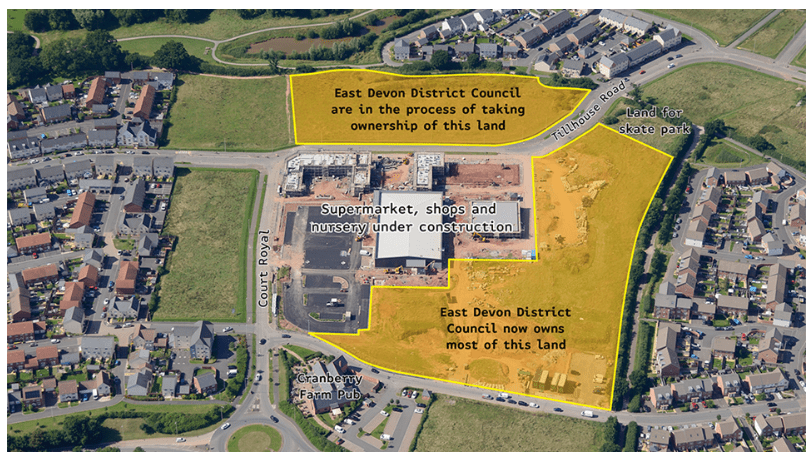
Planning applications validated by EDDC for week beginning 18 September