Simon Jupp get your car parking facts right!

Louise Laybury commented on Simon Jupp’s Twitter post moaning about car parking charges asking him whether Lib Dem’s blaming Conservatives for the lack of investment within council owned spaces and therefore the need to put up [parking] prices was fact or fiction?

He didn’t answer the question directly but said that it was an incoherent argument that he was used to from “our” poorly run council. He then added: “Increased parking charges should be invested back into car parks as per government advice. If they aren’t, I’ll look into their spending a little deeper…”

Unfortunately this statement has failed Owl’s fact checking team.

It is factually incorrect, false in other words.

Somewhat surprising since Simon Jupp is a Parliamentary Private Secretary to the Secretary of State for Transport!

Louise, the answer to your question is FACT, (and the government trousers 20% of the parking fees to boot). – Owl

Report from Owl’s fact checking team

In East Devon most of the carparks are run by  EDDC (East Devon District Council), and on street parking by DCC (Devon County Council).

DCC is responsible for “on-street parking”  and is restricted by Government legislation  to ensure  any surplus after expenditure from fees is required to be spent on enforcing parking, contributing to off-street parking provision and, if the provision of further off-street parking is unnecessary or undesirable funds can be spent on public transport or highway improvements only.

*20% VAT is not applicable to on street parking and therefore “0 rated”.

EDDC is responsible for “off-street parking” in their carparks under Government legislation  any surplus after expenditure can be used for “environmental improvement” which can  include.

(a) The reduction of environmental pollution (as defined in the Pollution Prevention and Control Act 1999)

(b) Improving or maintaining the appearance or amenity of a road or land in the vicinity of a road, or open land or water to which the general public has open access.

(c) The provision of outdoor recreational facilities available to the general public without charge.

Therefore, in the case of EDDC this could include waste collections, street cleaning,
public conveniences, recreational open space, expenditure on the countryside or commons.

*20% VAT is required to be charged for off street parking therefore 20p in the £ goes directly to Government.

Consultation for off street parking requirements

If parking charges are to be introduced  at new locations that were previously free, then under the RTRA Road Traffic Regulations Act 1984 an Authority is required to  carry out a full “public consultation”.

If prices are to be changed, it is perfectly legal for a council to make a “parking order” and to simply provide a “public notice“ at each carpark and council office and website to inform the public of an intended price change.

Conservative government funding reduction

Since 2010 this Council along with all other authorities have seen significant cuts in general Government funding to support core service delivery, a reduction in funding of 50p in the pound since that point.

Government Funding to EDDC for General Services 2010    £7m
2010 funding indexed link to 2023 £10.3m
Actual Baseline Funding 2023£5m

Summary of the facts

  • East Devon is the only District Council in Devon not to borrow from reserves or cut services for this current year and we continually provide a balanced budget.
  • There is not a government requirement that carpark charges are invested back into carparks.
  • Government funding has halved in real terms since 2010.
  • The Government benefit from carpark charges at 20p in the pound.

Breaking: Government defeated over axing pollution rules

BBC News www.bbc.co.uk

The House of Lords has blocked the UK government’s plan to relax restrictions on water pollution to encourage housebuilding in England.

Labour led a rebellion in the Lords to defeat the government in a vote on removing the EU-era “nutrient neutrality” rules.

Ministers believe up to 100,000 new homes could be built by 2030 if water pollution regulations are loosened.

But environmental groups said the move would mean more polluted waters.

The government announced plans to scrap these rules through an amendment, or change, to the Levelling Up and Regeneration Bill, currently going through the House of Lords.

Because of the late stage at which the government tried to introduce the change, it cannot try again in the House of Commons now it has been defeated.

Ministers would need to bring the proposal forward in a new bill.

The defeat is a victory for Labour, whose deputy leader Angela Rayner led opposition to the plan in her new role as shadow levelling up secretary.

Ms Rayner, who is also Labour’s deputy leader and shadow deputy prime minister, said the defeat showed “the Tories have utterly failed in their attempt to score cheap political points with a flawed plan”.

She added: “We stand ready to sit down with the government, housebuilders and environmental groups to agree on a workable solution to build the homes we need.”

The attempt to ease the rules, by amending the Levelling-Up and Regeneration Bill, was defeated by 203 votes to 156, a majority of 47.

Liberal Democrat Lords spokesperson for communities and local government, Baroness Pinnock, hailed the result as a “great victory”.

“The Conservatives have continually promised not to roll back our environment rules, it is deeply shocking that they can’t be trusted to keep their word,” Baroness Pinnock said.

Green Party peer Baroness Jenny Jones said the government should consult the public before they consider bringing back the plan to scrap pollution rules in a separate bill.

“They can then consult properly and justify it to a public who are already fed up with polluted local rivers and beaches,” Baroness Jones said.

Natural England rules currently mean 62 local authorities cannot allow new developments unless builders can prove their projects are “nutrient neutral” in protected areas.

The government said by removing the restrictions, housing developers will deliver an extra £18bn in economic activity.

But environmental groups and opposition parties opposed the plans, with Labour arguing the change would increase river pollution.

At Prime Minister’s Questions on Wednesday, Prime Minister Rishi Sunak said Labour under Sir Keir Starmer could not be trusted to build more homes.

He said Labour’s opposition to the government’s plans was “typical of the principles-free, conviction-free type of leadership that he offers”.

Sir Keir’s spokesman rejected the charge, saying the government’s plans were “rushed and flawed”.

“We do have serious concerns about the way in which the changes the Tories are proposing will harm our waterways and ecosystems,” he said.

Lords vote on pollution: Plan to ease river pollution rules is reckless and Labour will block it

Angela Rayner, Steve Reed www.thetimes.co.uk 

After 13 years of Conservative government, England is facing a housing crisis. And things are set to get even worse thanks to Rishi Sunak and Michael Gove’s reckless decision to scrap mandatory housing targets and send housebuilding into freefall.

It is not in dispute that nutrient neutrality rules are making it challenging to secure consent for new housing development. The status quo is clearly not an option.

Yet the Conservatives are being thoroughly disingenuous in suggesting that the only way we can build the homes we need in river catchment areas is by weakening environmental law. No one should fall for it.

This is just the latest in the long list of Conservative failures on the environment. Their record speaks for itself.

They recklessly slashed enforcement and monitoring of the water companies that now routinely pump toxic raw sewage into our rivers, lakes and seas. The country is suffering from the highest levels of illegal discharges on record and the Office for Environmental Protection (OEP) says the government itself may have broken the law in allowing this.

We must build the homes people need while also protecting the environment we live in. The two are not mutually exclusive.

The government’s proposed solution to this challenge is deeply problematic. It would allow councils to ignore environmental regulations and authorise new housing development without mitigation for environmental harm on the basis that the nutrient pollution problem will be solved by other means.

Their approach would not only significantly weaken environmental law and increase river pollution but would fatally undermine the emerging market in nutrient pollution reduction that developers are already making use of.

We know there are far better ways to build the new homes we desperately need than green lighting water pollution. To give just one example, the government could direct local authorities to approve planning applications held up by nutrient neutrality rules, subject to so-called Grampian conditions.

This would allow developers to start building homes that are stuck in the planning pipeline but would require them to put in place measures to counteract any environmental harm before those homes are occupied. Such an approach would allow time for Natural England’s nutrient mitigation scheme or other off-site mitigation schemes to bed in, while also providing certainty to the housebuilding industry that the wait would not be indefinite.

We fully appreciate the concern among housebuilders about the need for an adequate supply of mitigation credits to make it work. It is indeed a failure on the part of the government that more has not been done to identify and bring forward sufficient suitable sites to enable the credit market to flourish.

To ensure that enough mitigation schemes are available, the government would need to provide Natural England and local authorities with support to identify suitable sites and bring more credits to market. But any solution to the impact of housebuilding on nutrient neutrality in sensitive catchment areas is going to require the government to quickly get serious about strategically planning for mitigation.

The alternative is to place the entire burden of alleviating the impact of housebuilding on nutrient pollution levels on tackling the primary causes of nutrient pollution at source. But we know from the government’s failure over many years to tackle the impact of pollution from agriculture and water companies’ wastewater treatment works that we cannot rely on their promises to do so now.

To guard against the risk of developers being unable to find a mitigation despite their best endeavours to find one, Grampian conditions could be designed to lapse after a specific period of time.

Instead of taking time to explore and consult widely on workable solutions like this, the Conservatives’ approach is to weaken environmental law, ignoring the stark warnings of the OEP in the process. It is reckless and irresponsible.

This government has made the housing crisis worse by torpedoing housing supply. Now it is trying to cover up this failure by conjuring up a false narrative that pitches housebuilding against protecting our natural environment.

Like always this is the Tory solution, a quick sticking plaster here, no sense of what the impact is on the future. We do not accept this, and nor do we believe people want to see further harm caused to precious waterways the Conservatives have already flooded with raw, untreated sewage.

We have set out a credible alternative and will table our own amendment when this is put to a vote in the House of Lords later today. If they refuse this opportunity, we will vote against the government’s plans.

Labour knows we can build the homes we need without further damaging nature and the environment.

Simon Jupp MP moans about parking charges, what about potholes?

Here is another thing our PPS to the Secretary of State for Transport could be earwigging his boss about. – Owl

Pothole repairs on local roads in England sink to lowest level in five years

The mileage of local roads in England being resurfaced or treated to avoid potholes has fallen to its lowest level in five years, research has shown.

Gwyn Topham www.theguardian.com 

There has been a decline of almost one-third in the total amount of life-extending road maintenance by local councils, according to analysis of government data by the RAC motoring organisation.

Only 1,123 miles of roads were surfaced in 2021-22, compared with 1,588 miles in 2017-18, while only 3,551 miles, down from 5,345 miles four years earlier, were maintained with surface dressing – the more cost-effective preventative method, according to the road repair industry.

The RAC said the figures helped explain the decline in England’s roads – widely described as “pothole-plagued” this year with an estimated repair backlog of £12bn – and called on the government to do more to help councils maintain roads, including ringfencing funding.

It found that of 153 roads authorities surveyed, 31% did no resurfacing, while 51% failed to carry out any surface dressing.

Simon Williams, the head of policy at the RAC, said: “These figures paint an incredibly stark picture of road maintenance in England and confirm our worst fears about the overall decline in the state of the country’s roads.

“While the government has made more money available to authorities to fill potholes, it’s the general reduction in road improvement work that’s causing potholes to appear in the first place.

“It’s abundantly clear that councils in so many areas are barely scratching the surface when it comes to getting their roads up to a reasonable standard.”

He said local authorities should take a more preventative approach to make budgets go further, and called on the government to increase roads funding.

The Local Government Association (LGA) said the huge backlog was caused by years of funding cuts, followed by recent inflation in the cost of repairs.

Shaun Davies, chair of the LGA, said: “Decades of reductions in funding from central government to local road repair budgets has left councils facing the biggest ever local roads repair backlog. This has been compounded by recent extreme weather as well as rising inflation, pushing up the cost of materials such as bitumen.”

He said that the government should help motorists by working with councils “to develop a long-term, fully funded programme to bring our roads up to scratch”.

MPs also called on ministers to ringfence road funding and give long-term settlements to councils, in a report issued by the All-Party Parliamentary Group for Better Roads.

The MPs said that road conditions had worsened since a dedicated pothole fund ended in 2021. Only 50% of England’s local roads are now classified as good, the lowest level since 2016, according to asphalt industry data cited in the report.

A Department for Transport spokesperson said: “It’s for local authorities to maintain their highways, and to help them do that we’re investing more than £5bn from 2020 to 2025, with an extra £200m announced at the budget in March, to resurface roads up and down the country.

“We’ve also brought in new rules to clamp down on utility companies leaving potholes behind after carrying out street works.”

Sewage: how might the government be breaking its own law?

Ministers and regulators may have broken the law by allowing water companies to dump sewage into rivers and seas, according the Office for Environmental Protection (OEP), a new statutory watchdog.

John Rentoul www.independent.co.uk 

It found the Department for Environment, Food and Rural Affairs (Defra), the Environment Agency (EA) and Ofwat may have misinterpreted the law and allowed water companies to pollute waterways when they shouldn’t.

Combined sewer overflows are only meant to be used in exceptional circumstances, such as after unusually heavy rain to prevent sewers backing up and flooding homes and businesses.

Liberal Democrat leader Ed Davey described the OEP’s findings as “environmental vandalism on an industrial scale” while “ministers and regulators are sitting on their hands”.

Therese Coffey, the environment, food and rural affairs secretary, has two months to respond to the findings and to set out what she intends to do about them. Her department’s initial reaction has been to concede that the volume of sewage discharged is “completely unacceptable” but to insist it has not broken the law. It argues that the OEP has got the law wrong. The OEP, meanwhile, says it has “reasonable grounds for suspecting” that the government has misinterpreted the legislation.

What is the Office for Environmental Protection?

The OEP is a kind of super-regulator, set up by the Environment Act two years ago, to supervise various public bodies responsible for protecting the environment. These include not just Defra but industry regulator Ofwat and the public body charged with regulating land and water pollution, the Environment Agency.

Helen Venn, its chief regulatory officer, said: “As a result of our investigations so far, we think there may have been misinterpretations of some key points of law. The core of the issue is that where we interpret the law to mean that untreated sewage discharges should generally be allowed only in exceptional circumstances, such as during unusually heavy rainfall, it appears that the public authorities may have interpreted the law differently, permitting such discharges to occur more often.”

Who might have broken the law?

The OEP has in effect put all three organisations in the dock, saying that they have all failed to force the water companies to prevent sewage discharges, which they are required to do by law.

So what will happen next?

The net effect of all this legal and regulatory action is hard to discern. All the organisations concerned strenuously declare that the failure of the water companies to reduce sewage discharges is unacceptable, and they all admit that it is difficult and expensive to do anything about it.

Ms Venn of the OEP says: “Improving the quality of water in our rivers and seas is a complex challenge. There are no quick fixes.”

Indeed, she goes further: “We recognise that a great deal is already being done to tackle the issue of untreated sewage discharges, and we welcome the intent of government measures such as the Plan for Water and storm overflow targets, as well as commitments to increase investment.”

In other words, all the regulators and the water companies are trying to sound as if they are doing everything they can to tackle the problem, but they know that they are lagging well behind public opinion.

Aylebeare solar farm inquiry begins

Residents raise £20k for legal help

Devon villagers go into a fierce ‘grass not glass’ battle on Tuesday, with a barrister and a high-profile pressure group preparing to fight their corner.

Guy Henderson, local democracy reporter www.radioexe.co.uk

The county’s branch of the Campaign for the Protection of Rural England (CPRE) are backing residents of Marsh Green near Aylesbeare as they take on a company that wants to build a 60,000-panel solar farm across 27 fields.

Planning officers recommended the scheme should go ahead when it came before East Devon District Council (EDDC) last December, but councillors voted narrowly to reject the scheme.

The site was waterlogged when councillors went to visit, which supported the protesters’ argument that the land is not suitable for a solar farm.

Councillors are also concerned about visual impact, land classification and the impact on a designated heritage asset.

An inquiry will be held at the district council’s offices in Honiton, with protesters’ legal costs being paid for after a £20,000 crowdfunding campaign.

Cllr Todd Olive (Lib Dem, Whimple and Rockbeare), who is an expert witness on planning, is supporting residents. He said: “We’ll be fighting hard to make sure the democratic voice of residents is properly heard – and respected.

“It is an uphill battle for us. EDDC has dropped a couple of the reasons for last year’s refusal that the planning committee no longer felt were defensible, which is unfortunate.

“Impact on the landscape and heritage are the two main prongs of attack EDDC is pursuing. We are contributing quite substantial evidence on the landscape front and are continuing to pursue issues relating to flooding and concerns about bringing HGVs down tiny Devon lanes.

“The other point of contention that we are defending is the issue of agricultural land.”

The CPRE has a nationwide ‘grass not glass’ campaign which opposes what it claims are ‘industrial-scale’ solar farms like the one proposed near Aylesbeare.

Devon CPRE director Penny Mills said: “The Marsh Green application was turned down for the right reasons last year, and we hope the inspector will respect the wishes of the local community this time around too.

“Residents have clearly said ‘No, we don’t want this’. Will their voices be heard by the inspector or will the wishes of yet another small rural community be ignored? It’s a matter of democracy.” 

Solar farm developments have recently been permitted elsewhere in the east of the county, at Whimple and Clyst Hydon. Another is pending at Aylesbeare.

Lords vote on pollution today: Ministers ignored Natural England’s advice on plans to rip up pollution laws

The government ignored its nature watchdog’s advice in weakening rules on pollution from housebuilders in England, the Guardian can reveal.

Helena Horton www.theguardian.com 

Michael Gove, the housing secretary, and Thérèse Coffey, the environment secretary, recently announced they would be ending what they termed “defective” EU laws, which require developers to offset any extra nutrient pollution they cause in sensitive areas, under the habitats directive. These areas include the Lake District and Norfolk Broads.

Ministers are aiming to remove the legal requirement via an amendment in the House of Lords, which requires local authorities to ignore potential pollution risks when approving developments. It will be debated on Wednesday.

Gove and Coffey’s amendment proposes that instead of forcing housebuilders to invest in local wetland sites to soak up any extra sewage pollution and mitigate damage, this legal requirement would be scrapped and taxpayer money would instead be used to double the funds for a scheme by Natural England to reduce nutrients such as nitrates and phosphates in waterways. These nutrients choke the life out of rivers and cause damaging algal blooms.

Despite the increase in funding to Natural England, no officials from the quango came forward to endorse the announcement at the time. Now correspondence from the nature watchdog to Lady Barbara Young of Old Scone, a Scottish Labour member of the house, shows the watchdog said the rule changes were not necessary and that the current scheme was working to deliver homes and reduce nutrients.

The advice from Natural England recommends making developers pay for the pollution: “Our experience in similar schemes suggests that upfront, fixed-rate contributions from developers could be faster and offer more certainty in enabling planning permissions to be granted and support emerging green finance markets.”

It also said the European Union habitats regulations, which were carried over into UK law after Brexit, and which this amendment would undermine, had worked in delivering homes and reducing pollution. “There are a number of well-established schemes that implement the [habitats regulations] with regard to housing, where a case by case approach has been replaced by a more strategic scheme – familiar cases include the Thames Basin Heaths scheme, mitigating housing pressure operating across 13 local planning authorities, and the national district level licensing scheme which has replaced the need for individual newt licence solutions for great crested newts.”

Natural England pointed out that its nutrient mitigation scheme had thus far offered credits to developers to enable more than 3,500 homes and two temporary prisons, with a pipeline of schemes for a further 4,500 homes in place for this financial year. It said that in total all providers across England had created sufficient mitigation for approximately 16,000 homes, with a well-advanced pipeline to enable an additional 35,000 new homes.

Although the government said current rules choked small and medium housebuilders, Natural England said the scheme “has deliberately prioritised [small and medium-sized] housebuilders, so for example in the Tees catchment we were able to meet demand for credits for all small developments (50 homes or less)”.

Despite this advice, the government went ahead with plans for the amendment. Wildlife groups have accused ministers of ignoring Natural England. Craig Bennett, the chief executive of the Wildlife Trusts, said: “The government brought forward outrageous plans to weaken environmental law in the final stages of the levelling up bill, without any public consultation. Now it is plain that they have ignored their own advisers as well. The result is poorly conceived plans that will not work, but will leave lasting damage to rivers and to UK environmental protection.”

Dr Richard Benwell, the chief executive of the environmental coalition Wildlife and Countryside Link, added: “Natural England’s advice reveals that this regression – which would expose protected river habitats to more pollution, while letting polluters off the hook – is totally unwarranted. Environmental charities are united in opposition to these plans, and we hope all parliamentarians who care about rivers and nature will resist them.”

Peers are trying to squash the bill. The Duke of Wellington, a crossbench peer, has laid an amendment that would nullify the government’s one, and he has support from other Tories. Lady Jenny Jones of the Green party is hoping to force a vote against Gove and Coffey’s amendment which would delete it from the bill. The Office for Environmental Protection has also written to the secretaries of state, calling the move a “regression” in environmental standards.

Young added: “The government’s proposal would force local authorities to ignore pollution, even when it is plain to see. In the process, it would take a wrecking ball to the habitats regulations, the UK’s most important nature laws. The advice I have received from Natural England shows that both are unnecessary and that effective other measures are available to release much needed houses and protect their environment. I plan to oppose these provisions when they come to parliament tomorrow.”

A government spokesperson acknowledged Natural England had suggested alternatives to ripping up the EU-derived law and said: “We believe the approach we are taking will best deliver our objectives of unlocking much needed homes, continuing to offset the small amount of additional nutrient pollution caused by new housing, and shifting our focus from mitigation to site restoration. Over 100,000 homes are held up due to retained EU laws and will be unblocked between now and 2030, delivering an estimated £18bn boost to the economy while protecting the environment.”

MP’s summer tour was a chance to hear local concerns

Richard Foord, Tiverton & Honiton MP 

The summer months are a time getting out to enjoy our beautiful countryside with family and loved ones. But as your Member of Parliament, the summer is also a useful time for me to take time far from Westminster, beyond Uffculme where I live – to spend time in the towns and villages in our corner of Devon.

That’s why, in addition to the various meetings and local community events I attended, I also launched my first ever summer tour. This saw me visit 36 different places across five weeks to host a series of open town and village hall meetings. I also took a break in the tour to visit the Honiton Police Station front desk that will open next year, thanks to your submissions to a Devon and Cornwall Police online poll.

Many people took up the opportunity to let me know frankly and directly about local, national and international concerns – what they and you would like to see me arguing for in Westminster. I am hugely grateful to the hundreds of people who turned out and for the many positive discussions we had.

Several issues came up time and again – the pressure on our health services and local schools; the difficulties accessing special educational needs provision; and the outrage that we rightly share about the scandal of the way we taxpayers and billpayers have been ripped off by water companies.

The meetings also offered a forum to discuss very specific local issues, such as the need for more social housing, the scale of potholes, and poor-quality broadband provision.

There are so many issues which need addressing. This has been caused in part by this Conservative Government repeatedly squeezing local authority finances – which has left many Councils struggling to deliver our core services. There also seems to have been a lack of focus on fixing the small things, which can grow and spread if not kept in check.

The job of a good MP is not simply to proffer our own opinions. It is to listen and act on what we hear. This autumn, if you tune into Parliament on your TV, I hope that you will see and hear me raising some of the concerns that you let me know about this summer.

Lords vote tomorrow: River quality ‘at risk’

Letter in today’s Times

Sir, Tomorrow the House of Lords will vote on government proposals to overturn nutrient neutrality laws, the last legal line of defence for precious river habitats. Nutrient neutrality rules are part of the habitats regulations, the UK’s strongest nature protections. Scrapping them would be the worst unwinding of environmental law for decades.

The rules stop pollution from new developments near sensitive rivers. The weak, non-statutory measures proposed in exchange will fall short and more habitats will be harmed.

The existing rules do not stop housebuilding, they require housebuilders to mitigate impacts. Where there is a short-term shortage of mitigation credits, the government could speed up development without weakening environmental law. Unfortunately, the government did not consult before bringing forward proposals in the dying days of the Levelling-Up and Regeneration Bill.

We urge peers to vote against these damaging proposals, which are contrary to government promises to restore rivers and stop the decline of nature by 2030.


Hilary McGrady, director-general, National Trust; 

Mark Lloyd, CEO, Rivers Trust; 

Darren Moorcroft, CEO, Woodland Trust; 

Craig Bennett, CEO, Wildlife Trusts; 

Katie-Jo Luxton, executive director, global conservation, RSPB; 

Toni Pearce, director of advocacy, WWF-UK; 

Jamie Cook, CEO, Angling Trust; 

Richard Benwell, CEO, Wildlife & Countryside Link

Planning applications validated by EDDC for week beginning 28 August

(Apologies these are a little later than usual) – Owl

UK building group Vistry to focus solely on social housing

The British housebuilder Vistry is to shift its focus solely to social housing as soaring mortgage costs hurt sales completions across its wider business.

So it can be done! – Owl

Mark Sweney www.theguardian.com 

The strategic shift was welcomed by investors, which sent shares in the company – which acquired the affordable housing specialist Countryside Partnerships last year – soaring by almost 14%, making Vistry the biggest riser on the FTSE.

Vistry said streamlining its operations would result in some job cuts, while promising investors a £1bn windfall over the next three years as a result of the strategic shift.

It said the UK was facing a “chronic shortage” of affordable houses.

“The scale of the social need for affordable mixed-tenure housing across the country continues to increase,” said the Vistry chief executive, Greg Fitzgerald. “Delivering on the acute social need for housing across the country and increasing the availability of affordable, sustainable homes is at the core of the group’s social purpose and vision.”

The housebuilder reported an 8% fall in pretax profits to £174m in the first half of the year, despite a 32% increase in completions.

Vistry said it continued to see “good demand” for affordable housing from bodies including local authorities. By contrast, private sales had slowed further since June, the company said, as mortgage costs continued to soar for prospective homebuyers.

“The step-up in mortgage costs and increased macroeconomic led to a drop-off in completions to the open market,” the company said. “In particular, we saw a significant decline in completions to first-time buyers whose ability to purchase have been most affected by the rate increases.”

As mortgage approvals and house prices continue to fall at the fastest rate since 2009, the company said it intended to merge its affordable and private housebuilding operations by the end of this year, to focus on its “high-return, capital-light, resilient” affordable housing model.

Vistry indicated that the merger of its businesses would result in job cuts, with plans to launch an employee consultation to reduce the total number of regional business units it operates from 32 to 27.

The company laid off 4% of its more than 3,000 staff when it completed its £1.27bn acquisition of Countryside Partnerships last year.

Vistry reiterated its full-year guidance of achieving £450m in profits this year.

Instead of moaning, Simon Jupp could do something positive on car park charging

Cllr. Mike Goodman submitted a request to review car parking charges at last week’s EDDC Scrutiny Meeting (which he chairs).

He claimed that they had doubled in 2022 making them the most expensive in the South West.

On cue, Simon Jupp launched forth on twitter about the impact of parking charges imposed by the “LibDem – run EDDC” (see below).

The claims made by Mike Goodman are misleading (see. Cllr Joe Whibley’s reply below.)

Conservative controlled Dorset unitary Council has particularly high charges, £3/hour, higher than East Devon!

Here is what Member of Parliament, Simon Jupp should be doing.

It is a little known fact that on-street parking (controlled by teetering on the brink of bankruptcy Devon County) is VAT free, whilst off-street parking (“Balanced Budget” EDDC’s only option) is subject to VAT.

Simon Jupp, PPS to the Secretary of State for Transport no less, would do us all a favour if, instead of moaning, he lobbied his boss for VAT on off-street parking to be removed. – Owl

Beware the small print, but can you spot it?

Can you spot the (very) small print declaring who is actually publishing the fake “local paper”, The East Devon Echo?

Let Owl enlarge it for you:

Could this be Cllr. Mike Goodman, chair of EDDC Scrutiny Committee?

He discloses that he is a member of the Conservative Party but Owl can find no mention that he has ever disclosed that he publishes a local newspaper on behalf of former journalist Simon Jupp.

As chair of the Scrutiny Committee is this consistent with the Nolan Principles of: Selflessness, Integrity, Objectivity, Accountability, Openness, Honesty and leadership?

Another own goal for the Tories! – Owl

Press Watchdog Writes to Conservatives and Party Chairs Over ‘Misleading’ Fake Newspapers such as the “East Devon Echo”

The independent press regulator has written to the UK’s political parties – including Conservative Party chair Greg Hands MP – to oppose the use of party leaflets dressed up to look like newspapers. 

As Owl reports elsewhere, the publisher of the new “fake” local newspaper hereabouts, the “East Devon Echo”, is none other than the Tory chair of EDDC’s Scrutiny Committee, Cllr Mike Goodman.

Does this demonstrate the maturity and wisdom one might expect from someone in such an important role? – Owl

Josiah Mortimer bylinetimes.com 

Lexie Kirkconnell-Kawana, CEO of industry watchdog Impress, has written to representatives of each major political party to implore them to review this practice amid the “crisis of trust” that journalists and politicians face – and the negative impact it could have on democracy.

A spokesperson for the press standards body, which largely represents smaller and independent news organisations, said: “With an election just around the corner, this is a practice that should be addressed as soon as possible.”

Byline Times has seen dozens of examples of fake newspapers issued from Conservative Party HQ and distributed across the country in recent weeks – with many failing to identify which party is sharing the material on the so-called ‘imprint’ at the bottom of the publications. 

Don’t miss a story

The vast majority of voters believe fake newspapers being promoted by political parties – sometimes without making clear who they’re from – should be banned. 

Recent polling for this newspaper by independent pollsters Omnisis found that 62% of people in Britain think that the fake newspaper tactic should be banned if they do not make clear which party is behind it. 

The figure rises to 65% among Conservative voters, the same as for Labour voters. Liberal Democrats, who also have been known to use fake newspapers for election material, are less in favour of a ban (55%). 

The figure rises significantly among over 75s, some of whom may be more vulnerable to misleading campaign materials: 75% back a ban on the practice. And opposition sits at 71% among those with no formal qualifications.

Readers have responded with anger to the leaflets over the past few months. One wrote: “Many people will be fooled by this, especially older people who I would imagine tend to read the local papers more are also less likely to notice the microscopic small print in hard to find places.” Another branded it “Tory marketing deliberately disguised as independent news”, while one recipient dubbed it “dirty tricks” campaigning.

Some voters have been posting back fake newspapers sent by the Conservative Party to their head office – in a bid to cost the party in postage fees. One voter told Byline Times they had posted approximately half a kilogram of takeaway menus and junk mail to CCHQ, with a handwritten note saying “No more fake news please”. 

Legal Loophole

The ruse has previously been condemned by industry body the News Media Association among other press groups. But despite being discouraged by the watchdog, the Electoral Commission, it is not against the law. 

A spokesperson for the Electoral Commission told Byline Times recently that “generally speaking,” election materials require the name and address of the printer and promoter – but not the political party. 

Moreover, the candidate rules setting out transparency for who is publishing campaign materials don’t apply yet, as the general election date has not been announced. 

But the Electoral Commission figure added: “We encourage all parties and campaigners to include imprints on all material, to provide voters with transparency.”

The tactic of publishing fake papers was used successfully in Uxbridge and South Ruislip last month, with the party’s ‘Uxbridge and South Ruislip People’ urging people to “Stop ULEZ” (Labour London Mayor Sadiq Khan’s Ultra Low Emissions Zone expansion). The fake magazine mirrored the title of the local council-run Hillingdon People, which is meant to be apolitical. 


Copycat Spat

Industry title Press Gazette reported that the Conservative Party was forced to apologise to the publisher of several Midlands newspapers after it distributed newspaper-style campaign literature in the area under trademarks owned by the company.

The Conservatives said it was a “genuine mistake” that three pamphlets resembled editions of MNA Media’s Chronicle Week. The party agreed to make a donation to charity as part of its apology, the title reported. 

The Midland News Association said the leaflets “were designed to mimic the style of a newspaper and they caused confusion among many who received them, who believed they were reading their usual Chronicle”.

However, they do not appear to have apologised after High Peak MP, Conservative Robert Largan, distributed a “newspaper” titled the High Peak Reporter – despite the name of the title being owned by an actual newspaper group, Quest Media Network. 

Chris Bird owns Quest Media Network, which owns the brand title High Peak Reporter, and told the Prolific North outlet: “I guess we should be flattered by this stunt, but we are not. Would Mr Largan have tried this with the Daily Mirror or Daily Telegraph? Absolutely not, because that would have cost him and his party a lot of money for the blatant breach.” 

And Lincoln Conservative MP Karl McCartney issued a leaflet to residents branded as the ‘Lincoln Chronicle’ – the same name as a weekly newspaper in the seat that was closed 15 years ago, and which many residents remember. The move was condemned by a former photographer for the real paper, Dr Mike Maloney OBE, one of the UK’s most decorated photographers. 

He told Byline Times that the fake newspaper was “typical of politicians”. He added it represented the idea of “never letting the facts interfere with a good story”.


Letter to Conservative Party chair

Dear Greg Hands, trust in journalism has reached a crisis point. Our research shows that less than half of the public trust news publishers, while journalists themselves are trusted by just 38% of the public; politicians are one of the few jobs to rank lower.

For democracy to flourish, it is essential that we have a thriving, healthy and trusted news media ecosystem. To achieve this, collaboration and transparency is needed between news organisations, the public and politicians.

It is entirely disheartening then to see the latter groups continuing to engage in the practice of distributing campaigning materials under the guise of local newspapers, misleading voters into believing what they are reading is the work of local journalists from independent publications.

Often, these are accompanied by either no clarification of their actual purpose or by only the smallest clarifying statements.

We are therefore asking that the Conservative Party, and all political parties, carefully review this practice among their candidates moving forward and the negative impact it will have on politics, journalism, and democracy.

If you do insist on continuing to produce these materials, we implore you to seek out rigorous and independent press regulation for them to ensure they meet robust standards.

Your sincerely,

Lexie Kirkconnell-Kawana, Impress CEO

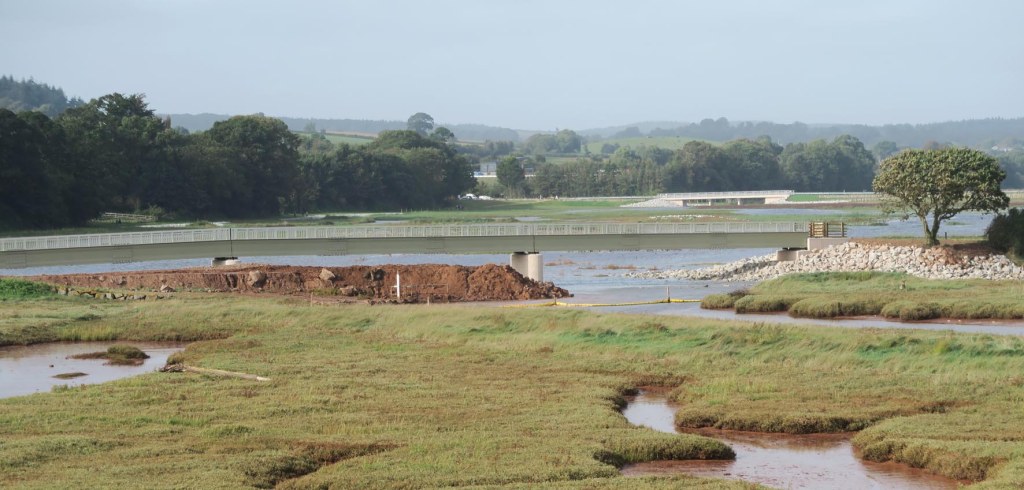
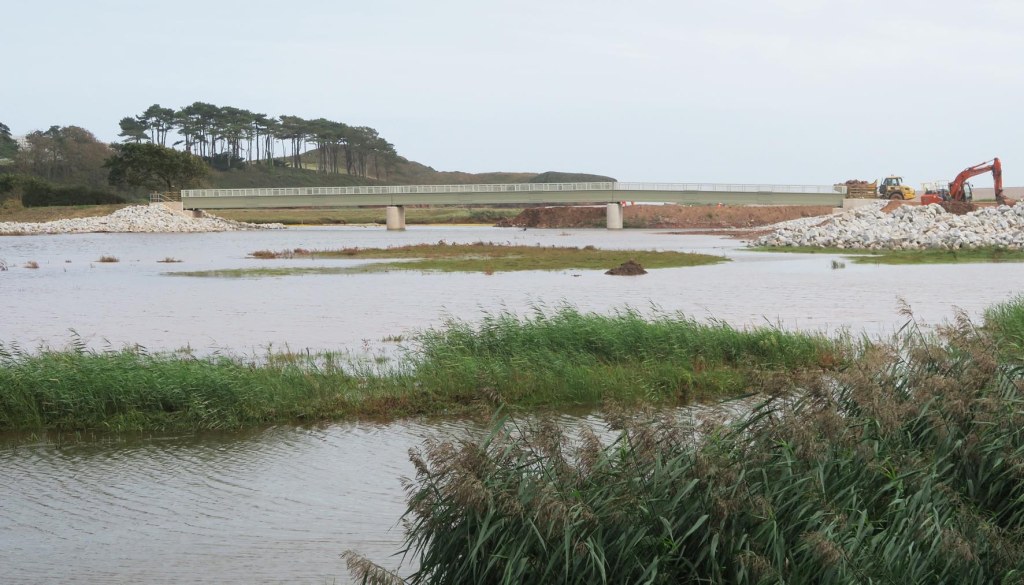
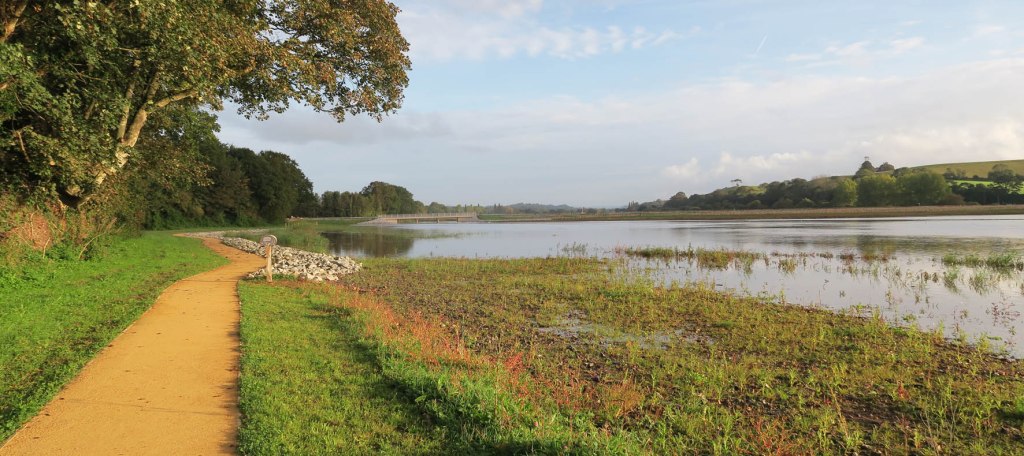
Lower Otter Valley footbridge – the final lift

The last section of the footbridge was hoisted into place soon after 8 am on Saturday, catching out many on social media who expected it to occur around 9 am.

Again Owl has been sent images.

Owl understands that the bridge will not be open for a few months whilst a 70m section of the 200 year old embankment is lowered and removed to allow the saline tidal water gradually to fill the reconnected estuary.

St Ives Mayor resigns from the Tory party as membership was ‘a hindrance’

The Mayor of St Ives resigned from the Conservative Party at a meeting of the town council on Thursday, September 7. Johnnie Wells, who has been a Tory councillor since 2020, says being a Conservative “was becoming an issue”.

Lee Trewhela www.cornwalllive.com

Mr Wells – who is a town councillor in the same ward as Cornwall Council’s Tory leader Linda Taylor – said: “I just feel that for me, in St Ives and for Cornwall, an independent role is better. Being a Conservative was becoming an issue. It was putting up more barriers than it was taking down. People would kind of shut off to you pretty quickly, so it was becoming more of a hindrance than a help.”

Mr Wells, who is a web designer by trade and represents the Lelant ward as a councillor, said that he had always voted Conservative and has been a member of the party since becoming a councillor three years ago. He said Cllr Taylor had tried to talk him out of resigning “a little bit”. The mayor was unsure if he’d vote for the party again.

Of his resignation, he added: “I’ve been thinking about it for ages really. You look at both main parties and you don’t really have any good direction. The Conservatives seem to feel like ‘we’re out of here anyway whatever we do’ and Labour are like ‘we’re going to get in whatever we do’ so I’ve become really disillusioned by party politics.

“Then you look around Cornwall and I feel like Cornwall Council aren’t pulling their weight like perhaps they should do. The general spiral is getting worse and worse in many areas and I don’t see how we’re going to break it doing the same as we’ve always done.

“I’m looking for change really. There’s that saying ‘if a change doesn’t feel like a catastrophe it’s probably not a big enough change’. That’s where we’re at and certainly in St Ives we’re really making changes.”

Mr Wells, who has been mayor of the town since May, said: “I don’t know what I’ll vote at the next election – you’re in the position of voting for the least worst person. It’s a horrible place to be and that’s what I want to change. I want people to vote for people they feel are going to achieve things.

“I think we have a problem, especially in local politics, that people are very afraid of upsetting other people to the extent that they don’t do anything because no change is easier than upsetting some people. We’ve got to have change, we’ve got to be moving forward.”

He cites the short-term lets of Airbnbs being a particular problem in St Ives, which he feels the government should have addressed ten years ago and hasn’t. He believes the housing problem in Cornwall isn’t down to second homes but people buying a house and letting it as a business “35 weeks of the year”.

Mr Wells added: “The Digey in St Ives [one of the town’s most iconic historic streets] is a case in point – 80 per cent of the houses along the Digey don’t pay anything into either the council tax or the business rates pot; it’s a nightmare.

“Another thing that concerned me with the Conservatives was the fact they come up with all these great green policies and then they just wind them back to get them through the system. The problem with the environment is you can’t wind it back – it’s a pressing issue which we all need to take some kind of ownership of.”

He said Cornwall Council’s Conservative leader Linda Taylor tried to talk him out of resigning from the party “a little bit”. “She understood the reasons,” he said. “She was one of the first people I went to to tell as she was helpful in getting me on board in the beginning, so I felt the right thing was to speak to her about it first.”

When Mr Wells became a councillor in 2020, the Tory group was the main political group on the town council – now it’s down to one councillor. He will remain in the civic role of town mayor and continue representing Lelant as an independent councillor.

Today’s crisis: WESTMINSTER IN SHOCK

MPs return to Westminster after the weekend in a state of shock at news of an alleged spy in their midst. A ministerial statement or urgent question is all but certain following the Sunday Times’ revelation that a parliamentary researcher with links to senior Conservatives had been arrested on suspicion of spying for China. The news overshadowed Prime Minister Rishi Sunak’s return from India, where he attended the G20 — the PM will make a statement on the outcome of the summit this afternoon.

The alleged spy has links to hawkish Conservative MPs who are privy to classified information including Foreign Affairs Committee Chair Alicia Kearns and Security Minister Tom Tugendhat.

Only the start: Could there be more to come? The Telegraph reckons intelligence services will “unmask” more Chinese spies in coming months, raising the prospect that a “network” of spooks is operating out of Westminster.

Source London Politico Playbook

Pensioner poverty: fear of rise over decades as UK under-40s wealth falls

Campaigners have sounded the alarm about a potential increase in pensioner poverty in Britain over the coming decades after it emerged that the share of wealth held by people under 40 has fallen sharply amid a growing intergenerational divide.

Hilary Osborne www.theguardian.com 

Data from the International Longevity Centre (ILC) thinktank shows that in 2010-11, under-40s made up just over half of the population and between them held £7.53 of every £100 in wealth.

While that figure was low, a decade later it had plummeted to £3.98. Over the same period, the proportion of under-40s fell from 50.6% to 49.5%.

Those under-40s have already been identified as facing the biggest hit from rising mortgage rates, and last week a study by the financial advice firm Hargreaves Lansdown found that almost a third of 18- to 34-year-olds had stopped or cut back on their pension contributions in order to save money.

The ILC data is based on analysis of figures from the Office for National Statistics, and the wealth being measured includes the value of property, private pensions, savings and investments, and any other valuables.

During the period the figures cover, all age groups had to contend with a squeeze on wages and financial strains caused by the Covid pandemic, but older generations have seen their wealth grow.

Property ownership is the key driver for the gap, with under-40s more likely to be renting for longer than previously or owning homes that have not gone up in value as much as larger properties.

The mean net property wealth in this group fell from £13,967 in 2010 to £11,450 in 2019 (although the median was £0 in both years), while in the 40-64 and 65-plus groups there were large rises.

The older groups also recorded sizeable increases in pension wealth. The figures suggest a growing threat of pensioner poverty if current trends continue.

David Sinclair, the chief executive of the International Longevity Centre UK, said: “Younger people are already not saving enough to enjoy a decent lifestyle as they age, and our latest analysis shows that younger generations will have even fewer assets available.

“Pensioner poverty is already a significant issue, and it will grow if we don’t act now. We know that future retirees won’t be able to rely on housing wealth and many will need to spend money on rent into retirement.

“It is crucial that we address these challenges head-on and develop comprehensive strategies to ensure that every generation has the support they need to be financially secure right across their lives.”

The research also looked at the strains on finances that people older than 40 could face in the future. The ILC said the number of private renters aged 65 and over was projected to double by 2046, to reach 12% of households in that demographic.

Renting a property will mean a strain on incomes that those who own a home outright will not face.

The ILC’s research into longevity is being backed by the insurer Aviva. Doug Brown, the chief executive of Aviva UK & Ireland Life, said: “Financial pressures are growing and affecting all generations; however, the youngest workers are in a particularly vulnerable position when it comes to saving for their retirement. With lower overall wealth today than the equivalent generation had a decade ago, this is concerning.”

Revealed: covert deal to cut help for pupils in England with special needs

The government has quietly signed a contract targeting 20% cuts to the number of new education plans for children with special educational needs and disabilities (Send) to bring down costs, the Observer can reveal.

Chaminda Jayanetti www.theguardian.com

Then junior education minister Claire Coutinho – recently promoted to the cabinet as energy secretary – subsequently told MPs that no targets were in place.

The cuts target has emerged as councils across England grapple with huge financial deficits on Send budgets caused by a combination of rising demand and longstanding underfunding. Part of the government’s response has been the launch of the Delivering Better Value in Send programme (DBV), which supports 55 councils to bring down their large Send budget deficits through measures such as early intervention and teaching children with special needs in mainstream schools.

In June 2022, the Department for Education (DfE) signed a £19.5m contract with consultancy firm Newton Europe to design and develop the DBV programme. The deliverables section of the contract states that “it is the intention” of the signatories that the 55 councils’ budget management plans, implemented under the DBV programme, will help achieve “impacts” including “reduced cost pressure … as a result of reduced growth in number of EHCPs [education, health and care plans], targeting at least a 20% reduction in new EHCPs issued”.

The contract states that the “impacts” would be measured by monitoring “EHCP growth rates” and the state of councils’ education budgets.

EHCPs set out the education provision that children with significant needs must receive by law, although cash-strapped councils often fail to meet these requirements.

Recent years have seen rising numbers of new EHCPs being issued for reasons including failings in the children’s mental health system, non-inclusive approaches adopted by results-driven mainstream schools and improved identification of special needs such as autism.

Because EHCPs often require specialist education provision for children, some of which is only available from expensive private special schools, rising EHCP caseloads have meant higher costs for councils, with government funding not keeping pace. As a result, ministers and council bosses have looked for ways to reduce the growth in EHCPs, sparking fears among parents that Send children might be denied the support they need.

Gillian Doherty of campaign group Send Action said: “Aside from potential legal implications, this action will simply push the funding problem down on to mainstream schools, which are already in a state of acute financial and recruitment crisis.

“This is irresponsible behaviour that will seriously undermine inclusion. It will also result in a two-tier system that severely disadvantages disabled children in local authorities with financial difficulties.”

In May, nearly a year after the contract with Newton Europe was signed, Coutinho appeared before MPs on the education select committee to answer questions about the government’s Send and alternative provision (AP) improvement plan, which includes the DBV programme.

She told the committee she felt the planned reforms would reduce demand for EHCPs but denied there were any targets. “This is not about targeting a particular reduction; it is just about improving the system so you can get better outcomes for Send people,” she said.

DfE civil servant Alison Ismail told the session that while improved mainstream and specialist education provision should lead to decreasing need for EHCPs, “we were not projecting to a particular target as such”.

Tania Tirraoro, co-director of information site Special Needs Jungle, said: “A senior DfE Send official repeated the assertion to me just this week that it wasn’t about cutting EHCPs. Either the DfE’s left hand doesn’t know what its right hand is doing, or families are being lied to. It’s right there in black and white. The DfE’s Send and AP improvement plan really is about significantly reducing EHCPs. But the law is intact, and I urge families to fight any effort to reduce statutory provision at the Send tribunal.”

Helen Hayes, Labour’s shadow children and early years minister, said: “Ministers need to be honest – they cannot be saying one thing to parents and another behind their backs.

“Labour will identify children’s needs earlier so that intervention supports child development from a young age, which is better for individuals, their families and wider society.”

The Newton Europe contract also aims to reduce permanent exclusions and teach more Send children via mainstream schools, “targeting at least a 20% reduction in placements into independent schools and 2% reduction in placements in special schools”. This would be measured by monitoring attendance rates and the “rate of pupils with EHCP in mainstream settings”.

The DfE said the targets were indicative rather than legally binding on Newton Europe and had not been communicated to councils. However, the targets were nevertheless included in the contract Newton Europe signed that underpins its work to design and develop the DBV programme.

A DfE spokesperson said: “The DBV programme aims to help local authorities provide more effective Send services by meeting the needs of children and young people at an early stage and with the right level of support. Naturally, we’d expect to see a reduction in the number of EHCPs issued as children’s needs are met earlier.”

Newton Europe did not respond to a request for comment.