
From today’s Exmouth Journal:
New group “a breath of fresh air”
David Beasley
A brand new alliance for independent candidates is vowing to change the political landscape across East Devon.
On Tuesday, just 93 days before the national and local elections on May 7, the campaign group East Devon Alliance (EDA) revealed that, as far as the Electoral Commission is concerned, it is now a political party, unveiling a website and manifesto.
However, in reality, the EDA is a broad, umbrella group for similar-minded activists – and now more independent candidates are set to contest district council seats in East than at any point since 1973.
At the launch at the Axminster Heritage Centre, its leaders urged residents – tired of the old political parties – to rally to their cause.
Its leader is Woodbury and Lympstone’s independent district councillor Ben Ingham, with freelance BBC documentary maker Paul Arnott as chairman and Ian Mckintosh, founder of the EDA, and retired circuit judge, its president.
Councillor Ingham said: “For years the three main national political parties have been telling us what they want to do instead of listening and then delivering what we need to have.
“People are so fed up they have even been voting for the nationalist parties as an alternative, but these alternative parties prey on people’s gravest fears… they preach division and separation instead of unity, respect and understanding.”
He said it did not have to be like that and insisted that prospective parliamentary candidate Claire Wright, EDA’s council candidates and other independent councillors had a ‘very definite set of ideas.’
“Our campaign is like a breath of fresh air in a stagnant room,” said Cllr Ingham.
“So, over the next few weeks, all of us in East Devon should open the windows to change, breathe in deeply and take part in the most exciting political event to happen in East Devon for decades.”
Their policies range from ensuring that East Devon District Council (EDDC) is more open and accountable, supporting local businesses, preserving the environment, keeping local hospitals open and backing new developments – but only if they are `sensitive’ to what local people want.
Mr Arnott said: “We will allow vulnerable independent candidates to stand as independent East Devon Alliance candidates in May
“We know how hard it is for independents to stand without the help of a party machine.”
He said that the EDA had heard many complaints from residents about the way things were done at EDDC ‘because of national parties first standing in local elections 40 years ago, it has led today to an atrophied one-party disaster…’
“There’s no point just moaning from the sidelines…the only way to reform our council is through the ballot box,” he said.
“In May, the people of East Devon will be offered independent candidates across the district on a previously unknown scale.”
Monthly Archives: February 2015
Bite the Ballot: National Voter Registration Day
Those folk at East Devon Alliance want everyone to register to vote in May 2015 – now that we have a viable alternative to “None of the above” and “Same Old …”.
Especially as our Electoral Officer (Mark Williams, CEO of East Devon District Council) made no attempts whatsoever to get people on the Voting register for several years – ending up having to explain why to a Parliamentary Committee last year!
It’s easy:
Full information here:
http://www.bbc.co.uk/news/uk-politics-31095661
There is a You Tube video:
https://uk.news.yahoo.com/video/national-voter-register-day-2015-005003314.html
Facebook support:
Twitter:
#NVRD
Go on – try it, you might like it!
Massive shortage of nurses in Devon: why?
The Devon shortage is much greater than Cornwall, Dorset and Somerset. It is one of the reasons being given for cuts in our own local NHS. Why?
Could it be that with all these executive homes being built and developers here being absolved of providing affordable homes because of their so-called penury that homes to buy are out of their reach and that rented homes are also too expensive and insecure – and that they need their affordable homes close to their jobs and schools and not out in inaccessible countryside on poor roads?
http://www.bbc.co.uk/news/uk-england-devon-31136174
And here is a personal East Devon story illustrating this problem:
“…So here’s the catch for those on lower incomes living in rural [East]Devon: you can’t buy, but you can’t rent either.
Our villages are turning increasingly into ghettos full of wealthy retired people, lawyers, engineers and doctors, because these are the only people who can afford to buy.
People on lower incomes, particularly those with families, find themselves forced to look elsewhere. But in rural areas there just isn’t the choice of rented properties that exists in cities and towns, unless you can afford the higher prices of agents which dominate the market.”
Tourism in the South West – lamentable budget
and there is now massive support for a cut in tourism VAT – something that independent Parliamentary candidate Claire Wright urged East Devon District Council support – only to be savaged by the Cinservative majority councillors who turned the suggestion down in no uncertain terms:
Rotherham Council – just taken over by central government – BBC news main story tonight
The following headlines and story relating to the same council, , from only a few years ago, may have some bearing on our own District Council’s office relocation extravaganza.
£9.9m bill to equip Rotherham Council’s new offices
Published date: 26 August 2011 | Published by: Gareth Dennison
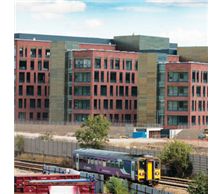
Bill: Rotherham Council’s new offices.
ROTHERHAM Borough Council’s multi-million pound new offices will cost £9.9 million to furnish.
The £3 million-a-year rent paid to regeneration group Evans for Riverside House does not include kitting out the buildings.
The first staff will begin moving in before Christmas and the authority insists the total cost is less than staying put in its ageing existing buildings.
Britain run by “political gangs” say Bishop and MP
… “Political parties are run by gangs. The present gang running the Tory party was formed at university.
“They (the gangs) will bring people in when they need them but very rarely do those people go on to positions of leadership – they get spat out once they’re not needed.” …
Claire Wright lays down challenge to Hugo Swire
CLAIRE WRIGHT CHALLENGES HUGO SWIRE TO PUT RESIDENTS BEFORE PARTY AND TO STOP THE SAVAGE CUTS IN DEVON’S GRANTS
Claire Wright, the Devon County Councillor and Independent candidate running against the current MP, Hugo Swire, at the General Election, has challenged her opponent.
“On 10th February, the House of Commons will be deciding on Council Budget cuts for the next financial year. The leader of the Conservative-led Devon County Council, which has secured savings of £128 million since 2009, has warned that further cuts of £50 million will have to be made in the next financial year and another £34 million in the following year.
“In the past, Mr Swire, you have voted for annual cuts without even making an argument on behalf of your constituents. As your website still claims that you were ‘sent to the Commons to speak up and vote for the people of East Devon’, speak up now!
“The hard-pressed people in our constituency, not least the large number of carers who face problems as the local NHS struggles to cope on an unfair grant, need help. We are confronted with the prospect of more savage cuts which will cause massive hardship, especially to those who are already severely penalised by earlier reductions in expenditure. They are often the people least able to cope with the cuts and many of them find it hard to believe that ‘we are all in this together’”.
Claire Wright continued. “Devon is the third largest county in England, has a higher than average-age local population, a lower population density and is the destination for huge numbers of holiday makers. Their needs, too, must be catered for if tourism, a key factor in the local economy, is to be sustained. The county cannot stand any more swingeing cuts. Who would have thought, just a few years ago, that many in the constituency would have to visit food banks?
“The relatively less difficult cuts in expenditure have already caused genuine hardship. Now the prospect of even more reductions implies a bleak future for thousands already suffering from the impact of earlier decreases. More cuts will make it even more difficult to meet core duties in protecting children, the vulnerable and the elderly.
“We have seen threats to, or closures of, inpatient beds at community hospitals, minor injuries units, youth centres, libraries, care homes, day centres and children’s homes and services. Now, if further drastic cuts are imposed, we shall see, for example, reductions in county-sponsored bus services, which will have a grim impact on the elderly who lack private transport and are too frail to carry heavy shopping so have to use local bus services frequently. Some £1.7 million must be saved from the budget of £5.376 million for 200 public council-run bus services which carry 4.5 million passengers annually.
“The allowance for school children is £300 per head per year less than for children elsewhere. Will it be cut again? The council has said that the school crossings budget must be cut by £100,000 per year in the next two years.
“Highway budgets are being cut to our extensive network and some of our roads will no longer be gritted, resulting in more accidents which will add to the pressure on the already challenged Royal Devon and Exeter hospital. Eight million square metres of grass verge will no longer be cut. What impression will that give our tourists? The Coalition government wants councils to use their reserves: Devon’s reserves of £14 million would vanish in a few days.
“I am angry at the way in which the Coalition government spends our money. They spent £70 million setting up the unwanted Police and Crime Commissioners and wasted £3 billion on the reorganisation of the NHS. Now they are proposing to spend £50 billion on the HS2 project. It is shocking that this money is being wasted when the when the government is cutting public services back strongly and causing hardship.
“As the fifth largest economy in the world it is ridiculous that some people in the UK have to choose between heating and eating. We can offer a better life to our citizens through eliminating waste, redistributing national income more fairly and securing a higher tax take from those companies, which, obeying the law, nevertheless deny this country billions of pounds in tax income each year.
Even Devon County Council Conservative leader, Councillor John Hart has publicly urged Devon MPs to back the council and vote against the cuts.
“I call on Mr Swire to choose to support the residents of East Devon, instead of his political party and, on February 10th to argue against and vote against the savage cuts.
Knowle landgrab fact file , & rapidly approaching deadline for objections (20 Feb)
Straitgate Quarry: update
The function of scrutiny – excerpts from Rotherham Abuse Inquiry report
“… Even more significant is the apparent lack of effective scrutiny exercised by these several groups or bodies, and least of all by the Scrutiny Panels.
Scrutiny in its widest sense is an essential component of Cabinet government. Rarely does it appear from the minutes that councillors have held officers to account by checking the evidence for proposals or asking whether their ends could be met in other ways.
It may be that the minutes are written in bland, non-specific, language, but that does nothing to reassure the public that genuine accountability is being exercised.
It is important that councillors test proposals by reference to their broad experience and their knowledge of the Borough and their own constituents. There should be nothing threatening about this; good officers should welcome challenge as a central part of local democracy.”
“… Executive ‘leaders’ play a large part in defining organisational culture by what they say and what they do. In this respect, leaders such as senior officers and members in a Council should model good behaviour for their staff groups and others in setting the tone for their shared endeavour to deliver the best possible services. This includes values, attitudes and working language.”
Save Sidmouth Drill Hall campaign enters new phase
See update on http://www.sidmouthdrillhall.com/
38 Degrees campaign local group holds Sidmouth meeting this evening
7.30 pm to 9 pm at the Anchor in Sidmouth old Fore Street
This will be a TOTALLY non-political meeting to discuss issues that local people feel that 38 Degrees should support. No political campaigning or posturing will be allowed as 38 Degrees works hard to ensure it is politically neutral.
Find out more about 38 Degrees here:
and more about their campaigns and local groups here:
Express and Echo covers East Devon Alliance launch
Protesters say a separate West Hill parish council would be “snobbish”
The Herald revealed last year how the West Hill Parish Campaign Group (WHPCG) revealed its intention to split away from the Ottery parish and form its own authority. Campaigners say this would enable better provision of services for people in the woodland village and give residents greater influence over issues that affect them.
But the plans have been met with criticism on social media from some residents of Ottery and surrounding areas, who feel the plans are ‘snobbish’ and unnecessary – accusations that are refuted by campaigners. Ray Bagwell, 35, of Longdogs Lane, Ottery, said: “The plans are pointless and a waste of money.” His views were echoed by Sidmouth resident Matthew Baker, 37, who believes that West Hill is a more affluent area and feels that is why people there want to disassociate from Ottery. He said: “It is snobbish.”
Others said they would be interested to see how the changes – if they go ahead – would affect services for people in Ottery. Town councillor Jessica Bailey is one of the campaigners and has hit back at critics. “West Hill has its own identity and it needs to have its own voice,” she said. “Parish councils have wide ranging powers. A parish council in our village is the best way of identifying needs and providing services to the people who live here.”
She encouraged people to attend a public meeting on Friday, March 6, at 7.30pm in West Hill Village Hall, to voice any concerns and find out more. If successful, the bid for an independent West Hill council would mean drawing up new ward boundaries for Ottery St Mary Town Council.
Before an application can formally be put to East Devon District Council, the WHPCG needs to gather at least 250 signatures from West Hill residents. The campaign group is holding a drop-in session for anyone interested in getting more information on Saturday, January 31, from 9am to noon, outside McColls in West Hill Road.
http://www.sidmouthherald.co.uk/news/west_hill_council_campaign_comes_under_fire_1_3935848
Local politics are changing … maybe forever
BOURNEMOUTH Independent Alliance, which aims to support Independent candidates standing in council and national elections, has launched its election campaign.
… “Uniting to create a strong and effective non-whipped group of residents, representing residents, willing and able to challenge the current administration, presents a fresh choice at the local elections in May.”
http://www.echo-news.co.uk/news/11752970.Rochford_district_councillors_join_forces_against_the_Tories/
It is almost a year since a coalition of Labour and Independent councillors took control of East Staffordshire Borough Council, after a Tory leadership which had been in place for 11 years.
http://www.burtonmail.co.uk/East-Staffordshire-political-battle-ground/story-25958819-detail/story.html
Radio Devon interview with EDA Chair, Paul Arnott, broadcast throughout yesterday.
Intense media interest in the new East Devon Alliance of Independent Candidates for the 2015 elections, has begun with reports of yesterday’s press launch.
Radio Devon was the first to pick up the story on its news bulletins on Monday, and prominent coverage was given in today’s editions of Pullman’s ‘View from..’ in Axminster, Colyton & Colyford, Honiton, Ottery St Mary, Seaton & Beer and Sidmouth. Here’s a sample: AxminsterViewLaunch
Independent Councillors, Susie Bond and Claire Wright, wrote enthusiastic accounts on their respective blogs: https://susiebond.wordpress.com/2015/02/03/eda-offers-assistance-to-independent-hopefuls/
And needless to say, the Real Zorro, too, gave rave reviews, and has this especially useful post http://realzorro1.blogspot.co.uk/2015/02/eddc-its-time-for-change-its-time-for.html
EDWatch will keep you updated on any further reporting this week….and up to and beyond the May 2015 elections…
And so, we’re sure, will http://www.eastdevonalliance.org.uk
‘Shake up at the polls’ predicted as East Devon Alliance of Independents is launched.
See http://www.eastdevonalliance.org.uk/ , report from Editor’s Chair of Pullman’s ‘View from..’
Knowle parkland under threat and a less-than-public consultation – act by 20 February
Public accountability charity urges national review of scrutiny mechanism
… “Ultimately in my view, it is weak leaders who seek to control and limit scrutiny; confident leaders can face effective challenge and recognise the value it adds to their decision-making and efforts to improve services.”
The Centre for Public Scrutiny (CfPS) has called for a full national review of the effectiveness of local governance and scrutiny mechanisms.
The call was made after the CfPS published the results of a survey it carried out into the effectiveness of local scrutiny following the findings of the Alexis Jay report into governance weaknesses at Rotherham.
The Centre said this research found that “in a small but worrying minority of councils, local leaders and senior officers appeared to be seeking to control and limit the effectiveness of local overview and scrutiny inquiries”.
Examples included leaders choosing the chairs of scrutiny committees, requests for information being obstructed or refused by senior officers and leading members, and the role of the statutory scrutiny officer being low profile and misunderstood.
However, the CfPS also noted evidence that Monitoring Officers were valued as providing support for effective scrutiny.
“In the vast majority of councils information is provided as requested and as required by law and councillors are providing robust, effective challenge,” it added.
The survey drew responses from 95 local scrutiny functions.
The Centre made six recommendations in addition to its call for a full national review.
These were that:
Local leaders – both members and officers – “should recognise and support the value of effective challenge in helping them improve what they do”;
Councils should review their own member governance in the light of the Francis and Jay reports, if they have not already done so;
Councils should seriously consider how chairs of scrutiny are chosen “and whether they always get the most effective people for this important role, in terms of skills, independence and credibility”;
Regulators and auditors should work with CfPS and others to raise their profile with scrutiny members “to ensure members know how to raise concerns about governance and service performance with the right regulatory bodies”;
Scrutiny and challenge to decision-makers should be informed by the views and experiences of service-users and members of the public, “and members should ensure that when considering performance they are not solely relying on the views of officers to inform their judgments”;
The impact of resource reductions must be included in any national review of the effectiveness of scrutiny and governance at local level.
Jessica Crowe, outgoing Executive Director of the Centre for Public Scrutiny, said: “CfPS’s work over the years has highlighted the value of effective scrutiny in improving local services and giving local people a voice in shaping service plans and decisions.
“However, what we are now seeing is a twin threat to that effectiveness from resource reductions – with resources for scrutiny down to their lowest level in a decade – and a political culture in a small minority of councils which seeks to control and limit its effectiveness.”
She added: “When making difficult and controversial decisions as councils are now faced with doing, strong scrutiny is needed more than ever before. Decisions that have been robustly challenged and passed muster can be seen to be more solidly based, and open, transparent scrutiny is a way of building consensus and engaging communities in those decisions.
“Ultimately in my view, it is weak leaders who seek to control and limit scrutiny; confident leaders can face effective challenge and recognise the value it adds to their decision-making and efforts to improve services.”
 East Devon Watch