A Correspondent doubts LEP interest in, or consideration for, small-to-medium businesses

From a local correspondent who keeps a close eye on our LEP and doubts its interest in, or consideration for, small-to-medium businesses in the area:

“I instinctively feel that both the Heart of South West [LEP] + Great South West [`Powerhouse`]  have political influence  – I know [this] has featured in your East Devon blog, along with the fact that at their public meetings  – which are mainly PR + media –friendly – very little info is given out `commercial confidentiality`.  Here`s the composition of HotSW`s present Board:  https://heartofswlep.co.uk/about-the-lep/our-board/ – so Exeter City + Torbay & Plymouth unitaries are represented.

It all goes back to 2016 when Savid Javid was Secretary of State for Communities etc   https://www.backthesouthwest.co.uk/  and he was discreetly `banging LEP heads together` to cajole them to put in collective bids for funding instead of burdening his office with dozens of separate bids. 

With the ERDF money  https://heartofswlep.co.uk/european-regional-development-fund-erdf/  – coming to a close [thanks to Brexit] and Covid-19 distracting HMG`s focus it`s difficult to see where the next tranch of funding is coming from. 

Recently, the day Boris had announced his wonder £5bn for various infrastructure improvements he had in mind for schools, hospitals, roads and housing ]  that same evening on BBC tv Spotlight S.W., Tim Jones [Chair: S.W. Business Council] was frantic about the possibility of the Gt South West only getting `a few crumbs of cash from No.10`s table` after W. Midlands + Northern Powerhouse mopping up the bulk of Boris` bounty.

So now, somehow between the LEPs and the two Powerhouses [The Great South West + Western Gateway  ] they try to draw down funds from HMG, while at the same time demonstrating that they are `working with government`

https://greatsouthwest.co.uk/   

Three Local Enterprise Partnerships, seven county and unitary authorities [so a lot of Tory etc input there, along with so many Tory MPs within that geographical area], six universities and major businesses – all working together. and `working with government` – https://greatsouthwest.co.uk/pages/working-with-government/112– is one of its key priorities.

For people living within the   https://western-gateway.co.uk/   [half of it, formerly part of the E.U. parliamentary constituency for the South West of England]   they also, presumably, have concerns about political implications. 

But is `working with government` just part of the political significance of these vehicles ?  –  there is, of course a considerable democratic deficit, as neither The Great South West + Western Gateway  has public elections.

Confusingly, although the West Midlands Combined Authority has an elected Chair [Andy Street] as also has Greater Manchester [Andy Burnham], but the gigantic `Midlands Engine` does not, nor does the Northern Powerhouse [of which Gt Manchester is part].

Also, there are environmental concerns that Powerhouse/Leps may become victims of the priority for economic growth and post Covid recovery.

I also have in mind political activists and the dilemma that they themselves may know little or nothing about LEPs & Powerhouses, nor might the folk whose votes they are canvassing.

I am aware that the China General Nuclear Power Group is a part owner of the Hinkley Point C nuclear plant, which is a major project within HotSW`s fiefdom[its `jewel in the crown`].”

Environment groups unconvinced by government claims of ‘green recovery policy’ Plus Youtube link to debate

Environmental groups have branded the government’s efforts to build a so-called “green recovery” after the coronavirus pandemic “a real failure”, with nowhere near enough action to make the UK a world-leader on the environment.

[Youtube link to speech, questions and answers included at the end of this post]

Harry Cockburn www.independent.co.uk

Environment secretary George Eustice told reporters and conservationists on Monday that nature was “at the heart” of the government’s efforts to reboot the economy, but did little to allay fears held by many groups concerned about the potential for existing environmental protections to be watered down as the government pursues a “build, build, build” policy.

During the speech, organised by think-tank Green Alliance, Mr Eustice announced a £4m trial for “green prescribing”, where people are prescribed time in out in natural environments as a means of boosting their physical and mental health.

He also announced a new £5m pilot for a new “natural capital and ecosystem assessment”.

“We can improve the baseline understanding of habitats and species abundance across the country in every planning authority and we can make better decisions towards achieving our vision to leave the environment in a better condition than we found it,” Mr Eustice said.

This would “ensure that new developments really do deliver a net gain for people and for nature.”

But the announcements are not of the scale environment groups were hoping to see.

Speaking to Mr Eustice, RSPB chief executive, Beccy Speight welcomed measures to collect improved data on ecosystems and how humans are impacting them, but she said overall the government’s efforts don’t feel like a “turning point” and warned against a lifting of regulations which could see a return to the “bad days of the 70s and 80s when we had concreting over of really important mudflats for breeding birds just to create more carparks.”

“This should feel like a turning point, where everything is pointing in the direction of really putting nature at the heart of this resilient recovery, and actually it feels like more of the same, or in fact going backwards,” she said.

She said: “Today’s speech was an opportunity for Mr Eustice to guarantee to match the government’s ambitious rhetoric with action. Instead we heard a welcome but frankly tiny announcement of new money – well short of the investment that is needed – and a commitment to change the planning system where the purpose and details of that review remain opaque at best or catastrophic for nature at worst.

She added: “In the run up to the UK’s hosting of the forthcoming global conference on climate change, long promised legislation to ban burning on our precious peat bogs is nowhere to be seen, demonstrating a real failure to tie our domestic performance to global leadership, and while a number of countries have already committed to protecting 30 per cent of their land and sea for nature by 2030 ahead of an upcoming global nature conference, there is no sign of the Westminster government joining the ranks of the genuinely world-leading.“

Tanya Steele, chief executive of WWF-UK also raised concerns about the apparently low level of ambition the government has for moving towards a green economy, and questioned commitments to infrastructure projects which will not help the UK hit its legally binding 2050 net zero emissions target.

“Is this a path to recovery, or actually a crossroads where that path isn’t ambitious enough?, she asked.

Following Mr Eustice’s speech she said: “While it’s always welcome to hear the government talking seriously about its commitment to a green recovery and world-leading farming and environmental standards, we are now at the point where we need to see those words converted into urgent action.

“A credible green recovery must have our nature and climate commitments fully integrated with spending, planning and trade decisions.”

Greenpeace UK’s executive director, John Sauven, also said the amount of money the government had earmarked was not enough and voiced concerns over plans to review and “simplify” the Environmental Impact Assessments currently required for some developments.

“George Eustice may have pledged to build back better and greener, but now is the time for action, not just warm words masking backdoor attempts to deregulate. Over £900m of additional funding per year is needed for a UK-wide programme of nature recovery and protection projects on land and at sea.

“Simply ripping up the rulebook is no route to recovery.”

Breaking news: Oxford coronavirus vaccine can train immune system

www.bbc.co.uk /news/uk-53469839

Oxford coronavirus vaccine can train immune system

By James Gallagher Health and science correspondent

Breaking News image

A coronavirus vaccine developed by the University of Oxford appears safe and trains the immune system.

Trials involving 1,077 people showed the injection led to them making antibodies and white blood cells that can fight coronavirus.

The findings are hugely promising, but it is still too soon to know if this is enough to offer protection and larger trials are under way.

The UK has already ordered 100 million doses of the vaccine.

How does the vaccine work?

The vaccine – called ChAdOx1 nCoV-19 – is being developed at unprecedented speed.

It is made from a genetically engineered virus that causes the common cold in chimpanzees.

It has been heavily modified, first so it cannot cause infections in people and also to make it “look” more like coronavirus.

Scientists did this by transferring the genetic instructions for the coronavirus’s “spike protein” – the crucial tool it uses to invade our cells – to the vaccine they were developing.

This means the vaccine resembles the coronavirus and the immune system can learn how to attack it.

What are antibodies and T-cells?

Much of the focus on coronavirus so far has been about antibodies, but these are only one part of our immune defence.

Antibodies are small proteins made by the immune system that stick onto the surface of viruses.

Neutralising antibodies can disable the coronavirus.

T-cells, a type of white blood cell, help coordinate the immune system and are able to spot which of the body’s cells have been infected and destroy them.

Nearly all effective vaccines induce both an antibody and a T-cell response.

Levels of T cells peaked 14 days after vaccination and antibody levels peaked after 28 days. The study has not run for long enough to understand what long-term immunity may look like.

Is it safe?

Yes, but there are side-effects.

There were no dangerous side-effects from taking the vaccine, however, 70% of people on the trial developed either fever or headache.

The researchers say this could be managed with paracetamol.

Prof Sarah Gilbert, form the University of Oxford, UK, says: “There is still much work to be done before we can confirm if our vaccine will help manage the COVID-19 pandemic, but these early results hold promise.”

Follow James on Twitter

Concerns farmers could struggle to compete post-Brexit

BBC Radio Cornwall

Concerns have been raised farmers in the South West could struggle to compete with cheap food imports as a result of post Brexit trade deals.

New legislation, the Agriculture Bill, described as the most important farming legislation in generations, is currently being scrutinised in the House of Lords.

But Alex Stevens, the regional policy manager for the South West at the National Farmers’ Union (NFU), said there were also concerns the bill would put some farmers at a disadvantage, and also affect standards of food and other products.

It’s about the standards, it’s also about things like access to products that are perhaps banned over here – sprays and herbicides, and things like that … The fear is that it could get much worse in some of these free trade deals that are being talked about.”

Alex StevensNFU

The government said it remained firmly committed to upholding our high environmental, food safety and animal welfare standards.

A Warning from the US as coronavirus surges

Coronavirus surge: ‘It’s a failure of national leadership’

Even as countries in Europe and Asia appear to have had some success in taming coronavirus, it is now surging uncontrollably in large swaths of the US. Just over 4 per cent of the world’s population lives in the US, but it accounts for a quarter of confirmed cases globally.

David Crow and Hannah Kuchler in New York July 17 www.ft.com 

When the LA Surge Hospital closed its doors on June 1 — just nine weeks after it was opened as an emergency facility to treat coronavirus patients — it was a bittersweet moment for Chad Ricks, an associate chief nursing officer who managed the site.

Although he had to say goodbye to his colleagues, the hospital’s closure was a sign that Los Angeles — and the country at large — might be returning to something like normal. “Cases were starting to stabilise and the county was better able to manage its intensive care capacity,” says Mr Ricks, who is currently recovering from the virus after contracting it while working at another facility.

However, he feared California was reopening its economy too quickly and that officials had shut the facility prematurely. “Many of us thought we might need to keep it open a little longer, but no one asked our opinion,” adds Mr Ricks.

He was right to be worried. Coronavirus is now spreading rampantly in Los Angeles and throughout California, as well as in other sunbelt states including Texas, Florida and Arizona. On Thursday, the US reported 71,000 new cases of the virus, setting another daily record, and 977 additional deaths.

Even as countries in Europe and Asia appear to have had some success in taming coronavirus, it is now surging uncontrollably in large swaths of the US. Just over 4 per cent of the world’s population lives in the US, but it accounts for a quarter of confirmed cases globally.

Public health experts blame the latest wave of infections on governors who hastily reopened their states despite the risks, as well as crippling testing delays, and a toxic political backdrop in a polarised country where the use of face masks has become a divisive issue.

“This is the greatest public health catastrophe in the US since the 1918 influenza, and the principal difference is that we knew enough to stop this from happening to this extent,” says Barry Bloom, a professor of public health at Harvard University.

Prof Bloom says the experience of New York and other places that were hit hard earlier in the pandemic should have served as a clarion call to other states. “They had a head start, but the political attitude was that the only thing that counted was keeping the economy going. They paid a big price for that. It is so frustrating because it didn’t have to happen.”

Opening and closing the economy

When coronavirus first erupted in the US in early March, states in the north of the country such as New York, Michigan and Washington bore the brunt of hospitalisations and deaths. Now the crisis is at its most acute in states such as Texas and Florida, where residents are trapped in a horror movie that will feel familiar to New Yorkers, replete with the constant wail of ambulance sirens, hospitals at breaking point and makeshift morgues.

Although mortality rates are still lower in the sunbelt states than in places like New York, doctors predict the national death toll — which currently stands at more than 138,000 — will climb significantly. “I guarantee it will continue to go up for several weeks as it inevitably spreads to older and more at-risk patients,” says Leora Horwitz, an associate professor of population health at the NYU Langone Health medical centre.

Public health experts say the recent surge in virus cases is a direct result of the reopening in April and May of several states where the coronavirus case count was still climbing, albeit from a relatively low base.

“The reason there is an incredibly gigantic rise in multiple states is because they decided to go back to life as usual before they reduced the number of cases to a low enough level that they could trace people’s contacts,” says Prof Bloom.

Bob Wachter, chair of the department of medicine at the University of California, San Francisco, describes the political leadership in these states as “cavalier”, adding: “There were too many people who thought it was a hoax. [Those places] are doing very badly.”

Most state governors have responded to the latest infections by pausing or reversing their reopening plans. Several school districts, including Los Angeles, have said they will not allow pupils to attend school in person when the term starts again in August. But almost no one is countenancing the kind of full-scale lockdown that proved so effective in suppressing the virus in the spring.

Some argue that Donald Trump is culpable because he encouraged states to lift coronavirus restrictions quickly in a misguided attempt to boost the US economy ahead of November’s presidential election. “There was a lot of pressure from the White House for a lot of states to reopen,” says Saskia Popescu, an infectious disease specialist at George Mason University, adding that the reopening in May of Arizona, which is experiencing a resurgence of cases, coincided with a high-profile visit from Mr Trump.

“It’s a failure of leadership in the national government,” Prof Bloom says. “Our president effectively said, ‘let’s forget about the epidemic, we have to get the economy back on track so we can win the election’. That is killing a lot of people.”

Exacerbating the problem in some parts of the US are the long delays in processing test results, with many states reporting waiting times of seven days or more. There are more test kits available than there were at the start of the crisis — more than 4m people are being tested a week — but laboratories are struggling to keep up with demand.

“No one expected that the lag time would go from a day or two to seven or, in some cases, 14 days,” says Rajiv Shah, president of the Rockefeller Foundation, which this week published a plan calling for the country to spend $75bn on a mass testing programme.

“With the seven-day lead time you basically aren’t testing at all, it’s the structural equivalent of doing zero tests,” says Dr Shah, explaining that people are at their most contagious during the earlier stages of the disease. If someone finds out they are positive a week or more after being tested, they might have already stopped shedding enough virus to infect someone else, he adds.

Dr Shah says the delays are a product of the private testing laboratory industry in the US, which is dominated by two large players: Quest and LabCorp. “As monopoly companies . . . they don’t have enough capacity in their central processing systems for the volumes that are necessary right now,” he says.

Quest said it was “broadening access” to coronavirus testing by outsourcing samples to independent labs, but warned that “demand for diagnostic testing is growing even faster”. The company said it was able to process 125,000 tests a day and expected to increase this to 150,000 by the end of July. LabCorp said the average time to deliver results was now four-six days as a result of “significant increases in testing demand and constraints in the availability of supplies and equipment”.

The testing delays — which mean the true case count is probably much higher — also threaten to erase hard-won gains in states that have managed to bring the virus under control, such as New York and Massachusetts. This week, City MD, a chain of urgent care clinics in New York City, warned customers it would take a minimum of seven days to return results.

‘Stream of misinformation’

Others argue that the politicisation of the virus is encouraging some Americans to ignore the risks. Mr Trump has repeatedly claimed his opponents are exaggerating the severity of the crisis in an attempt to discredit his presidency.

Ashish Jha, director of the Harvard Global Health Institute, says a “very strong stream of misinformation” is being spread on social networks such as Facebook, and amplified by Mr Trump.

This week, the president retweeted a post from Chuck Woolery, a retired game show host, which claimed that Democrats, the media and public health officials were telling “outrageous lies” about the virus. “I think it’s all about the election and keeping the economy from coming back, which is about the election,” he wrote. A few days later, Mr Woolery deleted his Twitter account after his son contracted the virus.

Masks in particular have become a divisive issue, with some Trump supporters refusing to wear them to show solidarity with the president. This week, the Republican governor of Georgia, Brian Kemp, suspended state rules that mandate mask-wearing, overturning decisions taken by other elected officials including the mayor of Atlanta. In Texas, several sheriffs have said they will not enforce a statewide mask mandate.

“We’re having absolutely insane debates about whether masks are mind control,” Prof Jha says. “This is not what a serious country does.”

Meanwhile, the White House has been distracted by infighting. This week, some members of the administration waged a briefing campaign against Anthony Fauci, the nation’s top infectious diseases doctor and a member of the White House coronavirus task force. The attempt to discredit Dr Fauci was prompted by an interview in the Financial Times, in which he revealed he had not briefed the president on the virus for two months despite the recent surge in cases.

A long-running battle between two other members of the task force — Robert Redfield, the director of the US Centers for Disease Control and Prevention, and Deborah Birx, the White House coronavirus response co-ordinator, has also burst into the open. On Wednesday, Dr Redfield’s agency was stripped of its role in collecting coronavirus data from hospitals, following a campaign by Dr Birx, who felt the CDC was bungling the task, according to one person briefed on the struggle.

“This administration is literally fighting with each other about who is right and who is wrong in meetings, when they’re supposed to be working as a team to figure out what the hell’s going on,” the person adds.

Senior doctors warn second coronavirus wave could ‘devastate’ NHS

“People might think Covid is over with, why do I have to wear a face mask,” she said. “But it isn’t over. We still have Covid patients in intensive care. If the public don’t physically distance and don’t wear face coverings we could very quickly get back to where we were earlier this year.”

Robert Booth www.theguardian.com

Senior doctors are pleading with the public to help prevent a second wave of coronavirus that could “devastate” the NHS, amid concern at mixed government messages about face masks and returning to work.

Prof Carrie MacEwen, chair of the Academy of Medical Royal Colleges, said medics and healthcare workers felt “totally reliant on the public understanding that this has certainly not disappeared and could come back and cause even more suffering for the population.”

Dr Alison Pittard, head of the Faculty of Intensive Care Medicine, also warned the NHS could be “overwhelmed” by a second wave coinciding with seasonal flu and the consequences of the backlog of treatment for serious illnesses including cancer.

“People might think Covid is over with, why do I have to wear a face mask,” she said. “But it isn’t over. We still have Covid patients in intensive care. If the public don’t physically distance and don’t wear face coverings we could very quickly get back to where we were earlier this year.”

Downing Street has said its scientific advice is that new infections are falling at a rate between 1% and 5% a day across the UK. But on Sunday, the Scottish government confirmed a rise in new cases for the fifth consecutive day with 23 people testing positive – the highest daily rate since 21 June. Meanwhile in Blackburn and Darwen, where health officials last week ordered new restrictions to reduce virus spread, Dominic Harrison, the director of public health, has said the national tracing system was only managing to reach half of those who had been in close contact with a coronavirus patient.

The British Medical Association said a second peak, combined with a seasonal flu outbreak, could be “devastating for the NHS” and voiced criticism of government guidance on the use of face coverings.

Masks will be compulsory in shops in England from this Friday, with a £100 fine for those who flout the law. But they are not being required in offices.

The health secretary, Matt Hancock, has said: “When you’re in close proximity with somebody that you have to work closely to, if you’re there for a long time with them, then a mask doesn’t offer that protection.”

“Everyone has their role to play, but there needs to be clear, concise public messaging,” said Dr Chaand Nagpaul, council chair of the BMA, the trade union and professional body for doctors in the UK. “To introduce measures for shops, but not other situations where physical distancing is not possible – including some workplaces – is illogical and adds to confusion and the risk of the virus spreading.”

The medics’ warnings came as the government continued to signal easing of national restrictions with the reproduction rate standing at between 0.7 and 0.9, which means the virus is not growing exponentially.

On Sunday Boris Johnson said he did not believe a second national lockdown would be necessary in the latest of a series of bullish statements about the UK’s progress in handling a pandemic that has so far claimed more than 45,000 lives according to government figures.

Last week, senior doctors and scientists convened by the Academy of Medical Sciences said a second wave could kill 120,000 people in a worst-case scenario. Three days later, the prime minister floated the possibility of a return to normality by Christmas and announced that from 1 August the instruction to work from home where possible will be lifted, in apparent conflict with the chief scientific officer, Sir Patrick Vallance, who told MPs he could see “absolutely no reason to change”.

Asked to clarify the position by reporters, Johnson said: “We want to encourage people to think it is safe to come into work, provided employers have done the work … to make their premises Covid-secure.”

Over the weekend it emerged that the test-and-trace programme which is considered essential for the government strategy of using local lockdowns to quell outbreaks, has only been finding 37% of people with Covid-19 when it needs to be tracking down 50% of them to work effectively. The latest official figures for the week ending 8 July, also show that 22% of people with Covid-19 were not contacted and of those who were, the close contacts of 29% of them could not be reached.

Nevertheless, the Department of Health and Social Care defended the system.

“It has already helped test and isolate more than 180,000 cases – helping us control the spread of the virus, prevent a second wave and save lives,” a spokesperson said.

The government is set to allow local councils to access the names and data of people in their areas who have returned positive Covid-19 tests, which may improve performance.

MacEwen said doctors were now relying on the public to help avert a “perfect storm” hitting the health system this winter.

“If we get a second surge it could be bigger than the last one and economically that could cripple us and it could damage the NHS in the long-term, especially with the backlog [of elective care, including cancer care] and flu,” she said.

“Going into winter the situation is much bleaker [than handling a pandemic in spring] and against a background of economic disaster. The public has begun to think we are free of this, but we are not.”

She added: “The most important thing about being prepared for this winter is the population gets the flu vaccine if they need it and they behave in a way that reduces the risk of them catching Covid which is to socially distance, wash hands, wear masks and isolate if symptomatic or told to do so by test and trace.”

“It is down to the public again,” said Pittard. “They are vital in this.”

Planning proposals a ‘race to the bottom’

Eighteen charities, including the Campaign to Protect Rural England, Friends of the Earth, Woodland Trust and RSPB, have written to the prime minister to call for “locally accountable and democratic” planning rather than further deregulation.

Conservationists warn that Boris Johnson’s proposed planning laws could be a “deregulatory race to the bottom” with more changes due to the way that the impact on green areas is assessed.

Eighteen charities, including the Campaign to Protect Rural England, Friends of the Earth, Woodland Trust and RSPB, have written to the prime minister to call for “locally accountable and democratic” planning rather than further deregulation.

The letter says: “Further deregulation of the planning system would erode the foundations of any green and just recovery long before the first brick is laid. Nowhere else in the world is such a deregulatory race to the bottom being considered.

“It would be completely out of touch with the public mood, when two thirds of people reported wanting to see greater protection and investment in local green spaces after lockdown. This surge of appreciation for quality local green spaces is just one indicator of the increased appetite for action to tackle the housing, climate and nature crises head on.”

In a speech today George Eustice, the environment secretary, is expected to announce changes to the environmental impact assessment system, which is part of the planning process.

Mr Eustice will say: “Nature rightly deserves protection, so if we are to protect species and habitats and also deliver biodiversity net gain, we need to properly understand the science to inform crucial decisions.

“We should ask ourselves, for example, whether the current environmental impact assessment processes are as effective or efficient as they could be.

“There is scope to consolidate and simplify the process. We can set out which habitats and species will always be off limits, so everyone knows where they stand.

A government source said: “It’s not a deregulatory agenda but just about building better, faster and greener.”

Crispin Truman, chief executive of the Campaign to Protect Rural England, said: “Environmental impact assessments are the foundations for this, protecting not only vulnerable wildlife and nature but landscapes, our built heritage and our health.

“Critically, they are the means of scrutinising the potential air quality impact of proposed developments. They give planners the evidence to refuse schemes that would make air quality problems worse. This has never been more important.”

Mr Truman said that the public were getting too many developments that left families dependent on cars and created more air pollution.

He added: “Access to green space and low carbon travel like walking and cycling are a mere afterthought. Any new environmental impact assessment process must be stronger, not weaker, than what we already have.”

CPRE Devon: Planning reforms risk rural free-for-all

“Even in these truly extraordinary circumstances, we believe the planning system must remain transparent, democratic and fair, and be seen to be so. Weeks ago, I wrote to all of Devon’s Conservative MPs to express the charity’s concerns. So far, only one of our Tory representatives at Westminster – Anne-Marie Morris MP [Newton Abbot]-has properly responded.”

The PM’s plans to Build, Build, Build, could spell disaster says Penny Mills, Devon Director of the Campaign to Protect Rural England – Western Morning News

HERE in the Westcountry, we are lucky to have some of the most stunning landscapes anywhere in Britain. The green fields and rolling hills we may have taken for granted before lockdown are now appreciated as a vital resource – for our health and wellbeing, and for food production in these uncertain times.

But our countryside is facing an unseen threat: Prime Minister Boris Johnson recently announced the most radical reforms to our planning system since the Second World War when he outlined the. Government’s plans to kickstart the construction industry and, quite literally, build Britain out of a recession.

Make no mistake, this is a once-in-a-lifetime opportunity to rebuild the UK economy, its homes and infrastructure in a way that priori-uses people and the planet.

However, the Devon branch of the Campaign to Protect Rural England (CPRE) fears this opportunity is about to be squandered, with potentially disastrous consequences both for our countryside and for local democracy.

The PM’s proposals would prioritise the speedy re-purposing of redundant town-centre premises and brownfield sites, something CPRE Devon has long campaigned for. We are not anti-development. We welcome moves to adapt empty commercial properties, providing new homes without increasing the pressure to build on greenfield land. So far, so good.

However, we are worried that the rapid changes made to the way the planning system works, brought in at the start of lockdown to respond to public health needs during the pandemic, now look set to be expanded.

This month the Government intends to set out its plans for a comprehensive overhaul of Eng land’s seven-decade-old planning system. We fear that the rush to remove appropriate checks and balances on how planning decisions are made could have a disastrous effect on our countryside, our communities and local democracy, without providing the affordable, sustainable homes Devon badly needs.

The Government claims this new, pared-back approach to planning will work better for our modem economy and society. But will it? Even before coronavirus reared its ugly head, there was evidence that community involvement in planning decisions was being undermined. More recently, there have been worrying signs that the relaxed planning approach introduced in response to the pandemic is being misused. We’ve heard of local planning meetings being shut off to the public, meaning important decisions are being made behind closed doors and without proper public consultation.

CPRE Devon believes that local people have an important role to play in shaping the future of the places where they live.

Removing red tape presents a very real threat – allowing profit-driven developers the opportunity to silence communities and fast track bad planning decisions. The Government says developers will still need to adhere to high standards and regulations “just without the unnecessary red tape’: How so? Who will make sure developers do what they promise without the necessary checks and balances in place? Who will hold the less scrupulous house builders to account?

CPRE Devon may have been quieter than usual during lockdown, but planning issues have remained firmly at the top of our agenda throughout.

Even in these truly extraordinary circumstances, we believe the planning system must remain transparent, democratic and fair, and be seen to be so. Weeks ago, I wrote to all of Devon’s Conservative MPs to express the charity’s concerns. So far, only one of our Tory representatives at Westminster – Anne-Marie Morris MP -has properly responded.

The jury is still out on some of the Prime Minister’s other pledges, for example, the announcement that work will begin to look at how government-owned land can be managed more effectively.
We’re told “a new, ambitious cross-government strategy will look at how public sector land can be managed and released so it can be put to better use. This would include home building, improving the environment, contributing to net-zero goals and injecting growth opportunities into communities across the country?’

The Government has also confirmed that a national programme will inject £12bn to support new affordable homes for ownership and rent over the next 8 years, and the Home Building -Fund will receive a boost to help smaller developers access finance for new housing projects.

These measures appear to be a step in the right direction to tackle some of the most pressing issues of our time, but – dare we say? – we have heard similar promises before, which a merry-go-round of housing ministers over the years have spectacularly failed to deliver on.


George Eustice: “UK wildlife to get better protection outside EU” – Boris complains of “newt counting”

However, the RSPB’s chief executive Beccy Speight said the Government had not met its promises for a tough independent green watchdog after Brexit, new ambitious nature recovery targets or billions of pounds of investment into nature-friendly farming.

Mr Eustice’s speech again fails to deliver, she warned.

“Instead we have a welcome but frankly tiny announcement of new money, well short of the investment that is needed, and a commitment to change the planning system where the purpose and details of that review remain opaque at best or frankly disingenuous. She said reality needed to match what she called ‘green rhetoric’


EMILY BEAMENT – Western Morning News

‘NATURE will be at the heart of the efforts to reboot the economy following the coronavirus pandemic, Environment Secretary George Eustice will insist in a speech to be delivered online today.

The MP for Camborne and Redruth will set out Government plans to boost the environment after Brexit, but he will also warn of the negative impacts that European Union environmental law has had on protecting nature.

And he will announce plans to “simplify” the environmental impact assessments some developments have to undertake, in the wake of Prime Minister Boris Johnson’s promise to “build, build, build” out of the economic crisis.

There have been widespread calls for a green recovery from the pandemic, with investment in everything from tree planting to insulating homes to create jobs, but concerns that the Government has so far not delivered at scale.

Mr Eustice set to tell listeners at the Green Alliance event that leaving the EU does not mean retreating from, the UK’s role in the world when it comes to the environment, and the country should “redouble our efforts globally’:

But in the face of concerns among environmental groups that leaving the EU could erode UK environmental protections, he will say: “EU environmental law always has good intentions but there are negative consequences to attempting to legislate for these matters at a supranational level?’

He said it led to a situation where national governments became reluctant to make new commitments in the face of legal risks, not enough scientists were involved and there were “too many reports but not enough action’:

“Our approach must create ‘the space for more experimentation and innovation;’ he said.

The Environment Secretary will announce £4 million to trial green prescribing, where people are prescribed time in nature as part of efforts to boost their physical or mental health.

And he will also seek to reassure the groups that the efforts to rebuild after the pandemic will be sustainable and protect important habitats.

He will announce a consultation on environmental impact assessments, saying: “There is scope to consolidate and simplify the process.

“We can set out which habitats and species will always be off-limits, so everyone knows where they stand.

“And we can add to that list where we want better protection for species that are characteristic of our country and critical to our ecosystems that EU ignored, things like veteran trees, ancient woodland, water voles, red squirrels, adders, and pine martens?’

His comments come after the PM complained of “newt-counting” delays holding up development, referencing problems with protecting great crested newts that conservationists say have been resolved with a new approach.

But it prompted concerns that the Government was seeking to weaken environmental protections to boost house building and construction, with a shake up of the planning rules due shortly.

The RSPB’s chief executive Beccy Speight said the Government had not met its promises for a tough independent green watchdog after Brexit, new ambitious nature recovery targets or billions of pounds of investment into nature-friendly farming.

Mr Eustice’s speech again fails to deliver, she warned.

“Instead we have a welcome but frankly tiny announcement of new money, well short of the investment that is needed, and a commitment to change the planning system where the purpose and details of that review remain opaque at best or frankly disingenuous. She said reality needed to match what she called ‘green rhetoric’

Is a new Littleham Community being created by stealth?

A correspondent has drawn Owl’s attention to ..

Has anybody noticed in the current planning applications validated EDDC week beginning 6 July that there is an entirely new whizz to build in the open countryside in the AONB? 

Westdown Farm Holiday Park, situated right next door to the larger Devon Cliffs Holiday Park in Exmouth has submitted an application to turn holiday accommodation (permitted in the countryside) into residential use (not usually permitted in the countryside) 20/1334/CPE. The Holiday Park has a licence to open from 1st March to 15th January but somehow 9 static homes have become primary residences for over 10 years. This has obviously not been policed and the Holiday Park now wishes to make this lawful and permanent.

The Holiday Park pleads that being situated next to the larger Caravan site it is not economically viable, but produces no evidence. Hence it wishes to change from holiday to permanent use – it could become a gold mine. As the applicant quotes in para. 3.1 of its D & A Statement: 

“Strategy 1 reviews the housing and business needs in East Devon. This relates to 17,100.00 new homes between 2013 and 2031 and 150 hectares of employment land. This provision is to be focused on the seven main towns of East Devon. Due to the sites close proximity to Exmouth’s Built-up Area Boundary and being on previously developed land it is considered a prime location to provide housing and business needs of which the proposal looks to provide.” 

There are 46 large, privately owned static homes paying site fees and rates on the site. Think of the precedence – firstly 46 new residential homes at Westdown Farm and then what would the adjacent Sandy Bay “…. one of the largest holiday  caravan parks in Europe “ do?

“Sustainability” is the cornerstone when judging any development – does this tick the boxes?

A green and fair recovery for the countryside

Petition launched by the Campaign for the Protection of Rural England CPRE:

We’re at a crossroads. The government is drawing up plans for how to help the country regenerate after coronavirus. We have a huge opportunity to shape a future where everyone has a countryside to explore, an affordable place to live and a stable climate.  

But right now, the government is heading in the opposite direction.

When we call for more money for rural public transport, they support a £27 billion road-building programme. When we call for affordable housing and access to green space for everyone, they threaten to rip up the planning system. [1] 

We need our voices to be heard loud and clear to ensure a green and fair recovery for the countryside. 

Can you be part of our voice for change? Sign the Petition

The last few months have been a time of great difficulty and drastic change. But there have also been flashes of hope, glimpses of a brighter future. Together we’ve raised our voices for a better world, from claps and chats with our neighbours to Zoom calls with our MPs. [2]

But the government is giving us no reason to believe it wants to build back to a better society.

It’s clear that it’s the time for us to stand together for our vision of a thriving countryside for all.

Join us now in calling for a green and fair recovery.

The Chancellor, Rishi Sunak, will be making more announcements in the coming months, with a big statement planned for the autumn. 

We know that only 6% of people want life to return to how it was before the pandemic. [3] If enough of us stand united in our calls for change, the government will have to listen. 

We can achieve a post-pandemic society that respects nature, the countryside and each other. But we can’t do it without you. Please stand with us.   

We’ll keep you posted as we work for positive progress from the (virtual) corridors of parliament to local planning committees.

Until then, keep up the conversation, keep up the energy and together, let’s win. 

With all best wishes to you and your family as we emerge from lockdown.

Mark 

Mark Robinson

Campaigns Officer | CPRE The countryside charity

[1] Don’t let planning deregulation lead to poor quality housing, says CPRE 

[2] CPRE staff and supporters join a virtual mass climate lobby 

[3] Coronavirus: Only 6% of public want life to return to pre-pandemic times 


Coronavirus: millions of Britons should be taking ‘sunshine nutrient’ vitamin D

Millions of Britons should be encouraged to take vitamin D supplements this winter because they could help fight the coronavirus, according to a report commissioned by the government’s chief scientific adviser.

Andrew Gregory, Health Editor www.thetimes.co.uk 
In the review, ordered by Sir Patrick Vallance on how to stop hospitals being overwhelmed, the Academy of Medical Scientists urges ministers to bolster public health messages on vitamin D, known as the “sunshine” nutrient.More than one in five Britons do not have enough in their bodies. With lockdown depriving many of sunlight — the main source of the vitamin, which is produced in skin exposed to the sun’s rays — levels are feared to have plunged even lower. The NHS says people should consider taking 10 micrograms of vitamin D a day during the pandemic.

The scientists’ report said: “It has been suggested that low levels of vitamin D — endemic within the UK, exacerbated by lockdown and which worsen over winter — may contribute to susceptibility to Covid-19 . . . Given the protective effects of vitamin D against respiratory tract infections and wider health benefits, the government should consider how to encourage the use of vitamin D this winter, particularly in vulnerable and low socioeconomic groups.”

Vitamin D deficiency in the UK, at 22%, is higher than in many other European countries and compares with 13.8% in Germany and 12.4% in Ireland. Some Nordic countries, including Sweden and Finland, fortify food such as bread and flour with vitamin D. In America, it has been added to cow’s milk for decades.

Vitamin D is essential for a healthy immune system. People usually make enough of it during summer by being exposed to sunlight. The process takes longer in those with darker skin, which blocks more ultraviolet radiation from the sun. In winter, vitamin D has to come from food, such as eggs, oily fish and mushrooms. It is difficult to eat enough to ingest the recommended dose.

A study cited by the Academy of Medical Sciences, which was published in the British Medical Journal in 2017 and reviewed data from 25 trials, showed vitamin D can help prevent acute respiratory infections, particularly in those with a deficiency.

Adrian Martineau — professor of respiratory infection and immunity at Queen Mary University of London, who led the study — is investigating whether vitamin D could protect against the coronavirus via the national Covidence UK study. In the meantime, its indirect effects will help protect Britons and the NHS. He said: “Anything that is going to stop somebody coming into hospital is going to reduce their risk of catching Covid-19 because we know that’s a potential site of transmission. There’s [also] a chance there could be benefit in terms of immune function, so it’s really a no-brainer to say that this is something that should be promoted.”

Charles Bangham, professor of immunology at Imperial College London and one of the authors of a Royal Society report on the coronavirus and vitamin D, said: “Our work has shown how vitamin D deficiency is more common in several groups most at risk of severe Covid-19, such as the elderly and people from [black and minority ethnic] groups, and has recommended stronger public guidance from the government on preventing deficiency. Preventing vitamin D deficiency may help to prevent severe Covid-19, but the most effective preventive measures are still physical distancing, face coverings and handwashing.”

Public Health England recommends vitamin D pills for those rarely outdoors, living in a care home or wearing clothes covering up most of their skin. People with dark skin should also consider taking supplements frequently.

We’ve had the Durham Dash – now the Somerset Rave!

‘Chaos’ as hundreds pack illegal rave – and continue to arrive at 10am

Locals have described the scene as “chaos”, with the “out of control” event near Bath in Somerset attracting “hundreds and hundreds” of partygoers.

Is this just post lockdown “exuberance” or are people getting the message that Boris and many of his close confidants have strong libertarian leanings? – Owl

Police have blasted “selfish” revellers after a 15-hour stand-off at a huge illegal rave which could be heard 10 miles away.

Stunned neighbours said people were still arriving at 10am today.

Locals have described the scene as “chaos”, with the “out of control” event near Bath in Somerset attracting “hundreds and hundreds” of partygoers.

Police were inundated with calls about the massive party near overnight, and it was still going strong this morning, with crowds ignoring social distancing rules.

It comes as police across the UK battle against rising numbers of illegal gatherings – with two officers injured in clashes in London on Friday.

Huge crowds of ravers descended on the beauty spot in Upper Swainswick, Somerset, late last night, with loud music reported from midnight onwards.

Describing the scene this morning, neighbour Sean Duggan, who was walking with his wife, told Somerset Live : “I’m surprised this chaos is allowed to go on.

“I think its a case of pure stupidity and lack of control…seems all very one sided when the poor residents have to put up with it.

“It’s very out of control .. we got stopped by two ravers who wouldn’t let us past ..it was a bit scary.. I said to my wife, let’s go.”

He said: “(There are) cars parked up all the way up the bypass (A46) on the grass verges.. lots of people around. It would appear to be rave culture fans. The event looks well organised for rave party lovers.”

Mr Duggan added: “People are still arriving. They seem to have a bus going up and down the hill and a white lorry we seen a good few times.

“I counted about three police and hundreds and hundreds of people.”

A spokesman for Avon and Somerset Police said: “We had the first report of a potential unlicensed music event near Bath at 11.21pm on Saturday 18 July.

“Officers attended within 10 minutes, quickly established there were already several hundred people at the location – the former Charmy Down airfield, Upper Swainswick – and called for further resources.

“We had dedicated extra patrols on duty last night to respond to any reported unlicensed music events across the force area. These units were immediately deployed to this incident.

“Officers closed off the approach routes, however people were abandoning vehicles and making their way to the site on foot. Officers were still turning vehicles away at 6.40am today, Sunday 19 July.

“A full risk assessment last night concluded that the potential risks to public safety of an intervention to close an event attended by more than 3000 people in dark and wet conditions were too great.

“There were also other significant incidents across the force area including 120 999 calls which required an immediate police response and the attention of our resources. Therefore the decision was taken to contain the event until daylight hours.”

Chief Superintendent Ian Wylie added: “We’re working with neighbouring forces and other agencies including Bath and North East Somerset Council, highways, and the ambulance service to close down this event in a controlled way and ensure those attending are able to disperse safely.

“We’re sorry for the disruption caused to so many residents by the selfish actions of the organisers of this event and those attending, knowing the problems it would cause and the ongoing risk to public health of large gatherings due to COVID-19.

“We will take appropriate action against those responsible and would ask anyone with evidence which could help to get in touch, quoting reference 1414 of 18 July.”

Another neighbour said: “Residents woke up to loud, thumping music around 5am, didn’t know what it was.

“Usually the only sound in Bath on a Sunday morning is church bells.

“Swainswick valley is a stunning beauty sport, popular with walkers.

“A beautiful little hamlet nestled just behind the hills of Lansdown in the valley, a bit like the Sound of Music.”

UK test and trace system failing in major outbreak zones, leaked analysis shows

England’s “world beating” coronavirus test and trace service is failing to reach more than half the contacts named by infected residents in Blackburn with Darwen – where health chiefs are battling a major outbreak.

[Breaking news – Now the Observer has been told that Hancock, who has insisted repeatedly that local authorities have all the information they need from the track and trace system, is set to give way and allow access to the named data as well other information already provided, such as postcodes, so long as strict data protection rules and conditions are followed.] – How much has this privatised enterprise cost? – Owl

Shaun Lintern Health Correspondent www.independent.co.uk 


Leaked analysis obtained by The Independent shows that across northwest England, the national tracing service is reaching only 52 per cent of all close contacts, leading one senior source to say: “The contact tracing service is now part of the problem we are trying to solve, not the solution.”

The data also shows that less than half of close contacts are being reached in Oldham, St Helens, Manchester and Rochdale. The best performance for the region is in Cheshire East, where a third are still being missed.

The analysis was carried out by Professor Dominic Harrison, the public health director of Blackburn with Darwen borough council.

In the report, sent around the region earlier today, Professor Harrison said: “I have to advise you that I think that the structure, funding, operation and performance of the current test and trace system – in particular the contact tracing system element, is now contributing to the increased risks of Covid-19 in Blackburn with Darwen.”

He warned: “With larger numbers of contacts per case and only just over half of the contact tracing of confirmed cases completed, we are at significant risk of losing control of the capacity to manage this risk due to the failure of the contact tracing.”

He said the borough had the highest percentage of contacts per infected person in the country, meaning “a system failure to trace contacts quickly and comprehensively in this borough amplifies the risk of continued community transmission”.

The professor added: “I need an urgent response in order to mobilise the local capacity asap.”

His findings have left government and Public Health England officials scrambling this weekend to put in place new local contact tracing to pursue those not reached by the national system. If they fail, the outbreak could worsen and lead to a local lockdown like that seen in Leicester.

Boris Johnson had promised a “world beating” test and trace service in May and the government’s Scientific Advisory Group for Emergencies has been clear that 80 per cent of contacts must be reached within 48 hours to prevent the virus from spreading.

Last week, Blackburn with Darwen saw a spike in infections, with cases rising to 47 per 100,000 people. The council asked residents to limit visitors to their homes and wear face masks in enclosed spaces.

No hype, just the advice and analysis you need

The latest data published on Saturday shows the northwest region has the highest overall rate of infection with 600 cases per 100,000 people.

Professor Harrison’s analysis has exposed a weakness in the national centralised testing and tracing service which was set up and awarded to private companies including Serco alongside the centralised testing in the Lighthouse Laboratories.

Tracers will call a contact 10 times, but if they don’t get through there is little else they can do. Local councils do not have patient level contact details so cannot do their own contact tracing by knocking on doors in affected areas.

Professor Harrison’s report said the success rate of contact tracing via pillar 1 of the government’s strategy, using local NHS and Public Health England labs, was 100 per cent.

Promoting local resources, he said: “We can mobilise a local solution by asking our neighbourhood teams to pick up the contact tracing at local level where local knowledge would increase the success of tracing of these contacts. We feel we would be able to do this both faster and more comprehensively and with more cultural insight.”

He added the problem was replicated in other areas: “It looks like many of the local authorities with high confirmed cases per 100,000 also have amongst the lowest rates of completed contact traces. The implications are obvious.”

In total, there were 799 close contacts identified for the council area in the latest data. “This is the highest number of contacts per case in the northwest,” he said. He added that only 44 per cent had been reached while 56 per cent had not been, making that “the lowest in the northwest”.

He concluded: “I will be doing all I can over the next few days to escalate this issue and seek urgent and immediate solutions – but with the vast majority of contract tracing capacity and investment now placed with remote private sector commissioned service providers, we will struggle to provide the local solution I have outlined.”

Professor Harrison told The Independent he wouldn’t discuss the leaked report and said only that the council was “aware of the low level of ‘contact tracing completions’,” adding: “We are working over this weekend with the national test and trace system and PHE to find immediate, more localised solutions to the issue.”

The prime minister took to Twitter on Saturday to proclaim the government’s approach was working.

He said efforts to control Covid-19 “through targeted, local action” were working and being led by the test and trace service. Next week, the government will unveil new powers to be able to close down businesses and order people to stay at home.

Labour shadow health and social care secretary, Jonathan Ashworth, said: “This is shocking and a far cry from the world beating testing system Boris Johnson promised.

“What we have instead is an ad hoc jumble of different private companies, ministers dragging their feet on giving councils the specific data they need and a failure to contact cases – all for an eye watering £10bn of taxpayer’s money. It’s failures like this that has led to Leicester having to go into lockdown and a highly respected director of public health in Blackburn raising the alarm.”

The Liberal Democrats said the prime minister was not being straight with the public about the test and trace system.

Health spokesperson Munira Wilson said: “What is happening in Blackburn and Darwen drives a coach and horses through the prime minister’s dubious claims to be able to control the virus through targeted, local action.

“This is too serious to be playing politics. From recklessly changing current guidance against the advice of his experts to this, Boris Johnson clearly isn’t being straight with the public.

“The only way to allay fears and keep people safe is with a comprehensive strategy to test, trace and isolate every case of coronavirus.”

A spokesperson for the Department of Health and Social Care said: “NHS Test and Trace has already helped test and isolate more than 180,000 cases – helping us control the spread of the virus, prevent a second wave and save lives.

“The service is working closely with local authorities across England to help manage local outbreaks and data is shared daily.

“We urge anyone with symptoms to get tested for coronavirus as quickly as possible, self-isolate, and you should not leave home unless it is to get tested. The service relies on everyone playing their part – please book a test if you have symptoms, self-isolate and help us trace anyone you’ve been in contact with.”

The COVID Symptom Study reveals six distinct ‘types’ of COVID-19

Data from the COVID Symptom Study has revealed six distinct ‘types’ of COVID-19, which has major implications for treatment and monitoring.

covid.joinzoe.com /post/covid-clusters

Analysis of data from the COVID Symptom Study app, led by researchers from King’s College London and the health technology company ZOE, reveals that there are six distinct ‘types’ of COVID-19, each distinguished by a particular cluster of symptoms. Moreover, the team found that these types differed in the severity of the disease and the need for respiratory support during hospitalisation.

The findings have major implications for clinical management of COVID-19, and could help doctors predict who is most at risk and likely to need hospital care in a second wave of coronavirus infections.

Launched in March in the UK and extended to the US and Sweden, the COVID Symptom Study app asks participants to log their health and any new potential symptoms of COVID-19 on a daily basis. With more than 4 million users, this represents the largest study of its kind in the world.

Although continuous cough, fever and loss of smell (anosmia) are usually highlighted as the three key symptoms of COVID-19, data gathered from app users shows that people can experience a wide range of different symptoms including headaches, muscle pains, fatigue, diarrhoea, confusion, loss of appetite, shortness of breath and more.* The progression and outcomes also vary significantly between people, ranging from mild flu-like symptoms or a simple rash to severe or fatal disease.

To find out whether particular symptoms tend to appear together and how this related to the progression of the disease, the research team used a machine learning algorithm to analyse data from a subset of around 1,600 users in the UK and US with confirmed COVID-19 who had regularly logged their symptoms using the app in March and April.

The analysis revealed six specific groupings of symptoms emerging at characteristic timepoints in the progression of the illness, representing six distinct ‘types’ of COVID-19. The algorithm was then tested by running it on a second independent dataset of 1,000 users in the UK, US and Sweden, who had logged their symptoms during May.

All people reporting symptoms experienced headache and loss of smell, with varying combinations of additional symptoms at various times. Some of these, such as confusion, abdominal pain and shortness of breath, are not widely known as COVID-19 symptoms, yet are hallmarks of the most severe forms of the disease.

The six clusters are as follows:

1 (‘flu-like’ with no fever): Headache, loss of smell, muscle pains, cough, sore throat, chest pain, no fever.

2 (‘flu-like’ with fever): Headache, loss of smell, cough, sore throat, hoarseness, fever, loss of appetite.

3 (gastrointestinal): Headache, loss of smell, loss of appetite, diarrhea, sore throat, chest pain, no cough.

4 (severe level one, fatigue): Headache, loss of smell, cough, fever, hoarseness, chest pain, fatigue.

5 (severe level two, confusion): Headache, loss of smell, loss of appetite, cough, fever, hoarseness, sore throat, chest pain, fatigue, confusion, muscle pain.

6 (severe level three, abdominal and respiratory): Headache, loss of smell, loss of appetite, cough, fever, hoarseness, sore throat, chest pain, fatigue, confusion, muscle pain, shortness of breath, diarrhea, abdominal pain.

Next, the team investigated whether people experiencing particular symptom clusters were more likely to require breathing support in the form of ventilation or additional oxygen.

They discovered that only 1.5% of people with cluster 1, 4.4% of people with cluster 2 and 3.3% of people with cluster 3 COVID-19 required breathing support. These figures were 8.6%, 9.9% and 19.8% for clusters 4,5 and 6 respectively. Furthermore, nearly half of the patients in cluster 6 ended up in hospital, compared with just 16% of those in cluster 1.

Broadly, people with cluster 4,5 or 6 COVID-19 symptoms tended to be older and frailer, and were more likely to be overweight and have pre-existing conditions such as diabetes or lung disease than those with type 1,2 or 3.

The researchers then developed a model combining information about age, sex, BMI and pre-existing conditions together with symptoms gathered over just five days from the onset of the illness.

This was able to predict which cluster a patient falls into and their risk of requiring hospitalisation and breathing support with a higher likelihood of being correct than an existing risk model based purely on age, sex, BMI and pre-existing conditions alone.

Given that most people who require breathing support come to hospital around 13 days after their first symptoms, this extra eight days represents a significant ‘early warning’ as to who is most likely to need more intensive care.

“These findings have important implications for care and monitoring of people who are most vulnerable to severe COVID-19,” explains consultant geriatrician Dr Claire Steves, one of the team working on the study. “If you can predict who these people are at day five, you have time to give them support and early interventions such as monitoring blood oxygen and sugar levels, and ensuring they are properly hydrated – simple care that could be given at home, preventing hospitalisations and saving lives.”

Lead researcher Dr Carole Sudre said:

”Our study illustrates the importance of monitoring symptoms over time to make our predictions about individual risk and outcomes more sophisticated and accurate. This approach is helping us to understand the unfolding story of this disease in each patient so they can get the best care.”

The study highlights the importance of using technology like the COVID Symptom Study app to monitor health and spot the earliest signs of coronavirus infection.

“Being able to gather big datasets through the app and apply machine learning to them is having a profound impact on our understanding of the extent and impact of COVID-19, and human health more widely,” said Sebastien Ourselin, professor of healthcare engineering at King’s College London and senior author of the study.

COVID Symptom Study lead Professor Tim Spector added:

“Data is our most powerful tool in the fight against COVID-19. We urge everyone to get in the habit of using the app daily to log their health over the coming months, helping us to stay ahead of any local hotspots or a second wave of infections.”

A paper detailing the results is available online as a pre-print, and has been submitted to a scientific journal for rapid peer review and publication.

Notes:

The COVID Symptom Study has now identified skin rash as a key symptom of COVID-19 in up to one in ten cases. However, it was not recognised as a symptom during the time when the data was gathered for this analysis so it is currently unknown how skin rashes map on to these six clusters.

About ZOE

ZOE is a healthcare science company using data-driven research to tackle the world’s health issues. By using machine learning combined with digital technologies like mobile phones, ZOE enables large-scale scientific studies to tackle issues like COVID-19, inflammation and the impact of nutrition on health.

Located in London and Boston, ZOE was founded by Professor Tim Spector of King’s College London, machine learning leader Jonathan Wolf and entrepreneur George Hadjigeorgiou. ZOE has carried out the largest nutritional studies of their kind in the world, and was named one of the Deloitte Fast 50 Rising Stars in 2019 for the company’s contribution to science enabled by technology and machine learning.

For more information on ZOE’s mission and science visit joinzoe.com. Join the waitlist for updates about ZOE products and research studies at joinzoe.com/signup Find us on Instagram @ZOE


Ottery St Mary Writers’ Group Creative Writing Competition

The  Ottery St Mary Writers’ Group is currently running a  Creative Writing Competition, eligible to all ages of writers in the local area. It aims to create a desire amongst young writers and adults alike, to develop their writing skills and also act as a distraction in our currently difficult times.  Poems or short stories based on the theme of ‘Memory’ can be submitted. There will be prizes for each category; the closing date is 15th September 2020. The rules and information can be found on https://otterywriters.wordpress.com or by e-mailing ottery-writer@gmx.com.

Planning Applications validated EDDC week beginning 6 July

Russian socialite, 48, becomes Tory party’s biggest female donor

A Russian socialite has become the Tory party’s biggest donor with gifts totalling to £1.7million – including £45,000 to play tennis with Boris Johnson and £135,000 for dinner with Theresa May.

5-6 minutes

Lubov Chernukhin, who is married to billionaire former Russian minister Vladimir, contributed over £335,000 to the Conservative Party between January and July this year, according to Electoral Commission records.

The banker, 48, gave £200,000 to the Tory election campaign on November 6 last year, the same day the last parliament was dissolved for the general election.

Records also show Mrs Chernukhin made two separate donations of £200,000 and £45,000 on March 16, alongside more than £59,000 on February 27.

The consultant has previously been named as the donor who shelled out for a place on the tennis court with Boris Johnson at a Tory fundraiser in February.

The election regulator said Mrs Chernukhin has given a total of £1,765,804 to the Party since she started donating in 2012, according to The Times.

She also enjoyed a night out with former PM May and six female Cabinet members at the exclusive Goring Hotel in London’s Belgravia in April last year after donating £135,000 at another fundraiser.

At the time, the Tory Party insisted she was not a ‘Putin crony’ after she donated more than £1million over seven years.

Mrs Chernukhin’s husband Vladimir was a Russian deputy finance minister, but she is now a British citizen.

In 2014 David Cameron faced questions after Mrs Chernukhin successfully bid £160,000 at a party fundraising dinner to play tennis against him and Mr Johnson.

The former PM was accused of hypocrisy over the donation, which came at a time when he was pushing for tougher Western sanctions against Moscow in response to its annexation of Crimea and the downing of Malaysia Airlines flight MH17.

However, the Tories insist all donations are properly declared and checked.

Adopt a phone box for just £1

Owl assumes much the same applies to Devon but has seen no notification.

WEST DORSET communities are being offered a last chance to adopt a BT phone box, or object to their removal.

By Diarmuid MacDonagh www.bridportnews.co.uk

Phone box. Picture: PIXABAY

WEST DORSET communities are being offered a last chance to adopt a BT phone box, or object to their removal.

The company has extended the consultation about the planned removal of more than 20 public red phone boxes from throughout the area.

BT says that overall the use of payphones has declined by 90 per cent over the last ten years and almost the entire area is now covered by a reasonable mobile phone signal. Even in places where there is no measurable signal a 999 call should still work.

Although the traditional red boxes are being decommissioned local communities are being offered the chance to adopt theirs for a nominal £1. In some areas they are used for book swaps, for public notices, or just retained and decorated with flowers.

Among those who have already asked to adopt their local phone box is Puncknowle and Swyre parish council which would like to adopt phone boxes at Church Street, Puncknowle and Bull Lane at Swyre. Chesil Bank parish says it would like to take on the box at Coryates.

Many of the payphones proposed for closure are in villages and hamlets with records showing they have not been used at all in the past year, or used very little.

A new round of consultation for the 23 West Dorset phone boxes will continue until October 7th. A previous consultation, which has now ended, involved around 70 boxes.

BT say they have placed consultation notices on all the phone boxes which might be affected and also notified Dorset Council and the relevant local parish or town council.

Those areas where a consultation is taking place can object or agree the proposed removal, and/or take steps to adopt a phone box. The adoption process is not limited to councils and can be undertaken by community groups.

The full list of boxes which might be affected – Drimpton Road, Broadwindsor; Clay Lane, Beaminster; Wayleave, Whitchurch Canonicorum; A35 Chideock; Askerswell; Long Bredy; Litton Cheney; near Puncknowle Church; Bull Inn, Swyre; Putton Lane, Chickerell; Coryates; Martinstown; Bride Valley Motors, Winterbourne Abbas; Up Sydling; Newton Road, Maiden Newton; Dorchester Road, Stratton; Maud Road, Dorchester; Fordington Cross, Dorchester; Rectory Road, Piddlehinton; Wightmans Orchard, Piddletrenthide; telephone exchange, Buckland Newton; Crouch Lane, Sherborne and Sandford Orcas.

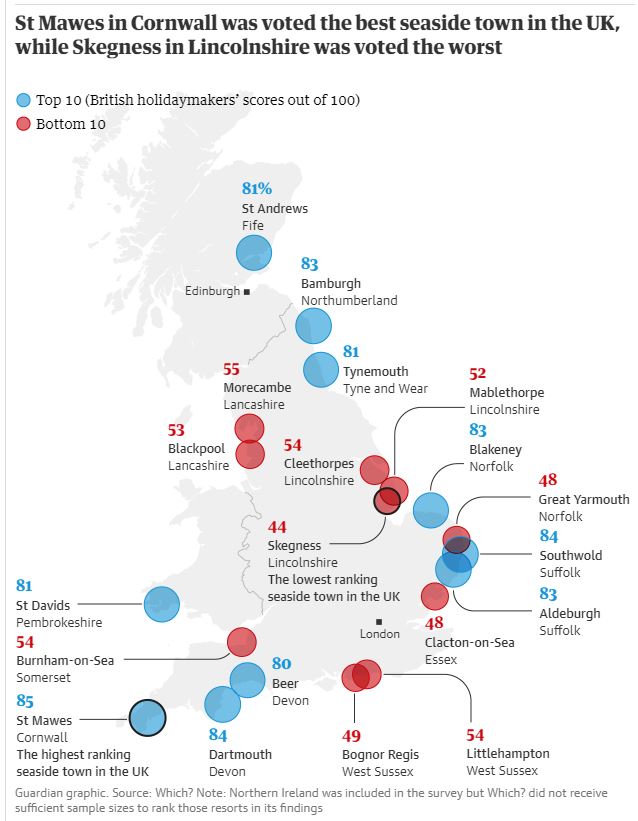
St Mawes named UK’s top seaside resort in Which? poll – Beer in top ten.

For each destination, ratings were given for the beach, food and drink, value for money and peace and quiet, among other things, with scores added up and given out of 100.

Beer scored 80% and comes in top ten; Sidmouth scored 78%  and Exmouth 68%  (Budleigh and Seaton not assessed)  – full list of results here.

Owl thinks Beer better be on stand-by for the invasion! (Which? said those wanting to avoid holiday hotspots could consider some of the highly rated destinations on its list which were less well known.)

St Mawes named UK’s top seaside resort in Which? poll

Hilary Osborne www.theguardian.com 
Cornish fishing village beats Dartmouth, Southwold and Aldeburgh in readers’ ratings

A sedate fishing village on the tip of a Cornish peninsula has been ranked as the UK’s best coastal destination, beating other better-known seaside resorts to the crown.

St Mawes, which sits on the banks of the Fal estuary and boasts a Tudor castle in the shape of a clover leaf, topped a poll of more than 4,000 readers of Which?, who were asked about their experiences of seaside holidays in the UK.

For each destination, ratings were given for the beach, food and drink, value for money and peace and quiet, among other things, with scores added up and given out of 100.

Those who had visited the Cornish village gave it a score of 85%, recommending the crab baguettes and opportunities for dolphin-spotting from the ferry to Falmouth.

The poll, which was carried out before the coronavirus pandemic, put Dartmouth in south Devon in second spot, with 84% of possible points, followed by the chichi Suffolk resorts of Southwold and Aldeburgh.

The list was unveiled as holiday destinations in England started to gear up for the summer holidays and an expected influx of visitors, with many people rejecting overseas travel in favour of trips closer to home.

Although they might be appealing to families looking for activities and the opportunity for sandcastle building, some more traditional holiday resorts were at the bottom of the Which? readers’ rankings.

Skegness, home of the original Butlins, scored just 44% from visitors, getting three stars for its award-winning beach but just one star for value for money, scenery and attractions.

However, one visitor told Which?: “Don’t be put off by the stereotypical opinions of Skegness. It’s a well maintained, vibrant area.”

Great Yarmouth in Norfolk and Clacton-on-Sea were also in the bottom five.

Which? said those wanting to avoid holiday hotspots could consider some of the highly rated destinations on its list which were less well known.

For example in Wales, where self-contained holiday lets recently reopened and campsites will be up and running from 25 July, instead of heading to Llandudno and Conwy, Which? recommends Criccieth. The town, which got a score of 74%, claims to be “the pearl of Wales on the shores of Snowdonia”.

Rory Boland, the Which? travel editor, said: “It is a good time to explore parts of the country you may not have considered before and to spread our sandcastles beyond the beaches of Devon and Cornwall. As our survey shows, it’s smaller seaside towns and villages with fewer visitors that holidaymakers love.”