Leader reveals Cabinet sees no need to consult Members of EDDC!

Our final example taken from the very long list of questions at the 17 Dec 2014 Full Council (there were others from Cllrs Hull and Giles). Readers can decide for themselves whether the answers match the questions….

Question 11: Procedure Rule 9.2 to the Leader of the Council from Councillor Ben Ingham

With so many potential options open to EDDC regarding cost saving projects with other councils, does the leadership of EDDC not think it may be viewed as irresponsible to tie ourselves to one tri partied arrangement before the Members of EDDC have had an opportunity to consider the full range of options open to us with other authorities?

Answer:

It would be helpful if the Councillor could provide some examples of the potential options he considers we may be missing out on. Over the last few years we have actively tracked down all sharing and collaboration opportunities with other Councils and have reported major successes with Exeter, Mid Devon, Teignbridge and South Somerset. What we have found is that other Councils ‘talk the talk’ but don’t necessarily ‘walk the walk’. It has been my proud achievement that we have frozen the Council Tax for 5 years in succession, partly as a result of all the costs savings we have achieved through sharing with other Councils.


What, more questions for the Leader? (Full Council, 17 Dec 2014)

Question 9: Procedure Rule 9.2 to the Leader of the Council from Councillor Roger Giles

When were the EDDC staff last consulted about relocation from The Knowle? Please indicate the questions asked in the consultation, and give the detailed results of the consultation.

Answer:

Every year we conduct a staff engagement survey – last year 89% of staff said they were happy with EDDC as their employer. We will continue to conduct this survey throughout the period of our impending relocation.

This is the question that I included in last year’s staff engagement survey.

Q5. Members have decided to relocate from Knowle and will soon decide where we move to based on various criteria.

If it were up to you, which of the following would be your preferred locations?

Answer: 239 staff gave 355 responses, the results are shown below:

NOTE FROM RG -NOT COPIED THE BAR CHART WHICH SHOWS PERCENTAGES:

HONITON 57 CLYST HOUSE 42 CRANBROOK 29 SKYPARK 21


Question 10: Procedure Rule 9.2 to the Leader of the Council from Councillor Claire Wright

Does the leader of the council share my very great concerns at the loss of vitally important facilities from very many communities in East Devon as a result of the government announcement of a reduction in S106 funding for small developments? What actions does he propose to take to make the government aware of the damaging impact of the decision, and what does he plan to persuade the government to recognise the needs of smaller rural communities and to reverse the iniquitous decision?

Answer:

I am very concerned that as a result of recent changes to government planning guidance small scale developments in rural areas will not be making contributions towards infrastructure and affordable housing. This change in guidance is unfortunate and is something that as a council we formally objected to when consulted in May. We have to acknowledge the government’s plan to get the country building again and this is a measure that will hopefully help to achieve this admirable aim. Putting this need in context, the Council currently has 2,813 (B Band – 262; C Band – 481: D Band – 786: E Band – 1284) applications for an affordable home in East Devon. The thresholds for developer contributions should however be set at a local level so that they have regard to local circumstances such as property values and local demand. Without such local input there is a danger that the profits of small of scale developers are put ahead of the needs of communities

The first thing we now need to do is work within this new guidance to minimise the loss of infrastructure funding and affordable housing provision that will result from these changes. This is something that officers in our planning team are looking at in terms of the Community Infrastructure Levy Regulations and the re-drafting of policies in our new Local Plan. It is considered that we can minimise the impact of these change but we think that there will still be a significant impact. Sadly the government did not listen to our reasoned arguments for why this change was a bad idea and so it would appear that real life evidence is needed to demonstrate the impact of the new guidance. Once we have gathered such evidence we will be in a stronger position to persuade the government to change the guidance again but in the meantime we have to work within the guidance that has been put in place.

Yet more questions for the Leader at Full Council (17 Dec 2014)

Question 7: Procedure Rule 9.2 to the Leader of the Council from Councillor Ben Ingham

During the last ten years, the Conservative Group at EDDC have managed to deplete millions of pounds of reserves to nothing. The Leadership of this council, following the advice of senior officers, now want us to believe that selling the Knowle, refurbishing Exmouth Town Hall and extending a site at Honiton, which only weeks ago we were told should be sold, will save us money. The premise is based on a twenty year payback and a heating inflation rate of ten per cent over the period. On top of that, at a time when we are told to expect extensive cutbacks in local government funding, you say we should be borrowing millions. What on earth makes you think this is a rational strategy to deploy on behalf of the people of East Devon when you plainly have no idea whether EDDC will even exist in five years time?

Answer:

The Council’s audited Accounts as at 31 March 2004 showed usable reserves of £13.6m, the latest audit Accounts as at 31 March 2014 show usable reserves at £12.7m. The reserve levels will fluctuate between years to reflect what is considered the appropriate level to hold depending on risks and the Council’s need to earmark monies for specific expenditure in the future.

This Council is faced with extensive and unpredictable basic repair costs if it remains at the Knowle not to mention any investment in modernisation. These costs would be unfunded in the absence of a capital receipt from the sale of Knowle. Selling Knowle and prudent borrowing considered against capital and operational costs makes sense. The future may well be unpredictable so we need to be flexible in how we operate and able to manage change. One thing we can be certain of is that the Knowle is not fit for purpose and not a part of that future.

Question 8: Procedure Rule 9.2 to the Leader of the Council from Councillor Roger Giles

When was advice first given to the Council Leader, that the process for site acquisition and development of Skypark aspect of the Knowle relocation project would be likely to be required to meet EU regulations?

What advice was given about the likelihood of the proposals meeting EU regulations? What advice was given about the cost and timescale of meeting EU regulations?

Answer:

Throughout the process EDDC has received advice in respect of procurement including EU aspects from the Relocation Manager and EDDC Procurement Officer. Land acquisition and contracting are matters that need to include consideration of EU requirements. No secret has been made of the complexity of European law – one specific recommendation at the June Cabinet meeting was that the Council commission specialist expertise as required to advise on the detail of appropriate procurement, value for money and legal matters in relation to Skypark.

Between Feb and June 2014, the way forward on Skypark was the subject of discussion between officers and Executive Members including the Leader.

The advice we received was that EU requirements could be met as part of a build out on Skypark and negotiations began to that end. Various possible options were under consideration. These included the Council procuring the building contractor itself which would have added something of the order of 3-4 months time and associated preparation costs.

In actuality, negotiations with St Modwen began but did not conclude – the reason being that the Heathpark sale price was reduced and the marketing of Knowle and Manstone process got underway. At which point the Skypark discussions (and further legal costs) were parked.

Supplementary Q from Roger Giles:
In the 3rd paragraph of the answer it is stated: “The advice we received was that EU requirements could be met as part of a build out on Skypark and negotiations began to that end.” Does he accept that the advice given was flawed?

Supplementary Answer from Paul Diviani:”It was the right advice at the time”

Is the Leader listening? More questions put to him at Full Council

Question 6 1-5: Procedure Rule 9.2 to the Leader of the Council from Councillor Claire Wright

Question 1: Please detail the total costs incurred so far by EDDC as a result of resisting the Information Commissioner`s ruling that EDDC should release information relating to the office relocation project.

Answer: It was not this Council’s desire to see this matter go to a tribunal and EDDC offered to resolve the matter by correspondence but the Information Commissioner decided otherwise resulting in time and expense. The legal expertise required by the Council has cost £7600 to date Please state the estimated figure before commencing the court action. Please state the expected final total of the cost to EDDC.

Q2 Please state the estimated figure before commencing the court action. Please state the expected final total of the cost to EDDC.

Answer: As has been previously said, this kind of tribunal is a new process. It is not EDDC that ‘commenced’ this action. The Council had sought to resolve the matter by correspondence rather than the more expensive and time consuming process of a hearing. As such we did not have a budget estimate for the activity.

Q3 As the Skypark element of the office relocation project has now been abandoned, the argument against publishing financial details on the grounds that this would compromise the financial viability of the scheme is no longer valid. Would the council leader therefore publish the full details of estimates made, and costs incurred, relating to the Skypark proposal with immediate effect?

Answer: Negotiations on land purchase and development costs were and remain confidential between the Council and St Modwen, the Skypark developer. Were we to make public such information it would potentially disadvantage St Modwen in their negotiations with future end users.

Over time it is likely that the information will become less sensitive and officers will review the opportunity to publish. This would need to be done in discussion with St Modwen.

Q4 Now that the Skypark option has fallen through will the council leader agree to examining in careful detail, Sidmouth resident, Robin Fuller’s proposal for refurbishment of the Knowle buildings?

Answer: Mr Fuller’s proposals produced in August 2013 have been considered by the Council and found to be unrealistic practically and financially. The following are a selection of reasons why the proposals do not make sense:

 Mr Fuller himself recognises in his proposals that the 70s/80s offices are less than the Council’s space requirement

 He then proposes that we might fit 600 staff in this space but it looks like he has used HSE figures of cubic space for safe working as opposed to design standard desk space and circulation space calculations

 Mr Fuller suggests that EDDC might also build a ‘modest’ extension of, say 600m2, build over the old Chamber or build an entirely new Chamber. He does not cost the construction or factor in loss of car parking or increased density of development near neighbouring homes.

 His scheme appears to be predicated on an unspecified capital receipt from sale of the old hotel building for ‘luxury’ flats. Unfortunately the design and condition of the existing buildings has proved to be comprehensively unattractive to any developers in the recent marketing exercise

Q5 Please state the energy efficiency rating of Exmouth Town Hall? Please detail the current heating, lighting and water costs and the estimated expenditure necessary to bring Exmouth Town Hall up to a high energy efficient rating.

Answer: The DEC Certificate, issued 19 November 2013, shows a rating of 66, which places it in Band C. For the FY 2013 / 2014 utilities costs (electricity, gas, water) totalled £ 18,724.00. The overall budget estimate for the refurbishment of Exmouth Town Hall including works to provide a higher energy efficiency rating is £ 0.9 mill, including a 20% Design and Construction Risk allowance.

Sidmouth Councillors, were you listening?

It was left to opposition councillors , and to the public, to point out the “alarming weaknesses” in the relocation project, at the Full council meeting yesterday evening. Here’s what SOS had to say: http://saveoursidmouth.com/2014/12/18/relocation-has-alarming-weaknesses-in-assumptionsplanning-and-estimating-says-sos/

How come …

… EDDC had its press release on relocation out on its website together with lots of quotes from the meeting so soon after it ended?

Press Officer working late  – again.

Full Council votes for “full checks and balances” on relocation costs, which were going to happen anyway!!

Three fine opening speeches from the public were deftly rolled into one tonight, by the Chief Executive Mark Williams, yet again ignoring the specific and critical detail. They were all asking the same question, he said, which was for an independent report on figures for the claimed financial and energy savings used to justify EDDC’s office relocation plan. The answer was definitely “No”. This suggestion would be an affront to EDDC’s consultants and auditors, said the CEO, sweeping it firmly aside.
Later, however, the council heartily supported a motion read out by Sidmouth Councillor Graham Troman, that there should be “full checks and balances” carried out on the costs of moving from Knowle. This appeared a somewhat obvious procedure, with such a heavily-criticised multi-million pound project, not just to observers in the public gallery, but also to the Chief Executive, who insisted that that would happen anyway.
Significantly, perhaps, there was general agreement in the council chamber, that the results of these “full checks and balances” were not likely to be known before the May 2015 election. Councillor Claire Wright’s proposal that relocation should be put on hold until after May 7th, 2015, was rejected, leaving the way clear for a possible Knowle sale contract to be meanwhile signed.

So that’s alright, then….

More posts will be added here, on the large number of questions from opposition councillors and from the public.

EDA Vice-Chair John Withrington, asked for a date for the completion of the Local Plan. NO DATE WAS GIVEN, and the meeting moved on….

So that’s alright, then….

So many words, so little action

“The Government’s flagship planning policy is leading to “inappropriate and unwanted housing development”, MPs have warned.
The cross-party Communities and Local Government Committee also raised concerns that town centres were not being given proper protection against the threat from large out-of-town retail developments.

They called for the Government to scrap rules allowing small shops and offices to be converted to housing without the need for planning permission, arguing that the changes could lead to town centres becoming “an unattractive place to visit or, indeed, live”. …

…The committee said: “Our report has identified a number of issues with the operation of the NPPF: that it is not preventing unsustainable development; that it is leading to communities being subject to inappropriate and unwanted housing development; and that it is giving insufficient protection to England’s town centres.”

But there was no need to “tear up or withdraw” the controversial document, but insisted ministers should ” reinforce its provisions and ensure it does the job it was intended to do”. …

…They said: “Councils that fail to produce a plan surrender their ability to influence the future development of their local areas.”
The committee’s Labour chairman Clive Betts said: “Councils must do more to protect their communities against the threat of undesirable development by by moving quickly to get an adopted local plan in place.”

http://www.dailymail.co.uk/wires/pa/article-2875415/Warning-planning-policy.html

and reviewed in more detail here:

http://localgovernmentlawyer.co.uk/index.php?option=com_content&view=article&id=21169%3Achanges-needed-to-nppf-to-stop-unsustainable-development-say-mps&catid=63&Itemid=31

Relocation Twitter

… and other EDDC topics on this new hotline: https://twitter.com/EastDevonTories

Don’t forget Full Council meeting starts at 6.30pm this evening, at Knowle.

Actual amounts of redundancy payments to senior staff must be published

Do we recall that EDDC recently refused to do this?

http://localgovernmentlawyer.co.uk/index.php?option=com_content&view=article&id=21177:minister-accuses-council-of-breaching-regulations-on-reporting-of-senior-pay-offs&catid=57&Itemid=25

What ‘s in Santa’s Knowle sack?

East Devon District Councillors may be in for some surprises about the shaky foundations of the multi-million-pound office relocation project,at the Full Council Meeting this week, 6.30PM Wednesday 17th December, at Knowle Council Chamber,Sidmouth.

Just how many have asked penetrating questions about the figures presented for the costs? Have the questions been fully addressed? And how well-attended were the six opportunities we hear have just been offered for a last minute briefing?

The answers will no doubt become clear on Wednesday evening, to those in the public gallery, which is expected to be full.

Pity such an important agenda item comes in the extra busy-for-most week before Christmas….

Government admits National Planning Policy Framework not working

The government has produced its long-awaited report on the National Planning Policy Framework. It reveals that even they now belive it is dysfunctional.

Summary:

The National Planning Policy Framework (NPPF) has now been in operation for two and a half years. The simplification it has brought to the planning system is welcome and was acknowledged by many witnesses, but it needs more time to bed in, and the Government needs to collect more data, before a full assessment can be made of its strengths and weaknesses.

Nevertheless, the evidence to this inquiry has highlighted a number of emerging concerns: that the NPPF is not preventing unsustainable development in some places; that inappropriate housing is being imposed upon some communities as a result of speculative planning applications; and that town centres are being given insufficient protection against the threat of out of town development.

These concerns point to the need to strengthen, rather than withdraw, the NPPF. We have suggested a number of changes that should be made both to the NPPF itself and to the way it is applied.

First, we must take steps to ensure that the planning system delivers the sustainable development promised in the NPPF. We should ensure that the same weight is given to the environmental and social as to the economic dimension; that permission is only given to development if accompanied by the infrastructure necessary to support it; and that the planning system places due emphasis on the natural environment.

Second, all councils must move much more quickly to get an adopted plan in place: this will give communities increased protection against the threat of undesirable development. We call for a statutory requirement for councils to get local plans adopted within three years of legislation being enacted.

Third, we must address the complex issue of land supply. Provisions in the NPPF relating to the viability of housing land are leading to inappropriate development: these loopholes must be closed. There also needs to be clearer guidance about how housing need should be assessed. In addition, local authorities should be encouraged to review their green belts as part of the local planning process.

Finally, changes should be made to ensure the NPPF gives greater protection to town centres. The internet has changed the way we shop; town centre planning policy must therefore evolve too. We call for an end to permitted development that allows shops and buildings used for financial and professional services to become homes without planning permission, a policy which is undermining the local planning process.

The NPPF makes clear that importance of a plan-led system that delivers sustainable development. We trust that the Government will make the changes we propose to ensure that this principle is met and the NPPF becomes a document in which everyone can have greater confidence.

Click to access 190.pdf

New council HQ to be surplus to requirements by 2020?

” … So what might English government look like by 2020?

… Free-standing smaller cities and counties (probably combined with their districts and smaller unitary councils) may still be waiting their devolutionary package.”

http://www.bbc.co.uk/news/uk-30410051

New council HQ now worth half what it cost to build

Something our councillors don’t talk about – depreciation in value:

http://www.manchestereveningnews.co.uk/news/local-news/new-rochdale-council-hq-worth-5848475

“Merry Christmas EDDC (very) senior officer(s)” from your boss Mr Pickles!

Local authorities could be required to set out how they appraise the performance of their highest paid staff, the Communities Secretary has said.
In a response to a select committee report on senior pay in local government, Eric Pickles said councils would also have to explain the reason behind bonuses and how they dealt with poor performance.

The minister said he had instructed officials at the Department for Communities and Local Government to examine how the Local Government Transparency Code 2014 might be amended to bring in the changes.

” … Pickles said: “When we came to power hundreds of directors, executives and strategists were lining their pockets with hardworking families’ cash. But this government’s focus on excessive pay grounded pay rises received by senior council staff which had soared out of control during the noughties.

But there is still more to do and councils should be focusing resources on protecting frontline services and keeping council tax down rather than throwing away taxpayers’ money.”

The Communities Secretary added:

Local taxpayers would be shocked to learn their council still has many highly paid staff on its payroll while pleading poverty and seeking to increase council tax. The gravy train is over and town halls must prove to hardworking families they are getting value for money from top earners.”

The DCLG claimed that more than 2,000 town hall staff in the UK were still taking home more than £100,000 a year. …”

http://localgovernmentlawyer.co.uk/index.php?option=com_content&view=article&id=21162:pickles-to-require-councils-to-set-out-how-they-appraise-top-paid-staff&catid=57&Itemid=25

EDDC relocation omnishambles: Last chance for common sense to prevail

Wednesday 17 December, Knowle, full council meeting 6.30 pm

A common-sense amendment proposed:

http://www.claire-wright.org/index.php/post/eddc_conservatives_urged_to_suspend_office_relocation_project_over_public_c

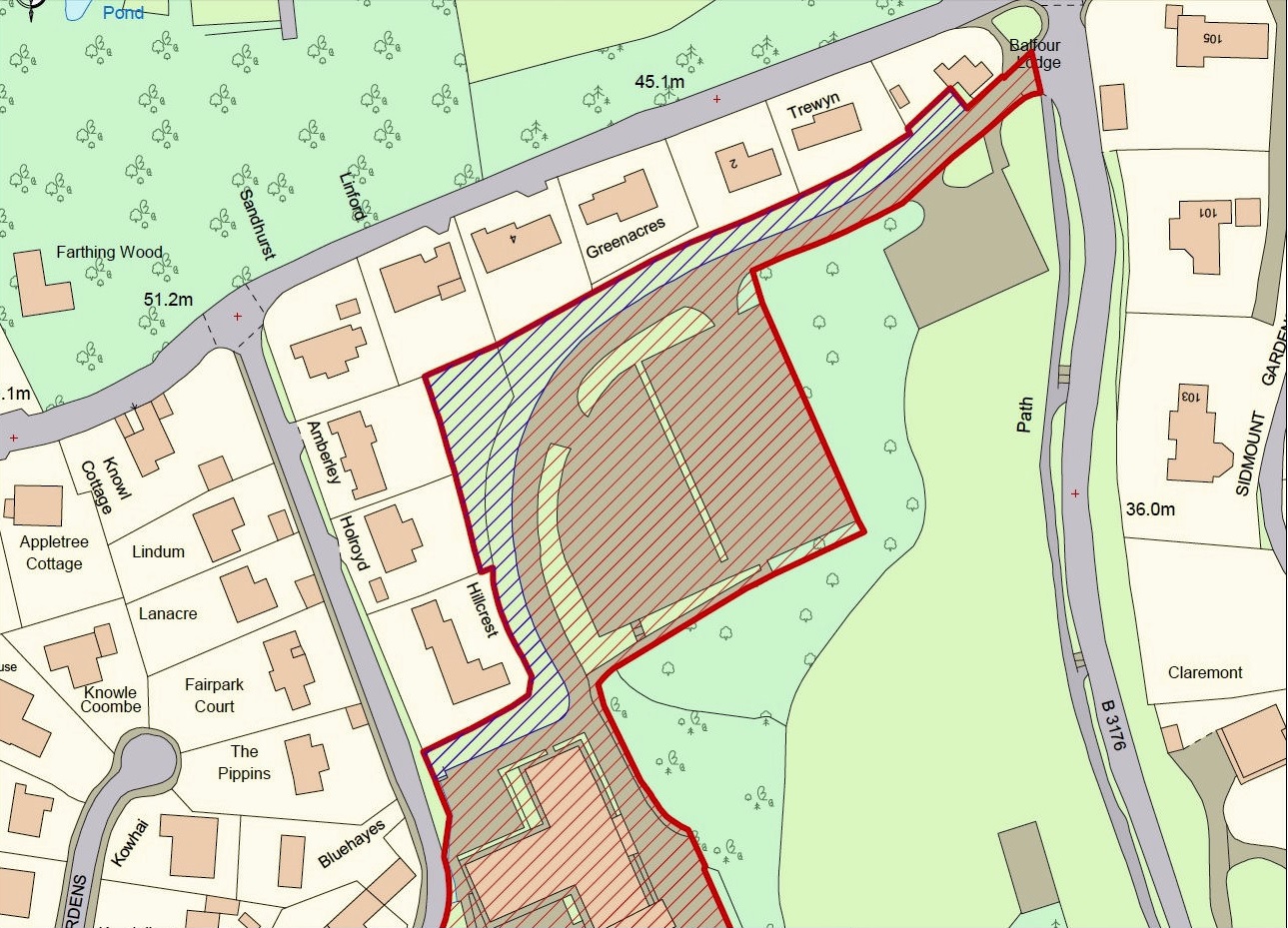
How much of Knowle is up for sale? Do Councillors really know?

Doubts arose at last week’s Public Meeting with Sidmouth District Councillors (organised by the Sid Vale Association, 9 Dec 2014). Councillor Christine Drew certainly seemed unaware of the extent of historic parkland that would be lost to public ownership, as a result of EDDC’s present plan.Is she the only one?

Savills1

For anyone unsure, the precise area being marketed is shown on these two pictures on estate agent Savill’s website.

Savills2