MP proposes bill to force government to comply with ministerial code

A new law aiming to force government ministers to comply with their official code of ethics is to be debated in parliament.

What chance? – Owl

Lizzie Dearden www.independent.co.uk

Labour MP Debbie Abrahams is calling for a bill that would put the ministerial code, which governs standards of behaviour, honesty and accountability, on a statutory footing.

Her ten-minute rule bill, which allows backbench MPs to make their case for a new law in a short speech, is due to be debated on 10 January.

Ms Abrahams will call for codes of conduct for ministers, MPs, peers and councillors to be written into law in the same way as happens in Northern Ireland.

She told the PA news agency that putting the code onto a statutory footing would “take it out of a political arena”.

“I feel particularly strongly that politics is in a bad place, and that politics and politicians aren’t trusted,” Ms Abrahams added. “I think that’s dangerous for our democracy.

“I don’t think it’s just our fault, but I think we need to do things that are going to improve that position, not make it worse.”

The ministerial code currently has no legal basis and has proven difficult to enforce, with the government operating without an ethics adviser able to investigate breaches for six months.

Rishi Sunak recently appointed veteran banker and Historic England chairman Sir Laurie Magnus as his new independent adviser on ministers’ interests, but faced criticism for ignoring calls to enable him to start investigations without his permission.

Critics argue that the approach effectively undermines efforts to properly enforce the code, by leaving too much power in the prime minister’s hands.

There has been no investigation into Suella Braverman’s apparent breach of the ministerial code in October, when the home secretary sent a draft statement from her personal email to a backbench MP and Tory staffer.

Ms Braverman resigned from her post in Liz Truss’s government but was reinstated days later after Mr Sunak became prime minister.

Former ethics adviser Sir Alex Allan resigned in November 2020 after Boris Johnson kept then-home secretary Priti Patel in post despite his conclusion that she had broken the ministerial code by bullying civil servants.

His successor, Lord Christopher Geidt, quit in June after telling a parliamentary committee that Mr Johnson may have broken the ministerial code during the Partygate scandal.

He told MPs that he did not have the power to initiate an investigation into the former prime minister, because the “authority for the independent adviser flows from the prime minister in assisting the prime minister in the business of managing his own ministers”.

Mr Johnson cleared himself of breaking the ministerial code in a letter claiming that a Covid fine did not count as a criminal conviction, and he had corrected false statements to parliament on parties that violated restrictions.

The Independent has previously revealed numerous occasions where government ministers have failed to correct the record after making false statements in parliament – even though the code states that those who knowingly mislead parliament “will be expected to offer their resignation”.

As the New Year dawns do you know the difference between a UXB and an XBB?

UXB – This is simple it refers to an unexploded bomb

XBB – This could be a ticking bomb as it refers to the latest Omicron subvariant of “concern”.

Here is all you need to know (www.independent.co.uk – extract):

XBB is a subvariant of the Omicron BA.2 variant, and XBB.1.5 is a subvariant of XBB.

It emerged as a “recombinant lineage between the second generation Omicron variants”, Professor Kei Sato wrote in a study by University of Tokyo, Hokkaido University and Kyoto University, posted to preprint server bioRxiv.

The Japanese researchers studied XBB’s characteristics in hamsters including transmissibility and immune resistance.

Their results suggested that the subvariant is highly transmissible and has developed resistance to immunity.

In October 2022, the World Health Organisation (WHO) also said there was early evidence to suggest that XBB has a higher reinfection risk, compared to other circulating Omicron subvariants.

However, in a fact-checking article conducted by Reuters in November, its team concluded that there was no evidence that XBB “is more deadly or causes more severe COVID-19 than the Delta variant”.

Where have cases of XBB been reported?

The Omicron subvariants have taken the US by storm as together they accounted for 44.1per cent of the total cases in the country for the week ending December 31.

The subvariants were previously reported as just XBB before this week.

Though the subvariants are currently dominant in the Northeast, they account for fewer than 10 per cent of infections in many other parts of the country, according to the U.S. Centers for Disease Control and Prevention on Friday (CDC).

XBB.1.5 has been detected in at least 74 countries and 43 US states, according to outbreak.info which uses data from the Global Initiative on Sharing Avian Influenza Data (GISAID).

These countries include the UK, China, India, Pakistan, Indonesia and Australia.

End of year report: Simon Jupp

Simon continues to make a lot of noise in his support for the hospitality sector, his chosen specialist subject. But he continues to disappoint in his choice of drinking partners. He would benefit by widening his circle of friends.

Simon with “three homes” Robert Jenrick and “tractor porn” Neil Parish

UK retailers, restaurants and clubs brace for tough run-up to Christmas

(There are reports of a £1.5bn loss to the sector in December alone)

Sarah Butler www.theguardian.com 

UK retailers, restaurants and nightclubs are braced for a tough run-up to Christmas as poor weather and strikes hinder shopping and socialising.

The number of visitors to UK high streets was down by a fifth on pre-pandemic levels last week, and almost 1% down on last year when the Omicron variant and some government restrictions led to a very quiet end of the year, according to the latest data from the shopper tracking agency Springboard.

Despite the men’s football World Cup final, pubs, restaurants and bars experienced a 50% fall in takings this weekend, according to the Night Time Industries Association (NTIA), on what should have been one of the busiest weekends of the year.

Michael Kill, the chief executive of the NTIA, said the industry had lost out on an estimated £2bn of revenue as a result of rail strikes creating a situation that was “untenable for businesses”.

He called on the government to provide further support or risk “a huge swathe of businesses going into insolvency in January”.

Towns and London office locations fared the worst last week, as a cold snap and strikes combined to keep people at home. Central London and regional cities bounced back from last year – with visitor numbers up almost 9% – but were still about a fifth down on pre-pandemic levels, according to Springboard.

Diane Wehrle, the insights director at Springboard, said: “Last week – the week prior to Christmas – should have been a peak trading week for retail destinations and stores, with footfall expected to rise from the week before as Christmas shopping moves towards its zenith. Instead, footfall across UK retail destinations took a tumble last week.

“While the cold weather prevailed, which would undoubtedly have had some impact, the contrast with the results for the week before clearly demonstrate that it was the rail strikes that were the key impact on footfall.”

UK retailers have already reported lower sales than expected in the lead-up to Christmas. On Friday, figures from the Office for National Statistics showed that the amount spent on retail in Great Britain dropped by 0.4% in November, against a forecast by industry analysts of a 0.3% rise.

The boss of one big national retailer said, with heavy irony, that the “potentially lethal” combination of snow and strikes had “perfect timing”. “Around about now is the point that customers switch from e-commerce to stores, and the next [few] days are usually much more about the store experience,” he said.

The prospects for an acceleration in sales during December to make up for lost ground are being hindered by the cold snap and a series of rail strikes. There are further strikes planned, including one by Network Rail staff starting on Christmas Eve, when passenger trains will finish by 3pm.

Some online retailers are also likely to be affected by strikes, with 115,000 Royal Mail workers due to start a two-day strike over pay, jobs and conditions on Friday, running over to Christmas Eve.

Samuel Tombs, the chief UK economist at Pantheon Macroeconomics, a consultancy, said the November sales decline came as “consumers tightened their belts in the face of surging prices”.

“We expect further weakness ahead due to the snow and a further hit to real incomes,” he added, with higher energy costs an important factor in reducing households’ disposable incomes.

Amarveer Singh and Maria Nurgaziyeva, analysts at CreditSights, a debt rating agency, wrote: “December should see more support from Christmas shopping for both food and non-food retailing, although cold weather and ongoing rail strikes are expected to put a dent into it.”

Inflation has meant that consumers are getting less for their money. Singh and Nurgaziyeva said November sales by value in pounds were up by 14% compared with February 2020 – before the first UK pandemic lockdowns – but the volume of goods sold was 0.7% lower.

End of year report: Alison Hernandez

Alison once again has devoted much of her time to engineering photo opportunities and she excels in the “selfie”. Unfortunately about a third of the new “Bozzer” recruits she boasted about in 2019 (and we are paying for) are voting with their feet and leaving. She should concentrate on the day job.

(Devon & Cornwall sixth worst force for which data are available – see table at the bottom) – Owl

Police recruits who signed up under Boris Johnson’s ‘20,000 officers’ scheme quit in droves

Steve Robson inews.co.uk

Thousands of police officers recruited under Boris Johnson’s flagship manifesto pledge to boost numbers have already resigned, i can reveal.

The former prime minister promised to add 20,000 officers to forces in England and Wales under the Police Uplift Programme (PUP) by March 2023 in a bid to reverse a decade of austerity cuts made by his Conservative predecessors.

The policy has cost £3.6bn since 2019, according to the National Audit Office, and is projected to cost £18.5bn over the next ten years.

With three months to go until the deadline, the Government says more than 15,000 officers have been recruited, around 77 per cent of the target.

But figures obtained by i via Freedom of Information requests reveal that at least 1,837 of those officers who joined under the scheme have already voluntarily resigned.

The true figure is likely to be much higher, as 19 of the 43 forces in England and Wales failed to provide data, including the largest force, the Metropolitan Police.

The data obtained by i suggests that more than one in 10 police recruits who joined under the Conservative-led recruitment drive have already quit.

The forces with the highest number of recruits who had resigned include Greater Manchester Police with 206, West Midlands Police with 173, Thames Valley Police with 160, Surrey Police with 129 and Hampshire Police with 124.

Publicly available figures show the Metropolitan Police lost at least 2,123 officers to voluntary resignation between 2019-2022, although this includes all officers, not just those recruited under the PUP programme.

Mr Johnson and his former home secretary, Priti Patel, repeatedly claimed that replacing the 20,000 officers lost as a result of austerity cuts would tackle violent crime, which has escalated in recent years.

Back in August, Mr Johnson said: “We are cracking down on vile gangs and putting dangerous offenders behind bars for longer – and at the heart of these efforts are the 20,000 new officers who will be out on the streets providing the firepower for years to come in the fight against crime.”

However, during a speech to the Police Federation in May, Ms Patel acknowledged that officer “attrition”, the human resources term used to describe people leaving an employer voluntarily, is becoming an issue.

Rishi Sunak also championed the policy during his first Prime Minister’s Questions in October.

Senior policing leaders are now working with academics to understand why so many officers are voluntarily resigning early in their careers.

Some chief constables have suggested that too many people have joined police forces in recent years with unrealistic expectations of the job, including the requirement to work anti-social hours and deal with confrontation.

There has also been criticism of the decision to make recruits complete either an apprenticeship, degree or diploma on top of regular police officer training.

Dr Sarah Charman, professor of criminology at the University of Portsmouth, is currently leading a research project to understand the high number of police leavers.

She argues the data shows policing is no longer a “job for life” where people regularly serve for more than 30 years before retiring.

The number of voluntary resignations, regardless of length of service, has increased by almost 200 per cent in the past decade, from 1,158 in 2012 to 3,433 in 2022.

But the figures obtained by i will fuel concerns that the newest generation of officers are among the most likely to leave.

Dr Sarah Charman has interviewed 62 people who have resigned since 2021, of which eleven were officers with two years’ service or less. One lasted only six months in the job.

Several new recruits highlighted struggling to juggle academic learning on top of police training, she said. “They were talking about the pressure of uni work alongside training and a full time job,” Dr Charman told i.

“Some found it rushed, some mentioned the attitude of tutors. The ones that came out quite quickly talked about it not being the job that they thought it was going to be. They found it too challenging trying to study and do the job at the same time.

“For a few of them, they were doing training to be a police officer during the dark days of the lockdown and a lot of it moved online which was difficult.”

The Police Federation has also expressed concern that there is now too much emphasis on academic learning and not enough on-the-job training, leaving recruits ill-prepared for the reality when it hits them.

One training supervisor previously told The Times that they are encountering students who can’t pass a fitness test, get anxious talking to the public and “literally run away” from physical violence.

Ché Donald, the vice-chairman of the Police Federation, also claimed that recruits who “don’t have a scooby” were being hired in the uplift.

“You’ve got parents phoning up the chief inspector to say, it’s my son’s birthday tonight, he’s not going to work the night shift, you can put him on a day shift,” he told The Times.

Speaking to the Police Oracle last year, Nick Adderly, Chief Constable of Northants Police, revealed his force is losing around 120 people a year, of which a significant number are new recruits.

“I flagged this before and the chiefs pooh-poohed it,” Mr Adderley said.

“Now they’re recognising it as an issue themselves – young people coming into the police, not really knowing what it’s about, realising after just a few weeks and months that it’s not for them.”

However, Dr Charman believes this characterisation is unfair and says most leavers she has interviewed knew what they were signing up for.

“Whenever we raise this [police resignations], you hear these comments that they didn’t know they were going to have to work nights shifts and weekends, it can be quite patronising,” she said.

“It’s not the job to be honest – only one person I interviewed said they were leaving because of the nature of the job itself.

“Most are quite prepared to go out there and do the dark and dirty work many of us wouldn’t want to do, it’s the organisation itself. If people are quitting like this, something is wrong.”

Dr Charman uses the term “organisational injustice” to describe a sense that many police leavers felt when they were not progressing, being supported or looked after in their job.

Personal factors such as women struggling to fit childcare responsibilities around shifts were also significant. Pay and pension complaints were mentioned, but not frequently, she added.

Low morale was also cited as a major factor by those leaving.

Thames Valley Police told i it is among several forces to have become “aware” that it is losing student officers. A spokesperson said the role of a police officer “comes with challenges, particularly within the first three years when student officers are learning their craft”.

In September, the National Police Chiefs Council commissioned “deep-dive” research into the issue of police leavers and Thames Valley said it will be “implementing some of the recommendations from this project in due course”.

Surrey Police, however, denied that the number of student officers leaving was “notably higher than previous entry paths”.

And Hampshire and the Isle of Wight Constabulary said it “not surprising” that the force has one of the highest numbers of student officers leaving because it has recruited more officers under the national uplift programme than almost any other force.

The exodus of police officers comes after the service has faced sustained criticism over allegations of sexism, racism and corruption in recent years.

Dr Charman says the retention crisis is a “fairly new thing”. She said: “I think the attitude of the police service has been to concentrate on recruitment and less so on retention and they need to focus on that.

“Poor retention is as much of a problem and they really need to look at why officers are leaving… It’s a huge issue.”

It comes as Labour tries to set out its stall as the party toughest on crime. Shadow Justice Secretary, Steve Reed, told The Times the party would crack down on antisocial behaviour and give victims the power to decide how perpetrators are punished.

The shadow Home Secretary, Yvette Cooper, told i: “The country is still paying the price for this Government’s deeply damaging decision to cut 20,000 police officers. Even their promise to reverse those cuts isn’t working properly – there are still 6,000 fewer neighbourhood police, there’s a shortage of 1,000 detectives and now many new recruits are dropping out.

“The appalling consequence of twelve years of Conservative policies on policing and crime is that far fewer criminals are being arrested, far fewer crimes are being solved and far more victims are being let down.

“Labour has a fully-funded plan to put 13,000 extra neighbourhood police and PCSOs (police community support officers) back on our streets to fight crime at its source. Only Labour will give police and communities the support they need.”

The Home Office said the retention of police officers is a “priority” and it recently carried out a survey of 3,500 new recruits which showed a “positive onboarding experience overall”.

Job satisfaction was at 90 per cent for new recruits and 81 per cent intend to continue as police officers for the rest of their working lives, the Government said.

A Home Office spokesperson added: “Policing is a career like no other and now more than ever we need dedicated and talented officers to keep communities safe and cut crime.

“The overwhelming majority of new recruits recently surveyed report positive job satisfaction and want to remain officers for the rest of their working lives.

“The Police Uplift Programme is on track, with 15,343 additional officers already recruited, ensuring police have the support and training they need to bear down on crime.”

A spokesperson for the College of Policing added: “The Policing Educations Qualifications Framework (PEQF) provides standardised training for new officers who are being recruited as part of the Uplift programme. With the PEQF offering a number of different routes for entry, aspiring new recruits can join the force using the route they feel is best suited to them, with work continuing to be done to consider a fourth entry route which will maintain high standards of training fit for the 21st century but not result in the student being recognised for a degree.

“The PEQF training is largely practical with new recruits spending 75 per cent of their time on the job and recognises the shifting demands of modern policing with new modules covering criminal activity in new and emerging areas such as fraud and digital crime as well as retaining modules in the more traditional crimes such as burglary and violence.

“In a recent survey of almost 4,000 new police recruits, 75 per cent undergoing the updated training said it prepared them well for the job, compared with 60 per cent for the previous course. Similarly, 82 per cent undergoing the updated training said they were provided with the skills for the job, compared with 66 per cent for the previous training.”

The Police Federation added: “We are aware of the pressure on the new police student officers and are working with forces to make sure that they are supported through their probation period. The Police Federation of England and Wales is concerned that the overall uplift programme to replace officers does not go far enough to help police deal with the increasing amount of crime that we need to keep the public safe.”

The National Police Chiefs Council was also contacted for comment. A spokesman for Boris Johnson was approached for comment.

Number of officers recruited under the Government’s Police Uplift Programme to have voluntarily resigned since December 2019, per police force

Northumbria: 82

North Yorkshire: 49

North Wales: 19

Devon and Cornwall: 92

West Midlands: 173

Cheshire: 88

West Mercia: 75

Surrey: 129

Cumbria: 37

Lancashire: 89

Northants: 35

Derbyshire: 24

Lincolnshire: 37

Staffordshire: 61

Hampshire: 124

Greater Manchester: 206

Humberside: 90

Gloucester: 37

Warwickshire: 22

South Wales: 54

Merseyside: 85

Dorset: 46

Thames Valley: 160

Dyfed-Powys: 23

Total: 1,837

The apparent surge in second homes around East Devon (and how Jupp hopes to end it)

Simon Jupp reveals how proud he is to have helped navigate the “Levelling Up and Regeneration Bil” through Parliament when he worked as a PPS in the department. (That is between 14 October when he sold his soul to Fizzy Lizzy and 20  October when she resigned. Rishi Sunak became PM on 25 October and sacked the Levelling Up minister.) – A week really is a long time in politics.

He claims this bill will help to damp down the market for second homes, let’s hope EDDC takes advantage of it and it does.

What he doesn’t discuss are the various mortgage guarantee schemes and tax benefits introduced by the government in recent times that have only served to pump up an already buoyant housing market, including by Chancellor Sunak. – Owl

Simon Jupp www.midweekherald.co.uk

When I walk around the villages and towns of East Devon, the number of holiday lets and second homes is becoming ever more apparent.

Figures reveal a surge in second home ownership since the pandemic hit. There are 13,363 second homes in Devon, 11 per cent more than a year ago. It is undoubtedly warping the local long-term rent and buy market as a wander past any estate agent window will amply demonstrate.

As I’ve said many times before, homes for long-term rent and buy are increasingly out of reach for people who grew up in East Devon – including key workers who need to work in the NHS or in local schools. It’s right to take proportionate action.

Last month, I voted for the Levelling Up and Regeneration Bill. It’s a bill I was proud to help navigate through Parliament when I worked in the Department for Levelling Up, Housing & Communities. It’s a wide-ranging bill, including eye-catching powers for councils to double council tax on second homes and double council tax on homes empty for more than a year.

East Devon District Council is discussing how to bring these powers into place locally. I hope they use the new powers offered by the Conservative government once brought into law.

After a hard-fought campaign by Conservative MPs in the South West, the government has also closed a loophole that lets second homes avoid paying council tax by registering as a holiday rental, signing up for business rates, and then receiving business rates relief. To be business rated, properties will need to be available to let commercially for 140 days a year and actually let commercially for 70 days a year.

I understand these changes won’t be welcomed by everyone. I do believe people have the right to spend their money purchasing properties available to them. However, I believe higher council tax on second homes and making sure genuine short-term lets can carry on as businesses is fair and proportionate action to take.

As your MP, I want to make sure local people can get on the housing ladder, too.

Owl since you’re asking – the poo’s still flowing

From a correspondent:

Owl asks “With a yellow weather warning of heavy rain in place for today, what can we expect to be vented into our rivers and onto our beaches?”

Just visit the Safer Seas Service Interactive Map on Safer Seas Service Interactive Map • Surfers Against Sewage (sas.org.uk) and you will find that Budleigh Salterton beach still has a Pollution Alert.  Storm sewage has been discharged from a sewer overflow in this location within the past 48 hours. Sidmouth, Exmouth and Seaton discharges remain a secret held by South West Water.

But don’t worry Budleigh Salterton, the new sewage overflow pipe being constructed will enable this practice to continue for the next 100 years. A great boost for the tourist industry.

‘NHS has collapsed’: Experts despair, as 17 major incidents declared

At least 17 ‘major incidents’ have been declared at hospitals across the UK within the last 48 hours. A&E departments, ambulance services, and healthcare groups are all facing extreme pressure – and some health experts fear the very worst has already happened for the NHS.    Tom Head www.thelondoneconomic.com 

Has the NHS all but collapsed? The signs aren’t good

So far, seven hospitals have announced they are dealing with critical incidents. Others are operating at the next-highest emergency response level of OPEL 4, and some have categorised the situation as a ‘business continuity issue’.

Either way, the list makes for a horrifying read. Shaun Lintern, the Health Editor for The Times, has filed most of these in a Twitter thread. If you’ve got the stomach for it, you can dip into the facts and figures here:

‘In many parts of the country, the NHS has collapsed’

Concerns of a full-scale NHS collapse have already been raised by The Telegraph this week, and more health experts are starting to believe this is now the case. Health policy expert Sam Freedman fears there will be ‘significant excess deaths’, and he’s calling for a full inquiry.

“A few days ago I said the NHS had never been closer to collapsing. I think it’s fair to say it has now collapsed in many parts of the country. There will be significant excess deaths as a result. There needs to be a full inquiry into how this could have been avoided” | Sam Freedman

Who has declared a critical incident this week?

  • University of Derby Hospital Trust: All meetings and training courses have been cancelled, to shore-up available staff numbers.
  • University Hospitals Dorset: ‘Severe and sustained operational pressures’ have caused chaos throughout the week.
  • Portsmouth Hospitals University: After declaring yesterday, members of the public have been asked to ‘help clear occupied beds’.
  • Nottingham University Hospitals: Over 160 patients have waited more than 24 hours to be discharged.
  • NHS Devon: Ambulance response times have been at ‘over four hours’, for a period of more than 72 hours.
  • Surrey Heartlands Healthcare: General pressure on local NHS services has rendered the situation critical.
  • Royal United Hospitals of Bath: High volumes of patients and long waiting times are causing misery in emergency departments.

‘Many other emergency services’ at breaking point

  • Northern Care Alliance: A Business Continuity Incident has been declared, with ‘extremely high numbers’ of A&E patients cited.
  • Oxford University Hospitals: Chronic staff shortages have left the institution operating at OPEL 4.
  • Barnsley Hospital: A Full Capacity Protocol has been activated, as wards are being asked to host more patients.
  • University Hospitals Coventry and Warwickshire: Full Capacity Protocol declared on Thursday, due to issues with patient discharge.
  • NHS West Yorkshire: GPs have been warned about a ‘dire situation’ in local A&E departments.
  • Newcastle Hospitals: Moved to OPEL 4 on Thursday, cancelling all non-urgent appointments in the process.
  • West Midlands Ambulance Services: On Wednesday, a total of 561 patients were left waiting for an ambulance.
  • East England Ambulance Services: A ‘Business Continuity Incident’ was declared, as 161 ambulances were delayed outside hospitals.
  • Greater Manchester Hospitals: Patients have been urged to avoid A&E ‘unless they are in a life-threatening state’.
  • York and Scarborough Teaching Hospitals: There was a 40-hour wait for beds at the peak of the crisis on Thursday.

Exe Viaduct is defective

A bridge carrying the M5 over the River Exe has a safety defect that will require specialist repairs in the new year.

Radio Exe News  www.radioexe.co.uk

The fractured bridge expansion joint plate was detected by a monitoring system on the Exe viaduct, leading to lane one of the southbound carriageway between junctions 30 and 31 near Exeter being closed for safety reasons.

The lane closure has caused significant delays during peak travel times so National Highways is advising drivers to allow extra time for their journeys.

Terry Robinson, National Highways’ engineering manager for the south west, said: “The bridge joint requires specialist contractors and materials to repair and given the safety critical nature of the defect, we have to keep the lane closure in place to protect the travelling public, prevent vehicle damage and protect the structure against further damage.

“We’re working to organise the repair as quickly as possible, we apologise for any inconvenience and thank drivers for their patience. In the meantime we ask people to be aware of delays, particularly around peak times, and to plan ahead and allow extra time for their journeys between junctions 29 and 31.”

Sewage was dumped every four minutes during Therese Coffey’s three years as water minister

The recently appointed Environment Secretary presided over an average of a new sewage dump every four minutes in her previous stint as water minister, new research suggests.

With a yellow weather warning of heavy rain in place for today, what can we expect to be vented into our rivers and onto our beaches? – Owl

Arj Singh inews.co.uk 

There was an average of nearly three million hours of sewage discharge into waterways and sea during Therese Coffey’s tenure as a junior minister, the analysis of Environment Agency (EA) data obtained by Labour under freedom of information laws suggests.

This equates to more than 321 years’ worth of sewage dumped in England and Wales over Ms Coffey’s three years in the job between 2016 and 2019.

Labour said the fresh revelations about Ms Coffey’s “sewage-infested” record in office raised questions about Prime Minister Rishi Sunak’s decision to move her to Environment Secretary.

The party revealed last month that sewage discharges more than doubled during the Environment Secretary’s previous role as a junior minister, coinciding with her decision to cut a key environment protection “grant in aid” fund for the EA by around a third (£24m).

Ms Coffey was also forced to admit in October the Government was breaching its own Environment Act by delaying the publication of clean water and biodiversity targets beyond the end of that month.

The revelations also come amid a growing public outcry over the scale of sewage dumping around the country, with around 90 of Britain’s beaches affected by water pollution this summer.

Shadow Environment Secretary Jim McMahon said: “It’s not clear which is worse, Coffey’s sewage-infested environmental record, or Rishi Sunak’s judgement in bringing back Dr Dolittle.

“Families across the country should be able to just enjoy where they live, work or holiday, and businesses should not have to worry about the Tory sewage scandal hitting their trade.

“Britain deserves better.

“A Labour government will use the levers of power to introduce mandatory monitoring with automatic fines, ensure regulators properly enforce the rules and hold water bosses who repeatedly break the rules personally accountable for sewage pollution.”

A Department for Environment, Food and Rural Affairs spokesman said: “We have been clear that the amount of untreated sewage which enters our waterways and pollutes our beaches is unacceptable, and that water companies must do much more to protect our environment.

“Our Storm Overflows Reduction Plan has brought in the strictest targets on sewage pollution and requires water companies to deliver their largest ever infrastructure investment – £56bn capital investment over 25 years – into a long term programme to tackle storm sewage discharges by 2050.

“We have also boosted funding for the Environment Agency with £2.2m per year specifically for water company enforcement activity so that robust action is taken against illegal breaches of storm overflow permits.”

On Thursday, The Times reported that the only two stretches of river in England designated for bathing – in Oxford and Ilkley, West Yorkshire – were hit by sewage discharges over the Christmas weekend.

Feargal Sharkey, the former Undertones singer, pointed to recent tests showing e-coli levels at the Ilkley site exceeding safe limits and told the newspaper: “Like a Christmas tree festooned with demonic Christmas baubles, e-coli levels in Yorkshire are above the safe level for bathing.

“Coupled with warnings to bathers on the Thames, it seems like it’s a Merry Christmas and a Happy New Year from the water industry.”

Visiting Cornwall? Then take your own meds and first aid kit.

People travelling to Cornwall for New Year told to pack their own medication by NHS trust

People heading to Cornwall to celebrate New Year have been urged to pack their own first aid supplies as health services struggle under “extreme pressure”.

Does this also apply when visiting Budleigh? “Budleigh residents offer verbal abuse queuing on the street to get their pills” ?

news.sky.com 

Royal Cornwall Hospitals NHS Trust, which has urged people to only call 999 or visit A&E for life-threatening illnesses and injuries, advised people to pack pain relief, flu and cold remedy and rehydration powders, as well as any prescription medicines.

The trust tweeted the advice: “Heading to #Cornwall this #NewYear? Just in case, be wise and bring these three self-care kings! Pain relief, flu and cold remedy and rehydration powders. And don’t forget to pack any prescription medicines, too. #HelpUsHelpYou.”

The trust attached an image detailing what people should have in a first aid kit, including bandages, dressings, tweezers, scissors, antiseptic and medical tape.

South Western Ambulance Service, which covers the region, has declared a critical incident due to being under “extreme pressure”.

On Wednesday morning, it said there were 482 patients waiting for ambulances, with 106 patients awaiting handover at hospitals across the region.

Adrian Harris, chief medical officer of Royal Devon University Healthcare NHS Foundation Trust, described how emergency departments were under “incredible pressure”.

“I’m asking all of the public to think very carefully before attending, to think about using 111 either online or on a telephone, to think about going to their pharmacy, and when necessary contacting their general practitioner,” he said.

“We are very, very busy so please don’t attend unless absolutely necessary. If you’re in doubt and you think you need help, please come and see us. We’re open but we are very, very busy.”

Other trusts to declare a critical incident include Surrey and Sussex Healthcare NHS Trust, which said there was “significant ongoing pressure on local NHS services”.

The trust has seen “record numbers” of people attending accident and emergency departments, calling 111, accessing GP services and calling 999, it said.

There are also “ongoing challenges in discharging patients who are well enough to leave hospital”, as well as an increase in staff sickness.

North East Ambulance Service declared a critical incident on 27 December, describing “unprecedented pressure across the health system”.

It said there were “significant delays” for more than 100 patients waiting for an ambulance, together with a reduction in ambulance crew availability to respond due to delays handing over patients at hospitals.

One in 10 Tory peers have given more than £100,000 to party

One in 10 Conservative peers are big donors to the party, giving almost £50m in total, new analysis shows, amid controversy over more financial backers believed to have been put forward on Boris Johnson’s resignation honours list.

Rowena Mason www.theguardian.com

After speculation about more donors due to get peerages within the coming weeks, figures compiled by the Guardian show 27 out of the party’s 274 peers have given more than £100,000 to the Conservatives.

The rate of donors being given peerages appears to have picked up over the last six years, during the tenures of Theresa May and Boris Johnson.

The new year honours list giving out knighthoods and damehoods is due to be published on Friday, with Rishi Sunak under pressure to clean up politics by cutting out big donors. Last year under Johnson, David Winton Harding, a billionaire hedge fund manager who had given £1.5m to the Tories, was given a knighthood.

During his three years in power, Johnson submitted the names of six major donors for peerages, including three financiers: Sir Michael Hintze, who has given £4.5m to the Conservatives; Michael Spencer, who together with his company has given about £7m; and Peter Cruddas, who has donated £3.4m.

At least two more donors – David Ross, the Carphone Warehouse founder who arranged Johnson’s £15,000 holiday in Mustique in 2020, and Stuart Marks, a technology entrepreneur – have been tipped for a peerages in his resignation honours list. The list has been expected for some time, but it appears to have been held up during the vetting process, with Sunak facing calls from Labour to block it.

There has also been a growing trend of big donor peers being given jobs as ministers. Most recently, Liz Truss requested a peerage for Dominic Johnson, a former party vice-chairman who has given more than £300,000 and was the business partner of her then business secretary, Jacob Rees-Mogg. He was subsequently appointed as a trade minister, a job he then retained under Rishi Sunak.

At least six big donor peers have been given government jobs in the last decade, including two schools ministers (Theodore Agnew and John Nash), a Scotland Office minister (Malcolm Offord) and a business minister (Jonathan Marland). Dolar Popat served as a government whip.

The 274 peers who take the Conservative whip include those on a leave of absence but intending to return. However, the total does not include two more major donors put forward for peerages by David Cameron – James Lupton and Jitesh Gadhia, who are now non-affliated but often vote with the party bloc.

Three more donors given peerages by the Tories since records on party funding began in 2001 – Robert Edmiston, Michael Ashcroft and Irvine Laidlaw – have retired, meaning they still get to keep their titles without sitting in the House of Lords. In total, at least 40 Conservative donors have been put forward for peerages since John Major’s time in office.

The Conservatives have long argued that peerages to donors are given on the basis of their other achievements including business successes and charity work. A Conservative party spokesperson said: “Peerages are for contributions to civic life and also a willingness to further contribute to public life as a legislator in the second chamber.

“It is wrong to criticise individuals being honoured just because they happen to have supported or donated to a political party. Donations should be transparent, but that is not an excuse to knock people for broader philanthropy, enterprise and public service. Volunteering and supporting a political party is part of our civic democracy.”

House of Lords appointments commission guidance says the key criteria when considering the vetting of political donors put forward for peerage is their other work for the party.

“The overarching consideration for commission members should be whether the level of donation is matched by other work done for or on behalf of the party. In other words, would this be a credible nomination even if donations had not been made?” the guidance says.

Research in 2015 by the University of Oxford academics showed that statistically it could be said that the “relationship between donations and nominations [for peerages] has been found to be significant”.

Duncan Hames, the policy director of Transparency International UK, said: “We are of the view that political party leaders shouldn’t be nominating and effectively appointing members of the House of Lords. Their need to raise funds for their political campaigns creates a serious risk of corruption when they are also in a position to be able to offer that kind of patronage.

“We have a House of Lords that is already full and we also have a process by which people can be chosen because of their expertise and merit via a House of Lords appointment commission. There is no need to continue this arrangement which is bringing British politics into disrepute.”

Hames highlighted the resignation honours lists of Cameron and May, plus expected ones from Johnson and potentially Truss, as sources of nominations of major donors. “Resignation honours are not a constitutional obligation. It is an excess that has been exploited in recent years and the faster we turn over prime ministers, the more often it happens,” he said.

With increasing scrutiny of the House of Lords, particularly in light of the investigations into the Tory peer Michelle Mone, Labour has made clear it would abolish it and is consulting on replacing it with an elected second chamber. The party has also put forward donors for peerages but Keir Starmer, the party leader, has said Labour would get rid of the “indefensible” second chamber if he were in charge.

Jess Garland, the director of policy and research for the Electoral Reform Society, said it was “questionable that peers who are personally appointed by the prime minister are more independent and less partisan than someone elected by the public”.

She said: “Political patronage does not create independence of thought and expertise, and this is especially true when a vast number of appointees are party donors and friends of the prime minister of the day. It is the structures and culture of the chamber that matter most and these can be built into an elected upper house.

“For instance, a proportional electoral system, such as the single transferable vote (STV) already in use in Scotland and Ireland, would encourage a diverse range of representatives, more independents and a greater range of parties represented. An elected chamber can also be an expert and independent body and we can rely on the public to make those choices rather than departing prime ministers.”

Anneliese Dodds, the Labour party chair, said Sunak had “delivered sleaze, scandal and cronyism”.

“He is too weak to stand up to the energy companies, his home secretary or his backbenchers. Does anyone truly believe he can stand up to those who bankroll his party?” she said. “Labour will replace the unelected House of Lords with a democratically elected second chamber to restore trust in public office and end the revolving door between Conservative donors and positions of power once and for all.”

Devon named as England’s greatest county by The Telegraph

Impressive on “Natural Wonders” but poor on “Peace and Quiet”

The Daily Telegraph released a list of the top ten counties in England – and it is no surprise that Devon was far and away at the top of the list. Devon amassed a score of 828 points which meant an impressive 79 point lead beyond second place Cumbria.

Jake Holden www.devonlive.com

The list was based on ‘science’ as each of the 48 counties was compared across 33 criteria over four main categories: ‘Natural Wonders’, ‘History & Culture’, ‘Luxuries’, and ‘Peace & Quiet’. Devon came in at the top of the ‘Natural Wonders’ category and third in ‘History & Culture’.

The top ten were: 1. Devon, 2. Cumbria, 3. North Yorkshire, 4. Somerset, 5. Cornwall, 6. Kent, 7. Hampshire, 8. Greater London, 9. Norfolk, 10, Dorset.

Devon boasts an impressive 369 points to win the ‘Natural Wonders’ category thanks to, The Telegraph reports, two national parks and five AONBs, 13 Blue Flag beaches along its 495km of coast (this alone meant 46 points, second only to Cornwall). Nine RSPB reserves, an RHS garden and a vast 9.9% woodland coverage across the county mean, as the Telegraph says, Devon: “Simply put, it has everything.”

In the next category ‘History and Culture’ Devon secured third with 212 points. The list says there are 177 museums and galleries in the county, 34 National Trust listings, 13 English Heritage properties. In Exeter alone there is the beautiful Cathedral as well as Premiership Rugby to enjoy. Greater London managed to top this category with 323 points.

Devon was still ranked pretty well for the ‘Luxuries’ category coming in at seventh with 98 points. There are 4 Michelin-starred restaurants which lend themselves to this score as well as two 5 AA Red Star hotels: Gidleigh Park in Chagford and Bovey Castle in Moretonhampstead. Greater London also won this category, however, with 153 points.

In the final category ‘Peace & Quiet’ Devon did not do so well coming in at 24th with 79 points. This particular category was based on population density, the number of Certified IDA International Dark Sky Parks and Reserves and bonuses for having smaller towns and airports and no motorways. Tourism has made Devon a busier place so even the best county in England cannot be entirely perfect.

With Covid cases rising in China, we must learn from the mistakes of 2020

Given what the world has been through in the last three years, it seems curious that, in some places, there seems no great sense of urgency about the spike in Covid cases in China. The parallels, superficially at least, with the early stages of what we came to know as Covid are striking.

Editorial www.independent.co.uk 

The epicentre of the surge is China. A principal conduit to Europe is via northern Italy and public health authorities outside are unsure how to respond. As in the original outbreaks, Italy and China’s immediate neighbours are imposing travel restrictions on visitors from China quickly, and the United States has followed suit. However, most of Europe – including the UK – is taking longer to respond.

The danger is that this does indeed turn out to be a rerun of the mistakes made in January, February and March of 2020, and the UK imports a potentially deadly disease almost absent-mindedly. Early in 2020, the scientists in the Sage advisory committee eventually took the view that it was too late to stop the infection spreading because it was already circulating internally.

In due course, that advice was to change, and eventually bans on flights to or from China and testing requirements for most of the world became mandatory. Such tests as have been undertaken suggest very high rates of infection among visitors from China, as is to be expected given the rapid spread of Covid after the sudden move out of lockdown in the country. With exponential spread, they could add unhelpfully to the queues for treatment.

The question now is what is being imported. If it is the same mix of variants and subvariants in the UK already, the concerns are lessened. The main consequence, though, would still be unwelcome – an increase in the incidence of the disease and a corresponding increase in the pace of hospitalisations, long Covid and fatalities. At a time of obvious extreme pressure on the NHS, some controls on visitors from high-risk countries, mainly China, would be in order.

There seems good reason to impose some system of testing and “vaccine passports” now at airports, both to slow the import of the existing Omicron variants, and, more crucially, to monitor for the emergence of more variants of concern. Indeed, there should be more precautionary and voluntary random testing of schoolchildren and adults to make sure the authorities can be prepared for future outbreaks, and that any individuals carrying or in contact with high-risk viruses can be traced and protected from passing it on. Sewage testing can also provide early warnings. There is no room for complacency, whatever the presentational difficulties for politicians.

The ruling assumption seems to be that the Chinese, like everyone else, are suffering from a relatively mild Omicron variant; but we need to know for sure, and we don’t. We need to find out.

Perhaps a more lethal, infectious and vaccine-evasive iteration of the coronavirus has already reached Britain or elsewhere. If so, then the sooner it is discovered, the better. If not, then we should ensure that it is kept out of the UK for as long as possible – and a testing regime is one of the best ways of doing so. A further push to get more people to take the new bivalent vaccine booster would also be prudent.

At the moment, it’s hard to know which is the more worrisome – the epidemic of anti-vaxxer misinformation or a new variant. Our defences need a boost, and so does reliable public information. Those who deliberately spread lies and confusion should be confronted and social media platforms should moderate their propaganda.

In the modern world, no virus can be contained for long, but its spread can be slowed. The alternative, as we know from experience, is not the gradual return to normalcy we’ve experienced in 2022, but a far more draconian regime of social distancing next year.

Socially and economically, it is difficult to see how Britain can support another period of extensive lockdowns, though it may be left with no alternative. This is a moment to apply the precautionary principle, and quickly.

Sewage Alerts for East Devon beaches. A New Year plunge anyone?

From a correspondent:

Budleigh Salterton is the only beach with a SWW sewage discharge alert. (one of 30 between Kent and Cornwall)

This does not mean that the other beaches are poo free.

Seaton will never know as “Water quality data not available out of season.”

Exmouth and Sidmouth have “Sewer systems in this location are under maintenance and the water company has temporarily disabled real-time alerts” So will you take a gamble and a New Year plunge?

We must remember that Budleigh Salterton is having its sewer outfall pipe replaced to discharge into the sea just beyond Otter head so this will be able to continue for the next 100 years!

With the ground saturated, there is a threat every time it rains.

Footnote from Owl – this warning comes too late for those taking the Christmas swim at Budleigh and Exmouth. See the extensive photo record on East Devon News of Hundreds Dash and Splash

Sidmouth sensibly chose to stay “wrapped up” this year. 

Alison Hernandez’s survey, open until 9 Jan, appears to have closed prematurely

Opps – this is last year’s survey – Owl thought they spotted another in a recent Journal!

Owl wanted to see whether Alison Hernandez was following Simon Jupp’s attempt to collect information on how you voted, in the survey she launched on 23 December. (To ensure balance, you understand).

 However, her survey is currently closed..

Take five minutes to have your say on policing in Devon and Cornwall · Devon & Cornwall Police & Crime Commissioner

www.devonandcornwall-pcc.gov.uk 

The Police and Crime Commissioner for Devon, Cornwall and the Isles of Scilly wants residents of the force area to tell her if they think the police deliver value for money.

The question is one of several posed by Alison Hernandez who today (Thursday, December 23) launched her 2022/23 budget survey. It comes a week after Home Secretary Priti Patel announced an increase in the amount forces will receive from central Government.

Click here to take the survey now

The additional money will in part pay for an uplift in police numbers that is due to boost officer numbers in Devon and Cornwall by 188 in the 2022/23 financial year. The provisional settlement also included plans to boost investigations into serious and organised crime and tackle fraud.

The Commissioner is now faced with a decision on setting police precepts – the amount households pay locally towards policing through their council tax bills. Police and Crime Commissioners have been given flexibility to increase this by up to £10 a year for a Band D Property for the next three years. Currently those in band D households in Devon and Cornwall pay £236.56 a year in their policing precept.

The survey, which can be completed online here, also asks a number of questions relating to police contact and seeks to understand levels of support for plans to open more police stations to the public in Devon and Cornwall.

“We have had what appears to be a reasonable settlement from central Government for Devon and Cornwall,” the Commissioner said. “It will allow us to continue on our upwards trajectory in police officer numbers that was already being funded by local taxpayers here before the Prime Minister announced the national uplift. This has enabled budgeted force strength to grow by 498 officers since 2016/17 to 3,422 officers this financial year. The force is set to grow by another 188 officers in 2022/23, taking force strength to a record high.

“This increase is helping to keep Devon and Cornwall as counties with some of the lowest recorded crime rates in the country, but there are still significant challenges ahead. Inflation means the force is facing significant additional costs, crime types like domestic abuse are now being reported and recorded more effectively – this is an extremely welcome development but it means our force is dealing with more calls for help than ever before.”

The Commissioner said her focus was now on strengthening, sustaining and stabilising the police force so it was fit to deliver on priorities laid out in the 2021-25 Police and Crime Plan of reducing antisocial behaviour, drugs crime and deaths and serious injuries on the roads.

“We have to ensure that people are served by a force that is responsive to their needs and victims of crime have swift access to justice and the services they need to help them recover,” she added.

People have until midnight on Monday, January 9, to complete the survey. Results will be published in a report to the January 28 meeting of the Devon and Cornwall Police and Crime Panel.

South Western Ambulance Service declares critical incident

South Western Ambulance Service has declared a critical incident due to “extreme pressures” affecting its ability to respond to patients following the Christmas break.

news.sky.com

As of 11.30am on Wednesday, 482 patients were waiting for ambulances across the South West, with 106 patients awaiting handover at hospitals.

Declaring a critical incident allows trusts to prioritise the patients most in need and to instigate additional measures to protect patient safety.

Yesterday, North East Ambulance Service also declared a critical incident for the second time in just over a week due to “unprecedented” pressure following the Christmas break.

The majority of ambulance services in England declared critical incidents on 20 December ahead of strikes over the Christmas period.

South Western Ambulance Service covers 10,000 square miles, including Bristol and counties such as Devon, Dorset, Gloucestershire, Cornwall and Somerset.

People have been urged to only call 999 if someone’s life is in danger and in other cases call 111 or their GP.

“If the condition of a patient is not life-threatening we may direct them to an alternative service. So please help us by accessing the right service for the care you need,” said deputy director of operations Wayne Darch.

“Please do not call back simply to ask for an estimated time of arrival of an ambulance. We cannot provide one, and it blocks our lines for other callers,” he added.

About 25,000 ambulance workers went on strike on 21 December and two further strike days have been announced for England in January amid a dispute over pay and staffing.

Two hospital trusts also declared critical incidents on Wednesday.

Sandwell and West Birmingham NHS Trust said there was “immense pressure” and “exceptionally high numbers” of people waiting for treatment in A&E departments.

Surrey and Sussex Healthcare NHS Trust took the same action due to “record numbers” at A&E, calling 999 and 111 and accessing GP services.

Watch: Private Eye sketch about Michelle Mone goes viral

Private Eye took its annual ‘Year in Review’ show to the National Theatre to much acclaim last week.

Jack Peat www.thelondoneconomic.com 

The all-star cast included Ian Hislop, Lewis MacLeod, Jan Ravens and Harry Enfield, who ran through some of the magazine’s best-selling front pages.

Among them was the revelation that a firm set up by Conservative peer Michelle Mone had bagged £200 million in PPE contracts during the Covid-19 pandemic.

Mone, a lingerie tycoon, reportedly profited handsomely from the deal, sparking outrage in Westminster.

She was brilliantly lampooned in this clip by Hislop and Enfield:

Watch the Tweet here and the show in full below (the Michelle Mone lampoon is the first after the introduction):

‘Do your best not to get ill during the current NHS strikes’

Martin Shaw, Chair East Devon Alliance www.exmouthjournal.co.uk

I hope you’ve had a good Christmas and are getting ready to celebrate New Year. When the country is in such a mess, we need the good cheer of family and friends all the more.

Just don’t get too relaxed, and above all do your best not to get ill or have an accident. Our NHS trust’s chief medical officer has urged the public to “think very carefully whether it’s the right thing to do” before going to the A&E in Exeter. Similarly the South Western Ambulance Service is urging us “to think carefully before dialling 999”.

These depressing appeals were made before the recent beginning of NHS industrial action. For weeks and months, A&E had already suffered ever longer delays and the SW ambulance service has been the worst-performing in the country.

Strikes will make things even more difficult in the short term, but nurses and ambulance workers are right say that the NHS was already broken. It is outrageous of the government to blame the strikers for problems that have been festering on their watch for a very long time.

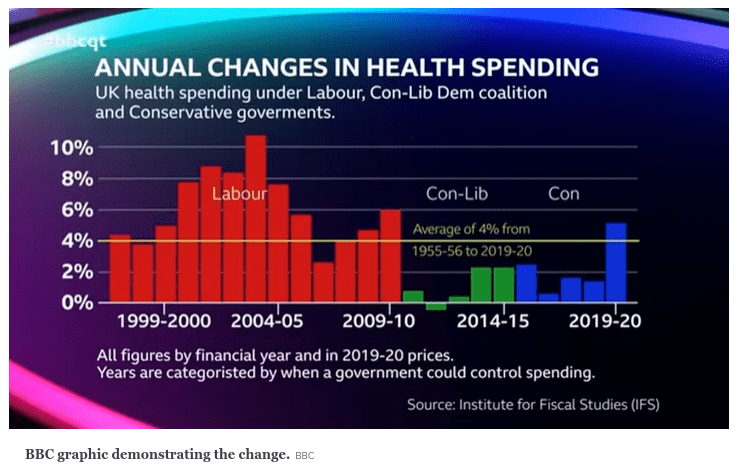
I have no special brief for the last Labour government but the figures show that the NHS was healthier – and nurses ’pay improved – until the Conservatives took over 12 years ago. Since then, funding has not kept pace with the needs of an older population, while a decade of below-inflation pay rises has led to chronic staff shortages.

Paying staff properly is part of the solution and it is nonsense to say that the country can’t afford it. Close down the tax havens, end the scandal of “non-doms”, introduce full windfall taxes on energy firms, tax wealth properly, and you’ll be able to afford proper public services once again.

Another problem throughout the public services is deteriorating buildings. You may have seen Tiverton & Honiton’s MP, Richard Foord, being shown the leaking roof of Tiverton High School on TV – repairs have been promised, but failed to materialise, for years. Likewise in Exmouth, they waited years for the tennis centre roof to be repaired.

The government has been content to allow the public sector to rot, and Conservatives in local councils have connived in this. At East Devon District Council, when a new coalition of East Devon Alliance, Lib Dems and Greens took over two and a half years ago, they discovered just how much the Tories had let things slide.

Nowhere was this clearer than in social housing. The council’s housing stock had been hollowed out by the Right to Buy, since the council didn’t get enough money to replace the homes sold on. Today EDDC has over 4700 individuals and families on its waiting list, and there have been 70 new requests to buy already this year, so even fewer homes will be available. Recently there were 170 applications for a single council home in Seaton.

Under its new leadership, EDDC is at last helping to address this scandal. On the initiative of Seaton councillor Dan Ledger, EDDC is now working to deliver more truly affordable, secure and sustainable homes for the residents who need them most. The first site of 25 units will be delivered late next year in Honiton, subject to planning.

To fully solve the housing problem we need a national scheme to build social housing. Sadly that’s unlikely to happen under the Conservatives, but hopefully 2023 will be the last full year we have to put up with their travesty of a government.

Second home owners in some of Devon’s most desirable hotspots are to be clobbered with a double Council Tax bill. The move has been passed unanimously by councillors in the South Hams, a district which includes Dartmouth, Salcombe, Hope Cove and other sought-after seaside destinations.

More on the state the Tories are in

Rees-Mogg warns Tories face ‘inevitable defeat’ in an election as he mulls leadership bid.

“Jacob certainly would be a popular choice for members and be the right leader to reset the Conservative Party into something more conservative again.” A Tory MP is quoted as saying.

Emily Ferguson inews.co.uk

Jacob Rees-Mogg has said the Conservative Party faces an “inevitable defeat” in the next general election as sources close to the former minister say he is mulling a leadership bid if the party is ousted from Government.

The former Brexit Opportunities minister, an ardent critic of Rishi Sunak, is also understood to have considered running to replace his friend and ally Boris Johnson in the summer leadership contest.

But after 24 hours, Mr Rees-Mogg decided not to run as he was not sufficiently prepared compared to frontrunners Liz Truss and Mr Sunak, who had set the wheels in motion months before Mr Johnson was forced to quit.

A source close to Mr Rees-Mogg told the Daily Express: “Jacob thought about it overnight but decided that his loyalty to Boris meant that he had not put a team in place to be able to win a contest while others had.

“Also, Liz Truss was quick out of the blocks which meant it was difficult for him to run against her.”

The Tory MP for North East Somerset decided instead to back Ms Truss for the leadership. He was joined by other loyalists of Mr Johnson, including former Culture Secretary Nadine Dorries.

Since Mr Sunak replaced her as Prime Minister after she lasted just 44 days in office, Mr Rees-Mogg has proved to be a strident critic of her replacement.

Mr Rees-Mogg heavily criticised Chancellor Jeremy Hunt’s Autumn Statement, accusing him of taking the “easy option” of putting up taxes.

He was critical of freezing income tax bands and said this would be hard on those forced into the 40p tax band.

But despite his own vocal opposition to the PM, he has urged colleagues to remain loyal to Mr Sunak to avoid a landslide election defeat.

He said rebellions are “ill-advised” as they will ultimately tarnish the party’s electability.

Though Mr Rees-Mogg already appears to have conceded defeat at the next election, according to the Express.

Friends of the Brexit minister told the newspaper that he thinks the Tories may even need an election defeat, suggesting if they win “what would they have to offer the country?”

Though former PM Theresa May is more optimistic, and told BBC Radio 4 that while there is “no doubt” the party’s brand took a knock under Ms Truss, Mr Sunak has shown “can turn it round and we can win that election.”

Sources also said Mr Rees-Mogg is mulling a leadership run if the Conservatives lose the next election and Mr Sunak is forced to resign.

He is said to believe “the right needs to have a candidate after what appears to be an inevitable election defeat”, according to the paper.

Mr Rees-Mogg denied the reports, telling i: “Although the current polling is not great two years is a long time and it is simply to early to say.”

Mr Rees-Mogg has long been a controversial figure in the Tory party and any attempt at the leadership would be unlikely to unite the party.

Much of the public view him as out of touch and with anachronistic attitudes on issues such as gay marriage and abortion.

Other Tory MPs expected to run in any fresh leadership race include Penny Mordaunt, Priti Patel, Kemi Badenoch and Suella Braverman.

One MP said: “Jacob certainly would be a popular choice for members and be the right leader to reset the Conservative Party into something more conservative again.”

Others though fear he would “not appeal to a wider audience.”