MP’s summer tour was a chance to hear local concerns

Richard Foord, Tiverton & Honiton MP 

The summer months are a time getting out to enjoy our beautiful countryside with family and loved ones. But as your Member of Parliament, the summer is also a useful time for me to take time far from Westminster, beyond Uffculme where I live – to spend time in the towns and villages in our corner of Devon.

That’s why, in addition to the various meetings and local community events I attended, I also launched my first ever summer tour. This saw me visit 36 different places across five weeks to host a series of open town and village hall meetings. I also took a break in the tour to visit the Honiton Police Station front desk that will open next year, thanks to your submissions to a Devon and Cornwall Police online poll.

Many people took up the opportunity to let me know frankly and directly about local, national and international concerns – what they and you would like to see me arguing for in Westminster. I am hugely grateful to the hundreds of people who turned out and for the many positive discussions we had.

Several issues came up time and again – the pressure on our health services and local schools; the difficulties accessing special educational needs provision; and the outrage that we rightly share about the scandal of the way we taxpayers and billpayers have been ripped off by water companies.

The meetings also offered a forum to discuss very specific local issues, such as the need for more social housing, the scale of potholes, and poor-quality broadband provision.

There are so many issues which need addressing. This has been caused in part by this Conservative Government repeatedly squeezing local authority finances – which has left many Councils struggling to deliver our core services. There also seems to have been a lack of focus on fixing the small things, which can grow and spread if not kept in check.

The job of a good MP is not simply to proffer our own opinions. It is to listen and act on what we hear. This autumn, if you tune into Parliament on your TV, I hope that you will see and hear me raising some of the concerns that you let me know about this summer.

Lords vote tomorrow: River quality ‘at risk’

Letter in today’s Times

Sir, Tomorrow the House of Lords will vote on government proposals to overturn nutrient neutrality laws, the last legal line of defence for precious river habitats. Nutrient neutrality rules are part of the habitats regulations, the UK’s strongest nature protections. Scrapping them would be the worst unwinding of environmental law for decades.

The rules stop pollution from new developments near sensitive rivers. The weak, non-statutory measures proposed in exchange will fall short and more habitats will be harmed.

The existing rules do not stop housebuilding, they require housebuilders to mitigate impacts. Where there is a short-term shortage of mitigation credits, the government could speed up development without weakening environmental law. Unfortunately, the government did not consult before bringing forward proposals in the dying days of the Levelling-Up and Regeneration Bill.

We urge peers to vote against these damaging proposals, which are contrary to government promises to restore rivers and stop the decline of nature by 2030.


Hilary McGrady, director-general, National Trust; 

Mark Lloyd, CEO, Rivers Trust; 

Darren Moorcroft, CEO, Woodland Trust; 

Craig Bennett, CEO, Wildlife Trusts; 

Katie-Jo Luxton, executive director, global conservation, RSPB; 

Toni Pearce, director of advocacy, WWF-UK; 

Jamie Cook, CEO, Angling Trust; 

Richard Benwell, CEO, Wildlife & Countryside Link

Planning applications validated by EDDC for week beginning 28 August

(Apologies these are a little later than usual) – Owl

UK building group Vistry to focus solely on social housing

The British housebuilder Vistry is to shift its focus solely to social housing as soaring mortgage costs hurt sales completions across its wider business.

So it can be done! – Owl

Mark Sweney www.theguardian.com 

The strategic shift was welcomed by investors, which sent shares in the company – which acquired the affordable housing specialist Countryside Partnerships last year – soaring by almost 14%, making Vistry the biggest riser on the FTSE.

Vistry said streamlining its operations would result in some job cuts, while promising investors a £1bn windfall over the next three years as a result of the strategic shift.

It said the UK was facing a “chronic shortage” of affordable houses.

“The scale of the social need for affordable mixed-tenure housing across the country continues to increase,” said the Vistry chief executive, Greg Fitzgerald. “Delivering on the acute social need for housing across the country and increasing the availability of affordable, sustainable homes is at the core of the group’s social purpose and vision.”

The housebuilder reported an 8% fall in pretax profits to £174m in the first half of the year, despite a 32% increase in completions.

Vistry said it continued to see “good demand” for affordable housing from bodies including local authorities. By contrast, private sales had slowed further since June, the company said, as mortgage costs continued to soar for prospective homebuyers.

“The step-up in mortgage costs and increased macroeconomic led to a drop-off in completions to the open market,” the company said. “In particular, we saw a significant decline in completions to first-time buyers whose ability to purchase have been most affected by the rate increases.”

As mortgage approvals and house prices continue to fall at the fastest rate since 2009, the company said it intended to merge its affordable and private housebuilding operations by the end of this year, to focus on its “high-return, capital-light, resilient” affordable housing model.

Vistry indicated that the merger of its businesses would result in job cuts, with plans to launch an employee consultation to reduce the total number of regional business units it operates from 32 to 27.

The company laid off 4% of its more than 3,000 staff when it completed its £1.27bn acquisition of Countryside Partnerships last year.

Vistry reiterated its full-year guidance of achieving £450m in profits this year.

Instead of moaning, Simon Jupp could do something positive on car park charging

Cllr. Mike Goodman submitted a request to review car parking charges at last week’s EDDC Scrutiny Meeting (which he chairs).

He claimed that they had doubled in 2022 making them the most expensive in the South West.

On cue, Simon Jupp launched forth on twitter about the impact of parking charges imposed by the “LibDem – run EDDC” (see below).

The claims made by Mike Goodman are misleading (see. Cllr Joe Whibley’s reply below.)

Conservative controlled Dorset unitary Council has particularly high charges, £3/hour, higher than East Devon!

Here is what Member of Parliament, Simon Jupp should be doing.

It is a little known fact that on-street parking (controlled by teetering on the brink of bankruptcy Devon County) is VAT free, whilst off-street parking (“Balanced Budget” EDDC’s only option) is subject to VAT.

Simon Jupp, PPS to the Secretary of State for Transport no less, would do us all a favour if, instead of moaning, he lobbied his boss for VAT on off-street parking to be removed. – Owl

Beware the small print, but can you spot it?

Can you spot the (very) small print declaring who is actually publishing the fake “local paper”, The East Devon Echo?

Let Owl enlarge it for you:

Could this be Cllr. Mike Goodman, chair of EDDC Scrutiny Committee?

He discloses that he is a member of the Conservative Party but Owl can find no mention that he has ever disclosed that he publishes a local newspaper on behalf of former journalist Simon Jupp.

As chair of the Scrutiny Committee is this consistent with the Nolan Principles of: Selflessness, Integrity, Objectivity, Accountability, Openness, Honesty and leadership?

Another own goal for the Tories! – Owl

Press Watchdog Writes to Conservatives and Party Chairs Over ‘Misleading’ Fake Newspapers such as the “East Devon Echo”

The independent press regulator has written to the UK’s political parties – including Conservative Party chair Greg Hands MP – to oppose the use of party leaflets dressed up to look like newspapers. 

As Owl reports elsewhere, the publisher of the new “fake” local newspaper hereabouts, the “East Devon Echo”, is none other than the Tory chair of EDDC’s Scrutiny Committee, Cllr Mike Goodman.

Does this demonstrate the maturity and wisdom one might expect from someone in such an important role? – Owl

Josiah Mortimer bylinetimes.com 

Lexie Kirkconnell-Kawana, CEO of industry watchdog Impress, has written to representatives of each major political party to implore them to review this practice amid the “crisis of trust” that journalists and politicians face – and the negative impact it could have on democracy.

A spokesperson for the press standards body, which largely represents smaller and independent news organisations, said: “With an election just around the corner, this is a practice that should be addressed as soon as possible.”

Byline Times has seen dozens of examples of fake newspapers issued from Conservative Party HQ and distributed across the country in recent weeks – with many failing to identify which party is sharing the material on the so-called ‘imprint’ at the bottom of the publications. 

Don’t miss a story

The vast majority of voters believe fake newspapers being promoted by political parties – sometimes without making clear who they’re from – should be banned. 

Recent polling for this newspaper by independent pollsters Omnisis found that 62% of people in Britain think that the fake newspaper tactic should be banned if they do not make clear which party is behind it. 

The figure rises to 65% among Conservative voters, the same as for Labour voters. Liberal Democrats, who also have been known to use fake newspapers for election material, are less in favour of a ban (55%). 

The figure rises significantly among over 75s, some of whom may be more vulnerable to misleading campaign materials: 75% back a ban on the practice. And opposition sits at 71% among those with no formal qualifications.

Readers have responded with anger to the leaflets over the past few months. One wrote: “Many people will be fooled by this, especially older people who I would imagine tend to read the local papers more are also less likely to notice the microscopic small print in hard to find places.” Another branded it “Tory marketing deliberately disguised as independent news”, while one recipient dubbed it “dirty tricks” campaigning.

Some voters have been posting back fake newspapers sent by the Conservative Party to their head office – in a bid to cost the party in postage fees. One voter told Byline Times they had posted approximately half a kilogram of takeaway menus and junk mail to CCHQ, with a handwritten note saying “No more fake news please”. 

Legal Loophole

The ruse has previously been condemned by industry body the News Media Association among other press groups. But despite being discouraged by the watchdog, the Electoral Commission, it is not against the law. 

A spokesperson for the Electoral Commission told Byline Times recently that “generally speaking,” election materials require the name and address of the printer and promoter – but not the political party. 

Moreover, the candidate rules setting out transparency for who is publishing campaign materials don’t apply yet, as the general election date has not been announced. 

But the Electoral Commission figure added: “We encourage all parties and campaigners to include imprints on all material, to provide voters with transparency.”

The tactic of publishing fake papers was used successfully in Uxbridge and South Ruislip last month, with the party’s ‘Uxbridge and South Ruislip People’ urging people to “Stop ULEZ” (Labour London Mayor Sadiq Khan’s Ultra Low Emissions Zone expansion). The fake magazine mirrored the title of the local council-run Hillingdon People, which is meant to be apolitical. 


Copycat Spat

Industry title Press Gazette reported that the Conservative Party was forced to apologise to the publisher of several Midlands newspapers after it distributed newspaper-style campaign literature in the area under trademarks owned by the company.

The Conservatives said it was a “genuine mistake” that three pamphlets resembled editions of MNA Media’s Chronicle Week. The party agreed to make a donation to charity as part of its apology, the title reported. 

The Midland News Association said the leaflets “were designed to mimic the style of a newspaper and they caused confusion among many who received them, who believed they were reading their usual Chronicle”.

However, they do not appear to have apologised after High Peak MP, Conservative Robert Largan, distributed a “newspaper” titled the High Peak Reporter – despite the name of the title being owned by an actual newspaper group, Quest Media Network. 

Chris Bird owns Quest Media Network, which owns the brand title High Peak Reporter, and told the Prolific North outlet: “I guess we should be flattered by this stunt, but we are not. Would Mr Largan have tried this with the Daily Mirror or Daily Telegraph? Absolutely not, because that would have cost him and his party a lot of money for the blatant breach.” 

And Lincoln Conservative MP Karl McCartney issued a leaflet to residents branded as the ‘Lincoln Chronicle’ – the same name as a weekly newspaper in the seat that was closed 15 years ago, and which many residents remember. The move was condemned by a former photographer for the real paper, Dr Mike Maloney OBE, one of the UK’s most decorated photographers. 

He told Byline Times that the fake newspaper was “typical of politicians”. He added it represented the idea of “never letting the facts interfere with a good story”.


Letter to Conservative Party chair

Dear Greg Hands, trust in journalism has reached a crisis point. Our research shows that less than half of the public trust news publishers, while journalists themselves are trusted by just 38% of the public; politicians are one of the few jobs to rank lower.

For democracy to flourish, it is essential that we have a thriving, healthy and trusted news media ecosystem. To achieve this, collaboration and transparency is needed between news organisations, the public and politicians.

It is entirely disheartening then to see the latter groups continuing to engage in the practice of distributing campaigning materials under the guise of local newspapers, misleading voters into believing what they are reading is the work of local journalists from independent publications.

Often, these are accompanied by either no clarification of their actual purpose or by only the smallest clarifying statements.

We are therefore asking that the Conservative Party, and all political parties, carefully review this practice among their candidates moving forward and the negative impact it will have on politics, journalism, and democracy.

If you do insist on continuing to produce these materials, we implore you to seek out rigorous and independent press regulation for them to ensure they meet robust standards.

Your sincerely,

Lexie Kirkconnell-Kawana, Impress CEO

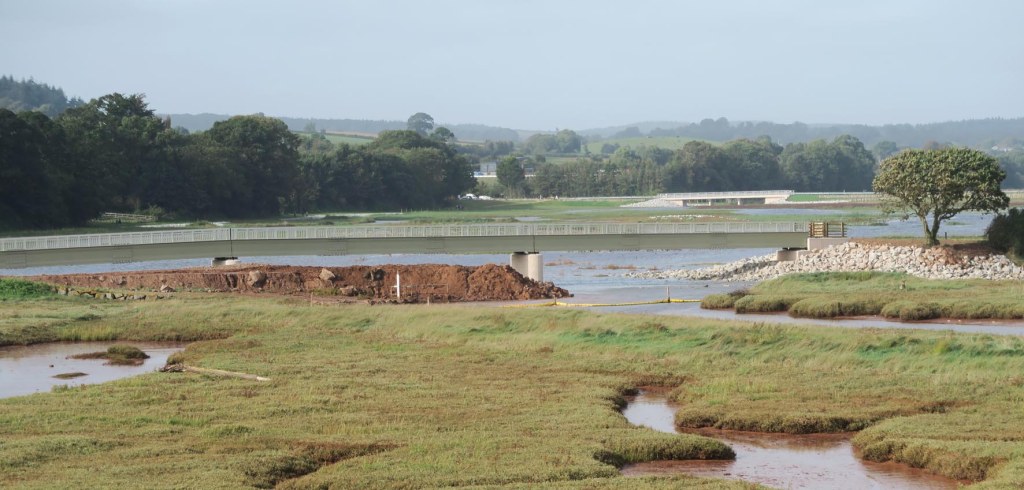
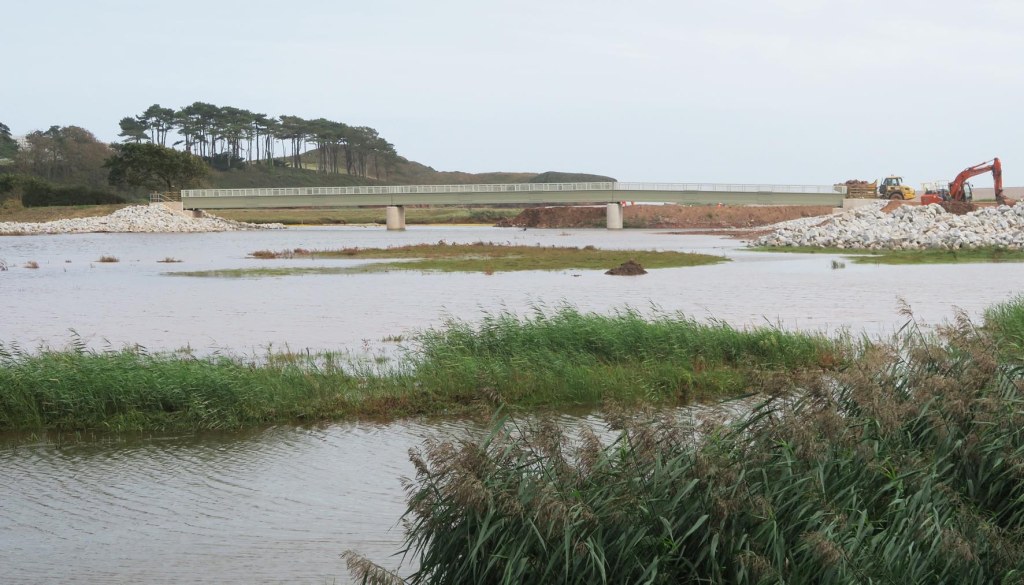
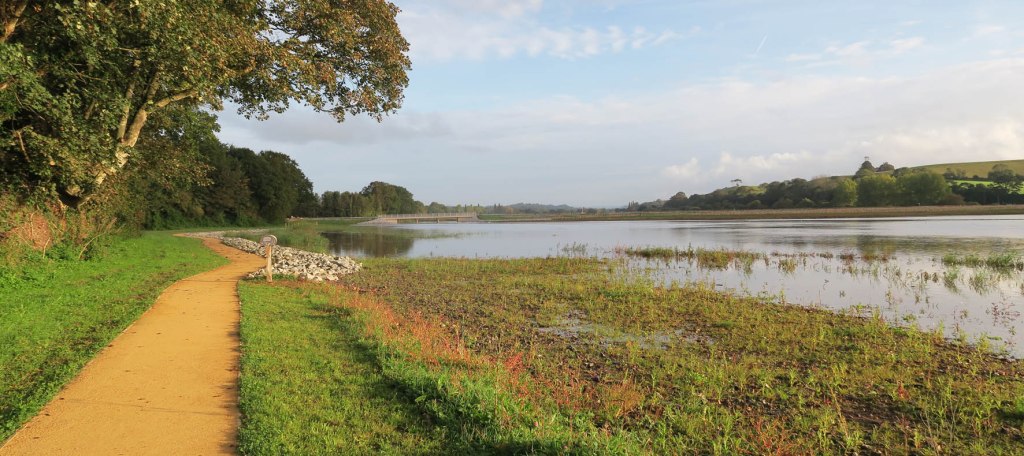
Lower Otter Valley footbridge – the final lift

The last section of the footbridge was hoisted into place soon after 8 am on Saturday, catching out many on social media who expected it to occur around 9 am.

Again Owl has been sent images.

Owl understands that the bridge will not be open for a few months whilst a 70m section of the 200 year old embankment is lowered and removed to allow the saline tidal water gradually to fill the reconnected estuary.

St Ives Mayor resigns from the Tory party as membership was ‘a hindrance’

The Mayor of St Ives resigned from the Conservative Party at a meeting of the town council on Thursday, September 7. Johnnie Wells, who has been a Tory councillor since 2020, says being a Conservative “was becoming an issue”.

Lee Trewhela www.cornwalllive.com

Mr Wells – who is a town councillor in the same ward as Cornwall Council’s Tory leader Linda Taylor – said: “I just feel that for me, in St Ives and for Cornwall, an independent role is better. Being a Conservative was becoming an issue. It was putting up more barriers than it was taking down. People would kind of shut off to you pretty quickly, so it was becoming more of a hindrance than a help.”

Mr Wells, who is a web designer by trade and represents the Lelant ward as a councillor, said that he had always voted Conservative and has been a member of the party since becoming a councillor three years ago. He said Cllr Taylor had tried to talk him out of resigning “a little bit”. The mayor was unsure if he’d vote for the party again.

Of his resignation, he added: “I’ve been thinking about it for ages really. You look at both main parties and you don’t really have any good direction. The Conservatives seem to feel like ‘we’re out of here anyway whatever we do’ and Labour are like ‘we’re going to get in whatever we do’ so I’ve become really disillusioned by party politics.

“Then you look around Cornwall and I feel like Cornwall Council aren’t pulling their weight like perhaps they should do. The general spiral is getting worse and worse in many areas and I don’t see how we’re going to break it doing the same as we’ve always done.

“I’m looking for change really. There’s that saying ‘if a change doesn’t feel like a catastrophe it’s probably not a big enough change’. That’s where we’re at and certainly in St Ives we’re really making changes.”

Mr Wells, who has been mayor of the town since May, said: “I don’t know what I’ll vote at the next election – you’re in the position of voting for the least worst person. It’s a horrible place to be and that’s what I want to change. I want people to vote for people they feel are going to achieve things.

“I think we have a problem, especially in local politics, that people are very afraid of upsetting other people to the extent that they don’t do anything because no change is easier than upsetting some people. We’ve got to have change, we’ve got to be moving forward.”

He cites the short-term lets of Airbnbs being a particular problem in St Ives, which he feels the government should have addressed ten years ago and hasn’t. He believes the housing problem in Cornwall isn’t down to second homes but people buying a house and letting it as a business “35 weeks of the year”.

Mr Wells added: “The Digey in St Ives [one of the town’s most iconic historic streets] is a case in point – 80 per cent of the houses along the Digey don’t pay anything into either the council tax or the business rates pot; it’s a nightmare.

“Another thing that concerned me with the Conservatives was the fact they come up with all these great green policies and then they just wind them back to get them through the system. The problem with the environment is you can’t wind it back – it’s a pressing issue which we all need to take some kind of ownership of.”

He said Cornwall Council’s Conservative leader Linda Taylor tried to talk him out of resigning from the party “a little bit”. “She understood the reasons,” he said. “She was one of the first people I went to to tell as she was helpful in getting me on board in the beginning, so I felt the right thing was to speak to her about it first.”

When Mr Wells became a councillor in 2020, the Tory group was the main political group on the town council – now it’s down to one councillor. He will remain in the civic role of town mayor and continue representing Lelant as an independent councillor.

Today’s crisis: WESTMINSTER IN SHOCK

MPs return to Westminster after the weekend in a state of shock at news of an alleged spy in their midst. A ministerial statement or urgent question is all but certain following the Sunday Times’ revelation that a parliamentary researcher with links to senior Conservatives had been arrested on suspicion of spying for China. The news overshadowed Prime Minister Rishi Sunak’s return from India, where he attended the G20 — the PM will make a statement on the outcome of the summit this afternoon.

The alleged spy has links to hawkish Conservative MPs who are privy to classified information including Foreign Affairs Committee Chair Alicia Kearns and Security Minister Tom Tugendhat.

Only the start: Could there be more to come? The Telegraph reckons intelligence services will “unmask” more Chinese spies in coming months, raising the prospect that a “network” of spooks is operating out of Westminster.

Source London Politico Playbook

Pensioner poverty: fear of rise over decades as UK under-40s wealth falls

Campaigners have sounded the alarm about a potential increase in pensioner poverty in Britain over the coming decades after it emerged that the share of wealth held by people under 40 has fallen sharply amid a growing intergenerational divide.

Hilary Osborne www.theguardian.com 

Data from the International Longevity Centre (ILC) thinktank shows that in 2010-11, under-40s made up just over half of the population and between them held £7.53 of every £100 in wealth.

While that figure was low, a decade later it had plummeted to £3.98. Over the same period, the proportion of under-40s fell from 50.6% to 49.5%.

Those under-40s have already been identified as facing the biggest hit from rising mortgage rates, and last week a study by the financial advice firm Hargreaves Lansdown found that almost a third of 18- to 34-year-olds had stopped or cut back on their pension contributions in order to save money.

The ILC data is based on analysis of figures from the Office for National Statistics, and the wealth being measured includes the value of property, private pensions, savings and investments, and any other valuables.

During the period the figures cover, all age groups had to contend with a squeeze on wages and financial strains caused by the Covid pandemic, but older generations have seen their wealth grow.

Property ownership is the key driver for the gap, with under-40s more likely to be renting for longer than previously or owning homes that have not gone up in value as much as larger properties.

The mean net property wealth in this group fell from £13,967 in 2010 to £11,450 in 2019 (although the median was £0 in both years), while in the 40-64 and 65-plus groups there were large rises.

The older groups also recorded sizeable increases in pension wealth. The figures suggest a growing threat of pensioner poverty if current trends continue.

David Sinclair, the chief executive of the International Longevity Centre UK, said: “Younger people are already not saving enough to enjoy a decent lifestyle as they age, and our latest analysis shows that younger generations will have even fewer assets available.

“Pensioner poverty is already a significant issue, and it will grow if we don’t act now. We know that future retirees won’t be able to rely on housing wealth and many will need to spend money on rent into retirement.

“It is crucial that we address these challenges head-on and develop comprehensive strategies to ensure that every generation has the support they need to be financially secure right across their lives.”

The research also looked at the strains on finances that people older than 40 could face in the future. The ILC said the number of private renters aged 65 and over was projected to double by 2046, to reach 12% of households in that demographic.

Renting a property will mean a strain on incomes that those who own a home outright will not face.

The ILC’s research into longevity is being backed by the insurer Aviva. Doug Brown, the chief executive of Aviva UK & Ireland Life, said: “Financial pressures are growing and affecting all generations; however, the youngest workers are in a particularly vulnerable position when it comes to saving for their retirement. With lower overall wealth today than the equivalent generation had a decade ago, this is concerning.”

Revealed: covert deal to cut help for pupils in England with special needs

The government has quietly signed a contract targeting 20% cuts to the number of new education plans for children with special educational needs and disabilities (Send) to bring down costs, the Observer can reveal.

Chaminda Jayanetti www.theguardian.com

Then junior education minister Claire Coutinho – recently promoted to the cabinet as energy secretary – subsequently told MPs that no targets were in place.

The cuts target has emerged as councils across England grapple with huge financial deficits on Send budgets caused by a combination of rising demand and longstanding underfunding. Part of the government’s response has been the launch of the Delivering Better Value in Send programme (DBV), which supports 55 councils to bring down their large Send budget deficits through measures such as early intervention and teaching children with special needs in mainstream schools.

In June 2022, the Department for Education (DfE) signed a £19.5m contract with consultancy firm Newton Europe to design and develop the DBV programme. The deliverables section of the contract states that “it is the intention” of the signatories that the 55 councils’ budget management plans, implemented under the DBV programme, will help achieve “impacts” including “reduced cost pressure … as a result of reduced growth in number of EHCPs [education, health and care plans], targeting at least a 20% reduction in new EHCPs issued”.

The contract states that the “impacts” would be measured by monitoring “EHCP growth rates” and the state of councils’ education budgets.

EHCPs set out the education provision that children with significant needs must receive by law, although cash-strapped councils often fail to meet these requirements.

Recent years have seen rising numbers of new EHCPs being issued for reasons including failings in the children’s mental health system, non-inclusive approaches adopted by results-driven mainstream schools and improved identification of special needs such as autism.

Because EHCPs often require specialist education provision for children, some of which is only available from expensive private special schools, rising EHCP caseloads have meant higher costs for councils, with government funding not keeping pace. As a result, ministers and council bosses have looked for ways to reduce the growth in EHCPs, sparking fears among parents that Send children might be denied the support they need.

Gillian Doherty of campaign group Send Action said: “Aside from potential legal implications, this action will simply push the funding problem down on to mainstream schools, which are already in a state of acute financial and recruitment crisis.

“This is irresponsible behaviour that will seriously undermine inclusion. It will also result in a two-tier system that severely disadvantages disabled children in local authorities with financial difficulties.”

In May, nearly a year after the contract with Newton Europe was signed, Coutinho appeared before MPs on the education select committee to answer questions about the government’s Send and alternative provision (AP) improvement plan, which includes the DBV programme.

She told the committee she felt the planned reforms would reduce demand for EHCPs but denied there were any targets. “This is not about targeting a particular reduction; it is just about improving the system so you can get better outcomes for Send people,” she said.

DfE civil servant Alison Ismail told the session that while improved mainstream and specialist education provision should lead to decreasing need for EHCPs, “we were not projecting to a particular target as such”.

Tania Tirraoro, co-director of information site Special Needs Jungle, said: “A senior DfE Send official repeated the assertion to me just this week that it wasn’t about cutting EHCPs. Either the DfE’s left hand doesn’t know what its right hand is doing, or families are being lied to. It’s right there in black and white. The DfE’s Send and AP improvement plan really is about significantly reducing EHCPs. But the law is intact, and I urge families to fight any effort to reduce statutory provision at the Send tribunal.”

Helen Hayes, Labour’s shadow children and early years minister, said: “Ministers need to be honest – they cannot be saying one thing to parents and another behind their backs.

“Labour will identify children’s needs earlier so that intervention supports child development from a young age, which is better for individuals, their families and wider society.”

The Newton Europe contract also aims to reduce permanent exclusions and teach more Send children via mainstream schools, “targeting at least a 20% reduction in placements into independent schools and 2% reduction in placements in special schools”. This would be measured by monitoring attendance rates and the “rate of pupils with EHCP in mainstream settings”.

The DfE said the targets were indicative rather than legally binding on Newton Europe and had not been communicated to councils. However, the targets were nevertheless included in the contract Newton Europe signed that underpins its work to design and develop the DBV programme.

A DfE spokesperson said: “The DBV programme aims to help local authorities provide more effective Send services by meeting the needs of children and young people at an early stage and with the right level of support. Naturally, we’d expect to see a reduction in the number of EHCPs issued as children’s needs are met earlier.”

Newton Europe did not respond to a request for comment.

Revealed: six more councils fighting bankruptcy risk

Six more local councils are at risk of going bust before the next general election, leading local government sources have told i.

Bradford, Devon, Guildford, Hastings, Kent and Southampton have been named as being in danger.

[Article also includes Claire Wright comments on Simon Jupp’s “laughingstock” social media comment.]

David Parsley inews.co.uk

Birmingham City Council – the largest local authority in Europe – declared itself effectively bankrupt last week after being hit by a £760m bill to settle historic equal pay claims.

So squeezed are local authority finances that several more face the prospect of following it, and i has been told that there are at least six that could do so within a year.

“We haven’t seen the end of councils going under,” said a leading local government figure. “There’s at least half a dozen that could be issuing section 114 notices in the next year, with some doing so within months unless they can turn things around.”

Section 114 notices are issued by councils, as Birmingham did last week, when they are effectively bankrupt. It means no new expenditure is permitted, with the exception of statutory services including safeguarding vulnerable people.

The six councils most likely to be next in issuing a section 114 notice, according to the local government source, are Bradford, Devon, Guildford, Hastings, Kent and Southampton.

A recent report from Devon County Council’s legal and finance directors described the Tory-run council’s position as “very challenging” and identified “a number of fundamental issues” prompting an “urgent need” for a high-priority review.

The report warned that the council faced a “material threat of a section 114 notice” because of its growing cumulative overspend on special educational needs and disability services, which has risen to nearly £130m and is projected to increase to £153m by March next year – more than the county council has in its financial reserves.

Following the collapse of Labour-run Birmingham, East Devon Tory MP Simon Jupp said: “If Labour can’t run a council, they can’t be trusted with our country.”

Claire Wright, his independent rival for the constituency at the December 2019, responded: “Imagine our MP’s shock when he realises Conservative-run Devon County Council is on the verge of bankruptcy.”

Devon County Council did not respond to i’s request for comment.

In Kent, where 61 of the 81 county councillors are Conservatives, the authority’s external auditor has warned that it faces a potential 114 notice unless it makes savings of £86m by the end of its current financial year next March.

The report from Grant Thornton said Kent County Council was in a “perilous financial position” due to inflation and a growing demand for its services.

Kent council did not respond to i’s request for comment.

In Guildford, the borough council’s chief finance officer has warned that it could face a section 114 notice because of rising interest rates which are having an impact on the authority’s payments on its £300m debt. The council was controlled by the Conservatives until 2019. The Liberal Democrats won a majority in May.

In a joint statement, finance director Peter Vickers and Guildford’s chief executive Tom Horwood said that due to the council’s debt financing concerns, “a section 114 notice will be reconsidered in time for the October council meeting”.

A spokeswoman for Guildford Borough Council said: “We are working at pace and have already identified significant savings. Our Financial Recovery Plan has been supported by councillors and will be going for formal approval soon. We’re working hard to avoid the need for a Section 114 notice.”

Of the remaining three councils, Bradford and Southampton are controlled by Labour, while no party in Hastings has overall control but Labour has just under half of the borough’s councillors.

Bradford Council has warned its reserves are “close to exhaustion” after £30m was required to balance the budget in current financial year.

The council is also forecast to overspend its £453m net revenue budget for 2023-24 by £13.8m, according to early estimates.

In a report to councillors, Bradford’s director of finance Christopher Kinsella said: “Many councils are experiencing similar pressures across the country as a result of systemic funding issues, and there are numerous councils that are nearing s114 notices. This is something that is without historic precedent and is reflective of a sector in dire need of support.”

Bradford Council did not respond to i’s request for comment.

In Hastings, the rise in a requirement for temporary accommodation has pushed the council into an “incredibly precarious” financial position.

The authority is experiencing “spiralling costs” in homelessness and reported an overspend of £2.4m in this area for financial year 2022/23.

Simon Jones, deputy chief finance officer, warned that if the position “is not immediately addressed” and the costs continue to grow at the current rate for temporary accommodation, the council “will have no option other than to issue a section 114 notice”.

Paul Barnett, leader of Hastings Borough Council, told i: “The ever-increasing costs of temporary accommodation means that to provide housing for everyone we have a duty to house has increased from £730,000 in 2019 to £4.5m for 2022/23 – a rise of more than 400 per cent – and it is predicted to rise to £5.6m for 2023/24.

“Without the cost of temporary accommodation and housing, the council’s budget for 2022/23 shows an underspend of £1m.

“Because of the huge increases in housing costs, there are going to be difficult decisions that have to be made across the whole council as we continue to try to balance our budget.”

In Southampton, the city council has commenced “informal discussions” with the government over its challenging financial situation.

The council was forced to draw down £11.38m from reserves to balance the authority’s year-end deficit the year to the end of last March.

A report presented to councillors warned that a failure to take actions during the current financial year “would lead to a large forecast overspend, which would mean the council being financially unsustainable and the issuing of a S114 notice”.

Southampton council did not respond to i’s request for comment.

The Local Government Association (LGA) has estimated that local authorities have been hit by a £15bn, or 60 per cent, real-terms reduction to core government funding between 2010 and 2020.

Shaun Davies, chairman of the LGA, said: “Councils in England face a funding gap of almost £3bn over the next two years just to keep services standing still.

“Councils’ ability to mitigate these stark pressures are being continuously hampered by one-year funding settlements, one-off funding pots and uncertainty due to repeated delays to funding reforms.

“The Government needs to come up with a long-term plan to sufficiently fund local services. This must include greater funding certainty for councils through multi-year settlements and more clarity on financial reform so they can plan effectively.”

The Department for Levelling Up, Housing, and Communities did not respond to a request for comment.

Six Devon beaches hit with pollution warnings after overnight storms

In addition the Environment Agency has an advisory for Budleigh Salterton

Paul Greaves www.devonlive.com

Pollution and sewage warnings have been issued for six of Devon’s beaches after heavy rain and thunderstorms hit the region overnight. Beachgoers are being warned to stay out of the water today (Sunday, September 10) due to the alerts.

An interactive map by Surfers Against Sewage (SAS) has highlighted the beaches currently affected. It shows where sewage was discharged in the past 48 hours.

The beaches impacted are Teignmouth Holcombe, Torre Abbey and Meadfoot in Torquay where storm sewage has been discharged from a sewer overflow.)

There are also warnings on two beaches in the South Hams. These are Thurlestone South and Hope’s Cove where, according to SAS, “there are two sewer overflows which discharge into the sea which can lead to a temporary drop in bathing water quality especially after heavy rainfall.”

There is a further warning in place for Plymouth Hoe East.

When sea water is polluted with raw sewage discharges, which water companies are legally allowed to do after storms to avoid sewage backing up into people’s homes and businesses, there is a risk of becoming sick with potentially harmful bugs like e-coli.

The warning service alerts potential swimmers and surfers to instances when sewage overflow mechanisms have been opened to avoid being overwhelmed. This leads to surface run-off and household sewage being sent directly into the sea and waterways.

The six alerts are confirmed on South West Water’s interactive map.

Fees go up as Teignbridge council grapples with inflation

It will cost more to be buried, sail a model boat or keep a dangerous animal in Teignbridge as the local council puts up dozens of its fees.

Guy Henderson, local democracy reporter www.radioexe.co.uk 

The council says it needs to bump up some of its charges as a way of coping with financial pressures and high inflation. It last put up its fees in February, and normally only puts them up once a year.

But members of the council’s executive committee will hear at their next meeting on Tuesday, 12 September that an extra round of mid-year increases is necessary.

Many of the council’s hundreds of fees for its services will stay the same, but there will be increases in areas such as parking charges.

The cost of being buried in Teignbridge will rise from £882 to £961, while the price of sailing a model boat on Newton Abbot’s Decoy Lake – or fishing in it – will rise by a pound to £10.88 a day.

A licence to keep a dangerous animal goes up from £125 to £135 and there will also be increases in the costs of collecting commercial waste and supplying extra bins.

Parking charges will increase to different fees in different places across the district, but an all-day ticket for a spot in the centre of Newton Abbot will rise from £5.70 to £6.20. Half an hour’s parking will go up from 90p to £1.

Chief finance officer Martin Flitcroft will tell the meeting that the mid-year increase in fees and charges will provide the council with £145,470 in extra income this financial year, and an ongoing increase of £346,050 a year.

The figure represents an increase in income of just over three per cent a year.

A report to the meeting outlines some of the financial pressures on the council.

It says that a likely pay rise for council employees is going to be significantly higher than anticipated, and income from recycling sales has reduced as prices have dropped.

Inflation has been higher than anticipated and there are more costs coming from other areas including leasing a new refuse vehicle fleet.

However, many fees including beach huts, boat storage, taxi licensing and a game of golf on the Shaldon pitch and putt course are remaining the same.

What went wrong at UK government’s offshore wind auction?

Did “Spreadsheet” Sunak miscalculate or does he really not care about green investment and reaching “net zero”? – Owl

Jillian Ambrose www.theguardian.com 

Britain’s climate ambitions have suffered a blow after no new offshore windfarms were secured in the government’s latest clean energy auction despite there being the potential for 5 gigawatts of projects – enough to power 8m homes a year.

While it did result in contracts for a total of 3.7GW of solar power, onshore wind and tidal power projects, industry sources said the “catastrophic outcome” for the offshore wind sector put Britain’s green energy targets at risk and failed to deliver new jobs and lower energy bills.

So how did things go so far wrong for Britain’s most successful clean energy sector?

Why did no offshore wind developers bid?

None of the UK’s biggest offshore wind developers took part in the auction after many complained to government ministers and officials that the maximum price had been set too low.

The auction awards a 15-year contract to the clean energy projects that bid the lowest price for the clean electricity they go on to generate. This has helped to drive down the price of renewable energy, but in recent months high inflation has caused costs across the industry to rise.

Offshore wind developers warned that the auction’s maximum price, which was similar to previous auction rounds, was now too low for their projects to make any money.

They had called on the government to raise the auction’s starting price, arguing that even at higher costs their electricity would be cheap enough to help lower household energy bills. However, industry sources said ministers and mandarins “ignored” the warnings.

Why is offshore more expensive now?

Until recently, offshore wind was considered Britain’s cheapest source of electricity. In the government’s previous clean energy auction, developers bid £37.35 per megawatt hour (MWh) to generate offshore wind power.

But since then the industry has faced a double economic blow that has compounded costs. First, the cost of building and installing wind turbines has rocketed because the price of materials has risen sharply owing to the energy crisis. Then, the cost of borrowing money to finance the multibillion-pound projects has climbed in line with global interest rates.

The Swedish energy company Vattenfall estimates that in total its costs have increased by about 40%. It said earlier this year that it would cease working on the multibillion-pound Norfolk Boreas windfarm because rising costs meant it was no longer profitable.

So what might a fair price look like?

The cost of offshore wind has tumbled since the government’s first contract auction in 2015, when offshore windfarms secured a guaranteed price of £155 per MWh in 2012 money – the benchmark for these contract auctions. By last year’s auction that had fallen to the equivalent of £37.50 per MWh.

This year’s starting price for the auction was slightly higher at £44 per MWh in 2012 money, narrowly above the previous winning bids but too low for an offshore project built under today’s cost pressures.

That rate works out at about £60 per MWh in 2023 prices. Given the current wholesale market price for electricity is higher than £80 per MWh, the government had significant leeway to offer a more generous level and still get electricity cheaper than today’s wholesale cost.

What is at stake?

The auction’s outcome risks creating a domino effect of failed climate targets, billions in missed investment and higher energy bills.

First, it poses a significant risk to the UK’s plan to triple Britain’s offshore wind capacity to reach 50GW by 2030, or enough to power the equivalent of every home in the UK. This in turn risks derailing Britain’s plan to establish a “net zero” electricity system by 2035. Finally, the UK’s legally binding pledge to be “net zero” across the economy could also become impossible to reach by 2050.

In the shorter term there is likely to be a blow to the UK’s green economy by upending the offshore wind supply chain, which was expected to create more than 100,000 new jobs by the end of the decade.

Finally, UK consumers are likely to have higher home energy bills. The industry trade group, Renewable UK, said the lost windfarms could have saved consumers £2bn a year compared with the cost of using electricity from gas power plans – equivalent to £24 on the average annual household bill.

Why did the government fail to act?

One senior industry source claimed that government officials had not fully grasped the scale of the cost increases faced by offshore wind developers and had suspected that companies were “crying wolf” in order to extract higher prices from the auction.

“The problem with that, if you remember the fairytale, is that there really was a wolf in the end. The government officials now have their wolf,” the source added.

Ministers are also likely to have been wary about increasing the size of the subsidy contracts, which are paid for through energy bills, while the energy crisis continues to pile pressure on struggling households.

What can the government do next?

The industry has called on ministers to adjust the auction rules in time for next year’s round of bidding so that offshore windfarms are able to compete.

RenewableUK said it would need “urgent action” to fix the investment framework, including a reform of the contracts and more support for the supply chains affected by the failure of this year’s auction.

It has also suggested other “fiscal measures” to attract clean energy investment into the UK in the face of global competition.

Councils of all colours are going bust because their funding systems are rotten

Mismanaged finances are bad news, but worse is the bankruptcy of ideas of how to reform local government finance.

Paul Waugh inews.co.uk 

In Prime Minister’s Question Time, an embattled Rishi Sunak couldn’t resist seizing on Birmingham City Council’s declaration of effective bankruptcy.

Accusing the Labour-run borough of “losing control of taxpayers’ money and driving their finances into the ground”, the PM had a pre-planned line that Keir Starmer’s party “have bankrupted Birmingham – we cannot let them bankrupt Britain”.

Yet given that Tory-run councils have got into similar trouble in recent years, the risk for Sunak is that what he sees as an open goal is actually an own goal.

When asked whether bankruptcies of Conservative-led Woking and Thurrock were a similar metaphor for their party nationally, the PM’s press secretary suddenly looked more uncomfortable. “It’s important for council leaders to take responsibility for their budgets,” is all she would say.

Of course, it’s in the interests of both Labour and the Tories to play the blame game over these financial implosions. Labour often boils it down to years of Whitehall cuts, while their opponents say it’s really due to local mismanagement of funds.

Sometimes, a council gets into trouble because of ideology. In 2018, Conservative-run Northamptonshire County Council was the first in years to go bust, partly because it kept its council tax so ruthlessly low that it failed to raise enough money for basic services.

Yet in some cases, it’s hard to tell the difference between local authorities that issue Section 114 notices, the formal confirmation that they cannot balance their books. Labour-run Croydon and Tory-run Thurrock both made risky bets on commercial property that backfired disastrously, leaving big holes in their budgets.

Part of the problem is David Cameron’s scrapping of the Audit Commission that oversaw financial and administrative competence, something that Michael Gove is belatedly trying to fix with a new Office for Local Government. Other factors are central government failures to grip housing, asylum and social care crises, leaving councils out of pocket with extra pressures.

Birmingham Council’s current woes stem largely from a massive bill for settling equal pay claims. It has already shelled out £1bn, and now has further liabilities of over £700m, after the GMB union successfully sued the council for years of women-dominated jobs (like caterers, carers and teaching assistants) being paid less than male ones.

Glasgow has also had to pay out huge sums after similar court cases and the GMB says it is gathering evidence in 20 more councils, with Cumbria, Coventry and Dundee all under pressure. These aren’t issues of party allegiance but systemic discriminatory pay rates.

Another factor is that some unions see court action as valuable a weapon as industrial action in getting better pay for their members. The GMB has had victories in the courts to force Uber to treat drivers better, Unison won a landmark ruling against industrial tribunal fees, and the TUC scored a victory over ministers on unlawful use of “strike breaking” regulations.

Of course, there’s always a fine balance for unions when it comes to suing councils. The cost of hiring lawyers has to be weighed against just how many new members are recruited as a result. And in Birmingham’s case, it’s union members who will ultimately suffer if bankruptcy leads to deep cuts and redundancies.

In the end, it’s for local voters to work out whether their council or the government is to blame, and it’s no surprise that Woking fell to the Lib Dems and Thurrock to Labour in recent years. The problem is that too often, not enough people know what is going on.

Few people realise that Margaret Thatcher’s very first act as a new MP in 1960 was to introduce a Private Members’ Bill to guarantee press access to council meetings, so at least the public could see what was being spent in their name. “Publicity is the greatest and most effective check against any arbitrary action,” she said.

Unfortunately, as prime minister, Thatcher later waged an 11-year war on councils, both slashing their funding and centralising power. Her fixation with neutering town halls led to the poll tax that ultimately led to her own demise.

But the past decade has seen an even more lethal combination of both reduced local scrutiny and reduced central support.

The quiet death of local newspapers has slashed the scrutiny needed to keep councillors and officials on their toes. At the same time, George Osborne’s austerity cuts seemed deliberately designed to load most of the pain onto councils precisely because fragmented local stories were less visible than national cuts.

The council tax that replaced the poll tax has remained untouched ever since Thatcher’s downfall, with all governments terrified of updating 1990s valuations of properties or reforming the broken system that leaves councils with little real power.

Until both Labour and the Tories fix that system, financial bankruptcies will continue to be matched by a bankruptcy of ideas for reform.

Latest Covid variant spreading in UK, health data suggests

The latest Covid-19 variant, BA.2.86, appears to be spreading in the UK, health surveillance data suggests.

Hannah Devlin www.theguardian.com 

The variant, nicknamed Pirola, has prompted concern among scientists because of the high number of mutations it carries, which raises the possibility that it could evade the immune system more easily or be more transmissible.

In a briefing note on Friday, the UK Health Security Agency (UKHSA) said that an outbreak at a care home in Norfolk and other cases across the UK indicated there was likely to be community transmission of the strain, but said it was too early to judge the full extent of its spread.

In an outbreak of Covid-19 in a care home in Norfolk at the end of August, 33 out of 38 residents tested positive for the virus, along with 12 members of staff, the UKHSA said. One resident needed hospital treatment but no deaths were reported. Laboratory tests later showed that 22 residents had the BA.2.86 variant, along with six staff.

The outbreak was “an early indicator” that the variant may be sufficiently transmissible to have an effect in close-contact settings, the UKHSA said, though it was too early to draw any conclusions about how BA.2.86 would behave in the wider UK population.

Twenty-nine of the 33 residents at the care home who tested positive for Covid-19 have recovered, along with all members of staff, the UKHSA added.

Dr Renu Bindra, the UKHSA incident director, said that while BA.2.86 had a “significant number of mutations” compared with other variants circulating, the data so far was “too limited to draw firm conclusions” about the impact this would have on the transmissibility or severity of the virus.

“It is clear that there is some degree of widespread community transmission, both in the UK and globally, and we are working to ascertain the full extent of this,” she said. “In the meantime, it remains vital that all those eligible come forward to receive their autumn vaccine as soon as it is offered to them.”

Some early lab-based evidence has eased initial concerns about the potential of BA.2.86 to cause a new global wave of infection, as happened with the emergence of Omicron. A pre-print study, from researchers in China, found that BA.2.86 is not as efficient at infecting cells in the lab compared with other circulating Omicron subvariants. Another pre-print study from researchers in Sweden found only modest drops in how well serum from blood donors could neutralise BA.2.86 compared with other variants.

The latest Covid-19 vaccine booster programme has been brought forward from October to September as a precaution against BA.2.86. The booster programme will begin in England on 11 September, with jabs offered first to residents of adult care homes and clinically vulnerable people, before it is extended to everyone in the UK aged 65 and above.

https://health-study.zoe.com/data#levels-over-time

Deadliest legionella strain found onboard Bibby Stockholm

New testing of water samples on the Bibby Stockholm has confirmed the presence of a potentially deadly strain of legionella onboard, the Guardian has learned.

Diane Taylor www.theguardian.com 

The presence of legionella bacteria on the barge, which the Home Office has said can accommodate more than 500 asylum seekers, was initially detected in tests returned on the first day people boarded, on 7 August. It was publicly confirmed by the Home Office on 11 August and officials evacuated all 39 people onboard that day.

After the evacuation of the barge, its water system was flushed in the hope of eliminating the bacteria. New tests were carried out on 15 August and the Home Office hoped the results would show there was no longer legionella onboard so that asylum seekers could return.

The Home Office has not yet announced the results. However, freedom of information data from Dorset council shared with the Guardian has confirmed that the most deadly strain – Legionella pneumophila Serogroup 1 – was found in a galley pot-wash hose outlet in tests conducted at 3.28pm on 15 August. According to the FoI response, this result was “unsatisfactory”.

An inspection of the barge’s pipework by Wessex Water identified problems that required repair. The Home Office said these repairs could be carried out while people were onboard.

The discovery of legionella on the Bibby Stockholm was an embarrassment to the government as the barge was a key part of its policy to end the use of hotel accommodation for asylum seekers. The Home Office had provided assurances that all relevant health and safety checks had been carried out prior to moving people onboard.

Peter English, a retired public health consultant, said the results of the 15 August tests did not come as a surprise, and the strain of legionella identified was the most serious type.

“Remedial action needs to be taken. The system needs to be hyper-chlorinated,” he said. “That needs to be done for quite a long period. We wouldn’t expect the plumbing in a barge of the sort of age the Bibby Stockholm is to be very wonderful, particularly because it had been empty for some time.”

It is understood that two of the 39 asylum seekers who were briefly onboard have found accommodation with relatives, but the remaining 37 said they do not want to return to the barge due to what they have said are inhumane conditions.

The 39 sent a letter to the home secretary, Suella Braverman, documenting the poor conditions onboard and saying one person had attempted suicide.

One of the 39, now at a hotel, told the Guardian: “Nobody can really bear to return to the ship. In addition to the water, the risk of fire and the spread of disease in this small space is very high. In my opinion, the Home Office has not done its research on this ship.”

A petition has been launched calling for the barge plan to be abandoned and for people to instead be accommodated in communities.

A Home Office spokesperson said: “These are old test results. We have followed advice from UKHSA at all times and people will return to the barge in due course.”

It is understood further water samples from the barge were taken on 24 August and the results are expected to be announced shortly.