
The Silly Season

“The low tax, low regulation regime combined with globalisation ended up widening income disparities in a way that not only hurt those at the bottom of the income distribution, but ended up having adverse macroeconomic effects.”
Editorial www.theguardian.com (Extract)
….Gertjan Vlieghe was appointed to the bank’s rate-setting committee by then-chancellor George Osborne and has proved a thoughtful commentator on the UK economy. On the verge of stepping down, his valedictory speech made last week is remarkable for going beyond the usual banker’s fare.
The great weakness of the UK, he says, lies in the policies it has followed for decades. “The low tax, low regulation regime combined with globalisation ended up widening income disparities in a way that not only hurt those at the bottom of the income distribution, but ended up having adverse macroeconomic effects.” Those effects include very high levels of debt held predominantly by households and low levels of workplace productivity, which is the result of businesses not investing. Add all those together, Mr Vlieghe suggests, and the UK is stuck in a deep rut of low growth and low rates. In other words, the exact hue of Conservative most worried about low [interest] rates has been a cheerleader for the very policies that mean we are stuck with low rates. To fix this situation, the central banker proposes stronger trade unions, much tougher rules on competition and higher taxes. Such policies are not in the bank’s gift but the government’s. Will Boris Johnson implement them? If he did, he might legitimately call them “levelling up”.
Many areas across Devon have recorded more than 50 cases of Covid-19, according to the latest figures.
Charlotte Becquart www.devonlive.com
Devon had 15 coronavirus hotspots of more than 50 cases between July 24 and 30, data published by the Government has revealed.
The biggest cluster – area where three or more cases have been reported – was Central Exeter, with 78 confirmed positive tests.
Four other areas of Exeter recorded over 50 cases. They were: Countess Wear & Topsham (59), Heavitree West & Polsloe (63), Pennsylvania & University (56), St James’s Park & Hoopern (68).
In the Torbay area, three areas recorded more than 50 cases. They were: Chelston, Cockington & Livermead (60), Paignton Central (59), Shiphay & the Willows (56).
In Plymouth, Cattedown & Prince Rock had 54 cases, City Centre, Barbican & Sutton Harbour recorded 65, Ham, Beacon Park & Pennycross had 54, Honicknowle & Manadon had 57, Lipson had 60, Millbay & Stonehouse had 69 and Mutley had 61.
North Devon’s highest number of cases was 39 and was recorded in Braunton. South Hams’ biggest cluster was Totnes Town with 45 cases.
In the Teignbridge area, the highest number of confirmed positive tests – 38 – was recorded in Starcross & Exminster.
It was revealed on Wednesday that Exeter has the third highest infection rate in England.
According to data from the PA news agency, based on Public Health England data from 3 August, the case numbers have increased from 484 positive tests to 712 in just one week.
To paint an accurate reflection across the 315 local areas in England, PA has calculated the case rate to show how many people would have coronavirus if there were 100,000 people living in the city.
In Exeter, there are the equivalent to 541.8 cases per 100,000 of the population, sitting slightly below Lincoln with 717 and Middlesbrough with 550.4.
Plymouth has the tenth highest Covid-19 infection rate in the country – although the city’s infection rate did fall in the latest set of data.
In the Torbay area, the council’s director of public health confirmed multiple care homes have been reporting Covid infections.
Dr Lincoln Sergeant said that 17 residents and six staff in local care homes recently tested positive for the virus, with nine cases in one home alone.
The premises involved have not been revealed by the health director.
One unvaccinated resident was taken to hospital, although no deaths have been reported as a result of the outbreak.
Last month, infections in Torbay reached their highest recorded level since the pandemic began, with 960 cases in the week commencing 11 July.
Since then rates have fallen, with 564 new cases recorded in the week commencing 25 July. You can read more about this here.
From where Rishi Sunak sits, he might regard Taylor Wimpey’s bumper set of first-half figures as a triumph of policymaking.
Nils Pratley www.theguardian.com
The chancellor threw subsidies at the housing market during the pandemic in the form of stamp duty holidays and probably hoped to see what has now materialised: record house completions and the UK’s third largest builder talking about profit upgrades and “excellent momentum into the medium term”.
From a policy perspective, though, the proper way to look at events is the precise opposite: the stamp duty giveaway was a waste of public money.
The savings inevitably cling to the seller as much as the buyer, and, as should now be clear, the big housebuilders did not need a helping hand to get through lockdown.
The boom would have happened anyway because the basic ingredients of a helpful trading backdrop were in place. Interest rates were at rock-bottom, mortgage availability was good and pent-up post-Brexit demand was still being released.
At a push, one could argue that the initial holiday, announced early in the pandemic, helped to create a little confidence in a sensitive corner of the UK economy.
But the extension, announced by Sunak in his budget in March this year, was indefensible. By then, take-off had happened and the housebuilders were busy buying land again. Indeed, Taylor Wimpey, wisely, had raised £500m from investors in mid-2020 to get ahead of the rush.
The company was never a member of the industry chorus intimidating Sunak with talk of a “cliff edge” if the holiday wasn’t extended, it should be said. Others were, though, and the chancellor should have ignored them and looked instead at how fat 20% profit margins (more in some cases) were coming back.
The net cost of the extension was put at £1.3bn by the Treasury in the current tax year. That’s small beer in the context of the overall Covid support package for business, but it is still money that could have been directed at sectors genuinely in need. Sunak was naive.
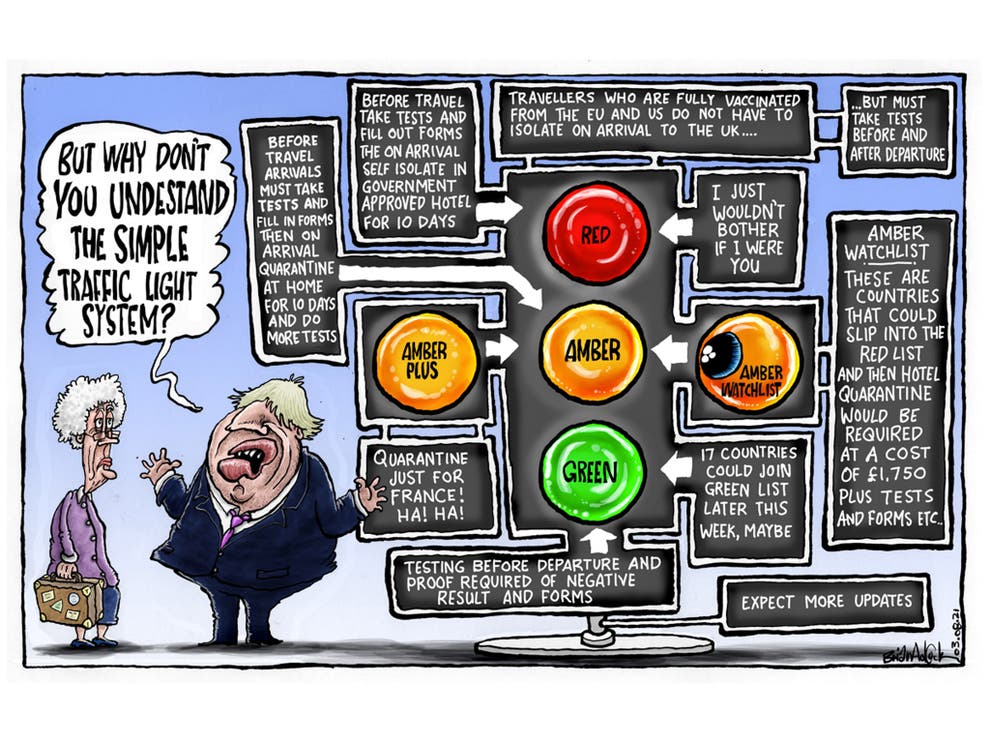
Another day, another set of rules!

Taylor Wimpey, one of the UK’s biggest housebuilders, has returned to profit and upgraded its earnings targets after building a record number of homes in the first six months of the year.
Jillian Ambrose www.theguardian.com
The High Wycombe-based firm built more than 7,300 homes in the first half of 2021, almost all of which have been pre-sold, allowing the company to lock in the benefit of soaring house prices triggered by cheap loans, the government’s stamp duty holiday and a pandemic-driven preference for larger houses.
The FTSE 100 housebuilder reported a pre-tax profit of £287.5m for the six months to early July after a £40m loss in the same period last year in the wake of the coronavirus pandemic.
Pete Redfern, Taylor Wimpey’s chief executive, said the company expects to complete between 13,200 and 14,000 houses in 2021, and reach an operating profit for the year of about £820m.
“We have a clear purpose to deliver high-quality homes and create thriving communities and a strategy to ensure the long-term sustainability of the business,” he said.
Taylor Wimpey’s housebuilding rivals Barratt Developments and Persimmon last month predicted that the strong demand for housing would continue even after the government’s stamp duty holiday on property purchases ends in September.
In an interview with the BBC, Redfern dismissed fears that the UK faces a house price bubble and downplayed comparisons between the current housing market surge and the 2007 boom, which led to a crash in property prices and played a key role in triggering the 2008 financial crisis.
“I think we’ve seen a short-term reaction to the pandemic but an underlying stable and healthy housing market,” Redfern said.
“The number of investors buying homes [in 2007] was a very significant part of the market, particularly in the US – but also in the UK, the number of apartments being bought in markets that haven’t traditionally sustained apartments was very high, mortgage lending was significantly laxer than it is today. And also, we’d seen five years of house price growth well above inflation levels. None of those things are true today.
“We are seeing a return of second-time buyers to the market, having had several years following the financial crash where that market has been very subdued, and I think the pandemic has changed people’s mindsets and moved things along.”
Shares in Taylor Wimpey had risen 2.5% in afternoon trading at 169p.
The conversion of offices into flats in urban centres poses a “potentially deadly risk” to occupants as the intensity of heatwaves rises, experts have warned.
Damian Carrington www.theguardian.com
Further relaxation of planning rules from Sunday mean even more commercial premises can be converted into homes without planning permission. But a failure to provide vital cooling features would make some uninhabitable as the climate crisis worsens, the experts said.
More than 64,000 flats have been built in former offices in the past five years and the rise of home-working during the pandemic is expected to lead to a surge in conversions. The latest government data show a 28% rise in applications since last year.
Permitted development rights (PDR) allow the use of a building to change without planning permission and already applied to offices, but from Sunday they are expanded to cover commercial premises, such as vacant shops, restaurants and gyms. A report commissioned by the government concluded in July 2020 that PDR conversions “create worse quality residential environments in relation to a number of factors widely linked to the health, wellbeing and quality of life of future occupiers”.
The Climate Change Committee, the government’s official advisers, estimates that one in five UK homes already overheat. In 2020, summer heatwaves in England caused 2,556 deaths, and the CCC projects such deaths to triple by 2040 if no action is taken.
Ministers rejected CCC advice in 2015 to bring in new heat-proofing regulations. The CCC repeated its warning in 2019 and said the UK’s lack of plans to protect people from climate crisis was “shocking”. In July, it said it was “absolutely illogical” not to tackle the risks of heatwaves.
“While we recognise the need for more affordable housing, we have concerns about the standard of some homes built under PDR,” said Paul Redington at insurer Zurich UK. “In particular, overheating is emerging as a potentially deadly risk.”
The Royal Institution of Chartered Surveyors and the Chartered Institute of Building share the concerns. Eddie Tuttle at the CIOB said: “There is clear evidence that homes built using PDR has led to spaces detrimental to the health, wellbeing and quality of life of future occupants. Ministers must address these concerns as a matter of urgency.”
He added that PDR conversions had few checks on some aspects of quality, including ventilation and energy efficiency: “Deregulation is part of the problem – what you have to do is regulate sensibly.”
The danger of deadly heat is greatest in small flats and particularly those with only south-facing windows that suffer the full glare of the sun. In some flats, residents may be reluctant to open the windows due to security risks or air pollution.
“Many of these buildings are in city and town centres, which by definition already suffer from the urban heat island effect,” said Redington. Developers could be required to improve cooling by installing shutters on windows, using reflective surfaces and ceiling fans, he said.
“These shocking [PDR conversion] figures are a further damning indicator of the government’s failure to take the threat of heatwaves seriously,” said Bob Ward, of the Grantham Research Institute on Climate Change at the London School of Economics. “Badly designed homes that overheat can be lethal to the occupants in hot weather, particularly if they have underlying health conditions. The government must urgently create and implement a national heat risk strategy.”
A spokesman at the Ministry of Housing, Communities and Local Government said: “Our reforms will transform unused buildings into much-needed new homes, and all new homes must be of high quality and meet national space standards and building regulations – including ventilation requirements.” He said any claim that PDR homes were necessarily of worse quality was unfounded.
A quarter of donations to the Tory party since Boris Johnson became prime minister in July 2019 has come from donors with property interests, the Financial Times revealed last week.
Reddington also said water leaks were disproportionately frequent in converted flats, due to inadequate plumbing for residential use. One London office block converted into 400 flats saw a leak in one ninth-floor home cause £1.5m of damage and forced 36 families in other flats to move out for many months. He said measures to avoid leaks, overheating and fires should be installed during conversion, to avoid expensive retrofits later.
Labour has called for an inquiry into the use of WhatsApp within the government, after it emerged a health minister replaced his mobile phone before it could be searched for information relevant to £85m of deals that are subject to a legal challenge.
Rowena Mason www.theguardian.com
James Bethell, who oversaw the award of Covid contracts, is one of those under scrutiny over the way deals for personal protective equipment (PPE) and tests were allocated at the height of the pandemic.
As part of legal proceedings issued by the Good Law Project, the government is expected to disclose Lord Bethell’s correspondence including by email, WhatsApp and SMS relating to the award of £85m of contracts for antibody tests to Abingdon Health.
The secretary of state has a responsibility to preserve and search documents for information relevant to the case from the point at which judicial review proceedings were issued in late 2020, under the government’s “duty of candour”.
However, a witness statement from a government lawyer revealed Bethell replaced his phone in early 2021 and it may no longer be possible to retrieve the information about his dealings with Abingdon, although efforts are being made to recover them from his mobile phone provider.
The statement said Bethell had used his official email account as well as his private email account to send and receive emails relevant to the contracts, and that he had also used his mobile phone for SMS and WhatsApp messages. But it said Bethell had confirmed that about six months ago his phone was broken and replaced and that his new phone did not contain the phone data.
Government lawyers revealed Bethell had not been issued with a “preservation notice” requiring him to save documents because ministers’ official correspondence was routinely saved as a matter of course. However, this did not cover government business conducted by private means.
Bethell is already under investigation by the Information Commissioner’s Office (ICO) over the use of private emails for government business, prompted by revelations that his former boss Matt Hancock was using a private account at the height of the pandemic.
Labour called on the information commissioner to widen the scope of her investigation to cover discussions via instant messaging platforms such as WhatsApp.
The party’s deputy leader, Angela Rayner, said: “If ministers and their advisers really have nothing to hide then they will have no problem handing over the emails and messages showing what government business was being conducted in secret, so the public know how their money was spent and these messages are secured for the long-promised public inquiry.”
The Department of Health and Social Care (DHSC) did not respond to two requests for comment.
Downing Street admitted in July that Bethell had used private emails for government business despite denying it 24 hours earlier, but said he had abided by the guidance on copying in official accounts.
Bethell, a close ally of Hancock’s, told the House of Lords at the time: “In terms of the use of private email can I just reassure members that I have read the ministerial code, I have signed the ministerial code and I seek to uphold it in everything I do.”
He has also been criticised for failing to declare meetings with PPE suppliers that were awarded contracts and is facing a separate inquiry by the Lords standards watchdog over his sponsorship of a parliamentary pass for Gina Coladangelo, the aide Hancock had a relationship with in breach of Covid rules.
Bethell has written to the standards watchdog saying Coladangelo provided “unpaid parliamentary research support, helping me to draft speeches, engaging with stakeholders and assisting with my communications”. The DHSC blamed the failure to declare meetings on an “administrative error”.
The ICO is investigating the use of all private correspondence channels used by ministers – which could include tools such as WhatsApp – after concerns were raised about the former health secretary’s email, as well as private emails from Bethell.
The former health secretary resigned for breaching social distancing guidelines. His use of emails will form part of the investigation.
Bethell previously faced calls for his resignation after the Guardian revealed that a number of emails had been copied into his private email account. His address was copied into at least four official exchanges relating to a businessman who was attempting to get government contracts during the pandemic.
Elizabeth Denham, the information commissioner, has said the use of private channels to conduct government business was “a concerning one” and could lead people to feel there was “a loss of transparency about decisions affecting them and their loved ones”.
She said the effects of decisions taken by government especially during the past 18 months would continue for years to come. “It is through transparency and explaining these decisions that people can understand and trust them,” she added.
The ICO has said the use of private correspondence channels does not in itself break freedom of information or data protection rules. But Denham said she was concerned information in private email accounts or messaging services was forgotten, overlooked, auto-deleted or otherwise not available when a freedom of information request was later made.
“This frustrates the freedom of information process, and puts at risk the preservation of official records of decision-making. I also worry that emails containing personal detail are not properly secured in people’s personal email accounts.”
Multiple Torbay care homes have been reporting Covid infections, the council’s director of public health has confirmed.
Edward Oldfield www.devonlive.com
Speaking this week, Dr Lincoln Sergeant said that 17 residents and six staff in Torbay’s care homes have recently tested positive for the virus, with nine cases in one home alone.
The premises involved have not been revealed by the health director.
Dr Sergeant does not believe the break outs are because of poor infection control.
He said: “What we think is happening is that the homes are being bombarded by the higher background rate [of infections] for quite some time.”
He argues it is unlikely that a single breakout event has occurred and more probable that separate instances of infection entering the homes are happening, such as residents receiving visits from people with Covid.
Dr Sergeant said: “It just shows that when the background rates are high it’s very very difficult to prevent infections from getting in.
“Even doing the right things you will get the occasional breakthrough.”
One unvaccinated resident was taken to hospital, although no deaths have been reported as a result of the outbreak.
“The majority appear to be recovering nicely. We hope that situation holds into the future,” Dr Sergeant said.
Last month, infections in Torbay reached their highest recorded level since the pandemic began, with 960 cases in the week commencing 11 July.
Since then rates have fallen, with 564 new cases recorded in the week commencing 25 July.
During an outbreak in Torbay’s care homes in March, 11 residents and 20 staff tested positive.
Another outbreak happened in care homes in the Bay in late May.
Younger adults are now more likely to come down with the virus in Torbay.
As of 28 July, the weekly figure for people testing positive aged under 60 in the area was 532 people per 100,000, compared with just 102 per 100,000 for older people.
With the promise of the last bit of sunny weather for a few days, one of Cornwall’s most popular beaches is already heaving – and it’s likely to get busier by the end of the day.
Lee Trewhela www.devonlive.com
The RNLI has verified that Perranporth beach is already very busy with approximately 9,000 people finding their own little patch of sand.
All the car parks in the town were reported to have been full by 10.30am and the Perran lifeguard team say that the beach will get even busier today with the good weather and are expecting it to reach around 12,000 people later in the day, which is almost four times the population of the town.
RNLI lifeguard Rory Tellam, who is working at Perranporth today, said: “The surf today is still relatively small but is set to build towards the end of the week. With good weather and increasing surf we urge anyone planning to visit the coast to choose a lifeguarded beach.
“If you are heading in the water always swim between the red and yellow flags.”
“Be aware of your footing and don’t do out of your depth, keep an eye on the flags and make sure to stay between them where the lifeguards can see you.”
Cornwall’s beaches are expected to be even busier than normal this month as more people holiday in the Duchy due to the pandemic curbing overseas travel.
“Team Devon” is the new catch phrase apparently. – Owl
Ollie Heptinstall, local democracy reporter www.radioexe.co.uk
Councils across Devon are to launch a bid for more devolved powers from Westminster.
The move comes after the government announced it was looking at reviewing its current arrangements with the counties and local authorities.
In a speech on ‘levelling up’ the country last month, prime minister Boris Johnson talked about the “need to rewrite the rulebook with new deals for the counties” and the possibility of directly elected mayors.
Devon’s councils plan to build on what they say are close working relationships developed during the pandemic when they formed ‘Team Devon’ to respond to the challenges of covid. The group, which does not include unitary authorities Plymouth and Torbay, has the backing of business groups, public sector organisations and the county’s MPs.
Devon County Council leader John Hart, who chairs Team Devon, said: “I believe we have delivered for Devon during the pandemic and used the additional money that was available effectively and efficiently on behalf of our residents.
“Our regular meetings of council leaders and chief executives from the county and all the districts – along with town and parish representatives – brought us closer together and the trust we built up meant that we could act swiftly and decisively. We want to build on that cooperation and trust in a deal for Devon.
“It would require the government to support us to do the very best we can for Devon and its residents and businesses as we drive the recovery, tackle climate change, boost skills, improve our infrastructure and connectivity and confront the very real problems we have to face such as the shortage of affordable housing.
“We believe Team Devon is ideally placed to negotiate a deal for Devon with the government. So we’ve asked our officers to start preparing proposals that we can discuss with ministers and Whitehall over the summer so that we can be at the head of the queue when the levelling-up white paper is published.”
Teignbridge District Council leader Alan Connett broadly welcomes the joint statement from Team Devon: “If it’s possible to bring more powers down from government to our area, which helps us serve our communities better then we should be looking at that,” he said.
“The public have elected us, and elected their local representatives, but I think sometimes government tend to hold a lot of power which could be passed down locally.”
However, while Cllr Connett backed councils working closer together in some areas, he rejected the idea of a unitary authority for Devon like the one recently given the go-ahead in Somerset, saying it would be “an enormous cost, an enormous waste of time”.
“Our whole focus at the moment should be on the recovery from covid, on creating and protecting jobs, on booming our economy, on supporting our communities.
“From what I’ve seen in the past, when people start talking about local government reorganisation, it hasn’t done a jot for the public while all that’s been happening. A lot of money gets spent on it and now is not the time in my view.”
Devon County Council is now working with district authorities on developing proposals for more devolved powers for Devon. The bid will be sent to ministers later in the year.
“Living in an economy dominated by lower paid jobs, young people from seaside towns are less likely than their wealthier urban peers to have the personal connections that facilitate highly rated work experience.”
The precarious economies of many traditional seaside towns have declined still further in the decades since the 1970s, when an explosion of cheap holiday flights and package tours to the Mediterranean took away swathes of their summer trade. “Turkey and Tinsel” weekends still draw the odd coach, but cannot keep a town afloat. Although British seaside resorts are having a booking spike this year because of the pandemic, a boost to the economy over a single summer will not make a major difference to their health or their economies in the long term.
Their residents’ worsening health and well-being – and lack of health provision – is gradually becoming visible to government and the media, thanks in large part to England’s chief medical officer Chris Whitty. His Chief Medical Officer Report for 2021: Health in Coastal Communities sets out a stark picture of poor health and low life expectancy for those who live in many English coastal towns.
Economy and poor health linked
Public Health England data confirms the wide range of health indicators that are systematically worse in seaside towns. These include coronary heart disease, stroke, chronic pulmonary (lung) disease, diabetes and mental health conditions. Breastfeeding rates are lower, and more pregnant women smoke. This is not surprising. High-quality jobs are a key route to improving mental and physical health, giving up smoking, and accessing lifestyles that build in healthier patterns of leisure activities, nutrition and transport.
Economic and structural drivers of health are key to explaining low life expectancy and high rates of chronic illness. A 2019 report by a House of Lords select committee set out the economic, educational and connectivity disadvantages faced by seaside towns, emphasising the need to build careers for young people. The inequalities think-tank, the Resolution Foundation, evidenced a longstanding and growing earnings deficit which worsened further between 2017 and 2019, before being hit particularly hard by Covid-19.
Seaside towns’ excess of accommodation makes them attractive to distant councils and central government as cheap places to relocate vulnerable city dwellers and international migrants. Many looked-after-children are placed in Kent, far from their boroughs of origin, mostly in London. The share of the population over 65 years is higher in coastal towns than in other areas.
So how can young people (and older people) in coastal areas access higher quality jobs? And what can be done about the severe and longstanding NHS workforce shortages in most coastal areas? After all, educational outcomes are worse in seaside towns compared to urban settings.
Few jobs in seaside towns require graduate-level skills – take a look at the Nomis website, which shows employment opportunities by area. However, universities in the larger seaside towns and cities do train a range of healthcare professionals, from nurses to paramedics to doctors.
But not all seaside towns are the same. Brighton, once dilapidated and forlorn, built a digital and creative economy drawing on the ready supply of skilled labour from its two universities. This is not the kind of community the CMO Report is talking about – it’s not an option for Clacton, Hastings, Blackpool or Thanet.
Higher education in Britain is built predominantly on relocating young adults away from family and support networks to a distant metropolis. Universities are nearly all located in large cities. So an academically oriented seaside teenager like my former self quickly learns that “doing well” means leaving their family and community behind for good. For many this is a real personal loss. The higher wages paid for graduate-level skills are unlikely to be available locally.
What could change?
Health professions, and teaching, are an exception – these professions are needed everywhere. So why do seaside towns with high unemployment have NHS staff shortages? Swale and Thanet, in north Kent, not far from London, have the lowest ratios of GPs to population in England. Why don’t their children train as health care professionals?
Children from small seaside towns do meet GPs and other community health professionals – many live near a district general hospital. But the full range of healthcare jobs is much less visible than in a city with large tertiary care services, where NHS work is concentrated. Access to these professions is a challenge.
Living in an economy dominated by lower paid jobs, young people from seaside towns are less likely than their wealthier urban peers to have the personal connections that facilitate highly rated work experience. Public transport and road connections to places with more highly paid jobs are often limited, time consuming and expensive. And their parents often earn less.
Entry to health professional courses is competitive. Any child at a seaside school with weak exam results is at a serious disadvantage. So seaside children are less likely to get into those courses, even if committed to one in a locality close to family and social networks. This vicious cycle will continue unless we can find a way to support young people into local health jobs. If we can work out a way to do this at scale it could go some way to addressing the health and economic disadvantages in coastal communities.
Jackie Cassell is a professor of primary care epidemiology, and an honorary consultant in Public Health at Brighton and Sussex Medical School. This article first appeared on The Conversation.
Has the magic sauce begun to curdle?- Owl
Editorial www.independent.co.uk
Could it be that blatant rank hypocrisy is Boris Johnson’s kryptonite? His superhuman political performances have certainly defied belief for most of the two years he has occupied No 10. Yet the recent controversy about his attempting to dodge self-isolation via some suspiciously convenient “pilot scheme” seems to have been something of a final straw, and he finds his poll ratings sliding, along with his authority in his own party.
Disappointing by-election performances in Chesham and in Batley suggest he is no longer such a winner. Politics, arguably, is returning to a more normal pattern, the vaccine bounce has faded and the instinct to rally behind the leader in a crisis is evaporating.
It is quite the switchback. This most unlikely of premiers has carried all before him. Mr Johnson managed to unseat the previous incumbent, albeit Theresa May did herself no favours; win the party leadership against some credible, if more conventional, contenders by a comfortable margin; win a near-landslide general election victory; get some of the formalities of Brexit done; survive Covid, personally and politically; lose his closest adviser; and get married to Carrie Symonds and start another family, with a baby on the way. If nothing else, he has confounded his critics and proved himself unusually resilient.
All of a sudden, however, just as people are daring to hope for a return to normality after the pandemic, the prime minister finds his personal ratings tumbling. His ratings among Conservative Party members, where he has long been popular, if not always spectacularly so, have collapsed, and he is barely in positive approval territory. Much the same goes for the view the public takes of him. They regard him as dishonest and disorganised.
His MPs, many of whom owe their parliamentary seats to his campaigning, are dissatisfied. Their grievances are disparate – some fear the effects of ending the £20-a-week top-up to universal credit, many dislike the talk of vaccine passports, others in the home counties feel neglected over housing and planning, those in the “red wall” wonder, with good reason, if there is anything more to “levelling up” and “build back better” than slogans.
Parliamentary revolts will be attempted and the party conference (with or without a requirement for a vaccine passport) might be an awkward affair. An especially weak and wobbling prime ministerial speech on “levelling up” his economic vision for the nation unnerved many hoping for a glimpse of substance. And the brief attempt to evade the Covid isolation rules that govern the rest of the nation made the prime minister look both hypocritical and, when rapidly reversed, weak. The very worst of all worlds.
It all seems bleak for the Conservatives, and it could easily get worse. The end of furlough, the comprehensive spending review, hints of higher interest rates, the lingering drag of Brexit – all will hit jobs, wages and living standards. Post-Covid, there is little money left to indulge Mr Johnson in his free-spending habits and to bribe voters in marginal seats with their own money. Absurdities such as the tunnel to the Isle of Man and the new royal yacht will have to be abandoned. His ministers, especially chancellor Rishi Sunak, will have to become more assertive and insist on a more traditional, collegiate style of government, though they will probably fail to restrain him.
Under Mr Johnson, life for the Conservatives will become increasingly difficult as the voters discover that there is even less to the prime minister than meets the eye. For them, in the Brexit era, he was the right man for the job. In the Covid crisis he was the only leader they had, and they had to make the best of it. Now, though, the political climate has changed again, and radically. Like Ms May and David Cameron before him (who he did so much to undermine), Mr Johnson could soon find out what happens when he no longer looks like an electoral asset.
Was it a bird, a subliminal message or a secret sign? Or was it just a logo of an owl on a T-shirt?
(East Devon Watch has a small regular following in France so Owl believes the answer is obvious. Bonjour Monsieur le Président.)

Owl play: Macron’s T-shirt logo inspires conspiracy theories
Kim Willsher www.theguardian.com
Hours after Emmanuel Macron’s attempt to persuade French youngsters to get vaccinated on Monday, the buzz across the country was less of Covid shots and more of mysterious clothing symbols.
The president had swapped his trademark grey suit, white shirt and tie, for the more trendy look of a black, short-sleeved T-shirt for his question-and-answer TikTok appearance.
Unfortunately, the subsequent flurry of speculation and conspiracy theories suggested some gave more of a hoot about the white owl logo on the T-shirt than about Macron’s message.
What did the owl logo made up of geometric shapes mean? Was there a subliminal message to the choice of apparel? Was the Elysée public relations team conveying a secret message to the sharp-eyed? Was the president part of a secret cabal?
An initial theory suggested it was the logo of the Bohemian Club, a political group created in California in 1872 and named after what Americans saw as the belle époque European bohemian movement, a counterculture to the bourgeoisie. Today it is an exclusively male club made up of businessmen and politicians from the US, Europe and Asia. But while the Bohemian Club has an owl logo, it is not the same as that on the president’s T-shirt and is accompanied by the red letters BC.
To add to the conspiracy confusion, there are two words in French translated as “owl” in English: hibou (meaning an owl with feathered ear tufts) and chouette (an owl without tufts). The hibou is a sign of bad luck or, for the Romans, death’s messenger, representing black magic at worst and a symbol of sadness, loneliness and melancholy at best. The chouette, by contrast, is a servant of the Greek goddess Athena, a spiritual guide in Celtic culture, and also a term in French meaning “super”.
Le Figaro said the president’s look was “sober, direct, relaxed and above all social friendly”, reminding readers of his YouTube challenge with popular French stars Mcfly and Carlito back in May.
There has been no official response from the Elysée to questions about the T-shirt.
However, as capitalism, like conspiracies, abhors a vacuum, a similar T-shirt was being sold online as “the Macron Tik-Tok T-shirt” for €19.99.
Jacob Rees-Mogg is one of 50 Tory MPs representing areas where people suffer from the worst food poverty in Britain.
George Greenwood, Ryan Watts http://www.thetimes.co.uk
The Commons leader holds the seat of North East Somerset, which sits in a council area where 7 per cent of households experience hunger. He and 49 other Conservatives have seats that overlap with the top 10 per cent of local authorities for food poverty. Those areas include Salisbury, Rugby and Ashford in Kent.
Rishi Sunak, the chancellor, is planning to cut universal credit by £20 a week by ending a temporary uplift introduced during the pandemic. Last month six former Tory work and pensions secretaries wrote to him demanding an extension.
There are about five million universal credit claimants, twice as many as before the pandemic, and more than a third are in work. A permanent uplift would cost about £6 billion a year.
In January academics at Sheffield University mapped the local authorities with the worst hunger. Of the 100 councils with the worst rates, wards within them are represented by 122 Conservative MPs compared with 76 Labour MPs, The Times found.
Hunger is defined as having skipped food for a whole day or longer in the previous month or someone indicating that they had not eaten because they could not access food.
Wycombe has the highest proportion of households experiencing this, at 14 per cent. Twenty-nine per cent have struggled for food, meaning they skipped meals or ate less, or found help from services such as food banks.
Steve Baker, a leading Conservative backbencher and MP for Wycombe, told ministers that his constituents’ finances had been “tipped over the edge” by the pandemic.
“This alarming report is a wake-up call for ministers,” he told The Guardian. “I have told colleagues time and again during my time in parliament that poverty extends into my constituency in south Buckinghamshire.”
A government spokesman said: “Universal credit has provided a vital safety net for six million people during the pandemic, and we announced the temporary uplift as part of a £400 billion package of measures put in place that will last well beyond the end of the road map. Our focus now is on our multibillion-pound Plan for Jobs.”
Earlier Owl reported yesterday’s Western Morning News report on the A 303 decision.
In today’s WMN Tim Jones, chairman of the South West Business Council (SWBC) and David Ralph, chief executive of Heart of the South West LEP join Peninsula Transport Group chair Councillor Andrea Davis in lamentation.
Too many groups of questionable accountability and effectiveness? – Owl
Extract from Today’s WMN:
Mr Justice Holgate, adjudicating on a challenge by Save Stonehenge World Heritage Site campaigners, ruled the minister’s decision was unlawful due to a lack of evidence regarding the impact on the historic site and a failure to consider alternatives. It means the future of the transport scheme is now unknown and the South West could miss out on what business groups were predicting as an investment bonanza.
Tim Jones, chairman of the South West Business Council (SWBC), said the Government’s own figures had predicted it leading to a £40 billion boost for the region over a 20-year period. “So the cost of this decision for the South West will be about £2 billion a year – negative,” he said.
“That’s scary numbers. It’s a complete body blow.” The SWBC had predicted that just by completing the A303 Amesbury to Berwick Down scheme, including the tunnel, the Westcountry would gain a £4 billion boost.
Further improvements to the A303, particularly by dualling the road between Honiton and the M3, would escalate this to £40 billion as it would ease access to Southampton and other south-coast destinations, and London and the South East.
Mr Jones said that is now all in jeopardy and added: “We thought a positive decision had been made and this would kickstart a new series of investments. That’s now put in doubt. There is no certainty that it will be possible to reverse this decision.”
The Heart of the South West Local Enterprise Partnership (LEP) called the High Court decision “a huge disappointment” and said it would be writing to the Government to find out how it plans to improve transport into the region.
David Ralph, chief executive of Heart of the South West LEP, said: “This is a huge disappointment for many South West businesses and constitutes yet again a failure of Government to deliver on its promises to address the inadequate infrastructure getting into and out of the South West and specifically the A303 over the last two decades.
“We will be writing to the Department of Transport and Highways England directly to clarify how they propose to move forward and deliver the connectivity that is so badly overdue and talk directly with our MPs to seek reassurances that progress can be made as soon as practically possible,” he added.
The NHS Nightingale Hospital Exeter is getting a new role with two new operating theatres and outpatient services.
Owl is losing track of all this repurposing. Just over a year ago, on July 1, 2020 Owl posted “Now for Plan C – Devon’s Nightingale hospital will not treat Coronavirus patients”. It started taking cancer patients on July 7. Then on 26 November Owl reported it was starting to treat Covid patients. So are we now on Plan E?
Radio Exe News www.radioexe.co.uk

NHS Nightingale Exeter before taking covid patients
The service, at a former DIY shop on Sowton Industrial Estate, is going to provide a range of services from this autumn to help tackle waiting lists across Devon and the wider south west.
It was built to cope with an expected influx of covid patients at a time when the country was preparing for the worst. In the end, it treated 250 patients from three counties.
After being decommissioned as a covid hospital earlier this year, the Nightingale was bought by NHS organisations across the region and used to provide diagnostic scans to local people, host a covid vaccine trial and train overseas nurses.
Local health bosses say plans are well underway to extend services to include planned orthopaedic surgery, ophthalmology and rheumatology services, as well as increasing the range of diagnostic services such as MRI scans.
It’s already been announced that Exeter’s Nightingale would receive funding from the National Accelerator Systems Programme to increase capacity so that waiting times for certain operations are cut.
From the autumn, the former covid inpatient hospital will provide:
Dr Elizabeth Wilkinson, consultant medical ophthalmologist at Northern Devon Healthcare NHS Trust (NDHT) and clinical lead for ophthalmology at NHS Devon Clinical Commissioning Group said: “During the pandemic, many NHS organisations across the country had to postpone planned procedures so that we could care for patients with covid-19 and continue to treat those with urgent care needs.
“Ophthalmology, orthopaedic, rheumatology and diagnostic testing services have been particularly affected across Devon, and so despite our best efforts, our waiting lists have grown. This means that many of our patients are waiting longer for treatment now than before the pandemic.
“We know how difficult postponing or cancelling surgery can be for our patients and their loved ones, so developing new innovative services in the Nightingale will help us to better prioritise the most urgent patients and those who have been waiting the longest.”
Chris Tidman, deputy chief executive of the Royal Devon & Exeter NHS Foundation Trust (RD&E) and NDHT said: “As well as caring for nearly 250 patients with COVID-19 from across three counties in the height of the pandemic, the NHS Nightingale Hospital Exeter has also provided over 6,000 important diagnostic scans to local people, supported the delivery of two covid vaccine studies and hosted overseas nurse training for three local NHS Trusts.
“Our staff and volunteers created an exceptional facility that was much needed to manage COVID-19 demand, and we are delighted that the Nightingale’s legacy of outstanding care will now continue, helping us to find new ways of working to further reduce waiting times for patients across the south west.
“To support this work, we will be recruiting additional medical, nursing, AHP and support staff over the coming months to work across orthopaedics, ophthalmology and imaging, with opportunities across both the Nightingale and our main hospital sites.”
Jackie Weaver became a viral internet sensation when she removed the unruly chair of Handforth Parish Council in Cheshire from a virtual meeting back in December – along with two councillors who supported him.
Philippa Davies sidmouth.nub.news

Now, in her capacity as a local government adviser, she is urging people to sign a national petition pressing the government to amend legislation to enable councillors to be disqualified or suspended for breaching relevant codes of conduct.
So far around 6,100 signatures have been collected for the petition, but it needs 10,000 to trigger a response from the Government, and 100,000 for the issue to be considered for a parliamentary debate.
Jackie, who helped launch the petition and is Chief Officer of the Cheshire Association of Local Councils (ChALC), says it’s vital to the future of local councils if we are to continue attracting people to serve their community.
‘We are trying to promote diversity and equality’
She told Nub News exclusively: “The kind of sanctions we are looking at aren’t public flogging. It’s looking at the potential of mandatory training or being removed from office for a period of time.
“It’s important that we show the powers that be that we care about politics from the grass-roots level. It’s been like pulling teeth so far. There is a general apathy and lack of understanding of just what a difference this can make. We all need to do a little.
“We are trying very hard to promote diversity and equality in local councils and we have to be able to say to people that they will be safe in that environment.
“The least we can do is reassure them that they won’t have to deal with internal conflict. We are failing some councils who work extremely hard at representing their communities, yet councillors have to deal with a disruptive element.
“I cannot understand why people wouldn’t want to sign this petition which is designed to support local government and make sure fellow councillors and members of the public are protected from unacceptable behaviour within the operations of the council.”
A ‘significant minority’ of councillors behave unacceptably
The petition states: “Some councillors behave unacceptably, yet currently sanctions do not enable councillors to be disqualified or suspended for breaches of a Code of Conduct.
“Most councillors maintain high standards of conduct, but a significant minority engage in unacceptable behaviour, such as harassment and bullying including racist, sexist, ableist abuse.
“This activity would be grounds for dismissal in an employment setting, and equivalent sanctions should exist for councillors.”
The petition can be found here.
In 1971, the Conservative Environment Secretary, Peter Walker announced the entire length of the A303 would be upgraded as part of a new roads programme that would deliver 1,000 new miles of motorway by 1980!
Owl remembers that the 1980’s was when Margaret Thatcher insisted that the Ilminster by-pass should be limited to three lanes on cost grounds, despite safety and future-proofing concerns.
Theresa May, in January 2017 said that her government was “committed to creating a dual carriageway on the A303 from the M3 to the M5”.
Now the Tories are in trouble again with the £1.7bn Stonehenge “improvements” programme being declared unlawful. Clearly a number of major issues have been ducked and, once again, we are the victims of bad decision making.
Surely the Government should have regard to ensuring that its proposals didn’t cause permanent harm to the World Heritage Site? We have just lost Liverpool, will Stonehenge be next, and, closer to home, is the Ladram bay section of the Jurassic Coast safe in Carter hands?
Owl posted “Why you won’t be seeing an improved A 303 any time soon” in April last year!
Court Rules A303 scheme unlawful
Local opinion as reported in yesterday’s Western Morning News:
Councillors in the far South West have voiced their dismay after the High Court ruled plans to build an eight-mile road improvement scheme to ease the bottleneck at Stonehenge were unlawful.
As reported in Saturday’s Western Morning News, campaigners on Friday won a High Court battle over Transport Secretary Grant Shapps’ decision to approve a controversial road project which includes a tunnel near Stonehenge.
Save Stonehenge World Heritage Site (SSWHS) challenged his decision to back the £1.7 billion scheme to overhaul eight miles of the A303, including the two-mile tunnel.
But the Peninsula Transport Group, created to transform transport and boost economic growth in the South West, has said it is disappointed at the news and will back the Department of Transport if it challenges the ruling.
The group, which represents local authorities responsible for highways in Somerset, Devon and Cornwall, had supported the plans as a way to improve journeys to and from the Westcountry.
Peninsula Transport chair Councillor Andrea Davis said: “Peninsula Transport remains firmly of the view that the A303 Stonehenge scheme is essential to delivering much needed improvements to the A303/A358/A30 corridor. The investment for this scheme is essential to the economic performance of the South West peninsula.
“We will be closely examining the judicial review report, and urging the government to ensure that any lessons that can be learnt will be done so quickly, as well as aiming to minimise the effect the results may have on other schemes in the region.
“Whilst the result of the judicial review is a disappointment, we will continue to support the Department for Transport and Highways England to ensure that they can deliver end-to-end improvement along this essential travel corridor.”
The go-ahead for the scheme was given in November last year, despite advice from Planning Inspectorate officials that it would cause “permanent, irreversible harm” to the Unesco World Heritage Site in Wiltshire.
In his ruling on Friday, Mr Justice Holgate found the decision was “unlawful” on two grounds.
He concluded that there was a “material error of law” in the decision-making process because there was no evidence of the impact on each individual asset at the historic site.
He also found that Mr Shapps failed to consider alternative schemes, in accordance with the World Heritage Convention and common law.
The judge said: “The relevant circumstances of the present case are wholly exceptional.
“In this case the relative merits of the alternative tunnel options compared to the western cutting and portals were an obviously material consideration which the (Transport Secretary) was required to assess.
“It was irrational not to do so. This was not merely a relevant consideration which the (Transport Secretary) could choose whether or not to take into account.
“I reach this conclusion for a number of reasons, the cumulative effect of which I judge to be overwhelming.”
John Adams, SSWHS director and acting chairman of the Stonehenge Alliance, said: “We could not be more pleased about the outcome of the legal challenge.
“The Stonehenge Alliance has campaigned from the start for a longer tunnel if a tunnel should be considered necessary.
“Ideally, such a tunnel would begin and end outside the WHS. But now that we are facing a climate emergency, it is all the more important that this ruling should be a wake-up call for the Government.
“It should look again at its roads programme and take action to reduce road traffic and eliminate any need to build new and wider roads that threaten the environment as well as our cultural heritage.”
Solicitor Rowan Smith, for the campaigners, said: “This is a huge victory, which means, for now, Stonehenge is safe. The judgment is a clear vindication of our client’s tremendous efforts in campaigning to protect the World Heritage Site.” She said ministers would have to go back to the drawing board.
 East Devon Watch