‘Build, build’ Johnson opposed new homes in his constituency

Boris Johnson has been accused of hypocrisy after he objected to a scheme for 514 homes in his constituency claiming it was “inappropriate” and “out of character” for the area.

George Grylls www.thetimes.co.uk 

In letters obtained by The Times through a Freedom of Information request, Mr Johnson said that the plans for houses in his Uxbridge and South Ruislip seat constituted “overdevelopment”.

Robert Jenrick, the housing secretary, has now intervened in the case and is blocking planning permission from being granted to the scheme, which includes 179 affordable homes.

Boris Johnson has been under pressure to resist an application by Inland Homes to build on the Master Brewer site

Boris Johnson has been under pressure to resist an application by Inland Homes to build on the Master Brewer site

Earlier this year the prime minister unveiled radical reforms to overhaul the planning system and limit people’s ability to object to individual applications. He recently decried the “cumbersome planning procedures” that prevented young people from getting on the housing ladder and attacked a culture of nimbyism in a speech over the summer where he demanded that developers “build, build, build”.

Mr Johnson’s majority of 7,210 in his west London constituency is the smallest of any prime minister in recent times. He faces pressure from a number of residents’ groups to oppose the application by developers Inland Homes to build on the Master Brewer site.

In September Sadiq Khan, mayor of London, approved the plans but Mr Jenrick overruled the decision and directed officials to issue a holding order.

Mr Johnson wrote to Hillingdon council’s head of planning in February last year: “While I welcome additional appropriate housing in Uxbridge and South Ruislip, having considered the plans this application appears to be an overdevelopment for the location with too high a density proposed.”

He added: “A 12-storey tower block in amongst this development is wholly out of character for the locality.” He said that he and residents were worried that the development lacked sufficient parking. He urged planners to take account of the extra pressure on services, including schools and doctors, “to ensure Hillingdon welcomes sustainable developments and inappropriate applications such as this are refused”.

Mr Johnson had also written to the leader of Hillingdon council that the homes lacked “aesthetic quality”.

Stephen Wicks, chief executive of Inland Homes, said that the prime minister, was putting politics over planning.

“The hypocrisy of all this is that Boris is on one hand saying ‘build, build, build’ but on the other hand he’s quietly nobbling councillors behind the scenes,” he said. “It’s difficult to demonstrate it but I’m pretty certain Boris will have had a word with Robert Jenrick and said ‘Look, this one’s a bit difficult for me, the locals don’t like it, so can you just quietly issue a holding order’.”

A government spokesman said that officials in Mr Jenrick’s department had issued the holding direction and denied that the housing secretary had had any involvement.

He added: “The government has set out its vision for a planning system that delivers high-quality, sustainable homes and puts local community agreement at the centre of proposals.”

Backing PR would make it easier for Labour to join with like-minded parties

Labour should show it could work with like-minded parties by committing to proportional representation

Editorial www.theguardian.com 

More than a year ago, Labour won its lowest number of parliamentary seats in a general election since 1935. Sir Keir Starmer began by saying Labour was “under new management”. He now offers new leadership. That is unlikely to be enough. Whereas managers want to do things right, leaders do the right thing. Leaders scan the horizon for destinations; managers are guided by short-term considerations. Sir Keir’s task is to lead his party to victory while building a coalition to unseat the Conservatives. Organisations fail when they are over-managed and under-led.

Sir Keir says Labour has a “mountain to climb”, higher than that scaled by the party in 1997. It needs to win 124 seats to form a majority at the next election, expected in 2024 but possibly sooner given the government’s ambition to repeal the Fixed-term Parliaments Act. The political situation may be even worse in four years’ time. The law requires independent reviews of constituency boundaries every five years. The next review could recommend changes that, if enacted, could see Labour left with a steeper ascent and a higher peak to conquer.

Some think the party has become too liberal socially and too radical economically for voters. This seems an overreaction. In a paper for the Compass thinktank, Neal Lawson and Grace Barnett suggest Labour ought to drop its tribalism rather than its policies. The electoral map holds out hope for Labour if it could work with like-minded parties. The Compass report identifies two clear battlegrounds emerging primarily in England: one between Labour and the Conservatives, another between the Liberal Democrats and the Conservatives. There are few constituencies where Labour and the Liberal Democrats are vying for supremacy. Hence Mr Lawson and Ms Barnett’s call for a progressive alliance formed from parties given to tolerance, solidarity and greenery – a politics that sets them apart from the me-first, rightwing nationalism of their opponents.

These lines may be harder to draw in the years to come. Sometimes coalitions in politics are overt. Often they are covert. Whether they work depends on whether political allies are closer to each other, and to the mood of the nation, than they are to those outside their ranks. An informal agreement among centre and centre-left politicians has an undeniable appeal. But it is difficult to see how a Lib-Lab rapprochement would lead to a majority government without building bridges with the Scottish National party.

To defeat a common enemy, parties should set aside differences and cooperate. The political right understands this. The Conservatives have been in power for seven out of the last 10 years thanks first to a coalition with Lib Dems led by Nick Clegg and then a pact with the Democratic Unionist party. What might bring about a progressive alliance in Britain? All its major constituent actors – apart from Labour – recognise that the first past the post (FPTP) electoral system has frozen a dysfunctional pattern of politics.

Brexit shows that a different political culture is desperately needed. Proportional representation is a way of redistributing power more fairly and encouraging consensus to be built across party lines. FPTP’s defenders say it delivers durable single-party administrations rather than fickle pacts. This is untrue: the Tory party is an unstable coalition in government. Labour is unlikely to change a voting system that took it into government unless it adopts a policy to do so before entering power. Progressive parties could limit the damage to each other’s chances in an election with a common front. But they need a shared sense of policies to unite them.

Plan to stop Devon towns becoming millionaire holiday play parks

A strategy that aims to help stop parts of the South Hams and West Devon become ‘millionaire holiday communities’ and to ensure people can afford to live in the region has been devised.

South Hams and West Devon have a different interpretation of: “Build back Better” and “Planning for the Future”. Essential reading for EDDC? – Owl  

Daniel Clark www.devonlive.com

The ‘Better Homes, Better Lives’ strategy sets out the housing strategy for the two districts for the next five years, as they aim to make the best of our beautiful natural environment, but also delivers for those who need it the most.

House prices have been increasing in the area with a 27 per cent increase in house prices in West Devon in the last five years and a 17 per cent increase in the average house price in South Hams, and the ratio of lower quartile house price to lower quartile gross earnings has correspondingly increased such that it is now 11 times the average earnings in South Hams and 10.42 in West Devon.

At the same time, levels of fuel poverty in the district and borough are above the national average, affecting occupants of existing housing stock. The national average proportion of households in fuel poverty in 2017 was 10.9 per cent compared to West Devon 12.6 per cent and South Hams 11.2 per cent.

A total of 8.2 per cent of the total dwellings in the South Hams are second homes with up to 50 per cent in some areas, while the availability of housing is further restricted by many otherwise available homes being registered as a holiday homes business.

And the impact of ever-increasing house prices is the continued shift in demographic profile for both South Hams and West Devon, with the median age of homeownership in the two areas ten years older than the national average.

South Hams and West Devon housing strategy

South Hams and West Devon housing strategy

Both council last week agreed to go out to consultation on their ‘Better Homes, Better Lives’ housing strategy which aims to devise plans for the future that will deliver healthy and well-balanced communities, and to provide more affordable housing for locals who are unable to get on the housing ladder.

Speaking at last Thursday’s South Hams executive committee, Cllr Jonathan Hawkins said: “The strategy and policy is really good and easy to read. We have to provide affordable and social housing for local people to be able to live in the South Hams. Some of the communities are becoming millionaire’s holiday communities but we have to provide homes for local people who can afford them. It should be one of our priorities and we have to achieve that in the next few years.”

Cllr Hilary Bastone added: “This comes at a time of great uncertainty for people and a time when home took on a greater meaning. Important that we build back better and make commitments to change.”

Salcombe in the South Hams boasts many second homes

Salcombe in the South Hams boasts many second homes

At last week’s West Devon hub committee, Cllr Debo Sellis said: “As we start to recover from the pandemic, it is important that we build back better. We want to deliver the key commitments so we ensure the residents, current and future, benefit from strategy that makes the best of our beautiful natural environment and delivers for those who need it the most.”

Cllr Chris Edmonds added: “I hope this brings forward more affordable housing, not just through developer contributions, and my wish is for a good mix of tenure’s so people have the chance to at least own a share of a house. I hope we can deliver some truly affordable housing in some form or other.”

In the foreword to the strategy, Cllrs Bastone and Sellis in the introduction state: “As our areas start to emerge and recover from the pandemic, it is important that we build back better, revisit our priorities and make commitments to change. That’s why we have called our strategy Better Homes, Better Lives

“We want to deliver on these key commitments to ensure all our residents, current and future benefit from a strategy that makes the best of our beautiful natural environment, but also delivers for those who need it the most.

“This popularity has over a number of years had an impact on the affordability levels of housing for local people. Average house prices have continued to rise well beyond the rise in the average local wage, making home ownership an unrealistic aspiration for many people living and working the area today. Most recent estimates show the average house costing 11.6 times the average wage in South Hams, and 10.6 times in West Devon.”

The strategy adds: “The sensitive natural landscape present challenges in terms of building large numbers of new homes, and most of the towns and villages are ill-equipped to adapt to the additional of large scale housing development, with local infrastructure, particularly transport networks in town centres, unable to be adapted to accommodate significantly greater usage

“Understanding the key characteristics of a place can help to devise plans for the future that will deliver healthy and well-balanced communities that are resilient to change. In order to create a housing strategy for South Hams and West Devon, it was important to know what issues needed to be addressed. Whilst the affordability challenges are well understood, the implications of this are less well known, for both the built environment and the people that live in South Hams and West Devon.”

The strategy says there is anecdotal evidence of an increase in home ownership from people outside Devon since the start of lockdown in March 2020, adding: “These home owners are relocating to a more desirable area, and taking advantage of the fact that very few people needed daily access to their place of work, indeed in a lot of cases people were actively discouraged from physically going to work.

“There is a chance that if remote working remains the norm for many people, the baseline data for average earnings in South Hams and West Devon will be artificially increased by virtue of people living in the area but working further afield in areas where average earnings are typically much higher.

'Rise in second home ownership is distorting the South Hams housing market and pushing house prices up'

‘Rise in second home ownership is distorting the South Hams housing market and pushing house prices up’

“But the displacement of people earning lower wages does not mean that the affordability problem has gone away, but simply that the people earning lower wages can no longer afford to live in the area, and have had to find somewhere to live in a cheaper area.”

The most recent census data shows that the dwelling stock in South Hams and West Devon is distinctly different from the national average. Both areas have far fewer one and two bed homes, 34 per cent, than the national average for England which is 40 per cent, while at the other end of the spectrum, with the housing stock of South Hams and West Devon comprising an average of 27 per cent of four and five bed homes compared to 19 per cent nationally.

It adds: “Household sizes have been getting smaller for a number of years, and this trend is projected to continue well into the medium term, and is just as applicable to rural areas as it is for urban areas. The difficulty this creates is that with every passing year the housing stock of South Hams and West Devon is becoming less aligned with the needs of the households that live in these areas.

“Combine this with the fact that larger homes typically cost more in South Hams and West Devon than in many other parts of the country, and you get a formula for further economic and social displacement for people living here.

“Of course many people will choose to under-occupy their home because it allows for flexibility of use like working from home or for accommodating occasional guests, but the proportion of homes that are significantly under-occupied in South Hams and West Devon however is also well above the national average.

“This identifies homes with at least two unused bedrooms, and data shows that 46 per cent of homes in both South Hams and West Devon are considered to be significantly under-occupied compared with the national average of 34 per cent.

“It may be that the home owners do not wish to live in smaller accommodation, but the data suggests a housing stock that does not align well with household sizes, and without a significant increase in the delivery of smaller homes this trend is only going to get worse

The blanket of snow made for some beautiful scenery on Dartmoor

The blanket of snow made for some beautiful scenery on Dartmoor (Image: Matt Gilley/Plymouth Live)

“There are also pockets of poor quality housing located in South Hams and West Devon that feature both disrepair and overcrowding. The quality of housing has a direct impact upon the health and wellbeing of its occupants.”

The key aims of the strategy are:

Ensure sustainable housing growth

Housing needs to be delivered in places that are well served with services and amenities, and in sufficient quantity to meet the identified housing needs of the area, and if new development is going to contribute to making better places for people to live, we need to look beyond the number of new houses, and ensure that new homes are of the right type, in the right place and are accessible for those in most need.

Through the Joint Local Plan, the councils aim deliver 7,000 high quality, sustainable and affordable housing during the lifetime of the plan across South Hams and West Devon.

Promote Balanced and Sustainable communities

The long term resilience of rural communities depends upon having a diverse housing stock that can meet the needs of a wide range of households. By ensuing that new development adds diversity to the housing stock, we can help ensure our communities are inclusive and equitable places to live, and that can create communities that are well prepared to respond to change.

Ensuring that homes support the Health and Wellbeing of the area

The Council wants to meet the housing needs of all communities and the challenges of an ageing population. This Strategy aims to promote the best use of current housing stock, whatever the tenure, and enable new housing that is built to a standard that will enhance the health and wellbeing of future occupants.

Homes that support the Health and Wellbeing of our residents

The Councils are compelled to addressing hardship, deprivation, ill health and inequalities that exist within our areas.

Make the best use and improve the quality of existing housing

The Council is committed to making better use of already existing housing to meet the needs of residents and to encourage long-term empty homes back into use and address under occupation and overcrowding within social housing stock and by doing so reduce length of time on the housing register.

Following both council’s approval last week, the strategy will now go out for consultation, with the aim of it to return to both of them for adoption in March 2021. This would be accompanied by a Year 1 delivery plan that outlines how both South Hams and West Devon councils would achieve the aims within the first 12 months.

Planning applications validated by EDDC for week beginning 30 November

In a galaxy far, far away: ideas for Community Care Apartments

SINGAPORE: A new type of public housing with senior-friendly design features and subscription to care services will be launched for sale in February’s Build-to-Order (BTO) exercise, authorities announced on Thursday (Dec 10).

By Cheryl Lin @CherylLinCNA www.channelnewsasia.com

The flats, known as Community Care Apartments, are for home buyers aged 65 and above.  

To be located at Bukit Batok West Avenue 9, buyers will have the flexibility to choose a lease ranging from 15 to 35 years. The flats cannot be resold or rented out.

“(The apartments) will offer seniors aged 65 and above an affordable housing option which integrates senior-friendly design features with care services that can be scaled according to care needs,” said the Ministry of National Development (MND), the Ministry of Health (MOH) and the Housing and Development Board (HDB), which jointly developed the housing concept.

Under the model, eligible seniors will have to buy a variable housing lease and subscribe to a compulsory basic care package, with the option of adding on more advanced care services.

There will also be communal areas, services and programmes to “enable meaningful participation and social interactions amongst residents”, the authorities said.

The new housing concept was developed as Singapore deals with a rapidly ageing population. By 2030, almost a million Singaporeans will be aged 65 and above, nearly double the figure in 2017, they added.

“This pilot will broaden today’s options for seniors who require some care and support within their homes, but are still able to and wish to live on their own,” said National Development Minister Desmond Lee in a Facebook post.

Health Minister Gan Kim Yong added:”With the new Community Care Apartments, our seniors can look forward to living independently even as their care needs change, and enjoy more opportunities to stay active and take charge of their health.”

CARE SERVICES, SENIOR-FRIENDLY FEATURES

There will be 160 flats up for sale, housed in a single block with 14 units on each floor.

Under the mandatory basic service package, residents will have access to 24-hour emergency monitoring and response, key card access to their flats, basic health checks and simple home fixes.

These will be facilitated by an onsite community manager.

Residents may also opt for extra care services at an additional cost, including personal home care, medical transport, meal delivery, laundry and housekeeping.

They will also get priority admission to the nearby Bukit Batok Care Home in future if needed.

To facilitate social interaction, the community manager will also organise programmes for residents, said MND, MOH and HDB. On top of that, they can mingle in communal spaces of about 50 sqm on each floor.

“Residents of the Community Care Apartments at Bukit Batok will also enjoy convenient access to a variety of retail, leisure, healthcare and public transport amenities that support seniors’ daily needs,” the authorities said.

These include a hawker centre, community garden, the Bukit Batok polyclinic, malls and wet markets.

Each flat, measuring 32 sqm, will come with senior-friendly fittings, including wheelchair-friendly doors, large bathrooms, grab bars and slip-resistant flooring.

There will also be built-in wardrobes and cabinets, along with a furnished kitchen so that minimal renovations will be needed before seniors can move in, said the authorities.

The flats are designed with an open layout, with sliding partitions separating the living room and bedroom space. It was a design adjustment made after feedback from focus groups.

WHO’S ELIGIBLE

Applicants must be 65 years old and above, with an average gross monthly household income not exceeding S$14,000.

Only families with at least one Singaporean applicant, and singles who are Singapore citizens may apply.

Those who have previously received two public housing subsidies and who bought HDB Studio Apartments or short-lease two-room Flexi flats in the past are not eligible.

Applicants who already own a private property or HDB flat must sell the property within six months of collecting the keys to their Community Care Apartments.

Similar to other housing types, applicants must purchase a lease that can cover themselves and their spouse, if any, until they are at least 95 years old.

That means possible lease lengths are between 15 to 35 years, in five-year increments. 

Community care apartment lease options

Applicants for the assisted living flats must purchase a lease that can cover themselves and their spouse, if any, until they are at least 95 years old. (Source: Housing & Development Board)

While the apartments cannot be resold or rented out, owners who no longer need the flats can return it to HDB for a refund on the value of the remaining lease.

Authorities added that seniors “with more pressing care needs” will get priority, such as in cases where one applicant or occupier needs permanent assistance with daily living activities.

More details on the quota for this group will be released at the BTO exercise in February.

Seniors can also jointly ballot for the flat with a friend or family member who is eligible. If successful, both applicants will get to book their flats together.

PRICING STARTS FROM S$62,000

Indicative prices for the Community Care Apartments go upwards of S$62,000 for the shortest lease of 15 years.

This price includes both the cost of the unit and the subscription for the basic service package.

Applicants must pay for the flat lease fully upfront, using cash and/or their Central Provident Fund balance.

Buyers will also have to pay stamp, legal and other fees for the flat purchase, which will add up to around 2 per cent of the flat price, the authorities said.

For the basic service package, they can choose to pay either fully upfront, or partially upfront while paying S$50 a month throughout the flat lease. This monthly fee will be reviewed periodically.

Community care apartment indicative prices

An example of the total upfront payment applicants would have to make depending on the leases they opt for (Source: Housing & Development Board)

The public can find out more about the apartments at an exhibition held at HDB Hub in Toa Payoh from Dec 14 to Mar 31.

There will be a mock-up of the communal space, along with 3D models of the apartments, while a showroom of the flat will be available from Jan 4 next year.

In line with safe distancing measures, visitors must book an appointment to visit the exhibition. Appointments can be made from Dec 11, before the exhibition opens.

Covid ‘clusters’ in 18 parts of East Devon – with 154 new cases in a week

A further 154 coronavirus cases have been confirmed across the East Devon in the last week – with another 111 in Exeter.

East Devon Reporter eastdevonnews.co.uk 

And ‘clusters’ of the virus remain in all but two areas of the district and all but one of the wards in the city.

The new cases recorded in East Devon represent an increase of five when compared to the previous seven days.

Exeter’s number is a decrease of 38.

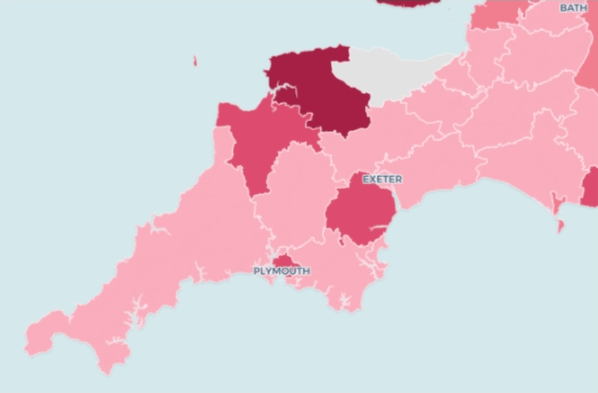
Eighteen wards in East Devon – spanning Exmouth, Honiton, Budleigh Salterton, Ottery St Mary, Seaton, and Cranbrook – currently have three or more coronavirus infections.

Clyst, Exton and Lympstone and Sidmouth Town are the only areas where ‘clusters’ of the virus have not been identified.

The district’s highest numbers are currently in Exmouth Withycombe Raleigh (15 cases), Honiton North and East (15), Cranbrook, Broadclyst and Stoke Canon (13) and Sidbury, Offwell and Beer (13).

Exmouth’s five wards have a combined total of 46 cases.

In Exeter, Countess Wear and Topsham is the only part of the city without a ‘cluster’.

The biggest numbers of cases are in Central Exeter (19) and Wonford and St Loye’s (15).

A total of 869 new cases have been confirmed across Devon and Cornwall since December 4 – the lowest weekly tally since the beginning of October.

It is 178 less than the total of new cases across both counties the week before.

Clusters across district and city

Covid ‘clusters’ – where three or more Covid cases have been confirmed – have been identified in 18 wards in East Devon:

  • Exmouth Withycombe Raleigh (15 cases);
  • Honiton North and East (15);
  • Cranbrook, Broadclyst and Stoke Canon (13);
  • Sidbury, Offwell and Beer (13);
  • Budleigh Salterton (12);
  • Exmouth Brixington (11);
  • Feniton and Whimple (ten);
  • Ottery St Mary and West Hill (ten);
  • Dunkeswell, Upottery and Stockland (nine);
  • Seaton (nine);
  • Axminster (eight);
  • Exmouth Town (eight);
  • Exmouth Littleham (eight);
  • Kilmington, Colyton and Uplyme (seven);
  • Honiton South and West (six);
  • Sidmouth Sidford (five);
  • Exmouth Halsdon (four);
  • Newton Poppleford, Otterton and Woodbury (four).

The ‘clusters’ data, last updated yesterday afternoon (Friday, December 11), is based on a rolling rate of new cases by specimen date ending on December 6.

‘Clusters’ remain in 14 wards in Exeter:

  • Central Exeter (19 cases);
  • Wonford and St Loye’s (15);
  • Middlemoor and Sowton (nine);
  • St James Park and Hoopern (nine);
  • Heavitree West and Polsloe (eight);
  • Heavitree East and Whipton South (eight);
  • Pinhoe and Whipton North (eight);
  • St Leonard’s (seven);
  • Exwick and Foxhayes (five);
  • Alphington and Marsh Barton (five);
  • Mincinglake and Beacon Heath (four);
  • Pennsylvania and University (four);
  • St Thomas West (four);
  • St Thomas East (three).

New cases across Devon and specimen dates

 Of the 869 new cases confirmed in Devon and Cornwall since December 4, 154 were in East Devon and 111 in Exeter.

There were 64 cases in Mid Devon, 92 in North Devon, 154 in Plymouth, 16 in the South Hams, 56 in Teignbridge, 48 in Torbay, 30 in Torridge and 41 in West Devon.

Cornwall recorded 103 cases.

Of the 869 new cases, 664 had a specimen date between December 4 – 10, with 109 of these in East Devon and 86 in Exeter.

There were 51 in Mid Devon, 78 in North Devon, 136 in Plymouth, 11 in the South Hams, 41 in Teignbridge, 32 in Torbay, 21 in Torridge and 30 in West Devon.

Cornwall had 69 cases with specimen dates in the last seven days.

Hospital admissions

The number of people in hospital in the South West though has risen slightly from 904 to 913 in the last seven days.

Figures have been revised upwards in all areas of the UK – but there are 51 patients in mechanical ventilation beds, down from 60 as of last Friday.

NHS England data shows that, as of Tuesday morning (December 8), there were 231 patients across Devon and Cornwall in hospital after a positive Covid-19 test.

This compares to 255 as of December 1.

There were 88 coronavirus patients in the Royal Devon and Exeter (down from 101); 36 in Derriford Hospital in Plymouth (down from 45); 23 in Torbay Hospital (down from 28); and 37 in North Devon District Hospital (unchanged).

And the Nightingale Hospital in Exeter has seen an increase from 20 to 32.

The number of Covid-19 patients in mechanical ventilation beds has fallen from 19 to 12 – with four at the RD&E, five at Derriford Hospital and three in North Devon District Hospital.

In the last week there have been 25 deaths within hospitals in Devon and Cornwall within 28 days of a positive Covid-19 death.

Fourteen of these have been in Exeter, seven in North Devon, three in Torbay, and one in Plymouth.

Tier 1 move ‘unlikely’ for now

County council leader John Hart and Devon’s director of public health Steve Brown have warned that it is unlikely that a return to Tier 1 restrictions before Christmas is ‘unlikely’.

The Government will review national tier allocations next week.

Councillor Hart said: “As much as I would like to see restrictions lifted a little in order to support our local tourism and hospitality industry, I fear case numbers are not yet coming down sufficiently to warrant a move to Tier 1.

“I fully recognise that there is a very fine and difficult balance to strike between lives and livelihoods here in Devon.

“If we are to stay in Tier 2 then I would like to see more support from the Government for our hard-pressed local businesses, and the hospitality trade in particular.”

Mr Brown added: “We are still concerned about positive rates among older people, and those in care homes, where we’re seeing most cases being asymptomatic.

“The decline in cases that we have seen in recent weeks has started to slow down and numbers are stabilising.

“We know, from our previous experience in Tier 1, that restrictions at that time did not stop our case numbers rising.

“I therefore do not believe that we are seeing a sufficient drop in cases yet for the Government to decide that Devon should be in Tier 1.

“Please continue to follow the Tier 2 guidance. Do not do not meet up indoors with anyone not in your household or bubble; please remember at all times to maintain your social distance and wear face coverings when you’re indoors in a public space; and please wash your hands regularly.”

Atticus reveals MP claims expenses chop-chop

Simon Jupp won’t be too bothered by having his pay rise chopped. He can find other ways to “feather his nest”.

He charged taxpayers for a knife set and chopping board, and even claimed £2.75 for a toilet brush. No doubt to clean the “toilet seats” amongst his Tory councillors.

Gabriel Pogrund www.thetimes.co.uk  [extract]

MPs have finally had their pay rise cancelled in solidarity with millions of people facing pay freezes or life on the dole.

How fitting, then, that one Conservative MP has charged taxpayers for a knife set and a chopping board. Simon Jupp, 35, who represents East Devon, made the claims (worth £3 and £2.75 respectively) as part of a renovation of his new constituency office this year.

Jupp, a former Tory aide and journalist elected last year, made other purchases from Ikea including: two armchairs (£300); two office clocks (£24); a coffee maker (£19) and a teapot (£5); coasters (£9) and six mugs (£7.50); eight cups and saucers (£20); a vacuum flask for water (£5); a toilet brush (£2.75); a solitary jar (£1.75) and four pencil cases (£4).

Were such investments essential during a pandemic, with many MPs working from home? Jupp says they were, as it’s important constituents “have a place to visit to meet with me and my team to access support”. It’s strange, then, that his website reminds constituents: “During the Covid-19 pandemic I am holding regular weekly surgeries by phone.”

‘We don’t have enough nurses to keep all our patients safe,’ says RCN leader

There are not enough nurses to safely care for patients in the UK, according to the body that represents the profession, and many of those who are working are suffering from anxiety and burnout after a gruelling nine months treating Covid patients.

James Tapper www.theguardian.com 

A year after the prime minister pledged during the 2019 election campaign to add 50,000 nurses to the NHS, the Royal College of Nursing has accused Boris Johnson of being “disingenuous” for claiming the government is meeting this 2025 target.

Johnson claimed last week that the government had “14,800 of the 50,000 nurses already” during prime minister’s questions in the Commons.

Yet the latest NHS figures show there were 36,655 vacancies for nursing staff in England in September, with the worst shortages affecting mental health care and acute hospitals. Staff in some intensive care units (ICUs) have quit since the pandemic, with those whom the Observer spoke to choosing to work instead in supermarkets or as dog-walkers.

Dame Donna Kinnair, the RCN’s chief executive and general secretary, said: “The simple, inescapable truth is that we do not have enough nursing staff in the UK to safely care for patients in hospitals, clinics, their own homes or anywhere else.”

She said that even before the pandemic, “heavy demand” was rising faster than the “modest increases” in staff numbers.

Last week the Health Foundation thinktank said there were 5.5% more nurses in English acute hospitals compared with last year, but some of these were nurses who had previously retired or left the profession, and had returned to help during the pandemic.

The thinktank said that even if the government met its target, 50,000 nurses would not be enough to recover from the pandemic.

“With tens of thousands of vacancies in the health and care system right now, any suggestion by politicians that a small increase equals success is disingenuous,” Kinnair said. “We know many returned to support the pandemic, and 35% of our members surveyed this year said they were considering leaving the profession.”

She said the solution was “honesty and investment” from the government.

With Covid-19 surging in Wales, Northern Ireland and London, many senior NHS leaders around the UK are concerned about the strain on medical staff, who have worked in full PPE and stressful conditions for nine months.

Amanda Smith, an ICU nurse in Belfast who is also a RCN steward, has worked in Nightingale wards at several of the city’s hospitals throughout the pandemic. “We’ve lost something like 15 nurses since the first surge,” she said – about a quarter of their team. When the number of Covid patients has risen, the NHS in Northern Ireland has brought in support nurses from other parts of the region but they are not trained in some procedures such as kidney dialysis.

It means nurses are responsible for two ICU patients instead of one, while support nurses are often taking on more responsibility without extra pay.

“If you’ve got an unstable patient, the other ICU nurse could be left with three or four patients to look after on her own,” Smith said. “You’re worried you’ll miss something.” The rise in patients combined with staff shortages meant nurses felt guilty about taking breaks, she said.

“People are getting very stressed at trying to combine their home lives with work. If they have young children who are hearing all the talk of how dangerous Covid is, they worry about their mum going to work.

“And when you see somebody in a bed who’s 44 years old, you think, ‘that could be any of us’.”

A survey of RCN members earlier this year showed that 35% were considering leaving the profession.

More students are studying nursing at university, up by 20% this year according to the Health Foundation, but the government was still relying on recruiting nurses from overseas.

The Department of Health and Social Care said: “We stand by our commitment to back the NHS and deliver 50,000 more nurses by the end of this parliament. Vacancies are falling and we are on track to meet the target, with 14,800 more nurses working in the NHS and 23% more students starting nursing courses than last year.

“Looking after the wellbeing of dedicated staff is at the heart of the NHS People Plan, with a £15m investment to strengthen staff mental health support this winter. To support recruitment, we’re giving all eligible nursing, midwifery and AHP students at least £5,000 for each year of their studies.”

Decades of quiet deals handed key ports to foreign control

Security concerns raised as ownership of UK’s key strategic assets comes under the spotlight

By Rachel Millard 11 December 2020 www.telegraph.co.uk 

At its height, the Peninsular and Oriental Steam Navigation Company had an empire spanning 100 countries, with ports, ships and property touching ground from the UK to Australia.

But at the turn of the 21st century restive and “short-termist” fund managers began demanding a payout – and the company founded in 1837 to take mail between Falmouth and Gibraltar started being broken up.

In 2002 its P&O Princess Cruises trading arm was sold off to rival Carnival, and then in 2006 its ports owner P&O Ports was traded to the UAE’s Dubai Ports World (DP World).

The £3.3 billion sale marked the end of its 168 years as a British firm, but was also one of the starkest moments in a decades-long drip-feed which has handed swathes of British ports to foreign investors.

As products fail to reach the shelves and millions of Christmas presents hang in the balance, the logistics crisis engulfing British docklands has thrown this foreign ownership into the spotlight after years of quiet deal making.

As a source of reliable income in a world running on global trade, British ports from Felixstowe to Grangemouth have long proven alluring for pension funds, state investment funds and billionaires seeking safety for their cash. The main groups that own the bulk of Britain’s ports are now overwhelmingly foreign owned.

Chaos at Felixstowe and other ports this week as the pandemic and Brexit rocks global supply chains throws a spotlight on their ownership at a time of heightened soul-searching and concern about foreign control of strategic UK assets, and nervousness about post-Brexit trade arrangements.

John Whittaker’s Peel Group, whose portfolio includes a controlling stake in the Port of Liverpool, is a rare example of a British owner in the UK ports sector. But even there, Peel Group is 25pc owned by Saudi conglomerate the Olayan Group, while Whittaker has recently sold a stake in the ports division to the pension fund Australian Super.

Associated British Ports and its 21 sites around the UK – including in Southampton, Immingham, Ipswich and Plymouth – was sold in 2006 to a consortium of funds including Canada’s Borealis Infrastructure and Singapore’s GIC.

Shareholders found a 50pc premium offered in a deal put together by Goldman Sachs, under the code name Project Admiral, too good to ignore.  

Middlesborough-based PD Ports, which owns the large seaport of Teesport as well as the inland port of Keadby and others, can trace its roots back to a mining company in South Wales founded by the Welsh entrepreneur Thomas Powell. But it was sold in 2000 to the Japanese brokerage Nikko Cordial before being handed on again to Brookfield Asset Management, the real estate and infrastructure investor among many attracted to the UK as a source of stable income.

Southampton Port, owned by Associated British Ports which was sold to a consortium including Canada’s Borealis Infrastructure and Singapore’s GIC in 2006

In 2011, Forth Ports, owner of ports including Tilbury and Grangemouth, was sold to Arcus Infrastructure Partners, a European investment fund, and has since been sold onto Canada’s Public Sector Pension Investment Board.

One of the world’s largest port owners Hutchison Ports – a subsidiary of Hong Kong conglomerate CK Hutchison Holdings – has been in the UK for decades, buying Felixstowe, Britain’s largest container port, in June 1991 for £90 million, and adding Harwich in 1998. Britain prides itself on an open economy, but foreign control of UK ports has prompted questions given their importance to global trade, security and the country’s seafaring identity – as well as imports on which our reliance is growing.

The relative ease with which DP World took over P&O Ports stood in stark contrast to the reception to its attempt to buy P&O’s American ones. Rebel Republicans with concerns about security forced the UAE to abandon the deal, despite President George Bush wanting it to go through due to the two nations’ friendship.

The logistics chaos of the past few weeks affects an industry that is generally in decent health and key to the economy. UK ports handle more than 500 million tons of goods annually, and directly employ over 120,000 people.

Research by the Centre for Economics and Business Research found that in 2015 ports contributed about £1.5 billion in tax revenues and helped support a total 695,200 jobs.

DP World has invested £1.5 billion to develop the hi-tech London Gateway container port, where robots and cranes ceaselessly unstack goods arriving from around the world.

Research published in 2018 by the British Ports Association found that UK ports and terminals had an estimated £1.7 billion of infrastructure investment in the pipeline. Mark Simmonds, BPA policy manager, argued it showed that ports “are investing in new infrastructure to keep goods and people moving as efficiently as possible.”

He added: “The UK ports industry operates in a competitive and commercial environment, independently of Government, so this significant investment is at no cost to the taxpayer.”

Yet the sector is unlikely to avoid further scrutiny, as Brexit and the pandemic forces Government to think more carefully about logistics. The threat of empty supermarket shelves or the elderly unable to get vaccines looms too large.

Amid the latest problems, Logistics UK, a freight industry body, has urged Grant Schapps, the Transport Secretary, to “seize the opportunity to make acute freight congestion less likely in the future”. It called for investment in the road and rail network as well as “better recognition of the important and value of freight in planning and infrastructure decision making.”

The body added: “It is clear that whole sections of the economy are being reshaped at a speed beyond most forecasts in response to the Covid-19 pandemic, accelerating existing trends and introducing new disruptions.”

Britain’s ports will, as they have done for centuries, be called upon to do their bit in the national effort to recover from the pandemic. Whoever they are owned by, they will need to be ready. 

Ground rent on new flats abolished by housebuilders

Five of the UK’s biggest housebuilders have scrapped ground rents on new flats, in a victory for future homeowners and campaigners who have long argued that the charges allow leaseholders to be exploited.

edition.independent.co.uk 

Thousands of homeowners have been hit with inflated management fees and ground rents that rose by hundreds or even thousands of pounds a year on new-build flats and houses. Many of those sales were subsidised with public money under the help to buy scheme which has helped to boost developers’ profits.

The practice of developers selling off the freehold of a new property to a third party is now effectively over, a move that campaigners hailed as the end of the “leasehold racket”.

Changes affect new sales only and will not directly impact the roughly five million flats that are already under contract to pay ground rents but will add to pressure on the government to overhaul the leasehold system.

Three of the four developers that are currently being investigated by competition regulators for allegedly mis-selling leasehold properties – Taylor Wimpey, Countryside and Barratt Developments – are granting all new buyers zero ground rents and long leases. The fourth developer, Persimmon, has not made its position clear.

Bellway, which is not under investigation, has introduced 999-year leases with zero ground rent. A management company run by residents will be in charge of the building, giving them control over maintenance and the level of charges they face. Barratt is offering a similar arrangement and senior industry sources predict that other developers will soon follow.

Buyers at a Berkeley development in Greenwich had been told they would be charged ground rent of £450 a year but have since been told this will be reduced to zero. The company is understood to be taking a “development by development” approach to lease terms.

Housebuilders are responding to changes in the help to buy scheme which reopens to new applicants next week.

The subsidy scheme has provided tens of billions of pounds of public money to finance sales of homes, significant numbers of which left owners with charges for maintenance or ground rents that rose to unaffordable levels. Other properties were later found to be substandard or to present a fire risk, leaving owners with large bills while freeholders and developers avoided liability.

After sustained pressure over the leasehold and cladding scandals, the government said in February that from April 2021, leasehold homes cannot be sold under help to buy unless ground rent on them is peppercorn – legal jargon for “no financial value” or zero. Developers are applying the same lease terms to properties sold outside of help to buy.

“Developers have not taken this decision because it’s the ‘right thing to do’,” said Katie Kendrick, founder of the National Leasehold Campaign. “They are being forced to change their poor practices because the applications for the new help to buy scheme opens from the 16 December and Homes England have stipulated that ground rent charged must not exceed a peppercorn.”

“Developers have used help to buy as a pull factor to sell leasehold houses for no other reason than to create a second asset for them to sell and boost their profits. It’s a national scandal.”

Ms Kendrick added: “By agreeing to do away with monetary ground rents on their new flats, developers are giving up a lucrative income stream but it is also quietly dropping the practice of the onward sale of the freehold to a third-party investor. This will end the unethical trade in the freeholds of people’s homes.”

The NLC is calling on the government to help “a generation of leaseholders trapped in homes they cannot sell”.

Sebastian O’Kelly, of the Leasehold Knowledge Partnership, said all developers must now publicly commit to 999-year leases, zero ground rents and giving residents power over their homes by giving freeholds to residents’ management companies.

This would guard against excessive fees charged by freeholders that have caused financial problems for many leaseholders.

Service charges are only meant to cover the cost of services provided but many leaseholders have been charged more. Some freeholders have also made money from kickbacks on buildings insurance, a cost that is borne by leaseholders through higher premiums.

“With ground rents gone there is no legitimate income stream from owning the freehold of a building,” said Mr O’Kelly.

“Developers can’t now sell them off to sharks who jack up the costs. The reputational damage would be too great. The leasehold racket hasn’t got a future.”

Around five million flats in the UK are leasehold and most residents must pay ground rents. Mr O’Kelly said the change in approach sends a message that ground rents are charged for “no service whatsoever” and should lead to a significant reduction in the amounts leaseholders must pay to extend their lease or buy the freehold of their building.

These costs frequently amount to tens of thousands of pounds, figures which Mr O’Kelly said are now harder to justify.

“A major flaw has been exposed in the system. We now need ground rents to be banned altogether,“ he added.

A spokesperson for Taylor Wimpey said: “We intend to participate in the new help to buy scheme which launches next April, and we can confirm that all new sites with leasehold plots that have commenced being sold on or after 1 December 2020 will have a peppercorn ground rent, not just those being sold under the new help to buy scheme.”

South West infrastructure spending is welcomed

The government commitment to spending on infrastructure and levelling up across the South West has been welcomed by Peninsula Transport at its Board meeting last Friday.

[However, Owl notes the “however” hovering above a long list of hoped for projects]

Daniel Clark www.devonlive.com

A series of transport, regeneration, housing and flood prevention schemes across the South West feature in the National Infrastructure Strategy.

Clear commitments to the South West and Peninsula include:

  • A new railway station at Edginswell in Torquay, thanks to £7.8million funding confirmed in the Spending Review.
  • “Restoring rail links to Okehampton in Devon”, via a £500million fund to restore transport services lost in the Beeching cuts of the 1960s.
  • Development funding to progress seven other rail schemes in the South West, including opening the station in Cullompton.
  • £59million for Plymouth, including £12million to improve walking and cycling, via the Transforming Cities Fund.
  • Work and plans are progressing on several other schemes not mentioned by name, including the upgrade of the rail line at Dawlish.
  • Nine South West towns will receive up to £25million each via the Towns Fund to support major regeneration plans, including Torquay.
  • Seven South West projects have been awarded a total of £526million via the Housing Infrastructure Fund to unlock thousands of new homes, including £55.1million for South West Exeter.

“The projects in this strategy, including £27billion of public funding next year, will create wealth and thousands of jobs to repair some of the scars from the pandemic,” said Prime Minister Boris Johnson, who drew attention to the dualling of the A303 in his foreword.

The strategy reaffirms that “the government will invest in the South West to help rebalance the UK economy”.

Chairman of the Peninsula Transport Shadow Sub National Transport Body, Cllr Geoff Brown, said: “We warmly welcome the government’s commitment through the National Infrastructure Strategy (NIS). Investment is critical to the South West economy whether it is on rail, roads, ports, airports, broadband upgrades or charging infrastructure for electric vehicles.

“We are also greatly encouraged by the commitment of the government to Sub National Transport Bodies (STBs) and the £425,000 of funding agreed with Department for Transport for our strategic transport work this year. However as always we await the detail on some of the wider spending announcements just to see how much benefit they will provide for the Peninsula.”

Highlights which may support the Peninsula from the government’s spending review include:

  • A package of Covid-19 support to keep critical transport links available, including an agreement that the Treasury will absorb risks associated with rail passenger revenue.
  • £4billion Levelling Up Fund, including up to £600m in 2021/22, with the additional funding spread over the remaining years to 2023/24 with details on bidding due in the New Year.
  • £27.5billion for England’s Strategic Roads.
  • £1.7billion for potholes and local road upgrades including £310m for the major road network and large local major schemes programmes.
  • £420million bus funding (£120m for zero emission buses and £300m for recovery & transformation).
  • £257million cycling and walking funding.
  • Continuation of the Plug-in Car, Van, Taxi and Motorcycle Grants until 2022-23.
  • £20million in 2021-22 to enable a UK network of technology demonstrations in alternative marine fuels and green shipbuilding.
  • £21million for the decarbonisation of aviation.

Cllr Brown added: “We also are really pleased to see that the Department for Transport is now seeking views on The Future of Transport: Rural Strategy. It is so important for our rural communities that their transport needs are considered and we will be making strong representation on this. We also welcome the news on £60m funding for the North Devon Link Road.”

Reacting to the news, Torbay MP Kevin Foster said: “The £21.9million Torquay Town Deal and the £7.8million of New Stations Funding for Edginswell will help create the infrastructure and opportunities our bay needs to build back better from the impact of Covid-19 on our economy and community.

“This, combined with investment in our region’s infrastructure such as strengthening the sea wall at Dawlish and approving work to finally solve the problems on the A303 at Stonehenge, are signs of this government’s commitment to our region after decades when the South West did not get its fair share of infrastructure spending.”

This article has been produced for the Annual Business Guide Top 150, sponsored by PKF Francis Clark.

The guide profiles the biggest firms in Devon and Cornwall and takes a comprehensive look at the sectors that dominate the regional economy.

We examine how they have been affected this year and chart the COVID-19 bounceback.

See the full list, published on October 22, at BusinessLive and in print in the Western Morning News, or sign up to the WMN newsletter, here.

You can also view it here.

David Thomas, Conservative group leader on Torbay Council, said: “The Conservative group of councillors in Torbay are delighted to have received funding for the Torquay Town Deal (£21.9million) and Edginswell rail station (£7.8million).

“Although entirely different schemes, they clearly complement each other and are a real game-changer for the town.

“This government investment comes on the back of £120million of private money coming into the bay, where we are seeing five new hotels being built.

“This is a positive indication of levelling up working for Torbay when we have previously missed out.”

Central Devon MP Mel Stride said he was “absolutely thrilled” to see the restoration of the Okehampton to Exeter rail service included in the strategy.

He said: “The service will be a huge boost to the local economy in and around Okehampton and will also have a positive impact on Crediton as more people travelling between Okehampton and Exeter stop off to shop.

“It will provide a valuable service for local residents, especially those without a car, and will also be good for the environment by taking cars off the road.

“I will be making urgent enquiries to see what final steps need to be taken for services to begin in 2021.”

Politicians, People and Covid-19: A Fantastic World-Leading Satire

We have had the “Secret Diaries of Sasha Swire” (Aged 57 and eleven twelfths). Now another local author publishes a satire on Politicians, People and Covid-19.

Satire can entertain, expose and ridicule incompetence.  In his latest book, Devon author Philip Algar offers an imaginative and satirical account of politicians, their behaviour and policies and public reaction in the early days of the corona crisis.  He does not underestimate the tragic impact of corona nor does he belittle the disease, unlike some international leaders.  Instead he takes some real incidents, exaggerating their potential impact and invents almost plausible stories.

For example, he reveals how President Trump decided to blame the World Health Organisation and explains why there was a shortage of dogs in the UK.  Why were Irish mountain climbers victimised and how might Sir Humphrey Appleby have reacted to the use of government slogans?  Why were some Mexicans disappointed when they learnt what was disallowed under the heading of essential items?

Why did some rare bats become even more rare and why did a lake and beach change colour?  Why did thieves want government financial support?  Why was it so difficult to visit the local pub?  How did cyclists imperil road safety and cause pollution?  How did a radio broadcast give a totally wrong impression and why did children fear an invasion from space?  What happened to subtitles when a government minister was speaking to the nation?  How did some press conferences go seriously wrong?

All this, and much more, is revealed in this topical book which is available from the Curious Otter Bookshop, Ottery St. Mary and Amazon. The author can also supply copies at £7.49, including postage and packing to the UK.  (philipalgar@btinternet.com) 

HMRC enforcers: ‘I’ve had to borrow from friends just to survive . . . I’m so stressed I can’t eat’

While millions of high earners benefit from financial aid during the pandemic, HM Revenue & Customs and local councils have pursued families on low incomes for relatively small amounts in tax. In more than 1,000 cases since April people have been visited at business premises by HMRC enforcement staff.

Paul Morgan-Bentley, Head of Investigations www.thetimes.co.uk 

Thousands of others have been sent letters and text messages from private debt collection agencies used by HMRC, including care home workers, those who have been unwell with Covid-19 and the vulnerable.

‘I got the letter, went upstairs and cried’

Tax officials have been shamed into dropping a case against a young mother after her MP accused them of chasing her for £2,000 in error and causing her distress during the pandemic.

Patricia Gibson, MP for North Ayrshire & Arran, wrote to HM Revenue & Customs in September asking officials to “cease the action being taken” against a constituent, whom she described as “a young mother on low income”.

The woman, who is 27 and has two children aged seven and one, claimed tax credits for five years to top up her £9,000-a-year earnings as a part-time hairdresser. In July 2018, she phoned HMRC to stop the benefits because her circumstances had changed and she was moving to England with her husband, who was in the army.

A call handler told her that the only way she could do this before the end of the financial year was to submit exaggerated earnings of £30,000 while she was on the telephone. She went along with the suggestion and her tax credits stopped. However, this year she received a repayment demand, wrongly claiming she owed £2,078 in tax credit overpayments.

In her letter Ms Gibson wrote that the constituent was then reassured during another call with HMRC that the matter would be resolved. Despite this, she was contacted at home by debt collectors in August. The young mother, who asked not to be named, told The Times that 1st Locate, a debt collection agency working with the Revenue, wrote to her at home, texted her and tried to phone her.

“I was devastated,” she said. “The day I got the letter I went straight upstairs, put my baby to sleep and then cried on my bed.”

1st Locate said it could not comment on individual cases. It said that it was regulated by the Financial Conduct Authority, subject to extensive due diligence and trained to identify and help vulnerable customers and assess affordability.

‘I’ve been shielding, and now I’ve been threatened that someone could turn up at my home’

A freelance office manager who was unable to work while undergoing chemotherapy and radiotherapy for cancer during the pandemic has told of her emotional trauma after HMRC gave her financial details to debt collectors.

The woman, in her fifties, had spoken to HMRC and it agreed that she could defer a tax bill. Six months later, however, she received a letter from debt collectors stating that she should urgently pay more than £5,000.

“I am so distressed by how HMRC have acted,” the woman, who asked not to be named, told The Times. “I have been shielding and so spent months without seeing friends and family, and now I’ve been threatened that someone could turn up at my home.”

After calling the firm, it agreed to close her case and return it to HMRC, which told her it passed it on in error.

HMRC said it could not comment on the specific cases without the taxpayers’ permission.

“I’m terrified. HMRC staff lack human empathy”

HMRC staff added interest to Kirsty Howe’s company tax bill after she called them for help while struggling to cope financially during the pandemic.

Ms Howe, 52, who runs a small company that manages diaries for camera crews, was unable to make any money for months this year after television production stopped. She has until the end of the year to pay a £9,400 corporation tax bill for the 2019-20 financial year but phoned HMRC before the deadline to ask to start a payment plan.

With her son George, 21, moving back home with her in Brighton and only about £500 per month from the furlough scheme, she feared she would be unable to save enough to pay the whole tax bill in time. She has had a mortgage holiday but has to start paying £750 a month again this month.

Ms Howe assumed HMRC staff would take kindly to her being conscientious and trying to set up a payment plan. Instead, they tried to persuade her to wait to see whether she could pay it in full. A call handler agreed she could pay £5,000 immediately and cover the remaining £4,400 throughout next year if she also paid interest at 2.6 per cent. The rate is applied to late payments and will start being added to Ms Howe’s company account in 2021.

“I’m so upset and angry,” she said. “Why am I being charged extra? I was acting responsibly and doing the right thing in asking to set up a payment plan. I am terrified by HMRC. They won’t budge. It is like they lack human empathy.”

Ms Howe’s small business, the Firm Booking Company, is now making about 40 per cent of its usual income. “There has been so much help for so many big corporations,” she said. “It does not make sense that a small business owner like me is penalised.”

HMRC said applying interest in Ms Howe’s case was “standard practice for any debt” and that it “followed correct protocol and process in the case and agreed a manageable payment plan”.

Care home worker told belongings could be sold

Richard Hull, 59, has told of the “immense struggle” to cope financially after he and his wife were unwell with Covid-19 before being threatened with repossessions by HMRC. The self-employed carpenter, from East Grinstead, West Sussex, owes £9,733 in tax but is unable to raise the funds because almost all of his customers have delayed or cancelled works.

He told The Times that he was struggling to cover bills at home, where he lives with his wife, Teresa, 47, who works part-time as a cleaner in a care home, and their 11-year-old son. He has had a pay-as-you-go gas meter installed for the winter to prevent heating bills rising too high. In recent weeks their landline has been cut off and his car has been repossessed. He has been rejected for help from the self-employment income support scheme because of a previous late tax return.

He was contacted by HMRC about his tax debt before his case was passed on to private debt collectors. After failing to settle the bill, he received another letter in October from HMRC’s internal staff, which said that his debt had been increased to £10,327 and threatened repossessions. It stated: “Continuing to not pay what you owe is a serious matter. Previously, we treated this as something you didn’t mean to do. However, if you still don’t pay, we’ll now treat you like you’ve deliberately chosen not to.”

It stated that the law allowed HMRC to take action to collect the money owed, adding: “We can take things you own and sell them and we charge you fees for doing this. If you don’t act now it could cost you more money. Alternatively, in certain circumstances we can take money directly from your bank or building society accounts.”

It directed him to a government web page explaining that officials can visit him at home, make a list of his possessions and take them immediately, while charging hundreds of pounds in fees.

Mr Hull and his wife had the coronavirus in April. He said that he tried to respond to previous letters from Advantis Credit, a debt company used by HMRC, but was unable to get hold of its staff on the phone.

“It has been an immense struggle,” Mr Hull said. “I have had to borrow money from friends and ask for advances from customers, so when I eventually do the work I’ll only be paid half. This is just so we can survive.

“The letters have become increasingly threatening — saying they will come and take our possessions and sell them. I am so stressed that I’m hardly eating and my hair has been falling out.

“I know someone on £80,000 a year with £50,000 in savings who has been furloughed. How is it fair that we are being chased for a tax debt that it’s impossible for us to pay at the moment?”

Advantis Credit said that it was regulated and “we take our commitment to delivering fair treatment of customers extremely seriously”, including performing affordability assessments, helping vulnerable customers and providing support during the pandemic. A spokeswoman said that it was unable to comment on individual accounts.

HMRC said the letter “was a mistake and does not reflect our current approach to debt collection”. A spokesman said: “We apologise for any distress caused to Mr Hull and have put in measures to stop this happening again. We will make contact with Mr Hull to discuss and agree a way forward.”

Suicidal man was threatened with a home visit

A vulnerable man who tried to commit suicide last month is among those who have been threatened with bailiff visits because of owed council tax.

The man, whom The Times has chosen not to name, was on benefits for the first time and living alone when he received a letter in August from Bristow & Sutor, a company hired by his local authority to collect unpaid council tax. It stated he owed £1,186 — a figure he contested — and that he could pay the full amount in a week or in instalments for three months. It said that local authorities needed the money “to ensure vital services can be delivered, whilst also helping those in need”.

“It was threatening to say they were going to come round to my home and give me aggravation,” he said. “I’ve been living alone because my partner had to move in with her mother because of coronavirus. I was scared.

“The idea of them coming to my home gave me a lot of anxiety. It has been the most stressful time in my life and it has affected my mental health.”

The man, who is in his 50s, handed in his notice at a restaurant at the beginning of this year after being offered a job elsewhere. The job offer was withdrawn because of the pandemic and he had to sign up for universal credit.

The letter that he received in August related to council tax that he did not pay when he moved from his previous home to the flat in which he now lives. He acknowledged that he owed a few months of payments but the council said he owed money in three consecutive financial years and the full amount was signed off by a magistrates’ court.

He told the company he was happy to pay what he owed but was warned that contesting the charge would be a lengthy process. He agreed to a six-month payment plan without knowing how he was going to afford it. “I wasn’t able to work for months,” he said. “My doctor put me on antidepressants.”

He attempted to take his own life in November and after staying overnight in hospital is being supported by a debt charity and doctors. He has recently got a new job and is continuing to pay back his council debt. There is no suggestion that the actions of Bristow & Sutor caused him to try to take his own life.

Bristow & Sutor said it had been given no indication that he was vulnerable and did not attend his home. Its letter stated that it could offer “more flexible payment terms” due to the pandemic. It said it was “sorry to hear about this person’s circumstances” and that it was going “above and beyond to achieve a high standard of ethics and professionalism”, including training staff to identify and help vulnerable customers.

The council said that the case was passed to Bristow & Sutor before the pandemic and it had not known the man was vulnerable. The debt has now been sent back to the council and arrangements for him to repay will only be made once he has recovered. A spokeswoman said that enforcement action was taken only as a last resort.

The debt collection agencies said that they were regulated by the Financial Conduct Authority and trained to identify and help vulnerable customers and assess affordability. They said they have offered additional support during the pandemic including changes to repayment terms and are subject to extensive due diligence overseen by HMRC.

After being contacted by this newspaper, HMRC apologised for about 800 letters it had sent during the pandemic accusing people of deliberately not repaying debts. HMRC said that repossession “is only mentioned in a letter after we have already made several attempts to contact a customer” and that less than 1 per cent of field force collector cases lead to goods being removed.

HMRC said that it stopped debt collection activities in March but contacted a million people with tax debts built up before the pandemic when restrictions were lifted in some areas, allowing them to agree to more than 500,000 payment plans covering £4 billion in debts. It said that visits to work premises “have not been to list or collect assets, but to discuss the customer’s ability to pay during the pandemic and offer support”.

A spokesman said that contact initially focused on working with people to help them to find an affordable way forward and “more strongly worded communications only go out as a last resort where customers have not responded to our initial communications”.

He said: “The last thing we want to do is cause anyone more worry at this difficult time but it remains vital the tax system continues to function to pay for vital public services, like the NHS.”

For confidential support, call the Samaritans on 116 123 or visit a local branch. See www.samaritans.org

This article was updated on 10 December 2020.

MPs’ pay rise scrapped after backlash over proposed £3,000 wage hike

Plans to give MPs a pay rise of more than £3,000 have been scrapped, the parliamentary pay watchdog has said.

Finally, the Government has been shamed into reaching this obvious conclusion following: “The Public Sector saved Britain. So why are MPs who broke us getting a rise?”

Owl discusses local MPs’ reaction below.

Lizzy Buchan www.mirror.co.uk

The Independent Parliamentary Standards Authority (Ipsa) said hiking MP pay next year would be “inconsistent” with the financial hardship faced by many workers during the pandemic.

The watchdog said in October that MPs could be entitled to a 4.1% rise in April, taking their salaries to £85,291 – despite wage freezes for millions of public sector workers.

But the comments provoked a major backlash, with even Boris Johnson’s spokesman saying the Prime Minister was against the hike.

Confirming the u-turn, Ipsa interim chair Richard Lloyd wrote to MPs: “The unprecedented impact of the Covid pandemic has had an unexpected, but different, effect on public and private sector earnings.

“It is clear that applying the forthcoming official statistic for public-sector earnings growth would result in a salary increase for MPs that would be inconsistent with the wider economic data and would not reflect the reality that many constituents are facing this year.

“The Ipsa board has therefore decided that the salary for Members of Parliament will remain unchanged for the financial year 2021/22.”

The watchdog had been planning to raise MPs’ salaries in 2021 in line with this autumn’s public sector wages.

If previous trends had continued, that could have triggered a 4.1% rise of to £85,291 – in the depths of the pandemic.

Yet millions of public sector workers including teachers and police now face a freeze in April – after the cut-off date for MPs’ pay.

That would have meant they were suffering a real-terms pay cut at the same time as MPs enjoyed an above-inflation hike

IPSA had stressed no final decision had been taken.

The body’s four board members reflected on the PM’s comments and wider context before they made one.

Local MP reaction

We know that Ben Bradshaw MP intended to donate his rise to charity. Did we ever hear from  Neil Parish MP and “jumping Jupp Flash”?

If they were happy to trouser the cash, they will be disappointed.

City MP ‘would donate pay rise to charity’

www.radioexe.co.uk

It comes after the independent body, set up after the expenses scandal, recommended that MPs pay should increase by 11 per cent to 74 thousand pounds.

The news has provoked fury from unions in the public sector – who’ve seen their own pay frozen along with job cuts and other austerity measures.

Ben Bradshaw told Radio Exe it would be a disaster to return to the ‘bad old days’ of MPs setting their own pay and conditions.. which was what allowed the expenses scandal to happen.

If the rise is imposed he’ll simply use it to help fund good causes, and he says he’ll also seek to ensure that his expenses remain the lowest of any MP in Devon.

Large Covid outbreak at Exmouth care home

A large outbreak of Covid-19 at an Exmouth care home reached 26 positive cases among residents and staff.

Anita Merritt www.devo

Knappe Cross Care Centre in Brixington Lane had its first Covid-19 case confirmed last Saturday, December 5, after one of its residents was tested positive during a hospital admission.

Since then steps have been taken to try and halt its spread, with extra staff coming on board to cover for staff who are currently having to self-isolate and to look after the residents.

All ‘window visits’ to the care home by family and loved ones have been suspended until the outbreak is under control.

Devastated registered manager Mircea Ciobanu said: “It was something that was very unexpected. We have been fairly fortunate so far up until now that we have not had any cases through this pandemic.

“It was a disappointment to us, as much as it was to families, residents and staff that this has now happened. We are doing the best we can to control the outbreak and I think we have done very, very well so far in doing that.

Knappe Cross Care Centre

Knappe Cross Care Centre

“We have not had any residents or staff who have been very, very poorly, and nobody has died.

“We have been in touch with the local authority, Public Health England and the Care Quality Commission, and have a meeting scheduled with them.

“We are fortunate to say that in spite of some staff testing positive we have managed to cover the floors and bring in enough staff. They are very busy and are doing their best to keep our residents safe following the advice we have been given.

“What matters now is how we manage it and how things will be when this is over.”

The care facility is home to 37 residents and it employs up to 45 members of staff.

Expressing his gratitude to all the care home’s staff for what they have done this year, Mr Ciobanu added: “My staff have made very big sacrifices through the pandemic to take care of our residents such as sacrificing holidays and not seeing their own loved ones.

“I would like to thank them for how supportive they have been.”

A spokesman on behalf of Public Health Devon said: “Public Health experts and Devon County Council are working together to support staff at Knappe Cross Care Centre in Exmouth following a number of confirmed cases of Covid-19 at the care home.

“The home is following all of the current guidance to control infection. It is minimising the risk of the transmission among its residents and staff through a comprehensive range of measures including self-isolation of those affected, wearing of correct PPE, rigorous cleaning, as well as social distancing and hand hygiene.

“Any contacts of the confirmed cases have been contacted and asked to self-isolate for the appropriate duration, and should symptoms develop they should be tested.”

Steve Brown, director of Public Health Devon (designate) said: “Care homes in Devon are working extremely hard to keep residents and staff safe and to control the risk of infection.

“We are working closely with care homes to support those currently affected and will continue to monitor the latest data and intelligence.”

297 flats and an aparthotel proposed in Cambridge

Plans for hundreds of new flats and an aparthotel  in Cambridge have been put forward for public consultation.

Benjamin Hatton www.cambridge-news.co.uk 

Vertex Living, which would manage the property if approved, has proposed the development on the site of the former National Institute of Agricultural Botany in Huntingdon Road.

The plans include 297 build-to-rent apartments, a 201-room aparthotel, a cafe, microbrewery and bike shop, as well as “pocket parks” on site.

The plans have no formal planning status at present, but a planning application is expected early next year after the consultation.

The developer said the tallest building on site would be around five storeys.

Vertex Living is the property managing agent for Marchingdale Developments, which already has permission to convert the former NIAB offices into 149 flats.

That proposal proved controversial for including “very small” flats with a floor space of 17 square metres, about the size of a disabled parking bay. The city council’s executive councillor for planning policy. Labour’s Katie Thornburrow, branded it “appalling” and said it would provide “inadequate spaces to live in”.

‘Gym and swimming pool’

Marchingdale Developments obtained permission for the conversion in May via a national policy that encourages developers to convert offices into homes, bypassing some of the locally enforced regulations, including, in this case, the council’s minimum space standard of 37 square metres.

At the time, the leader of the city council, Labour’s Lewis Herbert, described the method of obtaining planning consent as a “loophole”.

The developer defended the plans, saying they comply with the relevant planning legislation, and saying “the units are of a perfectly reasonable size, allowing for all of the necessary functions to support daily life”.

The latest proposal would retain 68 of the flats that proved controversial, which will be developed by converting the frontage of the 1920s building of the former NIAB offices while replacing the plans for the other 81 flats with the new purpose-built flats and aparthotel.

Although the developer is seeking permission for its latest proposal, it already has permission to implement its original plan should it choose to.

Vertex Living says that all of its plans for the site are compliant with the necessary planning policies and that the latest build-to-rent scheme will address a need for rented homes in the city by offering purpose-built rental accommodation with secure tenancies, aimed at those who do not qualify for affordable housing but who cannot afford to buy a property.

‘Build-to-rent for those who cannot afford to buy’

A spokesperson for Vertex Living said: “The private rental market is the largest housing tenure in the city and currently 49 per cent of all households in Cambridge rent privately.

“The build-to-rent concept is new to Cambridge, however the council has acknowledged that there is a need and demand locally for this form of accommodation. The new homes are primarily targeted at those people who cannot access social housing but also cannot afford to buy due to the high cost of property in Cambridge.

“The build-to-rent homes will provide future residents with secure tenancies within a well-managed development that will offer excellent communal facilities, high-speed internet and on-site maintenance.

“Affordable dwellings will be delivered as part of the build-to-rent offering and provided as discounted rent homes allocated to local workers. This approach is compliant with National Planning Guidance and supported by the housing team at Cambridge City Council.

Dozens of GP practices in England opt out of Covid vaccine rollout

More than 100,000 patients will not be able to get the Covid vaccine from their family doctor after their GP surgeries decided not to take part in its deployment, the Guardian can reveal.

Denis Campbell www.theguardian.com

Dozens of GP practices in England have chosen not to join the NHS’s coronavirus vaccination programme amid concerns their workloads are already too heavy, they have too few staff and that patients could suffer if practices have to cut back other services so doctors can administer the injections.

Their reluctance to inoculate patients threatens to overshadow the start of the second phase of the vaccine rollout, which is due to start next week, with GPs taking part for the first time.

The Guardian has established that a number of practices in Manchester, Sussex, Lincolnshire, Yorkshire and the Thames Valley have opted out of the programme. The local NHS will have to arrange for patients registered at those surgeries to be vaccinated elsewhere.

While GPs are pleased the Pfizer/BioNTech vaccine has become available, many are concerned at how they will put on vaccine clinics from 8am to 8pm seven days a week, as they are obliged to do under the terms of the contract covering their involvement, which NHS England negotiated with the British Medical Association, the doctors’ trade union.

A new rule requiring every vaccine recipient to then be monitored for 15 minutes, introduced by NHS England after two hospital workers had an allergic reaction to it when deployment began on Tuesday, has also prompted some surgeries to not get involved.

Many GPs are torn between their desire to immunise patients in order to save lives and the practical difficulties of participation. Their feelings are also complicated by not wanting to be seen to be undermining public confidence in, or access to, the vaccine.

Discontent in Manchester is so great that two primary care networks (PCN), or groupings of practices, which between them have more than 100,000 patients, have decided not to take part. One, Cheetham Hill and Crumpsall PCN, involves eight surgeries which between them have around 56,000 patients. The other, Higher Blackley, Harpurhey and Charlestown PCN, comprises nine surgeries with about 46,000 patients.

“We are already struggling to staff our surgeries, so how are we going to provide the staff to do the vaccinations? And how can we scale back other services, to free up staff time to vaccinate people, without compromising patients’ safety?” said one GP in Cheetham Hill and Crumpsall.

Primary care services in England are delivered by about 7,000 surgeries organised in 1,260 PCNs. Family doctors in about 250 PCNs are due to start vaccinating patients next week. They will join the 70 “hospital hubs” across the UK which began delivering the vaccine to over-80s, care home staff and NHS personnel with underlying health conditions on Tuesday.

Dr Julia Patterson, the lead for Everydoctor, a network of grassroots NHS medics, said: “I’ve not spoken to a single doctor who doesn’t want to take part in the vaccine rollout; medical professionals are acutely aware of the importance of vaccinations. However, PCNs in some areas may simply be forced to opt out in order to keep normal patient services going, and keep their patients safe this winter.”

There is concern that, once a surgery has signed up, the length of the contract – nine months – could mean that patients may struggle to access care during that time.

A letter from GPs at a surgery in Lincolnshire claimed the “inflexible” contract, and NHS England’s ability to unilaterally impose new conditions during the rollout, “pose a real risk to the safe and essential general medical services we provide to our patients, to the wellbeing of our colleagues, and to the financial stability of the GP practices”.

Pulse, a news website for GPs, reported on Thursday that the 15-minute observation rule had prompted North East Derbyshire PCN to pull out of the scheme.

The Royal College of GPs acknowledged the challenge facing GPs and tension in their ranks.

Prof Martin Marshall, its chair, said: “It is going to be an enormous challenge, given the workload and workforce challenges GPs and our teams are currently working under … Given these challenges, we understand why some practices have felt like they cannot sign up. But there has been an excellent response from the large number of practices able and wanting to be involved.”

A spokesperson for the NHS said: “As set out and supported by the BMA, general practices will deliver the vaccine from nominated sites within primary care networks, where it is safe and practical to do so. There has been a fantastic response from GPs across England signing up to do so.

“Given the well-known logistical challenges of delivering this particular vaccine, GPs like others across the NHS are now responding rapidly to make arrangements for this to happen.”

Bellway housebuilders fined £600,000 for destroying bat roost in south London

A building firm that carried out demolition work at a site known to be inhabited by bats has been handed a £600,000 fine, the largest ever issued by a court for a wildlife crime, according to police.

The pound at East Budleigh comes to mind. Would the police take action here? – Owl

www.theguardian.com

Bellway, the housebuilders, admitted damaging or destroying a breeding site or resting place in Artillery Place, Greenwich, south-east London, in 2018, where soprano pipistrelle bats had been documented the previous year.

All species of the animal in the UK are protected.

Bellway, which also had to pay costs of £30,000, agreed to make a £20,000 donation to the Bat Conservation Trust, the Metropolitan police said.

Inspector David Hawtin praised Sgt Simon Henderson and PC Giles Balestrini for their roles in the investigation.

“With the expert assistance of colleagues from specialist units within the Met, the officers constructed evidence to prove that the company had indeed committed an offence by carrying out work at a site where bats were known to inhabit,” he said.

“Bellway Homes has admitted responsibility for this and I hope it reinforces the message that this legislation is there for a reason and should be adhered to.”

At Woolwich crown court on Tuesday, the company pleaded guilty to damaging or destroying a breeding site or resting place of a wild animal of a European protected species between 17 March and 17 August 2018.

The company had been notified in planning documents that it would first need to obtain the appropriate mitigation and a Natural England European protected species licence.

Devon council data leak under investigation

A significant password data breach involving East Devon councillors has been uncovered – and is now under investigation by the Information Commissioner’s Office.

Owl can confirm that they failed to spot the data breach! (The article contains a splendid photo of “Colditz”.) 

Daniel Clark www.devonlive.com

Passwords used by at least 37 of the 60 strong East Devon District Council were briefly made publicly available as a result of the data breach that happened at the start of November.

Swift action was taken to rectify the breach, with councillors having their passwords reset.

It is understood that Strata, East Devon District Council’s IT provider, at some stage took the decision to add the both Airwatch, and Outlook 365 passwords to the individual councillor profiles, and as such, the data breach meant passwords were available.

It also meant that all the data within the councillors’ emails, which could have included confidential information such as probation reports, medical info and electoral register data, could have been accessed by other council members.

The Strata team acted quickly to reset the passwords and notified the Information Commissioners’ Office of the breach, and a full report will come before the council’s cabinet in 2021.

Cllr Paul Millar, who discovered the initial data breach, asked questions around the issue at Wednesday’s full council meeting.

He asked of Cllr Jess Bailey, Portfolio Holder for Corporate Services, what her assessment of the recent significant password data breach for Members, what steps is she taking to ensure that the appropriate safeguards are introduced to prevent the same or similar situation from happening again, and when will Cabinet receive a report?

In response, Cllr Bailey said: “Whilst I recognise that this is a serious matter, I have been sufficiently reassured such that in my view the actual risk of anything untoward having occurred is extremely low.

“Quick and early responsive action was taken to rectify the issue – acknowledged by the ICO – and I understand that the issue is very specific and, as such, is highly unlikely to result in any wider implications for the rest of the Council’s systems.

Blackdown House, East Devon District Council\'s new HQ in Honiton

Blackdown House, East Devon District Council\’s new HQ in Honiton

“The investigation report from Strata, which will come to Cabinet in the near future, will address this and I have been reassured that the Council’s Data Protection Officer will be ensuring that the recommendations and any mitigation actions identified are appropriate and that they will be implemented.”

As a supplementary, Cllr Millar asked for a yes or no answer to the question of ‘can you offer a categorical assurance that my emails and the data of many residents inside those emails were accessed by a third party?’

Cllr Bailey replied: “There will be a report coming through and once that’s available will be brought through,” to which Cllr Millar said: “That’s a no then.”

After the meeting, he added: “The Portfolio Holder’s evasive answer to my question confirms that she does not appear have any handle on an extremely significant data protection issue within the Council.

“There are simply no grounds to suggest that the risk is “extremely low” as she suggested in her written answer to me.

“I look forward to a proper explanation on behalf of the residents in my Ward that my email password and sensitive data will never be able to be viewed by third parties.

“There is no doubt of the seriousness of this situation and I have to say that I am very unimpressed with the Portfolio Holder’s total lack of urgency in terms of providing Members and residents with the much-needed clarity and peace of mind that she is personally on the case..”

A spokesman for East Devon District Council said there was nothing more they wanted to say in addition to the answer from the portfolio holder.