Testing the waters report: reducing health risks from water pollution

Public waterways are a great resource enjoyed by many children and adults and can have a significant positive impact on our health. Whilst there will always be challenges with the efficient management of sewers and sewage treatment works, minimising the entry of human organisms that can cause harmful infection should be a major priority. This report provides clear options for how this can realistically be achieved.”  Professor Sir Chris Whitty, Chief Medical Officer of Health

[Remember SWW claims that Jo Bateman has no inherent right to swim in the sea. – Owl]

National Engineering Policy Centre raeng.org.u

Key findings of the report

This report examines the interventions available to reduce the public health risks associated with using open waters for recreation that may be polluted with faecal organisms from human waste in sewage.

It outlines 15 recommendations for water service providers, UK government, devolved administrations and public bodies to reduce public health risks posed by polluted water. The report’s findings are based on risk-based assessments and consultations with more than 100 engineers, wastewater experts, the water industry, campaign organisations and policymakers.

It focuses on the role of wastewater infrastructure in introducing primarily human faecal organisms into open water through storm overflows and treated wastewater. However, it does not look at agricultural runoff from livestock, wild animals, or septic tanks.

What engineering interventions could we implement to tackle wastewater pollution?

There are a range of interventions that could be deployed across the wastewater system to reduce the public health risks for recreational water users (such as swimmers, anglers and surfers). The report looks at interventions in four broad categories:

  • Water management: These interventions seek to reduce the volume of water entering combined sewers to reduce the number of overflows and reduce exposure to polluted water.
  • Wastewater treatment: Improving the quality of pathogen removal to reduce the hazard of treated effluent or overflows.
  • Monitoring and communicating risk to the public: Reducing exposure by providing better information to the public.
  • Maintenance and operations: Improving performance of infrastructure to reduce the number of overflows and improve the quality of treatment.

Recommendations to reduce public health risk

The report makes 15 recommendations which target situations where the risk to public health is highest whilst also balancing cost and other policy priorities. The recommendations can be split between three groups; immediate actions, long-term transformational opportunities, and enabling actions. 

  • Asset maintenance.
  • Environmental monitoring. 
  • Bathing water review.
  • Overflow management.
  • Runoff reduction.
  • Collaborative modelling.
  • Public engagement.
  • Disinfection assessment.

Explore the recommendations in full

  • Visionary strategy.
  • Sustainable drainage.
  • Water efficiency strategy. 
  • Innovative treatment funding.
  • Research investment.
  • Skill development.
  • Wastewater champion.

What is our current wastewater system in the UK?

Any interventions made to the wastewater system to reduce public health risks must consider the context of existing infrastructure and working practices. The recommendations made in the report consider the design and workings of the sewerage system, the wastewater treatment process, the effect they have on faecal organisms, and the governance of the system.

Sewers and drainage

Our sewerage system’s primary role is to remove human excreta and other domestic and industrial wastewaters from properties to protect public health. Sewers collect and convey wastewater to wastewater treatment works where pollutants are removed to protect water quality before the water is returned to a natural body of water.

Sewage treatment

There are around 9,000 wastewater treatment works in the UK. The treatment processes that are deployed depend on the size of the works as well as factors such as the contents of the wastewater, the sensitivities of the catchment that treated effluent is discharged into, and how that catchment is used. Broadly the process is the same across most sewage treatment plants with a primary step to remove large solids and a secondary step involving biological treatment to remove more organic matter. 

System governance

Policy oversight for management of the water and sewerage system is devolved across UK administrations. Government sets the policy framework and then national legislation for water and sewerage services is set by the devolved administrations. Dedicated regulators then set standards, targets, and grant permits for key areas of operation and governance.

What happens next?

It is important that collective action by industry, government, and public bodies is taken to improve the UK wastewater system. This report calls for an evidence-led, risk-based approach to reducing public health risks of both overflows and continuous effluent discharges. 

Work is already being done to improve the wastewater system and generally reduce overflows, including funding for sustainable drainage, increasing storage, and rolling out UV disinfection. However, this activity needs to be guided by an ambitious vision of our future wastewater system. 

This vision should underpin regulatory instruments, technical standards, and policy targets across the UK, so that together governments, regulators, and water service providers can effectively mitigate the public health risks and provide safe open waters for everyone to use.

Explore the full report

Foreword from:

Professor Sir Chris Whitty FRS FMedSci Chief Medical Officer for England

Managing the threat of cholera epidemics, typhoid and many other water-borne diarrhoeal diseases was central to the birth of scientific public health in the UK, and has remained central to it since. The remarkable feats of engineering which separated human faeces from water we come into contact with, and in particular from contaminating drinking water, broke the chain of transmission of the major faecal-oral diseases which were previously a major cause of mortality in children and adults. It was one of the greatest public health triumphs of the last 200 years, responsible for saving millions of lives globally. The principal reason for the existence of the sewerage system is to protect public health.

Minimising ingestion of human faecal pathogens bacteria, viruses and parasites- remains a public health priority. Whilst we continue to have safe drinking water, ensuring both fresh and sea water people regularly come into contact with through leisure or other activities has a minimum number of viable human faecal organisms is one of the many contributions engineering makes to public health. 

There are two principal routes of human faecaloral organisms into public waterways in the UK, both of which have potential engineering solutions. The first is raw sewage entering rivers or the sea Foreword via storm overflows which has received extensive attention over recent months. The second is via continuous effluent discharge from routine sewage works operations. Whilst sewage effluent has undergone treatment processes which significantly reduce the risk, it still can contain viable human bacteria and viruses which have the potential to cause serious disease if ingested. 

I therefore welcome this report from the National Engineering Policy Centre, which demonstrates the many possible solutions available for use across sewage systems and treatment works of varying sizes and settings. It clearly sets out that to reduce the public health risk significantly, a combination of practical solutions can be implemented and tailored to each context. 

Public waterways are a great resource enjoyed by many children and adults and can have a significant positive impact on our health. Whilst there will always be challenges with the efficient management of sewers and sewage treatment works, minimising the entry of human organisms that can cause harmful infection should be a major priority. This report provides clear options for how this can realistically be achieved. 
IMF tells UK not to cut taxes as it warns over £30bn fiscal hole

The International Monetary Fund has signalled its opposition to pre-election tax cuts from Jeremy Hunt as it warned the government of a looming £30bn hole in the UK’s public finances.

Larry Elliott www.theguardian.com 

In its annual health check on the economy, the Washington-based IMF said current spending plans looked unrealistically low and that “difficult choices” lay ahead.

The IMF said it would have advised Hunt not to cut national insurance contributions (NICs) by two percentage points in last year’s autumn statement and March budget, and expressed strong doubts about the wisdom of the chancellor’s reported plans for a third cut in NICs before polling day.

It said that, in order to stop debt rising, the Treasury may need to consider a range of potentially unpopular revenue-raising measures including widening the scope of VAT, road pricing, scrapping the triple lock on the state pension and wider user charges for public services.

The IMF said the economy was on course for a “soft landing” after a faster-than-expected fall in the annual inflation rate and the end of last year’s shallow recession. It believes the UK will grow by 0.7% this year rather than the 0.5% it had estimated in last month’s World Economic Outlook.

With the Bank of England contemplating whether to cut interest rates next month from their current 5.25%, the Fund said it saw scope for two or three 0.25 percentage point cuts in official borrowing costs this year.

But it said the longer-term growth prospects for the economy remained poor and that this – coupled with demands for better public services and “critical investment needs” – put pressure on the public finances.

A team of IMF officials has been in the UK for the past two weeks for the annual Article IV consultation and said in a concluding statement: “In light of the medium-term fiscal challenge, staff would have recommended against the NIC rate cuts, given their significant cost.

“But staff does recognise the potential labour supply benefits of the NIC cuts and that they were accompanied by well-conceived measures (eg reform of the ‘non-dom’ regime) that will partially offset their fiscal cost over the medium term.”

The statement said that “as a general principle, staff would advise against additional tax cuts, unless they are credibly growth-enhancing and appropriately offset by high-quality deficit-reducing measures”.

Government plans involve day-to-day departmental spending rising by 1% a year when adjusted for inflation, and for investment spending to be flat. The IMF said these did not “sufficiently account for known pressures in public services (especially health and social care), and critical growth-enhancing investment needs (including for the green transition)”.

The IMF team said it was assuming higher increases – 2% real growth – in departmental spending, but that this would result in debt as a share of national income continuing to rise, reaching 97% of gross domestic product by the end of the decade.

The IMF said that, to be certain of stabilising debt by 2029-30, the government would need to raise revenue or make savings equivalent to one percentage point of GDP – roughly £30bn – and that this would involve “tough choices”.

It said: “This could be achieved, for example, by raising additional revenue from higher carbon and road-usage taxation, broadening the VAT and inheritance tax bases, and reforming capital gains and property taxation (which could also allow a reduction in stamp duty), broadly echoing the 2023 Article IV recommendations.

“On the spending side, staff continues to recommend indexing the state pension (only) to cost of living increases, recognising the authorities’ efforts to contain the non-pension welfare bill by incentivising work.”

It said other options might include expanded use of charges for public services, as well as pursuing productivity gains, such as from the government’s announced investment in digitalisation and AI within the public sectorincluding in the NHS.

Hunt said: “Today’s report clearly shows that independent international economists agree that the UK economy has turned a corner and is on course for a soft landing.

“The IMF have upgraded our growth for this year and forecast we will grow faster than any other large European country over the next six years – so it is time to shake off some of the unjustified pessimism about our prospects.”

Top scientists urge action against faeces in rivers

Human faeces in our rivers is putting the public in danger and the risk will increase without action, the UK’s top engineers and scientists have warned in a report.

Esme Stallard www.bbc.co.uk

The report led by the Royal Society of Engineering called for an upgrade of the UK’s sewage system and more widespread testing of the country’s waterways.

Prof Chris Whitty – the UK’s chief medical officer – said it was a “public health priority as well as an environmental one”.

The government said the largest infrastructure programme in water company history was currently taking place.

Despite improvements in the UK’s water quality, raw sewage overflowing into rivers and seas is a persistent problem. Last year on average there were 1,271 spills a day in England – a doubling on the previous year.

Less than a week ago, thousands of residents in Devon had to resort to drinking bottled water after their supply was polluted with the parasite Cryptosporidium apparently because of a faulty valve in Southwest Water’s network.

Professor Barbara Evans, chair of public health engineering at the University of Leeds and one of the study’s co-authors, told the BBC: “One of the most dangerous things in our lives is human faecal waste.”

She said: “We now know that more of [this waste] is going back into the environment. And we know that more people want to use bathing waters.

“So we have to say that there’s an increased risk of an outbreak of infectious faecal oral disease.”

Consumption of water contaminated with human faeces exposes people to bacteria such as salmonella and E.coli which cause diarrhoea and vomiting or viruses like hepatitis A which can lead to liver infection.

Melissa Compton, 44, a nurse from Shrewsbury, regularly swims in the sea near her home in Anglesey and in the River Severn.

She told the BBC it was really important for the public to be able to swim and enjoy the UK’s rivers.

“I love it – it’s a freedom that I get. Kids play in the river, people fish, and the wildlife really depends on it. It’s part of life.”

But she knows the risks of contact with sewage pollution after being brought to hospital whilst taking part in a 220-mile charity swim in the River Severn.

“What I was swimming through was just awful, sickly, slightly grey in colour and it just stank.”

She now uses the Surfers against Sewage maps to know when sewage has been released.

The report recommends that any data from more regular testing of the rivers should be made available to the public so they can keep themselves safe. Currently this is only undertaken regularly by the Environment Agency at designated bathing water sites.

The government announced last week that England will get 12 more official bathing sites along rivers taking the total to 15.

And a spokesperson for the water company trade association Water UK said: “Water companies have a plan with proposals to double the current level of spending between now and 2030 “with bathing areas heavily prioritised for investment”.

The report puts forward 15 recommendations including to:

  • Improve maintenance of the existing sewage network
  • Return to collecting widespread data on faecal bacteria
  • Review the current regulations on bathing water
  • Develop a long-term strategy for better designing cities to reduce flooding

Charles Watson, chair of River Action UK, said it was a “brilliant piece of work, produced by some of the most authoritative people in the medical and engineering professions”.

He particularly welcomed their call to expand testing for bacteria and viruses from faeces.

When asked what could be the impact of not implementing these recommendations he said: “someone will die.”

The authors were keen to stress that the government should not just focus on improving infrastructure – which would reduce the short-term health risk – but a longer-term vision for how the UK’s cities are designed.

Since 1950 the UK’s population has grown by a third, external and cities and towns have continued to expand, paving over natural landscapes. This has increased the volume of water running off into the sewage system – increasing the pressure on the old infrastructure.

Prof David Butler, chair of the National Engineering Policy Centre working group on wastewater, explained that the system would become only more strained.

“Growing urbanisation and forecasts for more frequent and intense rainfall events due to climate change will mean increasing pressure is put on our ageing wastewater system,” he said.

The experts recommended increasing rainwater collection, expanding natural environments like wetlands and installing smart water meters. These would all help to reduce the amount of water and sewage going into the network.

In May the government announced it was awarding £11.5m to local projects to increase tree planting and restoring habitats like the Limestone Becks, which would help absorb excess rainfall and run off.

Additional reporting by Maddie Molloy

Have your say! Further consultation on the draft EDDC Local Plan is now open.

Including the issue of Green Wedges, as explained by Paul Arnott who seeks a clear answer from us.

EDDC:

We are preparing a new Local Plan for East Devon.  The plan will guide future development across the district up to 2040. 

We need your input to create a locally informed plan, fit for the future of this outstanding district we live and work in. 

Have your say now!

Following feedback on our last consultation, we are now looking for your input on eight specific topics:

Finding £10bn compensation for infected blood victims presents pre-election problem for tax cutting Sunak and Hunt

[It’s an equivalent sum to the two NI tax give-aways already announced in the budget. No secret that this scale of compensation was on the horizon but priorities are priorities. – Owl]

…..With the report recommending compensation for the victims, it is on the current Tory government to take steps now to fix it. And it won’t be cheap. The rumoured figure of £10bn is, by government standards, an eye-watering sum. To put it into perspective, that is the same cost as the two national insurance cuts announced in the Budget, which came in at £10.3bn a year.

Extract from Katy Balls, political editor of The Spectator. inews

It means that in government and within the Tory party this comes with complications. After all, it was over contaminated blood that Rishi Sunak suffered his first ever Commons defeat as Prime Minister. Late last year, 30 of his own MPs voted with opposition parties to force the government to set up a body to administer compensation within three months of the bill becoming law….

…..The government had said there was a moral case for compensation, but wanted to wait for the outcome of the inquiry. “They wanted more flexibility,” explains one Tory insider.

While no one listening to the harrowing testimonies would deny that the victims of this scandal deserve compensation, finding that money and enacting it quickly risks hard choices which could affect potential autumn spending.

The concern was that finding the money could – in the words of one Tory politician – “make or break” another national insurance cut, specifically Hunt’s preferred plan of an autumn fiscal event to cut another 2p off national insurance. Inevitably, Tory MPs are asking whether it will eat up any headroom for more election-friendly spending.

Top of the Plops: Faecal bacteria found in water supply in EIGHT more UK regions

After 14 years of Tory rule and the expansion of water privatisation in the UK, we’ve reached this point. The quality of our drinking water has reached a new low, and the parasitic disease found in Devon could soon spread to other regions.

Tom Head www.thelondoneconomic.com 

Faecal matter in the water supply, as parasites poison Devon

That’s because traces of faecal bacteria have been found in EIGHT other areas across the country. Data from the Drinking Water Inspectorate (DWI) has clocked 34 separate incidents, ranging from Northumberland to Bristol.

As it stands, 46 cases of cryptosporidium have been reported in Devon so far. The disease, which is responsible for causing diarrhoea and vomiting, has been causing havoc in Brixham – where 16,000 households have been told to ‘boil their water’.

Why is our water supply full of disease?

The UK Health Security Agency (UKHSA) said on Friday that more cases of this illness are likely to be confirmed in the coming days. Although water authorities say the contamination has now been contained, the upheaval has left locals apoplectic.

It follows the complete collapse in water safety standards in the UK, after the government allowed private firms to dump raw sewage into rivers, lakes, and seas nationwide. However, it now seems that some chickens have come home to roost.

Top of the Plops: Faecal bacteria discovered across the UK

Though stakeholders have been keen to claim this is an ‘isolated incident’, the numbers from elsewhere suggest that this simply isn’t true. As per the DWI, the following water authorities are now battling with cases of ‘faecal matter’ in the drinking supply:

  • Severn Trent Water: 12 cases
  • Anglian Water: Six cases
  • United Utilities: Four cases
  • Northumbria: Four cases
  • Essex and Suffolk Water: Four cases
  • Thames Water: Two cases
  • Bristol Water: One case
  • DWR Cymru Welsh Water: One case

Water industry investors have withdrawn billions, claims research

Shareholders in some of the UK’s largest water companies have taken out tens of billions of pounds but failed to invest, new research claims, with firms planning to raise household bills to fund future spending.

Dearbail Jordan www.bbc.co.uk

Investors have withdrawn £85.2bn from 10 water and sewage firms in England and Wales since the industry was privatised more than 30 years ago, analysis by the University of Greenwich suggests.

Companies are under pressure following sewage spills and water leaks, which critics have blamed on under-investment in the country’s infrastructure.

Ofwat, the industry regulator, said it “strongly refuted” the figures.

A spokesperson added: “While we agree wholeheartedly with demands for companies to change, the facts are there has been huge investment in the sector of over £200bn.”

Water UK, which represents the industry, said investment in the sector was “double the annual levels seen before privatisation”.

Water and sewage firms want to increase customers’ bills by an average 33% over the next five years to fund improvements in the services for households.

But David Hall, visiting professor at the Public Services International Research Unit at the University of Greenwich, claims that water companies have invested “less than nothing of their own money” and are “treating their customers like a cash cow”.

The University of Greenwich examined the company accounts of the top 10 water and sewage companies in England and Wales including Thames Water, United Utilities and Severn Trent.

It said that between privatisation in 1989 and 2023, money invested by shareholders in the largest firms shrunk by £5.5bn when adjusted for inflation.

Over the same period, the amount of “retained earnings” – profits left over once things like dividends have been paid out, that can be used to invest in a business – had dropped by £6.7bn in real terms.

Meanwhile, the total amount that these firms paid out to their shareholders in dividends grew to £72.8bn, when taking inflation into account.

Ofwat said the dividend figure is “simply wrong”.

It said it “does not represent the true total given it is inflation adjusted. Ofwat offers the figure since privatisation as £52bn”.

Taken together, the fall in shareholders’ investment and retained earnings – or profit – and rising dividend payments mean that, according to the University of Greenwich, owners have withdrawn £85.2bn.

Water and sewage firms want to spend around £100bn over the next five years.

They argue that they need more money to improve their infrastructure to help limit leaks.

But Mr Hall said: “You put the prices up because you can and you get more money out of the customers, and then you pass it on to the shareholders because the business you’re in is providing a good return to your shareholders.

“That’s why the companies do what they do and we shouldn’t expect anything different.”

A spokesperson for Water UK said: “Investment requires financing through dividends.

“Water companies now want to increase the pace of investment, with a record plan over the next five years, to ensure the security of our water supply in the future and significantly reduce the amount of sewage entering rivers and seas.

“We now need Ofwat to give us the green light to get on with it.”

There were 464,056 sewage spills in 2023, according to the Environment Agency, a 54% increase on the previous year.

Sewage is defined as anything that goes down a household drain. That includes from the toilet, personal washing or domestic cleaning such as from a washing machine or doing the dishes.

It also includes run-off from roads. A warmer winter and wet weather has meant that many roadside grills have been overwhelmed.

The next few weeks are key in determining by how much water companies can raise customers’ bills.

Ofwat will meet in the coming days to scrutinise water firms’ spending plans and proposed price rises which would affect bills between 2025 and 2030. Ofwat’s draft proposals are set to be published on 12 June.

Water companies can appeal if they do not agree with Ofwat’s recommendations.

But Mr Hall said there needed to be a fundamental change in the way that the water industry is run. “This is a service that matters to us,” he said.

“What we need to do is reverse this system and move to the way the rest of the world does it which is through public authorities and take it back in the public sector.”

A spokesperson for Ofwat said: “We share the concerns of the general public and campaigners about the performance of water companies which, is simply not good enough.

“We have been holding companies to account and have imposed penalties of over £300m in recent years. We want to see a transformation in companies’ performance and will be setting out our plans to deliver this in mid-June.”

I exposed parasites in Devon water (with help from my cats)

Once upon a time districts had Medical Officers of Health. Who is now responsible for keeping an eye on community infections? The dog, or the cat? – Owl

It began as a conversation at the school gates. I was chatting with the other mums just after the May bank holiday, exchanging stories about what we’d been up to.

Tanya Matthews www.thetimes.co.uk 

“We all had a stomach bug — the whole household was struck down with it,” said one. Someone else had had the same thing, cramps and bad diarrhoea. Another had a vomiting bug. In truth, my stomach was starting to feel a bit dodgy, too. At the time I thought nothing of it: there was clearly a bug going around at school.

It wasn’t until the following Friday — with my symptoms getting steadily worse — that I started to think something might be amiss. The school publishes weekly attendance figures for classes each Friday, and that week the numbers were unusually low — about 82 per cent. I thought, that can’t be right.

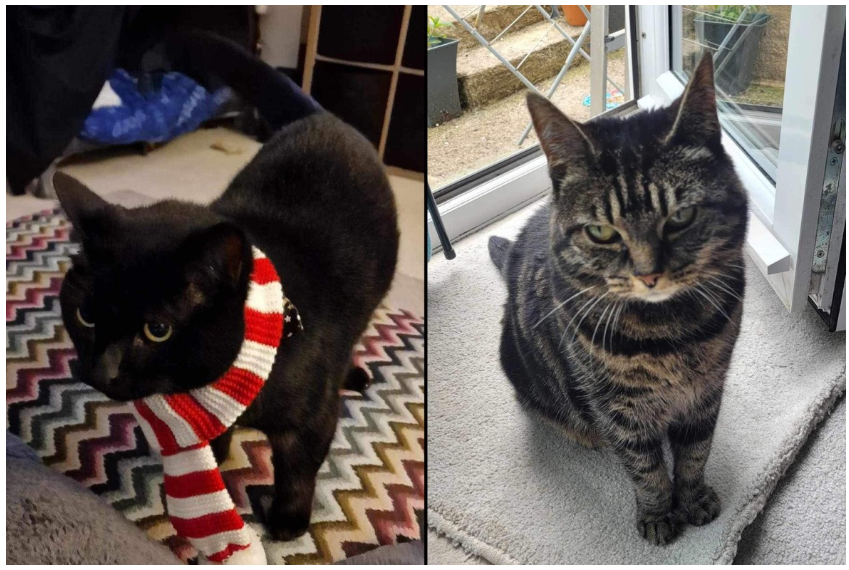
Sage, left, only drank rainwater and was fine. Nala, right, drank from her bowl and fell sick

My stomach cramps were intensifying, so I tried to drink more water to flush it out. They only got worse. One neighbour went to her GP with severe diarrhoea and was told to stay hydrated. That it was probably food poisoning. One by one, on Ocean View Drive, my street in Brixham, Devon, people were falling ill.

It wasn’t just people, either. Vets have been just as busy as GP surgeries. I have two cats — Sage, who will only drink rainwater, and Nala, who drinks from her bowl. The latter was struck down with vomiting and diarrhoea. I thought that seemed a bit strange.

Last weekend I started to notice that the water coming out of my tap tasted disgusting: horrible and metallic, like chemicals.

On Monday, I found out that one of my neighbour’s three children had been taken ill over the weekend and admitted to hospital with severe dehydration. He was hooked up to an IV drip. Her other son was also ill and is in the middle of his Sats exams.

So on Tuesday last week I called South West Water and asked them to take a water sample from my home. They told me that there had been 15 recorded cases of cryptosporidium — a microscopic parasite — in the area, but reassured me that it had absolutely nothing to do with the water supply. That it was fine to drink. When I got off the phone, I said to my husband: “Something doesn’t feel right”.

With the water company denying culpability, I took matters into my own hands. On Tuesday evening before bed, I wrote a post on the Brixham Facebook page. Had anyone else been experiencing symptoms of a tummy bug? Could it be the water?

When I woke up on Wednesday morning I had 1,200 comments on my post. Everyone was joining the dots together. Finally it all made sense.

Later that day, South West Water came to take a sample from my tap. When I got to the local supermarket, every bottle of water was sold out. I couldn’t get any from anywhere. People were driving for miles to stock up. Later that day South West Water were still reassuring people that the water was safe to drink.

On Wednesday, South West Water finally admitted that the water wasn’t safe to drink and that cryptosporidium was widespread. It is affecting 16,000 households in the area. But for us, at least, the damage has been done.

There are a lot of elderly people in Brixham and many can’t get to the shop to buy water. For people with learning disabilities and dementia, it’s all very distressing. One friend who is on medication for low kidney function has been told he must stop his medication while he recovers from the illness. He is now going to hospital for further blood tests.

I’m now on day 12 of the illness. I’ve never experienced anything like it. My husband Michael is just at the beginning — day four. We’ve both had norovirus in the past, and it’s worse than that. I have four children, three living with me at home, and luckily they have been fine.

One small upside is that the community spirit has been wonderful. Water points have been set up, which we’ve been told we will have to use at least for the next six days until it’s fixed. My local fruit and veg shop is giving water away for free and one Brixham resident has spent £400 of their own money to hand out water. I’ve lived in Brixham for 11 years, so it’s comforting to see everyone pull together.

Unsurprisingly, though, people are also furious. Some schools are closed, and for a community that relies heavily on tourism, it could be awful for businesses. The water company misled us — denying there was anything wrong for days. It took our community to get together to work out the truth, but only after hundreds of people had fallen ill. When this is over, South West Water will have a lot of questions to answer.

As told to Katie Gatens

Some Devon homes given wrong advice after parasite outbreak

It’s safe to drink the water – oh no! Wait a minute, it’s not safe.

What a farcical shambles. – Owl

Wrong boil water advice given to some Devon homes

A water company has apologised after nearly 30 properties in Devon were wrongly told they could stop boiling their water after a parasite outbreak.

George Thorpe www.bbc.co.uk

South West Water (SWW) on Saturday lifted a boil water notice for 14,500 properties in Brixham after part of the network was given the all-clear.

About 2,500 properties in Hillhead, Kingswear and upper parts of Brixham are still being advised to boil their water.

However, some residents received a letter saying they could drink the tap water, only to get a separate message hours later advising them to keep boiling it.

SWW blamed an issue with its digital mapping system for the error and said it was offering an extra £75 compensation to people given the wrong advice.

It said 28 properties received the wrong notice.

There are 46 confirmed cases of cryptosporidiosis, an illness that causes diarrhoea, linked to the outbreak.

The first letter sent to residents said the UK Health Security Agency and the local environmental health department agreed the boil water notice could be lifted.

The second letter, seen by the BBC, warned the parasite was still in the area’s water supply and residents should continue boiling their water.

‘Sort yourselves out’

Rhian Manley said she received two notices, with the second letter arriving at about 22:00 BST.

She said the situation was “embarrassing” and could have had serious implications for residents.

“My message to South West Water is sort yourselves out and actually start working for the people who pay for you,” she added.

Conservative MP Anthony Mangnall, whose Totnes constituency covers Brixham, said the leaflet issue was another sign of how poor SWW’s communication had been.

He advised residents to look at a postcode checker, external on SWW’s website to see if they should boil their tap water or not.

“It is deeply disappointing that South West Water continues to frustrate residents with unclear communications,” he said.

‘Technical issue’

SWW apologised for the confusion caused by the conflicting letters.

“This was caused due to a technical issue with our digital mapping system,” it said.

“We also had a small number of customers in a localised area who, in error, received the wrong notice advising them that their property was no longer covered by the notice.”

The firm said it was contacting customers affected by the conflicting advice.

These customers would be receiving an extra £75 compensation, SWW said.

Dee Agirdici-Maher said she would use bottled water for the time being

Other residents in Brixham have said they are still worried about drinking tap water, saying they do not trust how clean it is.

Dee Agirdici-Maher, who lives near Alston and has been told she can drink her tap water again, said it was going to be “a while” before she trusts the water.

She said she would drink bottled water until she was “totally comfortable” with the supply.

“It’s going to take time,” she said.

She said the water company’s handling of the outbreak had been poor.

“Truthfully, with all the money that they’ve got, it shouldn’t have happened in the first place,” she said.

SWW on Saturday increased the level of compensation available for the remaining affected households, rising from £115 to £215.

However, it said it had been made aware of fraudulent calls being made to some customers.

The company said customers did not need to do anything to receive the payment as it would be paid straight into their accounts and urged people to report any suspicious calls.

“All household customers who have been issued with the boil water notice will receive their compensation by way of an automatic payment,” a SWW spokeswoman said.

“Where we hold direct debit details this will be made as an immediate payment, where we do not this will be added as a credit to the next available bill.”

David Harris, SWW’s drought and resilience director, said the water tank at Hillhead reservoir had been drained.

He said the tank, where tests confirmed the presence of cryptosporidium, would be thoroughly cleaned before being refilled.

A damaged valve on private land in the area was identified as the “possible cause of contamination” and it was isolated from the network, the company said.

Thousands gather across UK to demand clean rivers, beaches and lakes

Thousands of people across the UK gathered at beaches, rivers and lakes on Saturday to demand change in the country’s water pollution levels.

[See ESCAPE for images of the Exe “Paddle Out” event.]

Athena Stavrou www.independent.co.uk

Protesters gathered at swimming spots from West Pier in Brighton to Gyllyngvase Beach in Falmouth following reports that millions of litres of raw sewage were pumped into Windermere in the Lake District for 10 hours in February.

Some held signs and placards calling for clean oceans while others wore costumes as people were seen paddle-boarding out into the ocean.

Among the demands from activists was an end to sewage discharges into all bathing and high-priority nature sites by 2030.

The campaign, coordinated by Surfers Against Sewage (SAS), saw protests at more than 30 locations.

In Brighton, Olympic gold medal runner and keen paddle-boarder Dame Kelly Holmes addressed demonstrators through a megaphone before leading dozens in a paddle-out.

In Falmouth, surfers paddled out en-masse while sea-kayakers carried placards on their boats calling for fish not faeces. Meanwhile, more than 200 people entered the water at a wild swimming spot at Ferris Meadow Lake in Surrey.

Emma Jackson, who organised the Shepperton Open Water Swim event, said she was contacted by SAS after setting up a campaign to save the lake from the River Thames Scheme, which will build a new flood relief channel through the area.

She said the lake naturally cleans itself and was much safer to swim in than the Thames but, under the proposal, the lake would be connected to the river, leaving it in danger of contamination.

She said she could not imagine being unable to swim at the lake if it became unsafe, adding: “I don’t want to think about it. Today is the first day of the season here at Shepperton Open Water Swim and I can tell you, speaking to my community of swimmers, they are all just over the moon to be back and it is a really special place for us.

“There are plenty of spaces you can swim, there are other lakes in the local area, there are other bodies of water that are equally as safe and we can we can swim in but… this place holds a special place in a lot of people’s hearts.”

Dinah Sershi, 54, and Georgina Palffy, 55, who are regular swimmers at the lake, attended the protest.

Ms Palffy said they would feel “bereft” if they were no longer able to swim there due to water contamination.

“We do swim in other places, but none of them are quite as magical as this, and none of them have the amazing clean water that they get here, which is something really special,” she said.

Ms Sershi said swimming at the lake was particularly important for women who are going through the menopause.

“I’m particularly passionate about swimming here,” she said. “I’m a woman in my 50s. And I know a lot of people in this community are in their 40s and 50s and find the water an incredible way of managing the menopause symptoms.”

Emma Pattinson, 55, whose family operates Shepperton Open Water Swim, said there was an “alternative route” for the River Thames Scheme, which would circumvent the lake.

“Obviously we don’t want anyone to be flooded on our behalf,” she said. “But we also want this lake to retain its clean water for our swimmers. It matters a lot to them.”

The protests came after raw sewage was pumped into Lake Windemere for nearly 10 hours in February after a telecommunication failure at a pumping station operated by United Utilities, a major water and wastewater services provider in the North West.

The situation was labelled a “scandal” by opposition politicians, while Downing Street said it was “completely unacceptable” and that the Environment Agency had the power to launch a criminal prosecution if necessary.

Lake Windermere at Bowness in the Lake District national park (Alamy)

The discharge happened at the company’s pumping station at Bowness-on-Windermere in Cumbria on the night of 28 February and intermittently the following day.

The emergency pumps discharged more than 10 million litres of raw sewage into the Unesco world heritage site after the main pumps abruptly stopped due to a telecom fault, insiders at the firm told BBC News, whose report also cited internal documents from the company.

The latest incident comes amid warnings from environmental agencies that swimming and other activities in and around some of the country’s rivers and lakes could be hazardous due to high levels of sewage pollution.

There were 68,481 incidents of sewage released into England’s seas last year, totalling 440,446 hours, campaign group Friends of the Earth said on Wednesday after analysing Environment Agency data.

The Times view on Britain’s utility companies: Troubled Waters

The Times Leading Article

There is no more basic service for public health and welfare than providing clean water. Yet Britain’s water industry has acquired a reputation for incompetence and excess that is deserved and self-inflicted. It is exemplified in sewage spillages and even disease for consumers, alongside high financial rewards for water companies’ executives and dividends for shareholders. The water industry might almost be a Brechtian parable of the iniquities of capitalism. That would be wrong, but supporters of the market economy need to explain why this industry is exceptional while pressing for tougher consumer protection against its failings.

In the past few days 46 cases of a waterborne disease causing diarrhoea and vomiting have been confirmed in an area of Devon, and more than 100 other residents have reported similar symptoms. South West Water has found what it terms “small traces” of a parasite associated with this disease in a local reservoir, and advised households across the area to boil water before drinking it.

This is not merely an oversight. It is part of an established pattern of errors of omission and commission. There are 11 regional water and sewage companies in England and Wales, with a further five water-only companies. Together they make up a sector that is loaded with debt, even while paying out handsome dividends, and has a dismal record of raw sewage discharges in rivers and on beaches, and inadequate investment.

The costs of failure appear to be minimal. Severn Trent Water, which services more than 4.5 million households and businesses in the Midlands and Wales, was responsible for more than 60,000 sewage spills last year while its chief executive, Liv Garfield, had a compensation package worth £3.2 million. United Utilities, which supplies water in the northwest of England, declared a dividend increase of 9.4 per cent this week, almost exactly coincident with reports of its failure to stop or promptly report a sewage discharge in Windermere, in the Lake District, in February.

While financial rewards for agents and principals in water companies are ample, bills for consumers have risen by more than 40 per cent since the industry was privatised in 1989. It is hardly surprising that populists see it as an example of what is wrong with a market economy. It would be an error to heed their message but policymakers need to address the sector’s dire performance.

There is nothing wrong with high pay for bosses in companies and sectors that compete successfully in a global marketplace. That does not apply to the chief executive of a water company that enjoys an effective monopoly. Ms Garfield’s pay package (and she is not the only one) brings the industry into further well-deserved disrepute. It also lends superficial plausibility to the case that a Labour government, likely to take office within months, should nationalise the sector.

In truth, public ownership would not resolve the problem of poor infrastructure and, for some companies such as Thames Water, financial fragility. As this newspaper’s Clean It Up campaign argues, water companies need to spend more on investment to expand reservoir capacity and fix leaks. Ofwat, the regulator for water and sewage in England and Wales, ought to be far more insistent on investment targets, and ensure that the burden is borne equitably by shareholders and customers.

And on no account should a financially stretched water company be bailed out by taxpayers; there is no systemic threat to the economy, and the costs should fall on holders of the company’s securities.

Water is a test case for capitalism. Because regional providers do not have obvious competitors, the easiest route to generating profits is to skimp on investment, raise bills and pump sewage into rivers. This government and its successor must ensure that stringent regulation puts a stop to this business model and serves the public instead.

 “Very, very hard questions” for the Conservatives to answer as well as SWW – Owl

In the article below the Health Secretary, Victoria Atkins, is reported as saying there will be “very, very hard questions” for South West Water over the outbreak of cases of cryptosporidium.

Owl thinks equally hard questions need to be addressed to her and Conservative governments past and present. There’s the 1989 privatisation in the first place: with all debts being placed on the shoulders of taxpayers and the new companies given a £1.5bn “green dowry” as well;, followed by austerity cuts and “light touch” regulation.

Victoria Atkins was elected to parliament in 2015 and appointed as a junior minister in 2017 when austerity was still being pushed hard.

Did she, for example, follow the whip over watering down attempts to toughen regulation and targets on pollution alongside Simon Jupp? – Owl

Health Secretary looks into the South West water crisis

Tim Herbert www.midweekherald.co.uk

Health Secretary Victoria Atkins said there will be “very, very hard questions” for South West Water over the outbreak of cases of cryptosporidium, a waterborne disease caused by a microscopic parasite, confirmed in the Brixham area of Devon, writes PA.

Speaking to reporters during a visit to the University of Exeter, Ms Atkins said: “There will be very, very hard questions for South West Water to answer. At the moment I think we probably need to give them the space to conduct their investigation; we know that they have identified the source.

“The public will want to know how on earth that source happened, what was the chain of events that led to this, because of course we all understand the expectation that we all have when we turn our taps on is that (we get) clean drinking water and we want to be able to trust it.”

She added: “Outbreaks such as this are very, very unusual in our drinking water. The authorities are looking into this very carefully. People must please follow the advice for the time being and as the investigation proceeds, more answers will be obtained for the public.”

Voters back taxing rich more to help pay for NHS – as report shows Sunak wealthier than the King

Nearly two thirds of voters would be more likely to back a political party committed to higher taxes on the wealthiest to fund the NHS and public services.

Andy Gregory www.independent.co.uk

The data on public opinion on taxes comes as the annual Sunday Times Rich List found Britain’s 350 richest families hold a combined wealth of £795bn – with the fortune of prime minister Rishi Sunak rising.

Both major political parties clicked into general election campaign mode this week, with Sir Keir Starmer unveiling a Tony Blair-style set of election pledges and chancellor Jeremy Hunt using a speech on Friday to warn that taxes would rise under a Labour government.

But a new FocalData survey commissioned by the group Tax Justice UK suggests that there is public support for major changes to the tax system.

Told that a 1 to 2 per cent ‘mansion tax’ on assets worth over £10m would affect around 20,000 people and could raise up to £22bn a year, 72 per cent of respondents indicated that they would support for such a tax, with 73 per cent backing such a toll to help invest in the NHS.

And 57 per cent of the survey’s 1,011 respondents said they would support charging the same tax rate on income derived from wealth as on income earned from employment.

The findings come as the publication of the Sunday Times Rich List suggested that prime minister Rishi Sunak is now wealthier than King Charles.

The personal fortune of the prime minister and his wife, Akshata Murty, surged by more than £120m over the past year, soaring to £651m in the latest list – as the latter’s shares in her father’s IT firm Infosys grew in value by £108.8m.

This put the Sunak’s wealth above that of the King, whose fortune rose by £10m to hit £610m.

Responding to the new Rich List, Downing Street insisted Mr Sunak should be judged on his actions and not his personal fortune.

The prime minister’s deputy spokesperson told reporters: “He’s been asked about this before and we’d always point people to the actions that he takes to support people … That’s his focus and his priority and he should be judged on that.”

The 350 wealthiest individuals and families on the list together held combined wealth of £795.36 billion, according to the new data – which showed the number of British billionaires tumbled slightly from a peak of 177 in 2022 to 165 this year.

Robert Watts, who compiled the rich list, said the findings suggested that “Britain’s billionaire boom has come to an end”, adding: “Many of our home-grown entrepreneurs have seen their fortunes fall and some of the global super rich who came here are moving away.

“Thousands of British livelihoods rely on the super-rich to some extent. We’ll have to wait and see whether we have now reached peak billionaire, and what that means for our economy.”

Responding to the findings indicating support for taxing such individuals more stringently, Tax Justice UK’s head of advocacy and policy Rachael Henry said: “Taxing the wealth of the very richest is an extremely popular policy – a vote winner – and an incredibly sensible way to help fix the country.

“People in Britain are really struggling and so are public services. The NHS is wounded, getting an NHS dentist is akin to a lottery win, and GP surgeries are creaking under pressure. Politicians need to see the wood for the trees and use the tools available to them to inject life back into the country.”

Tories try to gain power in temporarily “hung” Torbay council

Takes you back to the Tory shenanigans in East Devon during May/June 2000. – Owl 

Walkout, anger and tears mar Torbay mayor-making meeting

Tory group’s U-turn leaves Mayor-elect stunned

The bitter power struggle for control of Torbay Council boiled over into angry scenes at the annual mayor-making meeting.

Guy Henderson – Local Democracy Reporter www.radioexe.co.uk 

Traditionally a ceremonial occasion with no hostile debate involved, it ended with tears, cries of ‘shame’, accusations and a mass walkout.

Afterwards councillors said future co-operation between Conservative and opposition members of the council was ‘in tatters’.

The row centred on the appointment of a new civic mayor for the bay. In February the council had been unanimous in nominating long-serving Liberal Democrat councillor Swithin Long (Barton with Watcombe) for the role. His nomination was even seconded by Conservative council leader David Thomas (Preston).

Cllr Long had invited friends and family to the mayor-making meeting and had already accepted invitations to charity events in the opening weeks of his mayoralty.

But two days before the meeting Cllr Thomas announced a sudden U-turn, saying the Tory group would not, after all, be supporting Cllr Long’s nomination.

He maintained that it was traditional for the council to appoint one year’s deputy mayor into the next year’s top job, having served a year’s ‘apprenticeship’, and that would mean Tory councillor Hannah Stevens (Furzeham with Summercombe) getting the job.

But he also conceded that the Tory group’s abrupt change of mind had come as a result of the balance of power on the council shifting.

The death of Prosper Torbay councillor Patrick Joyce, who jointly formed the group after leaving the Tory group, has led to a by-election which will take place in Wellswood next month. If the Conservatives win Wellswood back, it will mean there are 18 Tories and 18 opposition members of the council, giving the mayor the crucial casting vote when debates are split.

Some councillors have described the next mayor’s role as that of ‘kingmaker’, and both Conservatives and the opposition are keen to make the role theirs.

However, the fallout from the U-turn over the mayoral nomination was bitter. Cllr Long himself said: “I am genuinely shocked and disappointed that this is becoming a political event.”

And Katya Maddison (Shiphay), who is the other member of the Prosper Torbay group in the opposition, said it was ‘an example of bad faith’ and ‘casual reneging on a commitment’.

And she told her former Tory colleagues: “The Conservative party needs a clean-out, and I question whether you are fit for the job.”

Opposition leader Steve Darling (Lib Dem, Barton with Watcombe) said the position of mayor had been ‘dishonoured’ by the wrangle, and warned that squabbling could damage prospects for Torbay.

“This is creating a poisonous brew,” he said. “We should be coming together and championing Torbay.”

And Cllr Darren Cowell (Ind, Shiphay) went on: “This is a sad day. A coach and horses has been driven through an arrangement based on trust.

“The role of civic mayor is non-political, but today it has been weaponised.”

Voting went down strict party lines, with the motion to have Cllr Long as mayor defeated, along with one for Cllr Kelly Harvey (Lib Dem, St Marychurch) to be his deputy.

Cllr Thomas then succeeded with a motion to put off setting the political make-up of the council’s committees until after the Wellswood by-election on 6 June, instead of doing it on the same day as the mayor-making as normal.

Almost all of the opposition councillors had walked out of the chamber in disgust before the vote was completed.

Bodies left to decompose in NHS hospitals – inspectors’ report

Bodies have been left to decompose at NHS hospitals across England, according to reports by inspectors.

The Newsroom www.newschainonline.com

Officials from the Human Tissue Authority (HTA) have told how inadequate storage facilities and lack of freezer space means some bodies have been left for too long at unsuitable temperatures.

Official HTA guidance says that bodies should be moved into frozen storage after 30 tdays in fridges or before, depending on the condition of the body.

However, a series of reports show NHS trusts are not always adhering to these rules and keep bodies for far longer in fridges.

In one case at Leeds General Infirmary, reported last year, the HTA said: “The inspection team noted a body that had been in storage for 70 days that had not been placed into frozen storage despite being released by the coroner.

“This body showed signs of decomposition and had soiled shrouding.

“A second body had been in storage for 47 days, had also been the subject of a coroner’s release notification and had not been placed into frozen storage and showed signs of decomposition.”

Inspectors also found there was no cleaning schedule for the body store at Leeds General, and “the door from the visitors area to the staff office is not fitted with a lock…This allows potential access to the main mortuary.”

At the Royal Blackburn Hospital, inspectors in 2022 found major flaws, including discovering “two bodies in an advanced state of decomposition as a result of not being moved into frozen storage after 30 days”.

Elsewhere, at King’s College Hospital in London, inspectors reported “critical” shortfalls in 2022, with mouldy and infested conditions for body storage.

The report added: “At the time of the inspection there were several adult bodies which had been stored in excess of 30 days in the fridge units.

“Whilst these bodies were subject to regular condition checking, signs of deterioration were present.

“Bodies required movement to freezer storage to prevent further deterioration however the long-term storage unit was at capacity.”

Meanwhile, inspectors in 2022 to the John Radcliffe Hospital in Oxford found inadequate storage space and “identified a number of bodies which had been held in refrigerated storage longer than the recommended 30 days which were beginning to show signs of deterioration”.

The Health Service Journal (HSJ), which first reported on the issue, said it had found at least 10 cases across the country since 2022 where inspectors discovered one or more bodies had started to deteriorate.

A spokeswoman for the HTA said: “The management of the deceased in some licensed mortuaries was identified as a concern through the HTA on-site inspection process.

“The deceased should be stored at temperatures that preserve their condition and there should be sufficient storage provision and alternatives in place if needed.

“We expect all licensed establishments to be compliant with our standards and ensure the dignity of the deceased is maintained.

“When we find shortfalls we work with establishments to ensure an action plan for improvement is put in place, lessons are learnt and the issue is escalated within the establishment where necessary.”

Dr Magnus Harrison, chief medical officer at Leeds Teaching Hospitals NHS Trust, said: “Our aim is to provide a safe and dignified service in our mortuaries for people who have died, and unfortunately in this instance, this was not the case.

“We now have improved systems in place including better communication with our coroner and respective partners to ensure this doesn’t happen again.

“Duty of Candour procedures are followed when next of kin information is available.”

A spokeswoman for King’s College Hospital NHS Foundation Trust said: “Following an inspection report in 2022 by the HTA, we have significantly increased the size of our mortuary provision.”

An Oxford University Hospitals spokeswoman said: “We take great care to ensure that our patients are always treated with compassion and dignity, including after death.

“Some deterioration of the deceased is expected in refrigerated storage, even for short periods, and would not normally fulfil criteria for notification under duty of candour guidance.

“Usual practice is to transfer deceased to frozen storage if they are to be stored for more than 30 days, though this depends on the condition of the deceased, location and availability of appropriate freezer space, and the likely timing of transfer to funeral directors, for whom receiving the deceased in a frozen state brings additional challenges and could delay a funeral.

“Freezing itself affects the appearance of a body, and therefore tends to be avoided when the deceased is likely to be moving to a funeral director’s care in the very near future.

“The OUH mortuary has recently been refurbished and expanded to increase its capacity in the context of rising regional and national demand for mortuary facilities.”

In 2021, David Fuller was convicted of the murders of two young women in Tunbridge Wells.

He worked at Kent and Sussex Hospital and the Tunbridge Wells Hospital in Pembury from 1989 and sexually abused the bodies of 101 women and girls in the hospital mortuaries between 2005 to 2020.

Sunaks’ wealth rises to £651m in latest Sunday Times Rich List

Is this why he said so confidently: “We have a plan and it’s working”? – Owl

The personal wealth of Rishi Sunak and his wife Akshata Murty rose by £122m last year, according to the Sunday Times Rich List.

Paul Seddon www.bbc.co.uk 

The couple’s fortune was estimated at £651m in the latest list, up from £529m in 2023.

This was mainly due to Ms Murty’s shares in Infosys, the Indian IT giant co-founded by her father.

It means they are richer than the King, according to the annual list of the UK’s most wealthy people., external

Charles III was ranked higher than the Sunak family last year, but his personal fortune is estimated to have grown more modestly over the past year, up £10m to £610m.

The Sunaks were ranked higher than the late Queen in 2022 – with Elizabeth II’s personal fortune that year evaluated at £370m.

However, estimating the personal fortunes of monarchs is tricky, while the wider wealth of the monarchy – which includes various estates and palaces – has been estimated at dozens of billions of pounds.

Mr Sunak became the first front-line politician to feature on the Sunday Times’ annual wealth list in its 35-year history when he appeared on it as chancellor in the 2022 edition.

At that point, the family’s wealth was estimated at £730m.

Mr Sunak worked as a hedge fund manager before entering politics and is personally wealthy, listing £2.2m in income, earnings, and capital gains last year in his latest tax summary.

But he owes his place at the top table of wealthy Britons mainly to his wife’s Infosys shareholding, estimated to be worth £590m last year.

Downing Street declined to comment on Mr Sunak’s latest appearance in the rich list, saying it was a “private family matter”.

But the PM’s official spokesman added: “When he’s been asked this question before he’s responded and asked that people judge him by his actions, including to support livelihoods during the pandemic though the furlough scheme as an example.

“That’s his focus and his priority and he should be judged on that.”

‘They should beg for forgiveness’: Brixham seethes at water company

Tap water not even fit for dogs! – Owl

For Colin Sherratt, the first sign of trouble with his water supply was when his dog refused to drink from her bowl.

Jack Malvern www.thetimes.co.uk

Marney, a papillon, knew something was amiss long before the water company that apologised on Thursday for allowing a parasite to infect the water supply for 16,000 households and businesses in Brixham, south Devon.

Sherratt, 74, and hundreds of other residents have been exposed to cryptosporidium, a microscopic bug that causes diarrhoea and vomiting and can be fatal for people with weakened immune systems.

Those who spoke to The Times on Friday were unimpressed with South West Water’s apology for the contamination, which was traced to a damaged air valve at the Hillhead reservoir that appears to have allowed tap water to be contaminated with animal waste.

Susan Davy, the water company’s chief executive, has said that she is “truly sorry” for the outbreak.

Sherratt said: “The water company should be down on their knees begging for forgiveness. I went down to Broadsands yesterday to pick up bottled water and was waiting an hour and ten minutes to get six bottles of water.”

When he fell ill, he said, he wondered if it was because he had been to the town’s Pirate Festival at the beginning of the month.

“I can understand why people think they got it from the Pirate Festival because a lot of people have a bit to drink,” he said. “I don’t use Facebook so I only found out what it was when my daughter sent me a link on WhatsApp and I said ‘that’s exactly what your mother had a week ago’. She flew off to Rhodes and she was ill and vomiting the whole flight.”

The UK Health Security Agency said on Friday that 46 cases of cryptosporidium had been confirmed, up from 22 on Thursday, and that more were anticipated.

Residents have been given a “boil order”, requiring them to boil and cool water before drinking it or using it for cooking. They have also been offered bottled water.

Kayley Lewis, whose son, Jacob, 13, was admitted to hospital, called for Davy to speak to residents in person. “I don’t accept the apology,” she said. “I think they need to mean it and they can show that by keeping up maintaining the water pipes.

“The statement feels like they are covering their own backs, even after all this is finished they know the backlash they are going to get. They haven’t been quick enough to deal with it once they discovered the problem.”

Lewis added that the £115 compensation offered was insufficient. “The bosses need to come down here and arrange something in Brixham town hall and speak to the people who are affected and explain what happened and when.

“I was angry when I found out the cause, we had joked that it must be something in the water but only because we were sure it was a bug. When Jacob fell ill we were told to keep him hydrated so we fed him more water, which actually made him worse.”

At the reservoir, dozens of South West Water workers sought to deal with the fault, pumping water out onto nearby roads.

Tanya Matthews, 42, who was the first to complain on a local Facebook group on Monday that the water was making her ill, also said that the apology was inadequate.

“The day after I posted it they came round to test the water but they were still telling everybody to keep drinking it,” she said. “The water they took from my house they said would take 24 hours to get the results so they weren’t all negative. Why didn’t they put a boil order in place as a precaution while they tested? That delay has led to a lot more sick people.”

Matthews also said that the £115 was scant compensation for her partner, who lost a week of work to illness, or for the cost of travelling to get bottled water and lavatory paper.

Sam Hankin, 35, said he had suffered stomach cramps, but his five-year-old daughter Evelyn had been badly ill for two weeks and was waiting for GP test results to confirm whether she had been exposed.

“I think the trust has gone with South West Water, there wasn’t much there in the first place and it’s not what happened, it’s how they handled it,” he said. “I don’t know if we’ll go straight back to trusting the water.”

 Exmouth’s part time Post Office at W H Smith

From correspondent Kate Wilcox:

Since Exmouth Post Office was franchised to W. H. Smith in 2019,  there have been a number of occasions when the Post Office has been closed without notice.  This happened again on Wednesday 15 May and staff shortages were cited as the reason.  A number of elderly people had travelled into town to carry out business with the Post Office only to be told it would be open for the morning of May 16th.  When local bus services are sporadic and unreliable, after making the effort to get into Exmouth town centre, it is frustrating and annoying to find that the Post Office is closed.  Other local post offices are not within easy walking distance.

The franchising of Post Offices to WH Smith in 2016 was met with fierce opposition from the CWU and members of the public. The All Party Parliamentary Group expressed its concern that WH Smith’s marketing director Roger Gale was unable to outline the organisation’s contingency plan in the event of WH Smith collapsing. MP and APPG chair Gill Furniss told RN: “I was left disappointed by the answers from Post Office officials. Despite the Post Office’s protestation that there will be a consultation on the closures, it was revealed that in fact the decision to close the Crown Post Office is final and not up for consultation.”

I wrote to Sir Hugo Swire, the local Conservative MP in 2019 at the time when the franchising was established, to voice my opposition and concerns for the future of a post office in the town centre should WH Smith close down.  These objections were brushed aside with no explanation of how the Post Office would deal with the eventuality.

There appears to be no enforceable regulation concerning the number of staff required to be available to run the post office or the hours of opening.  The WH Smith staff have no control over the opening or closing of the post office but they get abuse from angry customers who have had wasted journeys.

Yet again, the Conservative Government has allowed a public service body to be privatised with no regulation to protect members of the public from poor or non- existent service should the owners fail to meet their obligations.

Yours sincerely,

Kate Wilcox

Medical emergency at Budleigh beach

A person was rescued at a beach in Devon after a medical incident was reported. HM Coastguard and lifeguard crews rushed to he scene at Budleigh Beach, near Exmouth around 10am today (Thursday, May 16).

Shannon Brown www.devonlive.com

According to an eyewitness, an RNLI lifeboat launched from Exmouth before heading out on the water towards Sidmouth. They said: “Exmouth life boat launched this morning 10amish to recover a body from the waters towards Sidmouth.”

A HM Coastguard spokesperson said a medical incident had been reported and that one person was recovered. The RNLI said an unresponsive swimmer was being helped out of the sea at the beach. After being aided by members of the public, the swimmer was left in the hands of the South Western Ambulance Service.

A spokesperson for the Coastguard said: “HM Coastguard responded to reports of a medical incident at Budleigh Beach near Exmouth this morning, 16 May.

“Alerted at around 10am, Exmouth Coastguard Rescue Team and a lifeboat from Exmouth RNLI were sent to the scene. A casualty was taken into the care of the ambulance service.”

Exmouth RNLI said in a statement: “Exmouth RNLI lifeboat launched on service to reports of an unresponsive swimmer. At 09.55 this morning, H.M. Coastguard requested the launch of the RNLI Exmouth lifeboat following a report of an unresponsive sea swimmer being helped from the water at Budleigh Salterton.

“The ILB George Bearman II and three volunteer crew launched at 10.00 and set off at best speed to the location. Upon arriving at scene, the casualty had recovered sufficiently to be supported by members of the public and the Exmouth Coastguard Rescue team to a waiting ambulance. Our volunteer crew was therefore stood down and returned to station.”