“Bus travel hits 12-year-low as prices rise and services are axed”

“… The latest figures from the show 1.2 billion local bus journeys were made across Britain between April and June – a 10 per cent decrease since the peak of 1.33 billion between July and September 2008.

The fall in journeys coincides with a 55 per cent hike in average fares over the past decade.

Demand for bus travel has not been this low since the beginning of 2006.

A recent CBT study found that funding for supported buses has almost halved in the last eight years, leaving many areas without public transport.

Local authority bus budgets in England and Wales were slashed by £20.5m last year – the eighth consecutive annual government cut.

“The falling number of passengers taking the bus is a consequence of continued cuts in funding to support services,” said Darren Shirley, CBT chief executive.

“Nationally and locally this is resulting in fewer services and higher fares. The statistics back up what our research has been showing for years: that buses are in crisis.”

Mr Shirley urged the government to use its upcoming budget to reverse the “trend of cutting support” for buses.

“They are vital for the economy and the environment but year-on-year, people – especially in rural areas – are losing their bus service, making it difficult to access jobs, education and other essential public services.”

https://www.independent.co.uk/news/uk/home-news/bus-travel-numbers-price-rise-public-transport-a8584211.html

“‘I leave the car at home’: how free buses are revolutionising one French city”

“… One month ago, Dunkirk – with a metropolitan population of 200,000 – became the largest city in Europe to offer free public transport. There are no trams, trolleybuses or local commuter trains, but the hop-on-hop-off buses are accessible and free – requiring no tickets, passes or cards – for all passengers, even visitors.

The scheme took its inspiration from Tallinn in Estonia, which in 2013 became the first European capital to offer a fare-free service on buses, trams and trolleybuses, but only to residents who are registered with the municipality. They pay €2 for a “green card”, after which all journeys are free. The city has reported an increase of 25,000 in the number of registered residents – the number previously stood at 416,000 – for which the local authorities receives €1,000 of each resident’s income tax every year.

Free urban transport is spreading. In his research Wojciech Keblowski, an expert on urban research at Brussels Free University, found in 2016 there were 107 fare-free public transport networks around the world: 67 in Europe (30 in France), 25 in North America, 11 in South America, 3 in Asia and one in Australia. Many are smaller than Dunkirk and offer free transit limited to certain times, routes and people.

In February this year, Germany announced it was planning to trial free public transport in five cities – including the former capital Bonn and industrial cities Essen and Mannheim. In June this was downgraded to a slashing of public transport fares to persuade people to ditch cars.

The largest in the world is in Changning , in China’s Hunan province, where free transit has been in operation since 2008. Passenger numbers reportedly jumped by 60% on the day it was introduced.

A study into free public transport by online journal Metropolitics found an increase in mobility among older and younger people, and an increased sense of freedom.

… Vergriete believes this is all part of an erroneous received dogma. He admits free public transport may not work everywhere, but says that, as well as being good for the environment, it is a social measure, a gesture of “solidarity” and promotes a more egalitarian redistribution of wealth than tax cuts.

“We have been pragmatic: we looked at the advantages of free transport and weighed them against the disadvantages and decided €7m is not a lot to pay for all the benefits. If I can pass one message to other mayors it’s to fight the dogma. Put the advantages and disadvantages on the table and consider it realistically. It may be that the financial cost is too great, but don’t underestimate the social advantages. You can’t put a price on mobility and social justice.”

https://www.theguardian.com/cities/2018/oct/15/i-leave-the-car-at-home-how-free-buses-are-revolutionising-one-french-city

“Near miss outside Cranbrook Education Campus prompts new road safety measures”

Owl says: the area around the campus looks an overgrown, desolate space and the campus itself does not seem to be wearing well; and one wonders how long the two cones will last:

“Dangerous parking on pavements outside Cranbrook Education Campus and a near-accident involving a child have prompted new safety measures.

Stone boulders are being put in place to stop vehicles driving on to the pavements.

The problems had been caused by parents parking on the pavements when picking up or dropping off their children.

The head teacher had written to parents asking them not to do it, but it was an incident at the end of a school day in mid-September that led to action being taken.

A car reversed off the pavement and narrowly missed a child.

No-one was hurt, but it led to the town council arranging a meeting with representatives of the school, the developers’ consortium, and a senior county highways officer.

It was agreed that the consortium would initially cone off the pavements, and then pay for the stone blocks to be installed in two places.

One is directly outside the driveway leading up to the campus building, the other alongside the entrance to the parking area behind the houses in Tillhouse Road, where cars have been driving up onto the pavement. It will not affect access to the parking area.

The two pedestrian crossings near the campus, both of which have worn-out road markings, will be repainted, and construction workers on the nearby development sites have been asked not to drive their vehicles near the campus at the start and end of the school day.

County Councillor Ray Bloxham said he was pleased to see the safety measures being put in place, but he thought they should not have been necessary.

“I’ve looked at what goes on there, and the people who’re complaining about the problem are the problem themselves,” he said. “They could at least stop 400 yards before they get to the school and let the children out there and walk. I actually saw people pulling up right outside the school, which is right on a road junction, on a bend, and stopping there and dropping their children off. Kids can walk 100 or 200 yards.

“I know people are rushed, they’ve got to get to work and all the rest of it, but if they just gave it a little bit more thought they’d solve their own problems really.”

http://www.midweekherald.co.uk/news/new-road-safety-measures-at-cranbrook-education-campus-1-5734784

Virgin and Stagecoach: more pigs, more snouts, more troughs

“Sir Richard Branson’s Virgin and Sir Brian Souter’s Stagecoach shared a payout of over £52m just months before the companies pulled out of the East Coast line, forcing a £2bn government bail out, it has emerged.

Virgin and Stagecoach received the pay out for the West Coast mainline which runs the route connecting London, Birmingham, Liverpool, Manchester, and Glasgow.

Virgin Rail owns 51 per cent of the West Coast mainline, with the remainder held by Stagecoach.

‘No surprise’

Shadow Transport Secretary Andy McDonald said Virgin Rail’s dividend increases came as “no surprise”.

“This is yet more evidence of a failing rail system which is costing taxpayers a fortune, lining the pockets of billionaires and making passengers feel like they’ve been mugged whenever they buy a ticket,” Mr McDonald told the Sunday Times.

“These vast payouts show exactly why we need to bring our railways back into public ownership.”

Virgin-Stagecoach bail out

The figures have come to light just four months after Virgin, run by Richard Branson and Stagecoach, run by Brian Souter, walked away from the East Coast main line franchise in June, three years into an eight-year deal.

The firms had agreed to pay the Government £3.3bn for the right to run the line, with the sum to be paid in instalments up until 2023.

Stagecoach had controlled 90 per cent of the franchise, compared to Virgin’s 10 per cent. Pulling out of the franchise early will allow Stagecoach and Virgin to avoid making Government payments of up to £2bn.

‘Virgin on the ridiculous’

One online critic described the situation as an “absolute laugh”, while another said: “They don’t even pretend not to be screwing over the taxpayers and the commuters anymore.

“Branson and chums make extortionate profits again while delivering nothing to rail users. It’s all Virgin on the ridiculous.”

Virgin Rail insisted its “industry-leading levels of customer satisfaction” warranted the dividends, with a spokeswoman pointing to company “innovations” such as automatic refunds for delays, free films and TV on board trains and mtickets (tickets you can buy and keep on your mobile phone).

“This drove a strong business performance which helped deliver a record payment to taxpayers,” the spokeswoman said.”

https://inews.co.uk/news/richard-branson-52m-virgin-rail-stagecoach-payout/

EDDC’s auditors (Grant Thornton) in the bad news spotlight again

“… In May, Patisserie Valerie said that it had £28.8m in cash reserves, while half-year profits were 14.2% up on the previous year at £11.1m.

On Thursday, the firm announced that its board had found “a material shortfall between the reported financial status and the current financial status of the business”.

Grant Thornton, which has audited the firm’s accounts since 2010, said it would not comment on Mr Johnson’s revelations to the Sunday Times.” …

https://www.bbc.co.uk/news/business-45854817

Open spaces: to little and so very, very late

The Mail on Sunday today has launched a petition stop parks being sold off.

If only they had created it BEFORE the massive sell-off, instead of after.

But then Tory donor developers – who bought the parks – wouldn’t have liked it.

https://www.dailymail.co.uk/news/article-6273471/Petition-launched-rescue-open-spaces-sold-cash-strapped-councils.html

Pigs and troughs …. MP outside interests and payments: some snouts much deeper in the trough than others)

They get £75 – £150 for filling out Parliamentary surveys about what they think!!! Each one taking 30-60 minutes!!!

“Posh watches, football tickets and VIP trips – what your MPs get for free
Expensive gifts, football tickets, all-paid trips abroad, second salaries and fat dividends – all the perks and benefits enjoyed by your local MP.

Second jobs, cash for surveys and income from company shares, donors and second homes – these are just some of the ways your local MP makes extra money.

Plymouth, Devon and Cornwall’s political elite – in line with the rest of parliament – routinely lay out in full their financial affairs for all to see to maintain openness and transparency.

Some through their powerful connections, seniority and expertise gain more than others – whether that be a gift from a wealthy client, cash donations from the private sector, wages from another high-flying job or all-paid for trips abroad to promote UK affairs.

Those deep inside the inner Whitehall circle are REALLY pulling in the mega bucks.

Former foreign secretary Boris Johnson was recently thrown back in the spotlight after it was revealed he’s being paid £22,916.66 a month until July 2019 by the Daily Telegraph – an annual pay packet of £274,999 – to write articles.

Plymouth Live lifts the lid on the latest round of financial declarations, dated October 1, unveiled by Parliament.

Johnny Mercer – Plymouth Moor View [Conservative]

The Tory backbencher declared in parliament’s latest financial log he’s landed a second job earning £85,000 a year – in return for 20 hours work a month.

Ex soldier Johnny has taken up the role of non-executive director for military veterans support company Crucial Academy Ltd.

That’s on top of his paycheck as a member of parliament – £77,379 – taking his total annual earnings to £162,379.

Mr Mercer, who employs his wife Felicity Cornelius-Mercer as his Principal Secretary, has also publicly declared he was paid £300 by the BBC in March this year for a three-hour appearance at the BBC Free Thinking Festival.

He also had accommodation and travel funded by the Bahrain Embassy from April 5 to 9 this year so he could attend the opening of the UK/Bahrain Naval Base, meet with Government Ministers, as well as members of the Federal National Council and senior business figures in order to build on the ‘bilateral relationship’.

Luke Pollard – Plymouth Sutton and Devonport [Labour]

Mr Pollard – elected in the 2017 snap General Election – has declared he owns a house in Plymouth worth more than £100,000.

Gary Streeter – South West Devon [Conservative]

Mr Streeter, who employs his wife Janet Streeter as a part-time Junior Parliamentary Researcher, has made extra cash filling out online Government surveys.

The senior Tory politician also declared a £3,500 watch bought for him as a Christmas present from Plymouth millionaires Michael and Diane Hockin.

Mr Streeter’s cash for surveys

9 October 2017, received £150 for completing July and September 2017 parliamentary panel surveys. Hours: approx. 90 mins (45 mins each).

20 November 2017, received £75 for completing October 2017 parliamentary panel survey. Hours: 45 mins.

5 January 2018, received £100 for completing November 2017 parliamentary panel survey. Hours: approx. 45 mins.

5 February 2018, received £100 for completing January 2018 parliamentary panel survey. Hours: approx. 45 mins.

14 March 2018, received £75 for completing February 2018 parliamentary panel survey. Hours: approx. 45 mins.

19 April 2018, received £75 for completing March 2018 parliamentary panel survey. Hours: approx. 45 mins.

25 May 2018, received £75 for completing April 2018 parliamentary panel survey. Hours: approx. 45 mins.

29 June 2018, received £75 for completing May 2018 parliamentary panel survey. Hours: approx. 45 mins.

13 August 2018, received £75 for completing June 2018 parliamentary panel survey. Hours: approx. 45 mins.

Sarah Wollaston – Totnes [Conservative]

Ms Wollaston, Tory chair of the Liaison Committee and the Health Select Committee in the House of Commons, had no financial declarations to declare.

Anne Marie Morris – Newton Abbot – [Conservative]

The former lawyer owns two flats in London and a house in Surrey which generate income.

The Tory MP has a non-paid for position for marketing consultancy firm Manteion Ltd.

She is also a ‘non-practising’ member of the Law Society of England and Wales, the Chartered Institute of Marketing and the European Mentoring and Coaching Council.

Ms Marie Morris is also an unpaid director of the Small Business Bureau.

From March 2017, she became a non-paid director of the Genesis Initiative; a body that seeks to represent small business interests of European businesses.

Ben Bradshaw – Exeter [Labour] note: it does not say here that Mr Bradshaw donates all recent MP pay rises to charity

The Labour MP has made extra cash each month filling out ‘opinion’ surveys.

Mr Bradshaw is also a member of the Humboldt Advisory Board, at Humboldt University, in Berlin.

He wrote in his financial declaration: “Where possible, I attend annual Advisory Board meetings in Berlin, the costs of which are met by the university.”

Mr Bradshaw’s cash for surveys

Payment from ComRes, Coveham House, Downside Bridge Road, Cobham KT11 3EP, for opinion surveys:

12 June 2017, payment of £75. Hours: 30 mins.

22 August 2017, payment of £50. Hours: 30 mins.

22 September 2017, payment of £75. Hours: 30 mins.

29 September 2017, payment of £150. Hours: 1 hr.

17 November 2017, payment of £75. Hours: 30 mins.

14 March 2018, payment of £75. Hours: 30 mins

16 April 2018, payment of £75. Hours: 30 mins.

22 May 2018, payment of £75. Hours: 30 mins.

25 June 2018, payment of £75. Hours: 30 mins.

23 July 2018, payment of £75. Hours: 30 mins.

27 August 2018, payment of £75. Hours: 30 mins.

13 September 2018, payment of £100. Hours: 30 mins.

Geoffrey Cox QC – Torridge and West Devon

Geoffrey Cox has been MP for Torridge and West Devon since 2005 and is said to be the highest earning MP in the House of Commons, thanks to his other role as a barrister.

Mr Cox has declared hundreds of thousands of pounds in fees paid to him by solicitor firms in return for hundreds of hours worth of work over the last year.

He owns a cottage and farmland in West Devon and owns shares in an international law firm and a property company.

Geoffrey Cox’s vast legal fees

Payments from Messrs. Janes, solicitors. Address: 17 Waterloo Place, London SW17 4AR: 8 December 2017, received £24,750 for legal services provided between 1 September 2016 and 1 October 2017. Hours: 40 hrs approx.

31 December 2017, received £3,000 for legal services provided between 4 and 7 November 2017. Hours: 5 hrs approx.

31 January 2018, received £5,000 for legal services provided between 1 December 2017 and 31 January 2018. Hours: 8 hrs approx.

16 May 2018, received £4,500 plus VAT for legal services provided between 1 September 2017 and 31 May 2018. Hours: 9 hrs approx.

13 June 2018, received £5,750 plus VAT for legal services provided between 14 March and 22 May 2018. Hours: 10 hrs approx.

Payments from Messrs. Travers, Thorp, Alberga, Attorneys. Address: Harbour Place, 2nd Floor, PO Box 472, 103 South Church Street, Grand Cayman KY1 1106: 5 February 2018, received £40,000 for legal services provided between 1 September 2017 and 18 February 2018. Hours: 60 hrs approx.

Payments from Bachubhai Munim & Co Advocates & Solicitors, 312, Tulsiani Chambers, Nariman Point, Mumbai 400 021: 27 November 2017, received £85,387.50 for legal services provided between 14 February 2017 and 12 November 2017. Hours: 170 hrs approx.

31 July 2018, received £12,500 (no VAT) for work undertaken between 1 November 2017 and 30 June 2018. Hours: 25 hrs.

15 November 2017, received £3,333.33 from Registrar of Criminal Appeals, Royal Courts of Justice, Strand, London WC2A 2LL, for legal services provided between 1 January 2016 and 15 December 2016. Hours: 10 hrs approx.

Payments from Oracle Solicitors, 182-184 Edgware Road, London W2 2DS: 15 December 2017, received £119,733.33 for legal services provided between 1 July 2016 and 30 November 2017. Hours: 350 hrs approx.

15 May 2018, received £119,733.33 for legal services provided between 1 May 2016 and 30 April 2018 and continuing. Hours: 300 hrs approx.

31 August 2018, received £88,602.67 plus VAT for legal services provided between 1 March and 9 July 2018. Hours: 300 hrs.

Payments from LK Baltica Solicitors, 4th Floor, Kings Buildings, 16 Smith Square, London SW1P 3HQ: 14 March 2018, received £2,500 for legal services provided between 1 and 31 March 2018. Hours: 5 hrs approx.

13 April 2018, received £3,000 for legal services provided between 1 March and 30 April 2018. Hours: 5 hrs approx.

15 May 2018, received £6,737.50 for legal services provided between 1 February and 30 April 2018. Hours: 10 hrs approx.

16 July 2018, received £2,475 plus VAT for work undertaken between 1 April and 30 June 2018. Hours: 5 hrs.

Payments from Messrs Rainer Hughes, Oak House, 46 Crossway, Shenfield, CM15 8QY: 16 July 2018, received £1,000 plus VAT for work undertaken between 21 September and 12 December 2011. Hours: 2 hrs.

Mel Stride – Central Devon

Tory Paymaster General Mel Stride holds a stake of more than 15 per cent in Venture Marketing Group Ltd – described by parliamentary files as a ‘publisher, organiser of exhibitions and conferences.’

Peter Heaton-Jones – North Devon [Conservative]

Tory Mr Heaton-Jones’ only declaration is that he owns a house in Wiltshire worth more than £100,000.

Sir Hugo Swire – East Devon [Conservative]

Sir Hugo has had several ministerial roles, most recently as Minister of State for the Foreign and Commonwealth Office.

Since 2016, the senior politician has earned thousands every month in prominent positions outside Parliament and holds shares yielding tens of thousands of pounds in a honey firm.

He employs his wife Alexandra (Sasha) Swire, as Senior Researcher/Parliamentary Assistant.

Sir Hugo’s outside appointments and earnings – in his own words

From 9 November 2016 until 1 June 2018, Adviser to KIS France, a manufacturer of photo booths and mini labs. Address: 7 Rue Jean Pierre Timbaud, 38130 Echirolles, France. I was paid £3,000 every month for this role.

Hours: 8 hrs per month. I consulted ACoBA about this appointment.

From 15 November 2016, Deputy Chairman of the Commonwealth Enterprise and Investment Council. Address: Marlborough House, Pall Mall, London SW1Y 5HX. From 1 April 2018 I expect to be paid £2,083 every month until further notice. Hours: 10 hrs per month. I consulted ACoBA about this appointment.

16 November 2017, received £25,000 for acting as adviser to Apiro Real Estate Fund 1 Limited Partnership, 1 Connaught House, Mount Row, London SW1K 3RA. Hours: 10 hrs. I consulted ACoBA about this appointment.

From 18 June 2017 until 4 June 2018, non-executive director of ATG Airports, Newton Road, Lowton St Mary’s, Warrington WA3 2AP. From 5 February 2018, I was paid £2,500 every month for this role. Hours: approx. 4.5 hrs per month. Any additional payments are listed below. I consulted ACoBA about this appointment.

24 November 2017, received £10,086.72. Hours: 15 hrs.

From 19 March 2018 until further notice, Non-Executive Chairman of the British Honey Company, Unit 3 Vista Place, Coy Pond Business Park, Ingworth Road, Poole, Dorset, BH12 1JY. I will receive shares with a value of £50,000, in lieu of two years’ payment. Hours: expected to be about 5 hrs a month. I consulted ACoBA about this appointment.

Neil Parish – Tiverton and Honiton [Conservative]

Mr Parish declared he’d had all his expenses covered by the Conservative Friends of Israel to go on a ‘fact finding political delegation’ to Israel from April 8 to April 13 this year.

He wrote: “Estimate of the probable value (or amount of any donation): (1) Air travel, accommodation and hospitality for myself with a value of £2,500, plus airport transfer and hospitality for my spouse with a value of £600, total £3,100 (2) For my spouse and myself, bus travel and airport VIP service with a total value of £1,300.”

Mr Parish owns a family farm in Somerset and employs his wife Susan Parish, as Junior Secretary.

Sheryll Murray – South East Cornwall [Conservative]

Mrs Murray revealed she’d secured a Tory party donation from Looe Conservative Ladies Luncheon Club amounting to £2,776.91 in 2017.

Torpoint and District Unionist Club also pledged £3,000 that year.

Mrs Murray also declared she went on an all-paid expenses trip to Armenia from 21 September to 24 September last year to attend a ‘Progressivism and Conservatism conference’.

“Airfare and accommodation for me and member of staff with a value of £2,800,” she wrote.

All costs were covered by the Prosperous Armenia Party.

Scott Mann – North Cornwall [Conservative]

Scott Mann attended the Progressivism and Conservatism conference in Armenia in September last year, expenses to the tune of £2,800 covered by Prosperous Armenia Party.

George Eustice – Camborne and Redruth [Conservative]

Mr Eustice declared that he owns a one-bed flat in London.

Sarah Newton – Truro & Falmouth [Conservative]

Sarah Newton had no financial affairs to declare.

Steve Double – St Austell and Newquay [Conservative]

In January, Winchester-based tyre firm Micheldever Tyre Service gave Mr Double two tickets to a football match and threw in hospitality and hotel accommodation in a package worth £600.

The MP is also getting paid £18,990 to act as a policy advisor for Good Faith Partnership LLP in a nine-month contract finishing in December this year.

He also joined Tories on a ‘fact-finding political delegation’ to Israel in April this year – with all his expenses being covered by Conservative Friends of Israel and Israeli Ministry of Foreign Affairs.

Mr Double’s affairs – in his words

Land and property portfolio: (i) value over £100,000 and/or (ii) giving rental income of over £10,000 a year

From 10 May 2018, a flat in St Austell, co-owned with my wife and inhabited by a family member

Shareholdings: over 15% of issued share capital

Bay Direct Media; a direct marketing company

Bay Mailing Services Ltd; a mailing house

Phoenix Corporate Gifts Ltd; a company selling branded merchandise

Family members employed and paid from parliamentary expenses

I employ my wife, Anne Double, as Principal Secretary.

Derek Thomas – St Ives [Conservative]

In 2017, the ex-property developer secured a £3,000 Tory party donation from Tresco island owner Robert Dorrien Smith.

Mr Thomas also secured £16,221 in sponsorship from Aventis Pharma Ltd for healthcare consultancy firm Incisive Health, to drive forward its Diabetes Think Tank initiative.

Since October last year, the MP has also jointly owned land, a house and a shop in West Cornwall with his wife.

Mr Thomas declared that since December 2015, he holds an interest ‘below registrable value’ in Mustard Seed Property Ltd, a community benefit society which provides housing in Cornwall for vulnerable people.”

https://www.devonlive.com/news/devon-news/mps-plymouth-salaries-benefits-parliament-2092453

Question marks over the Greater Exeter Strategic Plans?

The Greater Exeter Strategic Plan seems not to be going to plan for the team!

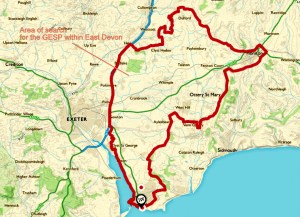
Teignbridge, Mid Devon and East Devon District Councils in Feb 2017 teamed up with Exeter City Council to produce a “Greater Exeter Strategic Plan” (GESP). Recently they announced a delay to the ambitious plans which now puts the completion date to around 2022.

It was stated the delay was because of the substantial number of sites coming forward for consideration together with the complexities of the funding gap for infrastructure projects.

Historically

Devon councils and the Government have underinvested the roads and rail network in this area except for the passing through traffic for the last 60 years. Only the artery roads of the M5, A38, A30 and A361 were constructed and hardly any improvement to rail services with only “quick fix” solutions to storm events at Cowley Bridge and Dawlish.

Large housing development in Exeter, Exminster and Exmouth in the 1970s was encouraged with new roads promised for Exminster to the centre of Exeter and a dual carriageway to Exmouth. The houses were built but then funding withdrawn!

The consequences of the underinvestment throughout the area, have heavily impacted Exeter now recognised as one of the worst congested cities in the UK.

The plan was to build substantial housing providing a levy which would help fund the urgently needed infrastructure, with extra funding being provided from government in exchange for delivering extra housing numbers over the planned housing numbers

Housing Numbers

But now there are question marks over the housing numbers, with the Government deciding to calculate the required “build out” numbers for housing rather than each individual authority calculating their own housing needs.

East Devon’s requirement is to build 844 per year. This is under East Devon’s own Local Plan target figure of 950 each year up to 2031.

This week the Devon section of CPRE (Campaign for the Protection of Rural England) announced they are challenging all of Devon’s Planning Authorities housing requirement figures with a 60-page document by the leading planning consultants Opinion Research Services.

They are also challenging the way the Government arrive at their figures and conclude that:

The overall housing need for Devon produced by the Government standard methodology remains an over estimate.

Their report concludes that far too many homes are being planned and claim that the combined Devon Local Plan Housing Target is overstated by at least 25% with 1500 houses too many each year.

In the case of East Devon, the percentage is an estimated oversupply of 40% of homes required against the Local Plan Target of 950 suggesting a required buildout figure of only 570 homes per year.

There is a massive funding gap for the GESP area infrastructure projects. East Devon’s underfunding gap alone is around £70M just to provide for what is needed for their current plan!

The GESP aspiration was to approach the government with a proposal to build even more houses in the GESP rural areas (as Exeter is nearly full) and to ask for extra funding to pay for the extra infrastructure requirements for Exeter.

On top of road and rail improvements, health, education and social care investment which are also critically underfunded the Council Leaders recently proposed a £20M plus Music Arena to hold 20,000 people to be included in these infrastructure requirements.

However last week the government announced plans to grant 10 cities throughout England extra multimillion funds to assist in Infrastructure projects, unfortunately Exeter is not Included.

So, the Housing numbers are now being questioned and the extra government funding seems not to be forthcoming.

East Devon’s problem of accommodating extra housing

Although in the last 10 years East Devon has outperformed all other Local Authorities except Plymouth to build new houses (8169 units), the GESP proposal hopes to build substantially more in this area.

However East Devon is restricted with 2/3 of East Devon being a special area of designation “Area of Outstanding Natural of Beauty.” where development is strictly controlled.

Therefore, the area of search known as the “Exton to Honiton Arc” is restricted into the small area of East Devon that is not restricted by the AONB. Already there is the developing town of Cranbrook, and Exeter Airport, but this is where the GESP planners propose to develop.

Already the rural communities of Clyst St Mary, Feniton, West Hill, Woodbury and the town of Ottery St Mary have questioned the emerging GESP strategy for even more housing. The very reason why people migrate to this area is its rural nature and beautiful countryside. They claim this will be lost with mass development of the scale that the GESP Planners suggest.

The GESP proposals future for East Devon

• The Authorities’ own estimated build out figures and the Government own figures are questionable and being challenged.

• The massive Infrastructure costs to help deliver extra housing and ease congestion are not being supported by recent Government grants.

• There is only a small area of East Devon that can be developed which is not supported by the local communities.

Is the GESP deliverable, is all this extra housing needed in this area especially this small area of East Devon?

The CPRE report published this week claims:
“The current local plans are planning far too many homes.”

Owl and the Say No Twitter page help out Stuart Hughes about Sidford Business Park

“Rather than attend the Say NO public meeting on Wednesday evening it appears Stuart preferred to hit the gym at some point. He was so proud of his achievements there that evening that he tweeted about it:

https://eastdevonwatch.org/2018/10/10/where-was-eddc-and-dcc-transport-councillor-during-the-say-no-to-sidford-business-park-meeting/

After that post, it appears that this was taken up on the Say NO Twitter page.

It now appears that Councillor Hughes has deleted this tweet!

Owl wonders why one would delete a Twitter post illustrating how fit one is – even if it does show where you were when a crucial public meeting was taking place on your patch. We all know how important it is to keep fit.

However, his absence is noted, especially as he was so vociferous about opposing it in 2015:

https://eastdevonwatch.org/2016/06/10/how-did-business-park-on-a-sidford-floodplain-come-to-be-in-the-local-plan/

and taking into account its grubby history of which surely no Tory politician should be proud of and ought to want to put right:

https://eastdevonwatch.org/2018/06/18/sidford-business-park-a-grubby-history/

It’s a good job that Owl and the Say No twitterati had the foresight to take a screen grab of the original tweet at the time – a great help if ever he wants to refer to a deleted tweet in future.

“‘I’m afraid a child will die’: life at the sharp end of council cuts”

…. A recent analysis by the charity Action for Children concluded that spending on early intervention services for children in England has dropped by 26% over the last four years. The number of children’s centres lost since 2010 is estimated to be as high as 1,000. As the prime minister promises “the end of austerity”, many of these changes look irreversible, not least because increasing numbers of councils are facing dire financial problems.

Precisely tracking what is happening across the country is all but impossible, but freedom of information requests lodged by Labour’s shadow minister for early years, the Yorkshire MP Tracy Brabin, give a strong sense of what is going on. In Reading, the last eight years have seen the number of people employed in SureStart work drop from 95 to 53. In Wirral, the number has dropped from 219 to 63; in Southampton, from 1,189 to 583.

The vast majority of Somerset’s GetSet workers are women. Many of them do not just provide direct family support, but also organise the open playgroups that often provide a first point of contact for troubled families. “My worst fear is that a child’s going to die,” says one worker. “

https://www.theguardian.com/society/2018/oct/12/im-afraid-a-child-will-die-life-at-the-sharp-end-of-council-cuts

“Failure to halt rip-off drug deals costs the NHS £200m”

Owl says: Follow the (MPs involved in the pharmaceutical industry and Tory donors) money …

“The NHS is still overpaying for price-hiked drugs by hundreds of millions of pounds a year because the government has failed to use powers brought in to combat profiteering, The Times can reveal.

A Times investigation in 2016 exposed how several manufacturers had taken advantage of a loophole in NHS pricing rules to significantly increase the price of dozens of commonly prescribed drugs by up to 12,500 per cent. The government passed legislation in April last year to end the practice by giving the health secretary powers to impose a lower price for these generic drugs if taxpayers were being ripped off.

However, the government has failed to use these, with a Times analysis revealing that the NHS is continuing to spend more than £200 million a year on the extra costs created by the hikes.

Just 19 of the 70 drugs identified by this newspaper two years ago have undergone significant price reductions, amounting to about £150 million a year in savings to the NHS. The total extra cost of the price hikes across all 70 medicines was £370 million a year in 2016, meaning that at least £200 million is still being overspent annually. The figures are approximate because prescription data is not yet available for the second half of 2018.

The government has referred a number of cases to the Competition and Markets Authority (CMA), which has opened at least nine investigations. These cases have been stalled after Pfizer and another drug company won an appeal against a record fine for increasing the price of an epilepsy treatment. The CMA is seeking permission to appeal against that verdict.

One company previously exposed by The Times, Atnahs, increased the price of seven medicines for which it was the sole UK manufacturer by up to 2,600 per cent. These included 50mg capsules of doxepin, an antidepressant, which rose from £5.71 and now costs £154 a packet. Atnahs was able to increase prices by dropping the brand name of the products, which were all out of patent, and relaunching them under generic names. Branded generics are subject to a profit cap but the NHS does not limit the price of unbranded generics. More than two years later, all seven medicines are at the same inflated prices.

Another firm, Concordia International, increased the cost of eye drops from £2.09 to £29.06 and has kept them at this level since 2016. An antidepressant which increased from £9.57 to £353.06 after being acquired by the company has risen further still in the past two years and now costs £386.53.

A Department of Health and Social Care spokeswoman said that the overall spend on generic medicines went down compared to last year.”

A spokesman for Atnahs said the company’s pricing was “competitively benchmarked” and that it would adhere to any government guidance. Concordia International said it believed the generics system was working well and “the government may not see a need to use these prices controls”.

Case study

Melanie Woodcock, 47, credits the thyroid medication liothyronine with giving her a life. She used to take an alternative that left her “feeling sluggish, constant headaches, dizziness, nausea feeling all day, it even affected my vision, just a constant brain fog”.

“I wasn’t going out anywhere, I wasn’t living a life, I wasn’t going on holiday, I wasn’t doing anything because I didn’t have the energy,” she said.

When she first took liothyronine, a synthetic hormone known as T3, she said it “changed my whole outlook on life”. “I could think clearly I’d got a memory, my vision was better, I lost the achy joints,” she said. “No more living on Neurofen because I had headaches all the time and joint pain.”

Now doctors have stopped prescribing the drug after the price rose from 16p to £9.22 per tablet. The medicine only had one supplier for many years, but even though two companies have recently begun supplying it, the cost to the NHS has barely fallen.

Liothyronine is cheaply available in many European countries and after her prescription was stopped in July 2018, Ms Woodcock, a mother-of-two who lives in Banbury, Oxfordshire, turned to a “website that is aimed at bodybuilders for bulking up” which sells the drug at £31 a packet.

She said when she tried to go back to the alternative treatment, levothyroxine, she was hospitalised with violent illness and a headache so powerful she was unable to see.

Even the liothyronine she buys online has not solved the problem. “It’s not the same [as the NHS-prescribed version], I still feel sluggish, I still have a lack of energy. I’ve had to take several days off work.”

Ms Woodcock, who works in the security industry, said she couldn’t understand “how the government have allowed this to happen”.

Concordia International, which was previously the sole supplier of the medicine, said a high price was justified in order to guarantee a steady supply beause it was a niche product and difficult to manufacture.”

Source: The Times (pay wall)

“Call for a £60,000 pay rise for high court judges sparks anger”

“Senior judges could be awarded an annual pay rise of almost £60,000, a proposal which has sparked anger among other public sector workers.

A government-commissioned review has reportedly recommended that high court judges should receive a 32% salary hike due to claims of low morale within the judiciary.

The rise would see their pay jump from £181,500 a year to £240,000 – an increase of more than £1,100 a week – if the findings of the Senior Salaries Review Body (SSRB) are accepted.

A combination of long hours and tax changes to pension schemes for high earners was said to have led to a recruitment crisis in the judiciary.

The Ministry of Justice confirmed Theresa May and the justice secretary, David Gauke, had received the SSRB’s report at the end of September. But officials said no decisions had been taken as to whether to accept its recommendations.

A ministry spokesman said: “The government values the work of our world-renowned judiciary, which is why we commissioned this review and are considering its recommendations. We will respond in due course. …”

https://www.theguardian.com/law/2018/oct/12/call-for-a-60000-pay-rise-for-high-court-judges-sparks-anger

“Universal Credit Charities ‘Banned From Criticising Esther McVey’ “

“Charities working with Universal Credit claimants have been “banned” from criticising Work and Pensions Secretary Esther McVey, the Times claims.

According to the newspaper, at least 22 organisations – covering contracts worth £1.8 billion – have been required to sign clauses pledging not to damage the reputation of Work and Pensions Secretary and to instead “pay the utmost regard to [her] standing and reputation”.

They must “not do anything which may attract adverse publicity” to her, damage her reputation, or harm the public’s confidence in her, the paper said.

Officials at the Department for Work and Pensions (DWP) denied they were “gagging clauses” intended to prevent criticism of ministers or their policies, insisting they were just “standard procedure”.

However a spokesperson confirmed that the contracts did include references to ensure both parties “understand how to interact with each other and protect their best interests”.

A DWP spokesperson said: “It’s completely untrue to suggest that organisations are banned from criticising Universal Credit.

“As with all arrangements like this, they include a reference which enables both parties to understand how to interact with each other and protect their best interests.

“This is in place to safeguard any commercial sensitive information for both government and the organisation involved.”

The news comes one day after HuffPost UK reported 580,000 benefits claimants could lose out on payments in the next phase of the Universal Credit rollout.

The figures led to urgent demands for the government to halt Universal Credit, which has been besieged by criticism from both the Labour Party and disability and welfare charities.

So far this week, Universal Credit has also been criticised by Iain Duncan Smith, who said the benefits reform needs an additional £2bn to operate as planned, and former prime minister Sir John Major.

“If you have people who face that degree of loss, that is not something the majority of the British population would think of as fair, and if people think you have removed yourself from fairness then you are in deep political trouble,” he said.”

https://www.huffingtonpost.co.uk/entry/universal-credit-charities-esther-mcvey_uk_5bc03f4ce4b0bd9ed55891a5?guccounter=1

“Food deserts”

“More than a million people in the UK live in “food deserts” – neighbourhoods where poverty, poor public transport and a dearth of big supermarkets severely limit access to affordable fresh fruit and vegetables, a study has claimed.

Nearly one in 10 of the country’s most economically deprived areas are food deserts, it says – typically large out-of-town housing estates and deprived inner-city wards served by a handful of small, relatively expensive corner shops.

Public health experts are concerned that these neighbourhoods – which are often also “food swamps” with high densities of fast-food outlets – are helping to fuel a rise in diet-related conditions such as obesity and diabetes, as well as driving food insecurity. …”

https://www.theguardian.com/society/2018/oct/12/more-than-a-million-uk-residents-live-in-food-deserts-says-study

“Government passing on costs of services to public, says major study”

“Government is increasingly shifting the costs of public services on to citizens as the effects of austerity continue, a CIPFA-backed analysis out today has revealed.

Central government as well as local authorities are passing the costs of services, such as legal aid and garden waste collection, on to individuals, this year’s Performance Tracker from CIPFA and the Institute for Government think-tank has shown.

Rob Whiteman, chief executive of CIPFA, said: “Organisations have had no choice but to shift the costs on to individuals to be able to continue to provide vital services, such as adult social care. This will become increasingly common.”

Emily Andrews, associate director at the IfG, suggeted: “One way the government has tried to save money and avoid the need for tax increases is by asking members of the public to contribute more in other ways – from volunteers running libraries to people paying a greater share of the cost of defending themselves in court.”

The number of authorities charging for garden waste collection rose from 88 to 199 between 2010-11 and 2017-18, while the number offering free garden waste collection fell from 236 to 137, the report showed.

Cuts to legal aid, the report said, mean that more defendants now have to pay for their own defence or defend themselves in criminal trials.

Criminal legal aid spending fell by 32.1% in real terms between 2010-11 and 2017-18, from £1,175m to £891m in 2017-18.

The tracker report gave a ‘concern rating’ to a range of public services, saying those with the greatest issues were prisons, adult social care and neighbourhood services. [See table of concerns at the bottom of this story].

“There are clear signs that neither prisons nor adult social care can continue to operate at their current level of efficiency,” the report said.

“Any attempt to try to maintain or increase the level of output without increasing spending is likely to lead to a further deterioration in service quality.”

Prisons, despite getting more money from the 2016 Autumn budget, still received 16% less funding than in 2009-10, the tracker noted.

The report said that neighbourhood services – such as waste collection, food safety, road maintenance and libraries – have sustained the deepest spending cuts of all the services looked at.

It was “impossible to say whether local authorities can keep operating them at their current level of efficiency”.

Public satisfaction with neighbourhood services fell between September 2012 and June 2018, with satisfaction in waste collection dropping by 6%, libraries by 7% and road maintenance by 14%, according to the report.

Adult social care spending in England has fallen by 3% since 2009-10 “even though demographic change would suggest that demand is increasing,” the report said.

Police services have also been cut with net expenditure on police services in England and Wales falling by around 18% in real terms since 2009-10.

Whiteman said that if the government were to meet communities’ expectations for public services they must come up with a new sustainable funding model that would require “bolder, braver and perhaps politically-unpopular decisions”.

The tracker did find that public services had becoming more efficient since 2010, which was mainly due to the pay cap on annual public sector wage rises.

CIPFA and the IfG appealed to government to be open with the public about the challenges for public services going forward.

Gemma Tetlow, chief economist at the IfG, said: “The prime minister and chancellor must start making explicit the realities facing the country about what public services cost and how that money can be raised.

“They need to begin telling people clearly that they face a national choice.”

https://www.publicfinance.co.uk/news/2018/10/government-passing-costs-services-public-says-major-study

“NHS hospitals warn of lack of preparation for winter as figures reveal next year will be ‘tougher than ever’ “

“The NHS is set to face an “even tougher winter” than the record-breaking crisis it weathered less than 10 months ago, as hospital bosses warn of staff and funding shortages.

Despite the government claiming the health service was “better prepared than ever” last year, ambulance queues tripled, there were fewer beds available and doctors wrote to Theresa May warning of patients “dying prematurely” in corridors.

Hospital leaders said the major issues of workforce, funding and social care remain unresolved, and figures released on Thursday show how an unprecedented summer heatwave has left no time to tackle the significant backlog in operations.

Theresa May has pledged an extra £20bn for the NHS by 2023 but this will not start to plug gaps until April 2019.

Meanwhile, hospital heads told The Independent funds usually held in reserve to add capacity in winter were already used up, or useless because there was no one to work.”

https://www.independent.co.uk/news/health/nhs-winter-crisis-emergency-care-extra-funding-summer-heatwave-hospitals-a8579481.html

Say No to Sidford Business Park meeting

Owl says: notable by his absence was District Councillor and DCC Transport supremo Stuart Hughes, who, it seems, may have preferred going to his gym than attending the meeting:

https://eastdevonwatch.org/2018/10/10/where-was-eddc-and-dcc-transport-councillor-during-the-say-no-to-sidford-business-park-meeting/

“The only way to ensure proposals like the Sidford Business Park and others like it stay in the dustbin of history is for the community to buy it themselves.

Those are the words of campaigners who would like to see the Two Bridges site, where the multi-million pound scheme is proposed, turned into an area for the good of the community – but it would only work if the plans were rejected and the landowners agreed to sell.

More than 100 people attended the latest No Sidford Business Park meeting on Wednesday at St Peter’s Church Hall, Sidford.

Permission is being sought to build 8,445sqm of employment floor space but among the concerns raised are flooding risks and the extra traffic, especially lorries, it could bring to the area’s ‘inadequate’ roads.

During the meeting, John Loudoun from the group, revealed they now had 1,379 signatures on their petition, which opposed the plans and was only carried out in Sidford and Sidbury. And by the time they present the petition to East Devon District Council’s (EDDC) Development and Management Committee, campaigners say it will have more than 1,400 names on it.

John said: “The call to you and everybody out there – and your friends, your family, your neighbours – is please come along on Tuesday, October 30, at 9.15am at The Knowle and be with us when we present the 1,400 signatures to the committee.

“Let’s try now and make sure that this is the second time that we actually kick this planning application and any others like it into the dustbin of history.”

Councillor Marianne Rixson said: “I really can’t see what has changed since last time.

“If we are lucky, it could be refused again, which would leave us potentially facing yet another revised application at some date in the future. But personally, I don’t relish the prospect of wading through another 500-plus pages of documents so I have a radical suggestion. How would you feel about trying to raise the money to buy this land. I can’t promise they would agree to sell but this is the only way we can guarantee that this development or something similar couldn’t happen. Once the Japanese knotweed on the site has been eradicated it could then be a community asset and used for the public good.”

Cllr Rixson said she believed the landowner, Tim Ford, paid around £402,000 for the site.”

http://www.sidmouthherald.co.uk/news/nearly-1-400-residents-say-no-to-sidford-business-park-1-5733085

Torbay GPs may hace scuppered merger of Devon Clinical Commissioning Groups

“The Breeze can reveal GPs in South Devon have voted against plans to merge the area’s CCG with the rest of Devon.

Bosses from the clinical commissioning group made the revelation at a Torbay Council meeting last night.

Apparently, unless a majority of GPs back the idea they can’t do it.

GPs in the area are now being asked to explain their reasons as bosses look to save the merger plans.

To date the two CCGs have saved £4 million by working closely together. [Owl: yeah, right – pinch of salt or whole salt cellar needed here …!]

Torquay councillor Swithin Long, who asked questions at the meeting, said: “At the Overview and Scrutiny Board last night the CCG advised that they were proceeding with the merger – however there is a fly in the ointment.

“In September a poll of GPs was done across the whole of Devon.

“In the rest of Devon (excluding South Devon and Torbay) 59 voted for the merger, 13 against and 3 abstentions.

“In South Devon and Torbay 12 GP practices voted in favour, 14 against and 2 abstentions (so 50% not in favour).

“The meeting was advised that the merger cannot go ahead without the majority of GPs in Torbay and South Devon voting in favour.

“Discussions will be proceeding with the GPs in Torbay and South Devon to see what their concerns are and the CCG will be coming back to Overview and Scrutiny at a date to be confirmed.”

A spokesperson for Devon’s clinical commissioning groups said: “Over the next two months we’re taking the time to meet up with local GP practices in South Devon and Torbay to listen to their views.

“The feedback we receive will help us shape what is the right thing to do next.

“In parallel we’re simply keeping the door open to the possibility of merger by working with NHS England on the next steps.”

For more about the meeting click here:
http://www.torbay.gov.uk/DemocraticServices/ieListDocuments.aspx

Yet another “free school” scandal

“University technical colleges – part of the free schools changes pushed through by Michael Gove – have been described as ineffective and unpopular by a report that found more than half their students dropped out.

Of those who remained at UTCs, many made poor progress, with even previously high-achieving students performing less well in their exams, according to the Education Policy Institute.

About 60 UTCs have opened since 2011, after being championed by the Conservative Lord Baker and the then prime minister, David Cameron, enrolling students aged 14 to 18 and designed to encourage the study of science, technology and engineering.

But despite official encouragement and lavish funding, they have failed to generate enthusiasm among parents, and 10 have subsequently closed or converted into conventional schools.

David Laws, the EPI’s executive chairman, said after spending “hundreds of millions of pounds” on UTCs, the Department for Education (DfE) should halt any further expansion until their effectiveness has been reviewed.

Baker, a former education secretary who chairs the Baker Dearing Trust, which promotes UTCs, accused EPI researchers of ignoring evidence.

“EPI start with their conclusion that a 14-18 institution cannot fit into an 11-18 system and then use statistics to support that,” he said.

“It is a pity that they did not take up Baker Dearing’s offer to visit several of our 50 UTCs and speak to teachers, students and parents.”

The EPI found many UTCs struggled to recruit students, and failed to retain the majority of those who did enrol. More than half of all UTC students left between the ages of 16 and 17 after taking GCSEs, while more continued to quit before finishing key stage five at the age of 18.

One in five UTCs were rated as inadequate by Ofsted inspectors, the EPI found, while a further 40% were rated as requiring improvement – well above the national average for mainstream schools in England.

Julian Gravatt, the deputy chief executive of the Association of Colleges, said the report showed UTCs “are an experiment that hasn’t worked”.

“Given the high level of support given to them by the DfE and the capital funding allocated by the Treasury, this is obviously depressing,” he said.

The analysis also found UTC students’ GCSE results were almost a grade lower than their peers at secondary schools. “Significantly, this poor progress is particularly acute for high attainers, who make over a grade’s less progress than high attainers in all state-funded schools,” the EPI noted.

The National Education Union said the report backed up its research, which found Black Country university technical college in Walsall cost more than £11m between its opening in 2011 and closure in 2015, with 158 students enrolled out of a planned 480.

Another UTC in Burnley cost £10m but closed three years after opening in 2013, with 113 students enrolled despite plans for 800.

The EPI did note several benefits from UTCs, including that they offer a wider range of technical subjects such as computer science than other schools.

The report concluded that existing UTCs should be repurposed as 16-18 colleges offering post-GCSE technical qualifications, such as the government’s promised T-levels.

But Gravatt said such a change needed careful consideration. “The 16-to-18 sector of education is already a chaotic and underfunded market,” he said.

A DfE spokesperson said UTCs were an important part of England’s diverse education system.

“Our most recent data shows that when young people leave a UTC, they are headed in the right direction – with twice as many key stage four students beginning an apprenticeship compared to the national average,” they said.”

https://www.theguardian.com/education/2018/oct/11/university-technical-colleges-schools-report-education-policy-institute