Not free to speak, not free to act! – A comment on PPS Jupp’s position

From another regular Correspondent:

Wow!  So, Simon Jupp, supposedly East Devon’s MP, has accepted an unpaid job as a PPS at the Department for Levelling Up, Housing and Communities.  He had supported Rishi Sunak for PM so this is quite a U-turn.

First: what is a PPS?

From Wikipedia which carries full references:

Although not paid other than their salary as an MP PPSs help the government to track backbench opinion in Parliament. They are subject to some restrictions as outlined in the Ministerial Code of the British government but are not members of the Government.

A PPS can sit on select committees but must avoid “associating themselves with recommendations critical of, or embarrassing to the Government”, and must not make statements or ask questions on matters affecting the minister’s department. In particular, the PPS in the Department for Communities and Local Government may not participate in planning decisions or in the consideration of planning cases.

PPSs are not members of the government, and all efforts are made to avoid these positions being referred to as such. They are instead considered more simply as normal Members. However, their close confidence with ministers does impose obligations on every PPS. The guidelines surrounding the divulging of classified information by ministers to PPSs are rigid.

Ministers choose their own PPSs, but they are expected to consult the Chief Whip and must seek the written approval for each candidate from the prime minister.

Although not on the government payroll, PPSs are expected to act as part of the payroll vote, voting in line with the government on every division.

What has Jupp done for us?

Jupp’s previous appointment, under Johnson, had been as a member of the Transport Select Committee in February 2020 and the Digital, Culture, Media and Sport Committee in September 2021.

So, let’s list his achievements in his former posts and his suitability for the current post.  Or try to …

Transport Select Committee:

Can anyone tell me his achievements in this area – nationally or for East Devon?

Digital, Culture, Media and Sport

– likewise?

All this correspondent recalls about Jupp up to now is that for many, many months he refused to meet members of the majority group on East Devon District Council and a rather unfortunate decision he made to stay at a property owned by former Councillor and Alderman John Humphreys when he was canvassing for the MP job in 2019.  Humphreys – now serving 21 years in prison for sexual offences against minors – was under investigation at that time, which at least some councillors and officers appear to have been aware of  – though obviously none of them alerted Jupp to this.  Nor is it likely Hugo Swire said anything, as he is on record in his wife’s book as being very much a Humphries supporter.

All Jupp’s utterances in the local press to date appear to have been rehashes of government press releases – has anyone got any evidence ofJupp’s original thinking?

The only campaign he appears to be passionate about is supporting the hospitality sector. He was photographed drinking non-local beers with such good examples of Tories as: “three homes” Robert Jenrick and “tractor porn” Neil Parish just before the first was sacked and the second chucked out of the party. Now, continuing his disastrous sense of timing, he has just joined “Team Truss”.

Now to his new responsibilities. 

Levelling Up, Housing and Communities.

From Wikipedia again:

A Parliamentary Private Secretary (PPS) is a Member of Parliament (MP) in the United Kingdom who acts as an unpaid assistant to a minister or shadow minister. They are selected from backbench MPs as the ‘eyes and ears’ of the minister in the House of Commons.

So, now he is actually FORCED to support the policies of his masters as part of the job!  

I have consulted the website https://www.theyworkforyou.com/ to check Jupp’s interventions in Parliament, seeing no sign of anything that deviates from being a loyal servant of whichever master is in charge.  Though there was one – when during a heatwave – he did ask if honourable members could remove their jackets!

So, Jupp is what is known as a “bag carrier”,  now obliged to vote with his government as part of his job.

It’s nonsense for him now to claim, as he does: “East Devon will of course come first”.

Is this what the Conservative voters of East Devon voted for?  

Come back Claire Wright – never more needed!  Remember her slogan as an Independent?

“Free to Speak, Free to Act”, unlike Jupp “Not free to speak, not free to act” as long as he is  PPS!

Take a quick nap during the day, wake to find the Government imploding

[Owls are night birds.]

Kwarteng replaced by Hunt (wasn’t the NHS stockpile of PPE and general preparedness for pandemic reduced on his watch?). 

PM makes a speech, takes only four questions from Telegraph, Sun, BBC and ITV.

Robert Peston asks if she will apologise to her party, not to mention the rest of us. Apparently not. 

Market reaction says it all:

This homemade crisis is set to run and run.

How can Simon Jupp reconcile East Devon needs with his new job?

An “early bird” correspondent writes:

As a correspondent has written, Simon Clarke, the levelling up secretary, Simon Jupp’s new boss, threatens to water down affordable home requirements across England.

Simon Jupp writes “As your MP, East Devon will of course come first”.  How many are now registered as in need of social housing in East Devon?  In March 2021 there were more than 2,618 households and I can’t believe all these needs will be fulfilled in the near future. (not if Goodmores Farm is an example in Exmouth. 16 affordable houses in a development of 298 houses.)

How can Simon Jupp reconcile East Devon’s needs and his new bosses dictats?

‘Like a computer reset’: Exmoor river to be liberated in pioneering project

For centuries the River Aller has been carefully controlled by the landowners and farmers of Exmoor, largely confined to a narrow channel and at one point squeezed under a medieval packhorse bridge.

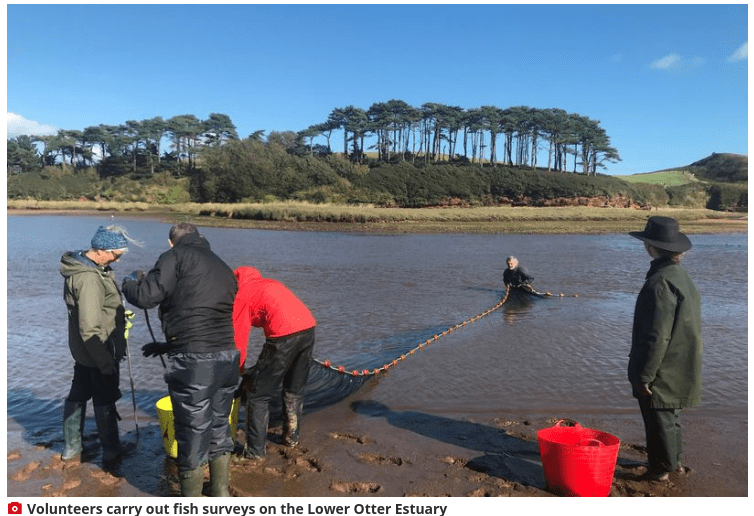
[An interesting companion project to the Lower Otter Restoration Projects which is concerned with reconnecting the estuary to the sea. – Owl]

Steven Morris www.theguardian.com 

Now in a pioneering project, said to be a first for the UK and inspired by schemes in the wilds of Oregon in north-west US, a stretch of the river is being liberated, the channel partly filled in, allowing the water to spill out and find its own way, creating smaller streams, more pools and boggy areas.

The idea of this “Stage 0” restoration project is to create the conditions for a landscape that is better for flora and fauna, with the slower water flow making flooding less likely.

“We don’t really know how the site is going to react,” said Ben Eardley, project manager for the National Trust, which is leading the work at its Holnicote Estate in north Somerset.

“And we don’t know exactly what habitats will be created. We’re just re-setting it and we’ll see what happens. Stage 0 floodplain reconnection resets natural processes – it’s like the ‘ctrl, alt, delete’ computer reset. We let the river decide where it wants to go really but instead of that single channel there will be a much more complex waterscape, pools, wetland, marshy, boggy areas.”

Just under 1km of the main river and “bits and bobs” of tributary – nowhere near homes or roads – are the focus of the project. Diggers are taking a shallow skim off the floodplain, 4,000 tonnes worth, to re-shape the valley floor, and using that earth to fill in the channel.

The river is being given some help. About 600 tonnes of timber sourced on the estate from the felling of non-native trees have been pinned or partially buried into the valley to help the river’s transformation. “The timber will help kickstart some of that complexity,” said Eardley.

Wildflower seeds such as ragged robin, devil’s-bit scabious and meadowsweet will be sown over the next few weeks. And next spring about 25,000 native trees such as willow, bird cherry and black poplar will be planted. The hope is that this restored landscape will be better for wildlife including dragonflies, brown trout, grass snakes, birds, bats, water voles and otters.

The reset has been trialled on a much smaller scale on the estate, at a spot called Mud Pool Meadow, through which a tributary of the Aller flows.

It was launched in 2019 but Eardley said the results had been “amazing”. “Even in the very hot weather this summer the landscape held on to the water. You put your hand into the grass and it felt soft and wet. There’s not much noise in the surrounding fields but at Mud Pool Meadow there’s a cacophony of insect sound. There are grasshoppers exploding out of your footsteps, butterflies everywhere. It’s early days but you can tell it’s much richer and more abundant and diverse.”

Another significant project at Holnicote is the re-introduction of beavers, with seven of the mammals living in two large pens.

Beavers are seen by conservationists like Eardley as “ecosystem engineers” that develop wetlands by thinning trees and building dams. An intriguing prospect is that if the “Stage 0” restoration works well on the Aller and the UK government allows the release of beavers into the wild, it could be a perfect landscape for them to thrive in.

The Aller project is inspired by the Fivemile-Bell restoration scheme in Oregon, where work has been done on rivers and streams to restore them to how they were before settlers drained the land. One effect there has been to boost the number of salmon.

Prof Colin Thorne, the chair of physical geography at Nottingham University, said: “Around two dozen streams and rivers in Oregon have been successfully restored as complex and fully connected channel-wetland-floodplain systems known as Stage 0, producing remarkable benefits to river health, heritage, wildlife, sustainability and resilience.”

The National Trust is working on the Aller with a number of partners including the EU’s Interreg 2 Seas programme, the UK Environment Agency and Somerset Rivers Authority.

Cllr Mike Stanton, the chair of Somerset Rivers Authority, said he was excited by the Aller project. “It offers Somerset new possibilities for reducing flood risks, improving water quality and creating bigger and better habitats for wildlife. We must and will learn from this initiative with respect to other places in Somerset.”

Devon Covid rates among England’s highest as new figures for 10 areas released

Coronavirus rates in parts of Devon remain the highest in England – but are on their way down. Latest infection rates, for the seven day period ending October 8, show that West Devon has the highest rates of any of the 315 local authority areas in the country.

Daniel Clark Content Editor & Politics Reporter www.devonlive.com

Plymouth (4th) and Teignbridge (6th) are inside the top ten. The South Hams, Torbay and East Devon are also inside the top 20.

But there are signs that the most recent Covid wave might have peaked. While rates in West Devon at 204/100,000 are the highest in England, they are down on the 251/100,000 they were at earlier in the week.

Rates in Plymouth, Torbay and Teignbridge have also fallen slightly back on where they were earlier in the week. Only in North Devon and East Devon do rates appear to still be climbing, rather than falling or plateauing.

It comes as the number of patients in hospital following a positive Covid test in hospitals across Devon have fallen. While numbers of patients in Exeter and North Devon as of October 12 have risen to 100 from the 90 as of October 5, numbers elsewhere have fallen.

At Derriford Hospital, numbers of patients in hospital have dropped from 98 as of October 5 to 84 on October 12. While at Torbay Hospital, the numbers have fallen dramatically from 61 down to 24.

LATEST COVID RATES

West Devon (204/100,000)

Plymouth (188/100,000)

Teignbridge (183/100,000)

South Hams (163/100,000)

Torbay (163/100,000)

East Devon (160/100,000)

Torridge (151/100,000)

Mid Devon (147/100,000)

Why global investors are piling into the UK’s luxury care home sector

…The logic for investors is simple. People aged 65 and over in the UK now control 51% of Britain’s wealth, up from 42% in 2008, the year of the financial crash, according to the Resolution Foundation. A large minority of older people can afford £100,000-a-year care home fees because they have houses worth far more that they no longer need….

Robert Booth www.theguardian.com 

With a spa, cinema and wood-panelled hall, Reigate Grange in Surrey, where Ann King was abused, is part of a growing trend for luxury care homes. Fuelled by global investors’ desire to capitalise on older people’s property wealth, luxury care applies a cruise-ship sheen to the grittier reality of dementia and the end of life.

The logic for investors is simple. People aged 65 and over in the UK now control 51% of Britain’s wealth, up from 42% in 2008, the year of the financial crash, according to the Resolution Foundation. A large minority of older people can afford £100,000-a-year care home fees because they have houses worth far more that they no longer need. A person in a £1m home who survives for the typical two years of a care home resident would still leave £800,000 in their will.

When Welltower, a US real estate investment trust, announced a deal this summer with the property billionaire Reuben brothers to co-own the UK luxury chain Avery Healthcare, David Reuben remarked that he was investing “at the precipice of unprecedented growth of the UK seniors population”. A joint press release described it as a “multi-year growth opportunity”.

Indeed, the Alzheimer’s Society forecasts that the number of people with dementia in the UK will increase from about 900,000 to 1.6 million by 2040, a huge “market” under the current UK healthcare system in which the NHS often does not fund dementia treatment.

Underlying profits are running at about 30% of revenue for a luxury chain such as Barchester, owned by the Jersey-based Grove Ltd, whose owners have been reported in the last year to include three Irish billionaires, Dermot Desmond, John Magnier and JP McManus, the annual LaingBuisson report into UK social care suggests. “There is plenty of money there and it will continue for a few decades,” said its author, the industry analyst William Laing.

Laing said there was so much property wealth that care companies could easily raise prices higher than the £2,000-a-week King paid at Reigate Grange, and still fill beds. He forecast an increase of 27,000 care home residents in the coming decade – requiring 400 new care homes, many of which are likely to be high-end. The elite market will not be much affected by recent policy changes limiting care fees to £86,000 a person because the “hotel costs” fall outside the cap and can comprise 70% of fees.

But does more money buy better care? Higher fees should, and in some cases do, allow operators to hire more care workers and to pay and train them better. But Laing has bad news: “There is no correlation between how much you pay and the care you receive.”

Signature Senior Lifestyle says it pays staff above average and everyone undergoes mandatory training. Overall, homes that are run for a profit perform less well on average in inspections by the Care Quality Commission regulator (77% good or outstanding) than not-for-profit homes (86% good or outstanding), his research shows.

Avery Healthcare’s current CQC ratings are 80% good or outstanding and 20% requiring improvement – the same as the average for all care homes in England.

Barchester said it was “committed to delivering the highest quality care” and 82.7% of its homes were rated good or outstanding by regulators. Avery was approached for comment.

Signature said CQC “rates our homes significantly above the sector average; 97% of our homes are rated as good or outstanding, of which 14% are rated as outstanding – placing them in the top 5% of care homes across the country”.

It said it split the fees “between offering luxurious accommodation and meeting the specific care needs of the people that choose to live with us”, adding its staffing level was higher than an average care home with “a far higher level of clinical expertise than average, with dedicated nursing and dementia managers”.

Figures this week have, meanwhile, exposed a desperate staffing crisis across the whole care sector. While 500,000 new staff are needed by the middle of the next decade to keep up with rising demand, the workforce shrank last year by 50,000 people, leaving 165,000 vacancies in England alone.

Average pay across the sector is £9.50 an hour, although luxury care firms often pay more. A fifth of care workers are considered to be in or on the brink of poverty. Care home residents’ groups have warned: “Lives and dignity are at risk.”

Richard Foord: My First Hundred Days as an MP

At the start of this summer, Richard Foord was happily working in the academic sector, having retired from the army, enjoying family life in Devon. 

A hundred days on, he has won an historic by-election which helped trigger the downfall of Boris Johnson and become the LibDem spokesperson for Defence as the war in Ukraine rages. He has seen the sad passing of Queen Elizabeth II and the proclamation of King Charles III. He has witnessed the government acquire a new leader, followed by an immediate economic crash triggered by the “fiscal event”. Arguably few new MPs have ever entered Parliament at such an historic time.

Richard will be talking about his first hundred days, in conversation with East Devon District Council Leader and historian, Paul Arnott.

 The event is to be held at Axminster’s Guildhall starting at 10.30am (doors opening 10.15am) on Saturday 22nd October 2022.

The event is non-political and open to the public. No charge, though contributions to cover hall hire welcome.

Slapdown for Rees-Mogg over attack on economic forecasters

This old Etonian has been denigrating the: Office for Budget Responsibility; International Monetary Fund; Office for National Statistics and the Bank of England in only the way an old Etonian can. (All because they are not fawning over the other Etonian, Kwasi Kwarteng’s unfunded, unpublished “Growth Plan”). So much scrutiny is so tiresome. – Owl

Andrew Woodcock www.independent.co.uk

Downing Street has administered a slapdown to Jacob Rees-Mogg after the business secretary publicly denigrated the government’s official economic forecaster and suggested the chancellor might ignore its findings.

Mr Rees-Mogg’s broadside against the Office for Budget Responsibility was greeted with incredulity by economists, with one saying that its input was vital to the credibility of any statements made by chancellor Kwasi Kwarteng.

And today, Liz Truss’s official spokesperson said the prime minister had full confidence in the OBR’s ability to forecast accurately.

The spokesperson also said that the IMF – which came in for another tongue-lashing from Mr Rees-Mogg – played an “important role”, which was valued by Mr Kwarteng.

The business secretary’s highly unusual criticism of the independent budgeting watchdog came just days after the OBR delivered its initial assessment of the impact of the chancellor’s 23 September mini-Budget to the Treasury.

His comments sparked speculation that the findings are damning and that an effort is underway to undermine faith in them before the eventual release of their final verdict on 31 October.

Speaking on ITV’s Peston on Wednesday, Mr Rees-Mogg said that the OBR’s “record of forecasting accurately hasn’t been enormously good”.

He added: “The job of chancellors is to make decisions in the round rather than to assume that there is any individual forecaster who will hit the nail on the head…

“There are other sources of information. The OBR is not the only organisation that is able to give forecasts.”

But asked on Thursday whether Ms Truss has confidence in the OBR’s ability to deliver accurate forecasts, the PM’s official spokesman replied: “Yes.”

The spokesperson said: “The OBR is the Government’s official forecaster and the prime minister has said on a number of occasions that she values their scrutiny and respects their independence. They are a highly-regarded body worldwide.”

Asked which alternative forecasts are available, the official said: “It is true to say that other forecasts are made and it’s important to consider all available evidence and views when making these sorts of important decisions, but the OBR remains the government’s official forecaster.”

Pressed on whether it was helpful for Mr Rees-Mogg to disparage the OBR, he said: “The OBR are very transparent and recognise those are the challenges when you are making forecasts themselves. But, nonetheless, their work is highly respected worldwide.”

Paul Johnson, the director of the Institute for Fiscal Studies thinktank, said that it was clear that economists could never be entirely accurate in their predictions about the future.

But he said that, contrary to Mr Rees-Mogg’s implication, the OBR had previously had a record of painting an overly rosy picture of the economy, rather than being excessively gloomy.

“The OBR has historically been over-optimistic consistently on the economy,” said Mr Johnson. “The economy has actually done worse than the OBR has suggested”.

He added: “Of course they matter. It’s really important for credibility, which has become so important over the last few weeks, that we have these official forecasts and the chancellor responds to that by saying: ‘This is how I see my fiscal policy’.”

Earlier in the day on Thursday, Mr Rees-Mogg said that figures from the Office of National Statistics could not be relied upon and suggested that the Bank of England might be to blame for the market panic which followed the chancellor’s mini-Budget.

His views were given short shrift by economic experts.

Nigel Peaple, director of policy and advocacy at the Pensions and Lifetime Savings Association, said the market turmoil was “caused mainly by the mini-budget (and) uncertainty about the government’s plans”.

Deutsche Bank’s chief UK economist Sanjay Raja said the mini-Budget was the “straw that broke the camel’s back”.

And Financial Times US editor-at-large Gillian Tett, responded to Mr Rees-Mogg’s remarks by telling Channel 4 News: “To use a non-technical term, that’s pretty much bollocks.”

Resolution Foundation chief executive Torsten Bell said: “If you spend the summer telling people you are intending to abandon fiscal orthodoxy, if you then announce a package that dumps fiscal orthodoxy, then if you say on Sunday you are going to keep doing it, then I don’t think it should be a surprise to any of us that this is where you end up.”

Simon Jupp MP joins “Team Truss” as PPS

to the Department for Levelling Up, Housing and Communities.

From now on we can expect Simon to become an even more loyal supporter of this shameful government. Especially with its selective policies on levelling up and growth:

emphasising growth through investment zone tax breaks rather than long-term investment in the infrastructure we are all crying out for;

deregulation across the board to encourage “build,build, build” housing development at all costs [loose talk from Kwarteng having spooked the bond markets, causing interest rates to rocket and kicking the housing market over a cliff];

local government chronically starved of cash, with Devon County on the brink of bankruptcy.

Despite this “eyes and ears” appointment being unpaid, Simon has de facto accepted Truss’ shilling and joined the sinking ship.

Not a good time, nor a good cause, to start climbing the greasy pole.

From Simon Jupp MP’s web page:

I have been appointed a Parliamentary Private Secretary to the Department for Levelling Up, Housing and Communities. It’s an unpaid, non-ministerial role. With a new PM, there’s a lot to cover – including levelling up, national planning policy, overseeing local government, and introducing more devolution with deals being discussed in Devon and Cornwall. As your MP, East Devon will of course come first.

The Office of Boris Johnson Ltd

Boris Johnson faces questions about whether $150,000 speech broke rules

Boris Johnson is facing questions over whether he followed rules on paid employment after leaving No 10 after receiving $150,000 (£135,000) for a speech to a group of US insurance brokers.

Rowena Mason  www.theguardian.com

The former prime minister gave a speech to the Council of Insurance Agents and Brokers in Colorado Springs this week, only just over a month after leaving Downing Street.

Johnson did not seek approval from the Advisory Committee on Business Appointments (Acoba) before giving the speech. Sources close to the former prime minister suggested there was no need because it was a one-off.

Former ministers need to apply for permission to take up outside employment only if they have signed an ongoing contract with a business, such as a speakers’ agency. Cabinet ministers are also expected to wait three months before taking up employment.

Johnson was recently added as an available speaker to the website of an agency called the Premium Speakers Agency but his profile disappeared and those close to him claim he was mistakenly listed.

Angela Rayner, Labour’s deputy leader, challenged Johnson to prove that he has stuck to the rules.

“Boris Johnson might claim that this was just a one-off but the rules state that ex-ministers … joining agency circuits or scribing newspaper columns must submit an application before accepting them.

“The disgraced former prime minister and now part-time MP once again has questions to answer about whether he has followed the rules he was once responsible for.

“The anti-corruption watchdog was already toothless, but under the Tories, it’s been muzzled and neutered, leaving an open door to former ministers who want to line their pockets as soon as they leave office. Labour will clean up politics by ensuring proper and enforceable sanctions for rule breaking and banning former ministers from lobbying government for at least five years after they leave office.”

The Times reported on Wednesday that Johnson’s Colorado speech was greeted with a standing ovation. He made jokes about it having been expensive for him to have been born in the US – he renounced his US citizenship in 2016 but prior to that had faced hefty tax demands – and gave his assessment of the situation in Ukraine.

His appearance involved a 30-minute speech and a 45-minute “fireside chat” but no questions from the audience.

Johnson also set up his own office this week, likely to be the vehicle for accepting earnings, registering The Office of Boris Johnson Ltd with Companies House.

Johnson previously broke Acoba rules when he failed to declare a column from the Daily Telegraph after leaving office as foreign secretary.

However, there are no formal sanctions for a breach of the rules, leading to accusations that Acoba is a toothless watchdog.

John Penrose, Johnson’s former anti-corruption tsar, has suggested ministers should have to sign legal deeds agreeing to abide by Acoba’s rules before taking office.

He told the Guardian earlier this year: “Acoba isn’t fully legally binding at the moment, and it ought to be. So what [the Boardman review] has suggested is that civil service contracts should make Acoba’s decisions binding and, because ministers aren’t technically employees, the equivalent for them is that they sign a legal deed that says: ‘I will be bound by the decisions of Acoba.’ It’s a nice, simple way of giving Acoba the teeth and claws it needs.”

What does “No Government Spending Cuts” mean?

The most striking line from Liz Truss in Prime Minister’s Questions was when she said there wouldn’t be any government spending cuts.

Chris Mason Political editor BBC

But how is that going to work if the government is also intent on not junking any more of its budget plans announced a few weeks ago?

I’ve just spent 20 minutes in what we call a “huddle” here in Parliament, where political reporters fire questions at the prime minister’s official spokesman.

There are two explanations, both of which do point to shrinking budgets.

The first is that the colossal injection of public money being spent helping families and businesses with energy bills is included, so there isn’t a cut overall but government departments still face cuts to their budgets.

The second, more likely explanation, is that the numbers in the spreadsheets won’t fall, but won’t rise as fast as inflation.

That allows the prime minister to answer the question in the way she did, but government departments will face budgets that mean the money they have doesn’t go as far as it did.

Her official spokesman wouldn’t be drawn on whether this was a plausible explanation, but didn’t deny it.

So much for taking back control – Britain is tumbling into a full-blown sovereign debt crisis

When I was a small boy at school, Andrew Bailey was a prefect and, then as now, a distant figure of authority. We called this stout disciplinarian “Bastard Bailey” because he showed little mercy towards any pupil he discovered enjoying an illicit Rothmans behind the science labs. Entreaties for clemency based on fictional bereavements or medical conditions were routinely ignored. Names were obtained, noted and passed on for appropriate action.

Sean O’Grady www.independent.co.uk

Seems he hasn’t changed that much. The distressed pension funds begging him to buy their devalued British government bonds have been met with that same stony resistance. He’s right, in the sense that propping up pension funds in trouble isn’t the role of the Bank of England. It’s not their fault that they’re in trouble – that’s because the panic-inducing effects of the mini-Budget are still being felt throughout the financial system and the economy.

Maintaining financial stability is the task of the Bank, which is why the Bank ended up buying the funds’s gilts, but it couldn’t do so endlessly or across the entire £1 trillion industry. It seems Bailey concluded that there’d be no “contagion” from his move. It’s up to the government and the pension fund trustees and regulators to order any rescues, and the Bank will no doubt advise on making them work.

In effect, like it did with the failed banks in the financial crisis of 2008, Britain may need to effectively nationalise some of these final salary funds, if the deficits become that large. If that happens, then final salary scheme pensioners will have some or all of their income guaranteed by the UK taxpayer, which some might find odd.

More to the point, the resulting debt taken on by the government will add to the national debt, along with the massive liabilities racked up over a couple of world wars, the global financial crisis, the Covid furloughs and Brexit.

There are hints that Bastard Bailey may, unusually, relent and carry on propping up these pension funds, but the dilemmas remain. It’s not financially sustainable for the Bank; and it’s not easily consistent (if at scale) with selling gilts to push interest rates higher to push inflation down.

It feels like the financial system is continuing to come under stress because investors do not trust the government to manage the economy and public finances responsibly. The solvency of pension funds and banks are intimately linked to UK plc, because these institutions rely on gilts as a “safe” asset – and now they’re not. That’s a systemic problem. A very big one.

Though as yet undeclared, the United Kingdom seems to be tumbling into a full-blown sovereign debt crisis. That is, of course, simply financial jargon for a country at risk of being insolvent – unable to honour its debts as they become due. Investors seem less and less willing to fund the activities of the British government, and less and less inclined to allow the nation, in colloquial terms, to roll over its overdraft or max out the credit card again. It could scarcely be more serious.

The Bank can try and keep liquidity up and interest rates down to save the pension funds; or it can restrain inflation by pushing interest rates up – but it hasn’t the means to do both. Britain may need a loan if the markets close to it. That is what the International Monetary Fund (IMF) is for – to restore order and confidence, as well as lend money.

It is astonishing. All investors want to know, in return for lending His Majesty’s government thousands of millions of pounds, is how sure they can be that they’ll get their interest paid and their money back. It is not too much to ask. They are not much interested in fairy tales about “unleashing potential” and Brexit opportunities.

At the moment, America seems the safest haven, and Britain the least safe among the major economies. It is not a good place to be. If things spiral downwards, because Liz Truss cannot get either tax increases or spending cuts, or both, through parliament, then the IMF will be needed to rescue the British from their own incompetence. There may be another change of prime minister, of chancellor, or a general election and a new government. In any case, we cannot go on as we are, because the money has run out. So much for “taking back control”. Trust is at a discount.

The storm that began on 23 September was and is a direct result of Kwasi Kwarteng’s disastrous mini-Budget. Mini-Budget; maxi trouble. Despite attempts to row back, the storm has blown up again. Having dismissed the permanent secrecy to the Treasury, Sir Tom Scholar, presumably because Sir Tom had the temerity to point out the flaws in the chancellor’s approach, Kwarteng has now appointed another civil service lifer, James Blower, to try and restore confidence. It has been to little avail.

Nor has his decision to bring his next mini-Budget forward to 31 October, and, at last, the appropriate forecasting from the Office for Budget Responsibility (OBR). And of course he has U-turned on the abolition of the 45 per cent additional rate of income tax. It settled things for a while, but it will take much more to get investors to invest in Britain. Ironically, that was the whole purpose of the mini-Budget as the driving force in Truss’s ill-fated dash for growth.

The UK has spent decades trying to improve its credibility as a destination for international investors. Part of that was building up a strong institutional framework whereby monetary and fiscal policy would be scrutinised and made transparent – an operationally independent Bank of England accountable to parliament on its performance; a strong independent Treasury with the ability to reevaluate politically motivated or vanity projects; the OBR; and a range of ratings agencies, think tanks and parliamentary committees able to raise legitimate questions and keep ministers “honest”. Successive chancellors worked within this system, aside from a brief hiatus when Rishi Sunak was supposed to turn the Treasury into an arm of No 10.

However, during the Tory leadership campaign, Truss, as candidate, and Kwarteng, as her campaign aide, and then again as prime minister and chancellor, systematically trashed this structure. They derided the “abacus” mentality of the Treasury and its “orthodoxy” and briefed how they’d love to break it up.

Kwarteng carelessly rubbished the Bank’s record, bullied its governor, Andrew Bailey, while Truss openly discussed changing its remit to make it more pro-growth (and thus weaker on inflation). The OBR was sidelined in the mini-Budget process. The civil service was ignored. All of these institutions were called a “blob”, and Truss implied they were part of some “anti-growth coalition”. It’s absurd, and the stuff of conspiracy theories. How did the Tory party end up here?

Such is their delusion that Truss and Kwarteng blithely assumed that the markets would take the vague “plan for growth” at face value, and that trend growth would soon be restored to 2.5 per cent per year. Investors were confidently thought to be willing to believe that the biggest tax cuts in half a century would pay for themselves before long. They didn’t, which was bad enough, but now Truss and Kwarteng are believed to be so untrustworthy, there is an additional risk premium being applied to Britain, due to it being led by such unimpressive figures.

Britain is not a basket case, even if its present incipient sovereign debt crisis bears an uncomfortable resemblance to the problems that Greece, Italy, Portugal and Spain suffered during the various euro crises around a decade ago. When the Callaghan government turned to the IMF for help in 1976, it did Britain some good, and the loan wasn’t needed until a year later. But, as in those cases, some outside intervention was needed to restore confidence.

An IMF team sitting in the Treasury and taming Kwarteng’s tendency to arrogance and restoring investor confidence would at least start the process of recovery. Our pension funds and banks will be all the safer if the present government is replaced by an IMF committee. So much for taking back control.

Time spent in blue spaces benefits children in later life, says study

Childhood days on the beach or messing around in rivers can have significant lasting benefits for our wellbeing in adulthood, according to a study.

South West Water permitting – owl

www.theguardian.com

It found that exposure to blue spaces – such as coasts, rivers and lakes – as a child made revisiting blue spaces in adulthood more likely, as these adults showed greater familiarity with and placed greater value in natural settings.

More than 15,000 participants in 18 different countries were surveyed for the study, published in the Journal of Environmental Psychology by researchers at the University of Exeter.

“Learning to swim and appreciate the dangers in terms of rip currents, cold temperatures etc is of course primary,” says Mathew White, a senior scientist at the University of Vienna and co-author of the study, “but the message we are trying to get across is that to only teach children about the dangers of water settings may make them overly afraid of, and ill-equipped to benefit from, places that can also be hugely beneficial to their health and wellbeing as they grow up.

“The vast majority of blue space visits both for adults and children do not involve getting wet – so there are also many advantages from spending time near water, not just in it.”

There has been a growing body of research over the last decade about the specific beneficial effects of blue space on mental health.

A review published in the International Journal of Hygiene and Environmental Health in 2011 suggested visits to blue space could increase people’s physical activity levels and lower stress and anxiety, while boosting their mood and psychological wellbeing.

Another review published by the Environmental Agency in 2020, found that blue spaces were associated with improvement of mood and feelings of restoration to a greater degree than green spaces.

The study’s lead author, Valeria Vitale, a PhD candidate at Sapienza University of Rome, said via email: “We recognise that both green and blue spaces have a positive impact on people’s mental and physical health. Also, prior studies examining childhood nature exposure and adulthood outcomes have largely focused on green space, or natural spaces in general. However, as we highlighted in our paper blue spaces have unique sensory qualities (light reflections, wave motion, sounds, etc) and facilitate a distinct range of leisure activities (swimming, fishing, water sports).”

She added: “We believe our findings are particularly relevant to practitioners and policymakers because of the nationally representative nature of the samples. First, our findings reinforce the need to protect and invest in natural spaces in order to optimise the potential benefits to subjective wellbeing. Second, our research suggests that policies and initiatives encouraging greater contact with blue spaces during childhood may support better mental health in later life.”

Straitgate inquiry hears concerns about loss of trees

Further evidence has been heard this week in the planning inquiry into the proposed 100-acre quarry at Straitgate Farm near Ottery St Mary. The applicant, Aggregate Industries, is appealing against Devon County Council’s refusal of their planning application last December. 

Philippa Davies www.sidmouthherald.co.uk 

Last week the inquiry began with local councillors outlining their objections. The county councillor for the Otter Valley, Cllr Jess Bailey, Ottery town councillor Roger Giles and West Hill parish councillor Amanda Townsend addressed the hearing. Their concerns included flood risk caused by the quarrying, potential risk to the quality of water supplies, and the potential traffic danger on the B3174 if the quarry went ahead, caused by more heavy lorries using the busy road. 

The inquiry then heard a large amount of technical evidence on the impact of the proposed quarry on water quality, water flow and flood risk. Hydrogeology experts appointed by all three parties – Devon County Council, Straitgate Action Group and Aggregate Industries – were cross-examined by the respective parties’ barristers. 

On the fifth day of the inquiry there were discussions on the impact of the proposed quarry on protected species living on the site, in particular bats and dormice, and mature trees. 

The inquiry heard evidence from Devon County Council’s tree consultant Michael Steed and its ecologist Miss Christine Mason. Aggregate Industries’ consultant was Stuart Wilson of SLR Consulting. 

Cllr Bailey said: “Although I had previously robustly objected to the proposed quarry focusing on road safety and trees, I took the opportunity to ask a question of Aggregate Industries’ consultant about two particular trees. I am most concerned about the plight of the magnificent oak trees at the entrance to the proposed quarry on Birdcage Lane and I sought clarification on their future.  In response to my question Aggregate Industries insisted that the root protection areas could be preserved in order that the trees can be retained.” 

Speaking afterwards, Cllr Jess Bailey said she was ‘not at all convinced’ by this evidence. 

She said: “I completely agree with Mr Steed for the county council who suggested that there is no justification for felling any 200-year-old oak trees, let alone two, and that the scheme should be refused on this basis or consideration should be given to alternative access”. 

The hearing is expected to finish on Friday, October 14, with the result announced at a later stage.

“Operation Rolling Thunder” renamed “Operation Shitstorm”

The prime minister has been forced to delay the start of her “Operation Rolling Thunder” blitz of pro-growth reforms after failing to agree a deregulation plan with Jacob Rees-Mogg, her business secretary.

According to the Times

Planning reforms have also been pushed back until next month, in a sign of disarray in agreeing the policies that Liz Truss insists will show how growth can square the circle of lower taxes and better public services……

[…..The programme of reform announcements had been nicknamed “Operation Rolling Thunder” by some officials in a reference to the US bombardment of Vietnam, although the name is not now in use after the market turmoil provoked by last month’s mini-budget.

It is now referred to as “Operation Shitstorm” by many, with the government so far struggling to nail down specific policies. ….]

And don’t mention the “this not a budget” next fiscal event – Owl

Do we need to “water down” affordable home requirements?

A correspondent writes:

Simon Clarke, the levelling up secretary, not only threatens to water down environmental protections but equally threatens to water down affordable home requirements across England.

In his plans, Clarke is pushing for developers in England to be given “greater flexibility on affordable housing requirements”.

East Devon is facing an affordable housing crisis. A report by Devon Home Choice in March 2021, says more than 2,618 households in the district were registered as in need of social housing in East Devon.

We have seen more and more house building in East Devon. The reason sold to us was that the country needed “social housing” and housing developments would provide them.

Has all this house building reduced the numbers needed?

How many of Exmouth’s needs for 607 affordable homes have been provided?

Do the developers in Exmouth need to be given “greater flexibility on affordable housing requirements”. 

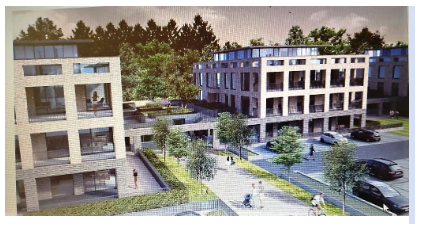
3West Developments Ltd, a Woodbury-based developer of Goodmores Farm managed, with the present policies in place, to reduce the numbers. In a green wedge, extant Local Plan Policy required 49% of the proposed development to be affordable dwellings, amounting to 88 . What is being built? Just 5 % or 16 houses now agreed due to the developer pleading non-viability. This is a development of 298 houses.

“Greater flexibility” could result in numbers counted on one hand.

Who benefits from this?

Partnership announced to boost nature’s recovery

A new partnership to help nature’s recovery and improve sustainable stewardship has been formed by Natural England and the University of Exeter.

www.bbc.co.uk

Dartmoor

Image source, Paul Glendell / Natural England

The partnership said its activities, initially over three years, would focus on understanding environmental change.

It was hoped the work would restore landscapes and improve them for people and wildlife, it added.

The organisations had already worked on more than 60 joint research projects over the last 10 years, they said.

Professor Lisa Roberts, vice chancellor of the University of Exeter, said it was “the critical decade in which we must tackle the environment and climate emergency”.

She added: “The University of Exeter has brought together more than 1,400 researchers working on the environment and climate, and, through this partnership, we will use our research power to protect nature and landscapes.”

Dr Tim Hill, Natural England’s chief scientist, said the project was already “building on years of close working on a wide range of projects” with the university.

He said working with the university would significantly further aims of “moving from being an evidence-based organisation to being an evidence-led organisation”.

More on: Plans to cut affordable homes threaten to make countryside ‘millionaires’ playground’

Government plans to slash requirements on developers to build affordable homes amount to a betrayal of more than a million families on housing waiting lists and will be “devastating” to rural communities where young people already struggle to find places to live, campaigners have warned.

Andrew Woodcock www.independent.co.uk 

The CPRE countryside charity said that the proposals being considered by housing secretary Simon Clarke would “turbocharge the conversion of the countryside into a millionaires’ playground of second homes and weekend retreats”.

Meanwhile, environmentalists voiced dismay at suggestions that an effective moratorium on developments near fragile wetlands could be lifted.

A letter leaked to The Times revealed that Mr Clarke is proposing to increase from 10 houses to 40 or 50 the maximum size of a developments which can be built without any requirement on builders to include affordable homes.

Housing charity Shelter said the move would cut the number of affordable homes delivered under the rule by 20 per cent – or more than 560 properties a year.

The cut would come at a time when 1.2m households are on waiting lists for social housing in England and just 6,051 affordable properties were constructed last year.

The charity’s director of campaigns Osama Bhutta said prime minister Liz Truss had no right to “betray over a million households stuck on social housing waiting lists by slashing the already tiny number of social homes that get built”.

“The government should be doing all it can to build the stable, genuinely affordable homes this country needs, but it’s doing the opposite,” said Mr Bhutta. “The government must change its mind, it can do it now or do it after grasping the anger of millions of people.”

And CPRE CEO Tom Fyans warned: “Housing sites in rural areas are typically small, which means the supply of affordable and social homes could be choked off altogether.

“It would consign thousands of key workers and young families to the margins of society, turbocharging the conversion of the countryside into a millionaires’ playground of second homes and weekend retreats.”

Reducing the number of new affordable homes will be “self-defeating” because it will result in fewer new builds overall and reduce the contribution of house-building to growth, said Mr Fyans.

“The government seems intent on repeating failed housing policies and laying the blame on the planning system and environmental protections,” he said. “The reality is that our rural communities are crying out for more – not less – homes for social rent and genuinely affordable prices to prevent destitution and homelessness.”

Mr Clarke’s Department for Levelling Up, Housing and Communities(DLUHC) declined to comment on his plans. A government spokesperson said only: “The government is committed to exploring policies that build the homes people need, deliver new jobs, support economic development and boost local economies.”

But Ms Truss’s official spokesperson confirmed that changes to the affordable housing threshold were under consideration.

“We want to keep it under review to make sure we’re delivering the new homes we need, while not discouraging the development of homes on small sites and by small builders,” he said.

Shadow housing secretary Lisa Nandy responded: “The Tories crashed the economy. It led to soaring mortgage rates, rents, energy bills and food prices. Their answer now is less affordable housing. It beggars belief.

“Labour has set out plans to support people onto the housing ladder, including giving first-time buyers first dibs on new developments, as well as building a new generation of affordable and council houses and giving tenants greater security with a new Renters’ Charter.”

And Alicia Kennedy, the director of pressure group Generation Rent, said that the 1.2m households on waiting lists included 100,000 children living in temporary accommodation.

“By letting developers only build homes for the market, the people most in need of a decent, stable home will keep waiting in miserable conditions,” said Ms Kennedy. “The government needs to explain how it is going to deliver enough homes to fix homelessness and bring down rents.”

The PM’s spokesperson also confirmed that ministers are considering the relaxation of rules restricting development in designated parts of Norfolk, Hampshire, Devon and the northeast to protect the health of wetlands.

Currently, new developments are barred in designated areas if they are likely to increase levels of the nutrients nitrogen and phosphorus in the water, which can cause excess algae growth and reduced food supplies for protected species.

Environmental groups are concerned over the potential damage to natural sites and wildlife if the controls are lifted.

Paul de Zylva of Friends of the Earth said: “Ending this moratorium would be a significant blow to our natural world.

“On the one hand the government claims it wants to stop sewage harming our rivers and freshwaters, yet on the other, it appears to be planning to allow new housing developments that could pollute our wetlands.

“We should be planning to build a greener, better future with high quality homes fit for the challenges of the 21st century – we won’t get there with poorly regulated housing developments.”

Ms Truss’s spokesperson said: “The prime minister has talked about some of her concerns about nutrient restrictions leading to an effective moratorium on new housing in some parts of the country, so that is something we want to look at.

“Obviously a strong environment and a strong economy go hand-in-hand and we have legally-binding targets as part of the Environment Act, which we adhere to.”

“Let fiscal responsibility slide and allow the deficit to balloon, we’ve been there before… It leads to boom and bust.”

Who said that?

Liz Truss in 2018 as chief secretary to the Treasury, speaking at the LSE.

Is there any constancy in her ideas and beliefs?

The Mirror has the embarrassing footage here