Southern Water alters pollution alert tool to curb automatic red alerts

This month Southern Water announced changes to the Beachbuoy map, which means it will no longer automatically flag all raw sewage releases into bathing waters via storm overflows.

This is a result of a  “software upgrade” apparently – Owl is unconvinced

Sandra Laville www.theguardian.com 

A water company has changed its pollution alert map for the public to stop issuing automatic red alerts after a discharge.

Southern Water attracted public criticism this summer for releasing raw sewage via storm overflows after heavy rain along coastal Kent. Campaigners used social media to widely share the company’s Beachbuoy map, which marks beaches at risk of pollution from raw sewage discharges with a red cross, often revealing that much of the coast has been affected.

After storms in August at least nine Kent beaches were issued with pollution alert warnings and the Environment Agency issued a “do not swim” warning for beaches across much of the north and south-east Kent coasts.

This month Southern Water announced changes to the Beachbuoy map, which means it will no longer automatically flag all raw sewage releases into bathing waters via storm overflows.

Instead Southern Water is analysing the overflows by modelling tides and weather, before deciding which are likely to cause water quality problems at beaches.

Explaining the change on its website Southern said: “In September 2022, we upgraded the map to take into account the impact a release has on a local bathing water, based on the location of the outfall, the duration of the release and tidal conditions at the time.

The Southern Water Beachbuoy map marks beaches at risk of pollution from raw sewage discharges.

The Southern Water Beachbuoy map marks beaches at risk of pollution from raw sewage discharges. Photograph: Southern Water

“For instance, if the outfall is 5km [3.1 miles] out to sea, the release was short and the tidal conditions meant there could be no impact on a bathing water, we no longer turn the bathing water icon red.”

The company said the releases were still available on its website in the accompanying table of combined sewer overflow (CSO) locations. It said most of its outfalls were long sea outfalls and where they are close to bathing waters they were designed with bathing waters in mind.

Ed Acteson, of campaign group SOS Whitstable, said he believed the changes were a way of turning a red map to blue to avoid bad PR.

“They are no longer indicating every CSO release on to beaches on their map, which is what it was set up for,” said Acteson. “They say they are taking into account the impact the release has on local bathing water but they don’t have the information to make that decision. The map has been covered in red recently; it is bad PR for them. It has been shared across social media and caused an outcry. That is what they are trying to avoid.”

Mike Owens, of Hayling Sewage Watch, analysed the data on the map on Wednesday morning. He assessed there were 15 out of 83 beaches marked blue that would have been red before the latest software update because outfalls were discharging raw sewage nearby.

“This is a question of trust in Southern Water to provide accurate, open and transparent information,” said Owens. “They say that they want to improve the user’s experience but manipulating data without giving us detail is most unhelpful and frankly neither open or transparent.

“They say they are using tide and weather and location to determine whether the discharge impacts on water quality on a beach but there are not showing us how they are making the calculation.

“I don’t know how they are doing it and how they have implemented it so quickly.”

Owens said for 246 outfalls the company would need to analyse the granular detail for every parameter in making a decision about whether a discharge impacted on water quality – including data for several different tide times, wind speeds and weather.

“If you multiply those together that is quite an astonishingly large amount of data.”

Martin William, Beachbuoy product owner at Southern Water, said: “This is an important step for the tool, ensuring we provide accurate, fair and clear information to wild swimmers, kayakers, paddleboarders and all users of the beautiful beaches across our region.

“Beachbuoy is leading the way in providing near-real time data about storm releases, but we must ensure it goes further to inform the public about the impacts to the watercourse and not limit their enjoyment of their local bathing water. We’ll never hide data though, with all releases still available on the website.”

South west water fined £233,000 for supplying “Just add lemon” water

A Court has fined South West Water £233,000 for supplying water unfit for human consumption affecting Bratton Flemming and other communities in North Devon in 2018.

South West Water had told customers to add a slice of lemon to the water but the court found that blaming the weather wasn’t acceptable and that South West Water should have reacted earlier to algal bloom in summer 2018.

According to a report on last night’s BBC Spotlight.

This is why your drinking water tastes weird at the moment 

(Extract) www.devonlive.com

“It’s the terrible taste of it, so earthy and mouldy flavour. How much longer do we have to put up with it?”

“Why is our water slightly brown and tastes like mud? What’s going on?”

“Some customers in north east Devon may have noticed a change to the taste or smell of their tap water over the last two weeks.

“The warm, dry weather has caused a natural change in the raw water at Wistlandpound reservoir, which supplies Bratton Fleming and Horedown Water Treatment Works.

“The earthy or musty taste is not harmful to health.

“We have installed an extra treatment stage at both water treatment works, and customers should notice a return to normal over the next few days.

“In the meantime, chilling a jug of tap water in the fridge and adding a dash of lemon can assist with lessening the taste and odour issue.”

Kwasi Kwarteng Wants To Scrap The Cap On Bankers’ Bonuses

Got to get your priorities right.

Let’s hear it for the Bankers! – Owl

Kevin Schofield www.huffingtonpost.co.uk 

Kwasi Kwarteng wants to scrap the cap on bankers’ bonuses in a bid to make the City of London more globally competitive.

The new chancellor is reported to be considering the move as he steps up government attempts to boost economic growth.

However, ending the cap – which was introduced in 2014 by the European Union – is likely to draw fierce criticism from the government’s political opponents.

The cap limits the amount bankers can receive in bonuses to twice their annual salary.

Its supporters say it is necessary to prevent bankers taking unnecessary risks like those which led to the 2008 financial crash in order to pocket huge bonuses.

But the Conservatives have long argued that the cap hampers the UK’s attempts to attract the best global banking talent.

Former prime minister Boris Johnson was in favour of ending the cap, but feared a huge political backlash if his government went ahead with it.

When the idea was first proposed in June, Labour leader Keir Starmer described it as “pay rises for bankers, pay cuts for district nurses”.

But according to the Financial Times, Kwarteng has told City bosses: “We need to be decisive and do things differently.”

The new chancellor will unveil his plans to boost economic growth in a mini-Budget when parliament sits again next week following the period of national mourning for the Queen’s death.

He will confirm that the government is ending the rise in national insurance payments, as well as scrapping plans to increase corporation tax.

The government has already courted controversy by refusing to bring in a fresh windfall tax on the excess profits being enjoyed by energy firms as a result of the war in Ukraine.

Ursula von der Leyen, the European Commission president, yesterday announced that the EU would be bringing in its own windfall tax so the firms’ huge profits can be “shared and channelled to those who need it most”.

‘Ludicrous’ parliamentary recess to delay urgent energy support for businesses

Looks like Simon Jupp MP, great supporter of the hospitality sector, won’t be back in the commons until 17 October.

Liz Truss and Kwasi Kwarteng have other priorities e.g. scrapping the cap on bankers’ bonuses – Owl

Jon Stone www.independent.co.uk

The government has been urged to cancel a “ludicrous” parliamentary recess and recall MPs to work so that they can pass energy bill measures before prices rise in October.

Businesses in sectors such as hospitality and manufacturing have warned they could go out of business this autumn due to soaring prices without urgent government assistance.

The government has pledged to help – but in contrast to its plan for households, support for businesses will require parliamentary time so that fresh legislation can be brought in.

Yet parliamentary business has been suspended following the death of the Queen, and this break is expected to dovetail with a planned recess for parties to hold their conferences.

As a result MPs will not even begin to look at legislation until the second half of October, meaning business may have to wait until November for energy support.

Hospitality chiefs on Wednesday urged the governemnt to cancel the conference recess to get a move on.

“This [delay] is because energy plans require legislation – unlike domestic support – and with Parliament going back into recess next week there may be insufficient time to pass it before price hikes take effect from 1 October,” said Kate Nicholls, chief executive of industry group UK Hospitality. “This is why it seems ludicrous to go ahead with conference recess.”

The prime minister has promised support for businesses “equivalent” to her £2,500 annual price cap for households, but legislation is required to bring it in because there is no existing system like the domestic Ofgem energy price cap for firms.

The government says the details of the legislation is being worked on and it will be delivered in a “timely” manner.

But business chiefs have reportedly been warned in recent meetings that the scheme may not be ready until November.

“It is not worked through yet,” one government official told the Financial Times. “I don’t know whether it will come in before November. There’s some debate about whether it can be brought forward and happen before then.”

Some small firms like pubs and takeaways are already closing as they receive revised energy bills, with predictions that as many as 7 out of 10 nightlife venues could have to shut down.

The 10 day parliamentary suspension plus the conference recess beginning on 22 September means MPs are only expected to return to work in Westminster on 17 October.

Conference season is important to political parties because the events give them a significant media spotlight – but the gatherings are also financially important.

Parties bring in significant revenue selling stall pitches to lobbyists in their conference halls, and there could be significant costs associated with a last-minute cancellation of a major conference venue.

A government spokesperson said: “We will confirm further details of the business support scheme next week. The scheme will support businesses with their October energy bills, including through backdating if necessary.”

Citizen scientists to monitor English rivers in £7m scheme

Citizen scientists are being trained as the best hope to protect rivers from pollution and over-abstraction as data suggests the Environment Agency’s new monitoring programme leaves waterways unprotected.

(See also this post)

Sandra Laville www.theguardian.com 

A £7m programme to set up citizen science testing in 10 river catchments across England is under way in an attempt to standardise the way volunteers carry out the monitoring.

Modelled on the testing carried out by volunteers at Chesapeake Bay in the US, the third largest estuary in the world, the project aims to create thousands of volunteer scientists who will monitor their local rivers and provide a grassroots voice to protect them.

“What we want eventually is to have thousands of people volunteering and monitoring their local rivers,” said Simon Browning of the Rivers Trust. “These could be 15-minute surveys or more detailed invertebrate surveys, which give us another level of data. We are trying to formalise the volunteer structure and standardise the monitoring so that we know the data is reliable.

“We want to bring along as many people as possible over all the river catchments across the country, so that by the end of the three years of the project there is no going back, we will see volunteers operating across the country.”

The aim is for the monitoring to be complemented by a network of sensors and the information will be gathered and shared into a central visualisation platform. The project, which is led by the Rivers Trust and United Utilities, is funded via the water regulator Ofwat’s first water breakthrough challenge, and involves academic partners. Browning, who set up a citizen science monitoring project for the Westcountry Rivers Trust which is ongoing, said the Environment Agency testing regime was no longer widespread or comprehensive enough.

The EA should monitor the chemical quality of rivers, focusing on levels of phosphates, nitrogen, ammonia and dissolved oxygen. But citizen data gathered in Devon exposed the holes in the new EA testing programme, adopted last year, which involves randomly selected sites for spot testing.

“Some of our river catchments have gone from being monitored 12 times a year to nothing,” said Browning. “So it is not so much a question of whether citizen science is better than EA monitoring but where there is no data at all, citizen science monitoring can empower communities and get them involved in understanding the issues in their rivers so that they can speak up and protect them.

“We want to see real benefits at a local level, with communities in towns and villages taking the local environment by the scruff of the neck and speaking up for rivers.”

Data from the River Creedy in Devon suggests the EA’s phosphate tests have dramatically reduced in 20 years. In 2000 the EA tested 12 sites for phosphates on the Creedy 12 times a year; totalling 144 tests. Testing started to drop off in 2014 with sample frequency reduced dramatically to a low of four times a year. By last year monitoring of the original 12 sites was abandoned altogether. Sites have been replaced with randomly selected areas as part of the new EA spot test system and there were 67 phosphate tests at these new sites in 2021, compared with a high of 189 tests conducted in 2002.

On the Creedy one of the new sample points is upstream of all sewage discharges, population centres or productive farmland. Critics say the new system is likely to misrepresent the scale of water pollution across the country.

“This detailed, local level spatial analysis [of the Creedy] reveals a huge shift in monitoring approach,” said Browning. “Long-term sampling sites have been wound down and abandoned, new ones initiated with a much-reduced sampling regime – one year in five – and at ‘random’ locations that are in no way representative of overall water quality at the waterbody scale.”

Annual funding from the government for monitoring activity has halved in recent years. The agency said its new River Surveillance Network testing was designed to provide a robust assessment of the health of rivers nationally over time. The agency said it welcomed the various emerging citizen science initiatives, which promised to deliver practical results in a collaborative manner.

An Environment Agency spokesperson said: “We continue to take tens of thousands of water quality samples every year as part of our work to keep rivers clean. In recent years technological advances and increased efficiency has enabled us to concentrate our resources, and target areas where the environment will benefit most.”

Rental prices in South West England rise at their fastest rate on record

“We’ve had seven housing ministers in the last five years and none of them have sorted it out.”

Dave Doyle www.bristolpost.co.uk

The cost of private home rental in our region grew by the fastest rate ever in the twelve months up to June, Bristol Live can reveal. Prices were 4.1 percent higher in June of 2022 than in June of 2021 – the largest year-on-year increase since comparative records began in 2006.

Taking the twelve months to July 2022, private rental prices had risen by 4 percent – the third largest rise of any UK region. Only the East and the East Midlands saw faster increases, of 4.1 and 4.3 percent respectively.

The record-breaking hike in home rental came at the same time that workers across Britain saw their regular pay fall by 3 percent, according to separate figures from the Office for National Statistics (ONS).

Ashley Day is the founder and director of Bristol Property Centre, an award-winning independent letting agent based in Redland. He called the average rise of 4.1 percent “quite modest”, suggesting that prices had jumped by much more in many cases.

“I’ve run BPC for ten years and supply has never been like this,” said Ashley. “Some tenants are offering up to £100 more than the landlord is asking for.”

The difficulty and expense of renting in the city is a popular topic amongst members of the Reddit forum r/Bristol, as suggested by the title of the weekly general discussion thread: “Buying, selling, moving, renting, lost property and general chat should go here.”

“I would say it’s an average price, not the best deal but equally nothing super high,” replied Party-Efficiency7718. “Good value in the current market I’d say in that location. Unfortunately, the market is messed up.”

“Just been notified that our rent is going from [£1,400] per month to [£1,900] in Horfield, and I am in disbelief,” wrote user Beardy_Will, in another thread. “Landlord reckons it is reasonable as the local letting agents told him to charge [£2,000]. Of course they tell him that as it is in both their interests to do so.”

Jeetz88 replied: “I really struggle to understand how they can justify a massive rent increase just cos some other locals are charging more. Pure greed.”

Spiralling rents come down to supply and demand, the property expert explained. “There’s simply not enough property,” he said. “There was a time we were advertising 30 properties in a month – at the moment it’s about 10 or 15.”

Many landlords are selling up due to changing regulations, which are making it less profitable to let. “Landlords can’t claim back the interest on their mortgages any more,” said Ashley. “It’s perhaps one of the only businesses in the country where they can’t claim back a legitimate business expense.

“They are also talking in Parliament about making the minimum energy efficiency band C, so landlords are exiting before they have to spend to bring property up to that standard. It can be very expensive, especially in older properties.”

He added that some landlords are capitalising on a buoyant post-pandemic sales market, cashing out and further reducing the stock of housing available in the city. And there is very little renters can do about it.

“There isn’t a situation I can see where people are going to be renting in Bristol for what you might call a reasonable amount,” said Ashley. “You can look at areas slightly further out, like Mangotsfield or Warmley, but it’s still very competitive out there.”

He added: “Try and stay where you are, if you can. If I was a tenant now, I’d probably come armed to a viewing with a tenant CV which you can hand to the agent. And offer what you feel you can afford – but don’t go beyond your means.”

The solution to the situation is “supply, supply, supply,” Ashley says. “There’s not enough student housing, so students are coming into the private sector. The council aren’t building enough social housing, and the private sector is shrinking because landlords are selling.

“We’ve had seven housing ministers in the last five years and none of them have sorted it out.”

Building firm Pollard goes bust owing £15million

Investigations have begun after a South West construction went bust leaving hardly any cash to pay £15m in debts and a huge black hole in its pension fund. Liquidators sorting out the affairs of Henry W Pollard and Sons Ltd, which had been in business for 161 years before it went belly up in 2021, have sent a confidential report on the directors’ behaviour to the Government.

Remember the £60million collapse of Midas – Owl 

William Telford www.devonlive.com

Furthermore, the liquidators, at South West accountancy and business consultancy Bishop Fleming LLP, revealed, in documents filed at Companies House, that they are also probing “alleged pension-related misrepresentations in the company’s financial statements.” The company’s pension scheme is owed £4,954,000.

The documents revealed the liquidators have recovered pension documents from the company’s books and records, and from relevant third parties but, as of July, were awaiting further information. Meanwhile they have sent a report to Whitehall, under the Company Directors Disqualification Act 1986, and said: “We can confirm that we have submitted a report on the conduct of directors of the company to the Department for Business, Energy and Industrial Strategy. As this is a confidential report we are unable to disclose the contents.”

Pollard, which had worked across the region, ceased trading and entered creditors’ voluntary liquidation in July 2021 leaving buildings such as Plymouth’s £13m Teesra House apartment block in limbo. The business was headquartered in Bridgwater but had a key office in Plymouth, where it opened a base at Millbay’s Cargo building in 2015. Pollard had also been leasing three units at Queen Anne Place, Cattedown and documents reveal it owes cash to small firms throughout Devon and Cornwall.

The newly published joint liquidators’ annual progress report reveals that assets of nearly £1m have been collected so far and two freehold properties are on the market. One secured creditor, a bank, has been paid £400,000 from cash in the Pollard bank account, and claims from ordinary preferential creditors, 29 employees, have been dealt with. A claim from HM Revenue and Customs for £256,145 in taxes is being reviewed but it is expected this will be paid.

But it is estimated by the liquidators that there will be just £612,563 available for unsecured creditors, meaning they will get just 4p in the £1. If this turns out to be the case it means the pension fund, for example, would receive only £198,160 of the near £5m it is short.

Pollard’s statement of affairs indicated there were 265 unsecured creditors whose debts totalled about £8.7m. But liquidators have already received claims totalling about £15.25m from 196 creditors.

In the progress report the liquidators said: “The significant difference in value relates, principally to four claims totalling about £5m which pertain to live contracts and which had not been incorporated within the directors’ statement of affairs.”

Out of the unsecured creditors, trade creditors are claiming £4,482,999, employees want £182,368, Somerset District Council is owed £1,089,150, and contract counterclaims amount to £4,542,728. When the pension scheme deficit of £4,954,000 is added in it brings the total to 15,251,245.

The liquidators said it is not known how much cash they will be able to collect, and said: “The extent to which retentions and book debts are recoverable is entirely uncertain at this stage.” Future legal costs and fees are unknown at the moment too.

Other documents filed at Companies House have revealed that many of the unsecured claimants are small and mid-sized companies spread across the South West. Among the dozens of companies owed money are Plymouth firm XCAV8 (SW) Ltd, which is claiming £130,181; Bridgwater’s Blake Joinery Co, owed £221,950; Plymouth’s Beaumont Drylining Ltd, owed £97,595; another Plymouth firm, PCB Electrical Service, which is claiming £134,393; and DMH Interiors, in Weston Super Mare, which is £105,243 short.

The smallest claim is for £17 but most are for hundreds or thousands of pounds, and they come from companies in the aforementioned towns and cities and in Bristol, Exeter, Newton Abbot, Tavistock, Bath, Taunton, Saltash, Torpoint, St Austell and Swindon, among many places in the South West, and even from outside the region, including companies in Birmingham, Bolton, Coventry and Manchester.

Pollard had been involved in multi-million pound building projects throughout the West Country and was in profit before the coronavirus pandemic and had a healthy turnover, but the administration of an important client in 2019 left it £715,000 out of pocket.

Among projects Pollard worked on was Kingsditch Industrial Units in Cheltenham, and it was working on Weston Mews townhouses in Bath, Alexander House care home in Exeter, and the eight-storey Teesra House block, at Mount Wise in Plymouth, was close to completion but still covered in scaffolding at the time of the Pollard collapse.

Pollard directly employed about 50 people and its most recent results revealed turnover of £24m, up 20%, in 2020 and a profit of £170,888. That was before the Covid pandemic, although accounts released in January 2021 said the firm has been able to maintain work at all its sites and was tendering for £40m of contracts.

New chief secretary to Treasury faces questions over financial interests

Chris Philp, the new chief secretary to the Treasury, is facing questions over his financial interests, after it emerged he still has a substantial stake in a property finance group and is director of an investment company.

Out with the old orthodoxy and in with the new? Nothing new in questionable links between Tories and business. – Owl

Rowena Mason www.theguardian.com 

Philp, who is the chancellor’s deputy and sits in the cabinet, is a member of a partnership that owns Pluto Finance, which offers multimillion pound loans to property developers.

It has provided loans for developments including £260,000+ “pocket” flats in Croydon and luxury blocks in the City of London whose developers earlier this year applied for an exemption to avoid having to offer affordable housing.

In his government job, Philp has responsibility for Treasury spending policy in relation to housing and planning.

The Treasury declined to say whether Philp would be required to sell off his interests, put them in a blind trust or be recused from discussions on housing policy.

Asked how Philp would be managing his financial interests, a government spokesperson said: “The ministerial code sets out the process by which ministers, following their appointment to a new role, should declare and manage their interests, working with their permanent secretary. The chief secretary to the Treasury is now going through this process in line with the ministerial code, following his appointment just last week.”

The Treasury is currently without a permanent secretary, after Tom Scholar was removed from his post by the chancellor, Kwasi Kwarteng, last week. The role is now being shared by two acting directors, Beth Russell and Cat Little.

According to the register of members’ interests, Philp has a shareholding of more than 15% and is a partner in Pluto Partners LLP, Pluto Silverstone Co Invest LLP, Pluto Monza Co Invest LLP, Pluto Development Partners LLP, and Pluto Capital Management LLP.

Pluto Partners is ultimate owner of Pluto Finance (UK) LLP, a firm that arranges loans for property developers.

It is also part owned by the Universities Superannuation Scheme as well as other members of the partnership.

Philp is also a director of an investment, consultancy and advisory company that he fully owns, Millgap Ltd. It is understood that Philp considers it to be not actively trading, although it is still registered as active at Companies House and is not recorded as dormant on the MPs’ register of interests or the list of ministerial interests from May this year.

His promotion to chief secretary of the Treasury comes at a time when Liz Truss and Kwarteng are prioritising growth above all other concerns.

Truss also appointed another businessman, Andrew Griffith, a former Sky executive, to financial secretary to the Treasury, but he has given up his interests in business since entering parliament.

However, Philp is not the only minister sitting in cabinet who has retained substantial business interests. Jacob Rees-Mogg, the business secretary, still has a stake in Somerset Capital Management, an investment firm that he co-founded.

The practice of allowing ministers to retain substantial business interests appears to have increased under Boris Johnson’s government. Previously, ministers would have expected to sell substantial stakes in companies and give up directorships, or put them immediately in blind trusts.

The ministerial code states that it is the personal responsibility of each minister to decide whether and what action is needed to avoid a conflict or the perception of a conflict, taking account of official advice from the permanent secretary and the adviser on ministerial interests. Truss has indicated, however, that she may not appoint a new adviser on ministerial interests following the resignation of Sir Christopher Geidt.

Liz Truss could scrap anti-obesity strategy in drive to cut red tape

This is what a libertarian government looks like – Owl

The UK government could scrap its entire anti-obesity strategy after ministers ordered an official review of measures designed to deter people from eating junk food, the Guardian can reveal.

(In the 2019 survey, it found that 28.0% of adults in England were obese and a further 36.2% were overweight, making a total of 64.2% who were either obese or overweight.)  

Denis Campbell www.theguardian.com 

The review could pave the way for Liz Truss to lift the ban on sugary products being displayed at checkouts as well as “buy one get one free” multi-buy deals in shops. The restrictions on advertising certain products on TV before the 9pm watershed could also be ditched.

The review, commissioned by the new health secretary, Thérèse Coffey, is seen as part of the prime minister’s drive to cut burdens on business and help consumers through the cost of living crisis.

Whitehall sources said the review was “deregulatory in focus” and is expected to lead to the new government jettisoning a raft of anti-obesity policies inherited from Boris Johnson, Truss’s predecessor in Downing Street.

It will also look at possibly ditching calorie counts on menus in many cafes, takeaways and restaurants – designed to encourage people to choose healthier dishes – which only became mandatory in April.

The review is so radical in scope that it may even look at whether the sugar tax, which began in 2018 and has helped make soft drinks much less unhealthy, should go too. Health experts have hailed the levy as a key initiative in the fight against dangerous obesity.

“There doesn’t seem to be any appetite from Thérèse for nanny state stuff,” one source said. Truss also made Coffey her deputy prime minister after taking office last week.

Officials at the Office for Health Improvement and Disparities, the part of the Department for Health that formulates policies to tackle major public health problems, were said by a source to be “aghast” at the prospect of Truss potentially discarding strategies to counter junk food that have been agreed and approved by parliament.

Almost two-thirds of adults Britons are overweight or obese. Obesity costs the NHS an estimated £6.1bn a year to treat because it is an increasingly common cause of cancer, diabetes, heart conditions, painful joints and other health problems.

Johnson decided to make tackling foods high in fat, salt or sugar a personal priority as a result of his own admission to intensive care with Covid-19 in April 2020. A large majority of people who have needed life-saving care after becoming infected during the pandemic had high levels of excess weight, studies have shown.

The Obesity Health Alliance, a grouping of 50 health charities and medical organisations, said setting aside the government’s main weapons against obesity would be “a kick in the teeth”.

“We are deeply concerned. It would be reckless to waste government and business time and money rowing back on these obesity policies, which are evidence-based and already in law. These policies are popular with the public, who want it to be easier to make healthier choices,” said Katharine Jenner, the alliance’s director.

The unpublicised review has also provoked unease in Conservative ranks. James Bethell, a health minister until last year, said such a major U-turn could exacerbate Britain’s obesity problem. He challenged Truss’s apparent rationale for contemplating such an unexpected departure, which is that it would cut red tape faced by business and help promote economic growth – her key priority and the focus of the chancellor Kwasi Kwarteng’s emergency mini-budget, expected next week.

“Improving the nation’s health is one of the best ways we can increase productivity and workforce capacity and thereby drive growth. So I would be very surprised by any decisions that actually strive to make the UK less heathy,” the Tory peer said.

Truss pledged during the Tory leadership campaign to light a bonfire of obesity rules if she won. “Those taxes are over. Talking about whether or not somebody should buy a two-for-one offer? No. There is definitely enough of that,” she told the Daily Mail last month.

“What people want the government to be doing is delivering good roads, good rail services, making sure there’s broadband, making sure there’s mobile phone coverage, cutting the NHS waiting lists, helping people get a GP appointment. They don’t want the government telling them what to eat”, she added.

A leading health campaigner, who did not want to be named, said Truss’s readiness to abandon the approach to obesity was “ideological” and driven by her belief in minimal regulation of business.

Johnson legislated to ban junk food ads on TV before 9pm and online, multibuy deals, and sweet treats at checkouts, aisle ends and entrances in supermarkets. The measures were due to affect a wide range of foods such as snacks, breakfast cereals, pizzas, cakes, confectionery and desserts.

However, in May he delayed until 2023 and 2024 the introduction of all but the last measure, which is due to take effect on 1 October, subject to the review, citing soaring inflation and the pressure on families’ budgets as the reason.

That move led Jamie Oliver to stage a protest at Downing Street. The celebrity chef said: “To use cost of living as an excuse is wrong. It [action on obesity] is absolutely urgent and the excuses that he’s used for not doing it are absolutely not true.”

The Department of Health has been approached for comment.

Police under investigation over Plymouth mass shooting

“During today’s hearing it was revealed that the Independent Office of Police Conduct had made a request to the Office of the Police and Crime Commissioner to “record and refer” a conduct matter in regards to the Chief Constable in their corporate sole under the Health and Safety at Work Act. However, it was noted during the hearing that the commissioner had declined this and the IOPC chose to refer the matter to themselves.”

(Devon and Cornwall police are facing a criminal investigation into alleged breaches of health and safety rules before the Plymouth mass shooting. Police sources emphasised that no individual faced criminal investigation. A “corporation sole” is a legal entity consisting of a single incorporated office. See report in national press)

Lisa Letcher www.devonlive.com

A watchdog investigation has been launched into Devon and Cornwall Police following the mass shooting in Plymouth last summer. The IOPC is investigating over potential breaches of health and safety legislation.

It related to the running of its Firearms Licensing Unit prior to the mass shooting in Keyham, in which five innocent people lost their lives. Jake Davison, 22, killed his mother Maxine, 51, after a row and then shot dead four others in a 12-minute attack.

The pre-inquest review (PIR) into the deaths of the five people murdered in Keyham on August 12, 2021 was held earlier today (September 13) at Plymouth Crown Court with the aim of preparing for the full hearing. That will now take place on January 17 next year.

During today’s hearing it was revealed that the Independent Office of Police Conduct had made a request to the Office of the Police and Crime Commissioner to “record and refer” a conduct matter in regards to the Chief Constable in their corporate sole under the Health and Safety at Work Act. However, it was noted during the hearing that the commissioner had declined this and the IOPC chose to refer the matter to themselves.

In a statement released after the hearing, a spokesperson for the Independent Office of Police Conduct said: “We can confirm we have begun an investigation into Devon and Cornwall Police for potential breaches of health and safety legislation in the running of its Firearms Licensing Unit prior to the mass shooting in Plymouth in August last year.

“At the conclusion of our investigation into the force’s granting of a shotgun certificate and later return to Jake Davison of a shotgun, we sought specialist legal advice and have since decided to conduct a criminal investigation. Our investigation will examine whether the Office of the Chief Constable of Devon and Cornwall Police, as corporation sole, may have committed any offences contrary to the Health and Safety at Work etc. Act 1974. We have advised the force, the Police and Crime Commissioner, the Coroner and families of our decision.”

A statement in response, from Devon and Cornwall Police’s assistant chief constable, Jim Nye, said: “Devon and Cornwall Police’s thoughts remain with those families, victims and survivors a year on from the events of August 2021 in Keyham. Throughout the last year the Force has co-operated fully with the IOPC investigation, the coronial process and commissioned an independent review of the Force’s firearms licensing procedures by Durham Constabulary.

He continued: “We are aware of the latest developments from the IOPC investigation and continue to co-operate fully with them, while considering next steps the Force may choose to take on this matter. The Force notes this development is in its early stages and no determination in terms of potential corporate culpability has been decided.

“We continue to respect the coronial process in preparation for a full inquest in January 2023.”

Liz Truss energy and tax plan ‘will give richest families twice as much support’

Liz Truss’s plans for an energy price freeze and sweeping tax cuts will give Britain’s richest households twice as much financial support with living costs as the poorest households, according to a leading thinktank.

Richard Partington www.theguardian.com 

The Resolution Foundation said the prime minister’s energy package, announced hours before news of the death of the Queen last week, would come with a “colossal” price tag for taxpayers that was poorly targeted to help those most in need when combined with tax cuts promised in her leadership campaign.

It said the richest tenth of UK households would receive £4,700 in support, on average, from the government’s “energy price guarantee” and cuts to national insurance – far in excess of the £2,200 support for a typical household in the poorest tenth.

The intervention comes as details of the new prime minister’s plan to support struggling households remain unclear, after she chose to hold back from publishing the costings for her proposal until a mini-budget, expected to take place next week.

The Resolution Foundation said the plan to limit an increase in the cost of a typical household energy bill to £2,500 for two years from October would cost about £120bn. It warned that Truss’s plan to avoid a fresh windfall tax on energy producers would mean heaping the cost on taxpayers, with as little as £1 in every £12 spent on energy support for households recouped directly from higher taxes on energy firms.

The thinktank said the average level of support for households would hit £2,000 this year because of the energy price guarantee, as well as financial support for all households and additional one-off payments for those on means-tested benefits. Taken together, it said a similar level of support was provided for rich and poor households.

However, richer households will benefit substantially more next year from plans to reverse national insurance tax increases implemented in April. Alongside the blanket support from the energy price freeze, which will benefit households with the biggest gas and electricity bills, it said this would “skew support towards the very highest-income households”.

Torsten Bell, the Resolution Foundation’s chief executive, said: “Last week, the prime minister announced a simply colossal energy support package to prevent a living standards catastrophe this winter.

“The support was big, bold and – together with announcements earlier this year – amounts to over £2,200 for every household in Britain. Even so, families should still expect a tough winter ahead, with rich households getting twice as much cost-of-living support as poorer households next year.

“The energy price guarantee was absolutely the right thing to do in terms of providing support where it’s needed. But, by ruling out any attempt to fund it through further windfall taxes, the welcome support today could have a nasty sting in terms of higher mortgage payments and higher taxes tomorrow.”

Truss hints she may reduce Planning Inspectorate’s powers

Needs to be read in the context of two types of “Conservative” councils: those that are conservative Conservative and those that are “build, build, build” Conservative. – Owl

Will Ing www.architectsjournal.co.uk 

On Wednesday (7 September), Conservative MP Peter Bottomley asked the new prime minister why the national planning body ‘is able to overturn councils’ planned protections’ for green areas.

Bottomley also raised specific concerns about the housebuilder Persimmon’s plans to build 475 homes in the Goring Gap in Worthing, which were approved by the Planning Inspectorate but later overturned in the High Court.

Liz Truss responded that Bottomley was ‘right’ that ‘there is not enough power in local hands at the moment’.

She added: ‘It is too easy for local councils to be overruled by the Planning Inspectorate and that is certainly an issue that I expect my secretary of state for levelling up, housing and communities [Simon Clark] to look at’.

The commitment appears at odds with elements of planning reform proposed by former housing secretary Michael Gove earlier this year – which were described by critics as an attempt to ‘radically centralise planning decision-making’.

Lawyers for campaign group Rights: Community: Action have said that the Levelling-up and Regeneration Bill contains provisions which would allow the housing secretary to grant permission to contentious developments and ‘bypass the planning system entirely’ with ‘no right for the public to be consulted as part of this process’.

It is not yet clear whether Truss and Clark will look to pass the bill in its current form. If the government did review and change its proposed planning reforms, it would be for the second time since then-housing secretary Robert Jenrick unveiled a white paper on planning in August 2020.

Are the Tories on course to crash the economy?

Liz Truss and Kwasi Kwarreng are betting the farm on cutting taxes to stimulate growth to pay for the aforementioned tax cuts (and win the next election).

Three comments from leading economists:

“Unsubstantiated hogwash – ideological faith triumphing over evidence and reason.” Will Hutton

“Just wishing for 2.5% growth won’t make it happen” David Smith

“The energy price freeze must be replaced by “something better next winter” because it will cost up to £150bn” Paul Johnson, Institute for Fiscal Studies.

Pulling the economy around before the next election is very unlikely. Owl fears this will all end in tears.

Here is a summary of the context:

  1. TheTories have just squandered six weeks gazing at their navels whilst a serious economic crisis developed. Economic crises require speedy and decisive action or they get worse. Events beyond the Government’s control have now taken over and the Government is on the back foot.
  2. On appointment to be Chancellor Kwasi Kwarteng summarily sacked the perm sec to the Treasury, Sir Tom Scholar. He represented Treasury orthodoxy, which right wingers blame for lack of economic growth. Scholar was the man devising a set of economic support options that could be implemented quickly whilst the Tories were asleep at the wheel. So bang goes any continuity of experience at the top of the Treasury and civil servants will now find it difficult to “speak truth to power” at a time when it is most needed. In economic crises stability matters.
  3. Events have caused the Bank of England to postpone interest rate rises.
  4. The pound has been falling.
  5. Because of her unpreparedness, “No Handouts” Liz Truss has been forced to announce the biggest open ended handout in history for individual energy consumers. Businesses only have vague promises. In the short term this will reduce inflation because the taxpayer is picking up the bill, However, as this support is untargeted it is almost certainly unsustainable (see 8 below). 
  6. What Liz Truss and Kwasi Kwarteng are betting the farm on is that by cutting taxes they can stimulate growth to the extent they are keen on borrowing another £30bn to do so. 
  7. Latest ONS growth figures are lower than expected. Recession seems certain. The questions are how deep will it be and how long will it last?
  8. Truss and Kwarteng have refused to put a figure on the support package they will announce. Their “fiscal event” will avoid OBR scrutiny. It will, therefore, be free of analysis, costings and forecasts.  Paul Johnson, director of the Institute of Fiscal Studies reckons the first year may cost £150bn and, at that level, would be unstainable beyond.

Here are two recent comments from economists:

“Unsubstantiated Hogwash” Will Hutton on cutting taxes to stimulate growth

“Bold action,” he [Kwarsi Kwarteng] suggested, was an imperative to relieve this “toxic combination”: “Cutting taxes, putting money back into people’s pockets and unshackling our businesses from burdensome taxes and unsuitable regulations.” Only thus could investment and growth be unlocked. Better that, he added, than “burying our heads in a redistributive fight over what is left”.

It is unsubstantiated hogwash – ideological faith triumphing over evidence and reason. In these terms, Scholar, exemplar of the alleged old economic managerialism, had to go. We are on an economic fairground ride led by fairies and fools.

Of course, the two-year £2,500 price cap is welcome. It will lift from millions of people the threat of desperate choices over warmth or food. It will also lower the peak inflation rate by up to 4% and so lower debt service costs in a full year by around £20bn – a quarter of our national debt is represented by bonds indexed to the level of inflation. It will also partially avert the risk of a dangerous wage price spiral. But those were the reasons Labour first advocated a price cap. The libertarians only changed tack when they realised that resisting and sticking to their preferred response of tax cuts and minimalist rebates risked them being politically overwhelmed.

But you don’t win wars and reset economies with daffy libertarianism. Europe is in a de facto war with Russia over Ukraine, as it threatens a price cap on Russian gas. Putin responded by saying in Vladivostok that at the limit Russia will export nothing – no gas, no oil, no food – to Europe. This is economic rather than battlefield war, but it is war nonetheless. Britain’s energy policy is not serious, it betrays the cause.

Energy policy in a time of potentially prolonged supply disruption has to be designed for the long term; has to protect business as much as consumers; has to be financially sustainable and avoid the risk of blackouts. The government plan fails on all counts.

Crucially, it is not financially sustainable: Britain’s national debt, as the Trussians continually say, is the lowest in the G7 bar Germany so there is scope to borrow. But the dollar, yen and the euro are the world’s reserve currencies and Canada runs a balance of payments surplus. Britain is alone, outside any of the major trade blocs, with a weak, legacy economy and a chronic international payments deficit. It cannot sell at least £100bn of extra public debt a year to protect living standards rather than raising investment without the threat of further sterling weakness or an enforced jump in interest rates.

Financial sustainability could have been addressed in a number of ways. A further windfall tax could have been imposed on the extraordinary profits in the energy sector. In addition, for the duration of the Ukraine war, all gas and oil from British fields should be required to be sold to the government on a cost-plus basis rather than distorted international prices. Consumers could have been told to tighten their belts with ministers giving a lead and a rationing system rolled out if needed. There should be a state-led crash programme of building onshore and offshore windfarms, – the fastest and lowest cost route to boosting energy supplies – along with accelerating the home insulation programme.

For libertarians, every such measure sticks in their craws. Thus they propose untargeted, if generous, help for households but, because even they recognise the near open-ended costs, they have limited the help to business to six months. Scared of what may follow, business will batten down the hatches so that Kwarteng cancelling the proposed corporation tax rise will have zero effect on investment. It is also aware of the risk of blackouts this winter, unrelieved by the uncertain prospect of fracked gas on stream in a decade.

Just wishing for 2.5% growth won’t make it happen David Smith www.thetimes.co.uk

In the meantime, let me turn to another issue, the new administration’s ambition to get the economy to 2.5 per cent trend growth, which the new chancellor, Kwasi Kwarteng, reiterated at a meeting with business leaders.

It is an ambition that sounds a bit geeky but is very important. The economy’s trend growth rate is what determines our prosperity, and 2.5 per cent is an interesting number. It is, in fact, exactly the average growth rate for the UK economy since 1949.

That 2.5 per cent average, however, reflects different experiences in different periods. Growth was strong in the second half of the 20th century, and the UK outperformed most rivals after joining the European Economic Community in 1973. But growth this century has been slower, averaging 1.8 per cent, and particularly weak since the financial crisis at an average of 1 per cent.

Apart from last year’s bounce-back from the pandemic, which followed an even bigger fall in 2020, the only two years of 2.5 per cent-plus growth were 2014 and 2015, as the economy was getting into its stride after the crisis but before the EU referendum.

Pre-crisis, in the 2000s, 2.5 per cent was a very modest ambition for the economy’s trend growth rate. In fact, the Treasury — these days thought of by new cabinet ministers to be some kind of malevolent growth-destroyer — used 2.5 per cent as its “cautious” assumption for meeting the government’s fiscal rules, believing then that the true trend growth rate was 2.75 or 3 per cent.

When 2.5 per cent trend growth was thought to be the (cautious) norm, it was easily described. Simply put, it consisted of 2 per cent annual growth in productivity, the long-term norm, and 0.5 per cent workforce growth.

Now, 2.5 per cent trend growth is harder. The Office for Budget Responsibility (OBR) always takes a relatively optimistic view on the prospects for productivity recovery, assuming its growth will get back to 1.5 per cent a year after over a decade of near stagnation. But the OBR also expects the workforce to shrink by 0.1 per cent a year, and its estimate of long-run trend growth, in its “Fiscal risks and sustainability” report in July, is only 1.4 per cent a year. If productivity does not perk up, that might be optimistic.

The trend has been undone by four growth-damaging events: the financial crisis, Brexit, the pandemic and now the cost of living crisis. We are back to the age-old question of whether it is possible to waken productivity out of its slumber.

Kwarteng, meeting business leaders, was right to focus on “unlocking” business investment as one of the keys to doing this. Rishi Sunak, having identified the problem, was working on this when chancellor. Perhaps the new chancellor will bring forward some of his ideas.

But the challenge of boosting business investment is considerable. Despite a small second-quarter rise, it remains below pre-pandemic levels and, indeed, is at pre-referendum levels — despite a large incentive to invest now because of the super-deduction tax allowance.

An excellent new Institute for Government paper by Giles Wilkes, “Business investment: not just one big problem”, outlines the difficulty. There are no easy levers for the government to pull to stimulate investment. Merely cancelling next April’s planned increase in corporation tax will not do the trick. “Policymakers once hoped that steadying the macro economy would create the conditions needed for a rise in business investment,” Wilkes writes. “But such stability is often elusive — for reasons both within and beyond the control of politicians … And while macro-economic stability is a necessary condition for growing investment, it may not be sufficient. Nor are the standard recourses of chancellors in the past: financial help for investment, lower interest rates, targeted subsidies or the perennial call for tax cuts. All can make a difference, but given the ‘lumpy’ nature of investment, none is able to drive new projects when conditions are not otherwise encouraging.”The policy debate is thus in danger of becoming a bit circular. Business investment would pick up strongly if firms were more confident about UK growth, but long-term growth will not recover without a rise in business investment. It is a bit of a catch-22. Merely talking about growth will not ensure that it happens.

Find ‘something better’ than energy price freeze set to cost £150bn, Liz Truss told

The energy price freeze must be replaced by “something better next winter” because it will cost up to £150bn, a leading economist has warned Liz Truss.

Rob Merrick www.independent.co.uk

Paul Johnson, the head of the Institute for Fiscal Studies, urged the prime minister to ditch plans to hold down everyone’s bills until 2024 and find a smarter solution to the crisis.

The plea comes after fierce criticism of the government for failing to reveal the expected cost of a two-year freeze ahead of an expected ‘mini-budget’ next week.

Mr Johnson called that decision “extraordinary”, saying: “This could actually turn out to be the biggest single fiscal announcement in my lifetime, because this could cost £150bn.”

He agreed the freeze “might be necessary” for this winter, but warned: “It’s incredibly expensive. It’s totally untargeted.

“It gives large amounts of money to people who don’t need it, and it means that we’re not facing the price signal that there is less gas out there. And yet, we’re being massively subsidised to use gas.”

Mr Johnson told Times Radio: “One of the things that I really hope is that they’ve got teams of people working next year on thinking of something better for next winter.”

Ms Truss carried out a spectacular U-turn, just two days into her premiership, by announcing average annual household bills will be frozen at £2,500 until 2024.

They were set to rise to £3,549 from next month and to more than £5,000 next year – threatening millions of people with bills they would be unable to pay.

Full details of how the “energy price guarantee” will work are yet to emerge, as the announcement was immediately drowned out by the death of the Queen.

The government will meet the cost – through a leap in borrowing – of capping the amount energy companies can charge customers for one unit of gas.

A £400 rebate on all bills announced earlier this year has been retained, cutting £66 every month from October until April, and green levies suspended, saving the average household about £150 a year.

The Resolution Foundation think tank has put the price tag at £120bn – the bill just to bail out households, with separate tens of billion needed to rescue businesses.

Although it is called a “guarantee”, people in large or draughty homes will inevitably pay significantly more.

Ms Truss downgraded her planned emergency budget to a “fiscal event” – to avoid scrutiny by the Office for Budget Responsibility – which was pencilled in for next week.

She is expected to fly to New York for the UN leader’s meeting as early as Monday evening, within hours of the Queen’s funeral, returning to the UK late on Wednesday or early Thursday.

That would allow the mini-budget to be held on Thursday next week, before parliament breaks up again for the Labour and Conservative party conferences.

Housebuilders ‘lobbied against plan for electric car chargers in new homes in England’

Ah yes – the rules announced in the infamous Peppa Pig speech. That’s the one in which he imitated the sound of an accelerating car with grunts that the official Downing Street release transcribed as “arum arum aaaaaaaaag”; and compared himself to Moses over his plan to help business invest in tackling climate change.

“I said to my officials the new 10 commandments were that ‘Thou shalt develop industries like offshore wind, hydrogen, nuclear power and carbon capture.’” (Pity “Fracking” Liz Truss wasn’t listening – Owl)

Jasper Jolly www.theguardian.com 

Britain’s biggest housebuilders privately lobbied for the government to ditch rules requiring electric car chargers to be installed in every new home in England, documents have revealed.

The FTSE 100 construction firms Barratt Developments, Berkeley Group and Taylor Wimpey were among the companies who argued against the policy in responses to an official consultation seen by the Guardian. The “blatant lobbying efforts” were criticised by Transport & Environment, a campaign group.

Swapping cars powered by fossil fuels for zero-emission models is viewed by scientists, environmental campaigners and the government as key to reaching net-zero carbon emissions – alongside increased public and active transport. However, the lack of chargers is seen as a barrier to uptake.

The rules requiring all new homes to have a charger were announced by Boris Johnson in November 2021 as the flagship policy of a speech to business leaders. While the details were overshadowed at the time, as the former prime minister meandered through his speech with a riff on the children’s cartoon character Peppa Pig, the government hopes 145,000 charging points will be installed thanks to the rules.

However, the housebuilders who responded stated their opposition to the policy, citing cost concerns. They also warned that mandating installation could lock homeowners into obsolete technology, that there could be a risk of electric shocks with some car chargers, and even that the plan could prevent owners from choosing between cars with different plug types used in Asia and Europe.

Taylor Wimpey warned that the installation of chargers could result in fewer homes being built. “We see practical and financial challenges associated with the proposed approach,” it wrote, citing “significant uncertainty over the financial costs”.

Berkeley Group said it did not believe chargers would be required at every parking space because people would charge at work or while “going to the gym”.

However, automotive industry leaders say charging at home is more attractive for users because it removes the need to search for available power outlets during the day and because smart tariffs allow people to charge overnight, when energy is cheapest.

The housebuilders argued that their responsibilities should end with the laying of “cable routes” into homes, which could then be used for charging points, saying this would avoid the installation of infrastructure that went unused. In most cases, these would be simple – and cheap – pipes or gutters that could later carry cables to parking spaces.

Matt Finch, T&E’s UK policy manager, said: “It’s absurd that housebuilders attempted to hold back progress and slow down the drive to net zero. In the future, all cars will be electric, and futureproofing new homes with charging infrastructure is an obvious step to take.

“The government should be applauded for resisting these blatant lobbying efforts.”

Cost concerns were a common theme in the housebuilders’ warnings. Barratt said mandatory chargers could cost it as much as £63m. Vistry Group, which recently changed its name from Bovis Homes, argued that the requirement would cost the FTSE 250 company up to £14m.

The details of the lobbying efforts came in freedom of information disclosures obtained by the Guardian, as part of the building industry’s response to ministers consulting on the new charging point rules in late 2019 – before the government introduced the measure.

Spokespeople for Berkeley Group and Taylor Wimpey said they supported moves to encourage electric vehicle adoption. The companies are now installing charging points in line with the law.

The Taylor Wimpey spokesperson said it had provided “constructive feedback” ahead of the rules being introduced, while arguing that a “wire-only approach” would have reduced the “need for retrofitting in the event of incompatible technology should electric vehicle charging technology advance”.

A Barratt spokesperson said its view in 2019 was that there was not “sufficient supply chain capacity to support full electric vehicle charging point rollout nationwide”. Since then it has worked with the government on regulations that give customers choice while “being practical for the industry to deliver at scale”.

Vistry did not respond to a request for comment.

New ‘lifeline’ banking hub to open in Axminster

A banking hub is set to open in Devon along with 12 other branches around the UK. It comes after many areas have seen the last of their banking branches close.

Does a bus service come with the hub? – Owl

Mary Stenson www.devonlive.com 

Axminster will see the opening of a brand new ‘Bank Hub’ which will serve customers of all banks. The hubs being opened in a number of locations are the Post Office’s answer to the widespread closure of banks across the country and will allow customers to access their accounts, deposit cash and checks and withdraw money.

John Howells, chief executive of Link – which is the biggest interbank network in the UK – said on BBC Radio 4’s Today programme: “”Cash is disappearing at a frightening rate, and so are ATMs and branches and it is not acceptable to leave communities without access to cash

“There is real investment and effort going in by the banks now…But now that pace needs to be picked up”.

Representatives from each of the major banks will visit the Bank Hubs once a week to deal with more complex customer enquiries.

The Anxminster branch will be joined by locations in Brechin in Angus, Forres in Moray, Carluke in Lanarkshire, Kirkcudbright in Dumfries and Galloway, Axminster in Devon, Barton-upon-Humber in Lincolnshire, Lutterworth in Leicestershire, Royal Wootton Bassett in Wiltshire, Cheadle in Staffordshire, Belper in Derbyshire, Maryport in Cumbria, Hornsea in Yorkshire and in Kilkeel in Northern Ireland.

After visiting a prototype shared banking hub in Rochford, Essex, the BBC was told the initiative had been “a lifeline” after the town’s last branch closed.

Natalie Ceeney, who chairs the Cash Action Group which is overseeing the project, said: “Cash still matters hugely to millions of people across the UK and with the cost-of-living crisis biting, more and more people are turning to cash as a way of budgeting effectively. Banking Hubs are an important part of the solution.”

However, it has been noted that there could be a delay in the branch’s opening. Link – the organisation which currently oversees the UK’s ATM network – assesses the need for a Bank Hub each time a core banking service closes. This assessment looks at the community’s cash needs, the ease of travel to the nearest alternative service and the demographics of local residents.

Despite this work, premises for the hubs need to be found, at which changes often need to be made to ensure accessibility and security. There has been criticism as services have not yet started in previously-announced locations other than Rochford and Cambuslang, in Scotland.

Ron Delnevo, a business consultant with extensive experience in the ATM industry, said: “the promised hubs don’t even scratch the surface in terms of satisfying the banking needs of the UK”.

Mark Aldred, from banking technology company Auriga, said: “As we go into a cost of living crisis that’s hitting households and businesses alike, these shared hubs are good on paper but could go further and faster.”

A spokesperson for the Financial Conduct Authority said: “Firms need to pick up the pace and deliver more banking hubs. We expect this to be done as a priority.

“Banks and building societies must treat their customers fairly and provide alternatives to branches where needed. Banking hubs are one of a range of tools they can use to ensure communities have easy access to bank services and cash.”

Other location will see the installation of withdrawal and deposit machines in libraries and community centres. This is to include Ilfracombe in North Devon, alongside Swanley and Faversham, both in Kent, Holywood in County Down, Shanklin on the Isle of Wight, Atherstone in Warwickshire, Billericay and Dunmow, both in Essex, Bourne in Lincolnshire, Holyhead on Anglesey, Swanage in Dorset, and Wallingford in Oxfordshire.

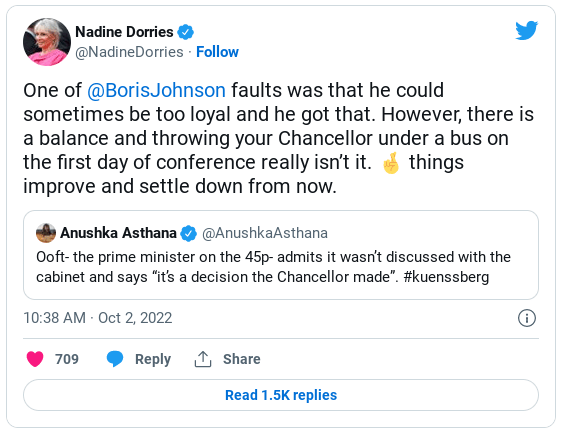
Local Tory Hypocrisy – DCC hikes parking charges but no outcry from Jupp

Back in March the East Devon Conservatives circulated a leaflet entitled “In Touch”.

This heavily criticised the independent EDDC for putting up car parking charges, without consultation, thereby risking the recovery of High Street businesses, hospitality venues and the tourism industry. It said:

 “We (the Tories) believe East Devon deserves better. We won’t prioritise council budgets over the communities we’re elected to serve. Your local Conservatives continue to work hard at every level of local government alongside our members of Parliament to make East Devon an even better place to work, visit and visit.”

Now notices have been posted of price hikes by (Conservative) Devon County Council for roadside parking in the East Devon Seaside towns of Budleigh, Exmouth, Seaton and Sidmouth but where is the Hue and Cry this time?

One down one to go!

Government to launch campaign to encourage public to cut use of power

Ministers are drawing up plans for a public information campaign to encourage people to reduce energy use this winter amid fears that a price freeze will deter them from doing so.

Under Boris Johnson, Downing Street repeatedly refused to give advice on energy use, saying that it was a matter for individuals.

Quite so, and even if it was a rule, enforced by law, he wouldn’t have followed it himself. Though economics will give many no options.

One rule for them, another for us! – Owl

Business Matters bmmagazine.co.uk

There is concern within government that the intervention set to be announced by Liz Truss to tackle the sharp rise in energy costs could increase the risk of blackouts if it means that households and businesses do not reduce consumption.

‘Really difficult winter’ could see supermarket shelves bare of certain food and drink items

The Times are reporting that ministers are wanting to work with energy companies on a public information campaign over the winter to encourage people to turn down their thermostats and turn off electrical appliances instead of leaving them on standby.

The move would represent a significant shift in government policy. Under Boris Johnson, Downing Street repeatedly refused to give advice on energy use, saying that it was a matter for individuals.

Ministers are concerned, though, that an energy price freeze will remove the incentive for people to keep their bills down. Russia has cut off supplies to Europe from the Nord Stream 1 pipeline, creating the prospect of energy rationing over the winter.

Other countries in Europe have already introduced public information campaigns. Switzerland launched an initiative with 40 partners from the public and private sector, using the slogan: “Energy is scarce, let’s not waste it.” It advised people to turn down their thermostats, take showers instead of baths, turn off electrical appliances and use a lid when boiling water.

Paul Johnson, director of the Institute for Fiscal Studies, said: “There is a logic to people reducing energy use when there’s a shortage and prices are high. A top priority of the government ought to be encouraging people to use less energy.

“If the price doesn’t go up to reflect the market price, in the end people won’t respond. This is going to be particularly true of higher-income households which use more energy.”

NHS is ‘over the precipice’, warns nurses’ leader as strike vote looms

Nurses will vote to go on a national strike for the first time in their history because the NHS has “gone over the precipice” and may not survive, the leader of the UK’s largest nursing union has told the Observer.

James Tapper www.theguardian.com 

Pat Cullen, general secretary of the Royal College of Nursing (RCN), said there is anger among nurses, who feel that ministers do not believe they are important.

In an exclusive interview with the Observer before the ballot on industrial action, Cullen recalled a conversation with frontline staff at a major hospital: “They said to me, ‘We’re not important to the government. We were seen as important during the pandemic, but we’re not important now. We don’t think the government will do anything for us’.

“When I talked to them about being a demoralised workforce, they said: ‘we’re not just a demoralised workforce. We have given up. No one seems to care any longer.’ There is an anger that they have been pushed to this position.

“We need to step up and look after these nurses. If we don’t, it’s scary to think about what will happen. The health service is not just staring over the precipice. It has gone over. And the very people who are trying to bring it back up are being paid the lowest wage we can possibly pay them. If we deplete it any further, there will not be a health service there.”

Cullen has toured the country, speaking to hundreds of nurses in the past few weeks about whether the RCN, which represents nearly 500,000 nurses, midwives and support workers, should go on strike.

An NHS nurse’s starting salary is £20,270, and the average salary is £33,384. The RCN decided to ballot after the government unilaterally gave NHS nurses a £1,400 pay rise, leaving them £1,000 a year worse off in real terms, according to the union. It wants a rise of 5% above inflation to avoid a flood of nurses leaving the profession.

The ballot was due to open on Thursday but was postponed after the death of the Queen, who was the RCN’s royal patron.

“It is probably the most difficult it has ever been for every single nurse – even more challenging and difficult now than it was through the pandemic,” Cullen said, speaking before the Queen’s death was announced. “And I think it’s quite a frightening place for our nursing staff because of the absolutely depleted workforces.”

Nurses are caring for patients with highly complex needs, she said, particularly older patients who have been waiting for surgery for years. At the same time, many nurses find themselves having to use food banks, and can’t afford to cook hot meals or buy school uniforms for their children.

Last week, NHS England said 6.8 million people were now waiting for treatment, a record high, with 377,689 waiting for more than a year. Ambulance waiting times have shot up, with only 58% of patients seen within four hours, far below the 95% target. A man died in an ambulance outside Norfolk and Norwich University Hospital on 22 August while waiting to be admitted, because there were no beds available.

Some patients who are medically fit to leave hospital have waited nine months because there is no social care available for them. Thérèse Coffey, the new health secretary, has said her “ABCD” priorities are ambulances; backlogs; care; and doctors and dentists, while prime minister Liz Truss put “delivering on the NHS” as one of her top three priorities.

Cullen became general secretary in July last year, having been director of RCN Northern Ireland. She has been a nurse for 42 years: for much of that time she worked as a nurse psychotherapist in Northern Ireland’s prisons, and principally with victims of the Troubles.

She is confident she can lead a successful strike. The union has a £50m hardship fund for striking staff whose pay is docked – members of the public have already offered donations as well – and she speaks strongly of nurses’ resolve. She also has some practice in industrial disputes, having successfully led a strike in Northern Ireland in 2019.

Nurses there were paid less than in the rest of the UK, but a row between Sinn Fein and the DUP over the Cash for Ash scandal meant there was no Stormont administration to negotiate with. In December 2019, the RCN went on strike. By mid-January, Sinn Fein and the DUP were in talks, and by the end of the month, nurses had been given a £109m pay deal.

“Very quickly we had an assembly re-established and a new executive formed,” Cullen said. “It’s well documented that was a consequence of those nurses saying ‘enough is enough, you need to get back to your work’.”

On the larger stage, Cullen is anticipating a tougher fight, with Britain facing a wave of industrial action as unions try to ensure their members do not lose out as inflation rises above 10%. Rail workers, train drivers, postal workers, bus drivers, council workers, exam board staff, academics, barristers, court staff, teachers, journalists, firefighters and doctors have all taken action or are set to ballot.

Cullen said she talks regularly to other union leaders, although the RCN is not affiliated to the TUC. Although she is unlikely to get the media treatment meted out to RMT leader Mick Lynch, Cullen said she was prepared. “[Newspapers] can dig away at me but I’m a very boring person,” she said. “I’ve been a nurse for 42 years. I’ve been married for 32 years. I spend most of my weekends still nursing. And when I’m not doing that I have the pleasure of looking after my mother-in-law, who needs a lot of care after a stroke.”

Keir Starmer has told Labour MPs not to join picket lines, and Cullen is not expecting particular support from the party for the strike.

“It’s entirely up to them. What I would suggest is that no politician should turn their back on any nurse. If they turn their back on nurses during what will be a very, very challenging time for nurses – if we move to strike – those 500,000 nurses will not forget that, and I think patients will have something to say.”

And if the government believes it can out-wait the RCN, or take them on, Cullen has a warning.

“If the government thinks of trying to set the public against nursing, I’d tell them not to bother,” she said. “The public are smarter than that.”

Environment Agency told to protect wetlands in landmark court case

The high court has ordered the Environment Agency to reduce water abstraction and protect England’s rare wetland habitats, in a landmark case that confirms that European nature conservation laws remain enforceable despite Britain having left the EU.

Patrick Barkham www.theguardian.com 

The victory for Tim and Geli Harris means the Environment Agency will be forced to tackle the damage caused by the removal of water from the internationally important wetlands of the Norfolk Broads, home to rare species including the Norfolk hawker dragonfly and the swallowtail butterfly.

The abstraction of water from England’s largest protected wetland – situated in one of the driest regions of the country – is done mostly so that farmers can irrigate crops.

The couple, who are farmers themselves, have spent £1m on legal challenges over more than a decade, winning a key battle six years ago when a public inquiry found that abstraction licences were damaging critically endangered plants such as the fen orchid at Catfield Fen, a site of special scientific interest (SSSI) that they in part own.

But they took the Environment Agency to court again because it was failing to stop abstraction reducing the flow of groundwater at other internationally important wetland sites across the Broads.

Tim Harris said: “My wife and I are pleased that the high court has ruled that there must now be urgent work done by the Environment Agency to prevent damage from water abstraction to the whole Broads special area of conservation and its unique ecosystems.”

Farmers argue that reducing abstraction would harm their ability to grow food such as potatoes, a high-value crop farmed on dry land close to the Broads and irrigated using water from it.

But Harris said reducing abstraction would simply lower some yields – and land values – but encourage farmers to grow less water-hungry crops. He said: “It’s not about food security, it’s about crop choice. They should be growing wheat, and they can still grow potatoes, it’s just that irrigation adds about 15% to yields and land values.

“Should we destroy the whole of the Broads for the sake of that extra value in agricultural land when the largest by far revenues come from tourism?”

In deciding the case, the court applied a little-known legal provision in Brexit legislation that says that even though the UK has left the EU, rules in European directives – in this case, the habitats directive – remain enforceable against UK public authorities if those rules have been recognised by a court as being enforceable prior to Brexit.

The court also ruled that a lack of funding for the Environment Agency was not a valid reason for it failing to meet its legal duties.

Penny Simpson, a partner in environmental law at Freeths, who brought the case for the Harrises, said: “This is a very important court judgment for both East Anglia and the UK. For East Anglia there must now be significant and urgent work by the Environment Agency to prevent damage from water abstraction to the large Broads conservation area.

“For England and Wales, we now know that public authorities must take appropriate steps to prevent harm to sites protected under the habitats directive where those public authorities are charged with the legal powers to do so.”

The Environment Agency said it had already informed 20 abstraction licence holders in the Ant Valley that their licences must be reduced, constrained or revoked. A spokesperson said: “We are working to restore, protect and enhance the environment but like every public organisation we have limited resources, so focus our efforts on the greatest threats to the environment.

“Originally the scope of this investigation was to evaluate the impacts of abstraction in the Ant Valley to protect the Ants broad and marshes SSSI. As a result of the judgment in this case we will now look at how we can expand our work to cover further protected sites whilst recognising the resource constraints.

“We remain committed to working with landowners, abstractors and Defra bodies to ensure that we continue to address unsustainable abstraction.”

A spokesperson for the National Farmers’ Union said that the agricultural sector in the region was working with Water Resources East on a long-term strategic plan for water resources, and that farmers were already also taking steps to maximise water efficiency. “It’s important that any solutions to the water resource challenges we face find the right balance between food production and environmental protection.”

Harris said: “You may ask why private individuals not public bodies or conservation charities have brought this judicial review, which represents a landmark ruling on the continuing role of European conservation laws in post-Brexit Britain.

“The public bodies such as the Broads Authority say they are working in a joint effort with all the stakeholders. What all sailors know is that convoys move at the speed of the slowest ship, and not much at all if the slowest ship doesn’t pull up its anchor. Unfortunately, nature can’t wait for the boat to come in.”