BREAKING: High Court finds Government PPE ‘VIP’ lane for politically connected suppliers ‘unlawful’

actions.goodlawproject.org

Over a year of hard work has paid off today. The High Court has ruled that the Government’s operation of a fast-track VIP lane for awarding lucrative PPE contracts to those with political connections was unlawful. 

In a challenge brought by Good Law Project and EveryDoctor to the behind closed door VIP lane worth billions of pounds, the Court found:

the Claimants have established that operation of the High Priority Lane was in breach of the obligation of equal treatment… the illegality is marked by this judgment.” (§512)

The Judge agreed the VIP lane conferred preferential treatment on bids: it sped up the process, which meant offers were considered sooner in a process where timing was critical, and VIPs’ hands were held through the process. She said: 

“offers that were introduced through the Senior Referrers received earlier consideration at the outset of the process. The High Priority Lane Team was better resourced and able to respond to such offers on the same day that they arrived”. (§395)

The Court found the Government allocated offers to the VIP lane on a “flawed basis” (§396) and did not properly prioritise bids: 

“there is evidence that opportunities were treated as high priority even where there were no objectively justifiable grounds for expediting the offer.” (§383).

The Court noted that the overwhelming majority by value of the product supplied by Pestfix and Ayanda could not be used in the NHS. 

An independent investigation by the BBC has also revealed issues with the product supplied by Clandeboye which were not disclosed to the High Court. Good Law Project believes that the Government misled the Court and is in correspondence with lawyers for the Secretary of State.

The Judge found that, even though Pestfix and Ayanda received unlawful preferential treatment via the VIP lane, they would likely have been awarded contracts anyway. The Judge also refused to allow publication of how much money was wasted by the Government’s failure to carry out technical assurance on the PPE supplied by Pestfix and Ayanda. Good Law Project is considering the wider implications of these aspects of the ruling and next steps.

We first revealed the red carpet-to-riches VIP lane for those with political connections in October 2020. Since then, we have fought to reveal details of those who benefited, and at whose request – while the Government fought to conceal them.

Never again should any Government treat a public health crisis as an opportunity to enrich its associates and donors at public expense.

Thank you for your trust in us, and your continued support of this case over 18 long months. Without you, this simply wouldn’t have been possible.

We also want to express our deep gratitude to our expert legal team on this case: Rook Irwin Sweeney and Jason Coppel QC, Patrick Halliday and Zac Sammour of 11KBW. They have worked tirelessly on this case and we hugely appreciate their efforts.


You can read the full judgment from the High Court here.

Good Law Project only exists thanks to donations from people across the UK. If you’re in a position to support our work, you can do so here.

Contender for the crown Rishi Sunak escapes the Westminster bubble by visiting – Devon!

Convenient coincidence, anyone know where Liz Truss is? – Owl

Rishi Sunak in North Devon today as ‘partygate’ fury continues – live updates

Live updates DevonLive 

Chancellor in Devon as PM faces calls to resign

Chancellor of the Exchequer Rishi Sunak is visiting Devon today as the ‘partygate’ scandal surrounding the Conservative government continues to spark fury.

Mr Sunak tweeted a picture of him with North Devon MP Selaine Saxby during a planned trip to Ilfracombe where he will be visiting Pall Corporation’s base.

During the visit, the Chancellor will welcome the pharmaceutical’s firm – who have helped with the Covid vaccine rollout – announcement that it is investing £60million into creating 200 jobs.

In his tweet, Mr Sunak said he was “excited” to be in Ilfracombe with Ms Saxby.

Gatherings, the Met Police and what does Cressida Dick’s cat know?

Read on to find out, including the latest bizarre explanation from the Met for closing the case.

It’s not just Boris Johnson’s credibility that’s on the line – Owl

Context. Police in England and Wales have processed a total of 117,213 fixed penalty notices for breaches of Coronavirus restrictions up to 20 June 2021. Including:

Large gatherings (£10,000 fine) 

  • 366 FPNs have now been processed relating to holding a gathering of more than thirty people in England and three in Wales. 
  • These include, but are not limited to, unlicensed music events, protests and private parties. 

Participating in a gathering of more than 15 people (£800 fines) 

  • 3,440 FPNs have been processed in England under regulations requiring people not to participate in a gathering of more than 15 people. 501 processed in Wales.

More than 800 people were fined for lockdown breaches in week of the alleged Downing Street party. In May 2020, people could only meet one other person outdoors. And the fine for breaching this rule had risen to £100, with a maximum £3,000 penalty for repeat offences.

Met Police facing legal challenge for not investigating Boris Johnson parties

www.independent.co.uk

The Metropolitan Police is facing a legal challenge over its decision not to launch an investigation into numerous lockdown breaking parties at Downing Street.

The move comes as a former chief constable, Sir Peter Fahy, said the force’s approach was becoming “an issue of competence in the police”.

Lawyers acting for the Good Law Project issued formal legal proceedings against the Met on Tuesday, alleging that the failure to investigate was unlawful. The service’s decision will now be subject to judicial review.

Government officials and the prime minister are alleged to have repeatedly broken Covid restrictions at No.10, hosting parties and cheese and wine evenings throughout lockdown.

The gathering include social events to celebrate Christmas, as well as a “bring your own booze” drinks on 20 May which the prime minister and his wife reportedly attended.

The Met has however resisted opening a formal investigation into the events despite many other people hosting parties around the same dates receiving hefty fines.

Questions have also been raised about why police officers guarding Downing Street did not spot and report an apparent crime in progress at the time.

It was reported overnight that the Met is in contact with the Cabinet Office over the 20 May event.

Sir Peter, who previously headed Greater Manchester Police, told Times Radio on Tuesday that “questions have been asked why the police are not investigating”.

“Normally, if an organisation is thought to have breached the law, you don’t normally leave it for that organisation to go away and investigate it themselves and wait for the result,” he said.

“And I think obviously, some people have said there’s quite a lot of police officers on duty, around Number 10, why did they not realise that there was something going on and report it or at least give advice that this shouldn’t be going on?

“So I think, unfortunately, it’s becoming, you know, as well as an issue of political confidence, one of competence in the police and almost the investigation system.”

Sir Peter said he understood the force’s initial decision not to investigate but that it needed “to give a very full statement about their decision making, probably in consultation with a Crown Prosecution Service, and with the Mayor of London so that “the public do understand the reasoning as to why they’re going to investigate or not investigate”.

Jo Maugham, director of Good Law Project, said: “You can have the rule of law, or you can defer to the powerful. But you can’t have both. Cressida Dick’s cat will know that multiple criminal offences were committed.

“It shames the Met, and ultimately all of us, that she refuses to investigate.”

The Met Police’s response raises more questions than it answers about No 10’s Christmas parties

goodlawproject.org 

Before Christmas, we wrote to the Metropolitan Police asking them to explain or reverse their refusal to investigate the unlawful parties alleged to have taken place at No 10 Downing Street in December 2020. 

We’ve now received the Met’s response, which raises more questions than it answers, and strongly suggests their refusal to investigate the alleged No 10 parties was unlawful. And now the Met’s approach is under the spotlight again following yesterday’s revelations of yet another party, this time organised by a top No 10 aide at Downing Street in May 2020. Each new revelation makes the Met’s policy of not investigating these breaches more damaging. 

In short, the Met says it concluded that further investigatory work would be required before they could decide whether to bring charges, but rather than attempting to do this, they just closed the case. 

Their attempts to justify that decision really don’t make sense. First they say they relied on the Government’s assurances that no rules had been broken. Then they say there would have been no point in interviewing No 10 staff about the parties because they would have refused to answer questions that exposed them to a risk of prosecution. In what other crime would police decline to investigate because the suspected offender assured them no rules had been broken? And those justifications can’t both be true; if no rules were broken, there’s no risk of self-incrimination. We’re intent to get to the bottom of it.

It is not good enough for the Met to delegate their investigative duties to the press. We don’t believe they would make such concessions for anyone else accused of breaking the law.

They seem to be operating a two-tier system, with one rule for those in power and one rule for everyone else. And we think that sets a dangerous precedent with serious implications for public trust. 

We’re issuing formal legal proceedings to force the Met to revisit their decision. Those in power broke the rules – repeatedly. They should face the same consequences as everyone else.

Pssst – it’s located on the fourth floor!

Many of the “Brat Pack” Tory MP’s elected in 2019 are still a little unfamiliar with the layout of the Palace of Westminster. 

Owl believes that the office of the Chair of the 1922 Committee, Sir Graham Brady MP can be found somewhere on the fourth floor.

In the coming days this might be useful to honourable members, especially those of a rebellious inclination, seeking to deliver a letter on a matter of confidence.

NHS England had no choice but turn to private hospitals during Covid surge

“The many people offended by NHS billions being handed to private hospital groups will balk at what is likely to be a long-term marriage of convenience. But a decade of successive governments’ underfunding, and ignoring or exacerbating its staff shortages, has left the NHS with no choice.”

Denis Campbell www.theguardian.com 

Another day, another initiative to stop hospitals becoming overwhelmed by a combination of the Omicron surge and normal winter pressures. NHS England has struck a deal with private healthcare providers under which their hospitals will be ready to start treating NHS patients who cannot get the Covid or non-Covid care they need because their local NHS hospital is under too much pressure.

This follows the recent news that “mini-Nightingale” field hospitals are being built in the grounds of eight hospitals, that gyms and education centres in hospitals could be turned into overflow wards, and that thousands of Covid patients could be treated at home in “virtual wards”. Any or all of this could happen if the increase in Covid hospitalisations leads to a hospital trust or even entire region of the NHS deciding it needs “surge capacity”.

Announcing the latest tie-up with the private sector on Monday, NHS England’s chief operating officer, Sir David Sloman, who is also the service’s Covid incident director, said: “This deal … means as many people as possible can continue to get the care they need.

“It also places independent health providers on standby to provide further help should hospitals face unsustainable levels of hospitalisations or staff absences. Just like the Nightingale hubs being created across the country, we hope never to need their support. But it will be there if needed.”

Sloman said the the new arrangement was “struck under direction from the secretary of state”. It is easy to see why Sajid Javid would look to private hospitals to ease the NHS’s burden. First, the waiting list for non-urgent hospital care in England is already at a record 5.83m and may break through the 6m barrier when the latest monthly performance figures come out on Thursday. Downing Street is open about the fact that getting that number down is a key priority.

Second, the number of hospitals that have been forced to cancel elective surgery in the face of intense pressure will increase the headline total when the same statistics come out next month.

Third, however one feels about privatisation of NHS care, it is unarguable that people who needed urgent surgery during the pandemic, for a range of serious conditions but especially for cancer, have been able to undergo a procedure in a private hospital that they would otherwise have had to wait an indeterminate length of time to receive on the NHS, because the pandemic disrupted so many non-Covid services, especially in the first wave. The health impact of that is still emerging.

Will any part of the NHS need to in effect commandeer their local private hospital(s)? The deal is “another NHS insurance policy”, one health service boss says. The fact that at least 24 trusts in England have had to declare a major alert since New Year’s Day, because they could not cope with the level of demand they were facing, especially with so many staff off sick because of Omicron, suggests the arrangement may have to be triggered, especially with Covid admissions rising in many regions – up 7% in 24 hours on Monday in both the north-west and south-west, for example.

But David Rowland, director of the Centre for Health and the Public Interest thinktank, cautioned that private hospitals’ reliance on NHS consultants means the plan “really doesn’t stack up as a way of adding capacity to the NHS”.

He also asked whether private hospitals would be paid just the NHS “tariff” rate for any treatment they do provide – the fee they receive when performing a hip or knee replacement on an NHS patient – or whether the health service’s almost desperate need for extra capacity means they will receive a markup as part of the deal. NHS England said only that details about the pricing of the arrangements would follow in the next few days.

The deal confirms that the sheer scale of the healthcare backlog means the NHS will be looking to private hospitals to undertake as many operations as they can for the foreseeable future. NHS England was budgeting to spend £10bn on them for that purpose over the next four years even before Javid ordered this tie-up. A report by the Commons health select committee last week said the private sector would play a key role in the NHS’s efforts to tackle the backlog and that reality was central to NHS England’s finished but still unpublished “elective recovery plan”.

The many people offended by NHS billions being handed to private hospital groups will balk at what is likely to be a long-term marriage of convenience. But a decade of successive governments’ underfunding, and ignoring or exacerbating its staff shortages, has left the NHS with no choice.

Can Michael Gove stop Industry passing the buck over building safety scandal?

For nearly two years, a small army of lawyers has been trying to decide who to blame for Grenfell Tower’s dangerous cladding. At the outset of the latest phase of the public inquiry into the disaster, lead counsel warned the organisations involved against indulging in “a merry-go-round of buck-passing”.

Robert Booth www.theguardian.com

Some chance.

After hundreds of hours of hearings where architects have blamed builders, builders have blamed manufacturers and manufacturers have blamed regulators, a conclusion about why 72 people died after their homes were wrapped in plastic that burned like petrol is still months away.

Michael Gove now faces a similar problem as he seeks to pin responsibility for similar failures on not just one, but thousands of apartment buildings across England. It is a quagmire that has defeated several cabinet predecessors in charge of housing, to the anguish of hundreds of thousands of people whose homes have been rendered worthless.

“We want to try and cut through that,” the secretary of state for levelling up, housing and communities declared on Monday morning.

Gove’s plan – to give developers until March to come up with a plan to foot the £4bn bill to fix cladding on medium-rise blocks – rests on giving the housebuilders very little room for manoeuvre and stopping them from pointing the finger elsewhere, at least in the first place.

His team understand that the problem requires an urgent fix, not least with the fifth anniversary of the Grenfell fire looming in June and backbench MPs facing considerable pressure from constituents whose lives are in turmoil. They also recognise it doesn’t solve everyone’s building safety problems. But they have decided to start here.

Gove will threaten to strip builders of valuable government contracts and access to subsidies such as the help-to-buy programme unless they promise to do two things: “Fund and undertake all necessary remediation of buildings over 11 metres that you have played a role in developing” and “make financial contributions this year and in subsequent years to a dedicated fund to cover the full outstanding cost to remediate unsafe cladding on 11-to 18-metre buildings”.

The punishments for inaction could include a new law requiring them to pay, restricted access to government funding and public contracts, the pursuit of companies through the courts and even using planning powers to make their operations difficult. Gove has one more “blunt but heavy instrument” in his armoury: a tax hike. The government has already consulted on a new 4% tax on profits of residential property developers to raise £200m a year to help fund remediation works. This could be increased and the Treasury has given Gove permission to “use a high level threat of tax … as a means of gaining voluntary contributions from [developers]”.

Some observers believe this will be a sufficiently tight vice to trigger action. They calculate housebuilders cannot afford to wreck their relationship with the government and will pay up and consider pursuing materials manufacturers and others with threats of legal action of their own.

Stewart Baseley, the executive chairman of the Home Builders Federation, hinted at what may be to come when he accepted that leaseholders should not have to pay for remediation, but said builders should not cover the costs alone. The implication was: what about the companies like Kingspan and Arconic that made combustible cladding materials? What about the subcontractors who may have assembled them wrongly?

If Gove doesn’t manage to quickly reach the £4bn target from the developers (and remember, previous appeals for developers to do the right thing failed), his department’s own coffers could be raided. That is an unappealing prospect given Gove’s responsibility for Downing Street’s flagship levelling up policy and the urgent need to keep investing in social housing.

“Leaseholders shouldn’t pay, the polluter should pay and we want to work with everyone involved to get to a constructive solution,” Gove said on Monday.

Whether that happens may come down to who blinks first.

Meanwhile

£1bn wiped off FTSE house builders as Gove delivers cladding bill

Oscar Williams-Grut www.standard.co.uk 

House builders lost more than £1 billion in value today after the government gave the industry just a few weeks to come up with fully costed plans fix the £4 billion cladding scandal…

….Shares in house builders slumped. Persimmon was the biggest faller on the FTSE 100, down 3.1%, while Redrow dropped 3.3% on the FTSE 250. Other major developers registered similarly sharp falls and £1.3 billion was wiped off the sector’s market value in early trade, according to stockbroker AJ Bell.

UBS analyst Gregor Kuglitsch said the cost of the new measures was “significant”.

“The current market cap of the sector is around £40bn so a £4bn cost would equate to ~10% on a pre-tax basis,” he and his team wrote in a note to clients. “This assumes the listed sector would bear the brunt of the cost, although there are likely some private companies that will also need to pay.”

Gove’s announcement comes on top of the building safety levy and residential property developer tax. Both were announced last year to help fund the government’s £5 billion commitment to tackling the problem.

Stewart Baseley, executive chairman of the Home Builders Federation said: “The largest UK based house builders, who only built a minority of the affected buildings, have already spent or committed approaching £1bn to remediate affected buildings and the recently announced Property Developers Tax will raise billions more.

“We will engage directly with Government but any further solutions must be proportionate, and involve those who actually built affected buildings and specified, certificated and provided the defective materials on them.”

Rico Wojtulewicz, head of housing and planning policy at the National Federation of Builders (NFB), said: “The Government has already introduced one industry specific cladding tax, and now another is on its way. This piecemeal approach is confusing, unnecessarily complex and will likely impact the number of homes built.

“It’s also worth pointing out that the developer paying for remediation will almost certainly not have been responsible for the cladding put on the property – most of which was retrofitted long after construction and has nothing to do with the developer.

“Another construction industry related tax is neither fair, nor proportionate and industry will be dismayed at this scatter gun approach to fixing an issue that several governments set the regulation for.

“Perhaps all MPs will sacrifice a percentage of their salary and pensions to help fund remediation, as the real responsibility lies with legislators?”

A spokesperson for Taylor Wimpey said it has “acted on this already for its customers” and “made sure Taylor Wimpey customers do not have to pay for these improvements.”

“We trust that we will not be penalised for our early action to do the right thing,” the company said. “There are many organisations involved in the issue of fire safety, including large business in our supply chain and indeed Government themselves, and so the proposed response must recognise this.”

Gove said: “Some developers have already done the right thing and funded remedial works and I commend them for those actions. But too many others have failed to live up to their responsibilities.”

Hug your dog to stay warm if you can’t afford heating.

Insensitive advice from SSE energy (formerly Scottish and Southern Energy plc) one of the UK’s largest energy suppliers as the government struggles to come up with a solution. – Owl

Hug pets or do star-jumps to stay warm if you can’t afford heating, energy supplier suggests

By Nick Duffy inews.co.uk 

People should hug their pets for warmth and exercise to stay warm to avoid having to turn up the heating, one of the UK’s largest energy suppliers has suggested.

The email was sent to customers of SSE Energy, the electricity and gas supplier acquired by Ovo in 2020, suggesting “simple and cost-effective ways to keep warm this winter”.

Charities have warned that millions will be left struggling to afford heating in the year to come after adjustments to the energy price cap in April, with the average consumer expected to see their bills go up from £1,277 to £1,865 a year, an increase of 50 per cent.

SSE’s “tips” for consumers trying to “keep an eye on” their bill prices, still available on its website, suggests that “putting on another layer of clothing is the best thing you can do to keep warm without touching the thermostat.”

It adds: “Some brisk activity will help warm you up. You don’t have to nip down to the gym. Try cleaning the house, challenging the kids to a hula-hoop contest, or doing a few star jumps. You only need to do just enough to create a little extra heat until you feel warm again.”

If that fails, SSE suggests consumers should “have a cuddle with your pets and loved ones to help stay cosy”.

People struggling to keep their bills down could also apparently enjoy “hearty bowls of porridge” or eat ginger that “keeps you warm by encouraging blood flow”.

Labour MP Darren Jones, chair of Parliament’s Business, Energy and Industrial Strategy Committee, told the Financial Times that Ovo should apologize for the “insensitive” remarks.

“Being told to put on a jumper instead of turning on your heating if you can’t afford it, at a time of such difficulty for so many families, is plainly offensive,” he said.

Former Cabinet minister Theresa Villiers said that while the advice was likely well-intentioned, “many people are very anxious about rising energy bills and won’t take kindly to being told to do some star jumps.”

Ovo said: “We understand how difficult the situation will be for many of our customers this year. We are working hard to find meaningful solutions as we approach this energy crisis, and we recognise that the content of this blog was poorly judged and unhelpful.

“We are embarrassed and sincerely apologise.”

Big payouts for tenants who downsize

Devon tenants are in line for a payout of up to £5,000 if they downsize to free up their home for a family.

Edward Oldfield www.devonlive.com

The scheme is being promoted by West Devon and South Hams councils, who say it is open for anyone renting a home that is bigger than they need in the area they cover.

It applies to tenants of housing associations or registered providers of social housing and is a response to what one councillor described as a “housing crisis” due to a lack of larger properties.

The councils say there is currently a shortage of three and four bedroom homes for local families, with many struggling in cramped conditions.

A statement said: “The scheme is designed to help tenants to downsize to smaller homes as their household needs change.

“For example, when children grow up and leave home. This, in turn, helps the council to free up some of the larger homes in our area for younger families in need.”

Private sector rents have been rising and properties turned into holiday homes due to a rise in demand for staycations as a result of the pandemic, leaving people struggling to find a property and increasing pressure on the social housing stock.

The district councils covering South Hams and West Devon have now introduced an extra ‘High Demand Area’ payment of £2,500 due to the shortage of larger family homes.

The total payment downsizers will receive depends on how many bedrooms become available due to the move.

It includes a £1,000 fixed payment, the extra £2,500 High Demand Area sum, and £500 per bedroom released, with the total capped at £5,000.

For example, if you move from a four-bedroom property to a two-bedroom property you will receive £4,500.

According to Devon Home Choice, there are 46 families in the two council areas classed as severely overcrowded.

That means they need a home with two or more extra bedrooms, or there are at least two children in the home lacking a bedroom. There are also 300 families waiting for a home with an extra bedroom.

Nearly two million children in England are living in overcrowded, unaffordable or unsuitable homes, research has revealed.

The report from the National Housing Federation shows the biggest single housing issue affecting children in England is overcrowding.

The councils say it found there are 1.1 million children living in overcrowded homes, which is having a detrimental impact on their health and development.

There are also a million children whose families cannot afford their rent or mortgage payments, while 293,000 children live in homes that are unsuitable for their needs or health requirements.

A further 283,000 children living with their families in other people’s homes, the report found.

The National Housing Federation said the research shows 1.3 million children are in need of social housing as this is the only suitable and affordable type of home for their families.

It is calling on the Government to prioritise long term and sustained investment in social housing as part of its ‘levelling up’ agenda.

Cllr Judy Pearce, South Hams District Council’s Executive Member for Housing, said: “We face a housing crisis here in the South Hams with too many families living in cramped conditions and we want to change that.

“By helping people to move out of homes that are now bigger than they need, for example when their family grows up and leaves home, we can make sure the next generation also have a suitable home to enjoy.

“This scheme is all about looking at the homes we have in the South Hams and making sure they are allocated as effectively as possible – that means doing what we can to make sure residents live in homes that are the right size for their needs.

“If people are interested in moving, our team can give you practical support. We’ll help you to find a suitable alternative property in the location that you want and with everything you need close to hand.

“As a downsizer, you will be awarded a high priority band for bidding on properties on Devon Home Choice – including priority for brand new homes on the latest developments. We’re also increasing the amount of money you will receive to make that move easier.

“Maybe you’ll choose new items for your kitchen or a new TV to fit your new home. Maybe you’ll spend the money on new carpets or curtains.

“Or maybe you’ll treat yourself to something completely different. You can spend the money however you want and know that by moving you’re helping a young family to have the best start in life.”

Cllr Barry Ratcliffe, West Devon Borough Council’s Lead Member for Housing, said: “We desperately need to make some of our larger houses in the borough available for the local families who are currently struggling in homes that are too small.

“That’s why we’ve decided to give as much help as possible to anyone who is thinking about moving to a smaller home, for example because their own family has grown up and moved away.

“Our team can give practical support with things like filling in forms for making the move. You’ll be given priority, so you can choose a new home in the location you want – including brand new homes on the most modern developments.”

Who is eligible

The Tenants Incentive Scheme is available to applicants who met the following criteria:

  • are an existing Housing Association tenant on an Assured tenancy, living in the council areas and whose housing association landlord confirms that the nomination rights for the property being vacated will be given to South Hams or West Devon council;
  • are in a family-sized house – two bedrooms or larger;
  • want to move to a property that is at least one bedroom less;
  • are registered on Devon Home Choice;
  • where the move will not result in overcrowding.

How to apply

The councils say the scheme is limited and subject to change. Anyone interested should email devon.homechoice@swdevon.gov.uk or call 01803 861234 (South Hams) or 01822 813600 (West Devon) to find out more and to apply for the available funding.

NHS England strikes private hospitals deal to fight Omicron surge

What we need are community hospitals – oh wait …..

Hospitals in England will be able to use private hospitals and staff under a deal with the NHS to maintain services as Omicron cases surge, avoiding delays in treatment for patients with illnesses such as cancer.

Sarah Marsh www.theguardian.com 

The move comes as hospitals have also been told to find extra beds in gyms and education centres owing to rising numbers of Covid patients.

The three-month agreement means private healthcare staff and facilities will be on standby to support the NHS if required and to maintain services for patients who can be referred, including some of those waiting for cancer surgery.

Nightingale hubs are being created in the grounds of some hospitals as part of a move to create up to 4,000 extra beds.

Announcing the deal, the health secretary, Sajid Javid, said: “This agreement demonstrates the collaboration across our healthcare services to create an additional safeguard that ensures people can continue to get the care they need from our world-leading NHS, whenever they need it.”

The move has been put in place to make sure the health service is not overwhelmed and to avoid implementing further Covid restrictions on socialising at pubs, clubs and sports venues as have been introduced in Scotland and Wales.

Last week, the transport secretary, Grant Shapps, said more than one in six NHS trusts across England had declared a critical incident due to Covid pressures in recent weeks, adding that the Omicron variant was putting “very real” pressure on the health service.

The agreement includes Practice Plus Group, Spire Healthcare, Nuffield Health, Circle Health Group, Ramsay Health Care UK, Healthcare Management Trust, One Healthcare, Horder Healthcare, Aspen Healthcare and KIMS Hospital, the NHS said.

Paolo Pieri, the CEO of Circle, said that since the first Covid wave in March 2020, its hospitals had supported the NHS by performing urgent, life-saving operations and treatments for more than 400,000 NHS patients.

“We stand ready to support the NHS in its time of need,” Pieri said.

Spire said the final details of the contract still had to be agreed. The deal expires on 31 March.

A Whitehall source told the Telegraph: “We are going to do everything we can to avoid more restrictions … Our lines of defence through vaccines, testing and antivirals are crucial and holding up but we are also boosting NHS capacity as much as we can.

“Sajid wants the NHS to make use of the independent sector if needed. The aim is to ensure as much capacity as possible is available to help the NHS get through the Omicron wave.”

In March 2020, a similar deal costing about £400m was agreed, when private hospitals provided more beds, ventilators and thousands of healthcare staff to help the NHS fight against Covid. At the time, 20,000 staff were offered, including 10,000 nurses and 700 doctors.

The Centre for Health and the Public Interest (CHPI), a thinktank that has raised concerns about how little NHS-funded work was done under the previous deal, said it doubted the independent sector had the capacity to treat meaningful numbers of NHS-funded patients.

“This new announcement raises more questions than it answers,” said Sid Ryan, a researcher at the CHPI. “Firstly, it’s not clear what help the private sector can really provide when it relies so heavily on NHS consultants working privately outside their core NHS hours. The private sector may have beds, but their workforce is vanishingly small, and just as challenged by Omicron as the NHS, so it seems unlikely their support will be the key difference-maker.

“The last time NHS England stepped in to override local contracting by NHS trusts, the taxpayer ended up footing the bill for a lot of empty hospital capacity. Are we risking that happening again?”

The number of hospitalisations has been slower to rise than Covid cases, relative to previous waves of the disease, with ministers buoyed by the booster rollout. However, hospitals have struggled as a result of NHS staff being among the hundreds of thousands of people self-isolating because of the rapidly increasing number of Omicron cases.

Three months is a long time in the life of a Police Commissioner

Unveiling her strategy for 2021-25 at the end of September “Alison Hernandez says she takes it seriously but…”, she said key community priorities are breaking the cycle of violence, reducing drug harm, tackling antisocial behaviour and improving road safety. 

Alison Hernandez responded to suggestions that tackling gender-based violence isn’t given high enough priority in her draft plan.   

She said it was important to note that, although violence against women is an important issue, it is crucial to see the statistics in perspective.   “I will just highlight that men are more likely to be a victim of crime than women, and that more men are likely to be murdered than a woman,” she said.

Fast forward three months, Plymouth has new priorities:

Violence against Plymouth women and girls is being tackled

Daniel Clark www.plymouthherald.co.uk 

A commission which has been formed to review what more needs to be done to prevent violence against women and girls in Plymouth will meet for the first time on Monday.

The Violence Against Women and Girls (VAWG) Commission will review what is being done across the city to educate men and boys, prevent and deter these types of crimes and consider what support is available for victims.

It will invite local organisations who work with female victims of violence, to hear more about their experiences and their recommendations about what more needs to be done.

The commission was set up following the death of 18 year-old Bobbi-Anne McCleod who disappeared from a bus stop in the Leigham area of the city last month. Cody Ackland, 24, has been charged with her murder.

The Commission will meet for the first time on Monday, January 10.

A protest in Plymouth which calls for an end to male violence against women following the disappearance of 18-year-old Bobbi-Anne McLeod.

A protest in Plymouth which calls for an end to male violence against women following the disappearance of 18-year-old Bobbi-Anne McLeod. (Image: Eve Watson)

Chair of the Commission, Cllr Rebecca Smith, said: “Last year we saw the tragic murders of a number of women in our city at the hands of men. This kind of crime is not unique to Plymouth, however as we heard at our virtual Q and A in December 2021, many women and girls sadly do still feel fear, intimidation, harassment and helplessness on a regular basis. We cannot let this continue.

“Too often the responsibility for tackling male violence against women and girls falls on women. In Plymouth, we want to tackle this issue at the root, whilst supporting anyone who is a victim of this type of crime.

“We have put together an extensive panel of experts from across Plymouth and beyond, who are all committed to the same goal, and I look forward to working with them over the weeks and months ahead.

“On our journey, I am also really pleased that we are able to get guidance and advice from Nazir Afzal OBE – who is a national leading expert in this area.

“One of the first things our Commission will be looking at is ensuring that we have a wide engagement programme, ensuring that as many voices as possible across Plymouth have an opportunity to help shape our work.”

In addition, former Chief Crown Prosecutor for NW England, Nazir Afzal OBE, will be working with the Commission as an independent advisor, bringing expertise from his 24 year career prosecuting the most high profile cases in the country and advising on many others.

He has led nationally on several legal topics including Violence against Women & Girls, child sexual abuse, and honour based violence. His prosecutions of the “Rochdale grooming gang” and hundreds of others were ground-breaking and drove the work that has changed the landscape of child protection.

Over the next three months the Commission will aim to shine a spotlight on the national issue of violence against women and girls and to understand more about the issue for those living in Plymouth.

To do this, the Commission will work:

· To take a proactive stance to better understanding a wide range of views and experiences, and consider what more needs to be done to tackle the issue.

· To improve the perception, and the lived experience of women and girls that Plymouth is a safe city.

· To promote a better understanding of the causes and means of addressing male violence against women and girls.

· To provide impetus for key partners and the private sector to review their contribution to tackling VAWG in the city.

· To take the opportunity to revisit and revise local policies if appropriate, including the Public Health approach to addressing VAWG, and to identify and seek to influence any areas of national policy that need revising.

· To review existing partnership arrangements in the city to make sure there is a clear focus and tangible action on addressing VAWG, including its wider impact on the families and children of victims and abusers.

· To ensure there is strong and visible leadership on VAWG for the city to drive through the recommendations identified by the Commission, and to be the champion for change.

As part of the work of the Commission a full engagement programme will be launched, inviting local organisations who work with female victims of violence and residents across the city to hear more about their experiences and their recommendations about what more needs to be done.

Gatherings storm gathers momentum

Should have used the self deleting WhatsApp? – Owl

Email proves Downing Street staff held drinks party at height of lockdown

ITV News UK Editor Paul Brand reports on the email providing the first evidence of a party on May 20, 2020 in the Number 10 garden

Paul BrandUK Editor www.itv.com 

Downing Street staff were invited to a drinks party in the Number 10 garden during the height of nationwide lockdown to “make the most of the lovely weather”.

An email shared exclusively with ITV News provides the first evidence of a party on May 20, 2020, when the rest of the country was banned from meeting more than one other person outdoors.

The email was sent by the Prime Minister’s Principal Private Secretary Martin Reynolds to over a hundred employees in Number 10, including the Prime Minister’s advisors, speechwriters and door staff.

In it, Mr Reynolds – a senior No 10 civil servant who has run Boris Johnson‘s private office since October 2019 – says:

“Hi all,

“After what has been an incredibly busy period we thought it would be nice to make the most of the lovely weather and have some socially distanced drinks in the No10 garden this evening.

“Please join us from 6pm and bring your own booze!”

ITV News understands around 40 staff gathered in the garden that evening, eating picnic food and drinking. Crucially, they included the Prime Minister and his wife Carrie Johnson.

The email invitation sent by Martin Reynolds, seen by ITV News Credit: ITV News

The May 20 party was first alluded to in a blog by the Prime Minister’s former advisor Dominic Cummings on Friday.

​The email follows allegations about staff gathering in the garden on a separate occasion on May 15, with a photograph emerging of Mr Johnson and his wife sitting with No 10 staff including Martin Reynolds on the terrace with a bottle of wine and cheese.

Downing Street has previously insisted that the photograph showed a work meeting. But the email about the drinks party on May 20 makes it clear that this was a social gathering, which is far harder to explain away.

Less than an hour before the drinks, the then Culture Secretary Oliver Dowden had reminded the rest of England at the daily press conference that they must only meet in pairs outdoors.


On May 20, 2020, then Culture Secretary Oliver Dowden told the public at a press briefing:

“You can meet one person outside of your household in an outdoor, public place provided that you stay two metres apart”


Guidance allowing the ‘rule of six’ outdoors wasn’t brought in until June 2020 and large gatherings remained banned.

The latest revelations have led to fresh calls for the Prime Minister to be questioned as part of the internal inquiry into a series of parties in Downing Street, launched after ITV News aired footage of Number 10 staff laughing and joking about an event on December 19 2020.

In that video, the Prime Minister’s then spokesperson Allegra Stratton suggested that there had been “no social distancing” at the event, which staff jokingly referred to as a “business meeting” with “cheese and wine”.

ITV News later revealed that the Prime Minister’s Head of Communications, Jack Doyle, handed out awards to staff at the party and made a speech.

Since then, there have been allegations of multiple other parties.

The cabinet office inquiry into the allegations is currently being carried out by senior civil servant Sue Gray, who took over from the Cabinet Secretary Simon Case due to allegations that he knew of at least one party himself.

ITV News understands that the drinks party on May 20 will form part of the ongoing investigations, with the inquiry due to report back this month.

When Mr Johnson was asked on Monday if he and his wife attended the party on May 20, he replied: “All that, as you know, is the subject of a proper investigation by Sue Gray.”

Downing Street told ITV News they would not comment on the story due to the Sue Gray inquiry. 

Funding gap could hit East Devon’s street cleaning

Street cleaning services in East Devon could be hit as the council attempts to balance its budget for the forthcoming financial year.   

Joe Ives, Local Democracy Reporter www.exmouthjournal.co.uk 

Officers at Streetscene, which cleans and maintains public spaces in East Devon including parks, public gardens and council-owned toilets, say an additional £285,000 is needed to meet the demand for its services. 

But in a draft budget brought forward to the council’s cabinet it was suggested that the costs could be simply unaffordable. 

The extra money for Streetscene would be spent on 11 more employees. Officers at Streetscene say that demand has ‘increased greatly’ over the past few years ‘with a notable uplift in visitors and tourism, and an exponential rise in housing developments across the district such as Cranbrook, meaning more residents and use of our towns, parks, beaches, and public spaces’. 

The officers say that there has been no additional investment in staffing for a decade because of Government austerity measures, adding ‘at the same time demand, population and strain on our services has increased’. 

Last year demand for seafront cleaning alone rose by 29 per cent. 

Councillor Geoff Jung (Independent East Devon Alliance, Democratic Alliance Group, Woodbury and Lympstone), portfolio holder for coast, country and environment, said: “We are only going to be able to supply the minimum service that people expect. If we could have had some more funds we could have looked at improving Streetscene and providing an improved service to our residents and it’s a great shame that all we’re doing at the moment is holding our head above the waterline.” 

Councillor Steve Gazzard (Liberal Democrats, Democratic Alliance Group, Exmouth Withycombe Raleigh) wanted people to be made aware if Streetscene services are on course to deteriorate. He said: “We really must let the residents know because it’s going to be the councillors who are elected who are going to take it in the neck if things get worse.” 

East Devon’s cabinet is expected to discuss the financial issues facing Streetscene in greater depth.  

The 2022/3 financial year begins in April, and the budget will be finalised by the council over the coming months. It is already expected that car parking fees at 19 ‘prime’ locations will rise from £1 to £1.50 and that residents will have to pay an additional £5 a year for East Devon’s element of council tax for a band D property. 

Second Homes “Westminster Hall” debate Thursday 6 Jan

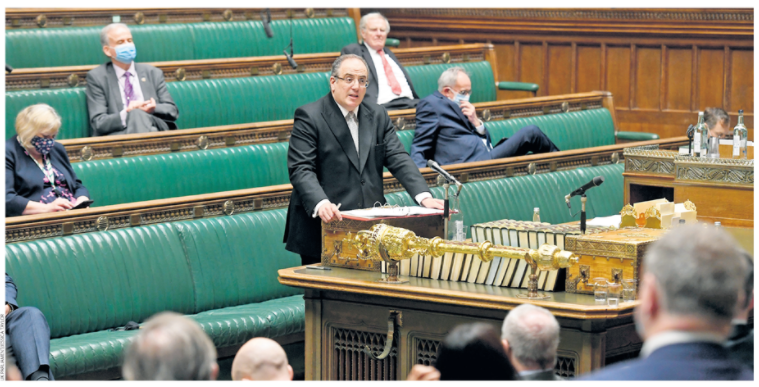
Selaine Saxby MP North Devon speaks passionately in debate organised by Tim Farron MP.

Minister of State Christopher Pincher promises to close a loophole “as soon as we can” and to introduce a tourist accommodation registration scheme “so that we can build an understanding of the evidence and the issues that second homes present“. Ah the evidence base!

“Westminster Hall” debates (actually conducted in the Grand Committee Room next to it) started in 1999. In contrast to the two main chambers, the room is laid out in a horseshoe shape. These debates give MPs an opportunity to raise local or national issues and receive a response from a government minister. The motions are general, neutrally worded, e.g. “That this House has considered the matter of second homes and holiday lets in rural communities.” There is no vote for or against.

There is a formal batting order, which makes it relatively easy to skim the transcript (see here) for the salient points:

  • the MP whose debate it is to make an opening speech
  • backbenchers
  • frontbencher from the third largest party to sum up
  • frontbencher from the official Opposition to sum up
  • the minister to respond
  • the MP whose debate it is to sum up (if there’s time)

In this case, the debate was opened by Tim Farron Lib Dem (Environment and Rural affairs plus Housing, Communities and Local Government).

Selaine Saxby MP for North Devon made a strong case for the impact not just in her constituency but in Devon and Cornwall. (See text below).

Many constructive points were made on what could be done by the formal opposition shadow speakers: Patricia Gibson SNP as “third party” speaker (who mentioned the problems of Cornwall as well as Scotland) and Matthew Pennycock Labour shadow Housing, Communities and Local Government who referred back to Selaine Saxby. E.g. Devolve more  powers to local councils, increased supplement on second home stamp  duties and the  need for planning permission for change of use. (Easy to find at the end of the full transcript.)

The Ministerial reply from Minister of State Christopher Pincher was rather predictable, placing emphasis on the need to build, build, build and on the “Help to Buy” and “First Homes” schemes.

He stressed that the government has committed to close the loophole in the business rate system: “we will introduce our proposals to close that loophole as soon as we can”.

He also mentioned reforming the planning system and introducing a new infrastructure levy as in some way helping.

He went on: “I can confirm that we propose to consult on the introduction of a tourist accommodation registration scheme in England so that we can build an understanding of the evidence and the issues that second homes present, particularly when driven by the rise of online platforms such as Airbnb. We will launch that consultation later this year and will begin the process of a call for evidence in the coming weeks”. (aka: “kicking into the long grass”).

As Tim Farron replied: “I welcome the review that the Minister talked about. That is all good—but it is all we got. I was not overwhelmed by a tidal wave of urgency—in fact, quite the opposite. In the seconds that I have left, I want to say to the Minister that inaction is action. It is action on behalf of those who own multiple homes against our communities. I want to see an awful lot more than we have seen today. By the time a part of what we proposed is looked at in a review, which will take years because they always do, there will be another 32% [rise in one year in the number of holiday lets in one Lakeland District] and then another 32%, and the communities at risk of dying that I talked about earlier will be actually dead. We need urgency right now, so I ask for further meetings immediately. The Minister talks about the planning rules, but how about letting national parks pilot the differential in planning use categories? That, at least, would be a start, to demonstrate that it could be possible. I am disappointed by the lack of urgency, but I am grateful for the opportunity.”

Photo of Tim Farron Tim Farron Liberal Democrat Spokesperson (Environment, Food and Rural Affairs), Liberal Democrat Lords Spokesperson (Communities and Local Government), Liberal Democrat Spokesperson (Housing, Communities and Local Government)

Extract from Opening Speech

….I have been calling for the Government to take action from the very beginning, so I confess to being frustrated and angry that Ministers have yet to do anything meaningful to tackle the problem. As a result, many of us living in rural communities feel ignored, abandoned and taken for granted by the Government, and we stand together today as rural communities to declare that we will not be taken for granted one moment longer.

In South Lakeland, the average house price is 11 times greater than the average household income. Families on low or middle incomes, and even those on reasonably good incomes, are completely excluded from the possibility of buying a home. Although the local council in South Lakeland has enabled the building of more than 1,000 new social rented properties, there are still more than 3,000 families languishing on the housing waiting list. Even before the pandemic, at least one in seven houses in my constituency was a second home—a bolthole or an investment for people whose main home is somewhere else.

In many towns and villages, such as Coniston, Hawkshead, Dent, Chapel Stile and Grasmere, the majority of properties are now empty for most of the year. Across the Yorkshire Dales, much of which is in Cumbria and in my constituency, more than a quarter of the housing stock in the national park is not lived in. In Elterwater in Langdale, 85% of the properties are second homes. Without a large enough permanent population, villages just die. The school loses numbers and then closes. The bus service loses passengers, so it gets cut. The pub loses its trade, the post office loses customers and the church loses its congregation, so they close too. Those who are left behind are isolated and often impoverished in communities whose life has effectively come to an end……

…During the pandemic, I have spoken to many local estate agents across our county. Around 80% of all house sales during the past two years have been in the second home market. Those who have the money to do so are rethinking their priorities, investing in the rising value of property and seeking a piece of the countryside to call their own, and we can kind of understand that. I do not wish to demonise anybody with a second home, or to say that there are no circumstances in which it is okay to have one, but let me be blunt: surely, someone’s right to have a second home must not trump a struggling family’s right to have any home, yet in reality, apparently it does. Every day that the Government fail to act is another day that they are backing those who are lucky enough to have multiple homes against those who cannot find any home in the lakes, the dales or any other rural community in our country…..

Photo of Selaine Saxby Selaine Saxby Conservative, North Devon 1:59 pm, 6th January 2022

Speech in full:

It is a pleasure to serve under your chairmanship, Mr Sharma. I thank Tim Farron for securing this important debate.

I feel like a stuck record for raising the issue of second homes in North Devon again. My constituency is not just rural but coastal, and many of the issues described by hon. Members are exacerbated many times over on the coast, where we have only the sea to draw on for extra residents or houses. Therefore, down the south-west peninsula, in both Devon and Cornwall, MPs have been highlighting this issue ever since I was elected. Although the pandemic has seen a perfect storm, resulting in a rush to purchase second homes in beautiful locations or to convert properties to short-term holiday lets, it is not a new problem. I was contacted during the 2019 general election campaign by the Croyde Area Residents Association, which was concerned even then that second homes accounted for 64% of properties in the stunning surf village of Croyde.

The issues around second homes are well documented with regards to a shortage of affordable properties for local residents. In the past year of the pandemic, we have also seen many evictions of local residents who have rented their homes for many years, so that owners can convert their properties to short-term holiday lets. North Devon has always welcomed second-homers and those visiting our beautiful coast in short-term holiday lets, but what we are now seeing is unsustainable, and we need action to address the problem before we become a complete ghost coast.

Like me, North Devon Council has written numerous times to the Ministry for Housing, Communities and Local Government, and now to the Department for Levelling Up, Housing and Communities, on this matter. In its most recent letter, North Devon Council detailed the following concerns about the critical situation facing our housing market. Average house prices in North Devon have increased by 22.5% in the past 12 months—the second-highest rise in England. There has been a 67% reduction in listings for permanent rental properties in 12 months—the highest reduction in the south-west, and the fourth highest nationally. There has been a 33% increase in the number of people on the housing register in 12 months, a 21% increase in the number of dwellings registered for business rates for holiday lets over 24 months, and a 7.5% increase in the number of second homes in just 12 months.

The number of properties advertised for permanent rental via Rightmove, compared with those available for Airbnb, really highlights the issue. Many of us had hoped the problem would have passed by the end of the summer, but at the start of November in Barnstaple, the main town in my constituency, there were 126 Airbnbs and two private rentals. In Ilfracombe, there were over 300 Airbnbs and three private rentals. In Lynton, there were 104 Airbnbs. In Woolacombe, there were 196 Airbnbs but not a single private rental on Rightmove.

The council’s housing staff are now dealing with a huge increase in the number of people presenting as homeless, and they have also seen a major shift in the type of people asking for assistance. These people are homeless simply because they are forced to present as such, as they have been evicted by landlords who wish to convert their properties from private residential use to short-term holiday use. Given the numbers I have mentioned, it is impossible for them to find alternative accommodation on the open market. I want to take this opportunity to thank the housing team at North Devon Council for their tireless work in trying to help families who find themselves in an incredibly difficult and stressful situation through no fault of their own.

Although tourism is a major part of the North Devon economy, the lack of housing available for permanent residential use is starting to have a major impact on the lives of far too many residents, as well as on local businesses and public services such as health and education, which are struggling to recruit because of the lack of housing and which are also suffering from existing staff leaving the area because of eviction and the lack of affordable housing. Major employers in North Devon have indicated that the lack of available housing is now being considered when deciding whether to invest in the area. Local schools and colleges, and the health service, cannot recruit quality staff because of the lack of housing. Even our much-loved North Devon District Hospital is struggling to find accommodation for just the handful of new students that started there this year.

The recent shift from permanent residential to holiday use, and the substantial increase in house prices, means not only that a permanent home is out of reach for many people living and working in the area. Public attitudes to new house building have also changed. Virtually every housing scheme in North Devon, particularly the larger ones, is meeting substantial opposition from the community, with many objectors citing fears that the properties will become second homes or holiday lets, and that they will invariably be unaffordable for local residents. The situation is exacerbated by the fact that viability challenges raised by developers mean that on average only around 20% of new homes built in North Devon are affordable, by any definition.

A proliferation of short-term holiday lets in an area not only changes the character of a neighbourhood but can also increase antisocial behaviour and noise nuisance, primarily because there is so little regulation of short-term holiday lets. We are already starting to see that, with an increase in the number of complaints received by the council relating to noise, antisocial behaviour, parties, hot tubs and so on.

I recognise that any intervention in the housing market has a huge risk of unintended consequences and potential increases in prices in some sectors, but I very much hope that some steps can be taken to level the playing field between the short-term and the long-term rental markets through the various current tax inequalities, to ensure that the short-term holiday let market is better regulated and that a change of use is required to convert properties from primary residence to holiday lets. It seems bizarre that some of the holiday lets in my constituency have to have a change of use to become a long-term rental, but the situation is not the same the other way round. Restrictions of just 10 months’ occupancy are imposed by local councils for good reasons at the time they were imposed, but those restrictions are now not being reversed. Support is needed for small district councils to enable them to confidently take those steps, if they are able.

We also need to take steps to bring back into occupation derelict properties that have been left empty for months or years. Councils have powers, but the processes are slow and expensive, and the proximity of my own home to derelict houses suggests such powers are not being readily acted upon.

Most people dream of owning their own home, and I fully support the Government’s ambition to help people to achieve that dream. To do that in places such as North Devon, we need to find a solution for increasing the supply of affordable housing and we need to review the guidance and tests in place to assess the viability of developments, to ensure that the level of affordable housing provided is not affected by issues such as an unreasonably high valuation placed on the land.

Our councils need more control and flexibility in access to funding to build affordable homes and to protect them for occupancy by local residents, so that they are available to future generations. New homes need to be available to those who want to live in these rural and coastal constituencies. There are innovative schemes such as rent to buy from companies such as Rentplus, community land trusts for small rural communities need to be more accessible to small planning authorities, and more needs to be done so that our local plans really do reflect the needs of our local communities.

Like many of my constituents, I would like the lights over Christmas to be on in my neighbours’ houses, but far too many closes like mine are deserted through the winter. I very much hope that the new Department for Levelling Up, Housing and Communities has some plans, blue sky or otherwise. During the pandemic, this Government showed that we can act quickly when we need to. The time is now to address the imbalances in the housing market, before the lights go out for good and the whole of the North Devon coast becomes a winter ghost town.

Planning applications validated by EDDC for week beginning 27 December

None – Remember Owl waits a couple of weeks before listing planning applications. Experience has shown that changes are sometimes made to the list during the following week. We get a more complete list by waiting.

The gatherings storm

Are you all keeping up? – Owl

No 10 partying in lockdown: who enjoyed what and when

Rowena Mason www.theguardian.com

15 May 2020

Sources told the Guardian there was a “wine and pizza” party in the Downing Street garden and inside No 10 during the first lockdown when socialising was banned. It is understood to have taken place after a press conference, and was described as having had a celebratory feel with drinking late into the evening. After No 10 denied this, a photograph was obtained by the Guardian showing Boris Johnson, his wife and two officials at a table with wine and cheese, with another 15 officials in the rest of the garden with wine bottles visible. No 10 says Johnson had been having a work meeting and went up to his flat with his family just after 7pm that evening.

20 May 2020

Dominic Cummings lifted the lid on a May gathering in the Downing Street garden, with invites to a “social distanced drinks”, which is believed to have been organised by the civil servant Martin Reynolds. No 10 has not denied that Johnson and his wife attended, with reports of food on tables and drinking. Restrictions on social mixing were still in place at this point.

13 November – Boris and Carrie Johnson flat party

This is the date that Johnson’s chief adviser, Cummings, and communications director, Lee Cain, left their roles. Sources have reported loud music and sounds of a party coming from the flat occupied by Johnson and his wife on this date. Cummings has alleged there had been “other flat parties” and suggested the pair’s “bubble” policy should be investigated. Asked if a party went ahead in his flat on 13 November, Johnson said: “No.”

27 November – Downing Street leaving do

While England was still in the grip of its second national lockdown, a leaving do was organised in No 10 – said to have been for Cleo Watson, a former aide to Cummings. A source told the Guardian that Johnson had personally attended and given a speech, remarking on how full with people the room was, before leaving to continue working.

10 December – Gavin Williamson’s staff party

When London was in tier 2, which only allowed socialising in groups of six outside, the then education secretary, Gavin Williamson, threw a party in his Whitehall department. The most senior civil servant in the department, Susan Acland-Hood, attended and admitted that there had been a “work-related” gathering hosted in the canteen. She did not dispute people had been drinking wine, and appeared to blame Williamson for instigating the event. She recalled he had wanted to “say a few words” to thank staff after a difficult year.

17 December

A quiz was held for members of the private office of Simon Case, the cabinet secretary, who was originally meant to be investigating the reports of parties in No 10. Invitations were sent out titled “Christmas Party!” and about 15 people were thought to be in attendance over Zoom. Responding to the claims, a government spokesperson said it was a virtual quiz with a small number of people from the office taking part from their desks. “The cabinet secretary played no part in the event, but walked through the team’s office on the way to his own office. No outside guests or other staff were invited or present. This lasted for an hour and drinks and snacks were bought by those attending. He also spoke briefly to staff in the office before leaving.”

18 December 2020 – Downing Street Christmas party

A party was held in No 10 when London was in tier 3 restrictions, which banned social events, according to multiple sources after the Daily Mirror first broke the story. Several dozen people – a mix of civil servants and political staff – reportedly attended and were told to bring “secret Santa” presents, with cheese and wine laid on. While Johnson’s spokesperson insisted no rules had been broken and then denied any party took place, a video filmed four days after the event was published by ITV. The leaked footage showed Allegra Stratton, the prime minister’s then aide, rehearsing for televised press conferences and laughing and joking with aides about a party on 18 December. Stratton all but confirmed the event had taken place by laughing it off as a “business meeting” but added: “It was not socially distanced.”

15 December 2020 – a festive No 10 quiz

A Christmas quiz was also organised for No 10 staff, with invitations emailed to everyone who worked in the building. Some guests were said to have dialled in by Zoom but others apparently attended in person and sat in groups of six, some wearing Christmas jumpers. A photograph later emerged in the Mirror of the prime minister taking part.

25 December 2020 – Christmas Day socialising

The prime minister’s “bubble” has come under scrutiny before, after his spokesperson did not deny that Nimco Ali, a close friend of Carrie Johnson, stayed with them over Christmas. One of the explanations offered was that Ali was considered part of the Johnsons’ childcare bubble. However, under the rules, the arrangement was meant to be purely for a second household to look after children, with the adults not meant to be socialising.

Carillion fell quickly, but the auditing profession is now dragging its feet

Bankruptcies happen gradually, then suddenly, an Ernest Hemingway character famously deadpans in The Sun Also Rises. Yet the aftermath of insolvency can play out painfully slowly, as observers of Carillion’s collapse, four years ago this week, can testify.

Jasper Jolly www.theguardian.com 

Carillion had its fingers in a lot of pies, to the point where it is difficult to explain what its main business was: was it construction, or something woollier like “support services”? Cleaning and maintenance are crucial to almost any business, but they are also shockingly easy to outsource to complex and faceless conglomerates. That complexity extended to accounts built on the directors’ “increasingly fantastical figures”. To borrow the Queen’s question about the credit crunch, why did nobody notice?

Carillion’s crash was so severe that it has sparked years of navel-gazing by accountants and their regulators. The latest chapter will open on Monday, when a tribunal in London will look at allegations that KPMG, a former partner at the auditor and certain current and former employees issued “false and misleading information and/or documents” to the regulator, the Financial Reporting Council (FRC). KPMG declined to comment ahead of the tribunal.

KPMG self-reported the latest problems, which relate to information handed over during standard FRC inspections of audits of Carillion and Regenersis, a London-listed IT company later renamed Blancco. The regulator will not allege misconduct in the audits, nor that the financial statements were imperfectly prepared, but the tribunal will probably shine more unwelcome light on a profession that has taken a beating ever since the global financial crisis.

The existence of a dominant “Big Four” is not usually a good sign in any industry. Safe to say that Deloitte, EY, KPMG and PwC have all had their scandals (try Autonomy, NMC Health, Conviviality and BHS respectively) in recent years. Smaller hangers-on such as Grant Thornton have also had their moments (Patisserie Valerie and Sports Direct).

The FRC and the broader audit profession have also been in the proverbial dock in recent years. At one point there were no fewer than five separate “Whither auditing?” inquiries, and the government is close to publishing a set of reforms to audit and corporate governance that it hopes will make it much harder for balance-sheet black holes to slip past auditors unnoticed. The FRC will be replaced by a new Audit, Reporting and Governance Authority, probably in 2023.

However, recent reports suggested that business lobbyists had got their claws into the reforms, watering down some more controversial elements in favour of a “business-friendly” regime fit for a wheeler-dealer post-Brexit Britain. Gone, according to the Financial Times, will be proposals to make directors personally oversee financial reporting controls; this will be demoted instead to the corporate governance code. The code sets the standards, but companies can opt out as they see fit.

There are other options for seeking accountability. This week’s tribunal is one of three investigations the FRC is still running on the Carillion collapse – there is another into KPMG’s audit itself, as well as one into the company’s former directors. The government’s Official Receiver has filed a claim form suggesting that it could seek damages of as much as £1bn from KPMG for audit negligence. (KPMG has promised to contest any claim, though none has yet arrived.)

Yet industry sources suggest that readers don’t hold their breath for a payout on that scale. The Carillion fallout keeps coming – but we will have to wait even longer for answers on why it happened, and how we can avoid a repeat.

Planning U-turn lets residents keep right to reject new builds

Homeowners will still be able to object to individual planning applications after the government confirmed a U-turn on reforms to the system.

Melissa York www.thetimes.co.uk 

Ministers had planned to replace the planning application process with a zonal system and mandatory housebuilding targets, stripping homeowners of their right to object.

The Times reported in September that the shake-up of planning laws was to be abandoned after a backlash from voters and Conservative MPs in southern England. A change of approach from the government, however, was contained in a submission to the Lords built environment committee.

In the report it said: “There will be a continuing role for public consultation as part of the planning application process. Even where the broad principle of development is agreed . . . all the details would still need to be consulted on with communities and statutory consultees, and approved by officers or committees where appropriate.”

The government’s submission added: “Our reforms will give communities a greater voice from the start of the planning process . . . We also want to see more democratic accountability, with communities having a more meaningful say on the development schemes which affect them, not less.”

In response to the move, Tom Fyans, director of campaigns at the countryside charity the CPRE, said: “It appears the government now genuinely understands the need for local communities to have a powerful voice in planning decisions. These are encouraging signs that suggest a fundamental change of approach when it comes to determining what gets built where.”

The Lords report warned that ministers would not hit their target of building 300,000 new homes a year unless they stopped dithering over planning reforms. The cross-party committee said that uncertainty and delays in overhauling the system had had a “chilling effect” on housebuilding.

Baroness Neville-Rolfe, chairwoman of the committee, said: “The most important aspect in terms of housing supply is planning. Frankly all the twisting and turning over reform has had a chilling effect, creating uncertainty for housebuilders and planners.

“The government needs to bite the bullet and actually build housing of all types and tenures.”

The report said: “The challenges facing the housing market have been well documented: too many people are living in expensive, unsuitable, poor-quality homes. To address these complex challenges in the long term it is necessary to increase housing supply now.”

Local councils should be forced to come up with a plan for their area, Neville-Rolfe said, as more than half do not have an up-to-date strategy for building more homes.

Help to Buy, the government’s flagship homeownership scheme, is criticised for pushing up prices. The £29 billion cost of the scheme would “be better spent on increasing housing supply”, the committee said.

The Department for Levelling Up, Housing and Communities said: “We share the ambition to reform the planning system to meet the demand for more high-quality homes and create a fairer housing market. We delivered more than 216,000 homes in England in 2020-21, well above the 186,500 forecast for the whole of the UK, and are investing a further £12 billion in affordable housing over the next five years.”

Ministers spend billions ‘with no idea about value’

Ministers and officials are spending billions of pounds on projects that are never properly evaluated, according to the head of the National Audit Office.

Oliver Wright www.thetimes.co.uk 

Gareth Davies says that too often the government has not learnt from its failures and has “little information” on “what difference is made by the billions of pounds being spent”.

In an article for The Times Davies, who took over at the spending watchdog in May 2019, says that he was concerned to see that lessons that might have helped the government to deal with Covid had not been learnt.

He says there is little evidence that things have improved even though it has “never been more important that the government makes the right choices” after the pandemic.

Recent research by the National Audit Office (NAO) found that only 8 per cent of big government projects had robust evaluation plans in place.

“Prior to the pandemic the government did take forward many lessons from the simulation exercises it undertook to prepare for potential pandemics,” Davies writes. “However, it did not act on some warnings that would have helped it prepare for a pandemic like Covid-19.”

He adds: “What we have found by auditing government’s work is that many of the interventions carried out by government are either not evaluated robustly or not evaluated at all. This means government is not learning from its successes or failures, and has little information in most policy areas on what difference is made by the billions of pounds being spent.”

Davies cites the Kickstart Scheme, launched amid much fanfare last year to fund employers to create high-quality six-month work placements for people aged 16-24. He says that the Department for Work and Pensions had “limited assurance over the quality of the work placements created by the scheme”, or whether the jobs created “would have existed anyway”.

“Without having done more during the scheme’s operation to monitor what kinds of jobs and training employers are providing in practice, the department will find it much harder to deliver a robust estimate of the scheme’s long-term impact,” he writes.

Davies also says that there are no consequences for failure or not robustly assessing projects and pulling the plug on those that are not performing. “The incentives to evaluate and learn what works and why must be stronger than the instinct to avoid evaluating in case it uncovers bad results,” he writes. “At present public bodies face limited consequences if they do not evaluate their work. This needs to be addressed.”

When Michael Gove was Cabinet Office minister, he pledged to set up an internal Whitehall unit to assess all government projects against their aspirations and pull the plug on those that were not performing well.

“There can be a tendency in government where you get ‘vanity of authorship’, ” Gove said. “It is, ‘I launched this programme and I’ll defend it come what may’. We want people to know that the government is not simply trumpeting the fact that x amount of money has been spent on a new scheme but we go back to citizens and say: ‘This is what we tried. This worked. This didn’t work. This was the basis on which we acted.’ ”

However, Gove has since moved on to levelling up and housing and there have been no more announcements about the proposed evaluation unit.