Labour win seat on East Devon District Council for first time in a generation

So there was no LibDem surge in Feniton where Linda Baker, for Labour, proved Owl’s judgement fallible by coming second, pushing Todd Olive into third place! Worth pointing out that the Conservative win in Feniton would have been be very insecure if the opposition had coalesced around a single candidate.

But Owl was right in describing Jake Bonetta, Labour, in Honiton St Michael’s as an “impressive head on young shoulders” with his decisive win.

Owl believes he is the sort of young blood local government needs more of.

Pity that Feniton chose “Male, pale and stale” and that the turnout was so low.

See also https://seatonmatters.org/2021/07/09/congratulations-to-labours-jake-bonetta-for-honiton-win/

Here is Devon Live on the result:

Joe Ives www.devonlive.com

Labour has won a seat on East Devon District Council for the first time in a generation after claiming a by-election victory in Honiton.

Cllr Jake Bonetta, 19, took the Honiton St Michael’s seat in Thursday’s by-election, becoming both the youngest representative on the council and the first from his party in more than 20 years to sit on the council, in what was a gain from the Liberal Democrats.

In Feniton, the Conservatives gained the seat, with Alasdair Bruce claiming victory in what was a gain from the Independents, with Susie Bond, who previously held the seat, having moved to Berkshire to be closer to family.

Speaking after his win, Cllr Bonetta said: “It’s an astounding victory for the community and I want to thank every single person who got involved in my campaign and entrusted me with their votes.

“I really will work for everyone, no matter how you voted. I think it’s so important that I’m there to represent every single person in Honiton St Michael’s.”

Cllr Jake Bonetta, Labour councillor for Honiton St Michael's

Cllr Jake Bonetta, Labour councillor for Honiton St Michael’s

He added: “I think that my young age is an asset. I think it brings new life to the council. I think it brings a new perspective and on top of that I think it’s so important that young people do get involved in politics.”

Cllr Bonetta, who replaces Liberal Democrat Luke Jeffrey who previously held the seat before resigning to focus on his university studies, is currently the youngest secretary for a constituency Labour Party in the country, and becomes the youngest councillor on East Devon.

Cllr Bruce, who was not present at the count, is a beekeeper, and was previously a Thanet councillor from 2007 to 2015.

Alasdair Bruce, Conservative councillor for Feniton

Alasdair Bruce, Conservative councillor for Feniton

The make-up of the council is now Conservatives (22), East Devon Alliance (13), Independents (15), Liberal Democrats (7), Green Party (2) and Labour (1), with Cllr Bonetta expected to join the governing coalition the Democratic Alliance, currently made up of the East Devon Alliance, Liberal Democrats, Greens and some of the Independents.

Speaking after the election, Cllr Paul Arnott, leader of the council, said: “As leader of East Devon Council it is my absolute determination to work with successful candidates from all party backgrounds and I look forward to working with Alasdair for Feniton and Jake for Honiton. I’m sure they’ll both give eminent service.”

Conservative Jenny Brown, who missed out in Honiton St Michael’s said: “We worked hard. Jake was a worthy opponent and he’s got the town at heart as well – and so have I, and I’m going to be back!”

Labour’s Linda Baden, who lost in Feniton, stayed hopeful: “I think it shows we have a possibility of actually attracting many more votes to the Labour Party, which I think is really positive.”

Lib Dem candidate Todd Olive said: “Obviously my thanks, my gratitude to the 82 voters who put their trust in me to represent them at the district council.”

“Congratulations to Alasdair Bruce, the victor. I hope he serves the residents well, listens to their interests and acts on the urgent issues of our time.”

FENITON

Alasdair Bruce (Conservatives) 239

Linda Baden (Labour) 126

Todd Olive (Liberal Democrats) 82

Turnout 21 per cent

HONITON ST MICHAEL’S

Jake Bonetta (Labour) 807

Jenny Brown (Conservatives) 522

Jules Hoyles (Liberal Democrats) 63

Turnout 25 per cent

Labour wins Honiton St Michael’s

Jake Bonetta (Lab) won yesterday’s by-election with 807 votes to 522 for Jenny Brown (Con). Jules Hoyles for the Lib Dems polled 63. Turnout only 25%. He will now be the first Labour councillor in East Devon for 20 years (and the youngest)

In Feniton, Alasdair Bruce (Con) was elected with 239 votes to 126 for Linda Baden (Lab). Todd Olive for the Lib Dems polled 82. Turnout was only 21%.

Persimmon snaps up 10,000 plots of land in six months

Strong home buyer demand boosts Persimmon as it snaps up 10,000 plots of land in six months and brings dividend payment forward

Jane Denton www.thisismoney.co.uk 

  • Housebuilder Persimmon’s revenue increased to £1.84bn in the first half 
  • The FTSE 100-listed group has snapped up 10,000 plots of land in six months 

Published: 10:30, 8 July 2021 | Updated: 10:36, 8 July 2021

Strong demand from buyers and rising property prices helped housebuilder Persimmon bolster its bottom line in the first six months of this year.

Revenues swelled to £1.84billion in the first half, up from £1.75billion over the same timeframe pre-Covid in 2019.

The group snapped up 10,000 new plots of land at 48 sites over the period and had a forward order book at the end of June totalling £1.82billion.

With sales on the up and mass land buying in full swing, Persimmon revealed it will be doling out cash to shareholders sooner than expected.

The group, which has £1.3billion worth of cash stashed away, is bringing its next scheduled 110p a share dividend payment forward to 13 August. For the full year, shareholders will be receiving 235p a share payouts. 

Persimmon is the latest in a string of housebuilders to post strong figures covering the last few months. On Wednesday, Redrow and Vistry both announced robust sales amid high demand from buyers. 

Steve Clayton, fund manager of the Hargreaves Lansdown Select UK Income Shares fund, which has a holding in Persimmon, said: ‘These are good times for housebuilders. 

‘The customers want to buy and financing is easy, with mortgage availability improving, at rock bottom rates. 

‘The challenge is to keep all the ducks in a row, because cost pressures are bubbling away, staff are hard to find and the government can change the degree of market support provided to homebuyers when it chooses.’

Dean Finch, Persimmon’s chief executive, said: ‘Customer demand for our new homes has been strong right across the UK with healthy sales reservation rates through the period.’

The York-based company delivered 7,406 new homes in the first half, up from 4,900 in 2020, but down slightly from 7,584 over the same period in 2020. 

The group, which is Britain’s second biggest homebuilder, said it expected to operate on around 300 sales outlets on average throughout the year.

The FTSE 100 company said the average selling price of new homes forward sold to owner occupiers was £250,350 in the first half, marking an increase of 3.3 per cent on the year before, when the average price tag was £242,400.  

Shares in Persimmon dropped this morning and are currently down 2.87 per cent or 88p to 2,982.00p. A year ago the share price was 2,433.00p, meaning it has risen by over 23 per cent in the last year.

Steve Clayton adds: ‘Persimmon is performing well and throwing off increasing amounts of cash. 

‘Sales rates per site are running 20 per cent ahead of pre-pandemic levels and prices are rising by almost 5 per cent per annum. 

‘That’s enough to offset the cost pressures unfolding across the construction sector. The group has upped its rate of land buying in the face of strong customer demand for new homes.

‘The cash is building up, with the group now sitting on £1.3billion of funds, with only £100million of land purchase obligations to meet.’

He added: ‘That’s an increase of half a billion pounds over the last year and the group are accelerating their cash returns to shareholders, bringing the next scheduled 110p per share payment forward to August. 

‘With Persimmon now paying a total of 235p per share, that puts the stock on a yield of 7.5 per cent, backed by a business that is performing strongly with cash in the bank.’ 

Richard Hunter, head of markets at Interactive Investor, said: ‘The withdrawal of the stamp duty holiday and other government assistance schemes have yet to fully wash through to the wider economy, and could yet stymie the nascent recovery in terms of unemployment and general consumer confidence. 

‘By the same token, Persimmon is confident of the long term prospects for a housing market which is still undersupplied and where low interest rates and mortgage availability are notable tailwinds.

‘With accompanying comments also upbeat on trading conditions generally, Persimmon is set fair to push further ahead.’

Some links in this article may be affiliate links. If you click on them we may earn a small commission. That helps us fund This Is Money, and keep it free to use. We do not write articles to promote products. We do not allow any commercial relationship to affect our editorial independence.

Housing boom takes Persimmon sales past pre-pandemic levels

Persimmon sales rose above pre-pandemic levels in the first half of 2021, as tax cuts and booming British house prices continued to benefit housebuilders.

So, no need to plead poverty and argue that “affordable” housing targets are too challenging! – Owl

Jasper Jolly www.theguardian.com 

The UK’s largest housebuilder said on Thursday that revenues reached £1.84bn in the first six months of 2021, outstripping the £1.75bn recorded in the same period of 2019. Persimmon’s sales had dropped to £1.2bn during the first half of 2020.

The housing industry had feared financial difficulties in 2020 when home sales were temporarily blocked during the UK’s first national lockdowns. However, the government quickly stepped in to prevent house prices falling, announcing an emergency cut in stamp duty.

The tax cuts prompted a boom in house prices, with demand in some areas also boosted by people looking for more space to work from home. Government data suggest that UK average house prices increased by 8.9% over the year to April 2021, although more recent figures from Halifax, a mortgage lender, suggested that prices may have dipped in June as some of the stamp duty cuts expired.

The average price of houses sold by Persimmon was £258,200, 4.9% higher in the first half of 2021 than in 2020. It completed sales of 7,406 houses during the half, up from 4,900 in 2020 and just short of the 7,584 completed in 2019.

“House price growth is mitigating the effect of the upwards pressure being experienced on the industry’s cost base,” Persimmon said in its statement to the stock market. It also said that it was selling houses 20% faster than in 2019.

The stamp duty cut is due to end completely from 1 October, and some analysts expect prices to fall relatively steeply at the end of the year. Yet with houses in short supply, housebuilders have expressed confidence in continued demand. Smaller housebuilders Redrow and Vistry Group both said on Wednesday they were selling homes quicker than in the previous two years.

Persimmon said: “UK housing market fundamentals remain supportive with low interest rates, improving levels of mortgage availability, ongoing government support and strong customer demand.”

The strong market has allowed Persimmon to brush off difficulties, such as the announcement last month by the UK’s competition regulator that it had found “troubling evidence” that leasehold homeowners and prospective buyers were overcharged and misled by the company, among others. In February it also had to set aside £75m to pay to replace potentially flammable cladding.

The sales have allowed Persimmon to dramatically grow its cash pile. It had net cash of £1.3bn on 30 June, up from £800m at the same point in 2020. That allowed it to accelerate its dividend payment. Persimmon will pay out 110p a share in one go in August, rather than splitting it over two payments in August and December.

Guardian business email sign-up

Dean Finch, Persimmon’s chief executive, said he was pleased that the company was building homes at the rates achieved before the pandemic, in spite of safety restrictions.

“Persimmon performed well during the first half of the year delivering new home sales completions approaching the levels achieved in the first half of 2019,” he said.

“Customer demand for our new homes has been strong right across the UK with healthy sales reservation rates through the period.”

Tories have accepted £2.6m from ‘shadowy’ donors since Boris Johnson became PM

The Conservative Party has accepted £2.6m in donations from ‘shadowy’ groups with anonymous funders since Boris Johnson became prime minister.

Seth Thévoz www.opendemocracy.net 

An analysis by openDemocracy also reveals that more than £800,000 of this was given directly to individual Tory MPs and their local parties, mostly in marginal ‘Red Wall’ seats.

The finding comes after the Committee on Standards in Public Life warned yesterday that “unincorporated associations” could be used as “a route for foreign money to influence UK elections”.

The committee’s report said that “no transparency” is required when these groups donate to individual MPs, and the people funding them “are not required to be permissible donors”.

Speaking on BBC Radio 4, Lord Evans – the committee’s chair – said these groups “can sometimes look slightly shadowy, because you don’t know who has given money to them but they can then contribute funds to campaigns”.

openDemocracy found that British political parties have reported donations worth £12.9m through unincorporated associations in the past five years. £4.1m of this has been declared since Boris Johnson became prime minister in July 2019, with the majority going to his party.

The groups include the Recovery Alliance, which has provided media and consultancy services to anti-lockdown Tory MPs. But the original funders of the group are still unknown.

The Scottish Unionist Association Trust (SUAT) has also faced criticism, after anonymously handing money to Scottish Tory marginal seats in the run-up to the 2016 Holyrood elections. The party repeatedly declined to answer questions from openDemocracy, but has since continued declaring tens of thousands of pounds from the group.

And in 2019, the SUAT took nearly half a million pounds from another unincorporated association, the Irvine Unionist Club, which had previously told openDemocracy that it no longer existed. Since then, the SUAT has been doling out dozens of donations to key Tory seats.

Most unincorporated associations are innocuous groups, such as small local fundraisers or councillors banding together to pay for staff. But these structures have also been used to funnel large sums of ‘dark money’ in British politics.

The Democratic Unionist Party’s record-breaking £435,000 Brexit donation came through an unincorporated association called the Constitutional Research Council. The source of this money has never been revealed.

Opposition parties have called for the committee’s recommendations to be implemented but a new government Elections Bill, introduced on Monday, includes few attempts to bring transparency to political funding.

Cat Smith, Labour’s shadow minister for democracy in the Cabinet Office, told openDemocracy: “Over the last decade the Conservatives have failed to take any action to close the loopholes allowing foreign money to flood into our democracy. This benefits the Conservative Party, allowing wealthy foreign donors who’ve never paid tax in the UK to bankroll their campaigns.

“Instead of closing these loopholes, the government’s Elections Bill announced this week will further weaken our donation laws, allowing rich Conservative expats unlimited access to our democracy and opening the floodgates for foreign money into our politics.”

Elite clubs

Other unincorporated associations include the Carlton Club, an elite £1,700-a-year private members’ club in London’s West End that has supported the Conservative Party for almost 200 years.

Since lockdown last year, the club has made donations of £2,500 each to several Tory MPs in Red Wall constituencies in the north of England and the Midlands. These included donations to MPs and associations in Birmingham Northfield, North East Derbyshire, Stoke-on-Trent, West Bromwich East, and Wolverhampton North East.

As an unincorporated association, there is no way of tracing the original donors of this money.

The United & Cecil Club, a secretive dining society hosted by the Carlton Club, has given £15,000 to the Conservative Party this year – as well as £2,500 to Matthew Robinson’s campaign to be mayor of West Yorkshire.

At the 2019 general election, the United & Cecil Club made similar donations to Tory associations covering dozens of seats, including 11 that were Tory gains at the last election.

Meanwhile, the Midlands-based Leamington Fund has given more than £95,000 to the Conservatives. No public records for the group exist.

“Unincorporated associations make it far too easy to hide the identity of those who make political donations,” said Alex Runswick, senior advocacy manager at Transparency International UK.

“Knowing who is helping fund political campaigns is essential to protect against funds of unknown provenance entering our democracy as well as understanding what these donors may be expecting in return. The law should be changed to provide much greater transparency over contributions from these secretive donor clubs.”

‘Glaring lack of transparency’

Many unincorporated associations are run for legitimate reasons, but they can also provide a loophole in transparency rules.

Normally, individuals who give more than £1,500 to a political campaign need to declare their donation publicly. But donors can avoid this by giving up to £7,500 to an unincorporated association. This group can then pass the money on to a political party without disclosing the original donor’s identity.

Jess Garland, director of policy and research at the Electoral Reform Society, told openDemocracy last month that unincorporated associations are “another giant hole in the sieve that is Britain’s party funding rules”.

“There is a glaring lack of transparency that only fosters distrust and – often justified – fears over who is secretly steering our political debate,” she said.

There is a glaring lack of transparency that fosters distrust over who is steering our political debate

Tory MPs in key marginals like Stoke-on-Trent North, Newcastle-under-Lyme, and Carmarthen West and South Pembrokeshire are among those to have been major beneficiaries of unincorporated associations’ money.

But the biggest beneficiary of all has been the Surrey Heath Conservative Association, whose MP is Michael Gove.

The Conservative Party’s reliance on unincorporated associations has dwarfed that of other parties. But it is not alone in taking money from them.

Recently, the Labour Party accepted £15,000 from the Labour Finance and Business Group, a unincorporated association which is formally affiliated to the party and was designed to act as “the bridge between the Labour Party and the business community”.

The Momentum campaign group has also made political donations as an unincorporated association, giving a single payment of £4,145 to Labour MP Apsana Begum.

“There is almost total lack of transparency about unincorporated associations’ activities and membership meaning donations through this route are clearly open to abuse by just about anyone with the money and will to do so,” said Susan Hawley, executive director of transparency group Spotlight on Corruption.

“The rules clearly need to be updated to prevent these associations from accepting money from overseas donors and requiring them to publish donations to individual candidates.”

There is no suggestion that any of the unincorporated associations named have acted improperly.

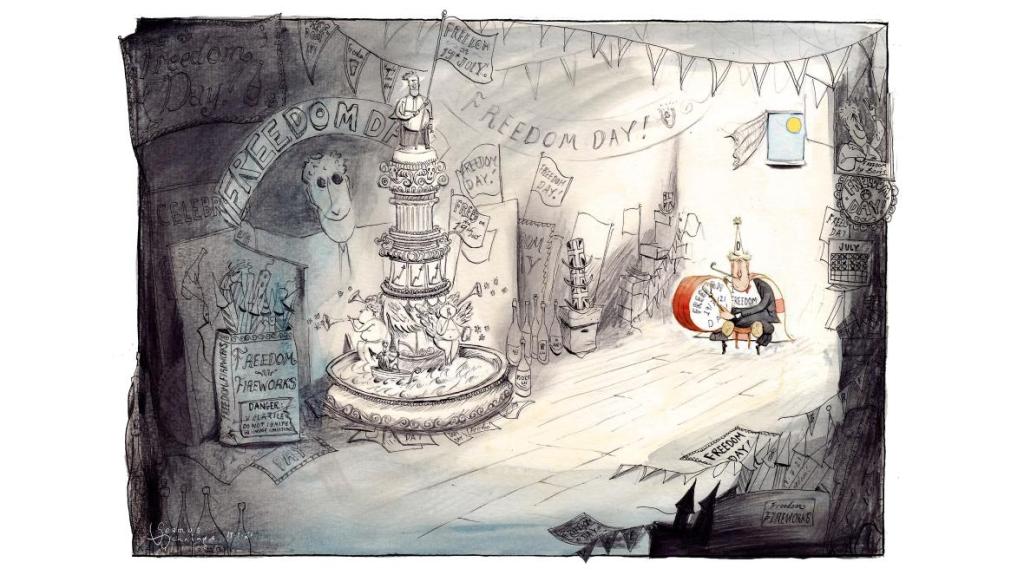
Boris Johnson urged to abandon ‘dangerous and unethical’ plan to lift Covid restrictions on 19 July

122 signatories to letter in the Lancet

www.independent.co.uk 

Boris Johnson is facing calls to abandon plans to remove almost all remaining Covid restrictions as a coalition of over 100 scientists and doctors warn it is a “dangerous and unethical experiment”.

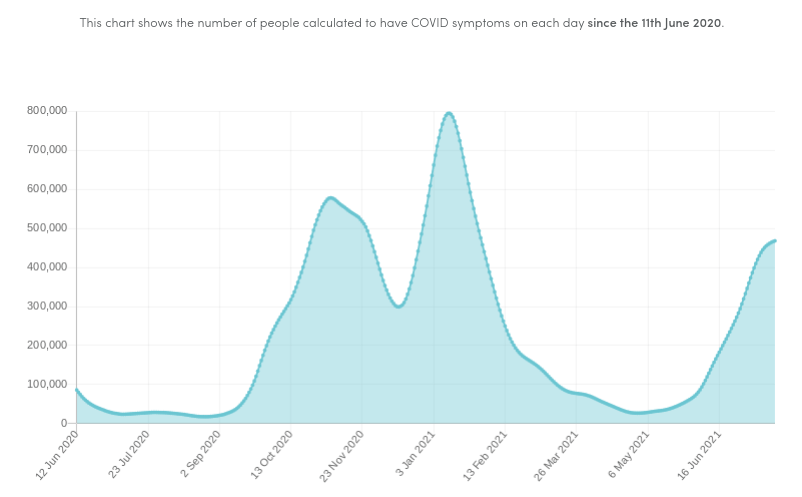
After Sajid Javid, the health secretary, admitted daily cases could exceed 100,000 in the summer as measures are lifted on 19 July, the experts stressed there are “grave risks” involved in what they described as an “illogical” policy.

The letter – published today in the medical journal The Lancet – claims ministers’ strategy amid surging cases of the Delta variant “provides fertile ground for the emergence of vaccine-resistant” variants.

The 122 signatories also warn that unmitigated transmission will “disproportionately” affect children and young people who have not been offered a vaccine, with high circulation of the virus leading to “significant educational disruption” — despite the scrapping of school bubbles.

It follows the prime minister’s announcement at a No 10 press conference on Monday that all rules on social distancing, including the requirement to wear masks, will be lifted in just under a fortnight if the 19 July date is rubber-stamped next week.

According to the latest government statistics, the UK recorded 32,548 new infections of the virus on Wednesday — the highest daily figure since January as England endured a third lockdown. Of the adult population, over 86 per cent have now received a first dose of a Covid-19 vaccine while over 64 per cent have had both jabs.

While the link between infection with Covid and death has been weakened, they letter adds, it has “not be broken, and infection can still cause substantial morbidity in both acute and long-term illnesses”.

The signatories include Sir David King, a former chief scientific adviser to government, Dr Chaand Nagpaul, the chair of the British Medical Association (BMA), alongside international experts and members of the Independent Sage group set up to shadow the government’s Scientific Advisory Group for Emergencies.

“In light of these grave risks, and given that vaccination offers the prospect of quickly reaching the same goal of population immunity without incurring them, we consider any strategy that tolerates high level of infection to be both unethical and illogical,” the letter says.

“The UK government must reconsider its current strategy and take urgent steps to protect the public, including children. We believe the government is embarking on a dangerous and unethical experiment, and we call on it to pause plans to abandon mitigations on 19 July, 2021.”

It adds: “As the third wave of the pandemic takes hold across England, the UK government plans to further re-open the nation.

“Implicit in this decision is the acceptance that infections will surge, but that this does matter because ‘vaccines have broken the link between infections and mortality’. On July 19 2021 — branded Freedom Day — almost all restrictions are set to end. We believe this decision is dangerous and premature.”

Editor-in-chief of The Lancet, Dr Richard Horton, stressed there was “no scientific consensus” over the government’s plans to scrap legal Covid restrictions in just under a fortnight.

Instead, he said : “There is deep disagreement. Many scientists are sincerely concerned that with sub-optimal double-vaccination numbers and rapidly rising transmission rates, we are at a very dangerous moment in the pandemic.”

Dr Horton added: “Removing mandates on July 19 will not only accelerate virus transmission, with substantial increased levels of acute illness, hospitalisation, and long COVID, but also create the conditions for the emergence of new variants that could escape vaccine protection.

“The government plan is not, as some have characterised it, a reasonable gamble—it is an entirely unnecessary and self-inflicted hazard that will cause real harm to health.”

Dr Nagpaul said that while the link between hospitalisations and deaths had weekend due to the rollout of the vaccination programme, “it has not been broken”.

“We know that masks are effective in stopping the spread, so it is nonsensical and dangerous for the Government to abandon compulsory mask wearing in indoor public settings, such as public transport, on July 19th,” he said.

“It is vital that we continue with these targeted measures to prevent the spread of this deadly virus until we have enough of the population fully vaccinated with both doses. ”

The warning of a “dangerous experiment” was also echoed by experts involved in the People’s Covid Inquiry, who suggested on Wednesday that the decision to lift remaining restrictions would affect communities across the country unequally, according to The Guardian.

“We’re further widening the health inequalities we’ve seen play out in the last year,” said Dr Tolullah Oni, an epidemiologist at the University of Cambridge.”

A Department of Health and Social Care spokesperson said: “The success of the vaccine rollout is saving lives, having severely weakened the link between cases and hospitalisations.

“We have taken a cautious approach to proceeding with the roadmap, delaying Step 4 to allow for millions more vaccinations so every person most at risk is fully protected.

“Our approach after step 4 balances the need to protect both lives and livelihoods and we will only proceed on 19 July with our four tests having been met.”

‘Living with the virus’ makes no sense. Only half of the UK is fully vaccinated

After receiving my second vaccination in April, I contracted Covid a week ago. I’m now “living with the virus”, a phrase emblematic of the failure of UK public health. Just look at the relative death rates in China (population 1.4 billion), Vietnam (100 million), the United States (340 million) and the UK (68 million). When plotted on the same graph, you cannot see the death curves for those two Asian states because they are so low.

Anthony Costello is professor of global health and sustainable development at University College London www.theguardian.com 

Britain’s leaders and their advisers told us last year that we could not suppress the virus. China and Vietnam did, within six weeks. They told us these countries would inevitably face a huge second wave. They haven’t; just smaller outbreaks, suppressed with good public health practice implemented by people on the ground.

As we know, exploding cases in March 2020 forced the UK into a 13-week full national lockdown, with huge damage to livelihoods, the economy and mental health. None of the east Asian states had national lockdowns, only local ones. In 2020, China’s GDP grew by 2% and Vietnam’s by 2.9%, according to the World Bank, compared with the UK’s 9.9% contraction.

Last summer the UK government set up a privatised, call centre-based test-and-trace system divorced from our underfunded local public health and primary care teams – quite unlike anything done in successful east Asian states. It couldn’t possibly work, and it didn’t. The Treasury refused to give any financial support to poorer people to isolate – in case, as the then health secretary, Matt Hancock, told a Commons select committee, they “gamed the system”. So poor families gamed the test-and-trace system instead, to keep working and feed their families. The virus simply spread, without public health control, and was only suppressed by two more prolonged national lockdowns.

The vaccines arrived with a huge wave of nationalistic fervour. We are world leaders, crowed the prime minister. The first to jab. Yes, our GP network stepped in magnificently to roll out the vaccines, but local authorities and public health remained deprived of any financial support. Meanwhile, test and trace staggered on, a fortune spent on private consultants, test companies and cronies. The £37bn spent was equivalent to a decade’s funding for the whole UK public health programme.

So the third lockdown now ends in a staggered and collapsing roadmap. In February the chief scientific adviser, Patrick Vallance, was alone among advisers saying that find, test, trace and isolate was crucial when case rates fell to low levels. On 19 May, we saw only 1,517 cases a day. Yet no changes were made to our ineffective test-and-trace system – it remained outsourced, with the lowest rate of financial compensation for isolation in any OECD country. So another wave began.

On Monday the prime minister told us we would have 50,000 cases a day by his so-called “freedom day” on 19 July. A day later the health secretary, Sajid Javid, said we could hit 100,000 a day this summer. But it was OK, he told us. We can “live with the virus” because we are all vaccinated.

Well, all except children, and the poorest and most hesitant groups. Actually, only half Britain’s population (34 million) is fully protected with vaccines. Yes, admissions and deaths will go up, but the government can’t say by how much. The possibility of the virus becoming vaccine-resistant was not mentioned. Vaccine protection appears much less effective at stopping infection than it does at preventing serious illness or death. Talk of long Covid is seemingly taboo among ministers, even though the latest government figures show more than 2 million people have lived with symptoms for at least 12 weeks. A new study has found measurable thinning of the brain cortex areas covering taste and smell in these patients.

And the government seems to think it fine for 8.8 million children up to age 16 to become infected – even though the US, Europe and Israel have vaccinated more than 7 million children because the benefits clearly outweigh the risks. Our vaccine committee is still thinking about it. Meanwhile, even in English school classrooms, masks are no longer required.

And what of the global vaccine shortage? At last month’s G7 meeting in Cornwall, President Joe Biden urged fellow leaders to share the patent with all countries so they can manufacture the vaccine themselves. The UK, Germany and Canada said no. Although 95% of funds to develop vaccines came from the public purse, it appears that the shareholders of big pharma companies must be protected. So a million people must die every month to sustain free markets.

New variants will emerge, but those same multinationals can make new vaccines – no doubt with new patents. No new G7 money was committed to the Covax global distribution scheme. And with Indian supplies blocked, Nepal, Bangladesh and the whole of Africa have virtually no vaccines.

Under the new libertarian public health system, “living with the virus” means we must not compromise people’s freedom to do what they like. If you prefer to cough and sneeze in a crowded commuter train, so be it: there’ll be no legal restriction on that. If porters, nurses, doctors, care workers, bus drivers or factory workers become infected, and if some of them die, so be it.

Seemingly no one is accountable. Politicians say they follow the science. Advisers say ministers must make the decisions. An explosion of cases is imminent, the burden on the NHS could be severe, and the threat of new variants that can break through the present vaccine protection is real, as I know. Rather than a merry-go-round of birthday honours and George Crosses, we need a plan to deal with the rampant third wave – one that will keep us safe.

If not now, when? Here’s some alternatives

“We must be honest with ourselves that if we can’t reopen our society in the next few weeks, when we will be helped by the arrival of summer and by the school holidays, then we must ask ourselves: when will we be able to return to normal?” Boris Johnson.

Each week of delay until 23 August would reduce the peak of hospital admissions.

New constituency boundary proposals

As pointed out by a correspondent:

If accepted, the MP for RDE Hospital would go from Ben Bradshaw to Simon Jupp … Oh dear!

From the Boundary Commission:

Consultation is currently open until Monday 2nd August 2021 – please make sure we receive your response by that date at the latest, or it will not be considered. 

NHS in Devon warns it is under ‘severe pressure’

The NHS in Devon is warning Covid-19 admissions are adding to “severe pressure” on services.

Edward Oldfield www.devonlive.com

It says patients with the virus are one of a series of factors meaning all parts of the health system are “extremely busy”.

It is urging people to only go to their local emergency department in immediately life-threatening cases.

A statement said on Wednesday: “The NHS in Devon is under severe pressure at present due to several factors, meaning GP surgeries, hospitals, community health services, mental health services and social care are all extremely busy.

“High numbers of emergency attendances, combined with the need for some health and care staff, or their children, to self-isolate and the impact of Covid-19 admissions are affecting services.”

The warning comes after the Royal Devon & Exeter Hospital revealed on Tuesday it had gone into OPEL 4 status – its highest alert level – due to high demand and staff shortages.

The NHS Foundation Trust said that it was experiencing severe pressure across a range of services and both its acute and community hospitals.

In Plymouth, chief nurse Lenny Byrne urged people to book a vaccination as cases rose and there was “small but slowly rising number” of patients with Covid in Derriford Hospital.

Cases have been rising across the country, with the latest figures for Plymouth on Wednesday showing the highest number since January in the previous week.

During the week June 26 to July 2, there were 454 new cases confirmed in Plymouth, an increase on the previous week total of 218.

That is a rate of 173.2 per 100,000 people, below the current rate for England of 249.6 per 100,000 people.

In Devon, the 1,091 new cases meant a rate of 136 per 100,000, and in Torbay there were 296 new cases with a rate of just over 217.

Although cases are rising, the Government says vaccination has broken the link between cases, hospitalisations and deaths.

The latest figures for Covid-related deaths released on Tuesday showed none in Devon in the past three weeks. In the previous five weeks, there were only two Covid-related deaths in Devon and Cornwall.

Dr Shelagh McCormick of the NHS Devon Clinical Commissioning Group said: “The pandemic is not over yet and we need local people to choose the right service for their needs.

“Where it is not urgent, you can help NHS staff, who are under extreme pressure at the moment, by waiting for the right service.

“You can also continue to support the NHS by continuing to follow the Hands, Face, Space, Fresh Air advice.

“Maintaining high standards of hygiene and continuing with social distancing also helps combat the spread of other infectious illnesses like noroviruses which are circulating in the community.”

The statement said that although the number of people in hospital with Covid was relatively low, hospitals were extremely busy.

It said the reasons include:

  • many staff are having to isolate and not come into work;
  • some staff are having to stay at home to look after children who have been sent home to isolate;
  • as care homes are experiencing the same problems affecting their staff, it can make it harder for hospitals to discharge patients into nursing and care homes;
  • measures to keep people safe – infection prevention and control measures – mean we have reduced capacity in many areas. This means we can’t help as many people as we normally can so waits are longer and we can fit fewer people in our buildings;
  • sustained high numbers of emergency attendances – including record attendances and higher than average ambulance arrivals;
  • caring for Covid patients – although numbers are currently small, teams still have to manage with a reduced number of beds due to infection control measures;
  • Some people are coming to ED when they shouldn’t be – other services are available to help them.

NHS Devon issued the following advice to people seeking help

Here’s what you can do to help – choose the right service for your needs, and if it’s not urgent, please be patient and wait to be seen in the right place.

Before contacting your GP, you can look up your symptoms online using the NHS App, the NHS website or 111 online and there may be steps you can take to help yourself before needing to contact a healthcare professional. Parents can download the Handiapp for information on childhood illnesses

You can also continue to support the NHS by seeking help when you need it from the most appropriate service. There are a range of options to get help in addition to your GP surgery:

Pharmacy: As lockdown eases, don’t forget your local pharmacist can provide health advice and help with minor illnesses like colds, rashes, sunburn, hay fever and diarrhoea. You don’t need an appointment and they can even provide you with the right medicines at the same time.

Mental Health: If you, or someone you know, is struggling with their mental wellbeing, our 24/7 mental health lines are available:

Devon and Torbay – 0808 196 8708

Plymouth – 0800 923 9323

111 First: Our NHS 111 service is available 24/7 to provide advice, treatment and care. Just ring 111 or visit 111.nhs.uk and the service will provide advice and refer you to another service if you need it. If you need to be seen in person, they can book you a time slot.

Minor injury units: Emergency Departments are for life-threatening emergencies. There is a network of minor injury units in Devon who can provide the treatment you need – often they’ll see you quicker, and closer to home.

Today, by-elections in Feniton and Honiton St Michael’s

By-elections for the East Devon District Council wards of Feniton and Honiton St Michael’s are taking place on Thursday July 8. Polling stations will be open from 7am to 10pm.

Candidates for Feniton can be found here

Candidates for Honiton St Michael’s can be found here

Latest health advice

“We must learn to live with the virus” – Boris Johnson

“We are seeing rising hospital admissions and we must reconcile ourselves, sadly, to more deaths from Covid.”

“We have to balance the risks. The risks of the disease which the vaccines have reduced but very far from eliminated and the risks of continuing with legally-enforced restrictions that inevitably take their toll on people’s lives and livelihoods, on people’s health and mental health.”

“We must be honest with ourselves that if we can’t reopen our society in the next few weeks, when we will be helped by the arrival of summer and by the school holidays, then we must ask ourselves: when will we be able to return to normal?”

And who was it that delayed adding India to the Red quarantine list at the end of April, which has left us in a worse condition than otherwise could have been the case (cases doubling every seven days – work it out)? – Owl

RD&E on highest possible alert

The Royal Devon & Exeter Hospital (RD&E) has gone into OPEL 4 status – its highest alert level – due to high demand and staff shortages.

Howard Lloyd www.devonlive.com

The NHS Foundation Trust revealed today that it was ‘experiencing severe pressure’ across a range of services and both its acute and community hospitals.

Patients are being urged to phone 111 if they need urgent care instead of coming to the emergency department for treatment.

The hospital added that it was not the only one in Devon experiencing extreme pressures.

Phil Luke, director of operations, said: “The RD&E – and the wider NHS across Devon – is extremely busy today.

“As always, our top priority is to continue delivering safe, quality care. To help us ensure this, I am asking people who do not need emergency care to phone NHS 111 in the first instance. This will help to ease the burden on our overstretched services at this time. It is important to stress, though, that if you do need emergency care, please phone 999 or attend our emergency department.”

“In addition, if people have a loved one who is medically well and able to leave hospital please support us to ensure that they can do so safely.”

The Trust continues to operate its maternity services as normal.

A statement on the RD&E website added: The Trust is currently at OPEL 4 status – the highest alert level – due to:

  • A large number of people continuing to visit our Emergency Department
  • Delays with discharging patients who have no onward care arrangements in place
  • A high level of staff absence due to COVID-19 self-isolation
  • Caring for a small number of patients with COVID-19 and the impact this has on our other service
  • Pressures across our paediatric services

Several other NHS organisations across Devon are also experiencing severe pressures. The RD&E is working with these organisations to reduce pressures, focusing on ensuring people are cared for in the most appropriate setting.

  • Our Emergency Department, which is for urgent and immediately life-threatening cases only, is extremely busy today with longer waits than usual.
  • If people need urgent care, before coming to our Emergency Department, we ask that they call 111 or visit 111 online first. Through 111, they’ll be able to speak to a clinician, who will advise where to go to get the right treatment more quickly.
  • It’s really important that people continue to attend appointments and seek medical attention if they need it.
  • If a friend, family member, or loved one is medically fit and able to leave hospital sooner, we ask that people get in touch with our Family Liaison Service to help us make discharge arrangements. The service is open 7 days a week, 9am-5pm, and can be reached on T: 01392 402093 (weekdays only) or E: rde-tr.pals@nhs.net (7 days a week). If you cannot get through on phone please email and we will ensure this is picked up.
  • The free paediatric HANDiApp provides expert advice for common childhood illnesses.

Ministers overruled Sage and ditched masks after being told the economy would lose billions

Ministers decided to ditch mandatory face masks after being warned the UK economy would lose billions of pounds if people were made to wear them after 19 July.

By Jane Merrick, Richard Vaughan inews.co.uk 

Modelling from reviews of social distancing and mass gatherings revealed public dislike for wearing face coverings at sporting, music and arts events.

Keeping compulsory face masks could cost the events and hospitality industries more than £4bn in lost revenues, the analysis suggested.

A Whitehall source told i that the research was compelling and the driving force behind the decision to scrap mandatory face masks when all restrictions are lifted in England.

This was despite warnings by scientists from The Scientific Advisory Group for Emergencies (Sage) that the Government should keep “baseline measures” in place.

It suggests that ministers are now “following the economy” rather than the science as the country grapples with an exit wave from the pandemic.

The public dislike for face masks in recreational settings such as football matches and live concerts is in contrast to broad support for coverings on public transport, which is regarded as a necessary inconvenience, sources said.

But at a meeting in April, Sage recommended that face masks and other baseline measures such as working from home should be kept in place even after all other restrictions were lifted at the end of the roadmap.

The minutes, published on Monday, said: “Ongoing baseline measures and sustained long-term behavioural change will be required to control a resurgence in infections. Lifting restrictions may recreate conditions for super spreader events.”

The public health chief of one of the areas worst-hit by the Delta variant has added his voice to the widespread calls from scientists and medical experts to keep face masks in enclosed public spaces after 19 July.

Professor Dominic Harrison, director of public health for Blackburn-with-Darwen in Lancashire which bore the brunt of rising Delta cases in May and June, also called for a decision to be made as soon as possible on vaccinating 12 to 17-year-olds to limit transmission in secondary schools once the new term starts in September.

The independent vaccines committee the JCVI is still debating whether to extend jabs to 12-17-year-olds.

Prof Harrison told i: “I generally share the view of some colleagues that it is time for us to open up as much as possible – but the three things we need to make this safer are; to get on with vaccination for those aged 12-plus as soon as possible, increase ventilation measures in schools and other public indoor space and retain mask wearing (as now) in enclosed public space.

“With these mitigations we should be able to have maximum freedoms and minimal risk – but we need to be really clear – we will still not be completely risk free.”

Professor Chris Whitty, England’s chief medical officer, and the Government’s chief scientific adviser Sir Patrick Vallance effectively backed Boris Johnson’s decision to scrap face masks by appearing alongside the Prime Minister in Monday’s press conference.

But both scientists wanted to make it clear they would continue to wear coverings in enclosed or crowded public places, reflecting concerns on Sage that people should be mindful of the infection risk.

Professor Calum Semple, a member of Sage, said this was the right approach from the Government’s top scientists.

He told Times Radio Breakfast: “The emphasis from the chief medical officer and the Government chief scientific adviser was to assess your environment.

“They both said they’re going to be wearing masks in many circumstances, as will I.”

England’s ‘freedom day’ to be day of fear for elderly people, charities warn

Boris Johnson’s “freedom day” will be a day of fear for elderly and vulnerable people and those with compromised or suppressed immune systems, for whom the efficacy of vaccines is much reduced, charities have warned.

Amelia Hill www.theguardian.com

Citing the statement by the new health secretary, Sajid Javid, that Covid infections could surge to a record 100,000 a day in a few weeks after all social distancing and mask-wearing regulations are removed in England, Blood Cancer UK has said that 19 July “will be the day that it feels like freedoms are being taken away from” many people.

“People with blood cancer are unlikely to have got as much protection from the vaccines as people without cancer,” the charity said in a tweet. “Lots of you have also told us it’s been great to start getting back to normal over the last couple of months.

“The reason many of you have felt able to do this is that the people around you have been keeping their distance and wearing masks. We’re appealing to the public to continue to be considerate because there’s no way of knowing if the person next to you is immunocompromised.”

Jan Shortt, the general secretary of the National Pensioners’ Convention, said that the 50 deaths a day being projected by many health experts as a direct result of the ending of restrictions were likely to be among the UK’s oldest and most vulnerable.

“The ‘free-for-all’ depicted in the information from government sources is making older people (and potentially others in society) anxious about going out into crowds and being targeted because they are either wearing a mask or not,” she said.

But it is not only older people who are scared and angry. Eve, who is 34 and unable to work because of disabilities, said the relaxation of the rules will “mean I’m rendered housebound by those who choose not to wear masks”.

“The so-called freedom day is, for us, the exact opposite,” she said. “Shame on those who made this decision and those who choose, going forward, not to wear a mask. You are part of why I will not be able to go outside, just as I was starting to enjoy a bit of actual freedom again – which, for me, has been that I now sometimes go into a shop. That’s all I’ve had. And now it is being taken away. I feel hopeless.”

Cathy Bass, a 39-year-old office worker in Lincolnshire, said the younger generation felt they had been sold out by the government’s decision.

“As a younger person who’s only recently had a first dose of the vaccine, I feel a bit betrayed by the decision,” she said. “We’ve sacrificed so much during the pandemic mostly for the sake of protecting the older population, yet apparently we can’t keep the small step of wearing a mask in certain places for just three more months while we wait for all of the adult population to have had the chance to be fully vaccinated and to be as safe as it’s possible to be from coronavirus, including the effects of Long Covid.

“Not to mention keeping unvaccinated under-18s safe – and helping stop the development of new variants,” she added.

Ellie from Leigh in Greater Manchester is 38 and lives with her partner, both of whom are classed as clinically extremely vulnerable.

“My partner and I have had our lives on hold for the past 18 months,” she said. “We’re just at the point where we can start to get out a little more and start mixing with friends and family. The idea that masks will no longer be mandatory terrifies me. I feel that as a disabled and vulnerable woman I’ll be excluded more and more from being able to participate in normal life.

“If people will not be wearing masks then I don’t want to return to supermarket shopping with my carer, to going out for lunch with my mum or attending events where lots of people will be present,” she added.

Jacquie Rogers, a 64-year-old author from Malvern said the relaxation in the rules will “condemn” her to having to avoid all places where others congregate.

The author, who is immunosuppressed and has been shielding since the start of the pandemic, said she “relies on others to protect me”.

Emerging data from John Hopkins and other research centres suggest the efficacy of the vaccine is very low for people like me compared with others of my age,” she said. “I suspect my options outdoors will contract, too, with restrictions lifting, meaning even fewer opportunity for me to socialise or even shop.”

Liberalise planning rules to tackle a housing crisis – sounds logical, but it won’t work

The chief obstacle, which is also widely acknowledged in policy circles, is that there is no real desire for property prices to fall as housing investment has a direct bearing on GDP, economic growth and confidence in the economy. The paradox is that millions of individuals and families under the age of 45 may be excluded from the housing market, but millions of older voters inclined to vote Conservative stand to gain from an ever-appreciating asset.

Anna Minton www.theguardian.com

If the price of food had increased at the same rate as house prices in the UK over the past 50 years, then today a chicken would cost just under £70. As average house prices in London are more than twice as high as the rest of the country, in the capital that chicken would cost almost £140.

The government response to soaring inflation is to promise to build more homes at speed by loosening the planning system. It is a “supply side” solution, which sounds logical: rapidly increase the number of homes being built and prices will inevitably come down. It is a highly contentious approach, which cost the Conservatives the Chesham and Amersham byelection, but it sounds as if it should work.

The problem is that the housing market does not function like a pure market, and while the UK does have some of the highest prices in the world the affordability crisis is not a peculiarly British issue; it’s a global problem, with an index by the property consultants Knight Frank revealing that global residential prices have risen by more than 60% in the past 10 years.

Cities around the world, from Auckland to Vancouver, are facing an affordability crisis, with huge price rises and extreme gentrification in cities linked to global capital flows and foreign investment rather than local circumstances. This ensures that increased supply will not bring prices down; the new luxury apartment complexes that now characterise British cities such as London, Manchester, Bristol and York, to name but a few, remain out of reach for the majority of house buyers. Many are sold “off plan”, straight to foreign investors, before they have even been built.

The flood of global capital into cities followed the financial crisis and has been driven by low or negative interest rates, the growing dominance of global private equity in real estate and quantitative easing, the policy of creating trillions of pounds of electronic money pursued by the Bank of England, the Federal Reserve and the European Central Bank. In the UK £445bn was created between 2009 and 2016, which went disproportionately into the hands of the richest, who ploughed it disproportionately into property. Between March and November 2020, a further £450bn was funnelled into the economy, which is predicted to have a similarly distorting effect on the housing market.

The irony is that while house prices have soared around the world, they are generally left out of central banks’ calculations on inflation. In the UK, food, clothes, furniture, cars and holidays are all included in the government’s preferred inflation index, the consumer price index (CPI), but house prices are not. The European Central Bank is looking at measuring the role of housing in the rising cost of living in a forthcoming strategic policy review, but there is little likelihood of the UK doing the same.

This is the global context for our extreme housing crisis, which is further fuelled by local circumstances. Chief among these are a private sector lacking incentives to produce more housing, and a social housing sector that builds very limited amounts of social and affordable housing. Margaret Thatcher’s defining policy of “right to buy”, under which more than 2m council homes were sold, continues to decimate the dwindling amount of affordable housing in England, although Scotland and Wales have halted the policy. In 1978, the year before Thatcher came to power, the government built 100,000 council homes, the private sector built 150,000 and there was no shortage of housing. Since then, private sector housebuilding figures have failed to make up the shortfall despite repeated policy incentives, such as starter homes, which have contributed to a limited rise in building but added further inflationary pressures by increasing mortgage credit.

Housebuilders are businesses accountable to their shareholders, and it is well documented that it is not in their interests to flood the market with homes, as it would damage their profits. Instead they control the rate of production and trickle out limited numbers of homes from large developments to keep prices high. As a result, repeated government reviews and politicians from both parties have consistently identified “land banking” rather than a restrictive planning system as the key barrier to supply-side solutions. There is also little incentive to build high-quality, larger homes, leaving the UK with some of the smallest homes in Europe, with the most attractive sites for developers in city centres suited to small luxury apartment developments that generate high income.

If there is widespread recognition that the planning system is not the main barrier, why are the government’s reforms so focused on loosening restrictions? This is partly because it’s a voter friendly idea outside of the Tory shires and popular with free-market Conservatives, while the interventionist policies required to genuinely affect house price inflation are seen as ideologically unpalatable.

Canada and New Zealand, which have witnessed some of the fastest house price rises in the world, have introduced policies to dampen demand from foreign investors. Canada has proposed a new tax on foreign investors and restrictions on mortgage credit, while New Zealand has instructed its Reserve Bank to consider house prices in making monetary policy decisions. Solutions involving the public sector are equally hard to envisage, such as a public housing programme or large-scale new housing developments enabled by the municipal purchase of land, which underpinned the creation of the postwar new towns and remains the European model for development.

The chief obstacle, which is also widely acknowledged in policy circles, is that there is no real desire for property prices to fall as housing investment has a direct bearing on GDP, economic growth and confidence in the economy. The paradox is that millions of individuals and families under the age of 45 may be excluded from the housing market, but millions of older voters inclined to vote Conservative stand to gain from an ever-appreciating asset.

The growing consensus is that the planning bill is unlikely to survive in its current form as it is so unpopular with swathes of Conservative MPs in vulnerable shire constituencies. The result is planning reforms that were unlikely to make a substantive difference in the first place are likely to be significantly watered down. In this way, a government claiming to liberalise the planning system can appeal to its free-market wing, while also appeasing the no-development lobby in the shires. It may be clever politics, which produces a lot of noise about the need to build, but it obscures the causes of the housing crisis instead of addressing them.

  • Anna Minton is the author of Big Capital: Who is London For? and reader in architecture at the University of East London

Controversial access road through park rejected

Putting a road through “would’ve ruined it”.

Some councillors in favour of the road worry about the district falling behind its targets to build new homes and the threat of the government stepping in to force planning decisions on the council.

Joe Ives, local democracy reporter www.radioexe.co.uk 

Plans to build an access road across a popular park have been rejected by North Devon District Council.

The council had been considering selling Westacott Park to a developer with a view to building a secondary access road for a new housing development.

The council’s strategy and resources committee voted six to three against controversial proposals put forward by developer Progress Land Ltd. 

The park had been earmarked by the council as a potential access road to a development of more than 130 new homes.

Councillor David Knight, who voted against the plans, said:  “It’s a contentious decision but personally I’m not happy with selling a park to put a road in the middle of it.”

“It’s an intimate space which people use and frankly putting a road through it would have ruined it.”

Progress Land intended to acquire the park from the council for an undisclosed fee. If their plans were accepted, they promised to build a new park and improve what remains of the current Westacott Park by furnishing it with new equipment.

The road, which would have covered more than 10 per cent of the park, has divided local opinion.

Some councillors in favour of the road worry about the district falling behind its targets to build new homes and the threat of the government stepping in to force planning decisions on the council.

One of those to vote in favour of the plans was Councillor John Patrinos (Independent, Lynton and Lynmouth) who warned: “We can’t afford to stop these houses being built.

“If we do then, according to the rules laid down by government, we’re not going to have a five-year land supply for our local plan.” 

Councillors from both sides agree that alternative plans for the access road need to be more developed and put forward to the council.

Julie Hunt (Lib Dem, Barnstaple with Westacott) welcomed the result whilst recognising the need for an alternative.

Councillor Hunt also warned that the road, unpopular with many residents, might not be off the table for good:  “It can always come back. There’s nothing set in stone.” 

“I’ll be very surprised if we’ve heard the last of it.”

5,000 homes and new schools vision for Marsh Barton

In a parallel universe might some of these have been dumped on greenfield sites in East Devon? – Owl

Daniel Clark www.devonlive.com 

Councillors are being asked to back plans for work on assessing the feasibility of plans for around 5,000 homes to be provided in Marsh Barton.

As part of the Liveable Exeter programme, Exeter City Council are aiming to deliver up to 12,000 new homes in inclusive and sustainable communities in order to meet the forecast housing need of the city into the future.

As part of the Liveable Exeter vision, Marsh Barton offers the largest opportunity within the Liveable Exeter programme to deliver a significant number of new homes as part of a mixed use community.

It has the potential to become more than just a dormitory suburb and become a new town within the city, building on Garden Community principles with scope to deliver up to 5,000 new homes as part of a mixed use community.

Grant funding totalling £625,000 has recently been secured to progress work related to the Liveable Exeter programme and fund the Liveable Exeter programme team, and Exeter City Council’s executive, when they meet next Tuesday, are recommended to approve the budget to progress work related to the Liveable Exeter programme, and for the creation of two new, fixed-term posts as part of the team.

The work will consider how to unlock the redevelopment of this part of the city to deliver a new mixed-use city quarter.

As part of the vision for the scheme, ‘mobility hubs, linear parks and digital connectivity will all take the place of expanding car parks and roads and offer the opportunity to create a ground-breaking development anchored around a comprehensive and sustainable urban mobility network’.

The future Marsh Barton will connect with Water Lane and the City Centre, to become a super-connected place which builds on existing under-utilised and redundant infrastructure to deliver world-class sustainable and active travel opportunities.

The plans could see around 5,000 homes built, mainly in flats, remain an important employment and retail area, but with the integration of living and working where uses are compatible, to make better use of riverside location, as well as new work space, and community space and school sites.

Richard Marsh, Liveable Exeter programme director and interim city development lead, in his report to the executive, said: “The Liveable Exeter programme is the council’s transformational housing delivery programme. It seeks to deliver up to 12,000 new homes in a series of new inclusive and sustainable communities, focused on major brownfield development sites within the city.

“This way of working marks a distinct change to previous growth strategies which sought to meet housing growth demands within the Greater Exeter area through greenfield development and is consistent with the council’s focus on achieving the net-zero targets and delivering on the Exeter 2040 Vision.”

He added: “Having a good understanding of the opportunities and challenges associated with the long-term redevelopment of the Marsh Barton area will also mean that the city council, and its partners’, are in a good position to be able to develop and evidence bids and business cases to support applications for government grant funding and infrastructure investment – likely to be required in order to unlock a strategic project of this scale, complexity and nature.

“It also allows the city council and its partners to act in a coordinated and strategic manner in order to realise shared objectives. An important element of the work will also involve considering how public sector land ownerships within the vicinity of Marsh Barton can be consolidated, rationalised or relocated in order to accelerate the timely release of public sector land assets within the area – in line with the Liveable Exeter Vision.”

The executive is recommended to note and then for the full council to approve the successful application for, and receipt of, Garden Communities capacity funding to support the Liveable Exeter programme and approves a budget of up to £475,000, to be funded by an earmarked reserve, to progress work related to the Liveable Exeter programme.

They are also recommended to note the successful application for, and grant of, One Public Estate funding to support the progression of feasibility and technical work on Marsh Barton in line with the Liveable Exeter vision and approves a budget of up to £150,000, to be funded by claims to Devon County Council as lead partner , in order to progress the work, and the creation of two new, fixed-term posts within the Liveable Exeter team to be funded utilising a proportion of the Garden Communities capacity funding.

Eight sites across Exeter are mentioned as part of the Liveable Exeter vision, including the Marsh Barton plans.

They are:

1: Red Cow Village (St David’s) – 664 homes in a new neighbourhood based around the historic Red Cow Village near Exeter St David’s railway station. It will provide a strong sense of arrival benefits Exeter’s identity, status and culture, a new neighbourhood, including new work space, and use of under-utilised station buildings, as well as space for shops and leisure, work space, and a new Exeter St David’s station building and the refurbishment of Great Western Hotel

2: Water Lane – The Water Lane project can deliver a new community at the scale of a new town close to the city centre, as the riverside site has the potential to become home to around 14,000 people. The vision for Water Lane is as an enterprising, self-sustaining community, a place to work as well as to live close to the city’s best loved assets. This will be a walkable place where day to day needs can be met without the use of a car. The plans could see 1,567 homes, a space for expanding leisure attractions near the quay, with low traffic or car-free development with attractive cycle and walking connections, shops and leisure, work space, as well as other community space and a primary school,

3: Marsh Barton – Marsh Barton offers the largest opportunity within the Liveable Exeter programme to deliver a significant number of new homes as part of a mixed use community, with the potential to become more

than just a dormitory suburb and become a new town within the city, building on Garden Community principles with scope to deliver up to 5,000 new homes as part of a mixed use community.

Mobility hubs, linear parks and digital connectivity will all take the place of expanding car parks and roads and offer the opportunity to create a ground-breaking development anchored around a comprehensive and sustainable urban mobility network, and the future Marsh Barton will connect with Water Lane and the City Centre, to become a super-connected place which builds on existing under-utilised and redundant infrastructure to deliver world-class sustainable and active travel opportunities.

The plans will see 5,544 homes, remain an important employment and retail area, but with the integration of living and working where uses are compatible, to make better use of riverside location, as well as new work space, and community space and school sites.

4: East Gate – The plans for East Gate would provide Exeter with an enhanced approach to the City Centre from the east, reducing traffic on the Heavitree Road and allowing for improved public transport and walking and cycling routes, the East Gate development is an exciting opportunity for communities in St Leonards and Newtown.

It would include 962 new homes, shops and leisure units, including the new St Sidwell’s Point leisure centre, work space, including a relocated Civic Centre, and community space.

5: West Gate – The plans for West Gate would open up access to the river and canal from the city centre and will provide Exeter with a new cultural destination on the river. It will expand and connect the park at the heart of the city around the historic bridge and promote active travel across the river with an iconic and Green Bridge over the River Exe at Exe Bridges.

It would include 617 new homes, shops and leisure units, work space, a cultural venue on the river, and a new St Thomas railway station entrance.

6: South Gate – The South Gate site will establish an improved link between the city centre and the historic quayside, giving greater emphasis to the Roman wall, city gates and Southernhay, linking from Southernhay to the quay. This development will provide Exeter with a new arrival to the city centre from Topsham Road.

The plans include 300 new homes, a greater emphasis on the wall, city gates and Southernhay, retail and leisure units, work space, and retained car parking at Cathedral and Quay

7: North Gate – Uncovering the medieval city wall between Friernhay and Northernhay Gardens, the North Gate site will provide a new approach to the city from Saint David’s along with new residential space in the heart of the city.

It includes 308 new homes, a new living opportunity at density in the heart of the city, retail and leisure space, and car parking retained at Mary Arches, with the scheme assumes ground floor commercial with residential above

8: Sandy Gate – The plans would see 1,050 new homes in a new sustainable and well connected mixed-use neighbourhood, bridging the city and the new and existing neighbourhoods to the east, providing recreational, cultural and entertainment space where Exeter meets the newly formed Clyst Valley Park.

As well as homes, would include shops, leisure, work space, and space for sports and education provision.

‘No record’ of Matt Hancock meeting Tory donor who owns stake in £346m COVID contract

The British government has “no record” of how a meeting was set up between former health secretary Matt Hancock and a firm that has donated more than £1m to the Conservatives.

Martin Williams www.opendemocracy.net 

The company, Bridgemere Group, holds a significant stake in a private health firm that was later awarded a multimillion-pound COVID contract.

The Department of Health has been accused of “very serious” transparency failures after openDemocracy learned that another healthcare investor was also present at the same meeting, but not named in official records.

In January 2020, Hancock met Bridgemere chairman Steve Morgan to discuss “NHS use of private sector capacity”. The company owns a “significant stake” in one of the UK’s largest private health companies, Circle Health, which was later awarded a £346.6m contract to provide hospital beds during the COVID emergency.

Also present at the meeting was Martin Hughes, the CEO of Toscafund, which is the majority shareholder in Circle Health via its associated companies.

But neither Hughes nor Toscafund was named in official government transparency data.

Two special advisers working for the Department of Health, Allan Nixon and Emma Dean, also did not declare their attendance – despite disclosing meetings with other companies around the same time.

The revelations come amid growing concerns over government transparency. Ministers have admitted using private email addresses to conduct government business, and Hancock and other ministers have been accused of not declaring meetings with firms that later won COVID contracts.

The Department of Health told openDemocracy that it was “unable to establish who may have arranged this meeting”. A spokesperson did not comment on the failure to disclose the fact that Toscafund and two special advisers were also present.

The minutes and agenda from the meeting are also not held by the department.

Secretaries of state should not be having shady meetings with major Tory party donors

“These are deeply troubling revelations. No ifs, no buts – secretaries of state should not be having shady meetings with major Tory party donors,” Labour MP Margaret Hodge, the former chair of the Public Accounts Committee, told openDemocracy

“Why are there no proper records of the meeting? Where is the chain of accountability? Was the government trying to sell off more of our vital NHS on the eve of the pandemic?

“This whole thing absolutely stinks of another abuse of power by Matt Hancock,” she added.

Since Hancock resigned last month after breaching COVID rules by kissing a colleague in his ministerial office, it has emerged that he and other health ministers used private emails to discuss COVID contracts with business leaders.

The Sunday Times also reported that Gina Coladangelo – the adviser whom Hancock was pictured embracing – conducted government business on her private Oliver Bonas email address, the retailer set up by her husband.

According to its accounts, Bridgemere is owned via a holding company based in a tax haven. One of its subsidiary firms planned to continue claiming furlough support from the government.

Bridgemere donated £1m to the Conservative Party ahead of the 2019 election – a few months before the January 2020 meeting with Hancock. The firm has continued to donate a further £250,000 since the start of the pandemic.

Transparency failure

Revelations about Hancock’s meeting with Bridgemere have also exposed failings in the government’s handling of Freedom of Information requests.

Two separate requests about the meeting were submitted independently; one by openDemocracy, and the other by a freelance journalist. But despite asking the same questions, they received different responses.

openDemocracy was told that “no record” was held of who attended the meeting. But a freelance journalist – who shared the response with openDemocracy – was provided with the names of four people, including Toscafund’s Martin Hughes and Bridgemere’s Steve Morgan. Bridgemere and Toscafund are major financial backers of Circle Health.

It also reveals that a document discussing Circle Health was circulated in relation to the January 2020 meeting. The document says: “More use should be made of the independent sector to speed up patients’ access to care”.

It adds: “Overall independent sector has c8,500 beds, with similar spare capacity.”

Reports say the government paid around £200m a month for 8,000 private sector hospital beds when the COVID emergency hit.

Previously, the only public acknowledgement of the meeting was a reference in Hancock’s list of appointments. This list fails to mention Toscafund’s presence.

It also claims that “Circle Group” attended the meeting – in an apparent misnaming of Circle Heath. However, Circle Health categorically denies going to the meeting and none of its staff are listed as being present.

Sue Hawley, senior director at Spotlight on Corruption, said the failure to keep records of Hancock’s meeting was a “very serious breach of transparency requirements”.

“There is no excuse whatsoever for these kinds of meetings with party donors, which raise potentially very egregious conflicts of interest not to be recorded and declared,” she said. “This requires proper investigation and those responsible for this lapse need to face real consequences.”

The Labour Party has called for an independent investigation into the use of private emails by ministers during the pandemic. The party’s deputy leader, Angela Rayner, has now told openDemocracy that this should also investigate undeclared meetings.

“Matt Hancock’s first priority was always enriching his mates, not protecting the public,” she said. “This racket must end.”

This government seems intent on avoiding scrutiny… We should all be asking: what have they got to hide?

The SNP’s health spokesperson, Dr Philippa Whitford, also condemned the failure to keep records of the meeting. She said it was “utterly inappropriate… regardless of whether there’s no record because they used private emails, or no record because no record was kept”.

“If negotiations were carried out through private emails – which are not recorded and not documented – that’s just unacceptable.”

Emails released by the Good Law Project yesterday show that companies trying to win COVID contracts were directed to a Gmail account to be fast-tracked if they had connections to ministers.

A so-called “VIP lane” was already known to exist for companies offering to provide PPE during the start of the pandemic. But a second VIP lane for Test and Trace contracts has now also been revealed.

Gemma Abbott, legal director of the Good Law Project said: “This government seems intent on avoiding scrutiny, so it comes as no surprise to hear there’s no record of how a meeting with a Conservative Party donor came to pass.

“Politicians and officials relying on private communication channels to govern the country flies in the face of transparency and accountability. We should all be asking: what have they got to hide?”

Boris Johnson ends Covid as a ‘me problem’ and makes it a ‘you problem’

The prime minister’s overriding imperative – you could tell by the very many times he said it – is to “move from universal government diktat to relying on people’s personal responsibility”. He’s basically had enough of making all the decisions, and wants someone else to have a go. Absent an obvious single candidate, he’s throwing it on to all of us.

Zoe Williams www.theguardian.com (extract)

In one way, it’s a relief, since his diktats were always so hit and miss; and yet it was a little unsettling to hear his rationale. “We must be honest: if we can’t reopen society in the next few weeks, we must ask ourselves, when will we be able to return to normal?” At least technically, it’s the middle of summer. We’re outdoors, schools will have their holiday “firebreak”, winter is when the virus is at its most powerful, so if not now, when? He sounds much more like a guy in B&Q, who’s just lost patience with looking for the right shade of white – what do you want him to do, go to Homebase? – than he does like a man carefully weighing up the intricate and often incomparable risks and benefits as have been produced for him by the nation’s finest minds. Chris Whitty and Patrick Vallance, two of those very minds, flanked him with almost palpable reluctance.