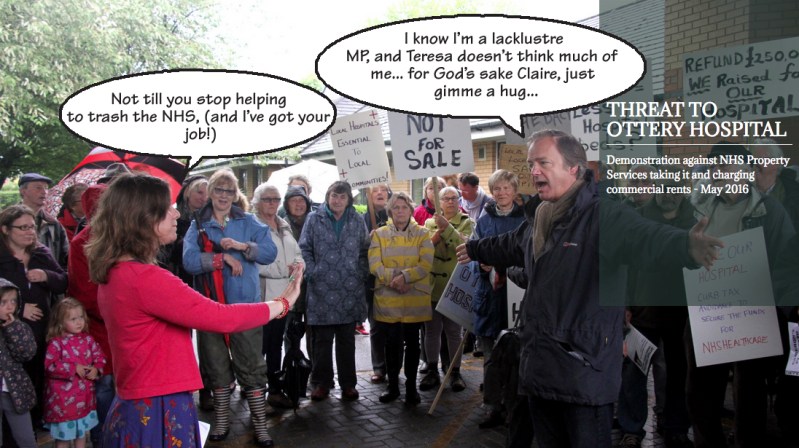
“Fears that secretive NHS reforms will put savings before patients”

“Widespread bed cuts, closures of accident and emergency units and even shutting hospitals have been proposed by NHS bosses

A “secretive” plan to reorganise the NHS risks failing patients, a report warns.

Widespread bed cuts, closures of accident and emergency units and even shutting hospitals have been proposed by NHS bosses who are often more focused on saving money than improving care, the King’s Fund think tank says.

Simon Stevens, head of NHS England, has conceded that managers in many areas are not up to the job of implementing his vision for the health service and is warned today that it risks failure in most of the country.

Mr Stevens is attempting to undo Andrew Lansley’s 2012 NHS reforms without the need for another structural reorganisation, and has divided England into 44 areas where local bosses have been told to come up with “sustainability and transformation plans (STPs)” to move care closer to home.

He insists that doing more in local clinics will keep older people with long-term illness out of hospital. The report published today endorses that aim, but says that STPs are the “right thing being done badly”. Short-term savings are being prioritised over long-term improvements as the NHS faces a £22 billion black hole by 2020, it says.

Plans have been drawn up behind closed doors with patients “largely absent” and with little input from frontline staff, the King’s Fund says. Uncertainly over accountability for the plans is hampering the ability to get anything done, it adds. Chris Ham, chief executive of the fund, estimated that a third of plans were likely to succeed, a third had little hope and the rest would need more help.

“I don’t think the deliverability of STPs is something we can be confident about,” he said. “If STPs do not work then there is no plan B.”

Katherine Murphy, chief executive of the Patients Association, said the plans were “more about saving money”, adding: “They cannot axe services in a secretive way and expect the public to be happy.”

Professor Ham said that cutting hospital services was unlikely to work without money for local clinics to replace them. “GPs and district nurses are under massive pressure. It’s unrealistic to expect them without more staff and resources to take on more of the workload,” he said.

About a quarter of the plans have now been published or leaked and many include centralisation or shutting hospital units or cutting beds. In southwest London, one of Epsom, St Helier, Kingston and Croydon hospitals would be shut entirely.

Taj Hassan, president of the Royal College of Emergency Medicine, said that shutting A&E units would be “potentially catastrophic” and put lives at risk. “Furtively producing plans without involving patients is unacceptable,” he said.

Mr Stevens has acknowledged problems, telling NHS bosses last week that councils might need to take over from health service managers. “In some parts of the country the reality is we are short of leadership that is capable of engaging in the task ahead,” he said.

Sir Bruce Keogh, medical director of NHS England, insisted the plans would be “making it easier to see a GP, providing more specialist services in people’s homes, speeding up the diagnosis of cancer and offering help faster to people with mental ill health”.

He conceded that “to realise these benefits some communities might need to make choices about where to put resources and the NHS will need to be clear with the public about the options” but argued: “Claims of secrecy have been overtaken by the fact that we’ve asked that all STPs are now published over the next few weeks.”

Analysis

Most patients would agree that it makes more sense to keep elderly patients well at home rather than letting them tip into crisis and have to go to hospital (Chris Smyth writes).

In essence, this is what Simon Stevens’s “sustainability and transformation plans” are trying to achieve: getting the local NHS to pay more attention to preventing illness, improving mental health and working with social care.

Of course, it is not quite that simple. Nothing brings patients out on to the streets faster than plans for hospital closures. When Theresa May met Mr Stevens for the first time, she warned him not to use the threat of closures as a weapon to try to prise extra cash out of the government.

Often, there are good clinical reasons for shutting poorly performing units. But when so much emphasis is put on saving money, many in the NHS understandably fear this will mean cost-cutting masquerading as better care.

Among the possible cuts…

Southwest London One of St Helier, Epsom, Kingston or Croydon hospital to shut.

Northeast Stockton or Darlington could lose A and E.

Devon Cut 600 hospital beds and A and E, maternity, stroke and children’s services are deemed “not sustainable”.

Northwest London Ealing and Charing Cross hospitals to be downgraded.
Merseyside Merger of four Liverpool hospitals.

Cheshire Downgrade Macclesfield A and E.”

Source:Times (paywall)
The Great EDDC Section 106 Scandal of 2016 – and probably earlier years

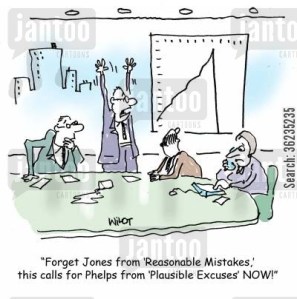
Forget Jones from Reasonable Mistakes, this calls for Phelps from Plausible Excuses NOW!

OWL’S SUMMARY:  EDDC HAS NO EFFECTIVE MONITORING OF SECTION 106 PAYMENTS DUE AND OFTEN RELIES ON DEVELOPERS TO TELL THEM WHAT THEY OWE TO THE COUNCIL.  THIS IS NOT JUST A PROBLEM FOR THIS FINANCIAL YEAR BUT, ACCORDING TO EXTERNAL AUDITORS, COULD HAVE HAPPENED IN PAST YEARS TOO.

Due to the explosive nature of the report detailed below, it is hardly surprising that the Audit and Governance Committee is meeting in the afternoon on 17 November 2016 at 2 pm, while most people have to be at work.  Had it been held in the evening there might well have been some seriously embarrassing problems for the committee.  As it is, even the afternoon session is likely to throw up some VERY tough questions.

Only recently added to the EDDC Audit and Governance Committee agenda papers is this little nugget of a report – it is only 21 brief pages and deserves very focused reading.  The report is as per the link below:

KPMG: Management of s106 contributions

and boy, what interesting reading it makes!

It seems that a local elector complained to EDDC’s external auditors – KPMG, new to the job this year – that it appeared that management of Section 106 payments (the money due from developers) was, in Owl’s lay-owl opinion, not fit for purpose – as reported in recent East Devon Watch postings:

HERE and HERE

The elector concerned alleged serious mismanagement of the listing, monitoring and collection of Section 106 money – the payments due from developers as part of their requirement to mitigate any problems that the development might cause and for the provision of green, open and play spaces within and around their developments.  This was as a result of a Freedom of Information request to which EDDC responded that it did not have the information the elector required.

BEAR IN MIND THAT DETAILED BELOW ARE SUMS FOR THE LAST FINANCIAL YEAR ONLY AND THE EXTERNAL AUDITOR DID NOT EXAMINE PREVIOUS YEARS.

After a very light-touch investigation by the new auditors KPMG (which simply sampled various agreements in this financial year only rather than forensically analysing them all over a period of several years), they found:

     “As at 31 March 2016 the Council had £5.8 million of s106 contributions held on its Balance Sheet.  During the 2015/16 financial year it accounted for £1.9 million of s106 receipts.
      We found that at the Balance Sheet date there was a gross amount of £636,000 in s106 contributions due to the Council where it had not identified that conditions had been met which triggered liability for payment from the relevant developer.
     No invoices had been raised seeking payment and consequently this amount had not been included in the 2015/16 financial statements, meaning the accounts were understated.
      When other audit findings are taken into account there was a net understatement of £227,000 in the Council’s financial statements. This is because our financial statements audit work had separately identified that the Council had incorrectly accounted for an amount totalling £409,000 for a different s106 agreement which actually related to another body.
     Whilst we have not exercised formal audit powers in response to the objection, our work has indicated that the issues raised by the objector are correct and we have upheld the objection.”

Here are the external auditors findings FOR THIS YEAR ONLY in more detail:

“Our evaluation of the processes has identified the following control weaknesses.
1. An absence of summarised financial information to facilitate the monitoring of s106 contributions
The Council currently has no summarised monitoring document which shows the value of all s106 contributions outstanding at any one point, with the trigger which would lead the contribution to be payable and, if the contribution is liable to be paid, the current status of the collection process. In addition to this the Council does not currently have the information in a format which is consistent with s106 contribution triggers so it cannot determine if triggers have been met.
2. Lack of challenge or enforcement of the Cranbrook developers’ legal obligation to provide information
From our understanding there is no challenge or enforcement of the developers’ legal obligation to provide the Council with details of the number of dwellings constructed, sold and occupied, instead only information on completions is supplied. In addition this information should be received quarterly but our testing suggests that it is received on an ad hoc and untimely
basis.
3. Understanding of financial and accounting implications of triggers being met and the communication between Planningand Finance over this
It has been found that at present there is a gap in the understanding of the financial and accounting implications of a contribution trigger being met within Planning, due to an oversight in communication between Finance and Planning over the treatment.  When contributions become virtually certain to be received, but are not invoiced for practical or commercial reasons, they should be recognised as accrued income.  At current however, given this gap in understanding in the planning team, the Council’s Finance team only accounts for s106 contributions when the cash has been received or an invoice has been raised. This has led to the financial accounts having an incomplete accrued income balance on the Statement of Financial Position.
In addition to the evaluation of the s106 processes and controls, we performed testing to enable us to quantify the potential misstatement as a result of the control weaknesses found in the system.
We focused this testing on s106 agreements associated with the Cranbrook development, as these agreements (individually and in total) represented the major value of all agreements in place. We requested a listing to be prepared of all s106 contributions that the Council has in place at the Cranbrook site and found that there were nine contributions that had been triggered and are due to the Council. It was also found that there was a tenth contribution where it was uncertain if the trigger point had been met and the financial value of the contribution, this is therefore not included within the misstatement below. The contributions ranged from £5,000 to £200,000 in value individually, see page 12 for further details.
It was found that the planning Officer was aware of the individual cases, but not the aggregate position of the un-invoiced amounts. None of the contributions had been invoiced or accrued in the financial statements but as noted previously, there is no evidence of financial loss and the misstatement is one of accounting treatment. If the total value of this misstatement was recognised in the Council’s accounts,the Grants in Advance balance would increase by £636,000, as documented below.
It is noted however that this is the gross misstatement as a result of the weaknesses in the system and that our final accounts audit procedures had already identified a misstatement that overstated the Grants in Advance balance by £409,000. This was because the Council had incorrectly accounted for a s106 contribution due from a developer but payable to another body, rather than the Council itself.

Consequently, when concluding effect of these misstatements on our audit opinion, we were able view the impact at 31 March 2016 as a net understatement to the balances is £227,000.  This was reflected in our reporting to the Council’s Audit & Governance Committee in September 2016.

Whilst neither the gross or net misstatement were considered individually material to the financial statements, they are nevertheless significant sums. Given the weaknesses identified in the Council’s controls, it is possible that understatements of a similar scale or even larger could be apparent at any point in time.”


Don’t ask NHS employees or patients what’s wrong – ask consultants (in secret)

“NHS plans that could lead to hospital and A&E closures have been kept secret from the public and barely involved frontline staff, a thinktank has said.

NHS England has told local health leaders not to reveal the plans to the public or the media until they are finalised and have been approved by their own officials first, according to published documents and a new analysis by the King’s Fund.

The national body even told local managers to refuse applications from the media or the public to see the proposals under the Freedom of Information Act.

Local managers accused NHS England of being intent on “managing the narrative” about the plans.

The sustainability and transformation plans (STPs), some of which have been published or leaked, could see some hospitals, A&E units or maternity units close, and other services merged.

The proposal for Cheshire and Mersey includes the downgrading of at least one A and E department, while in south-west London the number of acute hospitals could be cut from five to four.

In north-west London there are plans to reduce the number of sites offering a full range of services, while Birmingham and Solihull’s STP proposes a single “lead provider” for maternity care.

NHS England and some health experts say the changes will improve patient care and are necessary to fulfil the plan of the health secretary, Jeremy Hunt, for full seven-day services. Opponents argue they are just a way of cutting services.

Some councils have objected so strongly to the lack of public involvement that they have ignored NHS England’s demand to keep the documents private until a later stage and have published them on their websites.

The report from the King’s Fund, based on a review of plans and interviews with local managers, says NHS England set very tight timescales, which is partly to blame for patients and doctors being shut out.

Expensive management consultants have been brought in but clinical teams and GPs have often been only “weakly engaged in the process”, it says.

The report says: “It is clear from our research that STPs have been developed at significant speed and without the meaningful involvement of frontline staff or the patients they serve … Patients and the public have been largely absent from the STP process so far.”

One local manager said of the lack of public involvement: “I’ve been in meetings where I’ve felt a little bit like, you know, where are the real people in this?” Another described the secrecy demanded by NHS England as “ludicrous”.

The report says: “As well as the timeline creating a barrier to meaningful public engagement, national NHS bodies had also asked STP leaders to keep details of draft STPs out of the public domain. This included instructions to actively reject Freedom of Information Act requests (FoIs) to see draft plans.”

On management consultants, the report says some leaders “felt that STPs had ‘created an industry’ for management consultants – and questions were raised about why money is being invested in advice from private companies instead of in frontline services”.

However, the King’s Fund said STPs still offered the “best hope” of improving health and care services.

Sustainability and transformation plans are ‘least bad option’ for NHS
Chris Ham, chief executive of the thinktank, said: “The introduction of STPs has been beset by problems and has been frustrating for many of those involved, but it is vital that we stick with them.

“For all the difficulties over the last few months, their focus on organisations in each area working together is the right approach for improving care and meeting the needs of an ageing population.

“It is also clear that our health and care system is under unprecedented pressure and if STPs do not work then there is no plan B.”

Ham said it was a “heroic assumption” to say out-of-hospital services and GPs could take on more of the work currently done by hospitals, given how under pressure they were.

He said there was “mixed evidence at best” that moving services closer to home improved care.

The NHS medical director, Prof Sir Bruce Keogh, defended the plans. “Advances in medicine mean it is now possible to treat people at home who would previously have needed a trip to hospital. It also means those with the most serious illness need to be treated in centres where specialist help is available around the clock,” he said.

“So this is not a moment to sit on our hands. There are straightforward and frankly overdue things we can do to improve care. We are talking about steady incremental improvement, not a big bang. If we don’t, the problems will only get worse.”

http://www.theguardian.com/society/2016/nov/14/patients-and-staff-shut-out-of-nhs-transformation-plans-says-thinktank?CMP=Share_iOSApp_Other

Care at home? Good luck with that!

A report on the national care company Mears and its operation in Torbay:

“”It [also] highlighted a growing breakdown in the carer-service user relationship – the basis of trust and wellbeing – largely due to the miscommunication and lack of empathy from Mears office staff.”

Examples reported by clients include:

Not knowing who will visit and at what time. One client said: “We are never informed when changes are made and when we do have a rota late arrivals are always blamed on “sickness”,”

Care workers are always rushed and not always prepared or provided with adequate client information.

Clients have to instruct care workers what is required during their visits.
Inexperienced and inadequately trained care workers unable to undertake basic tasks.

Lack of understanding in administering medication at the correct times.

Clients at risk due to minimal reference to Clients’ Care Plans.

Clients’ and family members’ concerns aren’t being listened to.

Clients have lost faith and confidence in the support being provided by Mears.Staff reported demoralisation through reduced job satisfaction and concerns for clients’ safety.

Staff in turn reported demoralisation through reduced job satisfaction and concerns for clients’ safety.

These are the report’s main conclusions:

A lack of continuity in care and inadequate response to complaints or concerns from Mears’ office staff are common themes to the feedback.

The majority of clients highlight care workers arriving at the wrong times, or, in the worst cases, not arriving at all. There appears to be an ‘erratic rota system’.

A common complaint is that same-sex care workers were requested but the requests were ignored.

A lack of ‘familiar’ faces causes concern especially for those with dementia.

Inconsistency of rotas having too many ‘unallocated’ slots together with ‘poor’ communication, leading to stress and anxiety for clients and their families.

Many feel that care workers lack ‘appropriate training’ with regard to specific medical conditions and even in such basics as food hygiene.

Many also feel that care workers are often in a hurry to complete tasks.

In particular, both care workers and clients want consistency. Many expressed disbelief at the way the rota system is managed.

Both clients and care workers request that a more consistent and structured approached is used when putting together clients’ rotas, rather than the chaotic and random system currently being experienced.

Further, travel time is part of a carer’s working day and care workers want to be paid for it. (If travel time is included in the wage calculations most care workers are not being paid the minimum wage.)

Evidence collected from current and former staff members of Mears highlighted that they are hugely dissatisfied with the way in which they, and the clients, are being treated, while a typical comment is that the office is not ‘helpful’.

Incomplete Care Plans, together with care workers having insufficient time to read them, impacts on the care needs of the clients, with concerns that complex care is often not met.

New staff are given insufficient support and are leaving due to lack of care in the system.

Care staff feel untrained for the care tasks they are asked to undertake

Healthwatch is recommending an audit of the ways in which Mears complies with National Institute for Health and Care Excellence guidelines. It is sending a formal letter of concern to Mears’ clients and will review the service again in six months to make sure its recommendations have been met.

Mears is a nationwide organisation which provides care for older and disabled people in their own homes.”

http://www.torquayheraldexpress.co.uk/damning-new-report-from-torbay-health-watchdogs-blasts-care-company/story-29891566-detail/story.html

Laura Freeman’s speech at the Exmouth seafront march – Skinner where are you?

““In April this year, just over 4,500 Exmouth people voted yes in a Town Poll. We voted yes for independent, public consultation. This means that we told East Devon District Council – and anyone else listening – that we want to have a say in what happens on our seafront.

“We came out in huge numbers, despite none of the usual help that comes with a general or council election. We came out despite the fact that polling stations were only open for a very, small space of time. Some of us even went out prior to voting, to stand around town – in all weathers – to tell people about the poll, as many people didn’t even know what was going on.

“And what’s happened since the poll in April? Nothing. Why are we being ignored? Ignored by the very people we elect. Well, that’s just not good enough. Today, we have sent a message to East Devon District Council. We have said “We will not be ignored. Our views are important.” East Devon District Council, you need to listen to us.

“We live here. We work here. Some of us will have grown up in this town like generations before, and others will have moved here for a better life or opportunity. When people feel they are being ignored, they shout louder. And that’s what we are doing here today. We are shouting louder!

“Now for those who don’t know, there is a group of people at East Devon District Council who are responsible for the development of this site on the seafront. They are the ‘Exmouth Regeneration Board’. The Chair of this board is Councillor Philip Skinner. We asked Councillor Skinner to come today, along with all East Devon District Councillors and all Exmouth Town Councillors.

“Now, we’ve asked Councillor Skinner to meet with the public before, but this has proven a very tricky task. Actually, we’ve been asking him for months. But he just cannot seem to find any time for meeting with the public. Though, we will still keep trying!

“Councillor Skinner, we hope that you – as someone who can influence something that affects our lives so much – will still come and meet with the people of Exmouth, to answer questions we have, and discuss our ideas and concerns. But with the demolition of assets, closing of businesses and loss of jobs, I’m sure everyone here today will all agree with me, that this meeting with Councillor Skinner must happen soon. There is urgency in this situation.

“So, thank you all for coming here today, standing side-by-side with other members of your community.

“We have shown East Devon District Council that we will take to the streets when they refuse to listen to us through official platforms.

“In a few weeks’ times, on Thursday, December 1, we are having an SES meeting at 7.30pm in the Harbour View Cafe. I really hope many of you will be there. I know that together we can create some great ideas to sort through this situation, and help to protect, as well as enhance, this town we call home.

“Oh, and before I finish, please show your support for the businesses still trading on the proposed development site, The Crazy Golf Course is open today, so go and have a play! And also pop along to the Harbour View Cafe for a nice hot cup of tea and cake! Thank you so much!”

http://www.exmouthjournal.co.uk/news/save_exmouth_seafront_speech_by_laura_freeman_1_4773423

Well done, Laura!

“Sacked ministers warn Theresa May: Promote us in a year or there will be ‘trouble’ “

Does this include our own dear Hugo?

Theresa May has been warned by sacked ministers that she must promote them back into Government within a year or face “trouble” in Parliament.

Senior Tories dismissed by the Prime Minister in the summer have privately warned their “loyalty” only stretches so far after being sent to the backbenches.

Some are ready to increasingly rebel over Mrs May’s grammar schools ban and Brexit priorities unless they are put back on the Government payroll soon.

The ultimatum, made in conversations with The Sunday Telegraph, is designed to make sure Mrs May makes good on indications there is a route back to the Government for those who behave.

… Some 29 ministers left the Government after Mrs May took over as PrimeMinister – a far higher number then her working majority in the House of Commons of around a dozen.

The unexpectedly brutal reshuffle saw Mrs May accused of “purging” allies of Mr Cameron and Mr Gove, who ran against her in the Tory leadership race.

At the time there were warnings that creating new enemies on the backbenches when the Tories only have a slim majority risked undermining her ability to win votes.

It is understood Tory whips and intermediaries for Mrs May’s team have let it be known there are paths back to Government for those former ministers who behave themselves.

However some have grown impatient and are warning that unless they are promoted by July 2017 they will begin to cause “trouble”.

http://www.telegraph.co.uk/news/2016/11/12/sacked-ministers-warn-theresa-may-promote-us-in-a-year-or-there/

Exmouth seafront demonstration: video

Just in case EDDC or a local newspaper tries to give the impression of only a handful of protesters today, here is a video which disproves it.

https://www.facebook.com/Exmouthsplash/?ref=br_rs

and here:
http://m.exeterexpressandecho.co.uk/save-exmouth-seafront-campaigners-stage-protest-march-over-redevelopment-plans/story-29889839-detail/story.html

Exmouth Save our Seafront rally

Campaigners in Exmouth staged a protest march calling for further consultation on controversial seafront redevelopment plans.

The Save Exmouth Seafront group organised the rally on Saturday morning.

It said the peaceful event was held “to express the public’s feelings that their Town Poll request for an independent consultation about the seafront is being ignored by East Devon District Council”. …

… Save Exmouth Seafront recently raised concerns about the escalating costs of the redevelopment, which the council argues will bring long term economic benefits.

Campaign spokeswoman Louise MacAllister said: “SES have been calling for over a year for an independent consultation on the future of the seafront, and have been previously told that it would be too costly.

“Now we hear that EDDC officers are asking cabinet to accept a more than doubling of projected costs for this contentious project from £1.5m, to over £3m. We call on the cabinet to represent the public as they were democratically elected to do so, and ensure that the assumptions and claims made in this report are scrutinised, and that this flawed project is considered in light of evidence rather than an officer’s report based on countless assumptions.”

http://www.exeterexpressandecho.co.uk/save-exmouth-seafront-campaigners-stage-protest-march-over-redevelopment-plans/story-29889839-detail/story.html

Swire asks 3 parliamentary questions about furniture!

Owl wonders why, in the midst of all our troubles in East Devon, Swire has this on his mind.


https://www.theyworkforyou.com/wrans/?id=2016-11-03.51764.h&s=speaker%3A
11265#g51764.q0

Hugo Swire: To ask the Secretary of State for Business, Energy and
Industrial Strategy, what information his Department holds on changes in
the level of use of chemical fire retardants in furniture over the past
five years.

Written Answers – Department for Business, Energy and Industrial
Strategy: Fire Prevention: Furniture (11 Nov 2016)

https://www.theyworkforyou.com/wrans/?id=2016-11-03.51763.h&s=speaker%3A
11265#g51763.q0

Hugo Swire: To ask the Secretary of State for Business, Energy and
Industrial Strategy, whether his Department plans to propose amendments
to the Furniture and Furnishings (Fire) (Safety) Regulations 1988 to
reduce toxic fire retardants in furniture.

Written Answers – Department for Business, Energy and Industrial
Strategy: Fire Prevention: Furniture (11 Nov 2016)

https://www.theyworkforyou.com/wrans/?id=2016-11-03.51765.h&s=speaker%3A
11265#g51765.q0

Hugo Swire: To ask the Secretary of State for Business, Energy and
Industrial Strategy, if he will make an assessment of the potential
merits of introducing a mandatory requirement for furniture products to
carry a label stipulating the chemicals used in those products.

“GP defends plans to cut hospital beds across eastern Devon” – or does he?

Another example of post-truth journalism, this time from the Sidmouth Herald. Under the above quoted headline, this is what the GP ACTUALLY says:

I share the concern that there won’t be enough provision in the community – that would be my number one concern. We can only reduce beds when we see corresponding change in the community. The timescale will centre on getting the services in place.

“I understand the huge financial pressures within the system, but it’s not in anybody’s interest to do it badly. Getting it wrong will inevitably cost the system a lot more. Moving our services in that direction is the right thing to do and trying to make sure we get the capacity right is very important. It will be a disaster if we do not.”

Dr Mejzner admitted there will always be people who require non-acute hospital care, but argued this could be provided in remaining community hospital beds, or with private sector contracts in nursing and residential homes.

He stressed the importance of responding to the public consultation to inform decision-making and raise issues that might have not been previously considered.

The GP added that if respondents do not agree with any of the four options presented – which each propose bed cuts – it is important that they state why the proposals are wrong in order to help health bosses determine the main concerns and issues.”

http://www.midweekherald.co.uk/news/gp_defends_plans_to_cut_hospital_beds_across_eastern_devon_1_4770586

Does that sound like he defends current bed cuts?

We have no system in place, and very little chance of getting it in place in a largely rural community where the costs will be very high and suitably qualified staff are difficult to find and will become more so with immigration controls.

Housing “need”?

“A review of Cornwall’s social housing register has seen about 12,000 applicants taken off the waiting list.

Cornwall Housing has reviewed the accounts of every applicant who hasn’t logged into the allocation system for more than a year.

Those who didn’t get in touch when they were asked to say they wanted to stay on the register have been removed from the list.

When the review started there were more than 30,000 applicants waiting for homes, that’s now been cut down to 18,500.”

BBC Devon Live website

Very rare grey long-eared bat confirmed in East Devon

Owl wonders where these fellow creatures are roosting and if there are any developments planned nearby. How will we know if ecologists won’t say where they are? It would be very awkward if they forage on the Seaton Wetlands, flying over the green wedge, which developers are still trying to build on.

“Exeter-based company Acorn Ecology shared photographs of a grey long-eared bat, of which there are less than 3,000 in the country. Staff carried out biometric tests on droppings below the roosting mammals to confirm it was the rare species and not the more common brown long-eared bat.

Colin Bonfield, senior ecologist, said: “The bat appears to be using the building as an occasional day roost and a regular night roost and is probably associated with a larger colony somewhere in the locality.

“The South West is a stronghold for bat species and 17 species have been recorded in Devon. In my opinion, the presence of grey long-eared bats in Devon is highly linked to lower levels of light pollution as long-eared bats are one of several light averse species present in Devon.

“Other very important factors include currently favourable agricultural practises, suitably diverse foraging habitat and the presence of suitably managed woodlands and the presence of old buildings and structures that provide suitable roosts.”

The company carries out ecological surveys and impact assessments in support of planning applications. It could not disclose the exact location of the bats.”

http://www.midweekherald.co.uk/news/rare_bat_discovered_roosting_in_east_devon_1_4772609

“Police yet to quiz Exeter’s crime tsar as inquiry into election expenses draws to close”

“Police have still not even asked for a date to interview Police and Crime Commissioner Alison Hernandez about expenses for the general election campaign, her chief of staff has revealed.

Ms Hernandez, who was criticised for taking a “selfie” with the chief fire officer at the scene of the Exeter fire last week, is set to be interviewed following a complaint about alleged false accounting, following her role as the Conservative Party election agent in Torbay MP Kevin Foster’s victorious campaign in 2015.

The allegations relate to expenses for the Tory “Battle Bus”, which brought activists to constituencies from outside the area with leaflets and are thought to have helped swing the vote.

Cornwall MPs Scott Mann and George Eustice are among those caught up in the investigations, which are continuing.

The issue has dogged the PCC since the story broke days before her own election victory in May by a narrow margin.

She has repeatedly denied any wrongdoing and insists she stands ready and willing to assisst any investigation.

Andrew White, chief executive of the Office of the Police and Crime Commissioner (OPCC) said the investigation in Devon and Cornwall by West Mercia police was expected to conclude in weeks but no request has been made to speak to the commissioner.

Mr White, who I referred allegations about election expenses and potential breaches of electoral law on expenses in the Torbay constituency, said: “I am informed by the IPCC that the investigation is progressing. It is expected that the investigation should conclude by November this year. I can confirm that West Mercia Police have not yet requested an interview with the PCC, Alison Hernandez.”

“Following the investigation, a report will be presented to the IPCC and a decision will be made whether the case should be referred to the Crown Prosecution Service (CPS),” Mr White added

“This investigation is one of a number of similar investigations being undertaken across the country.

“I will issue further updates as and when any relevant information, that I am allowed to disclose by the relevant bodies, becomes available.”

It emerged last month that Chief Constable Shaun Sawyer was also under investigation after comments he made about diverting police resources to deal with the inquiry.

The remarks which have got Mr Sawyer into hot water were made in a BBC interview, when he said that although “democracy is important” Parliament needed to consider procedures for dealing with complaints about the way elections are run.

“This is taking up police time,” he said. “It is taxpayers’ money.”

Adrian Sanders, who made the complaint, has said that it was not for the chief constable to make such comments.

“You can’t make statements like that unless you have some background detail,” he told the BBC.

“He’s not in a position to know that detail, especially when it’s his boss who is the subject of investigation.”

In a statement, the chief constable denied any wrongdoing and said he would cooperate fully with the investigation.”

http://www.exeterexpressandecho.co.uk/police-yet-to-quiz-exeter-s-crime-tsar-as-inquiry-into-election-expenses-draws-to-close/story-29884683-detail/story.html

North Somerset and Bath: Goodbye NHS, hello Virgin Healthcare

Set to commence on April Fool’s Day next year

“Sir Richard Branson’s health firm, Virgin Care, has won a £700m contract to deliver 200 types of NHS and social care services to more than 200,000 people in Bath and north-east Somerset.

The contract, which was approved on Thursday, has sparked new fears about private health firms expanding their role in the provision of publicly funded health services.

Virgin Care has been handed the contract by both Bath and North East Somerset NHS clinical commissioning group and Conservative-led Bath and North East Somerset council. It is worth £70m a year for seven years and the contract includes an option to extend it by another three years at the same price.

It means that from 1 April Virgin Care will become the prime provider of a wide range of care for adults and children. That will include everything from services for those with diabetes, dementia or who have suffered a stroke, as well as people with mental health conditions. It will also cover care of children with learning disabilities and frail, elderly people who are undergoing rehabilitation to enable them to go back to living at home safely after an operation.

NHS campaigners warned that the history of previous privatisations of NHS services in other parts of England may mean the quality of care patients receive drops once Virgin takes over.

“This is obviously part of a big push by Virgin to dominate the supply of community health across England. The experience so far from NHS outsourcing is that companies struggle to deliver the level of service that patients need and make a profit,” said Paul Evans, co-ordinator of the NHS Support Federation, which monitors NHS contracts being awarded to firms such as Virgin.

“In too many instances outsourced healthcare has resulted in care being compromised to cuts costs. Patients need secure services that they can trust and rely on,” Evans added.

The collapse of the £725m UnitingCare contract in Cambridgeshire meant Virgin’s newly acquired contract would be the most lucrative ongoing deal for providing NHS care, he said.

Eleanor Jackson, a Labour member of Bath and North East Somerset council, told the Mirror she was “horrified” by the decision. “Make no mistake about it, what has happened here is the beginning of the privatisation of the NHS in this country. Woe betide you getting ill in this area if you are old, disabled or have learning difficulties in the next seven years. It is just a horrifying decision,” she said.

There are concerns that handing the work to Virgin Care will take important income away from the many local NHS, voluntary, charitable and housing bodies that currently provide some of the services. They include the Royal United hospitals Bath NHS foundation trust, Great Western hospitals NHS foundation trust and the Avon and Wiltshire mental health partnership NHS trust. Charities affected include Age UK’s Bath branch and the Alzheimer’s Society.

Virgin will also run the urgent care facility at Paulton community hospital, which is 12 miles from Bath, and subcontract a number of other services to other providers, including the provision of dementia and end of life care and a “hospital from home” service for recently discharged patients.

“I am pleased that we can now start the process of transferring services. Following extensive consultation with local people and a very rigorous procurement process, the CCG board is assured that Virgin Care is the right organisation to deliver the personalised and preventative care that local people have asked for,” said Dr Ian Orpen, the clinical chair of Bath and North East Somerset clinical commissioning group.

“We will be working closely with the council and our new partners, Virgin Care, over the coming months to ensure that services and staff are transferred across safely on 1 April 2017 and to minimise disruption to the care and support that people currently receive.”

A spokesman for Virgin Care said: “We are really pleased to have been chosen by the council and CCG to deliver more joined-up care for people across Bath and north-east Somerset. We have a strong track record over the last decade of overseeing integration and improvement of NHS services across England and we’re looking forward to working with the many outstanding professionals, and a range of great partners, to provide and oversee high quality, easy-to-navigate services which are shaped by the people who use them.”

http://www.theguardian.com/society/2016/nov/11/virgin-care-700m-contract-200-nhs-social-care-services-bath-somerset

Post- truth journalism

Guardian headline today:
UK construction at weakest level for four years as housebuilding stalls”

http://www.theguardian.com/business/2016/nov/11/housebuilding-stalls-britain-eu-construction

Daily Telegraph headline today:
Construction downturn after Brexit vote not as deep as feared”

http://www.telegraph.co.uk/business/2016/11/11/construction-downturn-after-brexit-vote-not-as-deep-as-feared/

The impact of social care cuts

“Vulnerable older people are being denied regular showers and visits to the toilet because of cuts to social care budgets, a report by trade union Unison has said.

In The Damage: Care in Crisis Unison said 63% of homecare, residential support and day services staff said they had less time to spend with those they care for because of staff shortages.
It found 65% were doing their job alongside fewer staff than six years ago, while 36% said rationing of supplies had increased as a result of budget cuts.

Some care home residents were not getting access to showers and regular visits to the toilet, respondents said.

The survey drew responses from more then 1,075 care staff.

Unison head of local government Heather Wakefield said: “Cuts have left a trail of destruction and this is affecting those in desperate need of care.

“Everyone deserves decent care in their old age. But if the government doesn’t act now millions of people will be left facing a bleak and uncertain future.”

http://www.publicfinance.co.uk/news/2016/11/unison-survey-finds-impact-social-care-cuts

“Devolution is doomed, says Layfield inquiry member”

“A member of the landmark Layfield inquiry into local government finance has said the government’s devolution drive is unlikely to succeed because not enough fiscal powers have been localised.

George Jones was speaking at an event to mark 40 years since the publication of Sir Frank Layfield’s review, which called for a new constitutional settlement between central and local government. He echoed one of Layfield’s recommendations, saying devolution would need some kind of local personal taxation if it was to be successful. The Layfield report had called for a local income tax in its report in May 1976.

Asked if the current round of devolution was limited or doomed, he said: “I’d say it is doomed because, in all the schemes, there’s no devolution of fiscal powers other than business rates, which are irrelevant because they don’t bear on voters.”

Jones said the Layfield report focused on political responsibility and accountability rather than the technicalities of rates and grants, which gave it considerable constitutional importance.

“It proposed a choice based on two sets of arrangements – one based mainly on central responsibility and the other based mainly on local responsibility.”

Layfield argued no system of local government finance would be satisfactory if it did not follow from a “desired pattern of relations”, Jones added.

However, the Labour government led by Jim Callaghan did not opt for either of these arrangements, nor a middle way with minimum standards paid for by grant. Instead, the government pursued what Jones called a “muddle way” that was not clear where the main responsibility for local government finance should lie. This confusion allowed centralisation to increase in subsequent years, he said.

Both central and local government were embarrassed by Layfield, Jones argued, as it had raised fundamental questions they did not want to answer about the distribution of power in society.

Also speaking at the event, Sir Michael Lyons, who led a review of local government funding published in March 2007, agreed that Layfield pointed to a different way of running the country. Like Layfield, Lyons said, his report concluded that changes to local government finance could not effectively happen without its role being made clearer.

“Like him, I stressed there was no simple magic formula,” Lyons told attendees. “I said that key debates had to be about the key relationship between the centre and localities – not a simple call for devolution but a new contract that established very clearly those things that are national entitlements and those things that should be left to local determination.”

The government was also embarrassed by the scope of his proposed reforms and, in particular, was “petrified” they would be caught out on the issue of council tax revaluation.

While the coalition and the current governments had shown interest in devolution, it was a permissive kind, with rules councils had to meet. While business rates localisation was interesting, it was “manifestly not” the way to reach a new constitutional settlement, he said.

“If I’m working for an individual authority looking to further the interests of my community, I would take every opportunity that came along, believing that there is no appetite for the big questions set out in Layfield. I wouldn’t criticise folk for doing that, but it no more than a partial, limited improvement from where we are.”

Also speaking at the event, Tony Travers, the director of the Greater London group at the London School of Economics and chair of the London Finance Commission, said this amounted to “centralised decentralisation”.

He added: “If you have a system as centralised as this one, decentralisation is part of a centralised process, so it is very much step by step,” he said. “It is such a centralised system that even a tiny step towards decentralising a little bit of service freedom requires not only the Treasury to be convinced of it, but the service department. It is where we are starting from that makes this such a difficult process.”

Mike Owen, chief executive of Bury Council, said the Layfield report had highlighted a series of issues – including who held the purse strings and controlled public services – that were still of importance today.

Layfield had decided local autonomy was the right way to go. “This was absolutely right,” Owen concluded. “It really did start a debate that has gone on for 40 years, and that is a great credit to Layfield and a great credit to the report itself and to the [inquiry] committee.”

http://www.publicfinance.co.uk/news/2016/11/devolution-doomed-says-layfield-inquiry-member

Claire Wright exposes misinformation by NHS Property Ltd in Sidmouth

Be very grateful that Claire Wright is a DCCCouncillor!

“Sidmouth GPs are angry after an NHS property company gave a misleading update to Devon County Council health scrutiny councillors, on controversial plans to redevelop Blackmore Health Centre.

A written briefing was circulated to councillors from NHS Property Services on Monday 7 November, claiming that agreement with the practice had been reached on rent and service costs.

But Dr Joe Stych said he was infuriated at the claims. He asked that the committee be put straight at its meeting on 8 November.

He said: “I don’t know who they get their information from but it is wrong and should be made clear to the Health and Wellbeing Scrutiny Committee – they are trying to pull the wool over their eyes.

“There is no agreement with the practice about rent and service costs. We met with NHPS about 1 month ago – the most senior manager for facilities management came to meet us and was clueless about why the costs we were being charged were so high. They confirmed costs for 2015-2016 to continue on our previous arrangement but since the meeing nothing in writing has come out. Nothing is agreed for this financial year 2016-2017 or moving forward.

“The only option for a redevelopment that is on the table is one we can not afford to enter a lease into as it sees non re-imbursable costs to the practice rise considerably and we have no control over rising costs.

“Lets be clear their redevelopment of the site is aimed at making as much profit as possible. Car parking is reducing considerably and we have seen no plans in writing which protect future expansion interests to the practice.

“Their plans are so unfavourable we are having to look at our options to relocate the surgery to a less convenient site.”

I raised the issue at the end of the meeting to put members straight. But it is deeply worrying that NHS PS is putting out such briefings that are clearly wildly wrong and misleading.

NHS PS now owns 12 Eastern Devon community hospitals and many of us are on high alert awaiting news of the rents, which if Sidmouth’s case is anything to go by, could suddenly be hiked beyond affordability at any time. NHS PS claims it is part of the “NHS family” yet it behaves like an amoral profit-making corporation, with apparently no accountability to patients who fund its existence and rely on its ability to treat its tenants fairly.

For MONTHS now I have been chasing the company, which is wholly owned by the secretary of state for health, on how much income it takes compared with how much it spends on maintenance. They clearly don’t want to provide this information. I first asked for it in JUNE. And have asked several times since.

From the little dealings I have had with NHS PS, I don’t trust them one inch and I am disgusted with a government that created this very system.

Hugo Swire labelled me a scaremongerer in May for my concerns about NHS PS. He refused to take up the matter of the transfer of our local hospitals, with health secretary, Jeremy Hunt.

I wonder if he would still has as much confidence in the company as he did in May?”

http://www.claire-wright.org/index.php/post/sidmouth_gps_infuriated_at_nhs_property_services_misrepresentation_to_healt