Comments on Parish’s “build prettier-looking houses” plea

These comments – neither by Owl – on an article by Parish (see below, today) pretty much nail it!

“1. Neil, why have you deliberately not mentioned building suitably priced housing, so that young local families can still live in the small towns and villages in which their families reside? You are just making sure that any houses built within 10 miles of your over priced country pile, doesn’t devalue your property.

2. Another MP making noises in anticipation of the autumn parlimentary disaster, won’t save your seat when it all hits the fan.”

http://www.devonlive.com/homebuilders-must-be-held-to-account-and-an-independent-ombudsman-formed-neil-parish-mp-column/story-30481265-detail/story.html

London’s (abandoned) Garden Bridge – lessons for EDDC?

” … Launched as a privately sponsored gift to the city, Joanna Lumley’s “tiara for the Thames” had soon gobbled up £60m of public cash and the promise of an extra £3.5m a year for evermore. It was quickly revealed to be more a corporate events space than public crossing, a planted branding opportunity just 200 metres from an existing bridge, where groups would have to register and visitors would be tracked via their mobile phones. It was relentlessly exposed to be the product of the “chumocracy”, flouting all the usual rules of procurement. The miracle is that it ever got so far, and that so much public money has already been flushed into the Thames.

The blame lies firmly with former mayor Boris Johnson, the one actor in this sorry saga who refused to comply with Margaret Hodge’s recent inquiry into the project. Her investigation found multiple failings from the start, from the Garden Bridge Trust’s shaky business case (which put a lot of faith in the lucrative potential of selling T-shirts and pens), to a tendering process that was “not open, fair or competitive”, to confusion as to what the project was even for, concluding that the bridge should be scrapped before it burned through any more cash. And it all comes back to Boris. …

It was Johnson who took up his childhood chum Lumley’s idea for the sylvan crossing (which was initially conceived as a memorial to Princess Diana and pitched to Ken Livingstone, who had the good sense to say no) and had it bulldozed through the system with flagrant disregard for due process. Hodge’s report found that his deputy mayor for transport, Isabel Dedring, and Transport for London’s director of planning, Richard de Cani, saw to it that the choice of Lumley’s team of Thomas Heatherwick and engineering giant Arup was a foregone conclusion. The team was allowed to revise their bid while their competitors were not, the scoring was found to be irregular, while de Cani admitted that he alone judged the bids.

In a move that raised concerns over conflict of interest, both Dedring and de Cani now enjoy senior positions at Arup, where most of the £37.4m of public funding spent to date has been funnelled; TfL and the department for transport have both denied any such conflict and Arup gave assurances to Hodge which she accepted.

Hodge also raised concerns over the private interests of the garden bridge trustees, who appeared to have business interests on both sides of the river where the bridge was due to land. The project’s business case spoke of a 5% increase in the value of property and a 30% increase in revenues for retail units, revealing the green tiara as a cynical garnish for raising land values in these central London areas – which the trust preposterously described as being “in need of regeneration”.

As the champion of novelty infrastructure projects, Johnson saw in the garden bridge his chance for another trinket to furnish his mantelpiece of ill-conceived urban ornaments. It would be a fitting addition to the empty Emirates Air Line cable car, his fleet of overheating Heatherwick-designed buses and the lunatic tangle of the ArcelorMittal Orbit sculpture in the Olympic Park. They are all projects characterised by the promise of private sponsorship that have ended up draining the public purse, standing as costly monuments to Johnson’s self-promotion.

By refusing the guarantee of further public funding for the garden bridge, Khan has effectively pulled the plug: since major private donors have pulled out, the project has a £70m funding gap and its planning permission expires in December. But he must go further and hold those responsible to account; we must insist that the lake of public cash already drained into consultants’ fees and building full-scale prototypes is repaid.

“It has the potential to be the slowest way to cross the river, with intimate moments and a lingering scale,” rhapsodised Thomas Heatherwick when I first met him to see his garden bridge plans in June 2014. He added with a twinkle in his eye: “It feels like we’re trying to pull off a big crime.” The conclusion of this long drawn-out public heist should be that crime doesn’t pay.”

https://www.theguardian.com/artanddesign/2017/apr/28/garden-bridge-dead-38m-public-money-repaid-boris-johnson

Parish slags off Sherford new town (Plymouth) but not Cranbrook


Cranbrook


Seaton


Axminster


Sherford

Owl says: it rather sticks in the craw when a long-time MP criticises his own party for things he has never before stood up for after having watched ticky-tacky boxes going up all over his constituency with never a word.

Your party, your fault, your buck Mr Parish.

“… Local people must be given the tools and encouragement to create their own design codes and plan the sort of development they want. Not only will it improve the quality of housing stock, it gives people a stake in their community and a sense of civic pride in new developments. …”

http://www.devonlive.com/homebuilders-must-be-held-to-account-and-an-independent-ombudsman-formed-neil-parish-mp-column/story-30481265-detail/story.html

In East Devon! You must be joking – or living on another planet!

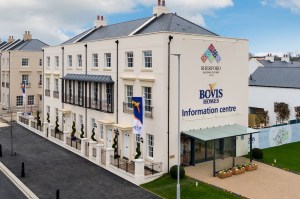
Developer Bovis too poor to finish Axminster estate – and “steep slopes” came as a surprise (and Owl says ‘I told you’!)

Owl predicted problems with this development LONG ago:

Axminster regeneration

Recall the site was acquired below market value when Axminster Carpets got into difficulty.

And it seems that Bovis has its own troubles:

Bovis slow down will hit East Devon hard

Although again Owl drew attention to another problem affecting house sales on the site:

Axminster and Cranbrook – slums of the future says Councillor Hull whilst Councillor Moulding says – nothing

So, it’s hardly surprising we find that Bovis blames everyone but themselves for their so- called plight – though its directors are probably not too worried about their bonuses:

New Bovis Homes boss buys extra £2m shares

“HOUSE building on the Bovis Homes Cloakham Lawn estate could cease unless planning conditions are removed or eased.

Bovis Homes says the scheme is in the process of stalling and, unless it can be brought back into viability, the company will have “no option but to cease work and mothball the development”.

But Axminster Town Council feels it is an attempt by the developer “to wriggle out of its commitments”, with district councillor Ian Hall saying: “‘Trying it on’ comes to mind.”

Bovis Homes has submitted a planning application to East Devon District Council (EDDC) to vary the Section 106 agreement (a set level of affordable housing and contributions towards the local infrastructure and facilities).

The development includes permission for up to 400 dwellings, and the company celebrated the second anniversary of its on-site sales office in September last year.

But a summary of an independent viability assessment, produced by chartered surveyor Belvedere Vantage Ltd, says: “The local market in Axminster has proved very difficult, with interest in the first phase of the development having slowed significantly, resulting in a large number of completed unsold ‘standing units’.”

The summary also referred to a number of physical constraints at the site, and “potential abnormal costs” associated with the constraints, which started to become clear during detailed site investigations after outline planning permission had been given.

Constraints include areas with very steep slopes, a flood plain boundary, two distinct drainage catchments, a watercourse running through the site, the need to maintain access to existing leisure facilities.

The negative impacts, including an inability to plan the scheme effectively, of a tree preservation order are also mentioned.

Axminster Rural district councillor Ian Hall, having declared an interest as he is the chairman of Cloakham Lawn Sports Centre (a Bovis Homes tenant), said in a formal response: “I have absolutely no sympathy.

“This land was purchased by Bovis for £2.9m cheaper than the market price when the failing Axminster Carpets Ltd was winding up.

“Bovis representatives (who were the strong arm of Bovis during the purchase of the land) were very aware of the agreements and were more than happy to proceed with the bargain of the decade.

“I am not one to make unnecessary fuss, although, on this issue, I will not compromise.

“ ‘Trying it on’ comes to mind.”

The independent viability assessment is confidential because it contains commercially sensible information, which is not included in the publicly available summary.

Axminster Town Council has requested more detailed confidential information and, in its formal response to EDDC, said: “The town council objects to this application, which appears to be an attempt by the developer to wriggle out of its commitments.

“There is insufficient information on which to make a well-reasoned response.”

The town council requested a meeting with EDDC and the developer so that it would be able to “respond in the light of more detailed, commercially confidential information”.

The town council also requested a site meeting in the company of a planning officer.

Town clerk Hilary Kirkcaldie said EDDC replied it could not share confidential information, but had appointed an independent viability consultant.

EDDC also expressed a willingness to host a site visit, which is yet to be arranged.

In her formal response to the application, EDDC housing strategy officer Melissa Wall said: “We are disappointed that the applicants have not approached the council before submitting their application to vary the S106 contributions to discuss their viability concerns.

“We are open to suggestions regarding changing the tenure and numbers of affordable units in order to assist viability.

“We are hopeful that agreement can be reached between the council and the applicant to ensure that the development can support some form of affordable housing.”

Bovis Homes would not say how many houses have been built and how many are under construction – nor would the company comment on Councillor Hall’s claims.

A spokesperson said: “We cannot comment on live viability applications but we will continue to work closely with the local authorities to deliver the new development at Axm- inster, which is providing much-needed new homes as well as an economic boost and jobs for the area.”

https://www.viewnews.co.uk/housing-development-axminster-stop/

“Inclusive growth” or exclusive growth in East Devon (soon to be Greater Exeter?)

Greater Exeter or Greater East Devon?

A follow-on from the previous post.

“Inclusive growth is emerging as a key agenda in the UK. The general election was fought from both sides with a promise to create an economy that works for everyone.

City leaders across the country are pursuing inclusive growth as a means for addressing some of the big challenges facing their communities, from poor health and economic exclusion to high demand for services and spiralling financial pressures. Our report, Citizens and Inclusive Growth

Click to access rsa_citizens-and-inclusive-growth-report.pdf

explores how we can build on this agenda and support impactful next steps by engaging citizens as part of our strategy for inclusive growth.

The RSA Inclusive Growth Commission set out a bold vision for a new model of growth that truly moves on from the failed trickle down economics of the past. But it also identified a critical gap in current thinking and practice around alternative economic models: the role that citizens should play in shaping them. A “place based” economy is unlikely to succeed without active citizen and community participation. The RSA’s Citizens’ Economic Council has underlined the real value created by getting citizens involved in shaping economic thinking and policy, both in terms of the quality of decision making and the positive effect it has on people’s skills, as well as their sense of agency, self-efficacy and belonging to their place. …

So how can we take the agenda forward in the UK? It’s clear that citizens aren’t featuring enough in conversations and decisions about devolution and strategies for economic growth and development. The parameters of inclusive growth are largely being set by officials, which has meant that too often we are tinkering at the edges of existing growth models rather than transforming them. Evidence from the report suggests greater involvement of a broad range of citizens (especially those with lived experience of hardship and poverty) may have a transformative effect on priorities and policies for growth, encouraging greater equity and sustainability.

There are ways that government and cities could demonstrate their commitment to citizen engagement in pursuit of inclusive growth. One of our suggestions is that in future phases of devolution, localities should negotiate significant devolved funds that are controlled by their citizens through participatory budgeting. The same could apply to the programmes that ultimately replace EU structural and social funds after Brexit.

Inclusive growth should go hand in hand with an inclusive form of decision making. Towns and cities in the UK have a real opportunity to make this happen. “

https://www.thersa.org/discover/publications-and-articles/rsa-blogs/2017/07/give-citizens-real-power-for-inclusive-growth-to-succeed

Is it time for some more rebellious towns?

Colyton proudly announces itself as “the most rebellious town in Devon” for its part in supporting the Duke of Monmouth against James the Second.

Is it now time for another rebellion?

EDDC is the largest District Council in Devon with a population of about 140,000. It is growing rapidly. All this is happening against the backdrop of relocating EDDC’s headquarters and possible mergers amongst councils, in particular the creation of Greater Exeter.

Does everyone in East Devon want to be part of this process of rapid population growth and incorporation into the Exeter conurbation?

Residents of Exmouth, Honiton and Cranbrook may well look towards Exeter and work in the city, but our more rural and coastal communities increasingly see crowded and congested Exeter as something of which they do not wish to be a part. They tend to look towards the slower population growth and protection of the environment that can be found across the border in Dorset.

Budleigh Salterton, Sidmouth, Beer, Colyton and Seaton, and perhaps Ottery, seem to see themselves more as operating in an economy linked primarily to tourism and agriculture. They have no wish or requirement to be absorbed into the Exeter behemoth. Cleaner and greener.

These communities also have little representation in the hierarchy at Knowle, (or even acknowledged by Greater Exeter) where the leadership is dominated by councillors from Exmouth, Honiton and Axminster.

In such circumstances, and with relocation offering a timely opportunity, is it not time to seriously consider splitting the District Council and introducing a healthy dose of localism?

We already see many functions and services involving cross-authority cooperation. Such sharing of services could and should continue were coastal East Devon to secede. But those coastal communities would have far greater control over their own affairs.

Is it time for Eastern East Devon, or perhaps “Jurassic Devon”, to secede from EDDC and withdraw from the Greater Exeter project?

And maybe join with Dorset’s idea of a Jurassic National Park?

All it takes is a few rebellious people to get it started!

On-the-spot fines: has anyone been in-the-spot to fine anyone?

The by-law enacted by EDDC regarding feeding seagulls has hit national headlines again:

http://www.express.co.uk/news/uk/840603/Seagull-attacks-feeding-birds-fine-food

But has anyone ever been fined?

Same with dog fouling – the fouling is still there but where are the fines?