Women cheated out of their pensions have no right to fairness says government lawyer

“Nearly 4 million women who lost up to £47,000 each when their retirement age was increased from 60 to 66 have no right to expect fairness from the government, according to a lawyer representing the Department for Work and Pensions (DWP).

On the second day of a judicial review at the high court brought by the campaign group Back to 60, many of whose members received little or no notice that their pension age had been changed, Sir James Eadie QC also argued that the group had no right to expect either notification of the changes or legal remedy to soften its impact.

“Parliament has no substantive, freestanding obligation of fairness,” Eadie told a courtroom so packed that many supporters of the action had to wait outside. “It’s clear from case law that the enactment of primary legislation carries with it no duty of fairness to the public.”

But Michael Mansfield QC, representing the protest group, argued that a “subclass – of women, not men – has been created by this discriminatory legislation.”

Citing the case of a woman known only as PS, who after a lifetime of working and never drawing benefits was now reduced to what she described as a “degrading and humiliating life” visiting food banks and subsisting on tinned food and biscuits, Mansfield said: “They have pushed women who were already disadvantaged into the lowest class you can imagine.

“They’re on the brink of survival, and I’m not overstating that. This group – especially the percentage of the group affected born in 1953 onwards – are increasingly having taken away from them four to six years’ worth of state pension. We’re dealing with very serious sums: £37,000 to £47,000. I think any citizen would be concerned by that withdrawal.”

Eadie said there was no onus on the government to advertise changes to primary legislation or to individually inform the 3.8 million women affected by any changes.

“There is precisely no obligation on parliament to notify those affected by its judgments,” he said. “Indeed, any such suggestion that a duty of that kind exists would be contrary to established principles. There is no basis in principle for the creation of any such duty.”

Pressed by Lord Justice Irwin on whether there could be legal remedy for the women for the lack of notice of the changes, Eadie said there were no principles of natural justice or principles of fairness in play. “There can be no legal remedy,” he said. …”

https://www.theguardian.com/uk-news/2019/jun/06/no-duty-of-fairness-to-women-hit-by-pension-age-rise-court-told?

Guardian satirist’s view on Swire’s choice for PM

“With every new appearance, Dominic Raab increasingly resembles a man who views Hannibal Lecter movies as self-help documentaries. The anger is so barely repressed you expect his hand to explode through the screen and slit your throat. All done with the perfect rictus smile. It’s what you would have wanted.”

https://www.theguardian.com/politics/2019/jun/06/rory-stewart-seems-to-have-forgotten-its-the-tories-he-wants-to-lead?CMP=Share_iOSApp_Other

Cities (with highest wages) too expensive for young people to buy homes in

So, what happens when the towns and villages you do come from are just as expensive as Bristol (with wages in Exeter lower than those in Exeter)?

Well, in East Devon, you are mostly funnelled into Cranbrook – as that is where most so-called “Help to Buy” new homes are being built.

The national article uses an example of someone moving from East Devon to Bristol.

“More young people are getting stuck where they grew up or went to university because they cannot afford rents in places where they can earn more money, according to the Resolution Foundation thinktank. It found the number of people aged 25 to 34 starting a new job and moving home in the last year had fallen 40% over the last two decades. …

In 1997, moving from east Devon to Bristol increased median incomes by 19%, but rising rents cut that increase to 1% in 2018. …

Landlords blamed the government for failing to sufficiently increase the supply of new homes. The Residential Landlords Association (RLA) also criticised measures which appear to be encouraging landlords to sell up, including reduction in mortgage interest relief for landlords and an increase in stamp duty.

“The biggest threat to rent levels are the policies being pursued by the government which are choking off the supply of homes for private rent as demand is increasing,” said the RLA policy director, David Smith.

The findings came as the affordable housing commission released research found 43% of all renters were now facing affordability problems and that 5.5 million renters were unable to buy a home of their own.

The commission, which was established by the Smith Institute thinktank and chaired by the crossbench peer Richard Best, said that when rents or purchase costs exceeded a third of household income for those in work, it could lead to financial difficulties and these problems became critical where housing costs were 40% or more of household income.”

https://www.theguardian.com/society/2019/jun/06/high-rents-in-english-cities-forcing-young-to-stay-in-small-towns?CMP=Share_iOSApp_Other

Neil Parish says puppy smuggling can be more profitable than drug smuggling

“Some gangs seek to smuggle puppies rather than drugs as it is potentially more profitable, prosecutions are less likely and the punishments less severe, a Devon MP has told Government ministers.

Senior Conservative Neil Parish, MP for Tiverton and Honiton, pressed the Government to increase the maximum prison sentence for animal abusers to five years and also encourage best practice for puppy breeding to keep up with demand.

He suggested “criminal elements” will seek to exploit the market if there is not a good supply from reputable breeders.

Mr Parish’s remarks came as MPs backed regulations which require anyone looking to buy or adopt a puppy or kitten under six months to deal directly with either the breeder or with an animal rehoming centre. …”

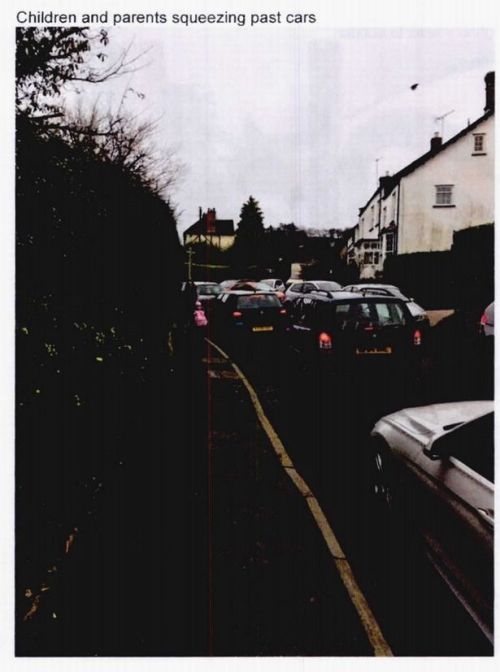
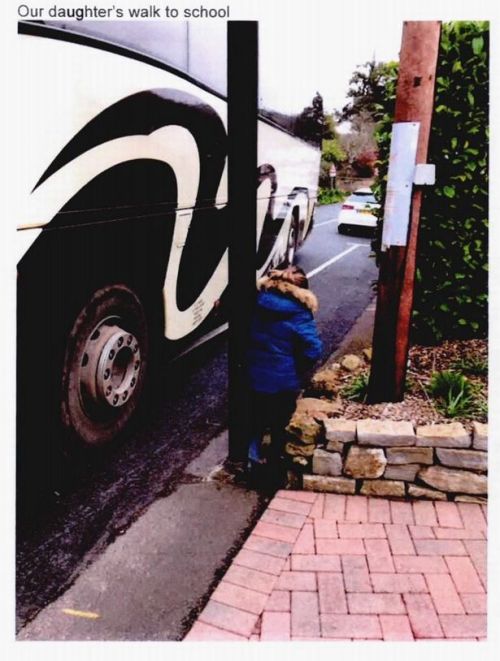
‘Say No to Sidford Business Park’ submission to planning inquiry

A picture is worth a thousand words. Words here:
https://www.devonlive.com/news/devon-news/objectors-outline-traffic-chaos-safety-2934450

Some of the pictures here:

Now Tories are not in control Swire decides Cranbrook is a development problem!

Today’s Midweek Herald. SO odd that Hugo has JUST discovered that Cranbrook development is a problem … still TiggerTories involved in planning will be glad to know he is NOW onside! Such a pity he wasn’t so vocal when Tories alone were in charge!

“Nuclear: Energy bills ‘used to subsidise submarines’ “

Not just energy bills in Devon … a large tranche of our money is being used to subsidise Hinkley C via our Local Enterprise Partnership.

“Energy bills in the UK are inflated partly because households are subsidising nuclear submarines, MPs have been told.

Experts think one government motive for backing civilian nuclear power is to cross-subsidise the defence industry.

They say nuclear power is so expensive that it should be scrapped in favour of much cheaper renewable energy.

Others argue that nuclear still plays a key role in keeping on the lights, so the military aspect is not significant.

But in evidence to MPs on the Business Select Committee, researchers from the University of Sussex said the government should be frank about the inter-dependence of the civilian nuclear programme and the nuclear defence industry.

Supply chain

Prof Andy Stirling from Sussex argues that one reason the government is willing to burden householders with the expense of nuclear energy is because it underpins the supply chain and skills base for firms such as Rolls Royce and Babcock that work on nuclear submarines.

He said: “It is clear that the costs of maintaining nuclear submarine capabilities are insupportable without parallel consumer-funded civil nuclear infrastructures. …

The government has declined to comment on the research, but a committee source told BBC News the researchers’ evidence appeared persuasive and well-researched.

The committee is expected to release the evidence in coming days as it prepares to discuss whether the UK really needs nuclear power for energy security.

The debate has taken on greater significance as the true costs of nuclear power have been revealed.

It was once forecast that nuclear energy would be too cheap to meter. But it’s clear now that bill-payers will give price support to the Hinkley Point C nuclear station at a cost of £92.50 per megawatt hour, compared with £55 for offshore wind.

Ministers expect that, before long, wind energy will operate without support.

Prof Stirling says the issue of nuclear inter-dependence is addressed openly in the US.

In 2017, the former US Energy Secretary Ernest Moniz (a nuclear scientist) said: “A strong domestic (nuclear) supply chain is needed to provide for Navy requirements. This has a very strong overlap with commercial nuclear energy.”

Prof Stirling told BBC News: “We need this sort of transparency in the UK.”

Catch-22

But the government faces a Catch-22 situation on this issue.

If it continues to decline to admit the inter-dependence of civil and military nuclear, it will stand accused of hiding a self-evident truth.
But if it accepts that decisions on nuclear power are influenced with half an eye on manufacturing jobs and nuclear deterrent, it will face resistance from consumer groups unwilling to cross-subsidise submarines.

The MPs’ hearing is timely, as the government will shortly publish an energy white paper outlining how the UK will supply electricity in a zero carbon economy.”

https://www.bbc.co.uk/news/science-environment-48509942

“Ministry repeats business rates blunder despite tightened oversight”

“The government has been left red-faced – and potentially £15m out of pocket – by repeating an error which last year cost it £36m and prompted major reforms to its administration of local government finance.

Last year, the government issued a correction to its top-ups and tariffs formula, after it led to a number of business rate pilots receiving more grant than they were entitled to.

Last week, Ministry of Housing, Communities and Local Government permanent secretary Melanie Dawes wrote to the National Audit Office (NAO) admitting that the incorrect formula was used again this year after officials failed to update it.

In her letter to Sir Amyas Morse, comptroller and auditor general at the NAO, Dawes said: “We are looking into the precise circumstances of how this happened.

“However, it originated from a failure to correct the guidance following last year’s error, rather than a new mistake in our computations.”

The error, which exaggerates the forecast benefit of participating in a pilot, appeared in the formula used to calculate section 31 grant payments to business rates pilots in the ministry’s NNDR1 guidance note.

Dawes admitted some local authorities – especially those participating in a pilot for the first time this year – may have based some element of their budget planning on the incorrect formula.

She said: “Given that the financial year has already started, and particularly since the error in the guidance repeats the same mistake as last year, the secretary of state has exceptionally decided to offer a goodwill payment to those councils who used the incorrect guidance for their financial planning in 2019-20, and where the consequences of doing so could be more difficult to mitigate.”

The cost of the payments is expected to be up to £15m, according to the permanent secretary’s letter.

Pilot authorities have been asked to contact the department by 21 June if they think they would qualify for a payment.

In her letter, Dawes said that the sums involved represent the equivalent of less than 0.2% of spending power for those affected.

Last year, the government admitted that the mistake led to 27 local authorities and the Greater London Authority being over-compensated by £36m in 2018/19.

At that time, former communities secretary Sajid Javid issued a direction to allow the department to ignore the rules and allow councils to keep the cash.

In a statement to Parliament, Javid said officials would “use the corrected methodology to calculate the Section 31 grant compensation due to authorities”.

However, the department omitted to update the original guidance note, and the error was repeated in this year’s NNDR1 form, which was issued to local authorities on 17 December.

The problem came to light when the correct figures for 2019/20 were issued to pilot local authorities in late April.

The repeat of the mistake is doubly embarrassing for the government because it carried out a thorough review of governance processes relating to business rates following the original incident. …”

Ministry repeats business rates blunder despite tightened oversight

Developer says traffic increase at potential Sidford business park would be “insignificant”

Owl says: if so few vehicles would use the business park – why build it!

https://www.devonlive.com/news/devon-news/objectors-outline-traffic-chaos-safety-2934450

How EDDC planners and Clinton Devon Estates justify the unjustifiable in Newton Poppleford

A dilemma for The Independent Group and their Tory supporters.

Summary: dangle a carrot (a doctor’s surgery), take away the carrot, put two houses in the place of the surgery/carrot, get planners to say it cannot now be refused even though the carrot has disappeared… although the carrot never actually existed anyway!

https://www.devonlive.com/news/devon-news/villagers-anger-understandable-over-broken-

BoJo: always check his promises …

“The proposal from Boris Johnson, the favourite in the Tory leadership contest, to ensure that every school in England gets at least £5,000 per pupil (see 10.51am) could amount to a spending increase of just £48.6m, or 0.1%, according to a report for Schools Week.”

… Schools Week analysis of provisional national funding formula data for next year found just 35 of 150 local authorities are due to be funded at less than £5,000 per pupil.

To increase per-pupil funding to £5,000 for the roughly 755,000 secondary pupils in those areas would cost just £48.6 million – the equivalent to just 0.1 per cent of the £43.5 billion the government will spend on schools in 2019-20.”

Johnson’s school funding pledge amounts to 0.1% increase

OK with you, Tory parents?

Young people: a home or a pension – take your pick

“Young people should be able to raid their pension pots early to help fund a deposit on their first home, a senior Government minister has argued.

Speaking this morning at think tank Policy Exchange, the secretary of State for housing James Brokenshire suggested that allowing savers to use pension savings as a deposit could help alleviate the financial barriers facing first-time buyers.

He said: ‘We should be looking at allowing an individual to use part of their pension pot as a deposit on a first-time home purchase.’

However, one pensions expert has labelled the idea as ‘bonkers’ and ‘dangerous’. …

… Tom Selby, senior analyst at AJ Bell, said: ‘This idea smacks of dangerous political short-termism.

‘While the housing market clearly has its problems, allowing people to raid their pensions is not a sensible answer.

‘Chronic undersaving for later life is one of the biggest challenges facing society today, so a proposal which encourages people to drain their pension pots risks making this problem even worse.’

Steven Cameron, pensions director at Aegon, added: ‘Saving for a house deposit and making provision for retirement are the two greatest financial challenges facing younger generations.

‘But the same money can’t be used twice and there’s a huge risk that offering early access to pensions to pay house deposits will be a far too tempting ‘bird in the hand’ offer.’ …”

https://www.dailymail.co.uk/money/mortgageshome/article-7098629/Plan-let-people-raid-pensions-home-deposit-branded-bonkers-experts.html?ito=1490

“Helsinki’s radical solution to homelessness”

“Finland is the only EU country where homelessness is falling. Its secret? Giving people homes as soon as they need them – unconditionally”

https://www.theguardian.com/cities/2019/jun/03/its-a-miracle-helsinkis-radical-solution-to-homelessness?

“The wealthy businessman who paid just £35.20 in tax”

“A wealthy businessman who lived a life of luxury paid just £35.20 income tax, a BBC investigation has discovered.

Frank Timis rented a £14,000-a-month penthouse and spent thousands dining in London’s finest restaurants.

But his personal tax return for 2017 shows he paid just £35.20 in tax, after claiming that he had hardly any income from his worldwide business empire.
Mr Timis’s lawyers say he has fully complied with all of his tax obligations.

Documents leaked to BBC Panorama and Africa Eye also reveal how Mr Timis managed to do this.

They show that in 2017, Mr Timis received payments totalling £670,000 from his offshore trust.

These were mainly payments called distributions, which should have been taxable. But shortly before he submitted his tax return, Mr Timis allegedly asked the trust to turn the distributions into untaxable loans.

A backdated loan agreement was created making the loans look legitimate.
John Christiansen, from the Tax Justice Network, said it looked like Mr Timis was dodging tax: “It all points to this being a manoeuvre to cheat the tax man. And, if that is the case, because it’s been done retrospectively, there seems to be prima facie evidence that this is tax fraud and it should be investigated.” …”

https://www.bbc.co.uk/news/business-48481320

A new way of planning: are no-overall-control councillors up for it?

” Participation not Consultation:

At Civic Voice we are aware of the growth agenda and the need for more homes to be built. Our members understand this too, yet all over England many of these members, who are knowledgeable and positive people, have had to engage in fighting Local Plans and planning proposals that they feel passionately are not right for their places.

It is time to change the way things are done and to bring communities genuinely to the heart of planning and place-making. ‘Participation not Consultation’ is about bringing people in at an early stage to develop the proposals through collaborative planning processes, also known as Charrettes.

The Charrette approach involves community members working alongside local authorities and developers to co-create design-led, visual plans and strategies. It is an inspirational and energising activity where the results of collaboration are seen immediately, with the knowledge that an individual’s input actually matters. It also has the potential to greatly increase the speed of the formal planning and design process.

Civic Voice has launched a campaign to bring these collaborative processes into mainstream planning so that, through shared working from an early stage, communities can help shape and support growth and development that is right for their place.”

Click to access Collaborative_planning_1.pdf

“Plan to hire thousands of foreign nurses for NHS is axed”

Owl sats: this one change means that all NHS plans (and even those for privatised health services) cannot work.

“A controversial target of hiring 5,000 foreign nurses a year for at least 15 years has been cut from a flagship plan to deal with the NHS’s staffing crisis, the Observer understands.

The move will frustrate health chiefs, who are desperate for a clear strategy to reduce NHS staffing pressures, which are expected to worsen.

There are also mounting concerns that new post-Brexit immigration rules could end up making the situation even worse unless the NHS is handed special treatment. The government’s long-awaited plan to tackle shortages included the ambition of recruiting 5,000 nurses a year until 2024 to help relieve short-term pressure. However, it is understood that while the latest version talks about the need for a significant increase in nurses from overseas, the specific figure has been removed.

Senior medics have complained about the government’s failure to solve the health service staffing shortage. Many point to the decision by George Osborne, as chancellor, to stop paying nursing students’ tuition fees and maintenance grants as a key factor in the nursing crisis.

Including the target for overseas would be politically difficult as the government remains committed to a big reduction in net migration. The plan is being drawn up by senior NHS executives led by Baroness Harding, the Conservative peer who chairs the regulator NHS Improvement.

Health experts are still unclear about how new post-Brexit immigration rules will affect the NHS. Proposals released last year that migrants would have to earn at least £30,000 a year would have barred more than 40% of migrant nurses joining the NHS in 2017-18, according to the Nuffield Trust thinktank.

It found that 72% of nurses, 70% of scientific, therapeutic and technical staff and 36% of ambulance staff earn less than the required £35,800 threshold for indefinite leave to remain. It said that while occupations with shortages are exempt from the thresholds, such exemptions are temporary.

Its analysis of the new rules warns: “The NHS is in a state of chronic staff shortage due to poor planning and insufficient training numbers over many years. There are 100,000 vacant posts in English trusts alone, although many will be filled by agency workers. The problem is concentrated in nursing and general practice.”

Mark Dayan, policy analyst at the Nuffield Trust thinktank, said: “Even if you take all the actions that we could identify in terms of boosting nurses in training, preventing them from leaving at the same rate, the nursing gap is not going to shrink at all in the next five years without international recruitment.

“We calculated that international recruitment of 5,000 nurses a year would be what it would take to halve the nursing gap, not even eliminate it, by 2023-24. If that doesn’t happen, the sort of shortages we have now will continue. That’s a patient safety issue and the ability of the NHS to move forward and get out of this crisis situation.”

Ditching the figure will place even more pressure on the need to train up British nurses. Dame Donna Kinnair, chief executive and general secretary of the Royal College of Nursing, said: “While it’s beneficial in the short-term, reliance on overseas nurses to plug gaps in England is clearly unsustainable.”

NHS Improvement said: “NHS Improvement and the Department of Health and Social Care are finalising the interim [workforce] plan which should be published shortly.”

https://www.theguardian.com/society/2019/jun/02/foreign-nurses-target-cut-from-nhs-staffing-plan?

High Street trading German-style

James Timpson, chief executive of Timpson Group:

“I have just got back from Germany, where I’ve been looking for ideas to bring back to Timpson shops in this country. Germany is a good source of inspiration because the weather there is similar to ours — it rains a lot. And rain is good for cobblers. The more it rains, the more shoes wear out. If we were to open in Dubai, I doubt we would do well.

The German retail scene is different from what I see when I travel around Britain, visiting more than 1,000 of our shops each year. There were hardly any vacant sites over there, no closing-down sales — and the high streets and shopping centres were busy. I’m sure the landlords are also doing well.

The Germans are just behind us in the amount they buy online, and they have many of the same brands as our high streets. The problem in Britain is that we have way too many shops — far more than in Germany.

My company rents 95% of its shops from landlords whose aim is to get us to pay the highest rent possible. My fantastic property team battle to find evidence to prove that rents should be lower. We were on the losing side of this cat-and-mouse game for years after I joined the business in 1995. In the past four years, however, the tide has turned.

In the 40 lease renewals we have completed in the past three months, the rents have come down by an average 9.6% — and that doesn’t take into account the generous rent-free periods we’ve also pocketed. There are some shops where the rents have come down by 80%, and more than a dozen where we pay no rent at all.

You will find many retailers complaining about high rents, but you will find even more complaining about high business rates.

When I became chief executive, in 2002, I started a discipline I still abide by today, and still hate doing just as much. I go through the profit-and-loss accounts for every one of our 2,100 shops every month, looking for errors and bad performance. While I’m no accountant, it’s amazing what you can learn.

The biggest change over this time has been how much the rates bill — the amount we pay local authorities as a property tax — has gone up (business rates brought in £25bn for the government in England last year).

The rule of thumb used to be that rates made up 30% of the rent. The figure is now 44% and growing. You can see why many retailers find this difficult to afford and difficult to understand. With online shopping growing, more out-of-town retail parks popping up and consumer sentiment weak, retailers are closing shops at an alarming rate.

However, I don’t think rates are the real problem — it’s rents.

Rates are based on the value of the property. If that goes up, the rates go up. It can take some time for the figure to reflect the true value of the building — and years to be adjusted to a fair level. The lag is the problem.

The Louis Vuitton shop on London’s Bond Street saw its annual rates bill soar from £3.9m to £8.5m a couple of years ago — up 118%. The nearby Chanel shop suffered a 135% increase. The rents rose so steeply because the value of the buildings they trade from had also gone up dramatically. These prized assets come with big bills.

Because of the lag in assessing what each property is worth, many in my chain have been overpaying rates for some years. In essence, Timpson shops in less glamorous locations have been subsidising global designer brands such as Chanel. While we never look for pity, we do like to play a fair game.

Now, on to rents. As they come down, we are seeing a drop in the rates we pay. Landlords are becoming more astute in recognising that it’s often better to take a reduced rent than to receive no rent at all and be forced to pick up an “empty rates” bill on top. This process takes years to unwind — up to 10. Most leases we sign run for 10 years, with a break clause at five. Only at these two points can we challenge the landlord to get the rent down. We still don’t win them all — the rent in Nantwich went up last week!

So retailers shouldn’t worry about the rates, which they can’t control, and concentrate instead on battling with landlords to get the lowest possible rent. This will, in time, lead to lower rates.

I’m proud of the amount we pay in rates (£8.6m last year, against a rent bill of £19.3m). This money pays for our customers to drive on roads to get to the shops, for our sick colleagues to go to hospital, and for schools to educate our children.

While we may not like paying too much, our rates go a long way to help the communities who shop with us. Other retailers should think the same way.”

Source:Sunday Times (pay wall)

“Austerity to blame for 130,000 ‘preventable’ UK deaths – report”

“More than 130,000 deaths in the UK since 2012 could have been prevented if improvements in public health policy had not stalled as a direct result of austerity cuts, according to a hard-hitting analysis to be published this week.

The study by the Institute for Public Policy Research (IPPR) thinktank finds that, after two decades in which preventable diseases were reduced as a result of spending on better education and prevention, there has been a seven-year “perfect storm” in which state provision has been pared back because of budget cuts, while harmful behaviours among people of all ages have increased.

Had progress been maintained at pre-2013 rates, around 131,000 lives could have been saved, the IPPR concludes. Despite promises made during the NHS’s 100th birthday celebrations last year to prioritise prevention, the UK is now only halfway up a table of OECD countries on its record for tackling preventable diseases.

The report is concerned with preventable diseases or disorders such as heart disease, lung cancer or liver problems, which can be caused by unhealthy lifestyles and habits, formed often at a young age. It finds evidence of disturbing reductions in physical activity in schools and chronic underfunding of health visitors.

The lead researcher and author, Dean Hochlaf, said: “We have seen progress in reducing preventable disease flatline since 2012. At the same time, local authorities have seen significant cuts to their public health budgets, which has severely impacted the capacity of preventative services.

“Social conditions for many have failed to improve since the economic crisis, creating a perfect storm that encourages harmful health behaviours. This health challenge will only continue to worsen.”

The IPPR calls for a “radical new prevention strategy” involving a renewed and increased commitment to the state’s role in preventing disease.

“No longer can we place the burden of responsibility exclusively upon the individual, while turning a blind eye to a social environment which makes healthy lifestyles difficult to achieve. This means investing in public health and ensuring the government takes a greater responsibility to create a healthy environment.”

On cuts to physical education in school, it says: “PE has been reduced in schools across England, with a 5% reduction at key stage 3 and a 21% reduction across key stage 4 reported between 2011 and 2017. This is despite the noted benefits of physical education – not simply on physical development, but also through promoting healthier lifestyles and helping to enhance people’s cognitive and social skills.”

The report adds: “Funding for physical education – supposedly coming from the sugar tax revenues – was reduced in 2017 from £415m to £100m, to part fund an increase in the core school budget. The lost funding should be replenished, potentially funded by an expansion of the sugar levy to other drinks and confectionery with high sugar content.”

Five compulsory health visits should be made to every child during their early life, with an additional visit six months before a child starts nursery school, the IPPR says. “These should be carried out by a trained professional. Health visitors should be provided with additional training to collect vital information on key health indicators and be prepared to offer support and guidance to encourage breastfeeding based on clinical evidence and ensuring that parents are vaccinating their children.”

Researchers found the system of health visits creaking under the strain.

“An estimated two in five (44%) of health visitors reported caseloads in excess of 400 children, well above the recommended level of 250 per visitor needed to deliver a safe service.” The report recommends another 5,100 training places for health visitors.

In a statement, the Local Government Association said the government urgently needed to reverse the £700m reduction in public health funding since 2015 and plug a £3.6bn gap in funding for adult social care by 2025.”

https://www.theguardian.com/politics/2019/jun/01/perfect-storm-austerity-behind-130000-deaths-uk-ippr-report?

Electoral Reform: time for big changes

Some interesting articles:

Punch and Judy politics:

Ending the Punch and Judy show: How to get a more cooperative politics

Make Parliament grow up:

Ending the Politics of Division – How We Can Build a New Democracy after Brexit

Ensure fairness for female politicians:

Euro elections show how Westminster’s first past the post holds back women