Public Survey – East Devon Culture Strategy

East Devon District Council is developing a ten year Culture Strategy.

docs.google.com 

Your thoughts and experiences are extremely important and will help ensure this will set out an ambitious, clear and deliverable vision unique to East Devon that is relevant to you.

What do we mean by ‘Culture’?

Music, theatre, museums, dance, crafting, libraries and every kind of visual and digital arts. It includes culture that you watch, or participate in, and culture made by professionals and amateurs as well as ‘everyday creativity’ that you might enjoy home.

Why is this important?

Culture brings joy, fun and wonder to our lives, whatever our age. Imagine a world without music, dancing, books or art! It brings communities together, contributes to jobs and prosperity, attracts visitors, and supports health and wellbeing. Culture and Heritage are the beating heart of our towns and cities.

What is the purpose of this Strategy?

The Strategy will set out a shared road map by and for East Devon to develop its cultural provision, capacity and ambition. East Devon District Council will be working closely with the creative and cultural sectors, tourism, economic development and other stakeholders to forge a stronger, sustainable future offer for East Devon.

There are just 12 questions, most of which are tick boxes – your time is appreciated.

You are not required to provide any personal information, except to leave, if you wish, your email at the end – in order to only receive future information about this project.

If you need a copy of this consultation on paper or in any other format, please call 01395 517569 or email jbuckley@eastdevon.gov.uk

Plymouth City Council Leader faces no confidence vote

The leader of Plymouth City Council will face a vote of no confidence in just over a week after Labour claimed he has “lost all authority.”

planetradio.co.uk

Cllr Nick Kelly (Conservative, Compton) has been leader of the council since the Conservative group won the largest number of seats in the May 2021 elections.

However, following several suspensions and resignations, Tories now have the same number of councillors as the Labour group.

Cllr Kelly failed to get his annual budget – which included a 1.74 per cent council tax increase – approved at the end of February after Labour brought an amendment to freeze council tax for the next financial year – except for the one per cent ring-fenced for adult social care.

The amendment was passed and Labour are now calling for a vote of no confidence which will take place at the final full council meeting of the financial year on Monday 21 March.

Plymouth Labour leader Cllr Tudor Evans OBE (Ham) said: “This was a complete failure on Cllr Kelly’s part.

“Not to get your own budget through is unprecedented and if Cllr Kelly had anything about him at all he would have resigned as leader there and then.

“As it is, he has lost all authority and we cannot allow the city to continue to be led by someone who does not have the confidence of the majority of the council.”

Tudor Evans (Labour Leader, Plymouth)

The latest development follows controversy surrounding several members of the Conservative group.

In March last year Cllr Mark Deacon (Conservative, Southway) was temporarily suspended by the party after claims he had mocked women’s safety concerns in the wake of the death of Sarah Everard.

Cllr Kelly was also suspended after being accused of “victim-blaming” in comments he made following the death of Plymouth teenager Bobbi-Anne McLeod.

The Labour groups says it has not had a reply to a letter they sent to Cllr Kelly about the comments he made.

Plymouth Conservatives also faced questions after it emerged emerged that two councillors, elected as Tories last year, are now living in Gloucestershire.

Plymouth City Council was eventually left with no party holding overall control when Cllr Dave Downie (Independent, Budshead) was suspended from the Conservative Party.

However, Cllr Downie remains cabinet member for education, skills and children and young people, enabling him to continue to receive a special responsibility allowance of £22,000 a year.

“It really is time for Cllr Kelly to go,” said Cllr Evans.

“There have been repeated suspensions, resignations and expulsions under Cllr Kelly’s tenure and infighting on a colossal scale.

“It certainly does not serve the residents of Plymouth to have a weak leader who is manifestly incapable of holding his own group together, let alone lead the city.”

As both Labour and the Conservatives have the same number of seats, the result of the no confidence vote is likely to depend on how the 11 independents on the council vote.

New industrial site for East Devon to result in ‘significant job creation’

A commercial property developer has announced a partnership to develop a new industrial site in East Devon, creating job opportunities.

Becca Gliddon3 eastdevonnews.co.uk

Developer Stoford has revealed a new site-wide agreement with the Church Commissioners for England that it says ‘will unlock future phases of development at a job-creating industrial scheme in East Devon’.

The development partners said the new build will result ‘in significant job creation locally’.

Stoford said the agreement will create an additional c.500,000 sq ft of industrial/logistics development at Exeter Logistics Park, in Clyst Honiton, with new units available on freehold or leasehold terms.

Joanna Loxton, head of strategic land for the Church Commissioners for England, said: “The latest agreement builds on our already strong partnership with Stoford and will see hundreds of thousands of square feet of high-quality employment space being delivered, resulting in significant job creation locally and supporting the area’s continued growth.

“We are particularly proud of Exeter Logistics Park’s sustainability credentials, which are a demonstration of our ESG commitments in action and will help support a ‘green recovery’ post-covid.”

Exeter Logistics Park is part of the second phase of a significant industrial scheme which was opened in 2017, following the grant of outline planning, secured by the Church Commissioners.

Part of the Exeter and East Devon Growth Point economic development zone east of the M5, near Exeter Airport, the scheme will total more than 650,000 sq ft upon completion and includes improvements to the local transport infrastructure.

A new access road and junction have been created off the B3174 London Road, in a bid to make the site ‘immediately available for further development’.

Stoford has already completed construction of a new 90,000 sq ft distribution unit and a 415-space electric vehicle charging park at Exeter Logistics Park, on behalf of an international retailer.

And works are also underway to build two additional buildings, including DHL’s 54,732 sq ft parcel distribution service centre and a 28,464 sq ft warehouse being developed speculatively.

The new developments have green roof spaces, a sustainable urban drainage system, provision of solar panels and an external trim trail with outdoor gym and fitness area.

They are expected to be completed later this month (March 2022) and ‘have the potential’ to create more than 100 new jobs, said Stoford.

Dan Gallagher, Stoford joint managing director, said: “Exeter Logistics Park is an extremely well-connected site with enormous potential.

“We are on track to deliver the two new buildings in Q1 this year and the new agreement will enable us to further develop the scheme to meet continued demand.

“This is a sustainable scheme that has already attracted high calibre, international occupiers. It has all of the attributes to become the South West’s leading distribution hub, south of Bristol.”

It is estimated that Exeter Logistics Park could contribute between £90 million – £105 million to the regional economy when fully complete.

Four new members elected to Honiton Town Council

Four new members have been elected to Honiton Town Council. 

Philippa Davies www.midweekherald.co.uk 

Lisa Beigan, Jenny Brown, Cathy Maunder and Robert Fowles join the St Michael’s Ward after a by-election on Thursday, March 10. 

Two other candidates, Andrew Pearsall and John Taylor, also stood but were not successful. 

The election was held after six councillors resigned in January in protest against a rise in council tax. Another councillor had stepped down for unrelated reasons, and there was already a vacant seat on the council. 

This left four vacancies in the St Michael’s Ward, and four in St Paul’s. 

Three candidates came forward for the St Paul’s seats and were elected unopposed: Joseph Furneaux-Gotch, Debra Hulin and Caroline Kolek. 

Yesterday’s election saw a turnout of 15.6 per cent.

Lisa Beigan – Credit: Lisa Beigan

Lisa Beigan, who runs the Honiton Wine Bar with her family, secured 574 votes.

Cathy Maunder – Credit: Cathy Maunder

Cathy Maunder, who runs a business supporting families of children and young adults with special needs, won 460.

Robert Fowles – Credit: Robert Fowles

Robert Fowles, who promised to use his experience of working in major international organisations for the benefit of Honiton, gained 431 votes.

Jenny Brown – Credit: Jenny Brown

Jenny Brown, former hotelier and East Devon District Councillor, won 426. 

The other two candidates, Andrew Pearsall and John Taylor, gained 266 and 174 votes respectively. 

Refugees from Ukraine – Priti Patel need to avoid another Windrush scandal

Debate between Yvette Cooper and Priti Patel (extract)

www.parallelparliament.co.uk

Yvette Cooper:

“…This has just been shameful. We are pushing vulnerable people from pillar to post in their hour of need. Week after week we have seen this happen. It is deeply wrong to leave people in this terrible state. Our country is better than this. If she cannot get this sorted out, frankly she should hand the job over to somebody else who can.”

Priti Patel:

“….Visa applications are important in this process. It is important that we are flexible in our response, and we have been. We are seeing that many Ukrainians do not have documentation. This country and all Governments, including probably a Government that the right hon. Lady once served in, will recognise that there was something known as the Windrush scandal and it is important that everyone who arrives in the UK has physical and digital records of their status here in the UK to ensure that they can access schemes—[Interruption.] Opposition Members may holler, but the process is vital in terms of verification, notification and permission to travel. It is important to give people status when they come to the United Kingdom, so that they have the right to work, the right to access benefits and digital verification of their status. That is absolutely right…..”

Johnson announces terms of reference for Covid inquiry

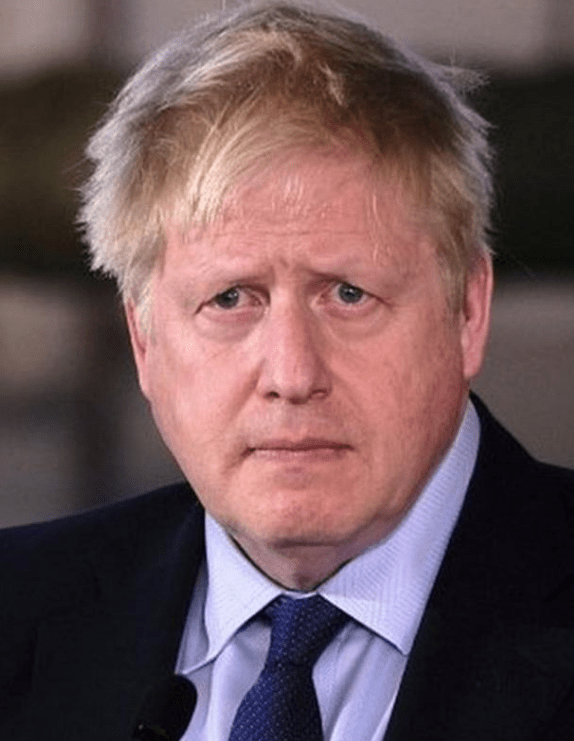
Boris Johnson has promised bereaved families will have their voices heard, as he published wide-ranging terms of reference for the public inquiry into the government’s handling of the Covid-19 pandemic.

Heather Stewart www.theguardian.com 

The prime minister bowed to pressure last year and announced the inquiry, which will be chaired by the retired judge Lady Hallett.

The government has now published its draft terms of reference. These cover the public health response, including how decisions were made, and a wide range of other issues from shielding to lockdowns, the procurement of personal protective equipment to the closure of schools.

Hallett will also examine the economic response, including the furlough scheme, and how the NHS and wider health and social care system responded.

Announcing the draft terms of reference, Johnson said: “The importance of the inquiry working to understand the experiences of those most affected by the pandemic – including bereaved families – as well as looking at any disparities evident in the impact of the pandemic and our response.”

Hallett will hold a four-week consultation on the draft terms of reference. They include the necessity to produce a “timely” report, although the very broad remit suggests merely taking evidence may be a very lengthy process.

The inquiry is asked to produce a “factual narrative account” of the response to the pandemic – and then to identify any lessons to be learned, “thereby to inform the UK’s preparations for future pandemics”.

In doing so, the inquiry will “listen to the experiences of bereaved families and others who have suffered hardship or loss as a result of the pandemic”. It will not “investigate individual cases of harm or death in detail”, and Hallett will not be asked to apportion blame for any failures she identifies.

The families of people who have died from Covid-19 have long campaigned for a full public inquiry. Johnson initially rejected those calls, before announcing one in May 2021. But he stipulated the inquiry would not begin its work until this year, when the government hoped the worst of the pandemic would be over.

At the time, Johnson said it would take a “frank and candid” look at how the pandemic was managed.

An investigation by the health and science select committees has already pointed to a number of failures in the government’s response, including the pace at which Covid testing was ramped up, and the decision to discharge patients from hospitals into care homes without testing.

The committees took dramatic testimony from Johnson’s former chief aide Dominic Cummings, who claimed the prime minister consistently failed to grasp the seriousness of the pandemic in its early stages.

Becky Kummer, a spokesperson for Covid-19 Bereaved Families for Justice, said: “The inquiry is a one-off and historic opportunity for the terrible suffering and loss of the past two years to be learned from, [and] to ensure these tragedies are not repeated in the future. The government finally publishing the draft terms of reference is a huge step forward, and we look forward to feeding into the consultation on them.

“Sadly, today’s announcement comes far too late. We will never know how many lives could have been saved had the government had a rapid review phase in summer 2020, as we called for at the time.”

Devolution deal could help transform our Devon communities

Not entirely clear what John Hart is proposing, a single Devon-wide unitary authority perhaps?

But it looks like the end of our ineffectual Local Enterprise Partnership “Heart of the South West”.

Transforming our Devon communities

John Hart, Leader Devon County Council from this week’s Exmouth Journal

The term’s become something of a cliche but the Government’s Levelling-Up agenda could bring welcome benefits for Devon.

I’ve written here before about Team Devon and the close working relationship the county council has developed with district, town and parish councils across Devon originally to deliver help and support for vulnerable people during the pandemic.

But we have also been cooperating on the county’s economic recovery from Covid and the housing crisis affecting us. We have also linked up with Plymouth and Torbay to propose a county-wide devolution deal to the Government that will deliver both economic and social benefits for local people.

You may have seen that earlier this year, ours was one of nine bids from around the country invited to start discussions with Ministers and civil servants and that’s now underway with the aim of achieving agreement by the autumn.

This isn’t necessarily about asking for more funding – although that would be nice – but about taking on extra powers and influence to improve the economic and social conditions for the communities we all serve. For example, bringing together the responsibilities for areas such as skills and training that are currently spread across many organisations and having more say in how Government resources are spent in our communities something that is all too often determined by bureaucrats 200 miles away in London. I firmly believe devolving funding and power to the most local level possible is absolutely the right thing to do.

As well as skills and training, we’ve identified affordable housing, health and social care, and transport and digital connectivity as our key priorities alongside clean, Green economic growth to help pay for these improvements.

I believe this is a groundbreaking opportunity for our councils – working as a strong team – to partner with the Government on a deal that’s right for all our communities and best for business.

If we get this right, we could really transform the future for people and communities right across Devon.

We want to drive up skills and training, create more opportunities for our young people to find good jobs locally and deliver more affordable homes that meet the needs of local people.

We have world-beating examples of enterprise and innovation across our county and we must build on them to deliver opportunities for businesses and individuals and so drive up prosperity for all our residents. As well as our partnership in Team Devon and with Plymouth and Torbay, we propose working in close collaboration with our colleagues in the health sector, in business, our universities and colleges, towns and parishes, housing associations and national parks. There is real strength in our unity, which the Government has recognised, and by working together we can achieve much more for the people of Devon. It’s about us coming together to have one voice and being a credible partner with national Government and others to be able to get investment and development, having more power and influence on funding and decision-making locally.

But let me make it very clear. This is not about more bureaucracy. We do not believe elected mayors work well outside of big cities and conurbations. Instead, we believe our existing councils have already demonstrated they can work together strategically and we want to develop and refine this whilst respecting the sovereignty of our individual authorities.

And, if you will allow a political leader to say this, it is also above politics. Our current Devolution Deal proposals are backed by Conservative, Labour, Liberal Democrat and non-aligned council leaders. What we all want is the best for Devon.

New Housing Minister: “Save Our Greenbelt”

Stuart Andrew, who took over the job of Housing Minister on 8 February, has been battling unpopular development in his own patch!

From his web site:

www.stuartandrew.org.uk

Leeds City Council are currently exploring sites that they will consider allocating for houses over the next 16 years, with 70,000 houses being planned. Although the consultation on the Site Allocations Plan has now closed, Stuart is continuing to keep up the pressure on the Council, saying:

It was great to see so many constituents get in touch with me, and contribute to the consultation. This has really caught the heart of the area. Many have joined me in saying that the site allocations plan, in their current plan, will have a terrible effect on the greenbelt across the area. We need to preserve these natural boundaries and our treasured landscape, which creates the unique identity of this area.

“I particularly want to praise neighbourhood groups like RGAG and the Aireborough Neighbourhood Development Forum, who have helped so many people understand what can be an incredibly complicated area of policy. I will continue to keep up the pressure to ensure that the independently appointed Government Inspector comes to an informed decision on whether the proposals need further review.

“The recent flooding across Yorkshire has highlighted the importance of getting planning right – we have seen areas that are proposed for development effectively turn into lakes, and I hope that the Council will heed the calls to reassess their plans.”

In order for Stuart to be able to communicate with you directly in order to update you on the Leeds City Council Site Allocations Plan, please sign up below. You can also read a copy of Stuart’s response to the Consultation via the attachment below.

 For more details on the Council’s proposals, visit the following website: http://www.leeds.gov.uk/council/Pages/Site-Allocations-Development-Plan-Document-(LDF).aspx

Covid spike leads to Cornwall’s main hospital halting visitors

The main NHS hospital in Cornwall has been forced to suspend almost all visiting after a “significant” spike in the number of patients with Covid.

Steven Morris www.theguardian.com 

Eighty-five patients at the Royal Cornwall hospital in Truro have tested positive for coronavirus, meaning that many wards and bays are unable to take in new admissions.

According to the latest figures published by Cornwall council, the seven-day case rate for Cornwall is 376 per 100,000 people, compared with 313 for England as a whole.

A spokesperson for Royal Cornwall Hospitals NHS Trust said: “Over the last few days there has been a significant increase in the number of people in hospital who are Covid-positive.

“Although the vast majority of the 85 people have been admitted for another reason, it means we have many wards or bays unable to take new admissions.”

The spokesperson said the hospital would consider visits in “exceptional circumstances”, such as to say goodbye to a patient who is dying. The current visiting arrangements for maternity, neonatal and paediatrics remain unchanged.

“We will be making every effort to resume visiting as soon as we can, but we must reduce the number of people coming into our hospitals to a minimum, and it is likely we will have to keep this restriction in place for at least the next seven days,” the spokesperson added.

The trust’s deputy medical director, Dr Gill Derrick, said: “Although all patients are tested on admission, we are finding many have been unknowingly carrying the virus.

“When a Covid test later in their admission proves positive, it means we must close a bay, or in some cases a whole ward, for at least 10 days. This has a big knock-on impact for patients waiting for admission and ultimately ambulances waiting to hand over their patients. All of our health and care services continue to be under significant pressure.”

Dr Ruth Goldstein, of Cornwall’s public health team, said Covid was still causing “havoc” with many people’s lives. “Everybody seems to know somebody who has got Covid. It absolutely hasn’t gone away,” she said.

Andrew George, a Lib Dem councillor who speaks for the party on health issues in Cornwall, said: “The Conservative government sets the tone and climate as well as the rules. The prime minister follows public opinion rather than science, chases headlines and has no respect for his own rules.

“Ministers and portfolio holders must stand aside and let public health officials set standards for social distancing, mask wearing and personal hygiene. Because it’s evident the public have lost respect for those who set the rules.”

UK Covid cases rising among those aged 55 and over

Covid cases appear to be rising in older people as increased socialising, waning immunity and a more transmissible version of the Omicron variant threaten to fuel a resurgence of the virus.

[Boris Johnson confirmed at the end of February that packs of lateral flow tests would no longer be available for free from 1 April for most of the British public, excluding the vulnerable and over-75s.]

Ian Sample www.theguardian.com 

Tests on nearly 100,000 swabs from homes across England reveal that, while infections have fallen overall since the January peak, one in 35 people tested positive between 8 February and 1 March, with cases either level or rising in those aged 55 and over.

Scientists on Imperial College’s React-1 study said the R value – the average number of people an infected person passes the virus to – remained below 1 for those aged 54 and under, meaning cases were in decline. But for those aged 55 and over, R stood at 1.04.

The suspected uptick has raised concerns as older people are more prone to severe Covid and have had more time for their immunity to wane, as many had their booster vaccines several months ago.

The findings come as the latest government figures showed a sharp 46% rise in new recorded UK cases week on week – to 346,059 over the past week – and a 12% rise in hospitalisations to 8,950.

The total number of confirmed UK Covid-19 patients in hospital on Tuesday, 8 March 2022 was 11,639.

Prof Paul Elliott, director of the React study, said the rise was probably driven by factors including the lifting of all Covid legal restrictions in England on 24 February, more mixing between age groups and waning protection from booster shots.

One idea experts are investigating is whether hospitalisation rates are being driven by “unshielding”, where people who have been extremely careful for two years have emerged into a world where infections are still rife.

Another driver is thought to be the BA.2 form of Omicron, a relative of the original BA.1. While BA.2 does not seem to evade immunity any more than BA.1 or cause more severe disease, it spreads faster and increases R by 0.4 compared with BA.1, the Imperial researchers found. “From what we see, BA.2 is more transmissible and may prolong the Omicron wave of the pandemic,” Elliott said. “It’s taking over, so that could explain higher infection rates.”

Since the first BA.2 cases were discovered in December, it has steadily gained ground and now accounts for about half of all Omicron cases in England, with levels currently highest in London. It is unclear how large a wave of infections and hospitalisations BA.2 could drive given widespread immunity from vaccines and past Covid infections.

A further push on vaccinations is due in early April when over-75s and the clinically vulnerable will be offered a fourth shot. “Additional doses of vaccine are almost certainly going to be necessary,” said Prof Peter Openshaw, a member of the government’s New and Emerging Respiratory Virus Threats Advisory Group (Nervtag).

Mark Woolhouse, professor of infectious disease epidemiology at the University of Edinburgh, said it was “impossible to make a sensible prediction” about the size of any BA.2 wave but the situation needed close monitoring. “The worry is that it’s hard to see anything happening in the next few weeks that will reverse the growth of BA.2 unless, that is, people decide on their own account to step up precautions.”

Danny Altmann, professor of immunology at Imperial College, who is not on the React-1 study, said the recent rise was foreseeable. “We’ll see a great deal more of this, along the lines of recent resurgent spikes in Scotland and Hong Kong,” he said. “Caseloads were by no means low or under control as we came out of all mitigations and, when you add in waning immunity and the enhanced transmissibility of BA.2, it looks like we are in for a difficult period, especially for the elderly.”

He said a lack of measures such as mask-wearing and testing potentially left only the option of “a wider push for fourth shots, beyond the over-75s” but cautioned that very regular boosters may not be sustainable long-term.

Openshaw said the rise in cases and hospitalisations should remind people the pandemic is not over. “I think it’s a shame that the message that seems to have got out to the population is that it’s all over and we don’t need to be cautious any more,” he said.

Tory peer attended Cop26 summit for Russia, UN list shows

A Conservative peer attended Cop26 in Glasgow as part of Russia’s group of participants at the UN climate summit, the Guardian can reveal.

Jasper Jolly www.theguardian.com

Greg Barker, a former energy minister when David Cameron was prime minister, attended the talks as part of the party of the Russian Federation, according to a list published by the UN.

Lord Barker resigned on Monday as chair of the Russian mining company En+ Group. The company is part-owned by the Russian billionaire Oleg Deripaska, who was sanctioned by the US in 2018. En+ confirmed that Barker attended with a pass from Russia’s allocation.

His resignation followed intense scrutiny of his relationship with the company, including by senior Tory party colleagues, amid Russia’s invasion of Ukraine. Share instruments in En+, which is incorporated in Russia, were suspended from trading on the London Stock Exchange on Thursday.

The presence of Barker on the list emerged in analysis of lobbying at the summit by three non-government organisations – Global Witness, Corporate Accountability and Corporate Europe Observatory.

Barker was ennobled in 2015 by Cameron, after serving for four years as minister of state for climate change. Barker had served as Conservative MP for Bexhill and Battle. However, he is not thought to have attended the House of Lords since 2019.

A source familiar with the matter said Barker did not participate in, or attend, any official Russian government functions, meetings or receive any briefings at the climate summit.

Anneliese Dodds, the Labour party chair, said: “The Conservatives have serious questions to answer about why it seems one of their peers was allowed to attend Cop26 as part of Russia’s party.”

Dodds added that “urgent action” was required from the Conservatives to remove people from the political party who have links to Vladimir Putin’s regime.

Barker had been heavily criticised by Conservative party colleagues and other political parties for his prior involvement with En+. The former Tory minister David Davis said: “As a matter of law, people like him should be disqualified from holding office in those companies.”

Murray Worthy, a gas campaign leader at Global Witness, said: “Lord Barker has serious questions to answer as to why he was registered to the world’s most important climate talks as part of the official Russian delegation.

“As do the Conservative party, whose government was entrusted to host Cop26 and made a huge fanfare about its importance in reaching the necessary climate action to stop the heating of our planet.”

While Barker will step down as chair of the listed company, En+ said on Monday that it was considering carving out a large part of the aluminium business, which included the international business of Rusal, a part-owned subsidiary.

The new company would be owned by management and non-Russian investors, and potentially led by Barker, according to a report by Bloomberg News that was referenced by EN+ in its stock market statement.

En+, which mainly produces aluminium but also makes significant profits from coal and other commodities, escaped direct sanctions by the US in 2019 through a deal with the Office of Foreign Assets Control (Ofac) in which Deripaska’s stake was reduced to below 45%, and his voting rights were reduced to 35%.

Barker received £6m in pay and bonuses in part as a reward for orchestrating the deal.

Deripaska has sought to have the sanctions removed, and has consistently argued that he should not have been designated. A spokesperson for Deripaska said the US sanctions relied on “baseless accusations” and “false claims”.

Sign up to the daily Business Today email or follow Guardian Business on Twitter at @BusinessDesk

Deripaska has in recent days expressed opposition to war in Ukraine. According to Reuters, Deripaska said: “We need peace as soon as possible. The whole world will be different after these events and Russia will be different.”

A source close to Barker said: “The heartbreaking situation in Ukraine and the terrible consequences that flow from it are bad enough without now trying to play politics with the climate agenda.

“Lord Barker has a long history of climate activism, and while he stands by his decision to leave En+, he remains very proud of the progress he was able to achieve in helping one of the world’s largest producers of low-carbon aluminium and hydropower lead the way into the low-carbon economy. Pretending that all Russians are bad is, frankly, appalling.”

Landowner facing legal action over ‘decimation’ of Herefordshire river

A landowner is facing legal action for what environmental regulators say is the decimation of a protected river.

Sandra Laville www.theguardian.com 

Natural England and the Environment Agency (EA) say the charges against the landowner include causing damage to a site of special scientific interest (SSSI), carrying out clearance and reprofiling of the riverbank which was likely to cause damage to or endanger the stability of the river and allowing silt to discharge into the river.

The agencies investigated the actions at the River Lugg near Kingsland, Herefordshire, after complaints that clearance was taking place along the bank in December 2020.

The agencies were alerted after reports of activities including dredging, illegal felling of trees and profiling of the riverbanks over nearly a mile (1.5km) of the river.

The officials, along with the police, issued a stop notice to the landowner to halt the works, which the local wildlife trust said had devastated the river and would have dire consequences for wildlife and water quality.

After a long investigation, the EA and Natural England said on Wednesday they had begun legal action. The charges also relate to further works which are alleged to have been carried out by the landowner in December 2021.

Oliver Harmar, the chief operating officer at Natural England, said: The decimation of this section of the River Lugg has been devastating to the local environment and to local people, destroying the habitats of iconic wildlife such as otters, kingfisher and salmon. It was heartbreaking to see this beautiful riverside illegally damaged.”

The area is protected as an SSSI owing to its importance for nature. Consent is required before any works are carried out within an SSSI, which had not been granted, the agencies said.

Greens call for buses to be run by councils

Green councillors in Exeter and East Devon want buses to come under the control of the local councils.

Radio Exe News www.radioexe.co.uk 

It would be similar to the system that operated until privatisation of bus services in 1986 before which local authorities decided which routes should run and what fares should be.

The two Greens on the city council are to meet Stagecoach Southwest’s managing director Mike Watson this week to discuss what they call “the crisis facing bus services.”

Stagecoach may not necessarily disagree that the service is facing difficulties. In January, Mr Watson to a meeting of the Exeter highways and traffic orders committee (HATOC), that inflation, pay rises, grants being cut, and the number of people using buses being down 30 per cent on pre-pandemic level, are causing pressures.

As a result, service levels “will almost certainly reduce,” he said, but they would try to avoid withdrawing entire routes and that any reductions are done “sensitively” in consultation with the county council.

The Greens think that Stagecoach’s decision are driven by profit and that councillors would be better running the service.

Councillor Amy Sparling said: “Buses are now scheduled to run every half hour but even at this massively reduced frequency often don’t turn up and the app isn’t reliable.  

“So many people rely on bus services to get to work, shops, hospitals, business parks, schools and colleges. Severe service cuts impact particularly on the old and the young and those who cannot or choose not to own cars.”

“Greens are calling for a London-style system where fares, ticketing, routes and timetables are managed by local authorities instead of private operators.”

Green councillor, Diana Moore said: “Private bus operators are driven by profit. This has put the interests of shareholders above passengers and resulted in poor pay and working conditions for drivers and an emphasis on the most profitable routes.” 

  “As Greens we want to see local authorities have the power to ensure bus services reflect all the principles of a public service, including setting routes, frequencies and fares and tickets that work across all buses and trains. 

Green councillor in East Devon, Henry Gent, added:  “In East Devon many have been left stranded. We must see sufficient levels of investment to end transport poverty and ensure estates and villages have at least an hourly bus service that will increase social mobility and equality.”

Stagecoach had been planning a merger with coach operator National Express, but that deal was being looked at by the Competition and Mergers Authority. Now German firm DWS Infrastructure is expected to buy Stagecoach.

Devon covid goes up

Covid cases have risen in some parts of Devon, following the recent end of national restrictions.

Ollie Heptinstall, local democracy reporter www.radioexe.co.uk

Figures for the week to last Thursday [3 March] show the rate in Torbay rose by almost a third, with smaller increases in Plymouth and the Devon County Council area.

All are lower than the 39 per cent national increase in cases last week, but the county remains steadfastly above the UK covid rate. The national average is 388 cases per 100,000 people, compared to 527 in Torbay, 440 in Plymouth and 435 in the county council area.

At district level, the biggest increases were in Torridge and North Devon – both with over 15 per cent more cases. Elsewhere the picture is largely stable, with small fluctuations up or down.

Despite the increase, Torridge remains the least prevalent area for the virus in Devon at 309 cases per 100,000. East Devon still has the highest rate at 519.

The rise in cases comes after all covid restrictions ended in England at the end of February, including the legal requirement to self-isolate with the virus. Free mass testing will stop on Friday 1 April.

However, health bosses in Devon are still encouraging people who have covid to isolate for five days, and then wait until they have two negative tests. This guidance will be reviewed soon.

HOSPITALISATIONS

The most recent government data from Tuesday 1 March, shows 172 patients with covid are in Devon’s hospitals, an increase of 22 from a week ago. The biggest number – 80 – are being treated in Plymouth.

Elsewhere, 60 patients were at the RD&E in Exeter, 19 in Torbay, nine in North Devon and four in Devon Partnership mental health trust sites. Of the total, only one person was in intensive care with covid.

DEATHS

Four more people died in the county within 28 days of testing positive for covid in the latest complete weekly period (up to Wednesday 2 March). Three were in the Devon County Council area and one in Plymouth.

A total of 1,637 people in Devon (including Plymouth and Torbay) have died within 28 days of a positive test since the pandemic began (as of 6 March).

VACCINATIONS

The number of people aged over 12 who have received their booster (third) covid vaccination is 71 per cent in the Devon County Council area, 66 per cent in Torbay and 61 per cent in Plymouth.

Take-up for at least one dose of a vaccine is 89 per cent in the Devon County Council area, 86 per cent in Torbay and 85 per cent in Plymouth.

The proportion of people who have had two jabs is 84 per cent in Devon, 82 per cent in Torbay and 80 per cent in Plymouth.

The national rates are 92, 85 and 67 per cent respectively.

Dozens of NHS surgeries are owned in off-shore tax havens raising backdoor privatisation fears

Dozens of GP surgeries and medical centres caring for more than a million patients are in the hands of off-shore companies, it can be revealed, amid concerns NHS cash is disappearing into tax havens.

By Dean Kirby, Cahal Milmo inews.co.uk

Analysis by i of more than 90,000 properties owned by overseas companies – from car parks to luxury homes – shows that the titles on nearly 100 primary care buildings in England are held by private firms registered in Jersey, Guernsey and the Isle of Man.

The property title of one surgery in Kent is even registered to a firm 4,000 miles away in the British Virgin Islands.

The discovery has prompted fears of NHS privatisation “by the back door” and questions about whether health bosses could be paying millions of pounds in rent each year to firms with little or no return in tax that could be ploughed back into patient services.

Documents show one firm based in Guernsey was making £40m profit from its rent roll in 2017 – almost all of it from payments by the NHS and Irish doctors.

Labour MP Margaret Greenwood, a former founder member of campaign group Defend Our NHS, said: “It’s a matter of real concern that so many GP surgeries and high street medical centres are owned by off-shore companies.

“Clearly, decisions about privatisation of such centres will be based on the profit motive, rather than a commitment to public services and the values of the NHS.”

Dr Nick Mann, a GP and a member of Keep Our NHS Public, said private sector acquisitions of the NHS’s capital assets form part of a “broader agenda of privatisation” of health service assets and services.

He said: “Whole hospitals and GP practices have been built or taken over by private sector organisations under PFI and other ‘leaseback’ arrangements.”

Earlier this month, a landmark judicial review took place into the decision to approve a takeover of GP practices in London by US health insurance giant Centene Corporation after groups including Doctors in Unite raised tens of thousands of pounds to fund the case from public donations amid claims of “privatisation by stealth”.

One firm registered in Jersey has 20 GP surgeries and medical centres in their portfolio of property titles, according to the Land Registry database seen by i, in areas as diverse as Sheffield, Littlehampton, Maidstone, Knottingley and Oldham. The title on at least five surgeries are held by a firm registered in St Peter Port, Guernsey. Another 11, including two in Doncaster and Hartlepool, are held by a firm registered in an office near the waterfront in Jersey’s St Helier.

The Department for Health and Social Care says most GP practices are not owned by the NHS but are independent partnerships and while contracts to provide services may differ, there is no difference in eligibility criteria between companies registered in the UK and those registered overseas.

Dr Dean Eggitt, the BMA England GP committee’s executive lead for premises, said the cost, bureaucracy and risk associated with practice premises are reasons that discourage new family doctors from becoming partners.

He said it is vital that private landlords are held to the same standards as GPs who own their own buildings and who are expected to deliver value for money.

“If businesses who own practice buildings are based in overseas territories where they pay no tax, the Treasury is missing out on vital income that should be used to support our public services – including funding for the NHS at a time of crisis and to improve GP premises that have been continually starved of much-needed investment.”

South Hams grant scheme to help locals get on housing ladder

A scheme to help people get on the housing ladder is being launched in Devon.

www.bbc.co.uk

Dartmouth

The council had previously said it knew people were being “priced out” of the district, including in Dartmouth

Up to £5,000 will be given to anyone in the South Hams who is currently renting a social housing property, to help them purchase a shared ownership home.

South Hams District Council said the grant scheme would help more people step on the housing ladder and free up more homes to rent.

The Step On scheme will launch on 1 April.

The council said it “looked beyond traditional solutions to pull the district out of the current housing crisis”.

The authority declared a housing crisis in September as house prices “rocketed” and the number of rental properties hit “rock bottom”, it said.

‘People are struggling’

The authority said it believed the grant scheme was the first of its kind in the UK.

The maximum £5,000 funding makes 100% of the deposit required to purchase up to 30% of a shared ownership home.

The council said: “There are currently over 170 new shared ownership homes of various sizes in the pipeline for communities across the South Hams.”

Councillor Judy Pearce, leader of the authority, said: “We all know that steep house prices and a shortage of homes for rent means many local people are struggling to find a home.

“By providing up to £5,000, which will not need to be paid back, we can give local residents a helping hand to step on the housing ladder.

“This in turn, would allow their homes to become available for relet to a household on the housing register, helping us to help even more people.”

To be eligible for a shared ownership property, the annual household income can be no more than £80,000.

Zelenskiy invokes Churchill as he calls on UK to do more to help Ukraine

The president of Ukraine echoed Winston Churchill and invoked the fight against Nazism as he made a direct plea to Britain to do more to help his country repel the Russian invasion.

Peter Walker www.theguardian.com 

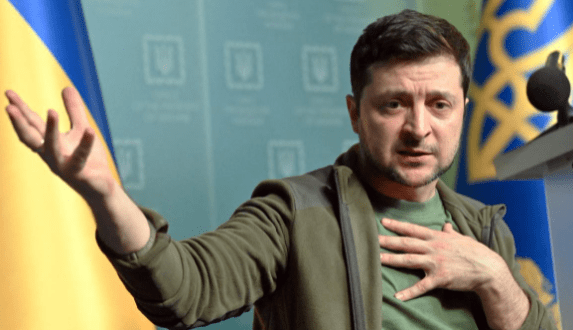
In an unprecedented and emotional speech broadcast live to the House of Commons, Volodymyr Zelenskiy channelled Churchill when he told a packed chamber: “We will continue fighting for our land, whatever the cost. We will fight in the forests, the fields, the shores and in the streets.”

Ukraine “will not lose” to Russia, he vowed. Zelenskiy, who received long ovations from MPs before and after his speech, also cited Shakespeare to describe the plight of his country under Russian invasion.

“The question for us now is to be or not to be,” he said, according to a translation of his speech, which was delivered in Ukrainian and broadcast live from Kyiv. “Oh no, this Shakespearean question. For 13 days this question could have been asked but now I can give you a definitive answer. It’s definitely yes, to be.

“And I would like to remind you the words that the United Kingdom has already heard, which are important again. We will not give up and we will not lose.”

Zelenskiy, unshaven and dressed in a dark T-shirt, delivered his speech sitting next to a Ukrainian flag. His echoes of Churchill, the second world war leader about whom Boris Johnson has written a book, will be seen as a direct appeal to the UK prime minister and his party.

Zelenskiy told MPs that after nearly two weeks of war, during which time hundreds of Ukrainian civilians have been killed, resolve remained strong. “Just the same way you once didn’t want to lose your country when the Nazis started to fight your country and you had to fight for Britain. Thirteen days of this struggle … at four o’clock in the morning we were attacked by cruise missiles.”

The speech came immediately after the UK announced it was phasing out the import of Russian oil and oil products by the end of the year. Zelenskiy reiterated calls for more UK support, including repeating a plea for a no-fly zone, which Nato countries have declined to impose over fears it could trigger another world war.

“We are thankful for this help and I am grateful to you Boris,” he said, addressing the prime minister by name. “Please increase the pressure of sanctions against this country [Russia] and please recognise this country as a terrorist country. Please make sure that our Ukrainian skies are safe. Please make sure that you do what needs to be done and what is stipulated by the greatness of your country.”

The speech was heard in silence, beyond two screens playing Zelenskiy’s speech and the muffled background soundtrack of a simultaneous English translation on headsets given to MPs for the occasion.

A number of MPs tweeted photos of the packed chamber, a practice – like applause – that is not normally permitted.

The former health secretary Jeremy Hunt said he had felt “privileged” to listen, saying: “In history the right things don’t happen automatically – brave people must fight for them.”

Responding to Zelenskiy, Johnson hailed a leader “standing firm for democracy and freedom – in his righteous defiance I believe he has moved the hearts of everybody in this house”.

“In a great European capital now within range of Russian guns, President Volodymyr Zelenskiy is standing firm for democracy and for freedom,” the prime minister said.

Saying he would “employ every method” to squeeze Russia with sanctions, Johnson said the UK would continue to supply weapons to Ukraine.

“At this moment, ordinary Ukrainians are defending their homes and their families against a brutal assault, and they are by their actions inspiring millions with their courage and their devotion,” he said.

Because of Commons procedures, the Speaker, Lindsay Hoyle, halted the formal business of the day for Zelenskiy’s speech, and Johnson and other party leaders responded with points of order.

Responding for Labour, Keir Starmer said the Ukrainian leader “has prompted a world into action, where too often we have let Putin have his way”, adding: “He has inspired the Ukrainian nation to resist and frustrated the Russian war machine. He has shown his strength and we must show him – and the Ukrainian people – our commitment and support.”

Economic Crime (Transparency and Enforcement) Bill: Parish and Jupp vote against all amendments

“Corruption threatens our national security, economic prosperity and international reputation. It is often the root cause of international instability and conflict.” So ran the opening lines to the 2014 Government’s “UK Anti-Corruption Plan”.

Since then various promises have been made that legislation would be introduced by David Cameron and Boris Johnson, but they have been put on the back burner (we can all speculate why this might be).

Worse, on January 26 the Guardian revealed that Boris Johnson intended to kill off the bill, as revealed by Lord Agnew’s resignation:

“The government was forced to deny claims that it had scrapped a crucial economic crime bill on Wednesday, as MPs from across the house rounded on ministers for failing to tackle the UK capital’s “Londongrad” reputation as a money-laundering hub used by Russian oligarchs, criminals and kleptocrats.

The scathing comments in the House of Commons follow the shock resignation of junior minster Lord Agnew on Monday, who revealed in his departing letter that the government had only last week made a “foolish” decision to kill off the bill during the next parliamentary year.”

It must be to the everlasting shame of the Conservative Party that it has taken this unbearably tragic invasion of Ukraine to get them to finally acknowledge that “Corruption threatens our national security, economic prosperity and international reputation. It is often the root cause of international instability and conflict.”

In other words to wake up and look at who they are sharing their beds with.

On Monday the bill was voted through the Commons in a single day.

Amongst other things the bill allows persons of interest a six month “grace period” to register ownership of luxury properties in the UK. The original, hastily prepared bill, proposed an 18 month period.

Because this reduction to six months is now already an amendment to the tabled bill, no further amendment to slash this further was allowed by the speaker. Many think 28 days is more than sufficient for registering legitimate ownership. Leave it too long and all the property will likely have been sold and the proceeds sent to a tax haven. What Keir Starmer has described as a “get out of jail free card”.

Despite that, our two local MPs, along with most, but not all, of their Tory chums voted against three other amendments, aimed at toughening up the bill and ensuring enforcement agencies are adequately funded. 

Owl singles out the first and third of these amendments because they are reasonably self explanatory.

So here is what Neil Parish and Simon Jupp voted against:

New Clause 2 – Report on funding of enforcement agencies (Dame Margaret Hodge)

“Within 28 days of this Act being passed, the Secretary of State must publish and lay before Parliament a report on the funding of enforcement agencies in connection with the provisions of Part 2 of this Act.”—(Dame Margaret Hodge.)

This new clause would require the Secretary of State to publish and lay before Parliament a report on the funding of enforcement agencies in connection with the reforms to unexplained wealth orders, as provided for in Part 2 of the Bill.

Question put, That the clause be added to the Bill. Voted no (division #206; result was 230 aye, 303 no)

New Clause 29 – Asset freezing in respect of individuals considered for sanctions (Mr David Davis)

“(1) Not later than 28 days from when Part 1 of this Act comes into force, the Secretary of State must publish draft legislation for the purpose of making further reforms to Companies House, including to support the effective functioning of the register of overseas entities.

(2) The draft legislation must include—

(a) new powers for the registrar to aid the verification of foreign entities applying for registration as set out in section 4 of this Act;

(b) new powers for the registrar to better share data with enforcement agencies; and

(c) reforms that will improve the quality and veracity of the information on the register.”—(Jonathan Reynolds.)

This new clause would compel the Secretary of State to publish draft legislation on reforms to Companies House, including reforms that would support the operation of the Act.

Brought up.

Question put, That the clause be added to the Bill.

“(1) The Secretary of State may by notice publish the name of a person being considered as a subject for sanctions.

(2) A person in respect of whom a notice has been published under subsection (1) is immediately subject to the provisions of this section.

(3) A person in respect of whom a notice has been published under subsection (1) is prohibited from—

(a) selling any assets they own or have an interest in,

(b) moving any assets they own or have an interest in out of the United Kingdom, or

(c) moving any of their funds out of the United Kingdom.

(4) ‘Assets’ in subsection (3)(a) or (b) includes (but is not limited to)—

(a) land;

(b) houses, flats or other private accommodation;

(c) commercial, industrial, agricultural and other buildings, premises or property;

(d) businesses;

(e) personal possessions, works of art, jewellery or collectibles with an individual value of more than £500;

(f) motor vehicles;

(g) yachts or boats; and

(h) aircraft.

(5) ‘Funds’ in subsection (3)(c) means financial assets and economic benefits of any kind, including (but not limited to)—

(a) gold, cash, cheques, claims on money, drafts, money orders and other payment instruments;

(b) deposits with relevant institutions or other persons, balances on accounts, debts and debt obligations;

(c) publicly and privately traded securities and debt instruments, including stocks and shares, certificates representing securities, bonds, notes, warrants, debentures and derivative products;

(d) interest, dividends or other income on or value accruing from or generated by assets;

(e) credit, rights of set-off, guarantees, performance bonds or other financial commitments;

(f) (letters of credit, bills of lading, bills of sale; and

(g) documents providing evidence of an interest in funds or financial resources.

(6) A person who breaches any prohibition under this section commits an offence.

(7) A person who engages in an activity knowing or intending that it will enable or facilitate the commission by another person of an offence under paragraph (6) commits an offence.

(8) A person guilty of an offence under subsection (6) is liable—

(a) on conviction on indictment, to imprisonment for a term not exceeding two years or to a fine or to both;

(b) on summary conviction—

(i) to imprisonment for a term not exceeding six months; or

(ii) to a fine which in Scotland or Northern Ireland may not exceed the statutory maximum,

or to both.

(9) A person guilty of an offence under subsection (7) is liable on summary conviction—

(a) to imprisonment for a term not exceeding six months; or

(b) to a fine which in Scotland or Northern Ireland may not exceed level 5 on the standard scale,

or to both.”—(Mr David Davis.)

This new clause would prevent individuals whom the Secretary of State has named as being considered as a subject for sanctions from selling their assets or moving funds or assets out of the UK.

Brought up.

Question put, That the clause be added to the Bill.

The Committee proceeded to a Division. Voted no (division #208; result was 234 aye, 297 no)

Ukraine: UK must give emergency visas to refugees, says Labour

The UK government must set up emergency visa offices now and conduct on-the-spot security checks for refugees fleeing the war in Ukraine, the shadow home secretary has said.

By Mary O’Connor & Joseph Lee www.bbc.co.uk

Watch: Yvette Cooper calls for emergency visa centres for Ukrainians over UK’s “chaotic” response

Yvette Cooper said most refugees were “still being held up by Home Office bureaucracy or being turned away”.

Britain has granted family visas to about 500 Ukrainian refugees so far, a Home Office minister said.

Kevin Foster said 10,000 applications to enter the UK had been submitted.

The Home Office has been criticised over the way it has handled issuing visas for Ukrainians who want to join relatives in the UK.

Unlike the European Union – which is allowing Ukrainians three-year residency without a visa – the UK has retained controls on entry.

There are two visa routes for those fleeing Russia’s assault on Ukraine – one for people with family in the UK, and another, which Mr Foster said is being set up “at pace”, requiring a British sponsor.

But MPs described reports of chaotic scenes at some visa centres, with Labour MP Clive Efford saying people were being forced to wait outside in freezing temperatures, while Tory MP Tracy Crouch said the centre in Rzeszow, Poland, was not offering appointments until the end of April.

Calais authorities said almost 300 Ukrainian refugees have been turned back at the French port by the UK Border Force, while hundreds were stuck trying to complete paperwork for visas.

View original tweet on Twitter

Responding to an urgent question in the House of Commons, Mr Foster told MPs that a new visa processing centre would be established in the northern French city of Lille and that officials were looking at setting up transport from Calais to the new offices.

He insisted ministers would “not take chances with the security of this country and our people” – citing the Salisbury Novichok attack in 2018 – where Russian nationals used a nerve agent in an attempt to murder the former Russian double agent Sergei Skripal and his daughter Yulia.

“A crucial part of the application process is providing biometrics so we can be sure applicants are who they say they are”, he said, before claiming officials had seen people at Calais “with false documents claiming to be Ukrainian”.

Criticising the absence of Home Secretary Priti Patel in the Commons, Labour’s Yvette Cooper called for visa centres to be established at all major travel points, on-the-spot security checks and for Ukrainians to be given emergency visas.

“The government should not be continuing to change this in a chaotic way, rather than opening the system properly,” she added.

Ms Cooper criticised the apparent lack of clarity over the locations and operation of visa centres.

She said: “Yesterday the home secretary told the House twice that a visa centre en route to Calais has now been set up but it still doesn’t exist.

“The foreign secretary just said it might be in Lille – nearly 72 miles from Calais.

“The Home Office said this morning that no decision had been taken. Well, which is it? Has it? Where is it? Can people get there yet?”

A string of Conservative MPs have joined opposition politicians in demanding further and faster action from the government in helping Ukrainian refugees enter the UK.

Conservative Mark Harper, a former immigration minister, said even if security checks were needed, the government needed to “grip the pace of this” and called for a minister to set out the details of the humanitarian sponsorship route within days – not weeks or months.

Another former minister, Andrew Murrison, questioned why the Irish Republic, which is in the Common Travel Area with the UK, has been able to accept 2,000 refugees already while Britain is “nowhere even close to that”.

Tory MP Alec Shelbrooke said the speed of response was a “disgrace” during “a war of the likes that has not been seen for 80 years in Europe”.

Former Home Office minister Damian Green asked why biometric checks could not be carried out in the UK where refugees would be “safe and sound”.

But Mr Foster said that people applying have already travelled to safe countries, and added that the government did not think it would be appropriate to use immigration detention powers to hold people in the UK while checks were being carried out.