Call for independents spreads to Bournemouth

Where East Devon (Alliance) leads the “Alliance for Local Living” in Bournemouth follows!

“A NEW political party is planning to contest next year’s election to the Bournemouth, Christchurch and Poole combined authority.

However ALL, or the Alliance for Local Living, is being set up in contrast to the traditional party system, as its members will all be independents standing under one banner.

They will not be forced to follow the party line via the whip.

The organisers, a group of residents, have now put out a call for candidates.

“We want ordinary members of the public, passionate people who are doing valuable things in their community to think about possibly stepping up and bringing local politics back into that community,” said Felicity Rice (above), one of the founders. “We are happy to have anyone in our group, they can even be a member of an existing party, but they must make their own decisions based on their personal opinion.”

ALL, also known as Three Towns Together in its earlier stages, was inspired by the similarly organised Independents for Frome group, which took total control of the Somerset town’s council in 2015.

The reduction from 120 to 76 councillors covering the three boroughs in the new unitary has led to concern that it will be dominated by one political party. Independents and members of current opposition parties are known to have spoken with ALL as a way to unite a disparate opposition against the Conservative Party.

Current Poole People Party councillor Andy Hadley said he was liaising with the group on behalf of his party, and he thought them “well-matched”.

“We have been passing on advice on what we have had to go through to get elected as independents, the vision of getting 72 seats is is very extreme. But to get enough to make a significant impact on decision-making would be really good.

“I know quite a few people have expressed an interest, but it needs people to stand up and say ‘we want to be part of this’.”

ALL’s first selection day for candidates will be November 24. Visit voteforall.org.uk to get involved.”

https://www.bournemouthecho.co.uk/news/17187673.new-party-of-independents-all-wants-ordinary-people-to-stand-for-election/

Why we need independent councillors

From the blog of Claire Wright. The review would NOT be happening without Claire’s dogged persistence (and similar action by EDA Independent Councillor Martin Shaw. Without them these issues would be kicked into the very, very long grass!

“A Devon wide review of how carers are coping will take place, following my successful proposal at last month’s Devon County Council Health and Adult Care Scrutiny Committee meeting.

I had been carrying out research into this area since January, when I asked for more information on a scrutiny report, which suggested that carers may be struggling.

I had a meeting with officers and asked for a report of a focus group that was carried out last autumn (2017). …

The results (which I was asked not to publish) were worrying. In almost all areas carers who took part indicated that they were worse off, or saw services being poorer.

What came out strongly to me that the three key areas of health, financial support and respite care, were all deemed as being poorer, according to the carers who took part.

I proposed a review at the June scrutiny committee meeting but chair, Sara Randall Johnson suggested a meeting with Devon Carers staff first, at the Westbank League of Friends. Devon Carers is commissioned to provide support for carers in the Devon County Council area.

This was a useful meeting. What emerged for me, among other issues, was that under the Care Act 2014, the bar has been raised by the government for both financial support and for respite care so it is now harder to access. I am quite certain that this is partly the reason that carers are finding things tougher.

I asked for a further agenda item for the September Health and Adult Care Scrutiny Committee meeting. I invited two carers who had asked for my help – Maureen Phillips and Mary Hyland, who gave powerful and moving presentations of their experiences of caring. Maureen, for her father and Mary for her partner.

Mary said there is no respite care available. And that overnight she became a carer, she was thrown into it, she knew nothing about it and had to give up her job. She has no support and finds it hard to even leave the house. Previously, she was a very outgoing person, even having her own programme on BBC Radio Devon. She said she was there on behalf of all local carers. Everyone is finding things hard.

The committee was silent.

Maureen said she had been the carer to her father for eight years. Life is exhausting, demanding, frustrating and isolating, she said. Maureen said specialist support workers are required. She said both she and her father need emotional support. She asked who she should turn to when things get tough. There is a shortage of care workers. In the last eight years she had one holiday. She had to take her father with her. Maureen said she had to fight for every bit of support. She has turned to the services of a solicitor in desperation.

When I made the proposal for a spotlight review at the September meeting, it was seconded by the chair and agreed by the committee. I hope to have a date for the first meeting soon.

We need your help! If you would like to take part by giving your story to the spotlight review, please get in touch at claire@claire-wright.org – many thanks

Here’s the webcast: You can see Mary’s and Maureen’s presentation under public participation – https://devoncc.public-i.tv/core/portal/webcast_interactive/359701

The agenda item itself is under number 12..”

http://www.claire-wright.org/index.php/post/scrutiny_review_to_take_place_into_how_devon_carers_are_coping

The secret life of an MPs assistant [including those like Swire and Parish who employ their wives]

“Former parliamentary assistant Margot was thrilled to get a job in politics a few years ago, when she was in her mid-20s, but soon found herself a personal lackey, often doing private work instead of the constituency casework she was hired for – something that is against parliamentary rules. She spent three days designing a website for her MP’s wife’s company, and was then sent to the couple’s home to show his wife how to use it. At other times, she was told to run an online auction to sell her MP’s livestock collection and find people to write references so he could apply to a private members’ club. “It would have been so hard to say no to whatever I was asked to do,” she tells me. “I assumed it was par for the course, although I recognised it was outside of my duties. Had I wanted to complain, I would have had no idea how.”

Her boss, who is still an MP, shouted and swore at staff and told racist and sexist jokes, she and other members of his team tell me. With four full-time assistants paid from his parliamentary staffing allowance (this is £153,620, or £164,460 for London MPs), who helped with his personal life and political work, the MP spent significant time consulting for private businesses and attending board meetings. More than once, staff opened his office door and found him playing computer games in the middle of the day. “All I could really do was roll my eyes,” Margot says. “Because these people are more powerful, you just have to put up with it.” …”

… It also helps to be related or married to your boss [as Hugo Swire an Neil Parish do]: more than 100 MPs currently employ their relatives with public money, according to parliament’s register of members’ financial interests. Among them is Labour’s Margaret Beckett, whose husband Leo, in his 90s, has worked for her for decades. In a rare instance of intrusion into staffing, last March parliament’s standards authority banned MPs from hiring family members, saying it hindered diversity and transparency, although relatives who were already employed can remain. Archy Kirkwood tells me he “made no secret” of employing his wife, that she worked hard and “would never let me down”, but acknowledges some MPs have been less conscientious. “The only person in the world I would trust to handle constituency business in London in my absence would be my wife,” he says. “But [the system] was abused. It was.” Emma, another former researcher for an MP, says her boss employed his wife on the highest pay band (currently almost £50,000 a year), but it was unclear how much work she did.

https://www.theguardian.com/politics/2018/oct/27/sworn-at-belittled-fired-at-will-the-truth-about-working-for-an-mp

Seaton councillor to ask searching question of EDDC on NHS

From the blog of DCC Independent East Devon Alliance councillor:

The question to be asked by former Mayor and Seaton Councillor Jack Rowlands:

“EDDC has recently decided not to list Seaton Community Hospital as an asset of community value citing that it does not meet the definition of “social wellbeing”. EDDC has now declined requests from 3 community hospitals in the district giving the same reason each time. Please explain why other district councils in Devon have agreed to list community hospitals as assets of community value e.g. Tyrell Community Hospital in Ilfracombe, Moretonhampstead Community Hospital, Bovey Tracey Community Hospital and Teignmouth Community Hospital.

Why is EDDC interpreting the definition differently to neighbouring district councils on this important issue where our community hospitals may be under threat of being fully closed and sold in the future by NHS Property Services?”

Why has EDDC refused to list Seaton and other community hospitals as ‘assets of community value’, when other Devon districts have done so? Jack Rowland will ask at the EDDC on Wednesday

Pigs and troughs …. MP outside interests and payments: some snouts much deeper in the trough than others)

They get £75 – £150 for filling out Parliamentary surveys about what they think!!! Each one taking 30-60 minutes!!!

“Posh watches, football tickets and VIP trips – what your MPs get for free
Expensive gifts, football tickets, all-paid trips abroad, second salaries and fat dividends – all the perks and benefits enjoyed by your local MP.

Second jobs, cash for surveys and income from company shares, donors and second homes – these are just some of the ways your local MP makes extra money.

Plymouth, Devon and Cornwall’s political elite – in line with the rest of parliament – routinely lay out in full their financial affairs for all to see to maintain openness and transparency.

Some through their powerful connections, seniority and expertise gain more than others – whether that be a gift from a wealthy client, cash donations from the private sector, wages from another high-flying job or all-paid for trips abroad to promote UK affairs.

Those deep inside the inner Whitehall circle are REALLY pulling in the mega bucks.

Former foreign secretary Boris Johnson was recently thrown back in the spotlight after it was revealed he’s being paid £22,916.66 a month until July 2019 by the Daily Telegraph – an annual pay packet of £274,999 – to write articles.

Plymouth Live lifts the lid on the latest round of financial declarations, dated October 1, unveiled by Parliament.

Johnny Mercer – Plymouth Moor View [Conservative]

The Tory backbencher declared in parliament’s latest financial log he’s landed a second job earning £85,000 a year – in return for 20 hours work a month.

Ex soldier Johnny has taken up the role of non-executive director for military veterans support company Crucial Academy Ltd.

That’s on top of his paycheck as a member of parliament – £77,379 – taking his total annual earnings to £162,379.

Mr Mercer, who employs his wife Felicity Cornelius-Mercer as his Principal Secretary, has also publicly declared he was paid £300 by the BBC in March this year for a three-hour appearance at the BBC Free Thinking Festival.

He also had accommodation and travel funded by the Bahrain Embassy from April 5 to 9 this year so he could attend the opening of the UK/Bahrain Naval Base, meet with Government Ministers, as well as members of the Federal National Council and senior business figures in order to build on the ‘bilateral relationship’.

Luke Pollard – Plymouth Sutton and Devonport [Labour]

Mr Pollard – elected in the 2017 snap General Election – has declared he owns a house in Plymouth worth more than £100,000.

Gary Streeter – South West Devon [Conservative]

Mr Streeter, who employs his wife Janet Streeter as a part-time Junior Parliamentary Researcher, has made extra cash filling out online Government surveys.

The senior Tory politician also declared a £3,500 watch bought for him as a Christmas present from Plymouth millionaires Michael and Diane Hockin.

Mr Streeter’s cash for surveys

9 October 2017, received £150 for completing July and September 2017 parliamentary panel surveys. Hours: approx. 90 mins (45 mins each).

20 November 2017, received £75 for completing October 2017 parliamentary panel survey. Hours: 45 mins.

5 January 2018, received £100 for completing November 2017 parliamentary panel survey. Hours: approx. 45 mins.

5 February 2018, received £100 for completing January 2018 parliamentary panel survey. Hours: approx. 45 mins.

14 March 2018, received £75 for completing February 2018 parliamentary panel survey. Hours: approx. 45 mins.

19 April 2018, received £75 for completing March 2018 parliamentary panel survey. Hours: approx. 45 mins.

25 May 2018, received £75 for completing April 2018 parliamentary panel survey. Hours: approx. 45 mins.

29 June 2018, received £75 for completing May 2018 parliamentary panel survey. Hours: approx. 45 mins.

13 August 2018, received £75 for completing June 2018 parliamentary panel survey. Hours: approx. 45 mins.

Sarah Wollaston – Totnes [Conservative]

Ms Wollaston, Tory chair of the Liaison Committee and the Health Select Committee in the House of Commons, had no financial declarations to declare.

Anne Marie Morris – Newton Abbot – [Conservative]

The former lawyer owns two flats in London and a house in Surrey which generate income.

The Tory MP has a non-paid for position for marketing consultancy firm Manteion Ltd.

She is also a ‘non-practising’ member of the Law Society of England and Wales, the Chartered Institute of Marketing and the European Mentoring and Coaching Council.

Ms Marie Morris is also an unpaid director of the Small Business Bureau.

From March 2017, she became a non-paid director of the Genesis Initiative; a body that seeks to represent small business interests of European businesses.

Ben Bradshaw – Exeter [Labour] note: it does not say here that Mr Bradshaw donates all recent MP pay rises to charity

The Labour MP has made extra cash each month filling out ‘opinion’ surveys.

Mr Bradshaw is also a member of the Humboldt Advisory Board, at Humboldt University, in Berlin.

He wrote in his financial declaration: “Where possible, I attend annual Advisory Board meetings in Berlin, the costs of which are met by the university.”

Mr Bradshaw’s cash for surveys

Payment from ComRes, Coveham House, Downside Bridge Road, Cobham KT11 3EP, for opinion surveys:

12 June 2017, payment of £75. Hours: 30 mins.

22 August 2017, payment of £50. Hours: 30 mins.

22 September 2017, payment of £75. Hours: 30 mins.

29 September 2017, payment of £150. Hours: 1 hr.

17 November 2017, payment of £75. Hours: 30 mins.

14 March 2018, payment of £75. Hours: 30 mins

16 April 2018, payment of £75. Hours: 30 mins.

22 May 2018, payment of £75. Hours: 30 mins.

25 June 2018, payment of £75. Hours: 30 mins.

23 July 2018, payment of £75. Hours: 30 mins.

27 August 2018, payment of £75. Hours: 30 mins.

13 September 2018, payment of £100. Hours: 30 mins.

Geoffrey Cox QC – Torridge and West Devon

Geoffrey Cox has been MP for Torridge and West Devon since 2005 and is said to be the highest earning MP in the House of Commons, thanks to his other role as a barrister.

Mr Cox has declared hundreds of thousands of pounds in fees paid to him by solicitor firms in return for hundreds of hours worth of work over the last year.

He owns a cottage and farmland in West Devon and owns shares in an international law firm and a property company.

Geoffrey Cox’s vast legal fees

Payments from Messrs. Janes, solicitors. Address: 17 Waterloo Place, London SW17 4AR: 8 December 2017, received £24,750 for legal services provided between 1 September 2016 and 1 October 2017. Hours: 40 hrs approx.

31 December 2017, received £3,000 for legal services provided between 4 and 7 November 2017. Hours: 5 hrs approx.

31 January 2018, received £5,000 for legal services provided between 1 December 2017 and 31 January 2018. Hours: 8 hrs approx.

16 May 2018, received £4,500 plus VAT for legal services provided between 1 September 2017 and 31 May 2018. Hours: 9 hrs approx.

13 June 2018, received £5,750 plus VAT for legal services provided between 14 March and 22 May 2018. Hours: 10 hrs approx.

Payments from Messrs. Travers, Thorp, Alberga, Attorneys. Address: Harbour Place, 2nd Floor, PO Box 472, 103 South Church Street, Grand Cayman KY1 1106: 5 February 2018, received £40,000 for legal services provided between 1 September 2017 and 18 February 2018. Hours: 60 hrs approx.

Payments from Bachubhai Munim & Co Advocates & Solicitors, 312, Tulsiani Chambers, Nariman Point, Mumbai 400 021: 27 November 2017, received £85,387.50 for legal services provided between 14 February 2017 and 12 November 2017. Hours: 170 hrs approx.

31 July 2018, received £12,500 (no VAT) for work undertaken between 1 November 2017 and 30 June 2018. Hours: 25 hrs.

15 November 2017, received £3,333.33 from Registrar of Criminal Appeals, Royal Courts of Justice, Strand, London WC2A 2LL, for legal services provided between 1 January 2016 and 15 December 2016. Hours: 10 hrs approx.

Payments from Oracle Solicitors, 182-184 Edgware Road, London W2 2DS: 15 December 2017, received £119,733.33 for legal services provided between 1 July 2016 and 30 November 2017. Hours: 350 hrs approx.

15 May 2018, received £119,733.33 for legal services provided between 1 May 2016 and 30 April 2018 and continuing. Hours: 300 hrs approx.

31 August 2018, received £88,602.67 plus VAT for legal services provided between 1 March and 9 July 2018. Hours: 300 hrs.

Payments from LK Baltica Solicitors, 4th Floor, Kings Buildings, 16 Smith Square, London SW1P 3HQ: 14 March 2018, received £2,500 for legal services provided between 1 and 31 March 2018. Hours: 5 hrs approx.

13 April 2018, received £3,000 for legal services provided between 1 March and 30 April 2018. Hours: 5 hrs approx.

15 May 2018, received £6,737.50 for legal services provided between 1 February and 30 April 2018. Hours: 10 hrs approx.

16 July 2018, received £2,475 plus VAT for work undertaken between 1 April and 30 June 2018. Hours: 5 hrs.

Payments from Messrs Rainer Hughes, Oak House, 46 Crossway, Shenfield, CM15 8QY: 16 July 2018, received £1,000 plus VAT for work undertaken between 21 September and 12 December 2011. Hours: 2 hrs.

Mel Stride – Central Devon

Tory Paymaster General Mel Stride holds a stake of more than 15 per cent in Venture Marketing Group Ltd – described by parliamentary files as a ‘publisher, organiser of exhibitions and conferences.’

Peter Heaton-Jones – North Devon [Conservative]

Tory Mr Heaton-Jones’ only declaration is that he owns a house in Wiltshire worth more than £100,000.

Sir Hugo Swire – East Devon [Conservative]

Sir Hugo has had several ministerial roles, most recently as Minister of State for the Foreign and Commonwealth Office.

Since 2016, the senior politician has earned thousands every month in prominent positions outside Parliament and holds shares yielding tens of thousands of pounds in a honey firm.

He employs his wife Alexandra (Sasha) Swire, as Senior Researcher/Parliamentary Assistant.

Sir Hugo’s outside appointments and earnings – in his own words

From 9 November 2016 until 1 June 2018, Adviser to KIS France, a manufacturer of photo booths and mini labs. Address: 7 Rue Jean Pierre Timbaud, 38130 Echirolles, France. I was paid £3,000 every month for this role.

Hours: 8 hrs per month. I consulted ACoBA about this appointment.

From 15 November 2016, Deputy Chairman of the Commonwealth Enterprise and Investment Council. Address: Marlborough House, Pall Mall, London SW1Y 5HX. From 1 April 2018 I expect to be paid £2,083 every month until further notice. Hours: 10 hrs per month. I consulted ACoBA about this appointment.

16 November 2017, received £25,000 for acting as adviser to Apiro Real Estate Fund 1 Limited Partnership, 1 Connaught House, Mount Row, London SW1K 3RA. Hours: 10 hrs. I consulted ACoBA about this appointment.

From 18 June 2017 until 4 June 2018, non-executive director of ATG Airports, Newton Road, Lowton St Mary’s, Warrington WA3 2AP. From 5 February 2018, I was paid £2,500 every month for this role. Hours: approx. 4.5 hrs per month. Any additional payments are listed below. I consulted ACoBA about this appointment.

24 November 2017, received £10,086.72. Hours: 15 hrs.

From 19 March 2018 until further notice, Non-Executive Chairman of the British Honey Company, Unit 3 Vista Place, Coy Pond Business Park, Ingworth Road, Poole, Dorset, BH12 1JY. I will receive shares with a value of £50,000, in lieu of two years’ payment. Hours: expected to be about 5 hrs a month. I consulted ACoBA about this appointment.

Neil Parish – Tiverton and Honiton [Conservative]

Mr Parish declared he’d had all his expenses covered by the Conservative Friends of Israel to go on a ‘fact finding political delegation’ to Israel from April 8 to April 13 this year.

He wrote: “Estimate of the probable value (or amount of any donation): (1) Air travel, accommodation and hospitality for myself with a value of £2,500, plus airport transfer and hospitality for my spouse with a value of £600, total £3,100 (2) For my spouse and myself, bus travel and airport VIP service with a total value of £1,300.”

Mr Parish owns a family farm in Somerset and employs his wife Susan Parish, as Junior Secretary.

Sheryll Murray – South East Cornwall [Conservative]

Mrs Murray revealed she’d secured a Tory party donation from Looe Conservative Ladies Luncheon Club amounting to £2,776.91 in 2017.

Torpoint and District Unionist Club also pledged £3,000 that year.

Mrs Murray also declared she went on an all-paid expenses trip to Armenia from 21 September to 24 September last year to attend a ‘Progressivism and Conservatism conference’.

“Airfare and accommodation for me and member of staff with a value of £2,800,” she wrote.

All costs were covered by the Prosperous Armenia Party.

Scott Mann – North Cornwall [Conservative]

Scott Mann attended the Progressivism and Conservatism conference in Armenia in September last year, expenses to the tune of £2,800 covered by Prosperous Armenia Party.

George Eustice – Camborne and Redruth [Conservative]

Mr Eustice declared that he owns a one-bed flat in London.

Sarah Newton – Truro & Falmouth [Conservative]

Sarah Newton had no financial affairs to declare.

Steve Double – St Austell and Newquay [Conservative]

In January, Winchester-based tyre firm Micheldever Tyre Service gave Mr Double two tickets to a football match and threw in hospitality and hotel accommodation in a package worth £600.

The MP is also getting paid £18,990 to act as a policy advisor for Good Faith Partnership LLP in a nine-month contract finishing in December this year.

He also joined Tories on a ‘fact-finding political delegation’ to Israel in April this year – with all his expenses being covered by Conservative Friends of Israel and Israeli Ministry of Foreign Affairs.

Mr Double’s affairs – in his words

Land and property portfolio: (i) value over £100,000 and/or (ii) giving rental income of over £10,000 a year

From 10 May 2018, a flat in St Austell, co-owned with my wife and inhabited by a family member

Shareholdings: over 15% of issued share capital

Bay Direct Media; a direct marketing company

Bay Mailing Services Ltd; a mailing house

Phoenix Corporate Gifts Ltd; a company selling branded merchandise

Family members employed and paid from parliamentary expenses

I employ my wife, Anne Double, as Principal Secretary.

Derek Thomas – St Ives [Conservative]

In 2017, the ex-property developer secured a £3,000 Tory party donation from Tresco island owner Robert Dorrien Smith.

Mr Thomas also secured £16,221 in sponsorship from Aventis Pharma Ltd for healthcare consultancy firm Incisive Health, to drive forward its Diabetes Think Tank initiative.

Since October last year, the MP has also jointly owned land, a house and a shop in West Cornwall with his wife.

Mr Thomas declared that since December 2015, he holds an interest ‘below registrable value’ in Mustard Seed Property Ltd, a community benefit society which provides housing in Cornwall for vulnerable people.”

https://www.devonlive.com/news/devon-news/mps-plymouth-salaries-benefits-parliament-2092453

“Universal Credit Charities ‘Banned From Criticising Esther McVey’ “

“Charities working with Universal Credit claimants have been “banned” from criticising Work and Pensions Secretary Esther McVey, the Times claims.

According to the newspaper, at least 22 organisations – covering contracts worth £1.8 billion – have been required to sign clauses pledging not to damage the reputation of Work and Pensions Secretary and to instead “pay the utmost regard to [her] standing and reputation”.

They must “not do anything which may attract adverse publicity” to her, damage her reputation, or harm the public’s confidence in her, the paper said.

Officials at the Department for Work and Pensions (DWP) denied they were “gagging clauses” intended to prevent criticism of ministers or their policies, insisting they were just “standard procedure”.

However a spokesperson confirmed that the contracts did include references to ensure both parties “understand how to interact with each other and protect their best interests”.

A DWP spokesperson said: “It’s completely untrue to suggest that organisations are banned from criticising Universal Credit.

“As with all arrangements like this, they include a reference which enables both parties to understand how to interact with each other and protect their best interests.

“This is in place to safeguard any commercial sensitive information for both government and the organisation involved.”

The news comes one day after HuffPost UK reported 580,000 benefits claimants could lose out on payments in the next phase of the Universal Credit rollout.

The figures led to urgent demands for the government to halt Universal Credit, which has been besieged by criticism from both the Labour Party and disability and welfare charities.

So far this week, Universal Credit has also been criticised by Iain Duncan Smith, who said the benefits reform needs an additional £2bn to operate as planned, and former prime minister Sir John Major.

“If you have people who face that degree of loss, that is not something the majority of the British population would think of as fair, and if people think you have removed yourself from fairness then you are in deep political trouble,” he said.”

https://www.huffingtonpost.co.uk/entry/universal-credit-charities-esther-mcvey_uk_5bc03f4ce4b0bd9ed55891a5?guccounter=1

“Secretive councils shut out reporters with ‘elaborate ruse’ ” [one our council is fond of]

And EDDC with its “working groups” (eg Knowle sale and relocation, regeneration groups, the notorious East Devon Business forum, etc). Here is a list of its “other panels and forums” most of which meet behind closed doors with no public minutes:

http://eastdevon.gov.uk/council-and-democracy/committees-and-meetings/other-panels-and-forums/

“Councils across the country are trying to evade scrutiny by restricting media access to meetings.

One authority has ordered that sensitive information be shared only on an overhead screen to prevent leaks, while Nottinghamshire county council used an “elaborate” ruse to bar journalists from a crucial meeting to discuss plans to dissolve district and borough councils and create a new super-council.

Rather than debate the proposals in public, the council established a “working group” to discuss the plans behind closed doors. The council’s constitution requires committee meetings to be accessible to the press, but working groups operate outside the transparency rules.

“It’s a political sleight of hand,” Mike Sassi, editor of the Nottingham Post, said. “They are behaving in a high-handed fashion, which just reinforces every reservation people have about modern-day politicians. It was an elaborate, detailed and thought-out attempt to circumvent transparency.”

The council’s secrecy drive failed after the working group’s discussion documents and minutes were leaked to Kit Sandeman, a reporter for the Post and the BBC. The Post has complained to the local government ombudsman.

Lucy Ashton, a reporter for the BBC, The Star and Sheffield Telegraph, was challenged at a consultation at a pub to canvass residents’ views on a redevelopment. Two city council officers were “very unhappy”, she said.

“The director said, ‘We weren’t aware you were coming. Have you informed the press office?’ I said ‘No, I don’t need to, it’s a public meeting.’ ” Ms Ashton said that it was the first time in 25 years of reporting that she had faced such hostility at a council meeting. She said: “Nowadays everything needs to go through the press office. A few years ago I would have rung a planning officer directly. All that’s gone now.” The council press office apologised to Ms Ashton and pledged to ensure that reporters felt welcome at future events.

Nottinghamshire council said that the reorganisation had already been debated three times at public meetings and that the working group had no decision-making powers. Kay Cutts, council leader, said: “There was no requirement on the council to set up a working group — it was set up solely in the interests of transparency. The working group is intended as a way of engaging members from all political groups on progress of the work.”

South Ayrshire council in Scotland has sent members on mandatory confidentiality training and restricted sending out written reports to prevent leaks.

Instead, documents containing confidential information will only be displayed on an overhead screen during council meetings. The measures were required to protect commercially sensitive and personal information, the council said.

Rules for open government:

• Journalists are allowed to report from all council meetings and given “reasonable facilities”. Guidelines state: “Councils should support freedom of the press within the law and not seek to restrict those who may write critical comments.”

• Councils must give at least five days’ notice of their meetings and publish an agenda in advance.

• Press and public can be excluded if the council decides that confidential or “exempt” information is likely to be disclosed. Members of the public can be expelled to maintain orderly conduct.

• Councils can get round the transparency rules by classifying specific meetings as “working groups”, rather than committees.

Source:The Times (pay wall)

BBC Radio 4 Question Time – Clyst Hydon – 9 November 2018

BBC 4 Radio programme ‘Any Questions?’ which will be taking place at Clyst Hydon Village Hall on Friday 9th November.

Doors open 6.45 pm.

Tickets from Parish Clerk:
parishclerk@clysthydon.org

“£40k spent hiding how rarely northern powerhouse minister visited north”

“The government has spent two years and £40,000 of taxpayers’ money trying to hide how little the northern powerhouse minister visited the north of England in his role, in what one prominent northern figure called “a blatant disregard for the principles of democratic accountability”. …

The Information Commissioner’s Office then undertook an investigation, during the course of which it found that the department adopted “what appears to have been a strategy of wilful procrastination in order to obstruct a request for information”.

The DCLG appealed against the decision to the first-tier tribunal of information rights, where in early 2018 Judge Hazel Oliver ruled that the department must hand over Wharton’s diary.

From start to finish, the process took 26 months. …

Hidden in 111 pages of internal DCLG emails relating to the FoI request is a document headlined “Official – Sensitive” dating from March 2016 which includes official advice stating “there is a strong likelihood of a decision to withhold the requested information … being overturned”.

Legal experts are unimpressed. “It sounds like a classic: they knew they were likely to lose and still wasted time and money on it, and come out looking even worse,” said Paul Bernal, senior lecturer in law at the University of East Anglia.

Manchester-based data protection consultant Tim Turner said: “Departments have shown time and again that they’re very secretive about who ministers meet and what they do, and spending £40,000 to hide it doesn’t seem close to the spirit of open government.”

The information that the government tried to suppress for two years shows that Wharton rarely left London as part of his role as the north’s representative in government.

Of the 693 lines of entries in Wharton’s ministerial diary, just under half contain identifiable addresses or office rooms in the “Location” column. Ninety percent of them are based in London. …”

https://www.theguardian.com/politics/2018/sep/27/government-hid-details-of-northern-powerhouse-minister-james-wharton-visits-to-the-north

Never mind the quality, feel the width

The following anonymous comment was received today:

“Democracy is a wonderful thing and Pratt won fair and square. But seeing as you pride yourself on ‘keeping a close eye on our district’, how did you possibly miss that the last councillor failed to show up to any meetings?”

(Councillors must attend one official meeting such as a Cabinet meeting per six months (this does not include think tanks, informal meetings, etc )

Owl responds:

Quality not quantity, dear boy (or girl). One of EDDC’s most assiduous councillors – turning up at anything and everything and with fingers in many, many pies such as the Local Development Framework and the notorious East Devon Business Forum was long-time Conservative councillor Graham Brown and look how that panned out:

https://www.telegraph.co.uk/news/politics/9920971/If-I-cant-get-planning-nobody-will-says-Devon-councillor-and-planning-consultant.html

Telegraph lists Swire’s East Devon as “marginal”

https://www.telegraph.co.uk/active/11527430/HTML-Constituency-Safe-Seats.html

* not updated recently but if anything it is more marginal!

Cranbrook (and elsewhere) – do you want independent councillors at East Devon District Council?

For the first time next year in May 2019 , Cranbrook will be electing three district councillors to serve on East Devon District council. This happens only once every four years.

Elected councillors serve on committees such as planning, housing and scrutiny.

Councillors are paid for their time (from at least £4360 per year plus expenses):

Click to access members-allowances-2017-18.pdf

You may feel that you have a natural affinity for the ruling block on the council – Conservatives or the other party represented at EDDC, Lib Dems. Conservatives currently hold 36 of the 58 seats, Lib Dems hold 6 seats.

But what if you feel that party politics (following the orders of your national party at such a local level) is not for you?

The next biggest group after Conservatives is independent councillors. They currently hold 16 seats. There is also an Independent East Devon Alliance councillor (Martin Shaw – Seaton and Colyton) at Devon County Council but their elections do not take place until 2022.

Some Independent councillors at East Devon (10 of them) belong to the East Devon Alliance.

How come independent councillors can be in an alliance?

Well, on all matters EDA are always totally independent and free to vote however they wish – there is no Whip as there is for a political party (though, by an anomaly of the electoral system, EDA has no alternative but to register as a political party for elections because the electoral system has not moved with the times!).

EDA councillors do though share common values – a committment to accountability, scrutiny and transparency in all council business and fight hard for these values for which they find it useful to be a group supportive of each other, while maintaining their independence. They also help each other in practical ways – canvassing, leaflet distribution, advice, etc.

If you think you would like to be a councillor, check out:
https://www.gov.uk/government/get-involved/take-part/become-a-councillor

If, after reading it, you like the idea of being an Independent East Devon Alliance councillor, contact the group at:

http://www.eastdevonalliance.org.uk/admin/contact-us/

or visit their Facebook page.

(East Devon Watch is supportive of East Devon Alliance but independent in its own views)

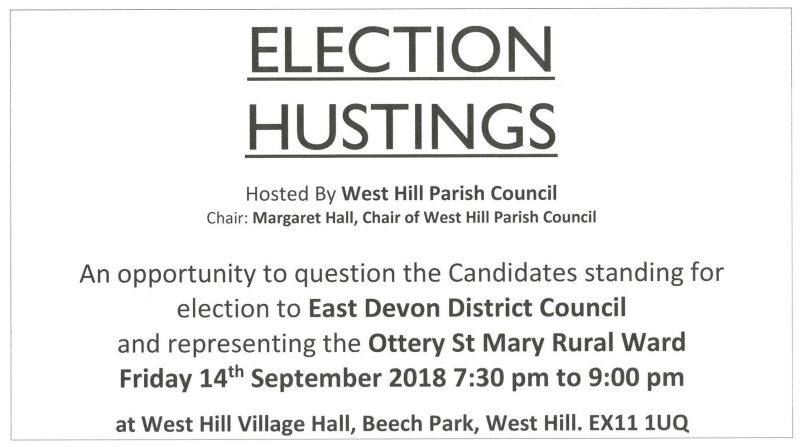
Ottery St Mary continues its proud tradition of independence!

G Pratt, Ind. 715
J Sheaves. Con. 421
LibDem. 51
Green. 24
Labour. 20

A personal view of scrutiny

From Peter Cleasby, a member of the Green Party, who lives in Exeter.

The Centre for Public Scrutiny has been tasked by the government with contributing to the new statutory guidance on overview and scrutiny in local government [1]. Below are my own suggestions, drawing on experience with monitoring Exeter City Council, which I have sent to the CfPS and the government.

1. There should be a requirement that scrutiny committees are constituted so as to be able to challenge ruling group proposals effectively. Exeter City Council changed its rules a few years ago to require that the chairs of scrutiny committees would be drawn from the majority party only (previously the chairs could be taken by members of opposition parties). This reduces the independence of the committees and, for obvious party political reasons, reduces criticism of leadership group proposals.

2. There should be more opportunities for members of the public to ask questions and challenge councillors at meetings. Other Devon councils allow questions to be asked at meetings of their executives/cabinets, but Exeter limits this practice to its scrutiny committees. Although the questioner is allowed to speak at the end of any discussion following the question and answer, no opportunity is provided to ask a supplementary question. This reduces the effectiveness of the challenge and the quality of discussion, and a requirement for one supplementary question would be valuable.

3. Scrutiny committees should be required to engage independent specialists to help them understand and challenge leadership proposals which have a high technical content, for example: on air quality, waste collection and disposal, estimation of housing need. This would enable officer-led proposals, often informed by consultancy studies predicated on terms of reference and assumptions issued by those officers, to be debated on a level playing field of knowledge.

4. Officers should be required to inform scrutiny committees of any representations received from organisations and individuals, whether solicited or not, relevant to an item being discussed by a scrutiny committee.

5. It should be mandatory for all proposals which would incur unbudgeted expenditure in excess of (say) £50k should be discussed at a scrutiny committee; and the proposal should state explicitly where the funding for the proposal will come from, including the impact on existing specific budgets.

6. In the interests of measuring the extent to which members of the public are having to resort to FOI Act/EIR channels to obtain information, the number, nature and outcome of all such requests such be reported publicly to each scrutiny committee cycle.

Some of these requirements will have – modest – costs at a time when local authorities are under severe financial constraints. In the interests of restoring the health of our democratic arrangements, the government should be prepared to make available additional funding to support them.

NOTES:

[1] See https://www.cfps.org.uk/3323-2/

Another investigation of local authority scrutiny and accountability

Owl says: The time is coming for fewer reports and more action. As an example, council CEOs should be forced to attend such committees in public to answer for their more controversial and questionable behaviour.

“The National Audit Office is to conduct a study of local government governance and accountability that will “examine key elements of local arrangements in the light of current pressures”.

The watchdog will also examine how the Ministry for Housing, Communities and Local Government, which is responsible for maintaining the overall accountability system for local government, is exercising its responsibilities as the steward of the system.

The NAO said: “Council governance and accountability arrangements are key in securing value for money locally. However, these arrangements are being tested by the current financial circumstances in the sector. Increasingly difficult decisions need to be made to protect key services and ensure financial sustainability. This includes the design and delivery of large service transformation programmes and the pursuit of new sources of revenue income through commercial investments.

“Local governance and accountability arrangements provide assurance about decision making processes and support the mitigation of risk in this increasingly challenging and complex environment.”

The NAO report is expected to be published in early 2019.

A report from the Committee for Standards in Public Life on local government ethical standards is due to come out later this year.”

http://localgovernmentlawyer.co.uk/index.php?option=com_content&view=article&id=36710%3Anational-audit-office-to-investigate-local-government-governance-and-accountability&catid=59&Itemid=27

“The government’s voter ID plans are ‘rearranging the deckchairs’ in the face of new threats to our democracy”

“On May 3rd 2018, 350 people were denied a vote in their local council elections. Their crime? Not possessing the right ID. The minister hailed these trials of mandatory voter ID as a ‘success’. The government must have a strange definition of success.

The scheme disenfranchised far more ordinary voters than potential wrongdoers: in a single day across the five councils, twice as many people didn’t vote due to having incorrect ID as have been accused of personation in eight years across the whole of the UK.

Out of 45 million votes last year, there were just 28 allegations of ‘personation’ (only one was solid enough to result in conviction). And yet the government seems determined to pursue voter ID, a policy we now know could cost up to £20 million per general election. This change to how we vote is a marked departure from the trust-based British way of running elections, and with little evidence to justify it.

It’s claimed that mandatory voter ID could boost faith in the democratic process. Yet according to academic research, 99 percent of election staff do not think fraud has occurred in their polling stations. Eighty-eight percent (88%) of the public say they think our polling stations are safe. And studies show that more accessible elections have greater electoral integrity – not the other way round.

The policy of mandatory strict ID presents a significant risk to democratic access and equality. Millions of people lack the strictest forms of required documentation. Documentation that is costly to acquire. It’s one of the reasons why organisations from the Runnymede Trust to the Salvation Army and Stonewall are concerned about these plans. The Windrush scandal earlier this year highlighted exactly the difficulties some legitimate voters could have in accessing identity documents – through no fault of their own.

If mandatory ID were to be rolled out nationally, it could potentially result in tens of thousands of voters being denied a say. And it would hit the already marginalised hardest: poorer C2DE social grade voters were half as likely to say they were aware of the ID requirements before the trials this May. And despite the costly publicity campaign this time, after election day, an average of around a quarter of residents were not aware of the pilots in four of the council areas – around four in 10 were not aware in Watford.

Imposing ID could have a significant impact on election outcomes, too. Thirteen seats were won at the 2017 Parliamentary election with a majority less than the number of people denied a vote in Bromley alone this May.

Yet still the government insists on running more trials of mandatory ID despite a broader commitment to improve democratic engagement and access. It is clear that much work needs to be done to remove barriers to voting, not to construct new ones. The most widespread problem poll staff have highlighted is voters turning up and not being on the register. Access for voters with disabilities is also a frequently cited problem.

We’ve learnt a lot this year, with our election and information regulators and parliamentarians highlighting the shocking state of the unregulated ‘wild west’ that is online campaigning. From the spread of disinformation, to secret political donations and ‘dark ads’, the real threats to our democracy are becoming clear.

In the face of these challenges, imposing voter ID is like rearranging the deckchairs of our democracy while we head towards an iceberg. The crucial task for government now is to focus on the real problems – we need to get to work solving them.”

Full report here:
https://www.electoral-reform.org.uk/latest-news-and-research/publications/a-sledgehammer-to-crack-a-nut-the-2018-voter-id-trials/

https://www.electoral-reform.org.uk/the-governments-voter-id-plans-are-rearranging-the-deckchairs-in-the-face-of-new-threats-to-our-democracy/

Neil Parish will only talk to party members about Brexit – not even non-member spouses allowed! And questions in advance only

“Date Thursday, 13th September 2018
Time 1900
at COLLITON BARTON EVENTS AND TRAINING CENTRE, BROADHEMBURY, EX14 3LJ

(by kind permission of the Persey family)

ROGER PERSEY, past President of Tiverton & Honiton Conservative Association, to host and moderate the evening.

Please take this opportunity to make your voice heard via our MP.

Timetable & format

7:00pm Arrival and take your seats

7:15pm Questions from members – submitted in advance to arrive by email or post by 5:30pm on 11th September

8:15pm Final questions and finish followed by cheese & wine provided by Neil Parish M.P.

8:45pm Close

This event is only open to current Conservative Party members of the Tiverton & Honiton Conservative Association. This means that spouses, partners or others arriving with a member must themselves be current members – otherwise with regret they will be refused admittance.

RSVP,with details of any companions, by 5:30pm on 11th of September”

https://www.tivertonhonitonconservatives.co.uk/events/brexit-question-time-neil-parish-mp

“Government faces court action over ‘illegal’ planning policy”

“The government is facing a legal challenge over its new planning policy, which campaigners say was illegally adopted because the government failed to assess its environmental impact.

The revised National Planning Policy Framework, published in July, informs local policies across England, from planning permission to town and country planning and land use. It has significant weight in development decisions, from the amount and location of built development to the way environmental impacts are assessed, and also deals with policies concerning air pollution, energy generation, water management and biodiversity.

A strategic environmental assessment (SEA) is required by EU law for public plans relating to land use and planning, among other things. It is required wherever policies are likely to have a significant impact on the environment. Friends of the Earth wants to force the government to undertake an SEA, consult the public and modify the framework based on those findings.

The NGO has filed a claim at the high court, saying the NPPF makes it “virtually impossible” for councils to refuse local fracking schemes, fails to rule out future coal developments, and introduces harsh new rules for wind energy schemes. It argues it is impossible to gauge the environmental impact of such policies without a strategic assessment. …”

https://www.theguardian.com/environment/2018/sep/04/government-faces-court-action-over-illegal-planning-policy

“Citizens’ Juries could become the core of a revived local democracy”

Owl says: a bit too radical for EDDC which is predicated on NOT listening to its citizens! It surely would have to be forced on the district with its current majority party!

“The Department of Digital, Culture Media and Sport has also now decided to pilot participatory democratic approaches in local authorities around England. Scotland and Wales are having their own discussions.

As with many innovations, the devil will be in the detail.

They will need to be representative of the area they are discussing. If half the residents are over 50, half the jury members should be too. They mustn’t be self-selecting: they can’t be yet another platform for the already engaged.

Both the Democracy Matters assembly on city regions and the Citizens’ Assembly on Brexit paid participants a token amount to reach ordinary citizens who wouldn’t normally volunteer.

In order for them to be Citizens’ Juries in more than just name, they need to have three equally important phases.

The first phase is learning about the options and how the process will work. Participants are guided through the current state of affairs and presented with the options for change.

Traditionally this has meant impartial experts preparing papers and delivering short lectures, which Ed Hammond correctly points out can get quite expensive. To combat this, we ran an experimental deliberative programme in the run-up to the EU referendum with recorded videos from academics from the ESRC’s UK in a Changing Europe project.

Following their briefing, participants then hear from campaigners, presenting their case for why the assembly should side with them. Members can question them armed with the knowledge they gained in the previous phase, and – if the assemblies I’ve attended are any measure – will rigorously scrutinise them.

The last phase is the deliberation itself. Breaking up into small groups and facilitated to ensure no one person dominates, they discuss amongst themselves everything they’ve heard, feeding back into the full assembly and eventually voting.

Citizens’ Juries are nothing like the fractious social media debate that tends to pass for political discussion today. All sides have a common pool of knowledge to draw from, and by discussing issues face-to-face, are far more likely to compromise.

They are also, in many ways, at the opposite end from the local councils they will be advising. Due to the voting system, local government in England is not representative of local political opinions, let alone local demographics.

It would be a shame if Citizens’ Juries became just another institution bolted on to deal with the unrepresentative nature of our local electoral system, rather than deal with the problem at the source. …”

https://www.electoral-reform.org.uk/citizens-juries-could-become-the-core-of-a-revived-local-democracy/