You may have to travel a bit … and pay for the privilege! He doesn’t go in for many meetings with locals!


You may have to travel a bit … and pay for the privilege! He doesn’t go in for many meetings with locals!
Be warned, Axminster.
“Scores of complaints have been made about rented properties on royal land and tenants have faced more than 100 evictions, a Guardian investigation has found, prompting anger over how the Queen’s £14bn property portfolio is managed.
The crown estate, which helps bankroll the Queen by giving the monarch 25% of its profits, has sought to evict 113 tenants in the past five years so they can sell their homes for profit.
It comes after it has emerged on Tuesday that the taxpayer has footed a £2.4m bill to renovate Frogmore Cottage, the Duke and Duchess of Sussex’s official residence, according to royal accounts. While the royals have no direct oversight role in crown estate’s dealings, Prince William and Prince Charles have both spoken before about the importance of ensuring good quality housing is available for all.
Figures obtained by the Guardian show that the crown estate has received more than 100 complaints about its residential properties in just two years, including grievances over rent hikes, leaks, delays in repairs and faulty electrical goods. …
An investigation using data obtained through Freedom of Information laws reveals that:
The crown estate has made £1.1bn selling off more than 700 residential and commercial properties since 2014, with one private firm subsequently hiking rent well above inflation.
More than a quarter of a million pounds has been banked by the crown estate in housing benefit from just seven hard-up tenants.
Four tenants have sued the crown estate for breach of contract, including one claim worth half a million pounds. …
Prince Charles has also spoken out in the past in favour of affordable housing for low-paid workers. In 2003, he said in a speech that “the lack of affordable rural housing is one of the most important issues facing the countryside”. …
The crown estate issued 113 “notices to quit” to residential tenants from 2014 to 2018, including 97 in rural properties, nine in Windsor and seven in central London.
Other figures also reveal that the crown estate gained more than a quarter of a million pounds in housing benefit from just seven tenants. People renting in Camden, Runnymede and Windsor and Maidenhead have let property on royal land using housing benefit paid directly to the crown estate.
Since 2014, £253,092 has been paid to the crown estate in housing benefit. The majority of the payments were for five tenants in Camden, north London. …”
Owl says:
How much more support do developers need when, for example, Persimmon is making a profit of £77,000 on every house they build!

Source: Times (pay wall)
” … he move comes in the wake of an ongoing scandal that has seen developers take advantage of leaseholds to maximise profits, leaving 100,000 families facing crippling ground rents – and a difficulty selling.
All new-build houses will be sold as freehold, although the ban is not applied retrospectively, which means only future homeowners will benefit. Flats will still be able to be sold leasehold. …”

Owl says: It’s always someone else’s fault … there is no buck so it can’t stop anywhere!
“Theresa May speaks out against construction of ‘tiny’ houses, calling for new design standards”
Theresa May is calling for new design standards for house builders to ensure future owners and tenants are not forced to live in “tiny” homes with inadequate storage space.
In her latest move to secure a political legacy, the prime minister will hail figures showing that by the autumn, a million new homes will have been added in under five years.
But her comments come as a parliamentary report warns that the government’s target of delivering 300,000 new homes a year is “way off track” because of problems at the heart of the planning system.
The cross-party House of Commons Public Accounts Committee said that “much more needs to be done” to scale up house building.
The Ministry of Housing has been “reluctant to take decisive action” to deal with councils which fail to produce the up-to-date local plans which are needed to drive delivery, said the committee in a report.
And local authorities have found it difficult to secure sufficient contributions from private developers to help with the cost of the infrastructure needed to support housing developments.
Committee chair Meg Hillier, said: “Progress against the government’s annual new house building target is way off track and currently shows scant chance of being achieved.
“The government has set itself the highly ambitious target of building 300,000 homes a year by the mid 2020s – levels not seen since World War Two – even though there is no clear rationale for this figure and the ministry themselves say only 265,000 new homes a year are needed.
“Government needs to get a grip and set out a clear plan if it is not to jeopardise these ambitions.”
In a speech to the Chartered Institute of Housing conference in Manchester on Wednesday, Ms May will say that the drive to build more homes must not lead to the quality of new housing being compromised.
Tenants and buyers are currently facing a “postcode lottery”, with many councils still not applying space standards introduced by the government in 2015 as a condition of planning permission, she will say.
In a clear message to her successor as prime minister, she will call for the creation a new system of universal mandatory regulation.
“I cannot defend a system in which owners and tenants are forced to accept tiny homes with inadequate storage, where developers feel the need to fill show homes with deceptively small furniture, and where the lack of universal standards encourages a race to the bottom,” she is expected to say.
Ms May will point to figures showing that since she entered No 10 in 2016, the number of extra homes being created was up by 12 per cent in Manchester, 43 per cent in Nottingham and 80 per cent in Birmingham.
Last year, she will say, more additional homes were delivered than in all but one of the previous 31 years while the number of affordable housing starts this year has risen to almost 54,000.
But she will warn against complacency: “The housing shortage in this country began not because of a blip lasting one year or one parliament, but because not enough homes were built over many decades.
“The very worst thing we could do would be to make the same mistake again.”
Ms May will also confirm plans to end so-called “no-fault” evictions, with a consultation to be published shortly, and set out a timetable for action on social housing including improved rights for tenants.
The PM is pushing for higher house building standards (AFP/Getty)
Polly Neate, the chief executive of homelessness charity Shelter, said Ms May’s commitment to improving quality in the housing market was “to be applauded” but added: “The huge numbers of people in this country who are at the sharp end of the current housing emergency will never be able to afford those new houses.
“What this country needs – and what it wants – is a commitment from the top, from any prime minister, to a renewal of social housing. We need 3.1 million homes in the next 20 years to provide affordable and stable homes for generations to come.”
Local Government Association housing spokesman Martin Tett denied the planning system was a “barrier to housebuilding”, pointing to statistics showing councils approve nine in 10 applications but hundreds of thousands of homes given planning permission are yet to be built.
Cllr Tett said councils needed freedom to build more social homes themselves.
“The last time the country built more than 300,000 homes a year was 1977-78, when councils built 44 per cent of them,” he said.
“Latest figures show councils were only able to build 2,000 homes last year – the highest level since 1992 – but need to be able to do so much more. To help end the housing crisis, we need to kick-start a genuine renaissance in council house building.”
Responding to the PAC report, housing minister Kit Malthouse said:“This government is determined to restore the dream of home ownership for a new generation by delivering 300,000 homes a year by the mid-2020s.
“We’re committed to building more, better and faster, including £44bn of funding and guarantees to support more homes, reforming the planning system to free up more land, and removing the cap on how much councils can borrow to build.
“We’re making real progress, last year delivering more new homes than in all but one of the last 31 years.”
Just when you think all the juice had been extracted from buyers, another scandal pops up.
“Contracts for new-build homes and the industry-led code of practice that informs them are heavily weighted in favour of the developer. The Consumer Rights Act does not include new builds, giving buyers less protection than high-street shoppers, and each year hundreds of purchasers are left in limbo when a home is not finished in time. They can’t pull out and reclaim their deposit until building works look likely to exceed what’s known as the “long-stop” date – the final date by which a property can be finished, which is often buried in the small print.
This can be up to six months later than the legal completion date cited in the contracts, and the legal completion date is often months later than the estimates given when contracts are exchanged. Most mortgage offers are only valid for three months.
While purchasers are legally bound to the developer’s timetable for the exchange and completion of contracts and face substantial penalties if they delay, developers allow themselves generous leeway.
A completion date only becomes legally binding when the home is ready and a “completion notice” is served, after which purchasers have seven to 10 days to pay up or else face interest charges on the balance.
Nor are developers obliged to pay compensation for delays, unless the developer exceeds the “long-stop” date. Purchasers who have to proceed with the sale of their old home after exchanging contracts, or to rearrange a mortgage when their offer expires, can be left heavily out of pocket. …”
https://www.theguardian.com/money/2019/jun/23/new-build-homes-buy-delay-bill-developers?
Letters, today’s Midweek Herald – hear, hear says Owl!

“Kier Group will sell its housebuilding and property businesses, cut about 1,200 jobs and suspend its dividend for at least two years in a radical overhaul designed to lower debt and stabilise the business. …
[CEO] Davies said Kier had already received expressions of interest in its housebuilding business, which built 842 units in the six months to end-December, at which time it had a landbank of 4,739 plots. …”
Bet our Local Enterprise Partnership has some “bigly beautiful” figures to support much more housing – fuelled by nuclear energy probably (bacause, as their hero Trump says – wind turbines cause cancer!).
“A parliamentary inquiry has been launched to examine the impact of regional imbalances in the UK economy.
The treasury committee is to examine the nature and impact of regional imbalances in economic growth across the country and the extent to which these explain poor productivity growth across the UK.
It will establish what regional data is currently available in the UK, how it could be used more effectively in policy development, and whether official regional economic forecasts should be produced.
MPs will seek to learn lessons from other countries on the use of regional economic data and forecasts, and understand how devolution has changed the need for regional data.
The effectiveness of regional bodies, such as combined authorities, in promoting growth will also be considered, as well as the extent to which the devolution of funding can help reduce regional disparities.
Treasury committee chair Nicky Morgan said that disparities between the areas represented by committee members had become “abundantly clear” in her time as chair.
“Whether it be a divide between north and south, towns and cities, or urban and rural, people experience the chasm which exists between various parts of the UK through their day to day lives,” said Ms Morgan.
That included differences not just in economic growth and income, but also in health and educational outcomes and the quality of infrastructure, she said.
“As part of this inquiry, we’ll examine why this is the case, what the effects are in terms of imbalances, such as wages and employment, and how successful regional programmes have been in promoting regional economic growth.
“The treasury committee will seek to identify the disparities and explore how better data can inform policy makers on how best to level the playing field.”
Committee member Alison McGovern said the inquiry would help build an accurate picture of how the economy affected people in different parts of the UK.
“We must understand how regional economic performance shapes people’s lives and their perceptions of where they live and work,” she said.
“It is not sufficient for the government to only offer figures on economic success in aggregate terms. I hope this inquiry can show how the government can get a full picture of the whole of the UK economy in the future.”
Written evidence will be accepted on the treasury committee website until 2 August.”
https://www.publicfinance.co.uk/news/2019/06/mps-investigate-economic-disparities-uk
Yet another attempt by this unelected bunch of conflicted business people to suck up funding meant for local councils:
“…
Recommendations
2.1. 1.
That the Joint Committee pursue an area-based package to accelerate housing delivery which, at headline level, should include:
a. Resourcing of a strategic delivery team (capacity funding)
b. A major infrastructure delivery fund to unlock growth
c. A small schemes liquidity fund to bring forward stalled sites
2. That the proposed package as set out in appendix 1 is agreed as an
appropriate package to accelerate housing delivery across the HotSW
geography.
3. That the proposed package as set out in appendix 1 is used by officers as
the basis for future engagement with central government and its agencies in seeking to secure a bespoke deal for the HotSW area to structurally embed collaboration with central government on housing delivery.
4. That the Task Force seeks to now engage with senior figures within both Homes England and the MHCLG Growth and Delivery Unit to understand their appetite for driving growth and willingness to work with the Joint Committee on some kind of housing deal.
5. That the Task Force brings back any updates or progress to the Joint Committee to consider in due course.”
Click to access HotSW%20JC%20-%20Housing%20Task%20Force%20report.pdf
The appendix on pages 5 and 6 is particularly worrying.
And where does this leave the (stalled due to political changes) Greater Exeter Strategic Plan?
“Almost two-thirds of homebuyers who used the government’s Help to Buy scheme could have bought a home without it, an official report has said.
However, they may not have been able to buy the house they wanted without the help, the report from the National Audit Office (NAO) found.
It also found that one in 25 of participants had household incomes of over £100,000.
The scheme did help boost the profits of building firms, the NAO said.
It was too early to determine if the scheme had delivered value for money for the taxpayer, the report said.
“Help To Buy has increased home ownership and housing supply, particularly for first-time buyers,” Gareth Davies, head of the NAO, said.
“However, a proportion of participants could have afforded to buy a home without the government’s help.
“The scheme has also exposed the government to significant market risk if property values fall, as well as tying up a significant public financial capacity.
“The government’s greatest challenge now is to wean the property market off the scheme with as little impact as possible on its ambition of creating 300,000 homes a year by 2021,” he said.
By 2023, the government will have invested up to £29bn in the scheme, tying up cash which cannot be used elsewhere,” the NAO said.
Bigger firms made the most of the scheme.
Between 2013 and 2018 more than half the sales in England made by Redrow, Bellway, Taylor Wimpey, Barratt and Persimmon involved Help to Buy.
‘Housing bubble’
Persimmon is the biggest beneficiary, with almost 15% of the sales made under the Help to Buy Scheme.
Persimmon saw its annual profits top £1bn last year.
Mike Amey, managing director of global investment management firm Pimco, has told the BBC that profit on a house sold by Persimmon had trebled since Help to Buy was introduced, “roughly from £20,000 to £60,000”.
Fran Boait, executive director of campaigning body Positive Money, said: “It’s now beyond clear that rather than helping those who can’t afford to buy a home, Help To Buy has mainly been a subsidy for a housing bubble, benefiting property developers and existing home owners.”
The government’s investment is expected to be returned from the scheme by 2032 after it closes in 2023. However, the size of the loans mean it is very much exposed to the performance of the housing market.
From April 2021, the scheme will be restricted just to first-time buyers.”
No decision on Clinton Devon’s desire to replace GP surgery with 2 houses at Newton Poppleford – deferred for 3 months to “find a solution”.
One house and half a surgery, perhaps?
Not a good start.
“Documents submitted to the Planning Inspector by 17 local residents, this Campaign and Sidford Ward District Councillors Marianne Rixson and Dawn Manley have now been uploaded to the District Council’s planning portal.
Those of you who read the Sidmouth Herald will also have noted its two-page reporting this week on the submissions.
In order to allow you to quickly access the submissions we set out below the clinks to the various documents –
The planning portal page which allows you to click on each of the latest documents that have been submitted is here –
https://planningapps.eastdevon.gov.uk/Planning/lg/dialog.page?Param=lg.Planning&org.apache.shale.dialog.DIALOG_NAME=gfplanningsearch&SDescription=18/1094/MOUT&viewdocs=true
These two links take you to the two sets of documents that this Campaign has submitted. In addition to various letters from Sidbury Primary school and local residents, there are photographs, links to various traffic videos and you can also read the two consultants reports that we commissioned –
Click to access obj.pdf;jsessionid=289A6B113EB8BADEB476C20911E3A5DB
Click to access obj.pdf;jsessionid=289A6B113EB8BADEB476C20911E3A5DB
The detailed submission submitted by Sidford Ward District Councillors Marianne Rixson and Dawn Manley can be viewed via this link –
Click to access obj.pdf;jsessionid=74B5DE4639EC037FD1BD2ABDE4C0EF69
When you open any of these links you may find it is slow in downloading, so you may have to be patient!
You should by now be aware that the Planning Inspector, Luke Fleming, will open the Inquiry on 16 July and he has allowed up to three days for it. The inquiry will be held in the District Council’s new offices in Honiton – Blackdown House, Border Road, Heathpark Industrial Estate Honiton EX14 1EJ.
Members of the public are welcome to attend the Inquiry, and we anticipate that we will be encouraging all those who oppose the proposed Business Park to show their opposition to it prior to the Inquiry opening on 16 July. We will let you have further details about this nearer the time.
We would also encourage members of the public to speak at the Inquiry as you are entitled to do. In order to obtain speaking rights, you just advise the Inspector at the start of the Inquiry. This Campaign will be speaking at it.
Best wishes
Campaign Team”
Oh dear, another development test …
“Applicant Clinton Devon Estates (CDE) is seeking reserved matters planning permission to build a 929m2 building with 11 car parking spaces at the former Blackhill Quarry in Woodbury Common.
The building is set to become the first part of a four-building development for Blackhill Engineering Services.
Landowner CDE has previously-approved outline planning permission for four industrial buildings and this latest development would be the first phase of the application.
The proposal is set to be discussed at East Devon District Council’s (EDDC) development management committee on Tuesday (June 11) and planning officers have recommended approval.
The officer’s report said: “The proposed building would be the first in a phased development of the site, it would be of a suitable scale taking into account the limitations imposed at the outline stage in terms of height and a building finished in green cladding under a dark grey roof would assimilate well into its surroundings.
“The layout of the site responds well to its constraints and is clearly part of a planned phased development.”
Outline permission was granted last year despite calls for the former quarry land to be returned to heathland.
Concerns have been raised by parish and district councillors in Woodbury and the Otter Valley Association about the continued industrial use of a site in an Area of Outstanding Natural Beauty (AONB).
This latest plan has had one comment of support which said the area was already ‘degraded’ and was ‘not worth trying to save’.
In its design and access statement, CDE said it will retain existing trees and hedges which would provide more than 7,000 square metres of habitat for various mammals and reptiles. A redundant concrete tank will be converted into a bat refuge.
A further three units are expected to be built in the former quarry and CDE anticipates submitting reserved matters applications for those in the next four years.
EDDC will make the final decision on the reserved matters application.”
https://www.exmouthjournal.co.uk/news/blackhill-engineering-plans-for-woodbury-common-1-6093931
More Carter family land conversion … ending up with more than 200 parking spaces … really someone needs to stop this sort of thing … TiggerTories to the rescue? Of whom?
Maybe the business centre should move …
“If given the go-ahead, the proposal would provide an additional 59 spaces for users of the nearby Woodbury Business Park.
The site, on the corner of Castle Lane and Rydon Lane, has currently been left ‘fallow’ for the last two years and is ‘sporadically’ used as an overflow car park when needed.
Woodbury Business Park currently has 166 spaces, with 121 of those allocated to tenants.
In the planning support statement, Bell Cornwell, on behalf of applicant GB House and Son, said additional parking at Woodbury Park has become ‘a necessity’.
It said: “Each tenant has a number of allocated parking spaces, with the remainder of their employees having to park in the unallocated visitor parking area.
“This causes problems with visitors to the site not being able to park.”
East Devon District Council will make the final decision.”
https://www.exmouthjournal.co.uk/news/woodbury-overspill-car-park-plans-1-6094087
So many drawbacks!
“What is the most neglected issue in British politics? I would say land. Literally and metaphorically, land underlies our lives, but its ownership and control have been captured by a tiny number of people. The results include soaring inequality and exclusion; the massive cost of renting or buying a decent home; the collapse of wildlife and ecosystems; repeated financial crises; and the loss of public space. Yet for 70 years this crucial issue has scarcely featured in political discussions.
Today, I hope, this changes, with the publication of the report to the Labour party – Land for the Many – that I’ve written with six experts in the field. Our aim is to put this neglected issue where it belongs: at the heart of political debate and discussion.
Since 1995, land values in this country have risen by 412%. Land now accounts for an astonishing 51% of the UK’s net worth. Why? In large part because successive governments have used tax exemptions and other advantages to turn the ground beneath our feet into a speculative money machine. A report published this week by Tax Justice UK reveals that, through owning agricultural land, 261 rich families escaped £208m in inheritance tax in 2015-16. Because farmland is used as a tax shelter, farmers are being priced out. In 2011, farmers bought 60% of the land that was on the market; within six years this had fallen to 40%.
Homes are so expensive not because of the price of bricks and mortar, but because land now accounts for 70% of the price
Worse still, when planning permission is granted on agricultural land, its value can rise 250-fold. Though this jackpot was created by society, the owner gets to keep most of it. We pay for this vast inflation in land values through outrageous rents and mortgages. Capital gains tax is lower than income tax, and council tax is proportionately more expensive for the poor than for the rich. As a result of such giveaways, and the amazing opacity of the system, land in the UK has become a magnet for international criminals seeking to launder their money.
We pay for these distortions every day. Homes have become so expensive not because the price of bricks and mortar has risen, but because the land that underlies them now accounts for 70% of their price. Twenty years ago, the average working family needed to save for three years to afford a deposit. Today, it must save for 19 years. Life is even worse for renters. While housing costs swallow 12% of average household incomes for those with mortgages, renters pay 36%.
Because we hear so little about the underlying issues, we blame the wrong causes for the cost and scarcity of housing: immigration, population growth, the green belt, red tape. In reality, the power of landowners and building companies, their tax and financial advantages and the vast shift in bank lending towards the housing sector have inflated prices so much that even a massive housebuilding programme could not counteract them.
The same forces are responsible for the loss of public space in cities, a right to roam that covers only 10% of the land, the lack of provision for allotments and of opportunities for new farmers, and the wholesale destruction of the living world. Our report aims to confront these structural forces and take back control of the fabric of the nation. …”
https://www.theguardian.com/commentisfree/2019/jun/04/tackle-inequality-land-ownership-laws?

“… The Devon Branch of the Campaign to Protect Rural England says it has been overwhelmed by the response from the public to its Greetings from Glorious Devon postcard campaign.
The group has printed thousands of cards highlighting development on green fields and is asking people to send them to Kit Malthouse, the Minister of State for Housing and Planning.
In May, Mr Malthouse announced a major new scheme to build “20,000 much-needed properties” across Exeter, East Devon and Teignbridge.
“Holiday makers come to Devon because they love the countryside, the peace and quiet, the fresh air, the seaside. Are they honestly coming to look at sprawling housing estates and traffic jams? I don’t think they are, so we’re hoping this will attract a lot of attention.” [says] Penny Mills Director, CPRE Devon
Mr Malthouse says only one per cent of England is developed with homes and the government has “failed to build enough homes over the last few decades”.”
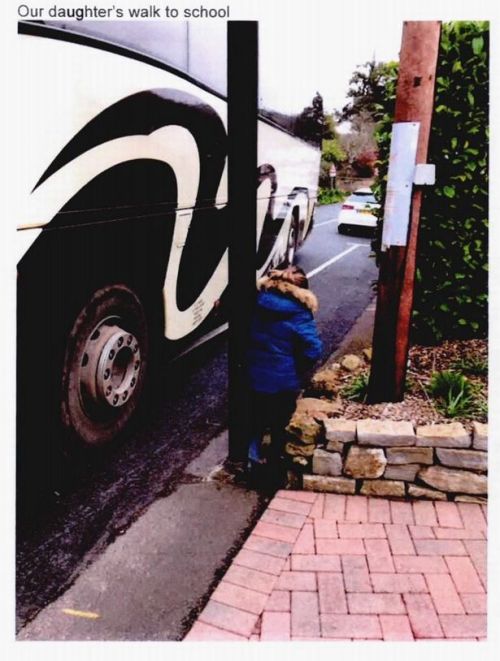
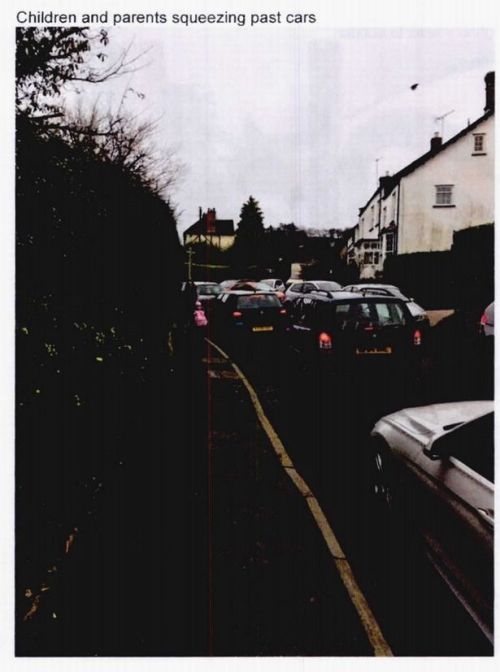
A picture is worth a thousand words. Words here:
https://www.devonlive.com/news/devon-news/objectors-outline-traffic-chaos-safety-2934450
Some of the pictures here:


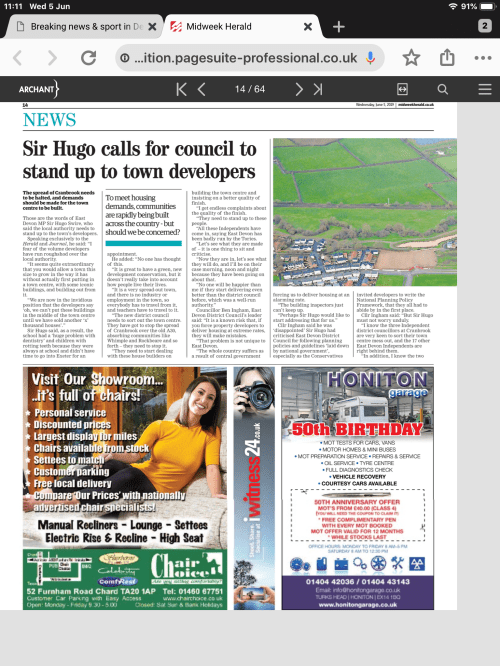
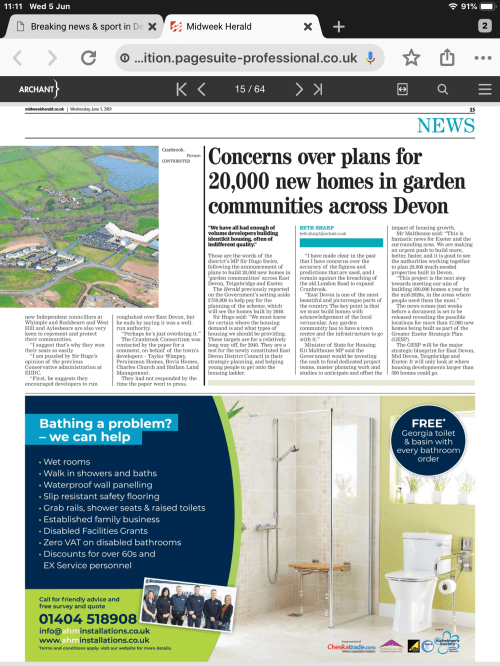
Today’s Midweek Herald. SO odd that Hugo has JUST discovered that Cranbrook development is a problem … still TiggerTories involved in planning will be glad to know he is NOW onside! Such a pity he wasn’t so vocal when Tories alone were in charge!
 East Devon Watch